As costs soar and audits expand, one mother says her son’s death reveals the real-world price of neglect and alleged fraud.
Source:
KARE 11 Investigates: Death raises new fraud allegations in Minnesota’s Medicaid-funded ICS program

As costs soar and audits expand, one mother says her son’s death reveals the real-world price of neglect and alleged fraud.
Source:
KARE 11 Investigates: Death raises new fraud allegations in Minnesota’s Medicaid-funded ICS program
by Kimberly Marselas

The city and its Laguna Honda Hospital and Rehabilitation Center were set to settle a lawsuit over explicit photos of patients for $5.8 million, if a legal agreement was blessed by a city oversight committee Thursday night.
The settlement conditions were reported by San Francisco’s PBS television station Thursday morning. The lawsuit is one of several connected to an alleged patient abuse scandal at Laguna Honda, which has a long history of caring for some of the city’s most vulnerable residents, including seniors, the homeless and those with behavioral health needs and substance abuse issues.
It was rocked by scandal and allegations of unacceptable care between 2016 and 2021, when two patients experienced non-fatal overdoses. That triggered intervention by the Centers for Medicare & Medicaid Services, which revoked Medicare coverage for stays and moved to shutdown the massive facility.
But after four patients died following transfers, CMS relented. The facility accepted significant federal oversight and intervention. During that time, city and building leaders acknowledged major shortfalls in previous years and developed a 960-point recovery plan. The building earned its certification back earlier this year.
The expected settlement is the latest accounting for Laguna Honda, which the senior advocacy group Gray Panthers said will have paid out $12 million in settlements. In this case, the $5.8 million will be distributed among 735 current and former patients, PBS reported.
The lawsuit had alleged that staff took explicit photos of multiple patients and disseminated them, and accused the facility of other abuse and privacy violations.
The accusations reflect a national concern: Humiliating and demeaning social media posts made by nursing home staff without patient permission were the subject of a recent report calling on CMS to better protect residents from such abuse.
In a statement, the San Francisco Public Health Department said it had implemented a “significant restructuring.”
Laguna Honda “has been the focus of extensive improvements facility-wide, including new policies, enhanced quality management protocols, and new programs that align with national best practices,” a spokesperson said. “This is all with the goal of creating a lasting culture of safety, transparency, and continuous improvement.”
Full Article & Source:
City to pay $5.8M in class action over elder abuse at Laguna Honda
By Pat Reavy

HURRICANE, Washington County — The owner of an assisted living center in southern Utah is facing criminal charges accusing him of spending nearly $200,000 of an 81-year-old woman's money on himself for items such as food, Halloween costumes, large screen televisions, video games and sex toys.
Gage Wallace Hedberg, 32, of Hurricane, was charged Wednesday in 5th District Court with four counts of financial exploitation of a vulnerable adult and unlawful dealing of property by a fiduciary, both second-degree felonies.
Between Nov. 3, 2022, and Feb. 28 of this year, Hedberg owned and operated Life Family Personal Care, 158 N. 240 East in Hurricane, according to charging documents. During that time, he provided services to an 81-year-old woman and had power of attorney.
"The power of attorney included provisions that required the defendant to: act in (the woman's) best interest; act in good faith; and act loyally for (the woman's) benefit," the charges state.
Instead, Hedberg allegedly "withdrew significant amounts of cash" from the woman's checking account for his own use.
"In total, (he) diverted approximately $159,068 to $197,294 for his own benefit," according to the charges.
Prosecutors say the woman "had sufficient income and funds to meet her needs and maintain her modest standard of living." But after Hedberg used her money, "she was left with less than $5,000 and insufficient income to cover her expenses."
Among his purchases, Hedberg "had 241 items from Amazon shipped to his address totaling $11,539. These purchases included, but were not limited to office supplies, electronics, a mini split air conditioner, men's clothing, Halloween costumes, sex toys and lubricants, kitchen supplies, video gaming equipment and musical supplies," according to charging documents.
In addition, he made "47 purchases at Costco, including two membership renewals. These purchases totaled $12,904. Costco provided receipts for approximately 27 of these purchases. All 27 were made under the defendant's membership account. These purchases include, but are not limited to, food, household supplies, dental products, kitchen supplies, bedding, vitamins/probiotics, toiletries, clothing, batteries, electrical products, a computer monitor, (a 75-inch screen TV and a 77-inch screen TV), a printer, car products, Pokémon cards and a vacuum," the charges allege.
Investigators also noted tens of thousands of dollars of purchases for items that "appear inconsistent with (the woman's) historical spending and interests," including video games, liquor store purchases, smoke shop purchases, "mobile IV services related to hangovers," and home improvement projects. Prosecutors say Hedberg also made nearly $34,000 in cash withdraws from the woman's account.
After gaining power of attorney for the woman in 2022, investigators say Hedberg "sold (the woman's) home and used the proceeds, along with (her) finances," according to a search warrant affidavit served in connection with the case.
The Utah Attorney General's Office became involved with the investigation when Hedberg went to another assisted living center in Hurricane — where the woman now resides — in an attempt to help secure Medicaid for the woman.
"Hedberg told the staff that (the woman) was almost out of money to pay for her care at the facility," according to the affidavit.
But after reviewing her bank statements, the staff told Hedberg that the woman would not qualify for Medicaid because of her high level of spending, the affidavit says.
At that point, Hedberg admitted he "had made a mistake" and had spent the woman's money, according to the warrant.
Full Article & Source:
Utah care center owner spent nearly $200K of elderly woman's money, charges say

LANSING – Michigan Attorney General Dana Nessel has released the latest edition of the Elder Abuse Task Force newsletter, highlighting significant progress in efforts to protect Michigan’s older adults. The issue features resources for residents and an update on the Michigan Department of Health and Human Services’ (MDHHS) Adult Protective Services program.
“The Elder Abuse Task Force has made significant strides in our efforts to protect Michigan’s older adults, and this newsletter offers a glimpse of what we’ve accomplished this year,” Nessel said. “I am proud of the collaboration and dedication shown by our partners across the state, and I know that they will continue this great work next year and beyond.”
The newsletter includes the Michigan Office of the Auditor General’s recently-released follow-up report (PDF) to its February 2022 audit of the Adult Protective Services program. Covering activities from October 1, 2022, to February 28, 2025, the follow-up review shows that MDHHS has made significant corrections in four audit recommendations: law enforcement reporting, supervisory review, timely investigations, and staff training.
The newsletter also highlights major Elder Abuse Task Force accomplishments in 2025, including:
Readers are also reminded that free, fillable Power of Attorney forms are now available for download on the Department of Attorney General’s website. The forms, prepared by the Kimble Center for Legal Drafting at Cooley Law School, make it easier for Michigan residents and their family members to appoint a trusted individual to make important financial and medical decisions on their behalf if they become unable to do so.
More than 100,000 older adults in Michigan are victims of elder abuse. They experience abuse, neglect, and exploitation. Michigan residents seeking elder abuse resources are encouraged to call 800-24-ABUSE (22873), or 855-444-3911 to report suspected elder abuse.
Source:
Attorney General Nessel Releases Latest Elder Abuse Task Force Newsletter

HARRISBURG — Attorney General Dave Sunday announced the launch of the Office of Attorney General’s Elder Exploitation Section — an expansion of protections and services for seniors, with focus on deterring financial theft and holding offenders criminally responsible.
On Tuesday, Attorney General Sunday joined legislative leaders and advocate organizations at the State Capitol Building to formally announce the section’s launch.
The section will primarily focus on cases involving financial exploitation, deception, and theft from older residents — typically perpetrated by relatives, caregivers, and/or appointed conservators and powers of attorney.
“These cases are as heartbreaking as they are financially devastating to the senior victims, who are oftentimes deceived out of their life savings by someone they trust,” Attorney General Sunday said. “The many partners who joined us in this announcement share the common mission of protecting seniors by raising awareness to prevent these crimes and deterring criminal behavior by holding accountable those who do harm.”
The section, led by Chief Deputy Attorney General Elizabeth Schneider and Chief Agent Lucas Miller, was created by reassigning existing staff who have backgrounds and experience in the elder law space.
The section is already up and running with a caseload of about 30.
These are complex cases, involving meticulous review of financial records and other documents. Municipal police departments may not have the resources required to take on these investigations. The Elder Exploitation Section will have the resources, and expects referrals to come from police departments, county, state, and federal agencies — and other sources.
The Office of Attorney General will continue efforts to assist seniors through other sections and staff, including the Bureau of Consumer Protection, Health Care Section, Office of Public Engagement, and Medicaid Fraud Control Section, among others.
Among those on hand Tuesday were Secretary of Aging Jason Kavulich, Secretary of Banking and Securities Wendy Spicher, Pa. Sen. Wayne Langerholc Jr, Pa. Sen. Maria Collett, Pa. Rep. Maureen Madden, Pa. Rep. Steven Mentzer, and other legislators.
Also present were representatives from AARP, SeniorLAW Center, Alzheimer’s Association, NOVA, LeadingAge PA, Pa. Health Care Association, Pa. Home Care Association, Pa Bankers Association, The American Legion, and VFW Department of Pennsylvania.
By Pamela McCall

Across the U.S., FBI internet crime data show elders were bilked out of $16.6 billion by fraudsters in 2024 — a 33% increase from the previous year. The reported losses are likely higher, says the FBI, because “older Americans are less likely to report fraud because they either don’t know how to report it, are embarrassed, or don’t know they’ve been scammed.”
Fraudsters know seniors may have savings, can be trusting, a little naive, and, in some cases, even be in the throes of dementia. That's the case in the new Utah film called “Sweepstakes.” The plot was inspired by real-life events.
“My stepmother was scammed for a period of about 10 years, and she was suffering from dementia, but was undiagnosed,” said writer, director and producer Stephen Williams, a Salt Lake Community College film instructor. “We had no idea what was going on. She was sending gobs and gobs of money away every week to sweepstakes scams.”

“We didn’t know what to do,” Williams said. “My father was beside himself.”
His stepmother passed away at age 96 in 2022, but not before being defrauded of thousands of dollars.
The film that emerged started as a two-part series, but Williams has now produced a feature film, garnering interest from the AARP Utah and the FBI. Williams said representatives attended screenings and held panel discussions — shedding light on scammers who prey on the elderly, become friends with them and pretend to have their best interests at heart.
This interview has been edited for length and clarity.
Stephen Williams: The main character, 88-year-old Joanne, played by Anne Culimore Decker, is sliding into dementia. She’s enraged because she thinks her adult children are trying to control her when they start to realize her money’s disappearing. In turn, the scammer convinces her that he’s the only one that can be trusted.
SW: Who wants to find out that a parent is being scammed, or that they have dementia? People might initially fight against it and write their loved one’s behavior off as normal memory decline that comes with aging. Meanwhile, the unscrupulous scammer is getting her to send him money. In the film, it totals $80,000.
SW: No matter who they think is calling, personal information shouldn’t ever be given out over the phone. Scammers can use caller ID to make it look like it’s someone the elderly person knows. Artificial Intelligence is particularly terrifying. A snippet of a family member’s voice and image can be gleaned from the internet and manipulated through AI to ask for money. It could be a Zoom call saying, “Grandma, I’m in prison in Ireland and need $15,000 right now,” when in fact, it’s a scammer.
SW: The film really is about reconciliation of the family, and ultimately, that's what matters. The money might be gone, but eyes are opened. The brother and sister judged their mother pretty harshly initially, but once they fully understood what happened, their hearts open, and there’s compassion.
Full Article & Source:
Elder scams are horrible, says Utah filmmaker. His heartbreak became ‘Sweepstakes’
This article was created by AI summarizing key points discussed. AI makes mistakes, so for full details and context, please refer to the video of the full meeting. Please report any errors so we can fix them. Report an error »

Full Article & Source:
Appeals court hears dispute over conservatorship decisions, health‑care proxy and attorney fees after conservatee's death
Written by Tracey Petersen

Deputies from the Tuolumne County Sheriff’s Office responded to the area of Woodland Way near Ridgeview Drive recently for a report that a firearm had been brandished in self-defense by a family member toward 28-year-old Skylar Page.
When deputies arrived, they questioned Page and the 70-year-old victim. Sheriff’s officials reported that the victim told them that Page has a history of mental health issues and had begun yelling at him earlier in the day. The victim stated to investigators that Page told him “to leave, or he would stab him.”
The victim also recounted that a short while later, he went outside to avoid Page, who “armed himself with a walking stick and began walking toward the victim and yelling that he was going to kill him.” It was at that point that the victim admitted to flashing a firearm to stop Page from harming him.
Page was arrested on felony charges of elder criminal threats and abuse.
Full Article & Source:
Sonora Man Walking Stick Arrest For Elder Abuse

MILAN, Mo. —
A Missouri elected public guardian is now charged with eight felonies in connection with stealing nearly $6,000 from a ward of the state under her care.
Joan Brummitt, 65, public administrator of Sullivan County, is accused in court documents of moving money from the ward’s bank account to her personal bank account on four separate occasions.
A Missouri State Highway Patrol investigator said on Oct. 14, 2025, Brummitt used her personal cellphone and online banking app to send money from the ward’s account through three separate transactions, totaling $999, $1,900 and $1,980.
She made another online $999 transfer on Oct. 16, the MSHP investigator said in court documents.
The total amount came to $5,878.
Brummitt is charged with four felony counts of financial exploitation of an older/disabled person and four felony counts of stealing $750 or more.
Brummitt is scheduled to be arraigned on Dec. 3.
A judge has recused himself from the case. The judge also ordered Brummitt not to access or make any transactions on any accounts belonging to any of her wards or any person for whom she serves as conservator by order of the probate division of any court.
Brummitt’s attorney, Mark Williams, told KMBC 9 Investigates that he is just beginning his investigation into the case and emphasized that even though charges have been filed, Brummitt is innocent until proven guilty.
In a new series called “Paper Prisons,” KMBC 9 News is investigating ways to systemically improve the care of those under guardianship by highlighting stories of people struggling to navigate a tangled system of legal paperwork, medical records and court orders.
KMBC is also seeking answers, perspective and context from those in charge of keeping wards of the state in their care for their recommendations on how to improve the system.
Throughout the next year, KMBC will continue to explore the challenges and opportunities for improvement in Missouri’s public guardianship system.
We need your help.
If you know of someone going through struggles with Missouri’s public guardianship system, or if you have a case to highlight that exposes solutions for Missouri’s public guardianship system that could teach lessons to others, please email investigates@kmbc.com.
Full Article & Source:
Missouri elected guardian charged with 8 felonies for stealing from ward
See Also:
Paper Prisons: Missouri woman details struggle to leave public guardianship after husband's death
Paper Prisons: Missouri man continues fight to free his mother from public guardianship
Sullivan County elected official accused of stealing thousands from disabled person
By: Staff Reports

“Suspects have been approaching elderly victims, convincing them to get into a vehicle, and transporting them to various Walmart locations. Once there, the suspects use the victims’ personal information to fraudulently open AT&T accounts and obtain new iPhones—leaving the victims responsible for substantial bills that later arrive by mail. In many cases, the suspects have abandoned the victims at Walmart with no means of returning home,” the department posted on social media.
On Nov. 15, CPD patrol officers and Investigator Nick Watkins located the suspects at the Walmart on Olive Street Southwest as they were allegedly attempting to exploit another elderly woman.
Kevonta Doneterrece Price and Tiffany Carter, both of Covington, Georgia, were taken into custody and charged with second-degree financial exploitation of the elderly and third-degree attempted theft of property.
The CPD said additional charges are expected as the investigation continues.
The department urged the community to speak with elderly family members, friends and neighbors about common scams designed to target vulnerable individuals.
If you or someone you know has been a victim of a similar scheme, please contact the Cullman Police Department at 256-734-1434.
Full Article & Source:
CPD: 2 arrested for exploiting elderly
by Emilie Raguso

A young man is in custody this week after stabbing his father at their northwest Berkeley home Monday evening, authorities report.
Berkeley police said Isaac Bolton, 21, fled the scene and tried to hide in the bushes a half-mile away before officers found and arrested him.
The incident began around 5:45 p.m. when police were dispatched to the 800 block of Hearst Avenue, near Sixth Street, to investigate a stabbing.
When they got there, they found a 72-year-old man who had been stabbed in the side. But the suspect was gone.
The Berkeley Fire Department rushed the victim to Highland Hospital "Code 3" for treatment.
Meanwhile, police immediately began to search for Bolton. Officers found him in the 1700 block of 10th Street, near Virginia Street, at about 6 p.m.
He was arrested without incident on suspicion of attempted murder and elder abuse, both felonies, BPD said.
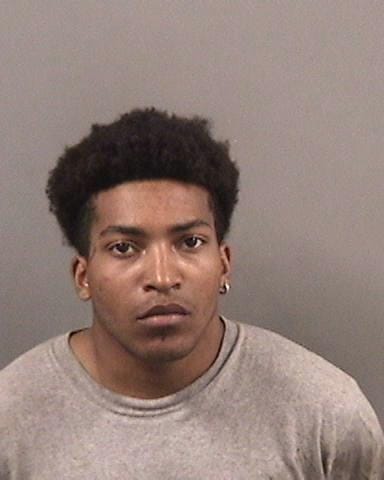
Bolton also was arrested on suspicion of violating the terms of his release in a misdemeanor case from earlier this year.
In June, the Alameda County district attorney's office had charged him with exhibiting a deadly weapon, criminal threats, vandalism and two counts of elder abuse. He was later released on his own recognizance.
(The details of that incident were not immediately available.)
As of publication time, Bolton remained in custody at Berkeley Jail on $55,000 bail, according to booking records.
He is scheduled for arraignment Thursday.
His father has been discharged from the hospital to recover at home, police said Tuesday night.
No motive in the stabbing has been released.
Update, 4:45 p.m. The DA's office charged Bolton on Wednesday with attempted murder and elder abuse, both felonies, according to court records.
Full Article & Source:
Police: Berkeley man, 21, arrested after stabbing father
By Mary Markos
A nurse in Danvers, Massachusetts, is facing more than 30 counts of
abuse after allegedly assaulting a patient who could not speak for
herself.
Prosecutors say Cynthia Beck was caught on camera striking a 27-year-old woman who is blind and has cerebral palsy.
"These events have been devastating to my family," the victim's father told NBC10 Boston. "It's impacted all facets of our lives — the relationship was so deep."
He asked to remain anonymous, but said his daughter deserves justice. The family expressed frustration over delays in the case but remains hopeful.
"We're frustrated by the delay, but we understand that we'll work through the judicial process," he said. "I think everything will come out next time on Dec. 3. We just want to receive justice."
According to court documents, Beck faces 32 counts of assault and battery on a person with disabilities. The alleged abuse occurred on May 18, 2025, at the victim's home. A police narrative describes the disturbing details captured on a family-installed camera:
Court records state that the video, now impounded at Essex Superior Court, shows Beck's face, which authorities confirmed with her Registry of Motor Vehicles photo. Photos taken the next morning showed redness above the victim's lips and nose.
Beck was arrested on May 23 and initially held on $10,000 bail with GPS monitoring and strict conditions. Her nursing license was suspended, and she was fired from Northeast Arc.
Legal experts say Beck's license is unlikely to be reinstated while criminal charges are pending.
Jo Ann Simons, CEO of Northeast Arc, issued the following statement:
"Northeast Arc was notified by family of a client, who receives in-home services, alleging assaultive behavior by a nurse employed by the organization. The incident was investigated, and the employee was terminated. Northeast Arc has been in regular communication with the family, who continue to use Northeast Arc’s home care services."
NBC10 Boston legal analyst Michael Coyne says the charges are serious and carry enhanced penalties because the victim has disabilities.
"We'd definitely be likely looking at jailtime," Coyne said. "There are certain communities — the elderly, the disabled — where there are additional criminal penalties for preying on those groups, as well as more serious sentences. Because of the victim's disabilities and the manner in which these crimes were allegedly committed, the likelihood is that if convicted, the sentence would be much harsher than otherwise."
While much of the alleged abuse was captured on cameras, Coyne said the victim's inability to testify could complicate the case.
"That gives the defendant the chance to try and create reasonable doubt," he said.
Still, Coyne believes any plea deal would likely include incarceration.
"Whatever deal the government might consider is likely to require some jailtime," he said. "If not, the defendant will try the case with the expectation they can create that level of reasonable doubt."
The case has sparked broader concerns about caregiver training and accountability. Maura Sullivan, CEO of the Arc of Massachusetts, says the problem is systemic.
She says the organization runs programs in all Massachusetts medical schools and many graduate nursing schools to train future providers on how to better care for patients with disabilities.
"We teach them how to be more confident, competent and compassionate," Sullivan said. "One of the biggest things we focus on is communication — even when a patient may not be verbal."
That includes using gestures, assistive technology and taking time to understand the individual.
"When people are in pain and can't communicate, it's critical to learn how to connect," she said.
Sullivan points to a troubling statistic: "A study showed 60% of practicing physicians did not feel comfortable treating patients with autism or intellectual and developmental disabilities," she said.
Care for people with complex disabilities is highly individualized, Sullivan explained.
"Even basic tasks like repositioning in bed or helping someone to the bathroom involve many steps," she said.
In 2020, the Arc helped pass Nicky's Law, which created a statewide registry of caregivers who have been substantiated for abuse.
"This registry is super important," Sullivan said. "We want to make sure the good people stay in the field and the people who don't belong never get hired again."
The registry currently lists more than 120 individuals.
"That tells you there are people causing harm — and they need to be out of the picture," Sullivan said.
Experts urge families to check caregivers' references, install cameras and trust their instincts.
"It's a good example of 'trust but verify,'" Coyne said. "You've got to be careful and have alternate methods to make sure people are receiving the care you want them to."
Sullivan echoed that advice.
"If something doesn't feel right, follow up," she said. "It really can be life or death."
Beck is due back in court Dec. 3.
Full Article & Source:
Abuse charges against nurse raise questions of oversight, training and penalties

PULASKI COUNTY, Mo. — Barbara Chaffee fought hard for her freedom from public guardianship in Missouri.
But that freedom came with a cost.
Chaffee now lives in public housing with donated appliances. She has lost her money, her home and most everything she owned.
Chaffee says she fought hard to leave a nursing home for three years while the public administrator's office in Pulaski County controlled Chaffee's finances, housing and decisions after her husband's death.
"We had a good life," Chaffee said while remembering her late husband, Dennis.
The public administrator in Pulaski County, Becky Allen, has declined to comment about Chaffee's case. Chaffee is critical of Allen's work on her case, believing she could have done much more to help her leave guardianship.
Chaffee agreed to share her story in a KMBC 9 investigation called "Paper Prisons," documenting the struggles of Missouri's wards of the state along with their families under Missouri's public guardianship system.
It's a complicated network of court orders, medical paperwork and financial filings that wards must navigate under the watch of elected officials, doctors and nursing home administrators. KMBC is also seeking answers, perspective and context from those in charge of keeping wards of the state in their care for their recommendations on how to improve the system.
BARBARA CHAFFEE'S LIFE IN GUARDIANSHIP
Barbara Chaffee mourns not only her husband's death but also what happened after he died.
In 2021, Chaffee became a ward of the state in Pulaski County following her husband's death.
She tried to take her own life.
Court paperwork shows the former public administrator appealed to become her public guardian. The court deemed her incapacitated and disabled. Chaffee cannot remember who asked the public administrator’s office to take over her case.
"You know how you get that feeling in your gut? Something's just not right," Chaffee said, reflecting on the judge's decision that gave the Pulaski County Public Administrator's Office control of her money and her home.
Missouri's public administrators are elected or appointed in every county to serve as guardians for people when their families no longer can or want to care for them.
In Chaffee's case, the public administrator said she could not find family to care for Barbara after her husband's death.
Chaffee was kept in nursing homes for more than three years, a period she describes as "horrible."
"Those images in your brain of being in those types of places," she said. "They're burned into your memory. Into your heart."
Chaffee fought hard to leave public guardianship. She eventually worked with an attorney and a doctor to convince a judge to grant her freedom in 2024.
Chaffee believes others in Missouri are also in situations that are difficult to leave when public guardians take control of their lives.
PUBLIC ADMINISTRATORS DETAIL CHALLENGES, IMPORTANCE OF THEIR WORK
Leaders with the Missouri Association of Public Administrators, who were not involved in Chaffee's case, recently spoke to KMBC 9 Investigates to detail their work in challenging situations.
"Public administrators are some of the most caring people that I know," said Cher Caudel, Moniteau County public administrator since 2003 and current MAPA president. "They truly do want to make a difference for the people that they are appointed to, and they do the best that they can with what they have, and a lot of times what we have isn't much."
A 2020 report commissioned for the Missouri Association of Public Administrators highlighted how public administrators often do not have enough resources, "while navigating complex systems to provide care for their wards – while also facing increased pressure from the state and stakeholders to ensure all wards are placed in their least-restrictive alternatives."
Caudel, along with former MAPA President and Webster County Public Administrator Danielle Boggs, emphasized restoration into the community for wards is a goal, though they acknowledge the challenges if someone does not cooperate with their care or restoration plans.
They also said public administrators do not have a goal to keep people in nursing homes or other residential care facilities long-term.
"There is never a time when I say, 'Okay, we're going to put you there, lock you there, throw away the key,'" Boggs said.
Boggs and Caudel also said restoration is not a problem in their respective counties.
Missouri does not currently track how many wards of the state are restored away from guardianship. MAPA leadership said it could possibly be beneficial to track restorations away from guardianships, but since each county is run differently by appointed or elected officials with different levels of staffing, caseloads and resources, it could be difficult to interpret what restorations mean, especially with different judges' requirements in probate courts across the state.
RESPONSE FROM PULASKI COUNTY PUBLIC ADMINISTRATOR
In a written statement, Allen declined to comment on Chaffee's case.
During a visit to Pulaski County, KMBC 9 Investigates attempted to speak with Allen about her role as a public guardian on another case KMBC 9 has investigated.
She declined to comment about that case, too.
Chaffee eventually left her guardianship with the help of an attorney and doctors who proved she did not need to be in a nursing home.
Still, Chaffee has very little to her name.
"I was stripped bare," Chaffee said.
Chaffee hopes by sharing her story she can help others leave public guardianship if they don’t need to be there.
Throughout the next year, KMBC will continue to explore the challenges and opportunities for improvement in Missouri's public guardianship system.
We need your help.
If you know of someone going through struggles with Missouri's public guardianship system, or if you have a case to highlight that exposes solutions for Missouri’s public guardianship system that could teach lessons to others, please email investigates@kmbc.com.
Full Article & Source:
Paper Prisons: Missouri woman details struggle to leave public guardianship after husband's death
See Also:
Paper Prisons: Missouri man continues fight to free his mother from public guardianship

