Tuesday, September 29, 2020

Heartache amid outbreak for families of Texas nursing home residents

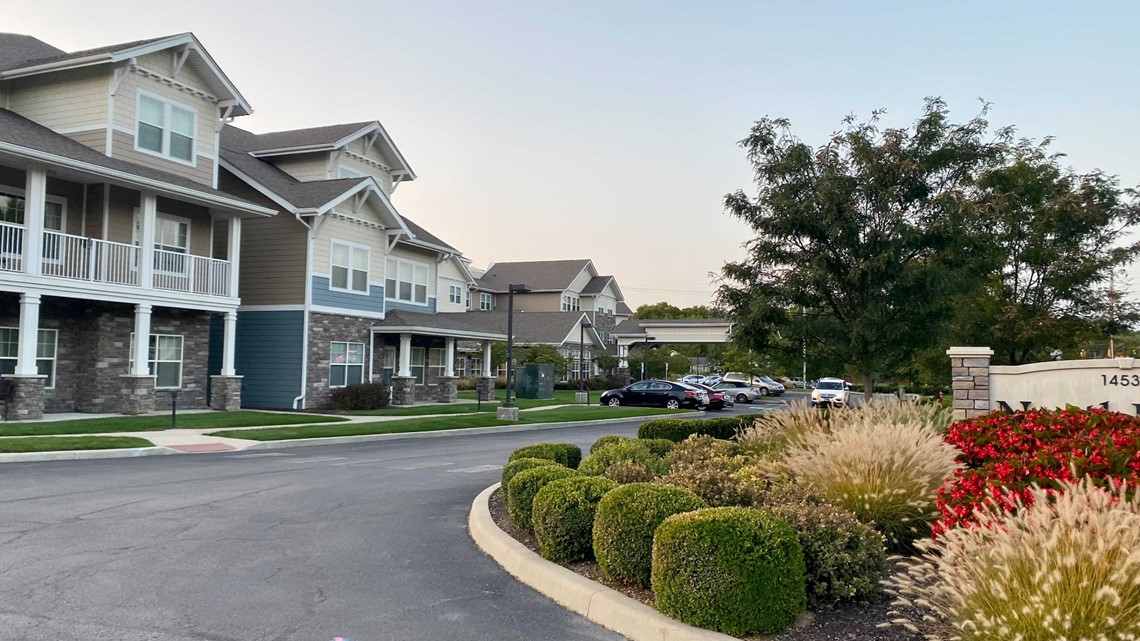
Pflugerville Health Care Center

By Julie Chang

About half of the residents at a Pflugerville nursing home have tested positive for COVID-19 in recent weeks. But even in the face of the outbreak, some families are urging officials to let them in to care for their loved ones.

“It’s some of the most pathetic circumstances you could put someone in right now,” said Rachel Finney, whose 90-year-old grandmother is in Pflugerville Health Care Center and has tested negative for the disease. “Having a visit with family and outside safely would do a lot for her state of mind.”

Finney is among thousands of Texans who are waiting for the chance to see their loved ones in person inside nursing homes for the first time in six months.

Although state officials started allowing visitors inside facilities in August, the requirements that facility operators had to meet – including testing staff weekly and being COVID-19-free for at least two weeks – were so stringent that fewer than 10% of nursing facilities opened up.

On Thursday, the state cracked the doors to all Texas nursing homes, allowing up to two designated family members per resident to come in at any time to care for their loved ones. While some nursing home resident advocates fear the move would open the floodgates to COVID-19, many family members across the state have said the disease is already spreading, even under lockdown protocols that have prevented family members from entering.

“Their loved ones (inside nursing homes) are already being exposed to people,” said Mary Nichols, a North Texas resident and leader of Texas Caregivers for Compromise, a 2,900-member group advocating for family member access into nursing homes. “Plumbers are going in. IT techs are going in. Nursing students are going in. There are so many untested people going in, and here we’ve got family members willing to be tested, willing to wear personal protective equipment.”

A petition asking for family member visitations has garnered more than 25,000 signatures over a three-month period.

‘Everybody is on edge’

Finney said her grandmother, who has dementia, has been having a hard time. Prior to the pandemic, most of her socialization came from her son and grandchildren. She had regular outings with her family and would spend major holidays with them.

Since being locked down, her dementia has worsened, recounting events from decades ago as if they had happened yesterday, Finney said.

“One thing I’ve noticed is that it’s getting harder for her to get out of her bed to the wheelchair. She’s just not getting out as much now,” Finney said. “No activities are happening. No music is happening. Everybody is on edge and scared for their lives. It must be a nightmare.”

Finney said she would follow any safety protocols — including being tested, wearing personal protective equipment and conducting visitations outdoors — just to be able to see her grandmother beyond glimpses through a glass window.

The recent outbreak at the center has further stripped Finney of contact with her grandmother, moving her into another room away from residents with COVID-19 residents and from her landline phone.

Finney no longer can hand off food to staff members to give to her grandmother.

On Thursday, her grandmother refused to see Finney.

“It’s just so disorienting,” Finney said. “She doesn’t feel good pretty much all the time.”

Officials with the nursing home, which is operated by Indiana-based Chosen Healthcare, did not return multiple requests for comment last week.

Pflugerville Health Care Center, which has about 95 residents, according to residents’ families, documented 48 resident COVID-19 cases and 10 staff cases on Tuesday. For weeks, the nursing home had only documented three cases, according to the Texas Health and Human Services Commission, which oversees the state’s 1,200-plus nursing homes.

The nursing home has seen two deaths from COVID-19, according to the latest data available from Austin Public Health.

The nursing home has been preventing family members from visiting, so it’s likely that a staff member infected residents. Texas requires nursing homes to test staffers weekly to allow visitors other than caregivers.

Nursing home and assisted living resident cases in Travis, Williamson, Hays and Bastrop counties have reported 1,438 coronavirus cases combined; 230 of those patients have died, as of Sept. 11, the latest data available from the Texas Health and Human Services Commission.


Sue Schnars, whose 44-year-old daughter Ivana has tested positive for COVID-19, does not blame the staff or the nursing home for the outbreak.

They have treated Ivana, who is nonverbal and in a wheelchair, with compassion, have allowed Schnars to video chat with her and have texted Schnars every day with updates on Ivana, Schnars said. The Texas Health and Human Services Commission should be held responsible, she said, because it has been making the decisions on how nursing homes should operate during the pandemic, yet the virus continues to spread inside the facilities.

She said caregivers like herself should have been allowed to enter the facility since the beginning of the pandemic because locking everyone out hasn’t kept the disease at bay.

“The most difficult piece is not being able to see her,” Schnars said. “I really hold the government responsible, because we are no more at risk of bringing this into a nursing facility than the staff that go home every day.”


‘She never smiled’

Schnars said she has seen a visible change in Ivana’s demeanor in the times she has seen her through the window and the one time she took her to a doctor’s appointment.

“When I picked her up to take her to the doctor in June, she never opened her eyes. She never smiled. I had the music blaring in the van, and I was like, ‘Ivana, we get to be together,’ and she never smiled,” Schnars said. “She does that when she’s angry. She doesn’t have the cognition to understand where I am, and I’ve been her constant for 44 years.”

Schnars said if she thinks about Ivana and her current circumstances too much, she starts to cry.

“I’m not sleeping. If I think about it too much, my heart starts racing. But at the same time, what I keep telling myself is these people (the nursing home staff) wouldn’t be there if they didn’t have a calling to work with the elderly. And what they need from me more than anything right now is support,” Schnars said.

She looks forward to being able to visit with Ivana, do her laundry, read to her and decorate her room.

State officials started allowing designated caregivers to enter nursing homes Thursday, but resident advocates were not expecting all facilities to be prepared to let those outsiders enter. State officials released rules Wednesday that facilities had to follow to allow family caregiver visits, leaving very little time for facilities to have new protocols in place.

“With the short time period between release of the rule and implementation, the learning curve for preparedness can be pretty steep,” said Kevin Warren, head of Texas Health Care Association, which represents nursing homes and other long-term care facilities. “Facilities must develop visitation policies, testing/training policies for visitors, additional screening requirements, and data collection requirements, as well as implement visitation schedules and coordination.”

Other states have allowed some family members to enter facilities, including in Minnesota, Indiana, New Jersey and Massachusetts.

All nursing homes must allow designated family caregivers to enter nursing homes at any time. Caregivers must follow certain testing protocols and can’t visit with a family member if they’ve tested positive for COVID-19. Nichols and her group are on the lookout for nursing homes that might take advantage of loopholes in the state regulations to prevent visitors from entering.

Patty Ducayet, the state’s long-term care ombudsman who advocates for resident interests, said the resistance from nursing homes to reopen to visitors comes from the fact that these facilities are overburdened.

“We’ve just exposed decadeslong problems in our nursing facilities with COVID-19. I definitely believe there’s a genuine concern about just how to manage the infection control process with visitors that they haven’t really had to think about it,” Ducayet said. “And then, there’s a lot of things that facilities feel may be better off not letting other people see.”

Nichols said visitations are desperately needed because guardians are losing the power to have a say in the care of their loved ones, residents have unequal access to family members, and residents are losing the will to live.

She recounted the recent death of a family member.

“She said, ‘I’m living in a jail.’ She went from her walker to her wheelchair within a matter of three weeks. She told my sister-in-law, ‘I do not want to live like this,’” Nichols said. “So, she didn’t.”

The benefits of allowing caregiver visits is worth the risk of COVID-19, Ducayet said.

Given how cautious the state has been in reopening nursing homes, Ducayet doesn’t believe there will be excessive visitors. She trusts the government will reduce visitations if there’s an increase in cases.

“What efforts were made to protect people’s health and safety really failed to take into account the psychological and physical effects of that separation from people who matter to residents,” Ducayet said. “What state officials have done with Texas nursing facilities and the essential caregiver is a very strong stance that almost gives the resident a right to this person.”

Full Article & Source:

Ex-care home bosses charged over dozens of Covid deaths in Massachusetts

  • More than 70 people have died of coronavirus at home in Holyoke
  • Ex-superintendent is being made a scapegoat, lawyer says
The Holyoke Soldiers’ Home. Massachusetts is conducting several investigations into long-term care facilities with high coronavirus deaths. Photograph: Brian Snyder/Reuters

Massachusetts’ top law enforcement official has brought criminal charges against former leaders of a nursing home for military veterans, for allegedly making a fatal decision that led to the deaths of many dozens of elderly residents and staff.

Former superintendent Bennett Walsh, 50, and Dr David Clinton, 71, were indicted last week on 10 criminal neglect charges each, according to state attorney general Maura Healey. The two have not been taken into custody and will be arraigned at a later date.

“We began this investigation on behalf of the families who lost loved ones under tragic circumstances and to honor these men who bravely served our country,” Healey said Friday. “We allege that the actions of these defendants during the Covid-19 outbreak at the facility put veterans at higher risk of infection and death and warrant criminal charges.”

Healey said she believes this is “the first criminal case in the country brought against those working in nursing homes during the Covid-19 pandemic”. The state is conducting several investigations into long-term care facilities with high coronavirus deaths.

Healey’s office interviewed 90 families affected by the outbreak at the facility.

Those charges are five counts each of a caretaker who wantonly or recklessly commits or permits bodily injury to an elder or disabled person, and another related to the alleged “abuse, neglect or mistreatment” of an elderly or disabled person.

The criminal neglect charges are punishable by up to three years in prison, and each count of elder neglect carries a sentence of up to 10 years.

Walsh was suspended in late March, and fired in late June following the publishing of an independent report by Boston attorney Mark Pearlstein, which revealed disturbing allegations around Walsh’s response to the virus in the long-terms care.

According to Healey, who echoed the findings of the Pearlstein report, Vanessa Lauziere, the former chief nursing officer of the Holyoke Soldiers’ Home, and then superintendent Walsh decided to combine 42 residents of two locked dementia care units – some with Covid-19 and most who did not – into a single room with a capacity of 25 people.

Social worker Carrie Forrant said it felt like the veterans were being moved to a concentration camp.

“We [were] moving those unknowing veterans off to die,” she told Pearlstein and his investigators in the June report. Other social workers interviewed in both investigations expressed concern over short staffing and not having enough people to help elderly people in all units.

The merging of the two dementia care units could have been averted if officials had sent patients in need of emergency medical care to an area hospital, which an emergency response team did when they were finally called into the home on 30 March.

The emergency response team found what was described as a “war zone,” with veterans crowded together, some unclothed and some “obviously in the process of dying from Covid-19.” By June, 76 veterans had died from the disease, and dozens more residents and nursing staff were ill with the virus.

“They risked their lives from the beaches at Normandy to the jungles of Vietnam,” Healey said. “To know they died under the most horrific circumstances is shocking.”

Tracy Miner, an attorney for Walsh, said: “At all times, Mr Walsh relied on the medical professionals to do what was best for the veterans given the tragic circumstances of a virus in a home with veterans in close quarters, severe staffing shortages, and the lack of outside help from state officials. The attorney general should not be scapegoating Mr Walsh.”

 
Full Article & Source:

Indiana Stage 5: Gyms, nursing homes prepare for changes

by Lauren Kostiuk

INDIANAPOLIS — State leaders announced Wednesday that Indiana will move to Stage 5 of its reopening plan for COVID-19 starting Saturday.  

Much of the focus has been on restaurants and bars returning to full capacity, but restrictions are also being lifted on nursing homes and fitness centers.  

For some, it's been months since they’ve been able to visit loved ones living at nursing facilities or retirement homes due to COVID-19 restrictions. Some places were able to allow visitors during Stage 4 while others opted to wait.  

Northridge Gracious Retirement Home has been allowing visitors with some restrictions, like temperature checks and shortened hours, from 2 to 5 p.m. 

“Oh, the hugs. I can give my son-in-law and daughter a hug when they come to my room,” said Lois Poort, one of the residents.  

Under Stage 5, nursing homes and assisted living facilities are required to provide visitation opportunities.  

Managers at Northridge said they are working with owners for the next steps but said many of the same guidelines will remain in place.  

Also, gyms and fitness centers are preparing for the changes under Stage 5. According to the state, businesses can resume normal operations.  

Credit: WTHR
 
Nursing homes and other care facilities can permit visitation again under Stage 5 of the state's reopening plan.

Many fitness centers we spoke with said they will not be changing protocols. LivRite Fitness in Fishers will still require people to wear masks, except when on cardio machines. They also must sanitize all equipment.  

“I know you can’t control it, but for us, we still want people to have peace of mind and feel that the place is safe to work out in,” said Jared Newson, LivRite manager.  

If you plan to work out after Saturday, it is best to call your gym to learn their policies.

 
Full Article & Source:

Monday, September 28, 2020

Defamation lawsuit against Netflix linked to “Dirty Money” episode “Guardians, Inc.” which has a Massachusetts plot

By Trevor Ballantyne

A lawyer who represented a Needham man featured in an episode of the Netflix investigative series “Dirty Money” is suing the online streaming service and nine other defendants in a defamation lawsuit filed in Middlesex District Court last month.

Released in late March, the episode features interviews with John Savanovich, an elderly former Needham resident who alleges the local attorneys he hired in 2015 used the conservatorship system in Massachusetts to steward the sale of six run-down properties he owned near the town’s border with Newton. Episode 9 of the second season is titled “Guardians, Inc.” and the description on Netflix says, “The rampant abuse of laws meant to protect the elderly has left many seniors penniless, powerless and isolated from their families.”

On Aug. 18, lawyers representing Nicholas Louisa, one of the attorneys Savanovich hired, filed a 38-page complaint claiming the episode defamed Louisa’s reputation by presenting a false narrative that left out key circumstances related to the real estate transactions and legal proceedings highlighted in the Netflix documentary.

Along with the charge of defamation, Louisa’s complaint says the release of the Netflix episode in March constituted intentional and negligent infliction of emotional distress.

New development on land once owned by John Savonovich

The suit claims that, as a result of the episode, Louisa has been targeted with threats and harassment.

Louisa lawsuit presents different narrative

The narrative presented by Netflix features a seemingly mentally fit 74-year-old Savonovich who provides detail on how he came to hire Louisa. According to Savonovich, Louisa eventually used money from a property sale to have Savonovich declared mentally unfit and moved to an assisted living facility in Dedham.

In the lawsuit, Louisa denies those allegations, claiming the Netflix documentary misrepresented the case.

According to a copy of the complaint, “the [Dirty Money] episode reports, falsely, that Attorney Louisa committed crimes and ethical violations in fleecing a ‘bewildered’ Savonovich out of millions of dollars by causing the police to remove him from ‘his childhood home’ and transferring him ‘against his wishes ... to an assisted living facility’ so that [Louisa] and his colleagues could sell Mr. Savanovich’s real estate and leave him ‘totally penniless and a ‘ward of the state.’”

According to Louisa’s complaint, Savanovich sought the legal assistance as the town prepared to enter into receivership proceeding that took place in Dedham District Court in 2016. According to filings from those proceedings, the condition of Savanovich’s property at 26 Highland Terrace was, “unfit for human habitation and endanger[ed] or materially impair[ed] the health, safety and well-being of occupants, neighbors, and/or the public.”

After helping Savanovich sell the property on Highland Terrace, Louisa used money from the sale to address, in part, real estate taxes Savonovich owed. Louisa’s lawsuit says he became increasingly concerned over his elderly client’s health and well-being after a December 2017 wellness check by Needham police found him living in allegedly squalid conditions and suffering from frostbite.

In November 2019, Louisa’s representation of Savanovich ended after Probate Court proceedings that he initiated found Savanovich mentally incapacitated and appointed Attorney Alexandra Golden as his legal guardian and conservator, the lawsuit notes. According to the lawsuit, the approximately $3 million collected from the sale of his remaining properties is used to pay nursing home bills for Savanovich along with a monthly stipend.

Louisa v. Netflix, Et Al. - Complaint Aug. 18, 2020

Defamation lawsuit targets media defendants

Co-defendants in the lawsuit filed by Louisa include Jigsaw Productions and its subsidiary Muddy Waters Productions, the companies hired by Netflix to produce the “Dirty Money” episode, and an Essex County attorney.

The lawsuit claims the attorney, who attempted to intercede in Savanovich’s case and whose interviews appear in the Netflix documentary, provided information, including impounded court documents, to the “Dirty Money” episode’s producers and another co-defendant, the owner of the Peabody-based print and web publication Boston Broadside.

The case may be headed to federal court after attorneys representing Boston Broadside filed a request Sept. 14 to move the trial from to the First U.S. District Court in Boston because it deals with First Amendment issues, Universal Hub reported Wednesday.

Defamation claims against a media defendant constitute a federally based claim independent of the Massachusetts defamation common law claim and First Amendment implications in the case mean Louisa and his attorneys have a constitutional burden to show the falsity of each statement cited in Louisa’s claim, according to a copy of the venue change request filing.

Scroll down to read the entire document >>

Louisa v. Netflix, Boston Broadside, Et Al. - Venue Change Sept. 14, 2020


Full Article & Source:

Senate Unanimously Passes Bill to Protect Seniors with Alzheimer’s & Other Dementias from Elder Abuse


Bipartisan bill was introduced by Senators Collins, Menendez & Grassley
 
WASHINGTON – Approximately one in 10 seniors aged 60 and older have experienced some form of elder abuse. For people with Alzheimer’s and related dementias, the prevalence is much higher, with some estimates putting it at just over 50 percent. 
 
The U.S. Senate unanimously passed legislation authored by Senators Susan Collins (R-Maine), Bob Menendez (D-N.J.), and Chuck Grassley (R-Iowa) to protect seniors with dementia from harm and exploitation. The Promoting Alzheimer's Awareness to Prevent Elder Abuse Act would ensure that the Department of Justice’s elder abuse training materials take into account individuals with Alzheimer’s disease and related dementias.
 
“America’s seniors too often face abuse and exploitation. Preventing and responding to these crimes can be particularly challenging in cases involving Alzheimer’s and or other forms of dementia. I was honored to lead the recent effort to strengthen the Justice Department’s tools to combat elder abuse and I’m grateful that the Senate passed this important bill to equip law enforcement with critical training to better respond to cases involving Alzheimer’s and dementias,” Grassley said.
 
“As Chairman of the Senate Aging Committee, one of my top priorities is protecting our seniors against abuse. During the COVID-19 pandemic, there may be increased risk for elder abuse, including elder financial exploitation. Our bipartisan bill would help to ensure that the frontline professionals who are leading the charge against elder abuse have the training needed to respond to cases where the victim or a witness has Alzheimer’s disease or other forms of dementia,” said Collins, a founder and co-chair of the Congressional Task Force on Alzheimer's Disease. 
 
“I am thrilled that the Senate has unanimously passed our bill, fully recognizing that we must address the fact that as the number of Americans struggling with Alzheimer’s disease and dementia continues to grow, so does the potential for exploitation, physical or emotional abuse, and neglectWe must do more to provide the education caregivers, social service and health providers, law enforcement and others need to understand the unique symptoms people with AD/ADRD may have, as well as the training necessary to ensure they are safe from abuse and can live with dignity,” Menendez said.
 
The legislation is supported by the Alzheimer’s Association, Alzheimer’s Foundation of America, Alzheimer’s Impact Movement, Elder Justice Coalition, American Geriatrics Society, American Society on Aging, B’nai B’rith International, Gerontological Society of America, International Association for Indigenous Aging, Jewish Federations of North America, Justice in Aging, LEAD Coalition (Leaders Engaged on Alzheimer’s Disease), National Adult Protective Services Association, National Association of Area Agencies on Aging (N4A), National Association of Elder Law Attorneys, and SAGE: Advocacy and Services for LGBT Elders.
 
“On behalf of the more than 5 million Americans living with Alzheimer’s I want to thank Senators Collins, Menendez, and Grassley for their leadership on this critical bill,” said Robert Egge, Alzheimer's Association chief public policy officer and Alzheimer’s Impact Movement (AIM) executive director. “The bipartisan Promoting Alzheimer’s Awareness to Prevent Elder Abuse Act will help protect our nation’s most vulnerable from abuse and lead to better outcomes for all people living with dementia.”  
 
Specifically, the Promoting Alzheimer's Awareness to Prevent Elder Abuse Act would: 
  • Require that the National Elder Justice Coordinator take into account people with Alzheimer’s disease and related dementias when creating or compiling elder abuse training materials;
 
  • Instruct DOJ to consult with stakeholders, as appropriate, in developing these materials and to review and update existing materials; and
 
  • Include information in DOJ’s annual report about where to access the publicly available training materials.
 
The bill builds on Grassley’s Elder Abuse Prevention and Prosecution Act, which became law in October 2017 and required DOJ to create training materials to help criminal justice, health care, and social services personnel assess and respond to elder abuse cases. It also aligns with the latest recommendations from the National Plan to Address Alzheimer’s Disease, which include disseminating information on abuse of those with dementia and educating law enforcement about interacting with these individuals.
 
 
Full Article & Source:

Two Massachusetts Veterans home administrators charged for their handling of COVID-19 virus.

Alex Schadenberg
Executive Director, Euthanasia Prevention Coalition
 
Holyoke Former Soldiers' Home
The Associatied Press has reported that two Massachusetts veterans home administrators have been charged based on their handling of the COVID-19 virus. 76 residents at the Holyoke Former Soldiers' Home died.

Massachusetts Attorney General Maura Healey said that the Holyoke Former Soldiers’ Home Superintendent Bennett Walsh and former Medical Director Dr. David Clinton could each face prison time if convicted of charges of causing or permitting serious bodily injury or neglect of an elder.

The Alanna Durkin Richer stated in her Associated Press report that:
The charges come three months after a scathing independent report said “utterly baffling” decisions made by Walsh and other administrators allowed the virus to spread there unchecked. The “worst decision” was to combine the two locked dementia units, both of which already housed some residents with the virus, said investigators led by former federal prosecutor Mark Pearlstein.

Healey said Walsh and Clinton were the ones ultimately responsible for the decision to combine the two units, which she said led to “tragic and deadly results.” More than 40 veterans were packed into a single unit that usually had 25 beds, and space was so limited that nine veterans — some with symptoms and some without — were sleeping in the dining room, Healey said.

“This never should have happened. It never should have happened form an infection controls standpoint,” Healey said.

Since March 1, 76 veterans who contracted COVID-19 at the home have died, officials said. The first veteran tested positive March 17. Even though he had shown symptoms for weeks, staff “did nothing to isolate” him until his test came back positive, allowing him to remain with three roommates, wander the unit and spend time in a common room, investigators found.

Decisions that led to deaths of nursing home residents must be investigated. On July 8 I published an article urging an independent investigation into New York Governor Andrew Cuomo's policy that forced nursing homes to accept COVID-19 contagious residents. On July 20 I published an article about California Governor Gavin Newsom forcing nursing homes to accept COVID-19 contagious residents.

Policies that led to the deaths of nursing home residents were particularly horrific in some places but it happened in many US states. On June 28 I published an article explaining that 43% of all US COVID-19 deaths were nursing home residents.

Deaths of nursing home residents was even a greater problem in Canada. On June 25 I published an article explaining that 81% of COVID-19 deaths in Canada were nursing home residents. On June 26 I published an article asking how many Canadian nursing home residents with COVID-19 were killed?

Charges at the Former Soldiers’ Home in Holyoke Massachusetts are the first but they should not be the only charges. Nursing home residents were subject to degrading conditions that led to their deaths. This can only be described as elder abuse. Whether they are veterans or not, they deserve equality before the law. They deserve Justice. 

 
Full Article & Source:

Sunday, September 27, 2020

Paducah attorney charged with neglect of an adult, state police say

by Leanne Fuller

PADUCAH — A grand jury has indicted an attorney from Paducah on a charge of abuse of an adult, Kentucky State Police announced Saturday night. 

Kentucky State Police Post 1 says detectives began investigating 66-year-old attorney Kenneth V. Anderson after receiving a complaint from the Kentucky Department for Community Based Services. Anderson was granted guardianship of a 23-year-old Ballard County man who has "severe disabilities" in March of 2019, KSP says. 

State police say DCBS investigators made contact with the 23-year-old man in December, and "it was apparent he was not being cared for."

Investigators say the man was emaciated and "extremely malnourished." He was immediately taken to a hospital, and he was later taken to a care facility in Louisville, where KSP says he has made a full recovery. 

KSP charged Anderson with one count of knowingly abusing or neglecting an adult, and a Ballard County grand jury indicted Anderson on the charge. 

Post 1 says detectives are continuing to investigate the case. 

Full Article & Source:

Nursing Homes Given Federal Go-Ahead To Allow More Visitors

by Ina Jaffe

Larry Yarbroff visits his wife Mary at Chaparral House in Berkeley, Calif. in July. California health authorities had allowed some visits to resume, and now federal regulators are doing the same, with measures to try to block the spread of the coronavirus.

Jeff Chiu/AP

The Centers for Medicare and Medicaid Services, which regulate nursing facilities, are lifting the ban on visitors, effective immediately. CMS imposed the restriction in March in an effort to control outbreaks of the coronavirus.

Advocates for nursing home residents and family organizations have been clamoring for a repeal, noting the many residents who have suffered anxiety or depression, as well as physical or mental decline since the ban was imposed. The issue was also raised in the report of the Coronavirus Commission for Safety and Quality in Nursing Homes, which became public on Wednesday.

Now, all nursing homes can allow outdoor visits with social distancing, as a few states have recently allowed. And most nursing homes can allow indoor visits as long as there have been no new COVID-19 infections in the past 2 weeks and the infection rate in the surrounding county is no more than 10%. But CMS recommends that nursing homes limit how many visitors a resident can have at one time, as well as limiting the number of visitors that can be in the facility at once. 

A nursing facility that fails to allow visitation without a valid medical reason can suffer sanctions.

Also, nursing home residents can once again participate in social activities and communal dining, as long as there is social distancing and residents wear masks.

Since March, family members have only been allowed to visit their loved ones for so-called compassionate care. This was interpreted strictly by many nursing homes to mean end of life situations. The new guidance from CMS expands the criteria to include residents who were living with their family before admission to the nursing home and are now struggling with the change in environment, residents who need family members to provide encouragement with eating or drinking, and residents experiencing emotional distress or crying more frequently. The guidance says this should not be regarded as an exhaustive list.

The fines that the government collects for nursing home violations can now be used for facilities to buy technology that aids in family communication, as well as plastic partitions, tents, or other equipment that can help prevent transmission of the virus.

The rules do not apply only to the nursing homes. CMS states that visitors who don't follow infection prevention routines such as wearing a mask, should not be permitted to visit or should be asked to leave.

Full Article & Source:

Loneliness and Social Isolation Linked to Serious Health Conditions

Social isolation was associated with about
a 50% increased risk of dementia and other
serious medical conditions.
Loneliness and social isolation in older adults are serious public health risks affecting a significant number of people in the United States and putting them at risk for dementia and other serious medical conditions.

A new reportexternal icon from the National Academies of Sciences, Engineering, and Medicine (NASEM) points out that more than one-third of adults aged 45 and older feel lonely, and nearly one-fourth of adults aged 65 and older are considered to be socially isolated.1 Older adults are at increased risk for loneliness and social isolation because they are more likely to face factors such as living alone, the loss of family or friends, chronic illness, and hearing loss.

Loneliness is the feeling being alone, regardless of the amount of social contact. Social isolation is a lack of social connections. Social isolation can lead to loneliness in some people, while others can feel lonely without being socially isolated.

Health Risks of Loneliness

Although it’s hard to measure social isolation and loneliness precisely, there is strong evidence that many adults aged 50 and older are socially isolated or lonely in ways that put their health at risk. Recent studies found that:

  • Social isolation significantly increased a person’s risk of premature death from all causes, a risk that may rival those of smoking, obesity, and physical inactivity.1
  • Social isolation was associated with about a 50% percent increased risk of dementia.1
  • Poor social relationships (characterized by social isolation or loneliness) was associated with a 29% increased risk of heart disease and a 32% increased risk of stroke.1
  • Loneliness was associated with higher rates of depression, anxiety, and suicide.
  • Loneliness among heart failure patients was associated with a nearly 4 times increased risk of death, 68% increased risk of hospitalization, and 57% increased risk of emergency department visits.1

Immigrant, LGBT People Are at Higher Risk

The report highlights loneliness among vulnerable older adults, including immigrants; lesbian, gay, bisexual, and transgender (LGBT) populations; minorities; and victims of elder abuse. It also points out that the literature base for these populations is sparse and more research is needed to determine risks, impacts, and appropriate actions needed.

Current research suggests that immigrant, and lesbian, gay, bisexual populations experience loneliness more often than other groups. Latino immigrants, for example, “have fewer social ties and lower levels of social integration than US-born Latinos.” First-generation immigrants experience stressors that can increase their social isolation, such as language barriers, differences in community, family dynamics, and new relationships that lack depth or history, the report states. Similarly, gay, lesbian, and bisexual populations tend to have more loneliness than their heterosexual peers because of stigma, discrimination, and barriers to care.

What Can You Do If You Are Experiencing Loneliness?

Your doctor can assess your risk for loneliness and social isolation and get you connected to community resources for help, if needed. The following national organizations also offer helpful resources:

Area Agencies on Agingexternal icon (AAA)—A network of over 620 organizations across America that provides information and assistance with programs including nutrition and meal programs (counseling and home-delivered or group meals), caregiver support, and more. The website can help you find your local AAA, which may provide classes in Tai Chi and diabetes self-management.

Eldercare Locatorexternal icon—A free national service that helps find local resources for seniors such as financial support, caregiving services, and transportation. It includes a brochure that shows how volunteering can help keep you socially connected.

National Council on Agingexternal icon—Works with nonprofit organizations, governments, and businesses to provide community programs and services. This is the place to find what senior programs are available to assist with healthy aging and financial security, including the Aging Mastery Program® that is shown to increase social connectedness and healthy eating habits.

AARPexternal icon—Provides helpful information to seniors to help improve quality of life and provides access to Community Connection Tools.

Health Care System Interventions Are Key

People generally are social by nature, and high-quality social relationships can help them live longer, healthier lives. Health care systems are an important, yet underused, partner in identifying loneliness and preventing medical conditions associated with loneliness.

Nearly all adults aged 50 or older interact with the health care system in some way. For those without social connections, a doctor’s appointment or visit from a home health nurse may be one of the few face-to-face encounters they have. This represents a unique opportunity for clinicians to identify people at risk for loneliness or social isolation.

NASEM recommends that clinicians periodically assess patients who may be at risk and connect them to community resources for help. In clinical settings, NASEM recommends using the Berkman-Syme Social Network Index (for measuring social isolation) and the three-item UCLA Loneliness Scale (for measuring loneliness).

But patients must make their own decisions. Some people may like being alone. It is also important to note that social isolation and loneliness are two distinct aspects of social relationships, and they are not significantly linked. Both can put health at risk, however.

Reference

1 National Academies of Sciences, Engineering, and Medicine. 2020. Social Isolation and Loneliness in Older Adults: Opportunities for the Health Care System. Washington, DC: The National Academies Press. https://doi.org/10.17226/25663external icon.

Full Article & Source: