|
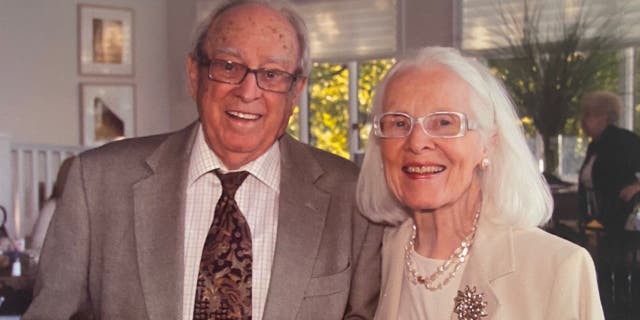
Julie Beckett
|
CEDAR RAPIDS, Iowa — More than 40 years ago, Julianne “Julie” Beckett fought to bring her daughter home.
The Cedar Rapids resident advocated to remove bureaucratic red tape
that prevented her for caring for her daughter with a disability at
home, eventually bringing her case to the halls of Congress and into the
White House.
Policymakers and disability rights advocates say Beckett was
instrumental in bringing fundamental changes to the federal Medicaid
program that ultimately improved the lives of hundreds of thousands of
families nationwide. She became a lifelong advocate for improving health
care for children with disabilities and boosting support for families
caring for loved ones with complex medical needs.
Beckett died in her Cedar Rapids home on May 13. She was 72.
Beckett’s daughter, Katie Beckett, was born in 1978 and contracted
viral encephalitis — a serious infection that causes inflammation of the
brain — when she was 6 months old. The infection resulted in a
paralyzed diaphragm, significantly affecting her ability to breathe on
her own. A tracheotomy tube was placed in her throat and she used a
ventilator to help her breathe for the rest of her life.
Katie spent the next three and a half years in the hospital.
Medicaid took over coverage of Katie’s care after her parents’
insurance hit the $1 million benefit limit for coverage. At the time,
the Medicaid program supported only hospital-based care, meaning Katie’s
care would not be covered if she were discharged home.
Beckett began advocating for the ability to care for her daughter at
home. In 1981, she contacted former U.S. Rep. Thomas Tauke, a Republican
who at the time was representing Iowa’s 2nd Congressional District.
Katie’s hospital care was about $12,000 per month, but costs would
drop to about $2,000 per month if her parents were allowed to care for
her at home with the help of home health nurses.
“It was one of those situation where the rules of government didn’t
meet the needs of the family,” Tauke told The Gazette recently.
He continued, “Julie was a very positive person. She obviously faced a
lot of frustration with the situation, but she did not let that
frustration deter her.”
Tauke brought the family’s story to Vice President George H.W. Bush,
who brought the matter to President Ronald Reagan. In a news conference
Nov. 10, 1981, Reagan cited Katie’s case as an example of “hidebound
regulation.”
The Katie Beckett Waiver was created shortly after, establishing a
program that allowed individuals with disabilities to use Medicaid
dollars to get health care while living at home or in the community.
Beckett’s efforts resulted in a fundamental shift in the federal
program. The Katie Beckett waiver became the foundation for Medicaid
community-based supports nationwide, which has gone on to improve the
quality of life of hundreds of thousands of children with complex
medical needs nationwide.
“She didn’t know that she was going to tip history the way that it
did,” said Delaine Petersen, a fellow advocate and friend of Beckett’s
since the 1980s. “Her first and foremost goal was to get that child
home, but she talked to the right people and people listened to her.”
Katie went home on Dec. 18, 1981. She went on to graduate from Mount
Mercy University in 2001 and lived independently in Cedar Rapids.
“Julie worked so hard to help Katie be as successful as she possibly could be,” Petersen said.
Last month marked 10 years since Katie Beckett died. She was 34.
Throughout the 1980s and 1990s, Beckett continued to work with
policymakers in Washington to develop programs to improve health care
and remove barriers for children with complex needs. She was a driving
force behind legislation like the Family Opportunity Act, and pushed
federal leaders to embrace a family-centric model that better
acknowledged family members’ roles in care.
In 1992, she founded Family Voices, a national nonprofit organization
that brought together families of children with disabilities who were
advocating for health care reform.
Among her many accomplishments, she helped the organization establish
Family-to-Family Health Information Centers, federally funded resources
that now exist in all states and in five territories.
Family Voices Executive Director Nora Wells said Beckett retired from the board of directors last year after nearly 30 years.
“She was a person that wanted to fix things,” Wells said. “If there
was a problem she thought she could contribute to, she was on board. She
thought bigger than her own family, and wanted to improve systems and
make things better for people.”
In a statement on Beckett’s death, U.S. Sen. Chuck Grassley said the
country “lost a passionate advocate for children and youth with special
health care needs and disabilities.”
“While Julie would often say she was ‘Katie Beckett’s mom,’ we also
knew her as a passionate advocate and servant leader,” Grassley wrote.
“Julie’s lifelong pursuit to improve the lives of children and youth
with special health care needs and disabilities made an impact for the
better for her community, state and nation.”
The Iowa Department of Human Services also issued a statement noting
the loss of “a pioneering advocate and champion for children.”
“Julie dedicated her life to championing the cause of children with
complex medical needs. While we mourn her passing, we also celebrate the
life of an Iowan whose work touched the lives of countless children and
families across the United States. Julie will be deeply missed,” state
officials said.
Beckett was working to improve the lives of Iowans and others across
the country up until her final days. Petersen said they had planned a
trip to Washington in June to meet with Grassley and other elected
officials to discuss their concerns about current wait times for
Medicaid members to receive services.
“She never, ever stopped being an advocate,” Petersen said. “You
don’t have to be rich, loud or famous to make a difference. I think
Julie would say, ‘I was just a mom and I did the right thing.'”