After suffering seizures and falling into a coma for twelve days, the unthinkable happened.

Showing posts with label healthcare. Show all posts
Showing posts with label healthcare. Show all posts
Tuesday, November 21, 2023
LittleVids ep 22: Coma Woman Whispers


Monday, February 20, 2023
High court judge ‘deeply frustrated’ by NHS delays in suicidal girl’s care
12-year-old has been held alone in a locked, windowless room for three weeks because doctors disagree on her diagnosis
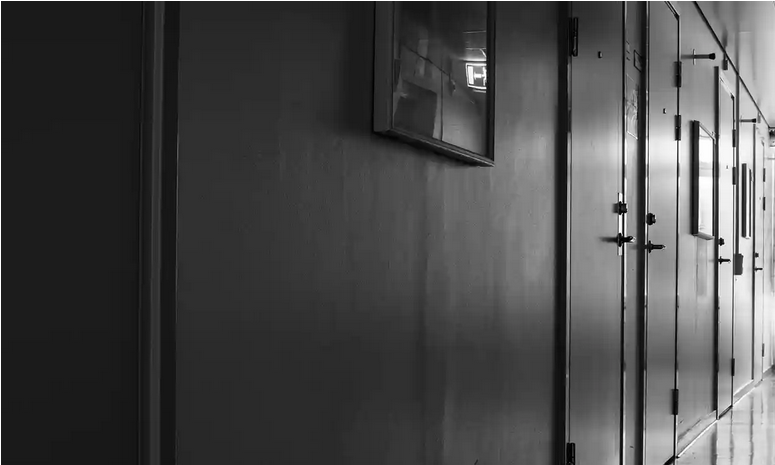 |
| An NHS hospital corridor. The delays caused Mrs Justice Lieven to tell North Staffordshire combined healthcare NHS trust: ‘You are testing my patience.’ Photograph: Anki Hoglund/Alamy |
by Louise Tickle
A high court judge has expressed her “deep frustration” at NHS delays and bureaucracy that mean a suicidal 12-year-old girl has been held on her own, in a locked, windowless room with no access to the outdoors for three weeks.
In a hearing on Thursday, Mrs Justice Lieven told North Staffordshire combined healthcare NHS trust “you are testing my patience”, after she heard that a proposal to move Becky (not her real name), could not progress until a planning meeting that would not be held until next week, and that a move was not anticipated until 2 March.
Three sets of doctors at the hospital trust have disagreed as to Becky’s diagnosis; at her most recent assessment doctors said she was not eligible to be sectioned, which would trigger the protections provided by the Mental Health Act, because her mental disorder was not of the “nature and degree” as to warrant her detention.
In the absence of medical consent to section her, and because of previous incidents of self-harm including an attempt to throw herself from a building on to a motorway, judges have decided Becky must be deprived of her liberty by court order for her own protection.
Becky has been held in a hospital seclusion room since 27 January, her only human contact via a hatch in the door. All parties to the case agree that her deterioration while in hospital is due at least in part to her prolonged isolation in a room that has fewer home comforts than a prison cell.
The idea of moving Becky to a paediatric mental health unit, requiring renovations to make it suitable for her care, had “only recently been floated”, counsel for the trust told the court, “and unfortunately public bodies are required to go through a bureaucratic and procurement process”.
In a robust exchange, the judge demanded: “Where’s the urgency in this … I cannot believe that the life and health of a 12-year-old girl is hanging on an issue of NHS procurement, when you cannot tell me what it is you’re trying to procure.
“If the delay is procurement, I’m not having it,” Lieven continued. “I will use the inherent jurisdiction to make an order. We have a 12-year-old child in a completely inappropriate NHS unit for about three weeks, and it’s suddenly dawned on your client that ‘actually we’ll put her in a Tier 4 unit and we might have to do some [building] work.’”
Sometimes, the judge said, “public bodies have to move faster”.
The trust told the court that cost issues were not a consideration.
When asked to return her iPad to hospital staff last week, Becky broke it and attempted to swallow the glass. After being subjected to what the local authority described as “full restraint” in the course of which she assaulted staff, Becky attempted to make a ligature with a drawstring from her clothing. She was found huddled under a blanket by hospital staff and required oxygen to save her life.
Warning that Becky’s “risk of deliberate or accidental death is very high”, her guardian, who is appointed by the court, pointed out that the state had a positive obligation to protect her life. She also highlighted the state’s positive obligation to protect Becky’s human right not to be subjected to torture or inhuman or degrading treatment.
In a statement that emphasised the court must keep at the forefront of its mind the legality of Becky’s situation, the guardian stated her view that the conditions the child was living in “takes to the extreme what is permissible within the boundaries of article 5 [of the European convention on human rights] within which ‘deprivation of liberty’ authorisation operates”.
Becky’s mother is permitted to speak to the media about her daughter’s case thanks to a transparency order made by the judge.
“It’s four weeks tomorrow since I last hugged her,” she said. “I can only stroke her hair and wipe her tears through the hatch. Even now she’s in hospital seclusion she’s been able to attempt her life. I still fear a knock at the door.”
In the UK and Ireland, Samaritans can be contacted on 116 123 or email jo@samaritans.org or jo@samaritans.ie. In the US, the National Suicide Prevention Lifeline is 1-800-273-8255. In Australia, the crisis support service Lifeline is 13 11 14. Other international helplines can be found at www.befrienders.org.
Full Article & Source:
High court judge ‘deeply frustrated’ by NHS delays in suicidal girl’s care
Monday, July 20, 2020
The coronavirus means doctors, nurses and PAs are essential workers — until they get laid off
As health care workers get publicly celebrated for their heroics, behind the scenes thousands like me are getting pushed out the door.
Being
laid off left me feeling betrayed — not only by my department, but by
the entire health care system. I have hope that as a country we can come
together to support and strengthen this system. Simple, cost-effective
solutions that help employ more PAs is one of them. My job shouldn’t be
at risk every time a health crisis erupts. That’s when I and other PAs
are needed most.
Full Article & Source:
The coronavirus means doctors, nurses and PAs are essential workers — until they get laid off
 |
By Rachael Jarman, physician assistant
The last six months have been surreal. After
COVID-19 started spreading throughout the United States, I spent March
and April rolling out protocols and training our urgent care team in
combating the spread of the virus. I juggled that with examining
patients who came to our clinics with acute illnesses, some of them
life-threatening conditions that ultimately required hospitalization.
I
thought I was an essential worker, and I was willing to risk my life to
administer the care I’d spent years training to provide. But it turns
out my job was also at risk. In thanks for my service, I received a
furlough in April and a pink slip in June.
As
a lead physician assistant for an urgent care department, I never
thought my job would be dispensable during a global health disaster.
Getting rid of PAs as we face a pandemic is like laying off firefighters
when forests are ablaze. But I am hardly alone. As health care workers
get publicly celebrated for their heroics, behind the scenes thousands
are getting pushed out the door.
Nearly 1.5 million health care workers lost their jobs
in a single month this spring. Some positions have begun to reopen, but
far from all. That health care jobs are increasingly a casualty of
COVID-19 might sound absurd and unjust, but it makes cold-hearted sense
given the financial fragility — and focus — of the system. Profits are a
major driver of employment decisions, even in an industry that claims
to prioritize community health. When patient encounters decreased, it
was health care workers who saw their pay, benefits and hours decrease,
too.
Since I was a part of the leadership team in
an urgent care department, I know firsthand how we struggled to stay
abreast of ever-changing COVID-19 guidelines from health authorities. As
a team, we led our department through unprecedented uncertainty and
managed the rising anxiety of our patients and families. We planned to
work through this.
But soon, patients who
had appointments for routine care and illness were rescheduled, and
patient volume in outpatient care settings like mine decreased
dramatically. Patients were scared, and so were health care facilities.
Patients with coronavirus-like symptoms were told to go home and
self-quarantine. Their other healthcare needs were temporarily shelved
due to a fear of catching or spreading this novel virus, while COVID-19
tests were limited for weeks because of a lack of supplies. So, while
other healthcare workers walked into their hospitals to grateful
applause, I was quietly laid off.
I have 12 years of experience as a PA, mostly
in emergency and urgent care facilities. But one day last month, I
walked out of my office with a box full of well-worn medical textbooks
and an idle stethoscope. Many others face the same fate. According to
new research by the American Academy of PAs, almost nine percent of PAs
nationally are furloughed right now. And PAs are not alone; many
physicians, dentists and other clinicians also face this new reality.
One
of the ironies of this situation is that physician assistants are
taught to be flexible, quickly shift responsibilities and respond to
unanticipated needs. PAs are trained as generalists and can practice in
different specialties and settings as necessary. We diagnose illness,
develop and manage treatment plans, prescribe medications and often
serve as a patient’s principal healthcare provider. We are trained to
collaborate and work as a part of a team alongside physicians and
nurses.
Like all health care providers, PAs responded
to the COVID-19 crisis despite the lack of adequate personal protective
equipment and other resources when it first struck. They found
themselves working in other departments and specialties. When still
employed, I volunteered to be on a back-up list for the local emergency
department, though I was never called upon.
But
our versatility — perfectly suited to a time of crisis — hasn’t been
enough to save many of our jobs. Instead, it often seems the health care
industry’s ability to pivot PAs where we’re needed most is thwarted by
burdensome laws and regulations that mean we have less opportunity under
the best of circumstances, and create a domino effect when the economy
bottoms out. Though some states have removed barriers, others require each PA
to have a specific relationship with a physician in order to practice
medicine, even though PAs have their own licenses to practice and write
prescriptions.
This moment of dramatic change and need shows that these restrictions
are unnecessary. Several states removed this requirement during their
states of emergencies, a simple change that allowed patients to receive
essential, timely care. More states should follow their lead.
Even when there’s not a crisis, being tied to a
specific MD means that PAs can’t fill the vital need in providing care
to underserved patients in urban and rural communities because by
definition they lack those MDs. But now more than ever we need to
increase access to care by removing PA barriers to practice so we can
treat these communities, particularly communities of color that have
higher rates of COVID-19 infections.
Full Article & Source:
The coronavirus means doctors, nurses and PAs are essential workers — until they get laid off
Subscribe to:
Posts (Atom)