Showing posts with label people with disabilities. Show all posts

Sunday, February 19, 2023

People Do NOT Want To Live In Group Homes

by Eric Goll

You might agree with me, or you might disagree with me.

BUT, you must consider the truth of the living environment and experience of the person when we group people with disabilities and force them to live together.

It’s also helpful to hear straight from someone with lived experience, so here’s what a person shared with me about their experience living in a group home:

“I have a developmental disability and have lived in an extremely toxic group home. People who are placed in group homes don’t have the right to pick and choose whom they get to live with, which can create hostility.

I have been yelled at by both staff and roommates, as well as assaulted by roommates. After leaving that group home, I chose to find my place to live with minimal support.

To this day, I have never looked back. I have the freedom to do what I want and eat what and when I want, and if I ever decide I want a roommate I will have the freedom to choose whom I want to live with me.”

Click the video below to learn why group homes create a poor living environment, and how you can create a better living environment and home for your loved one.

Full Article & Source:
People Do NOT Want To Live In Group Homes

Saturday, November 13, 2021

'The system has failed' | Loopholes + lack of guidance are hurting those limited conservatorships are supposed to protect: People with disabilities

Many know of conservatorships from Britney Spears, but what isn't known is there are different types. One created to assist those with disabilities can hurt them.


Author: Andie Judson

CALIFORNIA, USA — Martin Bùi was born in 1980. The youngest of 11 children from a family with refugee heritage as they came to the United States from Vietnam in 1975.

Martin and his siblings grew up in Chicago, Illinois.

"He was born with a traumatic brain injury and was later diagnosed with autism," said James Bùi.

James is Martin Bùi's brother and ninth in their sibling line.

"My sister and I are very close to him. Not just approximately in age, but also just taking care of him," said James. "I guess typical in a sense of coming from a very Vietnamese, close-knit family."

A big part of home is community -- especially for their family.

"The family was talking about, 'Why not move to California?' Because there's a large Vietnamese community, largest community outside of Vietnam," said James.

But another important factor of a California move, specifically for Martin, was the Golden State's laws.

"Then you look at what's stated (in) California policy and law around disability," said James. "It sounds wonderful, right? It sounds like this is game changing in many ways."

California was especially appealing because of our probate code, the laws that oversee our conservatorship system, as Martin was under a conservatorship due to his disability.

While many have become more familiar with California's complex conservatorship system due to Britney Spears, what many don't know is there are different types of conservatorships.

There are three general types of conservatorships in California. The first is the most widely known, general conservatorship.

"Those are primarily utilized for adults that have aged or are experiencing Alzheimer's or dementia and just aren't able to manage their finances or affairs any longer," said doctoral researcher Barbara Imle. "Then you have LPS conservatorships."

Lanterman Petris Short (LPS) conservatorships are designed for people with mental health issues and allow someone to be what's known as "51/50'd" or placed in a psychiatric facility, even if it's against their will.

The third type is a limited conservatorship. These types of conservatorships are for adults with developmental or intellectual disabilities.

While specifics on conservatorships are limited due to a lack of legal mandates required to track them by state agencies or courts, the most recent data available from the two largest counties in California, as reported by the Spectrum Institute to the California Supreme Court in 2019, indicated "there are considerably fewer general conservatorships than limited." 

"Limited conservatorships are unique in how they were designed to specifically limit the power of conservators," Imle said. 

That's why when a limited conservatorship is proposed, seven separate powers are considered to be stripped from a conservatee and granted to their conservator - the person legally appointed to act on their behalf.

These seven powers include:

(1) The right to choose living arrangements

(2) Having access to confidential records

(3) The right to contract

(4) The right to give or withhold consent to medical treatment

(5) Make educational decisions

(6) Power over social and sexual relationships

(7) The right to marry

"It was really designed to be specific to the need of the person... and not be overly broad and take too many powers away where they don't need assistance," said Imle.

Imle knows this system through-and-through. She previously spent nearly a decade working in multiple regional centers - agencies spread throughout California to provide services to individuals with disabilities and their families.

But Imle said she continued to feel like she was "running into walls" and restrictions at work, especially regarding conservatorships. That's why she turned to researching these centers, trying to figure out why the system wasn't working the way she thought it would.

She is the first person to conduct research specifically on limited conservatorships and regional centers. 

What she found were some serious concerns. It's also what the Bùi family experienced after moving to California.

"The system itself looks great, but in reality, we had a very, totally different experience," said James.

Regional centers are required, by law, to submit an assessment of the proposed conservatee to the court.

"This is specifically for limited conservatorships," said Imle. "The regional center is tasked with a review of the appropriateness of the conservatorship... is it needed? Is the proposed conservator an appropriate assignment?"

But Imle found that the laws weren't translating and not "panning out in reality." She said with the 21 regional centers, there were 21 different ways of doing things.

"There's really no overall discussion of what's expected, how they're going to do it and what's going to be done," said Imle. "There's just nothing."

Since there's no overall guidance helping governing and guiding regional centers in their approaches and involvement in the limited conservatorship process, despite playing such an important role in the decision to strip someone of their rights, someone' chance of being conserved could depend simply on who they meet with and what regional center they're at.

"And it should depend on the person and their needs, not the bureaucracy guiding the process," said Imle.

Even more concerning, in some centers the proposed conservatee isn't even part of the conversation taking place on their behalf, as it's not always required for the regional center coordinator writing the report that'll be submitted to the court to meet with them.

"They do not require in-person meetings, and a lot of assessments are written just based off reading the chart and the notes in the computer system," said Imle.

If and when an assessment does make it to the court, more issues can bubble to the surface.

"While regional centers are required to the this assessment, the courts are not obligated to follow the recommendation that the regional centers make," said Imle.

Imle said a lot of the courts complain the regional center's assessments are too generic and not detailed enough. But even if a thorough assessment is provided, judges don't always include it in their decision making.

"The judge would just flip to the last page of the assessment and say, 'Okay the regional center agrees. Done and done.' But didn't actually read the report," said Imle. "Other (conservatorship petitions) have been approved without a regional center assessment being sent in."

It adds to the concern of conservatees not being a part of the decision making process for their own life. She also noted that if the proposed conservatee does attend their own hearing, they're often not even spoken to.

Imle sums it up simply: "There is a total disregard for the client's desires."

Her research has also found a lack of individualization for those being placed under the conservatorship, despite limited conservatorships being designed specifically for this, resulting in more power being taken from them.

"My thesis research found that around 60% of all requests were for seven out of seven powers," said Imle. "Which that alone is showing it's not being individualized."

But even more power is taken through a loophole Imle found: general conservatorships being appointed for some people with disabilities, rather than limited ones as intended.

"One regional center had 187 requests for general conservatorships compared to 58 for limited. That was in one year," said Imle.

When a general conservatorship is petitioned for, rather than a limited, an assessment from the regional center isn't required - meaning less work for the proposed conservator.

"(It) cuts out one extra agency that's going to be involved and increases the ease, flow, convenience of the whole process," said Imle.

She said her main concern about having a general conservatorship enacted instead of a limited one is the overall impact to people with intellection and developmental disabilities.

"It is just a sweeping assumption that the person is completely incompetent as a whole," said Imle.

Not considering the conservatee themselves is a sentiment James Bùi understands on behalf of his brother.

"We would not wish this on anybody... (it's not) how we thought California would be," said Bùi . "It failed. I think the system has failed."


Full Article & Source:
 
 
See Also: 
 

Saturday, November 14, 2020

Disability Doesn’t Need to Be Seen to Be Real

by LaVonne Roberts
 
On a cold evening in 2018, a truck rear-ended me while I was driving on a small country freeway in upstate New York. I tell people the impact was so hard, it shattered the car’s glass and broke not only the axle but my back. Overnight, diagnosed with herniated and bulging discs, I joined the largest minority in America—people with disabilities.

Since my accident, I’ve fought not to be angry or afraid. I’m not alone. About 36 million women in the U.S. have a disability. According to a survey conducted by the American College, women are most at risk financially and physically when it comes to disability. An invisible disability, as defined by the Invisible Disabilities Association, refers to “symptoms such as debilitating pain, fatigue, dizziness, cognitive dysfunctions, brain injuries, learning differences, and mental health disorders, as well as hearing and vision impairments.”

Some people’s disabilities are apparent. Others, like me, whose impairment isn’t always apparent, feel invisible. When I’m not using a cane or bed-ridden, you might not recognize that I’m disabled. On a good day, I present able-bodied. Yet, excruciating back spasms often make it impossible for me to stand or walk for long stretches and sometimes they put me out of commission altogether. So, in a black-and-white world of disabled or not, what’s not seen is marginalized. Since my accident, I’ve had three MRIs, four epidurals, numerous steroid injections, and radiofrequency ablation. I’ve had physical therapy and chiropractic care because I want to avoid opioid drug therapy and back surgery for as long as possible.

Given that our current system distrusts people applying for disability, many disabled people with non-apparent disabilities feel penalized and stigmatized. There seems to be a chasm of misunderstanding when it comes to human discussions of pain. Over 100 million Americans grapple with chronic pain alone. Fibromyalgia is now understood to be the most common cause of chronic musculoskeletal pain. Sources estimate between 3 and 26 million Americans suffer from this hidden condition. People with non-evident medical challenges may be viewed as circumspect or ridiculed for antisocial behavior.

Women often have a hard time being heard, especially when they present illness complaints that defy objective modalities. Historically, women experiencing health challenges had their pain contested, minimized, and dismissed. A 2001 study from the University of Maryland explored why men are more likely than women to be given medication when they report pain to their doctors. That’s how pervasive stigma is—pushing women to internalize their suffering. Worse yet, a 2016 study published in the National Academy of Sciences Proceedings reported that Black Americans are systematically undertreated for pain relative to white Americans. Caroline Criado-Perez, author of Invisible Women: Exposing Data Bias in a World Designed for Men, says there’s a data gap when it comes to women. “The specific issues that affect Black women are lost in larger groups like ‘Black people.’ Part of the problem with the male default is that women are viewed as a minority; they think we’re all the same and just throw us into one big category.”

“It’s the invisible nature of an illness that people don’t understand,” Wayne Connell says. He founded the Invisible Disabilities Association (IDA) in 1996 after his wife was diagnosed with primary progressive multiple sclerosis and late-stage chronic Lyme disease. He was frustrated by the outside perception that she didn’t have a real disability.

“It’s startling,” Wayne said. “Our primary demographic at IDA—chronically ill women between the ages of 35 and 55—feel like orphans. Disregarded, isolated, and often abandoned by their partners, families, friends, and society at large—most of them who spent their adult lives raising children, excelling in their careers, and supporting their partners—are now all alone.”

What became surprising to me was that managing my pain was as hard as finding a doctor to develop a treatment plan that didn’t entail taking addictive opioids. I felt I wasn’t taken seriously when my back wasn’t spasming or when I didn’t need a cane. I kept thinking, What part of my describing what it feels like to have an ice pick stabbing my lower back didn’t register?

Social pressure to appear nondisabled permeates our culture. People with chronic illnesses are encouraged to “work through” their pain, so transparency remains elusive. One of the worst problems living with chronic pain is feeling like you’re living in a stranger’s unreliable and unpredictable body. You can’t plan ahead, which often results in isolation and resentment.

Curious whether other people felt like me, I posted a question on Facebook: “Do you have a health condition that makes you feel invisible? Eighty comments popped up within the hour. Fibromyalgia, MS, autism, diabetes, and a plethora of mental illnesses populated my feed. Many commenters felt discriminated against by a society that minimizes their suffering. People who didn’t know each other began posting supportive comments on each other’s posts. A community was born.

Sawyer, a former college classmate suffering from chronic pain, wrote, “Over the years, I would go to doctors, but it was expensive, and they never believed me, so I would usually give up and suffer through. It wasn’t until a female doctor saw me that anyone took me seriously.”

After endless searching, I found a pain-management specialist who thoughtfully considers my questions and approaches my treatment as a partnership. Wanting to make sure I understood all my options, my doctor sent me to a top spine surgeon, who informed me that an invasive procedure’s risks might not be worth the potential benefits based on my case. What if surgery didn’t alleviate my pain, caused nerve damage, or worse, paralysis?

Today, 30 years after the landmark passage of the Americans with Disabilities Act and many other disability rights, many still ask: How much do we accommodate society by constraining ourselves, rather than asking society to see us? So many have it much worse than me, but this isn’t a competition—it’s about trying to live our best life possible.

In searching for supportive communities, I discovered that many were inspired to become advocates and activists, celebrating the very conditions they once feared. Carol Sveilich, M.A., frustrated by her own chronic illness’s challenges, wrote JUST FINE: Unmasking Concealed Chronic Illness and Pain because no instruction book existed to guide people living with easily concealed but often challenging illnesses and conditions. “Even after years of living with an invisible chronic disability, the person who looks healthy, even to themselves, may not want to be perceived as weak or sickly and then begins to doubt or belittle their own legitimate illness or pain,” she said.

How we see ourselves and how others perceive us is very closely linked. People with chronic health challenges often try to hide their symptoms from those around them, but they also hide the reality of their illness from themselves. Non-visible disabilities are a double-edged sword. I’ve been yelled at when sitting in a seat reserved for disabled people, and I’ve remained silent when meeting someone new.

In a TED Talk, author and clinical psychologist Andrew Solomon said that identity politics works on two fronts: “to give pride to people who have a given condition or characteristic and to cause the outside world to treat such people more gently and more kindly.” He added that “identity politics should expand our idea of what it is to be human.” I think most of us with hidden disabilities want to forge our pain into a narrative of triumph. Yet, the stigma of being “lesser than” is debilitating.

When asked what to do when your disability is challenged or misunderstood, Bruce Darling, the CEO of the Center for Disability Rights (CDR), advises the people he represents to find a way to manage their frustration when dealing with people and not to internalize their disability. Find someone who can support you and learn as much as you can about your disability,” he says. “Information not only allows you to give a better explanation to people who need to be educated, but it also gives you tools to develop your own accommodations that you’re entitled to by law.”

Perhaps, leading a more transparent life begins with finding community because inclusion leads to representation, which drives change. Handicapped by stigma and chronic illness, this group remains silent all too often, rather than asking for the help and support that they need and have a right to expect. Finding others suffering from similar conditions allows us to feel less alone and know that our conditions are valid.

In response to my Facebook post, Sawyer, one of my old college classmates, said, “When someone asks, what does it feel like to have pain like that?” It allows me control over a situation and body I often feel I have no control over. Describing it makes me feel seen like I’m making the invisible thing real for the people around me too.”

Stigma is harmful on many levels, including exacerbating symptoms, creating barriers to success in relationships and vocation, and impacting one’s identity and self-worth. It’s essential to change the way we talk and think about invisible disabilities. Patients, providers, and policymakers need to come together to examine biases.

I don’t know what my future holds—surgery, therapies, or a lifetime of pain. However, I’ve learned the best response to my impairment was educating myself so that I could find the right doctor. I’ve also come to understand that silence is what weakens us. After a Facebook friend wrote, “Thanks for creating a platform to speak on silent disabilities. My hearing loss is the ultimate silence,” I realized how important it is to have community.

For women who live with an impairment that makes them feel less than in a society that values nondisabled—the stakes are much higher. During his advocacy for CDR, Darling has observed that women are disproportionately impacted because men tend to be the policymakers.” Which, to me, sounds like a battle cry. Now it’s time to make some noise.

Full Article & Source:

Tuesday, April 28, 2020

'This Is Really Life or Death.' For People With Disabilities, Coronavirus Is Making It Harder Than Ever to Receive Care

Alice Wong, Sami Leskin and Jeiri Flores
Courtesy of Alice Wong, Photograph by Eddie Hernandez Photography; Courtesy of Lori Leskin; Courtesy of Jeiri Flores;
By Abigail Abrams

Jeiri Flores is normally a busy, upbeat 29-year-old. But amid the COVID-19 pandemic, her go-to thought has been dark. “If I get this,” she thinks, “I’m gonna die.”

This is not an unfounded fear. Flores has cerebral palsy, uses a wheelchair and needs assistance with everyday tasks, including making food and getting dressed. Her disability means it’s tougher for her immune system to kick illnesses; she’s still recovering from a bout of pneumonia she had in January. So beating COVID-19 could easily mean a protracted battle and months in a hospital—a prospect that comes with a cascading series of challenges unique to people with disabilities. At a time when all Americans are facing unforeseen obstacles and concerned about their futures, Flores and more than 60 million Americans with disabilities like her are facing perhaps the toughest road of all.

With hospitals restricting visitors amid the pandemic, Flores and others who rely on family and aides for assistance and advocacy would no longer be guaranteed that resource. If access to life-saving care became limited, Flores would be up against potentially discriminatory state health plans to ration care. And if she made it out of the hospital, Flores’s fight would rage on: she’d need to ensure she could continue getting support in her home without exposing the health aides she needs to the virus.

All of this is why Flores’ top goal right now is to avoid getting COVID-19 in the first place, which means staying at her home in Rochester, New York. But even following stay-at-home orders is complicated for people with disabilities. Medicaid allows Flores to hire a home health aide to help with daily tasks and a “respite worker” to take her grocery shopping or see her friends. But in recent weeks, an effort to avoid infection has curtailed the outings with her respite worker, especially since the worker’s partner still works at Target and could expose them all. Shortages of personal protective equipment combined with existing workforce issues and uncertainty over future Medicaid funding are making it increasingly difficult for Flores and those like her to stay at home.

“This has completely changed my access to the community,” Flores says.

Roughly one in four adults in the U.S. has a disability, and an estimated 60% of Americans have at least one chronic health condition that could make the symptoms of COVID-19 more severe or deadly. Even in normal times, people with disabilities and chronic illnesses confront biases in medical care, face waiting lists to get support in their own homes instead of at nursing homes, and struggle to access government benefits. But amid a global pandemic, those challenges are heightened—and so far, lawmakers have mostly ignored their calls for help.

“You’re really increasing the risks to disabled people’s health when they don’t have access to these basic services,” says Rebecca Cokley, who leads the Disability Justice Initiative at the Center for American Progress. “This is really life or death for our community.”

The Dangers of Nursing Homes


Congress passed another $484 billion relief bill on April 23 that focused mostly on funding for small businesses, hospitals and coronavirus testing. As the next relief package begins to take shape in Washington, advocates for disabled people are pushing lawmakers to, among other things, increase Medicaid funding for at-home care—a crucial mechanism to help people with disabilities avoid nursing homes or other group settings that have been breeding grounds for COVID-19.

“What the pandemic is putting a very fine point on right now is the fact that nursing homes and other congregate settings can be a public health hazard to people with disabilities,” says Nicole Jorwic, senior director of public policy at The Arc, an organization that supports people with intellectual and developmental disabilities. “What we need to do is provide more access to home and community-based services, so that they are not only integrated in their homes and communities as they should be, but also so that they are safe.”

Julia Ramos has seen the consequences of the virus devastating the Long Island nursing home where her grandmother lives with dementia. On March 25, when New York state began requiring nursing homes to accept patients discharged from hospitals, even if they had tested positive for COVID-19, Ramos was aghast. “It’s horrible,” Ramos says. “That’s just creating an explosion.”

By April 22, the 460-bed nursing home had seen 23 patients die from COVID-19 and 54 more had tested positive, including 17 people who came from local hospitals already infected. Stuart Almer, the president and CEO of Gurwin, was critical of the state’s policy requiring his facility to accept patients who had tested positive for the virus. “A different plan could have been developed to safeguard people who are positive and not introduce them where people are sick,” he says.

When a new patient gets infected, they—and their exposed roommate—may be quarantined in their current room, meaning the virus is not contained to just one area of the facility, and staff may need to care for both infected and non-infected patients. Ramos says her family feels helpless and her grandfather has been crying because he doesn’t know when he’ll see his wife again. “He is so worried that she is going to forget him and forget who he is,” Ramos says.
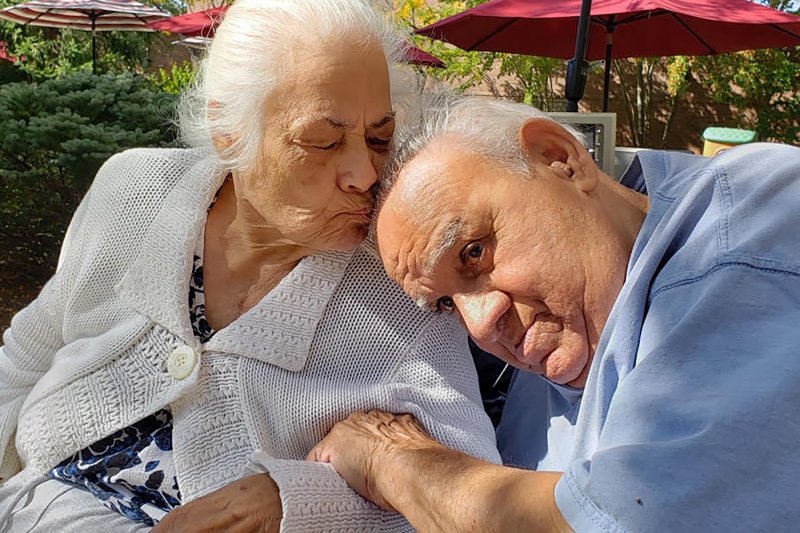
Julia Ramos' grandmother, Angelica Mendez, with her husband Pedro Mendez, on their 64th wedding anniversary.
Julia Ramos' grandmother, Angelica Mendez, with her husband Pedro Mendez, on their 64th wedding anniversary. Courtesy of Julia Ramos

Staying Safe, and Isolated, at Home


For people with disabilities, “stay at home” orders only work if they can access the support they need at home.

Michele Kaplan, 44, who has brain cysts and spine issues that often prevent her from moving her limbs, usually gets assistance through a Medicaid program that pays for home care workers. But these workers don’t get paid sick leave, health insurance or any PPE, and so her usual personal care aides, concerned for their own health, had to stop coming once the pandemic hit Manhattan. Kaplan wanted to hire new aides, especially since so many people are out of work, but her program requires health assessments and vaccinations that would be nearly impossible to get with non-essential health care shut down due to COVID-19, she says.

Bryan O’Malley, executive director of the Community Directed Personal Assistance Association, says he supports the requirements under normal circumstances, but is lobbying state officials to temporarily loosen these regulations during the pandemic. “The policies are actually serving to take away the community resources that exist at the exact time we need them most,” O’Malley says. As the coronavirus leaves more people with potentially lasting health and economic consequences, he adds, the need for assistance is likely to rise.

For now, Kaplan has been switched to a traditional home care model, which means she rotates through a series of temporary assistants who don’t have experience caring for her. It’s not an ideal situation, but Kaplan worries that if officials determine the aides cannot meet her needs, they could recommend she move to a nursing home, an outcome Kaplan has experienced before and says is “terrifying.”

For people with intellectual and developmental disabilities, COVID-19 can be disorienting no matter where they are. Lori Leskin pulled her 24-year-old daughter Sami, who has a seizure disorder and does not use words to speak, out of her day program in March as the coronavirus outbreak expanded. Sami is a “very social being,” Leskin says, so the pandemic has been hard for her without her usual routine. But Leskin knows this is safer than any group setting right now and is hoping her daughter’s program will survive the shutdown. “We spent years building this life,” she says, “and here we are praying that we could put it back together whenever we get out of this.”

Kate Haaland has been in her Waterford, Connecticut home with her son Chris Horwath since March 13, when she also pulled him out of the day program he usually attends. Chris, 25, is deaf, legally blind and has significant intellectual and developmental disabilities that prevent him from understanding something like a global pandemic. To Chris, Haaland says, the past six weeks have meant no friends from his program and none of his normal activities like swimming or going to restaurants in town. “Most days we are in crisis most of the time,” she says.

While staying home is hard for her son, Haaland says she wants to avoid going to the hospital at all costs, especially because Connecticut’s current no-visitors guidance for hospitals does not have an explicit exception for people with disabilities who live at home. (Those who live in group homes are allowed to bring a caregiver.) “That would just be horrific for both of us,” Haaland says. When Chris has gone to the hospital in the past, Haaland is the one who communicates with doctors because he cannot speak or follow their instructions. Some doctors have questioned whether it is worth operating on Chris in the past, she says, so she has had to advocate for him.

Concern Over Medical Biases


Haaland’s experience with Chris’s doctors is not a unique one. Most medical schools do not teach future doctors about disability, says Dr. Lisa Iezzoni, a physician and researcher at Harvard Medical School. And most clinical trials exclude people with disabilities, so many doctors only interact with disabled people when they are already sick and seeking care.

Iezzoni, who has multiple sclerosis and uses a wheelchair, recently conducted a national survey of doctors’ attitudes toward people with disabilities. “The vast majority of doctors view quality of life for people with disabilities as less than that for people without disability,” she says. “That’s an implicit bias, or maybe it’s an explicit bias, that is inevitably going to affect how they approach a person with a disability.” Iezzoni’s own research and other studies have shown that disabled people face disparities in their rates of diagnosis, across various health outcomes and in overall access to care.

Dawn Gibson, who has ankylosing spondylitis and severe food allergies, says she is often dismissed as a black woman with chronic illness. After launching an online community in 2013 for disabled and chronically ill people to share their experiences, she became a patient advocate, speaking at conferences and pushing for more research into the impact of diseases on African Americans. “There is a systemic resistance to the pain of black people,” she says.

Even with this background, she is scared of going to a hospital in Detroit during the COVID-19 pandemic because she expects to be treated poorly. Several years ago, Gibson had broken out in hives due to a food allergy, and gone to the emergency room. But the staff, she says, assumed she had been taking drugs, so she had to fight to get seen before she passed out. “I don’t trust going in any of these facilities, but I can’t let that end my life,” she says.

Alice Wong, 46, sees these biases too. She has a progressive neuromuscular disease that means she uses a ventilator, attached to her wheelchair, all the time. When hospitals started talking about rationing ventilators during the COVID-19 crisis for the most “deserving” patients, Wong was angry but not surprised. At least 25 states have policies that could mean people with disabilities are less likely to get critical care if hospitals are overloaded, according to a report from the Center for Public Integrity. Six states’ triage plans allow doctors to take away ventilators from those, like Wong, who use them in everyday life to help other patients. Disability rights advocates have filed formal complaints in four states and Alabama revised its policy after the Department of Health and Human Services Office for Civil Rights conducted a review.

“Just because I need assistance with my life, that doesn’t mean that I can’t live successfully,” Wong says. She is the founder of the Disability Visibility Project and edited a book about people’s disability experiences that is coming out later this year. “There’s this idea that to have a full life, to have a quality life, it must be without suffering or pain. If you have a disability, that’s not compatible with ideas of a good life,” she says. “There’s a real missing experience and expertise in terms of just how resilient we are and how much we can offer the world.”

Helping Each Other Through the COVID-19 Pandemic


As the COVID-19 pandemic has swept across the country, disability rights organizations, activists and nonprofits have used their networks to care for their own communities.

The Disability Justice Culture Club in Oakland, California has launched a mutual aid network and is hosting workshops on self-advocacy, while Disabled American Veterans is helping people apply for benefits online, holding virtual job fairs, and has set up a disaster relief program to provide disabled veterans with small grants of about $250 to help cover immediate expenses like rent and groceries. So far, it has provided $1.3 million and hopes to raise more, says Dan Clare, DAV’s chief communications and outreach officer.

“The people that actually need the help are the people that have the hardest time asking for it,” says Jay Salazar, who is helping organize Disability Justice Culture Club’s mutual aid network.

People with disabilities organized on social media long before COVID-19 forced everyone to do so, but the pandemic has underscored those efforts. Many activists are using hashtags such as #HighRiskCovid, #WhatWeNeed and #WeAreEssential to highlight the disability community’s concerns, catching the attention of some lawmakers. Democratic Senators Bob Casey, Sherrod Brown and Elizabeth Warren all encouraged Twitter users to share their experiences to help the lawmakers push for increased funding earlier this month.

But nothing is guaranteed in the next stimulus bill, and in the meantime, the pandemic is affecting disabled people more and more each day.

“My fear is what the long term effects will be,” says Flores, the advocate from Rochester. “If I get corona, I’m gonna die because I’m disabled and someone along the lines has decided that my life is of less value. I’m not 30 yet. There’s still so much more that I have to do.”

Correction, April 27
The original version of this story misstated the amount of money distributed by Disabled American Veterans during the coronavirus pandemic. It is $1.3 million, not $13 million.

Full Article & Source:
'This Is Really Life or Death.' For People With Disabilities, Coronavirus Is Making It Harder Than Ever to Receive Care

Sunday, March 10, 2019

Renewed Push Underway To Extend Program That Helps People Leave Institutions

Shayne Nagel, right, comforts her daughter, Erin, who has autism. Erin lived at a state-run residential center for two years before moving into a triplex in the community with assistance from Washington state's Money Follows the Person program. (Bettina Hansen/The Seattle Times/TNS)

Lawmakers are pressing ahead with efforts to renew a federal program that helps people with disabilities move from institutions to community-based settings.

Legislation introduced late last month known as the EMPOWER Care Act would reauthorize Money Follows the Person for five years. The Medicaid program gives states extra dollars to provide employment, housing and other services needed to assist people transitioning from nursing homes and institutions to apartments or group homes.

Money Follows the Person officially expired in 2016. Since that time, states had been using up whatever money they had left for the program, but all states were scheduled to exhaust their funds by the end of 2018. Efforts to renew Money Follows the Person got caught up in a larger government funding debate that resulted in a 35-day partial government shutdown and uncertainty surrounding the future of the program meant that transitions out of institutions slowed.

In January, Congress approved $112 million for a three-month extension of Money Follows the Person as a holdover while a longer-term plan could be worked out. Now, backers are working to make that happen.

“The EMPOWER Care Act will do just that: Empower people with disabilities to decide where to receive care,” said U.S. Rep. Brett Guthrie, R-Ky., who introduced the current bill, H.R.1342, along with Rep. Debbie Dingell, D-Mich. “This program does not force patients to leave a facility if they don’t want to. Rather, it allows individuals to decide what is best for them.”

Since 2006, states have received about $3.7 billion to help over 88,000 people transition out of institutions through the Money Follows the Person program.

A Senate version of the bill, S.548, was brought forward by Sen. Rob Portman, R-Ohio, and Sen. Maria Cantwell, D-Wash.

Full Article & Source:
Renewed Push Underway To Extend Program That Helps People Leave Institutions

Thursday, November 1, 2018

Advocacy group says it found 49 substantiated cases of abuse, neglect at ID treatment center


The Southwest Idaho Treatment Center (SWITC) in Nampa provides residential care to people with developmental disabilities and mental illnesses. It is run by the Idaho Department of Health and Welfare. Katherine Jones Idaho Statesman file

Read more here: https://www.idahostatesman.com/news/local/community/canyon-county/article220782360.html?fbclid=IwAR3y_YeCmISaH69L_Mwrnu53mwh392pvM2epFUkqsUI_B6azDC3vz1t8y1I#storylink=cpy

An advocacy group in Idaho has released a 114-page report that says the Southwest Idaho Treatment Center in Nampa for people with disabilities has again shown failures and neglect in its care for clients.

In some cases, people with disabilities were reportedly told they could not talk to their guardians about the abuse, according to DisAbility Rights Idaho, an advocacy group for people with disabilities.

The nonprofit made its announcement about the yearlong investigation into reported abuse and neglect during a Monday press conference. The advocacy group reviewed 70 investigations that occurred from Jan. 1, 2017, to Jan. 31 this year. The group said it found 49 substantiated cases of abuse or neglect.

DisAbility Rights Idaho titled its report on SWITC “No Safe Place to Call Home.” The group’s executive director, Jim Baugh, said that because the group has federal authority to do secondary investigations of abuse or neglect involving people with disabilities at an institution, they made the report findings public.

The Idaho Statesman previously requested copies of the SWITC investigations through a public records request, but it was denied those documents.

The nonprofit reviewed 20,000 pages of investigations at the treatment center to identify problems and make recommendations to the Idaho Department of Health and Welfare, the agency that runs SWITC. The group found that at least 14 residents were victims of confirmed abuse or neglect.

“In a facility with only about 23 residents, these are appalling numbers. In our opinion, these point to systemic failures,” Baugh said.

DisAbility Rights Idaho provided a copy of its report to Health and Welfare on Oct. 1, and the department did respond, saying many of the problems the group outlined were outdated and have since been changed.

Health and Welfare disputed some of the claims in the report, and said the department has already changed policy on some of the recommendations from DisAbility Rights Idaho. Health and Welfare’s response stated the report has “methodological flaws” and “while some of the report’s recommendations are worth considering, others suffer from the limited investigation and lack of expertise.”

DisAbility Rights Idaho did make the department’s full written response public in its report.

“Contrary to what the report says, we first notified media and the public in August 2017 when we identified inappropriate and abusive employee behavior that was not meeting our standards,” the Department of Health and Welfare said in a press release Monday in response to the report. “We launched an extensive internal investigation into the allegations. As a result, six employees were terminated. However, the Canyon County Prosecuting Attorney’s Office declined to file criminal charges based on the Nampa Police Department investigation.”

What is SWITC?


The Nampa facility is home to about two dozen clients who have developmental disabilities or mental illnesses. The facility is supposed to prepare them for care in the community, but many clients end up cycling in and out or staying for long periods of time.

SWITC has faced whistle-blower lawsuit threats from former employees or patients’ families because of neglect. In 2018, inspectors threatened three times in six months to take away SWITC’s ability to treat Medicaid patients because of failed inspections.

In its press release, the Department of Health and Welfare said a survey team reviewed many of the abuse investigation reports from 2017 and 2018.

Full Article & Source:
Advocacy group says it found 49 substantiated cases of abuse, neglect at ID treatment center

Saturday, June 24, 2017

This coffee shop is changing the way we see people with disabilities

In some respects, Bitty and Beau's is like any other coffee shop — there's the smell of coffee brewing, the pastry case of croissants and muffins, a handful of people sitting at tables in front of steaming cups.

Yet there are other signs that this is someplace different. There's the bubbly cashier, Jesse Guillaume, who has cerebral palsy and wears a flower crown every day, and only takes a break from chatting to ring up customers’ coffee orders. There's Matt Dean, who has autism and is bent on selling Bitty and Beau’s totes to everyone who walks in the door — "It's perfect for summer!" — in between helping out behind the bar, where workers churn out frappes and cappuccinos.

And then there are the occasional dance parties in the center of the coffee shop, often led by 22-year-old Trevor Jefferson, who has Down syndrome and dreams of being a Hollywood actor. He shakes his hips to Justin Bieber and Katy Perry, blowing kisses at the smartphone cameras recording his moves.

“You kind of see a lightbulb go off in people’s eyes,” Ben Wright, who co-founded the shop with his wife, Amy Wright, told TODAY during a recent visit. All of their 40 employees have some form of disability, with the exception of two managers.

“The whole point is just to show people who come in that people with intellectual and developmental disabilities can do a lot more than you think they can,” Wright added.
TODAY
Ben and Amy Wright named the coffee shop after their children Beau and Bitty, who have Down syndrome.
The couple opened Bitty and Beau’s in January 2016, in a 500-square-foot store in Wilmington, North Carolina. They quickly outgrew the location and moved into a former Hummer dealership a few miles away — 10 times the size of their original space. This fall, they’ll open a second outpost in Charleston, South Carolina.

“This dream has unfolded so quickly and with so much support behind it that we never saw this coming,” Amy Wright, who runs day-to-day operations at the coffee shop, told TODAY.
The Wrights have four children; their youngest two, Bitty, 7, and Beau, 12, the coffee shop’s namesakes, have Down syndrome. They opened the shop in part so that their children would one day have a place to work.

TODAY
Matt Dean greets a customer.
 Full Article & Source:
This coffee shop is changing the way we see people with disabilities