Showing posts with label scam warning. Show all posts

Thursday, January 13, 2022

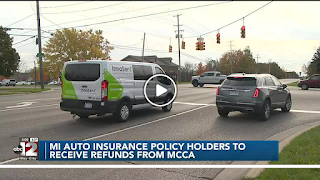
State warns of scam attempts with upcoming auto insurance refunds


By: Ryan Jeltema

LANSING, Mich. (WJRT) - State officials are warning Michigan drivers to be on alert for scammers trying to get their auto insurance refunds later this year.

The Michigan Department of Insurance and Financial Services did not mention any specific scams circulating around the state. But officials say scammers likely will try to capitalize on the $400 per vehicle refunds coming this spring.

“Whenever there is a widespread distribution of funds to consumers, inevitably there will be bad actors who attempt to take advantage of the situation in order to steal personal information or money from consumers,” said Director Anita Fox.

The Michigan Catastrophic Claims Association, which reimburses insurance companies for crash claims exceeding $600,000, will be issuing the $400 per vehicle refunds to insurers by March 9.

Insurance companies have until May 9 to forward the refunds to their customers, who had valid auto insurance policies on Oct. 31, 2021. The refunds must be provided as a direct deposit into customers' bank accounts or in the form of a paper check.

Fox said all Michigan drivers should be wary of anyone requesting an application for the money or offering to provide it earlier than their insurance company.

“Your refund check or ACH deposit will come directly from your insurer, and you will not have to take any action to receive it," she said. "Never give out personal information to a caller claiming to be from your insurance company.”

Anyone who receives an unsolicited call about their auto insurance refund should hang up immediate should hang up immediately and contact their insurance company using a phone number on their policy documents.

Full Article & Source: 

Sunday, June 28, 2020

Task Force warns COVID-19 scams on the rise

The Montana Senior Financial Exploitation Task Force is warning Montanans to watch out for increased risk of scams and fraud with the COVID-19 pandemic, stock market turbulence, job losses, and more all happening simultaneously.

Montanans should be especially vigilant over the coming weeks and months, and report suspicious activity and suspected scams or fraud immediately.

The Senior Financial Exploitation Task Force was created in 2019 to coordinate resources across multiple organizations, state, and federal jurisdictions to protect seniors and other vulnerable Montanans from fraud and exploitation.

“We created the Task Force to bring all our resources together and ensure financial exploitation and fraud are not tolerated in Montana,” said State Auditor Matt Rosendale. “Right now, scammers are looking for ways to use the COVID-19 pandemic to take advantage of the public. Be vigilant, don’t make rushed decisions, and remember: If something sounds too good to be true, it probably is. If you’re not sure about an investment offer, or something seems suspicious, report it to us immediately, and don’t give out your personal or financial information.”

Fraudulent schemes can take many forms during the COVID-19 pandemic, including:

• Individuals and businesses selling fake cures for COVID-19 online

• Phishing emails from entities posing as the World Health Organization or the Centers for Disease Control and Prevention

• Seeking donations fraudulently for illegitimate or non-existent charitable organizations

• Fake investment opportunities, Ponzi schemes, and securities fraud

• Unsolicited, fraudulent offers of mortgage relief, advance fee scams, and fake banking services

• Any calls stating that the caller needs banking information in order to deposit stimulus checks

• Any unsolicited contact asking for personal or financial information online or over the phone

• Any communication where you don’t recognize the sender, even if it supposedly from a government agency, asking you to click on a link

Questions or concerns about potentially fraudulent activity?

Contact: Office of Consumer Protection (OCP) at 1-800-481-6896 or dojmt.gov/consumer

Full Article & Source: 
Task Force warns COVID-19 scams on the rise

Sunday, March 29, 2020

Sen. Casey warns residents of coronavirus scams

WASHINGTON — In light of an influx of scams related to the novel coronavirus, COVID-19, U.S. Sen. Bob Casey, Ranking Member of the Senate Special Committee on Aging, warned consumers Thursday to beware of new coronavirus scams.

With millions of Americans under nationwide mandates to stay home, scam artists are using this as an opportunity to use robocalls to contact unsuspecting consumers, including seniors, in attempts to swindle them out of their money, as well as peddle fraudulent products, according to a press release from Casey’s office.

“It is outrageous that scammers are seeking to capitalize on the public anxiety of the COVID-19 pandemic to prey on the public, especially seniors,” said Casey. “I urge Pennsylvanians to help me get this message out. Beware of coronavirus-related scams and take caution before handing over money or giving out personal identifiable information. Scammers are continuously updating their tactics to find new ways to trick consumers so it is imperative that all individuals, particularly older adults, are armed with information to prevent them from falling victim to a con artist.”

As this public health crisis worsens, consumers should beware of products fraudulently marketed as a “vaccine” or “cure” for COVID-19, said Casey.

Other reported scams include emails impersonating reputable organizations, like the World Health Organization, in an attempt to steal personal identifiable information. And, with the federal government preparing to send cash payments to help Americans weather the pandemic’s financial effects, con artists may pretend they are representing the government in attempt to collect a “fee” that they claim is needed prior to receiving a payment.

Earlier this month, Casey sent a letter to the Federal Trade Commission (FTC) and a letter to the U.S. Food and Drug Administration, concerning coronavirus-related scams and requesting information on each agency’s actions to prevent misinformation about the coronavirus. This week, Casey also sent a letter to the FTC inquiring about the agency’s efforts to protect seniors from coronavirus-related scams.

The Federal Trade Commission (FTC) maintains a webpage with information on tips to avoid becoming a victim of any of the various coronavirus scams. If you or a loved one receives a suspicious call or email related to the coronavirus, do not engage, and immediately contact the Aging Committee’s toll-free Fraud Hotline at-1-855-303-9470.

Full Article & Source:
Sen. Casey warns residents of coronavirus scams

Friday, November 23, 2018

Tennesseeans Warned to Beware of Holiday Scams

NASHVILLE, Tenn. — As the holidays approach, the Tennessee Department of Commerce warns buyers that if a deal looks too good to be true, it probably is.

Tennessee's high ranking for fraud and financial abuse complaints to the Federal Trade Commission has motivated local groups to come together to help prevent scams. Kevin Walters, communications director at the Tennessee Department of Commerce and Insurance, said it's a real challenge.

"Scammers are becoming increasingly sophisticated. They are cunning and they're ruthless and, a lot of times, they're anonymous,” Walters said. “And they can use technology to cloak phone numbers to hide their location."

He said this year, cases of fraud and financial abuse are up more than 33 percent statewide.

Doing research on special offers and charitable groups is key, especially during the holiday season. Walters warned that scammers use these organizations as a cover to take advantage of a person's good nature - and it's okay to say "no" to giving your financial information to anyone over the phone.

"If someone's contacting you to get that information and you've never spoken to them before, and they're calling you out of the blue, again, that's a red flag that they're probably after more than just a donation to their charity,” he said. “They're probably after much more than that, and it could lead to some real problems down the road for you and your family."

In 2017, the FTC said Tennesseans filed more than 43,000 fraud reports, totaling losses of almost $14 million.

Walters added seniors and adults with disabilities are among the most vulnerable targets for scams. TDHS Adult Protective Services received more than 4,000 complaints of financial exploitation in the past year.

"So, the problem of fraud and identity theft is growing, across Tennessee and all segments of the population, in particular for elderly and vulnerable adults,” Walters said.

He said it's important to report scams to local law enforcement, and get information from the AARP Fraud Watch Network at aarp.org/fraudwatchnetwork.

Full Article & Source:
Tennesseeans Warned to Beware of Holiday Scams

Sunday, July 24, 2016

Elderly couple pays $12,000 in "grandparents scam"


AMITY, N.Y. (WKBW) - New York State Police are warning Allegany County residents about a scam that is making the rounds in the Amity area that has claimed at least two victims.

Police say an elderly couple received a phone call Thursday afternoon from a man who claimed to be a police officer from another town. The caller said their grandson had been stopped for a traffic violation and drugs were found in the car.

The grandparents were told that the grandson would need to pay $2,000 in bail and $4,000 in fines in addition to completing eight hours of community service.  The caller told them they could take care of the bail and fine by purchasing $6,000 in iTunes cards and calling back with the serial numbers on the cards. The grandparents did as they were instructed.

Friday morning the grandparents received another call, this time from someone claiming to be their grandson's lawyer.

This time, the "lawyer" told the grandparents that there was another defendant involved in the incident, and their grandson contacted that person even though he was not allowed to do so.  The "lawyer" told the grandparents they would have to provide the serial numbers for another $6,000 in iTunes cards. Again, the couple complied.

A third call came in, but this time a younger relative was at the house and took the call. The man knew it was a scam and hung up the phone, but the elderly couple had already been scammed out of $12,000.

New York State police recommend setting up a "secret password" with your family members so you ensure the call is valid.  They also remind residents to never give out any personal information or send money without verifying the information the caller is telling you.

If you have been a victim of a scam, please call police. The Allegany County Office for the Aging can also help.

Full Article & Source:
Elderly couple pays $12,000 in "grandparents scam"