Tuesday, February 16, 2021

Duties of a Guardian for the Elderly

Duties of a Guardian for the Elderly
 
Video Clip: Click to Watch

CONTACT: Pamela D. Wilson 303-810-1816

Email:   Inquiry_For_Pamela@pameladwilson.com

Golden, Colorado – February 13, 2021

The Caring Generation®

Golden CO- Caregiving expert Pamela D. Wilson hosts The Caring Generation® podcast show for caregivers and aging adults. This coming Wednesday, February 17, 2021, the topic is The Scary Truth About Guardianship and The Responsibilities of a Guardian for the Elderly.

During this podcast, Wilson shares experiences from her years as a guardian for the elderly and disabled so that adult children can avoid surprising situations. Wanting to do the right thing for an elderly parent can be a joyful experience when families get along. Challenging guardianship situations result when children disagree, or a history of potential abuse—financial or emotional—exists within a family.

The Scary Truth About Guardianship

Adult children who become a court-appointed guardian for an elderly parent may underestimate the seriousness and extent of their accepted responsibilities. Siblings may dislike the brother or sister appointed guardian because of disagreements about care for elderly parents or perceived favoritism. Brothers and sisters who hold grudges can make the life of the appointed guardian extremely difficult.

It's easy to empathize with friendships or work relationships that go bad when one person poisons a relationship that can't be repaired. Family relationships can be fractured when siblings misrepresent information to an elderly parent with dementia who cannot discern lies from the truth. In these situations, being the guardian for a parent can feel like a thankless responsibility.

The Responsibilities of a Guardian for the Elderly

The responsibilities of a guardian for the elderly include navigating difficult situations that may include:

  • Managing or supervising in-home care that brothers or sisters attempt to sabotage because they don't believe that mom or dad needs help
  • Moving a parent to a care community against their wishes and having the care staff side with your parent who believes that you are the evil guardian—that your brothers and sisters claim you to be
  • Advocating for care with the healthcare system who are uneducated or biased against care for the elderly diagnosed with dementia or Alzheimer's disease
  • Searching for a geriatric psychiatrist or a geriatrician willing to prescribe medications for behaviors—instead of telling you that there are too many side effects or warnings because they are worried about liability
  • Paying for mom and dad's care instead of saving their estate for the inheritance that your brother or sister expects to receive
  • Negotiating with nursing home staff who change your parent's medications without asking you and then call to report health emergencies resulting from discontinued medications

The emotional aspects of caring for elderly parents and navigating relationships with family members and care providers can overshadow the good work that a family guardian does for a parent. In this podcast, Wilson shares tips and recommendations for family guardians that offer hope for managing difficult family or care situations.

Wilson releases a new podcast in The Caring Generation series every Wednesday, sharing conversations about aging, caregiving, and family relationships. The podcasts are available on Wilson's website and all major podcast sites. More about Wilson's online courses for elderly care: How to Get Guardianship of a Parent and Taking Care of Elderly Parents, caregiver support, webinars, and speaking engagements is on her website www.pameladwilson.com. Pamela may also be contacted at 303-810-1816 or through the Contact Me page on her website.

 #

Check Out Podcast Replays of The Caring Generation® Radio Program for Caregivers and Aging Adults HERE

Pamela D. Wilson, MS, BS/BA, CG, CSA is a national caregiving expert, advocate, and speaker.  More than 20 years of experience as a direct service provider in the roles of a court-appointed guardian, power of attorney, and care manager led to programs supporting family caregivers and aging adults who want to be proactive about health, well-being, and caregiving. Wilson provides online and on-site education for consumer groups and corporations. She may be reached at 303-810-1816 or through her website.

Full Article & Source:

Duties of a Guardian for the Elderly

Monday, February 15, 2021

‘Hero’ Service Dog Gets Send-Off Party After Comforting Hospital Staff During Pandemic

By Naledi Ushe


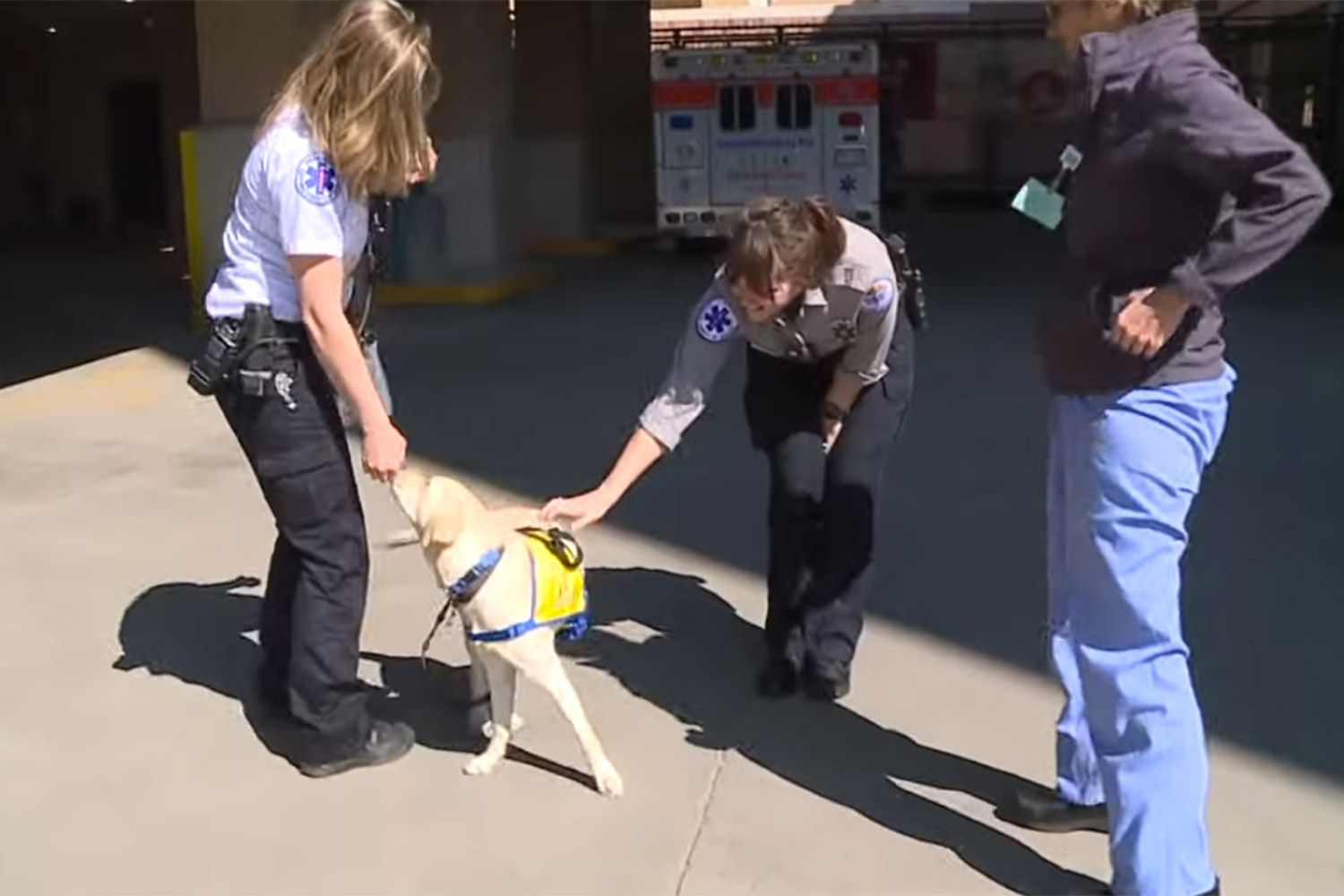
Soon-to-be service dog Wynn got a sweet farewell from emergency room staff at Rose Medical Center in Denver.

The animal was credited for emotionally supporting the health care heroes throughout the COVID-19 pandemic.

Wynn was with the hospital for two years where emergency physician, Dr. Susan Ryan, volunteered to be her puppy raiser for Canine Companions for Independence – a company that provides assistance dogs to people in need.  

"In the beginning it was really overwhelming. There was a palpable sense of fear and we didn't know what we were going to see," Dr. Ryan told KDVR of the start of the pandemic. 

She added, "We all witnessed a lot this year. We had incredible camaraderie, we were the best team I ever imagined being around and she was part of our team — she saw us through."

Credit: fox31

The ER staff held the send-off party on Thursday and made signs for Wynn calling her a "hero."

"People would just pet her and break out into a smile when it was just the hardest day," Dr. Ryan continued.

Wynn will go on to receive more vigorous training to determine what kind of service dog she'll be. The dog could help anyone from veterans suffering PTSD to children with special needs or even become a faculty dog helping patients in hospitals. 

"It's a proud moment and it's a sad moment. She taught me how to stay present in the worst year of our lives and that's a pretty big lesson," Dr. Ryan said.

Credit: fox31

In March last year, Wynn went viral after the hospital shared the positive impact she had on the staff during the stressful rise of COVID-19.

"She's a calm presence, she grounds us. Everybody goes and seeks her out when they need just an extra bit of a minute to pet her, snuggle or kiss her," Dr. Ryan told KDVR of Wynn at the time.

The emergency physician then touched on why an emotional support animal is beneficial to some especially during the pandemic.  

"The data behind what a dog and human bond can do, to break down the walls of isolation, which is really important in this time when people are physically distancing. They don't have to be socially or emotionally distant," she said. 

Full Article & Source:

Covid-19 cases have declined sharply. Experts say these factors will determine how the pandemic unfolds

By Christina Maxouris and Dakin Andone


(CNN)A grim new forecast confirms what experts have been warning amid declining Covid-19 cases and hospitalizations: when it comes to the pandemic, the United States is not yet out of the woods.

Another 130,000 Americans are projected to die of the virus over the next three and a half months, according to the latest model from the University of Washington's Institute for Health Metrics and Evaluation. 
 
And while Covid-19 numbers may be trending in the right direction now, there are four key factors that will determine how the next few months unfold, the institute said in a briefing accompanying its model.
 
The first two will likely help the pandemic numbers continue a downward trajectory: increasing vaccinations and declining seasonality -- the pattern of lower transmission that's likely in the US during the spring and summer months.
 
"Two factors, however, can slow or even reverse the declines that have begun," the IHME team said. 
 
One of those factors is the spread of the B.1.1.7 variant, which was first identified in the United Kingdom and experts warned could become the dominant strain in the US by spring. Data from the US Centers for Disease Control and Prevention released Sunday shows more than 1,173 cases of the variant have so far been detected across 39 states. 
 
Another key factor, according to the IHME team, is "increased behaviors that favor Covid-19 transmission."
 
"Transmission has been contained over the winter through mask wearing, decreased mobility, and avoidance of high-risk settings such as indoor dining," the team said. "As daily case counts decline and vaccination increases, behaviors are likely to change towards increased risk of transmission."
 
That's why experts say now is not the time for the US to let down its guard, even as a growing list of governors loosen Covid-19 restrictions. 
 
CNN Medical Analyst Dr. Leana Wen said Sunday that declining numbers were good news. "But I'm also very worried about these variants, because we have seen in other countries what happens when there is explosive spread of these more contagious variants," Wen said on CNN's "Inside Politics."
 
"I think it's really critical for us to ramp up vaccinations as much as we can, and in the meantime, do our best to continue with masking, physical distancing -- these other measures that we know to be really important in controlling the spread of infection." 
 
In addition to the B.1.1.7 variant, the CDC said Sunday 17 cases of the B.1.351 Covid strain initially seen in South Africa have been found across seven states and in Washington, DC. There are also two cases of the P.1 strain first linked to Brazil -- one in Minnesota and one in Oklahoma -- it said.
 
The agency said the data did not represent the total number of such cases circulating in the US but just those that have been found by analyzing positive samples. 
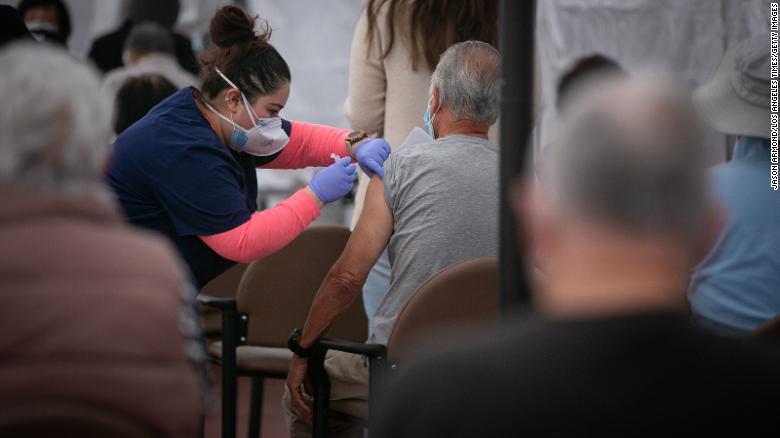
 
A nurse administers  a Covid-19 vaccine at Kedren Health on Thursday in Los Angeles.
A nurse administers a Covid-19 vaccine at Kedren Health on Thursday in Los Angeles.
 

Debate continues over school reopenings

 
Nearly a year on, the debate over how to safely return students to the classroom persists, even after the CDC released long-awaited guidance last Friday outlining five key strategies, including universal mask wearing.
 
On CNN's "State of the Union" on Sunday, CDC Director Dr. Rochelle Walensky emphasized the need for masks and other mitigation measures to safely reopen school. She said "mask breaching" was the main reason behind the spread of coronavirus in schools, though transmission in schools is mostly associated with spread in the surrounding community
 
The CDC guidance includes a color-coded chart to describe the levels of transmission, from blue to red, with the latter representing high transmission. About 99% of the US population under the age of 18 -- 73 million minors -- live in a so-called "red" zone, according to a CNN analysis of federal data. 
 
Walensky acknowledged "many" counties remain in a red zone. Schools in red zones should pursue a hybrid model if they're an elementary school, she said, while middle and high schools either continue virtual learning or a hybrid model if they're able to adhere to strict physical distancing. 
 
Meantime, Dr. Wen said she found the CDC's guidance both "good and problematic." 
 
She liked that the guidelines specifically defined levels of transmission for certain mitigation measures to go into place. But she took issue with other aspects, including the fact vaccinations are not listed as a "key" strategy for reopening schools. She didn't understand why the subject was up for debate. 
 
"If we want students to be in school for in-person learning, the least that we can do is to protect the health and well-being of our teachers," Wen said, "especially as in so may parts of the country, teachers are already being made to go back to school in poorly-ventilated, cramped areas with many students who may not always be masking and practicing physical distancing." 
 
Walensky noted Sunday the guidance from the CDC's vaccine advisory committee puts teachers in the Phase 1B category for vaccinations. 
 
"I'm a strong advocate of teachers receiving their vaccinations," she said, "but we don't believe it's a prerequisite for schools to reopen."
 

'One step closer to winning the war'

 
Despite lingering concerns, officials are hopeful the continued ramping up of vaccinations is beginning to shift the pandemic's course in a positive direction. 
 
So far, just over 38 million people have received their first dose of the two-dose vaccines available to the US market, according to CDC data released Sunday, and about 14 million people have been fully vaccinated. In all, nearly 53 million doses have been administered -- about 72% of all doses that have been distributed.
 
The IHME expects 145 million adults to be vaccinated by June 1, it said in a statement, which would prevent 114,000 deaths.
 
"Our vaccine supply is going up, the positivity rate is going down and we're getting one step closer to winning the war against COVID each day," New York Gov. Andrew Cuomo said in a statement Saturday, referring to New York's vaccinations.
 
By Sunday, the state had administered 89% of the first dose vaccines it had received from the federal government and 83% of first and second doses, the governor's office said. 
 
In California, officials announced millions of people will be added to the vaccination priority list, including residents "at high risk with developmental and other disabilities" and residents with serious underlying health conditions. The plan, which will begin in mid-March, broadens the ages of eligible individuals from 65 and older to ages 16 through 64 who are in those categories. 
 
Still, the state continues to face a "scarcity of vaccine," according to California Health and Human Services Agency Secretary Dr. Mark Ghaly. The supply shortage has forced several Los Angeles mass vaccination centers to temporarily close. 
 

A new challenge over the weekend

 
Some parts of the US this weekend are facing another challenge that's slowing down vaccinations: winter weather. 
 
Federal officials expect Covid-19 vaccine shipments to Texas will be delayed this week because of a powerful winter storm, Texas Division of Emergency Management Chief W. Nim Kidd said. 
 
"Our vaccines that are set to arrive on Sunday, Monday will probably not arrive until Wednesday, Thursday," Kidd said Saturday, "so we will see delays in vaccine coming into the state." 
 
Some local outdoor vaccination facilities also shut down ahead of the storm, Kidd added, though indoor vaccination administration will continue "as long as it is still safe to drive there." 
 
Alabama Gov. Kay Ivey declared a state of emergency Sunday ahead of anticipated winter weather. The state of emergency will include 28 counties, according to a press release from Ivey's office.
"If weather permits and roadways remain safe, Alabamians who have plans to receive their Covid-19 vaccine should still do so," the press release said.
 
In Portland, Oregon, where rain and snow have caused widespread power outages, the mass Covid-19 vaccination site at the Oregon Convention Center is closed Sunday due to weather, according to a tweet from Kaiser Permanente NW. Those who had appointments will be contacted to reschedule.
 
Washington state's Department of Health said it was also expecting a delayed delivery of vaccine doses due to the weather, in addition to announcing it would prioritize the administration of second doses this week, limiting the available number of appointments for first doses.
 
Vaccine providers in the state had requested about 170,000 doses this week, but the state was only allocated about 92,000, the department said in a news release. The difference was likely because last month some providers had used vaccines doses as initial doses when they were intended to be second doses. 
 
That unfortunately means a portion of this week's available first doses will instead need to be used to complete the two-dose regimen for those individuals.

Lakeland hospital employee arrested for sexually assaulting elderly patient


POLK COUNTY, Fla. (WFLA) – A 21-year-old man has been arrested after police say he sexually assaulted an elderly woman at the hospital he works at in Lakeland.

According to the Lakeland Police Department, an officer working an extra-duty shift at Lakeland Regional Health was notified by hospital security Friday around 9:45 p.m. of a possible assault on a patient inside the building.

Officers say an 82-year-old woman was sexually assaulted in the elevator by Jordan Robert James while she was being taken from one hospital floor to another for testing.

Detectives arrested James and have charged him with aggravated sexual battery and false imprisonment.

He was taken to the Polk County Jail without incident.

This incident remains an open and active investigation.

Full Article & Source: 

Sunday, February 14, 2021

Ex-Greene Co. lawyer accused of stealing millions from probate estate trust reaches plea agreement

By: WHIO Staff and Mike Campbell
 
GREENE COUNTY — A former Greene County lawyer accused of stealing over $2 million from the trust he had been appointed to manage reached a plea agreement with prosecutors and was sentenced Friday.
 
Brian Wiggins changed his plea to guilty on 15 of the 55 counts he was originally charged with and was formally found guilty by a Greene County judge. Wiggins agreed to plead guilty on charges of identity theft, money laundering, tampering with records, theft, aggravated theft, and possession of cocaine.
 
The change in plea was part of a plea agreement agreed to by Wiggins’ lawyer Thomas Kollin and Greene County prosecutors.

As a part of the agreement Wiggins was sentenced to five years in an Ohio prison. The maximum penalty he could have received was 54 years, however the sentences will run concurrently, meaning they will all be served at the same time.

As a part of the agreement Wiggins will also pay various restitution that adds up to about $2 million and he has been stripped of his ability to practice law in Ohio.

Investigators alleged Wiggins stole the money from a $3 million trust of a deceased Greene County resident after he was appointed a trustee of the account. The trust was designed to benefit St. Jude Children’s Hospital and Smile Train, a charity that provides free surgeries to children born with cleft palates and other facial deformities.

Prosecutors said he used the funds to pay for a house, a boat, a car, for gambling trips and for cosmetic surgery of family members among other things.
 
Full Article & Source:

Sumter County attorney arrested, disbarred

by  Martin Steele

Edward Juan Lynum

Disbarred attorney Edward Juan Lynum, 45, of Wildwood, is facing multiple charges in Sumter County for allegedly threatening or attempting to intimidate two circuit judges.

In a related case, Lynum was also disbarred by the Florida Supreme Court, according to a Jan. 28 announcement by the Florida Bar. He was among several Florida attorneys who were subject to the court’s disciplinary action in January.

Lynum, in 2018, ran unsuccessfully for Sumter County Judge. His earlier forays into politics included an unsuccessful run for the Orlando City Commission seat formerly held by his late mother, Daisy Lynum.

Sumter County Sheriff’s Office (SCSO) deputies, acting on a local warrant, on Jan. 5. arrested Lynum at a Wildwood area convenience store, according to an SCSO arrest report. He was booked into the Sumter County Detention Center for four counts each of writing threats to kill or do bodily harm and corruption by threat of harm against a public servant. He was also arrested on a Lake County warrant for stalking. He was released the next day on a $40,000 bond.

In January, Lynum was granted a change of venue for the legal proceedings. Circuit Judge Richard A. "Ric" Howard is presiding over the case in Citrus County.

The probable cause affidavit for Lynum’s arrest warrant listed multiple allegations of social media activities that investigators cited as being threats against the two judges and a private attorney who were apparently involved in Lynum’s earlier divorce case.

Investigators identified multiple FaceBook accounts and websites belonging to Lynum, according to the affidavit. A detective reported reviewing approximately 215 posts made from October 2019 to July 2020 and consisting of public messages made by Lynum, video logs narrated by Lynum, letters sent by Lynum and articles cited by Lynum.

“The postings made by Edward Lynum formed a central theme that described (him) as being the victim of a large and overarching conspiracy theory in which the Florida Judicial System, including but not limited to the Fifth Judicial Circuit, as well as both state and federal figures conspired, due to their bigotry and worship of satanic spiritual forces, to not only kill him, but to destroy his life reputation and separate him from his family,” an SCSO detective wrote in the probable cause affidavit.

Lynum used his social media platforms to “to create a narrative based on a central theme that the victims in this incident are racist members of a satanic cult who act in concert to rule against him in judicial proceedings,” according to the affidavit. The detective also wrote that Lynum used “hyperbole, innuendo and misrepresentation to make threats to do physical harm veiled in a religious context of his own design.”

In the affidavit, the detective noted a particular posting that he cited as revealing a summary of Lynum’s contention. “God comes before secular justice is why degenerate satanic monkey slut judges like (victim’s name) in Bushnell, Sumter County, Florida along with her conspiring pedophile judge friends must be charged and arrested for desecrating God’s truth.”

Lynum continued, according to the affidavit. “God strengthens us to kill … it is time to kill.”

Lynum used social media to repeatedly threaten the victims, the detective noted. Lynum described the victims as “four hoodlums …. too dumb and demonic to know they’re coming with their guns for all of you.”

Lynum posted “Good luck ducking and dodging bullets from inside your own white castles …. good luck surviving the deluge,” according to the affidavit.

The Florida Bar began investigation of Lynum’s communications in the summer of 2019 and subsequently placed Lynum on notice that his conduct was of serious concern to the bar and that it was being investigated. But according to the Supreme Court Referee’s findings, Lynum’s conduct only intensified.

Lynum’s activities included personally suing the attorney who represented his ex-wife in a divorce and child custody case, posted “egregious and disparaging” comments about the attorney on Facebook and has sent “numerous disturbing and threatening emails and/or posts to, or about” the attorney, according to the Supreme Court findings. The attorney testified that Lynum posted about the attorney’s personal residential address and that he was “coming to [the attorney’s] house”.

The Supreme Court document also noted that the attorney also testified that Lynum’s posts included threats of violence including threats to bomb the Sumter County Courthouse, the attorney and client (Lynum’s ex-wife).

The case findings also noted that the attorney testified that Lynum has made posts including violent images such as guns, fires, riots, has referred to the attorney as a “Nazi” and has posted suggestions that someone kill the “Clermont lawyer who wears a ‘What Would Jesus Do’ bracelet.”

The Supreme Court referee report contained an extensive list of incidents of professional misconduct by Lynum including violations of court orders, Rules of Professional Conduct and violation of his oath of admission to the Florida Bar. The full report can viewed at www.floridabar.org/public/acap/disc-docs/?icn202030020&member18484. Click on the link titled “Report of Referee.”

Martin Steele is a reporter for the Sumter County Times,  a sister newspaper of the Citrus County Chronicle.

Full Article & Source: 

Lawmakers look to offer new guardianship protections in New Mexico

by Joy Wang

ALBUQUERQUE, N.M.- Professional guardians have control over assets, can decide a person's healthcare, and even who visits them. 

However, advocates say, there isn't enough oversight, which can lead to bad actors preying on vulnerable people.

Rio Hamilton says his mom is the victim of a bad actor.

"She is the quintessential little old lady. She's the cutest thing in the world," said Hamilton. "She's able to function and do everything like a normal person, except she's just a little slower at it."


Hamilton's mom is now 92.

"I'm an only child, and I moved back from New York City to specifically take care of my mother during these golden years of her life," explained Hamilton. "So our intention was always that she would live at home and that we would be together."

Hamilton told KOB 4 the two of them reached out to a lawyer so he could become her power of attorney. But instead, "this lawyer filed an emergency petition, declaring my mother incapacitated," said Hamilton. "From that, they were able to seize her property, change her bank accounts, and leave me off of things like the medical directive, for my mother. This means that if my mother becomes very ill or possibly passes away, this Guardian company does not have to notify me."

Now Hamilton says he has no control over what's next.

"I would have been one of those naysayers like this could never happen to me," expressed Hamilton. "But if you've got substantial money in your account, and you are over the age of 80, and you're living alone, they are coming for you. If you have veterans benefits, and you live separate from your children, they are coming for you. If you are a 90-year-old widow person who's living off her husband's pension, they are coming for you."

His only solution is to file a grievance with the courts, but that takes time.

"There's been $90,000 in legal fees, and yet there is still no resolution," said Hamilton.

"Part of what's really difficult is that once a person has a guardian it becomes very difficult to access the courts to review the case, their case," explained Rep. Joanne Ferrary, D- Dona Ana, "Once a person has been adjudicated as incapacitated, some courts cease to allow the person to have a voice in court proceedings, and instead rely solely on the guardian to speak for that person."

House Bill 234 would create an oversight body at the state government level to review and investigate guardians and complaints filed against them.

Because right now, "they're not licensed, and there is no oversight complaint process," said Rep. Marian Matthews, D- Bernalillo. "Those are major changes that will afford greater protection for this... vulnerable group of people."

With New Mexico's population getting older, "this need for.... these professionals to help has I think just grown, and as a result, with it has grown the problem of people who take unfair advantage of vulnerable people," said Rep. Matthews.

"I know that this bill does not answer all the questions, or change any of the horrors that my family has had to go through," expressed Hamilton. "But one thing is for sure. It is a start."

Full Article & Source:

Saturday, February 13, 2021

Britney Spears’ Conservatorship Could Violate Her Civil Rights, According To the ACLU

by Gina Ragusa 
 
Britney Spears‘ conservatorship may be in violation of her civil rights, according to an attorney with the American Civil Liberties Union (ACLU). 

Britney Spears attends the announcement of her new residency, “Britney: Domination” at Park MGM on October 18, 2018 | Gabe Ginsberg/FilmMagic

Following Spears’ request to have her father Jamie Spears removed as conservator, ACLU attorney Zoe Brennan-Krohn shared that the strict conservatorship Spears is under may not support her wellbeing or be in her best interest.

‘Conservatorships should be viewed with skepticism and used as a last resort,’ according to the ACLU

Brennan-Krohn said Spears’ conservatorship should be examined and questioned.

“So while it’s possible that this is an example of a thoughtful conservatorship that was implemented as the last resort and is being reviewed carefully, thoroughly, and regularly, that is not the norm for conservatorships,” she remarked in an ACLU report.

“And it appears inconsistent with what we see of Britney publicly,” she added. “Our view is that in general, conservatorships should be viewed with skepticism and used as a last resort.  In most cases, it’s done routinely and without substantive engagement.”

Britney Spears could have options beyond conservatorship

Brennan-Krohn added that a slew of alternatives exists beyond a conservatorship.

“We don’t know all of the risks and benefits at play, so we can’t speak to the specifics of her case,” she commented. “But we do know that the conservatorship itself also has risks. The risks in conservatorship can include financial, physical, and emotional abuse.”

“And even when there is no abuse, conservatorships limit a person’s ability to advocate for themselves, learn from their decisions and mistakes, and grow and develop,” Brennan-Krohn added.

“There is a risk in being told that your opinions, your likes and dislikes, don’t matter — it makes it harder to stand up to abuse or neglect,” she asserted.

“So in any conservatorship, including this, we would want to know that the real risks (and benefits) of both conservatorship and its alternatives have been seriously weighed.” The #FreeBritney movement has suggested that Spears is not in control of her social media or public comments.

Getting her rights back can be difficult

Spears’ father placed her under a conservatorship in 2008 after she displayed erratic behavior. Brennan-Krohn shared people end up in a conservatorship if a court deems them as having disabilities. This includes physical, mental, and psychiatric disabilities.

“This is not to say that all conservatorships are bad or wrong or unnecessary — conservatorships are complex and individual processes,” she said. “But the ease with which disabled people can be stripped of their rights, and the extraordinary difficulties they face getting those rights back, is a systemic disability rights issue about which we have serious concerns.”

Britney Spears arriving at the Los Angeles County Superior courthouse for a hearing regarding visitation rights for her two sons | Gabriel Bouys /AFP via Getty Images

Brennan-Krohn said she isn’t privy to Spears’ diagnosis. “But by virtue of being under a conservatorship, we know that the court has determined that she is disabled,” she said. And has stripped away her civil rights because of that disability. So it’s inherently a civil rights/civil liberties issue,” she said.    

Full Article & Source:

COVID-19 Deaths in Nursing Homes and Long-Term-Care Fa­cil­ities Closer to 15,000, New Data Shows


By Zack Fink

The overall picture of how COVID-19 devastated nursing homes in New York is growing grimmer. It comes after the Cuomo administration quietly released new data late last week that included deaths of residents who were in long-term care or assisted living facilities. 

“The number of hospital deaths of long-term-care facility residents was 1,500. Over 1,500. So that number went from being 200 to 1,700 overnight,” explained Bill Hammond, a senior fellow of health policy for think tank Empire Center.

As a result of the revised figures, the total number of nursing home and long-term-care facility deaths went from 9,154 last month to 14,933. That’s an increase of 5,778, or 63%.

The new numbers only came out because of a lawsuit from the Empire Center.

“We filed a FOIL request,” Hammond said. “They delayed responding. Because of that delay, which we thought was not in keeping with the law, we filed a lawsuit. And the judge agreed with us. She said the flats by the Health Department was unreasonable and not within the law. She found three in violation of the law.”

The reason for the discrepancy is that the Cuomo administration was not counting deaths of nursing home residents or long-term care-facility residents who died in hospitals. Nor were they counting probable COVID-19 deaths as part of the overall total. Critics say the obfuscation seems purposeful.

“Administration, the Department of Health, have only released this information after being forced to by a judge and after being shamed by a report from their own Democratic Attorney General,” said Senate Minority Leader Rob Ortt. “So, there is no question they were construing this data differently to paint a different picture than the one that is real. And that is what’s most troubling.”

We reached out to the Cuomo administration for a response and they referred us to an older statement from Health Commissioner Howard Zucker, which said, “New York State Department of Health has always publicly reported the number of fatalities within hospitals irrespective of the residence of the patient, and separately reported the number of fatalities within nursing home facilities and has been clear about the nature of that reporting.”

Zucker is expected to testify before the legislature later this month. Republicans are asking that he appear on multiple days, to allow for more questions, rather than just that one day.

Full Article & Source: