The dispute centered on claims Williams was exploited during filming
By
Shekari Philemon
Wendy Williams (Photo credit: Shutterstock.com / lev radin)
A legal dispute over a controversial documentary about Wendy Williams has reached a resolution, bringing an end to a case that raised serious questions about consent, exploitation and the responsibilities of media companies toward vulnerable subjects.
Court filings confirm that Williams’ court-appointed guardian and the defendants, which include Lifetime and its parent company A&E Network, submitted a joint motion to resolve the matter. The filing addressed the settlement terms, proposed legal fees and the distribution of any funds to be paid out.
A documentary that sparked immediate backlash
The two-part docuseries chronicled roughly two years of Williams’ life during a period of significant personal and medical decline. It aired in 2024, just days after her care team publicly disclosed that she had been diagnosed with primary progressive aphasia and frontotemporal dementia, a combination of conditions that severely affects language, behavior and cognitive function.
Her guardian moved quickly, filing an initial lawsuit in February 2024 in an effort to stop the documentary from being released. That attempt did not succeed, and the series aired as scheduled.
The amended complaint and its core allegations
Several months later, the guardian filed an expanded version of the lawsuit that laid out a more detailed set of claims. The amended complaint alleged that the documentary was produced without a legally valid contract and that Williams was in no condition to provide meaningful consent at the time filming took place.
The filing described her as highly vulnerable and clearly incapacitated during the period she was recorded. It alleged that producers presented a contract for her signature after she had already been filmed in a state that observers on set could not have reasonably interpreted as coherent or capable of informed agreement.
The lawsuit further alleged that A&E Network deliberately took advantage of a severely impaired individual and generated substantial profits from the resulting content. According to the complaint, Williams received approximately $82,000 from the production while the network earned considerably more from the series.
What the guardian demanded
At the heart of the legal action was a demand that all profits generated by the documentary be redirected to Williams herself. The filing noted that her ongoing medical needs would require significant financial resources for the remainder of her life, and that the disparity between what she received and what the network earned was both unjust and legally indefensible.
Where Is Wendy Williams? followed the former talk show host through a turbulent chapter that ended with her being placed under court-ordered guardianship in 2022. That guardianship arrangement, which transferred legal decision-making authority to an appointed third party, was already in place when the documentary was being produced and eventually released.
A settlement reached
The joint motion filed by both sides signals that the parties have agreed to resolve the matter without proceeding to trial. The specific financial terms of the settlement have not been made public, and the proposed distribution of any payment remains subject to court approval.
For Williams, who built one of the most recognizable brands in daytime television over decades in the industry, the case represented something far larger than a contract dispute. It raised pointed questions about how media companies approach subjects who are no longer able to fully advocate for themselves and whether the pursuit of compelling content can cross into genuine harm.
The settlement does not resolve those broader questions, but it does mark the formal conclusion of a legal chapter that drew significant attention to the intersection of entertainment, illness and informed consent.
Prichard, Alabama Police Sgt. Aaron Tucker, as well as his sister, have
been removed as co-conservators of Tucker's wife. Former Saraland Police
Officer Jackie Tucker was left incapacitated after being shot in the
line of duty over a decade ago.
A Mobile County Probate Judge determined that much of the money
benefited her husband instead of Jackie. A good chunk of that money was
gambled away at Mississippi casinos, according to court documents.
Court
audits uncovered "numerous" red flags with the conservatorship,
including the failure to report money received from fundraisers and a
$343,000 Department of Justice benefit payment. The court also flagged
"large amounts of cash" Aaron withdrew from the conservatorship account
and checks he wrote to himself.
According to an August 6th 2025
court order, Jackie's conservatorship estate received $554,305, and by
June 2022, nearly all of it had been spent.
The order also says
Aaron purchased a $97,000 Mercedes Sprinter van that lacked
accessibility equipment for Jackie and used conservatorship funds to buy
a food truck for his "personal use."
Hartford
is now attempting to collect on its judgment. Court filings say the
Prichard Police Department has not responded to the company's attempt to
garnish Aaron's wages.
The probate findings could potentially
be referred to prosecutors or investigated as financial exploitation,
theft or another offense. Aaron Tucker is yet to be charged with any
wrongdoing and has not publicly commented on the accusations.
The Prichard Police Department has been under intense scrutiny over the past year.
In
2025, the department opened an internal investigation after Prichard
officer David Cunningham was arrested on kidnapping charges stemming
from an incident in Mississippi. The department said it was reviewing
whether Cunningham violated departmental policies, including operating a
city vehicle across state lines.
Separately, local reporting has
indicated that the Alabama Attorney General's Office and other law
enforcement agencies have been conducting a broader public-corruption
investigation involving the City of Prichard and matters connected to
the police department. Public reporting has not identified all subjects
or the precise scope of that investigation, and officials have released
limited details.
Jackie Tucker's injuries have been described as
catastrophic and permanent. She has required years of intensive
rehabilitation, ongoing medical care, and assistance with daily living.
Jackie
was shot in the head on December 21, 2016 while reporting to a domestic
disturbance call. A male resident, later identified as Blake
Richardson, opened fire on Tucker and another officer almost immediately
upon their arrival.
Despite the catastrophic wound, Tucker
remained conscious long enough to draw her service weapon and fire back
at Richardson, wounding him. Richardson was able to flee the scene but
police quickly took the wounded man into custody. He was pronounced dead
after being transferred to an area hospital.
Accounts honoring
her service describe her actions after being shot as an extraordinary
effort to protect herself and her fellow officer.
An attorney has now been appointed Guardian ad Litem for Jackie.
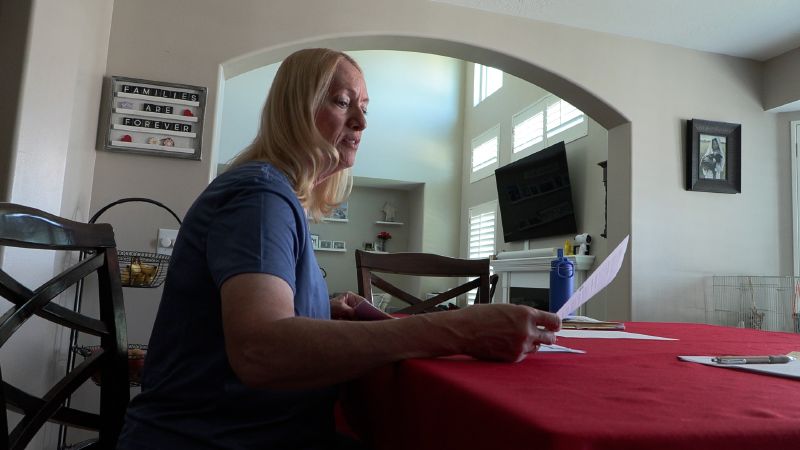
Pam Davis struggled to get Capital One to recognize her power of attorney.
Her brother was a victim of a scam, losing nearly all his assets.
After media intervention, Capital One finally acknowledged her authority resolving the issue.
SANDY
— At some point, many of us may have to step in and help a loved one
with their money — paying bills, watching accounts or cleaning up after
fraud. But what do you do when a major credit card company refuses to
recognize your authority over a loved one's finances?
Pam Davis has been looking out for her older brother, Stan.
"My brother has short-term memory and dementia," she said. "So, it became necessary for me to take over."
Davis
recently discovered her brother was the target of a brutal
pig-butchering scam. A criminal posing as a woman coaxed personal and
financial information out of him. Money was taken from his bank
accounts, stocks and credit cards.
"It pretty much cost him almost everything he had," Davis said.
She
is trying to unwind some of that damage, including the fraudulent
purchase of a MacBook Pro on her brother's Capital One credit card. But
she says she can't get Capital One to recognize her power of attorney,
no matter how many times she sent them the papers.
"I ended up sending them my power of
attorney, my conservatorship and my guardianship," Davis said. "Then
they requested all of my personal information, including my name,
address, phone number, Social Security – the works from me. And still
that was not enough for them to talk to me."
She even got a letter
from Capital One denying the request to appoint Pam Davis as power of
attorney because her brother already has a power of attorney: Pam Davis.
"They can't talk to me because they can only talk to me, which makes no sense at all," she said with exasperation.
Davis'
brother has since died. But she hasn't given up because she's worried
Capital One will come after his estate. So, she reached out to someone
who will talk to her – me.
As the KSL Investigators began digging, we found that Utah law requires
financial institutions to either accept a power of attorney or to
request certification of one or an opinion of counsel – within seven
days. They can't drag it on for weeks on end.
So, we contacted
Capital One's public relations team to ask why they were not recognizing
Davis's power of attorney. We did not get an answer, but by phone, they
told us they would look into what happened.
"I want to finish what I started for him," Pam Davis had told me.
And
just like that, she says they finally started talking to her and, after
some back-and-forth, her brother's account was written off.
You
should know that by law, there are only a handful of reasons why a power
of attorney can be rejected, including if the person has already died,
or if it is suspected of being fraudulent.
Photos
The Key Takeaways for this article
were generated with the assistance of large language models and reviewed
by our editorial team. The article, itself, is solely human-written.
Cher remains locked in a legal battle over the well-being and finances
of her son, Elijah Blue Allman, after a Los Angeles judge denied her
latest request for a temporary conservatorship.
The court ruled on April 24 that there was not “sufficient urgency” to
justify placing Allman under a conservatorship. In despite of Cher’s
claims that her 49-year-old son struggles with severe mental health and
substance abuse issues, per TMZ. The judge denied the request without prejudice, which means Cher can file again at a later date.
Allman appeared remotely at the hearing from a psychiatric hospital
in New Hampshire. He is reportedly being held there while undergoing
competency-related proceedings connected to criminal charges.
Authorities previously arrested him on allegations including burglary,
trespassing, assault, and criminal mischief earlier this year.
Cher Argued That Her Son Was “Gravely Disabled”
Cher argued in court filings that her son is “gravely disabled” and
unable to responsibly manage money from a trust established by his late
father, musician Gregg Allman. According to the filings, she claimed he
spent trust distributions on drugs, luxury hotels, and limousine
services. The judge, however, said the evidence did not prove that
Allman lacked legal capacity or that immediate intervention was
necessary.
At the same time, new court documents obtained by TMZ
indicate that Allman plans to enter a residential treatment facility as
part of efforts tied to his legal and mental health challenges. His
legal team told the court that New Hampshire bail conditions require him
to participate in a dual-diagnosis treatment program focused on mental
health and substance use disorder recovery.
The family dispute has also expanded into financial matters. In
recent filings connected to his divorce proceedings with estranged wife
Marieangela King, Allman claimed Cher stopped financially supporting him
in 2021. He said he now relies mainly on monthly trust payments from
his father’s estate. He also is seeking to reduce court-ordered spousal
support payments.
Cher first sought conservatorship over her son in 2023. She withdrew the
case after the two sides reached a private agreement. The current
dispute signals that tensions surrounding Allman’s health, finances, and
legal troubles remain unresolved.
“She’s out here trying to help him, trying to make sure he’s in a
position to become the person who she knows and loves,” Cher's lawyer
told the court at a Friday hearing
by Nancy Dillon
A Los Angeles County judge has denied Cher’s
emergency bid to have a court-appointed conservator placed in charge of
her son’s finances while he remains locked in a New Hampshire
psychiatric facility facing criminal charges.
Cher had asked for the immediate conservatorship over Elijah Blue Allman, her only son with late Allman Brothers singer Gregg Allman,
ahead of his next quarterly payout from his late father’s trust in May.
The judge said she did not see the urgency and would reconsider the
matter at a follow-up hearing in June. The judge added Cher could return
sooner if another court finds Allman lacks capacity.
Allman, 49, appeared at the hearing remotely. On a live video feed from
his hospital in New Hampshire, he sat in an office chair and spoke only
briefly, asking that his former attorney, Steven K. Brumer, represent
him and thanking the judge for her ruling.
“I certainly understand the concerns of Mr. Allman’s friends and family
regarding his behavior. But those concerns do not necessarily equate to
a finding that the proposed conservatee lacks capacity or that a
probate conservatorship is appropriate,” Jessica A Uzcategui said from
the bench. “I am going to deny the temporary conservatorship without
prejudice.”
Friday’s hearing came more than a year after Cher and Allman reached a private settlement in 2024
that ended Cher’s earlier effort to get control of his trust payments.
Cher brought her first petition for a conservatorship in 2023, claiming
Allman “urgently needed” protection amid “severe mental health and
substance abuse issues.”
When Cher filed her revived petition
last week, she claimed Allman failed to live up to his promise to hire a
business manager. She claimed his life has been derailed again by
ongoing substance abuse and mental health issues, and he desperately
needs court supervision.
“Elijah’s situation has become dire on multiple fronts. His mental
health has severely deteriorated, his financial situation is terrible,
and his drug dependency is at its worst,” her new petition filed April
15 in probate court and obtained by Rolling Stone alleges. She
called Allman “gravely disabled,” pointing to his recent back-to-back
arrests in New Hampshire for allegedly making criminal threats at a
school and breaking into a woman’s house.
On Friday, Cher’s lawyer, Justin Gold, told the court that Allman ended
up in custody after traveling to New Hampshire “to apparently visit a
friend” and going on “some sort of a spree” that led to his arrests and
hospitalization. Gold argued that a financial conservatorship was
urgently needed because Allman is burdened by “substantial debts,”
including a $200,000 tax bill and a $6,500-a-month spousal support
obligation that he allegedly cannot afford.
“Hopefully his health can be handled and improved [in New Hampshire].
And while he’s there improving himself and hopefully being weaned off
addiction and getting some medication, his financial ship can be
righted,” Gold said. “He can’t do as much damage in a locked facility,
but the damage has been done, and someone needs to deal with it.”
Gold said Cher ultimately retained a lawyer to try to reduce the
monthly spousal support payments after Allman defaulted in the divorce
case. But he said there’s only so much she can do without more court
intervention.
“She’s out here trying to help him, trying to make sure he’s in a
position to become the person who she knows and loves,” Gold said. “And
the same with his brother and the rest of the family, who are all so sad
about what’s happening.”
The judge heard arguments from both sides and said she couldn’t see any
“exigency for the court’s intervention” on Friday. She said the trust
distribution set for May did not qualify as an emergency.
“Given that the proposed conservatee is currently in a psychiatric
hospital with pending charges awaiting him, I don’t have any reason to
believe he would be able to access any of that distribution for illicit
substances or expensive hotels,” she said.
In a statement to Rolling Stone on Thursday night, Allman’s
other lawyer, Avi Levy, said the 49-year-old guitarist for the rock band
Deadsy was “disappointed but not surprised by this latest attempt to
gain control over his finances.” The lawyer said he and his co-counsel
had “spoken with Elijah several times this week, and he remains in good
spirits despite the circumstances.”
When Cher first sought conservatorship control in
December 2023, Allman appeared in court to oppose the effort in person,
saying he had stopped using drugs and would get his finances in order.
Judge Uzcategui declined to grant an emergency conservatorship then as
well and set a more comprehensive hearing on a possible permanent
arrangement, but then the parties settled.
Since 2024, Cher claims, Allman has been “living wildly beyond his
means,” bouncing between “expensive hotels he cannot afford” and
short-term rental homes, allegedly causing more than $50,000 in damage
to one Airbnb, and purportedly racking up an $18,000 bill with a drug
dealer.
According to a bail order obtained by Rolling Stone, Allman
was arrested on Feb. 27 at St. Paul’s School in Concord, New Hampshire,
on suspicion of trespassing, criminal threats, and simple assault. Local
outlet WMUR 9 News reported
that Allman allegedly slipped onto campus, claiming he was a
prospective parent, turned belligerent, and poked a student with his
cane. Allman was booked and released, then arrested again two days later
on a burglary rap in Windham, New Hampshire, after a woman called
police saying she was “hiding in a closet” because someone had broken
into her home, a police affidavit obtained by Rolling Stone
alleges. Officers arrived to find a shattered glass door and Allman
“seated on the living room couch smoking a cigarette,” the report says.
A New Hampshire judge set a June 16 trial for Allman’s Concord school case at a hearing on Monday, WMUR reported. Allman did not attend the Monday arraignment hearing in person, the outlet said.
Cher’s documents say Allman receives $120,000 a year via the trust set
up by his dad. Once he gets a payment, it’s “immediately squandered
without regard for his liabilities or well-being,” Cher’s court filings
say.
“There is a clear pattern in Elijah’s behavior,” Cher alleges in the
documents filed by her lawyer. “After he receives his trust
distribution, he checks into a hotel, usually the Chateau Marmont, buys
and does drugs until he runs out of money, ends up in the hospital, or
overdoses. Based on this pattern, if Elijah were to receive his trust
distribution, he will use it to buy drugs.”
Allman’s brother, Devon Allman, submitted a declaration in support of
the new conservatorship request. “It is my opinion that he is currently a
danger to himself and unable to manage his life, and any funds that
would become available to him,” he wrote. “My recent visit to check in
on him brought me unfortunate and profound sadness that took weeks of my
life to process. His condition, both physical and mental, was appalling
and delusional, respectively.”
Devon said he previously was compelled to “negotiate with a heroin
dealer for a five-figure sum of drug debts” because his brother was
unable to pay. “That was very difficult to navigate. I felt compelled to
help for his safety, though,” he wrote. “I strongly urge that Elijah be
kept away from money until he has demonstrated a commitment to invest
in his long-term physical and mental health.”
When Cher initially sought a conservatorship in 2023, she asked to be
named her son’s financial conservator. This time, she’s asking the court
to appoint Jason Rubin, a licensed private fiduciary. She’s asking the
court to grant Rubin the power to receive her son’s trust distributions
and use them to pay Allman’s expenses at his discretion. Rubin appeared
in court Friday but did not address the judge.
Though Jay Leno became his wife Mavis' conservator in 2024 due to her ongoing battle with dementia, he remains content as he celebrates his 76th birthday on April 28.
“Elijah’s situation has become dire on multiple fronts,” the singer claims in new court filings
By Daniel Kreps, Nancy Dillon
Cher is once again seeking an emergency conservatorship over Elijah Blue Allman
after back-to-back arrests in New Hampshire landed her 49-year-old son
with Gregg Allman in a locked psychiatric hospital, court documents
reveal.
“Elijah’s situation has become dire on multiple fronts. His mental
health has severely deteriorated, his financial situation is terrible,
and his drug dependency is at its worst,” the new filings made this week
in Los Angeles County probate court and obtained by Rolling Stone allege.
Cher claims her son’s life has spiraled since she first sought conservatorship control over
his finances in a December 2023 bid that ended with a private
settlement. In her prior effort, Cher told the court that Allman
“urgently needed” help managing his assets amid “severe mental-health
and substance-abuse issues.” Cher was initially rebuffed by the judge
and ultimately resolved the matter privately in September 2024, with Allman promising to hire a business manager. She says he never did.
Since that time, Allman has been “living wildly beyond his means,”
bouncing between “expensive hotels he cannot afford” and short-term
rental homes, allegedly causing more than $50,000 in damage to one
Airbnb, and purportedly racking up an $18,000 bill with a drug dealer,
the new filings state. He also has an unpaid tax bill topping $200,000,
Cher claims, and is facing a raft of criminal charges.
Allman was first arrested on Feb. 27 at St. Paul’s School in Concord,
New Hampshire, on suspicion of trespassing, criminal threats, and simple
assault, a bail order obtained by Rolling Stone confirms.
According to WMUR 9 News, Allman allegedly slipped onto campus claiming
he was a prospective parent, turned belligerent, and poked a student
with his cane. Allman was booked and released, then arrested again two
days later on a burglary rap in Windham, New Hampshire, after a woman
called police saying someone had broken into her home, and she was
“hiding in a closet,” according to a police affidavit obtained by Rolling Stone.
Officers arrived to find a shattered glass door and Allman “seated on
the living room couch smoking a cigarette,” the report says.
“Since the proposed conservatee is currently in custody in a
psychiatric hospital in New Hampshire, this application does not seek a
conservatorship of the person. However, the facts underlying this
petition are not only relevant to establish the proposed conservatee’s
total inability to manage his finances, but the facts also establish
that he is gravely disabled,” Cher’s conservatorship request states. It
adds that a more thorough conservatorship over Allman’s personal life
likely would be “appropriate for him once he returns to California.”
The new documents say Elijah still receives $120,000 a month via a
trust that his father Gregg set up prior to the Allman Brothers Band
singer’s death. That monthly payment is then “immediately squandered
without regard for his liabilities or well-being,” the court filings
say.
“There is a clear pattern in Elijah’s behavior,” Cher alleged in the
documents filed by her lawyer. “After he receives his trust
distribution, he checks into a hotel, usually the Chateau Marmont, buys
and does drugs until he runs out of money, ends up in the hospital, or
overdoses. Based on this pattern, if Elijah were to receive his trust
distribution, he will use it buy drugs.”
The conservatorship filings also detail other instances where Allman
allegedly was a danger to himself or others, including an episode where
he passed out in his car in the middle of traffic and ended up in a
hospital, where he was administered Narcan. “There have been multiple
occasions in which Elijah caused grease fires while cooking after zoning
out and forgetting that food was on the stove,” the filing states.
Allman’s sister, Devon Allman, submitted a declaration in support of
the new conservatorship request. “It is my opinion that he is currently a
danger to himself and unable to manage his life, and any funds that
would become available to him,” she wrote. “My recent visit to check in
on him brought me unfortunate and profound sadness that took weeks of my
life to process. His condition, both physical and mental, was appalling
and delusional, respectively.”
Devon said she previously was compelled to “negotiate with a heroin
dealer for a five-figure sum of drug debts” because her brother was
unable to pay. “That was very difficult to navigate. I felt compelled to
help for his safety, though,” she wrote. “I strongly urge that Elijah
be kept away from money until he has demonstrated a commitment to invest
in his long-term physical and mental health.”
When Cher initially filed for a conservatorship back in 2023, she asked
to be named her son’s financial conservator. This time, she’s asking
the court to appoint Jason Rubin, a licensed private fiduciary. She’s
asking the court to grant Rubin the power to receive her son’s trust
distributions and use them to pay Allman’s expenses at his discretion,
pending the outcome of the proceeding.
Elijah has an arraignment in his Concord criminal case set for Monday,
and a probable-cause hearing in his Windham case set for next Wednesday,
a court spokesman tells Rolling Stone. It’s likely they will get continued to later dates, considering Allman’s hospitalization.
David Esquibias is an attorney who owns Townsgate In-Home
Services, which received $2.7 million from his wife’s clients. Photo by
David Buchan
For years, a fiduciary in Ventura County has been directing her
clients’ money to her husband’s law firm and health care company, all
with the court’s approval. A newly appointed judge has begun to unwind
the arrangements weeks after a CalMatters’ investigation exposed the conflicts of interest.
Ventura County Probate Judge Gilbert Romero ruled that Angelique Friend violated court rulesinthreecases
when she hired her husband, David Esquibias, as her attorney, and her
clients paid the bill. The judge ordered her to stop hiring Esquibias as
her attorney and Townsgate In-Home Services, Esquibias’ company. Romero
blocked Esquibias from collecting attorney’s fees in the three cases.
“Here, the conservator hiring her spouse as her attorney and paying
his fees from the estate reasonably could create the appearance of a
conflict of interest and be perceived as self-serving,” Romero wrote in a
ruling.
The judge also suspended Friend as the trustee in a fourth case after beneficiaries of the Mettler Trust argued that she breached her fiduciary duties by paying Townsgate $1.1 million from the trust from 2021 to 2025. They are asking the court to force Friend to reimburse the estate.
Friend argued that she disclosed her connection to Townsgate and that she has no ownership interest in the company. A hearing for the case is scheduled for July.
Romero started a March 23 hearing by establishing a timeline of
Friend and Esquibias’ relationship and when it was formally disclosed.
The more questions he asked, the more testy Esquibias became. The
attorney called the judge’s line of questioning “rather sickening.”
“I am helpless to protect her,” Esquibias said of his wife. “I should tell the court, ‘Do not question my client.’”
Romero responded, “Doesn’t that go to the conflict?”
In one case, Friend became the conservator over Brenna Clark’s estate
in 2014, court records show, and Esquibias represented Friend before
they married. They never formally disclosed their dating relationship on
the record, only orally, Esquibias told the court.
Romero said that was a problem, even though the previous judge
allowed it. That judge, Roger Lund, was reassigned last fall, weeks
after CalMatters began asking questions about the arrangement.
“As soon as you and Mrs. Friend started a dating relationship, that
was a violation of the rule of court,” Romero said. “I think your
services should have been terminated at that point.”
Esquibias expressed shock that his work relationship with Friend had now become an issue after years of the court’s approval.
“It was something that was actually celebrated in this very courtroom
by colleagues … who attended my wedding,” Esquibias said. Indeed,
retired Judge Glen M. Reiser signed their marriage license in 2019.
The judge also considered disallowing Townsgate’s payments in one
case, but he gave Friend a chance to show that Townsgate’s hiring was in
the best interest of her client. The judge is scheduled to rehear that
case on May 4.
The CalMatters investigation
found that Lund approved Friend and Esquibias’s arrangement for years,
even as family members complained. Court records show the couple brought
in about $3 million from 2019 to 2025 from clients in the six cases
CalMatters reviewed; $2.7 million went to Townsgate, even though court rules and the California Professional Fiduciary Bureau’s code of conduct generally prohibit such conflicts.
Nearly three weeks after the story ran, in a rare move, Romero
brought his own motion to reconsider the attorney’s fees and Townsgate
costs he’d recently approved. Romero noted that he could only review
approvals that he’d signed, and he couldn’t do anything about the years
of approvals that came before him.
“I have an obligation to correct myself,” Romero said.
In an email, Friend said “these relationships were disclosed from the
outset, repeatedly presented to the court, and previously approved.”
“While I respect the new judge’s ruling and have taken immediate
steps to comply going forward, including retaining new counsel and
replacing the care provider company,” she wrote, “I disagree with
applying that new view retroactively to arrangements that were fully
disclosed and previously approved.”
She said they are “evaluating the next legal steps to formally dispute the retroactive rulings.”
A Michigan judge appointed Ronald Hearns as the sole guardian and conservator for his father, Tommy Hearns.
The ruling follows a series of emergency hearings in Oakland County
prompted by concerns from Adult Protective Services regarding the
67-year-old’s vulnerability and potential financial exploitation by
other family members. This ruling gives Ronald authority over his
father’s personal and medical care, including where he lives and his
healthcare decisions. Hearns, who was diagnosed with dementia, is
currently living with Ronald.
This specifically grants Ronald control over his father’s finances
and assets. The move was deemed necessary after reports surfaced of
unauthorized GoFundMe campaigns and suspicious real estate transactions
involving other relatives while Hearns’ health was in decline.
The Future
The guardianship comes as Hearns continues to navigate a challenging
physical and cognitive recovery. In July 2025, Hearns underwent a
successful hip replacement surgery to address a long-standing
“bone-on-bone” condition. While the surgery was a success, his recovery
has been complicated by the ongoing progression of dementia. Despite his
health issues, Ronald Hearns noted that his father remains active and
is still scheduled to make a public appearance at the Box Fan Expo in
Las Vegas on May 2, 2026.
“My job with the conservator and the court is to make sure that
nobody takes advantage of him and he is treated with dignity and respect
that he so richly deserves,” Wolf Mueller (Ronald’s attorney)
“Just keep praying for my dad and the family as we move forward in
our lives. That’s my main goal, to make sure that he’s enjoying his life
and nobody else can hurt him in any kind of way, financially,
physically, or mentally,” Ronald
Kristin Exner, a Connecticut lawyer and state-appointed conservator, made headlines last year when another attorney petitioned to
have her disbarred. That petition followed two instances in which she
sold houses owned by people whose estates she controlled to the co-owner
of her real estate business. The houses were allegedly sold below
market rate and then resold by her real estate company for a profit.
The complaint was forwarded to a local grievance panel by the
Statewide Bar Counsel’s Office on Feb. 26. In the meantime, Exner will
not be appointed to manage new cases in the Milford-Orange Probate
Court, according to court documents.
In addition to that petition, court records show that three
Connecticut nursing homes have accused Exner of neglecting eight people
in conservatorships by failing to maintain their Medicaid benefits.
These nursing homes have not received payments for care, one of Exner’s
responsibilities as a conservator, allegedly shorting them almost
$195,000, which they are seeking to recover via lawsuits.
Exner tells a different story. She calls these suits “baseless,”
“frivolous,” and says they “have no merit.” Court records show that the
lawyer who filed the petition to have Exner disbarred has represented
multiple people in suing Exner, and defended a woman who was ultimately
removed from a conservatorship that Exner took over.
This investigation provides an overview of the role of a conservator,
a summary of the issues documented at the Norwalk-Wilton Probate Court,
and the allegations made by nursing homes currently working their way
through Connecticut’s judicial system.
An Appointed Power
A conservator is
someone appointed by a probate court judge to oversee the personal or
financial affairs of an incapacitated adult who is deemed incapable of
competently managing on their own. According to a report published by
Connecticut’s Probate Court Administrator Workgroup, conservators are
most often relatives; however, if a court determines that an adult needs
a conservator but cannot find a relative or close friend who is fit to
manage that adult’s affairs, a judge may appoint a third-party lawyer.
That’s where Exner’s role as a state-appointed conservator comes in.
Exner is one of hundreds of lawyers in the state whom judges appoint
to manage conservatorships. Like other lawyers in this line of work, she
is either paid by the conserved person via their financial assets or
through a state fund. As is required by law, if she is working for a
person with an estate, she charges an hourly rate for the work she does
to manage the conservatorship and then submits the invoices to a probate
judge for approval. Once the invoices are cleared, she can receive payment.
If a person is indigent, Exner receives compensation through the Probate Court Administrative Fund,
which has taxpayer money that is appropriated to the Judicial
Department. In those instances, there is a flat rate of $90 a month,
with an additional one-time payment of $1,300 to handle Medicaid
applications, which her case files indicate is substantially less than
what she charges in her private practice.
Conservatorship can be controversial in Connecticut and across the country. In the past few years, there have been highly publicized instances of conservators abusing their power.
There are even some high profile celebrities that were placed under
conservatorships, including Britney Spears, whose parents allegedly forced her to
have an IUD and prohibited her from getting married, former Beach Boys
member Brian Wilson whose conservator Eugene Landy who gave him unnecessary psychiatric medication and had him monitored 24-7, and former NFL quarterback Michael Oher,
the player who inspired “The Blind Side,” who claimed that his
conservators lied to him to get him to sign away his rights by claiming
he was being adopted. In all of these cases, the conservators extracted
millions of dollars from the conserved people over the course of many
years.
But most instances of conservatorship abuse do not involve millionaires or celebrities.
There are an estimated 1.5 million adults and $273 billion under the control of guardians or conservators in the United States.
“The extent of elder abuse by guardians [and conservatorship]
nationally is unknown due to limited data on key factors related to
elder abuse by a guardian, such as the numbers of guardians serving
older adults, older adults in guardianships, and cases of elder abuse by
a guardian,” a 2016 report from the federal Government Accountability Office (GAO) found.
The lack of transparency and comprehensive understanding is, in part,
due to a lack of comprehensive documentation of the various types of
elder abuse committed by different types of guardians, including
conservators. However, the GAO researchers did find indications that
financial abuse is the most common form of elder abuse in guardianship.
No one has accused Exner of abusing any of her conservatees, but she
is facing multiple charges of negligence. Additionally, she is accused
of selling two houses that were a part of estates she managed, including
one that was in a conservatorship, to a man with whom she co-owned a
real estate company.
Exner declined to comment on the house sales because they were a part of ongoing litigation.
The Norwalk-Wilton Probate Court District
Inside Investigator reviewed the files for 16 open conservatorships
Exner manages in the Norwalk-Wilton Probate Court District. This is not a
comprehensive list of her conservatorship cases, and Exner did not
respond to a question about how many conservatorships she is managing in
total.
Filings show that Exner charges $250 per hour for her services when
she is managing someone who has an estate, and one of her paralegals
charges $150 an hour. For one of the conserved people she is managing—a
72-year-old man with depression, benign prostatic hyperplasia, and who
thinks he has dementia, even though his medical evaluations do not
indicate that—her law firmwas paid $13,800 for services rendered in a two-year period between April 2023 and May 2025.
That man’s files contain an email exchange between him and Exner
during her annual check-in, and the notes from that check-in. According
to those documents, both he and Exner are happy with the conservatorship
arrangement.
Some of her other cases are more complex.
Sometimes she made decisions that the conserved individual did not like.
For example, Exner sold the house of one of the conserved persons
under her care, against that woman’s wishes. The house in question had
plumbing and structural issues, which the woman could not afford to fix,
according to Exner’s report. Even though the woman was financially
supporting her two adult sons, who lived in the house, prior to becoming
conserved she had not paid her bills for months leading up to the sale.
Finally, the home was facing foreclosure. Exner was appointed as the
conservator, paid the bills, and by the time Exner sold the house, the
woman had already moved in with her granddaughter.
Almost all of the people identified by Inside Investigator whose
affairs Exner managed needed help managing their healthcare. All but
three people under her care in the Norwalk-Wilton district suffered from
dementia or severe mental illness when they were assigned a
conservator.
Of the three conserved people who Exner managed without dementia or
documented mental illness, one of them was a brain-dead homeless man who
was brought to Norwalk Hospital after he was discovered unconscious in a
bush. He was on a ventilator for several weeks but was not responding
to treatment. The staff at the Hospital could not find a living
relative, nor any documentation that stated whether or not he wanted to
be resuscitated. Hospital officials petitioned the court to appoint a
conservator, who wound up being Exner, then advised Exner to tell them
to take him off life support. She did.
The second was a woman who did not have any documented mental
illnesses, but she was flagged for conservatorship when she refused
medical treatment at a hospital. Exner was appointed to her case to get
her medical treatment. According to filings in her conservatorship case,
the Department of Children and Families (DCF) opened a case into that
woman’s child because of suspected domestic violence. A Motion for
Advice submitted by Exner states, “the Conservator has a reasonable
belief of domestic violence and abuse in the home against (her), and
that she is not capable of making decisions for her safety and well
being.”
The last person was a 79-year-oldwoman of sound
mind who petitioned the court to voluntarily enter a conservatorship
last year because she needed help re-applying for Medicaid.
Even though Medicaid is legally guaranteed for people below a certain income threshold, it can be difficult to obtain.
In 2012, a group of 5,000 Connecticut residents sued the Department
of Social Services (DSS) for taking too long to process Medicaid
applications. State law required most Medicaid applications to be
processed within 45 days, but thousands of
people had to wait longer. The class-action lawsuit was settled in
2014, and as a part of the settlement, the state had to commit to hiring
109 more people to help process applications and to process at least
92% of Medicaid and short-term care applications within the statutory
timeframe by 2016. The state was given a two-year extension to meet that
deadline, but fell behind. In 2018, only 85% of applications were processed on time.
Things turned around shortly after. By 2022, 98% of Medicaid applications
were being processed within 24 hours of submission. However, submitting
the application is only one step in the process. To get Medicaid for
assisted living, a person needs to submit financial documents from the
previous five years to prove they qualify for help. It can take months
to gather the paperwork needed to apply for Medicaid.
While attorney fees vary, typically, the type of lawyer who practices elder law charges between $200 and $250 per hour.
The consequences for not obtaining Medicaid can be dire.
There are only six reasons that
a nursing home can evict a patient, and non-payment is one of them. A
home is required to give residents 30 days’ notice before eviction, and a
resident or their representative can appeal. These appeal processes
can drag on for
months, but at the end of the day, state officials cannot force a
nursing home to continue to care for a nonpaying resident.
The lawsuits against Exner show that homes will keep a resident
despite months, and sometimes years, of non-payment. If a resident has a
pending application for Medicaid, a nursing home legally cannot evict them. However, during this time, debt can accumulate.
Sometimes, this debt can be paid retroactively from portions of the person’s estate. One of the nursing homes that is suing
Exner is trying to access the estate of a deceased man whose
conservatorship she managed. Since she was his legal representative in
life, she is automatically listed as a defendant, even though she is no
longer managing his estate. That man has a daughter, who is also being
sued.
In the worst-case scenario, a resident is evicted.
One of Exner’s conservatees was evicted from a nursing home in 2023,
before she managed his case. The man, who had severe medical conditions,
was homeless for a period of time and lived in various hospitals until
Exner found a home where he could live. This conservatee was determined
to be not of sound mind and couldn’t make decisions for himself.
Less than a year ago, Exner became a conservator of that 79-year-old
woman who was of sound mind. When Inside Investigator reviewed the court
records in mid-February, it was not clear if Exner had yet successfully
helped the woman reapply for Medicaid. The records also did not contain
any invoices. The conserved person continued to live at the nursing
home she resided in when she voluntarily asked to be placed under a
conservatorship, Wilton Meadows Nursing & Rehabilitation in Wilton,
until Feb. 9, according to a social worker at the center. She left the
nursing home to live with her family.
The social worker said that Exner and her office were “nothing but
excellent and responsive,” and “we had no issues or problems working
with them.”
But not every nursing home has had positive experiences with Exner.
Nursing Home Allegations
Inside Investigator found four lawsuits filed by nursing homes
against Exner in the state of Connecticut. Three of them, which were all
filed in 2023, are still ongoing. Those three each contain allegations
that Exner neglected people under her care by mismanaging their Medicaid
payments and applications.
The three active lawsuits came from the Waterbury Center for Nursing & Rehabilitation, the West Haven Center for Nursing & Rehabilitation, and the Southport Center
for Nursing & Rehabilitation. Together, these lawsuits allege Exner
improperly managed Medicaid applications and payments made to eight
senior citizens.
All three lawsuits were filed by attorney Taruna Garg at Harris Beach
Murtha Attorneys at Law. Each lawsuit starts with a list of 19
identical lines outlining the responsibilities Exner had to ensure the
people in her care had Medicaid, and why that was important. Then, it
repeats those 19 lines when it outlines each “count” of negligence it
accuses Exner of. In each lawsuit, there is one count per resident in
Exner’s care.
“In connection with her appointment as conservator of the estate of
the wards referenced herein,” each lawsuit states, “Exner has been
granted both the duty and authority to enroll in, apply for, and claim
benefits from federal or state benefit programs, including Medicaid. At
all relevant times herein, Exner knew or should have known that public
assistance would be required to cover the monthly cost of services
provided by Plaintiff for the care, comfort, and maintenance of her
wards, including lodging and meals. Exner was obligated to perform her
duties within a reasonable time given the circumstances of each ward…
Exner has failed to fulfill her statutory obligations to timely apply
for and obtain benefits, among other actions, on behalf of her ward.”
Exner categorically denies these claims.
“Those allegations were part of frivolous lawsuits that have either
been withdrawn or are in the process of being withdrawn, and are
factually false,” Exner said in an email. “In every instance where I am
appointed conservator, my sole priority is the welfare of the person to
whom I have been appointed.”
Some of the claims made by the nursing homes have already been
withdrawn. Each complaint was amended multiple times. All Centers
removed Exner’s former employer, Gallo & Associates, LLC, as a
defendant, modified language in the complaints, and made additional
revisions to remove counts of neglect.
The Waterbury Center revised its initial complaint twice,
in addition to removing Gallo & Associates as a defendant. It
struck three counts of negligence and revised the alleged dollar amounts
lost in one case. The nursing home initially calculated that a patient
owed $112,000 in debt, but increased the estimated debt to $139,000.
The West Haven Center also made tworevisions that each removed a single count of alleged neglect. The Southport Center also submitted two revisions that withdrew twocounts of neglect.
When withdrawing one count of neglect, the Southport center also
withdrew an allegation that Exner transferred $100,000 from a resident’s
bank account to her employer, and that she charged improper rates.
Garg filed a separate lawsuit for each nursing home before combining the three into one lawsuit.
Online judicial records show that Garg filed for three extensions to
provide evidence of these claims, and Exner applied for one extension of
time to plead. Garg attempted to get a default decision against Exner
for “failure to plead,” but that was rejected.
Garg did not respond to questions.
“I have no comment on those cases,” Garg said.
But there are other records in the Norwalk probate files that indicate persistent problems with Exner.
In 2023, the Business Office Manager at the Southport Center for
Nursing and Rehabilitation, Marcia Henry, emailed the probate court,
asking Exner to be removed as the conservator of a resident mentioned in
the lawsuit, although the allegation of neglect was later withdrawn.
The email stated, “I have attempted to reach out to Attorney Exner on
numerous occasions via calls to her office in which I would speak to [a]
representative who would transfer to her voicemail with no return call.
I have sent numerous emails with no response. (The resident Medicaid
application) has been down since 07/19/2013 due to lack of supportive
documents such as bank statements and [updated] gross pension benefits
needed from the conservator. This is a serious matter now that the
resident has no medical insurance coverage and owes the facility money.”
When asked about this email, Exner said, “[He] remains a client for
whom I am serving as conservator, and we remain in regular contact. I
was not familiar with those claims, but I can tell you based on my
knowledge of the case that they are baseless.”
Exner has also had other issues with nursing homes.
Another facility, the Mary Wade Home in New Haven, is suing Exner and
the daughter of a deceased former resident, whose conservatorship Exner
managed. The Mary Wade Home is accusing Exner of failing to get
Medicaid for the conserved person and claimed that he owed them over
$80,000 by the time he died. The Mary Wade Home filed the lawsuit to try to get some money from his estate, according to court filings.
The petition for discovery states that Exner was applying for
Medicaid on behalf of the conservatee when he was admitted to the home,
but that application was later denied. The complaint states that staff
at the Mary Wade Home tried to collect payment for the year that he
lived there, but no payments were sent.
Exner say these claims are “incorrect.”
“His Medicaid application was not denied,” she wrote in an email. “As
with all of my clients in which I am appointed conservator, my sole
goal is to maintain their dignity, keep them safe and try and help them
make their lives more livable. That was the case here as well.”
The Ludlow Center for Health and Rehabilitation also sued Exner, accusing her
of failing to apply for Medicaid on behalf of a resident and,
consequently, not paying the nursing home for their services. The home
won a default judgment because she failed to plead.
Garg has represented at least one other nursing
home in a case against a different conservator, the Connecticut
Judicial Branch’s online portal shows. In the lawsuit, the Plaintiff won
a default judgment because the conservators failed to plead.
Damon Kirschbaum, the lawyer who filed for Exner to be disbarred, has
had multiple run-ins with Exner. This includes one lawsuit where he
represented a woman who was removed from a case that Exner took over.
The former conservator, Rachel Menti, was initially designed by the
conserved person himself. But she was removed when his family made
numerous allegations of misconduct against her, and she was caught lying
about her relationship with him to the staff at a hospital. Menti, who
had no familial relationship to the man, told staff at a hospital that
she was his daughter.
Conclusion
None of the nursing homes who have sued Exner for negligence evicted the residents they claim owe them money.
According to the most up-to-date court documents, the Southport
nursing home calculates its current losses at around $36,454.85. The
nursing homes in West Haven and Waterbury calculate their losses at
around $20,000 and $139,000, respectively.
The nursing homes’ court filings each accuse Exner of trying to
remove residents from their care in response to their complaints.
Each of the three active lawsuits against Exner simultaneously claims
that “harm and losses are anticipated to continue accruing” if the
residents remain in their care, and that Exner is “retaliating” against
them by moving residents out of the facilities “in an effort to cause
additional harm.” Inside Investigator was not able to confirm the
current addresses of the four residents listed in the lawsuit.
Last year, Exner tried to persuade the Connecticut General Assembly
to give conservators qualified immunity “for actions taken in good faith
and in accordance with court orders,” according to a testimony she submitted.
A Trial Management Conference for the three lawsuits filed by Garg is
scheduled for the morning of November 10, 2026. If a settlement is not
reached, the case will move to a jury trial. A jury selection date has
already been set for November 19, 2026.
One of the lawsuits filed by Kirschbaum, in which his client is
accusing Exner of mismanaging his mother’s estate when she was his
conservator and selling her house to her business partner, has a hearing scheduled for the morning of Monday, March 23.
“This is an ongoing case and therefore I am unable to comment,” Exner said in an email.