Patients in the early stages of Alzheimer’s disease and their caregivers may have another drug by the end of this year that could slow inevitable memory loss.
Eli Lilly said it expects
the Food and Drug Administration (FDA) to act by the end of the year on
its application for approval of its monoclonal antibody called donanemab.
Donanemab slowed Alzheimer’s disease progression by 35 percent relative to placebo in an 18-month clinical trial that enrolled 1,700 patients with early-stage disease.
In practical terms, that translated to delaying progression by about four months. It also means the drug performs at least as well as the newly approved Leqembi (lecanemab), which was found to reduce progression by about 27 percent.
Both
donanemab and Leqembi are part of a new class of Alzheimer’s drugs
called anti-amyloid treatments, because they target amyloid plaque in
patients’ brains. They offer promise, but serious questions remain.
Both significantly reduce the levels of plaque, but there’s debate about how much that will actually help.
Supporters argue that for the patients who benefit, the drugs can stave off memory loss long enough to buy them a few extra months with family and loved ones.
The main safety concern is brain swelling or bleeding,
which is often mild but sometimes can be serious or even fatal. During
Lilly’s trial, three deaths were attributed to the drug.
Patients using the
treatments need repeated brain scans to monitor for those side effects,
which can be costly if they’re not covered by Medicare or private
insurance.
The Centers for Medicare and
Medicaid Services on Monday proposed to expand its coverage of PET
scans that are used to help diagnose Alzheimer’s disease, which would
likely ease at least some of the cost concerns. Currently, Medicare will
only cover one PET scan per lifetime of a patient, and then only if
they are participating in clinical trials.
Music is the frequency that drives us. It motivates us, and it moves
us. And if you are worried about losing memories of music, if you were
to ever get dementia and Alzheimer’s, you can stop, because science says
it won’t happen.
The reason behind this is that of Autonomous Sensory Meridian
Response (ASMR), or the tingling sensation that is provoked when we
listen to music. In a study published by the Journal of Alzheimer’s Disease
in 2018, scientists showed the parts of the brain that were responsible
for ASMR. This is important because apparently these parts of the brain
are not affected by Alzheimer’s or dementia.
They concluded that the part of the brain that is responsible for
ASMR doesn’t get lost during the various stages of Alzheimer’s or
dementia. While Alzheimer’s does put the people who experience it
through various stages of confusion, they actually believe that music
can bring them back to lucidity. With the help of music, some people
have actually been able to come back to normal even if just for a short
moment. Music as a form of therapy is quite prominent in the world of those with these issues.
Please do not get me wrong! Nobody is saying playing music will be a
cure for Alzheimer’s disease, but it might make the symptoms more
manageable for some people. As time passes the more we learn about the
ASMR response and Alzheimer’s as a whole perhaps the easier it will be
to use music therapy or other things of the sort more effectively. If
you know someone who has been affected by a form of dementia then you
know how heartbreaking it can be to see them lose themselves.
“People with dementia are confronted by a world that is unfamiliar to them, which causes disorientation and anxiety,” said Jeff Anderson, MD, PhD,
associate professor in Radiology at U of U Health and contributing
author on the study. “We believe music will tap into the salience
network of the brain that is still relatively functioning.”
Previous work demonstrated the effect of a
personalized music program on mood for dementia patients. This study set
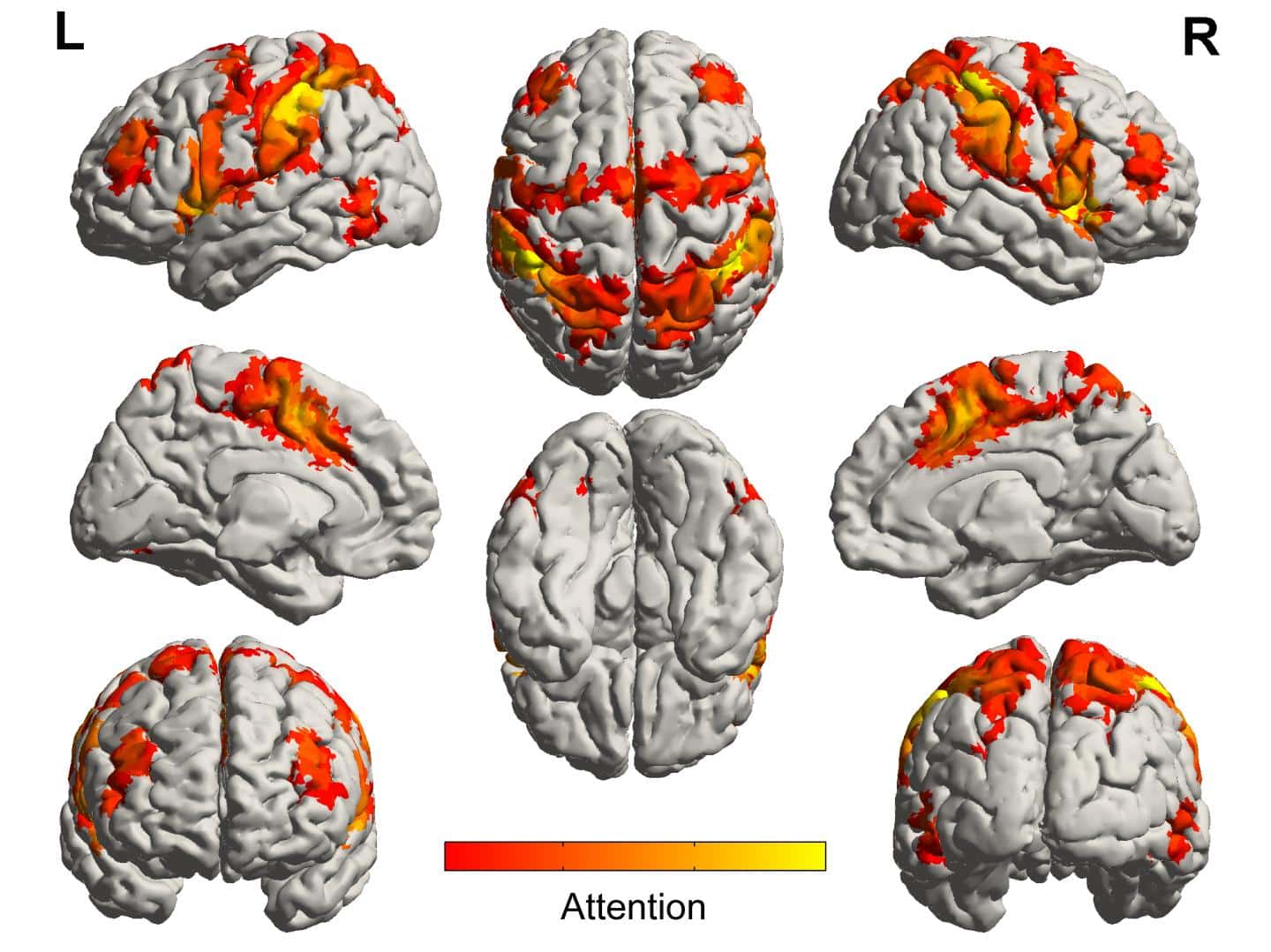
out to examine a mechanism that activates the attentional network in
the salience region of the brain. The results offer a new way to
approach anxiety, depression, and agitation in patients with dementia.
Activation of neighboring regions of the brain may also offer
opportunities to delay the continued decline caused by the disease.
For three weeks, the researchers helped participants select
meaningful songs and trained the patient and caregiver on how to use a
portable media player loaded with the self-selected collection of music.
“When you put headphones on dementia patients and play familiar
music, they come alive,” said Jace King, a graduate student in the Brain
Network Lab and first author on the paper. “Music is like an anchor,
grounding the patient back in reality.”
Using a functional MRI, the researchers scanned the
patients to image the regions of the brain that lit up when they
listened to 20-second clips of music versus silence. The researchers
played eight clips of music from the patient’s music collection, eight
clips of the same music played in reverse and eight blocks of silence.
The researchers compared the images from each scan.
The researchers found that music activates the brain, causing
whole regions to communicate. By listening to the personal soundtrack,
the visual network, the salience network, the executive network and the
cerebellar and corticocerebellar network pairs all showed significantly
higher functional connectivity.
“This is objective evidence from brain imaging that shows
personally meaningful music is an alternative route for communicating
with patients who have Alzheimer’s disease,” said Norman Foster, MD,
Director of the Center for Alzheimer’s Care and Imaging Research at U
of U Health and senior author on the paper. “Language and visual memory
pathways are damaged early as the disease progresses, but personalized
music programs can activate the brain, especially for patients who are
losing contact with their environment.”
What do you think about all of this? Have you considered music therapy
for your loved one who is suffering from Alzheimer’s or dementia?
Perhaps music could be the key to something we don’t quite see just yet.
In honor of Alzheimer’s Awareness Month -
and the more than five million Americans living with the disease - we
highlight our Top 7 Celebrity Estates impacted by Alzheimer’s disease:
1. Rosa Parks
Civil rights leader Rosa Parks waits to receive the
Congressional Gold Medal in Statuary Hall in the ... [+]
Getty Images
The
legendary civil rights icon died at age 92 in 2005, suffering from
Alzheimer’s disease. Her death set off a series of legal battles over
her estate that continue to this day, 14 years later.
Rosa
Parks’s estate plan left her assets to a charitable institution she
created. But her nieces and nephews challenged the validity of her will
and trust, due to her mental deficiencies and allegations of undue
influence.
That claim was eventually settled, giving the relatives a 20% share
of her assets. But that settlement was far from the end. Since then,
there have been ongoing fights over broken deals and leaked secrets, claimed mismanagement of her estate and assets, allegations of bribery and corruption,
and a lengthy battle over requested sanctions based on Rosa Parks’s
missing coat that she wore at the time of her famous arrest at the
Alabama bus stop in 1955.
For an iconic lady whose life was marked
by grace, dignity, and self-sacrifice for the greater good, it’s
especially tragic that her estate and legacy have been tarnished in ways
that she never could have imagined.
2. Gene Wilder
Actor Gene Wilder as Willy Wonka on the set of
the film 'Willy Wonka & the Chocolate Factory', based ... [+]
Getty Images
The family of the late actor – famed for movies such as Willa Wonka
& the Chocolate Factory and Blazin’ Saddles – raised awareness about
the terrible effects of Alzheimer’s disease after he died in 2016.
Luckily, his widow - his fourth wife, Karen - and his adopted daughter did not fight over Gene Wilder’s estate after he died, a testament to the importance of good estate planning. When someone has Alzheimer’s disease, proper wills, trusts, and powers of attorney are especially important.
Instead
of a fight, Wilder makes our list because of how his widow used her
husband’s struggle - which she kept private while Gene Wilder was alive -
to bring attention to the terrible disease, including allowing his
Willa Wonka character to be used in a video campaign to raise awareness.
3. Aaron Spelling
Tori Spelling, Aaron Spelling & Candy Spelling during
The 15th Carousel Of Hope Ball - Arrivals at ... [+]
WireImage
When famed Hollywood producer Aaron Spelling died in 2006, he left
behind a reported fortune worth $500 million. His death certificate
listed Alzheimer’s disease as a contributing factor.
Despite his mental struggles late in life, Aaron Spelling changed his estate plan just two months before he died, reducing the share to his daughter, actress Tori, and his son, Randy, to $800,000 each.
Tori’s
economic struggles were well-publicized in the years that followed.
Even though she felt that the reduction in her inheritance was improper,
she did not challenge the estate plan in court.
4. Etta James
Etta James the singer and songwriter a portrait
of her with blonde hair, January 21, 1963.
(Photo by Afro American
Newspapers/Gado/Getty Images)
Getty Images
Legendary blues singer Etta James passed away in 2012, at 73 years of
age. Her family reported that she had been struggling with Alzheimer’s
disease for several years. Her illness sparked an ugly court fight
between her husband of more than 40 years and her son from a prior
relationship over the right to make her medical and financial decisions,
including control of her $1 million account.
Etta James’s
husband, Artis Mills, alleged that the power of attorney Etta had signed
appointing her son, Donto James, as decision-maker was invalid because
she was incompetent when she signed it. He sued for control of the
money to pay for Etta’s care.
After repeated court hearings, Etta
James’s leukemia was determined to be fatal, which led to a settlement.
Mills was granted conservatorship and permitted to control sums up to
$350,000 to pay for Etta’s care for the last few months of her life.
5. Peter Falk
Peter Falk (1927-2011), US actor, wearing a
raincoat in the role of 'Lieutenant Columbo'
which he played in the US television
series, 'Columbo', USA, circa 1970.
(Photo by Silver Screen Collection/
Getty Images)
The famous actor who was best known for his role as Lieutenant
Columbo, died at age 83 in 2011, after living with Alzheimer’s disease
for years. His wife, Shera, and his adopted daughter, Catherine, fought
for conservatorship to make his decisions in a heated court battle.
Shera
argued that she had power of attorney and could already legally make
Peter Falk’s decisions for him, which included banning daughter
Catherine from visits. The judge ultimately granted Shera conservatorship,
but ordered a visitation schedule for Catherine. Sadly, a doctor who
testified at the hearing said that Falk’s memory struggles were so great
that he would likely not even remember the visits.
6. Tom Benson
NEW ORLEANS - FEBRUARY 13:
New Orleans Saints owner
Tom Benson holding the
Vince Lombardi Trophy for ... [+]
WireImage
The billionaire owner of the New Orleans Saints and Pelicans was the
subject of a bitter and drawn-out court battle over control of his NFL
and NBA franchises, and hundreds of millions of dollars of other assets.
Prior trusts established by he and his late wife left the sports
franchises and other business interests to his daughter and two
grandchildren. One of them, Rita LeBlanc, ran the Saints as lead owner
until she was fired by her grandfather. Tom Benson opted to take the
controlling stock of the teams out of the trust and substitute other
assets in their place, taking over control of the teams.
His daughter and grandchildren fought the move, until a 2015 court ruling declared Benson to be competent,
despite allegations he suffered from Alzheimer’s disease. Benson then
changed his will and trust and left everything to his third wife, Gayle
The two sides settled their dispute in 2017, leaving other
assets to Rita, her mother and brother, but ultimately leaving Gayle in
control of the Saints and Pelicans after Benson’s death in 2018 at age
90.
7. Glenn Campbell
LOS ANGELES, CA - FEBRUARY 12:
Musician Glen Campbell performs
onstage at the 54th Annual GRAMMY ... [+]
Getty Images
The renowned country singer publicly revealed that he suffered from
Alzheimer’s disease in 2011, as he embarked on a final “Goodbye Tour.”
He died at age 81 in 2017, leaving behind eight children from four
marriages, and his widow, Kimberly.
Kimberly helped spearhead a critically-acclaimed documentary about Campbell’s struggle with Alzheimer’s and has openly talked about the details of her husband’s illness, not only the memory loss, but how it caused him to become paranoid and even violent.
Glenn
Campbell’s 2007 estate planning documents cut out three of his adult
children, who sued to challenge their disinheritance after he died. In
late 2018, they dropped the case, without receiving a settlement. The
fact that Campbell’s final will was done a few years before his
Alzheimer’s diagnosis was an important factor in the outcome of the
lawsuit.
As with the other celebrities on this list, Glenn
Campbell’s estate shows how important proper estate planning is - before
it’s too late. Wills and trusts that are created or changed after
someone is diagnosed with Alzheimer’s disease, dementia or similar
conditions are much more likely to be challenged in court, often
successfully.
A justice on the state’s First Court of Appeals has
resigned, days after reports that she was sitting on the bench while
diagnosed with Alzheimer’s disease.
Justice
Laura Carter Higley, who lives in West University and served on the
Houston-based court, submitted her notice to Gov. Greg Abbott, the
appeals court’s clerk confirmed Tuesday. In the letter, she did not
offer a reason for stepping down from the bench, he said.
“Her service is appreciated by us and the state of Texas,” clerk Christopher Prine said.
The justice, a Republican, has held Place 5 on the
court since 2002. She was re-elected in 2008 and 2014, with her term set
to expire December 2020.
Higley has not responded to requests for comment.
The
Houston Chronicle reported on Higley’s cognitive condition after her
sons launched an effort to become her legal guardians. The justice, who
is 72, had been continuing with her daily work routine contrary to her
failing health, the sons said.
“Due
to the recent (and rapid) progression of her Alzheimer’s disease,
Justice Higley’s mental state has deteriorated to the point that she is
no longer able to care for her own physical health or manage her own
financial affairs,” sons Garrett C. Higley and Robert Carter Higley said
in the filing for guardianship.
She
had continued driving herself to work downtown, and had not resigned
from her job despite “clear indicators and explicit warnings” that she
was no longer capable of serving on the court, the brothers said.
Alzheimer’s disease is a progressively-natured form,
meaning it can begin with mild memory loss and become increasingly
severe, possibly causing the person to lose the ability to respond to
their environment, according to the Centers for Disease Control and
Prevention. It can affect the ability to complete daily activities, the
agency said, and there is no known cure.
Higley
became the subject of the guardianship case in mid-October, just a week
after receiving an official diagnosis of Alzheimer’s disease, according
to documents filed in Probate Court No. 2. Her wellness issues began
more than a year earlier with a diagnosis of an unspecified mild
neurocognitive disorder, which progressed to a mild neurocognitive
disorder stemming from possible Alzheimer’s disease in March, records
show.
The
sons hope to pull decision-making regarding Higley’s care away from her
husband and their father, West University Place Mayor Bob Higley.
They
called their mother’s condition “in the moment” only, meaning she can’t
engage in substantive conversations. She struggles to remember
information relayed to her or people she spoke with just a day before,
according to the court filing.
Higley
can’t do her job or manage her personal and financial affairs without
complete assistance and supervision, meaning she’s a legally
“incapacitated” person, the sons said.
She
has a long history in law, and was an attorney at Baker Botts, L.L.P.
prior to being a judge. Before that, she was the mayor of West
University Place.
Higley
was one of nine justices on her court, which serves Austin, Brazoria,
Chambers, Colorado, Fort Bend, Galveston, Grimes, Harris, Waller and
Washington counties. The judges mostly hear appeals on cases decided in
lower district and county courts in their jurisdiction.
It’s
unknown whether Justice Higley has been on the receiving end of any
official complaints related to her work. Those would be brought to the
State Commission on Judicial Conduct, the oversight group for judges,
interim executive director Jacqueline Habersham has said.
The Houston Chronicle has requested comment from the governor’s office regarding Higley’s resignation.