Showing posts with label Autism. Show all posts

Friday, June 5, 2026

Local father, son work to change guardianship rules, prevent care delays when turning 18

by Christian Hauser

For Ohio families raising children with special needs, turning 18 can create a sudden legal gap that delays care and leaves parents unable to make decisions for a child who cannot communicate or give consent. (Provided)

CINCINNATI (WKRC) - For Ohio families raising children with special needs, turning 18 can create a sudden legal gap that delays care and leaves parents unable to make decisions for a child who cannot communicate or give consent.

In Ohio, parents cannot begin the guardianship process until a child turns 18. For families of children with disabilities such as autism or Down syndrome, that can mean waiting months for a parent to be named guardian through probate court. If the child is nonverbal or has limited communication ability, the delay can also mean delayed health care until guardianship is established.

For Ohio families raising children with special needs, turning 18 can create a sudden legal gap that delays care and leaves parents unable to make decisions for a child who cannot communicate or give consent. (WKRC, Provided)

David Kahle and his son, Parker Kahle, traveled to the Ohio Statehouse to testify in support of a proposed bill aimed at closing that gap, known as the Parker Kahle Act.

Parker Kahle was diagnosed with autism when he was about 3 years old. He is nonverbal. When he turned 18, his father said he had to wait months while a guardianship petition went through probate court before he could be named guardian and get Parker needed dental care. Under current Ohio law, once a person turns 18, parents are no longer legal guardians.

David Kahle said he contacted state Rep. Jean Schmidt about changing the law and proposed allowing families to start the guardianship filing process earlier.

“We need more filing time. We can't wait until they're 18 years old. Why can't we file at 17 years and six months? A half year gives you six months to start working into the process before they turn 18. She said, 'Great idea. Any other ideas?'” Kahle said.

He also suggested that if guardianship is not established by the time the child turns 18, the parent should remain the guardian while the application continues through probate court. In addition, he said health care benefits should continue without interruption.

“To stop everything on their 18th birthday and say, 'You can file starting today, but there's going to be a gap between everything.' That means there's a gap in their health care time, especially if they're nonverbal or non-communicative or can't handle their own affairs. That's the important class where this comes in,” Kahle said.

While Parker Kahle has autism, the proposed bill would apply to anyone with a disability that limits communication and who is not able to give consent. The bill has had two committee hearings so far, and no one has spoken against it. 

Full Article & Source:
Local father, son work to change guardianship rules, prevent care delays when turning 18 

Sunday, May 17, 2026

Former Indiana caretaker found guilty in beating of disabled resident caught on video

by Nic Flosi

A former caretaker at a Hammond group home has been found guilty of battering a disabled resident during a 2022 incident, according to prosecutors.

Caretaker guilty in Hammond assault case

The backstory:  A jury convicted Juan Quintiones Joyce on several counts, including battery resulting in bodily injury to a disabled person, a Level 5 felony.

Juan Quintiones Joyce

The charges stem from an incident at an In-Pact group home in the 1700 block of 171st Street. Prosecutors said the victim, a 45-year-old resident, suffered visible facial injuries.

Dig deeper:  According to police reports, surveillance video captured the moments leading up to and during the attack. Investigators said the footage showed Joyce placing his hand on the resident’s back and guiding him from the kitchen to the living room while telling him to sit down.

Police said the resident returned to the kitchen moments later, sat down and grabbed a piece of paper from the table. Joyce then took the paper from him and told him to "get out of here before we wrestle."

The video shows Joyce asking the resident if he was ready to wrestle while moving a chair and the table away, police said.

Joyce is then heard saying, "get your a** up and let’s go." He walks toward the resident, swats at him with his hand and grabs him in an attempt to remove him from the kitchen.

A struggle ensues, and the resident falls to the floor. He then runs to the living room, where the confrontation continues. The video shows Joyce punching the resident multiple times in the face and torso after the resident grabbed Joyce’s shirt while pinned down with a padded kick-shield.

The altercation then ends. The video shows Joyce giving the resident a frozen item from the freezer to place on his face and later offering water.

Several minutes after the scuffle, investigators said Joyce was heard on the phone describing the victim’s swelling, saying, "He swelled up. He kinda swelled up, he f***ed himself up." He added, "I kinda had to elbow him to get him off of me and I kind of left a bruise on his face."

He then said, "Nah, he tried to bite my shirt and sh*t, you’ll see it."

Officers who responded days later reported seeing bruising under the victim’s eye and cheek. Photos were taken to document the injuries.

The victim, who has autism, bipolar disorder, schizophrenia and a history of self-injurious behavior, had lived in the group home for years, according to his legal guardian.

Joyce was fired from his job shortly after the incident was discovered.

What they're saying:  "This verdict reflects the commitment of our office and our law enforcement partners to protecting vulnerable members of our community and holding offenders accountable," Lake County Prosecutor Bernard Carter said in a statement.

What's next:  Joyce now faces sentencing, but it remains unclear when he is due back in court.

Full Article & Source:
Former Indiana caretaker found guilty in beating of disabled resident caught on video 

Sunday, December 31, 2023

Autism Silenced This Teenager. It Couldn't Stop Him From Creating a 70-Minute Symphony

                                                      (Picture credit:  Dania Maxwell/Los Angeles Times/TNS)
LOS ANGELES — 
“Unforgettable Sunrise’s” composer, 19-year-old Jacob Rock, listened from the far side of the room. Jacob, dressed in a brown Neil Young T-shirt, sat beside his father, Paul Rock, and watched through a mop of brown hair that nearly covered his eyes. Jacob was nearly vibrating with excitement as the strings rippled and marimba clattered. He had lived with this music for years, unable to get anyone to hear it. Now it was finally out.

After the rehearsal, Paul, 64, spoke about his son, bewildered by the scale of the music they’d just heard: “He’s been invisible to the world until this,” Paul said.

Jacob Rock lives with profound non-oral autism. His condition makes him all but unable to speak, with other debilitating physical effects inhibiting communication and socializing. Until three years ago, he’d been unable to speak with his family outside of physical gestures, which often conveyed deep frustration and self-harm.

In 2020, a breakthrough utilizing text-to-voice software revealed that Jacob had a deep acuity and sensitivity to language and art. He could now verbally communicate with his parents, and they could learn about his inner world.

Jacob revealed that since childhood, he’d been composing a symphony. He had all the arrangements and melodies locked in place. He couldn’t write notation or play the instruments his music required, but he could describe what he heard. Could they help him find a way to play it?

Wednesday, July 19, 2023

Atlanta father-son team develop app to help people with intellectual disabilities

By Hope Dean 

Click to watch video

ATLANTA, Ga. (Atlanta News First) - A Georgia State University student and his father have joined forces to develop an app benefiting people with intellectual disabilities.

Called “Let Me Do It,” the app helps users make decisions through a personalized choice tree, according to a GSU statement. Angad Sahgal and his father Amit said the app will empower people with Down syndrome, autism, and other disabilities to live more independent lives.

“It reinforces the fact that Angad has the independence and capability of making his decisions but can do with some help to navigate the steps to arrive at that decision,” Amit said.

Angad attends GSU’s IDEAL program, which works with students who have developmental disorders. He has also served as Georgia’s Youth Ambassador for the Center on Youth Voice, Youth Choice, a national organization that helps young people with disabilities make decisions about guardianship.

“As a person with a disability, entrepreneurship has allowed me to pursue my dreams and pave the way for the next generation of disabled entrepreneurs,” Angad said. “I know what it means to work with limitations and turn them into opportunities.”

The app is being funded by the Main Street Entrepreneurs Seed Fund, which comes out of GSU’s Entrepreneurship and Innovation Institute, and Synergies Work, an Atlanta-based nonprofit.

The app launches in November. Amit said that the app will one day support people with sensory disabilities and the elderly population, too.

Full Article & Source:
Atlanta father-son team develop app to help people with intellectual disabilities

Friday, April 14, 2023

Senators to Seek Alternatives to ‘Civil Death’ of Guardianship

The US Senate Special Committee on Aging will hold a hearing Thursday to explore alternatives to guardianships, which limit the rights of adults to make their own decisions and can lead to fraud and abuse.
Photographer: Aaron P. Bernstein/Bloomberg via Getty Images

by Ronnie Greene 

When the US Senate Special Committee on Aging gathers Thursday to examine the nation’s fractured guardianship system, one prime focus will be to find ways to eliminate unnecessary guardianships by turning to less onerous options.

Sen. Bob Casey (D-Pa.), the committee chairman, said that even after Britney Spears’ fight to escape her conservatorship attracted global attention, “there are still countless families across the nation fighting against exploitative or abusive guardianships with little recourse.”

This week’s hearing, Casey said, will explore ways to help those in need without always turning to court-ordered guardianships.

“The Aging Committee will examine the Nation’s patchwork guardianship system and explore alternatives to guardianships to protect Americans’ civil rights while getting them the support they need,” he said in a statement to Bloomberg Law.

A Bloomberg Law investigation published this month revealed the cost of unnecessary guardianships: fraud, abuse, and a system that limits the rights of adults to make their own decisions while handing control to guardians who are rarely certified or regulated. Another investigation, by WLRN in Miami, exposed questionable real estate transactions in a county guardianship program.

One group, Disability Rights Texas, refers to guardianships as “civil death, saying they “not only remove a person’s ability to choose where they want to live, what doctor they want to visit, where they work, or how they spend their money, but they can often be as restrictive as limiting what a person wears, what they eat, or who they talk to.”

Those who find themselves under overly restrictive adult guardianships sometimes take years to escape the system.

In Indiana, a teenager who suffered a traumatic brain injury after a car accident remained under guardianship for years even after marrying, having a child, and gaining work. He needed permission for everything from essentials for his daughter to the type of car he could drive. In Georgia, a mother put her daughter with Asperger’s syndrome under guardianship only to have the judge improperly revoke her right to vote and limit her spending – and threaten the mother with jail time. In Indiana, a woman with autism just ended her guardianship after a six-plus-year journey in which her former guardian questioned the family’s spending while running up steep bills.

Less Restrictive Option

Guardianships are governed by states, but each state has its own rules, so no standard system limits the number of cases guardians can handle. Some take on hundreds of cases at a time. Guardians manage more than $50 billion in assets for those they supervise, experts conservatively estimate.

Across the US, disability rights lawyers, American Bar Association veterans, and state officials say guardianships should be a last resort. Instead, they say, adults with disabilities or impairments should more often enter a system called “supported decision making.”

Under this process, adults retain the right to make their own decisions – while turning to a network of supporters when they need counsel on their relationships, their healthcare, their living arrangements, their jobs, or other matters.

Their supporters could be family members, friends, co-workers, lawyers, or others.

Ruby Campos, a Texas woman who was under guardianship until last year, said she has such a network. She now feels empowered to make her own choices.

“At the end of the day, it’s my decision,” Campos said in an interview. “I make some mistakes every now and then. If my WiFi gets cut off, that’s on me. But we’re healing.”

At this week’s hearing, “Guardianship and Alternatives: Protection and Empowerment,” the committee will hear from witnesses including a licensed therapist, guardianship reform advocate, state guardian attorney, and developmental disabilities director.

Casey has pressed for years for a system overhaul, examining financial exploitation of guardianships in 2018 and, in 2021, joining Sen. Elizabeth Warren, (D-Mass.), in urging federal agencies to improve oversight and seek data on state guardianship systems.

Full Article & Source:
Senators to Seek Alternatives to ‘Civil Death’ of Guardianship

See Also:
Voiceless No More, Indiana Woman Freed From Fraught Guardianship

In the Name of Protection, Part 1: The Profiteers: Guardians' Dark Side: Lax Rules Open the Vulnerable to Abuse

In the Name of Protection, Part 2: The Judges: Judge’s Errors, Jail Threats Haunt Georgia Family’s Guardianship

In the Name of Protection, Part 3: The Profiteers: 420 Cases, One Guardian: System Runs Amok on Just $35 a Month

In the Name of Protection, Part 4: The Lawyers: Peter Max’s Bare Ledgers Show Guardianships Drain Even the Rich

In the Name of Protection, Part 5: Guardians’ Abuses Persist as One State’s Easy Fix Goes Unmatched

Friday, March 31, 2023

Voiceless No More, Indiana Woman Freed From Fraught Guardianship

Sara Abbott said she dreamed of the day she would escape her guardianship. This week, a judge granted her wish.
Photographer: Jim Vondruska/Bloomberg

by Ronnie Greene

An Indiana woman whose journey through adult guardianship was dogged by judicial scrutiny, steep legal fees and a profound sense of powerlessness has gotten her wish: freedom from the system.

More than six years after a judge put her under guardianship, Sara Abbott, 27, was formally removed from her arrangement Thursday—without a hearing—by a new judge overseeing her case.

“It’s finally done,” Abbott said. “It’s going to give me a lot more positive outlook on things. I couldn’t believe it really. I expected another possible big battle.”

Abbott’s experience was profiled as part of a Bloomberg Law investigation of the restrictive world of adult guardianships, In the Name of Protection, published earlier this month.

After Abbott was diagnosed with autism at age 20, professionals suggested her mother, Diana, put her under guardianship. The two live alone in Salem, Indiana.

But when Diana became her daughter’s guardian, she was given no formal training on the paperwork required. The guardianship petition had been approved without a hearing in August 2016, records show. Diana didn’t know, she said, she was supposed to file biennial reports documenting Sara’s care and finances.

In 2021, the presiding judge removed Diana and appointed a local lawyer as a temporary guardian. That guardian questioned the mother’s spending on everything from a used car to a new roof; the judge directed Diana to reimburse her daughter’s account more than $11,000. The two argued the spending benefited both of them because the roof keeps them safe and Diana provided all transportation for Sara, who doesn’t drive.

As the temporary guardian was questioning the family’s spending, she filed bills that, in one eight-month period, totaled 91% of Sara’s total income. Sara said she felt voiceless, requiring permission, for instance, to get her bank statements or host a yard sale to raise money. Ultimately her mother, who previously injured her back, had to return to work.

Sara’s lawyers, Justin Schrock and Amy Semones, filed a petition this week to formally end the guardianship. They said Sara demonstrated independence and doesn’t need a guardian. Sara’s new guardian, Loren Pilcher, also supported ending the guardianship.

A hearing on the petition had been scheduled for Friday. But on Thursday, Special Judge Susan Orth issued a three-page ruling freeing Sara.

Orth also ruled that Diana no longer has to reimburse Sara for spending that benefited them both. “At Sara’s request, Diana is hereby relieved of any responsibility to reimburse Sara’s estate for expenditures made as her former legal guardian and representative payee that have previously been questioned in this matter,” the judge wrote.

“I’m ecstatic,” Diana said. “She has her independence and everything and I thought all along I didn’t owe anything.”

Both said more needs to be done to ensure others aren’t ensnared in unnecessary guardianships. “I honestly think the system is broken,” Diana said. “They need to have somebody explain things. What guardianship is and what it entails.”

But on Thursday, they focused on the ruling Sara called “amazing.”

Diana asked her daughter how she wanted to celebrate.

“Mom, I want Kentucky Fried Chicken today,” Sara replied.

“And that’s what we got,” said Diana.

Full Article & Source:
Voiceless No More, Indiana Woman Freed From Fraught Guardianship

See Also:
In the Name of Protection, Part 1: The Profiteers: Guardians' Dark Side: Lax Rules Open the Vulnerable to Abuse

In the Name of Protection, Part 2: The Judges: Judge’s Errors, Jail Threats Haunt Georgia Family’s Guardianship

In the Name of Protection, Part 3: The Profiteers: 420 Cases, One Guardian: System Runs Amok on Just $35 a Month

In the Name of Protection, Part 4: The Lawyers: Peter Max’s Bare Ledgers Show Guardianships Drain Even the Rich

In the Name of Protection, Part 5: Guardians’ Abuses Persist as One State’s Easy Fix Goes Unmatched

Thursday, March 16, 2023

In the Name of Protection, Part 4: The Lawyers: Peter Max’s Bare Ledgers Show Guardianships Drain Even the Rich

Illustration: Jonathan Hurtarte/Bloomberg Law. Photographer: Jim Vondruska/Bloomberg

by Ronnie Greene

Peter Max, who now has dementia, made millions creating psychedelic art that for a time put him on par with Andy Warhol as a ‘60s cultural icon.

Sara Abbott, who has a form of autism, gets by on $1,200 a month from Social Security disability and lives with her mother in a small house in southern Indiana.

Both are entangled in guardianships that were supposed to serve as salves but are instead mired in turmoil.

The similarities in their cases, despite deeply disparate lives, reveal the emotional and financial risks enshrouding guardianships. As Max’s memory faltered and his finances fell into disarray, he purportedly consented to having neutral guardians oversee his multimillion-dollar estate to achieve peace among his feuding family members. Abbott’s mother initiated a guardianship after a counselor suggested it.

Together their guardianships, which both began in 2016, highlight a simple truth found in a six-month Bloomberg Law investigation: It doesn’t matter how much money people have or how carefully loved ones watch over them; guardianships can evolve into costly quagmires where tussles over fees and control deter from the case’s core mission.

In New York, Max’s guardians and their lawyers have billed millions amid the family’s legal squabbles, suits, and countersuits. As a federal judge recently put it, it’s a “toxic situation.”

In Indiana, Abbott is pushing to terminate her guardianship after a tense journey. Her former guardian billed 91% of her total income during one eight-month period while questioning the family’s spending on everything from fixing the roof to buying a used car.

Across the US, guardianships are regulated in hodgepodge fashion, with different rules from state to state and no national requirements on who can become a guardian or how much they can earn. Adults in the system are protected by a flimsy regulatory safety net.

In any courtroom case, judicial oversight is vital to ensure legal costs don’t spiral out of control, said Jerome “Joe” Studer, a Chicago attorney who specializes in legal fee issues.

Studer said he was taken aback by Bloomberg Law’s findings on the fees in the two cases, particularly by the Indiana case in which the guardian billed nearly Abbott’s entire income. “The ratio strikes me as outrageous,” said Studer, founder of Legal Fee Analytics.

Max: Ceaseless Conflict

“Yeah, I understand,” was all it took for Max, 85, to enter into a guardianship that has done nothing to resolve the family’s feuds.

“You understand?” Judge Laura Visitacion-Lewis asked at the January 2016 hearing. She noted he was shaking his head to indicate he didn’t have any questions. With that, Max became a “Person In Need of a Guardian,” or PING, in court parlance.

Max, now in the advanced stages of Alzheimer’s, wasn’t formally adjudged to be incapacitated at the hearing, a ruling that could have negatively impacted the value of his art.

At the time, he was still painting and making public appearances.

Peter Max attends a 2014 event in New York City.
Photographer: Ben Gabbe/Getty Images for Gotham Magazine

His court-appointed counsel, Elizabeth Adinolfi, said he understood he needed assistance, “particularly in managing his finances,” and thought “it would be beneficial for him to have a neutral third party fulfilling that role,” court transcripts show.

The references to neutrality were a nod to the acrimony among Max’s family members over money, his art, and the family company ALP, Inc. “He loves his children very much. He loves his wife very much. And he does not want there to be any reason for the three of them to be in conflict,” Adinolfi said.

They hoped a neutral guardian could help “achieve some level of peace.”

More than six years later, conflict and litigation envelop the guardianship.

And it is costing Max a fortune.

Abbott: In the Dark

For Sara Abbott, 27, and her mother Diana Abbott, the legal morass began after a well-intentioned suggestion.

In 2016, a counselor recommended Diana put her daughter in a guardianship. She called the lawyer who handled her husband’s estate, and he agreed it made sense.

Sara Abbott wants to end her guardianship. “If I don’t, I’m going to lose my mom, my house, my life.”
Photographer: Jim Vondruska/Bloomberg

Diana was skeptical at first. “I said, Why do I need guardianship? I’m her mother.” But with two professionals suggesting that path, she became her daughter’s guardian that August.

A former stocker at a Dollar General store, Diana said she received no formal training. “I signed a paper, they pushed it through, and that was it.”

She failed to file biennial reports for 2018 and 2020 documenting her daughter’s financial affairs and well-being. Diana didn’t know, she said, she was supposed to file them. Washington Circuit Court Judge Larry W. Medlock removed her in 2021, questioning her oversight as guardian. He appointed a local lawyer, Lisa Fleming, as interim guardian, tasking her with documenting Sara’s spending and assessing her needs.

Thus began a contentious legal saga in which the temporary guardian’s fees would outpace Sara’s income.

Max: Fees on Fees

Max had paid about $1.8 million to his court-appointed lawyer, guardians, and their attorneys by the end of 2020, according to documents obtained by Bloomberg Law.

And that isn’t the half of it. Outstanding requests, either pending or approved, add more than $2 million, plus, conservatively, hundreds of thousands of dollars in accruing unpaid legal fees.

The guardianship order, filed in December 2016, revoked Max’s powers of attorney and health-care proxies, giving control of his finances and care to three court-appointed fiduciaries: a property guardian, Lawrence Flynn; a personal needs guardian, now Barbara Lissner; and his court-appointed lawyer, Adinolfi.

Flynn, who declined an interview request, is Max’s third property guardian, and he had two personal needs guardians before Lissner entered the picture in 2019.

The professionals have generated millions in expenses, either for their own services or for those of lawyers hired to litigate on Max’s behalf – often against his children over ownership of his art.

One pending fee request from Lissner, the personal needs guardian, is for her usual legal rate of $550 an hour. If approved by the court, it would total $598,664 for 13 months.

Libra Max, Peter’s daughter, has challenged that as “grossly excessive.” Lissner’s lawyer said she was unable to comment; the guardian has defended her billing in court filings.

Lissner doesn’t provide legal services to Max. Instead, her responsibilities are to attend to his personal needs and safety. Her time records describe over 1,000 hours of activities sometimes more akin to the services of a social worker or house manager.

One three minute entry reads “Guardian emails PING’s son that she hopes he is feeling better.” At Lissner’s proposed rate, that’s $27.50. Another entry for six-minutes reads “Guardian emails PING’s son to ask him if he visited his father the previous day and if he was able to fix the Netflix issue.” That’s $55.

The records also show that much of her time was spent managing inquiries from Libra and the daughter’s lawyers. Another attorney, hired by Max’s property guardian in the legal fight over his art, bills $650 an hour.

Lissner said in court filings she has yet to be paid. She isn’t alone.

As of May 2021, Max’s guardianship account had a balance below $5, according to an affidavit Flynn filed. Flynn said he had been forced to use some of his own money to pay for some of Max’s expenses.

Peter Max poses for a 1967 photo in New York. In 2022, a judge presiding over Max’s case visited Max and described his apartment as past its prime and said it’s “really unfortunate that such a formerly wealthy person is living like this.”
Photographer: Santi Visalli/Getty Images

Despite Max’s substantial estate – comprising more than $15 million in principal when Flynn took over in 2017 and more than $16 million in income from ALP over the same period – Flynn said Max was unable to meet his financial obligations.

Of the more than $16 million in income, more than $7 million went to cover back taxes, and roughly $893,000 went to a mortgage and apartment renovations.

The remainder of Max’s income has been spent trying to maintain the life the renowned artist had grown accustomed to with his late wife. Flynn said he needs at least $2.5 million a year for Max’s expenses but is receiving only a fraction of that.

The presiding judge has made clear the professionals will be paid.

“My first priority is to make sure that Peter is cared for in the best way possible,” Judge Lisa A. Sokoloff said during an April 22, 2022, hearing. “My second priority is to make sure all the attorneys who worked on this case get paid. It is astonishing to me that there are over $2 million in attorneys’ fees owed.”

Abbott: Questions and Fees

After the guardian was appointed to examine her case, Sara Abbott’s legal fees skyrocketed.

The temporary guardian, Fleming, quickly raised red flags with the judge about Diana’s use of Sara’s $1,168 monthly income, which was derived from Social Security Disability Insurance and Supplemental Social Security.

Eight days after Sara received one check with back pay in 2018, Fleming wrote, Diana bought a 2015 Ford Escape for $19,455, writing a check from her daughter’s account. “It is important to note that Sara does not drive, and the car is in Diana’s name only,” she wrote.

Fleming also noted in court filings that Diana put a new roof on their house, spending $4,500 from Sara’s account.

Diana Abbott said she received no training to become her daughter’s guardian.
Photographer: Jim Vondruska/Bloomberg

The accusation, mother and daughter say, is a fundamental misunderstanding of their situation: The money Diana spent was for her daughter’s benefit. Since Sara doesn’t drive, her mother provides all of her transportation. They have lived alone in the tidy family home in Salem since Sara’s father, Stephen, died in 2011.

“Sara says she was told the roof had to be replaced or she would lose her Homeowner’s Insurance,” wrote lawyer Amy Semones, representing Sara.

Said Sara: “How is that not for me? I need a roof over my head so I don’t get rained on.”

Fleming questioned other spending for electric, water and sewer, property taxes, and insurance.

“I believe there is a continued need for a guardian,” Fleming wrote the court on March 22, 2021. She said Sara needed help with medical, mental health, and social interaction needs and suggested Diana have “no access” to her daughter’s bank account.

Semones said their spending wasn’t frivolous. Sara “was consulted about and consented to all of the transactions” while her mom was guardian, the lawyer wrote.

And while Fleming was scrutinizing the roof and other spending, she was charging fees that resulted in half a day’s work totaling more than half of Sara’s monthly income.

On June 6, 2021, Fleming submitted an invoice for her guardian services for her first 3½ months. Her rate was $175 an hour. One bill was for $700 for 4 hours of work reviewing documents Diana provided her, which Fleming used to help form her March report.

In all, the total equated to more than $1,500 a month, more than Sara’s entire monthly income. A day after Fleming submitted her invoice, Judge Medlock approved it. Sara was on the hook for the bill.

The judge also questioned other spending and told Diana not to “spend money frivolously.” That September, the judge told Diana to reimburse Sara’s account $900 spent for Sara’s video games and another $600 on streaming services.

In all, Medlock ordered Diana to reimburse Sara’s account $11,720, including $3,000 for the roof and $6,485 for the car. He suggested she “consider the sale” of the family home.

Semones quickly pressed the judge about the close scrutiny of Sara’s spending that simultaneously threatened to deplete her account.

Semones called some of Fleming’s charges “unnecessary, duplicative and excessive,” particularly in light of Sara’s modest income. Fleming billed $175 for one hour spent copying records; Sara said she could make copies for 10 cents per page. “The invoice contains billable time for unnecessary travel in situations where a fax, phone call, email or internet search would suffice.”

In court papers, Fleming said her actions were “made in good faith on behalf of the protected person” and that she is “entitled to reasonable compensation.” After Semones questioned her fees, Fleming reanalyzed her bills – and increased the total by $52.50. The in-person meetings, she said, “were necessary.”

Fleming declined to discuss the case with Bloomberg Law. “I will not be talking with you about Sara Abbott,” she said.

All the while, the court denied Sara’s request for money for personal expenses. After Fleming took over, Diana, who had previously injured her back, said she was forced to return to work to “make ends meet.” Sara had to make written requests to the guardian for her bank statements and required permission to host a yard sale to raise money, wrote Semones, who was billing Abbott a reduced rate of $50 an hour while also seeking a nonprofit to represent her at no cost.

Max: Art and Lawsuits

Max was placed into a guardianship in part to prevent family infighting, but that original intention has been thwarted.

Generally speaking, “the more dysfunction in the family, the higher the costs of the guardianship,” said Katherine Pearson, a professor at Penn State Dickinson Law who specializes in policies related to aging. As disputes escalate, the legal costs spike.

Adinolfi, Max’s lawyer, said she couldn’t comment on the case. Speaking generally, she said guardianships can “be the best thing for a family” when they’re not contested. But when family dynamics are volatile, “it can drive a guardian’s time through the roof.”

Max founded ALP Inc., named for his children, Adam and Libra, and himself, in 2000. His children hold equal 40% shares. Max owns the remaining 20%, now controlled by Flynn, the property guardian.

In December 2019, Flynn’s lawyer sought to recover “all artworks produced by Peter,” along with the remainder of his “valuable intellectual property.”

Peter Max poses in New York City in 2012 with portraits he created of Paul McCartney. His family and guardians continue to spar over his estate.
Photographer: Timothy A. Clary/AFP via Getty Images

Flynn asserts that Max never intended for ALP – and in effect his children – to control all of his work while he was alive.

He claims Max had been suffering from dementia for two years, according to one of his doctors, when he supposedly transferred his intellectual property rights to ALP. In effect, Flynn is arguing that Max didn’t have the capacity in 2014 to transfer his intellectual property, even though he possessed the capacity in 2016 to enter into a guardianship.

Flynn has also said he has no choice but to aggressively pursue Max’s claim over the art, alleging that Libra began intentionally starving the guardianship in 2019 amid her legal wars with her father’s guardians.

Libra has authority to determine her father’s ALP income, and in court filings, has said she reduced his salary to $800,000 because the company has less cash on hand than normal.

Initially siding with Libra, Flynn voted to oust her brother Adam as president of ALP in late 2018 but by March 2020, Flynn had changed his mind. He accused Libra of misconduct and agreed to reinstate Adam as president, provided Adam agree not to contest the claim to his father’s art – or to oppose the guardians’ fee requests.

Adam’s attorney blamed Libra for much of the case’s chaos. “The plain reason that this matter appears to have spiraled out of control and incurred large requests for compensation by fiduciaries is directly correlated to the litigation that was instigated by Libra Max,” wrote Matthew S. Seidner.

Libra’s lawyer counters that the fees are the consequence of Max being “ripped from his family and loved ones at the end of his life.”

“Simply stated, if Peter was being cared for by his family, as is his wish, there would be no legal fees,” Clifford Meirowitz said. It “strains credulity,” he added, that he wanted “his life run by strangers.”

Libra has been seeking unsuccessfully since 2019 to have Lissner removed as her father’s personal needs guardian.

Their discord escalated in December 2021, when Lissner sued Libra for defamation in state court following an interview Libra gave on Fox 5 New York two months earlier criticizing the guardian.

So now, the court-appointed official watching over Max is formally at legal odds with his daughter.

Libra can see her father, but only when Lissner agrees, and is generally prohibited from accessing his medical information or speaking with his physicians.

And it has all been approved by the court. Adam has said he has no problems seeing his father and, in court filings, has supported Lissner’s care.

In April 2022, Sokoloff – the fifth judge to preside over Max’s case – told Lissner and Libra to be civil, or communicate through lawyers. “I don’t want to be called to find out that Libra isn’t leaving, because I will come over with the police, and you don’t want that.”

About a week later the judge visited Max. She described his apartment as past its prime and said it’s “really unfortunate that such a formerly wealthy person is living like this.”

“He talked to me a little bit,” the judge said. “He was drawing and painting with markers.”

Abbott: Seeking a Way Out

As she found herself deeper in the system, Abbott said she felt invisible.

“I was being treated like I was insignificant,” she said from her hometown 100 miles south of Indianapolis. “I have a big motivation to get out of this guardianship. If I don’t, I’m going to lose my mom, my house, my life.”

Her friction with the guardian was clear to Medlock, who “observed in Court the behavior of the ward and her mother towards Ms. Fleming to be disrespectful.” But on this, too, there are two sides to the story.

Abbott is a detail-oriented woman who keeps careful track of her schedule. After the judge appointed Fleming as her guardian, she took to taking notes during their meetings.

“She has not once listened to a word I have said,” she wrote of their first session in 2021.

“Fleming claims that her goal is to ‘help me save money and be frugal’ despite the fact that she is/will be charging me for not only these weekly meetings but also any interactions with her,” she wrote. “The fees for these meetings will more than likely deplete my account.”

As they continued to meet, Abbott said Fleming objected to her taking notes. “Fleming asked me to put binder down. I told her I am more comfortable with it out,” she wrote of their second meeting. “It is hypocritical of her to complain of me taking notes for my own records if she does the same.”

Abbott is now also working with Justin Schrock, an attorney with Indiana Disability Rights representing her at no cost in her bid to end the guardianship.

Schrock formally challenged Fleming’s bills. By October 2021, Fleming had billed $8,915.85 for eight months – or $1,114 a month, 91% of Abbott’s total income, then at $1,225.

Indiana Attorney Justin Schrock is representing Sara Abbott as she fights to be released from her guardianship.
Photographer: Jim Vondruska/Bloomberg

As Abbott awaits her day in court, her case has undergone major change. Last March, Fleming was replaced as guardian by Loren Pilcher, chief operations officer of a behavioral therapy company called Sweet Behavior, who supports Sara ending the guardianship.

In June, Judge Medlock recused himself from the case, citing its “conflict and animosity” in an interview. Medlock said he had concerns about some of the “suspect transfers,” prompting him to appoint Fleming. “I was asking for a different set of eyes,” he said.

Asked about the family’s view that the spending benefited Sara, Medlock acknowledged some second thoughts. “Yes, honestly, when I do look back at it I think they do have something of a point.” But he said the costs should have been split between mother and daughter. Medlock agrees Indiana guardians “absolutely” don’t get enough training.

He said Fleming “did a lot of work and gave me significant insights into how the funds were spent,” but admitted her bills “were extensive” and “some of the meetings with Sara weren’t necessary.”

In the end, Fleming waived about half of her $12,000 final bill and Abbott paid $2,600, Schrock said. The judge got the county to pay the balance.

“I thought it best to recuse,” Medlock said. “I wanted to be fair to everybody. I wasn’t sure I could be.”

He said he’s not convinced Abbott is ready to terminate the guardianship and felt it better for another judge to resolve that question. “I had strong opinions about it.”

If the new judge frees her from the guardianship, Abbott said, “I might faint on the spot.”

Along the way, Diana has witnessed a more confident daughter emerge. “Sara has gotten her voice through all this,” she said.

Sara said she is ready to use that voice.

“Fight back,” she said. “Prove you’re functional. Don’t let people treat you like you’re lesser because you’re different.”

Full Article & Source:
Peter Max’s Bare Ledgers Show Guardianships Drain Even the Rich

See Also:
Guardians' Dark Side: Lax Rules Open the Vulnerable to Abuse

Judge’s Errors, Jail Threats Haunt Georgia Family’s Guardianship

420 Cases, One Guardian: System Runs Amok on Just $35 a Month

Sunday, September 4, 2022

The Price of Care: Taken by the State | Season 2, Ep. 3 of an ABC10 Originals five-part docuseries


The Bui family moved to California thinking their younger brother Martin, who has autism, would be better served under California's laws for disabilities. They didn't expect their family to be ripped apart, forced to fight the very system they thought would protect Martin. 

In episode three, Investigative Reporter Andie Judson digs into an eye-opening report by the California State Auditor, which found the Department of Developmental Services (DDS) is failing to do the job they're legally required to: assist and protect those with disabilities. 

Watch Season One Many have heard of conservatorships by way of Britney Spears or the Golden Globe winning Netflix film, “I Care a Lot.” One year in the making, the ABC10 Originals 5-part series, “The Price of Care: Investigating California Conservatorships” by investigative reporter Andie Judson, dove into the systemic issues of conservatorships in California and what's being done to regulate this $13-billion-dollar industry. 

Source: 

Saturday, August 20, 2022

'I want to live at home' | The battle of a conservatorship funded by tax dollars

Garth Schutte, 40, is under a conservatorship. His family isn't allowed to know where he is or speak to him. What's funding this is your tax dollars.

SACRAMENTO, Calif — Garth Schutte, 40, has been taken by the state.

His mother, Jill, and older brothers, Ian and Russell, aren't allowed to speak to or see Garth. They don't know where he lives.

That's because Garth has been placed under a limited conservatorship.

In California, a conservatorship is a legal tool approved through the probate court which takes away the rights of someone who is unable to care for themselves and gives them to another person.

While general conservatorships strip someone of their civil rights entirely, limited conservatorships have seven separate powers that can be taken and given to another person depending on the conserved person’s unique needs and ability to handle certain aspects of their lives.

But Garth has not been conserved by just anyone; he is under the custody of a $12 billion state agency: The Department of Developmental Services (DDS).

DDS serves hundreds of thousands of Californians with disabilities and their families with services and support. The Schutte family shared their story with us in hopes it will shine a light for others who receive these services — especially those considering conservatorship.

“360,000 people could potentially be subject to this system,” said Ian.

360,000 is the number of people the Department of Developmental Services serves as of our interview. In 2023, that number is expected to increase to over 400,000.

“I want to help as many of those 360,000 people as I can because even it just happening to one person is awful,” said Ian.

“We never expected anything like this,” said Jill. “If I could’ve predicted this... we would’ve left the state of California.”

Credit: Jill Schutte
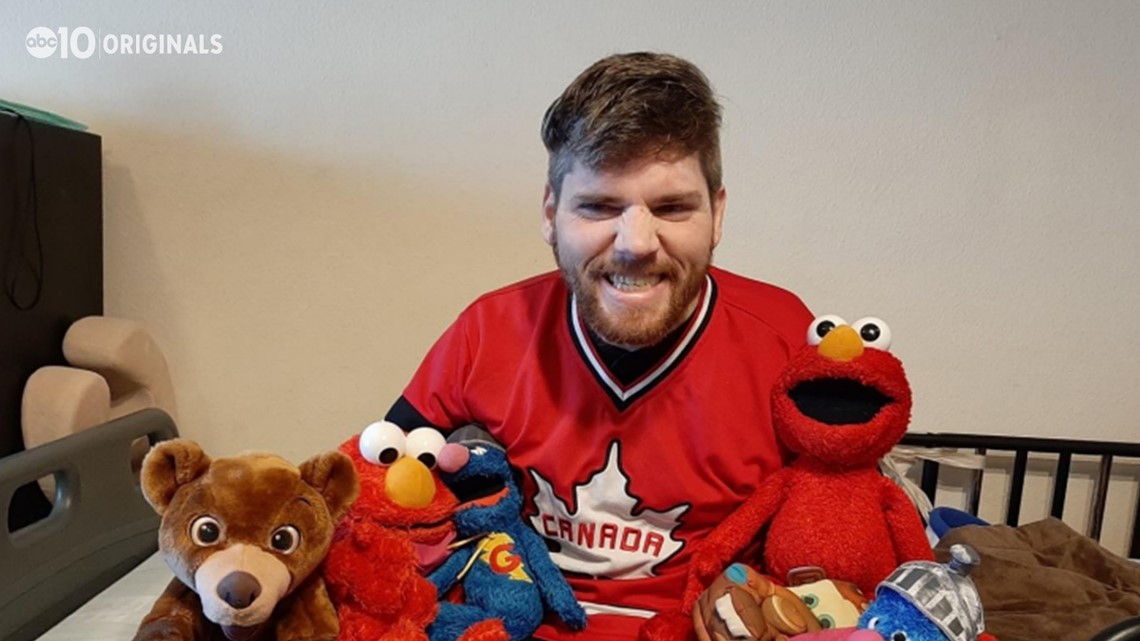
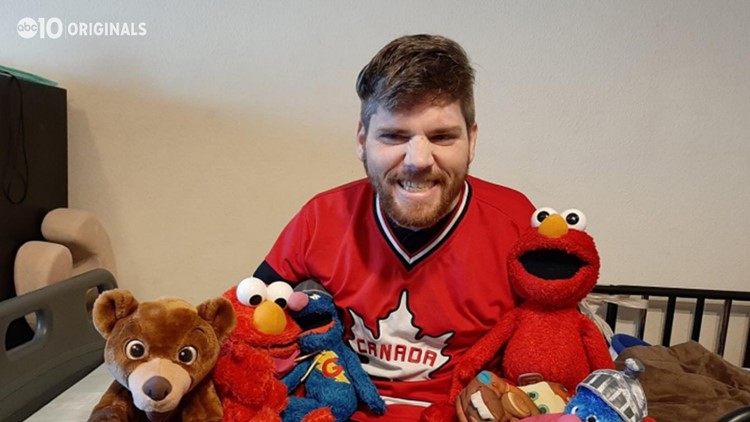
Garth Schutte, 40, smiles with his favorite stuffed animals in his room at his mother's house in Sacramento.

Garth has developmental disabilities; autism and obsessive-compulsive disorder, court and medical records show. For the first 39 years of his life, he relied on his mother to assist him with everyday things like showering, shaving and even using a catheter because of a diagnosis of catatonia.

“He was catheterized in the home and I was trained by three different medical staff,” said Jill. “Kaiser was providing all his medicine and his catheter, which was being mailed to the house. You can’t buy catheters — they’re prescription only.”

The catheter is part of how Garth’s conservatorship began.

In Aug. 2020, record-breaking heat hit Sacramento. Jill noticed Garth wasn't eating or drinking quite as much and took him to the doctor.

“Garth says things differently and he mentioned to one of the nurses, ‘My mom puts a red plastic straw in my private part,'" Jill said.

Hospital staff are mandatory reporters. By law they have to report any sign of potential abuse – Jill said Garth was trying to explain how he needed to be catheterized and it sent an abuse alert to Sacramento Adult Protective Services (APS) as well as Alta Regional Center — the state-run facility under DDS providing services and support directly to people with disabilities as well as their families.

“When we look at California state law regarding mandated reporters, the reporters only report suspicions. It’s the sheriff and police that do the investigation,” said Jill. “Adult Protective Services expand the investigation, not the regional center.”

Yet court records show Alta Regional Center took Garth and placed him in a state-funded care facility.

Jill, Ian and Russell were not notified, despite Jill having Kaiser’s model of power of attorney over Garth.

For three months, no one told their family where Garth was.

“We had absolutely no idea. They would not even say, is he in Sacramento?” Jill said. “We did not know.”

This wasn’t unfamiliar territory to the Schutte family.

Fifteen years prior, Garth had been taken by an Alta Regional Center employee who was helping watch Garth in Jill’s home. In court records, the regional center wrote Jill was unable to care for Garth, but a court investigator’s report later said Garth was taken in a “deceptive” manner.

The first time Garth was taken, it took Jill nine months and an attorney to get him back. 15 years later, in 2020, they were at a loss, which is why the Schutte family decided to get conservatorship over Garth, despite not doing so for Garth’s 39 years of life to help maintain his independence.

As they began the lengthy legal process, Garth was suddenly dropped off at Jill’s home by medical technicians after three months with no knowledge of his whereabouts.

“I was shocked. I was thrilled,” said Jill.

Less than 24 hours later, three Sacramento sheriff’s deputies arrived saying Garth had been returned to Jill due to a “clerical error.”

The deputies took Garth outside and spoke with him alone. Ian recorded all 47 minutes the deputies were there; throughout the recording, Garth expressed his desire to remain at home with his mother to the deputies several times.

After Garth made his wishes clear and the deputies did a home inspection, their concern vanished.

“We’re glad he’s got such a good home here,” a deputy said.

The deputies updated Adult Protective Services and Alta Regional Center on their welfare check. Before leaving, one deputy offered the Schutte’s advice: “The most important thing you can do is go get that conservatorship as quickly as you can because that’ll prevent them from pulling all this.”

The Schutte family took it to heart and moved forward with the legal conservatorship process.

By petitioning the probate court for conservatorship, several things are instigated, including the court appointing an attorney for the potential conserved person.

The court appointed attorney Dewey Harpainter to represent Garth. Harpainter’s office is in Auburn.

As Garth’s attorney, Harpainter is legally required to advocate and represent what Garth wants. Jill says Harpainter refused to meet in person with Garth.

“At one point I said, ‘If you’d like I can drive Garth up to Auburn. I will sit in the car so you can have private questioning with him,'” Jill said. “He denied that at least five times.”

When the Schutte family attorney brought this up in court and requested a new attorney be appointed for Garth, the judge refused, Jill said and court records show.

At the time of our interview with the Schutte family in early June 2022, Harpainter had yet to meet with Garth.

That changed less than a month later after we reached out for an interview. Court records show Harpainter eventually met in person with Garth after we began investigating. The meeting took place just six days after our initial interview request to Harpainter.

Harpainter did not respond to repeated requests for an interview.

When a conservatorship is requested – the court also appoints an investigator to interview the conservatee, assess the family dynamic, and write a report that goes directly to the judge.

“The court investigator called me and we talked over many, many things,” said Jill. “I (also) encouraged him to talk to Garth privately.”

After the investigator spoke with Garth in a one-on-one phone call, he wrote that Garth “expressed a very strong desire to remain at home” and told the investigator, “(I) don’t wanna go to a group home. I would like to live at home.”

Criminal background checks were done on Jill and Russell — who were petitioning for shared conservatorship custody. The investigator’s report also went through Adult Protective Services records and past abuse referrals, which “were deemed inconclusive.”

It means they didn’t have evidence to confirm or deny Garth was abused, APS told us.

The court investigator recommended to the judge that his family care for Garth, and the conservatorship “should be granted.”

But the state regional center, Alta, told the judge a different story — it claimed a number of allegations of abuse by the family from medical professionals in their written assessment of Garth.

Jill said she’s had years of experience with Garth — as well as a 22-year career as a disability expert for the California State of Rehabilitation —  and that, “at no time did any doctor or professional advise me that anything being done was abusive.”

The assessment also alleged Jill locked Garth in a windowless room, which Jill admits to, for Garth’s own protection. Because of his OCD, Garth often tries to break through the window glass in his room so he can pick up litter at all times of the day and night.

“I mentioned that to a doctor… the doctor said, ‘Can you put a plywood or something based on the size of the window?’” Jill recalled.

She did, but not before she said she consulted with the fire department about it.

“It’s always putting Garth first,” Jill said. “His needs and wants but above his needs and wants... his safety.”

The assessment also said Garth spoke directly to Roseville police after a lieutenant contacted Garth and the regional center following the Schutte's filing a missing persons report when Garth was taken in 2020. The assessment said Garth told the lieutenant he didn't want to return to his mother’s house as well as recounted “physical and sexual abuse by his mother and brother.”

We reached out to the Roseville Police Department. They said they have “no records” of the call and therefore couldn’t confirm it.

The regional center told the judge just because APS reports of abuse were “inconclusive,” it “does not mean the claims are unfounded” and that Jill and Russell would be inappropriate conservators.

Instead, they recommended the Department of Developmental Services be appointed as conservator. They also said DDS should ask for a power the family didn’t: control over who Garth sees.

Ultimately, the judge listened to the regional center. He gave temporary conservatorship of Garth to DDS... not to the family as recommended by the court investigator.

With the conservatorship appointed, DDS decided Garth should move out of his mother’s home and into one of their care facilities — what they call a “vendor.”

After 39 years of living with Garth, Jill moved Garth into the new facility.

“We did not want him to see our tears as we drove away,” Jill recalled.

But the DDS care home struggled with Garth.

“Because they couldn’t help him sleep and he couldn’t sleep - they call 911,” Jill said she learned.

Court records show Garth had been “hospitalized for 43 out of 88 days” after being moved to care homes and under the care of DDS, meaning between November 2021 and February 2022 Garth spent about half his time at that point in emergency rooms rather than the care home.

Because Garth is under the conservatorship of DDS, taxpayers are footing the pricey ambulance rides and hospital stays.

One of the caretakers had so much trouble she actually asked for help from the family Garth had just been taken away from.

“She would call (us asking), ‘Can we come help her?’” Jill said. “She actually wanted us to spend the night there.”

Jill shared text messages between her and the care home facilitator with us. Here are a few, including the facilitator addressing the regional center’s abuse allegations:

  • “Please help me tonight. I don’t want to call the hospital.”
  • “Ms. Jill please help me.”
  • “What would u do?”
  • “I didn’t see any abuse at all.”
  • “I believe u are a good family.”
  • “I really don’t know what they (regional center) are doing. Just help me transition (him).”
  • “He keeps writing I miss my mom.”

Garth no longer lives at this care home. Jill said he has moved residences five times in six months. With each move, Jill’s involvement in Garth’s life has been drastically cut by DDS, claiming Jill and Ian are “triggering” Garth. Jill believes what’s triggering is the memory of the home Garth had with her.

As of mid-July 2022, Jill hadn’t seen or spoken with Garth for 12 weeks. Visitation, including phone calls, between Garth and his family, has been severed... especially between Jill and Russel, the two who tried to get co-conservatorship.

“We have not been (to his care home). We are not allowed to go there. We are not allowed to know the exact address,” said Jill. “We have not seen him or heard from him.”

It’s not for a lack of trying; Jill has repeatedly requested visitation with Garth’s regional center service coordinator, who is acting as his conservator in making decisions for Garth on behalf of DDS.

“We can’t provide you a date when you will be able to call or visit Garth,” his service coordinator wrote in an email to Jill. She also said, “Garth has not expressed any interest in having contact with you at this time.”

Jill said she’ll respect his wishes, but wants to hear them from Garth himself.

“Because we will follow the instructions,” said Jill. “[The regional center] could not do that.”

We also reached out to Garth’s service coordinator asking to speak with Garth. Alta Regional Center’s legal manager responded with the same message: “Garth has expressed no interest in speaking with you.”

We asked if Garth was informed that an investigative reporter wanted to speak with him — and if we could ask him directly. We never got a response.

We were, however, able to speak with Garth directly during a visitation with his brother Russell.

Since DDS got conservatorship, Russell has laid low in hopes of continuing to remain in contact with Garth, unlike other family members who've lost all visitation. As of June 2022 he hadn't seen Garth for six months. Russell requested visitation and was approved. He, his wife Elizabeth, and their kids met at a local park while a care home worker supervised.

About halfway through their visit, we were able to speak with Garth.

“I terribly miss my mom,” Garth said.

When asked who he would like to live with, he told us “his family,” specifically his “mom.”

Garth also expressed the same desire weeks later directly to a judge.

On July 27, 2022, the Department of Developmental Services’ temporary conservatorship over Garth expired. The agency wanted to renew it and a court hearing was held in Sacramento’s probate court.

Judge Gevercer granted us permission to film, despite DDS’s repeated objections.

During the 40-minute hearing, the judge gave time for all to speak including Garth himself, who until this point has rarely had a voice in court.

“I want to live with my mom,” Garth said to the judge.

The judge told Garth to talk to his court-appointed attorney, Harpainter, about his desires. He also ordered DDS and the Schutte’s to meet and hopefully reach an agreement over Garth’s current situation.

In the meantime, he extended DDS’s conservatorship over Garth until the next hearing in December.

We requested an on-camera interview with the Department of Developmental Services for seven months. They declined all requests for interviews.

Prior to releasing our investigation, we sent them a three-page letter outlining our findings and asking 15 questions related to allegations of failed practices, including a 2022 state audit that found numerous failures for the last 10 years. 

They refused to answer our questions and sent us a written statement (available in full at the bottom of this article) about how their priority was to keep their clients safe and a short video (below) of Director Nancy Bergmann reading the written statement. Neither answered any of our questions.

So, we attempted to talk to DDS attorney Meredith Nixon following the hearing. She also refused saying, “no comment.”

Two days prior to our investigation airing, the Department of Developmental Services announced immediate "actions to support" the individuals they conserve in a three-page press release. The release named three items DDS will do to improve the system for those in "conservatorships where DDS is the court-appointed conservator." They include forming a panel of experts to conduct a review of DDS' conservatorship program, forming a "working group" from multiple state departments to review their conservatorships, and "enhance oversight and review."

However, the press release didn't include direct actions or steps, like budgeting nor an exact time frame of when these items will take place. We reached out again asking for an interview so we could ask about the specifics of their new plan. They declined.

Credit: Jill Schutte

Jill had retired to care and spend more time with Garth. Following the hearing, she decided to return to work at an organization assisting people with autism, like Garth, so she can continue paying for the costly legal fees in hopes of gaining care for Garth.

The Schutte family plans to continue fighting in hopes of getting Garth home. They also hope in sharing their story, they shed a light on limited conservatorships and the system around it for others - as well as taxpayers.

Department of Developmental Services statement:

“In California, unlike any other state in the nation, individuals with intellectual and developmental disabilities have a right to the services and supports to help them live their most independent and productive life. With the passage of the ground-breaking Lanterman Act in 1969, the state affirmed its commitment to these rights for Californians. We at the California Department of Developmental Services have the responsibility to deliver on the assurances made by the law. 

It is our obligation to hold ourselves and our system partners accountable, while ensuring that individuals with intellectual and developmental disabilities receive community-based services and supports that embraces choice and allows them to live with purpose and dignity. We are constantly looking to improve how we serve the whole person, all while protecting the health and well-being of those we serve.

We are striving to create effective, culturally responsive, and efficient services. We have advanced this vision by the historic investments made over the last two years that, when put together, drive us toward a system of value-based services and supports, where our main objective is quality and better outcomes.”

Department of Developmental Services response to our questions:

“DDS does not actively seek conservatorships. In all instances, the Department of Developmental Services’(DDS) involvement in the conservatorship process begins with a submission by a third party requesting that the Director of DDS become conservator of a person with developmental disabilities. DDS only decides to petition to become conservator when clear and convincing evidence shows that a conservatorship is needed to protect the consumer’s health, safety, or well-being. The submission can come from a variety of sources, such as the courts, a regional center, a law enforcement agency, a family member, the county public guardian, the consumer’s court-appointed counsel, local adult protective services, or any other person interested in the consumer’s health, safety, or well-being. The conservatorship process is a court-based, legal process. As such, DDS has the legal burden to present conclusive evidence to a judge demonstrating that the conservatorship is necessary to protect the person’s health, safety or well-being.

 Family members can and do participate in the judicial proceedings that decide whether a conservatorship petition should be granted, the scope of the conservatorship, and whether the Director of DDS should be appointed as conservator. Furthermore, a court-appointed counsel is part of this process. These are officers of the court appointed by a judge to represent the interests of the proposed conservatee. These counsels are completely independent of DDS and do not receive any funds from the Department. Court-appointed counsel have a fiduciary duty to act independently and in the best interest of the proposed conservatee to determine whether a conservatorship is necessary and who, if anyone, should serve as conservator. 

 DDS does not seek to become a person’s conservator without a third-party submission having first being made and thoroughly vetted. DDS conducts a comprehensive, detailed inquiry when it receives a conservatorship nomination. DDS will not seek to become conservator if there are alternate, less restrictive means to protect a consumer’s health, safety, or well-being. DDS also will not seek to become conservator if there is a family member, friend or other close person in the consumer’s life that can protect the consumer’s health, safety or well-being. DDS has a legal and moral obligation to protect the consumer no matter the desires or objections from family members.

 It is important to understand that under state law every regional center consumer participates in the development of an Individual Program Plan (IPP) that identifies the supports and services the person needs. An IPP is developed regardless of the legal status of individuals. The amount of funds spent on a consumer is based on costs for the supports and services identified in the IPP, and not on any other factor such as whether a conservatorship is in place. Thus, absolutely no additional funds are spent simply because a consumer is subject to a conservatorship by DDS. In addition, neither DDS nor the regional center receives any additional administrative funding for individuals who are conserved versus those who are not conserved.”

Editor's note: This article has been updated to correct that Russell was the Schutte brother that initially petitioned co-conservatorship of Garth.

Full Article & Source: