Showing posts with label Caregiving. Show all posts

Saturday, April 5, 2025

Caregiving can test you, body and soul. It can also unlock a new sense of self

By Kat McGowan 


When it was all over, Amanda Cruz felt like a phoenix, a new person rising from what had been. First, though, she had to go through the fire.

Pre-caregiving Amanda was a talker. When she was 2 years old, she always waved to everyone on the bus. In her 20s, she moved to Denmark for graduate school knowing nobody and loved it. Later, she worked for city government in a job connecting with constituents. She learned to speak Spanish so she could chat with more people.

In 2023, her mom was dealing with a cancer relapse that had progressed into her spine. That July, right before Cruz's parents moved to her neighborhood in South Carolina to be near her, her mom also had a stroke.


She became quieter, and she began to listen more. She was learning to hear beyond the words her mother said to understand what she really meant. Listening to judge whether her mother needed more pain meds, or to figure out what she really wanted at that moment, even if it was just a soda from the gas station. Her own words were saved for the daily rituals of bathing, medicine, questions about pain, and gently encouraging her mother to start saying her goodbyes.

"I must pull myself back to put her forward," she said to herself.

They sheltered together in this pool of quiet while the world seemed to accelerate around them. There was another stroke in November. Afterward, on the way home from the hospital, her mother fell silent. She did not speak at all during dinner that night. Cruz knew in her gut that the words were not coming back.

Now listening became a whole-body experience, to gauge her mom's expressions and anticipate her needs. At times, her mother screamed in pain, and she had to listen to that too.

Along the way she lost herself. "I was erased from myself by caring for this person," she says. "I wasn't my personality. I didn't do things I liked anymore." She was a people person, but there wasn't time or space to engage with anyone besides her mother. To tell the truth, she wasn't even interested. She found it hard to eat. The world seemed to be monochrome.

It's well-known that family caregiving for sick or elderly adults can bring on stress, anxiety and depression. It can also turn you into someone you don't even recognize. Caregivers say it scrambles old habits and patterns, rearranges intimate relationships, and forces you to confront your limits. It can excavate and reorganize the soul, what one caregiver calls mind and body fracking.

Amanda Cruz felt her whole identity was shifting. She felt entwined with her mother, body and soul, but mostly all she could do is watch her suffer. She says now that God was pressing her through her fear. Only after her mother died in December would she find out what was on the other side.


The c-word

In 2009, two researchers proposed an explanation for why caregiving for an adult who is ill or disabled can be so profound. Their argument, simply called "caregiver identity theory," is now widely accepted among psychologists and social workers who study and help caregivers.

The theory addresses a question that stumped social workers and researchers: Why don't caregivers ask for help and use the support that's already out there? Identity theory suggests one reason: People don't think of themselves that way. The c-word doesn't resonate.

But understanding caregiving as an identity transition can help people make sense of this phase of life. Just like having a baby, like getting married or switching careers, for many caregivers, it's all-encompassing, and changes how you see yourself.

The creators of caregiver identity theory, the late psychologist Karl Kosloski of the University of Nebraska Omaha and gerontologist Rhonda Montgomery of the University of Wisconsin, Milwaukee, outlined five phases in the way caregiving shakes up identity. Often, you start by taking on little things like running errands and raking the lawn, but your life is otherwise the same. By the last phases you might well be helping seven days a week with everything from meals to hygiene. You don't have time for anything else you used to do. Maybe you don't even really want to. Big things, like parenting and work, can fall by the wayside.

At this point, your old sense of yourself as a worker, spouse, parent or friend doesn't match up to what you do all day. The person you care for is no longer simply your spouse or grandparent but also a patient, a care recipient or care partner. The disconnect is disorienting.

It can also make you feel out of step with other people. As a caregiver, you're immersed in a daily routine of essential human needs, dealing with ground truths about life. At some points, Cruz had to decide whether to give her mother enough morphine to silence her pain, or back off on the drug in the hopes that she might be alert enough to talk to her again, to say farewell. In hands-on caregiving, life and death decisions are common. Then, at the office or the store, people are chatting about vacations or buying a new car. It seems unbearably trivial, and you feel even more alone.


You might feel lost, like Cruz did. Or you might feel just "off" all the time, says Donna Thomson, who leads several caregiving-related programs at McMaster University in Ontario and cares for her adult son. You might feel tired but restless, unable to enjoy old pleasures, lonely but unwilling to reach out.

There's often a moment when you realize that there's no going back, says Thomson. "I think it's a transformation for everybody," she adds. "And it's permanent. This idea that you'll go back to the person you were before, that's never going to happen."

Finding the old you in the new you

Given the emotional weight of the role, caregivers are often told to practice self-care: Go for a walk, do yoga. Caregiver identity theory suggests another approach: Think about who you were before, who you are now, and how those two yous relate.

Because, if the existential pain of caregiving is due to a gap between who you think you're supposed to be (your old self), and who you are now (caregiver self), you need to bridge the gap.

That might mean, for instance, hiring someone to do tasks that conflict with how you see yourself. You might hate helping your mother with bathing, because you're also still her son. Maybe you can pay a shower aide to do it.

Or, you can focus on ways your old self flows into the new one. Aaron Blight, a professor of public health at Shenandoah University, created worksheets and questionnaires that help people think this through.

Thomson coaches caregivers to make a pie chart of how they spend their days, graphing what activities they do and for how long. They're often blown away by how much time is devoted to caregiving, and it helps them see the shape of their own life more clearly.

Just embracing the label can provide some relief. Research shows that people who adopt the identity feel better about what they do and are able to identify what support they need, and how and where to ask for it. "It's very important to be able to name it and describe it, even just in your own head," says Thomson.

Pulling threads from your past selves into the present can also help, says Allison Applebaum, a psychologist and geriatrician who leads a new center for caregivers at Mount Sinai hospital in the Bronx. At her previous position at Memorial Sloan-Kettering hospital, she developed "meaning-centered therapy for cancer caregivers," which among other exercises reminds people to embrace aspects of themselves that endure — their sense of humor, or artistic sensibility, for instance.

It helps people see that caregiving builds on your life story, rather than tearing it down.

"I'm just the daughter"

Since she was a teenager, Carla Velastegui has cared for her mother, who has early-onset Parkinson's disease. She'd go to all the doctor's appointments to translate for her mom, who is from Colombia and speaks mostly Spanish. Velastegui sometimes noticed signs in the waiting room about caregivers, but she didn't think it applied to her. "It never crossed my mind," she says. "I would think: I'm just a daughter. I'm helping out."

She says that's partly cultural. In her community, it's not "caregiving" so much as love, honor, what family does. "When my mom got her diagnosis, we all got that diagnosis," she says.


It didn't help that doctors and nurses didn't see her that way either. They sometimes questioned her, even asking her to leave the exam room because she was young. The enormous responsibility she held didn't have a name. It was just how things were.

About eight years ago, when she was in her mid-20s, a new doctor took her aside: "How are you, the caregiver, doing?" Velastegui protested: I'm not a caregiver! I'm just a daughter. No, said the doctor. You're here, you're coordinating her medication, you're involved every day. You are the caregiver — acknowledge it and own it.

Surprised, she went home and did some Googling. Now, it clicked. And this simple word changed her. "It gave me the confidence to speak up, to ask questions, to advocate for her needs," she says.

The word helped her connect her with support groups, ask for help, and begin advocating for others like her. More than that, she says, "it completely changed how I see myself." "Caregiver" validated her reality, her grief, and her sense of purpose.

The label doesn't always exactly fit: Some people feel more like a "care partner," or an advocate. Whatever term you use, it's a way to acknowledge that you share an identity with 53 million others in the United States, people who will recognize what you're going through and reflect back this new sense of self.

Along these lines, a new project from The Joint Commission, a nonprofit health care accrediting organization, and the caregiver-focused company Archangels lets unpaid family caregivers sign up for a Care Badge, a way to announce their status online to potential employers and everyone else.


Caregiving is now a core part of Carla Velastegui's identity. She now works in health care technology to fix some of the system's problems. She sits on advisory groups as a patient representative and volunteers for organizations like the Parkinson's Foundation. And when she walks in the door to the doctor's office, she says: "Hi, this is Gina. I'm Carla, her caregiver and daughter."

The phoenix takes flight

During all the changes in Amanda Cruz's life, through all the difficulties, her husband, Johnny Cruz, had been by her side. In the last days of her mother's life, he stepped in. The grief and the strain had become too much for Cruz. Her husband urged her to go home, and he took over. He stayed there with her mom, sleeping by her side, holding her hand as she died.

He is a veteran and former police officer and had carried the memory of death for many decades. Caring for Cruz's mother as she was dying changed him too. It broke him and it redeemed him, he says. It brought something back to him, making him feel more human again.

After her mother died, Cruz fell apart, body and soul. She had migraines, arthritis, bronchitis, every system rebelling. The broken part of her soul died along with her mother, Cruz says. But parts of the experience remain. Some new part of her was forged during her mother's illness, turning her into Amanda 2.0. She feels like a phoenix, born from the ashes.

Helping her mother die was terrifying. Now, she finds fellowship in suffering and loss. When someone else is struggling, she feels like she knows what to say.

She is still slow and quiet, but it's no longer a retreat. It's a way to connect. The same way she learned to step back and listen to her mom, she tunes in to all kinds of people. It's a gift delivered by heartache. "I want to hear what people are trying to say, so I can hear more deeply," she says. She thinks about the force of grief, how near it is to love and how it has its own purpose.

And as she goes through her daily routine, she finds herself swelling with empathy for all sorts of people. "I look at people in the gas station, or the grocery store, and I think how pretty they are, how beautiful, their eyes, their hair." She listens. She pays attention.

Kat McGowan is a caregiving reporter based in Berkeley, Calif. This story was supported by the Rosalynn Carter Fellowships for Mental Health Journalism.

Full Article & Source:
Caregiving can test you, body and soul. It can also unlock a new sense of self

Monday, March 24, 2025

Most aging Americans will need long-term care in their lifetime. Loved ones often take on the labor and costs.

By Mark Strassmann, Samantha Wender


Since 2017, three generations have taken care of Gladys Ortiz, an 83-year-old woman who lives in Miami and struggles with Parkinson's and dementia. Among them is her daughter, Yanira Portuondo, who views being a caregiver for Ortiz as a second, full-time job.

"She's having hallucinations. Sometimes she doesn't recognize me. There are days that, going from the living room to the bathroom, she gets lost," Portuondo said.

Without help, Portuondo says her mom "wouldn't last a week by herself."

The family is luckier than some. Medicaid pays for a home care aide to pitch in 38 hours a week. But that still leaves 130 hours in a week — every week — where the family's spending time and money on her care.

"Everyone has a life of their own, of course, but the priority is making sure she's okay. We try to make sure that everybody's needs have been met," Portuondo said.

Nearly 70% of Americans aged 65 and older will require some form of long-term care during their lifetime, according to the U.S. Department of Health and Human Services — and the cost of this type of care will likely be difficult to pay out of pocket for many Americans.

"If you're not a caregiver, you'll either need caregiving or you'll become a caregiver," said Dr. Myechia Minter-Jordan, the CEO of AARP.

That's why the issue is one of the organization's top priorities.

"I definitely think it's a crisis. How do I make decisions about their care? How do I have the financial means to be able to do this?" Minter-Jordan said.

In the U.S., family caregivers, on average, spend a quarter of their income taking care of loved ones, according to AARP.

Some states are looking to help ease the burden. In 2023, Washington state added a payroll tax, money now used to fund long-term care insurance for its residents. A dozen other states are considering variations of long-term care taxes. AARP is also advocating for a $5,000 federal tax credit to benefit caregiving families.

"It's not going away, and the problem is only going to increase," Minter-Jordan said.

Meanwhile, Portuondo worries about the future — in 20 years, will her daughter have to care for her?

"I could never have imagined I would be in this position ever," Portuondo said. "Most of the time, I'm exhausted. But every time she gives me one of those smiles, you know, it gives me a little strength to keep going."

For millions of American families, caregiving is a labor of love that can demand every bit of both.

Full Article & Source:
Most aging Americans will need long-term care in their lifetime. Loved ones often take on the labor and costs.

Sunday, March 16, 2025

There's 1 Thing No One Seems To Be Talking About Regarding Gene Hackman's Death

by Shauna Sweeney

Gene Hackman was found dead in his home on Feb. 26. Vera Anderson via Getty Images

When the news broke about the deaths of Gene Hackman and his wife, Betsy Arakawa, my stomach dropped. It’s a deeply tragic story in and of itself, but as more and more information was released to the public, there was one thing no one seemed to be talking about: This situation is every family caregiver’s nightmare come to life.

Hackman, 95, and reportedly diagnosed with advanced Alzheimer’s, was found dead in his Santa Fe home seven days after Arakawa’s unexpected passing. The official cause was heart failure, but the reality is much more heartbreaking — he likely died because the person keeping him safe was suddenly no longer there.

Authorities suspect he may not have even understood Arakawa was gone, leaving him alone without essential care, medication, or even basic necessities for at least a week.

This isn’t just a devastating celebrity story. The truth is, this could happen to anyone currently caring for a loved one’s basic needs. This is especially true for my family.

When my father was diagnosed with early-onset Alzheimer’s, I was in my early 30s, building a career and living thousands of miles away from him. Overnight, I became his caregiver, but I wasn’t ready. The first days and months were pretty rough. I had no idea what I was doing. But I also knew that no one was going to be as motivated or committed to taking great care of him as I was.

There are millions of us out there in this position. We’re not experts — we’re family, friends and neighbors. And we’ll move mountains to ensure our loved ones get the best possible care.

At first, I failed spectacularly, missing bills, missing important deadlines, even prescriptions, while unused subscriptions stacked up. Eventually my dad and I found a rhythm. I built systems to start to bring some order back, though any family caregiver will tell you not to bother trying to get everything in order. It’s just not going to happen. We found ways to cushion the pitfalls. I got smarter. I set up daily FaceTime check-ins with my dad, hired professional caregivers, created digital records of his medications and medical contacts, and installed smart home devices to monitor his safety. I even started regularly monitoring the weather where he lives to know if there could be an emergency.

But despite all these measures, I still live with one terrifying question: What if I’m suddenly out of the picture?

A few months ago, my fear became dangerously close to reality. I was sitting at a red light when I got rear-ended — hard. My seat back collapsed, I was thrown forward, and the trunk of my car crumpled like an accordion. As I sat in a daze in the back of an ambulance getting checked out, my first coherent thought wasn’t about me — it was of my dad.

I’ve been taking care of my father for 13 years. I’m still the one who makes sure nothing falls through the cracks. It’s my role to navigate the ER, where he sometimes ends up, to ensure he’s seen on time and discharged before a shift change. I am the one on the phone pleading to get an appointment with a dermatologist to get that rash on his cheek looked at tomorrow, not six months from now. Yes, it turned out to be cancer, and the effort was worth it.

I have safeguards in place. There are people who help. But if I were to disappear — permanently — would they know everything I know? Would they fight for him the way I do? My dad’s situation is constantly changing due to his Alzheimer’s. Could someone else really step in? For me and too many others, the answer is no.

On most days, I like to think of myself as superhuman — strong enough to be a good mom, a good boss and a good daughter. Yet, I know I am one accident, one diagnosis, one natural disaster away from our house of cards collapsing. Each day, I face knowing just how fragile the system is and how close we live to a crisis.

This fear is not mine alone. More than 54 million Americans — mostly unpaid and untrained — juggle caregiving responsibilities every day alongside their own personal and professional lives. By 2030, when every baby boomer will be 65 or older, that number will skyrocket. And yet, most caregiving in this country happens in a fragile, makeshift way, held together by love and hope.

For the majority of people, their approach lacks structure, backup plans, or a system of what to do in an emergency. The Hackman-Arakawa tragedy is not an anomaly. It’s at many of our front doors.

During the Los Angeles wildfires, an elderly man and disabled son were left alone after his primary caregiver son was hospitalized the week prior. Without immediate care or anyone to step in, the two were not evacuated in time, which ultimately led to both of their deaths.

Hope is not a strategy.

Every family should have a contingency plan. Who steps in if the primary caregiver is gone? Who has access to medical records? Who knows the daily routines, the medications, the little details that keep a vulnerable person safe?

Technology can help. Smart home devices can detect movement — or the lack of it. Emergency check-in alerts can notify family if something seems off. Digital tools, like shared apps, can keep medical and financial information in one place, accessible when it’s needed most.

For me, setting up a system wasn’t just about making my dad’s care easier — it was about protecting him and others like me.

I don’t say this lightly, but if Gene Hackman had a shared emergency plan or even something as simple as an automated weekly check-in system, he might have been found much sooner. Someone could have stepped in.

We can’t afford to ignore this growing crisis within our own families. In just five years, the number of Americans needing long-term care will double. At the same time, professional help is only becoming more expensive and harder to find.

Families will bear more of the burden than ever before. We must stop treating family caregiving as an informal, individual family responsibility, and recognize it as a national priority requiring education, structured support, planning and investment. We urgently need better policies: better workplace accommodations for caregivers, financial support to ease the burden, and expanded access to professional caregiving services.

On a personal level, we need to stop pretending this can be figured out later. Later is too late.

To me, the deaths of Gene Hackman and Betsy Arakawa are a wake-up call. He was a two-time Oscar-winning legend. He had resources. He had family. But that didn’t save him.

Caregiving is a responsibility we all share — as families, as communities, and as a country. If we don’t act now, personally and systemically, the consequences will be devastating — not just for individuals but for an aging nation on the brink of crisis.

And, if you’re caring for someone you love, you’re already doing an amazing thing.

But please ask yourself: What if something happens to me first?

If you don’t have an answer, it’s time to make one.

Full Article & Source:
There's 1 Thing No One Seems To Be Talking About Regarding Gene Hackman's Death

Friday, December 2, 2022

From One Caregiver To Another: No One Knows What We Do

We're family caregivers, you and I. And we're invisible.

By Connie Baher

My mom is 105, and I've cared for her for 13 years. So if you've been caring for your older parent, spouse, partner, or friend for the long haul, you know what I'm talking about.

It's a lonely job, caregiving. And no one knows what we do — day after day looking after someone, coping with daunting and sometimes incomprehensible medical issues, hoping that we're doing the right thing as we take on the vast, evolving and endless responsibilities of being someone else's caregiver.

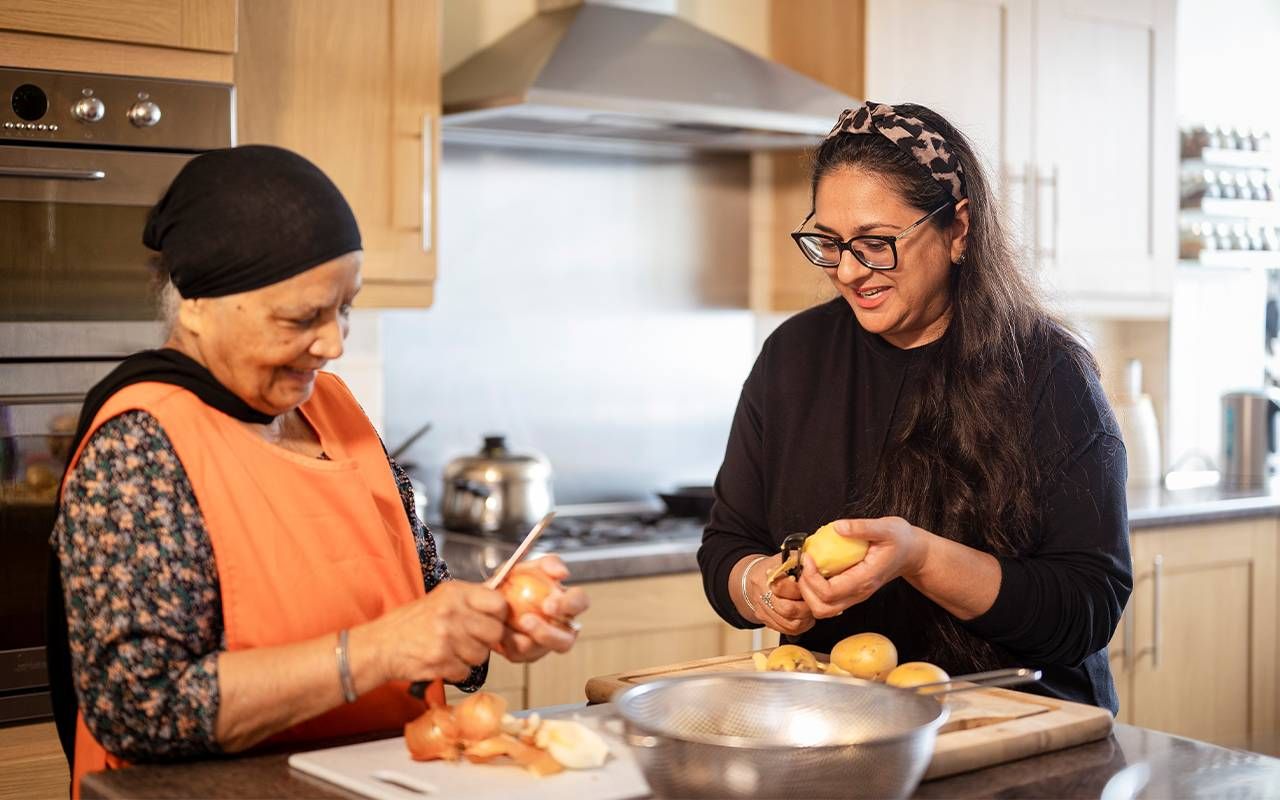
A caregiver with her mom making dinner. Next Avenue, family caregivers, caregiving
It's a lonely job, caregiving. And no one knows what we do — day after day looking after someone, hoping that we're doing the right thing.  |  Credit: Centre for Ageing Better

So let's talk about what we do.

Remember how it started? You offer to help with the groceries and drive them to their doctor's appointments. You bring them to your house on the weekends to watch a movie together and have a nice home-cooked meal. And then the job expands.

Now you're paying the bills and ordering the meds. And at your place, the guest room they used to stay in is currently empty. They can't climb your stairs anymore. So you find help at their home, and it may be time for them to move to a facility.

You spend hours looking for a good place, getting them a medical checkup and TB test, signing endless documents, doing your best to help your person make new friends, acclimate to the loss of their home and the smells and routines and privations of this new place to live.

The Ways We Help

So, we visit and listen to the problem list. We clean under the bed, find the scattered pills, and throw them away, and we quietly put a new package of Depends in their closet.

Next, we bring their clothes home to wash. It's indelicate. We have breached the line between parent and child, between spouses, partners, and friends — one should not be handling their undergarments.

We wake in the middle of the night, wondering if they are also awake, and hoping that they're not having another one of those frustratingly enduring sleepless nights.

We visit again, and as we leave their room (wondering if this may be our last glimpse of them alive), we take a parting look at them and the room itself. What simple thing should I do before I go — is there a box of Kleenex too far away to reach, a flip-top can of soda that should be opened?

What can I do so they are not left imprisoned by their inabilities? How terrible it must be for them, we think. What must it be like to feel life ebbing away, to suffer the indignities as their once strong handwriting has dwindled to uneven scratch marks, as their hands and legs become mottled with bruises because they're taking blood thinners, and everything causes a bruise?

We can never honestly know what the world looks like through their failing eyes, the panic that grips them in the middle of the night, the bewilderment, the fear, the helplessness.

We're just the family, struggling along. We stumble, pick ourselves up, go at it again, and try to do better. It's hard — no question about it — to look beyond the daily challenges, but if we zoom out for a moment, there is something else to see.

Amy Abrams, a San Diego social worker who has counseled scores of long-haul family caregivers, speaks of caregiving as a transformative experience. "Caregivers find inner strength and competence they would never have thought they had," she says.

The Gift of Time Together

There is the son who nursed his mother for four years, sleeping on the floor beside her bed. But then, he told me, "I discovered that weak as I thought I was, I have such a gift of adaptability, endurance, tolerance, patience."

There is the daughter who moved cross country to care for her mother: "I realized how lucky I was to spend time with her. To revisit the home that I was desperate to leave in my teens. I got to appreciate her and all she had been through. It gave me a purpose. So even though it was a mixed blessing, this has been a gift."

And then there is the simple gift of slowing down and spending time together. Occasionally, I have a slow, quiet visit with my mom. The chores have been taken care of, there's enough medicine on hand, we've got the TV working again, and we talk — mostly, though, I listen.

Mom talks about her life, the school where she felt so lonely except for the art teacher who recognized her talent, how she gave up a serious pursuit of art to be a wife and mother, how she rebuilt her life after my father died, finally winning long-sought approval as an accomplished artist.

She is adding it all up and preparing to let go.

I have heard these stories before, but as I listen to Mom on this day, I also hear her determination to rise above each bodily insult; I hear the grit that keeps her going, and I am thankful for what she is teaching me. So, yes, I nod; you've led a good life. It is a gentle, sweet moment that we share.

If no one knows what we give — and give up — as caregivers, perhaps also no one knows what we get. We get the chance to live out a unique kind of love.

Therefore, at this season of giving thanks, and as the country marks National Family Caregivers Month, here is a celebration of what we do as family caregivers. With indebtedness to the famous verses from First Corinthians:

A Caregiver's Love

Love is making that first sweet offer of help.

Love is being there as things get worse.

Love is loss and sadness as he or she slips away from the person you once knew.

Love is pain as you feel your helplessness to stop their suffering.

Love is the soothing music that you put behind your words of care.

Love is brave enough to confront frailty and decline.

Love is the courage to show up daily, asking, "how are you today?"

Love is the strength to hear them out when they are depressed and life to them is dismal. When they have not slept, they have awakened in the middle of the night, fearing they are dying.

Love is the moments of joy when you encourage their memories of good times, their childhood, falling in love, and the times you listen to stories of their lives that will otherwise be lost.

Love is hanging in as they lose the ability to open a jar, walk on their own, or manipulate their hearing aids.

Love is staying engaged despite the toll.

Love is reaching out to their heart.

Love is warm and embracing.

Love is saying, I love you, even when they cannot say the same to you.

Love knows you cannot fix the illness or slow death's approach.

Love is recognizing their fears and anxieties, and the unknowing that they live with every day and night as they wait

Love is learning to live on the edge of eternity.

Love is silent tears that well up from nowhere.

Love is walking ahead, while sorrow is your shadow.

Love is holding their hand as you both tread unfamiliar territory.

And love is waiting beside them, imperfect as you are, as they take their final steps.

Full Article & Source:
From One Caregiver To Another: No One Knows What We Do

Friday, November 26, 2021

Bobby Schindler: Health Care's March Toward Death


On September 6th, 2021, Jean-Pierre Adams died at the age of 73. You would have never heard of Adams if not that he was a former French professional soccer player. However, what made Adams’ death newsworthy was that his extraordinary wife Bernadette dedicated her life to caring for Jean-Pierre when he sustained a brain injury after knee surgery complications.

Jean-Pierre never regained full consciousness and for 39 years he was dependent on his wife for care. From the day Bernadette brought Jean-Pierre home she was at his bedside, never at any time contemplating ending his life by removing his feeding tube. She taught the world a lesson of unconditional love.

Sadly, we don’t hear enough of these stories. Certainly, there are families who are caring for the “Jean-Pierre’s”, but the reality is that the media – and more troubling – our health care systems, are inculcating the public into their earthly worldview, fostering a culture that accepts the denial of life-affirming care, even if the “care” is ordinary – food and water – based on a person’s utility, as was in the case of my sister, Terri Schiavo.

In fact, it was 18 years ago on October 21st, 2003, when the Florida Legislature passed a bill granting the governor, Jeb Bush, the power to reinsert Terri’s feeding tube after it had been removed for six days. That day marked the beginning of my family’s experience with corporate media and how they would launder the truth of Terri’s situation and condition with “right to die” propaganda.

Full Article and Source:
Health Care's March Toward Death

Wednesday, October 13, 2021

Senator Bob Casey: Nation Is ‘Long Overdue for an Investment in Caregiving’

By Robert Holly

Over the past couple weeks, moderate Democrats have threatened to walk away from the White House’s $3.5 trillion economic package, which President Joe Biden hopes to use to strengthen America’s at-home care infrastructure for seniors and individuals with disabilities.

As a candidate, Biden proposed spending $400 billion on home- and community-based services (HCBS) to help make up for years of underinvestment. That figure has reportedly been more than halved during the back-and-forth talks to fill out that package while keeping full Democratic support.

Sens. Kyrsten Sinema of Arizona and Joe Manchin of West Virginia are among the key Democrats that have railed against the economic package’s overall price tag, putting HCBS funding on the chopping block despite widespread support from the general public.

Nearly eight of 10 likely voters are for investing in long-term care for seniors and people with disabilities, with strong support among Democrats and Republicans alike, a Data for Progress poll conducted Sept. 10 to 13 highlighted.

As chairman of the Senate Special Committee on Aging, Pennsylvania’s Bob Casey has been one of the most visible proponents of HCBS investment, most recently discussing the need to boost home-based care jobs during a virtual press conference on Thursday.

The nation is “long overdue for an investment in caregiving,” particularly in home- and community-based services, Sen. Casey told Home Health Care News in an email.

“We need to address the caregiving needs of our fellow Americans, older adults, people with disabilities, their families and the workers who provide these critical services and supports,” he said.

Casey and 39 colleagues introduced the Better Care Better Jobs Act (S. 2210) in June. Among its many provisions, the bill would ​​provide $100 million for states to develop plans to expand access to Medicaid HCBS and strengthen a depleted home-based care workforce.

“This bill will create better care for seniors and people with disabilities, better support for family caregivers and better jobs for home care workers,” Casey continued in his email to HHCN. “Additionally, this bill is an investment in a great American idea. The idea that we are going [to] support people in a manner consistent with the values we claim to hold as Americans.”

The COVID-19 emergency has only bolstered the desire seniors have to age in place. Over 90% of seniors prefer to remain in their homes as opposed to moving into an assisted living facility, for example, a recent survey from American Advisors Group (AAG) found.

“We should advance policies that make it possible for people to choose to age in place, as so many people wish to do,” Casey said.

HCBS workers, a majority of whom are women of color, make about $12 per hour, on average. Additionally, jobs often come without benefits.

In addition to directing more funding to state Medicaid programs for expanding HCBS services, the Better Care Better Jobs Act would also help increase wages, Casey noted.

To help inform the ongoing debate around HCBS and Democrats’ economic package, which they are attempting to pass via a process known as reconciliation, Kaiser Family Foundation (KFF) conducted four focus groups in July and August 2021 with direct care workers and unpaid caregivers. KFF released findings from those conversations on Friday.

During the focus groups, caregivers reported that their jobs had profound mental demands that only intensified during the pandemic. A number of paid caregivers specifically described regularly not knowing about whether they would be able to leave work at the end of their shift due to staffing shortages and scheduling challenges.

“Some Tuesday mornings when I think I’m going home at [6 a.m.], the owner would call and say, ‘Two [caregivers] had to go to the doctor,’ so I would never come home until Wednesday night,” one 51-year-old paid caregiver in Florida told KFF.

Focus group participants from the paid home care worker groups universally agreed that their wages were low and did not reflect the demands of their jobs, according to KFF. Many describe their situation as “getting by” or “living paycheck to paycheck.”

“You’re not going to get rich, you know, and it’s not about that,” another 41-year-old paid caregiver in California said. “It’s more of … I know that I’m going to be helping people at the end of the day.”

Whether Democrats can get on the same page to pass a major economic package through reconciliation remains to be seen. And even if they do, it’s unclear whether HCBS investment will survive the political process.

If it doesn’t, a significant opportunity will be wasted, according to Casey.

“We need to pay these heroic workers a higher wage, ensure they have benefits and have an opportunity to advance in their careers,” the senator explained. “We can’t claim to be the greatest country in the world when the people who care for and support our children, seniors and people with disabilities are left behind.”

Full Article & Source:

Saturday, July 13, 2019

The Strange Political Silence On Elder Care

Millions of middle-aged women struggle to care for ailing older relatives, and the crisis is only getting worse. So why is no one talking about it?


Labors of love: It took a long time for Alexis Baden-Mayer (right) to view the uncompensated care she provides her ailing mother as a political issue. (Pete Marovich)
For Alexis Baden-Mayer, who lives with and cares for her two elderly parents, the audiobook of Marcel Proust’s six-volume novel, In Search of Lost Time, has two distinct benefits. First, it provides 150 hours of literary distraction. Second, it features a character who jokes about excrement. 
 
“Play it in the car as you drive your loved-ones to doctors appointments,” she wrote in a blog post about her caregiving experience. “Play it each morning as you strip soiled linens from the mattresses, make beds and fold laundry. Play it, as I have, to try to calm and distract yourself as you bark commands to your dementia-addled mother to wipe her butt and drop the toilet paper in the toilet.”

Baden-Mayer, a freckled forty-five-year-old, put her house on Airbnb three years ago and moved with her husband and two kids into her parents’ home in Alexandria, Virginia. Her mom, who has Alzheimer’s disease, was no longer able to take care of her dad, who had suffered from heart failure. “I didn’t really have a good idea of what I was getting into, quite honestly,” she said, reflecting on what a truly frank conversation with her husband would have sounded like: “What do you think of living with my parents for about ten years while their health declines and they die?” 

When I went to visit one morning in May, her day had started at five a.m. Hair still wet from her shower, she steered her mother through a morning routine. She told her where to put her hands to wash herself, then placed her mom’s feet through the leg holes of her adult diaper. Without Baden-Mayer’s kind but firm instructions, her mother would start staring into space, seemingly happy but unsure of where to go next. More than once, when her mother was smiling at me, perplexed, Baden-Mayer explained my presence. (“She’s a journalist. She’s working on a story about family caregiving.”) The long dining room table was a laundry-folding assembly line, piled with six people’s clothes. 

Baden-Mayer is one of about thirty-four million Americans providing unpaid care to an older adult, often a family member. Most of these caregivers are middle-aged, and most are women. They are individually bearing most of the burden of one of America’s most pressing societal challenges: how to care for a population of frail elders that is ballooning in size.

Most people assume that Medicare will cover the type of long-term personal care older people often need; it does not. Neither does standard private health insurance. And the average Social Security check can only make a medium-sized dent in the cost of this care, which can easily exceed $100,000 a year if provided in a nursing home. Medicaid, unlike Medicare, does cover long-term care, but only for patients who have exhausted their savings, and coverage, which varies from state to state, can be extremely limited. So the safety net you thought would catch you in old age is less like a net and more like a staircase you get pushed down, bumping along until you’ve impoverished yourself enough to hit Medicaid at the bottom.

Private long-term care insurance exists, but it’s the designer bikini of insurance: too expensive, skimpy coverage. Since people tend to buy it only when they know they’ll soon be making a claim, there are never enough healthy people paying into the plans to keep them affordable. Insurance companies have realized this and jacked up premiums—or stopped selling policies altogether. 

Meanwhile, the cost of hiring a home health aide to take care of a frail parent can add up to $50,000 or more per year. So tens of millions of individual women across the United States wind up providing the care themselves for free, and bearing its cost in the form of stress, lost wages, and lost opportunities to nourish their other needs, and their families’. When we talked on the phone, Baden-Mayer wondered aloud, “Why is it that we don’t have a good system that we can plug into when our parents need care?” 

Why indeed? You might expect that a problem that affects so many people so profoundly would become a major political issue. Recent years have seen other issues, including ones that disproportionately affect women in their personal lives, become highly politically salient—from sexual harassment and pay equity to the push for universal pre-K education and improved access to child care. Yet even though American women today are politically organized and running for office in record numbers, elder care remains widely viewed as a purely personal matter. You could be a news junkie, following the 2020 race closely, and have heard nothing about it. 

Why is that? And could long-term care go from being a sleeper issue to one that boosts a candidate out of the 2020 pack? 

Demographic trends have prodded and pulled America’s long-term care problem into a long-term care crisis. A driving factor is the increasing risk of reaching a point in our lives when we can no longer perform some of the essential activities of daily life, from getting dressed to using the toilet. Approximately half of us will need some form of long-term care, and an estimated 15 percent will face related medical bills exceeding $250,000. 

Paradoxically, this is partly due to advances in medicine. Since the 1940s, for example, antibiotics have dramatically reduced the numbers of Americans dying of pneumonia, which was once a leading cause of death among older Americans. But advances like those mean more people are living long enough to contract debilitating chronic conditions like Alzheimer’s. 

On the flip side are broad public health trends like obesity and the spread of sedentary lifestyles. These have led to an epidemic of chronic diseases like diabetes that, while not necessarily fatal, leave more and more people struggling with disabling conditions for decades.

Then there’s the looming impact of Baby Boomers hitting retirement, so massive that it’s often referred to in the terminology of natural disasters, like “the gray tsunami.” If you look at a chart of the ratio of middle-aged adults (potential caregivers) to people over eighty (the people most likely to need care), it’s like the steep downhill of a roller coaster, starting at seven to one in 2010, and plummeting to four to one by 2030. In addition, average family size has shrunk significantly since the 1970s. With smaller families now the norm, the strain on individual caregivers within families has increased enormously. The imbalance will become even more acute if America cuts back on the flow of immigrants, who make up a large portion of professional caregivers.  

This was easy to see coming, by the way. As far back as 1971, Congress held hearings on the impending crisis in long-term care, and throughout the 1980s and ’90s, think tanks and blue-ribbon commissions issued a stream of reports on what to do about it, predicting catastrophic consequences by the 2020s if the problem went unaddressed. But it did go unaddressed, perhaps because, like climate change, it was both unpleasant to contemplate and seemingly far off in the future. Meanwhile, other countries with aging populations, including Japan, Canada, and most European nations, took action, offering a range of substantial benefits to family care providers, from directly compensating their work to subsidizing professional home care. But in the United States, public attention to long-term care faded even as the problem grew increasingly acute. 

Sandra Levitsky has a theory about why long-term care has not yet gained traction as a political issue. A sociologist at the University of Michigan, she’s the author of Caring for Our Own: Why There Is No Political Demand for New American Social Welfare Rights, a book she researched in part by schlepping between adult day care centers, nursing homes, and a hospital in Los Angeles, interviewing caregivers and scribbling notes at the back of support group meetings. 

Levitsky found that the lack of public outcry for long-term care didn’t reflect an absence of need. Instead, it was driven by a widely held belief that caregiving is a family responsibility, tied up with what it means to be a good son or daughter. And because it’s so time intensive and takes place in the home, caregiving is often extremely isolating, making it hard to see it as a systemic issue. One woman who was caring for her husband told Levitsky that when she went to a support group for the first time, “I just started to cry. I just thought, ‘My god! I’m not in this alone!’ ”

Rachel McCullough, an organizer affiliated with Caring Across Generations, a national campaign, noticed this while canvassing door to door in the Bronx. She found that asking people whether they were a caregiver didn’t really work; people didn’t identify themselves that way. Instead, she found that to get a conversation going, she had to ask more descriptive questions—“Have you taken care of your parents?”—or share her own stories. 

The fact that people don’t identify as “caregivers” helps to explain why even women who are otherwise politically engaged don’t view the care they provide to their aging parents as a political issue. Baden-Mayer is a good example. A former women’s studies major, her laptop is as layered with stickers as a college student’s—“Vote YES on Prop 37”—and she works full time as a political director for a nonprofit advocacy group for organic food consumers. In the foyer of her house hangs a photo of a man throwing up a peace sign in front of the U.S. Capitol. If anyone were to connect their own experience to a systemic problem, you’d expect it to be someone like her. But she admits that, for a long time, she really didn’t. And she definitely didn’t question the relative silence from lawmakers on the issue. 

Another barrier to politicizing the long-term care crisis is the fact that there’s no clear bad guy. As McCullough put it: environmentalists have the fossil fuel industry, gun control activists have the NRA, and consumer advocates have the big banks. Who, exactly, are caregivers fighting? Instead of feeling anger, which research shows is linked to political activation, people struggling with providing for their parents tend to feel guilt and shame, directing the blame inward. Once the stressful experience is over, most people want to put it behind them. Still, Levitsky found that some people come out of it wanting to improve the system, particularly middle-aged women. “It was a subset of the group, but they were really politicized,” she said. “And that’s the constituency that I do believe could be mobilized.”

But someone is going to have to mobilize them. Even when participants in Levitsky’s study were directly asked about whether their experience had changed their attitude about the government’s responsibility for helping, a common response was that they simply hadn’t thought of the government’s role. Levitsky said, “When you believe something is so natural, you can’t imagine things being another way.” 

In fact, when it comes to long-term care, it is possible for things to be another way. In mid-May, for example, Washington State Governor and long-shot presidential candidate Jay Inslee signed off on the country’s most sweeping long-term care bill. The law provides eligible residents with a lifetime benefit of up to $36,500 to pay for things like meal delivery, nursing home fees, and home help, including paying a family member who is providing care. 

Passing the bill required a diverse coalition—including the nursing home industry, home health worker unions, disability rights advocates, and the Alzheimer’s Association—to put aside their differences and get on the same page when talking to legislators. It helped that one of the law’s champions, State Representative Laurie Jinkins, had both professional public health experience—she works for a county health department—and a personal connection to the issue. In a speech on the state house floor in support of the bill, Jinkins explained how her mother-in-law ended up having to spend herself into poverty to qualify for Medicaid when she could no longer live alone. 

A crucial factor in getting the bill passed was a study, conducted by the national actuarial firm Milliman, showing that it would soon save hundreds of millions per year in Medicaid costs. “What we found was that it was critically important that legislators could have confidence in the numbers,” said Sterling Harders, president of a regional SEIU union that represents care workers, who advocated for the bill. 

The law is financed by a .58 percent state payroll tax. How can the state finance such a large new benefit with such a modest tax hike? The key is that everyone contributes, including people who are still young and healthy, and to reap the benefit, you have to pay into the system. 

This solves the problem of adverse selection that makes the private provision of long-term care ruinously expensive. Rather than trying to buy insurance only when they’re old and frail enough to expect to make a claim in the near future, Washington residents are now in effect compelled to spread out the cost of their insurance over their entire adult lives, making it much more affordable.

Washington’s approach is also much more efficient than expecting people to save up a nest egg to cover the cost of their own long-term care. Roughly half of us will never need it; among those of us who do, some will need it only for a short time, while others will consume hundreds of thousands of dollars of care over several years. And yet for most of our lives we can’t really know which group we belong to. That makes long-term care a logical candidate for financing collectively through insurance, so long as paying into the system is mandatory. When plans aren’t mandatory, not enough healthy, young people self-select to buy them, and they tank. That’s one of the reasons that the Obama administration ultimately had to pull the plug on its attempt to address long-term care; because the program was voluntary, not enough people enrolled, making premiums far too expensive.

That’s not to say that providing universal long-term care insurance wouldn’t cause sticker shock when it shows up in government budgets. But the fact is that, one way or another, society is already bearing these costs—mostly in the form of care provided by stressed-out, uncompensated women who have the misfortune of having a family member who needs care and can’t afford to pay for it. What we need is a way to distribute that burden more equitably. 

You can divide the world of politicians into two groups,” said Howard Gleckman, a senior fellow at the Tax Policy Center. “It’s not Democrats and Republicans, it’s people who have been caregivers and people who haven’t.” When he’s talking to members of Congress who recognize the problem, it’s far more likely that their understanding comes from personal experience than from an outpouring of calls from constituents. Gleckman himself started working on the issue after he and his wife struggled to care for their own parents. “Don’t underestimate the importance of policy by anecdote,” he said. 

It’s a point that several other advocates and policy experts echoed. One organizer working on caregiving issues in Michigan found an ally in a Republican legislator with a prime perch on a budget committee. That legislator’s mother, the organizer found out, had qualified for Medicaid and was placed in a nursing home because there was a long waiting list for home services. 

One lawmaker who feels strongly about an issue could be worth twenty who merely support it. A prominent example came in 2008, when Congress voted on a bill requiring insurers to cover mental illnesses at the same level as physical ones. It was the result of over a decade of determined lobbying from Senator Pete Domenici, a senior Republican, fiscal hawk, and chairman of the powerful Senate Budget Committee. Otherwise an unlikely champion, Domenici was propelled by his daughter’s experience with schizophrenia. He joined forces with one of the most liberal senators at the time, Minnesota Democrat Paul Wellstone, whose brother had suffered from mental illness, and together they built alliances with a number of other legislators who had likewise been personally affected. 

The prospects for long-term care coverage at the national level got a boost this past April, when Bernie Sanders added it to his single-payer health care plan. But if support for family caregivers is to become a priority in the coming election cycle, it may be because some of the other candidates have had their own brushes with long-term care. Amy Klobuchar, the 2020 candidate with perhaps the longest legislative history of working on issues that affect seniors, has talked about her father’s struggle with alcoholism. Cory Booker has been vocal about Parkinson’s disease, which his father suffered from, and is proposing an expansion of the Earned Income Tax Credit that would give caregivers more money. “I watched my mother be his primary caretaker, and it affected her physical health,” he told a small crowd at a campaign event in February. “The personal pain I saw it causing my mom was devastating to me.” He added, “This is a common problem in our country. We are weak in America when we let people struggle and suffer in isolation.” 

Rachel McCullough, the organizer in New York, said her group is already thinking about how to bring this issue to the forefront of the 2020 presidential campaign. They already have organizers and volunteers working on a state campaign in Iowa, which is dense with national press and where it’s relatively easy to get face time with candidates. In televised town hall meetings, their Iowa counterparts may try to force candidates to articulate a position on caregiving. McCullough said, “A case we’re trying to make, and that we will be making to the presidential candidates, is if their goal in the face of Trump and Trumpism is to speak to and unite the vast majority of Americans, with a focus on women—this is the issue.”

Full Article & Source:
The Strange Political Silence On Elder Care

Wednesday, October 3, 2018

Caregiving Is Killing Us: A Nation Of Daughters In Crisis

For family caregivers, everything is fine until it isn’t.

One cough, minor medical procedure, or incident of forgetfulness can spiral into months and years of emergency department visits, confusion, financial stress, and strained family relationships. That’s what happened to Yolanda Carter 11 years ago after her mother had knee surgery.

“The hospital called me every five minutes,” said Carter , 46, of California. “My mother was trying to break out of the hospital. She went from kind of okay to can’t drive to living in assisted living in two years.”

Carter initially attributed her mother’s behavior to the ordinary stress of aging. However, signs of dementia increased as her mother frequently got lost, missed appointments, and grew agitated and violent.

“You have to constantly watch people with dementia because they want to leave,” Carter said. “I used to travel for work, but I had to quit my job. Since then, I haven’t been able to find comparable income. I have had jobs, but I couldn’t have a career anymore.”

While Carter has siblings, they have not taken an active role in their mother’s care. Carter is managing her mother’s care and raising her daughter with the help of a loving and supportive husband. But sometimes it all gets to be too much.
“Even though I act like I’m tough, I’m really not,” said Carter. “I don’t wear my emotions on my sleeve. No one knows how tired I am.”
The Costs of Caregiving 

Carter is not alone.

Roughly 66 percent of all family caregivers are women. The average caregiver is a 49-year-old woman who works outside the home and provides at least 20 hours a week of unpaid care to her aging parent, according to the latest data from the Family Caregiving Alliance.

While men are caregivers, women spend as much as 50 percent more time than men in providing care. Survey data analyzed by Rich Johnson and Josh Wiener at the Urban Institute found that daughters account for seven out of 10 adult children who help frail parents. Daughters are also five out of every six adult children responsible for the daily, labor-intensive tasks such as feeding, bathing, and dressing that keep their parents out of a nursing home bed.

The work may be unpaid, but it doesn’t mean that it’s free.

Women bear significant financial, emotional, and health costs for caring for aging parents, especially if they are also raising children.

Caregiving has a significant economic impact on the family – whether it’s paying for prescription medications, installing a ramp for a wheelchair-bound parent, or paying for assisted living home expenses not covered by Medicare, private insurance, or long-term health insurance.

More money is needed to cover these expenses. But female, family caregivers often limit their earning potential to take care of frail parents by working fewer hours, passing up job promotions, training and other assignments that lead to career advancement, taking a leave of absence, or switching from full to part-time employment.
A 2011 MetLife study estimates that female caregivers lose about $324,044 in lost wages and Social Security benefits.
One four-year study found that women caregivers were nearly six times as likely to suffer depressive symptoms and anxiety than non-caregivers. Researchers also found that women caregivers are also more likely to defer their health needs while caring for others which can lead to significant decline in their own health.

Photo Credit: www.ml.com
Well-meaning friends may suggest that we take time out for self-care, but that’s not always possible.

Debra Gibson, 55, of Mississippi cared for her critically ill mother and husband while taking care of two grandchildren while her youngest daughter worked. On some days, Gibson had no choice other than to bring her grandchildren to the hospital while she looked after her husband and made a makeshift pallet on the closet floor for the children to sleep.

“I used to cry every day,” Gibson said. “My break was going outside in the backyard and screaming. Then, I would get myself back together and go back in the house to take care of my mom.”

Gibson found comfort in her faith to see her through.

However, women caregivers are also at increased risk of: elevated blood pressure and increased risk of developing hypertension; lower perceived health status; poorer immune function; slower wound healing; and an increased risk of mortality.
In short, caregiving is killing us.

Photo Credit: www.nia.nih.gov
A Constellation of Challenges 

Family caregivers face a constellation of challenges. Among them are care, family, and money.

Care includes managing medications, making decisions, providing day-to-day care, dealing with hospitals and doctors, and finding the right care.

“When you start taking care of your parents, it’s a race against the clock to get the experience and knowledge you need in the shortest amount of time possible so that you don’t run out of energy or money or both,” said Anne Tumlinson, a health care and public policy expert with 25 years of research and consulting experience in post-acute and long-term care financing and delivery.

Long-standing family dynamics, especially sibling relationships, become magnified when a parent is critically ill. It’s often up to the primary family caregiver, who is in most cases the daughter, to figure out how the family will pay for the cost of care, as well as handle wills, legal issues, Medicaid, and private insurance.

However, the most significant yet unspoken stressor female, family caregivers face is the expectation that they will continue to do and be it all.

Women are still expected to be the perfect mother, wife, and employee while taking care of an elderly parent who demands more of their attention as their health declines. Black women and other women of color face additional pressure to live up to expectations of the “strong” one or dutiful daughter who will take care of everyone without a complaint or thought to her own needs.

“We (women) think we are the greatest multi-taskers,” said Dawna Fields*, 47, of California. Fields’s mother is in the throes of advanced dementia. “But when it all came to a head, I was not.”

Fields wasn’t sleeping because her mother was up at all hours. Her husband and son felt neglected. She stopped exercising and experienced back issues. Finally, her husband insisted Fields rest at a resort for a few days after her recent back surgery.  (Continue)

Full Article & Source:
Caregiving Is Killing Us: A Nation Of Daughters In Crisis

Saturday, June 23, 2018

Moving an Aging or Disabled Parent Into Your Home: 4 Things You Should Know

It’s every adult child’s nightmare: getting a phone call in the middle of the night from an aging parent, or worse, the hospital. Maybe there’s been a fall or a medical emergency. Perhaps the early stages of dementia have advanced more quickly than anticipated, and there’s been an incident. Either way, one thing is clear in this situation — it is no longer safe for the parent to live alone.

Deciding to move an aging parent — especially one who is disabled — into your home isn’t a decision anyone makes lightly, but it’s often the most affordable option. One out of every four caregivers lives with the person they are caring for. While this can be very rewarding to both the son or daughter and the aging parent, there are several important pros and cons to this arrangement. On one hand, if the parent is mentally and physically sound, they can help in small ways with the kids, housework or finances. On the other hand, if they require constant care due to a disability or illness, the entire family might experience moments of added stress, anxiety and frustration.

That’s why you need to weigh options and considerations when an elderly parent moves in with you. Though there might be heavy emotions surrounding the decision, it could still be the right choice. This guide will help you make that decision by giving you some insight on:

  • Understanding how to give the right kind of care.
  • Estimating the costs associated with assisted living facilities versus in-home care.
  • Making your home elderly-friendly.
  • Adjusting the whole household to the lifestyle changes.

Giving the right kind of care


Being the child of a senior who needs more vigilant care means you have your heart in the right place — your parent’s health and well-being is your priority However, that doesn’t necessarily mean you are as qualified as an expert to give the best care.

If Mom or Dad is still relatively healthy and independent, moving him or her in will be much simpler and smoother. However, most people don’t get to the point where they consider moving a parent into their own home unless in response to a specific health crisis. In that case, it’s important that you know your parent’s illness or limitations very well. Consider where this health situation is likely to go. How will a chronic illness, a broken hip or mental illness progress one, two or fives years from now? You may be prepared today, but you also need to think about how prepared you will be later on.

If the health situation is serious or extreme, you may not be capable of giving the best quality of care. Living with you might only be a temporary solution. This could help ease the transition to a nursing facility, or you could hire an in-home professional to support your caregiving responsibilities. However, if their health requires 24/7 monitoring, specialized care or equipment, it may be best to to move them to a nearby nursing home or assisted living facility.

Estimating the associated costs


Sometimes the decision to move in an elderly parent comes down to cost. On average, a nursing home can run about $80,000 per year and an assisted living facility costs roughly $43,000 per year.

However, there are also care costs to consider when moving Mom or Dad in. Things may be easy now, but the amount of assistance needed will most likely increase as they age. That means that sooner or later you might consider finding an in-home aide. A caregiver hired to help with self-care tasks like bathing, feeding and chaperoning activities can cost about $20,000 per year for full-time help.

For other tasks around the house, you may want to consider hiring an errand runner or personal assistant to ease the burden on both you and your loved one. These services can cost about $25 per hour, and may come in handy in a pinch. If you’re reacting to a recent health crisis, you may need to hire a caregiver with specific medical training, which can double, or even triple, the cost of care.

Providing full-time care may entitle you to financial or other forms of assistance. Do thorough research to help you prepare and budget for the many facets of care giving.

Making your home ready for care


Moving in a parent who is aging or disabled is, in all probability, the most cost-effective solution for many people. However, that doesn’t mean that there won’t be some expenses associated with renovating areas of your home to make it safe and secure for senior care. Some common remodeling projects include:
  • Installing an automatic lift to help the senior navigate flights of stairs ($1,500 – $3,000).
  • Building a ramp in addition to your front steps if the senior needs wheelchair access ($400 and up).
  • Widening doorways for wheelchair and walker access ($500 – $1,000).
  • Converting an attic, basement or den into a bedroom, possibly for you or your children. You’ll want your senior to be comfortable, and usually, a first-floor bedroom without stairs is the safest place for them to reside ($1,500 – $5,000).
  • Adding a new bedroom or suite for your aging parent, especially if there is no other room to renovate ($100,000).
  • Adding handrails and modifications to the bathroom to prevent slips and falls ($40 per foot).
  • Covering prescription medication costs and healthcare copays.
  • Paying additional bills for electricity, groceries and water.

The National Alliance for Caregiving (NAC) released a study stating that out-of-pocket caregiving costs can run about $5,500, but other studies have shown the costs may be much higher, topping at around $15,000 per year for care.

While these renovations are less of a financial burden than a nursing home or assisted living facility, not planning for any costs can creep up on your finances. To avoid problems or roadblocks later, talk to your parent and family members about this up front.

Adjusting to the lifestyle changes


There are going to be more sacrifices than just finances and space when you move in an elderly parent. Will your child’s music disturb your aging parent? Is your elderly housemate as clean and tidy as you expect the rest of your family to be?

Instead of focusing on the potential issues, think about this as an opportunity for everyone to grow. Creating room for your parents in your home can help your children learn how compassion leads to joyful compromise. It also empowers everyone to try out critical thinking and conflict resolution skills. If your mom or dad is uncomfortable with your teen’s loud music, ask your child to use headphones after a certain hour, or pick up a pair of noise cancelling ones for your parent.

When you bring a senior who needs extra care into your home, some of your vacation plans will likely have to change. You may have to put off some vacations, while others may just need to be modified or adjusted to accommodate for accessibility. Again, get the whole family involved in the decision-making process, especially if you feel like resentment is building.

Caring for an aging or disabled parent can help you give back some of the love and devotion they gave to you when you were young or going through challenging changes. There will certainly be stressful times, and not everyone will be satisfied with each compromise or outcome. However, if you feel in your heart that this is the right decision, the relief you feel being able to keep your aging loved one safe will override most tense and stressful moments. Remember, you are one of many to make the choice to have your parent live with you; there are others out there, in groups online or in person, who can provide emotional support when you need it.

Full Article & Source:
Moving an Aging or Disabled Parent Into Your Home: 4 Things You Should Know