Showing posts with label scam. Show all posts

Friday, July 31, 2026

Gibson County elder abuse victim receives full restitution

Thomas Coley entered a plea deal after carrying out a fraud scam against an elder.(Gray News)

By WBBJ Staff

GIBSON COUNTY, Tenn. (WBBJ) - Thomas Coley pled guilty to theft over $10,000 and received a seven month sentence, with the balance of a five-year sentences suspended only upon payment of restitution in full, on July 27 in the Gibson County Circuit Court.

Coley paid the full restitution of $39,600 on the day of his plea and due to the lack of criminal history, he was placed on supervision with State Probation with the additional conditions of completing Cognitive Behavioral Therapy classes and maintaining full-time employment.

In December of 2025, Coley was involved in a fraudulent scam that preyed on a 77-year-old victim from Milan. The suspect pretended to be employed by “Apple Security” and claimed that “Apple Pay” mistakenly deposited $40,000 into her bank account when the amount should have been $400. Coley requested the victim withdraw $39,600 in cash from her account to repay them. Coley gave the victim a false name and retrieved the cash.

Once the victim realized the deposit was fraudulent, she contacted law enforcement. Her residential security video and Milan Police Department’s FLOCK cameras, help locate the suspects vehicle and detain him in Dunwoody, Georgia. The suspect was positively identified by the victim.

“Unfortunately, there has been a proliferation of scammers who prey on elderly victims in our community vulnerable to intimidation by perpetrators who pressure them with false legal action if they don’t comply with their demands. Fortunately, in this case, thanks to the diligent work of the Milan Police Department in retrieving video evidence and tracking that information to another state, this defendant was successfully prosecuted and the victim made whole again financially. Our Office and our Courts ensured that the defendant was not released from incarceration until that happened,” said District Attorney General Frederick H. Agee. 

Full Article & Source:
Gibson County elder abuse victim receives full restitution

Saturday, July 11, 2026

Get Gephardt helps Utah woman fight to get her power of attorney recognized

By Matt Gephardt and Sloan Schrage


KEY TAKEAWAYS
  • Pam Davis struggled to get Capital One to recognize her power of attorney.
  • Her brother was a victim of a scam, losing nearly all his assets.
  • After media intervention, Capital One finally acknowledged her authority resolving the issue.

SANDY — At some point, many of us may have to step in and help a loved one with their money — paying bills, watching accounts or cleaning up after fraud. But what do you do when a major credit card company refuses to recognize your authority over a loved one's finances?

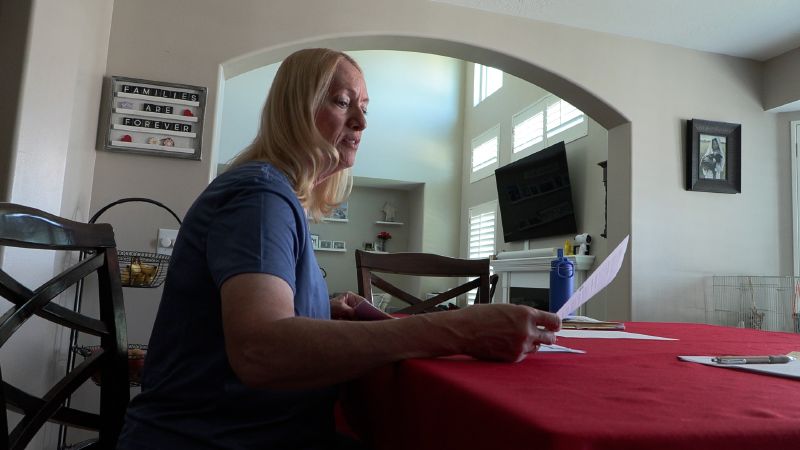
Pam Davis has been looking out for her older brother, Stan.

"My brother has short-term memory and dementia," she said. "So, it became necessary for me to take over."

Davis recently discovered her brother was the target of a brutal pig-butchering scam. A criminal posing as a woman coaxed personal and financial information out of him. Money was taken from his bank accounts, stocks and credit cards.

"It pretty much cost him almost everything he had," Davis said.

She is trying to unwind some of that damage, including the fraudulent purchase of a MacBook Pro on her brother's Capital One credit card. But she says she can't get Capital One to recognize her power of attorney, no matter how many times she sent them the papers.

"I ended up sending them my power of attorney, my conservatorship and my guardianship," Davis said. "Then they requested all of my personal information, including my name, address, phone number, Social Security – the works from me. And still that was not enough for them to talk to me."

She even got a letter from Capital One denying the request to appoint Pam Davis as power of attorney because her brother already has a power of attorney: Pam Davis.

"They can't talk to me because they can only talk to me, which makes no sense at all," she said with exasperation.

Davis' brother has since died. But she hasn't given up because she's worried Capital One will come after his estate. So, she reached out to someone who will talk to her – me.

As the KSL Investigators began digging, we found that Utah law requires financial institutions to either accept a power of attorney or to request certification of one or an opinion of counsel – within seven days. They can't drag it on for weeks on end.

So, we contacted Capital One's public relations team to ask why they were not recognizing Davis's power of attorney. We did not get an answer, but by phone, they told us they would look into what happened.

"I want to finish what I started for him," Pam Davis had told me.

And just like that, she says they finally started talking to her and, after some back-and-forth, her brother's account was written off.

You should know that by law, there are only a handful of reasons why a power of attorney can be rejected, including if the person has already died, or if it is suspected of being fraudulent.

Photos

The Key Takeaways for this article were generated with the assistance of large language models and reviewed by our editorial team. The article, itself, is solely human-written. 

Full Article & Source:
Get Gephardt helps Utah woman fight to get her power of attorney recognized

Thursday, July 2, 2026

Defendants plead guilty in $65 million scam to coax elderly people into sending cash to short-term rentals

The lead defendant in the prosecution of a national elder fraud ring to scam around $65 million from victims across the country pleaded guilty Tuesday in San Diego federal court.

Prosecutors say the scheme involved conspirators posing as tech support, government officials or bank employees who instructed victims to withdraw money in cash, then send it in packages to locations provided by members of the fraud ring.

The addresses where victims mailed their packages were short-term rentals, which prosecutors say allowed conspirators to quickly relocate and continue the scheme at new properties.

According to the U.S. Attorney’s Office, a law enforcement investigation into the scheme began after a victim reported mailing thousands of dollars in packages that were addressed to a San Diego-area short-term rental.

Law enforcement was also aided by YouTube content creators who posted videos online exposing members of the scheme, prosecutors said. In sting operations, the creators, “Pierogi” of “Scammer Payback,” and two others from “Trilogy Media,” lured members of the conspiracy, then exposed them in videos.

The U.S. Attorney’s Office said the posts helped law enforcement identify members of the fraud organization.

Hua Wang, 48, of Flushing, New York, was responsible for the collection of more than 2,000 cash packages that elderly victims sent to to the rental units. He pleaded guilty to conspiracy counts related to wire and mail fraud, as well as money laundering.

Eleven others in the case have pleaded guilty over the past two months, while two others are slated to enter guilty pleas later this month, according to the U.S. Attorney’s Office. More than 30 defendants, who range in age from 23 to 48, have been charged.  Federal agents coordinated last summer to make arrests in Southern California, Texas, Michigan and New York.

Sentencings are set to begin July 7. Wang’s is set for Sept. 18.

Full Article & Source:
Defendants plead guilty in $65 million scam to coax elderly people into sending cash to short-term rentals 

Monday, February 2, 2026

Florida CEO says fraudsters stole her logo, along with customers and their cash in a case of 'elder abuse'. Protect yourself from real-estate scams


The owner of a Florida mobile home brokerage is warning the public of a fraud in which impersonators are using her brand to steal customers and their deposits.

Michelle Vanderbilt runs American Mobile Home Sales, a Tampa-area brokerage that helps people buy and sell manufactured homes on leased land in Florida (1).

Many of her clients are older adults seeking affordable housing, which is why she calls this scam “elder abuse.”

“It makes me sick,” Vanderbilt told Tampa’s 8 On Your Side (2). “I just feel so bad for these individuals because they’ve been fooled.”

She first learned about the scam when angry customers showed up at her company’s headquarters demanding answers after being swindled out of their deposits — by imposters.

There was no record of sales with her company. But when she probed, she learned con artists had appropriated her brand and address, even using a similar logo in their social media posts.

The fraudsters pressured innocent victims — who thought they were buying tiny homes — into sending deposits via the e-transfer system Zelle. The would-be buyers agreed to send money before seeing the property or meeting a sales rep.

Sadly, they’re unlikely to get their money back because they authorized those transactions.

Targeting older adults in mobile-home fraud

As housing costs rise and supply falls across the U.S., mobile homes (also known as manufactured homes) are being marketed as an affordable retirement housing option — making the industry a prime target for fraudsters keen to prey on older Americans.

Scams could involve listings with stolen photos (or even AI-generated photos). They entice buyers with great ‘deals,’ so long as they act quickly — which means not seeing the home in person.

In this case, fraudsters advertised the sale of tiny homes (which typically range from 400 to 600 sq. ft.) on Facebook, Instagram and TikTok, offering too-good-to-be-true ‘deals’ like $1,000 down. Turns out, the deals really were too good to be true.

But even people who thought they did their homework could have fallen for the scheme.

“They Google the address and yes, it’s here," Vanderbilt told 8 On Your Side. "They can go to the Florida State website and verify that we are a manufactured home dealer,”

The scammers even created a fake social media presence, ripping off Vanderbilt’s New Year’s post complete with her company’s logo and posting it on their fake account.

Thanks to AI, it’s getting easier for fraudsters to impersonate legitimate businesses, banks or government agencies using spoofed IDs (false digital identities). 

For example, caller ID spoofing makes it look like a call is coming from a trusted source; the same technique can be used for emails and websites.

The FBI reports that con artists target older adults because they tend to have good credit, own homes and have decent savings. They’re also trusting. (3)

In 2024, FBI’s Internet Crime Complaint Center (IC3) recorded 147,000 complaints from victims 60 and older, representing $4.9 billion in losses — a 43% year-over-year spike in losses from 2023. (4)


How to protect yourself from real-estate scams

When it comes to real-estate scams, there are tip-offs you can watch for before handing over your cash — starting with offers that seem too good to be true.

Beware if the company demands:

  • an urgent upfront payment
  • a wire transfer or other unusual payment method (for example, Zelle)
  • that you to move funds into a ‘secure’ account.

If the company has a physical presence (as with American Mobile Home Sales), verify the details of the purchase in person at the stated address before putting any money down as a deposit.

Make sure you get everything in writing and have a lawyer look over the purchase agreement.

Once you do make a deposit, consider sending it to an escrow account (in which a third party holds funds during a transaction, released once all conditions are met) rather than sending it directly to the seller.

Businesses who’ve been targeted by impersonators should follow Vanderbilt’s lead and take proactive steps to warn potential victims — and protect their reputation.

Not only has Vanderbilt gone public in the media, she’s also used social media platform reporting tools to flag the fake accounts and posts.

In addition, she contacted the Clearwater Police Department, which has launched an investigation, the Better Business Bureau, the state licensing board, the U.S. Department of State and the Federal Trade Commission.

The FBI’s Internet Crime Complaint Center (IC3) is another option, along with your state’s Secretary of State or business filing agency.

Full Article & Source:
Florida CEO says fraudsters stole her logo, along with customers and their cash in a case of 'elder abuse'. Protect yourself from real-estate scams 

Thursday, January 29, 2026

He said her daughter had been in a car crash. It was a scam.

 by Emilie Raguso

The stranger told the 91-year-old woman "not to tell anyone else about their phone call" — a red flag, Berkeley police said.

He said her daughter had been in a car crash. It was a scam.
A man makes a phone call (stock photo). MarĂ­lia Castelli / Unsplash

Police are investigating a scammer who targeted an elderly Berkeley woman last month by claiming her daughter needed money to get out of jail.

The case began in December when the 91-year-old woman got a call from a stranger who said her daughter was in jail after hurting someone in a car wreck.

In the background, the woman "could hear someone … pretending to be her daughter," Berkeley police wrote in court papers.

The man said the younger woman needed $15,000 in bail money to be released.

He told the older woman "not to tell anyone else about their phone call" — a red flag — police said.

The woman tried to call her daughter to confirm the story, but the call would not go through.

"She became concerned and decided to get the money out from her bank," police wrote.

When she went to her bank on Solano Avenue, the teller would only let her withdraw $5,000.

She took the money home and waited for instructions, and was ultimately told to give the cash to a man who would come to her house.

When a Black man in his 40s pulled up outside in a white Toyota sedan, she handed over the money.

Eventually, she was able to reach her daughter — and realized it had all been a scam.

For now, no arrests have been made and the case remains under investigation.

According to the FBI, "millions of elderly Americans fall victim to some type of financial fraud or confidence scheme" each year, "including romance, lottery, and sweepstakes scams — just to name a few."

"Seniors are often targeted because they tend to be trusting and polite," the FBI writes. "They also usually have financial savings, own a home, and have good credit — all of which make them attractive to scammers."

Tips to stay safe include recognizing scam attempts and ending all communication with the perpetrator; never giving personal information or valuables to "unverified people or businesses"; and creating a shared verbal family password or phrase that no one else knows.

"Resist the pressure to act quickly," the FBI writes. "Scammers create a sense of urgency to produce fear and lure victims into immediate action."

Full Article & Source:
He said her daughter had been in a car crash. It was a scam.

Monday, January 26, 2026

80-year-old retiree sees $1.3m vanish from Chase account after bank ‘failed to protect’ her from tempting online ad

The U.S. Sun chatted exclusively with the retiree's attorney about how to avoid the same fate


A SENIOR from South Florida has fallen victim to online scammers, seeing over $1 million drained from her Chase Bank account as she willingly coughed up the cash due to their trickery.

Olga Ponorovsky, 80, saw the huge chunk of her savings disappear thanks to an all-too-common elderly scam, with the victim now suing her bank for allegedly failing to protect her.


It all started back in September 2023 when the senior, a retired engineer, came across an online ad that she believed was promoting a legitimate investment opportunity.

Fraudsters eventually convinced the 80-year-old to withdraw huge sums of money from her Chase bank accounts and invest it under the guise of promised investment returns that Ponorovsky never saw.

The retiree claims she made 30 transactions totaling over $1.3 million over the course of five months, including single withdrawals of $80,000, $100,000, $149,000, and $210,000.

Ponorovsky said she made the transactions in person at the Chase branch in Hallandale, Florida – part of the massive Miami metropolitan area – where the 80-year-old had regularly banked for more than a decade and where staff were allegedly familiar with her modest banking habits.


Devastated by her million-dollar loss, the elderly woman filed a lawsuit against the financial giant.

She alleged that Chase failed to protect her from making suspicious, high-risk transactions, and that the bank was at fault for allowing such a well-known elder exploitation scam to go down.

Chase’s internal systems flagged several of Ponorovsky’s transactions as suspicious but did not delay, stop, or question the hefty withdrawals, according to the lawsuit.

The 80-year-old victim’s complaint also accused the banking giant of failing to report the suspicious activity to Florida’s Central Abuse Hotline, a move that is required under Florida’s Adult Protective Services Act.

FIGHTING FOR JUSTICE

To delve deeper into the details of Ponorovsky’s case, The U.S. Sun spoke exclusively with her Morgan & Morgan attorney, Andrew Frisch, who has over two decades of legal experience.

Frisch critiqued Chase for allegedly allowing the elderly woman to become a scam victim, sharing that although it was unclear why the financial institution did not stop her suspicious withdrawals, it was clear that her residence in Florida would play a big role in the case.

“Florida is among the states to have enacted specific statutory protections against these types of financial scams, and banks have a legal and ethical obligation to strictly adhere to these laws to prevent the financial ruin of their senior customers,” Frisch and Konta Georges & Buza P.C. attorney Robert W. Georges said in a statement.

Frisch told The U.S. Sun that, had Chase reported the 80-year-old’s banking activity to Florida’s Central Abuse Hotline as mandated by law, “It may have saved our client from becoming a victim of this financial scam.”

Ponorovsky's attorney speaks out

The U.S. Sun spoke exclusively with Morgan & Morgan attorney Andrew Frisch, who is representing scam victim Olga Ponorovsky in court.

How common are these types of elder exploitation scams? 

“Elder exploitation scams are extremely common. So common, in fact, that JPMorgan Chase and other banks have specific portions of their websites and other educational materials devoted to informing the public about them.”

What key advice would you give to elderly individuals and their family members to prevent a similar situation from happening to them? 

“Make sure you educate yourself about common scams and, wherever possible, have a trusted loved one monitoring the elderly person’s accounts.

“You can do this as a joint account holder, with power of attorney, or with more informal oversight. Often, loved ones are not involved until it is too late and the money is already gone.

Education and oversight are the two best tools to prevent it or prevent it from getting worse, because fraud like this often occurs over multiple transactions.

Chase, on the other hand, said that scammers are the ones at fault.

“These scams are heartbreaking, and the blame for them lies directly with the criminals who perpetrate these crimes,” a spokesperson told The U.S. Sun in an emailed statement.

“At Chase, protecting our customers is a top priority and we are committed to working closely with law enforcement to stop scams at the source and bring these criminals to justice.”

The banking giant filed a motion to dismiss the case, arguing that the retired engineer personally authorized the transactions and that Chase had no involvement in the fraud.

As far as the likelihood that Ponorovsky will get her $1.3 million back, her attorney pointed out that the landscape is quickly changing in this area of law as states roll out legislation to protect the elderly from these increasingly common scams.

“In states like Florida, the cases may stand a better chance than in the majority of states that lack such laws,” said Frisch.

SAVE THE SENIORS

As Ponorovsky fights to get her money back, the attorney offered a word of advice to seniors and their family members to help prevent a similar situation from happening to them.

He said that education and oversight are the two best tools to prevent scams or prevent them from escalating, as fraud often occurs over several transactions.  

“Make sure you educate yourself about common scams and, wherever possible, have a trusted loved one monitoring the elderly person’s accounts,” said Frisch.

Expert Advice: How to protect yourself from fraud

Craig Costigan, the CEO of fraud experts NICE Actimize gave the following tips to readers of The U.S. Sun on how to stay safe from fraudsters.

  • As the saying goes, trust but verify. Always question your text and email communications. It may not be from who you think it is. Look for giveaways that it is a scam email. If your bank contacts you about a fraud via a text or email, call the number on the back of your credit or debit card to contact the fraud department directly – much safer than giving data to an impersonator.
  • Protect your personal identifying information such as social security cards, your blank checks and other IDs.
  • Always be vigilant. Even the safest and most careful among us have encountered fraudsters – we survived
    because we reported the activity immediately to our providers, changed our passwords and checked our credit reports for unusual activity.
  • If you are not applying for credit, you might also consider placing a freeze on your credit reports, such as Experian, TransUnion and Equifax, so fraudsters can’t open accounts in your name. You can easily unfreeze your credit when you want to open a new account.

There are several ways that Americans can do this, he said, including as a joint account holder, with power of attorney, or with more informal oversight.

“Often, loved ones are not involved until it is too late and the money is already gone,” warned the attorney.

The U.S. Sun has previously reported on other seniors financially devastated by scams, including a retiree left in a “deep pit” after $280,000 in savings vanished due to a “protection” call.

Meanwhile, a 71-year-old woman saw $64,000 vanish after receiving home repair services from scheming roofers, and an elderly couple lost $45,000 in a quick click from a common sham.

A grandma, 74, also lost $180,000 after a gold coin fraud by scammers posing as fake federal agents.

But older Americans are not the only scam victims, as a young mom handed over $50,000 to a complete stranger after falling for a common lie. 

Full Article & Source:
80-year-old retiree sees $1.3m vanish from Chase account after bank ‘failed to protect’ her from tempting online ad 

Tuesday, January 20, 2026

Woman Accused of Conning Elderly Santa Barbara Scientist Out of Her Home, Cars, and $3 Million in Assets

Inna Vladimirovna Cook Faces Eight Felony Counts of Theft, Fraud, and Money Laundering

By Tyler Hayden

Inna Vladimirovna Cook, left, and Jane Doe in November 2022 | Credit: Courtesy

For many years, Jane Doe lived an accomplished yet solitary life. A brilliant research scientist, she received a medal in 1969 for helping put a man on the moon and in 1974 moved to Santa Barbara to pursue a career in defense technology. She held senior positions that required high-level government clearances, most recently at Applied Research Associates in Goleta, and worked long hours, even into her eighties. “We never knew exactly what she did, but we knew she was a workaholic,” said Doe’s sister, Gayle Aruta. 

The other focus of Doe’s life was serving on the board of the homeowner association that manages her condominium complex off Modoc Road. She was an active member for two decades and took pride in making the small community a pleasant place to live. So, when Doe suffered a perforated bowel in 2022 that required a long stay in Cottage Hospital’s ICU, a fellow boardmember ― 61-year-old Russian national Inna Vladimirovna Cook, who also shared Doe’s love of cats and houseplants ― offered to help her get back on her feet.

Eighteen months later, on February 5, 2025, Santa Barbara authorities raided the home that Doe and Cook shared and discovered Doe, hungry and thirsty, lying under a deflated air mattress. “They found her alone essentially starving, eating only oranges and tomatoes, which are both high in potassium, which damaged her kidneys,” court documents state. Officials soon discovered Doe had recently signed possession of her condo, cars, cash, and investments ― assets worth more than $3 million ― over to Cook.

Police arrested Cook and prosecutors charged her with eight felony counts of elder abuse, theft, and money laundering. At a court hearing later this month, she will likely face additional charges and enhancements. Cook, currently out on bail, has pleaded not guilty and could not be reached for comment. Her attorney declined to discuss the case. Cook has also been hit with a civil lawsuit filed by Doe’s family that seeks substantial damages. As a victim, Doe asked that her identity remain private.

From the moment they met, Aruta had a bad feeling about Cook. “I realized within seconds of meeting her that there is something wrong with this woman,” Aruta said of their first encounter after Doe was discharged from the hospital and getting settled back home. “I did not like her,” she said. “But my sister said she was a friend, so I gave it grace.”

Aruta accused Cook of “worming” her way into Doe’s mind when she was sick and weak, slowly but surely cutting her off from the few people in her life and taking control of her finances. Doe, 84 years old, was always a shy and submissive person, Aruta said, and her convalescence made her even more vulnerable. “She was a sitting duck,” Aruta said. “A perfect mark.”

The “brainwashing” process was gradual, Aruta alleged, but the warning signs started early. It began with Doe canceling plans more than once with Aruta, who then started receiving odd emails from Doe that she suspected were written by Cook. Aruta, who lives in San Diego, became so worried that she called for a wellness check on her sister, but when the police knocked on her door, Doe said she was fine.

After that, Aruta received an angry email, supposedly written by Doe, telling Aruta to stay out of her life. “My sister is especially nonconfrontational, and that email was very confrontational,” Aruta said. Over the next few months, Aruta and Doe’s neighbors called in six more welfare checks, but each time authorities responded they couldn’t find sufficient reason to act. 

“The police need probable cause to break down a door ― a body, an injury, a call for help ― and social workers can’t enter a home without the police,” Aruta explained. “That’s why this took so long. Cook was so good at walking that line of evading probable cause.” Aruta wondered though, if seven calls for a single individual, especially if that person is ill and elderly, should prompt more aggressive action. “The synergy of all those calls should be met with a heightened response,” she said.

Then, Doe disappeared. Aruta drove north and found her condo empty. She filed a missing person report, put up flyers, and inquired at the coroner’s office, but learned nothing. It was only when Cook was arrested for DUI after crashing into a tree on Las Positas Road that detectives discovered she had moved Doe to another property that she had purchased with Doe’s money, and which was dead-bolted from the inside. That’s where they found Doe “drugged, malnourished, and suffering other health issues,” the lawsuit states.

Authorities discovered a dehydrated and malnourished Jane Doe under a deflated air mattress | Credit: Courtesy

Just 48 hours after being rescued, “my sister said it was like her mind had been cleared of a fog,” Aruta said. “She knows what that woman did to her,” calling Cook a “predator” and “a lying liar who loves to lie.” This Christmas, Doe sent a letter to an investigator that thanked him for saving her life. She now lives in an assisted living facility at a location Aruta would rather keep confidential because the family is still scared of Cook, who also owns property in Naples, Florida. “We don’t know how far her tentacles reach,” Aruta said. 

Doe’s family has since recovered some of her assets, but are still fighting for $1 million in investments and cash that remains missing, $150,000 of which Cook allegedly spent on gold, lingerie, and large Amazon orders. She also accrued more than $600,000 in tax penalties and interest from the sudden liquidation of Doe’s stock holdings. “We want justice, which means incarceration and restitution,” Aruta said. Officials have put a lis pendens on Cook’s Calle de los Amigos home, which prevents her from selling it.

The silver lining to the otherwise awful experience is that Doe, once isolated in her work, is now meeting new people, making friends, and reconnecting with family. A couple of men have also shown interest. “She’s safe now,” Aruta said. “She has new stories to tell, and that’s healthy.”

The case is being prosecuted by Senior Deputy District Attorney Brian Cota, who specializes in white-collar and elder abuse crimes, and who frequently secures stiff prison sentences for offenders. The next hearing is January 26 in Santa Barbara Superior Court.

Full Article & Source:
Woman Accused of Conning Elderly Santa Barbara Scientist Out of Her Home, Cars, and $3 Million in Assets 

Tuesday, January 13, 2026

This store manager saved a P.E.I. senior from a scam. Now, she's warning others to beware

A convenience store manager in P.E.I. noticed a woman trying to withdraw thousands of dollars after getting a phone call from scammers. The manager says she knew of the nature of the crime because her own mother also fell victim to it. As CBC’s Laura Meader reports, both women now want to warn others. 

Source:
This store manager saved a P.E.I. senior from a scam. Now, she's warning others to beware 

Saturday, October 25, 2025

Busted California Retail Theft and Fraud Ring Targeted the Elderly in $1M+ Scam


California authorities arrested several suspects in conjunction with a retail theft and fraud ring targeting the elderly and others in their more than $1 million scam, according to a press release issued this week by Santa Clara County.

The Santa Clara County Sheriff’s Office High Impact Team dismantled the organized retail theft and fraud enterprise responsible for trafficking in millions of dollars’ worth of stolen goods — and exploiting elderly victims across the country to do it.

The investigation began in June 2025, when detectives started tracking retail thefts. They uncovered a highly sophisticated criminal network operating across the Bay Area and beyond.

The suspects allegedly acquired the merchandise through a widespread gift card scam. Three of the suspects operated online marketplaces, shipping products to buyers across the country.

“This case is one of the most significant takedowns of organized retail crime we’ve seen in Santa Clara County,” said Sheriff Robert Jonsen. “It shows what’s possible when skilled investigators, strong partnerships, and targeted resources come together to protect our communities.”

On Tuesday, October 21, 2025, search warrants were executed at homes, storage units, and a warehouse in San Jose and Campbell. The locations were allegedly used as storage, drop-off, and distribution centers for the stolen merchandise.

Investigators recovered more than a dozen box truckloads of The Home Depot merchandise at one location.

The estimated value of the fraudulently obtained items exceeds $1 million, though a full inventory is ongoing, authorities said.

Additionally, nearly 100 totes filled with bottles of wine were recovered and returned to Target, many of which were believed to have been stolen.

Retail theft wasn’t the only crime being committed, according to investigators.

Detectives uncovered a nationwide fraud scheme targeting hundreds of victims – many elderly – through online and phone scams.

Victims were coerced into purchasing high-value gift cards, often from The Home Depot and Lowe’s, and providing the card information to scammers. The gift cards were then used by suspects to purchase thousands of dollars in merchandise daily.

Investigators estimate that more than $10,000 in fraudulent gift card purchases occurred each day at Bay Area retail locations for several months.

“Gift card fraud is a major driver of organized retail crime, and our work to stop it goes far beyond protecting our bottom line,” said Scott Glenn, vice president of Asset Protection at The Home Depot. “We’re proud to play a role in the nationwide effort to combat organized retail crime and grateful for the partnership and dedication of Santa Clara County law enforcement in investigating these cases and holding offenders accountable.”

Suspects were booked on charges of organized retail theft, financial elder abuse, theft by false pretenses, possession of stolen property, and conspiracy.

Retailers, including The Home Depot, Target, Lowe’s, and Sprouts, are working to inventory the recovered property, with much of it expected to be returned.

This marks the largest recovery of stolen goods since the task force was formed in 2024, authorities said.

“This is exactly why the High Impact Team exists,” Sheriff Jonsen said. “With the support of state grant funding, we’re not just recovering stolen goods — we’re protecting the vulnerable and restoring safety in our communities.”

The coordinated operation was made possible through a State of California grant aimed at combating organized retail theft. The High Impact Team includes members of the Santa Clara County Sheriff’s Office, the District Attorney’s Office, in collaboration with allied agencies and retail partners. 

Full Article & Source:
Busted California Retail Theft and Fraud Ring Targeted the Elderly in $1M+ Scam 

Friday, July 11, 2025

Governor Signs New Digital Forgery Law, Protecting Pennsylvanians from AI Scams and Financial Exploitation


Governor Josh Shapiro signed SB 649 into law, creating new criminal penalties for anyone who uses artificial intelligence (AI) to produce non-consensual “forged digital likenesses” — like deepfakes or voice clones — to defraud or harm Pennsylvanians, protecting Pennsylvanians from AI scams and financial exploitation. Under the new law, prosecutors can now charge bad actors with a third-degree felony if they use AI-generated fake content to commit fraud or cause injury — including schemes like faking a grandchild’s voice to trick older adults into sending money.

“In Pennsylvania, we are leading on AI — and taking advantage of the economic and technological benefits that come with it — but we’re also taking a thoughtful, proactive approach to protecting Pennsylvanians,” said Governor Shapiro. “By signing this bill into law, we’re sending a clear message that if you use AI to defraud or exploit Pennsylvanians, you will be held accountable. My Administration is committed to cracking down on scammers, reducing fraud, protecting consumers, and making sure Pennsylvanians of all ages can feel safe and confident in the digital age.”

“I’m proud to see the Governor signing my bipartisan legislation to better protect Pennsylvanians from deepfake impersonations and scams that have already cost victims millions,” said Senator Tracy Pennycuick. “ Now law enforcement will have the tools they need to hold bad actors responsible, creating a powerful deterrent that will make criminals think twice before attempting these digital deceptions.”

“Today is an important day in our Commonwealth. With the Governor’s signature, we’re highlighting the need for responsible regulation on a technology that is poised to be more accessible in our daily lives in the near future,” said Senator John Kane. “Progress is good, but protecting Pennsylvanians from the unintended consequences of this tech is one of my top priorities.”

Older adults continue to remain especially vulnerable: the Department of Aging received nearly 18,500 reports of financial exploitation in FY 2023-24 — nearly one-third of all abuse reports — and the number of financial exploitation cases has nearly doubled since 2017. With Pennsylvania home to the fifth-largest older adult population in the nation, these scams put thousands at risk every year.

“Older adults being the target of scams has continued to rise each year. Last year financial exploitation became the most reported form of abuse for older Pennsylvanians. Increasingly sophisticated technology gives the victim a false sense of familiarity, with devastating results,” said Secretary of Aging Jason Kavulich. “The signing of SB 649 into law creates consequences for those who would use AI to rob older adults of their retirements. We applaud this action and look forward to continuing our work with the House and Senate for a comprehensive update to the Older Adult Protective Services Act to strengthen protections for older adults even more.”

Protecting Consumers Through Education and Enforcement

The Department of Banking and Securities (DoBS) is leading education efforts to help Pennsylvanians recognize and avoid AI-driven scams and identity theft. In 2024, DoBS reached nearly 35,000 Pennsylvanians through free events and programs, answered over 10,000 consumer inquiries, and helped return millions to harmed consumers.

“Financial crimes involving artificial intelligence are on the rise, and it’s getting harder to tell what’s real and what’s fake,” said DoBS Secretary Wendy Spicher. “It’s critical that consumers stay alert and informed, and know that help is just a call or click away if they have questions or concerns.”

The Pennsylvania Insurance Department (PID) is ensuring AI is used responsibly in the insurance industry. Last year, PID issued guidance reminding insurers that decisions supported by AI must comply with existing laws and protect consumers against unfair discrimination or inaccuracies.

“Advancing technology offers real benefits, but scammers can exploit it to target Pennsylvanians,” said PID Commissioner Michael Humphreys. “This law helps hold those bad actors accountable — and we remind everyone to verify calls or offers that sound too good to be true.” 

Full Article & Source:
Governor Signs New Digital Forgery Law, Protecting Pennsylvanians from AI Scams and Financial Exploitation 

Sunday, July 6, 2025

Two men indicted for $86,000 fraud scheme in Prince George’s Co.

Prince George’s County State’s Attorney Tara Jackson announced indictments Thursday of two men charged with defrauding a 59-year-old county resident out of $86,000.

Jackson and county police said Zheng Hui Xie, 30, of Flushing, New York, and Jianwei Wang, 27, of Monterey Park, California, impersonated Federal Trade Commission officials in order to convince the resident, who was not named, that there had been fraudulent activity on her Apple ID and that several accounts were compromised.

The resident received a text message on April 28 about a large purchase made on her account, and called a number provided. The person who answered claimed to be with a fraud department, and transferred the woman to an individual who claimed to be an FTC agent.

On two separate occasions, the resident was asked to withdraw money from her bank in order to secure her money. She handed the money over to the fake agents who came to her home.

When the resident received another phone call May 15 from an unknown number, and was told to withdraw $24,000, she contacted police. On May 23, investigators with the Prince George’s County Police Department’s Financial Crimes Unit arrested Xie and Wang.

Both men are charged with two counts of theft, one count of theft scheme and one count of conspiracy to commit theft. Police said the men could face additional charges, along with others who may have helped them defraud other residents in financial schemes that may have netted a combined $700,000.

Although senior citizens are mostly preyed upon in similar schemes, Jackson said scammers also target those who are “very responsible.”

“If somebody texts you and says, ‘If you don’t pay this money immediately, then your license is going to be suspended,’ most of us that are responsible don’t want our license suspended,” she said. “Our message to our residents and others is to make sure that you just don’t respond.”

If others believe they may be been defrauded, they are asked to call police at 301-352-1200.

Last month, AARP Maryland kicked off a campaign to stop financial exploitation on older Americans.

Federal Trade Commission data showed that there were 44,195 fraud reports from Maryland residents in 2024, for a total loss of nearly $202 million, up from the 44,168 fraud reports and $168 million in the state in 2023.

Full Article & Source:
Two men indicted for $86,000 fraud scheme in Prince George’s Co. 

Friday, May 9, 2025

Oklahoma woman scammed $1.5 million from elderly women by posing as men in fake romances, officials say

In December, Oklahoma officials say, Jason Morris persuaded his online, elderly girlfriend to send him $120,000 to pay for an oil vessel carrying 700,000 barrels in Alaska he said he owned to return to shore. Once the rig returned, she and Morris would move in together, he is alleged to have said.

The bank held the funds, according to court documents. Morris instructed the woman to contact her bank and lie to it, saying the funds were for purchasing property and not for the alleged oil tanker, the documents say.

But the bank was right to raise suspicion — officials say there was never an Alaskan oil rig. In fact, they say, there was never a Jason Morris.

'Scams that target seniors'

Christine Joan Echohawk, 53, of Oklahoma, is accused of being the face behind the screen, scamming the older woman out of hundreds of thousands of dollars and laundering the money.

Four women were scammed out of $1.5 million through Echohawk's online romance scams from Sept. 30 to Dec. 26, Oklahoma Attorney General Gentner Drummond’s office said in a news release.

The women were ages 64 and 79, and all lived outside Oklahoma.

“These types of scams that target seniors are especially egregious,” Drummond said in the release.

Drummond filed charges against Echohawk on Monday alleging “unlawful use of criminal proceeds and using a computer to violate state statutes,” the release said. Echohawk was sent cash, checks, wired funds and even tens of thousands of dollars in Apple gift cards, it said.

Authorities say Echohawk laundered the funds through various accounts, converting the money into cryptocurrency and sending the crypto payments to an unidentified person.

Jason Morris, Edward Lotts and Glenn Goadard

The alleged scams included fake names — such as Edward Lotts and Glenn Goadard — and elaborate backstories explaining the need for loads of cash, according to a probable cause affidavit.

Lotts persuaded a woman to send more than $600,000 to pay off a debt that would allow $2 million to be released to "him." When the debt was paid off, Lotts would move in with her, the affidavit says.

The victim sold her paid-off home to send all the money, it says.

Goadard contacted another woman claiming to have known her since college, authorities said. The woman was persuaded to pay $250,000 for expenses on a financial portfolio Goadard would send her from Syria, they said.

But Echohawk received all the funds, depositing them into a MidFirst Bank account in which she was the sole signatory, the affidavit alleges.

The Stillwater MidFirst Bank branch tipped off Drummond's office in January, suspecting Echohawk of senior-fraud activity after a $120,000 payment from one of the victims was intercepted and held, according to the release. The Consumer Protection Unit subsequently investigated.

Confidence/romance crimes and Maurice Deniro

Defined as a confidence/romance scheme by the FBI, such crimes occur when people believe they are in relationships — whether with family members, friends or romantic partners — and manipulated into sending money, financial or personal information or items of value to a perpetrator. The FBI Internet Crime Report found more than $600 million was lost in 2023 to confidence/romance crimes.

Local law enforcement confronted Echohawk about the suspected criminal activity in January, but she is alleged to have continued to launder the money after a short hiatus.

Echohawk was voluntarily interviewed at the Pawnee Police Department on March 26. She opened the interview by asking whether it would "all go away" if she paid back the people who sent her money, according to the affidavit.

But she then claimed it was she who was in an online relationship, that she had been receiving cash, checks, wire transfers and other items since 2023 for a person under the alias of Maurice Dinero, the affidavit says. Echohawk claimed there were "red flags" about her situation and had concerns that she would be arrested, it says.

When Echohawk consented to have her purse searched, the affidavit says, there were multiple bank cards associated with accounts she is alleged to have laundered money through, a MidFirst Bank deposit slip for $110,000 and several Apple gift cards with the barcodes revealed. There was also $500 in cash, which Echohawk said was from people sending money to the alias but that she had not yet deposited, the affidavit says.

Echohawk is charged with four counts of unlawful use of criminal proceeds and one count of violating the Oklahoma Computer Crimes Act, which could carry up to 62 years in prison and $260,000 in fines, the release said.

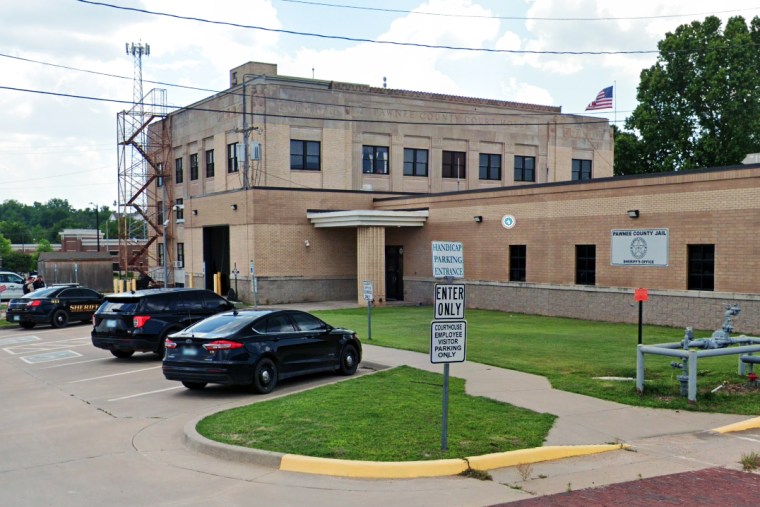
She has been held in the Pawnee County Jail since Monday, according to Pawnee County Sheriff's Office records. An attorney was not listed, and it is unclear whether she has legal representation.

A sheriff's car outside the Pawnee County courthouse and jail
The Pawnee County courthouse and jail.Google Maps

“I applaud the work of my Consumer Protection Unit to fight for these victims and to hold accountable their alleged perpetrator," Drummond said in the release. 

Full Article & Source:
Oklahoma woman scammed $1.5 million from elderly women by posing as men in fake romances, officials say

Elderly residents targeted in surge of scams, $320,000 lost


by Sasha Moore

GRAVES COUNTY, Ky., (KBSI) — Authorities are warning of a surge in scams targeting elderly residents, with two recent cases resulting in the loss of approximately $320,000.

The victims, both widows, were tricked into wiring funds to scammers, who used varying methods to deceive them.

Law enforcement and family members intervened in both cases, but one victim refused to believe she was being scammed despite warnings.

Area banks have warned customers about the dangers of wiring money and making large withdrawals but ultimately must follow the customer’s wishes.

Authorities urge residents to have serious conversations with elderly family members about avoiding scams. If you suspect a scam, immediately stop communication and contact law enforcement.

Full Article & Source:
Elderly residents targeted in surge of scams, $320,000 lost

Ukrainian national arrested in theft scam targeting elderly women in Southern California

by: Vivian Chow


A Ukrainian national was arrested for attempting to scam an elderly woman out of $30,000 in San Bernardino County.

On May 6, the victim, identified only as an elderly woman from Loma Linda, received a phone call from the suspect who had pretended to be an inspector general at the sheriff’s department. 

The woman was told she needed to withdraw $30,000 to avoid being arrested for an active arrest warrant. She would then be contacted the next day with further instructions.

Out of fear of being arrested, the woman withdrew $30,000 from her bank account. When she realized the phone call was a scam, she immediately reported it to law enforcement.

Detectives from the San Bernardino County Sheriff’s Department began investigating the case and later identified the suspect as Tyhran Shvets, a 20-year-old man who was a Ukrainian national.

During the investigation, detectives also learned Shvets had reportedly scammed several other elderly female victims and had successfully collected money from them.

Shvets was arrested for attempted theft by false pretenses, conspiracy, and elder abuse.

Anyone who may have been a victim or has information on the case is urged to call Detective M. Magdaleno at 909-387-3545. 

Anonymous tips can be provided to We-Tip at 1-800-782-7463 or online at wetip.com.

Full Article & Source:
Ukrainian national arrested in theft scam targeting elderly women in Southern California

Friday, May 2, 2025

Woman arrested again for scamming elderly Miami resident out of jewelry: Police

Katherine Coromoto Angulo-Rivera, 27, is facing additional charges of organized fraud and exploitation of the elderly

By Julian Quintana 


A woman previously arrested for allegedly scamming elderly Miami residents out of jewelry has been arrested again after being accused of scamming another elderly resident out of tens of thousands of dollars worth of jewelry.

Katherine Coromoto Angulo-Rivera, 27, is facing additional charges of organized fraud and exploitation of the elderly.

She was previously arrested earlier in April on similar charges.

According to police, on March 3, an elderly victim was outside her home when she was approached by Angulo-Rivera who asked them if they had any old frames for eyeglasses she could also melt the frames down to costume jewelry.

An arrest report said Angulo-Rivera also told the victim she offered a jewelry cleaning service.

After speaking with the victim, she was invited into their home and offered to clean their jewelry, the report said.

Once inside the home, the report said, the victim gave Angulo-Rivera around $30,000 in jewelry so that it could be cleaned.

Angulo-Rivera then placed the jewelry in a container, poured a liquid solution and smoke began to emit, the report said.

She then asked the victim to get some paper towels and after getting some, Angulo-Rivera placed a paper towel over the container and told the victim not to remove it for an hour and then left, the report said.

After following Angulo-Rivera's instructions, the report said, the victim removed the paper from the container and noticed her jewelry was missing and it was replaced with a rosary that was burned and melted down.

Angulo-Rivera would perform this scheme for several other elderly residents.

Weeks after their jewelry was stolen, the victim was watching NBC6 and recognized Angulo-Rivera and called the police, the report said.

Angulo-Rivera on Monday was identified in a Miami-Dade Sheriff's Office photographic lineup.

She was then apprehended by the City of Miami Police and was transferred into MDSO custody, the report said.

After being read her Miranda Rights and refusing to speak with deputies without her lawyer present, she was charged and transported to the Turner Night Guilford Correctional Center.

During her court appearance, a judge set Angulo-Rivera's bond to $15,000 and ordered her to stay away from the victim.

Full Article & Source:
Woman arrested again for scamming elderly Miami resident out of jewelry: Police

Monday, April 28, 2025

Bitcoin ATM operator sued in MD for alleged elder financial abuse

by Ian Round


Bitcoin ATMs are primarily used for elder financial abuse, and the companies that own the ATMs let it happen, a lawsuit alleges.

The lawsuit says Athena Bitcoin — which operates 138 ATMs in Maryland and about 3,000 across the United States, Argentina, Colombia, El Salvador and Mexico — places ATMs in neighborhoods with high numbers of low-income people and seniors, charges high transaction fees and does little to prevent financial exploitation.

Diane Reynolds, 75, who lives in Leisure World, a senior community in Silver Spring, lost $13,000 in a scam. She sued Athena Bitcoin and Genesis Coin in February, seeking class status for Maryland seniors who were scammed.

“Upon information and belief, the primary use of Athena ATMs is transactions related to fraud perpetrated against elders,” the complaint states. “Defendants’ incentive to turn a blind eye to fraud is devastating to older adult victims.”

Reynolds sued on Feb. 6 in Circuit Court. Athena removed the case to federal court on April 23.

Reynolds is represented by state Del. Vaughn Stewart, D-Montgomery, and Matthew Thomas Vocci of the Timonium firm Santoni, Vocci & Ortega, as well as Fairfax, Virginia-based attorney Pat McNichol of Kelly Guzzo.

CNBC reported last fall that Bitcoin ATM scams are “soaring,” posing a threat to the industry. Citing Federal Trade Commission Data, CNBC reported consumers lost more than $110 million to Bitcoin ATM scams in 2023, a “nearly tenfold” increase since 2020.

Reynolds’ lawsuit follows another proposed class-action suit against Athena in New Jersey.

Last December, there was a popup on Reynolds’ laptop warning of a security breach. She called a number she believed to be Apple. They asked her what bank she used, then pretended to transfer her to a Wells Fargo representative.

“The scammer claimed to be in touch with the Department of Justice,” the complaint states. “He told Plaintiff that the hackers planned to remove lots of money from her account and that she needed to withdraw it before they could do so. He instructed Plaintiff to take the cash to an Athena ATM ‘to be sure it would be encrypted.’ ”

The scammer sent a QR code, which Reynolds did not know was attached to the scammer’s bitcoin wallet. She gave $13,000, and was “alarmed” when they tried to make her deposit more money.

Athena’s website includes pages warning of potential misuse of their ATMs.

“Scammers are looking to say and do anything to convince you of a urgent need to pay through Bitcoin, and they will often ‘helpfully’ point out nearby ATMs where you can follow their commands,” one page says. “Scam artists like Bitcoin because transactions cannot be cancelled, reversed, or otherwise refunded once made.”

The complaint states that the defendants could take certain steps to prevent fraud, including transaction limits, holds on large transactions by first-time customers, the use of analytics to screen for fraud, and transaction receipts that would make it easier for law enforcement to trace the fraud.

“These types of measures are likely to be effective at stemming fraud, but they would also likely cut into Defendants’ bottom line,” the complaint states.

Athena and Genesis are represented by Cleveland-based attorneys from BakerHostetler. Terry Brennan, one of the lawyers, declined to comment.

Neither Athena Bitcoin nor Genesis Coin, which sold its ATMs to Athena, according to the complaint, responded to requests for comment Friday.

The complaint alleges violations of the Maryland SAFE Act — short for “Stop Adult Financial Exploitation” — and the Maryland Consumer Protection Act. It also brings claims of negligence and products liability, and asks for declaratory and injunctive relief.

It seeks certification of class status for all Marylanders, living or dead, who were victims of a scam involving an Athena ATM since February 6, 2020.

In an interview, Stewart — who represents Reynolds in the General Assembly — said sophisticated investors in cryptocurrencies don’t use Bitcoin ATMs, because the “skyhigh” fees, typically 20-25%, are far higher than fees imposed on other crypto transactions.

“The only reason you would use one of these is if you don’t know any better,” Stewart said. He said the machines are “perfectly suited to scam seniors.”

Full Article & Source:
Bitcoin ATM operator sued in MD for alleged elder financial abuse

Thursday, April 17, 2025

Florida Investigation Leads To Arrest Of Accused Elderly Pop-Up Scammer In New York

by Liz Shultz

Weikai Zhang, 43

A man accused of hiding behind his computer to operate a lucrative internet pop-up scam targeting elderly residents is now behind bars after a multi-state investigation led to his capture, the Martin County Sheriff’s Office announced Monday.

Weikai Zhang, 43, was apprehended in New York following extensive detective work by the Martin County Sheriff’s criminal investigations detectives in collaboration with the U.S. Marshals Fugitive Task Force. Authorities allege Zhang is part of a larger national criminal organization that preys on seniors, using deceptive internet pop-ups to swindle them out of their life savings.

According to the Sheriff’s Office, Zhang fled Florida for New York, hoping to evade capture after allegedly stealing more than $50,000 from a senior citizen in Martin County. Investigators believe that during his time operating in Florida, Zhang orchestrated thefts totaling approximately $613,000 from several victims, including the Palm City resident.

The scam typically involves fake security warnings or technical support messages popping up on victims’ computers, tricking them into believing their device is compromised and convincing them to pay for unnecessary services or grant remote access to scammers.

“He never wanted you to see his face, so he hid behind a keyboard,” the Sheriff’s Office stated, emphasizing the deceptive nature of the crime. “Through exceptional detective work, we located him.”

A computer screen no longer conceals Zhang.

He has been arrested and faces serious charges in Florida, including Organized Scheme to Defraud, Exploitation of a Person 65 Years or Older, and Conspiracy to Commit Grand Theft. His bond has been set at $700,000.

Authorities urge the public, especially seniors and their families, to be wary of unsolicited pop-up messages on computers demanding payment or requesting remote access.

If you encounter such a scam, do not click on links, call the numbers provided, or give out personal information. Report suspicious activity to local law enforcement or the FBI’s Internet Crime Complaint Center (IC3).

Full Article & Source:
Florida Investigation Leads To Arrest Of Accused Elderly Pop-Up Scammer In New York

Monday, April 7, 2025

Missouri woman indicted for scamming over 1 million from elderly Facebook user


A woman from Independence, Missouri, was arrested following a five-count federal indictment alleging she defrauded an elderly victim of more than $1 million.

Amanda Sargent, 35, was indicted by a federal grand jury on March 26, 2025. The indictment was unsealed after her arrest. According to the indictment, Sargent allegedly met the victim through a Facebook group that connects individuals experiencing homelessness in the Kansas City area with community resources.

In late 2021, Sargent posted a request in the Facebook group asking for assistance with car repairs. The elderly victim responded by sending a small amount of money. Over the next two years, Sargent allegedly made repeated false claims requesting help for various expenses, including medical bills, rent, utilities, and a kidney transplant. The victim believed the money was helping Sargent and her children and ultimately sent over $1 million between late 2021 and mid-2023.

According to the indictment, Sargent’s claims were false, and she withdrew the money in cash for personal use.

The Platte County Sheriff’s Office initiated an investigation after the victim reported the suspected fraud. The indictment includes five counts, each representing separate alleged acts of fraud.

The charges in the indictment are accusations and do not constitute evidence of guilt. Prosecutors must present evidence to a federal trial jury, which will determine guilt or innocence.

If convicted, Sargent faces up to 20 years in prison and a fine of up to $250,000 per count. Sentencing will be determined by the court, based on federal guidelines and other statutory factors. A sentencing hearing will be set following a presentence investigation by the United States Probation Office.

Full Article & Source:
Missouri woman indicted for scamming over 1 million from elderly Facebook user