Showing posts with label conflicting interests. Show all posts

Thursday, June 22, 2023

Despite being her conservator, neglect from a state agency delayed health care for a woman with a developmental disability

She’s not alone. An ABC10 investigation into conservatorships, The Price of Care, has uncovered abuse and a lack of response impacting thousands of people.

Author: Andie Judson

SACRAMENTO COUNTY, Calif. — To say Rani Slater is a San Francisco 49ers fan is an understatement. The walls of her room are plastered in scarlet and gold, her closet stuffed to the brim with customized 49ers gear and her prized possessions include a number of autographed footballs and jerseys.

She hands cards out to everyone she meets. Her title on them? "San Francisco 49ers Biggest Fan."

Ask her about any player, past or present, she'll likely give you his stats and tell you in detail about the best play he ever made.

"Why do you like them?" asked ABC10 Investigative Reporter Andie Judson.

"Because they like winning games!" said Slater.

But those in charge of her life have no idea about her biggest passion. She's conserved by the Department of Developmental Services (DDS).
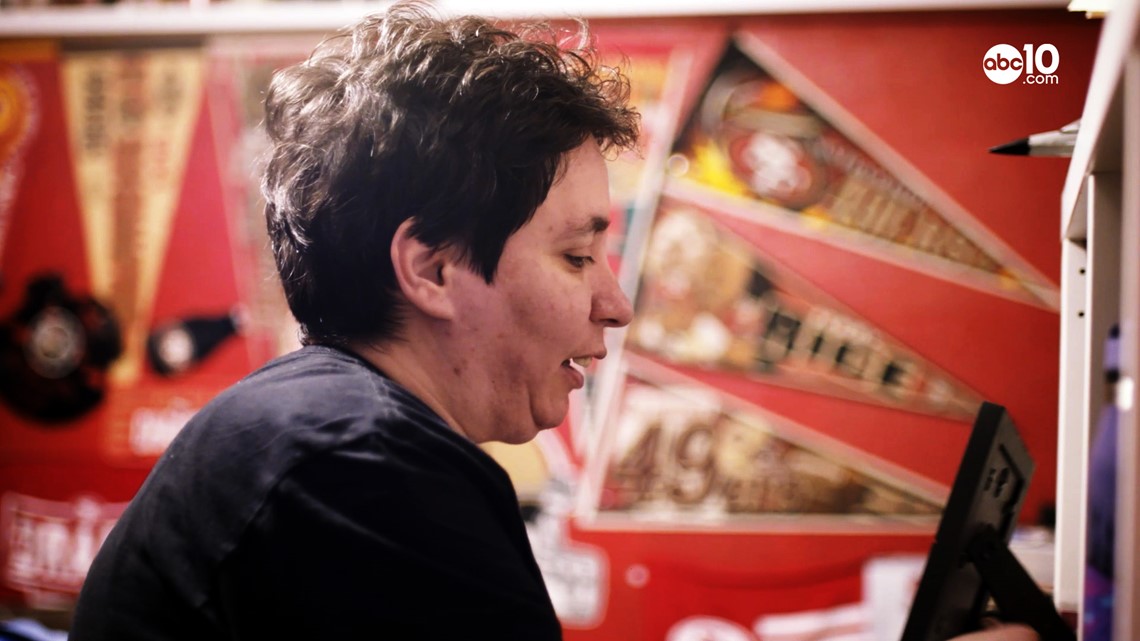
Credit: ABC10 / Rory Ward
Rani Slater, surrounded by 49ers memorabilia in her home.

DDS doesn't know a lot of things about Slater, like the fact her teeth are literally rotting.

"I just want to get this taken care of. I want it taken care of," she said. "I don't want to get another one pulled."

Her teeth have decayed so badly it's difficult to eat.

Since she's conserved, every aspect of her life, from what she eats, where she lives and all decisions about her health, including dental, are in the hands of someone else: The Department of Developmental Services.

DDS is a huge state agency with a $14 billion budget, funded by taxpayers. The agency was formed after the Lanterman Act was passed in 1969 and is required, by law, to make sure Californians with developmental disabilities have equal rights and opportunities.

"My daughters were on a defective baby formula when they were born," said Robin Gage, Rani's mother.

Rani and her twin sister, Danielle, were two of thousands of children with developmental disabilities due to the formula, Neo-Mull-Soy, they drank as infants.

"We started having issues with them... they're not holding their heads up, they're not crawling," Robin recalled. "I told my mom, 'Something is wrong.' They didn't walk until they were two years and two months old. So I immediately thought, 'What agency can I go to?' I didn't know what Alta Regional was."

She learned DDS funds and oversees 21 regional centers across California.

These centers fulfill DDS' responsibilities by providing services and supports to those with disabilities as well as their families. These services vary greatly depending on the client's needs, but can range from in-home caregiving to speech therapy and even transportation.

The center in Sacramento is called Alta Regional Center.

"That's how we got started with Alta Regional," Robin recalled.

Alta provided Robin with services to support her in raising her daughters.

"(Rani is over 40) but she's still got the mind of a 15-year-old," said Robin.

As they grew, Robin fought to get her twins justice from the baby formula company, Syntex Corporation.

"Well it took, oh my God, 12 years to get a settlement. They had until their 19th birthday to settle. It wasn't a lot either," said Robin.

By the time they settled, Rani and her sister were 25. The net settlement amount was $34,997.28. Each twin received $17,498.64, court documents show.

But Robin still cared for them, including financially.

"Their lawyer said, 'We can't give you the money. It's going to be put in the bank for them. You're going to need to get conservatorship in order to get access to this money for them,'" said Robin.

Parents are often told to get conservatorship as their child approaches age 18 because many with developmental disabilities are not able to handle aspects of adult life, like medical or financial decisions.

But as Robin took the steps to get conservatorship, she was shocked to find she was not the only one trying to conserve her own daughters.

"All of the sudden, I'm hearing from DDS - the Department of Developmental Services. They start getting conservatorship — once I filed my conservatorship (petition), all the sudden they're on board," said Robin. "I'm like, 'You weren't interested in getting conservatorship when they were 18.'"

ABC10 has investigated conservatorships and the Department of Developmental Services for over three years now as part of our ongoing investigation, The Price of Care. Our investigation is credited for getting first-of-its-kind legislation passed and forcing reform within DDS' conservatorship process.

DDS swooping in to compete against parents for conservatorship is a pattern our reporting has found over and over again.

As of May 2023, DDS conserves 395 individuals, according to data provided from public records requests.

The agency often seeks conservatorship when there's allegations of abuse. For Robin, court documents show DDS claimed she was using her daughter's funds inappropriately. Robin says this is false.

"I had a lawyer. (We) went in and they started bringing up a lot of things that were not true, no evidence," said Robin.

Robin isn't the only one to feel like she was deemed guilty before being proven otherwise. Other parents featured in our ongoing investigation had the same experience.

"Court appointed investigator never interviewed us. Still hasn't in three years," said Deborah Findley, whose son Andrew is conserved by DDS. "We never got due process."

"There is no evidence," said Jill Schutte, whose son Garth is conserved by DDS. "They will not find evidence of abuse of Garth."

DDS pursued and was granted conservatorship for both Findley and Schutte's case, like Robin's, after they sought conservatorship themselves.

In cases our investigation looked at, DDS was not able to prove allegations of abuse they brought up when seeking conservatorship.

"They accused me of spending their SSI money on vacations," said Robin. "I was working. I had money to pay for everything I wanted. What proof do you have?"

Robin asks if she was truly financially abusive, wouldn't DDS have tried to conserve her kids when they turned 18 and not seven years later?

"All of the sudden they have a settlement and you want to jump on this?" asked Robin.

As for how the settlement money was spent, court documents show it was not on Rani or Danielle.

"The probate lawyers kept nickel and diming the account until it was gone," said Robin.

DDS got conservatorship even after Rani and her sister said they wanted their mother to be their conservators, court documents show.

"The judge just said, 'Give it to DDS,'" Robin said. "I was upset. I'm like, 'I don't want them making health care decisions, where they live, all that stuff.' They're capable of telling me what they want."

Today, Rani and her sister have been conserved by DDS for 20 years.

"DDS... I've never heard from them at all since she got conserved," said Robin. "They've never been over here, ever."

"I don't know anybody at DDS," said Rani.

Unlike other cases we've investigated, where DDS moves the person once they obtain conservatorship and often cuts off contact from family members, Rani still lives at home with her mom who handles her day-to-day care.

However, her sister has been moved to a supported living home. Rani and her still have visits, albeit DDS stopped them for over two years during COVID.
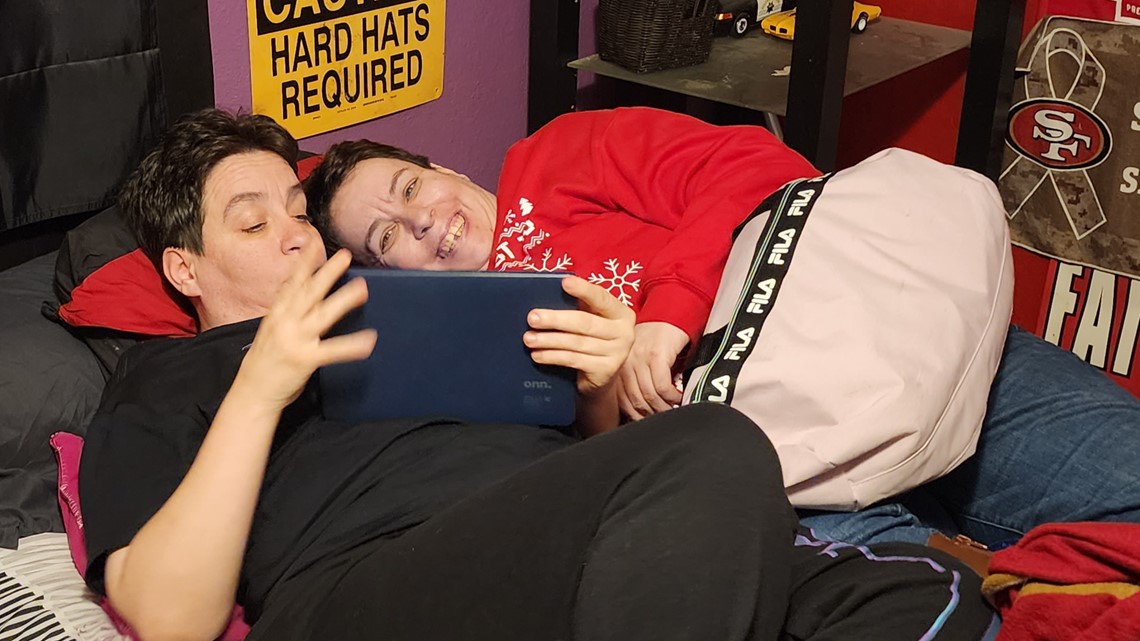
Credit: Robin Gage

Even though DDS is legally their conservator, the agency hands the responsibilities of conservatorship down to their regional centers.

Which means Alta Regional Center is in charge of Rani and her sister's care, including medical needs. Their mom says Alta has not been there or taken care of them in any way.

"They just want ultimate control and ultimate power when they don't live here for the everyday stuff," said Robin. "You're not here in this house. You don't know what's going on."

When Rani has medical needs, like an eye surgery in 2017, Alta had an astounding delay in getting her care.

"It took three years to get them to approve the surgery," said Robin.

Credit: Robin Gage

In 2022, her bottom teeth began having issues. When Robin contacted Alta Regional Center for help...

"Nothing. Nothing. I have to keep writing them about every other week, 'What's going on with the dental?'" said Robin.

Emails between Robin and Alta Regional Center staff obtained by ABC10 show Robin asking repeatedly about Rani's teeth for over a year. Emails date back to Feb. 2022.

The following are excerpts from emails she sent to Alta:

  • Feb. 21, 2022: "Rani needs two root canals."
  • April 8, 2022: "Can I get an update on Rani's dental work?"
  • May 24, 2022: "She has already lost one tooth in the front. If she loses these other teeth in the front, she won't be able to bite anything."
  • July 14, 2022: "Rani's teeth are hurting her. When can she get into see the dentist?"

Despite not being her conservator, Robin takes Rani to dentist appointments. Because Alta needs approval from Medi-Cal, they had to go to multiple appointments to get several estimates.

As of the start of May 2023, over a year later, Rani's teeth have not been fixed. Robin's emails and requests for help have been met with red tape and excuses.

In emails obtained by ABC10, Alta said multiple times they're waiting on a response from Medi-Cal, that they "haven't been able to obtain approval," and even admitted they're "not making much headway" in getting funds for the treatment.

"(It's been going on for) 19 months," Robin said during her interview with ABC10 in March.

Because Alta has done nothing, Rani's teeth have gotten much worse.

"They had to pull three teeth on the bottom and she's getting ready to probably lose another one if I don't get her in and get that one fixed," said Robin. "If that tooth gets pulled, it'll be four on the bottom she won't have. How is she going to eat?"

DDS conserved Rani saying it was in her "best interest" and under their mother's care her and her sister were "not reaching" their potential, court documents show. If you ask Rani, she says otherwise.

"Alta Regional is not doing their job," said Rani. "DDS is not doing their job."

Unfortunately, Rani isn't alone.

Our investigation found a number of cases where DDS has failed conservatees and their health has suffered under their care. Yet, year after year, DDS' budget - funded by taxpayer dollars grows.

"It's neglect," said Robin. "I know [DDS] has funds for this."

DDS' 2022-2023 budget is over $12 billion. Their 2023-2024 budget is projected to increase to over $14 billion. A large portion of that money goes to each regional center.

For the 2022-2023 fiscal year, Alta has a budget of $805,256,565, according to public record requests ABC10 filed.

ABC10 requested an on-camera interview with Alta Regional Center as well as DDS multiple times. When they declined, ABC10 sent them a detailed letter of our findings and what we would be reporting, as well as re-requesting an interview.

Alta declined saying "information relating to our client's regional center intake, assessment and services is confidential and protected from disclosure pursuant to the Lanterman Act (and HIPPA)."

They also said as Rani's conservator, Alta "does not believe it would be in the client's best interests to have their private information released to the public."

DDS also responded, declining our interview request, but saying they are "deeply concerned by this situation" and the "described delays in receiving dental care are not acceptable and we are working with our partners to resolve any issues related to accessing care."

Both Alta and DDS' full statements are available at the bottom of this article.

After ABC10 began investigating in mid-May, well over a year after concerns were first expressed about her teeth, Rani finally got root canals. But Robin says because so much time passed before the dental care she needed was given, Rani now needs more work, like a bridge between her teeth that have been pulled.

It's especially frustrating for Rani given when we asked what her favorite part of watching sports is...

"The food!" Rani said, smiling.

It's why her and Robin's message to Rani's conservator is simple: "Do your job."

WATCH MORE: 

The Price of Care: Taken by the State | Season 2, Ep. 1 of an ABC10 Originals five-part docuseries=

Full statements:

The Department of Developmental Services:

We are deeply concerned by this situation involving an individual under a DDS limited conservatorship with Alta California Regional Center (Alta). The described delays in receiving dental care are not acceptable and we are working with our partners to resolve any issues related to accessing care.

While we cannot comment on the specifics of a person’s medical or dental treatment due to privacy laws, we have followed up with the regional center to confirm the individual named is getting the care needed.

We are actively looking for opportunities to improve coordination and remove barriers for the individuals we serve. Recognizing the challenges in navigating dental services and coordination with primary medical care, California has invested resources to support a dental coordinator at each regional center. Alta’s current dental coordinator started in March 2023 which was instrumental in navigating access to dental services and coordinated the needed services between both health and dental providers.

During the past year, DDS examined all aspects of its limited conservatorship program. This included convening a panel of national experts to provide recommendations for improved oversight. These recommendations remain a priority and are actively being implemented.

We remain committed to continually examining and improving how services and supports are provided that are person-centered to Californians who have intellectual/developmental disabilities.

Alta Regional Center:

We have received your request for an on-camera interview with Alta California Regional Center (ACRC) regarding allegations concerning an ACRC client who is conserved by the Director of the Department of Developmental Services (DDS).

ACRC is declining your interview request because information relating to our client's regional center intake, assessment and services is confidential and protected from disclosure pursuant to the Lanterman Act (at Welfare and Institutions Code section 4514), as well as under HIPAA as Protected Health Infonnation. As such, we cannot share information about our client with third pa1iies such as the press or members of the general public without the client's w1itten consent or that of their conservator. And ACRC, acting as the client's conservator, does not believe it would be in the client's best interests to have their p1ivate infonnation released to the public.

We do want to note that all California conservatorships are overseen by the county superior court in which the conservatorship petition was filed, which is required to periodically investigate and review the conservatorship for the protection of the conservatee. (Prob. Code§§ 1850-1853.) Any individual who believes that a conservator is not acting in the best interests of the conservatee may report their concerns to the probate court for potential investigation and review by the comi. (Prob. Code§ 1850(b).)

Full Article & Source:
Despite being her conservator, neglect from a state agency delayed health care for a woman with a developmental disability

See Also:
ABC10's reporting on California's conservatorship system honored with James Madison Freedom of Information Award

Conservatorships can trap families in a web of conflicting interests

ABC10 to release year-long investigation of California's conservatorship industry

ABC10 investigation prompts in-depth review of conservatorships in California

Resource guide for Californians dealing with conservatorships

Tuesday, October 4, 2022

Conservatorships can trap families in a web of conflicting interests

by Dorothy Kupcha Leland

Deborah Findley’s son, Andrew, grew up with serious health problems, including autism, Lyme disease, and other conditions. Now 21, he is severely disabled and requires 24-hour care.

When he turned 18, his mother was advised to seek a conservatorship for him. That’s a way for someone to assume legal guardianship over an adult incapable of caring for themselves. Being his conservator would allow her to make medical decisions on his behalf, along with other choices regarding his care.

But when she and her husband petitioned the court to become Andrew’s conservators, they got a nasty surprise.

California’s Department of Developmental Services filed a competing petition. The department said that DDS should be Andrew’s conservator because of alleged abuse by his parents. The judge followed the agency’s recommendation and Andrew’s parents were shut out of his care.

As a result, they have been unable to visit Andrew in person for over three years, sometimes not even knowing where he was located.

There appears to be no legal avenue to challenge the court’s decision. Deborah says she has spent over $300,000 in legal fees fighting the state’s court-ordered conservatorship, trying to get access to her son. So far, she’s had no luck.

The issue of conservatorship is a complex one. You may remember news reports about pop star Brittany Spears and her years-long fight to regain control of her finances and personal life. A judge finally ended her 13-year conservatorship in 2021.

Investigative reporter Andie Judson, of ABC10 TV in Sacramento, examines Andrew’s case in a multi-part news series on conservatorship called “The Price of Care.” It is a complicated story with chilling implications.

Click below to watch the episode featuring Deborah and Andrew’s story.

This segment is part of Season 2 of Judson’s “Price of Care” series. Season 1 included five episodes that ran in 2021. Click here for more information about the whole series.

Full Article & Source:
Conservatorships can trap families in a web of conflicting interests

Friday, August 26, 2022

Families fighting state-run conservatorships are trapped in a broken, systemic web of conflicting interests

Want to fight a state-run conservatorship? You'll face the California Attorney General - and have nowhere to turn for help.
 
Author: Andie Judson

SACRAMENTO, Calif — The state of California will not let Deborah Findley see her son, Andrew, in person.

She has spent over $300,000 in legal fees fighting the state’s court-ordered conservatorship, trying to get access to him.

Credit: Deborah Findley

In December 2021, she was only allowed virtual visitation where she had to follow “guidelines.” Questions like ‘how he’s feeling’ are called “triggering,” and put her future visits in jeopardy.

“Over the past three years, I’ve only been allowed less than 100 hours of contact with him,” said Deborah.

So, to abide by the guidelines, instead of asking questions she shows him his favorite things like his Christmas presents underneath the tree since Andrew is not allowed to come home for the holiday.

“I’ve had that Christmas tree there for three years, waiting for him to come home,” said Deborah.

During the virtual visitation, Andrew, who is 21 years old, was hard to understand and lost focus often. Deborah said he is on many medications that she is opposed to – but because of the conservatorship, Deborah has no say over it.

“It just leaves me as a mom worried sick for my son,” said Deborah. “He used to be fully conversational…he is just a shell of a human being right now.”

This was not what Deborah was expecting when she sought conservatorship nearly four years ago.

“You’re told when your special needs child turns 18, you need to get a conservatorship,” said Deborah. “The regional centers kind of pound that into parents too.”

Experts ABC10 spoke with said there is a pipeline that leads to conservatorship – starting through school, doctors, and/or regional centers.

Andrew has autism as well as other developmental disabilities and requires 24-hour care, court records show.

“Had some challenges but we had the best therapists in northern California,” said Deborah. “The best of everything we provided for him.”

They thought they could continue his care with the conservatorship. They raised Andrew in northern California in Shingle Springs. As he approached age 18, their family moved to Templeton in central California.

After their move, Deborah and her husband petitioned for conservatorship. She says they were blindsided.

“It was pretty much a done deal before our attorney even walked in,” said Deborah. “And he was blindsided too.”

In reality, the court was in control. 

“We had no idea that something like this could happen,” said Deborah.

What the probate court received alongside the Findley’s petition for conservatorship was a competing one from California’s Department of Developmental Services (DDS) saying they should be conservator because Andrew’s parents were allegedly abusive.

DDS has continued to say throughout the conservatorship proceedings that, “throughout Andrew’s life his parents have interfered with his health, safety, welfare," and that they could not handle his growing aggression and were not providing proper care, court documents show.

Deborah said she was never asked about this.

“(The) court-appointed investigator never interviewed us. Still hasn’t in three years,” said Deborah. “We never got due process.”

Credit: Deborah Findley

The court listened to DDS, granting them temporary conservatorship in September 2019, after a fiduciary served as conservator for a period and a different Lanterman-Petris-Short (LPS) conservatorship also was instated for a year. The conservatorship stripped Andrew’s parents of their right to care for their son like they had for the first 18 years of his life.

“We became legal strangers to my son,” said Deborah. “He was treated like an orphan.”

Since the conservatorship process began, Deborah said for periods of time she has not been told where her son is.

“It was a lot of nights of crying myself to sleep going, ‘Where is my son? Is he alive? Is he dead? I don’t know. Nobody would tell us,’” said Deborah.

Seeing people like his mother may “cause regression,” DDS told the court and that the court should “not be swayed by impassioned pleas from family.”

“Nine months, I had no idea where he was. They wouldn’t let me know anything about him,” said Deborah. “It’s inhumane. It’s absolutely inhumane.”

With DDS being the conservator, information about her son is impossible for Deborah to get.

“The (regional center) staff and supervisors aren’t allowed to communicate with me. I have to go through the conservator,” said Deborah. “(For) anything with my son. I’m like, ‘Did he get my card?’ ‘Oh, you have to ask the conservator.’”

That means Deborah has to ask a massive multi-billion-dollar state agency if her son received his Christmas card.

Deborah says Andrew wants to come home, asking during every visit they have. DDS says the current situation is what is best for Andrew. Unlike in episode one of this investigation, some of the confidential court documents were not accessible for this complex case. But it provides a window into a broken system, keeping families apart - and we at ABC10 wondered how it is that DDS, a massive government agency, can serve as conservator of an individual with very specific needs.

“The law permits the Director of the Department of Developmental Services to be appointed as conservator,” said Tom Coleman, attorney, and founder of Spectrum Institute – a human rights non-profit organization.

He believes DDS being able to be a conservator is “ridiculous.”

“Someone who is running a billion-dollar department with hundreds, if not thousands of employees…that person is going to be a conservator of an individual and look after their needs and care for them? It is a farce,” said Coleman.

DDS often becomes a conservator by way of its regional centers. That is what happened in Andrew’s case; Tri-Counties Regional Center nominated DDS to be conservator, court records show.

“It totally is a conflict of interest,” said Deborah.

Deborah believes this is a conflict of interest because when a regional center nominates DDS as a conservator and it is granted, the responsibilities of the conservator are returned to the regional center, funded by DDS.

“DDS is the funding agent…they have full control of how that money is spent,” said Deborah.

What is also funded by DDS is the live-in care facilities where 86% of those conserved by DDS live, according to public records requests as of July 2022, like Andrew – as well as Garth, who we introduced in part one of our five-part investigation.

“Prisoners get calls. They get visitors,” Deborah said. “My child is not allowed any of that.”

These conservatee’s care homes, as well as caregiving expenses, are all paid for by taxpayers.

Yet, a June 2022 audit found these facilities are not being properly monitored by DDS or regional centers as state law requires, including medication not being properly distributed in some – a life-threatening issue.

This “care” is all part of the $12 billion budget DDS has, including the ongoing legal battles to keep conservatorships in place.

“The attorney general represents DDS,” said Deborah. “So, there’s the attorney general, DDS’ lawyers, there’s tri-counties regional center lawyers.”

One of those is Andrew’s own court-appointed attorney. The court approved over $13,300 in pay, funded by taxpayers for about 20 days of work. And he is just one of the many attorneys involved. Others came from the California Attorney General’s office.

“The assistant attorney general. Two of them,” Deborah recalled. “Talk about a waste of taxpayer dollars.”

As a state agency, in a court of law, the Department of Developmental Services is represented by California’s Attorney General.

“It was daunting to be in court with the Attorney General,” said Deborah.

In cases like Deborah’s, they represent DDS to defend the conservatorship. Coleman finds this hugely problematic.

“That is a problem, in my view – a big one, because the Attorney General of California is the Chief Law Enforcement Officer of the state, including civil rights laws,” said Coleman. “The Department of Justice has a civil rights protection division.”

“Protecting and promoting the civil rights of all people in California” is the division’s job, their website states.

“So, the Attorney General can intervene, file lawsuits, and investigate when the civil rights of people are being violated,” said Coleman. “What if the violator is a state official? Or a state entity, like the Department of Developmental Services. Then the Attorney General has a choice because you can’t do both, you can’t be a prosecutor and a defense attorney at the same time – it’s a conflict of interest.”

We reached out to the Attorney General’s office. They said they “do not engage in enforcement against our client state agencies,” one being the Department of Developmental Services.

“However, that does not preclude other entities from bringing civil rights claims where applicable,” their statement said.

One of those “other entities” is Disability Rights California, which under federal law is required to protect the rights of those with disabilities.

“But sadly, every time I’ve reached out to them I’ve just been told that they only will communicate with the client – and that my son has to call them and ask them for help,” said Deborah.

But people with disabilities often communicate in different ways as well as non-verbally. Making a call to express a complicated legal system could be a massive challenge and hurdle.

Disability Rights California has a branch called the Office of Clients Rights Advocacy (OCRA).

“This part of them, this agency, is supposed to protect the civil rights of regional center clients,” said Coleman.

But Coleman said OCRA isn’t helping those conserved.

“As soon as they hear there’s a conservatorship involved, they’re nowhere to be found,” said Coleman.

And guess who OCRA is funded by? The Department of Developmental Services.

“I’ve reviewed their funding. I’ve reviewed their contracts with DDS,” said Coleman. “They have the authority. They have the funding. They have the moral duty.”

So, we asked Disability Rights California’s OCRA Manager Shannon Cogan about this. She said with conservatorships, the organization mainly provides alternatives. Their policy is to not help anyone obtain a conservatorship.

“I think it’s really easy to criticize people who are doing hard work instead of collaborating with them,” said Cogan. “We don’t have a mandate to file lawsuits or administrative complaints about anything related to conservatorship – we do a lot of good work for people who might be impacted by conservatorship.”

“They nibble around the edges. They will do a little bit of this or do an educational forum. We don’t need education,” said Coleman. “You are a law firm. You are a civil rights enforcement legal entity.”

OCRA’s own website states they provide “legal advice and representation” to clients of regional centers – where conservatorships often begin.

But Cogan said OCRA doesn’t take on cases to fight conservatorship – it is “one of the other branches of the tree.”

For months, we asked OCRA for specifics on how many conservatorship cases this “other” Disability Rights branch represented – they never gave us that data.

As for getting involved after a conservatorship happens, Cogan validated Deborah’s experience: a client must give consent – so Andrew, rather than his mother, but a parent calling could spark action.

“Certainly if this was an issue of extreme rights deprivation, health or safety, we send our employees to that person to interact with them,” said Cogan.

Coleman and Deborah say it is not enough.

“I had so many people say, ‘I’ve gone to Disability Rights California. They won’t do anything,'” said Coleman.

Specifically for Deborah, it seems like a never-ending loop of conflict of interest: the regional center, funded by DDS, nominated DDS to be the conservator. When the conservatorship was enacted, the duties of the conservator went back to the regional center which then placed Andrew in a care facility, also funded by DDS. She then went to Disability Rights California to ask for help, an agency also funded by DDS.

Yet, Cogan said their funding would not stop Disability Rights California from representing someone conserved by DDS, like Andrew.

“Yes, we can. Absolutely,” said Cogan. “We have clients that are conserved by DDS…there’s no inherent conflict and we can do it.”

For over eight months, we asked DDS for an on-camera interview. They refused.

We also sent them a detailed three-paged, single-spaced letter outlining our investigation’s findings and asked 15 specific questions including about conflicts of interest. They sent us a written statement, included below. It did not answer any of our questions.

So, we took our questions about DDS’ budget to Amy Westling, the Executive Director of the Association of Regional Center Agencies (ARCA). This association represents all 21 of the state’s regional centers.

Westling knows DDS’ multi-billion-dollar budget in and out.

In addition to fully understanding the budget, we were curious if DDS has an incentive financially to conserve people. Westling doesn’t believe so.

“My experience with DDS is they are pretty conservative with which cases they become conservator for,” said Westling. “DDS doesn’t get additional funds for conserving people.”

But no matter which way you look at it, taxpayer dollars are funding DDS conserving people.

Credit: Deborah Findley

Parents like Deborah continue to lose hope.

“Every time I have a call or visit, I’m scared it’s the last one – that I won’t ever see my son again,” said Deborah. “It’s just not a way to live.”

Since our interview, Deborah’s virtual visitation has been “paused.”

Her long legal fight with the Department of Developmental Services will continue in October 2022 when the probate court will determine if DDS’ conservatorship becomes permanent.

Deborah has no idea if she’ll ever see her son again.

But the Department of Developmental Services is not just responsible for the 414 people they are conservator to; this agency’s main duty, by law, is to help ensure 400,000-plus Californians with disabilities have equal rights and opportunities.

Yet, there’s a concern – and evidence – that they are not doing their job. Even from California’s in-house watchdog, the California State Auditor.

That is next in episode 3 of The Price of Care: Taken by the State.

Full Article & Source: