Showing posts with label vulnerable residents. Show all posts

Monday, July 27, 2026

How a trusted funeral director stole $1.1 million from Michigan’s most vulnerable residents


By Gus Burns 

BAD AXE, MI—Terry Kaufman was a trusted small-town funeral director who helped families prepare for the inevitable. 

That trust came at a steep cost. 

For years, Kaufman accepted money for prepaid funerals that families believed would ensure their loved ones were buried with dignity and spare relatives from future financial hardship. Instead, authorities say, he kept much of the money for himself, fueling a scheme that ultimately victimized 204 people and cost more than $1 million.

The case rattled Michigan’s Thumb region and exposed vulnerabilities in a system designed to protect some of society’s most vulnerable residents. It also prompted warnings from the Michigan Attorney General’s Office, renewed scrutiny of prepaid funeral arrangements and reviews of procedures used by public guardians around the state.

Behind the dollar figures were real people trying to settle their affairs, care for aging parents or ensure a loved one would be buried when the time came.

“There were many people who trusted him,” said Huron County Public Guardian Jacilyn Braun. “He was an upstanding member of the community, and he abused his respect from the people and his respect from our office.”

Kaufman helped establish Kaufman and Company Funeral Home in 1994 and sold his remaining ownership stake in 2011, though he continued working there as an employee.

‘TWO-FACED’

Grace Baker, 87, lives with dementia in a nursing home in Bad Axe, a small town of 3,000 and the Huron County seat.

After paying for her care, she has about $60 a month left for personal expenses. Her favorite pastime is looking through old family photographs, her daughter, Traci Baker, said.

One of Grace Baker’s few remaining assets was a $2,150 prepaid funeral plan.

The policy had been purchased with her money through the Huron County Public Guardian’s Office and arranged through Kaufman.

Prepaid funeral arrangements are designed to lock in costs and protect families from financial uncertainty after a death. They are typically funded through escrow accounts or specialized insurance policies.

Kaufman sold both.

But Grace Baker’s funeral plan never existed.

The money was gone.

And she wasn’t alone.

Kaufman is now serving a sentence of at least seven years in prison after pleading no contest to felony charges stemming from a decade-long scheme that prosecutors said victimized 204 people, including 55 wards under Huron County guardianships.

“He was very kind to people,” said Larry Brown, a former coworker. “And was two-faced about that, too.”

An MLive review of probate court files, licensing complaints, more than 100 pages of attorney general records obtained through the Freedom of Information Act and interviews with victims, officials and attorneys found that many of Kaufman’s victims were elderly residents whose finances were supposed to be protected through guardianship arrangements. 

EXPOSED 

The fraud began to unravel in March 2025 when a Huron County ward died and was taken to Champagne Funeral Chapel in Pigeon at the direction of family members.

Relatives produced records showing the Huron County Public Guardian had paid Kaufman $4,500 for the deceased ward’s funeral.

By law, the money should have been deposited into an approved escrow account or used to purchase a valid preneed insurance policy that could be transferred to another funeral home.

When officials tried to locate the funds, they discovered they did not exist. 

A complaint was filed with the Michigan Department of Licensing and Regulatory Affairs, triggering an investigation that uncovered a broader pattern.

State regulators found Kaufman received $218,019.98 from the Huron County Public Guardian’s Office on behalf of wards but failed to properly deposit the money or create legitimate insurance policies.

The findings prompted a criminal investigation by the Michigan Attorney General’s Office in June 2025. 

Investigators found no evidence that Braun’s office or its employees conspired with Kaufman.

But the case exposed a critical oversight problem.

Braun acknowledged her office relied largely on documentation provided by Kaufman and did not independently verify that prepaid funds had been placed into escrow accounts or that insurance policies had actually been issued. 

The lack of verification allowed the scheme to continue undetected for years.

HOW IT WORKED

According to probate court records reviewed by MLive, Kaufman sometimes represented himself as an agent for Forethought Insurance, a subsidiary of Global Atlantic Financial Group that sells preneed insurance products.

Contracts listed items such as burials, vaults, headstones and other funeral services. Some customers added services over time, increasing the value of their plans.

On paper, everything appeared legitimate.

In reality, investigators found many policies were never established or properly funded.

Some records also raised questions about signatures. In several cases, wards appeared to have personally signed contracts despite lacking the legal authority to do so.

“I don’t really know,” Braun said when asked how those signatures ended up on documents. “Typically, guardians would sign.”

Kaufman’s former defense attorney, Elizabeth Weisenbach, said the scheme functioned much like a Ponzi operation.

Money from new customers was used to satisfy obligations owed to older customers, creating the appearance that prepaid arrangements were working as intended.

“People would come in to do a pre-arrangement and he was using part of their money to pay somebody else’s funeral,” Brown said.

Some funerals were paid for, despite not being backed by escrow accounts or insurance policies.

Weisenbach said such schemes often begin with relatively small financial shortcuts.

“He’d take that money, pay the light bill and pay staff and write himself a payroll check,” she said. “They start small and then it just snowballs.”

The attorney general’s office alleged Kaufman embezzled funds for his own benefit over roughly a decade.

Coworkers and others familiar with the case said he frequently purchased lottery scratch-off tickets, though authorities did not publicly tie the thefts to gambling. The criminal case focused on embezzlement and funeral contract violations.

WORD SPREADS

As news of the investigation spread, customers throughout Huron County began wondering whether their own prepaid funeral plans existed.

Many learned they did not.

Victims ultimately numbered 204, including nearly 150 private customers who were not under guardianships or conservatorships.

Among them was Brown.

After Kaufman’s arrest, Brown contacted an insurance company to verify a $9,995 prepaid funeral policy he had purchased in 2019.

What he learned stunned him.

“They informed me that I was deceased,” Brown wrote in a complaint. “Which, I am still alive.”

According to Brown, records showed a death claim had been submitted using forged paperwork bearing his wife’s signature. A settlement check was then issued and cashed.

Brown later discovered similar issues involving additional family members.

One complaint after another filed with the attorney general told similar stories: elderly customers paid thousands of dollars believing their funeral expenses had been secured, only to discover the money was gone.

Attorney General records showed average losses exceeded $5,400 per victim.

CHARGED

In November 2025, the Attorney General’s Office charged Kaufman with embezzlement involving county wards.

He later pleaded no contest to 39 felony counts, including funeral contract conversion, embezzlement and conducting a criminal enterprise.

A no-contest plea does not admit guilt but acknowledges that sufficient evidence exists for conviction.

A judge ordered Kaufman to pay approximately $1.1 million in restitution.

Victims, however, may never recover most of the money.

Attorney General spokesman Danny Wimmer said there are no state compensation funds available for victims of this type of financial crime.

While some people may be able to pursue reimbursement through insurance companies Kaufman claimed to represent, officials cautioned that significant recovery is unlikely.

BROADER QUESTIONS

The case has sparked reviews of prepaid funeral practices both locally and around Michigan.

Following the criminal case, Braun said her office began verifying the existence of prepaid funeral funds and auditing existing contracts.

Other counties employ stricter verification practices. Midland County Public Guardian Steve Wixson said his office conducts annual audits and maintains both contract records and independently issued policy documentation.

Wimmer said the Attorney General’s Office has uncovered several prepaid funeral embezzlement cases through the years and is working more closely with state regulators to identify and prosecute offenders.

He advised guardians, family members and consumers to independently verify that prepaid funeral money has been deposited into escrow accounts or used to purchase legitimate insurance policies. State law requires funeral homes to transfer prepaid funds into approved escrow accounts within 30 days of receiving them.

Michigan Funeral Directors Association Executive Director Phil Douma said additional reforms should be considered, including requiring prepaid funds to be sent directly to escrow agents rather than passing through funeral home accounts.

The Attorney General’s Elder Abuse Task Force has also identified stronger oversight of public and private guardians as a legislative priority.

Meanwhile, civil litigation continues. Lawsuits filed by Kaufman’s former funeral home and other victims allege hundreds of thousands of dollars in additional losses.

For Traci Baker, however, the consequences remain deeply personal.

Her mother believed her funeral plans were in place.

Now they are not.

“Obviously they didn’t do a very good job protecting my mother’s money because it’s gone,” Baker said. “If she died tomorrow, I don’t have the money to do anything.”

Braun said she hopes the scandal ultimately encourages vigilance rather than discouraging people from planning ahead.

“Mr. Kaufman broke a lot of trust within this community,” she said. “I hope going forward those in our community still consider planning for their future.” 

Full Article & Source:
How a trusted funeral director stole $1.1 million from Michigan’s most vulnerable residents 

Saturday, January 24, 2026

Florida bill would require contract signing to be videotaped for adults over 60. Can it prevent financial abuse?


by Emma Caplan-Fisher

It’s a story that’s all too common these days: an elderly person gets roped into a sales contract they don’t fully understand and ends up paying far more than they thought they would.

Now, a Florida senator has proposed a bill designed to protect the state’s most vulnerable residents from the same thing happening to them.

Sen. Ileana Garcia’s “Elderly and Disabled Adult Contract Protection Act” was introduced on Jan. 13. It would require contracting parties to record a video that depicts them conducting a “comprehensive review” of contract terms with the elderly or disabled adult, as well as the signing of the contract — and store that recording for at least five years. The bill defines “elderly” as someone aged 60 and older.

The goal is to ensure older Americans fully understand what they’re agreeing to when purchasing a product or service, thereby reducing cases of financial exploitation, misleading sales tactics and pressured consent.

How helpful would it be?

The proposed legislation could fundamentally change how contracts are enforced and challenged when older residents claim to be misled.

“Out of the blue, I thought, what a great idea, so many agreements are signed under cover of dark,” attorney Charles Gallagher III told Tampa Bay 28 in a story that aired Jan. 8 (1). “The law in Florida doesn’t really help folks in that context. The law in Florida presumes if you signed the contract, you understand it.”

But even Gallagher, despite his initial excitement, has practical concerns. For example, the bill defines a contract as “any agreement that affects an individual’s legal rights or property, including documents conferring power of attorney or a deed instrument,” which may be interpreted broadly.

“In theory, every interaction between folks and contract parlance could be required to be recorded,” he said. “Lawn guy, pest control, you're buying a washer at the store, these are all written contracts. Do these all require a video?”

He also worried about operational impact, noting law firms, insurance companies, real estate agencies and many other Florida businesses could slow down their practices.

And, crucially, the bill might not prevent all exploitation. It only requires documentation of the process and by itself doesn’t provide the means to void contracts, ban predatory tactics or create a cooling-off period for seniors to reconsider.

What other states are doing

The proposed bill appears unique in requiring video-recorded contract reviews specifically for elderly protection. While all states have Adult Protective Services programs and elder abuse statutes, few have implemented preventive measures specifically targeting the contract-signing process itself.

According to SeniorSite's analysis of state elder abuse laws, 15 states mandate that all citizens report suspected elder abuse, while others limit reporting requirements to specific professionals (2).

Financial exploitation penalties vary dramatically. For example, North Carolina classifies financial exploitation above $100,000 as a Class F felony, while physical abuse resulting in serious injury is a Class G felony. On the other hand, Michigan has a four-tier system for physical elder abuse with penalties from misdemeanors to felonies requiring prison time of up to 15 years.

Americans aged 60 and up are among the most vulnerable to scams and exploitation. Even if the Florida bill doesn’t pass this legislative session, it signals growing recognition that existing contract laws don’t adequately protect vulnerable adults. Especially for those who might be living on fixed incomes, where a single bad financial decision can have irreversible consequences, the stakes couldn't be higher. 

Full Article & Source:
Florida bill would require contract signing to be videotaped for adults over 60. Can it prevent financial abuse? 

Tuesday, June 7, 2022

Judge hands over operations of Woodland nursing home, for now

by Lori Comstock

A state Superior Court judge has turned over operations of a long-troubled Andover nursing home into the hands of a receiver, citing immediate concerns over the health and safety of the state's most vulnerable residents.

Judge Frank DeAngelis' decision is the latest in a string of major moves by the state's top officials to ensure the safety of residents at Woodland Behavioral and Nursing Center after surveyors twice in April and in early May found that conditions at Woodland had only gotten worse. Woodland has been on the radar of federal and state officials since police discovered 17 bodies in a makeshift morgue at the height of the pandemic in spring 2020.

The facility was visited often by surveyors, who warned that negative actions would take place if compliance wasn't met. 

DeAngelis appointed Allen Wilen, a partner at the business advisory firm EisnerAmper, after a court hearing Friday on whether Woodland Behavioral and Nursing Center could continue caring for its 366 residents.

Wilen will step into the role temporarily until a final hearing takes place on July 7.

Gov. Phil Murphy and officials with the New Jersey Department of Health petitioned the courts last week to employ Wilen to take over the facilities' finances, to retain staff and maintain proper services for residents. Officials pressed the immediate need for intervention, stating that despite actions by federal and state officials, no systemic improvements had been made.

Attorneys representing Alliance Healthcare Holdings, which operates Woodland, and the owners of the property who lease the building to Alliance, known as BNJD Mulford Property, did not deny allegations raised by the Health Department with respect to the health and safety of residents, DeAngelis' decision said. Instead, they argued that the only harm was caused by the state's refusal to recognize a comprehensive remedial plan that they were aware of "before they ran into court seeking emergent relief."

BNJD said it had a signed agreement from co-owner Louis Schwartz removing him from the facility's license and had also executed an agreement with R&R Management Services LLC to take control of the facility's operations. The appointment of a receiver, the attorneys contended, was not appropriate because they had a plan in place that would have led to a comprehensive plan of correction.

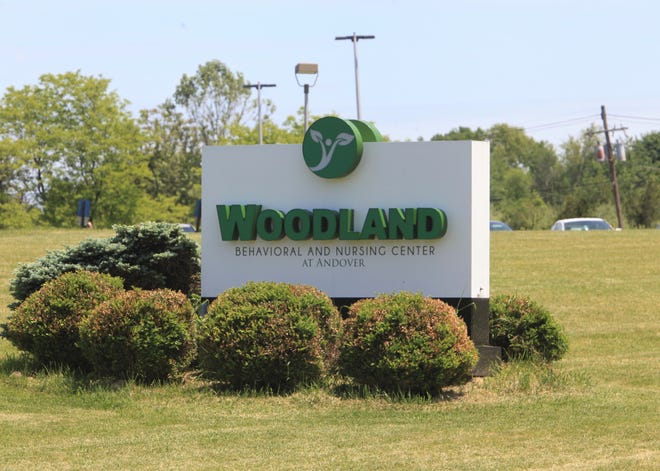
Woodland Behavioral and Nursing Center in Andover Township

But DeAngelis said during arguments on Friday that attorneys for BNJD "confirmed that the alleged agreement was just a proposal."

"The Court finds that the harm that threatens the residents of Woodland substantially outweighs any threat of any potential hardship that defendants may face through the appointment of a temporary receiver," DeAngelis wrote.

The state Department of Health issued a statement on the judge's decision, noting that Atlantic Health System, which was appointed as monitor in March, will work with Wilen to manage the daily operations at one of the state's largest nursing homes, once called Andover Subacute and Rehabilitation II. 

Medical workers move a patient from Andover Subacute and Rehabilitation Center II, in Andover N.J., April 19, 2020.

“The receiver will ensure that employee paychecks are processed and staff retention policies and bonuses are implemented and will work with the state and other long-term care facilities to facilitate job placement for qualified individuals,” Wilen said in the statement.

Human Services Commissioner Sarah Adelman said the judge's decision recognized the "unprecedented gravity" of the situation.

In back-to-back filings on March 26, the federal Centers for Medicare and Medicaid Services ordered a halt of funds to the Medicare-reliant facility as the state revoked the nursing home's license.

Robin Ford, the state Health Department's deputy commissioner of health systems, said in court records that Woodland made no efforts to bring the facility into compliance, stating that residents were in immediate and serious risk of harm. Under the order, residents will need to be transferred to another facility by Aug. 15.

The judge noted that due to the termination of Woodland's agreement with CMS, there is a risk the facility will lose staff and have insufficient funds to continue operation in less than 60 days. 

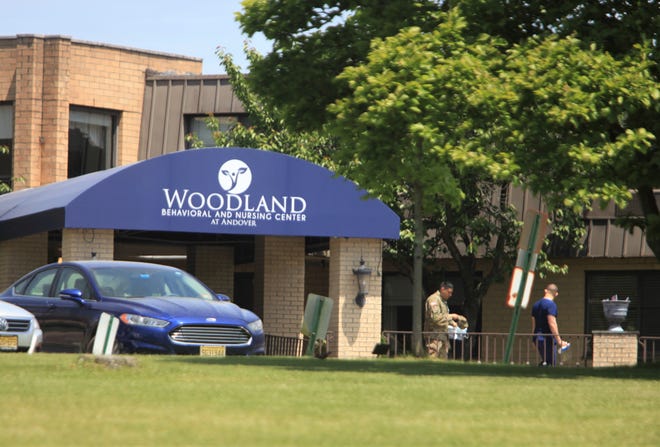
A member of the New Jersey National Guard walks out with an employee of Woodland Behavioral and Nursing Center on Wednesday, May 25, 2022.

The risk of insufficient funds is coupled with concerns that the facility is nearing financial distress and is at risk of needing bankruptcy protection, state officials said in their court filings. The facility, the court records show, has a negative cash flow, limited borrowing capacity and projected required capital expenditures. 

"The financial issues coupled with the management issues continue to put the residents at risk of harm," DeAngelis wrote. "It is clear to the court that appointment of a temporary receiver is necessary for the protection of Woodland's current residents."

Full Article & Source:

Saturday, October 23, 2021

Virginia’s private guardianship program fails to protect the state’s most vulnerable residents

A new report found guardians face little oversight while wielding broad power over incapacitated adults

 
By Kate Masters

Some of Virginia’s most at-risk adults aren’t sufficiently protected by the state’s private guardianship system, according to a new report from a legislative watchdog agency.

The findings, detailed in a Monday hearing by the Joint Legislative Audit and Review Commission, largely affirm years of concerns from many advocates and family members. A 2019 investigation by the Richmond Times-Dispatch also detailed numerous faults within the system, which is subject to little oversight but has broad discretion to remove the decision-making rights of adults in its care.

“The state’s role is woefully inadequate, given that these guardians are responsible for some of the most vulnerable Virginians,” JLARC Director Hal Greer told legislators at the meeting. “The private system lacks meaningful standards, requirements or accountability to help ensure that thousands of adults are being adequately served.”

Like other states, Virginia developed its guardianship process to help so-called “incapacitated adults” — those 18 years or older who are found to be incapable of meeting their own essential needs. The process begins with a circuit court petition — which can be filed by an individual or an “entity” — according to the JLARC report, and judges ultimately decide whether a guardian will be appointed.

Of the roughly 12,000 adults under guardianship care, 1,000 are served by the state’s publicly funded system, which has been described as a national model. But Kathy Hayfield, commissioner for the Virginia Department of Aging and Rehabilitative Services, said the $4.5 million program is already considered underfunded for the adults it serves.

According to JLARC, nearly 700 people are currently on the waitlist. Eligibility is limited to adults who are deemed incapacitated, low-income and who don’t have another individual willing to serve as their guardian.

“The older term for that was ‘indigent and friendless,’” said Joe McMahon, JLARC’s project leader for the report. Those strict admission criteria leave roughly 11,000 Virginians, half between the ages of 18 and 44, to be served by the private guardianship system.

Unlike the publicly funded program, though, private guardians receive little oversight and aren’t subject to either independent monitoring or training and caseload requirements. Family members and friends can serve as guardians, but so can attorneys or “organizations,” McMahon said.

The Richmond Times-Dispatch, for instance, found that VCU Health has filed hundreds of petitions to remove their patients’ decision-making rights — a way to free up hospital beds and reduce uncompensated care. Many of those patients have been assigned to attorneys paid by VCU.

One, R. Shawn Majette, had up to 120 patients under his guardianship at the time the story was filed. Similarly high caseloads aren’t unheard of in the private guardian system. While many guardians only have a single person under their care, a “small subset” are responsible for more than 20 people, according to McMahon.

“That’s a median of 33 adults per guardian in this group,” he said. And unlike the public system, those guardians aren’t required to regularly visit the adults they serve. The Times-Dispatch found that many of VCU’s patients were placed in low-rated nursing homes, sometimes against the wishes of their own families or loved ones.

The power granted to private guardians is especially problematic given the lack of oversight by the state, analysts found. Guardianship is often a “lifelong arrangement,” according to the report, and guardians have wide latitude to restrict contact with the adults they serve. Often, that’s done without giving a rationale or explaining the process for appealing the decision in court.

At the same time, private guardians aren’t subject to any independent monitoring to ensure they’re providing adequate care. The bulk of the state’s oversight comes through an annual reporting form, which is overly broad and not structured to collect good data, according to the report.

“Its reliance on open-ended questions enables vague and inconsistent reporting,” McMahon said. One section, for example, asks guardians to describe the physical, mental and emotional condition of adults in their care. JLARC reviewed multiple forms and found many guardians responded with a single-word answer, such as “good.”

The limited data makes it difficult to know the extent of possible abuse or mistreatment within the private guardianship system, the report found. But there can be perverse financial incentives for taking away an adult’s decision-making abilities. The court process, for example, involves an attorney known as a “guardian ad litem,” who’s paid to investigate the patient’s condition and issue a recommendation to the court.

Analysts found that many petitioners repeatedly request the same guardian ad litem for guardianship cases, potentially creating conflicts of interest.

“The concern is that a GAL could have financial incentive to reach conclusions that support what the petitioner wants — which would be to place someone under guardianship — because they’d be requested again in future cases,” McMahon said.

And while the majority of petitioners are friends and family members, hospitals and other medical facilities — like VCU Health — accounted for 15% of cases within the last five years. The Richmond Times-Dispatch found that VCU paid a private law firm more than $1.15 million to serve as guardians for some of their lowest-income and most vulnerable patients.

Addressing those flaws will likely require more state funding and serious revisions to the state’s current reporting requirements. The final report includes 42 different recommendations for the General Assembly, from establishing a centralized complaint system through the Department of Aging to establishing an independent monitoring program.

Periodic review hearings could also help ensure that guardianship is still an appropriate arrangement for the adult, according to the report. And while some of the recommendations addressed potential standards and training requirements for private guardians, there’s also concern that overly stringent restrictions could drive caretakers from the program. The majority of incapacitated adults in Virginia are still represented by a single guardian — most likely a friend or family member — who often receive little to no pay, according to McMahon.

“Holding them to the same standards of the public program — we were afraid that could really limit the people who are willing to serve in that role,” he said. One option could be to expand the state’s public program by at least 700 slots to reduce the size of the waitlist, though there would likely be additional demand, according to analysts.

Lawmakers, at least, seemed open to the suggestion. Del. Ken Plum, D-Fairfax, the legislative chair of JLARC, asked Hayfield to tell the administration there was “a lot of interest” in further funding the program. Del. Danica Roem, D-Manassas, said the report “demonstrated the tragically poor state of oversight of our adult guardianship system” in a joint statement with Del. Mark Levine, D-Alexandria. Both lawmakers sponsored the 2020 legislation directing DMAS to conduct the study.

The Department of Aging, too, acknowledged that the program was badly in need of reform.

“This is something that should not be taken lightly,” Hayfield said. “When an individual’s decision-making rights are removed, very seldom do they ever get them back.”

Full Article & Source: 

Saturday, June 27, 2020

Isolated during the pandemic, seniors are dying of loneliness and their families are demanding help

By Christopher Magan

Minnesota’s efforts to protect its most vulnerable residents during the coronavirus pandemic is also having an unintended consequence — the isolation is killing some of them.

“Families are literally watching as their loved ones die of loneliness,” said Kristine Sundberg, executive director of Elder Voice Family Advocates. “We know full well, isolation has a significant impact on both physical and mental well-being.”

Sundberg and other advocates for seniors and vulnerable adults say the recent guidance the state Department of Health released for window and outdoor visits doesn’t go far enough. After more than three months in isolation, long-term care residents desperately need contact with their loved ones, they said.

“So many of our families are just desperate to see their people, especially those with memory issues,” Sundburg said. “We are seeing serious impacts. We need to figure this out. We need to help families get together.”

Three Minnesotans, all in their 90s, who died in early June had “social isolation” listed as a cause of death or contributing factor on their death certificates. Only one of them had tested positive for COVID-19, but all three lived in long-term care facilities that have been ordered to restrict outside visitors to protect residents from the coronavirus.

Stella D. Fadden, 99, and Chester E. Peske, 98, both died June 2 at Copperfield Hill – The Lodge in Robbinsdale. Both were struggling with Alzheimer’s and while only Peske tested positive for COVID-19, the coronavirus was also suspected as a contributing factor in Fadden’s death.

The third fatality, Forest D. Lehman, 90, died June 4 at Ecumen Prairie Hill in St. Peter. Lehman also struggled with Alzheimer’s disease and while he was not suspected to have the coronavirus, “failure to thrive” due to isolation because of COVID-19 restrictions was listed as the chief cause of death.

Family members of the three who died due to social isolation were unable to be reached at press time.

Ashley Fjelstad, who oversees licensing and compliance for Copperfield Hill, said as soon as they learned isolation was listed as a cause of death for two of their residents, they were “very concerned” and immediately contacted Allison Fiedler, the certified practical nurse who certified the residents’ death certificates.

Fjelstad learned that Fiedler determined isolation played a role in the residents’ deaths because they had lost interest in eating and slept constantly after having their routines disturbed during the pandemic.

“We already knew a change in routine is tough, especially for people with dementia,” Fjelstad said, noting that residents still had regular contact with staff, but their interactions with family and other residents was curtailed. “Their daily routine is what was upended, more so than any type of complete isolation.”

State officials said listing “social isolation” as a cause or contributing factor in someone’s death was unusual. They noted that the Centers for Disease Control and Prevention did not recognize social isolation as a cause of death in its vital statistics manual.

Health officials said a search of Minnesota death records did not find other references to social isolation as a cause of death.

“We absolutely know social isolation and emotional disconnectedness is a major health concern in its own right,” said Jan Malcolm, state health commissioner. “The separation that has happened for residents of long-term care facilities and their loved ones is one of the most heartbreaking things about the epidemic.”

Malcolm noted that the state Department of Health recently announced guidelines for visiting long-term care residents at their windows and outside. Window visits became common for some during the pandemic and outdoor visits are the latest step state officials have taken to address seniors in isolation.

Malcolm acknowledged that those types of visits may not be enough for long-term care residents and their families. But health officials warn that further contact comes with inherent risks and they want to do it as safely as possible.

“It is a tricky balance to strike,” Malcolm said.

Dustin Lee, president of Prairie Senior Cottages, agrees it is a tough balance, but he says it can be done. Prairie Senior Cottages has seven locations across rural Minnesota and caters to seniors needing dementia care.

“I do think opening up to visitors will open up exposure,” Lee said, but he added that the risks need to be balanced against the benefits for residents.

Prairie Senior Cottages sites have worked hard to avoid exposing residents to the coronavirus. But Lee says the separation of families is causing trauma for both seniors and their loved ones.

“Untreated trauma leads to long-term health consequences,” he said. “We have to find some kind of balance.”

In addition to window and outdoor visits outlined by the state Department of Health, operators of long-term care facilities and advocates for residents are trying to figure out safe ways for families to visit.

That would likely include separate spaces inside long-term care facilities where families and residents could spend time together. State officials have yet to offer any guidance on how such visits may occur.

Without that kind of contact, advocates fear more residents will die of loneliness.

“They need to listen to families. … This is literally killing people,” Sundburg said.

Full Article & Source: 
Isolated during the pandemic, seniors are dying of loneliness and their families are demanding help

Wednesday, January 3, 2018

Guardianship firm’s former CEO admits stealing $4 million

Paul Donisthorpe, pictured here in 2003, pleaded guilty in federal court on Monday to wire fraud and money laundering. (Randy Siner/For the Journal)

During a surprise hearing in federal court Monday, Paul Donisthorpe, former CEO of Desert State Life Management, pleaded guilty to bilking dozens of New Mexico’s most vulnerable residents out of more than $4 million.

“This was a heartbreaking case. An individual was trusted by the elderly, disabled and other New Mexicans with special needs to make sure their rent, medical bills and living expenses were covered,” Terry Wade, the special agent in charge of the FBI in Albuquerque, told a news conference Monday afternoon announcing the guilty plea. “Instead, he stole a great deal of money from all of them so he could support a lavish lifestyle, like a lodge in Angel Fire.”

The federal charges against him and the agreement, in which he pleaded guilty to wire fraud and money laundering, were not made public until hours after Donisthorpe, 62, left the courthouse. The U.S. Attorneys Office then held what it called a “law enforcement announcement” and refused to take any questions.

Donisthorpe said in his plea agreement that he used his ill-gotten gains to pay mortgages on his home in Albuquerque and vacation home in Angel Fire. He will be sentenced to eight to 12 years in prison, according to the recommendation in his plea agreement.

He also must pay $4,812,857 in restitution to the victims of his crimes.

Donisthorpe ran a decadelong scheme in which he stole more than $4.8 million from many of the 70 of his nonprofit trust company’s clients, acting U.S. Attorney James Tierney said Monday.

At the end of 2016, the company should have had more than $5 million in client assets, excluding real estate and insurance policies. But it had only $926,000, according to a search warrant affidavit unsealed on Monday.

Donisthorpe, who currently lives in Bloomfield, was released on standard conditions of release after his court appearance before Magistrate Judge Laura Fashing. His sentencing hearing hasn’t been scheduled.

Ahmad Assed, Donisthorpe’s attorney, could not be reached for comment Monday.

Federal charges

Earlier this year, state financial regulators accused Donisthorpe of siphoning client money, the FBI filed for forfeiture of some of his property and the state put his nonprofit company into receivership. About 40 of his clients had been notified by the state that their trust money was missing.

But federal charges – in the form of a criminal information – were not filed until Monday, at the same time as the plea agreement.

The criminal information revealed more details about the case. It said that from 2006 through 2016, Donisthorpe on numerous occasions liquidated his clients’ investments and then had their money transferred to accounts that he controlled, which he used for his own personal expenses. He then concealed the theft by causing his accounting staff to falsely record the clients’ balances in Desert State accounting records, according to the criminal information.

He presented those false records to his company’s board of directors, the Financial Institutions Division and his clients, according to the information.

96-year-old lost $32,000

Donna Burk, of Texas, still hasn’t told her 96-year-old mother her $32,000 savings held at Desert State was stolen.

Burk said Monday that she hopes enough money will be recovered to help compensate victims for their losses.

“It’s one step out of the way. It’s tremendous. It’s great. But I’m still just going to pray.”

Under the plea deal, Donisthorpe agreed to the forfeiture of the company’s headquarters in Albuquerque, an Angel Fire vacation home and his interest in a Texas cattle ranch, in addition to the restitution.

There was no prior notice of Monday’s plea by Donisthorpe, who hasn’t been seen for months since state regulators filed their case alleging the theft. Burk said she hopes to appear at Donisthorpe’s sentencing.

“I’d love for him to be able to see faces of victims,” said Burk, who has been in contact with other victims, some of whom are being hounded by creditors. She has already had to adjust her work schedule starting in January because she’s had to reduce the hours she can pay an in-home sitter for her mother.

Search warrants

The two search warrants unsealed Monday show that in January 2017, the state Financial Institutions Division contacted Desert State and Donisthorpe to schedule an examination of the company the next month.

As the date of that examination approached, the state agency was unable to reach Donisthorpe or receive records it had requested from him.

Financial Institutions Division employees went to Desert State multiple times in late February and early March, and no one was working there, according to the warrants.

Liane Kerr, Donisthorpe’s now ex-wife, contacted the division in early March and said her husband had a stroke and was hospitalized. She said several Desert State employees and board members had recently quit or were out of the country. She said the people working there at the time would be unable to assist with the examination, according to the warrants.

In late March, Helen Bennet, an attorney and Desert State board member, told the Financial Institutions Division that Donisthorpe had recently tried to commit suicide by overdosing on prescription medication. She said he told her that he couldn’t remember whether he embezzled money but that if money was missing he must have done it, according to the search warrants.

Corrales Mayor Scott Kominiak was appointed acting CEO of Desert State in mid-March, and he took possession of a computer that Donisthorpe used while operating the company. FBI agents obtained a search warrant for that computer in early June.

Full Article & Source:
Guardianship firm’s former CEO admits stealing $4 million