Monday, August 7, 2017

Jury hits lawyers with $16.4M for doing senior wrong in guardianship


Advocates for guardianship reform clamored in vain for years that Florida’s system failed to properly protect incapacitated seniors, that its primary purpose had been perverted to line the pockets of greedy attorneys and professional guardians with the hard-earned life savings of the elderly.

Now they can point to a new federal verdict awarding a whopping $16.4 million in a lawsuit claiming that two West Palm Beach attorneys breached their fiduciary duties while running up “unnecessary and excessive fees” of $1 million.

“It’s really kind of a landmark case,” said Julian Bivins, who brought the suit as the personal representative of the estate of his father, Oliver, a Texas oil man. “It sends a message to these unscrupulous lawyers and guardians that they are not going to be able to get away with it anymore.”

The Bivins guardianship case emanates out of the court of Circuit Judge Martin Colin, the subject of an investigation by The Palm Beach Post into the judge’s conflicts of interest because his wife is a professional guardian.

Colin in open court had heaped praise on the attorneys who lost the case and refused to hold a hearing to decide whether the attorneys had “secretly” kept money from the sale of one of Oliver Bivins’ properties in an escrow account for more than a year, according to court documents.

The Post’s award-winning series featuring Colin, Guardianships: A Broken Trust, resulted in an overhaul of guardianship rules in Palm Beach County. Colin retired last December after he was transferred from the Probate & Guardianship Division because of The Post’s reporting.

Weeks after The Post published, Julian Bivins filed a motion to disqualify Colin, saying his concerns about the “close-knit atmosphere of the Guardians, their attorneys” and Colin had been “glaringly brought to light” in the stories.
Retired Judge Martin Colin
Held captive? 
The younger Bivins said he felt his father was “held captive” in South Florida by the guardianship so the attorneys could liquidate real estate assets — including a New York City Upper East Side mansion — and charge more fees. Colin granted an emergency order prohibiting the senior from returning to Texas.

The jury found on July 28 that attorneys Brian M. O’Connell and Ashley N. Crispin of the Ciklin, Lubitz & O’Connell firm not only breached their fiduciary duty but committed professional negligence.

The lawsuit claimed they failed to get appraisals on two high-end New York City properties being divided among family. They were not of equal value and as a result, Julian Bivins ended up with one that was worth millions less than other.

The jury’s decision to award $16.4 million makes up the difference.

But the fight over the property is far less important to reform advocates than the fact that attorneys who carry out the wishes of professional guardians and are paid with the ward’s money were held accountable.

Oliver Bivins died at age 97 in March 2015. He ended up in the court-ordered guardianship when he visited his condominium in Palm Beach in 2011 and a social worker became concerned with his well-being, according to court documents.
Oliver Bivins appeared to be coming to Florida for a weekend vacation, leaving his refrigerator in Texas fully stocked, plaintiff attorneys told the jury. His son said he often didn’t visit his Palm Beach condominium for years at a time.

The verdict takes a further step toward re-establishing that attorneys are supposed to represent the incapacitated ward, not the court-appointed professional guardian — a position many lawyers have argued in court to thwart families trying to rein in a fee frenzy.

“If it wasn’t for me, they would have completely depleted my dad’s estate,” said Julian Bivins, who now lives in Palm Beach. “I’ve been fighting them from the beginning to just get him back to Texas. Finally, I got him back there 35 days before he passed away.”

As with many family members who challenge the status quo in guardianship in Palm Beach County, Julian said he found himself relentlessly attacked in court. He was even sued by one of the guardians in the case, Curtis Rogers.

The biggest toll, he said, though, was his relationship with his father as Rogers told the elder Bivins that his son only wanted his money. “He turned my dad against me,” Julian Bivins said. “I could never explain to my father how he was being held for ransom, how they wouldn’t let him go.”

The Ciklin firm said it is confident it can prevail on post-trial motions in front of U.S. District Court Judge Kenneth Marra.

“We think the verdict was not in keeping with the law or the facts and, in fact, was considerably more than the plaintiff even asked for,” said Alan Ciklin, the firm’s managing partner. “We feel pretty good about our ability to have this reduced dramatically.”

Rogers, one of two professional guardians dismissed as defendants in the lawsuit, testified for more than two days at the trial. He told The Post he believes the younger Bivins financially took advantage of his father. “The verdict was a total shock to me,” he said. “I anticipated there was no way that type of verdict could be made.”

Colin during a Feb. 3, 2016, hearing in the guardianship case bristled at the suggestion that the Ciklin Lubitz firm was not acting as a good custodian of Bivins’ assets. The senior’s son questioned why the firm had failed to turn over $472,000 from the sale of his father’s commercial property in New York City, requesting Colin refer their actions to the Florida Bar or keep them from holding onto the money.

“The Ciklin Lubitz law firm has a well-earned reputation of honesty. And this is honesty,” Colin said in court. “Not for a moment do I have any concern because their reputation is well-earned in this respect.”

Colin denied Julian Bivins’ request without hearing any evidence but ordered the firm to return about $400,000.

An attorney for Julian Bivins filed a motion to disqualify Colin because of those statements, but the judge denied it.

“We never got anything done in his court,” Julian said. “We complained about the amount of the fees and he (Colin) cut them down 25 percent, but then we had to pay their fees for them to defend those fees. So they just made it back.”

Guardianship Catch-22 
It is in this Catch-22 that families often find themselves when trying to decide whether to fight unethical actions by a professional guardian: Either way they pay, and either way the lawyers’ wallets grow fatter.

The guardianship issue is being looked at by a task force formed by Florida Supreme Court Justice Jorge Labarga. The state Legislature established the new Office of Public & Professional Guardianship as a result of lobbying by advocacy groups and others about lawyers and guardians siphoning off fees.

Attorney Greg Coleman, past president of The Florida Bar, wrote to the work group in June to alert it to “inappropriate, improper and illegal activities of a very small number of Florida attorneys” practicing in the guardianship arena.

“Unfortunately, the way guardianship statutes and rules are currently constituted allows for a window of exploitation by bad attorneys and bad guardians for their own personal monetary gain,” said Coleman, who was not associated with the Bivins guardianship or any of the relating litigation.

Coleman said everything is moving in the right direction for seniors. “The issue has the (Florida Supreme) Court’s attention, I can tell you,” he said. “It is not something that is being ignored or swept under the rug.”

Dominoes falling? 
Attorneys who represented the Bivins family — Charles D. Bavol and Ron Denman of The Bleakley Bavol law firm in Tampa — compared the trial to a climactic brawl from the movie Rocky. The Ciklin defendants knocked out their expert witness and cited attorney-client privilege in refusing to turn over crucial emails between the Ciklin lawyers and the guardians. The son’s testimony persuaded the jury, his lawyers said.

“What the defendants did in this case was wrong,” Denman told the jury. “It was legally wrong, what they did was ethically wrong, and what they did was morally wrong.”

Bavol and Denman said the verdict builds off a 2015 state court appellate finding out of Palm Beach County, ruling that the guardianship attorneys’ duty is to the incapacitated adult, not the professional guardian.

The 4th District Court of Appeal in recent years has reined in circuit courts in Palm Beach County that reform advocates say patently favor professional guardians and their attorneys.

Bavol and Denman said the verdict underscores the need for accountability from guardians and their lawyers.

“Based on this significant jury verdict and the ongoing investigative journalism in Southern Florida concerning professional guardianships, the need for reform of the guardianship system to protect Florida’s elderly citizens is again underscored,” the lawyers said in a news release.

Full Article & Source:
Jury hits lawyers with $16.4M for doing senior wrong in guardianship

The Abduction of Anastasia Adams

Day 168 – I’d Bet Money On It


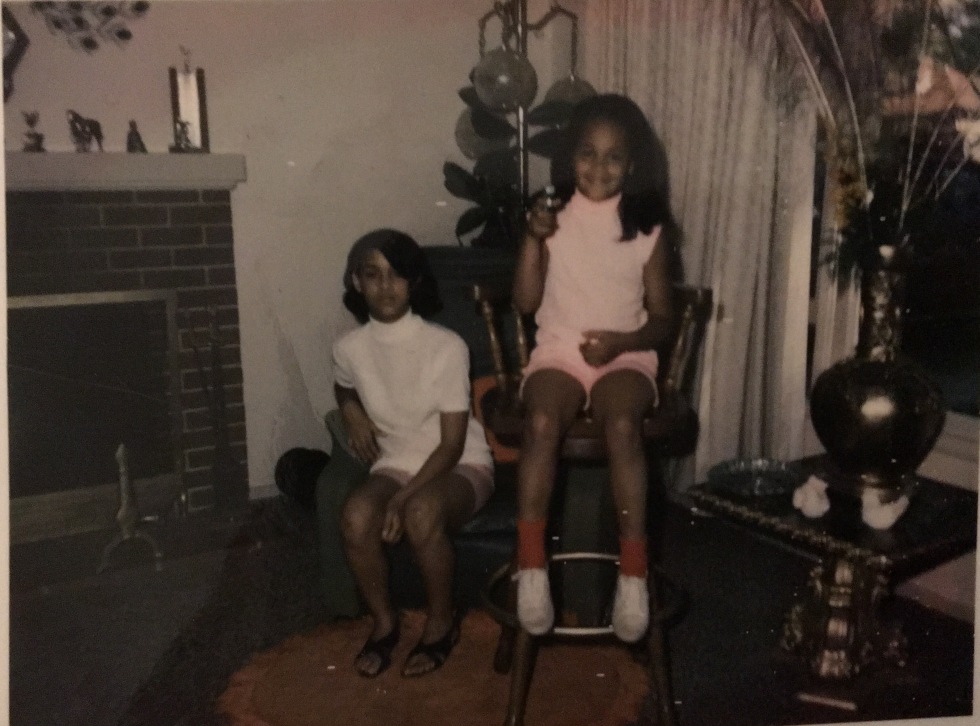
(Anastasia and me in 1969. Picture taken by our mom to send to our
dad who was fighting in Vietnam)

AUG 3, 2017 — It has been 168 days since my sister Anastasia was forcibly abducted into an unethical questionably legal guardianship by Inova Fairfax Hospital, and their designated guardians; 168 days since she has been outside and seen the sky or felt the sun on her face because she is forbidden to go outside.

I saw Anastasia today. She is still looking a little pale, is still under weight, and she has not opened her eyes since Friday. (On Friday I was horrified to see her left eye had a bunch of goo in it and the right eye was red). She tried to open them through the visit but was unable to get them open more than 1/4" before she had to close them again. Her pupils were rolled up. When she was able to keep her pupils level I could see her eyes were extremely red. I would bet $50 she has pink eye or a similar eye infection. It appeared the facility knew nothing of this even though it was stated she had not opened her eyes for them the last couple of days.

I have been allowed to give her a kiss and hug at the beginning and end of each one of the 3 hour visits. You can see on her face that she needs this and today she got the sweetest smile on her face after I gave her the kiss and hug. I was told by the facility that this could all go away if Labowitz gets another call from APS or if I complain about injuries. I won't comment on that right now.

I have had several nightmares about my sister in the past week. I still am not sleeping well. I don't believe she is either, she had dark circles under her eyes that almost looked like black eyes.

I miss not having my sister at home. Everything is off in every area. Anastasia should be home sleeping in her own bed.

Full Article & Source:
The Abduction of Anastasia Adams

Woman pleads guilty to bilking elderly Chicago man out of $4.5 million

CHICAGO (AP) - A woman has pleaded guilty to federal charges she bilked an elderly suburban Chicago man out of about $4.5 million over six years.

Corrine Dziesiuta entered her guilty plea Thursday to three counts of fraud.

The 39-year-old Dziesiuta was accused of persuading the 87-year-old Palatine man to wire funds from his U.S. bank account to banks in Nicaragua and Costa Rica. She told him he'd won millions of dollars in prize money but needed to pay insurance, taxes, and fees.

The FBI recorded 27 telephone calls between the victim and Dziesiuta in 2016. She was arrested after making arrangements to fly him to New York so he could deliver a check for more than $3.7 million.

Dziesiuta faces up to 6½ years in prison when sentenced in October.

Full Article & Source:
Woman pleads guilty to bilking elderly Chicago man out of $4.5 million

Sunday, August 6, 2017

A Green Bench for Willie

Jane Barr, Heather Riley & Willie Berchau
Publisher’s Note: The story of Willie Berchau and his ordeal as a ward of a professional guardian is sad, complicated and just one example of how the elderly can be abused. Thank goodness for the people who fought to help him. This is an updated version of the printed story.

A green bench, reminiscent of those that lined the streets of St. Petersburg for 50 years in the 20th century, was dedicated to “Willie” Berchau at the Fountains in S. Pasadena in early July.

It was a synergistic event whose participants included a volunteer for a program that advocates for the elderly, a former mayor with a passion for green benches, a local wood craftsman, a reverend, and a number of caring friends who loved Willie.

The story began in 2011 when Jane Barr, a volunteer Florida Long Term Care Ombudsman was assigned to Willie,97 at the time, after he became a court-appointed ward of a professional guardian. Jane visited him at the Fountains where he lived and was puzzled.

“I can’t figure out why this man at 97 years old even had a guardian because he does everything for himself, he knows everything, he speaks four languages,” she recalls.

Willie was a Lutheran so Jane introduced him to her friends Heather and Jimmie Riley so they could all go to church together. Willie and Jimmie both had railroad careers and the they all hit if off. They and other acquain- tances visited Willie often and even hosted a 99th birthday party for him at their home in 2013.

Later that year his guardian had him placed in an Alzheimer facility despite evidence that it wasn’t warranted.

Jane, Heather and Jimmie were horrified. Willie’s pastor recalls visiting and said it was pathetic to see him there. They wrote countless unanswered letters to the judge and even the governor, then finally enlisted the help of State Senator Jeff Brandes who heard Willie’s story, visited him immediately and got a lawyer to help.

They also told their story to ABC Action News and after a piece aired about his plight, he was moved to a less restrictive area and after six months in the facility he was allowed to move back to the Fountains.

Meanwhile Fountains’ resident and former S. Pasadena Mayor Dick Holmes, had been working on a book about green benches and read a news article about a local craftsman Flash Williamson who was making them. Holmes called, they talked, became friends and Holmes started buying the iconic benches for the Fountains complex.

Williamson, who owns Green Benches & More in Clearwater, started building benches in 1983 at the request of a client who had one of the originals from the city. The customer wanted some made for his mobile home community in Dunedin and brought the bench to Clearwater. Williamson made a template, built the benches out of pressure treated pine, and that was that… or so he thought.

Friends of Willie dedicated bench
“In 1987 he called me, and I recognized his voice immediately,” said Williamson. “He said, ‘Remember those benches you built for me?’ I said, ‘Yes,’ thinking there was something wrong with them. He said, ‘Well I need five more.’”

He built the benches and decided during the economic slowdown of 2008/9 to experiment to find other more resilient materials and settled on recycled plastic. He put one in front of his store where it gets hit with direct sunlight and it didn’t need maintenance, it didn’t even accumulate dirt, and he was reducing waste by recycling. “It was fantastic, so I thought why not emphasize the “green” in the green bench.”

This green bench, crafted by Flash Williamson of Green Bench & More in Clearwater, was purchased by Jane, Heather, Jimmie and Willie’s family. Friends gathered and dedicated it to former resident Willie Berchau in early July.

Fast forward to 2017 and Holmes is having plaques made for the benches to commemorate the 100th anniversary of their introduction to the city in 1917 –Jane, Heather, Jimmie and Willie’s family bought a bench and arranged to have it dedicated to Willie–and that is how a group of previously unassociated people ended up toasting to Willie and his bench by the pond in front of the Fountains. Willie passed away at 101 in 2015.

Full Article & Source:
A Green Bench for Willie

Jailhouse call from suspect accused of exploiting the elderly leads judge to delay granting bond


CLEARWATER, Fla. - Professional guardian Fernando Gutierrez was charged last month with financially exploiting seniors through power of attorney or health care surrogate agreements.

He couldn't use the money from his business bank accounts to pay bond, because prosecutors thought that money may have come from victims.

The call for help Guitierrez made from jail made the judge suspicious as well.

Prosecutors allege professional guardian Fernando Gutierrez stole hundreds of thousands of dollars from vulnerable seniors he was supposed to protect.

Full Article & Source:
Jailhouse call from suspect accused of exploiting the elderly leads judge to delay granting bond

The 17 Worst Nursing Homes in PA

Nursing Home Compare, run by the federal government, is considered the best available source of quality-related information about nursing homes.

It uses a five-star rating system. Five star homes are considered the best, one star homes are considered the worst.

Click [the source link below] to see the midstate homes with one-star ratings as of late June or click here to read more about problems in Pa. nursing homes.

Source:
The 17 Worst Nursing Homes in the Midstate

Saturday, August 5, 2017

Caregiving Is Hard Enough. Isolation Can Make It Unbearable.

Marcy Sherman-Lewis is the primary caregiver for her husband, Gene Lewis, who has Alzheimer’s.

For years, Marcy Sherman-Lewis went to a beauty salon in St. Joseph, Mo., every few weeks for a haircut and highlights.

It had become something of an ordeal to prepare her husband, Gene Lewis, for this outing; he has Alzheimer’s disease, at 79, and helping him shower and dress, insert hearing aids and climb into the car was a very slow process.

But she could no longer leave him at home alone. And once at the salon, “he just sat, watched TV, slept — didn’t bother anybody,” said Ms. Sherman-Lewis, 62. Her stylist kindly trimmed his hair, too.

Then last month, the salon owner took Ms. Sherman-Lewis aside. “Marcy, he makes my other patrons awfully uncomfortable,” she said.

“I was dumbfounded,” Ms. Sherman-Lewis said. “It’s O.K. for other people’s little grandchildren to be running around sometimes. What am I supposed to do, keep him in a crate in the car?”

Like so many caregivers, she has discovered that along with the abandoned career, the hands-on tasks, the medical scheduling, the insurance tussles and the disrupted sleep, she faces another trial: social isolation.

“It’s hurtful,” she said. “You need friends more than ever.”

But where are they? Betsey Brairton, 48, cares for her mother, Sue, in rural Olean, N.Y. The elder Ms. Brairton, 79, suffers from spinal stenosis, arthritis and lingering damage from a stroke, so she has limited mobility. “We hardly go anywhere, and nobody comes here,” said her daughter. When she does leave for an hour or two, she’s afraid to put down her cellphone.

Though a couple of friends occasionally invite her out for dinner, “I can’t commit to anything, in case my mom is having a bad day,” Ms. Brairton said. She has begun to worry that when she does spend time with others, her narrowing life leaves her with nothing interesting to say.

Those who work with caregivers know this phenomenon well, especially when the cared-for person has dementia, a particularly arduous responsibility.

“Caregiving is done with a lot of love and affection, but there’s a lot of loss involved,” said Carey Wexler Sherman, a gerontologist at the University of Michigan Institute for Social Research. “People talk about friends disappearing, about even family members not wanting to be involved. It’s a lonely business.”

Sometimes, caregivers isolate themselves. Barbara Moscowitz, senior geriatric social worker at Massachusetts General Hospital, hears clients lament that with a loved one whose dementia-related behavior can be startling, venturing out in public creates more apprehension than pleasure.

“They say, ‘I’m exhausted trying to explain to people why she’s doing what she’s doing, why they shouldn’t be angry or afraid,’” Ms. Moscowitz said. “It’s just easier to stay home.”

Yet a habit of avoiding others — or watching them avoid you — collides with a growing body of research showing how damaging isolation and loneliness can be. They are associated with a host of ills, including heart disease and stroke. Among older people, isolation is linked to depression, even higher mortality. Lonely old people, Dutch researchers have found, are more apt to develop dementia.

We’ve long thought of these factors as dangers for the people being cared for. But they also imperil caregivers, who are often older adults as well.

Years of caring for his wife, now deceased, who had early onset Alzheimer’s, left Les Sperling, 65, so despondent that “I’d stay in my room in the dark and sleep all day,” he said. “I didn’t want to come out.”

Mr. Sperling, of Lake Worth, Fla., went into therapy and took antidepressants until he felt able to function again.

We know something about how to help caregivers feel less alone. Researchers have shown that even modest-sounding interventions can reduce their sense of isolation and improve their mental and physical health.

Mary Mittelman, director of the Alzheimer’s Disease and Related Dementias Family Support Program at NYU Langone Health, has been conducting such studies for years.

With federal and state grants, the program — involving several counseling sessions, followed by support groups and phone access to counselors as needed — has inspired others that have been adopted throughout New York and in several other states.

“The support is what leads to less stress, less depression, better health and delayed nursing-home admissions,” Dr. Mittelman said. Interestingly, her team has found that “instrumental support,” in which others actually help with tasks, has less impact than emotional support.

“Having someone outside who is paying attention and who cares is more important,” she said.

Other initiatives, like Savvy Caregiver and REACH, have demonstrated similar effectiveness. Because they are offered under various names in different states, Area Agencies on Aging can help besieged caregivers find free local programs. And since getting out of the house can be a struggle, program developers are also testing online versions.

Caregivers already gather in Facebook groups and on websites, but experts have mixed feelings about online chats and groups. “They provide anonymity, and that may permit more honesty,” said Dr. Wexler Sherman, the gerontologist. “Sometimes you need to vent at 2 a.m.”

”But we need skills,” she said. “Being a caregiver is a job.” Online, is the information passed along accurate and useful? Is there a trained, knowledgeable moderator?

“It’s important to have a leader to monitor and validate,” said Ms. Moscowitz, who leads several support groups for Mass General employees and for community members. Besides, “there’s nothing like a real person to hug you.”

On other fronts, we’re seeing more efforts to provide convivial social and cultural events for both people with dementia and their caregivers: Memory Cafes, museum programs, choruses. The Dementia Friendly America campaign aims to make whole communities — including police forces, churches, restaurants and hair salons — more knowledgeable and accommodating.

Individuals can also play a role. It’s too easy to let caregiving friends slip off our radar with a general call-if-you-need-anything.

“Don’t put the pressure on the caregiver to tell you what to do,” Ms. Moscowitz said. She suggests asking what would be helpful, making a list of specific tasks and parceling out assignments.

“Don’t invite me for lunch — you know I can’t go,” Ms. Sherman-Lewis said. “Just bring a pizza and a bottle of wine and come by.”

Though tangible help counts — and let’s acknowledge that an aging country can’t rely solely on families, friends and volunteers to provide everything dependent elders need, however well supported they are — so do regular texts, calls or visits. They help keep caregivers from feeling invisible and forgotten.

Counselors in the NYU program once had the friendly inspiration, since they kept caregivers’ information in their database, to send clients a card on their birthdays.

It sounds sweet, if trivial. But often, Dr. Mittelman said, “they’d call up, so grateful, and say, ‘You’re the only one who remembered.’”

Full Article & Source: 
Caregiving Is Hard Enough. Isolation Can Make It Unbearable.

The Case of Carl DeBrodie: The Investigation

Click to Watch Video
FULTON, Mo. - Carl DeBrodie's body was found encased in concrete in a Fulton storage unit.

The questions of who poured the concrete over DeBrodie's body and stashed him out of sight has been the target of an intense investigation over the last 11 weeks.

ABC 17's Jordana Marie has been digging through hundreds of court documents, looking into who was responsible for keeping him safe. She's found a court custody battle, a list of people responsible for his daily care and at least one serious potential violation of state law.

ABC 17 spoke with a former guardian of DeBrodie about what she fears happened.

“I think somebody lost it on him and that’s how he died,” Mary Martin said.

Martin is a former guardian for DeBrodie. She took care of him most of his childhood until he was 21 years old.

Martin said DeBrodie is developmentally challenged and doesn’t speak well but can get his point across to those who know him.

She said he went to live at Second Chance homes, an Independent Supported Living facility in Fulton about nine years ago. That’s where she said things started to go south for DeBrodie.

“When he went into Second Chance, he was put on meds and it upped and upped and upped until he had the Thorazine shuffle," Martin said. "He was not Carl anymore. He walked like a Zombie”

On April 17, Fulton police received a missing person’s report from Second Chance homes. They quickly realized DeBrodie had been missing a lot longer than the Second Chance workers had reported.

“We conducted a foot search, a search with drones, a tracking dog from the Highway Patrol," Fulton police Lt. Bill Ladwig said. "It became pretty apparent by speaking to some other people that were in the area that Mr. DeBrodie was probably missing for longer than just 30 minutes on that morning.”

A week later, his body was found, encased in cement, in a storage facility.

“With the decomposition of the body, it was probably there for months,” Fulton police Chief Steve Meyers said.

So when did DeBrodie go missing? Who was responsible for making sure he was alive and healthy while living at Second Chance homes?

According to former Cole County Prosecutor Bill Tackett, everyone.

“It’s everyone who touches the oversight of him," Tackett said. "Everybody plays a part in what happens to any of these people but specifically him.”

ABC 17 News has been looking through hundreds of documents from various agencies, looking for who would be responsible for DeBrodie.

At the top of that list, DeBrodie's court-appointed legal guardian: Callaway County public administrator Karen Digh.

“So she would be one of the people in the network of people of players that were responsible for protecting Carl DeBrodie,” Tackett said.

Next on the list, the case manager responsible for monthly face-to-face visits with DeBrodie.

In May, ABC 17 News reported Callaway County Special Services, the agency that employed that case worker, determined that employee was not meeting monthly with DeBrodie despite filing reports stating otherwise.

That employee has been fired.

“There are criminal statutes for false reporting, filing a false report," Tackett said.  "There's forgery.  There’s a litany of prosecutorial remedies for a lot of what’s happened here.”

Right now, no one with CCSS has been charged, though it is possibly a part of the larger investigation.

We also know Rachel Rowden owns Second Chance Homes. Her name has not been mentioned in the investigation to this point.

Second Chance Homes was an Independent Supported Living facility, with only two or three residents at a time living there.

“All she had to do was drop in," Martin said. "I mean, she didn’t have that many clients.”

ABC 17’s Jordana Marie went to Rowden’s house to ask her the last time she saw DeBrodie, if she knew what happened and how she thought his body ended up encased in cement.

Her daughter said Rowden was out of the state and referred to the lawyers when asked about the investigation.

At the bottom of the responsibility totem pole are the people working in the home day in and day out.

Through court documents and police reports, ABC 17 News has determined Sherry Paulo was one of the employees at Second Chance from as far back at 2011 to as recently as 2016.

In a court document from 2014, Paulo is listed as a staff member and “qualified disability professional" at Second Chance Home in Fulton.

Fulton police records also put Paulo in the home in October 2016 when a resident allegedly threw punches at her and her husband, Anthony Flores.

Neighbors also told ABC 17 they saw Paulo at the house the night before DeBrodie was reported missing.

More than two months have passed since DeBrodie was reported missing and his body was found.

There have been no arrests, no named suspects and no timeline of when justice for DeBrodie will be served. The community wants answers.

“This is one that needs to be compartmentalized and worked through slowly, but surely and get to the bottom of what happened to Carl DeBrodie,” Tackett said.

As a former prosecutor, Tackett said the key to ensure justice is properly served for Carl is to find out what happened before he was reported missing.

“What happened before April 17th? We know what happened after April 17th," Tackett. "What went on before the date that this was called in? What you’re hearing is the chief of police talk about the decomposition of the body being months and if you do the math on it, it doesn’t work out.”

Tackett has not been involved in the investigation of this case. But, he did say if this case was presented to him, based on the facts we know so far, he’d likely take it to a grand jury before deciding who to ultimately prosecute, and for what crimes.

We know Callaway County has a standing grand jury, but it’s not known if this investigation has been presented to that grand jury.

Full Article & Source:
The Case of Carl DeBrodie: The Investigation

The Case of Carl DeBrodie: The Guardians

Part two of a three-part series

Click to Watch Video
FULTON, Mo. - Before 31-year-old Carl DeBrodie's body was found encased in concrete, he was part of a lifelong custody battle.

Some key players in Carl's life say the legal struggles could have been avoided if Carl hadn't gone into Second Chance, the group home where he was last seen.

ABC 17's Deborah Kendrick got her hands on court documents that uncover more about what went on behind the scenes, including a possible conflict of interest.

Early Years

In November 1985: Carl DeBrodie was born to Carolyn Summers. Carl lived with his mother, who has mental limitations, until Carl was about 12-years-old. Carl went into the care of Mary Martin, through the foster care system.

In September 1999: Cole County Circuit Court appointed Mary Martin to be Carl's legal guardian when he turned 14-years-old.

In November 2003: Carl turned 18 and he became his own legal guardian.

In November 2006: Martin cared for Carl until he was 21. It was nearly two years later in 2008, when Carl was declared a incapacitated and disabled adult from Callaway County Court. So Karen Digh, the public administrator was appointed his legal guardian.

Legal Battles

In 2009: Martin petitioned the Callaway County Court to be named as Carl's legal guardian. The court held hearings on April 2010, but she was denied. It was that same year, Christmas Eve at Martin's when Martin claims Carl was abused. An investigation was done and found no one to be responsible. It was noted in documents that Carl sometimes "harms himself."

By 2010: Carl was living at Second Chance. Carl's former guardian ad litem, Jana Oestreich, visited Carl that year and states that she saw "tremendous positive change." A guardian ad litem is court appointed to represent the best interests of a child, or incapacitated adult. In an appeal opinion by the Cole County judge, Oestreich said Carl was "happy, healthy, robust, cozy and comfortable." Oestreich testified that when she visited Martin's home, it was "very chaotic," and "there is a lot of traffic inside of Martin's home with different children, different family members."

In August 2011: Martin petitioned the Cole County Court to adopt Carl when he was 25. It was December of 2011, when Mary Beck, Carl's appointed guardian ad litem during the adoption, made a visit to Martin's home. Beck said Carl appeared to be comfortable and familiar with his residential home and had access to the entire house. Beck stated in her guardian ad litem report, "Carl got his own drinks, letting the dogs out and interacting with family members." Beck stated neighbors and friends who were present enjoyed Carl's company not because they were being paid.

It was in front of Beck that Carl asked his 'Dad', Mary Martin's husband, if he (Carl) could stay at his childhood home. "His father hugged him, but told him he would have to leave and assured him that he was doing everything in his power to ensure that Carl could be a part of the family more often."

May 2012: Six months after the guardian ad litem's report of Carl being calm and loving at the Martin's (home). Carl was observed having an extremely opposite reaction to the mention of the Martin's name.

During a visit in May, the report noted there was a continuous presence of Sherry Paulo, the assistant director of Second Chance homes and Vickie Cole, the house manager of Second Chance homes. It was noted during the visit Carl was very "distraught, crying, screaming and shaking his head "No" when Martin's name was brought up. It was concluded that both Paulo and Cole "exerted immense influence over Carl's response to the Martin's name at the idea of adoption."

It was also in May that the Cole County Court ruled to deny the adoption to Martin because: consent of the adult was needed; no credible evidence was presented to support a finding that Carl knew the legal significance of a decision to consent to the adoption; Carl's legal guardian, Karen Digh, declined to give consent and declined to seek authority for consent.

In 2014: Martin appealed the courts decisions but she was denied. In 2014, that was the last time Martin saw Carl.

Testimonies

Sherry Paulo: a staff member and "qualified disability professional." Paulo testified that Martin and her husband were not denied visitation but they needed to be supervised.

Karen Digh: Carl's legal guardian. Digh stated when Carl returned from visits with Mary he exhibited strange or distressful behaviors.

Mary Martin: Carl's former guardian. Martin stated Carl "needed an advocate and needed somebody to watch out for him the rest of his life." Martin stated she did not want Carl living at Second Chance and believed he was being overmedicated.

Mary Beck: Carl's guardian ad litem. Beck stated that Carl really valued the role of his biological mother and Mary Martin in his life. Beck recommended that the court grant the adoption.

During a visit to Second Chance Beck asked Carl if he wanted to continue living at Second Chance or if he wanted to live with the Martins. Carl pointed to the ground and said "here." Beck asked Carl the same question when he was visiting at the Martin's Carl said, "Here. Home."

Conflict of Interest
 
The question on the minds of several people in the community, "Why wouldn't someone who has cared for him for years not be allowed to adopt him."

"Why would someone resist in giving guardianship or adoption to a family that had cared for him for 13 years and were in love with him, who had the financial means to take care of him," Beck said.

Beck states a financial tie and conflict of interest existed with the Public Administrators office and Second Chance.

"This is my guardian ad litem report to the court so it's not confidential information. There was a financial tie between Karen's office and Second Chance homes," Beck said.

In the report it states, "The legal guardian's deputy was working at Second Chance while working as a deputy to the Callaway County public administrator, which is a noteworthy conflict of interest. The deputy was very much in favor of keeping (Carl) DeBrodie institutionalized."

"It's a real conflict of interest to have a facility for incapacitated adults to have a financial tie to a main worker in the public guardian's office," Beck said.

Second Chance Finances


According to a financial document that ABC 17 News obtained from the Missouri Department of Mental Health, Second Chance was bringing in an average of $592,000 each year from 2009 to 2017. This brought the total to more than $5 million over the nine year span.

Investigation

ABC 17 News checks in daily on the investigation. So far, no arrests have been made in the disappearance and death of Carl DeBrodie.

Full Article & Source:
The Case of Carl DeBrodie: The Guardians