Tuesday, March 5, 2024

Arkansas Governor's Council on Developmental Disabilities Announces March as Developmental Disabilities Awareness Month

Special to the Banner-News

The Arkansas Governor's Council on Developmental Disabilities (GCDD) has announced March as Developmental Disabilities Awareness Month. In honor of 2024's theme, "A World of Opportunities," GCDD encourages Arkansans to learn more and share resources about how individuals with and without developmental disabilities (DD) can unite to form stronger communities across the state.

Each year, GCDD celebrates March as National Developmental Disabilities Awareness Month alongside its national association, the National Association of Councils on Developmental Disabilities (NACDD). Last year's theme was "Beyond the Conversation" challenging people across the nation to think about more than just awareness, but how to create meaningful inclusivity within their communities. "A World of Opportunities" seeks to continue this conversation in Arkansas and beyond.

"Developmental Disabilities Awareness Month acknowledges the importance of establishing inclusion and appreciating the contributions of individuals with developmental disabilities," said Jonathan Taylor, executive director of GCDD. "It's something in which all employers can take part. By communicating the importance of inclusivity in the workplace, people can come together to create an integrative, supportive community for all Arkansans."

Throughout the month, the Council staff will hold weekly virtual office hours each Friday via Zoom to share resources, insights, training and more. The full schedule is below:

Friday, March 1, 12:30-2 p.m. – Attendees will learn how to join GCDD or another board or council, get tips on the Arkansas Boards & Commissions application process and participate in a discussion on what it takes to serve.

Friday, March 8, 1-2 p.m. – Staff will extend an invitation to attendees for the GCDD quarterly meeting on March 14 and share information on what to expect in a board or council meeting.

Friday, March 15, 1-2 p.m. – Attendees will be introduced to person-centered planning, including Charting the LifeCourse tools to increase self-determination through supported decision-making.

Friday, March 22, 1-2 p.m. – Staff will discuss situational awareness pertaining to the Great North American Eclipse on April 8.

To learn more about GCDD or National Developmental Disabilities Awareness Month, visit GCDD.Arkansas.gov.

About The Governor's Council on Developmental Disabilities

The Governor's Council on Developmental Disabilities is a member of the National Association of Councils on Developmental Disabilities (NACDD). The Council's purpose is to connect people with developmental disabilities to the resources and programs they need to be independent, be productive and be integrated and included in all parts of community life. GCDD, along with network partners, works to implement the Developmental Disabilities Assistance and Bill of Rights Act in Arkansas to assure that individuals with developmental disabilities and their families participate in the design of community services that allow increased opportunities to live and work locally. GCDD is funded by a grant from the U.S. Department of Health and Human Services Administration on Community Living (ACL) through the Administration on Disability's Office of Intellectual and Developmental Disabilities (OIDD). Learn more at GCDD.Arkansas.gov.

Full Article & Source:
Arkansas Governor's Council on Developmental Disabilities Announces March as Developmental Disabilities Awareness Month

Monday, March 4, 2024

Lifetime's 'The Bad Guardian' Stars Melissa Joan Hart in a Tale of Guardianship Gone Wrong

by  Hadeel Hashem

Lifetime's 'The Bad Guardian' Stars Melissa Joan Hart in a Tale of Guardianship Gone Wrong

Lifetime's latest movie, The Bad Guardian, delves into the controversial issue of court-appointed guardianships, inspired by real-life cases like those of Wendy Williams and Britney Spears. Starring Melissa Joan Hart and La La Anthony, the film offers a dramatized look into the potential pitfalls of the guardianship system. As the debate around the guardianship of celebrities continues, this movie aims to shed light on a system that affects over 2 million Americans.

Exploring the Dark Side of Guardianship

In The Bad Guardian, viewers are introduced to Leigh (Melissa Joan Hart), who battles a corrupt guardian appointed to her father after an accident. The guardian, played by La La Anthony, quickly turns from a seeming ally to a manipulative force, exploiting her legal powers for personal gain. This narrative echoes countless stories of individuals trapped in abusive guardianships, sparking a conversation on the need for reform.

A System in Need of Change

The movie is timely, aligning with growing public scrutiny over guardianship laws following high-profile cases. Diane Dimond's insights, emphasizing the lack of federal regulation and the financial exploitation inherent in many guardianships, highlight a system ripe for abuse. As the film portrays, the consequences of a flawed system can be devastating, not just financially but also in terms of personal freedom and health.

Inspiration from Real-Life Events

The narrative of The Bad Guardian is particularly resonant given recent discussions around Wendy Williams' and Britney Spears' conservatorships. With Williams' battle against her own guardianship making headlines and the release of the documentary Where is Wendy Williams?, the issue has never been more relevant. Lifetime's decision to tackle this theme through film is a bold move that brings further attention to a system in desperate need of scrutiny and reform.The portrayal of guardianship abuse in The Bad Guardian promises to ignite discussions on the need for oversight and protection for those under guardianship. By weaving a narrative around the experiences of those who have suffered at the hands of a corrupt system, Lifetime hopes to contribute to a broader understanding and eventual reform of guardianship laws. As the film airs later this year, it stands as a poignant reminder of the real-life implications of legal oversight and the human cost of a system gone wrong.

Full Article & Source:
Lifetime's 'The Bad Guardian' Stars Melissa Joan Hart in a Tale of Guardianship Gone Wrong

Elderly Man Rendered Homeless by Government Abuse: The Dean Sallas Story

Dean Sallas's transition from a real estate professional to a homeless senior highlights the need for reform in legal guardianship and adult protective services.

by Dil Bar Irshad

Elderly Man Rendered Homeless by Government Abuse: The Dean Sallas Story

In a shocking revelation, 86-year-old Dean Sallas finds himself without a home, falling victim to what appears to be a systemic failure within his own government. This incident has thrown a spotlight on the darker sides of legal guardianship and conservatorship, where the intended protection turns into a nightmare. Dean's journey from a real estate professional to a homeless senior citizen underscores the urgent need for oversight and reform in government-run adult protective services and legal guardianship systems.

The Rise and Fall of Dean Sallas

Dean Sallas's story is not one of substance abuse or mental illness, common narratives often associated with homelessness. Instead, his descent into homelessness was precipitated by the very institutions meant to safeguard citizens like him. After building a comfortable life through his career in real estate, Sallas found himself embroiled in a legal battle that stripped him of his rights, property, and ultimately, his home. This battle began with the Cook County Public Guardian's office's intervention, spearheaded by Judge Shauna Boliker's controversial decisions, which effectively removed Sallas's wife from their home and placed her under guardianship.

Systemic Failure and the Roadblocks to Justice

The involvement of Adult Protective Services (APS), through Samantha Richardson, initially promised a glimmer of hope for Sallas. However, this hope was quickly dashed when Richardson's investigation was abruptly halted upon discovering the involvement of another government agency. The directive for APS to stand down in the face of intra-governmental conflict highlights a disturbing lack of accountability and transparency within the system. Despite the glaring evidence of abuse and exploitation facilitated by legal and governmental oversight, Sallas found himself isolated and without recourse, his life upended by the very structures meant to protect him.

Implications for Elder Rights and Legal Guardianship Reform

This case raises critical questions about the efficacy and ethics of current legal guardianship and conservatorship practices, especially as they pertain to the elderly. The story of Dean Sallas serves as a cautionary tale, emphasizing the need for comprehensive legal and procedural reforms to prevent such egregious abuses of power. As society grapples with the complexities of aging and the protection of vulnerable populations, the Sallas case underlines the importance of creating robust systems that prioritize the rights and dignity of individuals over bureaucratic expediency. Understanding the nuances of conservatorship and its impact on the lives of those it's meant to protect is a crucial step towards ensuring that tragic outcomes like that of Dean Sallas become a thing of the past.

The ordeal endured by Dean Sallas is a stark reminder of the vulnerabilities faced by the elderly, especially when placed under the care of governmental and legal systems designed to protect them. It calls for a societal reflection on the values and mechanisms in place to safeguard the most vulnerable among us, urging a move towards reform that ensures protection does not become persecution.

Full Article & Source:
Elderly Man Rendered Homeless by Government Abuse: The Dean Sallas Story

Sunday, March 3, 2024

Parents of Keaton Peck continue to fight for medical custody of their son


By Isabella Quintanilla

THORNTON, Texas (KWTX) - Back in December of 2022, 5-year-old Keaton Peck was diagnosed with leukemia after falling seriously ill during a trip to Minnesota.

Children’s Minnesota in Minneapolis gave him an emergency round of chemotherapy and afterwards no cancer was detected, but doctors recommended continuing treatment for another two to five years.

However, Keaton’s parents, McKena Peck and Hunter Verm, decided they didn’t want to keep putting their son through chemotherapy.

Children’s Minnesota reported them to child protective services, which resulted in the parents being stripped of medical custody.

Now, just over a year later, they could be taking their case to the Minnesota Supreme Court to continue their fight to regain the rights to their child’s medical decisions.

Lucas Dawson, their defense attorney, explained that now “mom and dad are allowed to express their opinion, but they’re really not allowed to disagree with them”.

Immediately after the Minnesota judge decided that Keaton’s treatment plan should be left up to the doctors, he started chemotherapy again against his parents’ wishes.

“After that first dose of the drug I didn’t have a good feeling about, he lost his ability to walk,” McKena shared, “physical therapy had to come in and have the doctors lower the dose because the oncologists we were going to trial with refused to lower it”.

Peck and Verm appealed the decision immediately, but just found out Monday that their appeal was denied.

So while they were able to transfer Keaton to a hospital closer to home, they still don’t have any say over his treatment.

“They now have custody of him again, but they’re subject to the conditions that have been set, and the court has set the condition that they have to comply with all medical requirements,” Dawson explained.

They now have 11 days to petition to the supreme court of Minnesota and raise the $3,500 it would cost to do so.

Even then the court could still deny their case, but McKena says she’s hopeful they will consider it.

“What makes my son’s case rare to the supreme court is every other kid with cancer that got sent to the supreme court in a case, they had cancer. My son hasn’t had cancer in over a year.”

She also shared that her and Keaton’s dad just want to be able to decide what’s best for their son, and for him to come out of this without any serious side effects.

Full Article & Source:
Parents of Keaton Peck continue to fight for medical custody of their son

Jacksonville attorney, former US Senate candidate disbarred for practicing law while suspended

By Travis Gibson

Reginald Luster campaign picture (Campaign website)

JACKSONVILLE, Fla.
– Reginald Luster, a Jacksonville lawyer who tried to run for a U.S. Senate nomination as a Democrat in 2016, has been disbarred following a court order earlier this month.

According to the Florida Bar, it got several complaints that Luster was practicing law while he was suspended.

The Florida Bar said he was contacting insurance companies to settle claims for “clients” and bank records also indicated he was receiving settlement money while suspended.

According to the Florida Bar, disbarred lawyers cannot re-apply for admission for five years and are required to go through an extensive process that includes a background check and retaking the Bar exam.

Full Article & Source:
Jacksonville attorney, former US Senate candidate disbarred for practicing law while suspended

His Grandma’s Life Was in Danger, So This Tiny Pup Scaled a Fence and Found Help!

Though just 12 inches tall, he wasn’t about to let anything keep him from getting her the help she needed

By Bill Holton 

Carole (center) holding hero Shadow, with Charmaine (right) holding Maybelline and Susan (left)

Charmaine Eby had just moved into a new apartment in Keremeos, British Columbia, and her 80-year-old mom, Carole, planned to get a place in the same complex. Up until then, she was living with Charmaine and her fur-babies — two Maltese Bichons nameed Shadow and Maybelline. Carole loved her four-legged granddogs and they adored her, but the family never could have imagined it would become a heroic story of a dog who saves his owner.

“They are very protective of Mom,” Charmaine Eby tells Woman’s World. “They follow her everywhere — they even sit outside the bathroom door when she’s in there.” 

Charmaine was comforted knowing the pups were there to watch over her mom whenever she had to step out and leave Carole home alone. This was especially true one recent summer afternoon when tragedy struck.

Maybelline stealing Carole’s chair

Heroes come in all shapes and sizes

“Going to run some errands,” Charmaine told her mom. Then giving her pups loving pets, she told them, “You guys take good care of your grandmom.”

Not long after Charmaine left, Carole went into the kitchen to cook some chicken. As always, Shadow and Maybelline were right on her heels hoping for a snack.

After getting the chicken started on the stove, Carole headed to the bathroom, but in the hallway, she swooned dizzily and fell hard against the floor. Carole has diabetes and unbeknownst to her, had suffered a sudden spike in her sugar levels.

“I can’t get up,” she told the dogs, who as always, had scampered after her. Her phone was in the kitchen and Charmaine would be gone for hours. “I didn’t know what to do,” Carole says.  

“Somebody, help me!” Carole began shouting. As she lay frightened on the floor, Maybelline curled up beside her with a front paw draped over the elderly woman’s shoulder. Carole heard Shadow scratching and whining at the back door and felt for the little guy, thinking there was no way he could get out.

But as luck would have it, the door had not closed completely when, earlier, Charmaine brought the dogs inside. The back door shook and rattled, until eventually, Shadow nosed and pawed it open. The grassy patch of yard was bordered by a two-foot fence. Shadow is less than 12 inches tall and a little plump, but he wasn’t about to let that stop him. His grandmom needed help and he was going to make sure she got it. Somehow, he hoisted himself over the fence.

Shadow by the door

A miraculous encounter

Eight houses and a wide courtyard away, dog sitter Sharon Wade was working on her computer when the two dogs she was dog sitting started barking at the back door. “What’s going on?” she wondered, and as she neared the door, she heard a loud yelping. Then, she spotted the pup standing at the bottom step. “Shadow?”

Two weeks earlier, Sharon had kept Shadow and Maybelline while Charmaine and her mom were out. It was the one and only time they’d met, and she had entered and left their house through the front door, so Shadow could not have watched her route back home. Now, as she gazed at Shadow, the look in his eyes told Sharon, I need help. Something’s terribly wrong.

The pavement was scorching, so Sharon lifted Shadow into her arms and carried the panting pup toward home. Nearing the house, she noticed the open back door, and she heard Carole calling for help. Rushing inside, Sharon turned off the stove and called 911, then alerted Charmaine. “I’ll stay with your mom,” Sharon promised.

“I don’t know what got into Shadow and how he knew to find you — we’ve never been near your place,” Charmaine marveled when she arrived home, just before paramedics got there.

“Dogs have a very keen sense of smell, and a strong smell memory. Shadow must have caught my scent and remembered me, then followed his nose to my house,” Sharon said. “It’s the only possible explanation — he ran past eight other houses on hot pavement to find me.”

Shadow ready for reward belly rubs

Full Article & Source:
His Grandma’s Life Was in Danger, So This Tiny Pup Scaled a Fence and Found Help!

Saturday, March 2, 2024

‘Bad Guardian’: Lifetime to Tackle Guardianship Debate With Melissa Joan Hart, La La Anthony

THR exclusively reveals that the pair will star in a film inspired by real-life guardianship controversies for the network that just aired 'Where is Wendy Williams?'

By James Hibberd

Melissa Joan Hart, La La Anthony Elyse Jankowski/Getty Images; Matt Winkelmeyer/Getty Images

Lifetime is wading into the guardianship debate by greenlighting a fictional movie with the working title The Bad Guardian.

Following the headlines and debate surrounding the guardianships of Wendy Williams and Britney Spears, the network has ordered a movie about a court-appointed guardianship gone wrong.

The Bad Guardian will star Melissa Joan Hart (Sabrina the Teenage Witch) and La La Anthony (La La’s Full Court Life) and “is inspired by countless true stories of individuals who have been put in the care of a guardian by the courts and raises the question — are these caretakers helpful or harmful?” 

The official (and a bit spoiler-filled) description: The Bad Guardian is “about one woman’s fight to save her father from the clutches of a corrupt and greedy court-appointed guardian. When Leigh’s (Melissa Joan Hart) father Jason (Eric Pierpoint) suffers a fall while she’s out of town, the courts assign Jason a guardian, Janet (La La Anthony). At first Janet seems to be a big help to Jason, but things quickly take a terrible turn. Janet is legally in charge of every aspect of Jason’s life, and doesn’t waste any time placing him in a nursing home, auctioning off his house, all worldly possessions, and using the excuse that the proceeds are needed for his care. As Leigh continues to challenge Janet’s efforts, the guardian ultimately uses her power to prevent the family from visiting. In Janet’s care, Jason’s health deteriorates, to the point that he needs a life saving treatment which Janet decides is too expensive. As the whistleblowers around Jason meet untimely ends, Leigh finds the strength to take down the guardian and the corrupt system that supports her.”  

Lifetime also cited Diane Dimond, journalist and author We’re Here to Help – When Guardianship Goes Wrong, to point out that more than 2 million Americans are currently living under a guardian or conservatorship and its estimated that state courts confiscate over $50 billion from their wards each year and that 98 percent of people placed into state care, never get out. “There are zero federal laws to regulate the guardianship/conservatorship system,” she said.

Dimond recently spoke to The Hollywood Reporter to explain the process of court-ordered guardianships following Lifetime’s release of the four-part documentary Where is Wendy Williams?, which centered around the former talk show host amid her health and alcoholism struggles. Two days before the series released, Williams’ team shared that in 2023, she was diagnosed with primary progressive aphasia and frontotemporal dementia (FTD). 

The eOne and Creature Films project filmed with Williams over roughly seven months, beginning after the June 2022 cancellation of her hit daytime talk show. They stopped filming Williams in April 2023, when she checked into an undisclosed facility where she supposedly remains today, largely cut off from the public and her family. Williams was placed under a court-appointed guardianship in May 2022, which the family cited in the documentary as a turning point to their access to her. The producers recently told THR, “If we had known that Wendy had dementia going into it, no one would’ve rolled a camera.”

The doc pulled in strong ratings for Lifetime, bringing in more viewers than the network’s recent docuseries The Prison Confessions of Gypsy Rose Blanchard.

The Bad Guardian will air later this year and is written by Ashley Gable and directed by Claudia Myers and produced by Allegheny Image Factory with Jeffrey Tinnell and Robert Tinnell serving as producers; Elizabeth Stephen as executive producer.

Full Article & Source:
‘Bad Guardian’: Lifetime to Tackle Guardianship Debate With Melissa Joan Hart, La La Anthony

Panel recommends censure, unpaid suspension for PG judge who refused training

By Madeleine O'Neill

A judicial oversight panel has voted unanimously that Judge April T. Ademiluyi committed sanctionable conduct, according to a 60-page report issued last week. (Courtesy of the Ademiluyi campaign.)
Judge April T. Ademiluyi

A judicial discipline panel has recommended a censure and at least two months of unpaid suspension against a Prince George’s County circuit judge accused of repeatedly refusing training, showing bias toward criminal defendants and antagonizing staff and colleagues.

The Commission on Judicial Disabilities agreed unanimously that the judge, April T. Ademiluyi, committed sanctionable conduct, according to a 60-page report issued last week. The commission’s findings and recommended sanctions have been forwarded to the Maryland Supreme Court for expedited consideration.

The recommendation includes a censure and six months’ suspension without pay, though four months of that time would be suspended if Ademiuyi successfully completes a one-year probationary period.

During the probation, Ademiluyi would be required to cooperate with a mentor judge and a probation monitor, both of whom would be required to provide monthly updates to the commission. Ademiluyi would also be required to submit to a health care evaluation “for a complete emotional, behavioral and prosocial assessment,” the commission recommended.

The findings arrived after a lengthy and emotional hearing in December, where seven current or former judges testified at the request of the commission’s investigative counsel, according to the report. Ademiluyi also testified on her own behalf, though the commission found that her assertions were contradicted by documentary evidence at times.

The allegations against Ademiluyi are wide-ranging and center on her refusal to participate in new judge’s training when she joined the Prince George’s County Circuit Court in late 2020. Ademiluyi had no experience handling criminal or civil jury trials and was supposed to train with other judges to learn how to do the job before taking on cases of her own.

Instead, investigative counsel charged, Ademiluyi failed to show up at the courthouse when assigned, was often late to proceedings, and pushed back against her training requirements, including challenging supervisory judges’ authority to oversee her.

The commission found that Ademiluyi refused to cooperate with her training judges, which extended her training far beyond the intended time frame. The commission issued a Letter of Cautionary Advice to January 2022 warning Ademiluyi to comply with “reasonable directives” and conduct the dockets she was assigned.

Ademiluyi continued to challenge the training requirements, emailing a training judge in March 2022, “I don’t need any more judges observing and giving me feedback, while I preside over a jury trial.”

Later that month, Ademiluyi emailed the training judge and the county’s administrative judge, “I am not interested in your advice throughout the course of the proceeding or anytime concerning any case.”

The commission also found that Ademiluyi made improper statements when she ran for a seat on the bench. Ademiluyi campaigned to become a judge on a platform that she was a sexual assault survivor who would give a voice to women and the Me Too movement.

“Women need more than a movement,” Ademiluyi said in one campaign ad. “People need more than protests in the streets. We need power, a judge’s power.”

The commission found that Ademiluyi’s campaign comments suggested Ademiluyi would not be impartial as a judge

“These statements … could reasonably be perceived as promising to help victims of, and those alleging that they are victims of, sexual violence, that (Ademiluyi) may not be impartial in sexual violence cases, and that she would use her power as a judge to ‘make it work for all of us,’ i.e. make particular results happen for alleged victims of sexual violence,” the commission wrote.

The allegations of bias followed Ademiluyi once she took the bench. In her first criminal jury trial, involving a defendant accused of rape, Ademiluyi undertook her own investigation into technology introduced at the case — despite receiving no request to do so from the defense or prosecution.

Ademiluyi then took the unusual step of putting the trial on hold in order to hold an evidentiary hearing, again without any request from the parties. She decided to revisit an earlier ruling on the evidence while her training judge, who was sitting in on the trial to offer guidance, was absent from the courtroom, according to the commission’s report.

“Taken together, these decisions are those of a judge bound to reach the result she wanted, not merely one legal ruling, whether correct or not,” the commission wrote.

The commission also found that Ademiluyi demeaned members of her staff and other jurists. Two former court staffers who worked for Ademiluyi both testified in December that they sought medical attention for stress and anxiety as a result of working with the judge, according to the report.

Ademiluyi also unilaterally cancelled meetings with the county’s administrative judge, emailing ““I don’t look forward to meeting you or communicating with you at anytime …” and, “You are extremely untrustworthy and disrespectful.”

In an exchange with a training judge who warned that criminal jury selection could be “difficult and complex,” Ademiluyi responded, “It’s not that complicated but everyone makes mistakes. Is there an issue you struggle with that I should pay close attention to?”

Investigative counsel recommended that Ademiluyi receive a censure from the Maryland Supreme Court and a three-month suspension.

The commission concluded that Ademiluyi’s conduct “raised a substantial question” about her fitness for office and recommended the six-month unpaid suspension with four months suspended.

Ademiluyi’s lawyer in the disciplinary case, Craig Brodsky, declined to comment Monday.

In court papers, Ademiluyi has denied that her behavior was sanctionable and portrayed herself as a whistleblower who faced retaliation after filing complaints against fellow judges. She argued that she faced pushback because she ran as an outsider and unseated a popular incumbent when she won a seat on the bench.

She is also facing a second set of disciplinary charges that accuse her of  “repeated, non-consensual harassing communications of a personal nature with a judicial colleague.”

Those charges allege that Ademiluyi repeatedly contacted a fellow judge, identified only as “Individual 1,” on the judge’s personal cellphone. The judge had previously emailed Ademiluyi to address her lateness to a Zoom hearing, according to the charges.

Ademiluyi allegedly texted the judge that there was “only one way for us to let go of all this kind of tension. Not that quickly though but we will eventually get there. You can call me anytime. I’m always up late. Let’s have fun? Do you want to hang out?”

The judge she was texting responded “Please do not contact me any further on my cellphone. To be VERY clear, I have no interest in a personal relationship,” according to the charging document.

In Ademiulyi’s written response, she claimed that the unnamed judge referenced in the charges became hostile toward her after she rejected his sexual advances.

Ademiluyi has also filed a lawsuit against three fellow judges in federal court. None of the defendants named in the lawsuit have responded.

Full Article & Source:
Panel recommends censure, unpaid suspension for PG judge who refused training

Friday, March 1, 2024

Wendy Williams' financial guardianship raises 'red flags' after adviser attempted to block documentary: expert

Talk show host Wendy Williams was placed under a court order in 2022 after a Wells Fargo petition claimed she was a 'victim of undue influence and financial exploitation'

By Tracy Wright

Wendy Williams' return to television last weekend raised concerns among fans about their favorite television talk show host.

Last week, a representative with Williams' care team issued a statement on Wendy's behalf to "correct inaccurate and hurtful rumors about her health," saying the former talk show host was diagnosed with "primary progressive aphasia and frontotemporal dementia (FTD)" in 2023.

While Williams has largely remained out of the spotlight the last few years, a new Lifetime documentary revealed she still has no direct access to her money after a legal guardian was appointed over her finances in 2022. Prior to the release of the documentary, a legal guardian attempted to block the project from airing, a move denied in court.

Benazeer "Benny" Roshan, partner at Greenberg Glusker and chair of the Trust and Probate Litigation Practice Group, questioned why Williams' guardian would attempt to prohibit income for the unemployed star.


"From the press accounts, Wendy’s guardianship situation sounds a little like the Netflix hit, ‘I Care a Lot.’ Media accounts appear to suggest red flags that should not be ignored if we are to learn anything from the Britney Spears conservatorship saga," Roshan said.

"A question that’s top of mind for me is, why would Williams’ guardian purportedly try to block the documentary from airing? Without disclosing the exact underlying reason, the public is left with many questions. 

"Why block a project that will inure to Wendy’s financial benefit? After all, aren’t guardians charged with safeguarding (not to mention, maximizing) their ward’s financial well-being? Time will tell whether a ‘Free Wendy’ movement is ripe here."

A Lifetime representative confirmed to Fox News Digital last week that the network was still moving forward with the release of the two-part docuseries.

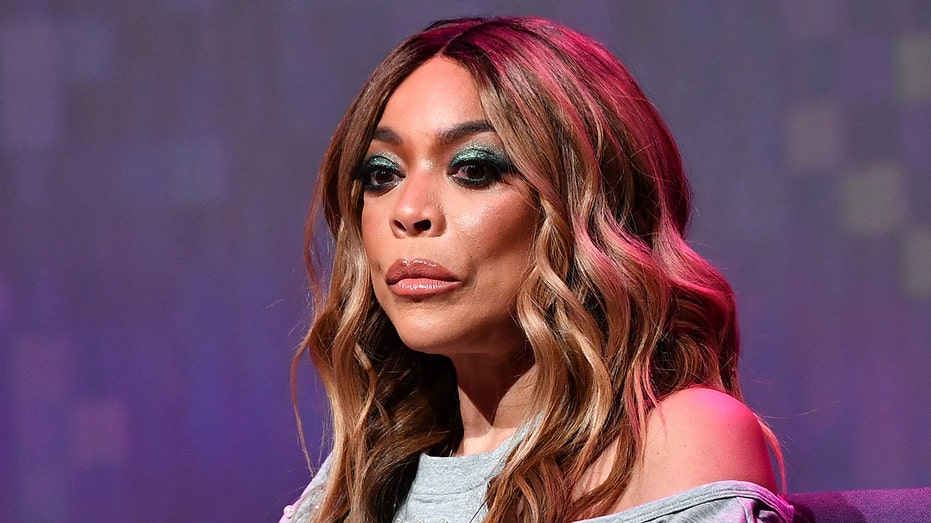
Wendy Williams wears off the shoulder grey blouse.

A Williams representative released a statement last week saying she was diagnosed with frontotemporal dementia. (Getty Images / Getty Images)

"Lifetime appeared in court today, and the documentary ‘Where is Wendy Williams?’ will air this weekend as planned," a spokesperson wrote in a statement.

Morrissey did not immediately respond to Fox News Digital's request for comment.

In 2022, a legal guardian was appointed for her finances and health, and court documents were sealed. Williams later filed a temporary restraining order against Wells Fargo, asking the court to "reopen any frozen accounts or assets" and grant Williams "access to any and all accompanying statements."

"After all, aren’t guardians charged with safeguarding (not to mention, maximizing) their ward’s financial well-being?"

- Benny Roshan, partner at Greenberg Glusker

According to Williams' filings to the court, the bank's move reportedly came after Williams' former financial adviser claimed Williams "was of unsound mind." The filing did not "specify who or what is exploiting or unduly influencing Williams," according to People magazine.

The bank reportedly maintained that Williams' financial adviser "witnessed telltale signs of exploitation, including [Williams'] own expressed apprehensions, but also upon other independent third-parties who know [Williams] well and share these concerns."

"One judge and three doctors say my money is still stuck at Wells Fargo, and I’m going to tell you something. If it happens to me, it could happen to you," Williams said in the documentary.

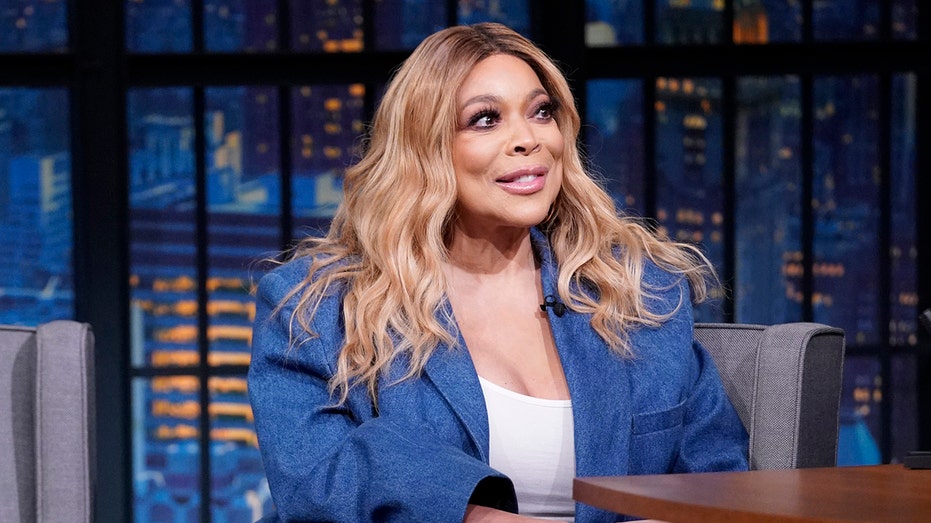
Talk show host Wendy Williams wears blue blazer with white blouse at Seth Meyers.

Williams' self-titled show was canceled in June 2022. (Lloyd Bishop/NBC/NBCU Photo Bank / Getty Images)

"Wendy appears to be under a financial guardianship, which means all of her financial decisions are made by a third-party, court-appointed person who makes all the financial decisions on behalf of Ms. Williams and owes her a panoply of fiduciary obligations," Roshan told Fox News Digital.

She noted that guardianships are "fairly common in cases where the impacted individual suffers from obvious cognitive impairments, as in Ms. Williams' case, and do not have a designated person such as a power of attorney or successor trustee to step up to the plate when needed to assist."

Williams' son, Kevin Jr., was scrutinized for spending her money but, in the documentary, denied he ever exploited her. 

"I've never taken [money] without her consent," he said.

"My mom made me power of attorney because, at that time, the banks started accusing the family of doing things that weren’t true and saying that my mom wasn’t fit to make choices." 

Her nephew, Travis Finnie, who was also helping with her care in Florida, said the bank questioned a $100,000 purchase amount. He recalled Kevin's birthday party that Williams booked totaling more than $100,000, Kevin's rent was $80,000 and his UberEats bill "probably exceeded $100,000."

"For them to have a court case and rip him away from taking care of his mother, it’s very questionable," Travis said.

Wendy Williams chats via Zoom wearing red blazer and strappy black top.

In 2022, a legal guardian was appointed for her finances and health, and court documents were sealed.  (Bravo/NBCU Photo Bank  / Getty Images)

When a producer asked if Williams still supported Kevin Jr., Wendy became emotional and said, "I’ve got so much money. I want it for my son."

"This matter was conducted under seal. Any claims against Wells Fargo have been dismissed," representatives for Wells Fargo told Fox News Digital.

There's still hope for Williams to regain her independence from the guardianship, according to Roshan.

"Cognitive impairment comes in many forms, and from litigated precedent (in California), cognition may be restored with treatment and care in some cases. For instance, in Britney Spears’ case, it appeared from court files that she had arguably regained her cognitive capacity long before her conservatorship was terminated," Roshan said.

The 59-year-old television personality was diagnosed with the conditions in 2023, her representatives confirmed in a statement Thursday. Last week, Williams' representatives shared a personal statement from the talk show host that was facilitated by her care team. 

"I want to say I have immense gratitude for the love and kind words I have received after sharing my diagnosis of Aphasia and Frontotemporal Dementia (FTD)," Williams wrote. "Let me say, wow!  Your response has been overwhelming.

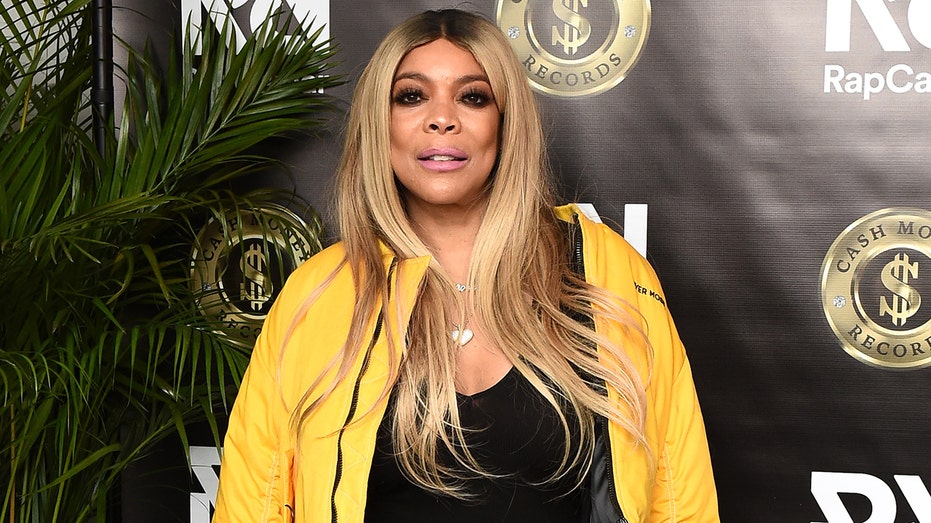
Wendy Williams sports yellow coat with black tank top

Williams strayed from the public eye and is reportedly under the care of a court-appointed guardian. (Ilya S. Savenok / Getty Images)

"I continue to need personal space and peace to thrive. Please just know that your positivity and encouragement are deeply appreciated." 

Williams' brother, Tommy Williams Jr., told Us Weekly his sister is on the mend now that she's living in an undisclosed treatment center. 

"When I speak to Wendy, she sounds fine. Wendy has improved," he said. "I know my sister from where she was to where she is now, and she has a substantial amount of improvement. It’s dialogue and conversation, topics, content, speech pattern, everything.

"The past was obvious. We saw it. She was in a worse state, and the [documentary] depicted it. Now [she is in] a different state."

Full Article & Source:
Wendy Williams' financial guardianship raises 'red flags' after adviser attempted to block documentary: expert

See Also:
Wendy Williams top 5 documentary bombshells

Inside Wendy Williams' Family's Fight to Free Her from Her Guardianship: 'This System Is Broken' (Exclusive)

Wendy Williams diagnosed with aphasia, frontotemporal dementia: What to know ahead of documentary release

Wendy Williams Seen for First Time in a Year in Devastating Lifetime Documentary Trailer

What's happening with Wendy Williams? From talk show no-show to 'incapacitated person'


SHOCK CLAIMS Wendy Williams’ bank calls her an ‘incapacitated person’ who is possible ‘victim of financial exploitation’ in lawsuit

Wendy Williams had to be told several times her show had been canceled, execs say

Wendy Williams’ Ex Sells House Amid Big Money Troubles