Saturday, August 17, 2024

My Dad’s Last Day in Court

Watching a parent’s mind slip away from dementia is difficult in any circumstance. It’s even harder when your father is a lifelong lawyer who insists he has one final case to win.

By Andrew Bloomenthal 


The earliest signs
of my father’s cognitive slip dovetailed with his retirement. He’d somehow managed to keep it together for his clients until his very last day practicing personal injury law, and thankfully, none of them suffered because of his condition. When the day came for my mom and I to help Dad shutter his office on Congress Street in Boston, crating and cataloging his case files, we were both emotional. Not just because of the years of sweat equity that this mountain of paperwork represented, but also because of the faint unease we were feeling over Dad’s occasional loss of words.

We didn’t discuss this aloud that day, nor during the first year of his retirement. To do so would have made it seem real, and frankly, we weren’t ready for that. After all, while his mild tremors were expected in someone who had been diagnosed with Parkinson’s disease some years before, his mental decline, the neurologist said, was statistically rare. What’s more, Dad functioned reasonably well that first year. He kept busy volunteering at the VA Medical Center in Jamaica Plain, where he doled out bottles of water and ambushed patients with dad jokes. His favorite: “A termite walks into a pub and asks, ‘Is the bar tender here?’” He invariably supplied his own “yuk-yuks” lest the punchline fail to land quick enough. Even when his delivery of these jokes started sounding rehearsed, as though he was clinging to a script, Mom and I told ourselves that maybe Dad’s behavioral shift was a temporary manifestation of stress triggered by his newfound retirement.

That hopeful theory was debunked after a brain specialist administered a series of tests that determined Dad’s cognitive deficit was indeed real. And while some medications could purportedly help improve acuity, there were no reliable methods of predicting his decline or halting its progression.

The full weight of this diagnosis didn’t hit me for a few days. I was in Manhattan, where I’d moved after college for a job as a financial journalist and later to pursue screenwriting. As I clacked away at my keyboard one morning, I was suddenly floored by the notion that every day would entail readjusting to Dad’s evolving new normal.

In the weeks that followed, even as my dad had many lucid days, I felt as though I was freefalling in preemptive grief and then felt guilty over my childish inability to stay strong for my dad. I started coming home to Boston a lot more often. Burned forever in my psyche are the blue abstract-patterned seat covers on the Fung Wah bus, which semi-reliably delivered me from Canal Street in Manhattan to South Station in Boston for $10 each way until the company shuttered. It was not a bad deal while it lasted.

On one of these visits, about a year after closing his office, I landed in Hull, where our family had summered for generations. Thanks to the punishing August heat wave that greeted my arrival, I slept in the cooler room with the cross-breeze. That’s where Mom shook me awake one morning. “Dad says he’s due in court today,” she said, sounding calmer than her hectic expression gave away. “He says he’s scheduled for trial, so I’m taking him into Boston. Coffee’s made.”

“Um…I’m sorry, you’re doing WHAT?” I responded. I was still groggy, but that wasn’t the only reason it took a moment to register.

“He mentioned something about this last night. I thought he was kidding. But now I’m not so sure.”

That’s the funny thing about the mercurial nature of his condition. Some days, he was credible. Other days, less so. Still, he’d been retired for more than a year—a fact I reminded Mom of as if she weren’t acutely aware.

“Well, yes, I know he’s retired, honey,” she said. “But he’s not taking ‘no’ for an answer. Look, if I don’t take him, he’ll drive himself, and I won’t let that happen, okay?”

Just then, Dad blustered in.

“Guys, let’s went!” he commanded, defaulting to one of his pet phrases.

I eyeballed the briefcase in his hand. I could tell by the way he swung it that it was empty. And in that moment, I went in for what I thought would be an easy remedial lay-up.

“Dad, I’m pretty sure you don’t have a trial today,” I asserted.

“And just how would you know that?” he challenged.

“I know because…because the courthouse called. They said your case was settled. Don’t you remember?”

I suddenly felt queasy. Did I really just try to gaslight the man who told me when I was young that all he ever expected from me was to earn good grades and tell the truth?

“Who’d you talk to? From the courthouse. I need a name!” he insisted.

“Um…Susan. Her name was Susan.”

Somehow, the specificity of that fictitious moniker tasted acrid as it rolled off my tongue. Whether or not he believed me hardly mattered.

“Oh yeah? What was her last name?” Dad asked.

I briefly considered doubling down with yet more invention. But I simply couldn’t.

“I forgot to ask,” was all I could muster.

“Let me tell you something,” he fumed. “If someone left a message for you, I’d have taken it correctly!”

And he would have, too. He was nothing if not responsible. And although he was in high dudgeon on that frantic morning, his baseline persona was that of lovable goofball. He once wore a dashiki to synagogue—just because. Mom was naturally horrified until the positive reviews came trickling in.

What else can I say about Dad? He jogged for exercise before that was even a thing. He was a virtuoso on the piano, with an uncanny ability to re-create any song after hearing it once. Festive dinner-party singalongs were a matter of course. He loved courtroom movies like My Cousin Vinny and The Verdict. But To Kill a Mockingbird was his hands-down favorite. He shared Atticus Finch’s progressive ideals but was too humble to ever compare himself to that lawyer.

Don’t get me wrong—life with Dad was not Leave It to Beaver. We bickered constantly, like it was our job. But that was mainly due to garden-variety friction between a son and his exasperatingly doting father—all the more reason I wish I exhibited more patience during the era of his decline. Then again, Mom held enough patience for us all.

“Okay,” she reassuringly said that fateful morning. “Let’s get you to court.”

Andrew, Sharon, and Leslie Bloomenthal on Newbury Street years ago. / Courtesy Andrew Bloomenthal

As the three of us barreled the minivan down Route 3A—Mom driving, Dad riding shotgun, me perched behind him—Mom and I traded uncertain glances in the rear-view mirror. Our thought bubbles screamed, Just what the holy fuck are we doing? but offered no answers. Other times, we actively stifled laughter over the sheer absurdity of the situation. I mean, it wasn’t exactly unfunny.

Somewhere in Quincy, Mom inventoried Dad’s T-shirt and denim shorts—hardly appropriate courtroom attire for the man who once donned three-piece suits and meticulously blew out his helmet of rusty red hair each morning. After veering off the road and pulling into the nearest Goodwill thrift store, it took Mom mere minutes to harvest a dress shirt, khaki pants, and a perfectly fitting size 38 Pierre Balmain blazer. At the very least, Dad looked the part as we pulled into Boston’s Moakley federal courthouse parking lot some 20 minutes later.

By then, the temperature had surged past 100 degrees outside—this during an era when such extreme weather was considered remarkable. But in that moment, our frustration was dominated by the complete lack of available parking spaces and Dad’s growing agitation with every fruitless pass around the property. Our only solution was to double park by the courthouse entrance, with one of us staying behind with the vehicle. Deciding which one of us would escort Dad inside was a no-brainer. After all, Mom had already done more than her share of heavy lifting.

Standing outside the car, I straightened Dad’s lapel. “Ready, old man?” I asked.

“Let’s do it.”

A gush of cold air welcomed us as we stepped inside the courthouse—two men without a plan. A guard instructed me to surrender my cell phone to a lady in a blue blazer behind the front desk. I opened my mouth to explain my unique need for keeping it handy before realizing how this security mandate offered me the perfect alibi to conduct some much-needed recon, away from Dad’s listening ears. After Blazer Lady deposited my phone into the beehive of cubbies behind her and handed me the corresponding chit, I asked her to check if my dad had a case that morning. Although I hadn’t any reason to expect another outcome, I was no less despondent to learn her search came up empty.

I didn’t have the heart to tell him he had no case on the docket. Not when my earlier attempt to quell his confusion went so poorly. Besides, his altered brain invented this return-to-work scenario for a reason. Leaning into his fantasy was the only humane path forward.

“So, Dad, it looks like we have some time to breathe before your trial begins,” I improvised. “Wanna peek in on another case while we wait?”

He endorsed this plan with a smile, oblivious that it was a mere stall tactic.

Our randomly chosen courtroom was packed, save for two serendipitously vacant seats, front-row center. As we slid into the pew, I immediately recognized the shackled defendant sitting just feet in front of us. This infamous murderer made national headlines a few years back and had re-entered the news cycle during his latest appeal. I had seen an item about him on TV the night before. There he was in the flesh—just one more unexpected wrinkle in an already surreal day.

Dad sat mesmerized as the killer’s attorney went to work, arguing how his client would have surely walked free had certain exculpatory evidence been allowed. I shifted my gaze to the judge. His stoic face gave away nothing, but somehow, I could tell he was cataloging every word. Watching him gave me an idea.

“Hey Dad, I gotta go take a leak,” I whispered.

“Do your thing,” he whispered back.

I found my way to an administrative office and approached the clerk behind the glass.

“Can I help you?” he said, smiling gently.

And that was it. Those four small words unleashed a deluge. Through halted breaths, I explained how my dad—a once prominent attorney—now suffers from Parkinson’s-related dementia. How the man who once frequented these halls is back on the scene for a phantom case. And how I couldn’t disabuse him of this notion—even if I tried.

The clerk nodded as I continued.

“…And so, I was wondering: Is there any way a judge can talk to him in chambers? You know—maybe give him an ‘attaboy’ for his contribution?”

After my pitch ended, the clerk sat silent for several moments—long enough for me to suddenly feel utterly humiliated. Did I really just ask this unsuspecting civil servant to broker a kumbaya moment between my dad and a federal judge—any judge’ll do?

“You know what? Scratch that,” I said before turning and walking away.

“Young man, come back here, please,” the clerk said before telling me his plan.

Back inside the courtroom, I sidled up to Dad and whispered into his ear: “Dad, come with me. Someone wants to talk to you.”
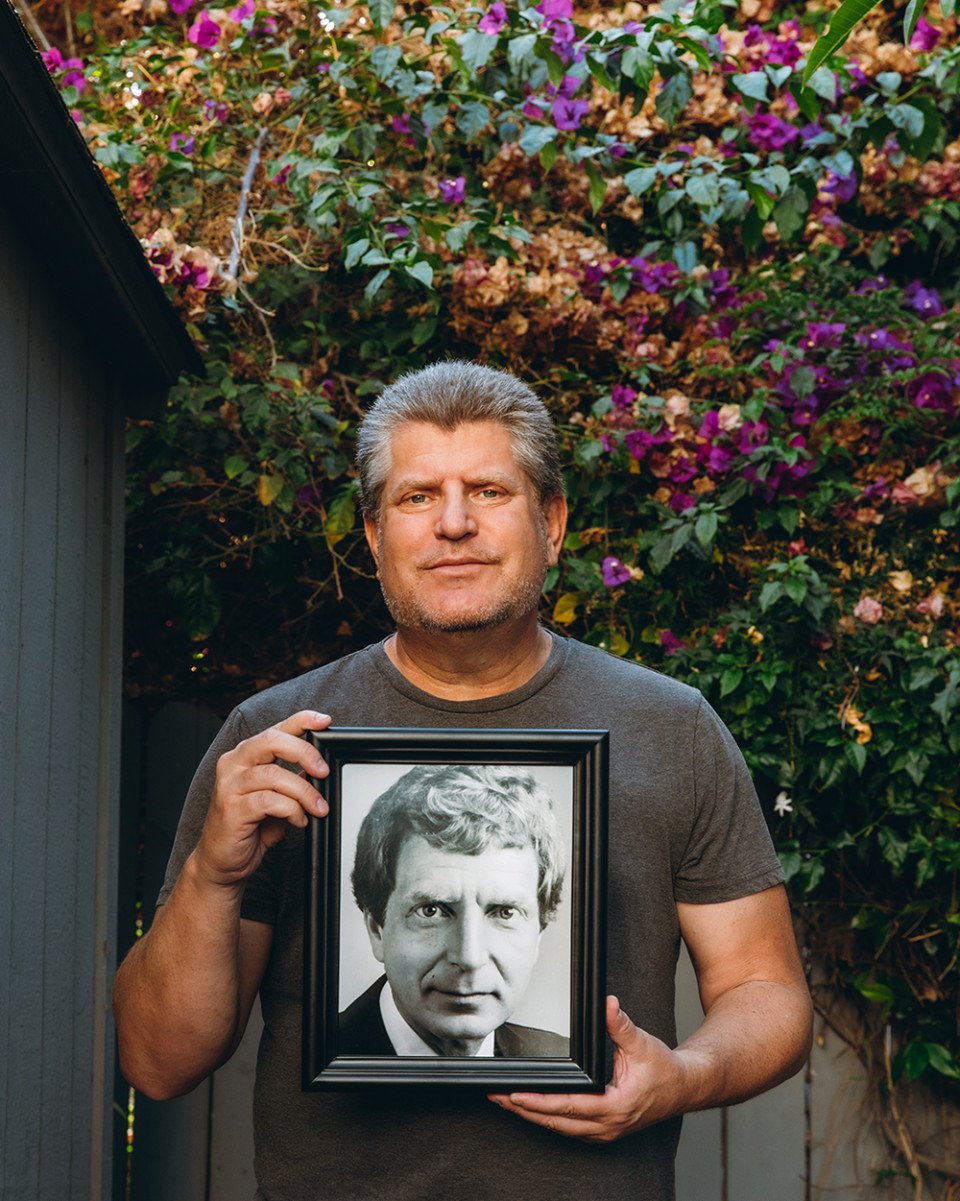
The author, holding a photo of his father. / Photo by Ethan Gulley

As I led my dad toward him, the clerk lit up, his eyes widening theatrically.

“Counsel! It’s great to see you again!” he gushed.

“And you as well!” Dad replied. Whether there was true recognition on either side of that counter was irrelevant.

“Counsel, I just wanted to tell you that today’s your lucky day.”

“Oh, really?”

“Very much. Because I just spoke to the judge. And he told me that your case has been resolved in your favor.”

“It…it has?” Dad said through a widening smile.

“Oh, yes. And His Honor also told me he’s never seen such airtight pretrial motions in his entire career on the bench!”

Dad beamed for several moments before his critical brain intervened—even then.

“Wait a minute. But what about…”

“An appeal? Can’t happen. You won. And if I may add, it’s been an honor sharing these halls with you over the years,” said the clerk without a hint of condescension. Although his patchwork legalese might not have held up to later scrutiny, at that moment, it was good enough for Dad, who extended his hand.

“The honor is mine.”

Leaning against the minivan—sweat dripping from her forehead—Mom did a bona fide double take when she saw us levitating toward her, twin smiles plastered across our faces.

“What the hell happened in there, you guys?” she asked as we got closer.

“Sharon, we won!” Dad gushed.

She looked at me, tacitly soliciting further explanation.

“Tell you later,” I volunteered. “There’s something I need to do first.”

Back inside the courthouse, I advanced to the clerk for the third time that day.

“Sir, I don’t know how I can possibly—”

“Say no more,” he interrupted. “You know, my father went through something similar. It won’t be easy, but you’ll get through it. He’s lucky to have you.”

The intervening years were indeed hard, filled with difficult decisions like seizing my dad’s car keys and his autonomy in one fell swoop. But there were also bright spots. Dad could still tickle the ivories, to name one. Even if his fingers were slightly hesitant on the piano keys, it didn’t hinder singalongs one bit. Dad also got to meet Luis, my far better half, and the two of them got on like gangbusters. Can’t put a price on that.

When Dad’s physical struggles eventually required intervention, we placed him in an assisted living facility located within walking distance from Mom’s Brookline apartment, giving her the well-earned opportunity to trade in her role as de facto caretaker for one she much preferred: loving wife. As such, she damn sure secured the coveted corner apartment at the far end of the dementia floor with a double exposure that let in more sunlight than all the other units. The revolving door of friends popping by lent even more warmth to the space. And high on the wall hung a charcoal sketch of our old house in Sudbury, positioned next to the aspirational words Mom stenciled beneath the molding. Live. Breathe. Dream. Still, the room’s focal point belonged to the engraved nameplate sitting on the coffee table—the same one that lived on Dad’s office desk for more than four decades: “Leslie Bloomenthal: Attorney at Law.

Before my dad’s passing, he regarded his nameplate often, especially when reminiscing about the magical day he kicked butt in court one last time.

On September 5, 2015, Dad died. He was 75. But in the years before his passing, he regarded his nameplate often, especially when reminiscing about the magical day he kicked butt in court one last time. Because in his mind, it really happened. And that’s as valid as anything.

Full Article & Source:
My Dad’s Last Day in Court

Friday, August 16, 2024

Guardianship Law Update: Stricter Pennsylvania Guardianship Laws under Act 61 to Take Effect in June

Written by:  Latisha Bernard Schuenemann and  Paul W. Minnich

Guardianships are an important legal mechanism to ensure that individuals with cognitive impairment have a representative who can handle their affairs and make decisions in their best interests. Due to an increasingly aging population and other societal factors, the need for court-ordered guardians has increased in frequency. However, concerns have arisen as to whether there are sufficient safeguards to protect individuals going through the guardianship process. As a result, on December 14, 2023, Senate Bill 506 was signed into law as Act 61 (the “Act”) by Governor Josh Shapiro. It will take effect next month on June 11, 2024.

The Act has four major amendments to Title 20 of Decedents, Estates and Fiduciaries (the Pennsylvania “PEF Code”) relating to incapacitated individuals including provisions: (1) requiring mandatory appointment of legal counsel for the alleged incapacitated individual; (2) consideration of less restrictive alternatives to guardianship; (3) certifications for court appointed guardians; and (4) required review hearings of the guardianship.

Mandatory Legal Representation of the Alleged Incapacitated Individual
The Act now mandates that all alleged incapacitated individuals must have legal representation throughout the guardianship proceedings, whether through their own counsel or court-appointed counsel. It requires that the petitioner inform the Court of any counsel the alleged incapacitated person may have at the time of the filing of the guardianship petition. If the alleged incapacitated individual hasn’t retained counsel in any matter pertaining to the guardianship, the Court must appoint qualified counsel to represent them. The appointed counsel is required to file a certification with the Court indicating the time and place of meeting with the alleged incapacitated person. The Act requires appointed counsel be qualified by experience or training and should advocate for the individual’s expressed wishes and instructions to the extent possible. This requirement of counsel extends through all stages of the guardianship proceedings including any review hearings. In addition, the Act provides if the Court deems a guardian ad litem necessary, a second attorney will be appointed for this role.

Exploration of Less Restrictive Alternatives
While it was always a consideration of the Courts, the Act now requires Courts to make specific findings of fact regarding whether there are less restrictive alternatives available. The less restrictive alternatives to be considered include advanced directives, living wills, powers of attorney, trusts/special need trusts, representative payees for individuals receiving Social Security benefits, Pennsylvania Achieving a Better Life Experience accounts, and mental health advanced directives. The Court is required to consider the less restrictive alternative first and if there are no less restrictive alternatives available and sufficient, then the Court is to consider a limited guardianship if it is applicable in the guardianship matter.

Mandatory Certification of Guardians
Professional guardians and individuals seeking to become the guardian of three or more incapacitated individuals will be required to be certified and furnish evidence of compliance with certification requirements to the Court, prior to appointment in a third guardianship matter. The Court can waive this requirement upon demonstration that the proposed guardian has the equivalent license or certification necessary to ensure they can meet their obligations as guardian.

The Act puts the onus on the Supreme Court to develop the rules relating to the certification requirements of a guardian which will include a minimum of providing information and documentation regarding their education, employment history, and Federal and State criminal record and the passage of a certification exam administered by a national nonprofit guardianship certification organization.

Review Hearings
Prior to the Act, the PEF Code did provide that a review hearing could be requested at any time. Now the Act requires an automatic review hearing if the evidence presented during the guardianship proceeding indicates that the circumstances of the person’s incapacity may change. If the Court believes this to be the case, it must schedule a review hearing in its court order establishing the guardianship. The review hearing must be scheduled within one year from the date of the initial guardianship appointment.

During the mandatory review hearing, the incapacitated individual is to be present with their counsel, and the Court may consider any evidence presented that the incapacitated person’s condition could improve at a future time. This evidence may include, but is not limited to:

  • Whether the incapacitated could be adequately managed by medication, rehabilitation or other means;
  • Whether the potential exists for the incapacitated to regain physical or cognitive capacity;
  • The opinion of medical professionals or other qualified experts who have personally examined the incapacitated individual; and
  • The circumstances surrounding the incapacitated individuals daily living, including but not limited to, support from others.

If the Court finds the guardianship is necessary and there are no less restrictive alternatives available, the Court may order that the guardianship continue. However, the Court is required to discharge the guardianship if it finds that the guardianship is no longer necessary or the existence of less restrictive alternatives.

Act 61 represents a crucial step forward in safeguarding the rights and welfare of individuals involved in guardianship proceedings in Pennsylvania. These new provisions also introduce new complexities to the guardianship process and underscore the importance for experienced legal counsel in order to navigate these intricacies. If you have questions about Act 61 or navigating the guardianship process, please contact partner Paul M. Minnich of Barley Snyder’s Litigation Practice Group or partner Latisha Bernard Schuenemann of Barley Snyder’s Trusts & Estates Practice Group.

Full Article & Source:
Guardianship Law Update: Stricter Pennsylvania Guardianship Laws under Act 61 to Take Effect in June

Lawsuit filed against Santa Clara senior care facility

Source:
Lawsuit filed against Santa Clara senior care facility

Rock Island Police relaunch Elderly Service Officer Program

The Elderly Service Officer Program is meant to assist people ages 60 and older, investigating elder abuse and neglect and teaching about common scams. 

Source:
Rock Island Police relaunch Elderly Service Officer Program

Thursday, August 15, 2024

Brian Wilson's Conservators Need His Kids' Blessings For Health Decisions

by Afouda Bamidele


Brian Wilson
's conservators will not be taking any major life decisions behind his kids!

The court has ordered his conservators to run any healthcare-related decisions by his children for authorization as the Beach Boys member battles dementia.

Brian Wilson's family filed a petition to place the legend under a conservatorship following his wife Melinda Ledbetter's death in January.

Brian Wilson's Children Must Be Carried Along On Health Updates


The judge has charged all the singer's children (who wished) to be added to the text group with his nurses for essential updates on Wilson's health. The kids are now crucial to the singer's health decisions.

The court documents also ordered his two conservators, Jean Sievers and LeeAnn Hard, to file additional paperwork on Wilson's care plan within the next 60 days.

Sievers and Hard were nominated by Wilson's family to take over control of his affairs in February, especially after Ledbetter's passing.

On the choice of Sievers and Hard, the family noted the decision was made to avoid any "extreme changes to the household." Essentially, they didn't want Brain and his children's living situation to change.

His family added that the singer will continue to enjoy the love and presence of his loved ones. Wilson will also get to participate in any activities of his choice.

An L.A. judge authorized the family's petition to place the singer under a conservatorship. The court also allowed the two women to consent for the conservatee to receive medical treatment, per In Touch.

Inside Wilson's Court-Ordered Conservatorship


The conservators disclosed that Brian is currently under 24-hour care inside his expansive $9 million, six-bedroom, seven-bathroom, 9,353 square-foot Beverly Hills home.

Sievers and Hard shared that the singer is monitored round the clock by a nurse with well-prepared meals and proper medication administration by experts.

"[Brian] has three full-time caregivers living at his house. The caregivers have been working for [Brian] for many years, well before the commencement of these conservatorship proceedings," the court documents showed.

The filing continued that the "Conservators have also hired 3 nurses to assist Brian at his house. The three nurses have rotating schedules such that there is always a nurse at the house to care for [Brian]. With these measures in place, there is no plan or need for [Brian] to live anywhere other than his personal residence."

The 'I Get Around' Singer's Lawyer Spoke On His Living Condition


A court-appointed lawyer detailed his thoughts on the singer's living situation, noting that he was living well.

He confirmed that Wilson lived in his "impeccably well-maintained residence in Beverly Hills, California" with his "two kids, a long-term live-in caregiver, as well as other caregivers that assist him with his daily activities."

The lawyer noted that Wilson used a walker to get around the house. But, the 82-year-old received help from one of his caretakers, who helped him get in and out of the walker. Wilson's lawyer lauded his performance despite dementia, saying:

"[Brian] was "well oriented as to person, place and time, acknowledging and responding to his name, providing me with his date of birth, the time of day, and the current date."

However, he stated that Wilson was unable to provide his kids' names other than the names of the two daughters who lived in his house.

Brian Wilson's Minor Children Also Got Guardians


In May, The Blast reported that Hard also filed a request for guardianship for Wilson's minor children. She nominated a longtime friend of Wilson.

Hard stated that she and Ramos were the right fit for guardianship, as it tallied with their nominations for the role in Brian and Melinda's wills.

Both women also shared a strong bond with the children, namely Dash Tristan Wilson and Dakota Rose Wilson, who gave their blessings to the guardianship.

Brian was obviously not considered for his kids' guardianship due to his medical condition, as Hard explained that his youngest kids require "official care, custody, and control" to ensure they are well taken care of.

The Record Producer's Daughters Admired His Strength Amid Dementia


Wilson's children have shown support in many ways than one since his health battle began. Back in May, his daughters Carnie and Wendy spoke highly of him in an interview.

The Blast shared that the legend was diagnosed with a neurocognitive disorder earlier in the year, and Wendy noted that he was doing really good under his current circumstances. Wendy admired her father's resilience and strength, describing him as "very tough, a very strong person."

Her sister Carnie also shared the same sentiment and declared that Wilson "is doing great! He is doing great. Everyday he is in physical therapy. I'm cooking for him, he's spending a lot of time with his children now, his family."

Full Article & Source:
Brian Wilson's Conservators Need His Kids' Blessings For Health Decisions

See Also:
Beach Boys' Brian Wilson placed in conservatorship following dementia diagnosis

Beach Boys’ Brian Wilson Unable to Remember Children’s Names, ‘Mostly Difficult to Understand,’ Lawyer Reveals Ahead of Conservatorship Hearing 

Family sues Lafayette nursing home over elder abuse, criminal investigation underway

Family sues Lafayette nursing home over elder abuse, criminal investigation underway

Source:
Family sues Lafayette nursing home over elder abuse, criminal investigation underway

Wednesday, August 14, 2024

Disabled Alaskans sue state and appointed guardian for alleged financial abuse, neglect

By Rachel Cassandra

The Office of Public Advocacy in downtown Anchorage. Their deputy director Beth Goldstein is named as a defendant in a class action lawsuit alleging the state enabled neglect, financial abuse and other harms of disabled Alaskans. (Rachel Cassandra/Alaska Public Media)

Ten disabled Alaskans are suing the state and their state-appointed guardian in a class-action lawsuit that alleges financial abuse and neglect.

Under his business Cache Integrity, Thomas McDuffie was a private guardian responsible for more than 100 state-assigned wards between 2021 and 2023. The lawsuit alleges he neglected to serve the people in his care, all of whom are disabled, elderly or ill.

The lawsuit also names top officials with the state Office of Public Advocacy and the state’s Adult Protective Services unit as defendants.

Alaska’s public guardianship program is supposed to serve the state’s most vulnerable people by, among other things, making decisions for them about finances, benefits or healthcare. The state employs some public guardians, but the program has struggled with overburdened public guardians. McDuffie was a private guardian assigned public cases because of the staffing shortage. 

According to the lawsuit, McDuffie wasn’t paying their taxes, wasn’t finding adequate housing for some, failed to enroll them for public benefits and overpaid himself for his services. The lawsuit claims he left one person in the hospital unnecessarily for a year, racking up a bill of over $615,000.

Anchorage attorney Caitlin Shortell, who represents the plaintiffs in the lawsuit, said the stories of how McDuffie failed his wards are endless. One of McDuffie’s wards was in a wheelchair and living in a condo when it flooded, leaving the floor warped and uneven, she said.

“Mr. McDuffie didn’t provide him enough food or pay his bills … and then failed to make a claim on the insurance for the flood damage, leaving this person malnourished, unable to really move around, even in his own home, and leaving him with property damage to his condominium,” Shortell said.

McDuffie also pooled his wards’ money together in a shared trust, Shortell said, and that makes unwinding the money he owes people extremely difficult.

“If you have hundreds of clients, and all of their money is pooled, how can you figure out whose money is whose?” Shortell said. “And that became much more complicated because of the lack of accurate bookkeeping and accounting.”

McDuffie is no longer a practicing guardian, as of the fall of 2023, and the state has reassigned his wards.

Reached by phone, McDuffie declined an interview request for this story.

Mary, whose last name is omitted to protect her privacy, was one of McDuffie’s wards and is a plaintiff in the lawsuit. Mary has dementia and was assigned to McDuffie in 2021.

As Mary’s guardian, McDuffie was in charge of her housing and financial decisions, which included managing her benefits. Mary’s daughter, Greta, said it quickly became clear that McDuffie was neglecting his duties.

“He did not pay any of her bills,” Greta said. “He didn’t pay her taxes. The whole time he was there, she was in debt. She had back taxes he didn’t pay.”

McDuffie took Mary out of the Anchorage Pioneer Home, a state-owned and operated assisted living facility, and put her in another facility she couldn’t afford, Greta said. Mary had insurance for long-term care, but McDuffie never billed it, Greta said.

Greta said she and her sister worked with multiple lawyers over the course of 19 months to free their mother from her guardianship and conservatorship under McDuffie. But by the time they succeeded, their mother’s health had declined severely. McDuffie didn’t schedule medical appointments for Mary or bring her to the appointments, or to occupational or physical therapy, Greta said.

“She went from walking, getting healthcare, to not getting healthcare, to not being able to walk, to being very depressed,” Greta said. “She wasn’t getting any of the medical treatment she needed.”

Mary has now moved in with Greta’s sister in Southcentral Alaska, and Greta said she’s begun walking again, is more social and her memory is improving. But Greta and her sister are now dealing with the tens of thousands of dollars of debt they said was a result of McDuffie’s mismanagement.

While the lawsuit has yet to be heard in court, the state is in the process of appointing a forensic accountant to untangle the finances of McDuffie’s former wards.

The state Office of Public Advocacy, or OPA, which runs the public guardian system, has so far been unable to help McDuffie’s former wards recover their money. All the funds McDuffie pooled are in an account that’s been frozen since early 2024.

The state is also responsible for McDuffie’s neglect as a guardian, because state employees missed or ignored signs of his failures and enabled his assignments, Shortell said.

The lawsuit names two state employees as defendants: Beth Goldstein, OPA’s deputy director, and Anthony Newman, director of the state health department’s Adult Protective Services unit.

According to the lawsuit, Goldstein did not confirm McDuffie had a relevant license, and for much of the time he was working as a guardian McDuffy didn’t have one. If Goldstein had recognized McDuffie didn’t have his license, she could’ve prevented some of the problems, Shortell said.

“Unfortunately, when it was discovered that he didn’t have a license in good standing, the licensing department of the state just retroactively granted him a license, which is really quite shocking,” Shortell said.

Goldstein also allegedly continued to refer cases to McDuffie despite evidence that he was neglecting his duties.

Adult Protective Services, run by Newman, also could have intervened earlier, after receiving numerous reports of harm about McDuffie and his company, Shortell said.

OPA directed questions about the case to the state Department of Law, which declined an interview request. But spokesperson Patty Sullivan shared a brief comment on McDuffie’s business, Cache Integrity, over email.

“The actions of Cache Integrity are tragic and the state is working on solutions,” the statement says. “It is unfortunate that the state has been included in this lawsuit when the responsibility lies with those who caused the injury.”

But under state law, Shortell said, the state does have a legal responsibility to protect vulnerable Alaskans in its care.

“So, that’s simply not true that the state of Alaska wasn’t responsible,” she said.

Full Article & Source:
Disabled Alaskans sue state and appointed guardian for alleged financial abuse, neglect