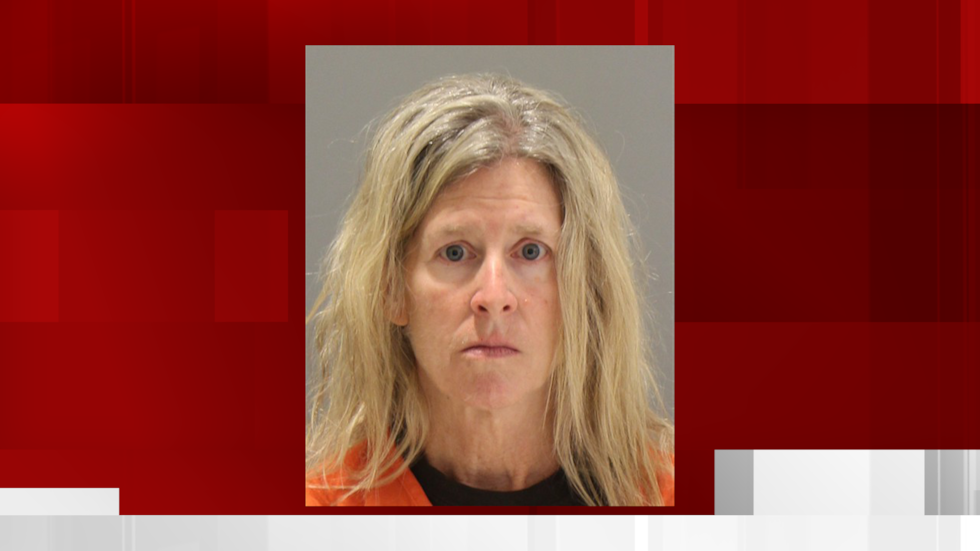
OMAHA, Neb. (WOWT) - An Omaha woman has
been arrested for allegedly stealing hundreds of thousands of dollars
from her own father after being given power of attorney, according to
authorities.
Patricia Deacy, 60, was
booked into Douglas County Corrections Tuesday morning for abuse of a
vulnerable adult and theft greater than $5,000 - both felonies.
Patricia Deacy(Douglas County Corrections)
The Douglas County Sheriff’s Office affidavit alleges the following:
In 2023, Deacy’s father was living in a
memory care facility and was “pressured” into authorizing her to be his
power of attorney.
“She retired
shortly thereafter and (a relative) noted that her lifestyle improved
dramatically... Patricia began giving away large sums of money to select
family members, buying new houses, cars, and pools, taking her children
on expensive vacations and buying one of her daughters a new car, pool,
and house,” the report reads.
About
$770,000 in withdrawals were made in four months from her father’s
account, according to a family member, after other family members had
been denied access or only given partial access to the trust account.
Investigators met with the father in 2025 and believed he was a vulnerable adult suffering from memory impairment.
Investigators stated the father expressed
shock that Deacy “might be misusing his money for her own benefit and
said she was independently wealthy,” but could not explain how.
When
informed about the $770,000 in withdrawals, the father “strongly
asserted that he had not authorized any such withdrawal and affirmed
that he intended for his money to remain in his possession,” and never
allowed his money to be spent on houses, cars, or pools.
A
deeper look into the account revealed the potential misappropriation of
$1,416,636.42. Another family member said Deacy had decided to sell
stock and disburse funds among her father’s children as she saw fit,
primarily family members she was fond of while excluding others.
Here is a breakdown of the alleged spending:
$213,286.64 in 217 transfers via Venmo and PayPal apps. Deacy’s father only owned a flip phone and did not need these payment systems.
$23,200
in four transfers to someone who is believed to be an attorney in
Pensacola, Florida, as Deacy was allegedly trying to purchase property
there.
$116,358.44 over 10 debit transfers for boat purchases.
$94,469.01 over 21 payments for home improvements, landscaping, and hardscaping. Deacy’s father did not own a home at the time.
$53,580 over 16 debit transfers for banking services to a bank the father did not have an account with.
$49,999.36
over 31 transfers for auto-related expenses. The father did not own or
drive a car because, again, he is in assisted living for memory care.
$39,000 to accounts controlled by Deacy.
$32,873.66 over 439 retail purchases including Amazon, Costco and Target.
$8,473.89 over 324 food and drink debits from September 2023 to April 2026. The majority of the father’s meals are at the care facility.
$7,679.40 for housing, rental or purchasing not related to the father’s living requirements.
$5,654.82 in check payments to Deacy.
$3,060.78
at grocery outlets in Omaha and Florida. No food was found to be stored
at the father’s apartment during the investigator’s visit.
$2,006.11 to entertainment vendors like Apple, Netflix, and Omaha Rec Centers.
$1,722 to “Educational Comp” and the Clarke Community School District. The father was not a student of either.
$1,608.35 in ATM withdrawals.
$1,404.90 at convenience stores and gas stations. The father did not drive or travel by himself.
$996.65 in hotels.
$633.50 in other travel-related expenses, including Pensacola Airport parking and online passport fees.
The total amount believed to be misappropriated is about $874,732.98, according to the investigation.
Deposits and payments made by Deacy to the accounts potentially reduced the misappropriated funds by $107,952.18.
Some
family members have filed a petition to remove Deacy’s power of
attorney. A judge ordered Tuesday that Deacy must turn over all
receipts, disbursements and transactions related to her father’s
accounts.
A future court date and bond amount have not been set as of Tuesday afternoon.
Douglas County Sheriff Aaron Hanson released this statement:
“While
crimes like this may not seem like a big deal to some, they can wreak
havoc and upend lives, especially those of vulnerable people. I am proud
that the DCSO has become the regional expert in financial crimes
investigations.
Over the last few years, violent
crime numbers have been on the decline due to the hard work and
dedication of Deputies and Officers from agencies across the Omaha
Metropolitan area, yet financial crimes continue to increase.
The
men and women of the DCSO pride themselves in protecting vulnerable
members of our community from financial exploitation. We take these
cases extremely seriously and are committed to ensure that justice is
served for the victims,”
After a private guardian with dozens of clients was accused of financial
abuse, the public office took on zero wards. The alleged abuser
retained six.
By Andrew Wegley
Jaclyn Daake looked everywhere.
The Alma attorney’s new
client, a western Nebraska man living with a developmental disability,
needed a guardian, someone to manage his life and finances. His guardian
for the past two years, a York County woman who served in the
court-appointed role for dozens of vulnerable Nebraskans, had just been charged with stealing from one of her clients. Law enforcement was looking for other victims.
Daake
scoured court records, searching for anyone who might be willing to
serve as the man’s guardian. She wrote letters to 11 people. Eventually,
she reached an old friend of the man’s grandfather, who despite the
distant connection was willing to serve as his guardian, she said. He
was appointed in February, three months after Daake started her search.
During
that time, there was one place Daake did not turn: Nebraska’s Office of
Public Guardian, the government office meant to serve as the last
resort for Nebraskans deemed — often due to old age, disabilities or
injuries — unable to care for themselves.
“It’s a waste of time,” Daake said.
When
vulnerable Nebraskans don’t have any loved ones willing or able to
serve as their guardians, judges often appoint private, for-profit
guardians to fill the role. Lawmakers created the Office of Public
Guardian in 2014 after one such guardian with more than 600 wards stole
thousands of dollars from her unknowing clients.
But with constant demand and stagnant funding, attorneys say Nebraska’s guardian of last resort isn’t a resort at all.
The
Public Guardian initially turned down 98% of appointments in the
12-month reporting period that ended Oct. 31, up from 77% in 2020,
according to the office’s annual reports, most often because the office
has no caseload capacity. State law prevents the office from accepting
more than an average of 20 appointments per guardian on its staff.
The
office’s inability to take on new cases has boiled to a point of
frustration for attorneys like Daake — particularly after the November
arrest of Becky Stamp, who wielded near total control over the lives and
finances of vulnerable people across 18 counties before she was accused
of stealing thousands from a man whose life she managed.
“I
guess my ultimate question — and this is where I get on my soapbox — is
why do we have this program if it’s kind of smoke and mirrors?” Daake
said.
For more than a month after her arrest, Stamp remained the guardian for at least 25 vulnerable Nebraskans, the Flatwater Free Press reported in January.
Advocates called it “a systemic failure” to protect the victims caught
up in the sweeping abuse scandal, among the 10,000-plus Nebraskans who
have been placed under guardianships or conservatorships. In at least
some cases, the Public Guardian’s lack of caseload capacity helped leave
Stamp’s authority in place for longer.
Lawmakers and judicial
branch leaders have implemented new regulations and safeguards this year
aimed at private guardians like Stamp. But legislators, facing a budget
shortfall this year, made no adjustment to the Public Guardian’s
budget.
Nearly five months after her arrest, Stamp remains the
appointed guardian for six vulnerable Nebraskans, according to a
Flatwater review of court filings. In three of those cases, attorneys
petitioned the Public Guardian to take over.
Each time, the
response was the same: “The Office of Public Guardian is unable to
accept the nomination due to caseload capacity limitations having been
reached.”
‘There’s not the political will’
Michelle Chaffee led the Office of Public Guardian from its inception in 2014, when lawmakers made Nebraska the last state in the country to create a central office for guardianship.
“I
started the office,” she said. “I built the office. I worked for it to
be credible, (hiring) really high-performance individuals who would care
for people who have no voice and make sure they were protected because
they can’t speak for themselves.”
But she retired in 2024 after years of leading a staff of underpaid public servants, she said, and fighting legislative attempts to increase their caseload
capacity. The job is “really, really tough” and turnover is high, she
told a committee of lawmakers in 2023. “You can make a lot more money
doing things with a lot less stress because of what our salaries are,”
she said then.
Among the final straws that led to Chaffee’s retirement, she said: Gov. Jim Pillen’s decision in May 2023 to line-item veto
$500,000 lawmakers had earmarked for the office over two years. Pillen
argued Nebraska’s judicial branch, which oversees the Public Guardian
Office, had “enough funding to manage potential increases in demand for
these services.”
Before her retirement, Chaffee said she
calculated the office would soon need up to 100 public guardians and an
operating budget of about $6 million to meet the state’s needs.
The
office’s budget last year was $2.9 million — about $267,000 less than
what the agency had sought from lawmakers, according to state budget
documents. The budget paid for 30 employees, around 20 of whom were
associate public guardians serving wards across the state.
“Bottom
line,” Chaffee said, “there’s not the political will and commitment to
provide services to the most vulnerable in Nebraska.”
The
Public Guardian accepted more than 22% of the appointments to which it
was nominated in 2020, but that rate plummeted to 1.6% last year,
according to its annual reports, most often attributable to lack of
caseload capacity. More than 75% of nominations have been declined due
to lack of capacity since November 2021.
Most cases the office
declines to take head to a waitlist, where wards can wait up to 90 days
for a vacancy to open. If that doesn’t happen, they’re removed from the
waitlist altogether, the fate most cases meet. Last year, the Public
Guardian took on 32 of the 121 cases that had been referred to the
waitlist.
No Capacity
Nebraska’s
Office of Public Guardian has accepted fewer and fewer appointments to
serve vulnerable Nebraskans since 2021, increasingly because the
state-funded office does not have the capacity to take them on.
Year
Nominations
No Capacity*
Accepted
2025
124
103
2
2024
132
101
8
2023
115
83
14
2022
94
67
15
2021
112
76
21
* Cases
in which the Office of the Public Guardian told the courts they did not
have enough capacity to serve when nominated. Each “year” reflects a
12-month reporting period that ends Oct. 31.
Corey
Steel, the state court administrator who oversees the operations of
Nebraska’s judicial branch, said that once a ward is assigned a public
guardian, they typically remain on the office’s caseload until a court
deems they can care for themselves or they die. The rate at which either
happens is far lower than how often the office is nominated to serve.
“And so that’s the quandary we sit in,” he said. “Without more associate public guardians … we’re at that capacity level.”
Sen.
Wendy DeBoer of Omaha, who authored guardianship reform efforts before
and after Stamp’s arrest last year, noted that she has tried to secure
more funding for the office, including the $500,000 Pillen vetoed.
“But
I don’t think it’s ever going to be the answer to fully do everything
through the OPG,” she said. “We’re going to have to do some of it
through private guardianships. It’s always a balance.”
‘You don’t want to overcorrect’
Nebraska’s
legislative and judicial branches have both sought to reform the
state’s guardianship system in the months since Stamp’s arrest.
Lawmakers voted 49-0 last week
to send to Pillen’s desk a bill that DeBoer sponsored preventing
private guardians from taking on more than 20 cases at a time — the same
caseload limit state law already puts on public guardians. Stamp had
been nominated as the guardian for 42 wards.
The bill also
requires private guardians to visit the Nebraskans they serve at least
once every three months and guarantees wards the right to attend court
hearings in their own cases virtually or in person.
Sen.
Wendy DeBoer of Omaha sponsored a bill this year preventing private
guardians from taking on more than 20 cases at a time, among other
reforms. Lawmakers voted 49-0 last week to send the bill to Gov. Jim
Pillen’s desk. Photo courtesy of Nebraska Legislature
Separately,
the judicial branch in January began quarterly reviews of all cases
assigned to guardians who have taken on five or more wards, reporting
any red flags to judges overseeing the cases, Steel said.
Even
with the new reforms, neither Steel nor DeBoer sees Nebraska’s
guardianship system as a finished product, they both said. Nor does Amy
Miller, a staff attorney at the nonprofit advocacy group Disability
Rights Nebraska, which first publicized Stamp’s alleged theft in December and testified in support of DeBoer’s latest bill.
“Down
the road, I think we’re going to need further legislative reform if we
want to close the loopholes that have allowed financial abuse,” Miller
said. She and other advocates hope the state considers less sweeping
alternatives to full guardianships, which accounted for more than 97% of
cases on the Public Guardian’s docket last year despite a state law
that already requires judges to explore less restrictive alternatives.
DeBoer
introduced a resolution calling for a study of Nebraska’s guardianship
system, including whether judges get enough information to know whether
someone should be placed under a full guardianship.
“This is one
of those things where you take little bites at the apple and try to get
it, because you don’t want to overcorrect,” she said.
For Molly
Blazek, an Omaha attorney who founded the firm Nebraska Guardianship
Counsel in 2018, the state may have overcorrected already.
Blazek
said her law firm was initially “born to take over some of that
overflow” from the Office of Public Guardian as its caseload began to
rise. Now, Blazek is the guardian or conservator for 46 vulnerable
Nebraskans, more than double the limit lawmakers put in place this
month.
DeBoer’s bill prohibits guardians from accepting new
appointments if they have 20 or more clients already. It’s unclear if
the law will require Blazek to comply with the new limit retroactively —
and where the wards in her care will end up if it does.
“If the
change in law is going to say I can no longer help the 46 people that
I’m helping,” she said, “my biggest concern is: Who’s going to help
these people next?”
Andrea Heim was found guilty of misdemeanor theft by unlawful taking, according to court documents.
She was sentenced to 18 months of probation in the case. As part of a
plea agreement, an abuse of a vulnerable adult charge was dismissed,
court documents state.
Heim and Patrick Thornton, a couple who lived together, were
"assigned caretakers" who received the adult into their home in March
2025.
Although the couple received a monthly stipend of $755 to
offset the adult's room and board costs, investigators reported finding
bank records totaling over $2,500 in unauthorized purchases on the
adult's personal debit card.
In the wake of evidence of guardians who are not adequately serving their clients, the Judiciary Committee heard testimony Jan. 29 on two proposals that seek to improve Nebraska’s guardianship system.
LB 985, sponsored by Bennington Sen. Wendy DeBoer, would prohibit a private person from accepting appointment as a guardian or conservator if they already have 20 clients.
DeBoer said the cap would mirror the one already in place for the
state’s Office of Public Guardian, which serves as guardian when no
alternative is available.
While abuse by a guardian is rare, she said, it does occur. In December
of last year, she said, an alleged case of fraud and abuse was made
possible, in part, by the lack of a cap on how many clients a private
guardian may serve.
“The more individuals you serve as a guardian for, the more accounts
you have access to and the more you can bill for your services,” DeBoer
said. “In order to limit the potential for abuse, I believe a cap is
necessary.”
Amy Miller testified in support of LB 985 on behalf of Disability
Rights Nebraska. She said the organization has spent the last three
years researching the state’s guardianship system.
Approximately 10,000 people are under guardianship in Nebraska, she
said, and an estimated 90% of those are full guardianships — meaning the
guardian makes almost all life decisions for the client.
“Your guardian gets to decide where you live, what type of medical
care you receive, whether you’re able to get a job or take classes and
all of the money matters related to your life,” Miller said. “It’s hard
to imagine how one person with even 20 wards under their care could
thoroughly represent all of those issues for so many people.”
Jina Ragland also supported the measure. Speaking on behalf of AARP
Nebraska, she said a caseload cap would ensure that guardians aren’t
stretched too thin.
“This [bill] would increase the likelihood that they could spend more
time with older adults and respond quickly to emergencies,” Ragland
said.
Tim Hruza testified in opposition to LB 985 on behalf of the Nebraska
State Bar Association. Being a guardian is difficult and intense work,
he said, and making it harder to find individuals who are willing to
serve may not be the answer.
“Our concern is simply that a cap of 20, while well intended … may not get to the root cause [of the problem],” Hruza said.
The committee also heard testimony on LB 1178, sponsored by DeBoer,
which would allow individuals under a guardianship or conservatorship to
attend required hearings either virtually or in person. The bill also
would require guardians to make at least monthly monitoring visits, keep
written records of those visits and maintain periodic contact with care
providers.
Finally, the bill would authorize courts to award costs and
reasonable attorney’s fees in specified proceedings, payable either from
the trust involved or by another party.
“Monthly visits ensure guardians actually know their ward’s current
condition, living situation and needs, and are not just managing their
affairs on paper,” DeBoer said.
Miller testified in favor of LB 1178. Currently, she said, guardians
file an annual report that consists of two pages of questions. In
examining those reports, she said, Disability Rights Nebraska found one
attorney who indicated that he did not visit his ward of 10 years who
lived only eight miles away.
“If any guardian doesn’t visit, how do they know the condition of
their ward?” Miller said. “It makes common sense to go lay eyes on a
person.”
No one testified in opposition to LB 1178 and the committee took no immediate action on either proposal.
The Unicameral Update is the official news service of the Nebraska Legislature.
LINCOLN, Neb. (Nebraska Examiner)
- A Norfolk woman is suing a provider of services for the disabled,
claiming that an elderly client she cared for was allowed “numerous
times” to come home from the provider’s day program covered in feces and
smelling of urine.
The woman, Rosanne
Ramirez Eagle Feather, who had been paid to house the elderly client in
her home, also seeks to remove a rural Wayne man as legal guardian,
claiming that he didn’t demonstrate sufficient attention to the problems
of “DK” — the initials used in a court filing — and didn’t visit her
home once over two years to check up on him.
Eagle
Feather is seeking monetary damages for loss of income, attorney fees
and losing “her close and loving relationship with DK” from Mosaic, the
service provider, as well as from Steve Heller, the guardian, for
alleged neglect and abuse.
A state
operations director for Mosaic, Rochelle Cross, said she could not
comment on the lawsuit, but maintained that the “first concern” of the
company, which operated the day program that served DK, “is the safety
and health of the people we support.”
Heller, meanwhile, described the legal
battle as retaliation for the decision to remove DK from the Eagle
Feather home and place him in a group home in Beatrice, where his
attorney wrote, “(DK) is thriving” and is “very happy.”
Heller,
in a telephone interview, said DK had suffered from incontinence for
several years, and that the problem likely grew worse due to a change in
his medication. He said he had entrusted Mosaic — where his late wife
had served as an administrator — to keep tabs on DK’s care and report
any problems.
In court filings, Heller’s attorney compared it to deferring to school officials to do what’s right for DK.
Eagle
Feather, in court documents, objected to that characterization, and
maintained that Heller didn’t sufficiently care for DK and had only
become guardian to “honor [his wife’s] wishes.”
Heller, meanwhile, said Eagle Feather
became upset, because he refused to switch DK to another day program
provider. He added that she also was upset because she had lost about
$6,000 a month to care for and house DK, according to court documents.
Eagle
Feather, in court files, maintained that she was only concerned about
DK’s well being, not money and that it was Mosaic that had a monetary
interest in where DK got services.
Court
files also indicated that complaints to the Nebraska Department of
Health and Human Services Adult Protective Services against Heller and
Mosaic were found to be unfounded. However, Eagle Feather’s attorney,
Kathleen Neary, said “only a fool” would not clean up its act in
response to an APS complaint.
Eagle
Feather’s request to have Heller removed as DK’s guardian has been taken
under advisement by Madison County Court Judge Ross Stoffer.
The civil lawsuit, seeking damages from Mosaic and Heller, was filed
recently in Madison County District Court and has not yet been set for
trial.
Advocates say the case is evidence of “a systemic failure” to protect
the 10,000-plus Nebraskans placed in guardianships or conservatorships.
By Andrew Wegley
Becky Stamp had already been ordered to repay clients for inflated
fees that she took from their accounts when a judge signed a warrant for
her arrest in early November.
A court-appointed guardian who
managed the lives and finances of dozens of vulnerable Nebraskans across
18 counties, Stamp allegedly racked up more than $21,000 in charges at
shops across York using an account belonging to a man deemed incapable
of making his own financial decisions, according to court documents. She
was arrested and charged with three felonies, including abuse of a
vulnerable adult.
Some judges — who appoint and oversee guardians
in Nebraska — moved quickly to suspend or revoke Stamp’s powers. Others
ordered reviews of Stamp’s financial filings.
But more than a
month after her arrest, Stamp remained the guardian for at least 25
vulnerable Nebraskans, maintaining her authority over their living
arrangements, medical care and, in most cases, finances, according to a
Flatwater Free Press review of court filings in 42 cases in which Stamp
had been appointed.
Advocates say the case is further evidence of
“a systemic failure” to protect the 10,000-plus Nebraskans who, often
due to old age, disabilities or injuries, are deemed by judges to be
unable to care for themselves and placed in guardianships or
conservatorships.
“I think that Nebraska is in desperate need of a
safety net of more oversight for guardians,” said Amy Miller, a staff
attorney at the nonprofit advocacy group Disability Rights Nebraska,
which first publicized Stamp’s alleged theft in December.
The full extent of Stamp’s alleged thefts remains unclear. A state
official told the Supreme Court Commission on Guardianships and
Conservatorships in November that when she was arrested, Stamp served as
the guardian and/or Social Security payee — a separate federal
designation giving Stamp access to her clients’ government benefits — in
approximately 77 cases, according to meeting minutes provided by the
judicial branch.
In a search warrant filed in York County, a
State Patrol investigator accused Stamp of moving money from the bank
accounts of four more Nebraskans. A spokesman for the patrol said the
agency is looking for additional victims.
In at least one case, Stamp’s alleged financial abuse did not end when she was charged, according to court filings.
In
Merrick County, a judge waived required credit and criminal history
checks in October to appoint Stamp as the guardian for a 46-year-old man
diagnosed with borderline personality disorder. Then, in December,
Stamp wrote an $810 check to herself from the man’s account, an attorney
alleged in a court filing.
The 46-year-old told his attorney
that Stamp cashed the check and kept $400 for herself Dec. 5 — nearly a
month after her arrest and at least three weeks after courts had been
notified of the charges against her, according to the filing and other
public records.
“I suppose the reality is that it would be
foolish for anyone in the position of facing a criminal charge to
continue to act in a wrongful way,” Miller said. “But technically, she
does still have the power of guardianship until that has been revoked by
a judge.”
Through her attorney, Stamp declined to comment.
Individual
judges deferred to Corey Steel, the state court administrator. Steel
said the judicial branch has “informal mechanisms” in place to
immediately alert judges to potential issues “so the judge can determine
what the next steps are.”
Steel declined to detail how the
judiciary responded to Stamp’s case specifically, citing the state’s
Code of Judicial Conduct. There is nothing in state law that requires a
guardian’s removal in any case.
“A lot of it is judicial
discretion on those individual cases, because each case and each example
is vastly different,” Steel said. “And so it’s the judges that need to
make the determination if they’re fit to be a guardian or not based on
whatever allegations are being brought forward.”
‘I thought we had it tamed’
After a 2013 state audit
revealed that a Bayard woman who had been assigned more than 600
guardianship cases had stolen thousands from her unknowing clients,
Nebraska lawmakers overhauled the state’s guardianship system.
They established the Office of Public Guardian,
meant to serve as a last resort for vulnerable Nebraskans who have no
family able or willing to fill the role. The law’s passage made Nebraska
the last state in the country to create a central office for
guardianship.
The law barred public guardians within the office
from taking on more than 20 cases at a time and required them to visit
their clients once a month. But the law placed no such restrictions on
private, for-profit guardians like Stamp.
“It’s very sad,” said State Auditor Mike Foley, whose 2013 probe
prompted the policy change. “I really thought that we had made great
progress 10, 12 years ago — whenever it was when we addressed this
problem. Because it was the Wild West back then. I thought we had it
tamed. But obviously we didn’t.”
State law already mandated
guardians undergo background checks and required regular reports on the
well-being and finances of the vulnerable adults in their care. But
those reports sometimes went unfilled, Foley noted back in 2013.
In
2024, Disability Rights Nebraska raised similar concerns, warning in a
report that county court staff lacked the resources to ensure guardians
filed the required annual reports, much less review the documents for
red flags.
The nonprofit furnished the report to the Supreme
Court Commission on Guardianships and Conservatorships. Minutes from a
November 2024 commission meeting said the report “highlights what this
commission is working on to improve” and that the judicial branch is
“really drilling down on some areas of the report that are internal
system issues.”
Steel, the court administrator, said the commission proactively sought a change to state law
the Legislature made last year authorizing the State Patrol to run
national criminal history checks, rather than state-level checks, on
those applying to serve as guardians in Nebraska.
“There is continued improvement that we need to do, and we take it serious,” he said.
State
Sen. Wendy DeBoer of Bennington, who sponsored the 2025 law that
nationalized criminal history checks, said she was looking into
introducing legislation this year to limit caseloads for private
guardians. But she cautioned that any attempts to fix the system’s
shortcomings must weigh the risk of losing would-be guardians to overly
burdensome paperwork requirements.
Ninety-five percent of
guardians serving in Nebraska are unpaid and are often relatives or
friends of the wards they are assigned to.
“I hope we do not have
the kind of reaction we did the last time something really bad happened
within this system, where then we have to sort of course correct over
time,” she said.
Still, DeBoer acknowledged, the system “certainly didn’t work here.”
Stamp
and her guardianship business — Stamped With Love LLC — now exist as
Exhibit A for advocates and leaders arguing for further reform of the
system.
Stamp was appointed the guardian in at least 14 new cases in 2025 —
even as she was removed from others for failing to file financial
reports or neglecting the Nebraskans she had been appointed to care for,
according to court filings. She also faced lawsuits over unpaid debts.
Creditors
sued Stamp and her husband three times in 2024. In April of that year, a
debt collector filed suit in Lancaster County seeking $10,529 from the
couple, who quickly repaid what they owed, according to court filings.
Stamp’s alleged theft from the York man that led to her criminal charges
began the same month.
In October 2024, a Red Willow County judge
revoked Stamp’s guardianship in one case after the ward’s mother told
the judge in a handwritten filing that Stamp had “almost zero
communication” with her son in four months as his guardian.
In
July 2025, judges in three counties terminated Stamp’s authority in a
two-day span for failing to file annual financial reports or failing to
appear at court hearings over the missing documents. Such reports are
the only ones guardians in Nebraska are required to submit to state
judges each year to account for their work.
But in most cases, Stamp held onto her post.
One judge left Stamp’s guardianship in place until mid-December despite an annual financial report being 20 months overdue.
Another
kept her authority intact after the 22-year-old she was appointed to
care for penned a letter asking the judge for a new guardian.
“My current guardian doesn’t check up on me or talk to me,” the woman wrote. “She also doesn’t help me with anything.”
In another case, Stamp remained the guardian for a 55-year-old woman
even after a judge ordered her to reimburse the woman $473 for fees and
mileage she had overpaid to herself from the woman’s account.
The
judge issued the order after auditing the annual form that required
Stamp to detail a year’s worth of expenditures and explain why she
should remain the woman’s guardian.
“So she gets the best care & nobody take advantage of her,” she wrote.
OMAHA, Neb. — Douglas
County deputies arrested the other half of an Omaha couple accused of
financial exploitation of a vulnerable adult who lived in their home
earlier this year.
Patrick Thornton, 39, and Andrea Heim, 42, are accused of one count each of abuse of a vulnerable adult.
According to court documents, a Hands of the Heartland case worker
reported suspicious activity on the debit card of an adult with
disabilities who was "the subject of a full conservatorship/guardianship
due to medical diagnosis."
Thornton and Heim, a couple who lived together, were "assigned caretakers" who received the adult into their home in March.
Although
the couple received a monthly stipend of $755 to offset the adult's
room and board costs, investigators reported finding bank records
totaling over $2,500 in unauthorized purchases on the adult's personal
debit card.
Those purchases included fast food meals, smoking
products and clothing. Investigators found security footage showing
individuals similar to the suspects making some of the purchases listed
on the vulnerable adult's account.
The county issued warrants for both suspects at the beginning of July, and deputies arrested Thornton less than a week later.
Thornton filed a written arraignment and is currently in the pretrial process, with no trial date set.
Deputies arrested Heim Monday morning, and a Douglas County judge set Heim's bond at 10% of $5,000 on Monday afternoon.
Heim's next county court appearance is set for Oct. 24.
Additional
court documents and the Nebraska Department of Correctional Services
website show Thornton was convicted of terroristic threats in a 2015
case, a felony.
But Hands of Heartland told KETV in a statement
"an internal review of the situation confirmed that the contractors met
mandated guidelines to contract as shared living providers, including
those related to criminal background screening."
Full Hands of Heartland Statement
"Hands
of Heartland discovered irregularities within our client’s financial
account through routine auditing processes in May of 2025 and reported
its concerns to the appropriate authorities in accordance with company
and state regulations. The company terminated the relationship with the
contracted providers immediately and fully cooperated with the ensuing
investigations. An internal review of the situation confirmed that the
contractors met mandated guidelines to contract as shared living
providers, including those related to criminal background screening.
The safety and well-being of the people we support are of the utmost
importance to us. We will continue to do all we can to support the Hands
of Heartland client that was impacted in this situation."
OPD says the victim's death was determined to be related to neglect by her caretaker.
Updated: 6:29 PM CDT Aug 18, 2025
OMAHA, Neb. —
Omaha police arrested a caretaker in the death of a 67-year-old woman Monday.
OPD
said Kathy Snider's death was reported on Feb. 12, 2025. The department
said police investigators and the Douglas County Attorney's Office
determined her death was related to neglect by her caretaker,
53-year-old Nicky Budlong.
Officers booked Budlong into the Douglas County Jail on
manslaughter, abuse of a vulnerable adult and three counts of theft by
unlawful taking.
LINCOLN, Neb. (KOLN) - Disability Rights
Nebraska has released findings from a year-long investigation into the
state’s guardianship system, revealing significant concerns.
More
than 10,000 Nebraskans are currently under guardianship. The
organization reported visiting dilapidated and unsanitary facilities
where people with disabilities were placed by their guardians. They
conducted numerous interviews and reviewed thousands of legal documents
from guardians profiting from vulnerable adults.
The report includes seven personal stories from Nebraskans under guardianship.
One
Omaha man with addiction and mental health issues said his guardian
moved him to a town over 100 miles away, isolating him from any support
network.
“How am I supposed to get sober and get
on my own two feet when I’m just being warehoused and dictated to by a
total stranger?” he said.
According to
the report, the assisted living facility where the man was placed has
been the subject of multiple complaints to Disability Rights Nebraska,
including issues with air conditioning, hot water, bed bugs, and
assaults.
The report also highlights serious financial concerns within Nebraska’s guardianship system, including:
Lawyers charging clients legal fees for non-legal work, such as $225 an hour for mailing a rent check or calling a pharmacy
Guardians using debit cards to charge up to $500 with no accounting
Guardians receiving thousands of dollars annually for their services without itemized explanations of their time
“We understand that judges and county
court personnel simply lack the time or resources to do a line-by-line
review of every guardianship case,” CEO Tania Diaz said. “However, many
red flag expenses we saw in our review of selected court files should
set off alarms. Sister states have hired independent auditors to review
guardianship filings. These programs have been so successful that they
have recovered more in assets than the program cost.”
Diaz
noted that states including Alaska, Florida, Idaho, Illinois, New
Hampshire, New Mexico, Nevada, North Dakota, Oregon, Texas, and Utah
have reformed their guardianship systems to prevent abuse and neglect.
Disability Rights Nebraska plans
to advocate for new laws, more education for judges, guardians, and
lawyers, and increased use of supported decision-making instead of full
guardianships.
A family wonders how a cousin “slipped through the
cracks” and wound up in a state nursing facility not long after her
18th birthday; a mother wonders how she lost her daughter to the same
system; and a woman in her late 50s longs to leave a state facility to
see her family again.
These are among the
findings of an extensive Department of Justice investigation into how
three states – Missouri, Utah and Nebraska – illegally segregated people
with mental health disabilities. Federal prosecutors found that the
states are unnecessarily institutionalizing thousands of people in state
facilities, cutting them off from family and the rest of society.
“I have a dream that one day I will be free. Free
to live on my own, free to live within my community, free to have
overnight visits with my grandchildren,” says Angela, the woman in her
late 50s, in the Missouri report issued by the DOJ. The federal report
quotes people by their first name only. “Free to not be told who I can
associate with, free to not have someone place me in a nursing home and
leave me, without any regard to my well-being mentally and physically,
most of all just free to live my life.”
The
investigations found widespread violations of the Americans with
Disabilities Act, which says adults with disabilities must live in as
integrated of settings as possible.
"This is about weaving people with disabilities into the tapestry of American life," Assistant Attorney General Kristen Clarke
of the Justice Department’s Civil Rights Division told USA TODAY. "This
is about bringing an end to the unnecessary segregation and isolation
of people with disabilities in our country. And it's about recognizing
their dignity, their autonomy and their independence."
The investigations were published around the 25th anniversary of the 1999 Olmstead v. L.C. Supreme Court decision
which upheld the principle that public entities must provide
community-based services to people with disabilities to prevent
segregation.
"Our work is about breathing life into the ADA's
integration mandate," Clarke said. "We hope that our enforcement work
sends a loud message to jurisdictions about the steps that they must
take to comply with the law, and specifically to comply with the ADA."
The
office of Missouri Gov. Michael L. Parson did not respond to requests
for comment. The state cooperated with the Justice Department’s
investigation, according to the report.
The report from the DOJ is one in a slew of investigations that have also gone after Utah and Nebraska for similar practices.
In
a statement, Utah’s Department of Health and Human Services said it’s
committed to improving state treatment of people with disabilities.
Nebraska’s Department of Health and Human Services said it was
disappointed with the Justice Department’s "allegations,” adding that
Gov. Jim Pillen’s administration had already shown its commitment to
improving care for people with disabilities.
'Highly restrictive and controlled' in Missouri
The
45-page DOJ report on Missouri’s treatment of people with mental
disabilities details how the state systematically funneled people into
state nursing facilities, even though almost none needed even short-term
stays.
The facilities come with skilled caregivers and
are commonly known as nursing homes. But more than half of the people
covered in the report were under 65 and didn’t require the care offered.
The people covered in the report had been inside them for at least
three years on average, and around half were clustered at just 39 of the
state’s 500 nursing facilities.
The people interviewed in the report describe prison-like conditions at the facilities.
“They
are highly restrictive and controlled settings that isolate and
segregate residents by severely limiting or entirely cutting off their
relationships with loved ones and their community,” the report says,
“preventing them from interacting with non-disabled people.”
The
isolation inhibits residents from pursuing work or education, which the
report called “hallmarks of a segregated institution.”
“My
son had a life before they took him there and now, he has nothing,” the
mother of a man named Kelvin is quoted in the report as saying.
The DOJ investigation was based on reviewing state
documents, data and interviews with dozens of state officials and
county officials who are appointed guardians for people with
disabilities, plus 130 interviews with people directly impacted by the
state’s practices. Investigators inspected over 60 sites, including
psychiatric hospitals and sites housing people with mental health
disabilities.
Rules, according to people who
described the facilities as like jail, included no telephone use, mail,
freedom to leave and just one hour outside per day.
How do people end up there?
Federal
officials found Missouri relies on state institutions more than almost
any other state. Nearly 3,300 people without Alzheimer’s or dementia
have been in such institutions for over 100 days as of March 2023,
according to the report. They hold an average of 95 residents but range
in size from 47 to 225 people.
Missouri places
people with bipolar disorder or schizophrenia in its facilities at one
of the highest rates in the country. At 10 of the 39 facilities, adults
with either bipolar or schizophrenia diagnoses account for 82% to 90% of
the population in 2021.
The people covered in the report have “low care
needs.” Nationally, low-care residents account for 9% of people in
nursing facilities; in Missouri, they account for 25%. The rate of
people under 65 is more than twice the national rate of 18%.
The
report attributed the widespread practice to the state’s
court-appointed guardianship system, which it called a “pipeline to a
nursing facility.” The pattern in Missouri is that people with mental
health disabilities cycle in and out of psychiatric hospitals; they get
assigned a guardian, either family or a public administrator because
they’re found to be unable to care for themselves; and then, frequently,
the guardian places the person in state facilities.
Thousands
have ended up in nursing facilities as a result of guardianship. One
unnamed person cited in the report called the court-mandated oversight a
“sentence to be locked in a (nursing facility).”
Guardians are also allowed to set limits beyond those set by the actual facilities.
“Prisoners
have more rights than a person under guardianship has,” said a resident
named Angela. “Anything I do or have pleasure in, like smoking, can be
taken away (at) the whim of my guardian.”
Alternatives to institutions
The
people in Missouri institutions instead need community-based services,
according to the report, which allow them to live in their communities
in compliance with the Americans with Disabilities Act. All are offered
in the Midwestern state but not widely.
The alternatives, the report says, include:
◾
Assertive community treatment: an evidence-based model where people
with mental health disabilities are treated by people trained in
psychiatry, social work, nursing and other fields.
◾
Permanent supportive housing: another evidence-based model where the
person with a disability is limited to spending up to 30% of their
income on rent for housing that’s in a community or building not
reserved for people with disabilities.
◾ Peer support service: A type of mental health care provided by people with experience with mental health issues.
◾
Mobile crisis services: Mental health providers respond to mental
health emergencies like 911 intending to divert people from psychiatric
hospitalization.
◾ Crisis stabilization services: These community
settings serve as an alternative to emergency rooms for people
experiencing mental health crises and aim to connect them to lasting
care.
Utah investigation
The DOJ found Utah was “segregating” people with disabilities, a clear violation of the Americans with Disabilities Act.
The
federal investigators found the state has a practice of funneling
people with disabilities into programs in “warehouse-like” settings in
isolation from people without disabilities. In such settings, they
aren't allowed to choose how to spend their time and cannot partake in
typical community activities, including shopping, exercising, or meeting
friends.
At the warehouses, they perform
repetitive tasks like sorting through recycling, shredding paper, or
folding laundry, often for less than minimum wage, the report says. The
programs tend to target young people with disabilities who are
transitioning out of school.
The report found
the wait for state vocational programs providing long-term job support
for people with disabilities is over five years long.
The Utah investigation began in March 2021 and was published this week.
Joe Dougherty, a spokesperson for the state’s Department of Health and Human Services, issued a statement in response.
“While
nobody likes hearing that their programs still have barriers for people
to receive services, the state of Utah sees people with disabilities as
critical citizens in our state and is committed to improving our
service system,” he said. “The benefit is reciprocal, as people in the
community benefit from the talents, perspectives and experiences of
people with disabilities.”
Nebraska pushes back
The
DOJ’s investigation in Nebraska focused on people with serious mental
illness. It found the state was also funneling people into segregated
day programs and living facilities, rather than programs aimed at
promoting integration.
State law, according to
the report, mandates there be enough community-based programs to ensure
people with mental illness can work and live independently. But around
5,000 people live in nursing facilities, many exclusively for people
with disabilities.
Nebraska’s Department of Health and Human Services pushed back against what it called “allegations.”
Spokesperson
Jeff Powell touted the creation of Certified Community Behavioral
Health Clinics where anyone can get mental health care; the development
of better programs to help people get disability accommodations; and the
fact that it already offered employment and supportive housing
programs.
A woman in Nebraska who was
pronounced dead at her nursing home only to be discovered breathing by a
funeral home employee two hours later has died, reports the New York Times.
The woman died Monday afternoon, after being transported from the
funeral home to a hospital in Lincoln. An investigation into what
happened is underway.
A 74-year-old woman who was in hospice care at a Nebraska nursing home
was pronounced dead Monday morning and transported to a funeral
home—where she was discovered to actually be alive. A funeral home
employee noticed her breathing about two hours after she'd been
pronounced dead, and called 911 immediately, ABC News
reports. Funeral home staffers performed CPR on the woman, and she was
taken to a local hospital. She was still alive as of Monday afternoon, Fox News reports.
"It's a very unusual case," the Lancaster County Sheriff's Office chief
deputy told reporters. "Been doing this 31 years and nothing like this
has ever gotten to this point before." No criminal charges are currently
pending, he said. "We have not been able to find any criminal intent by
the nursing home but the investigation is ongoing," he added. Since the
woman's death was anticipated and not suspicious, the nursing home was
not under an obligation to notify local authorities or the coroner's
office after her death.
FURNAS COUNTY, Neb — A woman charged with theft from her elderly father under her conservatorship in Nebraska has been arrested.
According
to the Furnas County Sheriff's Office, Dawn Hildreth, 50, of O’Fallon,
Missouri was arrested in Bozeman, Montana on Friday, May 3.
Furnas
County Court records say Hildreth is charged with theft by unlawful
taking (more than $5,000), perjury and abuse of a vulnerable adult.
They
said in January 2023, Hildreth was named temporary guardian and
conservator of her father, who is in a nursing home after being
diagnosed with dementia and/or Alzheimer’s.
An arrest affidavit said it was later discovered
that she had seemingly stolen $20,581.33 through purchases and travel
expenses, plus another $28,713.52 in unexplained cash withdrawals.
Furnas County Sheriff's Office said Hildred posted a $50,000 bond on Thursday.
APRIL 22, 2024 - Concerns over conservatorship exploitation in Nebraska's senior population
Nebraska — A Missouri woman faces charges, as prosecutors allege she stole from her father while she was his conservator.
Dawn
Hildreth is charged in Furnas County Court. Authorities say she stole
more than $20,000 through purchases made and also made illegal cash
withdrawals over $28,000.
NTV investigated the measures being taken to safeguard individuals in
conservatorships and ways to protect a loved one before it's too late.
The
projected surge in the senior population is being termed as a "senior
tsunami" in Nebraska. If careful planning for the future isn't
undertaken, others might end up making decisions for you.
The Nebraska Office of Public Guardian reports that ten years ago,
there were 260,000 seniors in Nebraska. However, by 2030, this number is
expected to reach 400,000, potentially leading to a substantial
increase in the need for guardianships and conservatorships.
It's noted that 85% of those who exploit vulnerable individuals are family members.
Matthew
Wurstner, an attorney at Carlson and Blakeman, mentioned that there are
approximately 15,000 combined conservatorships and guardianships in
Nebraska. In his experience, instances of fraud are relatively low.
"In my experience, it's really low. I'm going to say it's less than ten percent of the time."
According to Wurstner, this is due to the stringent safeguards in place.
"They
have to obtain a bond with the court. They have to undergo guardian
conservator training. They have to report to the court and all
interested parties, typically the family members, once per year. So,
it's not only a complex process but also a process in which it's really
hard to steal," stated Wurstner.
It's hard, but not impossible.
Michelle Chaffee with the Nebraska Office of Public Guardian recommends taking early steps.
"I think the best possible thing is to identify who they want as a conservator before they become disabled."
Chaffee also recommended appointing more than one person to protect a
loved one who becomes vulnerable, ensuring that joint decisions will
have to be made on their behalf.
FURNAS COUNTY, Neb — A Missouri woman
faces charges after investigators said she stole thousands of dollars
from her father while she was his conservator.
Dawn
Hildreth, 50, of O’Fallon, Missouri, is charged in Furnas County Court
with theft by unlawful taking (more than $5,000), perjury and abuse of a
vulnerable adult.
Court records said that in January 2023,
Hildreth was named temporary guardian and conservator of her father, who
is in a nursing home after being diagnosed with dementia and/or
Alzheimer’s.
A Furnas County judge later limited the
conservatorship before removing Hildreth as conservator. Heartland Trust
Company was named the man’s conservator in April 2023.
An
arrest affidavit said Heartland Trust later discovered $20,581.33 worth
of transactions from Amazon, Apple, Poshmark, Target and travel
expenses that appeared to only benefit Hildreth. Heartland Trust said
they also discovered $28,713.52 in unexplained cash withdrawals.
A complaint outlining the charges states this occurred between Jan. 17, 2023, and April 2024.
A warrant for Hildreth’s arrest was issued Friday. The warrant is extraditable for states surrounding Nebraska.
Court records do not list Hildreth’s next court date.
LINCOLN, Neb. (KOLN) - A caretaker faces
multiple charges after the man she cared for became alarmed by his
credit card statements.
Karley Clark,
23, is charged with two counts of abuse of a vulnerable adult, two
counts of theft by unlawful taking $5,000+ and second-degree forgery
$5,000+.
On July 17, 2023, someone
became concerned about two of their family members being financially
exploited by a caretaker and called the Lincoln Police Department.
One
of the victims, a 91-year-old Lincoln man, noticed multiple
unauthorized transactions on his and his wife’s credit cards. The family
reported that roughly $50,000 had been taken out in unauthorized
purchases.
The victim and his wife lived together at
an independent senior living apartment between June of 2022 and
February of 2023. During that time, Clark provided care for the couple
and fetched them groceries and other items when needed.
During
those trips, the victim would provide Clark with one of their credit
cards, cash or a check to pay for necessities. Later on in 2023, the
victim began seeing larger than normal credit card balances, according
to Clark’s arrest affidavit.
An
investigation revealed that $20,904.55 had been charged to the victim’s
card between Feb. 1, 2023 and July 31, 2023 between 224 unauthorized
transactions, police wrote. Court records show his wife’s credit card
had been wrongly used 353 times for a total of $31,645.78.
The victims’ banking accounts were also hit. Police think 15 checks were forged for a total of $5,650 in losses.
In total, police think at least
$58,200.33 was stolen from the victims over the course of seven months.
The cards had been used to purchases thousands of dollars in goods from
Target, Lululemon, Amazon, HelloFresh and other shops, according to the
affidavit.
A search warrant was later
executed at Clark’s home in Hickman, and officers said they seized items
that were wrongly purchased with the victims’ cards.
Clark was arrested on Thursday, and she was arraigned hours later. Her next court appearance is set for April 4.
A bill that authorizes certain temporary public guardianships in Douglas
County and contains a variety of judicial measures dealing with
protection orders, court fees and juvenile court disposition passed the
final round of debate June 1.
LB157,
introduced by Bennington Sen. Wendy DeBoer, allows for creation of
temporary guardianships in a county containing a metropolitan class city
to assist individuals who are applying for private or public benefits.
Omaha currently is the state’s only metropolitan class city. A temporary
guardian may access personal and financial records necessary to apply
for benefits.
The bill was amended to contain provisions of 10 other measures
including LB82, also introduced by DeBoer, which updates reporting
requirements from the director of the state’s Department of Correctional
Services.
It also contains provisions of LB315, introduced by Omaha Sen. John
Fredrickson, which prohibit providers of medical or other services
related to examination of injuries arising from sexual assault, domestic
assault or trafficking from referring victims to collection agencies or
taking other averse action for failure to pay the debt.
A bill intended to create public guardianships to assist individuals in
applying for benefits was amended to include a variety of judicial
matters and advanced from general file May 25.
LB157,
introduced by Bennington Sen. Wendy DeBoer, would create temporary
guardianships to assist an individual who is applying for private or
public benefits. The bill would allow the temporary guardian to access
personal and financial records necessary to apply for those benefits.
DeBoer said patients sometimes wait hundreds of days for help with
signing the papers needed to get them moved out of a hospital.
“These are people who are in hospital beds who are waiting to get out
and the only reason they cannot is because they do not have legal
authorization to do so because they don’t have a guardian,” DeBoer said.
A Judiciary Committee
amendment, adopted 33-0, narrowed the provisions to apply only to a
county containing a metropolitan class city. Omaha currently is the
state’s only metropolitan class city.
The amendment also added provisions of the following bills:
•LB82, introduced by DeBoer, which would update reporting requirements
from the director of the state’s Department of Correctional Services;
•LB315, introduced by Omaha Sen. John Fredrickson, which would prohibit
providers of medical or other services related to examination of
injuries arising from sexual assault, domestic assault or trafficking
from referring victims to collection agencies or taking other averse
action for failure to pay the debt;
•LB330, introduced by DeBoer, which would allow a successor to a
decedent to endorse a check, payable to the decedent or the decedent’s
estate, for a debt owed to the decedent;
•LB436, introduced by Lincoln Sen. Carolyn Bosn, which would update the
state Uniform Controlled Substances Act to conform with federal law; and
•LB757, introduced by DeBoer, which would extend the filing date for
victims to apply for reimbursement from the Crime Victims Reparations
Fund.
Bellevue Sen. Rick Holdcroft offered an amendment to the committee
amendment, adopted 27-0, which would include provisions of his LB480 to
add emergency medical service providers to the list of medical agencies
that can file a lien on settlement awards received by injured parties.
An amendment offered by Bellevue Sen. Carol Blood, adopted 27-4,
includes provisions of her LB11, which would specify that domestic abuse
protection orders may explicitly provide for sole possession of a
household pet and restrict contact with such pets.
Omaha Sen. John Cavanaugh also offered an amendment, adopted 31-1,
which would include provisions of his LB183 to allow the District Court
to waive fees related to a name change.
Finally, Omaha Sen. Justin Wayne offered an amendment, adopted 33-0,
to include provisions of his LB240 that would prohibit a juvenile court
from modifying the terms of a disposition order unless the juvenile has
violated a previous order or all parties agree and the juvenile has
consulted with or waived counsel.
Following adoption of the amendments, lawmakers advanced LB157 to select file 34-0.