Showing posts with label Sylvia Rudek. Show all posts

Friday, January 22, 2016

New Illinois Laws Effective January 1, 2016

Public Act 99-0070

"Illinois Representative David Harris Introduced House Bill 2505, legislation that protects adults against guardianship abuse, signed by Governor Bruce Rauner on July 20, 2015.”

House Bill 2505 sponsored in the Senate by Senator Steve Stadelman amends the Illinois Probate Act of 1975 by limiting the powers and duties of a temporary guardian.

HB2505 Synopsis As Introduced:
Amends the Probate Act of 1975. Provides that a temporary guardian shall have the limited powers and duties (instead of "all of the powers and duties") of a guardian of the person or of the estate which are specifically enumerated by court order.

Public Act 99-0070

“The temporary guardian shall have the limited powers and duties of a guardian of the person or of the estate which are specifically enumerated by court order.”

NASGA Director Sylvia Rudek conferred with Representative Harris on House Bill 2505. NASGA enthusiastically supports Representative Harris’ and Senator Stadelman’s efforts and very much appreciates their commitment and legislative actions on behalf of the elderly and disabled of Illinois and victims of unlawful and abusive guardianships.

Representative Harris
Senator Stadelman


New Illinois Laws 2016: CRIME, COURTS, CORRECTIONS AND LAW ENFORCEMENT
Review the new laws that will take effect on Jan. 1, 2016

Commission on Law and Aging American Bar Association

READ Bill Status

NASGA Members in Legislative Action

Tuesday, June 2, 2015

NASGA Press Release: Legislation Update: The State of Illinois Passes HB2505

PRESS RELEASE
For immediate release

June 2, 2015


For more information contact:
Annie McKenna
NASGA Media Liaison
info@StopGuardianAbuse.org

_________________________________________________________

Legislation Update:  The State of Illinois Passes HB2505
 _________________________________________________________

NASGA (National Association to STOP Guardian Abuse) is pleased to announce HB2505, introduced by Representative David Harris (R) in March of this year, and sponsored in the Senate by Senator Steve Stadelman (D) has passed both houses!  NASGA Director Sylvia Rudek conferred with Representative Harris on this bill as well as two others this session which we hope will pass as well.

HB2505 provides that a temporary guardian of a disabled adult shall have limited powers and duties (instead of “all the powers and duties”) of a guardian of the person or estate which are enumerated by court order.

In other words, a temporary guardian no longer will automatically have full autonomy over an elderly or disabled person. Limiting the powers or reach of a temporary guardian is a common sense, practical change in the laws which significantly protects the person and the person’s estate. 
 
NASGA continues to applaud Representative Harris and Senator Stadelman’s commitment.   NASGA looks forward to more collaboration from these esteemed lawmakers from different political parties with the same goal:  to protect the elderly and disabled citizens of the State of Illinois  from guardianship abuse. ###

See Also:
Illinois Representative David Harris Introduces Three Bills in the 2015 Legislative Session

NASGA Members in Legislative Action

Tuesday, March 17, 2015

Illinois Representative David Harris Introduces Three Bills in the 2015 Legislative Session

During the 2014 legislative session, Representative David Harris (R, 53rd District), working with NASGA Director Sylvia Rudek, introduced HB5573, a bill aimed to empower and strengthen Power of Attorney and advance directives.

Despite overwhelming support NASGA received in feedback from victims, families, and guardianship stakeholders, sadly HB5573 was stalled in the Rules Committee.

Representative David Harris
Representative Harris’ commitment to protect the elderly and disabled citizens of Illinois was not dissuaded.

This year, Representative Harris, again conferring with Sylvia Rudek, has introduced three bills to the 2015 legislative session:

 HB2504 concerns the length of temporary guardianship and provides that an extension of the temporary guardianship may be granted, if specific conditions are met, for no longer than 90 days from the date of original appointment.

HB2505 provides that a temporary guardian shall have limited powers and duties (instead of “all the powers and duties”) of a guardian of the person or estate which are enumerated by court order.

HB2506 provides that unless a guardian of the person or a disabled adult is specifically authorized by court order, the guardian shall not restrict the personal rights of the ward, including, but not limited to, the right to receive visitors, telephone calls, and personal mail.  Hearings are scheduled to discuss and debate the bills.

NASGA enthusiastically supports Senator Harris’ efforts and very much appreciates his concern and legislative action on behalf of the elderly and disabled of Illinois and victims of unlawful and abusive guardianships.

READ the Full Text of HB2504

READ the Full Text of HB2505

READ the Full Text of HB2506

TRACK All Bills From Representative Harris

See Also:
NASGA on HB5573

NASGA Members in Legislative Action

Friday, October 3, 2014

NASGA Director Sylvia Rudek Guests on Patient Safety Radio

Guest – Sylvia Rudek director of the National Association to Stop Guardian Abuse explains the hard facts about abusive guardians and laws and what you should do today to stay safe.


LISTEN to the archive of the show

See Also:
NASGA Members in Legislative Action

Wednesday, September 3, 2014

Illinois: Senator Steve Stadelman's Bill to Prevent Guardian Abuse Receives National Attention

A bill sponsored by Illinois Senator Steve Stadelman to strengthen the protection of adults in need of a legal guardian was signed by Governor Pat Quinn this week.

Senate Bill 1051 amends the Illinois Probation Act of 1975 by emphasizing that judges consider the welfare of the dependent adult when appointing a guardian. The bill also requires the inclusion of contact information for physicians providing evaluations, reports or opinions on a person's mental or physical disability for the purpose of naming a legal guardian.

"The legislation now specifically states 'best interest and well-being' of the dependent adult shall be the court's main concern in selection of the guardian," said Stadelman, D-Rockford "The goal is to help prevent guardianship from being used in a convenience or retaliatory manner."

Stadelman worked with Sylvia Rudek, director of the National Association to Stop Guardian Abuse, to pass the legislation, which both houses of the Illinois General Assembly approved unanimously.

Rudek, who lives in Mount Prospect, Illinois, was subsequently named by Money Magazine to its "50 Heroes: 50 States" list for her efforts on SB 1051 and other reforms.

"SB 1051 provides clear language along with protections for the elderly and disabled adults of Illinois who are under guardianship," Rudek said. "Senator Stadelman is to be commended for reaching across the aisle and working with Rep. David Harris to gain bipartisan support. NASGA looks forward to working with Senator Stadelman in the future to further protect Illinois seniors and infirm adults."

Source:
Stadleman Bill to Prevent Guardian Abuse Receives National Attention

See Also:
NASGA Members in Legislative Action

Note:
Representative David Harris, who sponsored Senator Stadelman's bill in the House, gave NASGA the following statement:

"As the House sponsor of Senate Bill 1051, I was delighted to see that the Governor signed the bill into law. I was glad to work with state Senator Stadelman to get this legislation enacted, and I compliment him on his advocacy on the issue.

It is important to keep promoting bills that protect against guardianship abuse.  I expect to introduce several pieces of legislation on the issue of guardianship abuse when the General Assembly begins its new session in January of next year."

NASGA very much appreciates both Senator Stadelman and Representative Harris for their individual commitments to guardianship abuse reform and for working together on SB 1051 which will provide better protection of the elderly and disabled citizens of Illinois.  Sylvia Rudek looks forward to working with both of them again in the next session!  

Tuesday, July 15, 2014

Money Magazine's Money Heroes


What does it take to be a MONEY hero?

Here’s what it takes: hard work, a little financial savvy, and a lot of desire to help others. MONEY started giving a shout-out to folks who fit that bill in 2012, and this year we’re on a mission of our own: proving heroes are everywhere, doing creative and extraordinary work.

Throughout the U.S., people are making extraordinary efforts to improve the personal finances of others. Meet some of those unsung MONEY heroes on this cross-country goodwill tour.

We sought out a hero from each state and the District of Columbia, taking nominations from past honorees, leaders of nonprofit groups, community-service coordinators at for-profit firms, and you, our readers.

The result is a remarkable lineup of people doing good works all across the United States. So see who we’ve spotlighted in each region of the country, watch videos about some little-known heroes, and read some of the good advice that our honorees have for you.

Source:
50 Heroes/50 States

Money Magazine Names NASGA Director Sylvia Rudek as Illinos "Money Hero"!

Hometown: Mount Prospect
Cause: Protection for the infirm

“I’ve had two lives,” says Rudek.

“Before 2001 and after, when I had my eyes opened to guardianship.”

That’s the year a cousin was appointed temporary guardian to Rudek’s aunt and embezzled more than $78,000 before Rudek, who lived 100 miles away, discovered the abuse.

After a five-year battle, the cousin pled guilty to theft and was sentenced to up to 20 years in prison.

Rudek has been fighting against guardian abuse ever since. She joined the National Association to Stop Guardian Abuse in 2006, volunteering 40 hours a week, counseling others about the issue, referring people to lawyers, and pushing for reform. In May, the Illinois legislature unanimously passed an amendment that promises greater protection.

Says Rudek:
Do your power of attorney before your will. You could get in an accident, not recognize anyone, and the court could appoint anybody. There is no age limit on this.”
Source:
Money Magazine:  Money Heroes

Money Magazine: How to Protect Your Family's Finances

Since our heroes have worked hard to safeguard other people’s money, they have expert advice for protecting your own money in different situations.

Home buying: “Get your free credit report and address any errors before applying,” says Juliana Eades of the New Hampshire Community Loan Fund. Also, make sure to understand all of a loan’s terms and conditions — any prepayment penalties, for example — not just the interest rate.

Financial education: “Take advantage of free financial workshops,” says Sandra Olson, who teaches financial skills to refugees in Minnesota. Many credit unions, banks, community centers, and libraries offer them. But be aware, she adds: Some speakers are there to sell products.

Illness: Make health care and property powers of attorney and advance directives known to your loved ones before the need arises, says Sylvia Rudek of Illinois, director of the National Association to Stop Guardian Abuse. This reduces the chance of a dispute that might end up in court.

Source:
How to Protect Your Family's Finances

In Appreciation to MONEY MAGAZINE

NASGA extends deep appreciation to MONEY MAGAZINE for recognizing guardianship and conservatorship abuse as a financial threat to elderly and adult disabled citizens and to Baby Boomers who are fast reaching the age of vulnerability. 

We are honored MONEY MAGAZINE sought out a Money Hero specifically related to this topic.  

NASGA Director Sylvia Rudek epitomizes the title, "Money Hero." 

After the loss of her beloved Aunt, Helen Fabis (a victim of an emergency guardianship) Sylvia dedicated herself to this cause and she has never waivered.  She has not seen a 40 hour workweek for years; she puts in far more hours every week -- all volunteer.   And she has already been a hero to many of our members for a long, long time.  She is completely dedicated to NASGA, our members, all victims of guardianship abuse and their families, and our cause.

While working on guardianship abuse on a national level, Sylvia  also tackles guardianship abuse within her own state of Illinois  She is working closely with her Representative, David Harris (R) (HB5573) and State Senator Steve Stadelman (D) (SB1051); and we are looking forward to more!

We are proud MONEY MAGAZINE recognized her extraordinary efforts and accomplishments. 

NASGA wouldn't be "NASGA" without Sylvia Rudek. 

Read more about Sylvia:

Helen Fabis, Wisconsin Victim

NASGA Member in Legislative Action

NASGA on HB5573

Thursday, March 27, 2014

NASGA on HB5573 (Illinois)

NASGA  was asked to provide input regarding  HB5573 which was recently introduced by Illinois Representative David Harris (53rd District) to protect Power of Attorney and Advance Directives. 

NASGA Member and Director,  Sylvia Rudek, consulted and worked with Representative Harris on this bill. 

 Below is NASGA's response to the Assistant Counsel to the Speaker.
 
 
Mr. Richard Stake, Jr.
Assistant Counsel to the Speaker
Illinois House of Representatives
Technical Review Unit
616 State Capitol Building
Springfield, IL  62706

Dear Mr. Stake:

In preparing your analysis for Representative Harris’ bill, HB5573, NASGA believes it would be prudent to send you a short summary of case 2010 P 437.  This case clearly illustrates the importance of protecting advance directives for all Illinois ‘adults’ with focus on the elderly and disabled adults from guardianship we believe is being abused and misused in a retaliatory manner.

In September of 2010, suffering from excruciating pain and severe nausea, Dolores Bedin was taken to the Emergency Room of a major Chicago hospital by her daughter, Janet, in her capacity as Power of Attorney for Health Care.


During this time, the patient, Dolores, learned the hospital failed to disclose CT scan results taken six months earlier as well as another set of results dating three years earlier, each showing a mass in her pancreas.  The hospital failed to disclose that their own radiologists recommended (in a written report) specific further testing, which the hospital failed to perform over a three (3) year period.

The Hospitalist assigned to Dolores’ case (Dolores’ physician was not allowed to be active on her case) informed Janet that Dolores no longer met Medicare criteria (based on false statement) and that she would be discharged.  Both Dolores and Janet vehemently disagreed with the discharge plan; but the hospital stood firm. 

In order to be certain her daughter had every tool necessary to protect her and speak on her behalf, Dolores went the extra mile to better protect herself; she executed another Durable Healthcare Power of Attorney, naming Janet as her Attorney in Fact.

In response to Janet’s advocacy for her mother, the hospital retaliated against their patient, Dolores, and her PoA agent, Janet.   The hospital repeatedly tried to persuade their patient, Dolores, to revoke her Power of Attorney.   Dolores refused.  Janet was threatened by 15 members of hospital staff and administration with a warning:  if she did not accept their discharge plan for her mother, the hospital would take immediate action to take Dolores away from her and put Dolores under the control of the Public Guardian – and even worse - Janet would never see her Mother again.

Shortly thereafter, the hospital took action on their threats; they filed petitions:
     1) Petition for Appointment of Guardian for Disabled Person
         (estate & person);
     2) Petition to Invalidate, Suspend and/or Revoke Power of
         Attorney (healthcare); and
     3) Petition For Temporary Guardian (estate & person)
         which would result in an emergency court hearing to
         declare Dolores 
a ward of the state.

The hospital’s petition alleged that Janet failed to act for her mother’s benefit and refused to participate in appropriate discharge planning; that Dolores lacked the capacity to revoke Janet as her DPoA; and that Janet’s refusal to yield to the hospital’s demands put her mother in harm’s way because of the “increased risk of infection due to unnecessary continued hospitalization.”   Fortunately, before the scheduled hearing, Janet found NASGA; we advised Janet to take her Mother home, warning her of the risks of litigation in guardianship matters.   Janet removed her Mother from the hospital and in the end, her Mother ultimately avoided guardianship.  

Upon Janet yielding to the hospital’s demands, the hospital withdrew their petition.  The court sealed the entire court file, which we believe protected the hospital while covering up the great lengths the hospital took to retaliate against Janet and Dolores Bedin. (Dolores died a few months later of inoperable pancreatic cancer). 

The court’s sealing of the complete record not only prevented Janet from securing court records and interfered with her legal standing to bring civil actions against the hospital and/or physicians, but it also prevented Dolores Bedin herself from accessing her own records.  The sealing of the entire record was completely to the hospital’s advantage.

Dolores’ wishes, along with her legal documents, were not strong enough to protect her from the hospital’s legal aggression and attempted hostile takeover of her life and estate.  The hospital could simply file a petition for ‘temporary’ guardianship with intent for total control of their patient, Dolores, and her estate and dispense with Dolores’ advocate daughter, Power of Attorney agent Janet, at the same time. 

Had the hospital been successful, what would have become of Dolores?   Predicting the outcome and the impact based on the direct threats made by the hospital itself to Janet, NASGA case studies, as well as the pattern from the numerous news articles along with the daily letters to NASGA, we believe Dolores likely would have been placed in a state facility, totally isolated from Janet, her family, and her friends until the day she died.

NASGA believes this highlighted example case shows the retaliation by a health care provider, a hospital, accomplished exactly what it intended.  After Janet acquiesced to the hospital’s demands, all of the conclusory statements the hospital made (alleging Janet did not have her mother’s best interest at heart) suddenly didn’t matter to the petitioner.  Dolores was quickly released to Janet’s care without any further inquiries or follow-up procedures by the hospital or any state agency. 

HB5573 would have protected Dolores’ legal documents and prevented the hospital from retaliating against Dolores and her daughter.

HB5573 would have protected Dolores, the patient; not the hospital. 

The Bedin case[1] is one of many.  NASGA enthusiastically supports HB5573 and we very much appreciate Representative Harris for his legislative efforts to better protect the elderly and disabled citizens of Illinois.

Respectfully submitted,
/s/ Elaine Renoire
President


[1] State of Illinois in the Circuit Court of the 17th Judicial Circuit, County of Winnebago Probate Division:  In the matter of the Estate of Dolores Bedin, An Alleged Disabled Person, Case number 2010 P 437

See Also:
NASGA Members in Legislative Action

Read the Full Text of HB5573

NASGA:  Dolores Bedin, Illinois Victim

(Pope Francis Blessing the Bedin family at the 15th Anniversary of the passing of Dolores's husband, Emeric Bedin.)
 
A little over a month after his installation, Pope Francis met with daughter, Janet Bedin,  and blessed Dolores Bedin's photo (Dolores was a devout Catholic.)  Janet wrote a letter to him about what happened to her mother and told him how guardianship can be used as an abuse of process in a retaliatory manner by a hospital (April 22, 2013). 
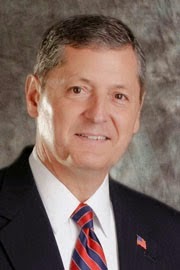


Read More About Representative Harris


HIGHLIGHT OF THE PROPOSED LEGISLATION:
11    (755 ILCS 5/11a-8.2 new)
12    Sec. 11a-8.2. Petitions; previously executed documents. No
13petition under this Article shall seek relief that is in
14conflict with any properly and previously executed will, trust,
15power of attorney, durable power of attorney, health care
16directive, advance directive, or other directive unless undue
17influence is proven in the creation of the document, by clear
18and convincing evidence, at a hearing conducted under the rules
19of civil procedure of this State.

Tuesday, March 25, 2014

NASGA Members in Legislative Action!

NASGA is pleased to announce the introduction of HB5573 to the Illinois Legislature by Representative David Harris (53rd District).

HB5573 protects the validity of previously properly and legally executed Power of Attorney (PoA)  and Advance Directives, stating in clear and concise language that these documents shall stand --only to be overturned if undue influence in the creation of the document(s) is proven at a due process hearing conducted for that purpose. 

Representative Harris consulted and worked with NASGA member and Director, Sylvia Rudek on this bill.  Addressing the problems with PoA and Advance Directives is essential to guardianship reform because many NASGA members have been designated as PoA for their loved one, only to have their PoA wrongfully ignored by the court and a guardianship forced upon their loved one instead.  In most cases, the guardian is a third-party - a total stranger who does not have a personal relationship with the ward nor an intimate knowledge of the ward's preferences or needs. 

Strengthening Power of Attorney and Advance Directives is one of the best ways to avoid guardianship.  Avoiding guardianship is one of the best ways to stop guardianship abuse.

NASGA very much appreciates the hard work and effort Representative Harris, his staff, and NASGA Director Sylvia Rudek have dedicated to the making of this bill, and we look forward to its passing. 

SYNOPSIS AS INTRODUCED:

Amends the Probate Act of 1975. Provides that guardianship of a disabled adult may not be used in a retaliatory manner or as a convenience for a health care provider or family member. Provides that no petition for guardianship shall seek relief that is in conflict with any properly and previously executed will, trust, power of attorney, durable power of attorney, health care directive, advance directive, or other directive unless undue influence is proven in the creation of the document, by clear and convincing evidence, at a hearing conducted under the rules of civil procedure of this State. 

HIGHLIGHT OF THE PROPOSED LEGISLATION:

11    (755 ILCS 5/11a-8.2 new)
12    Sec. 11a-8.2. Petitions; previously executed documents. No
13petition under this Article shall seek relief that is in
14conflict with any properly and previously executed will, trust,
15power of attorney, durable power of attorney, health care
16directive, advance directive, or other directive unless undue
17influence is proven in the creation of the document, by clear
18and convincing evidence, at a hearing conducted under the rules
19of civil procedure of this State.


Representative Harris (R) is a retired senior army officer.  He served as a State Representative in the 1980s and 1990s. He left state government in 1992 and became the Senior Vice President of the Illinois Hospital Association.
 
He returned to government service in 1999 as The Adjutant General (Commanding General) of the Illinois National Guard.  He was inducted into the Ft. Benning (GA) Infantry OCS Hall of Fame in 2002, and he retired from the Army as a federally-recognized Major General in 2003 after 33 years of service. He serves as the Chair of the Governing Council of Advocate Lutheran General Hospital in Park Ridge. Harris is a Life Member of the Association of the US Army, the Military Officers Association of America, the National Guard Association of the US, and the Illinois National Guard Association. He lives in Arlington Heights with his wife, Michelle, and they have two grown sons.