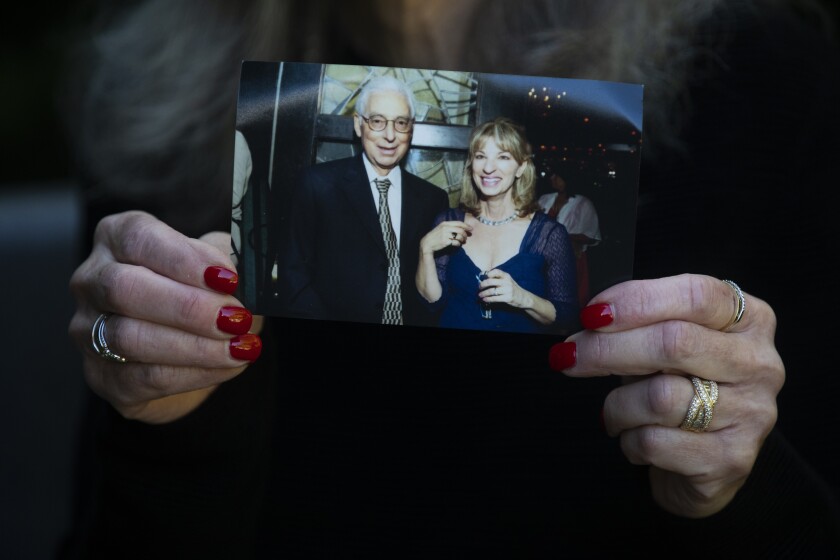
A former Miami immigration lawyer who had been disbarred in 2013
after a $4.3 million embezzlement from his firm has been disbarred
permanently after the Florida Bar said he continued to practice law for
two Miami firms.
A referee’s report notes that Leonardo Roth, 60, denies that he’s done legal work since his disbarment. Still, Roth submitted a permanent disbarment on consent, which was accepted by the Florida Supreme Court.
Roth is permanently disbarred and owes the Florida Bar $1,250 in administrative costs.
Read more here: https://www.miamiherald.com/news/business/article248169220.html#storylink=cpy
“Since his disbarment, [Roth] has worked at two different
one-attorney firms that have both re-branded themselves as some
iteration of ‘Negocios en U.S.A.’ — [Roth’s] own brand for his
immigration and investment business,” the Florida Bar wrote in its petition for contempt.
“While this business requires a licensed attorney to make filings to
government authorities, [Roth] serves as attorney-in-fact for several of
the firm’s clients and enjoys managerial authority within these firms.”
The two firms are Salazar Dager & Associates, recently moved to Coral Gables, and Fernando Socol, P.A.
Read more here: https://www.miamiherald.com/news/business/article248169220.html#storylink=cpy
A search of state online records shows ”Negocios en USA” registered with the state in 2011 by attorney Jesus Aveledo, then changed its name to “Business Seminars” in 2013. All correspondence on that action was to be directed to Fernando Socol of “Negocios en USA — a law firm” at 201 S. Biscayne Blvd., Suite 905.
That’s the address Roth registered to RM Attorneys At Law and the one that’s still on Roth’s Florida Bar profile.
That’s
also the address at which complaining client Martin Magurno said he
met Roth more than once for immigration help in 2012 and 2013, according
to the Bar complaint.
“According to [Magurno], [Roth] “gave every appearance that he was an immigration lawyer and/or investment advisor.”
According
to the Bar’s petition, Socol sent an Aug. 11, 2017 letter to clients
that said Roth and Aveledo had left the firm and claimed Roth had just
been a senior paralegal.
Read more here: https://www.miamiherald.com/news/business/article248169220.html#storylink=cpy
The address of “Business Seminars” changed on the 2018 state filing,
the first filing after Roth and Aveledo left Socol’s firm. The new
address was 701 Brickell Ave., Suite No. 850 — the previous address for
Salazar Dager, the one that’s still on the firm’s website and the one that still comes up if you Google the firm.
That’s also the address where Aveledo has had “Negocios USA” registered with the state since the 2018 filing.
“Salazar
Dager & Associates, P.A. formerly held the fictitious name
“Negocios USA, Law Firm” and did business under that name, at least
until March 23, 2020, when the fictitious name was canceled,” The Bar
petition said.
Salazar Dager client German Avellaneda told the
Bar that he received a letter from the firm that pictured
Louisiana-licensed Morella Salazar-Dager, Aveledo and Roth at the top of
the letter with “claims that the firm’s professionals ‘offer[s] their
knowledge, efforts and experience to solve your legal needs, both in
immigration and business matters.’”
Avalleneda, who paid the firm
at least $11,435, also told the Bar he dealt only with Roth, met in
Roth’s office at Salazar Dagar and saw Roth giving others at the firm
direction on his case. Never did Roth let on that he was a disbarred
attorney.
Read more here: https://www.miamiherald.com/news/business/article248169220.html#storylink=cpy
In a Wednesday phone call with the Miami Herald, Salazar-Dager said
Roth’s role with the Miami office of Salazar Dager, “was as a paralegal
and business developer. He hasn’t been acting as an attorney or giving
legal advice.”
Salazar-Dager said she hadn’t seen the Bar petition.
Embezzlement and the original disbarment
Fernando Horigian handled the bookkeeping for the firm Roth had with Mark Rousso. The referee’s report preceding Roth’s original disbarment says
he noticed some trust account shortages in April 2008. Rousso learned
of them in December 2008, around the time Roth understood the
massiveness of the financial maw about to swallow their firm:
The bookkeeper embezzled about $4.38 million.
Read more here: https://www.miamiherald.com/news/business/article248169220.html#storylink=cpy
“The referee noted that bookkeeper and his family allegedly fled to
Argentina,” the referee wrote. “His whereabouts are unknown.”
While
acknowledging there’s no evidence either Roth or Rousso were in cahoots
with Horigian, the referee ruled that if they had done the oversight
required by the Bar, they could’ve limited the damage.
Also, in
trying to make good, the two didn’t inform some clients their
disbursements were delayed while they paid other clients. The funds they
raised to put the money back included a personal loan from a client who
traded part of his trust account credit for a promissory note for more
than $231,000. They defaulted on that loan.
The referee
recommended suspension. The state Supreme Court disagreed and disbarred
both Roth and Rousso on March 28, 2013, retroactive to their Dec. 8,
2010 suspension.
Read more here: https://www.miamiherald.com/news/business/article248169220.html#storylink=cpy
Homebound senior Louise Delija, 93, receives a meal
delivery in Brooklyn, New York. Since the pandemic began, demand for
help from seniors has ballooned.
Ted Shaffrey/AP
Growing up in the 1930s in a small, marshy town in the Calabrian
region of Italy, Rose Frusciante was constantly bombarded by mosquitoes.
But one bite in particular proved dangerous.
Frusciante, who
is now 85, still remembers the sweating, fever and chills that followed
as well as being heaped under blankets and all the clothing she had as
her mother desperately tried to keep her warm. The tiny bite had given
her malaria, which also claimed the lives of three of her siblings.
Still,
Frusciante, who now lives in Mount Vernon, N.Y., says there is no
comparison between the insect-born disease and the invisible threat that
is the coronavirus.
"I'm afraid to go out," she says. "Because if you walk outside, somebody may have it and they don't even know."
According to the Centers for Disease Control and Prevention, eight out of ten deaths during the pandemic have been among seniors
like Frusciante. And while seniors are among the first in line for the
vaccine, other safety nets in place to catch the elderly are unraveling
quickly.
Frusciante's husband died last year and she lives alone in an apartment. She uses a walker to get around.She needs help, but can't afford it on $2,000 a month.
Rose Frusciante and her husband Mario, who died in 2017.
Rose Frusciante
So she applied for a part time aide paid for by the state, she was put on a waiting list with 11,000 names of seniors like her.
Since
the pandemic began, demand for help from seniors has ballooned. New
York state has 3.2 million people aged 65 or older. At one in six
residents, that's more than ever before, and more than the entire
population of many states.
According to the National
Association of Area Agencies on Aging, the most recent round of federal
aid for seniors has left a gaping $575 million hole nationwide. For a
state like New York, which is already grappling with a budget deficit of
billions, that means its system meant to help protect seniors is left
straining — tens of millions of federal aid dollars short.
Jay Bhattacharya, who teaches medicine and studies aging at Stanford,
says the fate of a senior citizen today often depends on how much
they've saved during their working years.
"In many ways, the
experience of older Americans mimics the experience of the rest of the
population," he says. Those who have considerable savings and retirement
security are doing better.
"It mainly is rich versus poor."
For seniors with limited income, the problem is exacerbated by a
shortage of home health aides. In Mount Vernon, the Department of Senior
Programs and Services says many are afraid of riding the bus to work
for fear of catching COVID-19.
Agencies that supply elderly
people with aides say they are now forced to compete with hospitals
facing staff shortages. And with much of school moving online, aides are
facing a care issue of their own. If they go to work, who will watch
their children?
Beth Finkel of AARP New York says that when seniors won't
or can't go out and family or aides aren't going in, a troublesome
snowball can start to form — isolation and loneliness.
In
normal times, it's hard to live without someone to squeeze your hand,
help you put on a favorite sweater, or reminding you to swallow a pill
from one of those little plastic cups.
"Our research shows that being isolated is equal to smoking 15 cigarettes a day," she says.
According to the CDC, isolation and loneliness can lead to an increased risk of dementia, stroke, heart disease — even suicide.
But
with the pandemic, another kind of safety net is disintegrating — the
kind created by the daily social interactions seniors might typically
have with a waiter at a coffee shop or a teller at a bank.
"If
that is not in place, if people can't get out to visit those sites,
then who's going to be able to say, 'Oh, no! Mrs. S. doesn't have a
winter coat on today?' " she said.
As she stays inside and waits for help from the state, Frusciante says she is not scared to die.
"I
mean, we're all going to die," she says. "I'm afraid to go in a place
in a hospital clinic and I am dying and I couldn't even see my family."
But
what does devastate this woman, who has lived through a world war, the
assassination of a president and more, is having to wave hello to her
two grandchildren through a window.
"That killed me, not to touch my grandkids," she says.
Ellie Craig Goldstein holds a pouch
containing sentimental items from her brother, Peter Craig. Three years
after Peter’s death, his sisters Ellie and Joyce Craig are haunted by
the memory of his final hours.
(Francine Orr / Los Angeles Times)
By Kim Christensen, Ben Poston
Martin Huff was 67 when he fell off his bicycle, banged up his knee
and spent a couple of hours in a Riverside County emergency room before
walking out under his own power.
Ten days later he was in hospice
care, diagnosed as terminally ill by a small Covina provider of
end-of-life services that said he was weak and wasting away, with six
months or less to live.
Five years after that grim prognosis,
however, Huff was still very much alive. He testified in federal court
that no one from California Hospice Care had ever given him a medical
exam before claiming he was dying.
“I really never knew exactly what the deal was on the hospice,” he said.
Huff
is among a legion of mostly older Americans targeted for audacious,
widespread fraud in an industry meant to provide comforting care in
their final days, a Los Angeles Times investigation found.
Like
Huff, many are unwitting recruits by unscrupulous providers who bill
Medicare for hospice services and equipment for “terminally ill”
patients who aren’t dying.
Intense competition for new patients —
who generate $154 to $1,432 a day each in Medicare payments — has
spawned a cottage industry of illegal practices, including kickbacks to
crooked doctors and recruiters who zero in on prospective patients at
retirement homes and other venues, The Times found.
The exponential boom in providers has
transformed end-of-life care that was once the realm of charities and
religious groups into a multibillion-dollar business dominated by
profit-driven operators.
Nowhere has that growth been more explosive, and its harmful side effects more evident, than in Los Angeles County.
The
county’s hospices have multiplied sixfold in the last decade and now
account for more than half of the state’s roughly 1,200
Medicare-certified providers, according to a Times analysis of federal
healthcare data.
Scores of providers have sprung up along a
corridor stretching west from the San Gabriel Valley, where California
Hospice Care was located, through the San Fernando Valley, which now has
the highest concentration of hospices in the nation.
“There are too many providers in L.A. County, and too many providers
who are in it for the wrong reasons,” said Edo Banach, who heads the National Hospice and Palliative Care Organization, the largest U.S. trade group for hospices. “Folks who go into this for the wrong reason generally do not do a good job.”
Much more than money is at stake.
Some patients who unknowingly enrolled in hospice later discovered
they had signed away their rights to lifesaving emergency medical
treatment, state inspection records show. Others endured excruciating
pain in their final days when providers failed to deliver the comforting
care they desperately needed.
Still others suffered the consequences of neglected, festering sores that developed maggots or resulted in hospitalizations.
Privacy
laws and government reports that keep the names of patients, doctors
and hospice administrators confidential make it difficult to quantify
and humanize many of the cases.
But The Times found that since
2008, regulators have cited hospices in California more often than
anywhere else in the country for the most serious types of violations,
four times as many as states such as Texas and Georgia, which also have
large numbers of providers.
Despite those citations, California and federal regulators
have rarely fined, suspended or shut down deficient hospices, state
reports show. Oversight has been weakened further during the COVID-19
pandemic, as regulators suspended requirements for most hospice
inspections and limited the types of complaints they investigate.
California,
which has among the lowest barriers to setting up a new hospice, also
leads the nation in violations for enrolling patients without medical
proof they were terminally ill.
The Times’ analysis revealed that
Los Angeles County hospices discharged patients 80% more often than
providers nationwide, highlighting a rate that federal authorities say
is a red flag for Medicare fraud.
California Hospice Care claimed
that Jesse Staten suffered from terminal heart failure when it signed
him up for end-of-life treatment. His predicted six months to live
expired in 2012, but he didn’t: When The Times contacted him eight years
later, he was still going strong.
“I’m hanging in,” said Staten, 75. “I’ve got a lot of issues in my blood and I have other issues, but I can’t complain.”
Federal
prosecutors accused California Hospice Care of bilking taxpayers of
$7.5 million in illegal payments in connection with Staten, Huff and
scores of other ineligible Medicare recipients. The hospice owner and
two doctors were sentenced to prison, and several others were convicted
or pleaded guilty in the scheme.
Many of the hospice’s patients were addicts lured by the promise of free narcotic painkillers, prosecutors said.
Some were enlisted by a doctor who collected a bounty from the hospice on each, according to his indictment.
One was a 47-year-old woman who lost her place on a waiting list for a
liver transplant when she signed up for hospice, which prohibits
curative care. It took her months to get reinstated, and she died not
long after finally receiving a new organ.
“That’s the last hope,
and having that person removed from the liver donor list by placing them
in the program is conduct that is hard to understand,” U.S. District
Judge S. James Otero said when sentencing a hospice nurse to 18 months
in prison. “That’s callous.”
::
Conceived
as an end-of-life option for terminally ill patients, hospice care
properly delivered has been a godsend for millions of dying Americans
and their families. It provides palliative care and prescription drugs,
nursing services, medical equipment, supplies and spiritual counseling
for those given a prognosis of six months or less to live.
The
U.S. hospice industry took root in the mid-1970s but flourished only
after Medicare began covering its services in 1983. For-profit providers
sprang up to meet a growing need that outstripped the capabilities of
charities and religious institutions that pioneered end-of-life care.
In the last 20 years, the number of U.S. providers has roughly
doubled, while Medicare spending on hospice has grown sixfold, to $19.2
billion a year. More than 1.5 million Medicare beneficiaries now receive
care from some 5,000 hospices, nearly a quarter of them in California.
“Virtually
all of the growth is of for-profit providers, which appear to be
crowding out the local nonprofits that established the hospice model and
had a desire to maintain its integrity,” said Michael Connors, a
long-term care advocate with California Advocates for Nursing Home Reform.
For-profit operators now make up 70% of all hospices certified by the Centers for Medicare and Medicaid Services and 91% of those in California. In Los Angeles County, they account for 97%.
Many provide excellent care.
Satisfaction surveys reported by hospices nationwide show that more
than 80% of respondents rate their hospice as a 9 or 10 out of 10, but
in L.A. County that figure drops to 74%. Respondents in L.A. also were less likely to report that hospices always gave them the help they needed.
Most
hospice care is provided in patients’ homes, but services also are
rendered at stand-alone facilities, nursing homes and assisted-living
centers. Regulatory inspections and financial audits are infrequent,
making the system a soft target for scammers.
Complaints about shady operators began lighting up the California Senior Medicare Patrol
hotline in mid-2017 and have not let up, said Sandy Morales, who
oversees the federally funded statewide hotline whose mission is to help
Medicare beneficiaries prevent, detect and report fraud.
“It’s
all over Southern California: Riverside County, Hemet, Indio, Long
Beach, Los Angeles, Bakersfield,” she said. “Right now, it’s huge.”
Since January 2019, her agency has forwarded more than 100 cases of
suspected hospice fraud to federal investigators, Morales said. One
doctor’s office in Los Angeles County recently reported that 10 patients
appeared to have been fraudulently enrolled by a hospice.
Fraudsters
stick to a familiar script, enticing or duping Medicare recipients into
signing up for services they don’t need, she said. They send recruiters
door to door and to churches, food banks, senior centers and apartment
complexes, often misrepresenting hospice as an “extra” Medicare benefit
that pays for nursing visits, hospital beds or other needs.
‘It makes no sense. I can’t imagine there
are 60 hospices in Burbank that are doing it the right way. There can’t
be enough people for 60 hospices there.’
Jan Jones, recently retired CEO of the California Hospice Network
The pandemic has spun off new schemes, she said, with
unscrupulous recruiters now enticing prospects with hand sanitizer,
gloves and promises of other COVID-19 “freebies.”
Many who sign up don’t even realize they are in hospice care.
“They’ll say, ‘No, I’m not dying. I wanted help with housekeeping and cooking, and that’s what I signed up for,’” Morales said.
In
May 2017, the daughter of an Alzheimer’s patient told a state
investigator that a marketer for All Seasons Hospice in Paramount signed
up her mother with a promise of 24-hour nursing care. When no one
showed up, she called the hospice and was told the only 24-hour service
was by phone.
The hospice administrator acknowledged the bogus sales pitch but mostly shrugged it off.
“It is a dog-eat-dog situation out there, very competitive,” the administrator told inspectors, according to a state report
that did not name the employee. “I have no control over what these
marketers say or do. They do what they want and promise anything to get
the patient.”
The Centers for Medicare and Medicaid Services did
not respond to specific questions about the extent of hospice fraud but
said in a statement that the agency aggressively seeks to ferret it out.
“CMS
identifies fraud, waste and abuse in hospice services utilizing
cutting-edge data analytics, medical review and program integrity
investigations,” it said. “In instances of potential fraud, CMS refers
those providers to law enforcement for further criminal investigation
and for appropriate administrative actions.”
The U.S. Department of Health and Human Services’ Office of Inspector General reported in July 2018 that inappropriate billing and fraud by hospice providers cost taxpayers “hundreds of millions of dollars,” but the full extent is unknown.
The watchdog agency declined to comment on the scope of hospice fraud
and said it could not provide a count of cases it has investigated. The
Department of Justice did not respond to repeated requests for its
prosecution numbers.
But according to interviews with hospice
providers and industry experts, and a review of law enforcement releases
on individual cases, state licensing reports, lawsuits and federal
data, fraud is widespread.
“Hospice fraud remains absolutely
rampant in the United States,” said Mark Schlein, an attorney with the
Los Angeles firm Baum Hedlund who specializes in hospice whistleblower
lawsuits. He links the fraud in large part to the industry’s unfettered
growth.
“That translates into much more money being paid to
hospice companies by federal healthcare programs,” he said. “When Willie
Sutton was asked, ‘Why do you rob banks?’ he said, ‘Because that’s
where the money is.’”
::
More than two
dozen hospices pepper a mile-long stretch of Victory Boulevard, an
east-west artery in the San Fernando Valley. One well-worn office
building in the 13600 block in Van Nuys is home to 15 providers.
“Hospices
have been growing like mushrooms around here,” said one of the other
tenants, who declined to give his name for fear of alienating his
neighbors in the complex, where monthly rents start at an enticingly low
$399.
Scores of others are in neighboring Valley communities, all
part of a sprawling regional hotbed of for-profit hospices. Many are
small operations, some purchased as investments by people with little or
no healthcare experience.
Since 2010, the number of providers in Los Angeles County has skyrocketed from 100 to 618, federal data show.
North Hollywood is home to 35 hospices, while Glendale has 60, Burbank has 61 and Van Nuys 63.
By comparison, New York state and Florida both have fewer than 50.
With
a population of 103,000, Burbank has a per capita rate of hospices that
is nearly 40 times the national average, according to The Times’
analysis.
“It makes no sense,” said Jan Jones, recently retired chief executive officer of the California Hospice Network,
a coalition of nonprofit providers. “I can’t imagine there are 60
hospices in Burbank that are doing it the right way. There can’t be
enough people for 60 hospices there.”
New York, Florida and dozens
of other states require prospective hospice owners to obtain a
“certificate of need” to justify the demand for additional providers
before they can get licensed.
California providers must be free
of felony convictions, but there are few other qualifications for
starting or operating a hospice beyond getting licensed by the state and
certified by Medicare, a process that costs only a few thousand
dollars.
“There is not a high-cost entry point to start a hospice
program, unlike a hospital or a nursing home,” Jones said. “I think a
lot of people think it is an easy business, which frankly I think is
wrong. It is very complicated and complex, and very important to the
people we serve.”
::
With the explosive growth have come serious quality-of-care issues.
The
Times’ review of more than 800 state licensing and inspection reports
revealed instance after instance in which patients were deprived of
comforting care because of the actions — or inaction — of hospice
providers.
Mismanaged pain medications, neglected infections,
missed nursing visits, incompetent or dishonest home health aides — all
were cited among hundreds of violations that required hospices to draw
up plans to correct the problems but resulted in little or no
disciplinary action.
Ellie Craig Goldstein holds a photo of
her brother, Peter Craig, and sister, Joyce Craig. The sisters say they
were traumatized when no one from hospice came during his final hours.
(Francine Orr / Los Angeles Times)
Patients suffered for lack of pain medication or had maggots crawling
out of festering foot sores and head wounds, state inspection records
show. Others died alone or without the help they neededbecause no one from the hospice showed up in their final hours.
“We
will never heal from that devastation,” Joyce Craig said of the final
moments of her brother, Peter Craig, 74, a partner in a Los Angeles
accounting firm who died of cancer in 2017.
The California
Department of Public Health licenses and regulates hospices to ensure
they meet state and federal standards but has limited ability to punish
offenders. The only fines it can impose are for breaches of patient
confidentiality.
To qualify for hospice, patients must be
certified as terminally ill by their attending physicians, if they have
them, and by a hospice doctor. The certification process is ripe for
fraud.
The Times’ analysis of federal data showed that California hospices
led the nation in violations for enrolling nonterminal patients, logging
57 such deficiencies since 2008, nearly three-fourths of them in L.A.
County.
The next closest states were Georgia and Louisiana with 22
each. But the actual numbers in California and elsewhere are probably
much higher because of variations in how improper terminal diagnoses are
coded and categorized by state inspectors.
At Eleos Hospice in Van Nuys, state officials who sampled five
patients’ records in December 2016 discovered no evidence that any were
terminally ill. The agency was “claiming or attempting to claim
reimbursement for patients who did not need hospice care and services,” a
licensing report noted.
All five were promptly discharged, but records show no action was
taken against the doctor or hospice. The hospice has changed hands twice
since then, according to a new owner who took over in August and said
he was unaware of those deficiencies.
Inspectors found a similar
scenario when they examined the records of two patients of Orion Hospice
Care Services in Valley Village in November 2018.
The hospice’s
medical director, in recertifying a patient as terminally ill, wrote
that she was experiencing a steady decline in health and appetite and
was losing weight. But that’s not what the patient told a state
investigator.
“I did not have pain and my appetite is OK,” she said, “and I did not lose any weight.”
In fact, records kept at the board-and-care home where the woman
lived showed she had gained 7 pounds over the preceding three months.
The
hospice administrator declined to comment when asked by inspectors to
explain, and the medical director admitted he’d never put the woman on a
scale, describing a method akin to a guess-your-weight booth at a
county fair.
“I assessed her weight by my own clinical measurement
and judgment, not by any actual documented measurement,” the doctor
said, according to a state inspection report.
State inspectors found no records to support either terminal diagnosis, nor do inspection reports reflect any disciplinary action against the doctor or hospice beyond requiring a corrective action plan.
For a patient at Guiding Light Hospice in Sun Valley, the assessment could not have been bleaker.
The
woman was easily fatigued; needed help with feeding, dressing, bathing,
toileting, walking, handling money and taking medications; and could
speak “less than six intelligible words per day,” a state inspection record noted. She also was incontinent, had a history of falls and was forgetful, disoriented and confused, “with imminence of death.”
When
interviewed by state inspectors, however, the woman, identified in a
state licensing report only as Patient 1, said her only infirmity was
some back pain from arthritis.
“Patient 1 stated she knew she was
not ready to die, and laughed while denying she had a terminal
diagnosis, and a life expectancy of six months or less,” according to
the report.
The nurse who made the dire, detailed assessments insisted they were
accurate, despite all evidence to the contrary. No disciplinary action
was taken, but when inspectors returned for a follow-up 16 months later,
Guiding Light had closed its office.
::
This office building in the San Fernando
Valley is home to several hospice providers. Since 2010, the number of
providers in Los Angeles County has skyrocketed from 100 to 618,
Medicare data show.
(Francine Orr / Los Angeles Times)
Karen Alvarez at first gave little thought to the visitors from Ace
of Hearts Hospice who showed up at Lancaster’s Sierra Retirement Village
with armloads of fast food. After all, the apartment manager said, many
of her low-income tenants were grateful for a complimentary meal.
But Alvarez was soon struck by the aggressive tactics of the Ace of
Hearts personnel, who took over the lobby every Wednesday and trailed
residents back to their units to pitch them on “free” hospice care,
hospital beds and motorized scooters, all billable to taxpayers.
“You
know, hospice people are gentle and talk to you nice. They are
understanding and kind,” she said. “They don’t come in swarming like
bees, like these people did.”
Few hospices better epitomize the
most serious problems that afflict the industry — or underscore the
failure of regulators to address them — than Ace of Hearts.
More
than a dozen patients were not terminally ill and should never have been
enrolled, according to a felony criminal complaint and state reports
that detail a litany of deficiencies.
Based in a small office on Foothill Boulevard in Tujunga, the hospice
racked up at least 115 regulatory violations from 2014 to 2016, second
most among the 1,200 California providers over the last decade, federal
records show.
Details of the violations fill nearly 200 pages of state inspection reports chronicling mishandled medications, neglected sores and repeated missed visits by nurses and home health aides.
In one patient’s case, aides failed to show up for 18 straight visits over a span of several months.
“It
must have been a computer glitch,” was how the Ace of Hearts
administrator explained it to state inspectors, who found dozens of
other missed patient visits.
Ace of Hearts owner Rozanna Avetyan, 42, who signed the inspection
reports as the administrator, did not respond to requests for interviews
left with a person at her Stevenson Ranch home and with a woman who
answered her cellphone but would not identify herself.
Her attorney, Donald Marks, did not respond to repeated phone and email messages.
In 2016, the government paid the hospice about $450,000 for 29
patients, nearly two-thirds of whom were discharged alive, Medicare data
show. Although hospice patients may be recertified to receive care for
more than six months, federal officials say that very long stays and
high “live discharge” rates are potential indicators of fraud.
Ace of Hearts’ 62% live discharge rate in 2016 was nearly six times
the national rate that year, according to The Times’ analysis of
Medicare data.
That October, state inspectors could find no
evidence of terminal illness for three of 11 patients sampled. Some had
been admitted by the hospice medical director, who signed certifications
electronically, state inspection records show.
The unidentified
doctor, whose office was in Palm Springs, more than 100 miles from
Tujunga, told state officials he did not recall some of the patients and
didn’t know how his signature wound up on their certifications.
“I
do not like computers so I do not use them,” he said, according to a
state licensing report. “I did not sign anything electronically.”
The improper certifications had serious ramifications: Some
nonterminal patients who signed up were stunned to learn they had
forfeited their existing medical coverage in the process, the report
states.
At least two lost their HMO coverage when they were
enrolled in hospice without being told they could refuse. One was signed
up while in an assisted-living facility, the state licensing records
show, and the other while residing in a board-and-care home.
“The
HMO won’t even see him in the emergency room, and he does not understand
it,” the board-and-care owner told state investigators, according to a
state report.
When pressed for an explanation, the report said,
the Ace of Hearts administrator blamed the board-and-care owner for
referring the man, who developed serious bed sores while in hospice
care.
“I had nothing but trouble with the board-and-care owner,” the
administrator said. “Now the patient has multiple wounds. I told [his]
caregiver that we don’t do wounds here.”
Poor wound care was
nowhere more evident than in the case of one patient treated by an Ace
of Hearts nurse who lacked enough clean gauze to dress a serious foot
sore.
“She picked up the dirty discarded Kerlix dressing that was
removed from the wounds that was soiled with a few spots of old red
colored discharge and she re-used the old dressing on top of the clean
dressing,” wrote a state inspector who witnessed the violation of
infection-control protocols.
It was but one of a long list of serious deficiencies over the years.
“The cumulative effect of these systemic practices resulted in the
failure of the hospice agency to ensure the provision of quality
healthcare in a safe environment,” a 2016 inspection report said.
Despite
that finding, however, Ace of Hearts continued to operate for three
years. It eventually was undone not by state regulators but by its own
weekly free-breakfast sales-pitch visits to Sierra Retirement Village
and the nearby Aurora Village Retirement Center.
Alvarez, the
Sierra complex manager, told The Times that two federal agents dropped
by one day to grill her about the visits and kickback offers of up to
$300 per patient by Avetyan, who also owned Team Hospice in Lancaster.
“I
wasn’t interested in that at all,” Alvarez, who was not accused of
wrongdoing, said of the kickbacks. “I said, ‘No, I have a job, I don’t
need that.’”
Authorities had been tipped off by a county social worker who was
surprised that a resident she was visiting had been given a “hospice
bed” when she was not ill, Alvarez said.
In 2018, the California
attorney general’s office filed fraud charges against Avetyan and four
others, alleging that her hospices had billed Medicare and Medi-Cal for
$1.2 million for ineligible patients.
Avetyan had paid more than
$180,000 in kickbacks for illegal referrals, some of them by a woman who
worked in a doctor’s office and gleaned names from the patient roster,
prosecutors alleged in a criminal complaint.
A different
physician, Dr. Blanca Galapon, now 80, was accused of falsely certifying
a dozen patients as terminally ill in exchange for unspecified payments
from Avetyan, according to the complaint.
Avetyan pleaded guilty in April 2019 to one count of conspiracy to
pay and accept insurance kickbacks and was given a suspended six-month
jail sentence and placed on four years’ probation.
Galapon and other defendants cut plea deals for deferred prosecution or probation.
In
January, Avetyan was barred from all federal healthcare programs,
including Medicare and Medicaid, for at least five years. By early this
spring, both Ace of Hearts and Team Hospice had closed their offices.
But court documents and other public records indicate that Avetyan sought continued involvement in the hospice industry.
At least five hospices based at one Van Nuys office building appear
to have been spun off directly from Ace of Hearts or have significant
links to it, The Times found. Online biographies that list two young
women as chief executives of the five hospices describe both as former
Ace of Hearts employees.
One of them, Arpine Melikyan, is a 2019 graduate of Cal State L.A.
who was an Ace of Hearts accountant and now heads up two other
providers, Life Hospice and High Care Hospice.
In a 2019 lawsuit,
Avetyan alleged that she agreed to pay Melikyan $5,000 a month and
provide staffing and other resources in exchange for a 30% stake in the
two hospices. Melikyan declined to comment on the lawsuit, which accuses
her of reneging on the deal.
Avetyan is due back in court Dec. 16, accused of violating her probation.
Prosecutors
would not provide details but said in an email to The Times that she
continued to bill Medi-Cal for hospice services after being barred from
the program.
SANTA ROSA BEACH — A local attorney has
been disbarred after failing to communicate with a client for more than
two years, according to news release from The Florida Bar.
Michael
Lee Weimorts was hired in 2017 to represent the Summerhaven North
Townhome Association in a beach access dispute, according to a formal
complaint by The Florida Bar. The Association paid Weimorts a $3,500
fee, but Weimorts reportedly went more than a year without communicating
the status of the case to his client.
In
2019 he reportedly denied the association's request for a refund, saying
he had provided some legal services. However, Weimorts ultimately
failed to follow up on the association's request that he show proof of
his work, according to the complaint.
The association reported the situation to the
Florida Bar, which made numerous unsuccessful attempts to contact
Weimorts by letter and email, the complaint said.
A
referee appointed to oversee Weimorts' disciplinary case ultimately
recommended disbarment, citing eight aggravating factors. Among them
were five previous disciplinary incidents in 2001, 2004, 2006 and 2020
in which Weimorts had been subject to public reprimands, periods of
probation and suspensions.
Weimorts, who was admitted to practice in 1993, was disbarred in a
Dec.10 order by the Florida Supreme. Additionally, he was ordered to pay
$3,500 in restitution to Summerhaven North Townhome Association. The
order was scheduled to take effect 30 days after it was issued to allow
Weimorts time to close out his practice.
Weimorts did not immediately respond to the Daily News' request for comment Tuesday.
As
an official arm of the Florida Supreme Court, The Florida Bar and its
Department of Lawyer Regulation are charged with administering a
statewide disciplinary system to enforce Supreme Court rules of
professional conduct for the more than 108,000 members of The Florida
Bar.
The Bar announced that between Nov. 21 and
Dec. 28, the Florida Supreme Court disciplined 20 attorneys, disbarring
four, revoking the licenses of three, suspending 12 and reprimanding
one. One attorney was placed on probation and two must pay restitution.
CEDARVILLE — Three out of every five long-term
care facility workers in Ohio have refused the coronavirus vaccine, Gov.
Mike DeWine said Wednesday.
Many remain skeptical about the vaccine’s safety, health officials
said, while others are chilled by deep-seated distrust of government or
even fringe conspiracies of malicious intent.
Though the partnering pharmacies administering the vaccine in Ohio’s
nursing homes — in the Mahoning Valley, that’s Walgreens and CVS — are
“on track” to finish up their first round of vaccines in the next couple
of weeks, “the bigger concern is the number of staff that are not
taking it,” DeWine said Wednesday.
DeWine conferred on Christmas Eve about the refusals with the Ohio
Health Care Association, which represents more than 1,000 long-term care
facilities statewide, said Executive Director Pete Van Runkle.
At some of the association’s member facilities, all staff have accepted the vaccine; at others, only a fifth, he said.
Anecdotally, most of workers’ concerns are about safety — whether
this brand new vaccine, which was brought to bear at unprecedented
speed, has yet-unknown long-term side effects; specifically, an impact
on the reproductive system — but some concerns swing into the wild
fringe.
He’s also heard anecdotal reports that workers believe the vaccine
contains a microchip or that it will somehow negatively affect
minorities — “stuff that floats around on social media … it strikes one
as craziness,” he said.
“It becomes somewhat of a political issue. There’s folks that are
anti-vaccination for political reasons, too,” Van Runkle said. “It’s a
challenging issue. We knew it was before all this started. There’s just
so much sentiment out there, just in the general public, of people who
are skeptical about the vaccine.”
Since the start of vaccine distribution in Ohio, Bobbi Terwilliger, a
representative with the Youngstown-based Teamsters Local 377, has been
fielding questions from her members about the vaccine’s safety.
She represents nursing home staff like nurse aides and kitchen
workers who are part of Ohio’s first vaccination group, Phase 1A, and
among the first in the world to receive the vaccine.
When members call seeking additional information, Terwilliger advises
them to reach out to their pharmacists; she noted CVS and Walgreens
have done a good job of getting information to people with questions.
“Put it in simple terms for them,” she said. After a year of being
inundated with horrifying studies and statistics about COVID-19, “it’s
just a matter of speaking to people in plain English.”
She advises employers of places like nursing homes to approach workers who have concerns and ask about them.
“It might be something simple,” she said. “Give it a shot. Maybe it would make it a little more palatable.”
When it comes to the anxiety and confusion, Terwilliger blames the
hyper-partisan political atmosphere and stigma around public health
measures like masks and vaccines.
People are being coy about whether they’ve had the virus or gotten the vaccine, she said, fearing backlash from others online.
“There’s a lot of stigma created from our president down, about
mask-wearing and all this other garbage to the point that people just
don’t want to be harassed,” she said.
After receiving wildly mixed messages from politicians throughout the
entire pandemic, people are looking for understandable information and
don’t know where to turn.
“People are not trusting anything that’s coming out of the state and
out of the federal government. They’re just scared of putting this in
their body. They don’t know what they should do," Terwilliger said.
The association is trying to counteract misinformation with new
educational materials on vaccine science — “mythbusting,” Van Runkle
said. Facilities are also finding success with internally released
videos featuring caregivers who give their reasons for taking the
vaccine, he said.
Some facilities have even resorted to incentivizing vaccination rate goals with random prize drawings.
“It can’t just be left to happenstance,” Van Runkle said. “We have to
continue our leadership of our facilities. Our members have to continue
to try to find ways to educate and convince.”
Long-term care facility residents, however, have widely been more
accepting of the vaccine, typically 90 percent from facility to
facility, he said.
“That’s obviously a defense for those residents. Even if that staff
member comes in and is infectious, the residents aren’t gonna get it,”
he said. “The other part is to redouble our efforts to convince staff
they need to participate.”
Long-term care facility residents make up 52 percent of all confirmed
and probable COVID-19 deaths in Trumbull County; 55 percent of the
deaths in Columbiana; and 65 percent of the deaths in Mahoning.
The hospice care facility housing Renee Ciotti’s 92-year-old mother
is due to receive its first shipment of the coronavirus vaccine on Jan.
12, Ciotti said.
For seven months, Ciotti, of Salem, had been driving to her mother’s
Streetsboro assisted-living facility during two-hour windows in the
morning and afternoon, for 20-minute visits. Since transitioning her
mother into hospice care, she’s been able to visit regularly and has
heard similar concerns about the vaccine from caregivers who have turned
it down.
“I would certainly wish all of them would get the vaccine. It would
relieve a lot of stress for residents and families,” she told Mahoning Matters. “I do, however, understand why some of the younger females would refuse.
“Some might want to start a family and are unsure of the side effects down the road.”
In that regard, Van Runkle pointed to reports of women who conceived during the coronavirus vaccine trials.
Since the federal vaccine rollout for nursing homes is being done in
three visits, he hopes those who turned it down on the first visit will
“see their coworkers didn’t suffer any ill effects, or at least anything
that will convince them to step up on the second round.”
For those who pass it up entirely, DeWine warned it’s unclear when the currently scarce vaccine may come around again.
“We aren’t going to make them, but we wish they had a higher
compliance,” he said Wednesday. “Our message today is the train may not
be coming back for a while.”
Gary Hein and his wife, Ann Severine, who lives in the memory care unit of the El Castillo retirement community.
Two Santa Fe men who sued for the right to visit relatives in hospice
care during the state’s pandemic-related restrictions won one battle
this week when a judge ruled an order authorizing nursing homes to
create their own criteria for banning visitors was unconstitutional.
State
District Judge Matthew Wilson on Monday ordered the secretary of the
New Mexico Department of Health to strike the provision from the public
health order and to revisit the order’s language with consideration for
the constitutional rights of nursing home residents and their families.
“Loss
of familial association for even minimal amounts of time constitutes
irreparable injury,” Wilson wrote in his ruling. “Nothing, such as video
conferencing, is a substitute for in-person, physical contact with a
loved one.”
The
ruling is a legal victory for Gary Hein and his lawyer, Pierre Levy,
who both fought to be allowed to visit family members with dementia in
the memory care unit at the El Castillo retirement community in downtown
Santa Fe.
The win is symbolic for Levy — his mother died in September, just weeks after he filed a petition challenging the order.
But
it may clear the way for Hein, 78, to visit his wife, 80-year-old Ann
Severine, who Hein said is fading at El Castillo without the care and
attention he had provided during daily visits before the pandemic
struck.
“The harm that Mr. Hein and Ms. Severine are suffering by
being denied their right to association outweighs any burden on the
Secretary to make sure that the Constitution is taken into account when
executive orders are issued,” Wilson ruled.
He granted Hein’s
request for a preliminary injunction and directed the health secretary
to provide a report within 21 days detailing changes to address the
portion of the order identified as unconstitutional.
It’s still unclear, however, when or if Hein will be allowed to see his wife.
A spokeswoman for the Department of Health declined to comment on the case Tuesday.
Former
Health Secretary Kathy Kunkel, who retired from the position earlier
this year, is named as a defendant in the lawsuit, but
Secretary-designate Dr. Tracie Collins is now subject to the order.
El
Castillo CEO Al Jahner referred questions to attorney Carol Clifford,
who said the facility would incorporate any changes to the state’s
public health order into its visitation policy.
Clifford said privacy issues prevented her from commenting on whether Hein would be allowed to visit his wife.
Levy
filed a complaint against the Department of Health on Sept. 3 seeking
both a preliminary and permanent injunction. He argued the health order
issued in March, which directed nursing facilities to limit visitations
with patients receiving “end of life care” and authorized them to create
criteria for restrictions, was arbitrary, capacious and
unconstitutional.
Levy also argued the order was vague about the
definition of end-of-life care and discriminated against patients and
family members by barring them from visits while placing no restrictions
on staff members.
Levy lost standing in the case when his mother died Sept. 12, according to court records.
“As with a lot of situations involving COVID, it’s been an extremely painful experience,” Levy said in an interview Tuesday.
But he didn’t give up.
After
his mother’s death, he filed an amended complaint on behalf of Hein.
The two had crossed paths in El Castillo’s memory care unit over the
years.
“He was frequently there and we became acquainted because
he was devoted to his wife and I was devoted to my mother,” Levy said.
“And both he and I wanted to make sure our respective family members had
love, guidance and support.”
Hein told the court at a recent
hearing he and his wife had met in 1987, married in 1999 and moved to El
Castillo from Eldorado in 2014.
She was moved to the memory unit
in 2016, he said, adding he visited her daily to give her the
individual attention and loving care staff didn’t have time to provide.
He brushed her hair and sometimes her teeth “because good dental care
was important to both of us,” he said. He also picked out her clothes
and took her to get her hair and nails done.
Sometimes they took walks together.
“We
were active people before we came to El Castillo,” Hein said on the
stand, “and I tried to make her retain some of that activity. It kept
her alert and from being just a blob, a vegetable.”
Hein said his
wife “enjoyed being in the wild,” so sometimes they would take a drive
to the Santa Fe ski basin. Other times, he said, he would sit with his
arm around her while they watched television together.
“I was trying to make an abnormal situation more normal,” Hein said.
But
since the lockdown in March, Hein told the judge, he’d only been
allowed to see Severine a handful of times — twice during socially
distanced visits and several times during “window visits,” in which a
nurse would push his wife’s wheelchair up to a window so they could see
each other.
During the first socially distanced visit, Hein said,
he touched his wife’s leg and was warned by a nurse that if he did it
again he would no longer be allowed to see her in person.
Hein said he stopped the window visits because they seemed to upset his wife.
“She seemed confused,” he said. “She seemed bewildered that I was there, but not.”
Hein
said he’s had in-person contact with his wife once since the lockdown,
when he took her to a dentist to address a lost crown. After they were
able to touch and be together, he said, his wife became more verbal.
Now he said, he visits her via video once a week and sends her notes and photographs through staff.
But her condition has deteriorated, he said, and so has his.
“Prior to the lockdown, she was conversant and we could talk to each other,” Hein told the judge. “Now, we don’t.”
Before
the lockdown, Hein said, his wife was still an active person. “Today,
he told the court, she inhabits a body … [but] a lot of the personality
and life is leaving.”
“I guess I’m turning inward, too, in a way,”
Hein said at the hearing. “I don’t go out of the apartment much. I go
to the grocery store. But I am isolating because I don’t want to risk
being a liability to her should I get to visit her again.”
Wilson
noted in his ruling that while several employees of El Castillo had
tested positive for the virus, Hein had tested negative nearly a dozen
times.
Levy cited a recent U.S. Supreme Court ruling in his
motions, quoting passages that stated “even in a pandemic, the
Constitution cannot be put away and forgotten,” and “even if the
Constitution has taken a holiday during this pandemic, it cannot become a
sabbatical.”
“There is no dispute that the pandemic is dire and
that we are living through the worst public health crisis in over one
hundred years,” Levy wrote. “There is no dispute that the Secretary is,
in the first instance, tasked with safeguarding public health and has
the expertise and resources to bear to carry out this task. Rather, the
issue presented is whether, despite these critical times, the Secretary
can disregard or ignore the United States and New Mexico Constitutions.
The law is clear that she cannot.”
Levy argued that while public
officials have some leeway in issuing emergency orders in times of
crisis, officials must ensure the restrictions are “the most narrowly
tailored means available to satisfy a compelling state interest.”
The
Department of Health failed to do that, he said, by failing to review
the restrictions and by allowing nursing facilities carte blanche to
come up with their own criteria regarding who could visit and who could
not.
“We’re hopeful he’ll be able to have in-person visits with his wife soon,” Levy said of Hein.
As the pop music superstar remains under a conservatorship, one former 'N Sync member is speaking out about the situation. In a new interview with Australia's Today Extra, Lance said that he feels for Britney as she continues a legal battle with her father, Jamie Spears.
"We should definitely listen to her, and if she wants out of this
conservatorship with her dad controlling it, then we should listen to
her," he explained on Tuesday, Dec. 29. "I don't know the specifics of
her situation and if she should be out of a conservatorship. But the
thing I've told the fans out there is I don't know. I have no idea
what's really going on."
Lance continued, "I do trust her sister, Jamie Lynn [Spears] and as long as Jamie Lynn is cool with whatever she's doing, I mean, I have to be."
Back in November 2020, a judge declined
Britney's application to suspend Jamie as conservator of her estate.
However, court documents confirmed that financial company Bessemer Trust
was appointed as a co-conservator. Britney's conservatorship currently
lasts until September 2021.
In
his latest interview, Lance admitted that his experience in the public
eye can't compare to the "Oops! I Did It Again" singer.
"Being a female is definitely different. Being at such a young age," he shared via Daily Mail. "Also I had my best friends in my group, so it was easier to deal with. She was just a solo act."
The 41-year-old singer added, "She had everything riding on her
shoulders, the whole world was either against her or for her and that's a
lot to take in."
Back in October, Jamie Lynn appeared on Good Morning America and shared a rare update on her older sister. While she didn't address the legal battle specificially, the 29-year-old actress gave some insight into Britney's mindset.
"I think that she's doing just like the rest of us," the former Zoey 101
star said. "She's trying to make the best and stay positive during a
very challenging time and challenging year, and I think that that's kind
of the theme of everyone right now."
MATTOON — A woman was arrested
last week after police say they found she embezzled money from a man and
forging insurance documents.
Heidi
L. Wilson, 39, of Mattoon was arrested on Wednesday on suspicion of
financial exploitation of the elderly, a news release from Mattoon
police said.
Heidi L. Wilson
The release said Wilson received power of attorney privileges for the
man, described as elderly and with “numerous health issues.”
It said an investigation showed that Wilson embezzled the money, a total of about $25,000, and forged documents to
name her as the beneficiary of the man’s life insurance policy.
Coles County court records show charges on file against Wilson in
connection with the investigation but no indication yet of when a court
hearing’s scheduled.
Potato chip heiress Joann Bashinsky won an initial round in court, but
faces a hearing next year on whether she will be permanently placed
under a conservator's control.
Joann Bashinsky
(Courtesy photo)
By Susan Katz Keating
A beloved Alabama philanthropist won't be able to support her
favorite charity this year at Christmas, thanks to legal maneuverings
that blocked the 89-year-old heiress from using her own charitable
foundation — and threaten her independence.
For more than two years, Joann Bashinsky has been fighting to regain
her financial autonomy after two former employees filed an emergency
petition alleging that she has dementia and is mentally unfit to handle
her multimillion dollar estate.
The Golden Flake potato chip heiress, known to many as "Mrs. B.," won
a first round earlier this year when the Alabama Supreme Court overturned
the emergency order that placed a guardian and a conservator in charge
of her. She still, however, faces a hearing next year on whether she
will be permanently placed under the conservator's control. In the
meantime, she said, she cannot use the foundation money that enabled her
to help others at Christmas.
"I want to be freed from freezing my money," Mrs. Bashinsky told Just the News. "I want to be able to do my own thing."
For the clear-spoken grandmother, that includes supporting a favorite beneficiary, the Big Oak Ranch
children's homes in Springville and Gadsden, Alabama. Every year at
Christmas, Mrs. Bashinsky buys individual gifts for the children.
"I usually have them write to me and tell me what they want in the
$50 range," Mrs. Bashinsky said. "We call them up and hand them their
presents. They are delighted."
This year, she said, there won't be any presents for the kids.
"My children at the Big Oak Ranch are not getting anything for
Christmas because I can't do the shopping," Mrs. Bashinsky said. "It
hurts me. I've been doing it for years. I want to help them. Now I
can't."
The longtime philanthropist
is the widow of Sloan Bashinsky, Sr., who founded the Golden Flake
potato chip company. The company was sold in 2016 to Utz for a reported
$141 million. Joann Bashinsky's personal estate has been estimated to be
worth $80 million, with her overall estate valued at $218 million.
Her legal problems began when she loaned $23 million to her grandson,
who is the sole heir to her estate. Two of Mrs. Bashinsky's employees
objected to the loan, advisers said, and launched a series of
headline-grabbing maneuvers wherein "Mrs. B." lost control of her
fortune and was placed in conservatorship.
"People keep trying to say I've got dementia," Mrs. Bashinsky said. "I don't have dementia. I can take care of myself."
Supporters who know her agree.
"This woman does not have dementia," said former New York City Police
Commissioner Bernie Kerik, who is advising Mrs. B on how to navigate
her situation. "She's clear, witty, smart, responsive. She is not
lacking in any mental faculty at all."
The local press has chronicled Mrs. Bashinsky's travails at length. She was featured in a seven-part series in Alabama
Today about conservatorship abuse entitled Protected or Prisoner. The
series examined other actions by the conservator and the judge who were
involved in Mrs. Bashinsky's case.
Just the News was not able to reach those who took part in the
actions that potentially could see Mrs. Bashinsky in permanent
conservatorship.
Unable for now to help others at Christmastime, Mrs. Bashinsky plans
to spend a quiet holiday at home with her grandson. She hopes to see her
financial freedom fully restored in 2021.
"I can write my own checks," she said.
She also will pursue her case. Said Mrs. B: "I'm a tough old bird."