
A San Antonio woman has spent more than two years fighting to regain her rights under a guardianship, costing her and her husband more than $300,000.

Author: Tanya Eiserer, Jason Trahan, John Gibson
SAN ANTONIO — Allison Singleton lives alone in her historic San Antonio home. She volunteers at a food bank, sings in her church choir and recently flew to Canada to take her daughter to college.
But Singleton cannot vote.
She cannot drive.
She cannot control her own money or have a credit card.
"I have had all my decision-making stripped from me," Singleton said.
For more than two years, Singleton has been under a court-ordered guardianship in Bexar County, a case that began amid a bitter divorce and allegations about her mental state.
Singleton and her husband, Scott, have since reconciled. They have tried to dismiss their divorce. Two assessments have raised questions about whether she still needs a guardian.
Yet the guardianship remains.
And the fight over it has cost the Singletons more than $300,000 — and perhaps more. The bills aren't all in.
"Who would have ever thought that could go down in America?" Allison Singleton said.
"I'm spewing venom all the time because I'm mad as hell," she said.

How the guardianship began
Singleton and her husband say she was struggling in 2024 as the divorce and protective orders took a toll on her mental health.
"I was in a very, very dark place," Singleton said.
Scott Singleton said that, at the time, he was concerned for his safety.
"She was scaring me," he said.
Allison Singleton has an autoimmune disease that means she can work only intermittently. She receives Social Security disability as a result. Before being placed under guardianship, she periodically did contract work as a process engineer.
The guardianship case began after Singleton's own divorce attorney recommended a mental health evaluation, setting a separate probate case in motion.
In May 2024, the court placed Singleton under temporary guardianship, giving one person control over her money and another control over decisions about her life. She did not know either of them.
"In no short order of time Allison lost her car. She lost her driver's license. Her bank accounts were seized by the guardians," Scott Singleton said.
Two caretakers were quickly placed in her home.
"Two people were living inside my house at all times, 24 hour care," Singleton said. "I was trying to just stay in my room."
 |
Credit: WFAA-TV
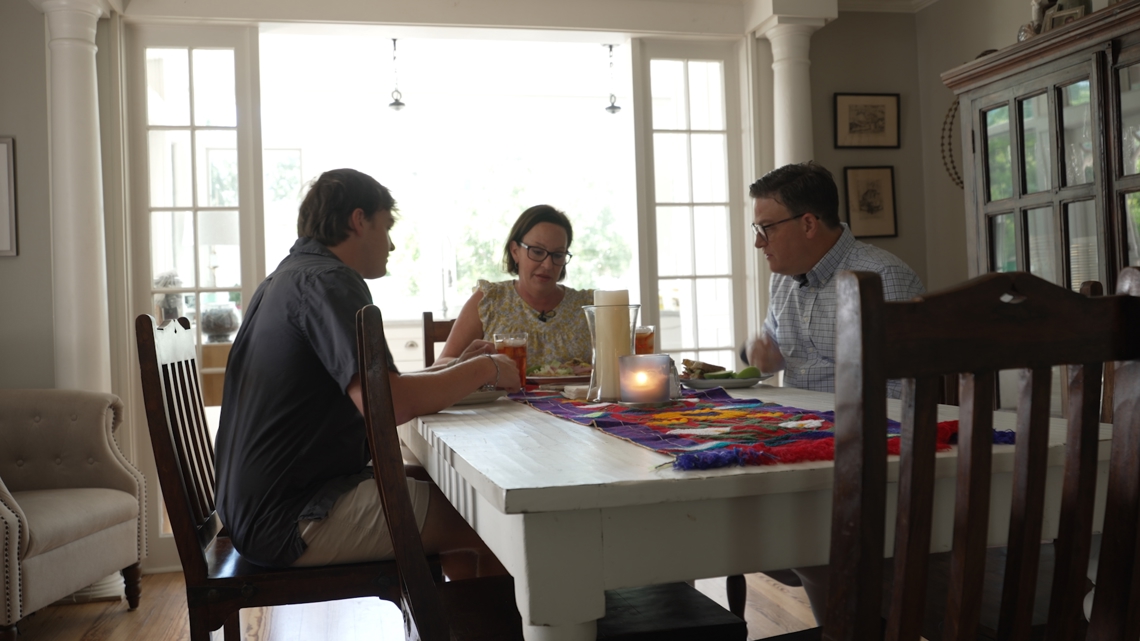
Allison Singleton and her husband, Scott, have reconciled, but their divorce case remains unresolved because of her court-ordered guardianship. |
In June 2024, a psychiatrist showed up at her home to conduct an evaluation. Singleton refused to allow him inside or consent to the evaluation.
She says she talked to him for about six minutes. He says it was about 30 minutes, according to his report.
From that porch conversation, he said she was psychotic and paranoid. He gave a preliminary diagnosis of schizophrenia and recommended 24-hour home supervision — which was already happening at her home.
After Singleton stopped allowing the caretakers into her home that summer, the guardian overseeing her personal care obtained a mental health warrant.
Singleton resisted efforts to take her into custody. She was arrested on assault charges. She later pleaded no contest to a lesser charge and received two years' probation.
In late 2024, a six-person jury in a Bexar Count probate court was asked to decide whether to make Singleton's guardianship permanent.
Jurors heard a series of disturbing allegations about Singleton's behavior — claims she and her family dispute.
There were claims that she had held a gun to Scott's head. They both deny it.
There were claims that a caregiver heard Singleton offer $5,000 to have her mother killed. No caretaker testified to having heard it.
There were also claims that she abused illegal substances. Singleton denies it.
Singleton does acknowledge that she spit on her first guardian of the person and threw a small bottle of wine at her.
"I will admittedly say I lost my cool," she said.
Her own therapist testified at the trial that she had done 10 sessions with Singleton in 2024, diagnosed her with PTSD and believed the guardianship had exacerbated the stress in Singleton's life.
The main argument for a permanent guardianship centered on protecting Singleton's financial interests during the divorce. Her entire family opposed it.
The jury found Singleton incapacitated.
"This whole terrible situation has forced me to come back to aid Allison to try to emancipate her through this process," Scott Singleton said.
The Singletons have tried to dismiss their divorce case. But as long as Allison Singleton remains under guardianship, the probate court won't let them.
More than $300,000
The Singletons see the guardianship system as a money grab — their money.
"It has to be about money," Scott Singleton said. "I'm paying all of those people out of our estate to do this to us."
In the first five months of the guardianship alone, about $150,000 in fees and expenses were billed to the Singletons — to be paid from their own assets, according to court records.
That included more than $70,000 for round-the-clock caregivers.
One of Singleton's original guardians, Bill Bailey, ultimately billed more than $100,000 for work on the case over about an eight-month period, records show.
More recently, a court-appointed guardian ad litem, whose job is to investigate Singleton's circumstances and make recommendations to the judge about her best interests, submitted a bill for more than $9,400. Singleton's attorney is challenging the fees, arguing the guardian ad litem went beyond his duties, including billing more than $1,000 for work that involved preparing a motion to remove her chosen attorney.
The guardian ad litem also billed for pursuing a psychiatric evaluation Singleton opposed. The filing points out errors in the billing paperwork, including references to Singleton as deceased, even though she is alive.
"They use our money to fund themselves to fight us," Scott Singleton said.
"Right. We pay for them," Allison Singleton said.
On Sept. 9, the Singletons were back in court.
Bailey and other lawyers were there, too, demanding their money. Singleton represented herself during that part of the hearing.
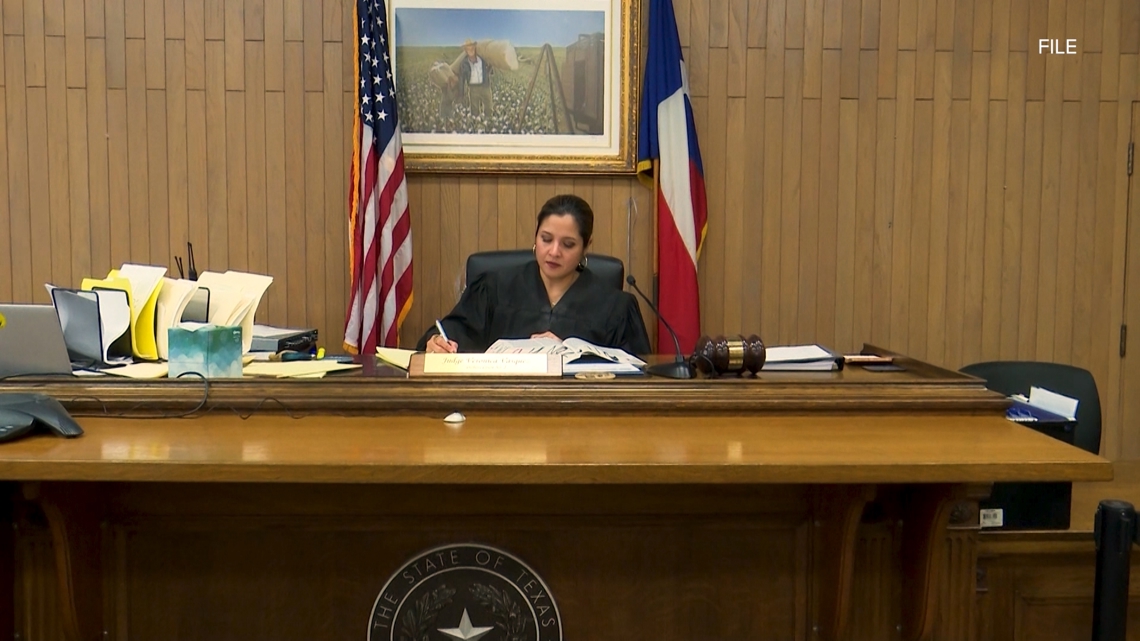
Judge Veronica Vasquez gave Scott Singleton two weeks to decide which investment accounts to cash out to pay the bills.
WFAA approached Bailey after the hearing.
"Mr. Bailey. How are you doing today?" Eiserer asked.
"We have no comment. It's an ongoing litigation," Bailey said. "And no one else should comment."
Two assessments raise questions
Two years after the guardianship began, there are questions about whether Singleton still needs a guardian.
Last October, Daniel Groven, who works for the Bexar County Guardianship Program and was appointed after the trial to oversee Singleton's personal and medical decisions — not her money — recommended that Singleton get her rights back.
"Mrs. Singleton is able to meet her own needs," he wrote.
This spring, psychologist Dr. Melissa Graham independently evaluated Singleton.
"Honestly, I have absolutely no idea how she got to be in this position in the first place," Graham said. "I don't see any reason at all psychologically, physically or any other reason why she needs a guardian."
Singleton had chosen Graham to perform her evaluation. That was her right under a guardianship reform lawmakers passed in 2023.
But that right came with an exception: If a judge wants "additional information," the judge can bring in another examiner.
As part of Singleton's fight to get her rights back, a court-appointed investigator interviewed people she volunteered for.
Dawn Laubach, Singleton's guardian of the estate who controls her money, reported concerns to the investigator that "unrestricted access to funds could potentially facilitate future substance abuse." She also reported concerns that Singleton might sell "valuable jewelry if given unrestricted access to those assets."
Singleton refused to allow a home visit, the investigator wrote. The investigator also noted that Singleton had written countless emails threatening legal action.
Based on her interactions with Singleton, the investigator said she had concerns about Singleton's "ability to regulate her emotions when confronted with situations, decisions or individuals with whom she disagrees."
At the Sept. 9 hearing, Vasquez cited concerns about Singleton's impulse control and ordered another psychiatric evaluation.
Graham came to the hearing but did not get a chance to testify about her assessment.
The judge said she wanted "additional information," citing what she characterized as Singleton's impulse control issues.
Singleton's attorney says state law doesn't mention impulse control.
"If impulse control was an issue, then I think everyone at a Cowboys game would be under a guardianship, you know?" Daniel MacNeil said.
"It's basically if somebody can ... do their independent activities daily living right, feed themselves, clothe themselves. Pay their bills. She seems perfectly capable of doing that," MacNeil said.
Asked why Singleton was still under guardianship, MacNeil said, "That's a good question, right?"
"To be honest, I haven't seen anyone get restored," he said.
MacNeil said the Legislature needs to close the exception that allows a judge seeking "additional information" to bring in another examiner.
"Even if she says I want more information, then it should be the doctor of the ward's choice, right?" he said.
The new evaluation will be paid for by the Singletons.
In September, Singleton was released more than a year early from probation. It was a type of probation that left her without a criminal conviction.
Taking her fight to the Texas Supreme Court
Singleton also challenged the guardianship through the Fourth Court of Appeals.
She filed an appeal on her own.
Her court-appointed attorney ad litem filed a brief saying her appeal was "frivolous and without merit" and requested to withdraw as counsel.
The court found no "arguable grounds for an appeal exist" and decided the appeal was "wholly frivolous." The court issued its ruling in May.
Singleton is now taking her fight to the Texas Supreme Court.
She's challenging the evidence used to take away her rights, whether less restrictive options were properly considered — and whether the appeals process itself was fair.
MacNeil argues it was problematic for the appeals court to accept a brief filed by the same attorney who represented Singleton at trial.
"A trial lawyer asked to identify arguable appellate issues must evaluate that lawyer's own actions, omissions, stipulations, and objections. The Fourth Court accepted that self-evaluation, described it as a professional and thorough review, and relied upon it in holding the appeal wholly frivolous," MacNeil wrote.
For Singleton, the legal arguments come back to the rights she has spent more than two years trying to regain.
In August, she flew to Canada to take her daughter to college.
She can travel internationally. She can live by herself. She can help her daughter begin a new life.
But she remains under guardianship.
"You do not have life nor liberty when you are in a guardianship," Scott Singleton said.
"And when a guardianship removes your right to life and liberty, they remove your ability to pursue happiness," Allison Singleton said.
Full Article & Source:
Life, Liberty and Guardians: She lives alone and can travel internationally. But a guardianship still controls her life.


No comments:
Post a Comment