Thursday, January 22, 2026

FBI probe of Detroit probate court could lead to indictment

by Nathalie Eder


Federal investigators are zeroing in on a bribery and corruption probe involving 36th District Judge Andrea Bradley-Baskin and the disappearance of $550,000 from a 91-year-old woman, with a federal indictment expected soon in the sweeping investigation of Metro Detroit’s probate court system.

Missing funds fuel federal investigation

Court officials are working to determine how $550,000 belonging to a 91-year-old mentally incapacitated woman went missing while her finances were being handled through probate proceedings, according to court filings referenced by investigators. The disappearance of the funds has become a central focus of a federal investigation into how assets belonging to vulnerable adults are managed within Metro Detroit’s probate court system.

As the inquiry has progressed, federal and probate court records show investigators have broadened their review beyond the single case. Filings describe concerns involving “drained bank accounts” and “valuable assets belonging to wards of the court,” prompting a closer examination of financial records tied to guardianship and conservatorship arrangements. Officials have described the matter as a rare federal corruption probe involving local court operations.

Broader probate system under scrutiny

The federal probe has drawn increased attention to Metro Detroit’s probate court system, which oversees guardianships and conservatorships for mentally incapacitated individuals. These courts are responsible for managing the care and financial affairs of some of the community’s most vulnerable residents.

Andrea Bradley-Baskin, who currently serves as a judge on Detroit’s 36th District Court, is among what court filings describe as “a cast of people under investigation” connected to the probe. No charges have been filed, and the filings do not specify who, if anyone, will ultimately be indicted. Bradley-Baskin has not publicly responded to the investigation.

Federal corruption probes involving local court operations are uncommon. The case involves a federal bribery investigation, a type of inquiry that carries significant consequences when it intersects with the judicial system.

Pattern of financial irregularities

Court records show investigators are reviewing financial activity connected to multiple wards of the probate court, as part of a broader examination into how assets have been handled within the system. Reporting on the investigation indicates that records involving the sale of at least five homes owned by incapacitated individuals, along with assets belonging to other wards of the court, have become part of the FBI’s review of probate estate management.

Probate courts typically oversee such funds through appointed guardians or conservators, who are legally required to manage assets carefully, transparently, and in the ward’s best interests.

Federal resources deployed

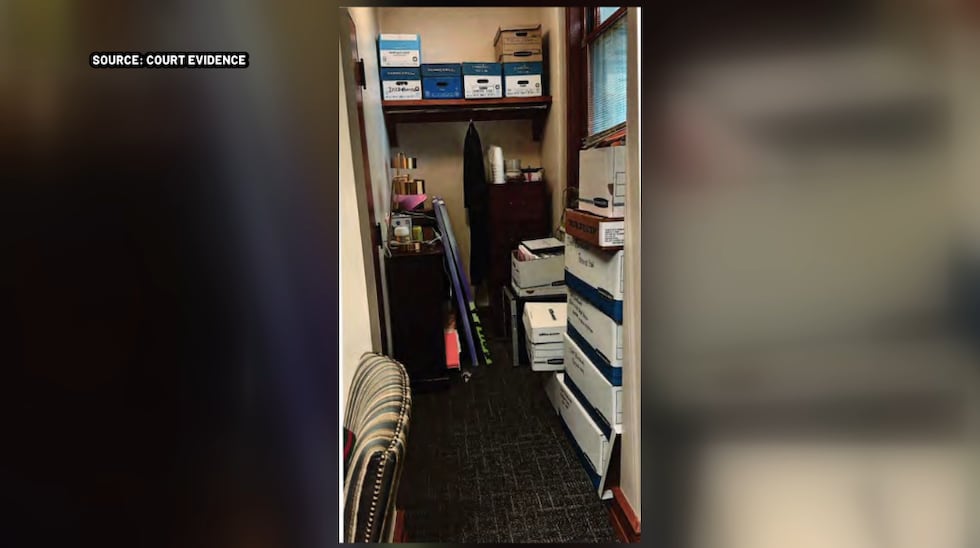
The investigation has involved significant federal law enforcement resources, including the FBI, which has executed sealed search warrants and seized financial records as part of the inquiry. Court filings show those warrants authorized agents to collect documents related to the care and finances of probate court wards, as well as records detailing the receipt and distribution of funds tied to court-supervised assets.

As part of that process, investigators have seized more than $580,000 from properties and accounts connected to guardianship firms and individuals under review. The warrants also allowed agents to obtain records that could identify associates and trace financial transactions connected to the management of ward assets.

Public corruption cases of this kind typically involve extensive financial analysis and long-running evidence reviews. Federal prosecutors generally rely on detailed records, rather than public statements, as they work toward potential charges.

Community impact and trust issues

The investigation has put renewed focus on the probate court system, which many families across Metro Detroit rely on when elderly or incapacitated relatives can no longer manage their own affairs. In such situations, the courts appoint guardians or conservators, and they are expected to oversee how finances and personal decisions are handled.

When allegations involve missing or mismanaged funds, it raises questions about accountability in a system designed to protect vulnerable people. Court-supervised assets are often meant to pay for basic needs, including housing, medical care, and everyday expenses, leaving little margin for error when oversight breaks down.

Federal involvement in cases like this is unusual, and it has drawn attention to how safeguards within the probate system function in practice. For families who depend on those protections, maintaining trust in the process is critical.

Legal and administrative consequences

If federal charges are filed, it would mark a major step in the investigation. Public corruption cases at the federal level can carry serious penalties, and when they involve judges or court officials, they can trigger additional scrutiny beyond the criminal case itself.

In Michigan, judges fall under the authority of the Michigan Judicial Tenure Commission, an independent body that investigates allegations of judicial misconduct and can recommend disciplinary action to the Michigan Supreme Court. Actions can range from admonishment to suspension or removal and are handled separately from any federal prosecution, though no disciplinary action has been announced in connection with this investigation.

Next steps in the federal case

Federal prosecutors have not said whether charges will be filed, but court records show the investigation has been underway for months and is now entering a phase where charging decisions are typically made. Allegations and financial activity reviewed by investigators span several years, with records dating back to at least 2016.

Any decision to bring charges would come only after prosecutors complete their review of the evidence gathered during the investigation. In federal public corruption cases, charging decisions are often made after lengthy analysis of financial records and related documentation, so the timeline is unknown. 

Full Article & Source:
FBI probe of Detroit probate court could lead to indictment 

Wednesday, January 21, 2026

UnitedHealth faces renewed probe into nursing home practices

U.S. Senators Ron Wyden and Elizabeth Warren have requested additional information from UnitedHealth Group (UNH) as part of an investigation into allegations that the health insurer, in a bid to cut expenses, secretly paid incentives to nursing homes.

In August, Wyden and Warren, members of the Senate Finance Committee, launched the inquiry after The Guardian reported that the company paid thousands of dollars in bonuses to nursing homes to reduce hospital transfers of sick residents, putting their health at risk.

In a letter to UnitedHealth's (UNH) new CEO Stephen Hemsley on Wednesday, the Senators noted that, according to new reporting from the publication on Dec. 17, at least three nursing home residents had died as the Minnesota-based managed care giant denied or delayed them care.

Arguing that the company's responses to their prior inquiries were inadequate and citing the new allegations, the duo gave Hemsley until Jan. 28 to provide further details on the matters they previously raised.

“As new reporting alleges shocking harms resulting from the policies in question, we expect you to meet the urgency of our inquiry,” the Senators wrote. 

Full Article & Source:
UnitedHealth faces renewed probe into nursing home practices 

2 arrested for targeting elderly people in distraction thefts: Burbank PD

By Karla Rendon

Two people accused of targeting elderly pedestrians in a distraction theft scheme were arrested after they stole jewelry from them, according to the Burbank Police Department.

Larixon Oinescu, 30, and Maria Grigore, 28, were arrested on suspicion of felony elder abuse after police responded to reported distraction thefts.

The department said officers were called to the 100 block of East Verdugo Avenue on Jan. 11 after an 81-year-old man reported that a man and woman “used deceptive tactics to steal his gold necklace.”

Two days later, they were called to the 2300 block of West Clark Avenue for a report of a man and woman who were approaching elderly people and stealing their jewelry by using distraction techniques.

Officers then located the two individuals, who were positively identified as Oinescu and Grigore by witnesses and victims of the thefts. In addition to elder abuse, the suspects face charges that include forgery, fraud and embezzlement.

It’s unclear if either suspect has an attorney who can speak on their behalf. 

Full Article & Source:
2 arrested for targeting elderly people in distraction thefts: Burbank PD 

Tuesday, January 20, 2026

Woman Accused of Conning Elderly Santa Barbara Scientist Out of Her Home, Cars, and $3 Million in Assets

Inna Vladimirovna Cook Faces Eight Felony Counts of Theft, Fraud, and Money Laundering

By Tyler Hayden

Inna Vladimirovna Cook, left, and Jane Doe in November 2022 | Credit: Courtesy

For many years, Jane Doe lived an accomplished yet solitary life. A brilliant research scientist, she received a medal in 1969 for helping put a man on the moon and in 1974 moved to Santa Barbara to pursue a career in defense technology. She held senior positions that required high-level government clearances, most recently at Applied Research Associates in Goleta, and worked long hours, even into her eighties. “We never knew exactly what she did, but we knew she was a workaholic,” said Doe’s sister, Gayle Aruta. 

The other focus of Doe’s life was serving on the board of the homeowner association that manages her condominium complex off Modoc Road. She was an active member for two decades and took pride in making the small community a pleasant place to live. So, when Doe suffered a perforated bowel in 2022 that required a long stay in Cottage Hospital’s ICU, a fellow boardmember ― 61-year-old Russian national Inna Vladimirovna Cook, who also shared Doe’s love of cats and houseplants ― offered to help her get back on her feet.

Eighteen months later, on February 5, 2025, Santa Barbara authorities raided the home that Doe and Cook shared and discovered Doe, hungry and thirsty, lying under a deflated air mattress. “They found her alone essentially starving, eating only oranges and tomatoes, which are both high in potassium, which damaged her kidneys,” court documents state. Officials soon discovered Doe had recently signed possession of her condo, cars, cash, and investments ― assets worth more than $3 million ― over to Cook.

Police arrested Cook and prosecutors charged her with eight felony counts of elder abuse, theft, and money laundering. At a court hearing later this month, she will likely face additional charges and enhancements. Cook, currently out on bail, has pleaded not guilty and could not be reached for comment. Her attorney declined to discuss the case. Cook has also been hit with a civil lawsuit filed by Doe’s family that seeks substantial damages. As a victim, Doe asked that her identity remain private.

From the moment they met, Aruta had a bad feeling about Cook. “I realized within seconds of meeting her that there is something wrong with this woman,” Aruta said of their first encounter after Doe was discharged from the hospital and getting settled back home. “I did not like her,” she said. “But my sister said she was a friend, so I gave it grace.”

Aruta accused Cook of “worming” her way into Doe’s mind when she was sick and weak, slowly but surely cutting her off from the few people in her life and taking control of her finances. Doe, 84 years old, was always a shy and submissive person, Aruta said, and her convalescence made her even more vulnerable. “She was a sitting duck,” Aruta said. “A perfect mark.”

The “brainwashing” process was gradual, Aruta alleged, but the warning signs started early. It began with Doe canceling plans more than once with Aruta, who then started receiving odd emails from Doe that she suspected were written by Cook. Aruta, who lives in San Diego, became so worried that she called for a wellness check on her sister, but when the police knocked on her door, Doe said she was fine.

After that, Aruta received an angry email, supposedly written by Doe, telling Aruta to stay out of her life. “My sister is especially nonconfrontational, and that email was very confrontational,” Aruta said. Over the next few months, Aruta and Doe’s neighbors called in six more welfare checks, but each time authorities responded they couldn’t find sufficient reason to act. 

“The police need probable cause to break down a door ― a body, an injury, a call for help ― and social workers can’t enter a home without the police,” Aruta explained. “That’s why this took so long. Cook was so good at walking that line of evading probable cause.” Aruta wondered though, if seven calls for a single individual, especially if that person is ill and elderly, should prompt more aggressive action. “The synergy of all those calls should be met with a heightened response,” she said.

Then, Doe disappeared. Aruta drove north and found her condo empty. She filed a missing person report, put up flyers, and inquired at the coroner’s office, but learned nothing. It was only when Cook was arrested for DUI after crashing into a tree on Las Positas Road that detectives discovered she had moved Doe to another property that she had purchased with Doe’s money, and which was dead-bolted from the inside. That’s where they found Doe “drugged, malnourished, and suffering other health issues,” the lawsuit states.

Authorities discovered a dehydrated and malnourished Jane Doe under a deflated air mattress | Credit: Courtesy

Just 48 hours after being rescued, “my sister said it was like her mind had been cleared of a fog,” Aruta said. “She knows what that woman did to her,” calling Cook a “predator” and “a lying liar who loves to lie.” This Christmas, Doe sent a letter to an investigator that thanked him for saving her life. She now lives in an assisted living facility at a location Aruta would rather keep confidential because the family is still scared of Cook, who also owns property in Naples, Florida. “We don’t know how far her tentacles reach,” Aruta said. 

Doe’s family has since recovered some of her assets, but are still fighting for $1 million in investments and cash that remains missing, $150,000 of which Cook allegedly spent on gold, lingerie, and large Amazon orders. She also accrued more than $600,000 in tax penalties and interest from the sudden liquidation of Doe’s stock holdings. “We want justice, which means incarceration and restitution,” Aruta said. Officials have put a lis pendens on Cook’s Calle de los Amigos home, which prevents her from selling it.

The silver lining to the otherwise awful experience is that Doe, once isolated in her work, is now meeting new people, making friends, and reconnecting with family. A couple of men have also shown interest. “She’s safe now,” Aruta said. “She has new stories to tell, and that’s healthy.”

The case is being prosecuted by Senior Deputy District Attorney Brian Cota, who specializes in white-collar and elder abuse crimes, and who frequently secures stiff prison sentences for offenders. The next hearing is January 26 in Santa Barbara Superior Court.

Full Article & Source:
Woman Accused of Conning Elderly Santa Barbara Scientist Out of Her Home, Cars, and $3 Million in Assets 

Elder fraud scam: N.J. man gets prison for stealing gold, cash from Lehigh County senior


By Pamela Sroka-Holzmann 

A New Jersey man was sentenced up to three years in state prison for stealing more than $500,000 in gold and about $91,000 in cash from a 74-year-old man.

On Friday afternoon, Lehigh County Court of Common Pleas Judge Thomas M. Caffrey sentenced 25-year-old Hirtik Hemchand Khatri of Lawrence Township, Mercer County, to serve 11 months, 29 days to 36 months in prison for two counts felony theft charges.

Additionally, he will serve two years of probation for a one count felony criminal use of a communication facility charge. Khatri was also ordered to pay restitution to the victim of $688,372.

Khatri pleaded guilty to the charges on Nov. 20. Court records show two other felony theft counts and a felony receiving stolen property charge were withdrawn as part of a plea arrangement.

Lehigh County District Attorney Gavin Holihan announced the sentencing Friday afternoon. Philadelphia-based attorney Zak Taylor Goldstein, representing Khatri, told lehighvalleylive.com his client is “very remorseful” in playing a role in the scam.

“The evidence ultimately showed that he (Khatri) responded to an ad to work as a courier, and he received a very small payment for making pickups and deliveries,” Goldstein said. “He did not understand the nature of the scam. He should have known better, so he pleaded guilty to accept responsibility for his limited role, and he is very sorry for his involvement and hopes that the complainant’s money can be recovered by the federal government or other law enforcement.”

Whitehall Township police were contacted by the 74-year-old victim on Feb. 3, 2025. The victim reported a lengthy scam that started with an email about a fraudulent PayPal charge.

Prosecutors said the victim was told he was responsible for the error and had to go to a Bitcoin kiosk to repay PayPal. The scam continued with numerous calls, each with variations on the theme that an error had been made and the victim had to repay the error with cryptocurrency, gold or cash.

The victim was told if he didn’t make the payments, he would be put in jail, officials said.

The victim withdrew funds from his IRA and purchased more than 200 gold bars, worth nearly $600,000, which Khatri picked up at the victim’s home.

Police were able to identify Khatri by using a license plate reader to find the Mercedes-Benz he was driving when he picked up the gold. The victim identified Khatri from a photo lineup, police said.

The Lehigh County Elder Abuse Task Force said it has seen a growing number of fraudulent scams. Older residents are more susceptible to fraud because they often have more savings and may be less familiar with new technologies like PayPal and Bitcoin, officials say.

Authorities are warning the public to be suspicious of anyone who contacts them by phone and asks for a large sum of money in any form.

“Anyone who asks for large amounts of funds, especially in methods like cryptocurrency, precious metals, gift cards, and cash is almost certainly part of a scam,” police said.

The case was investigated by Whitehall Township Police Detective Lindsay Yetter; the Lehigh County Elder Abuse Task Force; Homeland Security Investigations in Allentown and Trenton; Homeland Security Investigation Agent Sean Crawford; and Lawrence Township (NJ) Police.

It was prosecuted by Lehigh County Chief Deputy District Attorney Ramma R. Mineo. 

Full Article & Source:
Elder fraud scam: N.J. man gets prison for stealing gold, cash from Lehigh County senior 

Monday, January 19, 2026

How to Prevent Aging Parents and Relatives From Making Financial Mistakes

Getting family members to listen to you when you think they are headed down a dangerous financial path can be difficult. But there are preventive steps you can take.

In 2024, Rianka Dorsainvil’s mother came to her with a check that looked legitimate. It turned out to be part of a common check fraud scam.Credit...Jason Andrew for The New York Times

By Paulette Perhach

Jilenne Gunther’s uncle noticed her 91-year-old grandfather never seemed to have as much cash as he should in his wallet. A banker with access to the cash dye packs used to catch bank robbers, her uncle put one in a wallet in their home. When the money went missing, a trusted home care worker had the dye on her coat.

The experience inspired Ms. Gunther to dedicate her life to protecting elders from financial fraud, and she is now the director of the BankSafe Initiative at AARP.

Americans over 70 control $53 trillion in wealth, and they are the prime targets for scams. Their adult children are often the first people to notice when something seems amiss, but when elders are the victims of misdeeds, family dynamics can make it difficult to change their behavior. Experts say it takes empathy, due diligence and sometimes outside help.

It’s not just money that’s at stake, Ms. Gunther added: Financial exploitation can cause anxiety, depression, a higher risk of heart attacks and even suicide.

Ms. Gunther said older adults might require the help of grown children and trusted friends to see their financial lives more clearly.

“There’s a relationship between age and financially unsound decision-making,” Ms. Gunther said. “It follows this U-curve. Younger people and older people are more prone to making mistakes.”

One of the most insidious situations can involve someone’s trusting a relative who doesn’t have his or her best interest at heart. Or it could be as simple as an investment that’s not appropriate for the elder’s stage of life, Ms. Gunther said.

“They know this is high-risk, but might not be disclosing that,” she said. “And so it’s really important to really slow down and think about things.”

Cybercrime against elders is skyrocketing. In 2024, the Federal Bureau of Investigation’s Internet Crime Complaint Center received nearly 150,000 complaints of cyber-enabled fraud against people 60 or older, with almost $5 billion in losses, according to the agency’s annual report. The victims lost an average of $83,000.

Scams can come from investment opportunities, impostors pretending to be the Internal Revenue Service or an online romance.

When you hear something that sounds off, you might react in the moment without thinking, but that would be a mistake, Ms. Gunther said. You want to lead with empathy.

“Coming right out and saying something like, ‘You’ve been scammed’ or ‘This is a horrible decision’ — those are things that are not going to open up the conversation,” she said. “So before writing off their decision as risky or bad, it’s important to do your own research and also to ask questions like, ‘What interests you about this investment? What are you hoping to achieve?’”

Free tools can help with your research. Any company that claims to be publicly traded in the United States should show up on the Securities and Exchange Commission’s Electronic Data Gathering, Analysis and Retrieval System. A financial adviser’s employment history, registrations and regulatory actions are available at the Financial Industry Regulatory Authority’s free BrokerCheck tool. The Consumer Financial Protection Bureau provides a searchable database of complaints about financial products and services. For companies, the Better Business Bureau lists complaints and ratings.

For anyone claiming to have a professional designation, check with the entity that provides that license to confirm that the person has it.

When asking who should be involved in a conversation about fraud, consider which family members talk regularly with the person in question.

“People can also leverage family trust in these types of situations,” Ms. Gunther said, adding that adult children who have maintained open dialogues with their parents are better positioned to influence financial decisions.

In 2024, Rianka Dorsainvil’s mother came to her with a check that looked legitimate. All she had to do was deposit it and then send a money order for a lower amount to a third party, and then she’d be able to keep the difference. It’s a common check fraud scam.

“I was like: ‘Mom, this is not true. This isn’t real,’” said Ms. Dorsainvil, the founder and senior wealth adviser at YGC Wealth. “These scammers are becoming so sophisticated in their tactics.”

People can now be scammed by clicking on a quiz on social media, signing up for a game or responding to a Facebook message that appears to be from a relative, she said.

Ms. Dorsainvil recommends looking out for if a loved one mentions anything that seems too good to be true. Other red flags include pressure to act fast or guarantees of making money.

If you see something suspicious and want to talk to an elder in your life, Ms. Dorsainvil recommended bringing in a neutral third party so that it doesn’t seem like just your own judgment.

“What I share with my clients, especially when it comes to their parents, is: Blame it on me,” she said.

Ms. Dorsainvil recommended that you acknowledge what they’ve taught you about finances, and then add to that what you’ve learned from financial experts and, if possible, pass them along to someone who can advise them.

“Approach it in an educational manner versus ‘I know more than you now,’” she said, “and I think they will appreciate that.”

Peter Lichtenberg, a former director of the Institute of Gerontology at Wayne State University in Detroit, said financial missteps could be a sign of a deeper issue.

Peter Lichtenberg, a former director of the Institute of Gerontology at Wayne State University in Detroit, said some people discovered dementia in their parents because their parents were losing money.Credit...Nic Antaya for The New York Times

“What we’ve found from some of our focus groups over the years is maybe about one out of every five people discover dementia in their parents because their parents are losing money,” he said. Usually, it takes the form of not remembering that they gave to a cause and sending money again, or falling prey to phone scams.

Signs that dementia may be involved include recent health problems that required hospitalization, increased falls, missed appointments or the repeating of things, like telling the same joke twice in an hour.

This concern adds a second dimension of stigma to the equation, but Dr. Lichtenberg suggested a two-part process for approaching the conversation.

First, take an inventory of your family. How taboo has money been? What are the privacy boundaries around it? How open is your relative to your input about his or her personal life?

Second, he said, “think of it as maybe a series of conversations, because one of the mistakes that people make is they think: OK, well, I’ll just show the person that they’re involved in a scam, and then they’ll logically realize, ‘I guess I have to give that up.’

“But that’s not, of course, what happens,” he added. “And so you’re really in a negotiation.”

Part of negotiation, he said, is a deep understanding of why the situation may be important to the older person. Don’t chide or correct, but instead ask questions in a respectful manner.

“You have to keep that anxiety at bay and that fear and really take it one step at a time as you progress in these conversations,” Dr. Lichtenberg said. “Talk about what the F.B.I. has learned — that older adults are being targeted more and more.”

You may suggest that your relative get a cognitive test during an annual wellness check. Make sure you work with a physician who specializes in older adults with dementia.

The condition can add severity to the financial dangers, Ms. Gunther said.

“We’re seeing with people that are being diagnosed with dementia, they’re losing half their wealth in the years leading up to the diagnosis,” she said, adding that the cause is usually from poor financial decision making or fraud.


How to Protect Your Elders From Fraud

Get ahead of fraud with preventive conversations. Share data on the rise of fraud and ask if they would like help being protected. Letting them take the lead with independence will make it a smoother road.

Ask about protective account options. Some financial institutions offer transaction alerts, daily withdrawal limits or review for unusual transfers. Ask if your parents would add you as a trusted contact on their accounts so their bank, credit union or investment firm can contact you if it suspects fraud.

Ease into account monitoring. Discuss options such as view-only access or subscribe to an account-monitoring service such as EverSafe, which alerts both the account holders and a trusted contact to unusual activity.

Pass along the AARP Fraud Watch Network Helpline. At 877-908-3360, experts offer tips to avoid scams, help with identifying a possible scam and support for victims. They are also open to helping relatives concerned about an elder in their life.

Help them freeze their credit. To prevent new accounts from being opened in their name, your loved ones can freeze his or her credit for free. Equifax, Experian and TransUnion offer this free service, which can be temporarily lifted if credit is legitimately needed. 

Full Article & Source:
How to Prevent Aging Parents and Relatives From Making Financial Mistakes 

Sunday, January 18, 2026

Missing Person Found: Guardian's Duties to Family?

Q:  In 2004, I had to report my mom missing in the state of Florida, where we lived at the time. I never stopped looking for her. She was added to the NAMUS database in 2009. This is the National Missing Persons database and website for missing or endangered persons for the entire United States. At the end of 2024, I received a call from the detective on my mom’s case. They had located her. She was in Massachusetts under court-ordered guardianship and had an ID with her Florida address. Because the facility she was placed in applied for her Social Security on her behalf to pay the guardian and privately owned facility, what rights did I or my mother have to be able to see each other, as her health was failing? Also, does a guardian have a legal obligation to make the courts aware that my mom had a family that wanted to be involved and loved her? After my mom's death, which was in August of this past year, the guardian told the facility to throw all her personal belongings away. That was after I asked for the things I had sent my mom and her personal belongings. 

A: Finding your mother after 20 years, only to face legal barriers and the loss of her personal items, is an incredibly heavy burden to carry.

The situation you’re describing touches on guardianship law, which varies by state but generally follows specific ethical and legal standards. Below is a breakdown of the rights and obligations involved in a case like this, specifically focused on Massachusetts and Florida law.

1. Did the Guardian Have a Duty to Find You?

Yes, generally. In both Massachusetts and Florida, a guardian has a legal and ethical obligation to act in the “best interest” of the protected person (the ward).

  • Due Diligence: When a court appoints a guardian, they are supposed to perform a search for “interested parties” (heirs and close family). If your mother had an ID with her Florida address and a Social Security number, a basic background check or a diligent search should have revealed her identity and her status as a missing person.

  • Reporting to the Court: Guardians are required to file periodic reports. If a guardian becomes aware that family members exist, they are legally obligated to disclose that to the probate court. Intentionally withholding that information to maintain total control is often considered a breach of fiduciary duty.

2. Your Right to Visitation

Until recently, many guardians had “gatekeeper” power to block family visits. However, laws have changed significantly to prevent “guardian isolation.”

  • The Right to Association: Most states now recognize that a person under guardianship retains the right to see their family unless a judge specifically rules that the visit would be physically or emotionally harmful.

  • Notice of Health Changes: In many jurisdictions, guardians are legally required to notify immediate family if the ward is hospitalized, moves to a new facility, or passes away.

3. The Disposal of Personal Belongings

When a person under guardianship passes away, the guardian’s authority usually ends and the case moves into probate law.

  • Preserving the Estate: A guardian generally does not have the right to throw away a deceased person’s property, especially if they know a grieving family member wants those items. Those items belong to your mother’s estate.

  • Potential Liability: If the guardian destroyed property after you explicitly asked for it, they may be liable for conversion (the legal term for unauthorized taking or destruction of property) or breach of duty.

Summary of Potential Legal Violations

Issue

Potential Legal Standing

Failure to Search

Possible breach of fiduciary duty for not identifying interested parties

Isolation

Violation of your mother’s right to association/visitation

Property Destruction

Potential liability for destruction of estate assets and personal effects


Recommended Next Steps

Because your mother was a missing person for two decades and was essentially found’ by the state without you being notified, there may be a case for gross negligence or violation of civil rights.

  1. Request the Court Records: Contact the probate and family court in the Massachusetts county where your mother lived. Request the full case file for her guardianship. Look for the petitions to see what the guardian told the judge about her “unknown” family.

  2. Consult a probate litigator: You need an attorney who specializes in contested guardianships or probate litigation in Massachusetts. They can determine if the guardian lied to the court or failed to perform a mandatory search.

  3. File a Complaint: You can file a formal grievance against the guardian through the Massachusetts Office of Adult Guardianship or the court that oversaw her case.

Contact the detective: Keep the records from the detective who finally located her. This documentation proves she was in a national database (NAMUS) that the guardian or facility failed to check. 

Full Article & Source:
Missing Person Found: Guardian's Duties to Family? 

States Decline To Drop Lawsuit Threatening Disability Rights Protections

by Michelle Diament


As federal officials look to clarify recent rules designed to bar disability discrimination in health care, a long-simmering lawsuit threatens to invalidate them altogether.

The U.S. Department of Health and Human Services wants to alter a 2024 update to regulations related to Section 504 of the Rehabilitation Act. The rule, finalized by the Biden administration, prohibits health care providers from making treatment decisions based on biases about disabilities and mandates increased availability of accessible medical equipment, among other changes.

HHS is seeking to tweak the regulations to specify that gender dysphoria does not qualify as a disability under the rule. The agency said it is responding to “significant confusion” created by language in the rule’s preamble that prompted a lawsuit from Texas and 16 other states.

“By fixing the incorrect language in the preamble, the department is ensuing that no one incorrectly relies on the mistaken interpretation to their detriment,” the proposal states.

HHS issued a notice last April indicating that the preamble language related to gender dysphoria was unenforceable. The latest proposed rule, which is up for public comment through Jan. 20, is an effort to further cement its position.

Several disability rights groups have denounced the Trump administration’s effort to invalidate the preamble language as discriminatory against transgender people.

“The preamble to that rule correctly notes that restrictions that prevent, limit, or interfere with otherwise qualified individuals’ access to care due to their gender dysphoria, gender dysphoria diagnosis, or perception of gender dysphoria, may violate Section 504,” reads a statement from the American Civil Liberties Union, the Bazelon Center for Mental Health Law, the Center for Public Representation, the Disability Rights Education and Defense Fund, Justice in Aging and the National Health Law Program.

Moreover, advocates are concerned that Texas and the other states have not dropped their lawsuit, which could upend the Section 504 regulations as a whole.

“Until the states dismiss their lawsuit, it continues to be a threat to the 2024 update to the Section 504 regulations since their complaint seeks to enjoin the entirety of the regulations,” said Alison Barkoff, a professor at George Washington University who led HHS’ Administration on Community Living under the Biden administration.

The states’ lawsuit generated significant backlash last year because in addition to the gender dysphoria concerns, it sought to completely invalidate Section 504. The states ultimately backed off the broader constitutional claim about the legality of Section 504 and the lawsuit has been paused for months.

In a status report to the U.S. District Court for the Northern District of Texas last week, the states requested that the case remain paused while HHS considers the proposed rule.

Meanwhile, advocates say that the litigation continues to cloud the disability protections provided by the updated regulations.

“Even though the lawsuit is on pause, ultimately, until the attorneys general who filed the suit drop it, the lawsuit remains a threat to disability rights,” said Maria Town, president and CEO of the American Association of People with Disabilities. “The states continue to challenge the entire updated Section 504 regulations. The updated regulations include things like the right to receive services in the community instead of institutions, preventing discrimination in medical care organ transplantation, and in the child welfare system, as well as requiring accessible medical equipment and effective communication.”

In addition to Texas, the other states involved in the lawsuit are Alaska, Alabama, Arkansas, Florida, Georgia, Indiana, Iowa, Kansas, Louisiana, Missouri, Montana, Nebraska, South Carolina, South Dakota, Utah and West Virginia.

At this point, Town notes, “each of the 17 attorneys general who filed the lawsuit remain a part of it.” 

Full Article & Source:
States Decline To Drop Lawsuit Threatening Disability Rights Protections

Saturday, January 17, 2026

Elder abuse leads to guilty pleas for husband, daughter in death of Bonnie Nightingale, 71


By Jen Samuel

WEST CHESTER — The tragic end of one woman’s life still led to minimal sentences imposed upon her daughter and husband in the Chester County Court of Common Pleas in an elder abuse case prosecuted by the Pennsylvania Office of Attorney General.

Richard Nightingale, 78, and daughter, Kaci Nightingale, 40, will each serve one-week in prison.

Bonnie Marie Nightingale was found dead on a mattress placed on the floor inside her West Sadsbury home on July 20, 2021. Her cause of death was ruled cerebral infarction due to atherosclerosis. Other conditions of death included severe malnutrition, severe dehydration, decubitus ulcers and coronary atherosclerosis.

A certification of death provided by the Chester County Coroner’s Office on Jan. 15 still listed her manner of death as “undetermined.” She’d suffered from dementia for nearly a decade.

Christina VandePol was the Chester County coroner in 2021 when she reported the death of Bonnie Nightingale, 71, to the Chester County District Attorney’s Office due to concern for abuse. The case was then referred to the Pennsylvania Attorney General’s Office.

Charges were filed against Bonnie’s husband and daughter on July 7, 2023, after years of investigation. Richard and Kaci were charged with neglect of care of a dependent person, recklessly endangering another person, simple assault, and aggravated assault.

Further, Kaci was employed by a home health service provider as a personal care assistant and received monetary compensation for this employment, according to the criminal complaint. Bonnie was last seen by a doctor in 2015.

A trial began on Oct. 30 and lasted three days until Richard Nightingale and Kaci Nightingale reached an open plea agreement with the state just prior to the jury rendering verdicts. Both pleaded guilty to neglect of a care-dependent person. As such, several other charges were dropped. The maximum sentence is seven years for neglect of a care-dependent person.

Kaci also pleaded guilty to a fraud-related charge of provider-prohibited acts for accepting money for care services she didn’t provide her mother toward the end of her life.

Judge Bret Binder presided over the case and issued the sentencing on Jan. 14.

Due to a prior criminal history involving burglary in Philadelphia two decades ago, Binder sentenced Richard to 9-18 months in prison with electronic home confinement applying after one week and five years probation.

Due to not having a criminal record, Kaci was sentenced twice, on the fraud and neglect charges, to serve one week to nine months in prison, followed by five years of probation, and she can serve her sentences concurrently. It was clear as the courtroom neared adjournment that both were expected to serve only one week in prison each, respectfully, with Kaci reporting to begin her sentence on Feb.1 and returning home Feb. 7, and Richard reporting to serve his sentence in prison for one-week on Feb. 9, followed by home confinement with a cost to the family of $15 per day.

‘Letting her die’

VandePol was in attendance at the Chester County Justice Center for the sentencing proceedings.

“It was shocking that neither Bonnie’s husband or her daughter expressed remorse about what had happened. I’m pleased both will serve some prison time, though not enough, in my opinion. I hope this outcome encourages other prosecutors to vigorously pursue elder neglect and abuse cases,” VandePol said on Wednesday.

“I attended Bonnie Nightingale’s autopsy,” she said. “What I saw sickened me: she weighed only 83 lbs. and had bed sores so deep you could see the bone. Even the way she was found when we retrieved her body — lying naked on a mattress on the floor — was horrifying. It was unbelievable that in 10 years Bonnie had never received medical care, and that her family had never bothered to get help, instead just letting her die like that.

“Elder abuse is a complex, multi-system problem,” VandePol said. “It won’t be solved with one prosecution or legislative action, but our legislators could make a start by amending the Pennsylvania Coroner Statute to require nursing homes, assisted living, and personal care homes to report all deaths, regardless of cause, to their county coroner.”

She said this abuse can and does happen in both private homes and care facilities.

“Abuse of older adults and adults with disabilities is not uncommon, just invisible,” VandePol said.

Elder abuse on the rise

According to an annual report by the Pennsylvania Department of Aging, between July 2023 and June 2024, there were 58,614 reports of elder abuse statewide, increased by 9%. The investigations conducted led to 14,302 substantiated cases.

There were 41,221 investigations launched; only 70% of all reports were investigated. The report said 32% of these abuse allegations stem from financial exploitation.

Notably, 46% of abusers were family members, the most common perpetrators, followed by caregivers, according to the Pennsylvania Department of Aging’s report.

In the Nightingale case, Kaci was both a daughter and a caregiver.

Before sentencing, attorney Benjamin McKenna for the Pennsylvania Office of Attorney General said this case wasn’t about providing “perfect care” but that no one ever called for help to treat Bonnie’s suffering.

He asked Binder to impose a sentence that recognizes that her suffering was not necessary and “honors the dignity that all care-dependent people deserve across this Commonwealth.”

“Toward the end of her life, she suffered immensely,” McKenna said.

Today, Richard lives with his daughter Kaci, his daughter Erin, and his grandchildren.

“Thank you, your honor, for giving me a chance to move on and be with my family,” Richard said before sentencing. He did not mention his wife.

“This case is particularly difficult from a sentencing perspective, given the level of harm she endured and the lack of intent to harm,” Binder said. Still, the disregard for her care could not be overlooked.

‘They need and deserve excellent care’

Barbara Croyle is a senior living advisor of Aging Confident in Landenberg.

Home care is helping with bathing, dressing, food prep, transportation, and companionship, she said. In contrast, home health care is nursing care and medication giving.

There are now 63 million family caregivers providing home health care in 2025, Croyle said.

She said 95% of boomers want to “age-in-place” when asked. “That assumes a lot of things that they will need to have: good health, caregiver support, which can cost a lot depending on how often it is needed, a home environment that supports aging, technology that supports aging,” Croyle said.

“Elder abuse is not uncommon,” Croyle said. It can be physical, mental, emotional, and financial. “It can be something that is committed or something that is omitted.”

Nursing home facilities are licensed agencies. Suspected neglect can be reported to the Area Agency on Aging in every county, Croyle said. “The best protection for loved ones in a nursing home comes from regular visits from family or friends. Also, there is a way to compare nursing homes online via Medicare Compare, which rates nursing homes,” she noted.

Home care can typically cost $30 to $40 per hour. It used to be $20 to $35 an hour. Nursing homes typically cost $12,000 each month, she added.

“Everything has gone up due to increased costs of staff, supplies, and insurance,” Croyle said on Thursday.

“I work with older adults because they need and deserve excellent care and support,” she said. “I want to help provide for them, what I hope will be provided for me as I continue to age.”

Court, state resources

Pennsylvania has the fifth largest number of older adults, with 3.4 million people 60 or older. One-in-four Pennsylvanians is 60 or older. By 2030, that number will increase to one-in-three people, according to a state official.

In the Commonwealth, 400,000 people depend on homecare assistance where they live, according to the Pennsylvania Homecare Association. There are 2.4 million unpaid family caregivers across the state.

To report signs of abuse, call the Chester County Department of Aging at 800-564-7000 or the District Attorney’s office.

The statewide Elder Abuse Helpline is 1-800-490-8505. This confidential line is open 24-7, 365 days a year.

The Pennsylvania Department of Aging front desk phone number is 717-783-1550. For information, visit www.pa.gov/aging.

The Pennsylvania Office of the Long-Term Care Ombudsman phone number is 717-783-8975. The statewide team of Ombudsmen looks out for our nursing home residents and their quality of life.

The PA Link phone number is 1-800-753-8827, which provides person-centered counselors to help individuals with disabilities and seniors find information that will connect them to supports and services in their community. 

Full Article & Source:
Elder abuse leads to guilty pleas for husband, daughter in death of Bonnie Nightingale, 71

Caregiver in Eugene sentenced for abusing elderly memory care resident

EUGENE, Ore. - A 50-year-old Eugene man has been sentenced to 15 years in prison for the sexual abuse of an 86-year-old resident at a memory care facility, according to the Oregon Department of Justice.

State DOJ officials said Michael Putman sexually abused an 86-year-old resident at Churchill Estates, a memory care facility in Eugene, where he worked as the victim's evening caretaker. The abuse occurred over several months, state officials said.

Attorney General Dan Rayfield emphasized the gravity of the crime.

"This case is a heartbreaking reminder that elder abuse can happen in places where families expect their loved ones to be safe," Rayfield said.

He added that the commitment to holding abusers accountable remains strong.

Putman pleaded guilty to charges including first-degree sexual abuse and criminal mistreatment. The Eugene Police Department led the investigation, with support from Kids First and the Oregon State Police Crime Lab.

The Oregon Department of Justice urges anyone suspecting elder abuse or neglect to report it to local authorities for action. 

Full Article & Source:
Caregiver in Eugene sentenced for abusing elderly memory care resident 

Friday, January 16, 2026

Judge: Missouri public guardian’s felony financial crime case can move forward

Sullivan County Public Administrator Joan Brummitt is charged with eight felonies connected to alleged financial crimes


by Matt Flener

A Missouri elected public guardian’s felony financial crime case will move forward after a preliminary hearing at the Sullivan County courthouse on Wednesday.

Joan Brummitt is accused of stealing nearly $6,000 from a ward of the state under her care, according to court documents.

Brummitt, in her role as Sullivan County Public Administrator, has the responsibility to care for wards of the state.

Public administrators are elected in Missouri to take care of financial and medical decisions for elderly or mentally ill patients when a judge decides family or friends can no longer care for them.

Brummitt appeared in court with her attorney, Mark Williams.

Williams cross-examined Missouri State Highway Patrol investigator Barbara Littrell about Brummitt’s admission to the highway patrol that she moved money from the ward’s account to hers.

Littrell told the court that Brummitt admitted to highway patrol investigators that hackers told her to move the money.

“Bottom line is she conducted the transfers,” Littrell said on the witness stand before Ninth Circuit Court Presiding Judge Terry Tschannen.

Littrell told the court that she worked with employees at Putnam County State Bank to uncover the alleged crimes.

KMBC asked Brummitt’s attorney if she was coerced or told to transfer the ward’s money into her personal account.

“Either that or if they were hacking into her phone,” said Mark Williams. “Regardless of what she thought, you know, they could do it anyway, because as I cross-examined the officer, there are ways depending on the bank and the security system the bank has that they can access people's accounts and they can go back and forth on your own account if you have more than one account.”

Judge Tschannen found enough probable cause existed to keep the case moving forward to trial. He referred the case to allow the Missouri Supreme Court to choose another judge.

Court documents allege Brummitt moved money in October from an elderly ward’s bank account to her personal bank account on four separate occasions.

A Missouri State Highway Patrol investigator said on Oct. 14, 2025, Brummitt used her personal cell phone and online banking app to send money from the ward’s account through three separate transactions, totaling $999, $1,900 and $1,980.

She made another online $999 transfer on Oct. 16, the MSHP investigator said in court documents.

The total amount came to $5,878.

Brummitt is charged with four felony counts of financial exploitation of an older/disabled person and four felony counts of stealing $750 or more.

Brummitt still holds office. But a judge has restricted her from making financial decisions on behalf of her wards.

In a series called "Paper Prisons," KMBC 9 News is investigating ways to systemically improve the care of those under guardianship by highlighting stories of people struggling to navigate a tangled system of legal paperwork, medical records and court orders. 

Full Article & Source:
Judge: Missouri public guardian’s felony financial crime case can move forward

See Also:
Missouri public guardian pleads not guilty to eight felony counts

Missouri elected guardian charged with 8 felonies for stealing from ward

Seven complaints, 16 violations at West Branch nursing home

By Clark Kauffman


A West Branch nursing home that has faced allegations of sexual assault and contributing to a resident’s death has been cited for 16 regulatory violations covering a wide range of recurring problems, from staffing shortages to infection control.

The Iowa Department of Inspections, Appeals and Licensing has proposed, but held in suspension, more than $16,000 in state fines against Crestview Specialty Care, a 65-bed nursing home that is part of the Iowa-based chain Care Initiatives. The department typically holds state fines in suspension while the Centers for Medicare and Medicaid Services determines whether a federal penalty is warranted.

The violations cited by DIAL include insufficient nursing staff; failure to provide the required nursing services for residents; hazards in the building; failure to protect residents’ rights; failure to provide a safe, clean, homelike environment; inadequate quality of care; failure to treat and prevent pressure sores, and inadequate infection control.

Of the suspended state fines, $10,000 is tied to the failure to treat and prevent the pressure sores of two different residents, while $6,750 is tied to the failure to assess and follow physicians’ orders for wound treatment.

Although DIAL’s database of care-facility fines indicates the proposed state fines total $16,750, the agency’s written citation indicates an additional $8,000 in fines was proposed and held in suspension due to three residents of the home falling out of the mechanical lifts used to transport residents in and out of bed. One of the three sustained a head injury, a bone fracture at the base of the spine and a leg fracture, according to inspectors.

Seven complaints, all substantiated 

State records indicate the inspection was precipitated by seven separate complaints that required investigation. All of the complaints were substantiated in that inspectors cited the home for specific violations related to each of the complainants’ allegations.

Regarding the allegations of too few staff, which is widely considered to be the single biggest contributor to poor quality care, inspectors reported that employees of the home openly acknowledged the issue.

Inspectors reported that one certified nursing assistant told them the homes did “not have enough staff scheduled on a routine basis.” As a result, she said, employees were not able to provide residents with all of the care they needed, according to inspectors’ reports. “It has been brought to management’s attention numerous times and nothing changes,” the aide allegedly told inspectors.

A registered nurse at the home told inspectors there was “definitely a lack of staff working at the facility at any given time,” adding that she had, on numerous occasions, informed the home’s director of nursing that residents’ needs weren’t being met but had never noticed any difference in the subsequent staffing levels, according to inspectors’ reports.

During the inspection itself, inspectors reported, a licensed practical nurse told them she had been unable to complete that morning’s treatment of residents’ wounds due to the fact that no medication aide had been scheduled to dispense the residents’ prescribed medications.

Another CNA reported that during the evening shift, she was often the only aide assigned to a hall that had 25 residents, despite the fact that some of the residents could only be transferred in and out of bed with the assistance of two or more employees to guard against injuries, according to inspectors’ reports.

On some occasions, she alleged, there weren’t enough employees on duty to get residents to the dining room for supper, so all of the residents were sent trays of food to eat in their rooms.

State records indicate that during Crestview Specialty Care’s last annual inspection, in November 2024, it was cited for some of the same violations, including insufficient nursing staff, failure to treat pressure sores and failure to provide the required nursing services for residents.

That year, Crestview Specialty Care was cited by inspectors for failing to accurately assess residents’ condition and provide medical intervention when necessary. As a result, the inspectors alleged, a resident suffered worsening gastrointestinal issues — which included stomach aches and vomiting – for four days until he was transferred to a hospital emergency room, where he was intubated and three liters of bowel obstruction were suctioned from his stomach.

The hospital was unable to stabilize the resident, who died within six hours of arriving in the emergency room.

Sexual assault lawsuit focuses on staffing

Currently, the family of the late Ruth Bartow is suing Crestview and Care Initiatives in Cedar County District Court. The lawsuit alleges that Bartow was admitted to Crestview in February 2023 with severe cognitive impairments, and that three months later, at 2:50 p.m. on April 5, the staff found an unauthorized male “visitor” in her room — 54-year-old Michael Beaver of West Branch.

Beaver was laying with Bartow in her bed “without any clothes on,” the lawsuit alleges. The Crestview staff escorted Beaver out of Bartow’s room to the front lobby and notified the police. Bartow was later found in her room crying, according to the lawsuit.

Beaver wasn’t criminally charged in the case as he was already subject to a civil commitment proceeding.

State inspectors later concluded Beaver had been seen walking around in the facility as early as 10:30 a.m. that day. At 11:10 a.m., and at 1 p.m., staffers noticed Beaver pushing Bartow in her wheelchair throughout the building but failed to intervene.

The lawsuit accuses Crestview and Care Initiatives of gross negligence and recklessness in the form of inadequate staffing, false advertising, and “inappropriately allocating excessive funds to itself, thereby draining the facility of the resources necessary to maintain sufficient and appropriately trained staff to supervise residents and prevent avoidable injuries.”

The lawsuit also seeks unspecified actual damages and punitive damages for breach of contract and dependent adult abuse.

Crestview and Care Initiatives have denied any wrongdoing and attempted to have the lawsuit dismissed due to the arbitration agreement Bartow’s guardian signed at the time of her admission. That agreement stipulates that any disputes over care issues are to be settled through private arbitration rather than through courtroom litigation.

Attorneys for Bartow’s family argued the arbitration agreement was part of 50 pages of admissions documents that were electronically signed in quick succession, with the arbitration agreement signed only 40 seconds after the admission agreement.

They also claimed the arbitration agreement was barred in cases such as theirs by the 2021 federal law known as the Ending Forced Arbitration of Sexual Assault and Sexual Harassment Act. Care Initiatives argued otherwise, saying the family’s claims were “based on an alleged failure to secure the premises — not a sexual assault.”

In May, Cedar County District Court Judge Elizabeth O’Donnell rejected Care Initiatives’ argument and found that the lawsuit revolved around a claim of sexual assault that wasn’t subject to mandatory arbitration.

A trial is now scheduled for May 17, 2027. 

Full Article & Source:
Seven complaints, 16 violations at West Branch nursing home 

Thursday, January 15, 2026

Tulsa County deputies arrest son and his partner accused of stealing $150K from elderly woman

Investigators say the victim’s own son, Jeremy Woods, and his partner, Tiffany Thomas, were trusted with her finances but instead spent the money on shopping, entertainment and gambling.


 TULSA, Okla. - Tulsa County deputies arrested a man and his partner accused of stealing nearly $150,000 from an elderly woman with dementia.

Investigators say the victim’s own son, Jeremy Woods, and his partner, Tiffany Thomas, were trusted with her finances but instead spent the money on shopping, entertainment and gambling.

Deputies say the victim lives in a retirement home. The investigation began after her check for care bounced, prompting a review of her bank account.

According to investigators, the victim’s bank flagged unusual activity and notified deputies and Adult Protective Services.

Deputies say bank records showed hundreds of dollars withdrawn almost daily through ATM and Venmo transactions. Investigators estimate the victim lost as much as $150,000.

“This entire situation is heartbreaking,” said Cpl. Richie Gonzales with the Tulsa County Sheriff’s Office. “The bank statements show a clear pattern of waste and abuse.”

Woods and Thomas are both charged with exploitation of a vulnerable adult.

A judge ordered the two to have no contact with the victim and to stay out of casinos. 

Full Article & Source:
Tulsa County deputies arrest son and his partner accused of stealing $150K from elderly woman 

Man Sentenced to Prison for Lottery Scam Targeting Elderly Ashley County Resident

by Luke Matheson

An out-of-state man was sentenced to prison following his conviction in a financial scam that targeted an elderly Ashley County resident, authorities said.

On Jan. 8, 2026, a jury found Portier Guytan guilty of charges stemming from a lottery scam involving a 76-year-old Crossett victim. Guytan was sentenced to 10 years in the Arkansas Department of Correction and fined $10,000 after Circuit Judge Robert Gibson III accepted the jury’s recommendation.

According to court testimony, the case began May 15, 2025, when Ashley County Sheriff Tommy Sturgeon learned the victim had been contacted by individuals claiming he had won an $11 million Jamaican lottery. The callers instructed the victim to send $50,000 to collect the winnings.

Before law enforcement intervened, the victim had already sent approximately $30,000 and was preparing to deliver the remaining funds during a scheduled exchange at Brookshire’s in Crossett. Deputies set up surveillance on May 16, 2025, and observed Guytan accept a bag containing $27,000 in cash from the victim in exchange for a briefcase purported to contain the lottery proceeds.

Deputies intercepted Guytan immediately after the exchange. Investigators later determined the briefcase contained only printer paper.

Guytan told authorities he was originally from Trinidad and had been living in Massachusetts when he was paid $3,000 to transport money and deliver it to Jamaica. He admitted placing the paper inside the briefcase and acknowledged involvement in a prior exchange, but testified he could not identify the individual he claimed to be working for.

Deputy Prosecuting Attorney Sandra Bradshaw thanked the jury following the verdict, saying the outcome sent a clear message that financial crimes will not be tolerated in Ashley County.

“This conviction underscores that criminals who exploit vulnerable citizens will be held accountable,” Bradshaw said.

Officials said the case highlights the ongoing efforts of the 10th Judicial District Prosecuting Attorney’s Office and the Ashley County Sheriff’s Office to combat elder fraud. Sheriff Sturgeon noted that lottery and sweepstakes scams are common and difficult to investigate due to their international nature. He added that many victims fail to report the crimes out of embarrassment.

Prosecuting Attorney Frank Spain said similar scams have plagued the United States for more than a decade.

“The Jamaican Lottery or Sweepstakes Scam has targeted vulnerable individuals for over 15 years,” Spain said. “The Federal Trade Commission issued warnings about this type of fraud as early as 2009. This conviction sends a strong message that this exploitation will not be tolerated.”

Spain urged residents to be cautious of unsolicited offers promising large payouts in exchange for fees or taxes, noting such demands typically continue until the victim’s funds are exhausted.

Authorities also warned of other common elder fraud schemes identified by the FBI, including romance scams, tech support scams, grandparent scams, government impersonation scams, home repair scams, and caregiver exploitation.

More information on elder fraud and how to avoid scams can be found on the FBI’s website at fbi.gov. 

Full Article & Source:
Man Sentenced to Prison for Lottery Scam Targeting Elderly Ashley County Resident