Expanded funds for in-home care can help seniors and
disabled Americans stay in their homes. Here, Lidia Vilorio, a home
health aide, gives her patient Martina Negron her medicine and crackers
for her tea in May in Haverstraw, N.Y.
Michael M. Santiago/Getty Images
For older people and people with disabilities, solving everyday
practical problems can be the difference between being able to live at
home or being forced to move to an institution. Sometimes people need
help getting dressed or making meals. Sometimes they need help managing
medications or shopping for groceries.
Originally, these
things weren't paid for by Medicaid, the federal health care program
that many low-income and disabled Americans rely on. In recent years,
the program has worked to expand coverage of home-based care
but it's still optional for states. Some states have adopted it widely,
while in others, more care still happens in nursing homes and other
institutions.
In April, the Biden administration rolled out
funding from the American Rescue Plan to help states boost these
services. And Thursday, the federal Department of Health and Human
Services unveiled every state's plan
for how they'll use the funds. An estimated $12.7 billion dollars in
federal matching funds are available to "encourage states to expand home
and community-based services and strengthen their programs," according
to an agency press release.
"More and more people are saying, if I need care, I'd like it to be
done at home or here in my community versus an institution or a hospital
or a nursing home," says Health Secretary Xavier Becerra. "In the 21st
century, we're moving closer to a care model that's based on giving
people services in their home."
Becerra adds that his own
father spent his last few months in hospice at home. "When he passed, he
was in my home, he was surrounded by family," he says.
The move towards home- and community-based care has been gradual since Medicaid started, says MaryBeth Musumeci,
an associate director at the Kaiser Family Foundation's program on
Medicaid and the uninsured. "This is really the first new funding that
we're seeing for home and community based services really since the
Affordable Care Act in 2010," she says.
"Back in 1965, the
world was very different, societal expectations were different," she
explains. "For example, if you had a child born with a significant
disability, it was much more likely that you might institutionalize that
child from a very young age. Medical science and technology had also
not advanced to the point where it is now."
These days, it's both possible and preferable for everyday help to be provided to people at home, she says.
There are a lot of reasons why the shift towards home-based care is a good thing, says Jack Rollins, director of federal policy at the National Association of Medicaid Directors.
For
someone who needs these services, "you can get care from your family
[or] from people that you trust in the community who can come into your
home," he says. "It generally costs less than providing these services
in the nursing home. Folks that receive [these services] are generally
happier with them — they prefer it."
He adds that regardless of
where states are now in terms of offering these services, this new
funding will help move them further along. For instance, he says, "one
of the things that generally Medicaid can't directly pay for is internet
connectivity — with these dollars, it looks like we can." That means
people could get consistent broadband internet access, he explains,
which could allow them to use telehealth services.
There's a
time limit to this funding boost, though. The money provided by the
American Rescue Plan to shore up these services "is a meaningful amount,
but the challenging part is it's limited to 12 months," explains
Musumeci.
"We do remain hopeful that that investment gets through in some form or fashion," says Rollins. "We think it's important."
The
health secretary says he thinks so, too. "We're hoping that Congress
will continue to provide additional resources so we can make those
increased services in home and community based settings permanent,"
Becerra says. Through the COVID-19 pandemic, he adds, "Medicaid proved
its value."
In December 2018, the Social Security Administration (SSA) had a
nasty surprise for Laura Marshall (not her real name), a 74-year-old
woman just scraping by in senior citizen housing in New York City’s
Harlem neighborhood: The agency demanded that she repay more than
$10,000 in benefits, claiming that she owned two properties — one in
Washington, D.C., the other in Massachusetts — that made her ineligible
for the Supplementary Security Income (SSI) she had been receiving.
Local SSA officials wouldn’t believe her when she told them that she had
never lived in those two places, let alone owned property there. They
suggested she get a lawyer, which she had no money for -- the cut in
benefits left her barely able to pay her rent.
The same has happened to thousands of other SSI recipients, many of them elderly, according to a joint report by the National Consumer Law Center and Justice in Aging.
The problem started in 2018 when the SSA, in an effort to find
government assistance beneficiaries owning unreported property that
could disqualify them from receiving benefits, began cross-checking
lists of property owners on a LexisNexis data set called Accurint for
Government. Letters started turning up in the mail informing people that
their benefits had been cancelled, and in some cases even demanding
repayment. Often the letters did not identify the properties allegedly
belonging to the recipients, making it even more difficult for the
falsely accused to deny the claims and convince local SSA officials that
they owned no property.
It should be of little surprise that the SSA’s initiative netted
innocent people, notes the new report, titled “Mismatched and Mistaken:
How the Use of an Inaccurate Private Database Results in SSI Recipients
Unjustly Losing Benefits”. Accurint for Government's database is
“riddled with errors,” the report states. Accurint drew up its list of
alleged property owners by simply plugging first and last names into the
LexisNexis database, without even checking to see if middle initials or
Social Security numbers matched those of assistance recipients,
Such
laxity would never have passed muster with the Fair Credit Reporting
Act (FRCA). So to get around this, LexisNexis inserted a disclaimer at
the bottom of its Accurint website, which reads: “Accurint for
Government is not a consumer report (as defined in the Fair Credit
Reporting Act) and may not be used for any purpose permitted by the
FCRA.” For its part, the SSA is using the disclaimer to strip benefits
recipients of their rights; the FCRA would have otherwise entitled them
to be notified before action is taken, and given them the right to have
inaccurate information investigated and corrected, the report points
out.
The SSA claims that it did not act on the LexisNexis data
alone, but rather used it as a starting point for further investigation
to determine whether recipients did own property. But advocates around
the country challenge this assertion, pointing to numerous cases like
that of Ms. Marshall where action was taken without further
investigation, the report says.
In her case, Ms. Marshall’s social
worker connected her with a a legal aid attorney, who was finally able
to convince SSA officials that she had no connection to the properties
in Washington, D.C., and Massachusetts. Her SSI was fully reinstated,
but others whose cases have not come to the attention of advocates
may not have been so lucky.
Among several recommendations, the
National Consumer Law Center and Justice in Aging together recommend
that LexisNexis and SSA acknowledge that Accurint for Government is a
consumer report, and they call on both to abide by FRCA standards. The
report also calls for the SSA to implement an appeals process that
allows benefits recipients to challenge claims against them before any
action is taken.
The story of three brothers evicted from their family home show the difficulties this population faces in the East Bay.
by Jade Yamazaki Stewart
William & Darryl Patrick are living on the street in front of their former home.
The Patrick brothers lived in their family home on
Berkeley's Evelyn Avenue for most of their lives. Their parents bought
the house in 1953, before the brothers were even born. They played
Little League at a local elementary school, and attended Berkeley High.
But Darryl and William struggled with mental disabilities and could not
live on their own. Meanwhile, Frederick began suffering from congestive
heart failure in his forties, which made it hard for him to live
independently. In 2015, all three brothers were living with their
mother. But then she died — and the family began fighting over her
estate.
Now the brothers, all of whom are around 60 years old, live in a
recreational vehicle on the street in front of their old home. In
August, Berkeley police evicted William and Darryl from the house and
nearly arrested them for trespassing. They were living there illegally
after an earlier May eviction ordered by their brother-in-law, who ended
up managing the property.
"We'd been living in the house our whole lives," William said
recently. "We're really irate about getting kicked out of our home."
Plywood boards now cover the windows of their vacant house, which the
brothers still partly own. The locks have been changed so that they
cannot enter. A green plastic wreath decorated with red ornaments still
hangs above the home's doorway from last Christmas.
Neighbors managed to convince the police to let the Patricks stay in
the RV. But the motor home is badly insulated and doesn't have a
functioning bathroom or kitchen, and the brothers are regularly awakened
at night by cars speeding by.
Many elderly people become homeless under similar situations.
"Disabled adults often become homeless when their caretakers pass away,"
said Elaine de Coligny, executive director of the homeless advocacy
group EveryOne Home.
Disabled homeless people are extremely common in the Bay Area and
less likely to find new housing than other homeless people. And elderly
or disabled people suffer more serious health consequences from living
in the street than their younger, healthier counterparts.
EveryOne Home estimates that 42 percent of the 8,000 people who are
homeless at any given time in Alameda County have a disability. The
numbers are even higher in Berkeley, which is a mecca for the disabled
due to its role in the birth of the disability-rights movement. Some 68
percent of the 2,000 people who annually experience homelessness in
Berkeley are disabled, according to a city report. Analysis conducted
for the report concluded that having a disability of any kind increased
the likelihood that someone would remain homeless by 733 percent.
People over the age of 50 already make up around half of homeless in
the United States, according to Dr. Margot Kushel, a professor of
medicine and director of UCSF's Center for Vulnerable Populations. And
the percentage of homeless people over 50 is projected to keep rising
until 2030, with the homeless population older than 65 expected to
triple.
Kushel has conducted research following 350 people over the age of 50
who were homeless in Oakland in 2015. Nearly half had never been
homeless before they reached that age. Unlike younger people, whose
homelessness is normally tied to a long history of issues, Kushel found
that people who started living in the streets later in life could often
trace their homelessness to a single event. Common causes of
homelessness included losing a job, having a family member or roommate
lose a job, or having a family member die. Many became homeless after an
elderly parent's death led to them being forced out of their family
homes. Family disputes over estates were often involved.
Because seniors like the Patricks often receive fixed retirement
incomes that do not increase along with rising housing prices, many
people who become homeless after age 50 cannot afford new places to
live, noted Leslie Gleason, director of programs for Shelter Inc., a
group that fights to end homelessness in the Bay Area.
When the Patrick's mother died, she was survived by Darryl, William,
Frederick, and their sister, Annette Olsen. Carmel Patrick died without a
will, so Annette successfully petitioned to become her administrator in
June 2017. Then Annette died in April 2018, and her husband, Michael
Olsen, succeeded her as administrator. Frederick unsuccessfully objected
in court to both administrations.
In April 2019, Michael hired lawyer Richard Palenchar and sought to
evict the brothers from the house. A lawyer representing the brothers
without pay objected on their behalf. "Defendants Patrick are senior
citizens and not in good health," Elaine Videa wrote. "Evicting them out
of their home would cause severe hardship, further injuring their
health, and cause severe emotional distress." But the court ordered the
brothers to vacate the property by May 14.
Frederick was in the hospital at the time, but William, Darryl, and
their terrier Honey Bear started living in a Ford SUV in front of the
house. Then they drove the car to Ukiah and lived in it for a couple of
weeks in June. But William drove off the side of the freeway one night,
totaling the car and landing himself and Darryl in a hospital. Honey
Bear wound up in a dog pound. Darryl returned to Evelyn Avenue and
started living there illegally, but William spent a month in an
assisted-living facility in Sacramento. When Frederick was released from
the hospital, he and Darryl immediately drove to Ukiah to retrieve
Honey Bear from the pound.
By the time of the second eviction, Frederick was back in the
hospital being treated for symptoms of his congestive heart failure.
Following his Sep. 6 release, he joined his brothers in the RV, where
they have now been living with Honey Bear for around a month.
"I just don't know how long we're going to be out here in this thing," William said.
The brothers' disabilities, like those of thousands of other homeless
people in Alameda County, make their lives especially difficult.
William was born premature and oxygen-deprived. Their father, who had
head injuries from World War II, punched William in the left eye when he
was nine or 10, according to a letter from the Social Security
Administration. The following year, a neighborhood bully hit William in
the side of the head with a rock, causing injury and trauma. Their
father also shook Darryl when he was an infant, causing brain damage,
according to Frederick. Darryl is also diabetic.
Frederick has been suffering from congestive heart failure for 20
years. This causes edema, accumulations of liquid in his legs. His
calves are swollen, purple, and have holes in them where his skin has
burst from the pressure. Liquid oozes out of the holes, and he has to
change his bandages every day. This is difficult in the cramped space of
the RV.
None of the brothers have money right now, and their mother's estate
consists solely of the house, which hasn't been sold. So concerned
neighbors like their former next-door neighbor Douglas Walters have been
helping the Patricks by bringing them meals and other necessities.
Walters keeps a cooler in the RV stocked full of ice for storing food.
He gave the brothers a water tank so that they could take sponge baths
and do dishes.
"These were guys that I was going to see laid out on the street in
fairly short order," said Walters, who has lived next to the Patricks
for 23 years, and used to chat with their mother over the fence. "I
didn't think it was anything they deserved by any means."
He worries that Darryl and William's stint in Ukiah shows what might happen to them without help.
Meanwhile, neighbor Andrea Henson brought the brothers' case to Osha
Neumann, a lawyer with the East Bay Community Law Center who specializes
in homelessness. Neumann and Henson have been working to find an
assisted living situation for the Patricks, but haven't had any luck.
Elderly and disabled homeless people often can't live independently
and need assisted living situations, which are becoming scarce and
expensive in the Bay Area. Between January 2016 to August 2019, dozens
of residential care facilities for the elderly closed in Alameda County,
according to Dr. Robert Ratner, the housing services director at the
Alameda County Health Care Services Agency. The remaining facilities
normally cost more than $4,000 per person per month to stay in, Ratner
said.
Such facilities have all but disappeared in the Bay Area, Kushel
said, because rising housing prices have made them economically
unfeasable. The brothers said that when they looked into finding board
and care houses to stay in, they were told that the only one available
was in Sacramento, and that the wait period for entry was three to five
years.
That long being on the street could kill an elderly person in poor
health. "The very experience of being homeless makes chronic health
conditions worse because it makes it hard to get prescriptions, go to
the doctor and get to appointments," Shelter Inc.'s Gleason said.
Neighbors have called various social service organizations, so far to
no avail. Despite the brothers' obvious health issues, Adult Protective
Services evidently doesn't consider them dependent adults because they
don't have enough documented physical and mental disabilities to
qualify.
As a mother of a 24-year-old with mental disabilities, Gleason is
worried about what will happen when she dies and her son is left on his
own.
"We see what's happening to 60 and 70 year olds now, and we're
afraid," Gleason said. "We're scared to death about what's going to
happen to our kids."
In spite of it all, the brothers are luckier than most homelwess
people in the East Bay because they have support from friends, Neumann
said.
"Imagine how hard it would be for a homeless person without a phone, a
computer or a permanent address to get the help they need," he said.
"Know that the difficulties we are facing in trying to help the brothers
are the same difficulties that homeless people face across the Bay Area
and across the country."
By Laura Strickler, Stephanie Gosk and Shelby Hanssen
NEW
BEDFORD, Mass. — Once a week for two years, police Lt. Jeannine
Pettiford had visited the nearby nursing home where her 52-year-old
cousin with cerebral palsy lived. But on their daily phone call in early
May, her cousin had bad news.
"I'm getting kicked out," he told her.
In
disbelief, Pettiford asked to speak with a nurse, who told her there
were rumors of closure. Her alarm rose when she visited the facility and
saw nurses crying. The nursing home's owner, Skyline Healthcare, had
told its staff there was no more money.
Skyline's four other nursing homes
in Massachusetts were facing the same crisis. Funds were so short,
staff had begun buying toilet paper with money from their own pockets,
according to former employees. Residents and their families discovered
from local newscasts they had just 30 days to find somewhere else to
live.
"Nobody from the nursing home ever called me to tell me," Pettiford said. She was angry. And, she later learned, so were many others.
At
its peak, Skyline Healthcare owned or ran more than 100 facilities in
11 states, overseeing the care of more than 7,000 elderly Americans. But
during the past two years, the chain has collapsed, and more than a
dozen Skyline-operated nursing homes have shut their doors, throwing
residents, vendors, employees and state regulators into chaos.
Terri ThompsonHannah Rappleye / NBC News
Many
homes ran out of money. Others were shut down over neglect documented
in government records. Fourteen homes were forced to close permanently,
displacing more than 900 residents to new facilities, sometimes hours
away.
The story of Joseph Schwartz and
Skyline Healthcare is one of swift expansion, alleged mismanagement and
catastrophic failure. An NBC News investigation reveals the scale of the
Skyline debacle, in which one man built an empire that quickly
crumbled, with painful consequences for vulnerable people.
It
also shows the failure of state and federal authorities to keep up with
just who owns and runs America's nursing home facilities, which house
1.3 million elderly and disabled Americans — about three-quarters of
them in beds paid for by taxpayers via Medicare and Medicaid. The states
are responsible for tracking ownership and conditions at nursing homes
within their borders, but only the federal government can monitor the
performance of firms that own or operate facilities across the nation.
The allegations of negligence at a major nursing-home chain come as the
Trump administration is moving to ease, not increase, accountability for
the industry, reducing penalties and terminating fewer contracts with
problem owners.
Schwartz, meanwhile, still
has ownership stakes in 53 nursing homes, according to federal records.
He has not returned multiple messages and emails requesting comment from
NBC News.
"I just don't think I've ever
seen anything like it," said Stephen Monroe, an industry analyst of
three decades who is the managing editor for the nursing home trade
magazine Senior Investor. "I have no idea what that family was thinking.
To go from 10 to 100 in two years with no real back office? I looked at
that and said from day one, 'Impossible."
A
Brooklyn, N.Y.-based insurance broker and landlord, Joseph Schwartz
entered the nursing home business more than 10 years ago after he sold a
Florida-based insurance company.
In a 2017
deposition for a malpractice lawsuit filed by a family alleging neglect
at one of his homes in Pennsylvania, Schwartz explained why he'd gotten
into the industry. ""Basically, I used to do a lot of servicing in
selling insurance policies to long-term care industry," he said, "and I
felt that I could, that I understand the quality care … and I will do a
very good job in doing the quality care for residents."
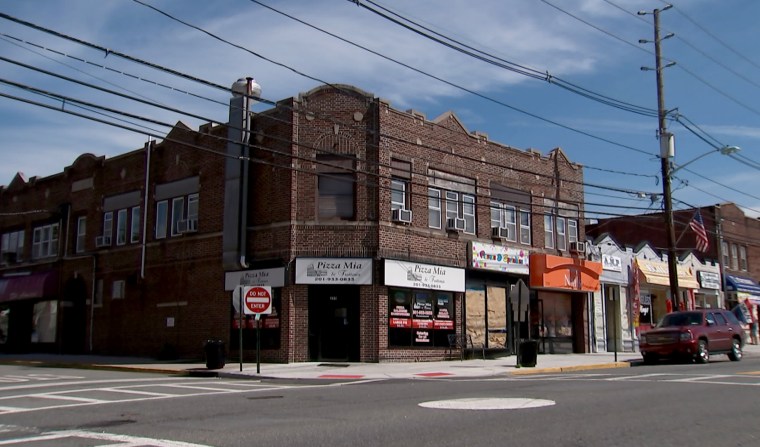
Joseph
Schwartz listed a tiny office above this New Jersey pizzeria in Wood
Ridge, New Jersey, as the location where he ran over 100 nursing homes
nationwide.NBC News
He
started with a half dozen homes, but after creating Skyline Healthcare
he began expanding rapidly in November 2015 with the purchase of 17
homes.
Schwartz ran Skyline out of a tiny
office above a New Jersey pizzeria. He was CEO, his wife Rosie co-owned
most of the properties and his two sons, Michael and Louis, served as
vice presidents. The company had a bare-bones website and a slogan,
"Skyline: The Home Life You Crave."
During the 2017 deposition, he said, "Skyline is an entity that is me."
His
net worth is hard to compute but real estate records show he owns over
$9 million worth of real estate in the New York metropolitan area,
including a gated house in Suffern, N.Y.
Within a year of his purchase of 17 nursing homes, Schwartz had taken on another 64, and by 2017 was operating more than 100.
Schwartz
wouldn't provide a number when the plaintiff's attorney asked him
repeatedly in June 2017 how many homes he ran. He confirmed it was more
than five, but asked if it was more than 100, he said several times that
he couldn't recall.
Joseph
Schwartz speaking to lawyers during a sworn deposition in June 2017 for
a neglect case he settled. He told the lawyers, "All our facilities are
very, very, very, very compliant with all clients. They all have every
program that's necessary for patient care."Ace Reporters
With
more than 100 facilities, experts estimate Schwartz would have been
juggling a few hundred million dollars a year in taxpayer money from
Medicare and Medicaid.
But problems had
emerged quickly. Within six months of Skyline's entry into the Arkansas
market in 2015, the state's attorney general was investigating reports
of neglect in Skyline facilities.
Marcela
Watkins, who visited her mother daily in Spring Place Health and Rehab
in Little Rock, said the food went downhill once Skyline took over. She
recalled staff serving raw vegetables and boxed pizza to elderly
patients.
"It's a money-making business," she said. "And guess who doesn't get the care? Our loved ones."
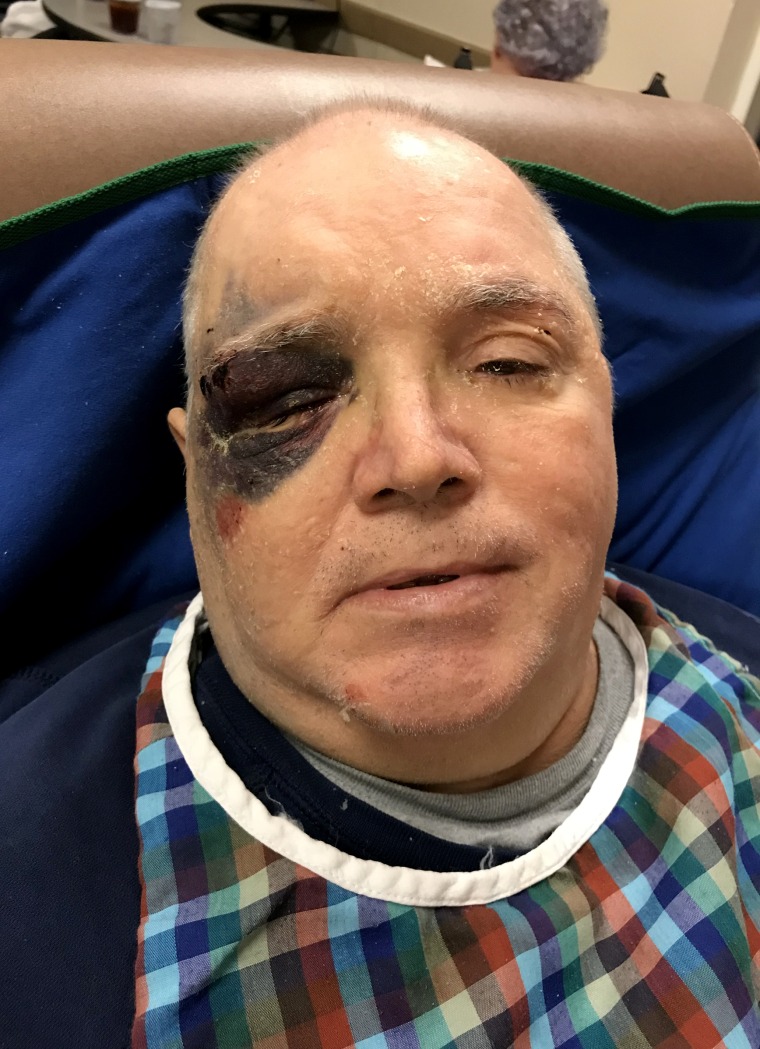
Karen
Coats's 57-year-old brother Donny Owens fell at another Skyline
Arkansas facility in 2017, heavily bruising his face. She said he laid
on the floor for 45 minutes before staff found him.
Coats said staffing was a "revolving door" and that she frequently complained, though little changed.
The
state attorney general later issued Skyline facilities more than
$200,000 in civil fines for neglect, preventable falls, failure to bathe
residents and maggots in a resident's personal medical equipment.
In
Massachusetts, staff say the Schwartz sons visited the properties
before taking over, promising new resources. But cuts started within a
year.
Certified nursing assistants were
reduced from five to three, according to ex-employees. Staff were told
that disposable briefs would be rationed to two per patient per shift,
instead of as needed, meaning patients were left to languish in their
own body waste. One former head of nursing told NBC News that management
offered giveaways to smooth over the changes.
She said she told them, "I don't want a [free barbecue] grill, I want to save the staff I have on the floor."
As problems mounted, Skyline continued to expand. In 2017, it entered South Dakota.
Schwartz
reportedly leased at least half of the homes he operated around the
nation from Georgia-based Golden LivingCenters, according to local news
reports and property records, which acted as Schwartz's landlord.
Last
year Skyline released a statement to a South Dakota reporter blaming
Golden for problems in its South Dakota nursing homes. Skyline said the
chain was "dedicated to providing quality care" and meeting its
obligations, but that Golden had caused the issues.
Monroe,
the analyst, said landlords like Golden hold some responsibility. "How
did they not do their due diligence to [vet Skyline]? That is a
mystery."
A spokesperson for Golden
LivingCenters conceded the company contracted with Schwartz to run 17
homes in South Dakota but would not comment on other states. The
spokesperson also declined to answer if the company vetted Schwartz,
saying, "He convinced a lot of people in a lot of states. He ran a big
scam."
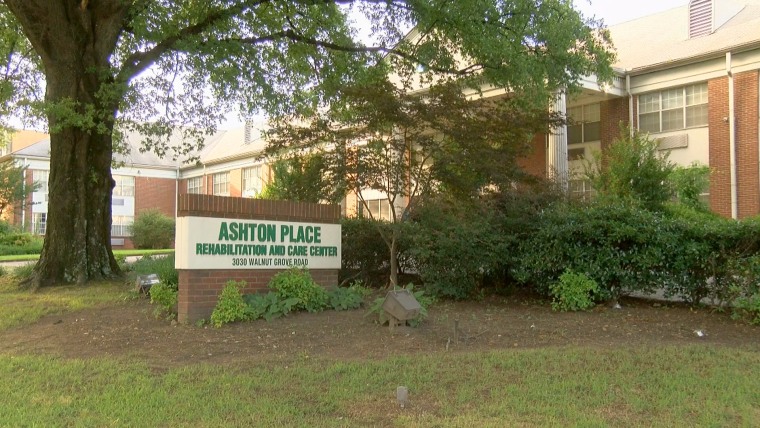
By September 2017, Skyline had taken
over Ashton Place, a nursing home in Memphis, Tenn. Less than two
months later, a resident with a recent leg amputation was taken from the
nursing home, where he was found lying in feces, to a hospital, where
nurses discovered maggots and gangrene in his leg, according to the
police report obtained by local NBC affiliate WMC. His death two days
later prompted a state investigation, which revealed the man had not had
his dressing changed for two days. Staff said problems arose in part
when Skyline told nurses to abandon electronic medical records and go
back to paper record keeping.
The Ashton Place Rehabilitation and Care Center in Tennessee.NBC News
During the investigation, the company's medical director told inspectors, "I have no support, no direction."
A
spokesperson for the state agency that approved Schwartz's takeover of
Ashton Place said while Skyline had faced problems in other states, that
did not disqualify it from operating the Memphis nursing home.
A
month after the death, the Centers for Medicare and Medicaid Services
(CMS), the federal agency that oversees the nursing home industry,
terminated Medicare certification for the facility and another Skyline
property in Tennessee. It terminated a third in the state in 2018.
According
to a CMS spokesperson, "Each individual facility is separately
certified and held accountable for compliance with CMS minimum health
and safety standards." The spokesperson adds that "CMS has limited
authority to intervene when a facility is struggling financially.
The government, and taxpayers, were paying for Skyline's rise.
Industry analysts say nursing homes are on the decline as other options, like assisted living, emerge. The number of residents has fallen from an estimated 1.5 million in 2010 to 1.3 million in 2015. But they also say a "silver tsunami" of baby boomers in their 80's may be on the horizon.
For the time being, residents in nursing homes
are likely to be poor, vulnerable and on Medicaid, which is paid for by
federal taxes.
But despite being subsidized by the government, as he took over more homes, Joseph Schwartz was racking up debts.
Former
staff at Skyline nursing homes say Schwartz would bring in a vendor,
let the bills stack up, then find another vendor and do the same thing
again.
During the June 2017 deposition for a
lawsuit alleging neglect at a Schwartz-owned facility in Pennsylvania
between 2012 and 2014, which he later settled, plaintiff's attorneys
asked about unpaid bills and bounced checks. Schwartz insisted that he
paid "everybody." But he also said there could be reasons for not paying
contractors, including unfinished work. "Because a guy sends a bill in
doesn't mean he needs to get paid," said Schwartz.
With
residents running out of food, several states began to take
extraordinary measures. Starting in March 2018, Nebraska and then
Pennsylvania assumed control of some Skyline facilities and assigned
third parties to run them.
South Dakota was next. In April 2018, Debbie Menzenberg, a local Skyline administrator, sent a panicked email to the state agency responsible for nursing homes, claiming Schwartz's son was telling her the company had no money.
Donny
Owens, a resident at a Skyline nursing home in Hazen, Arkansas, fell
and bruised his face. According to his sister Karen Coats, Owens called
for staff for 45 minutes before they came to help him.Karen Coats
"I
just had a call from Louis Schwartz," she wrote in the email, which was
later produced in court, "there is no money — he told me to discharge
residents????" Later she wrote, "I need water paid at Bella Vista and
Prairie Hills today or it will be SHUT OFF – Skyline is SILENT!!!"
During
the 2017 deposition, Schwartz repeatedly defended the quality of care
at his nursing homes, saying he tried very hard to do "whatever is
needed" for residents, but seemed reluctant to talk about what he was
doing with money from the homes.
The
attorney for the plaintiff pressed Schwartz on whether he took cash from
the facilities. He said he did, but his lawyers objected to questions
about how often he took money and whether he made the decision. Schwartz
then said he would take the money as needed, and would listen to the
recommendation of his CFO, but would ultimately make the decision
himself.
The plaintiff's attorney then asked Schwartz how much money he took out of the Pennsylvania home where the neglect was alleged.
"Those draws, for example ... they could amount to over a million dollars over the course of a year?"
"Could be," answered Schwartz.
"Now,
when you're taking out draws," asked the lawyer, "that does take away
from some of the cash on hand at the facility to operate?"
Advocates
and analysts are still wondering how Schwartz's empire was allowed to
grow so large so quickly, without any state or federal authorities
appearing to sound an alarm bell.
The
nursing home industry is turbulent, with frequent ownership changes —
one of the homes Schwartz took over in Arkansas had five owners in just
six years.
While states are largely
responsible for determining if a new owner is financially suitable, the
process varies dramatically state by state. In Arkansas the process
doesn't even require the new owner to submit financial statements.
The
federal regulator, CMS, is the only oversight agency with a birds-eye
view. Each time a nursing home anywhere in the country changes hands,
the company has to submit a form to CMS, a regulation introduced as part
of Obamacare.
A CMS spokesperson, however,
told NBC News that the agency is not responsible for assessing an
owner's finances, "CMS authority over nursing homes relates to
compliance with health and safety requirements, not their well-being."
But
CMS staff can review ownership patterns, said Alice Bonner, who served
as the director of the division of nursing homes for CMS during the
Obama administration.
"We would have conversations about the change in ownership," she said. "We picked up on things like that."
The Trump administration has taken a different
approach to oversight. While extreme instances of neglect at Skyline
facilities were stacking up, the administration was reducing fines for
troubled nursing homes.
In early 2017, the
nursing home industry's trade group sent President Donald Trump a
congratulations on his election victory and asked for a series of
regulatory changes. One request was a reduction in fines.
Six
months later, the administration began implementing a rollback in
nursing home fines. Regulators are now encouraged to use one time fines
instead of daily fines. That's led to a 34 percent drop in overall
penalties for problematic nursing homes between 2017 and 2018.
CMS says the change was to make punishment "fairer, more consistent and better tailored to prod nursing homes to improve care."
David
C. Grabowski, a professor of health care policy at Harvard Medical
School, disagrees. "For those more serious deficiencies it's important
to hold them accountable rather than a one-time fine," he said. "The
idea that a $10,000 fine will change their behavior, I don't believe
that."
A CMS spokesperson told NBC the
agency "is committed to protecting nursing home residents to the fullest
extent within the agency's legal authority to set and enforce safety
and quality standards."
The number of
nursing home contracts terminated by CMS has also declined. Between 2014
and 2017 the agency stopped payments to 14-18 homes annually. In 2018,
that number dropped to just three. There have been four terminations so
far this year.
CMS says the drop in terminations is not the result of a policy change.
Toby
Edelman is the senior policy attorney at the Center for Medicare
Advocacy, a non-profit that works to improved access to health care for
the elderly and disabled. Edelman says the collapse of Skyline is a
warning. "We need to have very strict rules about who's eligible to
operate a facility, what the standards are, what their financial
backgrounds are," said Edelman. "And if the facility did a bad job in
one place, it's not likely to do a good job in another facility. Why do
we want to give them more?"
Today,
Schwartz is busy fighting more than a dozen lawsuits from residents'
families alleging neglect and claiming he siphoned money out of the
nursing homes. His lawyers have denied those allegations in court.
His
office above the pizzeria is shut down. Litigants in these cases have
spent tens of thousands of dollars attempting to serve him at his
Suffern address, but he's rarely home.
Nurses
have had to find other jobs. In late June the Massachusetts AG fined
Schwartz nearly $85,000 for withholding pay from employees.
Bedford
Village Nursing Home, a former Skyline facility in Massachusetts was
shut down by the state, displacing over 60 residents.NBC News
Yet
the Skyline saga is not over. Last year a Skyline spokesperson told
reporters the company "had been working to transition out of the nursing
home industry" but a CMS spokesperson confirmed the family retains an
ownership stake in more than 50 homes.
In
New Jersey a home once owned by Skyline but now owned by a separate
company run by Joseph Schwartz's son, Louis, is facing accusations of
neglect.
Louis Schwartz did not respond to requests for comment about the facility, which is called Andover Subacute Care II.
In
January, the facility was cited by the state for endangering residents
after a woman with dementia wandered out of a locked unit through two
sets of broken automatic doors. She was found in the parking lot at 4:30
a.m., sitting on ice-covered ground without a coat, socks or shoes. It
was four degrees below zero, according to a police report, and she
suffered from "severe frostbite."
Her
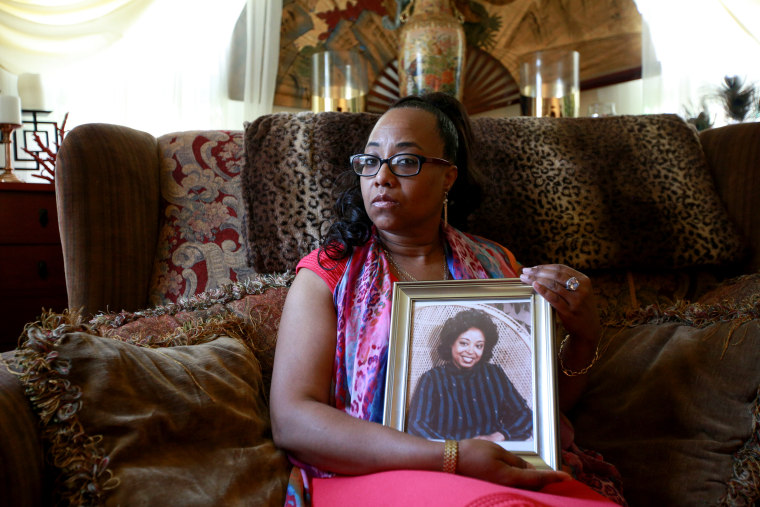
daughter, Terri Thompson, said when she reached her mother's hospital
bed that morning, she could barely hear a heartbeat. Her mother's nails,
which she used to love to paint, have fallen off, as has much of the
skin on her arms and legs from the frostbite.
"I
never, ever imagined I would be betrayed like this," Thompson said.
"They didn't even look for her. Someone else saw a woman lying in the
snow, and it was my mom."