Evolving scams, rising losses, and a push for stronger protections in Texas.
By Mark Hollis, AARP Texas
AUSTIN, Texas -- As financial scams become more sophisticated,
Texas advocates are intensifying their focus on policy solutions ahead
of the 2027 legislative session.
The Texas Elder Justice Coalition, a statewide network
working to combat financial exploitation of older adults, plays a
central role in that effort. For AARP Texas, participation provides
critical insight into emerging threats.
“Fraud is evolving quickly, and our response has to keep pace,” said Stephanie Mace,
associate state director at AARP Texas. “The coalition helps us stay
connected to what’s happening on the ground and shape solutions that
better protect older Texans.”
The urgency is growing. Fraud losses in Texas have surged in recent years, with older adults disproportionately affected. AARP Texas has responded by expanding community education and outreach, including free events and workshops outlined in its Texas Shred ’Em fraud prevention campaign,
which brings shredding services and scam education directly to
communities statewide. AARP Texas also hosts fraud prevention workshops,
virtual presentations, and telephone town halls, while volunteers lead
community presentations where audiences learn to recognize and avoid
scams. In addition, said Rosalinda Martinez, AARP Texas’ senior
director of community strategy: “Outreach extends into everyday
settings, like community events and sports venues, where we engage
residents with fraud awareness resources and tips.”
At the TEJC Summit in mid-June, advocates emphasized a
clear trend: scams are becoming faster, more coordinated, and harder to
detect. Technology is enabling real-time financial exploitation, while
traditional schemes, such as impersonation and investment fraud, remain
widespread.
“Today’s scams are more immediate and more targeted,” Mace said. “That makes prevention and enforcement much more challenging.”
Cryptocurrency kiosks, or so-called “crypto-ATMs,” and
related technologies have emerged as a major concern. AARP research
shows these machines are used in scams because transactions move quickly
and are difficult to reverse.
“We’re seeing these machines show up more often in fraud cases, and
the lack of consistent safeguards in Texas puts consumers at risk,” said
Andrea Earl, associate state director at AARP Texas.
Some local governments are beginning to respond. In May,
the San Antonio City Council unanimously approved an ordinance requiring
cryptocurrency kiosks to display clear warning signs about common scams
— an effort to give consumers a moment to pause before completing
potentially irreversible transactions.
“This is a meaningful step to raise awareness and help prevent losses before they happen,” said Lisa A. Rodriguez, AARP Texas director. “It shows how targeted, commonsense protections can make a real difference for Texans.”
Looking ahead to the 2027 legislative session, Rodriguez
said AARP Texas plans to prioritize stronger consumer protections for
cryptocurrency kiosks. “Stronger safeguards are essential if we’re going
to stay ahead of how these scams are evolving,” she said.
Elder abuse comes in several forms, but attempting to rip off seniors financially is the big one.
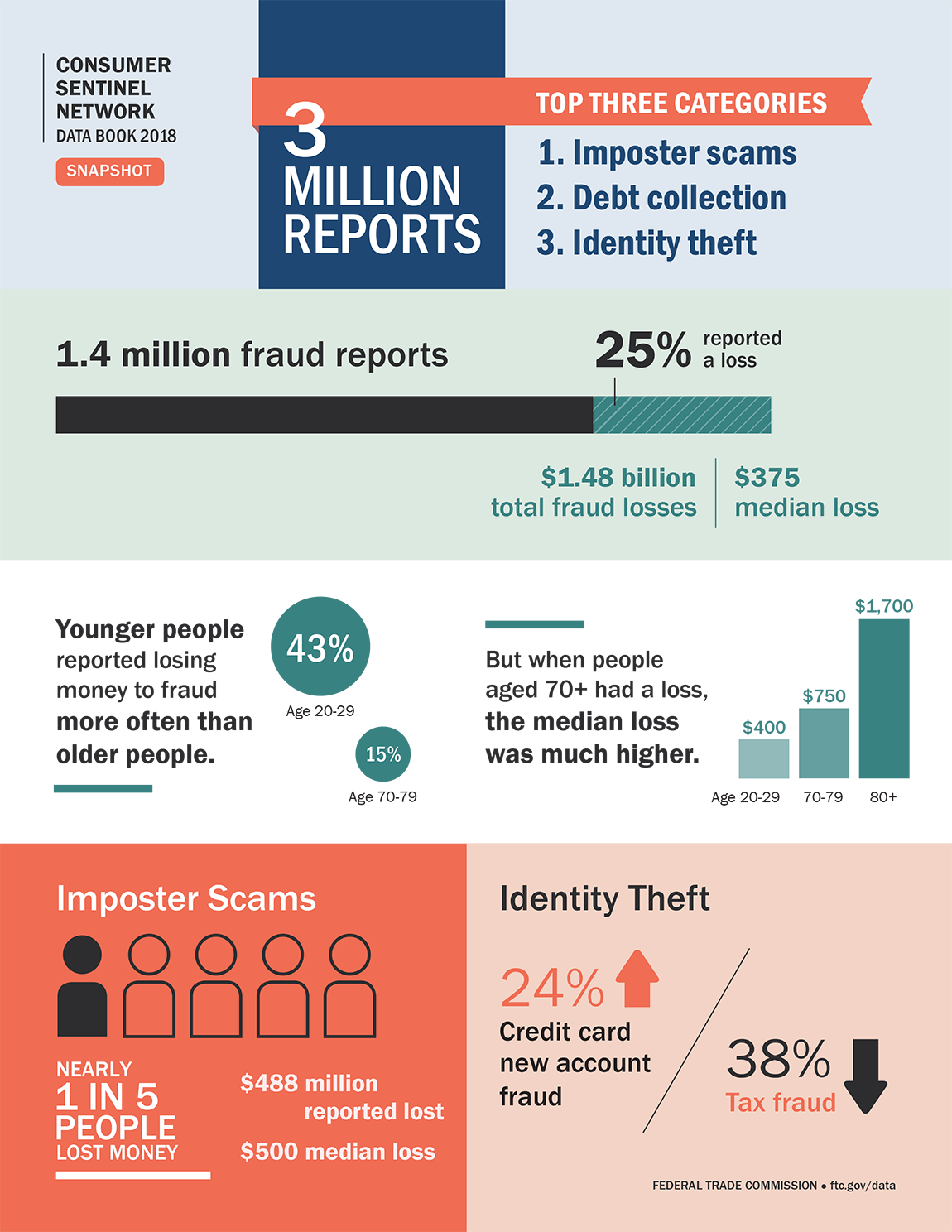
Adults 60 and older reported losses of $1.6 billion to scams in
2022, according to the U.S. Federal Trade Commission. The true figure is
likely considerably higher given that many rip-offs are never reported.
And while this is a year-round problem, this time of year scams can
be particularly frequent. Holiday hucksters are good at tugging on
heartstrings to get seniors to cough up money and/or personal data; such
rip-offs can leave victims with little more than a lump of coal in
their stocking.
"Falling prey to financial abuse can have dire consequences for
anyone, but our older population is particularly susceptible," says
Cassandra Happe of WalletHub, a financial-services firm which is out
with a study on elder abuse. "Abuse can greatly impact their ability to
afford basic necessities, especially since many seniors are on a fixed
income."
Read: 'Tis the season - for scams. What older Americans need to watch out for this month.
Here are three common scams to watch out for as the year winds down:
Appeals from bogus charities pushing for year-end, tax-deductible
donations. Never give to anyone asking you for money over the phone.
Call the charity directly or visit their website to donate - after
confirming via GuideStar or Charity Navigator whether the charity is
legitimate.The "grandparent scam" involves someone calling, pretending
to be a grandchild and asking for money or gift cards "to buy gifts."
How would a senior fall for this? Often the caller might have just
enough info about the child to make it seem legit. Also, seniors who are
hard of hearing or don't speak with their grandchildren on a regular
basis might not recognize the voice and be fooled. The U.S. Consumer
Financial Protection Bureau offers some good tips on how to thwart scams
directed at grandparents.Online shopping rip-offs. AgeRight.org points
out that people who didn't grow up shopping online might not know what
red flags to watch out for-and can thus be vulnerable to cyber shopping
scams. Many involve "phishing" emails to get folks to give up personal
info and/or credit card data. It offers two good bits of advice: Never
click on any links in an email from an unfamiliar source. And, if it's
too good to be true, it usually is. Don't believe emails that promote
wildly steep discounts.
Taking sensible precautions as outlined above can help stop the
crooks. But geography does too. WalletHub's study says some states have
pretty good elder abuse protections in place-but others have some work
to do.
Read: That may not be your daughter crying on the phone. Here's what to know about AI-powered scams.
The study says Wisconsin has the best elder-abuse protections in
the country, followed by Massachusetts, Ohio, Virginia, and Kentucky. At
the other end of the spectrum, it claims California, Utah, Montana,
South Carolina and New Jersey tag behind. To determine these rankings,
it studied three dynamics: "the prevalence of elder abuse, resources for
prevention and assistance, and the quality of those elder-abuse
protections."
Wisconsin topped the list as the best state for elder-abuse
protections, because of what WalletHub calls the Badger state's "high
numbers of eldercare organizations and services," backed by significant
investment in elder-abuse prevention programs. The largest state,
California, ranked last overall because of what WalletHub called a
pervasiveness of elder abuse combined with a below average level of
spending on prevention. Read about your state and more on WalletHub's
methodology.
Some states, meanwhile, are beefing up law enforcement around elder
abuse issues. John C. Craft, an associate professor of law at Alabama's
Faulkner University, says lawmakers in the Yellowhammer State have
acted to criminalize elder abuse and financial exploitation so that
offenders are held accountable. He thinks something else that could
help, not just in Alabama but nationwide, is to step up early
interventions to thwart elder abuse at the earliest stage. "This can be
accomplished," he writes, "with increased reporting by medical,
financial, and other professionals. This can also be accomplished with
better access to the legal system for victims of abuse."
How can financial elder abuse be spotted? Here are three of the more common signs, WalletHub says:
Unusual bank or credit card activity. "Be vigilant for any
unexpected or abrupt alterations in the financial circumstances of an
elderly individual, like substantial withdrawals, transfers, or
expenditures," it says adding "Be mindful of any irregular ATM usage or
unfamiliar purchases." Be cautious of new or unfamiliar "friends." Watch
out if an elderly person has recently befriended someone who shows an
unusual interest in their finances or property. "This behavior could
indicate that the new acquaintance has malicious intentions," WalletHub
says. "Some scammers take advantage of the elderly person's kind nature
and willingness to make new friends to gain their trust, which they can
then use as a means to exploit them financially.Changes in behavior: Be
on the lookout for changes by older individuals, such as sudden
fearfulness, anxiety, or secretiveness regarding their finances.
"Perpetrators of financial fraud often employ tactics that isolate
vulnerable individuals from their social support networks, allowing them
to maintain control over their victims," WalletHub says. "If an older
adult seems to be avoiding family and friends or is hesitant to discuss
their financial situation, it may be indicative of elder financial
abuse."
The Yolo County District Attorney's Office, in partnership with the
Yolo County Health and Human Services Agency, are issuing an urgent
public advisory to raise awareness about the alarming increase in
financial scams targeting our elderly population. These scams have
reached an unprecedented level of sophistication, posing a serious
threat to the financial security and overall well-being of our beloved
seniors.
Recent data from the California Department of Justice reveals a
startling rise in financial scams targeting the elderly, with a
staggering 30% increase in reported incidents across the state over the
past year alone. Our own community of Yolo County has unfortunately not
been spared from this troubling trend, with a significant number of our
seniors falling victim to these reprehensible crimes.
These scams have evolved far beyond traditional methods, leveraging
advanced technology and exploiting the vulnerabilities of our seniors.
Fraudsters employ various manipulative techniques, including
impersonating trusted institutions, creating sophisticated phishing
emails, and using coercive tactics to extract sensitive personal and
financial information. It is crucial that our focus be on supporting and
protecting victims rather than criticizing them for having been
victimized by these criminals.
In response to this growing threat, the County of Yolo has taken
proactive measures to combat financial scams targeting our elderly
residents. The Yolo County District Attorney's Office and the Yolo
County Health and Human Services Agency have joined forces to launch a
comprehensive initiative aimed at raising awareness, providing
educational resources, and strengthening community support networks.
Through this collaborative effort, we are enhancing public education
and outreach to ensure that our seniors have the knowledge and tools to
recognize and prevent scams before falling victim. We are also
bolstering efforts to investigate and prosecute those responsible for
preying on our vulnerable population, sending a strong message that such
acts will not be tolerated in our community.
We urge all residents of Yolo County to remain vigilant and to take
proactive steps to protect themselves and their loved ones. Here are
some essential tips to help safeguard against financial scams:
Keep personal information, such as Social Security numbers and banking details, confidential and secure.
Be cautious of unsolicited calls, emails, or messages requesting
personal or financial information. Legitimate organizations will never
ask for sensitive details via unsolicited means.
Regularly review financial statements and credit reports for any
suspicious activity. No legitimate financial institution or
organization will ever ask you to buy gift cards or put money into
cryptocurrency.
Report any instances of scams or fraud to the local authorities
and relevant regulatory agencies. Embarrassment and fear of losing their
independence are often the reason victims do not report these crimes.
When someone falls prey to deceit, DO NOT talk down to them or
treat them like a child. Encourage them to report it and support them in
their recovery from being scammed.
Stay informed by visiting the official websites of trusted
organizations for the latest information on scams and fraud prevention.
The County of Yolo, through this partnership of its dedicated staff,
remains committed to the safety and well-being of our seniors. We
encourage everyone to join us in this critical endeavor by spreading
awareness, supporting those victimized, and remaining vigilant against
these cunning scams. By working together, we can protect the most
vulnerable members of our community and ensure a safe and secure future
for all.
Report any crimes to your local law enforcement’s non-emergency
number. If you suspect that someone is a victim of elder abuse or
financial exploitation, report it to Adult Protective Services (APS) at
530-661-2727 or 1-888-675-1115. If you think the person’s safety may be
at risk, call 911.
Additionally, if you or someone you know is a victim of elder
fraud, we encourage you to call the National Elder Fraud Hotline at
833-FRAUD-11 (833-372-8311).
Kim Swanson never planned to speak publicly about the time she almost
lost $1,000 to a stranger who called to tell her she missed jury duty.
Swanson, the assistant to Cobb County Commissioner Bob Ott, recently
received the call from a person who said she missed three jury summons
and there were three warrants out for her arrest. Swanson panicked and
did the wrong thing: she followed the scammers’ commands.
“Jail isn’t really a happy place to be,” she said while explaining how she nearly became a fraud victim.
Swanson’s story was one of many cautionary tales recounted
Tuesday during a seminar at Johnson Ferry Baptist Church in Marietta
which discussed ways seniors can fall victim to financial exploitation.
Joe
Gavalis, a law enforcement coordinator with the North Georgia Elder
Abuse Task Force, said a little more than half of those who financially
exploit older residents are their relatives, caretakers or “someone you
trust.” The rest, he said, are carried out by professionals who target
seniors because that generation “has been very trusting.”
Jason Marbutt, Cobb County’s senior assistant district attorney and
head of the Cobb task force, said only one in 24 fraud cases are
reported to police because the victims are ashamed and embarrassed they
fell for the ruse. But reporting the crime is the first step to catching
the criminal, he said.
“We can only prosecute and punish what we can catch,” Marbutt said.
In 2018, the Cobb County District Attorney’s Office charged 29
defendants with at least one count of neglect, abuse or exploitation of
the elderly. The number rose slightly to 35 in 2018. There have been
five defendants charged so far this year.
Cobb County Sheriff’s
Office spokesman Glenn Daniel said his agency investigated 290 reports
of elder exploitation cases in 2018. That figure increased to 320 in
2019. So far this year, the department has investigated 60 reports.
Daniel said those numbers include scams targeting the elderly.
“Most of these cases we were not able to obtain enough evidence to prosecute, or they have no identifiable suspect,” he added.
Schemes used on older adults include the imposter scam, home repair/improvement scams and the jury duty scam.
The
imposter scam, where the scammer poses as a person or business to try
to get the potential victim to pay off a debt, relies on the “idea of
urgency” that instills fear into the potential victim, Marbutt said.
Marbutt
said his own wife, Olivia, fell victim to an imposter scam. He
described his wife as a “very intelligent patent attorney” who received
an email from someone claiming to be a partner at her law firm. The
email asked Marbutt’s wife to go to Target and purchase iTunes cards to
help with a payment. The lawyer spent $500 to $1,000 performing the
task. Twenty minutes went by before she reached out to her husband, who
informed her she was scammed.
“All the money was gone and there was nothing we could have done,” Jason Marbutt said.
Home
improvement scams are also common crimes targeting older adults. James
Duncan, an investigator with the Cobb County Sheriff’s Office, said
residents have to do their due diligence and ask these potential
scammers to provide at least three references. In a lot of cases, older
adults may live alone, so the “nosy neighbor” can help thwart scammers
by simply asking questions and reporting their suspicions to police.
“The nosy neighbor is probably the best deterrent to help us solve crimes,” he said.
The jury duty scam happens when a person receives a phone call
informing them a warrant has been issued for their arrest. The person is
told they have to pay a fine or they will go to jail.
Swanson,
Ott’s assistant, said the scam was convincing enough that she got in her
car and began driving to the Cobb sheriff’s office to pay off the fine.
However, the scammer told her to stop by the bank to withdraw about
$1,000 to apply towards the payment. The scammer then told her to go to
Kroger and purchase several Green Dot cards. She was directed to call a
bail bondsman and read him the number on the back of the Green Dot cards
to pay the fine. At this point, Swanson said she began to feel uneasy
about the situation. She told the men on the phone that they could meet
her outside the Sheriff’s Office to get her payment.
Swanson said
when she insisted on making the payment in person, the scammers ended
the call. She called a friend who is an attorney who told her she was
scammed.
“You get all caught up in to it,” she said. “The more I talk about it the dumber I feel. You have to take a minute and breathe.”
U.S. Sen. Susan Collins (R-ME), chairman of the Senate Aging
Committee, sent correspondence Nov. 8 urging Veterans Affairs (VA)
Secretary Robert Wilkie to increase protections against scams targeting
veterans.
The letter specifically asked Wilkie to ensure that the VA was taking
necessary steps to alert veterans to targeted scams and to gather
information about what protective steps the department has already
taken. It was co-signed by the 12 members of the Aging Committee,
including Committee Ranking Member Bob Casey (D-PA).
Prior to the letter, Sens. Collins and Casey held a committee hearing
on Nov. 6 that focused on the importance of preventing veteran-targeted
scams and aggressively prosecuting the individuals behind the scams.
“One issue that calls for our immediate action is to fight a newer
enemy facing our veterans – relentless criminals who seek to rob them of
their life savings and defraud them of the benefits they have earned in
service to our country,” Sen. Collins said. “Veterans and their
families have a right to expect that the nation they served will fight
to protect them.”
According to a 2017 AARP study noted by Sen. Collins’ office,
veterans were twice as likely to lose money to scams than non-veterans,
with 80 percent of those being targeted with scams pertaining to their
veteran status.
“As scammers become more sophisticated in their efforts, it is
imperative that VA play an active role in combatting financial
exploitation posed by scammers,” the senators wrote to Wilkie.
“Veterans and their families have a right to expect that the nation
they served will fight to protect them from such unscrupulous tactics…
It is critical that Congress fully understands how our nation’s veterans
are affected by financial fraud, and what Veterans Affairs is doing to
protect them.”
Judy Fern is 79 but reads as 15 years younger. She hops the high step
into her Honda CR-V, hits the button for public radio (not just for my
sake) and expertly pilots through the streets of her seaside town.
Judy Fern, 79, is a New Jersey nurse who was defrauded out of nearly $200,000.
The plan is to visit one of the scenes of the crime, the gift card rack at Walmart in Egg Harbor Township, New Jersey.
Department store gift cards are a favorite money transfer device of
fraudsters. Over a two-week period, just after Thanksgiving 2017, Fern
got caught in an elaborate scam that cost her close to $200,000. That is
a fortune to most of us, and it was a fortune for Fern.
Fern is a registered nurse, skilled in the operating room. Well into
what most would consider their retirement years, she acts as a fill-in
nurse for several public school districts. She goes to Pilates once or
twice a week.
“I look back and I can’t imagine what I was thinking,” Fern said. “I was like a robot.”
“I just knew I had to go to Walmart, knew what kind of cards he
wanted me to get, get into the car, tear off the back, give him the
numbers,” Fern recalled.
Not only are older people heavily targeted by scammers, but
surprising data suggest that, as we get older, we become more vulnerable
to fraud in so many of its forms.
The part that especially floored me is this: Doctors are studying
older people who are on the ball, A-OK. People who — when tested — seem
to have no diagnosable cognitive impairment, but who may still be at
special risk from those who want to take their money, be it strangers or
family.
There is brain research about this. In some cases, it’s like a person’s radar for scams goes dark.
According to a 2016 study, people 50 and older hold 83% of the wealth in America;
households headed by people in their 70s and 80s tend to have the
highest median net worth. That makes them prime targets for financial
scams and the effects can be devastating.
Fern’s nightmare began with a phone call from someone claiming to be
from computer tech support who said he needed to get into her computer
to fix something. It spiraled from there.
According to Fern, the scammer who took control of her computer
directed her attention to what looked like a readout from one of her
accounts at US Bank. The account should have had $29,819. She freaked
out when it appeared the account had been drained to nothing.
Fern was led to believe if she gave the caller even more money, she
would get all of it back. Her life then became an odyssey out of Greek
tragedy.
She said the scammer ordered her to not just Walmart but also Target,
resulting in more than two dozen trips over two weeks to buy gift cards
and to turn the value of the cards over to him by phone.
“I was driving, clenching the wheel. I’m so mad, I couldn’t figure
out as I thought about it, if I’m mad at him or mad at me? No kidding,”
Fern said. “I mean, why am I out here on this freaking road again?
Driving all the way out to Walmart.”
Back in Fern’s kitchen, we laid out all the used cards, piles and
piles of them, covering every available spot on a small table. In all,
there were more than 100 used Target and Walmart gift cards, some
decorated with pretty pink flowers or cute cartoon penguins or, as it
was the holidays, Santa Claus.
Fern with $166,000 in used department store gift cards.
She kept the receipts. My total: $165,970. And that’s not all. The
scammer also talked Fern into two bank transfers, including $45,000 to a
company in Nepal. It could have been worse, but one of her credit card
companies reversed nearly $25,000, agreeing it was fraud.
By my calculation, Fern lost something close to $196,000. All this
was paid for through savings, retirement money and running up credit
cards, with the scammer repeatedly getting her to call and raise her
credit limit. When she pushed back, Fern said, the guy started
threatening her family.
Eventually, she said, her tormentor showed her, on her computer, the
image of a $200,000 check written out in her name, promised to her if
she gave him more money still. Fern said she could see it was
fraudulent.
“I could tell, because the comma was in the wrong place. It was not right.”At this point, she was done and cut off communication, her accounts ravaged.
Maybe this could happen to any of us at any age. But it’s possible
there is also something else at work with some older scam victims.
Changes to the brain
“The most frustrating people, in my science and in my clinical
practice, are people who test, up and down, neuropsychologically
normal,” said Mark Lachs, a physician at Weill-Cornell Medicine in New
York, one of New York City’s biggest hospitals.
“I mean, they’ve had the million-dollar neurologic workup and yet
they still give away the farm in ways that they would not have when they
were younger.”
“We are learning that there are changes in the aging brain, even in
the absence of diseases like Alzheimer’s disease or other
neurodegenerative illnesses, that may render older adults vulnerable to
financial exploitation.”
There is neuroscience and psychological data to suggest our ability
to detect sketchy situations may decline. Or, we may become prone to
seeing the upside of a risky deal and blow off the downside. Some people
are more inclined to believe the last person they spoke to. Others may
lose the ability to push back on a high-pressure predator. Researchers
emphasize that this phenomenon goes way beyond changes in the brain.
“It also involves all of these other social and environmental factors
like social isolation, like cultural factors and societal factors, like
older adults having more wealth compared to younger generations,” said
Marti DeLiema, a research scholar at the Stanford Center on Longevity.
Take that first point, social isolation. Older people, as a group,
are more likely to live alone. Fern’s husband Bob had died in a plane
crash 12 years earlier and her daughter, who had lived nearby, had died
of cancer. Without a strong local support system around to act as a
second set of eyes and ears, people can be lured into financial traps.
Rose Conlon/Marketplace
But scientists looking into age-related financial vulnerability are
very interested in physical changes to the aging brain, the way eyesight
and hearing can get less keen. In some cases, a new pattern of making
mistakes with money may be a harbinger of cognitive bad things to come,
the “first thing to go,” as it were.
McGill University neuroscientist Nathan Spreng was able to track down
13 elderly scam victims and 13 others equivalent in age, gender, and
education who had successfully fended off a scam. Spreng’s research
found the brains of the two groups were physically different.
“When we looked at the structural integrity of their brain, we
identified one region in particular that was significantly smaller in
those individuals who had been scammed than those who had not,” Spreng
said.
He noticed this thinning of the part of the brain called the
“insula,” which, along with a lot of other things, may help us trigger
our “spidey sense,” the hunch that can warn us away from dicey financial
situations.
“It gives you this ‘body sense’ of the perceptions of the environment
that something’s not quite right and it’s a signal that all of us in
life kind of need to learn how to listen to. In the case of aging, that
signal is just not as loud,” said Spreng, who is still in the early
stages of the research.
Some experts are skeptical about practical applications of research like Spreng’s.
Peter Lichtenberg, director of the Institute of Gerontology at Wayne
State University in Michigan, is not a neuroscientist but a psychologist
who studies financial decision-making capacity. While he sees the brain
scanning as promising, his experience tells him financial acumen and
scam-spotting are really complex matters.
“There is no one aging pattern,” Lichtenberg said. “You know, some
older adults are as good as they were in their fifties and sixties.
Others are showing a more significant decline.”
In an award-winning paper published by the Brookings Institution,
researchers identified a peak age for handling money matters: on
average, 53 years old. That astonishing number personally gave me pause
now that I am past that summit and, according to that finding, hiking
the downward slope myself.
People of all ages get taken by scams, not just seniors. And Dr.
Spreng at McGill notes that many older people can have an edge over
their younger selves, an antidote to what we’ve been talking about. You
might call it wisdom.
But while this kind of life experience counts, even non-scientists,
including social workers and lawyers, have long wrestled with the
broader problem. Shannon Miller, an attorney based in Gainesville,
Florida, says she sees it all the time in her practice: a subset of
older people who are not legally considered incapacitated are,
nonetheless, extra vulnerable.
“What is it that makes one person exploitable and
another person not?” Miller asks. “It’s like a perfect storm, really,
when we’re talking about these vulnerable people who have enough
capacity that they’re not necessarily going to be on anybody’s radar,
like their doctor.”
Safeguarding people is especially complicated because taking away
rights based on age, but not necessarily competence, has a name: ageism.
Lawyer
and elder rights advocate Marie-Therese Connolly worked closely on the
drafting and passage of the 2010 Elder Justice Act.
Lawyer and elder rights advocate Marie-Therese Connolly is working on
a book about elder abuse to be called “Aging Dangerously”, and worked
closely on the drafting and passage, in 2010, of the Elder Justice Act.
“It’s so pervasive and it raises just such complicated ethical and
philosophical dilemmas about what we want our old age to look like, and
to what extent should we be entitled to make bad decisions,” Connolly
said.
She finds the “age-associated financial vulnerability” label a useful idea, but she wonders if they got the name wrong.
“I’d rather just call it financial vulnerability,” she said.
I wondered if it would really be discriminatory if — for instance —
credit card companies tweaked their fraud protection superpowers to
better watch over the accounts of older people in particular. Connolly’s
response?
“Why only older people?” Protect people of all ages, is her point.
Defense mechanisms
Safeguards against financial fraud take the shape of a state-by-state
patchwork and, too often, once the money is gone, it is gone for good.
Many advocates are pushing for better defenses.
A new federal law, the 2017 Elder Abuse Prevention and Prosecution Act, appointed what are called “elder justice coordinators” at U.S. Justice Department offices around the country.
That 2018 law also encourages different regulators, law enforcement
jurisdictions, and protectors of older people to share info about
exploitation, teaching both potential victims and officials about
warning signs of predators, hopefully before the abuse happens.
Wall Street’s self-regulatory body, FINRA, recently told stock
brokers to encourage customers to list the name of a trusted person to
contact if something signals “scam.” Banks have no such rule.
In Florida, a new legal tool
makes it much easier for the state’s vulnerable older victims to file
paperwork — in the absence of an attorney — to quickly freeze their
scammed money without notifying the scammer, a kind of “pause button.”
Where else can people turn? Local and federal law enforcement, which
can convey fraud complaints to the Federal Trade Commission’s Consumer Sentinel Network. Victims who get scammed specifically online can report it to the FBI’s Internet Crime Complaints Center, IC3.
Catching fraudsters is no easy feat, though millions of victims complain.
I met with one family that was able to win a partial restitution after a
con woman persuaded a dad in his 90s that she was his “special friend”
and in need of money for treatment for “cancer.” The victim’s kids
worked on this for many months, one a law school professor, the other a
former prosecutor.
Busts are not common, nor is getting money back. The feds pulled off several elder fraud sweeps in the last two years: the twobiggest pulled in more than 500 defendants.
In one high-profile conviction this year, a scammer from Jamaica was
sentenced to nearly seven years in the US for trying to swindle a guy in
his 90s. It started with promises of fake sweepstakes winnings, which
turned to violent threats. He picked the wrong potential victim: William Webster, the former head of the FBI and the CIA, who had friends in high places who could help.
Elder rights advocates say protections remain inadequate. Even with
that fresh federal law to help protect seniors, experts say there is
still not sufficient rigorous research on what strategies work best to
inoculate people from potential fraud. This at a time when the
population is aging: the number of people 65 and older will nearly double in 30 years,
to one out of five in the U.S. As the U.S. population of older people
expands scammers are getting more technologically sophisticated.
Over the last six months, I sat with families grappling with
scammers. I spent time with a son in his 20s living at home as he
finishes college, trying to cope after he saw emails showing his mother
had been sending an online love interest she’s never met about $100,000.
The son says the emailer has always been a no-show for any in-person
meeting with his mom.
Near St. Louis, I met with Art Schreiber, who moved in with his son’s
family after his spouse died. Art is in his 80s, an army veteran who
had a career fighting financial fraud, rising for a time to be the top
insurance fraud regulator in Missouri.
His son, Chad, shared a home office with his dad, where he repeatedly
had to intervene to stop people trying to pick his dad’s pocket via
phone, snail mail and email. Chad now has his father Art’s consent to
make financial decisions on his behalf, power of attorney. The
Schreibers, mindful of their father’s need for independence, regard this
as a step not to be taken lightly.
Chad
Schreiber, who lives in a St. Louis, Missouri suburb, gestures toward a
photo of his father, Art, who was besieged by fraudsters.
It’s not just strangers stealing from seniors. One study found that nearly 58% of the perpetrators of financial exploitation of the elderly are people victims could see in their family photo albums: perpetrators who are relatives.
Solving the problem
Meanwhile, scammers are still targeting Judy Fern in New Jersey.
Late last year, about a year after the scam that cost her $200,000, I
was recording a follow-up interview at Fern’s tidy home near the Jersey
Shore. Her phone kept warbling with some guy with a filtered-sounding
voice insisting she’d won millions in a jackpot if she paid some upfront
fee.
He’d left 15 messages offering $2 million but, while I was there,
this live voice upped the amount to $2.2 million. Where did the extra
money come from, Fern asked him. The caller claimed her winnings had
accrued “interest” after being deposited temporary in the “Federal
Reserve Bank of Washington, D.C.” More baloney, Fern concluded, and
called the cops.
When I checked in again with her this spring, a fresh set of scammers
were trying to shake her down. Prosecutors say once someone’s been
scammed, the fraudsters often put their contact info on a list they pass
around.
This time, Fern seemed to be on the fence about whether she had
actually won something or not and told me she had given them money. I
was able to alert her sister, two states away, who got Fern,
reluctantly, to sign a power of attorney to help the family help her.
Experts say these are conversations to have before a financial or
health crisis hits. There is something called “limited guardianship,”
where a judge grants only specified powers to a trusted person. There is
the “springing” power of attorney that can be set up in advance that
springs into action when someone’s cognitive abilities decline past a
certain predetermined threshold.
The advice from the Stanford Longevity Center’s Marti DeLiema is to
set up a financial plan for the future. Who will become a person’s
designated driver for money matters if and when that becomes necessary?
These are hard conversations to have. People worry their family
members might have conflicts of interest, or abuse their powers of
guardianship. One fraud victim I talked to said when she turned to her
son for help he got angry, suggesting that it was his money she had
lost, part of his inheritance.
Dr. Lichtenberg, the Wayne State psychologist who studies capacity
for financial decision-making, says he has data showing 20% of older
people admit when they do talk about money with others, it’s out of
loneliness. That is, people might engage with a scammer because they
want to talk to someone, anyone.
One gerontologist put it to me this way: abuse of the elderly is, at
its core, lack of social support. The cure is social support. It’s
possible that the best way to help vulnerable loved ones is just to be
there, to be present in their lives.
For resources to help you deal with financial scams and to read more about the “Brains and Losses” series, continue here.
“Brains and Losses” was made possible by Marketplace’s generous supporters, including the Park Foundation.
Older Americans are at risk for losing more money than ever, thanks to a rise in financial exploitation targeting the elderly.
Financial scams and other crimes
singling out older Americans quadrupled from 2013 to 2017 and involved
more than $6 billion in fraud, according to a new report
from the Consumer Financial Protection Bureau. The report examined
180,000 Suspicious Activity Reports (SARs) filed to the federal
government by banks and other financial services providers. In 2017,
63,500 such reports were filed, representing more than $1.7 billion in
suspicious activities that year alone, up from 15,600 reports and just
under $600 million in 2013.
SARs are a way for financial
services providers to notify government agencies and law enforcement of
suspected financial crimes, and they are mandatory when a suspicious
transaction involves at least $5,000 (or $2,000 for money services firms
such as money order businesses check cashers and currency dealers).
Americans aged 70 to 79 suffered the greatest individual financial
losses, at an average of $45,300. Overall, the average amount lost
across all older age groups was more than $33,000, but that number
jumped to $50,000 when the theft was being committed by someone the
person knew, according to the report. If a stranger was involved, the
average loss was $17,000. One third of the adults who lost money were 80
years-old and over, and they experienced the second highest average
losses at $39,200.
Financial exploitation can happen to anyone, but older adults are more vulnerable
to money schemes due to issues that disproportionately affect them,
such as cognitive decline, social isolation, being dependent on a
caregiver or experiencing financial insecurity themselves.
But many of the financial crimes against older Americans
go unreported, with financial institutions failing to report the abuse
to the proper authorities, the CFPB says, creating a missed opportunity
to better protect seniors. The CFPB report estimates that more than 3.5
million instances of of elder financial abuse took place in 2017 alone.
One of the most common ways fraudsters ask older Americans to send them
cash is by wire transfer — transactions that can’t reversed — meaning
the senior who was tricked
can never get his or her money back. More than half, or 58%, of SARs
reports in 2017 were filed by money services businesses, which are
frequently used to facilitate wire transfers, compared to just 15% in
2013, according to the report.
To avoid be taken advantage of by a family member or a stranger, the CFPB recommends some basic steps you can follow to protect yourself or a loved one.
Plan ahead to take on power
of attorney for a loved one who develops cognitive decline, or determine
a trusted fiduciary who will do so.
Secure private financial documents, monitor bank accounts, set up automatic payments and transaction alerts, and request receipts from designated caregivers.
Do not let caregivers pay bills or use the potential victim’s credit card.
Do not promise money to caregivers or family members after your death.
Be wary of anything that seems “too good to be true” when it comes to investments, and be aware of Ponzi schemes.
Understand FDIC insurance to know how you are protected.
Some 5.4 percent of elderly see some form for fraud every year
One in 18 older Americans falls victim to financial fraud or scams
annually, and that figure excludes seniors who’ve been financially
abused by friends and relatives, a new study finds.
“We’re talking
about millions of older adults each year,” said lead author David
Burnes, a gerontologist, social worker and professor at the University
of Toronto in Canada. “What’s worse, it’s very likely an underestimate.”
The
report in the American Journal of Public Health estimates that 5.4
percent of older adults experience some form of fraud or scam each year.
The
estimate includes only seniors living on their own and excludes those
in institutional settings and most who are cognitively impaired.
Complicating the count, Burnes said in a Skype interview, is the fact
that victims tend to underreport the scams.
Burnes and his team
divided financial exploitation of older adults into two categories —
financial fraud and scams perpetrated by strangers or others outside of
conventional positions of trust; and financial abuse perpetrated by
those in positions of trust, generally friends and relatives.
They
reviewed 12 studies involving nearly 42,000 community-dwelling older
adults and determined that in every five-year period, an estimated 5.6
percent of older adults are a target of a financial fraud, and 5.4
percent are targeted within one year.
The swindles run the gamut from online romance to counterfeit prescription drug scams, Burnes said.
“Scammers
will target and prey on older adults who are lonely, socially isolated
and will develop an online relationship and over time will ask them to
send money over and over again,” he said.
Most of the studies defined older adults as being at least 65 years old, but two included people as young as 50.
The studies covered scams pertaining to investments, products and services, employment, prizes and identity theft.
Victims
often are unable to detect differences between legitimate email calls
for help from relatives, for example, and scammers, Burnes said. Victims
frequently send money overseas, complicating law-enforcement and
recovery efforts across borders, he said.
The authors call on
researchers and policymakers to explore ways to prevent financial scams
and for health care professionals to screen elders for vulnerability to
scams during wellness visits.
Dr. Eric Widera, a geriatrics
specialist at the University of California, San Francisco, who was not
involved in the new study, agrees that physicians should screen for
vulnerability.
“I do agree that physicians should play a role in
helping patients by recognizing the signs of possible impaired financial
capacity and recognizing elder abuse, because it’s more common than we
often think and because it impacts their health and well-being,” he said
in an email.
“Unfortunately, while there are a number of
elder-abuse screening instruments out there, not all screen for
financial abuse, and very little if any screen for scams and fraud,” he
said.
Widera fears the new report failed to capture many instances of financial fraud and scams, especially in the most vulnerable.
A
previous recent study estimated the one-year prevalence of elder
financial abuse in relationships of trust as 4.5 percent. Given that
elders could be targeted for both financial abuse and financial fraud or
scams, the authors believe nearly 10 percent of older Americans may be
subject to some form of financial exploitation each year.
Both
doctors and consumers tend to overlook elders’ declining ability to
manage their own financial affairs, one of the most common and
devastating problems of aging, a 2015 report in the Annals of Internal
Medicine found.
The authors of that report, Dr. Mark Lachs of
Weill Cornell Medical College in New York and Duke Han of Rush
University Medical Center in Chicago, coined the term “age-associated
financial vulnerability” to encourage physicians to consider the issue
with their patients.
Financial fraud victims may suffer serious
health consequences, including major depression, anxiety and premature
mortality, the authors of the new study write. Most victims also report
feeling anger, stress, betrayal, embarrassment, helplessness and shame.
In addition, victims of elder financial fraud and scams suffer financial losses from which they may never be able to recover.
Some cases hit closer to home, with family members or caretakers conning seniors into a financial gift or salary advance. Local banks fight fraud
Banks are often the first line of defense against such fraud.
Amal Allan, branch manager for Bank of the West in Los Altos, has dealt with three cases of elder financial abuse or fraud within the past month. According to Allan, such crimes are on the rise. In the past five years, she has seen an uptick in financial elderly abuse among her clients.
“It’s unfortunately one of the fastest-growing crimes,” she said. “When they get hit with elderly abuse and identity theft, they’re so vulnerable. You feel like you’ve been violated in some way.”
Elderly clients are especially susceptible to abuse from caretakers or family members – the most common suspects in a financial abuse case. Allan said her staff is trained to identify and respond to signs of financial abuse. Any transactions that seem uncharacteristic of the senior client prompt further investigation from bank staff to determine whether the transaction is legitimate.
“If the elderly abuse case involves a caretaker or a family member, we first and foremost separate the elderly from the caretaker or family member,” Allan said. “We then ask the elderly clients whether or not they are comfortable making this transaction.”
If the senior is not comfortable and the staff member deems it necessary, the bank initiates a thorough process to alert the authorities. Allan or her staff notifies a corporate investigator, the police and Santa Clara County Adult Protective Services (APS) of the abuse. Other banks follow similar procedures when they suspect financial abuse.
“We are required to notify APS when we suspect one of our clients is a victim of financial elder abuse,” said Diana Olveira, director of marketing at Heritage Bank of Commerce, which has a branch in Los Altos. “In fact, anyone can contact APS if they suspect financial exploitation of a friend or family member.” Guarding against abuse
Reports of elder abuse commonly come from financial institutions and family members, according to Sgt. Mark Bautista of the Los Altos Police Department. Members of the department’s investigative unit will look into the case, and lost assets may be restored in part or fully in a restitution process via the courts or the district attorney.
“The elderly person should designate a trusted family member or friend with the power of attorney regarding their financial accounts before they are unable to make their own decisions,” Bautista said. Bautista and Allan both advise people to keep a close watch on older family members’ accounts for suspicious transactions.
“Have a family member look at the elderly client’s statement and ask, ‘Are these things habitual?’” Allan said. “If the client usually writes checks and suddenly she’s doing debit card purchases from Taco Bell or Target, you need to take action.”
While dealing with financial abuse can be an exhaustive and often frightening experience for the victims and their families, Allan asserts that she and her team will do everything in their power to help their clients.
“The clients need to know that I’m going to walk them through this, step by step,” she said. “For me, it’s extra work, but I never turn it down.”
To report financial abuse, call Adult Protective Services at (408) 975-4900.
For more information on elder abuse, visit nia.nih.gov/health/publication/elder-abuse.