Showing posts with label last resort. Show all posts

Saturday, June 14, 2025

Could Hailey Bieber be granted conservatorship over Justin Bieber? Legal experts weigh in

 Is Justin's erratic behaviour troubling enough to warrant a conservatorship?


by Swagatalakshmi Roychowdhury  

Justin Bieber's recent erratic behaviour, both online and in public, has sparked concern among fans, some of whom are now speculating whether his wife, Hailey Bieber, might seek legal conservatorship over him. T

Though the idea may sound extreme, legal experts suggest it’s not entirely out of the question.

Conservatorship is considered a last resort for those unable to care for themselves

A conservatorship is a legal mechanism typically reserved for individuals who are no longer able to manage their own personal or financial affairs, such as elderly people with dementia or those suffering from serious mental illness. If granted, it gives a court-appointed individual, called a conservator, significant control over decisions involving the conservatee’s life.

While conservatorships are designed to protect, they have come under scrutiny in recent years, most notably during Britney Spears' high-profile legal battle, which highlighted how the system can be misused.

In an interview, attorney Jamie Wright commented on the situation: “If Justin Bieber’s behaviour, including erratic social media activity, emotional instability, and signs of isolation, is as troubling as it seems, then yes, a conservatorship could legally be considered.”

Still, Wright emphasized that conservatorships are treated as a “legal nuclear option," aka a last resort. Particularly in California, where the Biebers reside, courts now require substantial medical evidence and do not rely solely on public behaviour or internet speculation to make such decisions.

Since the Britney Spears case, both courts and the public have grown more cautious about imposing such strict legal arrangements.

Should a case be pursued, it would likely be initiated by Hailey or Justin's mother, Pattie Mallette. They would need to demonstrate, with medical and legal backing, that Justin is either a danger to himself or others, or unable to responsibly manage his own affairs.

Recently, Hailey and Justin have welcomed their first child, a baby boy, and neither party has made any public comment about the rumours. 

Full Article & Source:
Could Hailey Bieber be granted conservatorship over Justin Bieber? Legal experts weigh in 

Sunday, January 14, 2024

New Law Aims to Make Guardianship a Last Resort in PA, but Some Say It Doesn't Go Far Enough


HARRISBURG — With little fanfare, Gov. Josh Shapiro in December signed into law a bill aimed at fixing long-standing problems within Pennsylvania’s vexing system for safeguarding adults — many of them seniors — whom courts deem incapable of making critical life, health, and financial decisions for themselves.

The bill, now Act 61 of 2023, makes changes to the process of assigning guardians to people who are considered incapacitated, whether due to age-related illnesses, mental health issues, or cognitive disabilities. Those guardians can be family members but are often professionals in the private sector who do such work for a living.

Families who have experienced the system have long complained it is rife with pitfalls: trapping people in guardianship for years, if not a lifetime, with little chance of escape. Spotlight PA last spring highlighted the story of one woman who alleges in a long-running civil case now before a top Pennsylvania court that her late mother’s guardianship (including her legal representation) was rife with conflicts of interest.

And some advocates believe that even the new law won’t solve the many problems associated with guardianship.

The new law, championed by state Sens. Lisa Baker (R., Luzerne) and Art Haywood (D., Montgomery) and signed by Shapiro in mid-December, is at its core an effort to make guardianship a choice of last resort. It requires judges and others involved in the process to first consider less restrictive alternatives, even when individuals are found to be incapacitated or unable to make many decisions for themselves.

In short, the law states, “the court may not use a determination of incapacity alone to justify a guardianship.” If a judge does decide on guardianship of a person, anyone can file a petition with the court to end or modify the oversight. And if there is evidence that a person’s incapacitation is temporary, or that circumstances may change, the court has to schedule a review hearing within a year.

Full Article and Source:
New law aims to make guardianship a last resort in Pa., but some experts say it doesn’t go far enough

Monday, October 3, 2022

After #FreeBritney, California to Limit Conservatorships

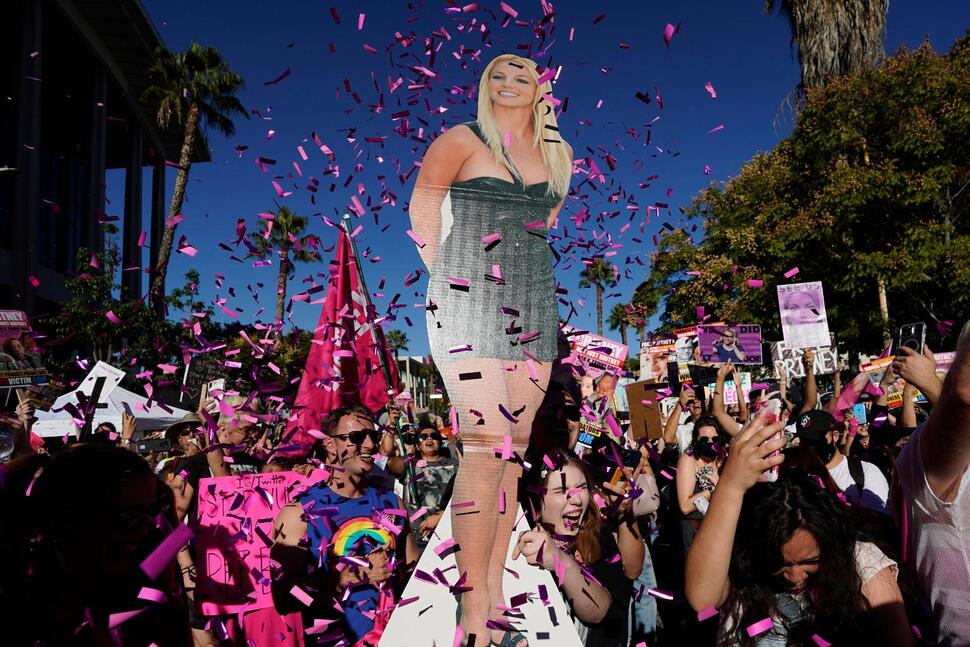
FILE - Britney Spears supporters celebrate following a hearing concerning the pop singer's conservatorship at the Stanley Mosk Courthouse, Friday, Nov. 12, 2021, in Los Angeles. California Gov. Gavin Newsom signed into law Friday, Sept. 30, 2022, legislation limiting conservatorships, a move that comes after Britney Spears' conservatorship case garnered national attention. (AP Photo/Chris Pizzello,File)

By Sophie Austin

SACRAMENTO, Calif. (AP) — California Gov. Gavin Newsom on Friday signed a bill limiting conservatorships that grant legal guardianship over individuals, a move that comes after Britney Spears’ conservatorship case garnered national attention amid her attempts to regain control over her finances and livelihood.

The new law, authored by Democratic Assemblymember Brian Maienschein, will require that judges document all alternatives to a conservatorship before granting one. It aligns with similar legislation adopted in other states, following a push from advocates. In a statement, Newsom, a Democrat, said the state is committed to protecting the rights of Californians with disabilities.

People deemed to be unable to make certain life decisions for themselves can be placed into legal conservatorships in which a court-appointed conservator is given control over their finances and other critical aspects of their life, sometimes without their consent. They most often involve people with developmental or intellectual disabilities or those with age-related issues like dementia.

Advocacy groups contend that people like Spears, who was under a conservatorship for nearly 14 years, can become trapped in a system that removes their civil rights and the ability to advocate for themselves.

“This measure is an important step to empower Californians with disabilities to get needed support in caring for themselves and their finances, while maintaining control over their lives to the greatest extent possible,” Newsom wrote in a signing statement, calling the new law a "transformative reform to protect self-determination for all Californians.”

Spears, the pop singer and Mississippi native who has publicly struggled with her mental health, ended up at the center of a widespread #FreeBritney campaign aimed at regranting the pop singer authority over her medical, personal and financial decisions. She alleged she became a victim of misconduct at the hands of her father, James Spears, who was her conservator.

Fans and advocates rallied online and in person to bring attention to Spears' situation. Documentaries by The New York Times and Netflix on the effects of Spears' conservatorship brought renewed spotlight to the case and the conservatorship process more broadly. She was a 26-year-old new mother who had several public mental health struggles during the height of her career in 2008, when her father sought the conservatorship, at first on a temporary basis.

A Los Angeles judge ended Spears' conservatorship last year, a win followed by legislative proposals to protect the rights of conservatees and efforts to make it more difficult for people to end up in one.

Maienschein, who represents parts of San Diego, thanked the governor in a statement, noting the importance of ensuring the autonomy of people with disabilities.

The new law will give potential conservatees preference for selecting a conservator and make it easier to end probate conservatorships.

Disability rights organization Disability Voices United referred to news of Newsom's decision as historic.

“This law affirms that conservatorships should be rare and the last resort,” the group wrote. “The default should be that people with disabilities retain their rights and get support when they need it. ”

Full Article & Source:
After #FreeBritney, California to Limit Conservatorships

Tuesday, March 16, 2021

Conservatorships should be a last resort


By Zoe Brennan-Krohn

Imagine that someone else could make every single decision about your life for you. Maybe that person is a parent, maybe they’re a stranger, maybe they’re someone you don’t like very much, and they can decide what you eat, who you see and spend time with, where you live, what medications you take, what job you do, and how you spend your money. This is the reality of being in a conservatorship or guardianship for untold thousands of people in the United States.

Sometimes people seek conservatorships in an effort to protect a loved one with a disability. However, conservatorships carry real risks and can cause real harm. Because of this, conservatorships should be as a last resort, imposed sparingly, lifted promptly, and overseen diligently.

Unfortunately, this is not the reality in the United States today. Too often, conservatorships are granted as a “first resort” when a person with disabilities reaches adulthood or encounters difficulties, or experiences age-related disabilities. Instead of so many conservatorships, we should have systems in place for people with disabilities — like people without disabilities — to live their lives with support and without losing their rights.

Conservatorships are a systemic disability rights issue because of the ease with which disabled people can be stripped of their rights under conservatorships, and the extraordinary difficulties they face getting those rights back.

In a conservatorship or guardianship, a judge takes away the civil liberties from one person and gives someone else the power to make these choices instead. It is the court weighing into the person’s life and saying you, as a person with a disability, are no longer free to make decisions about yourself and livelihood — such as where you live and how you support yourself — and we are putting someone else in charge of making those decisions.

There are many less intrusive, less dangerous ways for people to access the support they need without being placed under a conservatorship. Conservatorships should be the last resort, when all other support options have been tried. Sadly, this is too rarely the case.

Recently, there has been increased public attention around conservatorships because of Britney Spears’ case. We don’t know the details of Britney Spears’ conservatorship, which has been in place since 2008, but while Spears’ conservatorship has gotten attention because of her fame, her conservatorship appears, in many ways, very typical of the experiences of untold people across the country.

We see people nationwide who get into conservatorships and cannot get out of them. Spears is just one of the estimated 1.5 million people with disabilities nationwide who have lost their rights to make choices about their money, their medical choices, whether they can access the internet, among other day-to-day life choices, and who have almost no chance of getting those rights back.

People end up under conservatorships or guardianships based on a wide range of disabilities, including psychiatric disabilities, developmental or intellectual disabilities, age-related disabilities like dementia, and other types of disabilities. But there are many less invasive, more protective systems for people with disabilities to get support in their lives without giving up their rights or putting their fate in the hands of strangers. These alternatives to conservatorship include powers of attorney, advanced medical directives, releases to share medical and educational information, and supported decision-making.

All of these alternatives allow people with disabilities to get support in directing their own lives, just like people without disabilities do. We all ask friends for advice, we research issues, we talk through pros and cons. People with disabilities should have the same opportunity to use these systems, with assistance and support, and without a sacrifice of their civil rights and liberties.

The ease with which people get trapped in conservatorships is particularly troubling because of the risks and harms of conservatorships. People under conservatorships are at risk of financial, physical and emotional abuse, neglect and exploitation. And even when there isn’t abuse, conservatorships limit a person’s ability to advocate for themselves, to learn from their decisions and mistakes, and to grow and develop. There is a harm in being told that your opinions, your likes and dislikes, don’t matter. It actually makes it harder to protect yourself from abuse or neglect. So in any conservatorship, we would want to know that the real risks (and benefits) of both conservatorship and its alternatives have been seriously weighed.

All people with disabilities have a right to lead self-directed lives and retain their civil rights, and to access support, education and guidance in doing so. We must fight against the unnecessary and dangerous removal of disabled people’s civil rights, and ensure conservatorships are imposed only as a last resort.

Full Article & Source:

Saturday, February 13, 2021

Britney Spears’ Conservatorship Could Violate Her Civil Rights, According To the ACLU

by Gina Ragusa 
 
Britney Spears‘ conservatorship may be in violation of her civil rights, according to an attorney with the American Civil Liberties Union (ACLU). 

Britney Spears attends the announcement of her new residency, “Britney: Domination” at Park MGM on October 18, 2018 | Gabe Ginsberg/FilmMagic

Following Spears’ request to have her father Jamie Spears removed as conservator, ACLU attorney Zoe Brennan-Krohn shared that the strict conservatorship Spears is under may not support her wellbeing or be in her best interest.

‘Conservatorships should be viewed with skepticism and used as a last resort,’ according to the ACLU

Brennan-Krohn said Spears’ conservatorship should be examined and questioned.

“So while it’s possible that this is an example of a thoughtful conservatorship that was implemented as the last resort and is being reviewed carefully, thoroughly, and regularly, that is not the norm for conservatorships,” she remarked in an ACLU report.

“And it appears inconsistent with what we see of Britney publicly,” she added. “Our view is that in general, conservatorships should be viewed with skepticism and used as a last resort.  In most cases, it’s done routinely and without substantive engagement.”

Britney Spears could have options beyond conservatorship

Brennan-Krohn added that a slew of alternatives exists beyond a conservatorship.

“We don’t know all of the risks and benefits at play, so we can’t speak to the specifics of her case,” she commented. “But we do know that the conservatorship itself also has risks. The risks in conservatorship can include financial, physical, and emotional abuse.”

“And even when there is no abuse, conservatorships limit a person’s ability to advocate for themselves, learn from their decisions and mistakes, and grow and develop,” Brennan-Krohn added.

“There is a risk in being told that your opinions, your likes and dislikes, don’t matter — it makes it harder to stand up to abuse or neglect,” she asserted.

“So in any conservatorship, including this, we would want to know that the real risks (and benefits) of both conservatorship and its alternatives have been seriously weighed.” The #FreeBritney movement has suggested that Spears is not in control of her social media or public comments.

Getting her rights back can be difficult

Spears’ father placed her under a conservatorship in 2008 after she displayed erratic behavior. Brennan-Krohn shared people end up in a conservatorship if a court deems them as having disabilities. This includes physical, mental, and psychiatric disabilities.

“This is not to say that all conservatorships are bad or wrong or unnecessary — conservatorships are complex and individual processes,” she said. “But the ease with which disabled people can be stripped of their rights, and the extraordinary difficulties they face getting those rights back, is a systemic disability rights issue about which we have serious concerns.”

Britney Spears arriving at the Los Angeles County Superior courthouse for a hearing regarding visitation rights for her two sons | Gabriel Bouys /AFP via Getty Images

Brennan-Krohn said she isn’t privy to Spears’ diagnosis. “But by virtue of being under a conservatorship, we know that the court has determined that she is disabled,” she said. And has stripped away her civil rights because of that disability. So it’s inherently a civil rights/civil liberties issue,” she said.    

Full Article & Source:

Saturday, February 6, 2021

Montana House bill makes it harder to become an adult’s legal guardian

By James Bradley

HELENA — Lawmakers on the House Judiciary Committee advanced a bill Thursday that would force a person applying to become an adult’s legal guardian to explain to a court why a less intrusive option wouldn’t work. 

Sen. Mary McNally, D-Billings, is the bill’s sponsor. She explained how guardianship works during the hearing on Senate Bill 31, saying guardianship proceedings are the process where a person gives up their civil and constitutional rights, effectively becoming a minor in the eyes of the law. It is a last resort for aging adults or young adults who would be unable to take care of themselves in any capacity. 

Guardians have control over every aspect of their dependent’s life.

Adrianne Cotton spoke in favor of the bill on behalf of the Montana Area Agencies on Aging Association. She explained the history of adult guardianship laws, which she said existed in the Roman Empire. She said since then, guardianship laws have shifted and changed constantly.

“It bears noting that our communities still struggle, after 1,500 years, to find a balance between protecting those who cannot protect themselves, and ensuring the state does not empower bad actors who capitalize on a weakened system, and a vulnerable population,” Cotton said.

Guardianship laws have not changed in the state of Montana for 30 years.

The bill drew widespread support from independent living centers and elder advocacy groups. Beth Brenneman is an attorney with Disability Rights Montana, and urged the committee to pas the bill.

“We should really require that the person petitioning and the judge look at whether or not there are other alternatives,” Brenneman said.

There were no opponents. 

The committee voted unanimously to pass the bill to the full House, where it will face at least two more votes before going to Governor Greg Gianforte’s desk. Rep. Dennis Lenz, R-Billings, will carry the bill on the house floor. 

James Bradley is a reporter with the UM Legislative News Service, a partnership of the University of Montana School of Journalism, the Montana Broadcasters Association, the Montana Newspaper Association and the Greater Montana Foundation.

Full Article & Source:

Friday, August 11, 2017

Issues for Elders: Guardianship should only be sought as a last resort

Jill Burzynski
Guardianship is a process whereby a person is deemed legally incapacitated to make certain or all decisions and another person or persons is appointed to make decisions on the legally incapacitated person’s behalf.

Many people are actually incapacitated and unable to make their own decisions, but never have to go through the guardianship process. Having appropriate legal documents in place avoid many guardianships. These legal documents may include trusts, durable powers of attorney and designations of health care surrogate. Most types of trusts do the best job of guardianship avoidance because they take the grantor out of harm’s way when judgment is lacking.

While durable powers of attorney are helpful, they give the agent concurrent authority, leaving the incapacitated person vulnerable both to exploitation and his or her own poor judgment. Even if no legal documents exist and a person is incapable of understanding and thus executing documents, a careful review of the way assets are titled may prove that guardianship may not be necessary.

Some guardianships are necessary, even when legal documents exist, when the incapacitated person rejects efforts to provide assistance and is neglecting his or her own care. The disease of dementia can slowly rob a person of the judgment necessary to live independently.

If discussions about alternative living situations are delayed until the judgment is completely lacking, the incapacitated person cannot take part in decisions about care when care is needed.

Assistance to prevent self-neglect include several options, but are largely driven by finances and the ability for family to assist. Family members may be willing to provide help, but the elder may not want this type of help because he or she may not wish to burden the family with that responsibility. Other times family may not be able to provide the assistance needed due to jobs or other family demands but the elder may have assumed that family would provide all needed care.

Home care by an outside agency can certainly prevent self-neglect but extensive home care is an expensive proposition. Some families try to cut that cost by hiring individuals rather than agencies, but this decision carries a risk of exploitation, unrecoverable theft and tax risks. Other options include care in an assisted living community or (when needed) memory care. An ongoing discussion about alternatives to living alone while a dementia process is in the early stages may prevent a guardianship necessary due to self-neglect.

Guardianships are sometimes necessary because of exploitation or scams. If a senior has named a fiduciary who is not acting in his best interest, a guardianship can rectify the situation. However, guardianship should not be used just because one of the children disagrees with the choice of fiduciary that the senior made. Seniors are often targeted by sweepstakes and scams. Seniors who have financial worries are particularly vulnerable to scams. When efforts to dissuade further participation in scams fails, a guardianship can stop the abuse.

The process of guardianship can be hard on the senior as well as the family. The court appoints an attorney to represent the alleged incapacitated person as well as an examining committee. The committee visits with the alleged incapacitated person and issues a report. The attorney explains the process to the alleged incapacitated person (to the extent possible) and represents the incapacitated person at a hearing. The process is expensive. After the adjudication of incapacity, the guardian has ongoing court responsibilities and is limited in the actions that can be taken without a court order.

Guardianships are absolutely necessary in situations where no alternatives exist to prevent exploitation or neglect. However, planning early in the aging process can be invaluable in avoiding the hardship of a guardianship.

Full Article & Source:
Issues for Elders: Guardianship should only be sought as a last resort