Showing posts with label Canada. Show all posts

Tuesday, September 22, 2026

Family sounds alarm after 83-year-old grandma dies under Canada's assisted-death program

Brigitte Stegemann's granddaughter says the 83-year-old cried and said she had 'made a mistake' two days before her death

By Rachel del Guidice

This story discusses suicide. If you or someone you know is having thoughts of suicide, please contact the Suicide and Crisis Lifeline at 988 or 800-273-TALK (8255).

The family of an 83-year-old Canadian woman is demanding answers after she died through the country's medical assistance in dying program despite allegedly becoming distraught when told the procedure would end her life and showing signs of cognitive decline, according to a report.

The Daily Mail reported Sunday that an 83-year-old Christian grandmother, Brigitte Stegemann, was killed under Canada’s physician-assisted suicide program, called Medical Assistance in Dying (MAiD), on July 10.

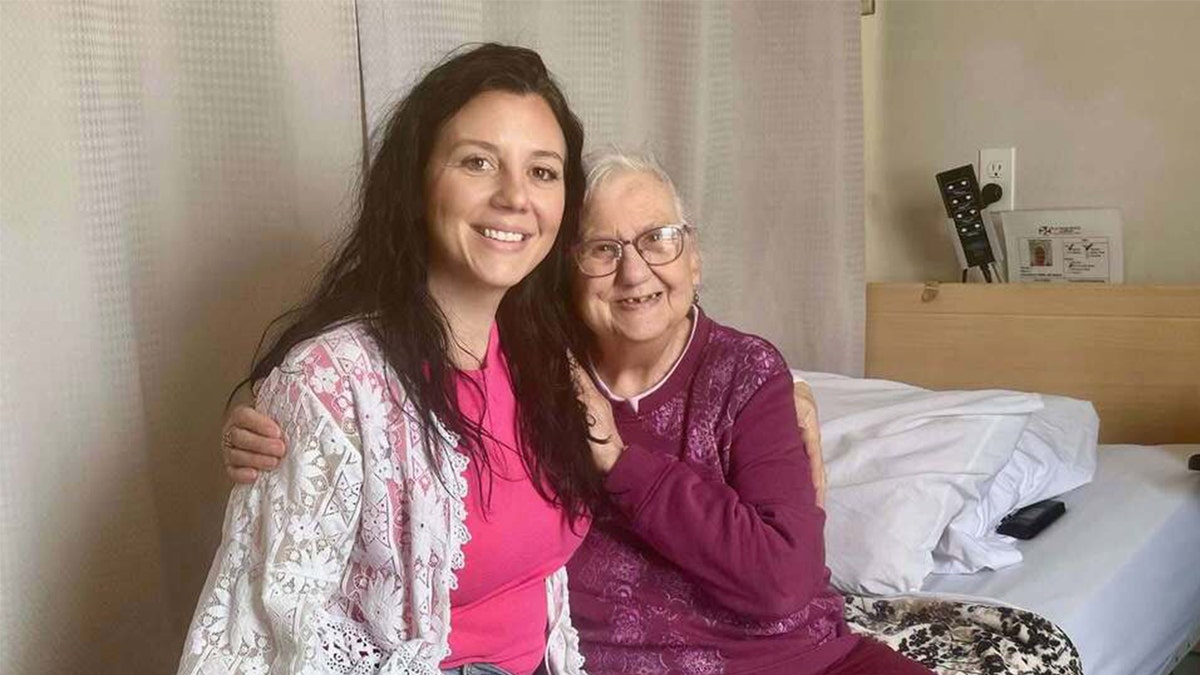
Her granddaughter, Brigitte Kranendonk, said that she was her grandmother’s primary caregiver and that her family had decided to place Stegemann at The Pearl care home in Cannifton due to physical and mental decline.

Brigitte Kranendonk gestures with her grandmother Brigitte Stegemann. (Family Handout)

But according to Kranendonk, her grandmother still had a good appetite even following a stomach cancer diagnosis, and rejected the idea of using MAiD when it was presented as an option.

Everything changed, however, in June when Kranendonk left to go on a 10-day road trip with her husband.

Kranendonk said she remained in regular contact with the care home and was told her grandmother had fallen and would need a wheelchair, but said she was not initially alerted to any dramatic decline.

Doctor provides consultation and explanation

Canada's medical assistance in dying program is under scrutiny after an 83-year-old care home resident allegedly showed cognitive decline and distress before her euthanasia death. (iStock)

Then, on July 3, near the end of her trip, Kranendonk said she received a call informing her that the home planned to arrange a MAiD assessment for Stegemann, despite her grandmother previously telling her that she did not want an assisted death.

Kranendonk said, according to The Daily Mail, that when she returned, she asked a nurse at The Pearl about who had initiated the MAiD conversation.

"The nurse became very abrasive, very defensive," Kranendonk told The Daily Mail. "She was like, ‘Well, I’m just trying to advocate for her. I’m just trying to do what’s right for her.’"

After returning from her trip, Kranendonk said she found out her grandmother had already had her first MAID consultation.

The granddaughter also alleged that Stegemann struggled during an assessment of her mental capacity, incorrectly answering questions about members of her own family.

Healthcare professional listening to elderly woman's heart with stethoscope at home

The Daily Mail reported Sunday that an 83-year-old Christian grandmother, Brigitte Stegemann, was killed under Canada’s physician-assisted suicide program, called Medical Assistance in Dying (MAiD), on July 10. (iStock)

Kranendonk said she was present for Stegemann's second MAID assesment, and said that the doctor used "really loose terms, never using the words death or dying."

"She explains MAID to my grandmother by saying: 'We’re going to give you medicine, you’re going to feel at peace. And I just want you to know that you won’t have a bowel movement,'" Kranendonk said.

When Kranendonk interjected and said, "She doesn’t understand what you’re saying," the doctor allegedly looked at Stegemann and said, "We’re going to make sure you won’t have any more pain."

Full Article & Source:
Family sounds alarm after 83-year-old grandma dies under Canada's assisted-death program 

Friday, May 29, 2026

Toronto woman found guilty of manslaughter of elderly mother in elder abuse case

A Toronto woman has been found guilty of failing to provide the necessaries of life, criminal negligence for days on end, causing death and manslaughter in relation to the death of Vasiliki Atanasovski – her elderly mother. 

It's a disturbing case of elder abuse that Eva Samonas still denies. 

Global News crime specialist Catherine McDonald reports. 

Source:
Toronto woman found guilty of manslaughter of elderly mother in elder abuse case 

Friday, April 24, 2026

CBS family's year-long fight for disability benefits resolved after guardianship papers accepted

Colin Bradley's federal disability payments will now be issued after prolonged administrative delay and review of guardianship paperwork filed in PEI

Colin Bradley with his sister and caregiver, Teena Bradley Rumbolt, who has now secured his federal disability benefit after a year long struggle. CONTRIBUTED

A Conception Bay South family says a year-long delay in accessing a federal disability benefit has now been resolved, with Service Canada confirming that monthly payments will begin in May.

In a post shared on social media, caregiver Teena Bradley Rumbolt said she was contacted by the national director of the program last week and informed that her brother, Colin Bradley, will receive all backdated payments, too.

“He will receive all of last year’s payments in May, and start with the monthly payments in May as well,” Rumbolt said.

Colin Bradley with his sister and full-time caregiver, Teena Rumbolt. CONTRIBUTED

GUARDIANSHIP DOCUMENTATION DEEMED SUFFICIENT

The delay in getting the payments stemmed from a concern about the wording for the long-standing guardianship order for Bradley, which was not accepted when the family attempted to apply for his payments. They feared they would have to go through the expense of having the paperwork, which was originally issued in Prince Edward Island, filed again in Newfoundland.

“I was finally contacted by the national director for the disability program… and she apologized many times, as our legal paperwork was sufficient and never should have been questioned,” she said.

Rumbolt said she was informed that the case had led to changes in how legal documents are assessed within Service Canada.

“Due to the mishandling of Colin’s case, they will receive further training, and they also have implemented a new procedure with legal documents,” she said.

"From now on, when a Service Canada officer receives legal documentation, it will require two sets of eyes before moving on to be denied or approved.”

STRAIN OF A PROLONGED APPLICATION

The family has been waiting nearly a year for the benefit, which is administered federally through Service Canada and supports eligible adults with disabilities.

The process required repeated follow-ups with government offices, legal representatives, and elected officials.

Rumbolt said the delay placed significant strain on the household.

“It’s beyond exhausting, constantly having to advocate for family. This world these days requires someone to do the work and keep pushing for what is right. If not, you get nothing,” she said.

“Don’t give up. Don’t accept what you know is not fair and continue to speak up. One person can make a change, and this is proof.”

Colin Bradley spends much of his day by the window, watching the world outside from his home in CBS. CONTRIBUTED

SERVICE CANADA CONFIRMS APPROVAL, ACKNOWLEDGES ERROR

In a statement to The Telegram, Service Canada confirmed the case has now been resolved and that payments have been approved.

“Upon receipt of all required documentation, the file was processed successfully. C. Bradley’s application has been approved, the file is now current, active, and in pay,” the agency said.

It added that all applicable retroactive payments have been authorized and that ongoing monthly payments are now in effect.

“The initial documentation received led to a denial for this client, which was an accurate decision given the documentation provided at the time,” the statement said.

“Upon receiving an additional legal document from the client, Service Canada misinterpreted the legal requirements, thereby incorrectly maintaining the original decision. Upon further review, it was determined that the original denial decision was incorrect.”

REVIEW AND INTERNAL PROCESSES

Service Canada said legal guardianship documents are assessed in accordance with legislative and regulatory requirements tied to each program.

Officers are supported by training, procedural guidelines, and internal resources when evaluating documentation, the agency said, adding that additional advice is available when required.

“Service Canada continually reviews its processes to better ensure clarity, consistency, and decision-making across cases,” the statement said, including in the handling of legal documentation such as guardianship and proof of representation.

Full Article & Source:
CBS family's year-long fight for disability benefits resolved after guardianship papers accepted  

Tuesday, January 13, 2026

This store manager saved a P.E.I. senior from a scam. Now, she's warning others to beware

A convenience store manager in P.E.I. noticed a woman trying to withdraw thousands of dollars after getting a phone call from scammers. The manager says she knew of the nature of the crime because her own mother also fell victim to it. As CBC’s Laura Meader reports, both women now want to warn others. 

Source:
This store manager saved a P.E.I. senior from a scam. Now, she's warning others to beware 

Sunday, March 31, 2024

Hero the dog lives up to his name and leads rescuers to owner who spent 2 days in a ditch

by Omar Sherif

Hero, an Akita breed dog, led emergency crews to his owner after the man had fallen into a ditch near Taber, Alta. (Lost Paws Society, Taber Police Service)

A 61-year-old man in the southern Alberta town of Taber trapped in a muddy ditch for two days could have been there a lot longer if it wasn't for his dog — an Akita named Hero.

Police believe the man got stuck in mud while walking in the area, a location he frequents often with his two dogs: Hero and Tora. He was unable to move, and the location was out of clear sight from the road.

Then, on Thursday morning, police received a call about a large dog on the loose just north of the sugar refinery in Taber — a town about 270 kilometres southeast of Calgary.

When officers arrived, they couldn't locate the dog, Const. Austin Weersink with the Taber Police Service told CBC News.

Dog attack leads to rescue

A few hours later, police received another call regarding the same area. This time, a man named Curtis Dahl told police he was with his dog when they were attacked by another large dog.

The dog who was responsible for the attack was Hero, Taber police said in a post to Facebook. When police arrived on scene again they saw Hero laying on a berm and whistled to get his attention.

Weersink says that's when he heard a loud cry for help.

"I looked to my left where the individual who had been attacked was sitting in his vehicle, but his window was [rolled] up," he said. "So I whistled again, and the shriek came again and said, 'Help, I'm down here.'"

Weersink called for Hero to be taken under control, then walked over to where he heard the scream coming from to find the man lying on his back.

"The tall grass ... it's extremely tough to see someone in there," said the police officer.

'He really truly lives up to his name'

Police say Hero's owner was able to tell them that his loyal companion stayed by his side and kept him warm as temperatures dropped, and may have even fought off coyotes.

The man was rescued and taken to the Chinook Regional Hospital in the nearby city of Lethbridge, Alta.

Emergency crews in Taber rescued a man who'd been in a ditch unable to move for two days.
Emergency crews in Taber, Alta., rescued the 61-year-old dog owner that was reportedly 'lodged in mud up to his hips' after police received reports of a dog attack in the area. (Submitted by Steve Swarbrick)

His dogs, Hero and another Akita named Tora, were taken in by the Taber's Lost Paws Society while he recovered.

"[Hero] was obviously quite anxious, confused, but quite calm actually," said Alana McPhee with the Lost Paws Society.

"He was involved in fighting because he was really just protecting his owner … I guess you could say he really truly lives up to his name."

Dog attack victim recovering

Dahl, the man whom Hero bit, told CBC News he went to the hospital for his injuries and his dog, Jack, was also treated.

Both are now recovering, but Dahl says he was understanding of the situation after hearing the full story.

"I think [Hero] thought my dog was a threat," he said. "But once I thought about it, I knew why this dog did what he did."

The Lost Paws Society has since launched a fundraising campaign for all of the pets involved that sustained injuries, as Tora also had a rod in a previously broken leg that had some screws come loose from likely "frantically running between the place her owner was trapped and her residence."

McPhee says she can tell both dogs are looking forward to being reunited with their owner. 

Full Article & Source:
Hero the dog lives up to his name and leads rescuers to owner who spent 2 days in a ditch

Sunday, March 3, 2024

His Grandma’s Life Was in Danger, So This Tiny Pup Scaled a Fence and Found Help!

Though just 12 inches tall, he wasn’t about to let anything keep him from getting her the help she needed

By Bill Holton 

Carole (center) holding hero Shadow, with Charmaine (right) holding Maybelline and Susan (left)

Charmaine Eby had just moved into a new apartment in Keremeos, British Columbia, and her 80-year-old mom, Carole, planned to get a place in the same complex. Up until then, she was living with Charmaine and her fur-babies — two Maltese Bichons nameed Shadow and Maybelline. Carole loved her four-legged granddogs and they adored her, but the family never could have imagined it would become a heroic story of a dog who saves his owner.

“They are very protective of Mom,” Charmaine Eby tells Woman’s World. “They follow her everywhere — they even sit outside the bathroom door when she’s in there.” 

Charmaine was comforted knowing the pups were there to watch over her mom whenever she had to step out and leave Carole home alone. This was especially true one recent summer afternoon when tragedy struck.

Maybelline stealing Carole’s chair

Heroes come in all shapes and sizes

“Going to run some errands,” Charmaine told her mom. Then giving her pups loving pets, she told them, “You guys take good care of your grandmom.”

Not long after Charmaine left, Carole went into the kitchen to cook some chicken. As always, Shadow and Maybelline were right on her heels hoping for a snack.

After getting the chicken started on the stove, Carole headed to the bathroom, but in the hallway, she swooned dizzily and fell hard against the floor. Carole has diabetes and unbeknownst to her, had suffered a sudden spike in her sugar levels.

“I can’t get up,” she told the dogs, who as always, had scampered after her. Her phone was in the kitchen and Charmaine would be gone for hours. “I didn’t know what to do,” Carole says.  

“Somebody, help me!” Carole began shouting. As she lay frightened on the floor, Maybelline curled up beside her with a front paw draped over the elderly woman’s shoulder. Carole heard Shadow scratching and whining at the back door and felt for the little guy, thinking there was no way he could get out.

But as luck would have it, the door had not closed completely when, earlier, Charmaine brought the dogs inside. The back door shook and rattled, until eventually, Shadow nosed and pawed it open. The grassy patch of yard was bordered by a two-foot fence. Shadow is less than 12 inches tall and a little plump, but he wasn’t about to let that stop him. His grandmom needed help and he was going to make sure she got it. Somehow, he hoisted himself over the fence.

Shadow by the door

A miraculous encounter

Eight houses and a wide courtyard away, dog sitter Sharon Wade was working on her computer when the two dogs she was dog sitting started barking at the back door. “What’s going on?” she wondered, and as she neared the door, she heard a loud yelping. Then, she spotted the pup standing at the bottom step. “Shadow?”

Two weeks earlier, Sharon had kept Shadow and Maybelline while Charmaine and her mom were out. It was the one and only time they’d met, and she had entered and left their house through the front door, so Shadow could not have watched her route back home. Now, as she gazed at Shadow, the look in his eyes told Sharon, I need help. Something’s terribly wrong.

The pavement was scorching, so Sharon lifted Shadow into her arms and carried the panting pup toward home. Nearing the house, she noticed the open back door, and she heard Carole calling for help. Rushing inside, Sharon turned off the stove and called 911, then alerted Charmaine. “I’ll stay with your mom,” Sharon promised.

“I don’t know what got into Shadow and how he knew to find you — we’ve never been near your place,” Charmaine marveled when she arrived home, just before paramedics got there.

“Dogs have a very keen sense of smell, and a strong smell memory. Shadow must have caught my scent and remembered me, then followed his nose to my house,” Sharon said. “It’s the only possible explanation — he ran past eight other houses on hot pavement to find me.”

Shadow ready for reward belly rubs

Full Article & Source:
His Grandma’s Life Was in Danger, So This Tiny Pup Scaled a Fence and Found Help!

Wednesday, November 29, 2023

Winnipeg musician fights for 'control over his life' after being placed under public trustee guardianship

Under trustee, 'suddenly your identity is gone and you are no longer a person': friend of Paul Cameron Miller

by Kristin Annable, Caroline Barghout 

Paul Cameron Miller, a former music teacher, has been under public guardianship since January and is on the verge of losing his home. (Jaison Empson/CBC)

A Winnipeg musician has no access to his bank accounts, can't collect a paycheque and can't access his medical records because he is under the guardianship of Manitoba's public trustee — and he's on a mission to end that. 

Paul Cameron Miller, 65, has been under guardianship since January of this year after he froze his feet and ended up with a diagnosis of dementia while hospitalized.

"I'm angry, and I'm not an individual who angers easily," Miller told CBC. "I am very, very upset at the way my last year has gone."

His home in Winnipeg's Earl Grey neighbourhood will be seized by the bank or sold in a public auction in December. There's nothing he can do about it, because the bank isn't legally allowed to talk to him about the matter.

"They have absolute control over his life," said Kris Olafson, a lifelong friend and advocate for Miller.

"When the [public trustee] takes over, they take over everything," she said.

"Suddenly your identity is gone and you are no longer a person."

A person is placed under guardianship and given a trustee if medical professionals deem them mentally incapable of making financial and personal decisions, and the person has no other friends or family able to help them. 

A provincial special operating agency — the Public Guardian and Trustee — is responsible for providing the service. Currently, it's in charge of the affairs of nearly 4,000 Manitobans and almost $200 million worth of their assets. 

A  trustee will pay a client's bills and collect their wages, such as pensions or disability payments. The trustee is legally responsible for making financial decisions on how and where that money is spent. 

Olafson and Miller say they're speaking out because they want people to know what happens when someone is under public guardianship and how difficult it is to get out.

They also want to get Miller out of his guardianship so he can sell his house to a close friend instead of losing it through foreclosure. 

'A suffocation of your rights'

Miller's saga began last December, when he walked to the drug store to pick up a prescription and inadvertently froze his feet after spending too long outside talking to friends.

His memory of his time in the hospital is foggy. Miller believes the mixture of painkillers he was given and his anti-seizure medication led to a diagnosis of dementia, and then to his affairs being signed over to the trustee. 

Miller has requested his medical records so he can piece everything together, but the guardianship means his records go straight to the public trustee, which has not given him access to them.

"It's a suffocation of your rights," he said.

"I've asked many a time for all of the paperwork … anything referencing me on it and referencing any of my medications and all of that stuff. [I get] absolutely nothing."

Paul Cameron Miller, 65, has been under the care of the Public Guardian and Trustee of Manitoba since January, and is now trying to get out.

Although Miller gave the agency permission to discuss his case with CBC, a request for an interview with anyone at the public trustee to do so was denied. A spokesperson said because Miller is under guardianship, he cannot give consent.

In a prepared statement, the spokesperson said people are only placed under guardianship when there is demonstrated need for decisions to be made for their benefit.

Guardianship is the "last resort," the spokesperson said, and the agency fully supports a client being reassessed if they feel they are competent.

'Wasn't at the point of losing everything'

Once a working musician and guitar teacher, Miller was hit hard by the COVID-19 pandemic. Before he was hospitalized, he was already facing financial difficulties and owed over $85,000 to banks, according to land titles records. 

"He had some financial problems, there's no doubt about that," said Olafson.

But "he wasn't at the point of losing everything. There were things that he could have done, things that he could have sold or whatever to make ends meet."

Neighbours say during his hospital stay, word got out that Miller's house was empty and it was broken into multiple times. Eventually, it was boarded up. 

A portrait of a woman with long brown hair looking at the camera.
Kris Olafson is a lifelong friend of Miller and is trying to help him get out of his guardianship, so he can take back control of his life and start working again. (Jaison Empson/CBC)

When Miller was finally ready to leave the hospital, he wasn't released to his home. Instead, he was sent to the Salvation Army — a decision that confounds Olafson to this day, especially if the hospital staff thought he had dementia.

"How could this happen?" she said. "They took his ID, they took his phone. He had nothing." 

Olafson said she called multiple hospitals before finding him at the Salvation Army shelter. When she saw how he was living, she took him home to live with her — hoping together, they could sort out the mess.

Two months later, nothing has changed. 

Miller's life remains under full control of the public trustee. Since the trustee has all his identification, he doesn't have access to his social insurance number, which means he can't get a job. He is unable to collect benefits or any other income — every dime goes to the trustee. 

Since coming to live with her, Miller hasn't received any money from the trustee, Olafson said.

"What has the [public trustee] been doing? Where has his money been going? We have no idea," she said, adding phone calls to the trustee have gone unanswered.

According to the province's public trustee client guide, a case worker will open an account in the name of a person who is under guardianship, and use that to collect their income and pay expenses. 

The caseworker prepares a budget for the person and "may provide money" to the client from that account, the guide says.

Facing foreclosure

Miller is locked out of his house. He can't even pick up his winter coat or reading glasses, he said. He has no idea if the public trustee has his collection of guitars or if they were stolen. 

He and Olafson learned earlier this month Miller has defaulted on his mortgage and it is now facing foreclosure. They have no idea what options the trustee has looked at, or whether there are alternatives to foreclosure. Miller's credit union can only discuss the matter with his trustee. 

The public trustee makes "every effort to make the best decisions in the interest of their client," according to the agency's spokesperson, but can only use money available from the client's assets — the trustee can't provide new funds. Sometimes that means there is little the trustee can do to save assets such as someone's house.


Winnipeg musician Paul Cameron Miller is trying to get out from under the Public Guardian and Trustee of Manitoba, after he was deemed incapable of looking after himself.

After CBC made inquiries about Miller's case, he got a call from the public trustee. He and Olafson are set to meet with the trustee on Monday to go over his finances, including looking at options for his house.  

For now, they're still working to get him out of his guardianship.

"It's a slow process and it's probably going to take a couple more months," Olafson said.

"It's just been so frustrating."

She and Miller tried to get help from Legal Aid, but were told no one was able to take on such a complicated case.

Miller's guardianship can only end when a psychiatrist or doctor agrees he is mentally capable of managing his own affairs.

They must fill out a form and send it to the province's director of psychiatric services. If the director agrees, they can cancel the guardianship.

Alternatively, Miller or Olafson can apply to the Court of King's Bench to cancel the guardianship or appoint someone else to replace the public trustee.

"Once he's released, that's fine," Olafson said. "But in the meantime, his house is looking very close to being under foreclosure right now, and he has no way of making money."

Agency understaffed: CBC analysis

A CBC analysis of annual reports found the public trustee has been understaffed for years, despite the growing number of clients it serves.

In 2013, the agency had 75 employees serving 3,200 Manitobans under guardianship, with the agency in charge of over $152 million of their assets. 

A decade later, the number of people under guardianship has increased by 800 — 25 per cent — but staffing levels have only increased by five per cent. 

There are now 79 full-time staff members in charge of over $187 million worth of assets. From 2019 to 2022, the agency had only 73 full-time employees. 

The agency "continues to be impacted by [staff] vacancies," according to its 2022-23 annual report, which has not yet been posted online, but which CBC obtained a copy of.

Its 2021-22 annual report acknowledged the increase in clients, stating year-over-year, client numbers and assets under its management increased "both in volume and complexity."

The report also said caseworkers "cannot possibly meet with or get to know all of these clients well."

A 2020 report from the Manitoba Association of Rights and Liberties said the non-profit, which provides human rights education, found anecdotal evidence that caseworkers for the public trustee had as many as 300 clients — most of whom they never saw in person.

Manitoba's public trustee is independent, but reports to the minister responsible for consumer protection and government services minister. The ombudsman can investigate public complaints about the trustee. The agency's accounts are also audited each year by the auditor general. 

In a prepared statement, Consumer Protection Minister Lisa Naylor said the public trustee "makes every effort to act in the best interest of their clients."

But Doug Surtees, a professor in the law department at the University of Saskatchewan who specializes in guardianship, said there are many gaps when it comes to upholding the rights of people under guardianship.

A man with brown hair and a suit.
Doug Surtees, a professor in the law department at the University of Saskatchewan, says that major reforms need to be made to ensure that people under guardianship have rights. (David Stobbe/Stobbe Photography )

There is no right to counsel for someone facing guardianship. However, someone who is charged with a crime does have the right to a lawyer, he noted.

"We have a justice system in this country that doesn't allow the state to take away liberties or impose a sentence on somebody accused of crimes unless that person has the right to be represented by counsel," he said.

"But we do it with guardianship all the time."

Across the country, public trustees are "wildly underfunded," Surtees said, adding more staffing and resources are needed.

"If we're asking if decisions are being made in accordance with the adult's wishes, somebody has to have the time and expertise to communicate with the individuals to see if, and how, their wishes are being communicated."


A Winnipeg man, who was placed under the control of the public guardian and trustee of Manitoba, is warning others that this could happen to them. Paul Cameron Miller has been fighting for the past year to get control of his own life.

Full Article & Source:
Winnipeg musician fights for 'control over his life' after being placed under public trustee guardianship

N.B. man, 98, in hospital 7 months waiting for long-term care home

Arthur Perry, 98, has been living in a hospital since a heart attack he suffered in May impacted his mobility.

Currently staying in the Oromocto Public Hospital, he’s anxiously awaiting placement in the Mill Cove Nursing Home, which is located near his former home in Cambridge-Narrows.

His daughter Shelley Poirier said it’s been hard seeing him in low spirits due to his extended hospital stay.

“Most days he’s very disheartened from being there,” she said on Sunday.

“He’s unstimulated, he doesn’t have people to talk to. Emotionally he’s going downhill. He’s very sad a lot of the time,” she said.

Poirier said while she and her sister, Shirley Applebee, are grateful for the care he’s receiving at the hospital, it was negatively affecting his mental well-being, as a hospital doesn’t have activities or opportunities to socialize like a long-term care home would.

Poirier and Applebee uploaded a video to social media explaining his situation in the hopes of raising awareness about the long wait times for long-term care placement.

The video has now reached over 9,000 views, and Applebee said many people have reached out to them with similar stories.

“It’s not just about us. It’s about everyone who is in this system who is trying to navigate a system that they don’t understand,” she said, adding she and her sister had been confused about how the long-term care home placement process worked.

Poirier said a case worker was assigned in June, but she didn’t receive any communication until early August.

“They said that they made a mistake that they weren’t in their area, and that he was being reassigned to another case worker,” Poirier said.

Perry finally received an assessment in mid-August, and went on a waiting list for the Mill Cove Nursing Home.

“He’s ninth on the wait list, so he’ll be well into his 99th year, at the rate things are going, before he sees a nursing home … if he does,” Poirier said.

Global News reached out to the Department of Social Development on Friday, and is awaiting a response.

Applebee said the hardest part of this process was seeing her father’s emotional ups and downs.

“It’s just watching him … and watching the life go out of him,” she said.

During her visit on Saturday, Applebee said he “had a spark” after seeing how the social media video had amassed thousands of views.

Applebee said it was the first time in a long time he seemed to have hope about the situation.

Full Article & Source:
N.B. man, 98, in hospital 7 months waiting for long-term care home

Saturday, August 26, 2023

Man seeks justice for elderly mother in alleged abuse scam, pursues legal action

A man is seeking justice for his 87-year old mother from Grimsby, who he says was a victim of an elder abuse scam. He now hopes to get help from the premier’s office and the attorney general. 

CHCH News interviewed Commercial Pilot Mike Bremner Thursday afternoon after a private, in-person hearing in St. Catharines. 

Bremner says his attempt at a private prosecution to lay criminal charges of fraud were struck down by the Crown attorney. 

Bremner is the flight lead of the Elder Abuse Air Force, a group within the Advocacy Centre for the Elderly in Toronto. He says his mother, Virginia Bremner suffers from dementia and claims a family member, who was a lawyer, used power of attorney to take $500,000. 

CHCH News obtained a 2020 email exchange Between Bremner and Niagara police — and the assigned detective said, in part, she was prepared to “lay criminal charges” against the person in question and “I will be speaking with our Crown attorney.” 

Although, Bremner says a civil suit has been settled, in the end, criminal charges were not laid, which brought him to the St. Catharines courthouse Thursday, seeking another chance to prosecute. 

Bremner says through his advocacy group, he’s had three other people come to him, alleging that they’ve been a victim of fraud by the same person. 

CHCH News reached out to Niagara police for comment regarding the investigation three years ago and have not heard back yet.

Source:
Man seeks justice for elderly mother in alleged abuse scam, pursues legal action

Saturday, June 17, 2023

Montreal police visit isolated seniors on World Elder Abuse Awareness Day

Montreal Police officers and community groups joined forces in LaSalle on Thursday. They were checking in on seniors, providing information about abuse prevention, fraud and theft. They were also letting them know what resources are available to help. Global's Felicia Parrillo reports.


Source:
Montreal police visit isolated seniors on World Elder Abuse Awareness Day

Sunday, April 16, 2023

Murdered with Insulin: Nurse Who Killed Her Elderly Patients

Watch the Interrogation of Elizabeth Wettlaufer, a Canadian nurse who was convicted of murdering her elderly patients with high doses of insulin. The disgraced healthcare worker was found guilty of killing eight of her patients and attempting to take the lives of six others.

Source:
Murdered with Insulin: Nurse Who Killed Her Elderly Patients

Tuesday, February 28, 2023

2023.02.17 Elder Abuse

I rose to discuss Bill C-295, which takes steps to protect seniors from abuse and neglect in institutional settings. Elder abuse is a serious problem haunting many individuals in their later years. This bill is a positive move but more needs to be done the protect vulnerable Canadians from fraud, and emotional and physical abuse.

Source:
2023.02.17 Elder Abuse

Monday, December 12, 2022

Woman Featured in Creepy Pro-Euthanasia Ad Wanted to Live


A 37-year-old Canadian woman featured in a fashion company’s disturbing pro-euthanasia ad had wanted to live.

But after “falling through the cracks” for years in the government-run healthcare system, Jennyfer Hatch gave up and agreed to an assisted suicide instead, according to the Daily Mail.

“I thought, ‘Goodness, I feel like I’m falling through the cracks so if I’m not able to access health care, am I then able to access death care?’ And that’s what led me to look into medical assistance in dying and I applied last year,” she told CTV in a recently resurfaced interview from June.

New details about the woman’s story emerged this week in response to outrage about “The Most Beautiful Exit” ad from fashion company La Maison Simons. The ad showed a terminally ill Hatch celebrating her last days of life before being euthanized under the Canadian Medical Aid in Dying (MAID) law, which killed more than 10,000 people last year, the Mail reports.

The ad, which has been widely condemned for glorifying euthanasia, ends with the message “For Jennyfer, June 1985-October 2022,” suggesting she was euthanized in October. Now, questions are arising about whether she would still be alive today if she had received the proper medical care that she had sought for years.

Using a pseudonym, Hatch, of British Columbia, spoke to CTV in June about her struggles with Ehlers-Danlos Syndrome (EDS) and her failed battles with the Canadian medical system to receive the medical care that she needed. The news outlet confirmed this month that the individual in their June article was Hatch, according to the report.

The interview shows how hopelessness and frustration turned the woman’s thoughts to assisted suicide. Since being diagnosed with EDS a decade ago, Hatch said she has had to struggle to obtain basic medical care.

“From a disability and financial perspective as well, I can’t afford the resources that would help improve my quality of life. Because of being locked in financially as well and geographically, it is far easier to let go than keep fighting,” she told CTV in June.

When her condition became terminal, she said she did not even receive proper palliative care, the St. Thomas Times-Journal reports.

Here’s more from the report:

However, B.C. was quick to approve Hatch’s application for MAID. “There were no other treatment recommendations or interventions that were suitable to the patient’s needs or to her financial constraints,” reads a CTV excerpt of the MAID approval issued to Hatch by Fraser Health, the health agency serving B.C.’s Lower Mainland.

None of these complicating factors were mentioned in the Simons ad, which instead highlighted what it called the “hard beauty” of assisted suicide.

The fashion company recently removed the ad in response to the outrage.

The news of Hatch’s real situation comes amid numerous reports of coercion and abuse under the 2016 law. In another widely publicized case, a Paralympian and retired military corporal said the Department of Veterans Affairs offered her an assisted suicide after she repeatedly requested a wheelchair ramp for her home.

Canada legalized assisted suicide, referred to as MAID, for adults in 2016. Recently, lawmakers began debating whether to expand the law to allow mentally ill people and young children to be euthanized. One bill would allow doctors to euthanize patients without their consent, according to the Euthanasia Prevention Coalition.

Full Article & Source:
Woman Featured in Creepy Pro-Euthanasia Ad Wanted to Live

Friday, January 14, 2022

Warehousing disabled people in long-term care homes needs to stop. Instead, nationalize home care.

Jonathan Marchand, a 43-year-old man living with muscular dystrophy, protested in a cage near the Québec legislature, in Québec City, on Aug. 13, 2020. THE CANADIAN PRESS/Mathieu Belanger

The failures in both private and publicly funded long-term care (LTC) homes in Canada have led to 15,000 COVID-19 deaths. Calls to reform LTC through nationalization have become widespread, garnering support from unions, national advocacy organizations and political parties.

While LTC is often considered to be a necessary institution to support the complex medical care needs of seniors, LTC facilities are used to warehouse disabled people who require 24-hour care, regardless of age. And nationalizing LTC fails to adequately resolve the ableism of warehousing disabled people, ultimately maintaining the unjust and inadequate structures of care.

LTC is debilitating for disabled people who are forced to rely on institutionalized daily care. It is time to abolish LTC in Canada.

It’s time to dismantle and replace the LTC system with deinstitutional options that prioritize the flourishing of disabled people and meet the complex care needs of older and younger disabled people outside the confines of institutions. 

Warehousing disabled people

At the forefront of the call to abolish LTC facilities in Canada is the Disability Justice Network of Ontario, a disability-run organization based out of Hamilton that advocates for accessible and fulfilling living conditions for disabled people.

Its most recent campaign to abolish LTC seeks legislative action to deinstitutionalize the nearly 200,000 disabled people (including 260 children under the age of 18) living in LTC and begin closing all institutions with records of harm and violence.

They are also calling on leaders to support the nationalization of home care, palliative care, pharmacare and accessible housing that would give disabled younger and older people the option to choose where and how to live in the community with fully funded supports. 

The government’s ongoing reliance to confine intellectually, developmentally and physically disabled young people in LTC facilities has been met with protest by the system’s young disabled occupants who demand deinstitutionalization — like Jonathan Marchand in Québec, Vicky Levack in Nova Scotia and Tyson Sylvester in Manitoba.

In June 2018, Sylvester constructed a prison cell in downtown Winnipeg to protest the way in which the Manitoba care system “locked him out of his own life.”

Marchand similarly camped out in a makeshift cage on the lawn of Québec’s National Assembly in August 2020, and in August 2021 was able to move into his own apartment after receiving in-home support.

A woman wears a pink shirt and looks at the camera. She has purple glasses.
Vicky Levack is a spokeswoman for the Disability Rights Coalition. THE CANADIAN PRESS/Michael Tutton

In addition to the urgent calls for change coming from young disabled people caged in LTC institutions, the deplorable living and working conditions of LTC facilities in Canada has also been well documented in over 150 scathing reports.

The scope of death recorded in LTC facilities during the pandemic is yet another marker of the system’s inability to provide the necessary care and support for its wide-ranging clients. However, the harm experienced by older and younger disabled people who continue to live in these spaces deserves action as much as condemnation.

Prisons by a different name

Nationalizing LTC, sometimes referred to as publicizing the system, would undoubtedly take profits out of LTC and may create system-wide changes to improve residents’ conditions. However, these calls ignore the fundamental character of LTC facilities as an extension of the carceral state, essentially prisons by a different name.

For example, LTC facilities frequently use carceral mechanisms of control such as the use of psychotropic medication, locking residents in their rooms and the use of physical restraints.

Residents are not able to choose what and when they eat, when they wake up or bathe, or when they can have visitors. LTC institutions seek to maximize resident surveillance and control while minimizing staffing costs.

In order to create a national home care program, workers need higher pay, job security and robust benefits. When working conditions are poor, staff shortages will occur whether due to low pay, precarious hours and physically demanding work, or because of workplace injury or illness (as with workplace COVID-19 exposure).

Staffing shortages mean that disabled people do not receive adequate or consistent care, resulting in malnutrition, dehydration or untreated bed sores. Abolishing LTC is about establishing better working and living conditions for both care workers and disabled people.

Philosopher Shelley Tremain refers to publicly owned nursing homes as the “window-dressing” of the nursing home industrial complex that “operates in the service of ableism, ageism and racism.”

It is clear that regardless of ownership — by private corporations or public agencies — the warehousing, caging and incarcerating of older and younger disabled people is an act of violence.

In Canada, solidarity is building between prison abolitionist movements and disability justice over the shared injustices of incarceration in prisons and disabled people’s institutional confinement. These movements help us build the political will necessary to move toward a world with no more LTC institutions.

We must support disabled people’s call to abolish LTC and develop a national home care, palliative care and pharmacare system that robustly funds and prioritizes disabled older and younger people’s desire to live in community.

Full Article & Source:

Tuesday, December 28, 2021

Seniors advocate calls for reporting line for abuse and neglect amid rising reports

VICTORIA — British Columbia's needs a provincewide approach for reporting seniors abuse amid complaints that are "significantly rising," says the provincial advocate for seniors.

Isobel Mackenzie says there is a clear five-year pattern of increasing reports of seniors abuse and neglect, but the fragmented reporting system suggests the problem could be more widespread.

"The challenge is that the system is not reliably effective, and many vulnerable seniors may be falling through the cracks," she says in her report released Wednesday. 

Over the past three to five years, the report says there has been a 49 per cent increase in reports of abuse, neglect and self-neglect to designated agencies, or health authorities. 

Complaints to RCMP of violent crime rose 69 per cent, while reports to Vancouver police of physical abuse was up 87 per cent and financial abuse up by 49 per cent, it says. 

Among her recommendations, Mackenzie says a review of the Adult Guardianship Act should consider the need to legally report suspected abuse of vulnerable adults, similar to an existing legal requirement to report child abuse. 

The report also calls for the implementation of a central contact with one phone number to call about concerns, to be managed by professionals trained in adult protection.

"We know that seniors abuse and neglect exists in our communities and there is growing concern that it's increasing yet remains hidden and invisible to most of us," Mackenzie said during a news conference.

The Health Ministry thanked the Office of the Seniors Advocate for the report in a statement. 

"This report shows there is more that needs to be done to make it easier for people to report abuse and neglect and to make people more aware of the importance of it," the statement says. 

The ministry says it is working with federal, provincial and territorial partners on a newly established elder abuse working group to ensure B.C. is implementing the most current and effective approaches. 

In the coming weeks and months, it will also work with B.C. partners like the provincial guardian and trustee, health authorities and service providers to find solutions. It will use the advocate's report as a source, the ministry says. 

RCMP and the Vancouver Police Department did not immediately respond to requests for comment.

It's not clear exactly why reports of senior abuse are rising, and whether that indicates increases in abuse or simply more reporting, Mackenzie said. However, she added that there are many potential contributing factors, such as the isolation and stress created by COVID-19, poverty and an aging population. 

The fragmented reporting system means data is unreliable and it's difficult to assess patterns, identify gaps, make improvements and measure progress, the report says.

Mackenzie said a centralized reporting system would harness the strengths of agencies and the people already working on the issue. 

"What we need is a cohesive system that brings that group together and communicates to the public with one voice: 'This is what seniors abuse and neglect looks like. If you see it, report it. And here's the number you should report it to,'" she said. 

Once a centralized repository for reports is created, RCMP and municipal police would align their reporting and coding so that emergency calls that reach them first could be fed into the unified tracking system, she added.

The Adult Guardianship Act is largely responsible for protecting vulnerable seniors beyond the police protection offered under the Criminal Code.

The report says when the legislation was introduced 20 years ago, there were no provincial guidelines or standards followed, leaving a patchwork of implementation across health authorities and other organizations. 

It recommends that provincial standards and front-line training be developed, that there be a provincewide public awareness campaign, consistent data collection, and that methods and definitions be developed to monitor cases.

— By Amy Smart in Vancouver.

 
Full Article & Source: