Showing posts with label South Carolina. Show all posts

Friday, September 4, 2026

She went to check on her elderly dad — he was gone and his caretaker had moved in. How this could happen to you


 by Vawn Himmelsbach

Imagine hiring a caretaker for your ailing father, only to find out your father passed away and the caretaker had moved into his home, leaving no trace of him behind.

While it sounds like the plot to a movie, it’s what actually happened to Nora Rowland, who told Inside Edition that she drove from Baltimore to South Carolina to do a wellness check after not hearing from her father for several weeks.

Her 75-year-old father, Robert, had Parkinson’s and a brain injury.

When Nora arrived, however, her key didn’t work. The doorbell had been replaced by a Ring doorbell camera. When she rang the doorbell, the voice who answered said her dad had passed away three days earlier.

So Nora climbed through an open window to investigate. Her father was gone, but so were all traces of him. A new family had moved in; the walls were painted orange, and the family photos had been replaced by photos of strangers.

But it gets worse: The woman now living there accused Nora of breaking into her house and called the cops. And it was Nora who ended up in custody for three days for alleged trespassing (the charges were later dropped).

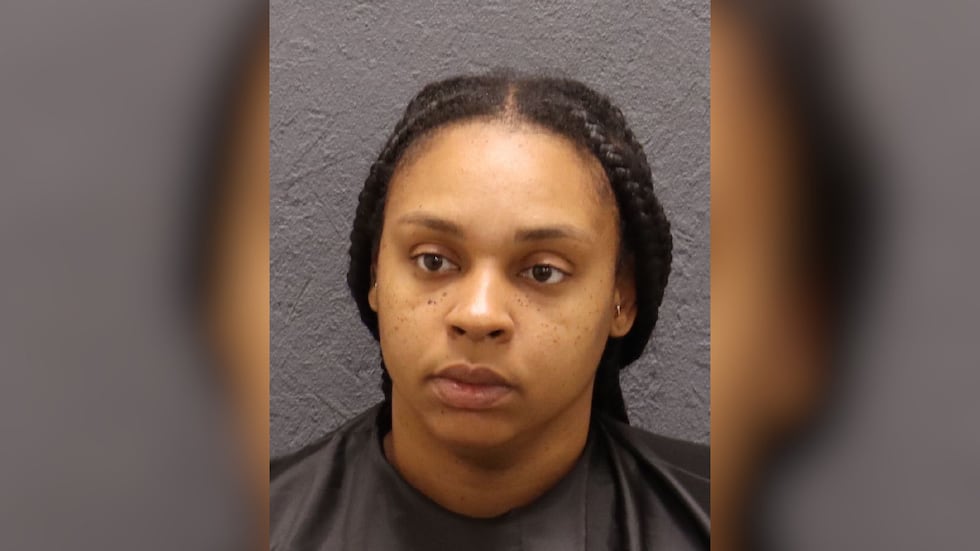
The woman, it turns out, is Sarah Smalls, a nurse that Nora had hired three months prior to care for her ailing father.

“I hired her to care for him, not to steal from him,” she told Inside Edition.

Less than a month after Smalls was hired, Nora’s father was moved into a senior living facility. Then, Smalls was named as his power of attorney and the deed to his house was transferred to her for just $5. Bank statements also show money transfers from Nora’s father’s accounts to Smalls, before and after he died.

Now the onus is on Nora to file a civil lawsuit to try to get her father’s assets back.

What is elder financial abuse?

Elder fraud, elder financial abuse and elder financial exploitation (EFE) refer to the abuse of financial control or misappropriation of funds in a relationship with an elderly victim.

This can take several forms. It could be someone the victim knows, like a grandchild ‘borrowing’ money that’s never repaid. Or it could be criminals running an investment fraud scheme.

It could involve tricking, coercing or persuading a vulnerable senior into signing over Power of Attorney, in which the fraudster gains control of the senior’s finances, or signing over a property deed or vehicle title.

While Nora’s case is extreme, it’s not an anomaly. An AARP study found that victims of EFE over the age of 60 lose $28.3 billion in the U.S. each year. And in most (72%) of those cases, fraud is committed by someone the victim knows.

But EFE is “notoriously underreported,” according to Comparitech. Not all victims report EFE, especially if it’s committed by a family member. Maybe they’re ashamed or embarrassed, or maybe they simply aren’t aware it’s happening.

Social isolation and mental impairment — such as Alzheimer’s or dementia — can make an older adult more vulnerable to abuse, according to the National Council on Aging.

And while there are some protections in place — about half of states have “hold” laws in which banks can hold transactions if they suspect financial exploitation — there’s still much that needs to be done.

In the meantime, victims don’t have a lot of recourse.

“Getting restitution is nearly impossible, and re-earning that money takes time, when time is not on an older victim’s side,” according to the AARP report. “Victims often lose not only key resources that can jeopardize their current and future financial security but also a degree of their own dignity.”

How to protect your loved ones

Perhaps one of the most nefarious forms of elder financial abuse is when the victim is tricked into signing over Power of Attorney or property titles — even changing their will — essentially draining them of their assets and autonomy.

Ideally, you want to put protections in place while a loved one is still mentally capable of making decisions. A good starting point is to contact an elder law attorney, who can help set up a durable financial Power of Attorney or trust.

For example, with a durable financial Power of Attorney, Nora could have served as her father’s ‘agent’ to make financial decisions on his behalf, if he was unable to make those decisions for himself.

When hiring a caretaker or home nurse, use a licensed, bonded home care agency, and check their credentials and references thoroughly. Have the caregiver sign a formal contract (with your elder law attorney present) and ensure their access to your loved one’s finances is limited.

For example, rather than giving them access to the elder’s bank accounts, provide them with a prepaid debit card for groceries or other items. You can also arrange for ‘view only’ access to their bank accounts to monitor them for suspicious activity, such as unexplained bank withdrawals or transfers.

If you suspect fraud or theft, contact the police as well as your local Adult Protective Services agency. If your loved one is in a nursing home, call your Long-Term Care Ombudsman to intervene and advocate on your behalf.

In more extreme cases — say, a property deed was transferred or a will was changed while the elder was not of sound mind — that’s considered a form of elder financial abuse. In those cases, hire an elder law attorney. 

Full Article & Source:
She went to check on her elderly dad — he was gone and his caretaker had moved in. How this could happen to you 

Thursday, September 3, 2026

Law students partner with Charleston Co. Probate Court to protect vulnerable adults

The Adult Guardianship Assistance and Monitoring Program in the Lowcountry is pairing Charleston School of Law students with the Charleston County Probate Court to check on vulnerable and incapacitated adults under guardianship.

By Kavya Ramesh

CHARLESTON, S.C. (WCSC) — The Adult Guardianship Assistance and Monitoring Program in the Lowcountry is pairing Charleston School of Law students with the Charleston County Probate Court to check on vulnerable and incapacitated adults under guardianship.

Students volunteer as court-appointed limited court visitors, going out in teams of two to visit adults under guardianship in homes and care facilities.

The court conducts specialized training each semester before issuing court orders appointing the students to the role.

Students act as ‘eyes and ears’ of the court

During a training session, Charleston County Probate Judge Irv Condon told students that guardianship in South Carolina applies to more than senior citizens. 

“It’s not all about senior citizens. It’s about incapacitated adults. And a vulnerable adult in South Carolina is anybody over the age of 18. So that could be, uh, any, any of us,” Condon said.

Condon said the goal of the visits is to secure the greatest independence possible for each person under guardianship.

“Our hope is you go there and you start visiting and you have a hard time getting away. They want to hear about you and take an interest in you. That is what we hope occurs,” Condon said.

Students monitor housing safety and basic needs, including glasses, walkers and hearing aids, and report their findings to the court. 

Three guardianship clerks follow up on the reports with guardians or conservators.

Coordinators describe the mission

Jamie Roper, elder advocate and coordinator with the City of Charleston Mayor’s Office on Aging, spoke to students about the responsibility of the role.

“This job is more giving back than you will ever know. But I will tell you this. Sometimes the job becomes very, very hard,” Roper said.

Roper told students to trust their instincts during visits.

“When your Spidey senses go up, listen to them because that’s why we need your eyes and ears. Because some people, they don’t have the ability to speak, so we have to speak for them,” Roper said.

Roper said the work is centered on helping people, not creating obstacles for them.

“You know, these are people’s lives and our job is to help them. Not to be a barrier, not to make it difficult, but to help them. So do whatever you can to help them,” Roper said.

Program history

The program began in 2011, with Charleston as one of two counties in the nation chosen to pilot it, along with Maricopa County, Arizona. 

Condon told students the effort followed news reports by the Los Angeles Times and New York Times documenting courts that were not checking on individuals under guardianship.

Since 2011, more than 1,200 students have participated in the program, visiting more than 1,000 citizens, according to the court.

The court says about 200 of the visits have resulted in direct follow-up actions, including connecting families with caregiver grants, securing housing resources or reporting abuse and neglect. 

Full Article & Source:
Law students partner with Charleston Co. Probate Court to protect vulnerable adults 

Wednesday, September 2, 2026

Charleston County Probate Court hosts Adult Guardianship Assistance, Monitoring Program

by: Danika Young


CHARLESTON COUNTY, S.C. (WCBD) – The Charleston County Probate Court is partnering with the Charleston School of Law for an Adult Guardianship Assistance and Monitoring Program training.

The training will be held on Tuesday, September 1, 2026, from 12:00 p.m. to 1:00 p.m. at the Charleston School of Law.

The training allows students to perform assistance and wellness checks by visiting vulnerable adults under guardianship.

“The goal of this program is to ensure seniors and incapacitated adults are receiving proper care. Each semester, Charleston County Probate Court hosts specialized training sessions at the law school to properly train the students to participate in this program,” the Charleston County Probate Court said.

During these visits, the court says students will ask questions about the present living and care arrangements to report back to the court and will follow up on any necessary action required
after the visits. 

Full Article & Source:
Charleston County Probate Court hosts Adult Guardianship Assistance, Monitoring Program 

Saturday, August 22, 2026

South Carolina man accused of contractor fraud in Greene

A South Carolina man is accused of defrauding a Greene County couple of $2,400 while posing as an asphalt contractor.

Johnny Carroll, 43, of North Augusta, S.C., faces charges of financial exploitation of an older adult and theft by deception. Both were filed with Judge Thomas Ankrom Tuesday afternoon. 

Carroll allegedly approached Anetta and Thomas Neff in the driveway of their home in Morgan Township on Aug. 10.

Carroll claimed to be affiliated with D.B. Paving, which had paved her driveway the previous month, according to court documents.

Carroll, who identified himself as John Riley of Riley’s Asphalt, told Neff he was there to finish the job and apply a seal coat, the complaint said.

By the time the Neffs provided a check for $2,400, Riley’s crew of at least three people had already sprayed something on the driveway, the complaint said. The Neffs told investigators they doubt it was a sealant. 

The D.B. Paving owner said the company had no ties with Carroll, and he had recommended the Neffs call police, the complaint said.

Carroll was not in custody as of Tuesday afternoon. 

Full Article & Source:
South Carolina man accused of contractor fraud in Greene  

Friday, July 24, 2026

Latta woman accused of stealing $34,000 from Florence nursing home resident while acting as their conservator


by: Dennis Bright

FLORENCE, S.C. (WBTW) — A 64-year-old Dillon County woman is accused of stealing more than $34,000 from a Florence nursing home resident while acting as their conservator and power of attorney, according to the South Carolina Attorney General’s Office.

Delores Ann Edge of Latta is accused of one count of exploitation of a vulnerable adult and one count of breach of trust with fraudulent intent, with a value of $10,000 or more. She was booked into the Florence County Detention Center on Wednesday.

“Investigators determined that Edge, while acting as the victim’s conservator and power of attorney, knowingly and willfully engaged in improper, unlawful, and unauthorized use of the victim’s assets and property,” the attorney general’s office said in a news release. “The investigation further established that Edge expended approximately $34,071.98 of the victim’s funds for her own personal benefit without lawful authority or permission to do so.”

The alleged exploitation occurred between April 23, 2024, and Feb. 6, the attorney general’s office said. At the time, the victim was a resident at Veterans Village Nursing Home in Florence.

The attorney general’s Vulnerable Adults and Medicaid Provider Fraud unit, known as VAMPF, investigated the case along with the Florence County Sheriff’s Office. The Dillon County Sheriff’s Office assisted with the arrest of Edge.

If convicted, Edge faces up to five years in prison and a fine of not more than $5,000, or both, for the exploitation charge, the attorney general’s office said. The breach of trust charge carries a sentence of up to 10 years in prison or a fine at the discretion of the court.

Full Article & Source:
Latta woman accused of stealing $34,000 from Florence nursing home resident while acting as their conservator 

Tuesday, July 21, 2026

AG: Upstate nursing assistant accused of stealing from vulnerable adult

By Lorenza Medley

OCONEE COUNTY, S.C. (FOX Carolina) - Attorney General Alan Wilson announced that an Upstate nursing assistant has been charged with stealing from a vulnerable adult.

A release from Attorney General Wilson states that 31-year-old Constanza Athena Tate, of Anderson, has been charged with:

  • Exploitation of a vulnerable adult
  • Financial card fraud, valued at more than $500 in a six-month period
Constanza Athena Tate
Constanza Athena Tate(Oconee County Detention Center)

The release states that a joint investigation by the Vulnerable Adults and Medicaid Provider Fraud unit and the Oconee County Sheriff’s Office found that Tate knowingly and willfully exploited a vulnerable adult.

According to investigators, Tate was employed as a Certified Nursing Assistant at Seneca Health and Rehabilitation Center, where the victim resided.

On Nov. 3, 2025, Tate fraudulently used the victim’s credit card number without permission. Investigators determined that Tate used the card number for purchases totaling more than $500 for her own personal gain.

The release states that the victim qualified as a vulnerable adult under South Carolina law during the period of the alleged misconduct.

Seneca Health and Rehabilitation Center reported the suspected financial exploitation to law enforcement and fully cooperated throughout the investigation, according to the release.

For both charges, Tate could face up to 5 years in prison. The exploitation charge carries a fine of up to $5,000. The fraud charge carries a fine of up to $3,000, according to the release.

Tate was booked into the Oconee County Detention Center on Friday, the release said. 

Full Article & Source:
AG: Upstate nursing assistant accused of stealing from vulnerable adult 

Saturday, June 20, 2026

North Charleston woman jailed after reportedly exploiting elderly neighbor

 by Abigail Quinn

A North Charleston Police Department uniform patch. FILE (Brian Heins/WCIV)

NORTH CHARLESTON, S.C. (WCIV) — A woman has been arrested after she reportedly exploited her elderly neighbor and fraudulently accessed their finances, according to the North Charleston Police Department.

Kimberly Spear Lawrence, a 58-year-old from North Charleston was arrested and charged with fraud and exploitation of a vulnerable adult.

The report on the incident states that investigators with the North Charleston Police Department Special Victims Unit received a report on March 19 from he South Carolina Department of Social Services and Adult Protective Services regarding the alleged exploitation of a 79-year-old woman.

The victim reportedly suffers from cognitive impairment, and through investigation it was revealed that multiple checks belonging to the victim were allegedly cashed or deposited and cashed for a loss of more than $3,000 by Lawrence.

On Wednesday officers located and arrested Lawrence at a hotel on Dorchester Road and she was transported to the Al Cannon Detention Center. 

Full Article & Source:
North Charleston woman jailed after reportedly exploiting elderly neighbor 

Monday, May 11, 2026

The Media’s Role in Exposing Elder Abuse: Why Awareness Must Lead to Accountability


"The media has always played a pivotal role in shaping society, but its responsibility extends beyond informing it must also protect, advocate, and hold systems accountable."

By: Sponsored Post of Barrett Media

In an age where media shapes public perception and drives social accountability, its role in uncovering critical issues cannot be overstated. One such issue often hidden behind closed doors is elder abuse in nursing homes. Investigative journalism, local reporting, and digital media platforms have become powerful tools in exposing these injustices and giving a voice to vulnerable populations. For families seeking justice, resources like a Mount Pleasant Nursing Home Abuse Lawyer can be essential, but awareness often begins with what the media chooses to spotlight.

The Silent Crisis in Nursing Homes

Elder abuse remains significantly underreported. According to global estimates, millions of older adults experience some form of neglect, physical harm, or emotional abuse each year. Yet, due to fear, cognitive decline, or lack of access to reporting channels, many cases never reach authorities.

This is where media outlets, especially those focused on community storytelling and investigative reporting step in. By bringing these stories to light, journalists not only inform the public but also pressure institutions to act responsibly.

How Media Coverage Drives Change

Historically, some of the most impactful reforms in healthcare and senior living have followed extensive media coverage. When local or national outlets highlight patterns of neglect or systemic failures, it often leads to:

  • Government investigations
  • Policy changes and stricter regulations
  • Increased funding for oversight
  • Greater public awareness and advocacy

The media doesn’t just report, it creates momentum. A well-researched feature or exposé can lead to real-world consequences for negligent facilities.

The Responsibility of Modern Media Platforms

With the rise of digital media, the speed and reach of information have expanded dramatically. Platforms like podcasts, online publications, and social media channels now complement traditional journalism.

For a site like Barrett Media, which understands the evolving media landscape, there’s an opportunity to emphasize how broadcasters, content creators, and journalists can use their platforms responsibly. Covering elder abuse is not just about reporting facts it’s about storytelling with purpose, sensitivity, and accuracy.

Ethical Storytelling and Victim Protection

Reporting on nursing home abuse requires a delicate balance. Journalists must ensure that:

  • Victims’ identities are protected when necessary
  • Information is verified and not sensationalized
  • Families are approached with empathy
  • Legal processes are respected

Ethical storytelling builds trust and ensures that the focus remains on justice rather than exploitation.

While media exposure brings awareness, legal action brings accountability. Families often turn to professionals like a Mount Pleasant Nursing Home Abuse Lawyer to pursue justice once abuse is uncovered.

Interestingly, media coverage can strengthen legal cases by:

  • Documenting patterns of negligence
  • Encouraging whistleblowers to come forward
  • Providing publicly available evidence
  • Highlighting regulatory failures

This synergy between media and legal advocacy creates a powerful framework for change.

The Role of Local Journalism

Local media outlets are often the first to report on incidents within communities. Their proximity allows for deeper investigation and stronger connections with affected families.

However, local journalism has faced funding challenges in recent years. Supporting these outlets is crucial because they play a frontline role in identifying issues like nursing home abuse before they escalate.

Digital Storytelling and Audience Engagement

Today’s audiences consume content differently. Interactive storytelling, video reports, and social media threads can amplify the reach of important issues.

For example:

  • Short-form videos can quickly highlight key concerns
  • Podcasts can explore survivor stories in depth
  • Data journalism can reveal systemic patterns

These formats make complex issues more accessible and engaging, ensuring that the message reaches a broader audience.

Challenges in Reporting Elder Abuse

Despite its importance, covering elder abuse comes with obstacles:

  • Limited access to facilities
  • Legal restrictions and privacy laws
  • Fear of retaliation among staff or victims
  • Difficulty in verifying claims

Journalists must navigate these challenges carefully while maintaining integrity and accuracy.

Why This Topic Matters for Media Professionals

For media professionals and platforms like Barrett Media, covering topics like nursing home abuse aligns with a broader mission using media as a force for good.

This type of reporting:

  • Builds credibility and trust with audiences
  • Demonstrates social responsibility
  • Encourages meaningful conversations
  • Positions media outlets as advocates for change

It’s not just about content it’s about impact.

Taking Action Beyond Awareness

Awareness is only the first step. Readers, listeners, and viewers who encounter stories about elder abuse should feel empowered to act. This can include:

  • Reporting suspected abuse
  • Supporting advocacy organizations
  • Engaging in community discussions
  • Seeking legal help when necessary

In many cases, connecting with a Mount Pleasant Nursing Home Abuse Lawyer can help families understand their rights and pursue justice effectively.

Conclusion

The media has always played a pivotal role in shaping society, but its responsibility extends beyond informing it must also protect, advocate, and hold systems accountable. By shedding light on nursing home abuse, media professionals can drive real change, ensuring that vulnerable populations are not forgotten.

As the media landscape continues to evolve, the commitment to ethical, impactful storytelling must remain constant. Because when the media speaks up, it doesn’t just tell a story it can change lives. 

Full Article & Source:
The Media’s Role in Exposing Elder Abuse: Why Awareness Must Lead to Accountability 

Tuesday, February 24, 2026

Experts warn elder financial abuse often goes unreported until savings are gone

by Kara Daniel


COLUMBIA S.C. (WACH) — Families often don’t notice financial abuse until significant money is gone, and experts say it frequently goes unreported, leaving many victims without help.

“It is one of the most common types of abuse that goes unreported. In fact, it is under reported,” said Dr. Macie Smith, an elder care professional.

Smith said financial abuse is one of the most common forms of elder abuse and is often committed by someone the victim knows and trusts.

She said victims may not acknowledge what’s happening because they still trust the person involved, or they may stay silent out of fear.

In a situation like that when they don’t accept the fact that they haven’t abused because they still really do trust this person and sometimes they don’t say anything because of fear. Fear of losing this person because they think they’ve helped them all the time,” Smith said.

Smith also warned that people with power of attorney can misuse their authority.

Sometimes people feel like when they have the power of attorney, that they can do whatever they want to do on behalf of the other person. That is false. Even though there is a power of attorney, they can still make their own decisions,” she said.

Experts say warning signs of elder financial abuse can include an older adult seeming confused about recent transactions, showing changes in behavior, becoming more isolated than usual, or expressing fear about money.

Smith recommended families take steps early to help protect loved ones, including regularly reviewing bank statements, considering a trusted third party to oversee finances, and keeping open lines of communication about money.

She said South Carolina nursing homes are also required to help where they can.

They are required to post flyers about financial exploitation, and they are required to provide training to their residence about financial exploitation,” Smith said.

For elders or vulnerable people on Medicaid, families are encouraged to look at the Medicaid exclusion list online, which includes many criminals who have abused Medicaid along with their crimes.

Smith said anyone who suspects abuse should report it immediately to Adult Protective Services so the situation can be investigated before losses grow. 

Full Article & Source:
Experts warn elder financial abuse often goes unreported until savings are gone 

Friday, January 30, 2026

Grandson arrested in killing of elderly Westminster couple

by Terry Benjamin II

Authorities have arrested a 19-year-old Westminster man in connection with the deaths of an elderly couple found slain in their Oconee County home.

According to a release from the Oconee County Sheriff's Office's Corporal Jimmy Watt, deputies arrested Levi Kevin Jones, 19, of Westminster on Jan. 23. Jones was charged with two counts of murder and possession of a weapon during a violent crime in the deaths of Larry and Sandra Moore.

Watt said Jones is the Moore couple's grandson.

On Jan. 15, a Westminster couple, 76-year-old Larry and his wife, 75-year-old Sandra, were discovered by a family member at their Cromer Moore Road home. According to Oconee County Coroner Karl Addis, Sandra died by strangulation, and Larry was discovered with stab wounds.

Calvary Church in Westminster posted on social media that the elderly couple were members of the church.

"Calvary Family, it is with heavy hearts that we share the passing of two of our longtime and most faithful members, Brother Larry and Sister Sandra Moore," the Church said via social media. "Please join us in lifting the entire Moore family - and all who loved them - in your prayers during this difficult time."

According to the report, Jones committed the crime on Jan. 13.

Jones will be held at the Oconee County jail after his bond was denied on Jan 24 by a circuit court judge. 

Full Article & Source:
Grandson arrested in killing of elderly Westminster couple 

Saturday, November 15, 2025

SLED charges former employee of Greenville County Probate Court for allegedly embezzling funds

by  Zach Rainey

The South Carolina Law Enforcement Division recently charged a former employee of the Greenville County Probate Court with breach of trust and embezzlement of public funds.

According to arrest warrants released on Wednesday, between July 1, 2023, and March 7, 2025, 26-year-old Tyler Edge-Partington of Fort Mill embezzled public funds entrusted to him for safekeeping and transfer to the Greenville County Treasurer's Office.

On Nov. 7, Partington was charged with breach of trust with fraudulent intent - value $2,000 or less, and embezzlement of public funds - value less than $10,000.

Partington was booked into the Greenville County Detention Center.

The case will be prosecuted by the 13th Circuit Solicitor’s Office.

The probate court manages the execution of wills, estates, guardianships, ensuring debts are paid and assets are distributed. 

Full Article & Source:
SLED charges former employee of Greenville County Probate Court for allegedly embezzling funds 

Friday, October 24, 2025

Orangeburg care home owner gets prison for locking up residents

ORANGEBURG, S.C. (WRDW/WAGT) - An Orangeburg woman has pleaded guilty to elder abuse and sentenced to prison for locking up residents in an unlicensed care home.

Attorney General Alan Wilson announced that Estelle Amelia Hutchinson, 53, pleaded guilty Wednesday in Orangeburg County to one count of neglect of a vulnerable adult, one count of criminal conspiracy, and one count of operating a community residential care home without a license.

Judge Charles McCutchen sentenced her to five years in prison, suspended to three years’ active time in the South Carolina Department of Corrections, followed by three years of probation.

Hutchinson is barred from contact with boarding homes, nursing homes, or any other residential care facility for vulnerable adults.

An investigation revealed that between Jan. 16 and Feb. 15, 2024, Hutchinson ordered residents to be confined in locked rooms and denied them access to basic necessities such as food, clothing, medicine, shelter, supervision, medical services, and a safe means of exit.

After the ordeal, the residents were immediately taken into emergency protective custody by law enforcement.

Orangeburg firefighters found a malfunctioning natural gas heater was causing a buildup of fumes inside the residence, requiring the immediate evacuation and venting of the residence.

Hutchinson’s co-conspirator, Tracy Timothy Wright, 52, of Orangeburg, was sentenced April 10 to three years in prison and two years of probation after pleading guilty to neglect of a vulnerable adult and criminal conspiracy. 

Full Article & Source:
Orangeburg care home owner gets prison for locking up residents 

Tuesday, October 7, 2025

Two women accused of exploiting vulnerable adult and committing financial fraud

by Dejon Johnson

Shakedda Monike Stokes, 44, and Lanautica Lashay Major, 27, were taken into custody and booked into the Lexington County Detention Center on Wednesday and Thursday. (LCSD)

LEXINGTON COUNTY, S.C. (WACH) — South Carolina Attorney General Alan Wilson announced the arrests of two Columbia women in connection with the exploitation of a vulnerable adult and financial fraud.

Shakedda Monike Stokes, 44, and Lanautica Lashay Major, 27, were taken into custody and booked into the Lexington County Detention Center on Wednesday and Thursday.

Both women are charged with:

  • Exploitation of a vulnerable adult
  • Obtaining property under false pretenses ($2,000–$10,000)
  • Criminal conspiracy
  • Crimes against a federally chartered or insured financial institution

According to a joint investigation by the Attorney General’s Vulnerable Adults and Medicaid Provider Fraud unit and the Lexington Police Department, Major and Stokes conspired to misuse the funds of a vulnerable adult between December 1, 2024, and January 21, 2025.

Major, a caregiver at Oakleaf Village assisted living facility in Lexington, is accused of using a resident’s credit card and banking information without permission, according to officials.

Investigators say Major and Stokes used the victim’s financial information to make unauthorized transactions and withdraw money from an account held at First Citizens Bank.

Officials say Oakleaf Village reported the alleged misconduct to law enforcement and has cooperated fully with the investigation.

The case will be prosecuted by the Attorney General’s Office. 

Full Article & Source:
Two women accused of exploiting vulnerable adult and committing financial fraud 

Thursday, September 25, 2025

Man accused of keeping 4 ‘vulnerable adults’ captive in his basement, stealing their money for years, police say

By Brandy Beard and Akim Powell

LANCASTER, S.C. (WBTV/Gray News) - A man in South Carolina is accused of holding four “vulnerable adults” captive in his basement and stealing their money.

Donnie Birchfield Jr., 36, was arrested after Lancaster police responded to an unattended death on July 25 at a home on Churchill Drive.

Donnie Birchfield Jr., 36, was arrested after Lancaster police responded to an unattended death on July 25 at a home on Churchill Drive.(Lancaster County Sheriff's Office)

According to a report, officers learned that Birchfield had cared for multiple people in his basement and allegedly had been using at least two of their debit cards and one bank account.

Officers alleged Birchfield financially exploited four people, identified as vulnerable adults, starting in September 2022.

For almost three years, Birchfield allegedly made dozens of purchases using the debit cards and the bank account number to pay for services for himself and to pay his own credit card bills.

Birchfield was arrested on Aug. 2 and charged with:

  • Four counts of exploitation of a vulnerable adult
  • Four counts of false imprisonment
  • Two counts of domestic violence high and aggravated nature
  • Two counts of abuse of a vulnerable adult
  • Two counts of financial transaction card theft
  • One count of transaction card fraud
  • One count of financial identity fraud

He was placed under a $150,000 bond. According to Lancaster police, more charges were possible as the case remained under investigation. 

Full Article & Source:
Man accused of keeping 4 ‘vulnerable adults’ captive in his basement, stealing their money for years, police say 

Friday, September 12, 2025

'I'm gonna fight': Family battles hospital for legal guardianship of husband, father

by Tonya Brown

Helen Clark of Marlboro County said she and her two adult children are in one of the greatest fights of their lives to keep a medical facility from getting guardianship over their loved one. (Credit: Clark Family)

MARLBORO COUNTY, SC (WPDE) — Helen Clark of Marlboro County said she and her two adult children are in one of the greatest fights of their lives to keep a medical facility from getting guardianship over their loved one.

Clark's husband, 77-year-old James Clark, is critically ill and has been in the hospital since late January.

"He went into cardiac arrest when. I could hear him coming down the hall. And usually when he comes down the hall, he goes to the bathroom, but this time he didn't. He came in. He said 'Raise the bed, raise the bed.' And I raised the bed. He sat on the bed, and it was like he was grasping for breath. And then he got off the end of the bed, and then he went to his chair, and that's when he fell out," said Helen.

She said paramedics had to resuscitate James before they took him to a hospital in Cheraw.

Her daughter, Tarsha Clark, followed EMS to the hospital.

Helen said on Valentine's Day, James was moved to Regency Hospital in Florence, where he's been for the past seven months.

Helen and her Tarsha drive every day from their home in Bennettsville to visit James at the hospital.

She said her son travels from out of state to visit his dad at least once or twice a month, depending on his work schedule.

Regency Hospital's website says they're a "recovery facility specializing in helping critically ill patients breathe, speak, eat, walk and think as independently as possible."

Helen and Tarsha said James communicates with them in a special way.

"We talked to him through his eyes. Tarsha said, 'Dad, if you understand what I'm saying, blink your eyes.' And he blinks his eyes," Helen said. "To see my dad going through this right now is devastating for me and my family. And for him also because he used to being independent. You know, he's not used to all of this. So, it's very traumatizing for us. I miss my dad. That's why I go see him daily and try to communicate with him and find out how his day was. It's very challenging for us, but like I say, we're going to keep fighting," said Tarsha.

The Clarks' fight goes beyond James‘s medical condition, but the right to keep him close by.

Helen said the hospital wants to send James to a skilled nursing facility, as far as Maryland, Virginia or Georgia.

Helen added that they don’t have the means to travel that far to see James.

    "If the shoe were on the other foot, he would fight. Who would want to send their loved ones that far away off? We can't get to him. And if we don't see him, he's not going to survive," Helen explained.

Regency Hospital is petitioning the Florence County Probate Court to gain guardianship and appoint a conservator over James.

Court documents read James is "incapacitated to such an extent that he lacks the ability to effectively receive, evaluate and respond to information or make or communicate decisions such that a person, even with appropriate, reasonably available support and assistance, cannot."

Helen and her family have turned to their Marlboro County Representative and attorney Jason Luck to help them fight this legal battle.

"Ultimately, they say it's in his best interest. They say it's because there is no facility that can provide him the type of care he needs in this state, and they don't need to prepare. While it's legally possible, is it the right thing to do? And what we have here now is a hospital. We have a private company looking to take over the healthcare and financial decisions of one of my constituents, a husband, a father. And that doesn't feel right. And so can it happen? Yes, it can happen. There are laws available for it. There are opportunities, and there are times when it is appropriate. Today doesn't feel appropriate. This doesn't feel appropriate. It doesn't look appropriate. And we're going to see what we have to do to push back, stop it, reverse it, change it, investigate," said Luck.

Luck said at this point, they haven't filed a response to the hospital's petition, but they plan to within the allotted time frame of 30 days.

"The downside is that, yeah, we have Regency Hospital suing this family, but the upside to that is now we have the discovery process. So, we can do a little investigation. And that's where I won't say I'm excited, but at least I feel like I have an opportunity now to do a little investigating. Let's find out who owns this hospital. Let's find out who owns those facilities that the hospital wants to send Mr. Clark to. So, ultimately, this is a business decision, and that's unfortunate because medicine is a profession, it's not a business, and we shouldn't be looking at the bottom lines all the time. I know that that's maybe an unpopular opinion, but healing people and making a profit are not necessarily the same thing," said Luck.

Marion and Fannie Brown are longtime neighbors to the Clark family, and they're providing support during this tough time for them.

"The Clarks are already experiencing an economic hardship, and this would create even a more severe economic hardship that is great distance. That's devastating. That's emotionally, mentally devastating. That can create trauma. And so it would cause problems for the family. Serious problems. She would want to take that drive every time. That's wear and tear on your car," said Marion Brown.

ABC 15 reached out to Regency Hospital, which provided the following statement:

    "We are not able to provide information about any patients in our care due to HIPAA privacy laws.” 

We also reached out to James‘ appointed attorney, Ed Love of Florence.

Love sent the following response.

    "It is alleged that he is incapacitated, so my role in the matter is to evaluate him, to meet with and interview the medical staff, and to meet with other interested parties, all to assist the court in making a decision that reflects what is in Mr. Clark’s best interests. Otherwise, I am limited in what I can provide until I have done so and prepared a report to submit to the court."

Helen said everyone seems to have James's best interest at heart.

She added that doctors have even told her and Tarsha that he’s brain dead, but she refuses to give up.

"I don't have the right to say, pull the plug on him. That's God's decision," Helen said.

Helen has filed her own petition to become James’ guardian, watching over him as she’s done for the past 54 years.

"With god, I'm ready. Bring it on," she said.

There will be an upcoming hearing on the hospital's petition. 

Full Article & Source:
'I'm gonna fight': Family battles hospital for legal guardianship of husband, father 

Friday, August 1, 2025

AG: Upstate caregiver charged with beating resident at senior living facility

According to the attorney general, Pearl at Five Forks Memory Care Center reported this incident to the Greenville County Sheriff’s Office.  

Source:
AG: Upstate caregiver charged with beating resident at senior living facility 

Attorney General Alan Wilson announces caregiver charged with beating vulnerable adult

(COLUMBIA, S.C.) – South Carolina Attorney General Alan Wilson announced that his office’s Vulnerable Adults and Medicaid Provider Fraud unit (VAMPF) has arrested Robin C. Hatley, 61 years old, of Laurens, S.C., for Abuse of a Vulnerable Adult {43-35-0085 (D)}. Hatley was booked into the Greenville County Detention Center on July 18, 2025.

A joint investigation by VAMPF and the Greenville County Sheriff’s Office alleges that on June 14, 2025, Hatley, a caregiver at Pearl at Five Forks Memory Care Center in Simpsonville, S.C., struck a vulnerable adult resident multiple times on the head, face, and nose. The victim, classified as a vulnerable adult under South Carolina law, was a resident of the facility at the time of the alleged incident.

Pearl at Five Forks Memory Care Center reported this incident to law enforcement and cooperated fully with investigators. This case will be prosecuted by the Attorney General’s Office.

Abuse of a Vulnerable Adult is a felony and, upon conviction, has a penalty of up to five years in prison, a fine of up to $5,000, or both. 

Pursuant to federal regulations, VAMPF has authority over Medicaid provider fraud; abuse and neglect of Medicaid beneficiaries in any setting; and the abuse, neglect, and exploitation of individuals residing in assisted living facilities or nursing homes. 

Attorney General Wilson stressed all defendants are presumed innocent unless and until they are proven guilty in a court of law.

The South Carolina Medicaid Fraud Control Unit, dba VAMPF, receives 75 percent of its funding from the U.S. Department of Health and Human Services under a grant award totaling $2,889,252 for federal fiscal year 2025. The remaining 25 percent, totaling $963,084 for FFY 2025, is funded by South Carolina. 

Source:
Attorney General Alan Wilson announces caregiver charged with beating vulnerable adult 

Tuesday, January 7, 2025

74-year-old Camden woman accused of stealing thousands from vulnerable adult

$75K was stolen from victim at assisted living facility, according to SC Attorney General's Office

Author: WLTX

CAMDEN, S.C. — A 74-year-old Camden woman has been arrested by officers in the Vulnerable Adults and Medicaid Provider Fraud (VAMPF) unit of the South Carolina Attorney General's Office after she allegedly stole thousands of dollars from a vulnerable adult.

Jannie C. Johnson has been charged with Exploitation of a Vulnerable Adult and Breach of Trust with Fraudulent Intent, value $10,000 or more after an investigation by VAMPF and the Sumter Police Department. The investigation revealed that between June 22, 2023, and March 21, 2024, Johnson converted $75,000 of the victim's funds for personal use while entrusted with the victim's power of attorney.

The victim, considered a vulnerable adult under South Carolina law, resided at Wildewood Downs Assisted Living Facility, off Polo Road in Columbia, at the time of the alleged misconduct.

Under South Carolina law, Exploitation of a Vulnerable Adult is a felony and, upon conviction, has a penalty of up to five years in prison, a fine of up to $5,000, or both. Breach of Trust, value $10,000 or more is a felony and, upon conviction, has a penalty of up to 10 years in prison or a fine at the discretion of the court.

Johnson was booked into Alvin S Glenn Detention Center in Columbia on January 3. She was released after attending bond court and posting a $50,000 personal recognizance bond.

If you have any information about Vulnerable Adult abuse or Medicaid Provider Fraud, please report it to Attorney General Alan Wilson’s Vulnerable Adults and Medicaid Provider Fraud unit at: VAMPF@scag.gov; (803) 734-3660 or call toll-free: 1-888-NO-CHEAT (1-888-662-4328). 


Full Article & Source:
74-year-old Camden woman accused of stealing thousands from vulnerable adult