Showing posts with label financial fraud. Show all posts

Saturday, August 2, 2025

U.S. Senators Katie Britt, Kirsten Gillibrand Introduce Bipartisan Legislation to Protect Elderly from Financial Fraud


July 30, 2025

WASHINGTON, D.C. — U.S. Senators Katie Britt (R-Ala.) and Kirsten Gillibrand (D-N.Y.), the ranking member of the Senate Aging Committee, today introduced the Guarding Unprotected Aging Retirees from Deception (GUARD) Act, legislation aimed at protecting the elderly from scammers and financial fraud. Chairman of the Senate Aging Committee Rick Scott (R-Fla.) is also a cosponsor.

The GUARD Act would allow state and local law enforcement to use federal grant funds that they already receive for purposes of hiring agents, training police staff and increasing resources specifically to utilize the blockchain for investigating financial fraud. It would also permit federal law enforcement to assist state and local law enforcement with tracing tools for blockchain technology.

“For too long, scammers have preyed upon the elderly, one of our nation’s most vulnerable populations, and stolen life-changing amounts of money from Americans who often live on fixed incomes. To make matters worse, these scammers exploit gaps in state and local law enforcement capabilities that often allow them to escape prosecution,” said Senator Britt. “I’m proud to lead the GUARD Act with Senator Gillibrand to give law enforcement agencies the tools they need to bring these faceless cowards to justice and take meaningful steps to combat financial fraud at large.”

Every day, scammers target our seniors, often robbing them of their hard-earned savings and stealing their personal information,” said Senator Gillibrand. “As the top-ranking Democrat on the Senate Aging Committee, I’ve seen firsthand the devastating impact these scams have on older Americans and their families. Far too often, local law enforcement agencies lack the resources they need to track down these criminals and hold them accountable. Our GUARD Act would enhance law enforcement capabilities and foster much-needed cooperation between federal and local agencies to combat fraud and bring scammers to justice. I look forward to working with Senator Britt to get this critical legislation across the finish line.

Bad actors are leveraging technology, including the blockchain, to scam individuals – particularly the elderly – through “pig butchering” financial fraud schemes. These scammers often know the thresholds that trigger a federal intervention, so they will keep stolen dollar amounts below this threshold, knowing state law enforcement agencies are often not equipped with the same expertise and resources to use blockchain technologies for tracing purposes.

Senator Rick Scott said, “I am thrilled to join Senators Gillibrand and Britt to introduce the Guarding Unprotected Aging Retirees from Deception (GUARD) Act. This bill helps ensure that local and state law enforcement can access critical tools like blockchain tracing technology that is already used by the Department of Justice to freeze hundreds of millions in stolen funds, and receive federal assistance to investigate these crimes more effectively in an effort to stop scams targeting our aging community as we’ve witnessed growing financial threats against aging Americans. As chairman of the U.S. Senate Special Committee on Aging, I am fully committed to standing up for our aging population, who have contributed so much to our country. The committee recently released our annual Fraud Report which details the alarming rise in scams, particularly sophisticated schemes that utilize artificial intelligence (AI). In 2024 alone, frauds and scams cost seniors over $4.8 billion, with those aged 50-59 losing an additional $2.5 billion. Additionally, we have pushed vital initiatives like our National Slam the Scam Day resolution and our toll-free Fraud Hotline, in an effort to expand access to education, prevention tools, and direct support to better empower families to recognize fraud and respond quickly with the necessary steps. Together, with the GUARD Act, we can work to ensure that every older American has the opportunity to enjoy their golden years with dignity, safety, and the financial security they deserve.”

According to the Federal Trade Commission (FTC), in 2023, Americans aged 60 and over reported losing more than $1.9 billion to fraud, with unreported losses potentially as high as $61.5 billion. In 2024, losses increased 21% to over $2.3 billion for these individuals, and the FTC reports over $745 million in losses in just the first three months of 2025, nearly $200 million more than at the same point last year.

The Senators’ legislation is endorsed by AARP. The bill is a Senate companion to H.R.2978, which was introduced by Reps. Zach Nunn (R-Iowa) and Josh Gottheimer (D-N.J.) earlier this year. You can view the full bill text here.

Senator Britt has previously raised awareness on the surge of financial scams, particularly those targeted at elderly citizens, saying in a 2024 Banking committee hearing: “It’s clear we must be doing more. We must be more diligent. We must do better in educating our population, particularly the elderly population, with regards to everything from romance schemes to sweepstakes scams to impersonations, which ultimately let Alabamians become victims . . . I want to make sure we are enabling law enforcement. I want to make sure we are doing everything we possibly can.” 

Source:
U.S. Senators Katie Britt, Kirsten Gillibrand Introduce Bipartisan Legislation to Protect Elderly from Financial Fraud

Tuesday, July 30, 2024

DU Expands Efforts to Protect Older Adults From Financial Fraud

by Connor Mokrzycki


Older Americans are at high risk for financial fraud, losing more than $20 billion annually, according to a 2023 report from AARP. To help protect this vulnerable population in the state of Colorado, the Paul Freeman Financial Security Program (PFFSP) in DU’s Knoebel Institute for Healthy Aging formed a coalition in 2023, thanks to support from the federally funded National Center for State and Tribal Elder Justice Coalitions.

The coalition is an interdisciplinary group made up of state and local agencies, elder advocacy organizations and DU researchers whose goal is to evaluate the complex issues related to elder financial fraud and develop possible solutions for prevention. The PFFSP team is tasked with building the coalition, developing tools and trainings for frontline workers, and creating a central hub for information and resources.

In April, the coalition held their inaugural meeting and announced an expanded collaboration with the Colorado Department of Regulatory Agencies (DORA), the top consumer protection agency in the state. DORA’s Financial Engagement Unit joins other members including the Office of Governor Jared Polis, the offices of the state and Denver district attorneys, the Colorado Office of Financial Empowerment, AARP ElderWatch and AgeWise Colorado.       

Eric Chess, clinical professor and director of PFFSP, says the massive amount of money lost to exploitation is just the tip of the iceberg. “When people lose money, it affects their emotional health, their mental health, their cognitive health and entire well-being,” he says. “This includes worsening chronic diseases and symptoms that you see in the doctor's office.” 

At the root of the problem is the little-understood connection between health and finances, which can turn into a vicious cycle, Chess says. “The first signs of clinical cognitive impairment are often seen in impaired financial decision making, which leaves individuals at an increased risk of exploitation or fraud—which in turn can worsen cognitive health.” 

PFFSP aims to highlight the importance of understanding this connection as they develop frameworks and tools to protect and improve mental, physical and financial health of people as they age.

However, Chess notes, the issue is a concern not just for older adults. “Older adults get taken for more money—often because they have more money—and they also have less ability to recover from financial loss than younger folks. But it's also under-appreciated that younger adults actually get taken advantage of more often, just for lesser amounts.” What’s more, “The older adults of tomorrow are today's kids. So, if you're really going to tackle all these issues, you have to look at it throughout the life spectrum.”

Chess and his team are also developing a financial vulnerability scale that would alert individuals when they are vulnerable to financial exploitation and, crucially, provide detailed insight into why. 

“A key issue is that people are vulnerable for different reasons—it can be from a social standpoint, a behavioral standpoint, or a cognitive standpoint. There are a lot of different areas of vulnerability—and it's necessary to have (multidisciplinary) expertise be part of building the scale.”

Bringing policymakers, government agencies and, in particular, frontline workers into the conversation is crucial to successfully develop and implement any solution to combat financial fraud and abuse. “They have to be part of this equation,” Chess says. “You cannot try to create academic solutions and then impose them on the community and the people who are doing the work.”

Full Article & Source:
DU Expands Efforts to Protect Older Adults From Financial Fraud

Saturday, July 13, 2024

When financial fraud becomes elder abuse


by Rabihah Butler

Elder abuse is more than physical violence or depriving of necessities, and in some severe cases, it is an attack on the mental and financial well-being of elderly people that can lead to the loss of savings or a broken heart

Elderly Americans, those 60 years old and above, are generally considered to be a vulnerable class — and with age comes concerns about physical health, mental agility, and overall security. While it is important to look out for the physical safety of the potential victim when looking at elder abuse, financial abuse often can be just as harmful.

Traditional elder financial abuse would likely come in the form of a close acquaintance taking advantage of their relationship with the victim to take possession of their property or money. This abuse could include manipulation to get expensive jewelry or convincing a vulnerable person to disclose bank codes allowing the illicit actor to drain the victim’s accounts.

While these are crimes, of course, they are much easier to catch and protect against than other types of financial fraud. In fact, bank employees are now encouraged to look for the signs of this type of manipulation and actively take steps to prevent it. However, less traditional financial abuse is becoming more concerning.

With theft by fraud skyrocketing — losses jumped to more than $10 billion in 2023, from $2.4 billion in 2019 — the rapid rate of is growth should put people (especially those in more vulnerable situations, like the elderly) into a more defensive and skeptical position. Indeed, elderly individuals are disproportionally vulnerable to this more complex and harder to detect type of theft.

In its 2023 report, the FBI’s Internet Crime Complaint Center (IC3) indicated that individuals under the age of 20 were the demographic least impacted by scams and fraud with only 18,000 reported victims, while those 60 years old and older saw more than 101,000 reported victims.

Understanding the root cause of elder fraud

Yet, to more fully understand the problem that some elders are facing you must first look at the root. Desperation and greed are among the reasons scammers have ramped up the use of schemes that will get money quickly from elderly victims. Scammers also look for options that have the lowest risk, so when considering crimes, they see elderly individuals as prime targets for several reasons, including:

      • They assume that elderly individuals are the most likely to have disposable income or savings. While younger individuals are beginning their careers and are just starting to earn money, elderly individuals have had time to amass savings and often have disposable income available for use and investment.
      • Elderly people are often less knowledgeable about the complexities of technology, including newer ways of investing. This lack of understanding around recently developed technology platforms making it easier to manipulate the victim. This would include venues like dating apps or digital currency platforms.
      • The older the population gets, the more likely they are to be retired, widowed, or lonely. Often, this leads to elderly individuals seeking companionship or friendship; and sometimes, looking for those connections online can open up a whole different world of (unverified and anonymous) people with whom to connect.
      • Elderly people also tend to adhere to more conservative beliefs, keeping finances to themselves and not asking for help. So, during manipulation and even after a financial loss, elderly victims are often left in a situation in which they are less likely to speak about it. This makes reporting, prevention, and tracking more difficult.

This spring, several government agencies — including the Financial Industry Regulatory Authority (FINRA), the U.S. Treasury’s Financial Crimes Enforcement Network (FinCEN), and the AARP (formerly the American Association of Retired Persons) — all took notice of the situation and issued warnings or guidance on the increases in elder financial crime, a stark reminder of this widespread problem.

In fact, FinCEN found that between June 2022 and June 2023, it had received 155,415 Elder Financial Exploitation (EFE)-related Bank Secrecy Act (BSA) reports associated with more than $27 billion in reported suspicious activity, which may include both actual and attempted transactions. It is important to note that this is only the number that was reported and does not account for instances in which individuals did not catch on to the fact they were the victim of a scam or instances in which the loss was not reported for other reasons. Further, an AARP report says that more than 40% of Americans (an estimated 141.5 million adults) say they have lost money to scams or had sensitive information obtained and used fraudulently.


While it is easy to count how much money is lost, it’s not as easy to count the number of individuals who suffer from depression or even suicidal attempts as a result of being scammed.


Elders are now facing many complex scams that are aimed at taking advantage of them in more significant ways. In 2023, the Top 5 scams reported to the IC3 were: tech support scams, personal data breaches, romance and confidence scams, product scams (non-payment or non-delivery), and investment scams. IC3 reports that the losses to investment scams alone totaled more than$1 billion in 2023.

And there is another factor that most people don’t even consider in the aftermath of a tremendous financial loss. While it is easy to count how much money is lost, it’s not as easy to count the number of individuals who suffer from depression or even suicidal attempts as a result of being scammed. For example, a 74-year-old retired teacher in Tennessee who was scammed for nearly $100,000 ultimately took his life as a result. In this case, the scammers were caught, but it highlights how these crimes need to be taken seriously.

Eva Velasquez, a former investigator for the San Diego District Attorney’s Office and who now serves as president and CEO of the nonprofit Identity Theft Resource Center, said the organization’s most recent study noted a sharp increase in the number of fraud victims who reported having thoughts of suicide after being conned.

What is clear is that it is important to educate elderly Americans on the use of technology and the reg flags they will inevitably come across, especially online. It is also important to continue to report and track these elderly financial abuse scams in order to try to prevent them in the future.

Full Article & Source:
When financial fraud becomes elder abuse

Monday, October 28, 2019

Global fight against life-changing fraud begins at home

Older people are increasingly targeted by online scammers © PA
Jackie, a retired marketing manager, lost £10,000 to fraudsters who hacked her email account and pretended to be her. The first she knew about the scam was when she received a letter from the provider of her investment bond, confirming £10,000 had been cashed in. But she had not made a withdrawal.

She immediately phoned her financial adviser, who said he had processed the transaction after arranging it with her by email. It was then she realised her email had been hacked and that the bank account details to which the money had been transferred were not hers.

Despite her reporting the crime to the police, the money could not be traced because the criminals used money mules — who allow their bank accounts to be used for transfers — and Jackie, who did not want to give her full name, was never reimbursed.

Her case is typical of the types of scams used by fraudsters to prey on older people around the globe, as dementia, social isolation or cognitive decline result in elderly individuals becoming increasingly vulnerable.

Cyber crime and fraudulent telephone calls or visitors — especially targeting older people — are now commonplace, while romance scams are on the rise because due to the popularity of internet dating.

Financial fraud is a global problem. The number of older people in the United States targeted by financial scams quadrupled from 2013 to 2017, according to the latest figures from the Consumer Financial Protection Bureau (CFPB). Since 2013, financial institutions have reported to the federal government more than 180,000 cases of suspicious activity targeting older adults, involving a total of more than $6bn.

“Elder financial exploitation is widespread and damaging,” the report concluded, while adding that the figures “represent just a tiny fraction of this pervasive problem”.

Americans between the ages of 70 and 79 took the biggest hit from fraudsters, it said, with an average loss of more than $45,000. The average loss rose to $50,000 when the theft was committed by someone they knew.

The large majority of fraud cases go unreported. According to the June 2018 Elder Financial Exploitation prepared by the US Securities and Exchange Commission, for every reported case of financial exploitation of the elderly, 44 went unreported

Age UK analysis of the Crime Survey for England and Wales for 2017-18 found that an older person becomes a victim of fraud every 40 seconds. The charity found that almost one in 12 respondents aged 65 and older reported being the victim of fraud in the past year — equivalent to more than 800,000 people.

The data also found that reported fraud incidents increased by 17 per cent in the year to December 2018 to 3.8m and that people are now nearly three times more likely to be a victim of fraud than to be burgled and almost 19 times more likely to suffer fraud than to be mugged.

Last month, Charles Randell, chair of the UK’s Financial Conduct Authority, said that financial crime, specifically fraud against individuals, has “reached epidemic proportions”. In the first six months of this year, across all categories of financial fraud, a total of £207.5m was stolen from almost 60,000 people, according to UK Finance, an industry body.

Financial losses are common, but being scammed can also seriously affect a person’s quality of life and wellbeing, says Caroline Abrahams, director of Age UK. “Ordinary people who have done everything reasonably possible to protect themselves can suffer catastrophic, life-changing losses, destroying not just their finances but their physical, mental and emotional health and wellbeing too”, she says.

Many people experience a deep sense of shame, embarrassment, anxiety and loss of independence following a scam, she adds. Some older people lose their life savings, decimating their retirement income, while those defrauded in their own homes are also more likely either to die or go into residential care within a year.

So how can people avoid being scammed? Andrew Hagger, personal finance expert and founder of consumer website MoneyComms, says: “Unfortunately the number and complexity of scams that we are seeing these days has made us far less trusting — and when financial fraud is involved that’s not a bad thing — the ‘don’t trust a stranger’ approach could save you from being fleeced.”

Mr Hagger points out that it is highly unlikely that your bank, building society or investment provider will ever telephone out of the blue, so this should immediately put you on your guard.

“If in doubt always speak to another member of your family before taking any action — if your provider really wants to contact you, they’ll put it in writing if it’s important,” he says. “If you do phone back, always get the number from your own documentation — never use a number given to you over the phone as it could be part of the scam.”

He recommends having a sticker or note permanently next to your telephone in big red letters saying: “Never give your bank details, PIN or financial details over the phone.”

Micah Willbrand, director of fraud and identity products at credit reference agency Experian, says that as fraudsters become more sophisticated and adept at exploiting the personal information of others, it is crucial for individuals to take responsibility and protect their data in a sensible and proactive way.

“Creating secure passwords, being suspicious of unexpected phone calls . . . and being sceptical of emails asking for some personal details can all help prevent you becoming a victim of fraud,” says Mr Willbrand.

Experian has developed machine-learning technology to help identify applications by fraudsters for new accounts and credit cards, which are then flagged to lenders’ fraud teams for closer inspection.

Globally, Experian says this process is reducing instances of genuine customers being flagged as fraudulent by more than 50 per cent, while increasing fraud detection by 75 per cent and reducing missed fraud by up to 80 per cent. Across the world, each year Experian says it saves individuals and businesses nearly £4bn — stopping fraud before it is committed.

Full Article & Source: 
Global fight against life-changing fraud begins at home

Wednesday, April 3, 2019

Easthampton attorney charged with financial fraud, lying to federal agents

U.S. District Court in Springfield
BOSTON, Mass. (WWLP) - Easthampton attorney Phillip R. Williams has been arrested and charged for various financial fraud offenses and lying to federal agents.

Williams, 49, was indicted on three counts of wire fraud, two counts of engaging in financial transactions greater than $10,000 of proceeds derived from criminal activity, two counts of money laundering, two counts of tax fraud, and one count of false statements to a federal official. Williams appeared in federal court in Springfield Monday and was detained pending a hearing scheduled for April 4, 2019.

According to the indictment, Williams was an attorney licensed to practice law in Massachusetts. Williams maintained an Interest on Lawyers’ Trust Account at a bank in Massachusetts and was required to hold funds with the care required of a professional fiduciary, for the exclusive benefit of his clients. Between approximately Jan. 29, 2014, and Dec. 31, 2014, Williams allegedly devised a scheme to defraud two individuals who transferred $950,000 into the Williams Lawyers’ Trust Account. As part of that scheme, Williams stole $453,695 of these funds for his own benefit, his family members, and two associates.

It is further alleged that when Williams electronically filed his self-prepared 2014 Individual Tax Return Form 1040 with the IRS, he failed to report the full amount of the $453,695 that he misappropriated from the Williams Lawyer’s Trust Account. In September 2015, Williams filed an amended 2014 Individual Tax Return, Form 1040x, with the IRS and increased his adjusted gross income from $44,439 to $282,000.

In addition, in July 2015, Williams allegedly told agents that he reported an estimated $300,000 of the stolen funds on his 2014 income tax return.

The details contained in the indictment are allegations. The defendant is presumed innocent unless and until proven guilty beyond a reasonable doubt in a court of law.

Full Article & Source:
Easthampton attorney charged with financial fraud, lying to federal agents

Wednesday, March 27, 2019

Elder abuse group expected to address guardianships, financial fraud, family rights

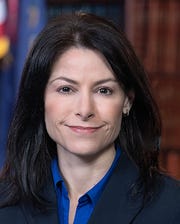
Victoria McCasey of Holly and Randy Asplund of Ann Arbor protest outside a Lansing press conference announcing a statewide elder abuse task force on Monday, March 25, 2019. The small group protesting Monday expressed hope that the task force launched by Attorney General Dana Nessel would investigate the legal system around guardianships, conservatorships and estates. (Photo: Beth LeBlanc/The Detroit News)
Lansing — A statewide task force will address the legal, social and judicial shortfalls that have in some part allowed for the abuse of roughly 73,000 older adults in Michigan.

The Elder Abuse Task Force announced Monday by Attorney General Dana Nessel has support from prosecutors and law enforcement, probate courts, health care associations and elder law groups. The task force will include members of the Michigan Supreme Court, the governor’s office, county prosecutors, state and federal lawmakers, advocacy groups and 13 people from the Attorney General's office.

Other task forces in 1998 and 2007 studied the issue, Nessel said, but gaps remain prevalent throughout a social and legal system that is supposed to protect vulnerable and elderly adults.

Nessel promised the task force would produce real results and launched the group with nine initiatives that would tighten guardianship rules, require more training for law enforcement and adult protective services personnel, establish basic rights for families, mandate reporting by banks of suspected exploitation and create multi-disciplinary teams at the local level. When the group attains those goals, it will move on to other initiatives, she said.

“This has been studied to death,” Nessel said. “To me, it was time for some action.”

The task force will hold public hearings across the state to gather public input starting with a tentatively scheduled meeting on June 14 in Kent County, Nessel said. In addition, people who suspect elder abuse or are victims of such can call (800) 24-ABUSE (22873) or report it online at mi.gov/elderabuse.

A small group of protesters gathered outside the G. Mennen Williams Building in Lansing prior to the press conference. The group expressed hope that the task force would do more than focus on families as culprits in elder abuse, but also explore potential corruption in the legal system surrounding guardianships, conservatorships and estates.  

“They are stealing our assets," Victoria McCasey of Holly said of the state's current public administrator system. "And what’s sad about it is that we, the family members, have to take our life savings to fight to get what’s rightfully ours back,” 

Nessel is looking closely at the state public administrator system, which allows the attorney general to appoint county public administrators responsible for settling an estate when someone dies with no will or apparent heir, her spokesman Kelly Rossman-McKinney said. 

The task force also expects to work with the court and legal systems to ensure better protections for wards receiving guardians and create regular reviews of each guardianship, Supreme Court Justice Richard Bernstein said.

At the end of 2018, 32,137 adults had full or limited legal guardians, according to the State Court Administrative Office. Of the 9,285 guardianship petitions filed last year, 7,337 were granted, 1,766 were withdrawn or dismissed and 116 were denied.

Judges need to do a better job assessing those arrangements and asking the right questions to suss out the qualifications and intentions of each guardian, Bernstein said.

“It is absolutely essential that the judges make sure that the ward has a voice,” he said.

The Attorney General’s Office has collaborated on dozens of elderly financial exploitation investigations in the past two years. But with one in 10 elderly expected to be victims of such abuse, a concerted effort was needed to identify crimes that often go unreported, Nessel said.

Like domestic violence cases, elder abuse incidents often involve a family member or person of authority with emotion ties to the victim, making it difficult for the victim to come forward, she said.

“The good Lord willing, we’re all going to be elderly one day,” Nessel said. “This affects every single one of us and that is why it’s so incredibly important.”


Full Article & Source:
Elder abuse group expected to address guardianships, financial fraud, family rights 

Wednesday, April 19, 2017

Caregivers at Risk of Financial Fraud, Scams Targeting Elderly

Elder financial abuse and fraud is typically underreported and costs older Americans $36.5 billion per year, according to research from retirement robo-adviser firm True Link.

And it doesn’t just harm retirees and seniors, but also those who take care of them, as elder financial abuse has a profound financial impact on the caregivers of those who are victimized -- and can have a negative impact on their ability to save for their own retirement, according to a new study from Allianz Life Insurance Company of North America.

“As America’s population ages, more people will be caregivers,” said Allianz Life President and CEO Walter White. “Unfortunately, these caregivers will be at risk of experiencing the negative effects of elder financial abuse perpetrated against the person they’re caring for. While a focus on protecting seniors from financial exploitation is vital, we also need to provide resources to caregivers who increasingly will become collateral victims of the elder abuse.”

Katie Libbe, vice president of Consumer Insights for Allianz Life Insurance Company of North America, discussed the study with Fox Business and offered tips on how caregivers can protect themselves.

Boomer: Why are caregivers likely to experience a financial impact when their loved one is a victim of financial abuse?

Libbe: It is well established that elder financial abuse has a significant effect on the finances of elder victims. In fact, our recent Safeguarding Our Seniors Study found that each incident costs them an average of $36,000. Perhaps more surprising, however, is that this abuse has equally negative effects on the finances of caregivers, also costing them $36,000 on average.

Although we were surprised that this number was so high, it’s understandable given the responsibility caregivers feel to protect their elders and help manage all aspects of their lives, including finances.

Three-quarters of current caregivers in the study said that providing care for their elder is almost like a full time job, so it’s logical that caregivers would take on a great deal of the financial burden necessary to help make their elder whole again after a financial abuse incident.

Boomer: Why are those providing care for past victims spending more than those caring for elders with no history of financial abuse?

Libbe: Even without any history of financial abuse, we know that caregiving is expensive. The study found that the average caregiver spends more than $7,000 per year and provides more than 10 hours per week in noncash support (driving to appointments, paying for groceries and supplies, delivering meals, social engagement, etc.). Furthermore, less than half of current caregivers receive some form of financial assistance for that support.

When you add a calamity like elder financial abuse to this equation, it’s important to understand that the elder is now behind the eight ball, facing an uphill battle to stay afloat and manage daily expenses. So, it stands to reason that meeting financial obligations may be more difficult as that elder tries to dig themselves out of the financial hole that they’ve created. As a result, it’s common for caregivers to spend more – 56 percent, or $3,000 more each year on average – than caregivers caring for elders with no history of financial abuse.

Boomer: What drives the cost of care for these seniors that have been abused?

Libbe: In cases where the elder is a past victim, the need for those elders to receive some sort of direct financial assistance from their caregiver is more than double that of situations where financial abuse has not occurred. It’s difficult to say exactly what is driving these costs, but it’s safe to assume that it takes a significant amount of time, effort and money to get a past victim back to square one.

Another unfortunate aspect of elder financial abuse is that once a victim is on the radar of an abuser, that elder is very likely to be targeted again. In fact, four in 10 of the caregivers in our study confirmed that their elder has experienced financial abuse more than once. This is bound to have an effect on overall cost of care, putting both the elder and the caregiver in a more precarious financial position.

Boomer: How does caring for victims impact the caregiver’s ability to save for their own retirement?

Libbe: Two-thirds of active caregivers said the cost of providing care is having a significant effect on their finances, and they worry about having enough money to retire. As noted before, these caregivers feel a tremendous responsibility to manage every aspect of their elders’ lives, to the point that the vast majority say they’re often overwhelmed by the task. It’s also quite possible that caregiving is impacting their ability to work full time, which will have a negative effect on their retirement savings.

Once again, when past elder financial abuse is part of the equation, that anxiety is even greater. Nearly 80 percent of caregivers responsible for a past victim indicated concern about the effect caregiving is having on both their current finances and their retirement savings.

In addition, this financial stress has created a moral gray area that many caregivers are constantly struggling to reconcile. Although the majority of current caregivers agree that it’s okay to accept some of the elder’s money to cover expenses, if offered, significantly fewer agree that it’s okay for a caregiver to reimburse themselves for any expenses without informing the elder every time.

Boomer: What can caregiver’s do to better protect their financial security in retirement?

Libbe: There are three essential steps that caregivers should take to protect their own financial security in retirement: 1) Start planning now and build your emergency fund; 2) Make sure you understand your elder’s health insurance ; and 3) Talk to your elder about their finances, including a third party in the discussion.

If you are a caregiver now or know you will likely be one in the future, it’s crucial to have a long term financial plan that addresses your role as caregiver and the budget necessary to fulfill that role for as long as necessary. But, as our study reveals, it’s probably not enough to save only for expected costs. Boosting your emergency fund is a good idea in order to help deal with the unexpected, including the fallout from elder financial abuse.

In addition to understanding their own finances, it’s crucial that caregivers understand their elder’s health insurance and everything that Medicare covers. It may be possible to qualify for respite care or home health care under Medicare, which could provide significant cost savings. The good news is that more than 90 percent of current caregivers in the study said they were confident in understanding health insurance and Medicare rules.

Another smart move is for caregivers to begin having discussions with their elder about their finances – today. Seven in 10 caregivers are currently talking to their elder about financial abuse and scams, but many feel these discussions are challenging. As a result, they are hesitant to have frequent conversations for a variety of reasons, including the belief that it’s none of their business, feeling that the elder is capable of managing their own finances, or belief that it makes the elder uncomfortable.

Full Article & Source:
Caregivers at Risk of Financial Fraud, Scams Targeting Elderly

Saturday, July 9, 2016

Four Ways To Bust Elder Financial Fraud


It’s not hard to sniff out how swindlers prey upon the elderly. They know they respond to mail, phone and front-door solicitations. Older people like to talk to people they don’t know.

Holidays are a good time to talk about scam merchants. Families get together and it’s easier to talk about money stuff over beer and bbq.

Swindlers prey upon fear and insecurity. They blanket a neighborhood after a storm, offering to do “free storm damage asssessment.” They’ll pose as IRS agents or bill collectors to collect fake debts.

There’s an art to elder financial fraud and it’s practiced every day. If you know the danger signals, you can ward off these scamsters.

The most basic defense is a recognition that when people get into their eighth decades and beyond, they process information differently. While they may have perfect memories of something that happened 60 years ago, it’s difficult for them to make complex decisions, including financial ones.

This cognitive decline in “executive function” has been noted by neuroscientists. The part of the brain responsible for decisionmaking doesn’t work as well as it did 30 years ago. It’s a natural consequence of aging.

“While there are some `super agers’ in the population (individuals in their 80s and beyond who function at much younger intellectual levels),” reports the SIFMA Senior Investor Protection Quarterly, “the vast majority of adults will experience at least some isolated cognitive decline associated with typical brain aging as they progress through their sixth, seventh, and eighth decades (or beyond).

Cognitive change in older adults is uneven and dependent on many factors, including educational background, overall intellectual capacity, health conditions, and lifestyle habits.”  (Continue Reading)

Full Article & Source:
Four Ways To Bust Elder Financial Fraud

Thursday, July 7, 2016

Attorney General increases funds to combat guardianship abuse


Isolation. Double-billing. Entire life savings spent with no oversight.
That's what we found in a Contact 13 Investigation of our guardianship system. 

Nevada's Attorney General is stepping up to fight the abuse

Adam Laxalt wants $400,000 sent to the Legal Aid of Southern Nevada to help fund pro bono work for vulnerable exploited by those who are supposed to protect them. 

The program is part of a larger new unit in the AG's office to combat financial fraud and it will not cost taxpayers as funding comes from mortgage settlement funds.

Full Article & Source:
Attorney General increases funds to combat guardianship abuse