Showing posts with label information. Show all posts

Monday, June 17, 2024

Alzheimer's Isn't The Only Form of Dementia. An Expert Explains The Differences.

By Nikki-Anne Wilson

Changes in thinking and memory as we age can occur for a variety of reasons. These changes are not always cause for concern. But when they begin to disrupt daily life, it could indicate the first signs of dementia.

Another term that can crop up when we're talking about dementia is Alzheimer's disease, or Alzheimer's for short.

So what's the difference?

What is dementia?

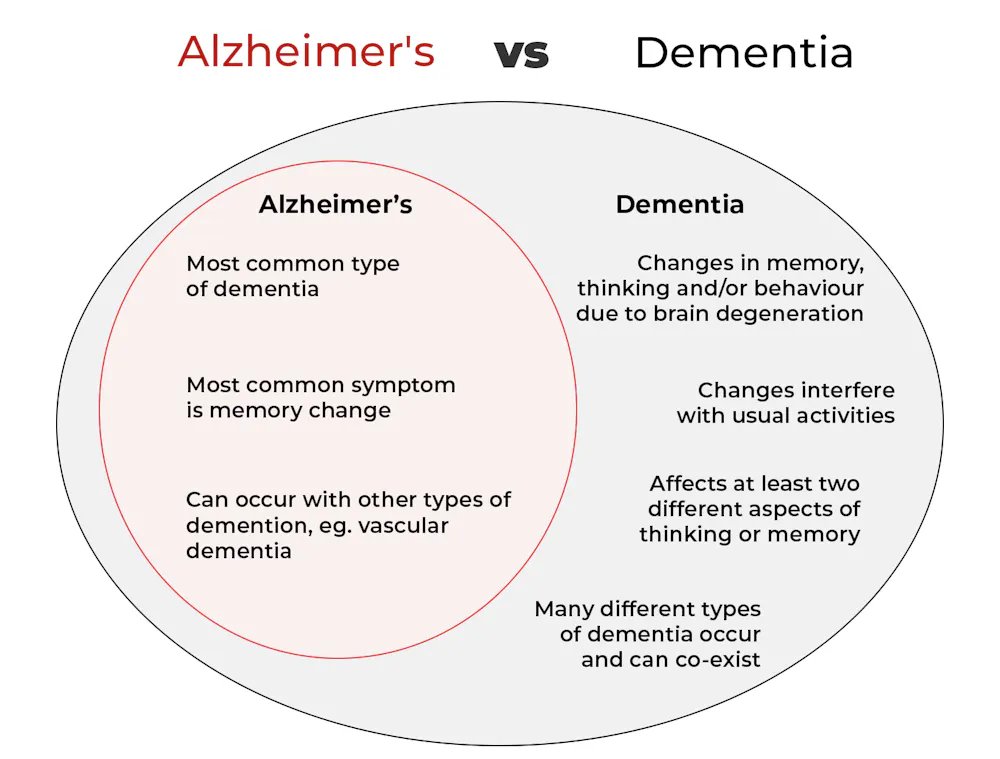
Dementia is an umbrella term used to describe a range of syndromes that result in changes in memory, thinking and/or behaviour due to degeneration in the brain.

To meet the criteria for dementia these changes must be sufficiently pronounced to interfere with usual activities and are present in at least two different aspects of thinking or memory.

For example, someone might have trouble remembering to pay bills and become lost in previously familiar areas.

It's less-well known that dementia can also occur in children. This is due to progressive brain damage associated with more than 100 rare genetic disorders. This can result in similar cognitive changes as we see in adults.

So what's Alzheimer's then?

Alzheimer's is the most common type of dementia, accounting for about 60-80% of cases.

So it's not surprising many people use the terms dementia and Alzheimer's interchangeably.

Changes in memory are the most common sign of Alzheimer's and it's what the public most often associates with it. For instance, someone with Alzheimer's may have trouble recalling recent events or keeping track of what day or month it is.

We still don't know exactly what causes Alzheimer's. However, we do know it is associated with a build-up in the brain of two types of protein called amyloid-β and tau.

While we all have some amyloid-β, when too much builds up in the brain it clumps together, forming plaques in the spaces between cells. These plaques cause damage (inflammation) to surrounding brain cells and leads to disruption in tau.

Tau forms part of the structure of brain cells but in Alzheimer's tau proteins become "tangled". This is toxic to the cells, causing them to die. A feedback loop is then thought to occur, triggering production of more amyloid-β and more abnormal tau, perpetuating damage to brain cells.

Alzheimer's can also occur with other forms of dementia, such as vascular dementia. This combination is the most common example of a mixed dementia.
Vascular dementia

The second most common type of dementia is vascular dementia. This results from disrupted blood flow to the brain.

Because the changes in blood flow can occur throughout the brain, signs of vascular dementia can be more varied than the memory changes typically seen in Alzheimer's.

For example, vascular dementia may present as general confusion, slowed thinking, or difficulty organising thoughts and actions.

Your risk of vascular dementia is greater if you have heart disease or high blood pressure.

Frontotemporal dementia

Some people may not realise that dementia can also affect behaviour and/or language. We see this in different forms of frontotemporal dementia.

The behavioural variant of frontotemporal dementia is the second most common form (after Alzheimer's disease) of younger onset dementia (dementia in people under 65).

People living with this may have difficulties in interpreting and appropriately responding to social situations. For example, they may make uncharacteristically rude or offensive comments or invade people's personal space.

Semantic dementia is also a type of frontotemporal dementia and results in difficulty with understanding the meaning of words and naming everyday objects.

Dementia with Lewy bodies

Dementia with Lewy bodies results from dysregulation of a different type of protein known as α-synuclein. We often see this in people with Parkinson's disease.

So people with this type of dementia may have altered movement, such as a stooped posture, shuffling walk, and changes in handwriting. Other symptoms include changes in alertness, visual hallucinations and significant disruption to sleep.

Do I have dementia and if so, which type?

If you or someone close to you is concerned, the first thing to do is to speak to your GP. They will likely ask you some questions about your medical history and what changes you have noticed.

Sometimes it might not be clear if you have dementia when you first speak to your doctor. They may suggest you watch for changes or they may refer you to a specialist for further tests.

There is no single test to clearly show if you have dementia, or the type of dementia. A diagnosis comes after multiple tests, including brain scans, tests of memory and thinking, and consideration of how these changes impact your daily life.

Not knowing what is happening can be a challenging time so it is important to speak to someone about how you are feeling or to reach out to support services.

Dementia is diverse

As well as the different forms of dementia, everyone experiences dementia in different ways. For example, the speed dementia progresses varies a lot from person to person. Some people will continue to live well with dementia for some time while others may decline more quickly.

There is still significant stigma surrounding dementia. So by learning more about the various types of dementia and understanding differences in how dementia progresses we can all do our part to create a more dementia-friendly community.

Full Article & Source:
Alzheimer's Isn't The Only Form of Dementia. An Expert Explains The Differences.

Tuesday, June 4, 2024

The Costs of the Rising Cost of Long-Term Care

By Lee Pruitt

Do you have a family member who is receiving some form of long-term care? If you don’t, the chances are good that someday you will – and that day may not be too far away. As the U.S. population ages and life expectancies increase, the need for long-term care is becoming an important consideration for many individuals and families.

Long-term care refers to a range of services and support one may need to meet their personal care needs over an extended period. This type of care may be available in a person’s home, at an assisted living facility, or at a nursing home. These services can range from help around the house to 24-hour care in a nursing home or memory care unit.

Though the cost of long-term care varies widely across the United States, it has been rising and will continue to rise. According to Genworth Financial, the current average cost of a private room in a nursing home is $108,405 per year.

Long-Term Care Payments or Retirement Savings?

A recent survey conducted by The Harris Poll on behalf of Nationwide asked 1,334 U.S. adults 28 years old or older about balancing caregiving obligations and their long-term financial situations. Results revealed that many adults are sacrificing long-term financial well-being to give or pay for long-term care for parents or other loved ones.

Some people leave good-paying jobs to take lower-paying jobs with more flexibility so they can care for loved ones with long-term care needs. This can derail a person’s career and cost them a significant amount of earning potential in the long run. Other people may be able to keep their full-time jobs but pay out-of-pocket expenses for which they will never get reimbursed. The Harris Poll/Nationwide survey found that people pay an average of $338 per month for caregiving expenses.

The survey also found that more than half (56 percent) of respondents said they are willing to borrow from their retirement accounts to help pay for long-term care for a loved one. Borrowing from a retirement account can drastically reduce the account’s ability to generate enough funds for retirement. Nearly half (43 percent) of the survey’s respondents are concerned that caregiving expenses will keep them from retiring.

Long-Term Care Planning

Though the cost of caregiving can have a significant effect on a family’s finances, only 17 percent of the survey respondents said they have discussed long-term care and its costs with a financial professional. Of the adults surveyed, 30 percent said that their financial professional has not brought up the subject of long-term care planning with them.

According to Holly Snyder, president of Nationwide’s Life Insurance business, long-term care planning is often a complicated and emotional process and can have a significant effect on a family’s financial well-being. Nationwide’s data show that Americans would benefit from being more proactive with their financial planning, especially with regard to planning for long-term care costs.

Long-Term Care Insurance

A good way to plan for the costs of long-term care is to invest in long-term care insurance. Long-term care insurance (LTCI) is a type of insurance designed to cover the costs of long-term care services. Individuals with LTCI usually have more options for the type of care they receive and where they receive the care. Having long-term care insurance can also reduce emotional and financial stress on families, since they know that proper care will be accessible when it is needed.

Unfortunately, too many Americans are not taking full advantage of strategies to help them manage and mitigate long-term care costs, such as LTCI. According to the survey, only one in five adults said they have long-term care insurance. Of those who have not purchased this type of insurance, nearly half (49 percent) said the perceived high cost of the insurance was a deterrent.

The Cost of LTCI

The cost of long-term care insurance varies widely based on several factors:

  • Age and Health: Premiums are generally lower if you purchase a policy at a younger age and when you are in good health.
  • Gender: Women typically pay more than men because they tend to live longer and are more likely to need long-term care.
  • Marital Status: Married couples often receive discounts on their premiums.
  • Benefit Amount and Duration: The cost is influenced by the daily or monthly benefit amount you choose and the length of time benefits will be paid (for example, three years, five years, or for a lifetime).
  • Elimination Period: This is the waiting period before benefits begin. A longer elimination period usually reduces premiums.
  • Inflation Protection: Adding inflation protection increases the premium but ensures that benefits keep pace with the rising costs of care.

The cost of long-term care insurance can also vary significantly depending on where a person lives. This can add another challenging factor when people begin to think about purchasing a long-term care insurance policy. According to the survey, people often overestimate the cost of LTCI. When the survey participants were presented with a sample of an LTCI policy, 20 percent guessed the policy cost more than $500 per month when, in fact, the policy cost $130 per month.

According to Forbes, the average annual cost of long-term care insurance in the U.S. in 2023 was $1,200 for a 60-year-old man and $1,960 for a 60-year-old woman. The cost is lower for younger individuals and higher for older individuals.

Seek Expert Advice Before You Purchase an LTCI Policy

Long-term care insurance offers a way to safeguard against the high costs of long-term care, providing financial protection, choice, and peace of mind. However, it’s essential to carefully consider the cost, benefits, and your unique circumstances before purchasing a policy. Consulting with an elder law attorney, financial advisor, or insurance specialist can help in making an informed decision tailored to individual needs and financial situations.

Contact an experienced elder law attorney near you today to talk further about your options for affording long-term care. They can walk you through the options that may be available to you and help you understand the benefits and costs.

Full Article & Source:
The Costs of the Rising Cost of Long-Term Care

Sunday, July 30, 2023

Pro-Life and Other Resources for Help and Information to Protect Human Life

by Nancy Valko

There are many pro-life organizations that can help you or someone you are trying to help find information, referrals and/or other help with crucial decisions about vulnerable lives from conception to death. Here are many of them.

I am personally on the board of two of these organizations: HALO (Healthcare Advocacy and Leadership Organization) and National Association of Pro-life Nurses (NAPN) and have personally worked with many of the organizations on this list.

NATIONAL PRO-LIFE ORGANIZATIONS

The National Right to Life (NRLC) was formed in 1968 and is the largest and oldest pro-life organization in the United States. The mission of NRLC is “to protect and defend the most fundamental right of humankind, the right to life of every innocent human being from the beginning of life to natural death.” They have over 3,000 local chapters, which can be found in all 50 states.

American United for Life -“We strive for the day when all are welcomed throughout life and protected in law.”

American Life League-“Building a Culture of Life”

Charlotte Lozier Institute-“America’s #1 source for science, data, and medical research on the value of human life.”

Students for Life– “Impacting Campuses & Communities”

PRO-LIFE SITE TO HELP BOTH PATIENTS AND FAMILIES NAVIGATE THE HEALTHCARE SYSTEM

HALO (Healthcare Advocacy and Leadership Organization) -“Defending the lives and safety of persons facing the grave consequences of healthcare rationing and unethical practices, especially those at risk of euthanasia and assisted suicide.”

Please visit the Resources section that includes crucial information about “living wills”, ventilators, etc. and “is designed to help YOU navigate the complicated and sometimes perilous healthcare system. “

PRENANCY RESOURCE CENTERS

Carenet-“Acknowledging that every human life begins at conception and is worthy of protection, Care Net offers compassion, hope, and help to anyone considering abortion by presenting them with realistic alternatives and Christ-centered support through our life-affirming network of pregnancy centers, churches, organizations, and individuals. “

Birthright-“Birthright is a non-profit charitable organization that has been providing love and support for over 50 years to women facing unplanned pregnancies” and offers “free non-judgmental support 24/7

Abortion Pill Reversal-“Have you taken the first dose of the abortion pill? Do you regret your decision and wish you could reverse the effects of the abortion pill? We’re here for you!” ” Call our 24/7 Helpline: 1-877-558-0333″

Perinatal Hospice & Palliative Care-Continuing Your Pregnancy -“When Your Baby’s Life Is Expected to Be Brief “

PRO-LIFE MEDICAL AND NURSING ORGANIZATIONS

American Association of Pro-Life Obstetricians and Gynecologists  ~   Its membership is 85% OB/GYNS, about 15% Family Medicine, ER and other physicians who deal with reproductive health. It includes midwives, nurse practitioners, etc. who also deal with reproductive health, including pregnancy care center organizations. Membership helps to keep them abreast of what is happening in reproductive health.

American College of Pediatricians  –  “Pediatricians and Family Medicine physicians who deal in pediatrics, as well as other medical professionals who work in pediatrics.”

Association of American Physicians and Surgeons  -“Physicians of all specialties.”

Christian Medical and Dental Society  -“Christian physicians of any denomination, and Advanced Practice Clinicians of all specialties.”

National Association of Pro-life Nurses (NAPN)-We care for all lives from conception to the end of life. I encourage all nurses to join and every pro-life person to also visit our Facebook page for more news.

PRO-LIFE GROUPS FOR HELP AFTER ABORTION

Project Rachel – “It’s normal to grieve a pregnancy loss, including the loss of a child by abortion. It can form a hole in one’s heart, a hole so deep that sometimes it seems nothing can fill the emptiness. You are not alone.”

Project Joseph (St. Louis)-“Project Joseph – “a men’s only program through our Abortion Healing Ministry, provides healing and hope to men wounded by abortion.”      

 Elliott Institute was founded in 1988 by Dr. David Reardon, who conducts scientific, evidence-based research on abortion’s effects on women, men, families, and societies. They invest in research, education, and outreach. They are also dedicated to advocacy for women traumatized by abortion and how to provide healing support.

In addition, the Elliott Institute raises awareness about the injustices of coerced and forced abortions, referring to abortion as the “unchoice.”

HELP FOR PEOPLE CONSIDERING SUICIDE

988 Suicide & Crisis Lifeline-“The 988 Lifeline is a national network of local crisis centers that provides free and confidential emotional support to people in suicidal crisis or emotional distress 24 hours a day, 7 days a week in the United States. We’re committed to improving crisis services and advancing suicide prevention by empowering individuals, advancing professional best practices, and building awareness.”

PRO-LIFE LEGAL GROUPS:

Center Against Forced Abortions – The Justice Foundation
The Justice Foundation’s “Center Against Forced Abortions” or “CAFA”- “was created to provide educational resources to empower women who are being forced, unduly pressured, or coerced into an unwanted abortion.”

Life Legal Defense Foundation-“Our mission is to give innocent and helpless human beings of any age, particularly babies in the womb, a trained and committed defense against the threat of death, and to support their advocates in the nation’s courtrooms.”

The Alliance Defending Freedom– “ADF is the world’s largest legal organization committed to protecting religious freedom, free speech, the sanctity of life, marriage and family, and parental rights.”

Thomas More Society – “For decades, we’ve passionately championed the causes of everyday individuals confronting remarkable injustices, from the sidewalks and town squares to the Supreme Court.”

American Center for Law and Justice-“Led by Chief Counsel Jay Sekulow, the ACLJ focuses on constitutional and human rights law worldwide. Based in Washington, D.C., with affiliated offices in Israel, Russia, Kenya, France, Pakistan, and Zimbabwe, the ACLJ is pro-life and dedicated to the ideal that religious freedom and freedom of speech are inalienable, God-given rights for all people. The ACLJ engages legal, legislative, and cultural issues by implementing an effective strategy of advocacy, education, and litigation that includes representing clients before the Supreme Court of the United States and international tribunals around the globe.”

DISABILITY GROUPS (some not formally against abortion)

The National Down Syndrome Congress on abortion-“National Down Syndrome Congress (NDSC) has long held that abortion for the sole reason that a fetus has Down syndrome borders on eugenics...We believe a better approach is to require healthcare providers to provide their patients with accurate, up-to-date information about the
realities of having Down syndrome in contemporary America; and, to promote full, meaningful inclusion of all people – with and without disabilities – in every aspect of society.” (Emphasis added)

National Down Syndrome Adoption Network-“Our mission is to ensure that every child born with Down syndrome has the opportunity to grow up in a loving family.”

Trisomy 18 Foundation– “Trisomy 18 is a life-threatening genetic disorder…We have the resources and answers you need to understand your child’s diagnosis and make informed decisions about their health. We can also connect you to other families in our community who have faced these same challenges.”

Simon’s Law -“Simon’s Law says, “NO! No child’s medical chart should have a do not resuscitate order (DNR) and/or the withholding of life sustaining treatments without parental knowledge or consent…No child should be denied life sustaining treatment withheld by a medical professional or insurance provider. Our intent is to make each state a “Simon State” by stopping secret do not resuscitate (DNR) orders!”

Not dead Yet -“is “a national, grassroots disability rights group that opposes legalization of assisted suicide and euthanasia as deadly forms of discrimination.” (Emphasis added)

Full Article & Source:
Pro-Life and Other Resources for Help and Information to Protect Human Life