A 9Wants to Know investigation found on any given day, dozens of people suffering from Alzheimer's and other mental disabilities are stranded in Denver-area hospitals because they have nobody to take care of them. 9NEWS surveyed hospitals on a single day in September and found 113 people were stranded in metro area hospitals even though they no longer need acute medical care.
DENVER — Within the bustle and organized chaos of Denver's massive airport, an 80-year-old man with Alzheimer's disease named Jerry Ellingsen was found wandering alone after traveling with his small dog from Fort Myers, Florida.
Jerry didn’t know where he was or why he was in Denver.
Police tried contacting his daughter and wife, neither of whom would pick him up, so officers were forced to call an ambulance that took him to a nearby hospital.
A three-month long 9Wants to Know investigation is uncovering a growing health care epidemic where hundreds of people like Jerry are abandoned every year at metro-area hospitals. The epidemic is costing hospitals and in some cases, taxpayers, millions of dollars a year.
"I think the thoughtfulness is that this isn’t somebody else's problem. It’s all of our problems. And as we age we need to better prepare, and we need to make sure our parents are prepared to address this possible challenge,” said Doug Muir, who oversees behavior health at Porter Adventist Hospital.
“At the end of the day, this is our loved ones that we are talking about,” Muir said. “So, as a society and community, we need to demand better outcomes.”
Done with her father
A United Airlines supervisor called police after finding Jerry confused and alone with only a small dog near an exit door outside the ticket counter. A police report indicates a United flight attendant described Jerry as possibly having Alzheimer’s, so they looked up the woman who checked him into his flight and ended up talking to his daughter.
His daughter, Pamela Roth of Fort Myers, told the United employee she was “done with her father” and did not want to be contacted again, the police report said.
“He was very confused about general details of his life to include where he was at, where he was coming from, who he was coming to visit and his family members’ names,” one Denver police officer noted in a report after he spoke with Jerry.
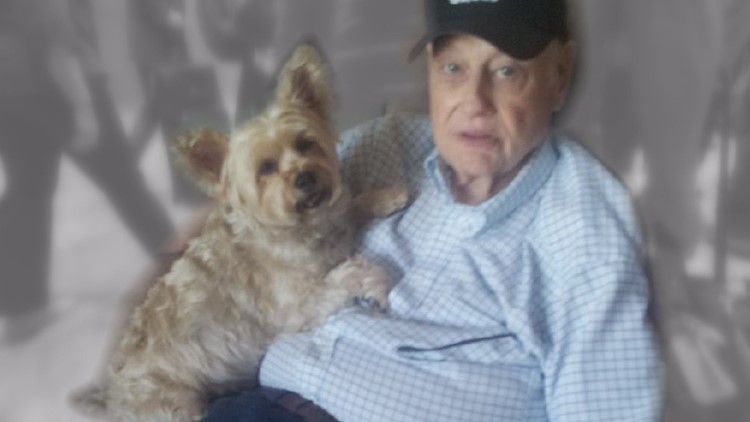
9Wants to Know obtained police reports from Denver police and the Lee County Sheriff's Office in Florida that paint a picture of how law enforcement officers struggled with how to help Jerry.
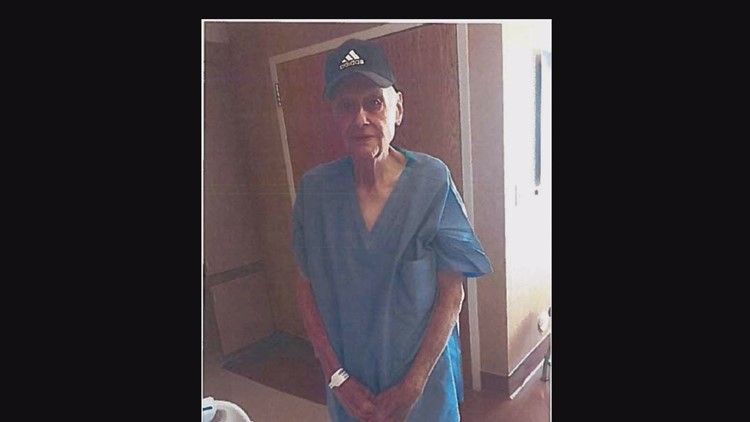
Police pieced together a family dynamic that resulted in Jerry’s abandonment and eventual six-month-long stay in a local hospital.
“Drop my dad at a homeless shelter”
Hours before Jerry's arrival in Denver, his daughter - who had power of attorney at the time - put him on that one-way flight from Fort Myers. She intended for her father to live with his wife, Jackie Ellingsen of Highlands Ranch.
Police records show Pamela didn’t give much warning to Jackie that Jerry was coming to Colorado.
Twenty four hours before the flight, police records show Pamela texted Jerry’s wife in part, “my dad and Corky [the dog] will arrive on a flight in Denver tomorrow afternoon.”
Police tracked down his estranged wife over the phone. She still refused to pick up her husband.
“I have no use for him. I mean a man that wants to kill me, come on. I don’t want to live with him,” Jackie said to a Denver police detective during a recorded phone call.
She shared with police another text message she received from Pamela that said in part, “If you need to drop my dad at a homeless shelter, it’s fine. I just want him to have a roof over his head. Please.”
According to the police report, Jackie agreed to take care of Jerry’s dog, Corky, but would not agree to take her husband home.
Police had Jerry taken to University of Colorado Hospital. It was their only option.
Jerry Ellingsen among 113 at-risk adults stranded in September
Jerry’s story sparked 9Wants to Know’s investigation into at-risk adults who end up languishing in hospitals because they have no family to take care of them or a facility willing to take them in due to a lack of space, finances, or appropriate scope of care.
Laws require hospitals to keep admitted at-risk adults who’ve been abandoned until caseworkers can find safe placement for them, which can lead to extended stays for months and even years.
9Wants to Know conducted a point-in-time survey with the help of the Colorado Hospital Association because hospitals do not keep track of stays by people like Jerry.
Nineteen metro area hospitals participated in the survey, which revealed on a single day in September 113 at-risk adults were stuck in the system, beyond medical necessity.
Of those patients, about 30 percent had conditions like Alzheimer's and dementia. Most of the stranded people were men over 40 years old.
Can't see the graphic above? Click or tap here
The longest stay among them was 577 days.
“I think 113 is pretty significant. I mean these are individuals who don’t have to be in a hospital setting,” said Amber Burkhart of the Colorado Hospital Association. “This is a system-wide failure and we can’t fault any one individual for the failure of our system as a whole.”
Where do patients come from?
Those who end up stranded in hospitals come from many different places, including from homes where family caregivers have burned out or money has run out. According to the 9Wants to Know survey, of the 113 people stranded at area hospitals, 30 were abandoned by family members.
Some of the stranded are homeless and come from the streets.
Thirty-one people were sent to the hospital by nursing facilities, according to the survey. Hospital caseworkers told 9NEWS nursing homes sometimes send patients to emergency rooms when they say the individuals need care they cannot provide.
Some hospitals, like Lutheran Hospital, have full-time caseworkers who spend their day trying to connect stranded patients to family members willing to take them in. Caseworkers also try to get patients on Medicaid or into facilities that have bed space.
“I think about the abandoned ones and it’s really hard,” said Stephanie Luck, a Lutheran Hospital caseworker. “I don’t want to ever feel abandoned in my life. I hope that every day when I leave work, that I did the best for that patient.”
Who Pays?
Hospitals end up bearing the costs, which in Colorado, can be to $2,500 per day, per patient. The financial burden is then passed to consumers and taxpayers if the hospital is government-owned and operated.
At Denver Health, there is a special wing called the Oasis Unit that houses around 30 at-risk adults on any given day. Denver Health reports it expected to spend $18 million on the Oasis Unit in 2018.
“It is heartbreaking and I think the ones that are the most heartbreaking are the ones who don’t know who they are or where they came from,” said Natalee Mejia, a nurse in the Oasis Unit.
The longest stay she recalls in the unit was two years. Anecdotally, Denver Health officials cited a case that resulted in a stay of eight years in the Oasis Unit.
No charges in Jerry’s case, whereabouts unknown
In the case of Jerry, Denver police handed evidence over to the Lee County Sheriff’s Office in Florida for a potential elderly abuse case against his daughter Pamela.
Prosecutors in Florida declined to file charges in the case against Pamela, describing the case as “legally insufficient.”
Jerry is no longer at the University of Colorado Hospital. Privacy laws prohibit hospital officials from releasing information about where Jerry went.
Jerry’s sister, who lives in Michigan, told 9Wants to Know she believes Jerry is under the care of a private company in Colorado, but she doesn’t know exactly where her brother has been taken.

Jerry’s niece expressed dismay at what has happened.
“I cannot believe they did that. I’m horrified. I’m disappointed that somebody can even be that low to do that to their father,” Kari McConnell said.
9NEWS reached out to Jerry's wife, Jackie Ellingsen, and talked to her multiple times. She declined to comment on the record.
9Wants to Know also visited Pamela in Florida, hoping to better understand what led to her putting her father on that flight alone. She never responded to such requests, even after a visit to her home and work.
9Wants to Know did confirm Pamela currently works for a company that specializes in senior home care.
The irony of the situation isn’t lost on Jerry’s sister-in-law, Judy Ellingsen.
“Under the circumstance and what’s her line of work with the elderly, she should be punished,” Judy said. “I’m sorry. Nobody does that to anybody.”
Full Article & Source:
Man with Alzheimer’s sent on one-way flight to Denver among scores of patients stranded in hospitals