Those who work in professional services are often best placed to spot early warning signs, allowing action to be taken
by Rachel Waller
The
Financial Conduct Authority recently revealed survey data showing that
just four in ten vulnerable customers had made financial services
providers aware of their specific needs. It also found a lack of
training to address such needs, and ineffective monitoring once
identified.
Yet
ironically, those employed in professional services are often best
placed to spot signs of financial abuse — and without their vigilance,
the perpetrators can escape scrutiny.
And
financial abuse is increasing. Hourglass, a specialist charity that
targets abuse and exploitation of older people, cites a nearly 50 per
cent rise in calls from victims. Likewise, the Society of Trust and
Estate Practitioners (Step) reports that 70 per cent of its UK members,
including solicitors and those helping clients with estate and wealth
planning, have observed instances of actual or suspected financial
abuse. About 40 per cent of those surveyed by the society said that
instances of financial abuse have increased in the past two years.
In
my practice I see daily the devastating impact of financial abuse,
commonly including misuse of powers of attorney and coerced debt. Once
the signs have been spotted, there are several steps that can be taken
to protect victims and recover funds.
However, victims are often older people
and there are cases where the financial abuse does not come to light
until after they have died. Although legal action can then be taken to
recover assets on behalf of the estate, that offers no benefit to those
who suffered the abuse.
It
is incumbent on all of us to do what we can for those around us who are
less able to protect themselves from abuse. Step’s “spot the signs”
campaign aims to help identify financial abuse. Signs can include lack
of financial records from a care home, a new person showing unusual
interest in a person’s spending habits, isolation from friends and
family, a decline in living standards, assets being suddenly transferred
without a clear reason, or even a sudden betterment of lifestyle of
someone close to the vulnerable person. If spotted, action can then be
taken.
The
financial watchdog’s report also highlights measures that professionals
who work in the financial sector and professional services can take.
Essentially, it is vital that they are trained to spot the signs of
financial abuse, so that action can be taken to safeguard victims as
soon as possible.
A new report found guardians face little oversight while wielding broad power over incapacitated adults
By Kate Masters
Some of Virginia’s most at-risk adults aren’t sufficiently protected by the state’s private guardianship system, according to a new report from a legislative watchdog agency.
The findings, detailed in a Monday hearing by the Joint Legislative Audit and Review Commission, largely affirm years of concerns from many advocates and family members. A 2019 investigation
by the Richmond Times-Dispatch also detailed numerous faults within the
system, which is subject to little oversight but has broad discretion
to remove the decision-making rights of adults in its care.
“The state’s role is woefully
inadequate, given that these guardians are responsible for some of the
most vulnerable Virginians,” JLARC Director Hal Greer told legislators
at the meeting. “The private system lacks meaningful standards,
requirements or accountability to help ensure that thousands of adults
are being adequately served.”
Like
other states, Virginia developed its guardianship process to help
so-called “incapacitated adults” — those 18 years or older who are found
to be incapable of meeting
their own essential needs. The process begins with a circuit court
petition — which can be filed by an individual or an “entity” —
according to the JLARC report, and judges ultimately decide whether a
guardian will be appointed.
Of
the roughly 12,000 adults under guardianship care, 1,000 are served by
the state’s publicly funded system, which has been described as a
national model. But Kathy Hayfield, commissioner for the Virginia
Department of Aging and Rehabilitative Services, said the $4.5 million
program is already considered underfunded for the adults it serves.
According
to JLARC, nearly 700 people are currently on the waitlist. Eligibility
is limited to adults who are deemed incapacitated, low-income and who
don’t have another individual willing to serve as their guardian.
“The
older term for that was ‘indigent and friendless,’” said Joe McMahon,
JLARC’s project leader for the report. Those strict admission criteria
leave roughly 11,000 Virginians, half between the ages of 18 and 44, to
be served by the private guardianship system.
Unlike the publicly funded program,
though, private guardians receive little oversight and aren’t subject to
either independent monitoring or training and caseload requirements.
Family members and friends can serve as guardians, but so can attorneys
or “organizations,” McMahon said.
The
Richmond Times-Dispatch, for instance, found that VCU Health has filed
hundreds of petitions to remove their patients’ decision-making rights —
a way to free up hospital beds and reduce uncompensated care. Many of
those patients have been assigned to attorneys paid by VCU.
One,
R. Shawn Majette, had up to 120 patients under his guardianship at the
time the story was filed. Similarly high caseloads aren’t unheard of in
the private guardian system. While many guardians only have a single
person under their care, a “small subset” are responsible for more than
20 people, according to McMahon.
“That’s
a median of 33 adults per guardian in this group,” he said. And unlike
the public system, those guardians aren’t required to regularly visit
the adults they serve. The Times-Dispatch found that many of VCU’s
patients were placed in low-rated nursing homes, sometimes against the
wishes of their own families or loved ones.
The
power granted to private guardians is especially problematic given the
lack of oversight by the state, analysts found. Guardianship is often a
“lifelong arrangement,” according to the report, and guardians have wide
latitude to restrict contact with the adults they serve. Often, that’s
done without giving a rationale or explaining the process for appealing
the decision in court.
At the same time, private guardians
aren’t subject to any independent monitoring to ensure they’re providing
adequate care. The bulk of the state’s oversight comes through an
annual reporting form, which is overly broad and not structured to
collect good data, according to the report.
“Its
reliance on open-ended questions enables vague and inconsistent
reporting,” McMahon said. One section, for example, asks guardians to
describe the physical, mental and emotional condition of adults in their
care. JLARC reviewed multiple forms and found many guardians responded
with a single-word answer, such as “good.”
The
limited data makes it difficult to know the extent of possible abuse or
mistreatment within the private guardianship system, the report found.
But there can be perverse financial incentives for taking away an
adult’s decision-making abilities. The court process, for example,
involves an attorney known as a “guardian ad litem,” who’s paid to
investigate the patient’s condition and issue a recommendation to the
court.
Analysts found that many
petitioners repeatedly request the same guardian ad litem for
guardianship cases, potentially creating conflicts of interest.
“The
concern is that a GAL could have financial incentive to reach
conclusions that support what the petitioner wants — which would be to
place someone under guardianship — because they’d be requested again in
future cases,” McMahon said.
And
while the majority of petitioners are friends and family members,
hospitals and other medical facilities — like VCU Health — accounted for
15% of cases within the last five years. The Richmond Times-Dispatch
found that VCU paid a private law firm more than $1.15 million to serve
as guardians for some of their lowest-income and most vulnerable
patients.
Addressing those flaws will likely
require more state funding and serious revisions to the state’s current
reporting requirements. The final report includes 42 different
recommendations for the General Assembly, from establishing a
centralized complaint system through the Department of Aging to
establishing an independent monitoring program.
Periodic
review hearings could also help ensure that guardianship is still an
appropriate arrangement for the adult, according to the report. And
while some of the recommendations addressed potential standards and
training requirements for private guardians, there’s also concern that
overly stringent restrictions could drive caretakers from the program.
The majority of incapacitated adults in Virginia are still represented
by a single guardian — most likely a friend or family member — who often
receive little to no pay, according to McMahon.
“Holding
them to the same standards of the public program — we were afraid that
could really limit the people who are willing to serve in that role,” he
said. One option could be to expand the state’s public program by at
least 700 slots to reduce the size of the waitlist, though there would
likely be additional demand, according to analysts.
Lawmakers,
at least, seemed open to the suggestion. Del. Ken Plum, D-Fairfax, the
legislative chair of JLARC, asked Hayfield to tell the administration
there was “a lot of interest” in further funding the program. Del.
Danica Roem, D-Manassas, said the report “demonstrated the tragically
poor state of oversight of our adult guardianship system” in a joint
statement with Del. Mark Levine, D-Alexandria. Both lawmakers sponsored
the 2020 legislation directing DMAS to conduct the study.
The Department of Aging, too, acknowledged that the program was badly in need of reform.
“This
is something that should not be taken lightly,” Hayfield said. “When an
individual’s decision-making rights are removed, very seldom do they
ever get them back.”
Florida’s professional guardians have been in the headlines this past year and under arrest for stealing, abuse and neglect.
By:
Adam Walser
TALLAHASSEE, Fla. — Florida’s professional guardians have been in the
headlines this past year and under arrest for stealing, abuse and
neglect.
But the I-Team has uncovered that even when the state’s
own investigators found guardians broke the law, they continued with
business as usual.
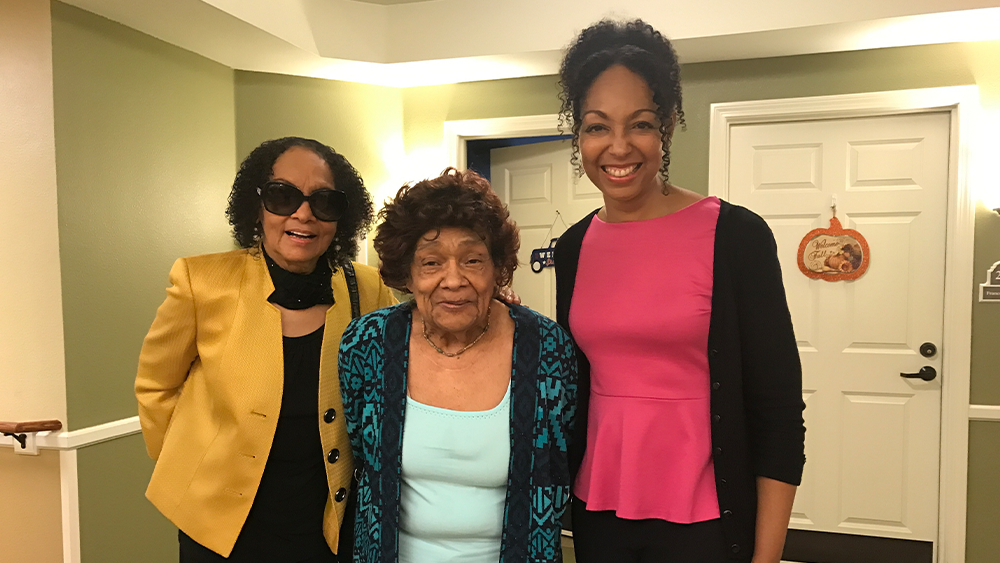
Teresa Kennedy provided us with a 2018 video
showing a reunion with her aunt Lillie White, herself and her mother
Jane Kennedy at an assisted living facility where White was placed by
her court-appointed guardian.
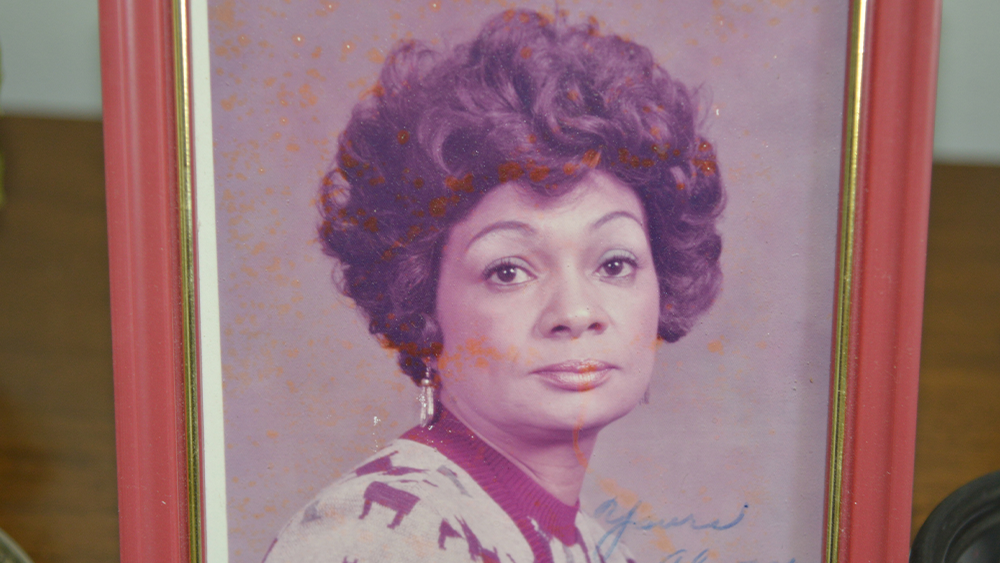
White, a retired school administrator who once sang at Harlem’s
Apollo Theater, brightened up as she sang a hearty rendition of “All of
Me” with her niece during the visit.
White’s guardian banned most of her family from contacting her years ago.
“We didn't know where she was for two years and then we found her through private investigators in November 2018,” said Kennedy.
After a family dispute over money, a judge appointed a professional guardian to care for White.
“I never thought anything like this could've happened,” White said, in the 2018 video.
White was removed from her home in August 2016 and taken to an assisted living facility.
“They’re saying you don't want to see your sister Jane. Do you want to see her?” Kennedy asked her aunt in the video.
“See how lies can get out? Oh my goodness,” said White. “I've always wanted to see her.”
But before Lillie's family tracked her down, they contacted the Florida Office of Public and Professional Guardians (OPPG).
That’s the watchdog agency set up to investigate complaints against guardians.
“I
finally received a call from the inspector general's office saying
'we're opening up an investigation.' So I was very excited,” said
Kennedy.
That call came in 2017, about a year after she filed a complaint, but she heard nothing more until almost two years later.
“Every month, I'm calling and saying another year, another week, another month. Where's the report?” said Kennedy.
The
I-Team obtained that report showing investigators found Lillie's
guardian was not registered as a professional guardian with the state
and had billed White’s bank account for attorney fees that were not
allowed.
But despite finding problems, the state’s watchdog did not take any disciplinary action.
In a letter to White’s guardian, Department of Elder Affairs
Secretary Richard Prudom said her conduct was “mitigated by the
complexity of the family relationships.”
“I was so angry when I got the OPPG letter,” said Kennedy.
The
I-Team uncovered eight other cases in which investigators found
guardians violating the law. But the state never moved to take away the
license of any of those guardians, each time ruling the problem had been
"mitigated".
One guardian was cited for paying a concierge dentist $73,000 for unnecessary visits.
Investigators
found another guardian charged a person under her care hourly fees for a
caretaker to accompany the ward on a cruise without getting permission
from the court.
Another guardian billed a woman’s estate for
providing care services using a side business he owned without telling
the court, which is also a violation of the state guardianship law.
Those guardians' actions were all mitigated by taking 16 hours of continuing education courses
Kathleen Zagaros complained to the state after her mother's guardian
ignored her mother's advanced care directives, then requested a do not
resuscitate order.
“She wanted all measures done. She appointed me
as her surrogate healthcare provider. And they were ignored by the
guardian,” Zagaros said.
The investigator substantiated that allegation. But a letter to the
guardian dated October 14, 2019, said the conduct was mitigated by the
actions of the guardian to honor veterans at Arlington National
Cemetery.
The
state did not take any disciplinary action against the guardian because
she bought five wreaths for $150 through an organization that lays
wreaths at Arlington National Cemetery.
Department of Elder
Affairs Secretary Richard Prudom, who oversees OPPG, declined an
on-camera interview but provided the following statement by email:
“The
Department of Elder Affairs is committed to transparency and education
regarding this process. Several factors are used to appropriately
determine disciplinary actions regarding complaints received against
professional guardians. In cases where evidence of intent to cause harm
is found, the Department will refer the matter to law enforcement. We
are thankful to have the ongoing partnership of Representative Colleen
Burton and Leader Kathleen Passidomo to make revisions to existing law
to help ensure the Department has more tools to hold bad actors
accountable.”
A guardianship reform bill sponsored by those lawmakers was passed
during the 2020 legislative session. It was signed into law by Gov. Ron
DeSantis and took effect July 1.
At least five guardians have been
charged with crimes since the OPPG was created, but OPPG has not been
able to substantiate which of those cases they referred to law
enforcement.
“OPPG to date has been there to protect guardians and not the senior. It's very, very clear,” said Kennedy.
We
first spoke to Kennedy about her case in early March, before the
pandemic shutdown. We followed up with her recently and she says she’s
still not allowed to have any contact with her aunt, including phone
calls.
“People who do have loved ones in nursing homes right now
during COVID-19 might get a little sense of it, not being able to hug
their mother, having to talk to them through the window. But at least
they can do that. We can’t,” Kennedy said.
She has filed a new
complaint with OPPG involving her aunt’s guardian and is hoping her last
reunion with her aunt Lillie in 2018 won't be her last.
ORLANDO, Fla. — Eraida Miller is a
Cuban immigrant who fled her native country for the U.S. more than 50
years ago on an initial quest for freedom. Now, she says she's again
fighting for her freedom — this time from the state court system and her
appointed professional guardian.
87-year-old woman wants freedom from emergency temporary guardian
Health committee ruled the former educator is mentally incompetent
Spectrum News got rare access inside courtroom during guardianship hearing
“The freedom that I came here seeking was taken away from me," Miller said.
For months, our ongoing Watchdog series "Senior Care in Question" has
exposed problems with the state of Florida’s professional guardianship
program. Now, for the first time, we were given rare access inside a
courtroom during a guardianship hearing, this one in Brevard County.
Miller, 87, says she wants her current guardian removed and her daughter named as her guardian.
“I want to be free. I don’t want the court. I don’t want a guardian," she says.
But that decision isn’t hers.
Court documents show Miller's daughter, Karen, petitioned the court
in October for a guardian to help with her mother’s care because at the
time, she thought her mother was being taken advantage of by a friend.
Brevard County Chief Judge Lisa Davidson appointed Danica Scuderi-Carluccio as emergency temporary guardian of Miller.
A short time later, a court-appointed committee of health
professionals examined Miller and concluded she is mentally
incompetent.
“The reports that came back, we were all shocked. They basically have
her completely, mentally gone, and I don’t agree with that," Karen
Miller-Berling said. "I think that she can function but just needs to be
supervised."
Miller-Berling has since petitioned the court to become her mother’s
guardian, asking that Scuderi-Carluccio be removed. But it’s not that
simple.
“The guardian is contesting my petition for guardianship, so we are both fighting over my mother,” Miller-Berling said.
As we joined them in court, Miller pleaded with the judge about her
mental capacity, asking that she be placed in the care of her daughter.
"I have a mind of my own, and you have made me incapacitated, damn it," she said angrily.
“I am not incapacitated..." Miller cried. "I do my checking account, my billings."
The judge ultimately continued the hearing, pending another health
evaluation. She also says she wanted time to explore the possibility of
Miller being placed in her family’s care.
“Unfortunately, I can’t give you a comment,” the guardian, Scuderi-Carluccio, said.
Although Miller's court-appointed guardian wouldn’t talk to us after the hearing, her attorney did.
“As you may know, guardianships are private matters, and professional
guardians are not allowed to comment on their case,” Attorney William
Johnson said.
Meanwhile, Miller says it's crystal clear what is happening.
“I want all this guardianship canceled. I want to be free. If I have
two or three more years to live, I want to live happily,” Miller said.
She holding on to hope that the sweet sounds of her piano will fill her
home again.
One week ago, Scuderi-Carluccio's attorney filed a motion requesting
she be removed as Miller's temporary professional guardian. That motion
also recommends that Miller's daughter, Karen, not be appointed guardian
of her mother.
Meanwhile, Miller-Berling filed a response to the guardian’s
recommendations in that motion, laying out reasons why she is the best
person to care for her mother.
At last check, the judge has not granted the guardian’s motion for removal of guardianship.
A sign supporting Medicare on Capitol Hill in 2015. (Jacquelyn Martin/AP)
By Christopher Rowland
A
state inspector in Missouri documented the grim details: a deep, poorly
treated pressure wound on the patient’s tailbone, apparent pain that
caused grimacing and — in a crisis requiring a trip to the emergency
room — a “maggot infestation’’ where the feeding tube entered his
abdomen.
The
official cited Vitas Healthcare, the nation’s largest hospice chain,
for putting the patient in “immediate jeopardy,” the most severe
category of violation. The inspector found that Vitas staffers had
skipped home visits and failed to assess the amount of pain the patient
endured.
The case is among the most severe of a dozen examples of patient suffering cited in a strongly worded inspector-general report
on the hospice industry released Tuesday. The report takes Medicare to
task for what it describes as weak oversight and enforcement of the
growing ranks of hospice providers and recommends stronger safeguards
“to protect Medicare hospice beneficiaries from harm.’’
The
report, by the Office of Inspector General for the Department of Health
and Human Services, withheld information about the individual hospice
providers and the states where the examples of harm occurred. Vitas
Healthcare, which did not comment on the case, is not named in the
inspector general’s report. The Washington Post identified the 2016
Missouri case by reviewing state inspection records and matching them to
the specific circumstances described by the inspector general.
According
to the Missouri inspection documents, the patient had been living at
home under hospice care for more than 18 months when the discovery of
“maggots around the opening of his wound” triggered an urgent call by
the family in the middle of the night.
The
patient was taken to a hospital for removal of the pests and stayed
there for two days. One reason the patient was in hospice care was to
avoid unnecessary pain and trauma associated with hospitalizations, the
Missouri report said. In a “plan of correction” included in the Missouri
documents, Vitas neither disputed nor agreed with the state inspector’s
findings. It outlined steps it would take to improve supervision and
assessment of patients.
Other dire cases listed by the inspector general included a
patient whose pressure ulcers developed gangrene, resulting in an
amputation; a patient whose injuries from an apparent sexual assault
were missed and discovered only at a hospital; and another who did not receive appropriate medication and died in pain.
Despite
the seriousness of the harm, the hospices in each of the dozen cases
did not face serious consequences — largely because Medicare has few
disciplinary tools at its disposal, the inspector general said.
“When
hospices do not fulfill their obligations, there can be real human
costs,” Nancy Harrison, deputy regional HHS inspector general, said in
an interview. Medicare, she said, “needs to hold hospices accountable.”
While
the report describes a poorly regulated hospice system, it also found
that Medicare gives consumers limited options to screen for quality on
their own or lodge complaints.
A Post investigation in 2014 documented patient hazards and industry financial abuses. Although improvements have been made since then
— including the national Hospice Compare consumer website launched in
2017 — the gaps in enforcement and quality appear large, according to
the report.
Medicare
pays for most hospice care in the United States, with billings reaching
$18 billion in 2017, double the amount a decade ago. The number of
hospices has risen to around 4,500.
But Medicare’s oversight of hospice is not as strong as its oversight of nursing homes.
The frequency of hospice inspections by state or private
accreditation agencies increased from once every six years to once every
three years in 2018. About 300 hospice providers, or nearly
20 percent of all hospices inspected in 2016, had a serious deficiency
or a substantiated severe complaint, making them “poor performers,’’ the report said.
There
are few requirements for hospice companies to alert Medicare when they
detect violations. And when problems are discovered, Medicare has
limited tools to discipline providers for neglecting or harming
patients, even in cases of “immediate jeopardy.”
Other
than removing them from the Medicare program, a step that is very
rarely taken, Medicare has no ability to levy fines or other sanctions
on poorly performing hospice providers, the report said.
It
also found fault with Medicare’s Web portal, Hospice Compare, which is
supposed to help patients and families shop for hospice providers based
on quality and other metrics. But Hospice Compare does not list hospice
provider deficiencies or state inspection results.
“We
live in a time when we don’t even think about going to a restaurant
without checking its reviews. Why do we demand less from hospices?’’
Harrison said. “The information is already collected. We just need
to make that extra step and make it publicly available in a way that
patients can understand.’’
The
Missouri case provides an example of the gap. A Post review showed that
someone checking Hospice Compare would see that the Vitas Healthcare
office in St. Louis responsible for the patient with a maggot
infestation has a 96.4 percent quality rating, 11 percentage points
above the national average. Nothing is mentioned about the “immediate
jeopardy” finding or other serious deficiencies cited by inspectors.
The
Centers for Medicare and Medicaid Services (CMS), which is in charge of
Medicare, said it has taken steps to improve Hospice Compare, including
adding information from consumer surveys.
It
said it is prohibited by law from posting inspection reports by private
accreditation agencies and has told the inspector general previously
that it would be “misleading” to post state inspection reports alone.
CMS has asked Congress in its budget for authority to post accreditation
agency reports.
“CMS
has zero tolerance for abuse and mistreatment of any patient, and CMS
requires that every Medicare-certified hospice meet basic federal health
and safety standards to keep patients safe,” the agency said in
response to the inspector general’s report. It called the inspector
general’s individual findings of patient harm a “selective sample” of
cases found between 2012 and 2016.
In
the example of the maggots in the patient’s feeding tube, the local
Vitas Healthcare provider was put on a track to be terminated as a
Medicare provider, but it corrected its deficiencies before that step
was taken, CMS said.
“CMS
does not have the statutory authority to impose remedies, such as
fines, on hospices,” the agency said. “Additionally, CMS cannot close
any facility.”
The hospice industry trade group in Washington, the National Hospice and Palliative Care Organization, which had not seen the report as of Monday, said it supports accountability and transparency in hospice. It pointed out that it supportedincreasing
oversight, including raising in inspection frequency to once every
three years. “However, NHPCO continues to stress that outliers in the
field do not adequately reflect the vast majority of hospice care
provision in the U.S.,” Edo Banach, the organization’s president, said
in a statement.
Congress told Medicare to begin reimbursing for hospice in 1982. Since then, the practice ofhospice has steadily become mainstream, routinely serving patients with dementia and other ailments of the elderly, and has attracted for-profit investment and chain ownership.
“At
the first meetings of our national hospice organization, we were nearly
all women, mostly volunteers working on making our communities
better,’’ said Joanne Lynn, a hospice physician and director of the
program to improve elder care at Altarum, a nonprofit health-care
consulting organization. “Once Medicare started paying for hospice, it
was more men in suits, and the focus shifted to administration and
sustainable financing.’’
Most hospice care continues to be delivered at home or in a nursing home, with routine visits by nurses and aides, but companies also run inpatient hospice facilities. The focus remains the same: comfort and palliative care, including pain medications, in a patient’s final months of life.
To
qualify for hospice coverage under Medicare, a patient must be
terminally ill with a prognosis of living less than six months. But as
increased numbers of patients with Alzheimer’s disease and other forms
of dementia enter hospice, many are living far longer than six months. Their Medicare coverage continues.
“You
increasingly have diagnoses of dementia, patients who are dying at
home, but their life expectancy is extremely difficult to estimate,”
said Melissa D. Aldridge, a professor of geriatrics and palliative
medicine at the Icahn School of Medicine at Mount Sinai, in New York.
Meanwhile,
Medicare pays providers the same amount for each day a patient is in
hospice — around $200 each day for the first 60 days and about $150 each
day after 60 days — without regard to how much care is provided.
“They’re
paying for a day of hospice with no accountability for what was done on
that day. How is Medicare going to oversee that?’’ Aldridge said. She
estimated two-thirds of providers are now for-profit, “with a payment
mechanism that is completely opaque as to what is being done.’’
While
Hospice Compare does not list any documented problems at hospices,
Missouri and Alabama are examples of two states that list complaints and
link to full inspection reports.
“We
want to be as transparent as we can,” said Dean A. Linneman, director
of regulation and licensure for Missouri’s Department of Health and
Senior Services. “The intent is for families seeking a good place for
their relatives to view reports, and it’s not too far-fetched to believe
that is a good learning tool for others in the industry.’’