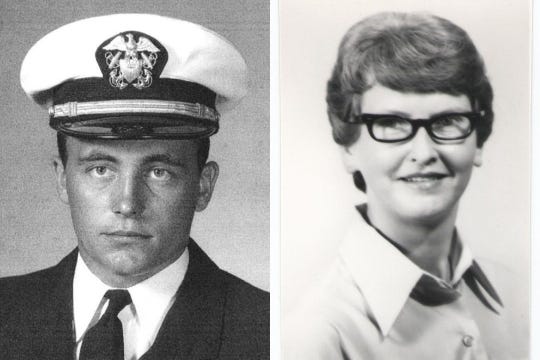
|
| Marty Markowitz showing off his apiary in the backyard of his Southampton home. (Debra Nussbaum Cohen via JTA) |
SOUTHAMPTON, New York (JTA) — This is one of the strangest stories
you’ll ever read, about one of the strangest stories ever told in a
podcast.
“The Shrink Next Door,” rated No. 1 for three weeks straight on
Apple’s Podcast charts, is about a Manhattan psychiatrist, Dr. Isaac
“Ike” Herschkopf, known for treating — and name-dropping — an array of
celebrity patients while becoming well known in US Jewish and literary
philanthropic circles.
The podcast, written and hosted by Bloomberg columnist Joe Nocera, is
mostly about Martin Markowitz, a longtime patient of Herschkopf, who
says he spent most of his life – more than 30 years – under Herschkopf’s
sway. In six episodes — a seventh comes out this week — Nocera
describes how the psychiatrist isolated Markowitz from his friends and
family and encouraged him not to pursue potential marriage partners.
There’s more: “Shrink” describes how Herschkopf became president of
Markowitz’s theatrical fabrics business, created a charitable foundation
almost entirely with Markowitz’s money, and got the foundation and his
wife named in Markowitz’s will after his patient removed his sister and
her children at the psychiatrist’s suggestion.
In the meantime, Herschkopf collected more than $3 million in fees
from Markowitz over three decades, Markowitz told the Jewish Telegraphic
Agency this week in an interview at his estate here.
It’s the same wooded, bucolic property that figures prominently in
the podcast: Nocera lives next door, and while it belongs to Markowitz,
Herschkopf managed to commandeer it and present it as his own for 26
years — relegating Markowitz to guest quarters at the back of the
compound.
Herschkopf has claimed that Markowitz was a willing partner in
everything, and Nocera’s wife speaks for many listeners when she says at
one point, “It takes two to tango.” Markowitz admits he was vulnerable
and willingly followed his psychiatrist’s instructions. Nevertheless,
the podcast explores the professional ethics of a psychiatrist
insinuating himself into the personal, family and financial life of a
patient to the degree that Herschkopf did.
Since the podcast debuted last month, Herschkopf has faced professional consequences.
Last weekend he disappeared from the New York University Medical
School’s website. He resigned voluntarily, Herschkopf told JTA in a
telephone interview.
Over the weekend Herschkopf also resigned from FASPE, the Fellowships
at Auschwitz for the Study of Professional Ethics, on whose board of
directors he sat, according to the board chair, David Goldman.
“We accepted his resignation. Please note that we did not do any
independent investigation of the reporting contained within the
podcast,” Goldman told the Jewish Telegraphic Agency.
In response to a message, Herschkopf called back JTA three times.
“I resigned [from NYU and FASPE] to spare them the adverse publicity
Nocera was going to visit upon them,” Herschkopf said in one of the
calls.
He called later to question Nocera’s motivation for the podcast, noting the journalist plays tennis on Markowitz’s court.
“One would presume that would compromise his neutrality,” the psychiatrist said.
Herschkopf also said that “90 percent of the podcast is untrue or out
of context,” and that Nocera “has had a vendetta against me for 10
years,” dating back to when the reporter began investigating Markowitz’s
claims.
Nocera replied to JTA that the podcast was “rigorously reported and
fact checked to a fare-thee-well by me and the people at Wondery and
Bloomberg,” which jointly produced the podcast.
The podcast has created a stir in Manhattan’s tight-knit
philanthropic and Modern Orthodox Jewish circles. Herschkopf famously
hosted summer parties in the Hamptons that brought between 70 and 170
people on buses — chartered by Markowitz — to the house whose mailbox
bore the name of “Dr. Isaac Stevens,” Herschkopf’s alias. Herschkopf had
Markowitz prepare the compound for each party and stand at the barbecue
roasting kosher fare and serving guests.
Although patients would often be invited to the parties and mingle
with the other guests, guests with whom JTA spoke say they had no idea
that Markowitz was Herschkopf’s patient. They believed – from the way
Markowitz was dressed to the roles he served at the parties – that he
was hired help.

Actress Gwyneth Paltrow attends the
Tiffany & Co. Blue Book Ball at Rockefeller Center on Thursday,
April 18, 2013 in New York. (photo credit: Evan Agostini/Invision/AP,
File)
The parties drew celebrities, actors and writers, and the creme de la
creme of Manhattan’s Modern Orthodox world. Gwyneth Paltrow, who was
Herschkopf’s patient for a time, was among the guests, Markowitz says.
Other invitees included writer Shalom Auslander and New York Jewish
Week Editor and Publisher Gary Rosenblatt. For years Herschkopf wrote
columns published in The Jewish Week, most recently in September. One
was about being beaten by his father, an Auschwitz survivor.
Rosenblatt said he knew Herschkopf only slightly.
“I had dinner with him a couple of times, and he seems to know everybody, but that’s about it,” Rosenblatt told JTA.
Auslander wrote a thinly veiled account of his time with his
celebrity-obsessed shrink for The New York Times in 2006. Perhaps he was
simply repaying the favor: Herschkopf wrote a letter to Esquire
magazine in 2001 identifying himself as Isaac Steven Hersch, Auslander’s
psychiatrist.
Auslander did not respond to several attempts by JTA to reach him.
Another famous writer, who asked that her name not be included in
this article, said she never went to the Southampton parties, though she
attended a Passover seder with Herschkopf and his family once at their
Manhattan apartment.
“Does this come as a great shock to me? No,” she said. “There is
something about him, his obsession with famous people, and he always
seemed to be sidling up to famous literary people. I personally would
never recommend him to anyone.”
Major Modern Orthodox rabbis and communal leaders were also invited
to the summer parties: Rabbi Haskel Lookstein of the Ramaz School and
Congregation Kehilath Jeshurun; Rabbi Arthur Schneier of Park East
Synagogue; his son Rabbi Marc Schneier of The Hampton Synagogue; and
Rabbi Joseph Telushkin, the author of many books on Jewish literacy and
Jewish ethics.
In “Code of Jewish Ethics Volume 2: Love Your Neighbor As Yourself,”
Herschkopf is the first person among dozens Telushkin thanks in his
acknowledgments. Telushkin also cites the psychiatrist several times
throughout its pages. Telushkin did not respond to email and voicemail
messages left by JTA.
Psychiatrist Samuel Klagsbrun and his wife, writer Francine Klagsbrun, were invited to the parties.
“We may have gone. I don’t know him particularly well,” said Samuel
Klagsbrun, who founded Four Winds Hospitals, which offer mental health
services in upstate New York.
After being told about the allegations against Herschkopf, Samuel
Klagsbrun said, “This is one of the worst cases I’ve ever heard of. To
use psychiatry to manipulate people like that is all kinds of
criminality. He should have his medical license taken away. He used
whatever talent he has to manipulate people. The damage he did to Marty …
and it besmirches all of psychiatry.”

Martin Markowitz’s Southampton house,
which was the scene of boisterous parties, hosted by his psychiatrist,
featuring celebrities and members of New York’s Modern Orthodox
community. (Debra Nussbaum Cohen via JTA)
Pouring salt into open wounds
I visited Markowitz in the Hamptons on a breezy June Saturday, and he
showed me around the sumptuous, sun-dappled property. There is a large
pool complete with slide, full-size basketball court, the tennis court,
hot tub and modern sculptures. That’s in addition to multiple
koi-stocked ponds and a professionally designed 18-hole miniature golf
course – one of only five installed at private homes in the country at
the time, Markowitz said. It was all installed at Herschkopf’s direction
and paid for by Markowitz, he told JTA.
Markowitz looks a decade younger than his 77 years, and is delighted
to show me the apiary where he recently began keeping honeybees, behind
which he plans to soon add a chicken coop. He is witty and calm, and
dispassionate as he recounts the facts of his relationship with
Herschkopf. He seems content.
But it wasn’t always that way. In June 1981 Markowitz, then 39, had
recently lost both his parents and was unexpectedly running their large
family business, Associated Fabrics. In 1980, Markowitz was sued by an
uncle unhappy that his late brother had left 50 percent of the company
to his son Marty. Just the year before, Markowitz had broken off an
engagement when his fiancee refused to sign a prenuptial agreement. It
was a stressful and painful time.
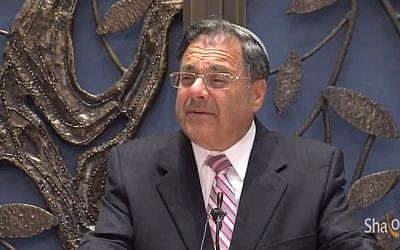
Rabbi Shlomo Riskin speaking at the Lincoln Square Synagogue. (screen capture: YouTube/JBS)
He turned to his rabbi, Shlomo Riskin, at the time Lincoln Square
Synagogue’s leader, who had brought Markowitz closer to Judaism. Riskin
referred Markowitz to Herschkopf, then a young psychiatrist in his late
20s. Through his assistant, Riskin – who has lived in Israel since 1983 –
said he “cannot offer any recollections, reflections or insights on the
matter.”
Markowitz began seeing Herschkopf three times a week.
“Very quietly, over about an 18-month period, Ike started pouring
salt into all of my open wounds,” Markowitz said. “He got my sister and
her children and all of my blood relatives and close friends out of my
life.
“A constant mantra from Ike was he’d say ‘you can’t handle the truth.
You’re passive aggressive, you can’t handle confrontation, you’re going
to screw up the business and lose customers,’” Markowitz recalled.
As he eroded what remained of Markowitz’s fragile confidence,
Herschkopf gradually began insinuating himself into management decisions
at Associated Fabrics.
Phyllis Shapiro, Markowitz’s younger sister by three years, then
worked at the fabric company. In early 1983, Herschkopf “instructed me
to serially lower Phyllis’s pay by $5,000, which I did several times.”
Markowitz told JTA.
The psychiatrist told Markowitz to have a second bar mitzvah in May 1983, and not to invite his sister or her children.
Afterward, Shapiro flew to Switzerland, according to the podcast, and
removed money inherited from their parents from a bank account held
jointly with her brother, removed gold coins from a jointly owned safe
deposit box and took bonds from Markowitz’s apartment.
“At Dr. Ike’s insistence I fired Phyllis from Associated Fabrics,”
Markowitz wrote on a timeline of events he shared with me in
Southampton.
Markowitz wrote a letter he said Herschkopf drafted stating that “no
one in the family would ever inherit any of my money.” At the
psychiatrist’s insistence he hired a messenger to deliver the letter,
who left it with Shapiro’s then 11-year-old daughter.
After guiding Markowitz to cut off all those relationships, “Ike
said, ‘you don’t have a family? Don’t worry. My family will be your
family, my kids like your nieces and nephews and we’re going to make a
social life for you,’” Markowitz recounted.
In February 1984, Herschkopf “instructed me to create the Yaron
Foundation,” Markowitz wrote on his timeline. “Dr. Ike, Rebecca (his
wife) and I are the officers and directors. Simultaneously he convinces
me to execute a will leaving my entire estate to the Yaron Foundation.
Dr. Ike is the sole executor of the will.”
That year Markowitz and his sister were at terrible odds. They agreed
to let Rabbi Riskin settle their conflict and, after a beit din, or
rabbinical court, to which both siblings brought lawyers, Riskin issued a
ruling dividing the assets between them, which they both accepted.
After that, “I didn’t see my sister for 27 years,” Markowitz told JTA.
“I had a ring in my nose and he was leading me around,” he said of Herschkopf.
Asked if he felt any internal resistance to the demands his
psychiatrist was making, Markowitz said, “I had to put my feelings down.
If my sister contacted me, if she left a message or sent me a birthday
or New Year’s card, he instructed [me] to ‘bring all those things into
me.’ We would listen to it together and he would interpret it.”
‘I was choking to death’
At the time, Markowitz owned only the Southampton property that is
now the guest house. In September 1986, Markowitz said, Herschkopf
instructed him to buy the adjoining property. The properties were
connected, and the first of what would become the legendary summer
parties was held in June 1987 at the property Herschkopf began
presenting as his own.
Framed photos of Herschkopf with celebrities covered every interior
wall of the house. Herschkopf would instruct Markowitz to have them
framed at his patient’s expense. He also had Markowitz type up every
manuscript of the 12 books he wrote, most of which have not been
published.
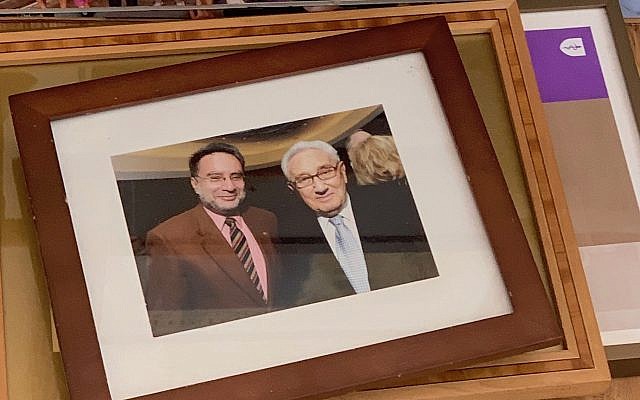
Dr. Isaac Herschkopf, shown at left in a
photo with Henry Kissinger, who tasked his patient Marty Markowitz with
curating the photos he took with celebrities. (Debra Nussbaum Cohen via
JTA)
To the parties, “each invitation came from Dr. Ike and his family, with no mention of me,” Markowitz wrote on his timeline.
To be sure, this isn’t the only case in which a psychiatrist has been
accused of manipulating a patient and creating family rifts and
estrangements. The heiress Gloria Vanderbilt, who died Monday,
experienced something similar with her psychiatrist, Dr. Christ Zois.
Vanderbilt eventually sued Zois and won a $1.5 million judgment against
him and an attorney who she accused of “preying on her wealth and
emotional fragility.” It took many more years for her to reconcile with
her estranged son Stan Stokowski.
Markowitz began feeling stirrings of discontent with his psychiatrist
when the doctor insisted that he keep the business in Manhattan, in
space he could no longer afford.
“I was choking to death,” he said. “We were four or five months away
from bankruptcy,” both because of the rent and the fees he was paying
his psychiatrist straight out of the business.
Markowitz said that in 1995, he also lost over $1.5 million he had
invested, at Herschkopf’s recommendation, in the Bennett Funding Group,
which filed for bankruptcy after the SEC filed fraud charges. At the
time it was the largest Ponzi scheme in US history.
Markowitz said he broke away from Herschkopf in 2010 after Markowitz
had a hernia operation and Herschkopf didn’t check in with his patient
and supposed friend of almost 40 years.
“I was devastated,” Markowitz said. “I began to question the whole basis of our relationship.”
Using lessons learned from Herschkopf, Markowitz wrote a letter
saying he wanted to take a break. The doctor wrote back warning that
Markowitz was making a terrible mistake and would lose his business to
manipulative employees.
In December, Markowitz reached out to his sister, Phyllis. When she
answered the phone, she told him, “I’ve been waiting for this call for
27 years.”
Though it took some of her children a while to trust him again, they are now closer than ever.
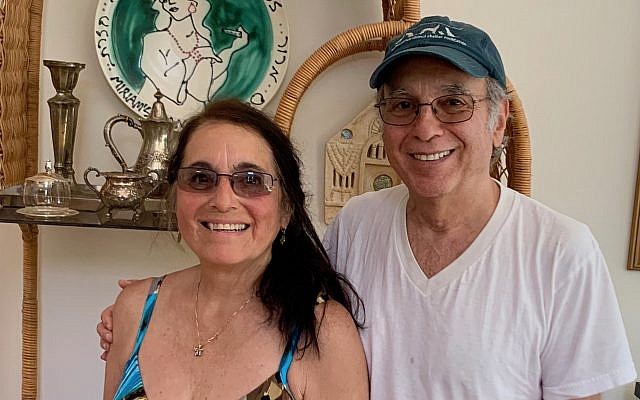
Martin Markowitz and his sister, Phyllis
Shapiro, reconciled after 27 years apart — a break, they both say, that
was engineered by psychiatrist Isaac Herschkopf. (Debra Nussbaum Cohen
via JTA)
In the years since 2010, brother and sister have biked together
through Italy and traveled to China. Shapiro spends lots of time now at
the Southampton estate, where she takes daily tennis lessons and plays
competitively. The day I visited, neighbors dropped by – including Joe
Nocera, who lives next door. The two first met years ago, when
Herschkopf invited him to one of the summer parties and Nocera, like
everyone else, thought Markowitz was the psychiatrist’s employee.
Seeking justice
Things have turned around for Markowitz.
“Once I started running the company totally by myself I got my mojo
back,” Markowitz told JTA. “I’m a graduate of the Wharton School and NYU
Law – I’ve got some serious CV going on!”
The business is smaller, but it’s turning a profit for the first time in many years.
“I’m the happiest I’ve been for many, many years,” Markowitz said.
According to Markowitz, two more of Herschkopf’s patients, with
similar stories of being manipulated, also have stepped forward, though
neither he nor Nocera would divulge their names or agree to contact them
on JTA’s behalf.
Markowitz’s one remaining goal is to make sure Herschkopf is
professionally disciplined for his ethical breaches. Complaints he filed
with the New York State Department of Health in 2012 have gone nowhere.
And Herschkopf resigned from the American Psychiatric Association,
Markowitz said, after being notified that it was going to commence an
investigation into his conduct.
A Department of Health (DOH) spokeswoman, Erin Silk, told JTA,
“Consistent with Public Health Law, the Department cannot confirm or
deny the receipt of any complaint or the existence of an Office of
Professional Medical Conduct (OPMC) investigation of a licensee unless
charges have been posted on the DOH website or the Board for
Professional Medical Conduct has taken a public action.”
In the podcast, Markowitz describes a conversation with an OPMC
employee who informs him that the complaint is in process but offers
nothing more.
A search of Herschkopf’s name on the OPMC section of the DOH website turned up nothing.
“I want justice to be served and to me, him losing his [medical] license
is justice,” Markowitz said. “I just don’t want him to do this to
anyone else.”
Full Article & Source:
Podcast tells incredible story of a NY shrink who took over his patient’s life