Tuesday, June 7, 2022

Judge hands over operations of Woodland nursing home, for now

by Lori Comstock

A state Superior Court judge has turned over operations of a long-troubled Andover nursing home into the hands of a receiver, citing immediate concerns over the health and safety of the state's most vulnerable residents.

Judge Frank DeAngelis' decision is the latest in a string of major moves by the state's top officials to ensure the safety of residents at Woodland Behavioral and Nursing Center after surveyors twice in April and in early May found that conditions at Woodland had only gotten worse. Woodland has been on the radar of federal and state officials since police discovered 17 bodies in a makeshift morgue at the height of the pandemic in spring 2020.

The facility was visited often by surveyors, who warned that negative actions would take place if compliance wasn't met. 

DeAngelis appointed Allen Wilen, a partner at the business advisory firm EisnerAmper, after a court hearing Friday on whether Woodland Behavioral and Nursing Center could continue caring for its 366 residents.

Wilen will step into the role temporarily until a final hearing takes place on July 7.

Gov. Phil Murphy and officials with the New Jersey Department of Health petitioned the courts last week to employ Wilen to take over the facilities' finances, to retain staff and maintain proper services for residents. Officials pressed the immediate need for intervention, stating that despite actions by federal and state officials, no systemic improvements had been made.

Attorneys representing Alliance Healthcare Holdings, which operates Woodland, and the owners of the property who lease the building to Alliance, known as BNJD Mulford Property, did not deny allegations raised by the Health Department with respect to the health and safety of residents, DeAngelis' decision said. Instead, they argued that the only harm was caused by the state's refusal to recognize a comprehensive remedial plan that they were aware of "before they ran into court seeking emergent relief."

BNJD said it had a signed agreement from co-owner Louis Schwartz removing him from the facility's license and had also executed an agreement with R&R Management Services LLC to take control of the facility's operations. The appointment of a receiver, the attorneys contended, was not appropriate because they had a plan in place that would have led to a comprehensive plan of correction.
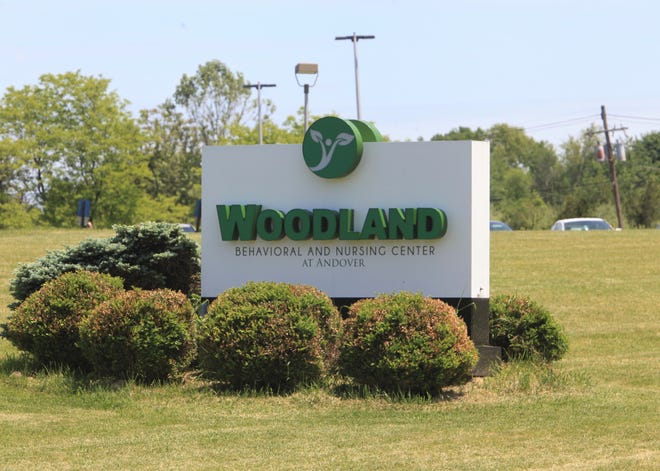
Woodland Behavioral and Nursing Center in Andover Township

But DeAngelis said during arguments on Friday that attorneys for BNJD "confirmed that the alleged agreement was just a proposal."

"The Court finds that the harm that threatens the residents of Woodland substantially outweighs any threat of any potential hardship that defendants may face through the appointment of a temporary receiver," DeAngelis wrote.

The state Department of Health issued a statement on the judge's decision, noting that Atlantic Health System, which was appointed as monitor in March, will work with Wilen to manage the daily operations at one of the state's largest nursing homes, once called Andover Subacute and Rehabilitation II. 

Medical workers move a patient from Andover Subacute and Rehabilitation Center II, in Andover N.J., April 19, 2020.

“The receiver will ensure that employee paychecks are processed and staff retention policies and bonuses are implemented and will work with the state and other long-term care facilities to facilitate job placement for qualified individuals,” Wilen said in the statement.

Human Services Commissioner Sarah Adelman said the judge's decision recognized the "unprecedented gravity" of the situation.

In back-to-back filings on March 26, the federal Centers for Medicare and Medicaid Services ordered a halt of funds to the Medicare-reliant facility as the state revoked the nursing home's license.

Robin Ford, the state Health Department's deputy commissioner of health systems, said in court records that Woodland made no efforts to bring the facility into compliance, stating that residents were in immediate and serious risk of harm. Under the order, residents will need to be transferred to another facility by Aug. 15.

The judge noted that due to the termination of Woodland's agreement with CMS, there is a risk the facility will lose staff and have insufficient funds to continue operation in less than 60 days. 

A member of the New Jersey National Guard walks out with an employee of Woodland Behavioral and Nursing Center on Wednesday, May 25, 2022.

The risk of insufficient funds is coupled with concerns that the facility is nearing financial distress and is at risk of needing bankruptcy protection, state officials said in their court filings. The facility, the court records show, has a negative cash flow, limited borrowing capacity and projected required capital expenditures. 

"The financial issues coupled with the management issues continue to put the residents at risk of harm," DeAngelis wrote. "It is clear to the court that appointment of a temporary receiver is necessary for the protection of Woodland's current residents."

Full Article & Source:

D.C. lawyer disbarred in Md. for continuing to practice law while suspended

By: Madeleine O'Neill
 
a man in a suit and tie
“Ms. Ekekwe persistently violated the two suspension orders,” Judge Steven B. Gould wrote in a 21-page opinion. “In doing so, Ms. Ekekwe effectively deprived (her client)—who was battling for custody of her son—the benefit of counsel.” (The Daily Record/File Photo)

Maryland’s Court of Appeals this month disbarred a D.C. lawyer who continued representing a client in a custody case after she had been suspended from practicing law in Maryland.

The high court agreed unanimously that Olekanma A. Ekekwe had “undeniably injured” her client and misrepresented her status as an attorney to both the client and a judge.

“Ms. Ekekwe persistently violated the two suspension orders,” Judge Steven B. Gould wrote in a 21-page opinion. “In doing so, Ms. Ekekwe effectively deprived (her client) — who was battling for custody of her son — the benefit of counsel.”

The court found that disbarment was appropriate because Ekekwe’s misconduct included intentional dishonesty and the unauthorized practice of law. Ekekwe has also been disbarred in D.C., records show.

Ekekwe could not be reached for comment. A phone number listed online for her D.C. law practice is no longer active.

Ekekwe had been a lawyer in D.C. since 2002 and in Maryland since 2010, according to the court’s opinion. In June 2019, she was suspended for three years in D.C. after the District of Columbia Court of Appeals found she had violated rules related to competence, diligence, communication, safekeeping property and declining or terminating representation.

In October of that year, Ekekwe’s law license was suspended in Maryland on a petition from the Attorney Grievance Commission that was based on the misconduct finding in D.C.

Even after her law license had been temporarily suspended, Ekekwe continued to represent a pro bono client she’d been assigned through the Women’s Law Center of Maryland, according to the opinion. Although Ekekwe had not entered an appearance in the client’s case, she represented the woman at an emergency hearing in November 2019 and did not inform her client, the judge or opposing counsel that she had been suspended, Gould wrote in the opinion.

In January 2020, Ekekwe again appeared in court in connection with the custody dispute. Under questioning from a judge, Ekekwe said she was “assisting” in the case and making just a “temporary appearance.” The judge postponed the hearing and referred the case to bar counsel, according to the opinion.

Ekekwe repeatedly failed to respond to letters from bar counsel before claiming that her suspension had not yet been active at the time of the November 2019 emergency hearing and that she had appeared at the January 2020 hearing as a paralegal, rather than a lawyer.

“Ms. Ekekwe’s paralegal theory strains credulity,” Gould wrote. “The Women’s Law Center appointed an attorney, not a paralegal, to represent (the client). Upon their suspension from practicing law, lawyers do not magically transform into paralegals imbued with the authority to represent clients.”

A hearing judge found no mitigating factors in Ekekwe’s favor. Ekekwe failed to appear at a June 2021 evidentiary hearing about her alleged misconduct.

The District of Columbia Court of Appeals also disbarred Ekekwe in January. The Court found that Ekekwe, who is referred to in the opinion as Ekekwe-Kauffman, had recklessly misappropriated funds belonging to four clients, among other violations.

“Ekekwe-Kauffman’s handling of entrusted funds evinces practically all of the hallmarks of reckless misappropriation,” the D.C. high court found.  “She commingled funds between her trust and operating accounts repeatedly and indiscriminately. She likewise moved money among her personal, business, and trust accounts, haphazardly covering shortfalls in each account by drawing on the balance of the others.”

Full Article & Source:

Fla. medic arrested, accused of punching elderly patient in head

Polk County Fire Rescue members had restrained the 67-year-old disabled patient on a gurney when Matthew Mullins struck him, police say 

By Leila Merrill

BARTOW, Fla. — Paramedic Matthew Mullins was arrested Tuesday on a charge of felony battery. Police say he punched a handicapped patient in the head for being uncooperative.

The Bartow officers responded to a call for assistance by Polk County Fire Rescue. When they arrived on the scene, the officers found EMS providers treating a 67-year-old physically handicapped patient with Parkinson's Disease. The providers said the patient needed to be transported to a hospital.

As the patient continued to be uncooperative, four people put him on a gurney and restrained him. Officers say that is when Mullins had a knee on the patient’s chest and punched his forehead.

They said that he said something like, “'I'm from Combee. We don't play that.'"

Officers ordered Mullins to remove himself.

The patient was transported, and investigators said that the patient did not sustain injuries from Mullins’ actions.

Police and fire department members have said that the restraint method was in excess. Detectives found that Mullins' actions were "not in self-defense or medically necessary." They said the victim was not physically threatening anyone when he was punched.

After a warrant for Mullins’ arrest was issued Friday, he turned himself in on Tuesday.

Full Article & Source:

Monday, June 6, 2022

Wendy Williams’ Attorney Accuses Wells Fargo of ‘Improprieties,’ Identity Theft After Financial Guardian Is Appointed

The talk show host has been in dispute with Wells Fargo for months

by Sharon Knolle

Wendy Williams (The Wendy Williams Show)

An attorney for Wendy Williams has accused Wells Fargo of “improprieties” including identity theft after a New York judge appointed a financial guardian over the talk show host’s finances on Thursday.

It’s the latest development in the battle that began with Wells Fargo freezing Williams’ bank accounts in February and requesting a hearing from the New York Supreme Court to determine if the TV personality could legally be considered an “incapacitated person.” In March, a temporary guardian was appointed, despite attorney La’Shawn Thomas’ insistence that her client is of sound mind.

“Please be advised that Wendy is not in agreement with the appointment of a financial guardian by the court. Wendy has been very clear that she does not want a financial guardian to tell her what she can and cannot do with her money, Wendy feels that she is capable of hiring her own financial advisors who work for and report to her and not to the court,” Thomas told TheWrap on Friday. 

Turning the tables and calling out the financial institution, Thomas added, “We believe that this story has been put forth in an attempt to lessen the public outcry and regulatory scrutiny mounting around Wells Fargo due to their actions. We have complaints pending before multiple regulatory bodies regarding the improprieties surrounding this case, from a breach of the patient-doctor privilege to identity theft and we will of course be working with Wendy should she decide to appeal the court’s decisions.”

A representative for the bank declined to comment on Friday, but told TheWrap back in February, “Wells Fargo’s priority is the financial well-being of Ms. Williams and the preservation of her privacy. As we have expressed to the Court, Wells Fargo is open to working with Ms. Williams’ counsel to release funds directly to her creditors for bills historically and regularly paid from her accounts.”

In a March phone interview with “Good Morning America,” Williams said she was “absolutely” of sound mind. When asked why people might believe she was not, Williams explained, “Well, you know when people want control of their accounts, they say anything, including something crazy like that about me.”

In February, Sherri Shepherd was named as Williams’ replacement on her syndicated daytime talk show. Due to ill health, Williams was unable to carry on hosting “The Wendy Williams Show,” which is now in its 13th season.

After the 2016 revelation that Wells Fargo had created millions of fake bank accounts for customers without their knowledge, the Federal Reserve took the unprecedented move in 2018 of limiting the bank’s assets and also demanded resignations from the Wells Fargo board. “We cannot tolerate pervasive and persistent misconduct at any bank,” Fed Chairwoman Janet Yellen said in a statement at the time.

The Hollywood Reporter first reported the financial guardian appointment.

Full Article & Source:

Disbarred CT attorney who accused judge of favoring Jewish people expected in court today

by Lisa Backus

Disbarred attorney Nickola Cunha will appear Monday in state Superior Court in Middletown after a judge ordered a state marshal to take her into custody for failing to show up at previous appearances.

MIDDLETOWN — A disbarred attorney who to failed to show up for a May court date to address her disbarment and her use of client funds will appear before a judge Monday after being taken into custody at a Wallingford restaurant over the week.

Superior Court Judge Thomas Moukawsher disbarred former Hamden attorney Nickola Cunha earlier this year after she filed a motion, requesting a family court judge be removed from a pending divorce case because he “showed bias in favor of Jewish litigants and the disabled,” court documents said.

Cunha was slated to appear before Moukawasher in mid-May to provide a trustee with a list of client addresses and phone numbers and to deal with client funds that officials claimed she had inappropriately kept, court documents said. Cunha failed to show up, prompting the judge to issue a capias warrant, ordering state marshals to take her into custody to guarantee her appearance in court.

The deadline for the capias warrant was extended several times, court documents show, before Moukawsher ordered Cunha taken into custody on May 18. She was spotted at a Wallingford restaurant on Friday and taken into custody by a state marshal, according to the Hartford Courant.

Cunha is scheduled to appear Monday in state Superior Court in Middletown.

The state’s Chief Disciplinary Counsel Brian Staines submitted documents on June 1, claiming Cunha had inappropriately taken $78,000 from an accident settlement for a client after she had already withheld her $96,000 fee for handling the case.

Staines also said in the documents that Cuhna originally told the judge she took $30,000 from the client’s accident settlement to pay for previous pro bono work, but “failed to clarify throughout the hearing that the actual amount she took was $78,000.”

“She had no authority from the client to take this money,” Staines wrote in the filing.

Cunha was disbarred in January after Moukawsher ruled she had made “empty and malicious claims,” alleging another judge was engaged in a Judaism-based conspiracy and protected child sexual abuse as part of her representation of a Glastonbury woman engaged in a dissolution of marriage case.

In late April, as part of the ruling, Moukawsher ordered Cunha to turn over her clients’ contact information, along with active and pending files to a court-appointed trustee. The judge noted at the time that a recent withdrawal of $30,000 from a client’s account may have been illegal and required an audit.

Cunha turned over the information for three clients on May 13, according to the trustee who was appointed by the court after her disbarment. But Cunha failed to supply complete information for several other clients, court documents said. The trustee is also looking for financial information for some clients and what Cunha did with their retainers, court documents said.

Ben Lambert contributed to this story.

Full Article & Source:

Home aide shortage threatens care for developmentally disabled Arkansans

By Benjamin Hardy and Juliet Schulman-Hall


In December, Governor Asa Hutchinson announced a plan to bring relief to thousands of families stuck on a waiting list for Medicaid-funded services for people with intellectual and developmental disabilities.

Under the governor’s plan, Arkansas will spend an additional $37.6 million each year to expand a program that pays for direct care workers and other services that help developmentally disabled people stay in their homes or in a community-based setting, as an alternative to institutionalization. These home and community-based services are sometimes called “waiver” services because they are funded through a waiver agreement between federal Medicaid authorities and the state. About 5,000 clients are now on the Arkansas waiver program.

The governor has said all of the roughly 3,200 families now on the waitlist – some of whom have been waiting for more than a decade – should be served by June 2025. Yet the plan may run into a problem. Arkansas, like many states, is facing a shortage of direct care workers, the frontline staff who help disabled, elderly and other clients with daily activities like eating, bathing, getting dressed and using the bathroom.

Teresa Dodson, 49, is the primary caregiver for her 22-year-old son, Nathan, who has autism and requires around-the-clock supervision.

“The governor has been releasing more of the waitlist people to start receiving coverage services,” she said. “That’s fabulous. It’s not going to help us families if they can’t find staff. And the more people we release off of that waiver waiting list, the more people that need staff.”

From 2017 to 2020, the number of nursing assistants, home health aides and personal care aides in Arkansas dropped slightly, from about 41,000 to about 39,000, according to PHI, a national nonprofit that advocates for direct care workers. The workforce likely decreased further over the past two years, fueled by the COVID-19 pandemic and high demand for low-wage workers in other sectors.

Direct care workers are typically paid minimum wage – or close to it – to perform physically and emotionally demanding work. Arkansas’s minimum wage is $11 an hour.

Leaders of home and community-based service providers say finding workers has become much harder over the last year and a half. In January 2021, Easterseals Arkansas had about 14 openings for direct care workers, according to Ron Ekstrand, the CEO of the Little Rock-based provider. By April of this year, it had 52 openings. (Easterseals employs about 250 direct care workers total.)

“There’s something wrong with a system in which we can’t find enough people,” Ekstrand said.

Some help is on the way. In February, the Arkansas Department of Human Services (DHS) announced a $112 million “workforce stabilization incentive” for providers of home and community-based services. Organizations serving developmentally disabled Arkansans will receive about $52 million for worker retention and recruitment, according to DHS spokesman Gavin Lesnick. The remaining $60 million has gone to providers that serve elderly people.

The funding is part of the American Rescue Plan, the federal pandemic relief package signed by President Biden in 2021. The bill provides another $12 million for technology initiatives and $27 million for renovation and construction projects for both groups of Arkansas providers, to be disbursed later this year.

Providers say the one-time money is desperately needed, but it won’t solve their long-term workforce problems. And with the state opening up new waiver slots, families who have been waitlisted for years may still find themselves waiting for services.

Syard Evans is the CEO of Arkansas Support Network, a provider with offices in Springdale, Fort Smith, Camden and Jonesboro. Currently, the organization “does not have the necessary resources to support the clearing of the waiver waiting list,” she said.

As of mid-May, Evans said, almost 40 individuals who had been referred to Arkansas Support Network for services were facing delays in receiving help due to the staffing shortage.

Low wages, tough jobs

Before the pandemic, Evans said, Arkansas Support Network typically had between 85 and 100 job openings a month and about 120 applications. The numbers began to worsen in early 2021. By April of this year, the organization had 182 open positions and just 90 applications.

When employers in other sectors struggle to find workers, they typically increase their starting pay. Providers of home and community-based services don’t have that option.

“Fast food can add 50 cents to every combo meal and generate additional revenue to raise their minimum wages to $15, $16, $17 an hour – we cannot. We’re locked into state Medicaid reimbursements,” Evans said. “We do not have the ability to adjust our pricing or what we’re being paid or what we’re able to bill.”

Starting pay for a direct care worker at Arkansas Support Network is $12 an hour but increases based on education and experience. On average, the direct care workers she hires make $14 an hour, Evans said.

The problem of recruitment predates the pandemic, she said.

“It is a field that has been underfunded and under-resourced from the beginning,” Evans said. “In the mid-’90s, there were organizations that were putting out reports talking about the collapse of the industry if we cannot find a sufficient workforce.” The labor shortage created by the pandemic “looks like it potentially could be the straw that breaks the camel’s back.”

Ekstrand said Easterseals participates in an employee retention credit program from the federal government that allows it to pay direct care workers $15 an hour and provide some paid time off and benefits. But the federal program is temporary, and it’s not clear Easterseals can keep paying $15 an hour when it goes away.

“We can’t keep doing it if [Medicaid] reimbursement rates don’t go up,” Ekstrand said.

Ekstrand said he believes many people would enjoy direct care work if they could make a decent living doing it.

“There are people who are wired in a way that they are caregivers by nature,” he said. “But they look at that starting pay and the benefits, and they see these other competitive offers, and they’re like, ‘I’ve got to put food on my table. I gotta pay my rent.’ And so, we’ve got to become more competitive with what we’re offering.”

Low pay, and the high turnover that comes with it, can also mean a lower quality of care for families.

For the past four years, Teresa Dodson has been Nathan’s only caregiver – a decision she made in an attempt to address behavioral problems her son had developed at school, Dodson said. Nathan’s behavior has since improved, and Dodson recently started bringing a direct care worker into their home for a few hours each week. But she worries that the worker will leave just as Nathan grows to trust her.

“This [direct care worker] has been hired to come work with [Nathan for] $11 an hour. She can’t survive on $11 an hour. So about the time that my son gets used to her … I have absolutely no doubt she’s going to go find a better-paying job,” Dodson said.

Dodson, who lives in Hot Springs, is a paid caregiver herself. Like many parents of adults with developmental disabilities, Dodson gave up guardianship of her son when Nathan turned 18 so that she could be compensated by Medicaid through a provider organization. (Her husband remains Nathan’s legal guardian.) Although Nathan requires around-the-clock care, she said, the provider can only pay her for up to 60 hours per week.

Dodson’s new direct care worker is now in the home for about 8 hours weekly. “I had to reduce the hours that I’m getting paid by the amount of hours that she is working. So if she works 10 hours a week, I’m only allowed to bill for 50 hours a week,” she said. The worker’s hours are also constrained, Dodson said, because she has three clients but is not allowed to work more than 40 hours total each week.

Dodson said the situation was “ludicrous,” considering Nathan requires 24/7 care. “It’s just very frustrating that, because of how little [the provider] is getting paid, they can’t pay me for what my son actually needs,” she said. Her emotional health has suffered under the stress, she said, but she can’t find time for therapy because she has to stay home with Nathan. (Click to continue reading)

Full Article & Source:

Sunday, June 5, 2022

Georgia jury punishes senior care home in ant attack case


By Carrie Teegardin
 
A Gwinnett County jury this week awarded $2.5 million to the family of a 92-year-old woman who died after an ant infestation at her assisted living facility left her with stings across her body.

Betty Perloe and her personal aide saw ants in Perloe’s room at Somerby Senior Living of Sandy Springs in 2018, and the aide reported the infestation to the staff. But the facility didn’t eradicate the ants, and within days ants were repeatedly found on Perloe’s body. The retired nurse died soon after with painful, pus-filled stings caused by fire ants, the family argued.

“Her last week was one of agonizing pain and it was miserable,” said Lance Lourie, an attorney who represented Perloe’s family in the trial.

Perloe’s death was among dozens of cases of abuse and neglect that were exposed in The Atlanta Journal-Constitution’s “Unprotected” series. The 2019 investigation found that poor care was commonplace at upscale, private-pay senior care facilities in Georgia. The series prompted state lawmakers to pass a slate of reforms in 2020 to improve safety at assisted living facilities and large personal care homes across the state.

The Gwinnett County State Court jury verdict in the Perloe case included $500,000 for wrongful death, $1 million for the suffering caused by the facility, and $1 million in punitive damages. The jury also awarded $300,000 for attorney fees and expenses.

“The jury did conclude that this hastened her death, and we presented evidence of that, and the jury also gave more money for what they put her through,” Lourie said.

In a statement to the AJC, Somerby Sandy Springs said the case was an “unfortunate and unusual event” that took place when the facility was under prior ownership. ”Any loss of a loved one is heartbreaking and, as professional caregivers, we understand the grief felt by this former resident’s family,” the statement said. Somerby said the facility’s current owners established new training, protocols and standards.

Prior to the ant attacks, Perloe had health issues and was on hospice care, but she was stable and able to visit with family and participate in activities with a high quality of life, said her son, Dr. Mark Perloe. He said he hopes that her case would prompt new requirements for better medical oversight at senior care homes.

Ants had been a problem at Somerby for at least two months before Betty Perloe was stung repeatedly, but the facility didn’t take adequate steps to get them under control, Lourie said. The expert testimony made it clear, Lourie said, that ants can be dangerous, especially for frail elderly people.

In an unrelated case, a man who was a resident at a Veterans Affairs long-term care facility in Atlanta died in 2019 after being repeatedly attacked by fire ants.

“Those problems have to be addressed,” Lourie said. “It’s more than a nuisance or irritation. It’s a threat to the health and safety of residents.”

Full Article & Source:

‘She’s an angel’: Local high school student helps save elderly woman’s life

by: Jack Shea

AMHERST, Ohio (WJW) – A Lorain County high school student is being commended for her actions that police say saved the life of an elderly woman.

The 83-year-old victim slipped and fell off of the porch of her home in Amherst while trying to retrieve a package. The woman suffered a severe shoulder injury and could not move.

Her greatest fear was that she was going to freeze to death in the frigid conditions. 

Connie Cook told Fox 8, “I’d been there for maybe 15 minutes and it was one of the coldest days like today. No one was going to stop, I was waving, waving, waving and finally this young girl came.” 

Bella Dellipoala, a junior at Amherst Steele High School, was on her way home when she spotted the victim. She called 911 and grabbed a blanket to keep Cook warm until help arrived.

The 17-year-old told the 911 dispatcher, “I don’t want to move her just in case she has other injuries, but she has a really bad pain that she can feel.”

The victim says she was thoroughly impressed by Bella’s calm demeanor.  

“The questions that she asked me, I knew that she must have some medical experience. She said ‘Are you on blood thinners? Can you move your legs? Can you move your arm?’ and she was just a blessing to me.”

Because of Dellipoala’s actions, Cook got the medical attention she needed.

 The 83-year-old told FOX 8, “When I saw her, it was like an angel out of heaven. She’s going to help me.”

In response, Bella told us “I know if that was my grandmother, I’d want someone to stop and help her, so I just feel like it’s the right thing to do.”

The honor roll student says she knew what to do because of what she learned in her Medical Health Technology class at Amherst High.

It should come as no surprise that she plans on becoming a nurse, specializing in cases of trauma. 

One of the Amherst police officers who responded to the 911 call wrote a letter to Bella‘s med tech teacher, commending the 17-year-old.

“I think she saved that woman’s life, number one. I think that goes to show how she was raised, the family she comes from and the school, you know, that’s what you want to see in our future, is just someone that’s going to help,” said Officer Jacob Waryu. 

Bella says she appreciates the kind words, but adds, “I feel that’s just the right thing to do, even if you’re not comfortable stopping, you can always call and somebody can get there.”

Cook is now facing shoulder replacement surgery, and says she is looking forward to telling Bella how grateful she is. 

“She’s an angel. She’s going to do great things,” she said.


Full Article & Source:

WWII veteran is wishing for 100 cards on his 100th birthday

Harold Myers of Mansfield, Ohio, is about to turn 100 — and his grandson had a fun idea

A World War II veteran from Ohio who is about to turn 100 years old has a unique wish. 

He's hoping to receive 100 cards for his 100th birthday.

Harold Myers, a resident of Mansfield, Ohio, is wishing for the birthday cards in time for his actual 100th birthday, on Wednesday, June 8, 2022.

One of his grandchildren, Dan Smith — who noticed Myers had a deep appreciation for birthday cards — suggested this fun birthday wish to him. 

"The idea came to me a couple of years ago," Smith told Fox News Digital. 

Dan Smith (left) and his grandfather Harold Myers (right) are asking fellow Americans to send birthday cards to the World War II veteran in time for his 100th birthday.

Dan Smith (left) and his grandfather Harold Myers (right) are asking fellow Americans to send birthday cards to the World War II veteran in time for his 100th birthday. (Photo courtesy Dan and Kayla Smith)

"He got a lot of joy about his cards for his 98th birthday from friends and family," Smith said.

Seeing his grandfather’s face light up whenever he read a card made Smith think of how "fun it would be" to collect cards from fellow Americans and citizens of the world.

"My grandfather is a people person and never met a stranger," Smith said.

"I knew that if this worked, it would be one of the best gifts I could give him for his birthday … [He has] sacrificed so much for his family."

The Myers and Smith families are also putting together a birthday party for the retired salesman in early June. 

About 150 guests have RSVP’d already for the event.

Myers happens to be celebrating another milestone as well — with his wife Margaret. 

The pair reached their 72nd wedding anniversary on Saturday, May 28.

Harold and Margaret Myers recently celebrated their 72nd wedding anniversary in Mansfield, Ohio.

Harold and Margaret Myers recently celebrated their 72nd wedding anniversary in Mansfield, Ohio. (Photo courtesy Dan and Kayla Smith)

They met in 1947 shortly after he returned from his military service. There were married in 1950.  

He graduated from Lexington High School and went on to serve in World War II, where he enlisted in the U.S. Army. 

Myers worked as a quartermaster — a soldier who supervises and distributes supplies within stores or barracks. 

He spent 11 months in England and 17 months in France.

During his service, Myers worked as a quartermaster — a soldier who supervises and distributes supplies within stores or barracks.

He rose to the rank of staff sergeant, a noncommissioned officer role with command responsibilities.

When Myers returned to civilian life, he dedicated 32 years of his working life to Mansfield Tire and Rubber, a local manufacturer; 11 years to G&L Supply, a local cleaning supply company; and 22 years to Interstate Optical, a local glasses wholesaler and lab. 

He retired from the workforce at the age of 90.

Myers and his wife welcomed three children, John, Dan and Ellen. They are the grandparents of four children and great-grandparents of one, so far.

For anyone wishing to help Harold Myers celebrate a very happy 100th birthday — after all, it's not every day that a person turns 100! — cards can be sent to his post office box at this address: P.O. Box 310, Ontario, OH 44862. 
 
Full Article & Source: