Saturday, November 19, 2022

Here's how Michigan is working to ensure court-appointed guardians don't take advantage of elders

by ESTELLE SLOOTMAKER 

Nicole Shannon, systemic litigation and advocacy attorney for the Michigan Elder Justice Initiative, and Alison Hirschel, director and managing attorney of the Michigan Elder Justice Initiative.

This article is part of 
State of Health, a series about how Michigan communities are rising to address health challenges. It is made possible with funding from the Michigan Health Endowment Fund.

Very few court-appointed guardianship cases reflect the plot of the popular Netflix movie "I Care a Lot," in which Rosamund Pike plays a predatory guardian who makes a living swindling the elders she's supposed to protect. However, similar situations are still unfortunately common enough that many Michigan providers and activists are working hard to ensure the guardianship system effectively serves Michigan's older adults.

When any adult becomes incapacitated, a Michigan county probate court can appoint a guardian to take care of the individual's needs. A similarly appointed conservator takes care of an incapacitated adult's property. One appointee can serve as both guardian and conservator. While most guardians and conservators do their jobs well and without issue, there are still many cases in which the incapacitated adult has deep concerns with their guardian or conservator's behavior.

Alison Hirschel is director and managing attorney of the Michigan Elder Justice Initiative (MEJI), elder law attorney at the Michigan Poverty Law Program, and serves on Michigan's Elder Abuse Task Force. The task force is comprised of more than 100 individuals representing 55 organizations who are dedicated to addressing abuse, neglect, and exploitation of Michigan's vulnerable older adults. One focus of the task force is making sure that court-appointed guardianships and conservatorships truly serve the people they are supposed to protect and support.

Alison Hirschel.

"Truly, we have so many of these cases," Hirschel says. "Many of our clients are concerned about how their guardians are spending money. Because there aren't adequate financial reporting requirements for guardianship, this can lead to real distrust and, sometimes, real problems with the guardianship. We also have cases where the guardians aren't spending money that needs to be spent. They're not paying their nursing home bills or their mortgages. We have many family members who contact us because they've been passed over to serve as a guardian."

For example, one older man who was both blind and deaf lived very successfully on his own. When a petition was made to appoint him a guardian, the court did not obtain an interpreter who could speak for him or to him. The judge could not appreciate how much capacity the man had and appointed a guardian. With MEJI’s help over the course of several years, the man's case was finally heard by the Michigan Supreme Court.

"He's now in charge of his own life and living independently as he had before," Hirschel says. "He got caught in the system because no one gave him a way to communicate, to express that he had capacity to manage his own life as he always had. There are lots of stories like that."

While designed to protect people who cannot care for themselves, guardianship, when abused, strips the ward of their most basic rights: where they live, what medical care they receive, what activities they take part in, and who they spend time with. One way adults of all ages can avoid court-appointed guardianship is to file an advanced medical directive that names one’s own choice of a medical patient advocate. (Many guardianship cases arise out of medical necessity.)

Hirschel notes that emergency and temporary petitions for guardianship are often granted quickly and with little oversight. When a court agrees to hear an emergency petition, decisions can be based on limited evidence. The person at the heart of the petition doesn't have a good opportunity to respond and the law does not require other interested parties, such as family or close friends, to be informed. And the current statute does not define what constitutes an emergency.

"Right now, an emergency is really in the eyes of the beholder," Hirschel says. "That might be okay if it were a true emergency and it was a short-term solution. But very often we see those emergency appointments turn into permanent appointments. That means the person has lost the right to make decisions about their life for the rest of their lives."

The long road to better guardianship guidance

Since the '90s, the state of Michigan has explored and enacted many reforms to its guardianship and conservatorship statutes. When the Michigan Department of Attorney General launched its Elder Abuse Task Force in 2019, guardianship and conservatorship became one focus of its work.

Katharyn Barron.
"When the task force was formed in 2019, the members first took a step back, read all previous task force reports, and asked, ‘What still needs to be done? What can we reasonably accomplish?' A task force often writes a report, puts it on a shelf, and disbands," says Katharyn Barron, Michigan's assistant attorney general, state public administrator, and head of the Elder Abuse Task Force. "We don't intend to write any report. We intend to push these initiatives through."

A few of the task force's many initiatives include limiting the number of wards per guardian; refining emergency petitions for guardianship/conservatorship to promote due process rights and ensure no less restrictive alternatives exist; ensuring that lawyers assigned to these cases spend quality time meeting privately with the vulnerable adult; requiring training and certification of professional guardians; increasing guardians’ visitation requirement to monthly; making sure family members are not passed by when appointing guardians; and improving protections for people when professional guardians seek to remove them from their homes. Many of these were introduced to the Michigan legislature in June 2021 through a package of four bills each in the state house and senate. If passed by the legislature, the bills will implement the remainder of the task force's first nine initiatives

"[The package of bills] puts into law the factors that judges should look at in guardianship cases," Barron says. "It is before the legislature now and we are expecting a decision on it soon."

Barron and Hirschel agree that many of Michigan’s professional guardians do right by their wards. In fact, input from these professionals was considered as the various initiatives were drafted. However, more help is needed to protect vulnerable adults of all ages from the few predatory professional guardians — and family members — who seek their own financial gain or neglect those in their charge. One grievance Hirschel often sees in her work is wards forced out of their homes and into long-term care facilities. Guardians find it much easier to place a ward in a facility where others attend them 24/7 and there’s only one bill to pay each month.

"We often see people who want more than anything to remain in their home," Hirschel says. "As soon as the guardian is appointed, in very short order, they get moved out of their home. Once they lose their home, they lose almost all their possessions and they're living in an assisted living facility or a nursing home with hardly anything from their entire life. It’s heartbreaking."

Closing gaps and ensuring safeguards

When handled correctly, a county probate court appoints a guardian or conservator when there is clear and convincing evidence that an individual cannot make informed decisions about their welfare and safety and when there is no less restrictive alternative. Family members or others close to the person are supposed to be the first considered as guardians.

"The system as it is right now, if it was fully implemented, would work. But I'm not convinced that [the laws] are fully being implemented," says Steve Burnham, guardianship diversion project co-chair, head of the Probate Registers Association, board member of the Michigan Guardianship Association, and former Kalamazoo County probate register. "I dealt with thousands of these cases every year. I don't think there's any one, single answer. It's a multitude of things. The changes that are being talked about can be good. But if we don't enforce the rules that are already there, what makes us think we're going to enforce any new rules?"

Burnham would like to see more funding for court staff to more aggressively investigate cases before guardians are appointed. During his years in probate court, family members were routinely sought out before professional guardians were appointed. And he has seen more problems with family members taking advantage of wards than professional guardians.

"The question is: how do you protect the wards, whether it be a public guardian or family?" Burnham says. "How do we protect vulnerable adults from any court-appointed fiduciary?"

Burnham and Hirschel co-chair a new task force subcommittee that is planning a guardianship diversion program. When implemented, this program will help ensure that guardians are appointed and monitored appropriately.

"We're concerned about all petitions for guardianship and conservatorship," Hirschel says. "We know that there have been problems across that whole process." 

For more information on elder abuse and the State of Michigan Elder Abuse Task Force, download its brochure.

Full Article & Source:
Here's how Michigan is working to ensure court-appointed guardians don't take advantage of elders

Guardianship - what is sufficient incapacity?

By Dan Barney

Estate Planning & the Law

Last week we discussed the relative merits of a guardianship versus the much less restrictive Power of Attorney.

Because a guardianship has been described by the Oklahoma Supreme Court as “a massive curtailment of liberty,” it is important that guardianship be used only when necessary.

Although various degrees of control may accompany a limited guardianship, our discussion here applies to a general guardianship which includes full control of an individual’s person and property. The court must be assured that a person is truly “incapacitated.”

Who is an Incapacitated Person? Oklahoma laws define an incapacitated person in 30 OS 1-111. A person 18 years or older who is impaired by reason of:

1. Mental illness

2. Intellectual or developmental disability

3. Physical illness or disability

4. Drug or alcohol dependency

And whose ability to receive and evaluate information or to communicate decisions is impaired to such an extent that the person:

1. Lacks capacity to maintain health and safety

2. Is unable to manage financial resources.

A person requesting to be appointed guardian must present adequate evidence to the court to prove incapacity of the subject.

How is Evidence Presented? The professional opinion of medical, psychological or administrative bodies may be presented to the court.

Also, the court may initiate its own investigation via known medical experts.

In each case the type of professional selected to provide an opinion should match the needs of the person who will be subject to guardianship (i.e. the “Ward”).

Elderly clients are evaluated by geriatric specialists; financial capability by a financially oriented professional. Drug or alcohol disability may require some specific psychiatric expert opinion.

The court will receive such evidence and upon acceptance may, in many cases, require that the experts provide a plan for the care and administration of the ward and his assets.

This plan will become a control measure as well as provide guidance for the guardian who is finally appointed. Such controls will include regular monitoring and reports of performance back to the court.

Conclusion. A guardianship is restrictive and therefore requires careful review and confirmation of its necessity.

Medical and expert opinion is an important part of the review by a court to confirm that a guardianship is necessary and to develop guidelines for the administration of that guardianship.

Full Article & Source:
Guardianship - what is sufficient incapacity?

Ohio woman allegedly drowns 93-year-old grandmother in kitchen sink, bathtub to dodge nursing home bills

By Danielle Wallace | Fox News

An Ohio woman allegedly admitted to drowning her elderly grandmother to avoid nursing home bills. 

Heidi Matheny, 35, was arrested for the murder of her 93-year-old grandmother, Alice Matheny. 

The granddaughter allegedly admitted she took her grandmother to a doctor’s appointment, where a doctor told them the elderly woman needed to be in a nursing home, something they could not afford and insurance would not cover, according to the Eaton, Ohio, police report. 

Heidi said they left the appointment and enjoyed ice cream together. 

Back at the house, Heidi allegedly described to officers how she walked up behind her grandmother while the 93-year-old woman was doing dishes and pushed her head into the sink, holding her there "until the bubbles stopped," according to the police report cited by WDTN. 

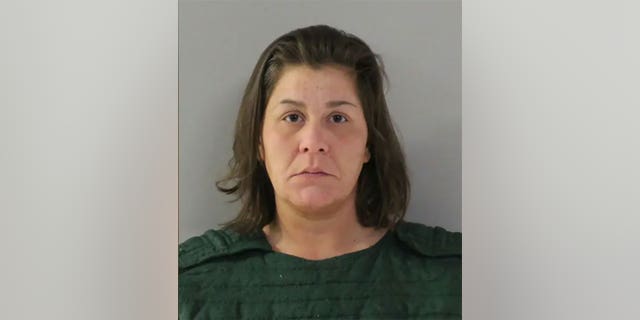
Heidi Matheny, 35, is accused of murdering her 93-year-old grandmother, Alice Matheny, by drowning her in the kitchen sink and bathtub.
Heidi Matheny, 35, is accused of murdering her 93-year-old grandmother, Alice Matheny, by drowning her in the kitchen sink and bathtub.  (Montgomery County Jail)

The 35-year-old allegedly said she then brought her grandmother to the bathtub to make sure she was dead. 

"It’s nothing that she did," Heidi allegedly said during a police interview. "She’s not – She’s the perfect freaking grandma."

"According to the confession, she was just tired of taking care of a grandmother," Eaton Police Division Chief Steven Hurd said. "It’s difficult not to take this to heart when you have a 35-year-old granddaughter who allegedly drowned her grandmother of 93 years of age in the bathtub." 

After the deed was done, Heidi left the apartment through a window and walked to the nearby sheriff’s office. 

The Eaton Police Division said officers were dispatched to the 300 block of East Somers Street on a report of a possible homicide at approximately 5:54 p.m. on Tuesday. 

Upon arrival, officers found Alice Matheny dead in the bathtub as Heidi had described. 

The granddaughter was arrested and booked into Preble County Jail on a murder charge. Though, the police department said formal charges are pending from the Preble County Prosecutor’s Office. 

The grandmother was transported to the Montgomery County Coroner’s Office for an autopsy. 

Police said there are currently no other suspects, though the case remains under investigation. 

Full Article & Source:
Ohio woman allegedly drowns 93-year-old grandmother in kitchen sink, bathtub to dodge nursing home bills

Friday, November 18, 2022

Justice Department Launches Disability Rights Investigation into Missouri’s Use of Skilled Nursing Facilities

Department of Justice
Office of Public Affairs

FOR IMMEDIATE RELEASE
Wednesday, November 16, 2022


Justice Department Launches Disability Rights Investigation into Missouri’s Use of Skilled Nursing Facilities

The Justice Department announced today that it has opened an investigation under the Americans with Disabilities Act (ADA) into whether the State of Missouri unnecessarily institutionalizes adults with serious mental illness in skilled nursing facilities. The department will investigate whether these individuals could be served in the community with services such as supported housing, assertive community treatment, crisis services and peer support services, and whether the State’s use of guardianship for people with serious mental illness contributes to unnecessary placements in nursing facilities. Guardianship is a process in which a court appoints someone to make certain decisions for a person, often including decisions about where to live.

Prior to the announcement, the department informed state officials of the investigation.

“People with disabilities have too often been unlawfully isolated in institutions and stripped of their autonomy,” said Assistant Attorney General Kristen Clarke of the Justice Department’s Civil Rights Division. “The Civil Rights Division will continue to defend the rights of individuals with mental health disabilities to access the community-based services they need and to participate fully in community life.”

The Justice Department has not reached any conclusions regarding the subject matter under investigation. Individuals with relevant information are encouraged to contact the department via email at Community.Missouri@usdoj.gov or through the Civil Rights Division’s Civil Rights Portal, available at https://civilrights.justice.gov/.

Additional information about the Civil Rights Division’s Olmstead enforcement is available on its website at https://www.ada.gov/olmstead/.

Source:
Justice Department Launches Disability Rights Investigation into Missouri’s Use of Skilled Nursing Facilities

Combating Elder Financial Exploitation Remains A Constant Battle

By Randy Yohe

James Lindsay is a financial exploitation attorney for Legal Aid of West Virginia.

Crimes of elder financial exploitation damage more than a senior citizen's bank account.

James Lindsay is a financial exploitation attorney for Legal Aid of West Virginia and a leader in a multi-agency state task force fighting elder financial abuse.

Lindsay addressed the West Virginia Legislature's interim meeting of the Children and Families Committee Tuesday. He said about half of the state’s 16,000 elder abuse and neglect cases involve financial exploitation.

“Financial exploitation is what we call the biggest ‘silent crime’ in the United States,” Lindsay said. “One study from the Government Accountability Office found about $5.5 million in assets from about 158 incapacitated victims, most of whom were seniors. The estimated cost of financial exploitation in the United States is approximately $3 billion.”

Lindsay listed the usual suspects in elder financial exploitation, including computer hackers, identity thieves, IRS scams, government impostors and impostor businesses. However, he focused his remarks on nearly half of all state and national scam artists, calling them the ‘“unusual suspects.”

“These people come from diverse professional backgrounds. We've had engineers, bankers — these are trusted agents, consumers, friends, family, people who the elderly trust with their finances,” Lindsay said. “A lot of family members, spouses, caregivers, needy children, grandchildren, best friends and neighbors, guardians and conservators.”

He said several recently passed West Virginia laws have greatly aided in investigation, prosecution and returning millions in lost assets.

“Judges can award double or treble damages under the statutes. There is a fee shifting statute to the preponderance of the evidence standard,” Lindsay said. “We have a two year statute of limitations in West Virginia. Judges also have the power to freeze assets, provide injunctive relief, appoint receivers, void contracts or require security be posted.”

Lindsay told lawmakers that creating a state consumer protection penalty and restitution fund would bolster the criminal battle and aid victims in recovery.

“The fund would provide consumer enforcement actions and distribute compensation to eligible consumers and victims,” Lindsay said. “This is something that could be administered by a state agency.”

National studies show elder financial crime victims are twice as likely to die at an earlier age.

Full Article & Source:
Combating Elder Financial Exploitation Remains A Constant Battle

Atmore woman arrested on elder abuse, fraudulent use of credit/debit card charges

By Andrew Garner

An Atmore woman was arrested and charged with elder abuse and exploitation charges on Oct. 24, according to the Atmore Police Department.

Shelley Lafever
Public Information Officer Sgt. Darrell McMann said in a release that Shelley Lafever, 39, of Atmore, was charged with financial exploitation of the elderly, forgery III, fraudulent use of a credit/debit card and elder abuse and neglect III.

McMann said the arrest stemmed when an elderly victim came to the APD on Oct. 18 to report that her daughter, Lafever, had allegedly used her debit card numerous times without permission.

“The victim was contacted by an investigator and it was discovered that Lafever had used the debit in excess of 25 times without permission,” McMann said. “Several checks were also forged by Lafever over the course of a few months.”

McMann said the victim feared for her safety and moved from the residence.

“After speaking with the victim, the investigator discovered the victim suffered severe emotional distress in reference to the declining condition of the residence and the emotional trauma created by Lafever,” he said. “

McMann said arrest warrants were signed on Lafever, and she was arrested on Oct. 24, and transported to the Escambia County Detention Center in Brewton.

Full Article & Source:
Atmore woman arrested on elder abuse, fraudulent use of credit/debit card charges

Thursday, November 17, 2022

Lewiston Woman Charged with Felony Neglect of a Vulnerable Adult After Her 72-Year-Old Mother Dies in Her Care

Cindi Williams

LEWISTON - A 37-year-old Lewiston woman has been charged with Neglect of a Vulnerable Adult, a felony, after her 72-year-old mother, who was in her care, died. According to a release from the Nez Perce County Prosecutor's Office, detectives with the Lewiston Police Department began investigating the death and observed injuries common with neglect. 

On Friday, November 11, the Lewiston Fire Department responded to a medical call at a residence in the 3100 block of 7th Street regarding an unconscious 72-year-old woman. Firefighters and medical personnel arrived on scene to find the woman to now be breathing. According to the Nez Perce County Prosecutor's Office, the woman was then transported to St. Joseph Regional Medical Center where she later died. 

The Lewiston Police Department was then notified over concerns regarding the suspicious death, which prompted an investigation. Detectives with the LPD began their investigation where they observed the woman to have injuries common with neglect. 

The release from the Prosecutor's Office states that detectives learned the victim had dried blood/fecal matter on her body, bed sore injuries common with laying in one position without moving, extremely long/curling toe nails, malnourishment, and was covered in dark brown vomit. The doctor tending to the victim also reported finding multiple hygiene dermatitis rashes and skin breakdowns over the victim's entire body, which was worse in the pelvic region and buttocks, and on the left side of her body.

It was then learned that 37-year-old Cindi Williams, of Lewiston, was the sole person taking care of her. According to a Probable Cause affidavit, Ms. Williams was allegedly tending to the care of the victim to include bathing, feeding, and providing care for the last 3-4 years.

While serving a search warrant on the residence, LPD Detectives found the house to be extremely cluttered, littered with assorted clothes, and other property/trash. All detectives wore personal protective equipment because of the unsanitary conditions.

A small white toy poodle was also found huddled on the kitchen floor that was distressed and obviously in poor health. Animal Control responded to the scene and took the dog to the vet for examination.

Detectives then placed Ms. Williams into custody and she was later booked into the Nez Perce County Detention Center.

In court, the Nez Perce County Prosecutor’s Office filed a single felony count of Neglect of a Vulnerable Adult charge against Ms. Williams. The Prosecutor’s Office asked for $20,000 bond because of the nature of the charges and Ms. Williams does not have any prior failure to appear warrants or felony cases. Judge Sunil Ramalingam ordered a $10,000 bond.

The investigation is ongoing and additional charges will be considered once an autopsy has been completed.

Full Article & Source:
Lewiston Woman Charged with Felony Neglect of a Vulnerable Adult After Her 72-Year-Old Mother Dies in Her Care

Associate Attorney General Vanita Gupta Delivers Remarks at Elder Justice Coordinating Council Meeting

Associate Attorney General Vanita Gupta Delivers Remarks at Elder Justice Coordinating Council Meeting
Washington, DC - Tuesday, November 15, 2022
 
Remarks as Prepared for Delivery

Thank you for that warm welcome, Acting Assistant Secretary Barkoff. It is a pleasure to join you once again and to represent the Department of Justice at the Elder Justice Coordinating Council, alongside Andy Mao, the Department’s National Elder Justice Coordinator.    

I would like to thank Deputy Secretary Palm for the leadership role that HHS has played on the Council and for partnering with Council participants to protect older Americans from abuse, neglect and financial exploitation. 

For the past decade, combating elder fraud and abuse has been a top priority for the Justice Department. We remain committed to doing all we can to restore dignity to older adults who have been abused, and to repair the sense of safety and security for those who have been financially exploited or defrauded. Prevention, early detection and early intervention — combined with partnership at every level of government — are all necessary to combat elder abuse.

Let me begin with some updates since I last spoke to this group.

As outlined in our recent annual report to Congress, the Department pursued nearly 300 criminal and civil cases in the past year on issues ranging from COVID-19 fraud to grossly substandard care in nursing homes. We also returned millions of dollars to elder-fraud victims through asset forfeitures and other actions. At the same time, we developed tools for elder justice professionals on the front lines and devoted substantial resources to victim assistance, including by responding to a record number of calls on the National Elder Fraud Hotline. And the Department participated in public outreach on numerous elder justice topics to over 150,000 individuals, including members of law enforcement, legal aid attorneys, elder justice professionals and members of the public.

Collaboration and coordination at all levels of government have been key to the success of these departmental initiatives.  

First and foremost, this is reflected in our close partnership with other federal agencies. As many of you know, the Justice Department has focused much of our elder justice enforcement on transnational schemes, which comprised nearly 40% of our cases in the past year. Our whole-of-government approach has been critical to detecting and disrupting these schemes, which include grandparent scams, romance fraud, identity theft and lottery fraud. Our work to investigate, build and prosecute these cases has involved collaboration with the U.S. Postal Inspection Services, the Department of Homeland Security, the Social Security Administration’s Office of Inspector General, as well as the Federal Trade Commission, the Consumer Financial Protection Bureau and Treasury’s Financial Crimes Enforcement Network.

Our federal partners have likewise been instrumental in helping raise awareness on issues impacting older adults. For example, with the help of the Administration for Community Living, the Consumer Financial Protection Bureau, the National Institute on Aging and others, we convened a three-day virtual symposium last April focused on the role that decision-making capacity plays in elder justice proceedings, where criminal and civil judges are frequently called upon to undertake the complex and nuanced task of trying to assess the abilities of older adults to make independent decisions about personal and financial matters. 

Equally critical for the department’s work has been our continued collaboration and coordination at the state and local level. Our federal initiatives have long benefitted from the assistance of our state and local law enforcement partners — and I am excited that the Council will be hearing today from some of our state partners who are so committed to this work. 

We also have several efforts in the works to strengthen these partnerships in the days ahead.  

One example of a successful collaboration is the National Nursing Home Initiative. Launched in 2020, this initiative is designed to coordinate and enhance civil and criminal enforcement related to nursing homes that provide grossly substandard care by drawing on a wide network of state and local professionals, including state Medicaid Fraud Control Units, adult protective services, Long-Term Care Ombudsmen, state and local law enforcement and many others. 

Next month, the initiative will launch a significant new training effort with state Medicaid Fraud Control Unit Directors across the nation. In a series of six virtual convenings, the Justice Department’s Elder Justice and Health Care Fraud Coordinators will meet with Medicaid Fraud Control Unit Directors to discuss the most effective ways to collaborate on priority substandard care cases and share best practices related to this enforcement work.

And just last month, the Justice Department’s Office for Victims of Crime announced the first of its kind effort to support a National Elder Justice Coalition Center to support the development of new state and tribal coalitions that will collaborate with federal agencies to coordinate elder justice work. The National Elder Justice Coalition Center will release a competitive solicitation early next summer to fund and support additional elder justice coalitions across the country.   

Finally, a bit of a coming attraction: I am pleased to announce that in the fall of 2023, the Justice Department will host an Elder Justice Summit specifically for state and local law enforcement. This Summit will provide a national platform for sharing strategies and best practices, information, and resources. Stay tuned for more information on this.

On behalf of the Justice Department, I want to thank you again for all that you have done and will do to advance the cause of elder justice. My colleagues and I look forward to continuing to partner with you on this important issue.   

Source:
Associate Attorney General Vanita Gupta Delivers Remarks at Elder Justice Coordinating Council Meeting

Schmanek, Theresa - 18 4101 A1 Forgery (F2) and 3 additional charges

In the beginning of September, Warrington Police received a report from an individual concerned that their 87-year-old family member was being victimized financially by their care-giver, later identified as 57-year-old, Theresa Schmanek of Philadelphia, Pa. 

Warrington Police began investigating this case and eventually discovered that Schmanek opened multiple credit cards under the elderly victim’s identity without permission and began making numerous purchases and several cash advances. 

 Schmanek was charged with Forgery, Access Device Fraud, Identity Theft, and Financial Exploitation of an Older Adult or Care-Dependent Person. Criminal charges, and any discussion thereof, are merely allegations and all defendants are presumed innocent until and unless proven guilty. 

Arrest Date:  Wednesday, November 2, 2022 - 12:00pm 

Reference ID:  2022-09-0487 

Charges:
18 4101 A1 Forgery (F2)
18 4106 A1 Access Device Fraud (F3)
18 4120 A Identity Theft (F2)
18 3922.1 Financial Exploitation of an Older Adult or Care-Dependent Person (F3) 

Incident Type:
Fraud 

Source: 
Warrington Township Police Department

Sourced via CRIMEWATCH®:

Full Article & Source:
Schmanek, Theresa - 18 4101 A1 Forgery (F2) and 3 additional charges