Showing posts with label Power of Attorney. Show all posts

Saturday, July 11, 2026

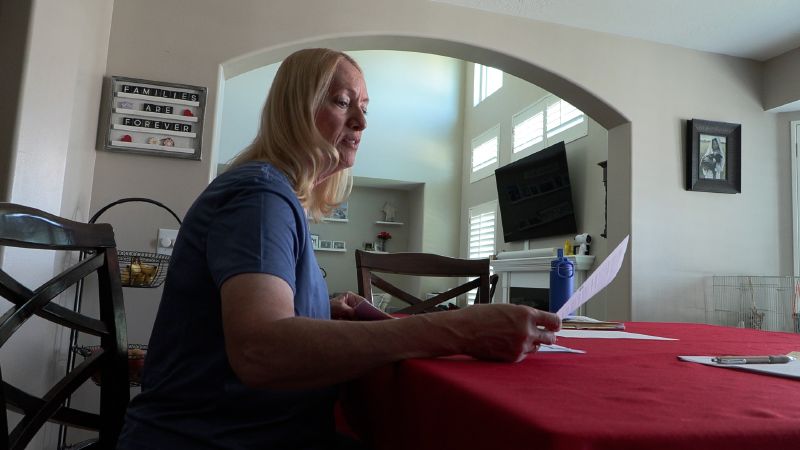
Get Gephardt helps Utah woman fight to get her power of attorney recognized

By Matt Gephardt and Sloan Schrage


KEY TAKEAWAYS
  • Pam Davis struggled to get Capital One to recognize her power of attorney.
  • Her brother was a victim of a scam, losing nearly all his assets.
  • After media intervention, Capital One finally acknowledged her authority resolving the issue.

SANDY — At some point, many of us may have to step in and help a loved one with their money — paying bills, watching accounts or cleaning up after fraud. But what do you do when a major credit card company refuses to recognize your authority over a loved one's finances?

Pam Davis has been looking out for her older brother, Stan.

"My brother has short-term memory and dementia," she said. "So, it became necessary for me to take over."

Davis recently discovered her brother was the target of a brutal pig-butchering scam. A criminal posing as a woman coaxed personal and financial information out of him. Money was taken from his bank accounts, stocks and credit cards.

"It pretty much cost him almost everything he had," Davis said.

She is trying to unwind some of that damage, including the fraudulent purchase of a MacBook Pro on her brother's Capital One credit card. But she says she can't get Capital One to recognize her power of attorney, no matter how many times she sent them the papers.

"I ended up sending them my power of attorney, my conservatorship and my guardianship," Davis said. "Then they requested all of my personal information, including my name, address, phone number, Social Security – the works from me. And still that was not enough for them to talk to me."

She even got a letter from Capital One denying the request to appoint Pam Davis as power of attorney because her brother already has a power of attorney: Pam Davis.

"They can't talk to me because they can only talk to me, which makes no sense at all," she said with exasperation.

Davis' brother has since died. But she hasn't given up because she's worried Capital One will come after his estate. So, she reached out to someone who will talk to her – me.

As the KSL Investigators began digging, we found that Utah law requires financial institutions to either accept a power of attorney or to request certification of one or an opinion of counsel – within seven days. They can't drag it on for weeks on end.

So, we contacted Capital One's public relations team to ask why they were not recognizing Davis's power of attorney. We did not get an answer, but by phone, they told us they would look into what happened.

"I want to finish what I started for him," Pam Davis had told me.

And just like that, she says they finally started talking to her and, after some back-and-forth, her brother's account was written off.

You should know that by law, there are only a handful of reasons why a power of attorney can be rejected, including if the person has already died, or if it is suspected of being fraudulent.

Photos

The Key Takeaways for this article were generated with the assistance of large language models and reviewed by our editorial team. The article, itself, is solely human-written. 

Full Article & Source:
Get Gephardt helps Utah woman fight to get her power of attorney recognized

Monday, May 25, 2026

Son charged with financial exploitation of elderly mother in Layton

by Sorina Trauntvein


LAYTON, Utah (ABC4) — A Layton man is accused of using his power of attorney to take money from his mother’s benefits for his own financial gain instead of paying her care facility bills. She has since passed away.

Chad Rylie Clark, 55, has been charged with one count of intentional or knowing financial exploitation of a vulnerable adult exceeding $5,000, a second-degree felony.

According to court documents, in September or October 2025, Clark was granted power of attorney (POA) for his mother. She had been living in a care facility with her husband for roughly two years, though her husband did not require care.

In September or October 2025, Clark’s mother was moved to a different room, and her husband moved out. Soon after, Clark allegedly began exercising his POA to receive benefits from her pension and take $9,500 out of an account she shared with her husband and moved it to a joint account between himself and his mother.

By the end of 2025, documents say Clark was “the recipient of all the reported finances of” his mother. Around that same time, her bills were only being paid partially to the care facility where she was living.

Clark allegedly led the facility to believe that he didn’t have access to all of her funds, and her husband should be covering the unpaid amount that was due. However, according to court documents, he had received a total of $58,991.93 from his mother’s benefits.

Of that amount, only around $26,783 had been paid out, leaving roughly $32,206 for Clark. His mother’s care facility showed that it was behind on payments for a total amount of $22,500

At some point during 2025, Clark reportedly took $10,000 of that and split it with his brother, directly violating his POA, which stated, “an agent that is not the spouse is not allowed to benefit from the finances or property unless specifically given authority to paraphrase.”

 Clark’s mother passed away in January 2026, documents say.

“Due to Chad [Clark] being in charge of the funds and using them for personal gain rather than paying for the care of [his mother] as the money was supposed to be used, charges are being filed,” court documents read.

Clark is not being arrested, but a summons is being issued for him to appear at any upcoming court hearings. The case was investigated by the Davis County Sheriff’s and Attorney’s Offices. 

Full Article & Source:
Son charged with financial exploitation of elderly mother in Layton 

Thursday, April 9, 2026

Streamwood woman says brother took more than $430,000 from elderly parents' financial accounts


By , Dorothy Tucker

Cathy Solway remembers a promise made with her brother to take care of their aging parents when their health began to decline and they moved into assisted living: "We're gonna take care of mom and dad as a team. We're gonna do this together." 

But then she made a discovery that changed everything.

"I left the bank, sat in my car and about had a complete breakdown from what I was seeing. A lot less money than I knew should have been in that account," she said.

Growing up

Cathy Solway and her brother, Robert Carlson, grew up in suburban Streamwood.

"We had a pretty great childhood. My brother and I were pretty happy growing up," she said.

Their parents, William and Caroline Carlson, got married in 1958 and raised their family in a modest house.

"My mom was a stay-at-home mom. She was the room mom. My dad worked hard, but they never missed anything that we were involved in," said Solway.

William Carlson served in the Air Force as a young man. After his stint in the military, he worked for United Airlines, the FAA and the Village of Streamwood. He worked practically his entire life, his daughter said.

"He was getting a decent amount of retirement benefits," said Solway.

But then came the official word her parents' health was declining.

"They both were just not able to take care of themselves," she said. "They both were in various stages of Alzheimer's. They were diagnosed in 2017 to 2019."

In 2022 the family decided to move them into assisted living, first at an Illinois facility and then into a Wisconsin facility, closer to her brother Robert.

"And my brother was like, 'You know, I'm going to make sure that their finances are taken care of and, you know, we'll make sure that their bills are paid for the house.' They still had the house that they had lived in," Solway said. 

Solway knew her parents had enough money to cover those bills plus the assisted living facilities' fees.

"I knew my dad was very good at saving money. He was very careful with his money," she said.

But her brother had surprise news. 

"He just suddenly told me in March of '23 'We need to sell their house,'" she recalled. "To be told that there's no money left was a little odd."

The discovery

After asking her brother questions and getting vague answers, Cathy said she went to the bank to check the account balance.

"When they went into assisted living [in 2022] they had over $165,000 in their savings account," she explained. "When I saw how much was left in the account, I felt that was like a gut punch."

With that initial balance, plus their parents' monthly social security and benefit payments and minus the living expenses, Solway estimated the remaining balance should still have been a large amount. 

"I'm doing the math in my head. At some point, there should be around $80,000 in there," she said. But the actual balance was much lower. "There was only about $9,200."

She looked through other statements, and said she spotted multiple large deposits, several withdrawals and checks for thousands of dollars each.

"This is what would happen: $30,000 would go in and about $30,000 would go out, but not in one lump sum," she said. 

She, along with her mother, called the three financial institutions that held her father's retirement accounts and found in the one that held her father's 401k there was a zero balance. She found just $600 left in another one. 

"Over $110,000 and that was just from those three accounts," she said.

Within months, her brother had sold the family home in Streamwood for around $160,000. That money was supposed to be used for their parents' living expenses.

Her brother had been designated power-of-attorney for the parents in early 2023, an arrangement made as part of a trust prior to the Carlsons' failing health. But by the end of the year, Solway was legally challenging his power over their financial affairs.

The court case and admissions

Solway and her attorney filed a petition to remove her brother as power-of-attorney and trustee of the family trust in December 2023 in Walworth County Civil Court.

Through the probate case, she was able to get access to detailed financial records and audio recordings from financial institutions.

"When we subpoenaed all the audio records, there were multiple times that he called and made withdrawals. They were all my brother," she said.

She said her brother called and told representatives he was his father, William Carlson. And in a deposition taken for the case he admitted the voice on the recordings was "Mine."

Some of the checks seen in the statements were made out to her brother's business, Looking Good Turf. Some had Robert Carlson's signature, but many appeared to be signed by his father.

"There were checks through '23 written for his landscaping company," Solway said. "Writing thousands of dollars of checks to his landscaping company and signing my dad's name to it."

And in his deposition, when Robert Carlson was asked who signed his parents' names on documents and checks, he answered, "Me."

By July 2024 a Walworth County judge removed Robert Carlson as power-of-attorney and trustee over the family trust. The ruling also ordered him to repay the trust more than $430,000.

Elder Financial Exploitation

The Illinois Department on Aging, or IDoA, released new data from 2025 showing financial exploitation is the leading type of abuse against people over the age of 60, and adults with a disability of any age.

Twenty-five percent of elder abuse is financial exploitation. and the 6,000 cases in 2025 are an increase from 4,500 in 2004.

"This is due to the growth of the program, but it's also due to increased prevalence of exploitation among the population," said Brian Pastor, division manager of Advocacy and Prevention Services in the IDoA. 

He said the abuser is often close to the victim.

"They're a family member. They're a trusted individual," he explained. 

The agency's data shows most often, in 34% of all cases, the abuse is committed by the victim's adult child, especially when it comes to money.

"They really do feel often in these circumstances that they are entitled to these funds because they're going to get them eventually. Which may or may not be true," Pastor said.

Solway said she doesn't expect her brother will ever repay the money. She has received compensation from at least one of the financial institutions.

Wintrust, the Carlsons' bank, told CBS News Chicago in a statement, that the judicial order did not pertain to it, so it will not repay any of the money Robert Carlson withdrew via checks to his business or for other bills.

CBS News Chicago tried to contact Robert Carlson in Wisconsin, but could not find him. Neighbors told us they thought he had moved to Florida.

Solway advised others to make sure more than one person has power-of-attorney privileges. Her parents both passed away within a few weeks of each other in 2025. 

Full Article & Source:
Streamwood woman says brother took more than $430,000 from elderly parents' financial accounts 

Saturday, March 28, 2026

The Insider Guide to the New York Power of Attorney 2026: What It Does and Why It Matters

Article source: Burner Prudentilaw PC 


A medical crisis strikes without warning, instantly stripping away your ability to manage your finances or authorize healthcare. Yet, only 24% of U.S. adults possess a designated financial or healthcare power of attorney, leaving a staggering 76% completely unprepared for sudden incapacity. Broadening the scope, research shows that only 36.7% of U.S. adults have finalized some type of advance directive. The New York Power of Attorney acts as an active financial shield against this vulnerability. Without this legal instrument, individuals risk surrendering their personal agency to the courts the moment tragedy occurs.

An Overview of the New York Statutory Short Form Power of Attorney

A Durable Power of Attorney grants a designated agent the legal authority to manage your financial and legal affairs if you become incapacitated. This document ensures your bills get paid, your investments remain managed, and your real estate stays protected while you recover. The state explicitly defines the scope of this power through the Statutory Short Form, a standardized baseline for transferring financial authority.

Strict Execution Requirements in New York

State lawmakers have overhauled the execution requirements to protect vulnerable individuals while streamlining compliance. The updated statute dictates that the document must “substantially conform” to statutory wording and requires the physical presence of two witnesses during execution. Furthermore, the legislature modified default agent permissions regarding asset transfers. Unless otherwise specified, the default amount an agent can gift on behalf of the principal now stands at $5,000 annually. Minor errors no longer automatically invalidate the document, provided the principal strictly follows these updated execution protocols.

The Financial Stakes: POA vs. Court-Appointed Guardianship

Failing to designate an agent forces your family to petition the Surrogate’s Court for control over your assets. Unplanned Article 81 guardianship proceedings in New York rapidly drain estates. Families routinely face legal fees ranging from $3,000 to $10,000 or more just to establish guardianship. The court, rather than your personal preference, ultimately dictates who controls your bank accounts and medical decisions.

FeatureWith a Power of AttorneyWithout a Power of Attorney (Guardianship)
CostMinimal upfront preparation fees.$3,000 to $10,000+ in ongoing court and legal fees.
TimeframeImmediate authority upon execution or incapacity.Months of delayed court hearings and frozen assets.
PrivacyCompletely private family matter.Public court record detailing assets and medical status.
Control Over Agent SelectionPrincipal chooses a trusted individual.A judge appoints a guardian, potentially a stranger.

Selecting an Agent and Executing the Document

Appointing the right individual and formalizing the paperwork demands strategic foresight. Follow these steps to secure your financial continuity:

  1. Assess Financial Acumen: Choose an agent with a proven track record of financial responsibility and strict attention to detail.
  2. Define the Scope of Power: Decide whether to grant sweeping, universal authority or to limit powers specifically to certain accounts and real estate transactions.
  3. Address the Modifications Section: Explicitly detail custom powers, such as creating trusts or making gifts exceeding the $5,000 default, which the standard statutory form ignores.
  4. Execute with Precision: Sign the document before a notary public and two disinterested witnesses to satisfy New York’s rigorous statutory demands.

The Danger of Blank Modifications and Generic Forms

Downloading a generic legal template online severely jeopardizes your estate. These rigid, standardized forms frequently leave the critical “Modifications” section entirely blank. This crucial omission strips your agent of the legal authority to perform vital Medicaid planning, establish protective trusts, or execute complex tax strategies.

To truly safeguard unique assets and prevent catastrophic financial losses, these documents require customized legal drafting. Engaging an experienced estate planning attorney guarantees your documents cover every possible financial contingency.

Their firm ensures your advance directives, including the Power of Attorney, are precisely tailored and fully compliant with New York law. They structure every document to meet the unique statutory requirements of your estate, securing your assets against unpredictable medical crises and strict judicial scrutiny.

Managing Potential Challenges: Exploitation and End-of-Life Authority

Mitigating the Risk of Financial Exploitation

A Power of Attorney transfers immense financial control, inherently carrying a severe risk of abuse if handed to the wrong person. Financial exploitation currently affects 42 out of every 1,000 older New Yorkers, marking it as the most prevalent form of elder mistreatment in the state. The reality is actually far grimmer, as an estimated 44 cases go unreported for every single incident reported to authorities. Principals must institute strict checks and balances, such as naming co-agents or appointing an independent monitor to oversee the primary agent’s transactions.

Navigating New York’s Shifting End-of-Life Directives

Financial continuity means little without a parallel strategy for medical decision-making. Your financial POA must operate in coordination with a legally binding Health Care Proxy and a detailed Living Will. The landscape of medical directives in New York is rapidly shifting, fundamentally altering end-of-life planning.

State lawmakers have expanded these options significantly. The Medical Aid in Dying (MAiD) Act, taking effect in August 2026, establishes new legal end-of-life choices for terminally ill adults. This legislation makes possessing flawlessly executed healthcare directives alongside a financial POA absolutely urgent. Clear, legally sound documents provide the only guarantee that medical professionals will honor a patient’s exact treatment wishes.

Taking Command of Your Financial Continuity

A New York Statutory Short Form Power of Attorney operates as a foundational pillar of modern asset protection, far exceeding a simple contingency plan. It guarantees your financial framework remains intact, and your family avoids the devastating costs of judicial intervention. Act methodically today to secure your legacy, designate a trusted agent, and keep your financial destiny entirely out of the courtroom.

Full Article & Source:
The Insider Guide to the New York Power of Attorney 2026: What It Does and Why It Matters

Sunday, March 1, 2026

Local woman who had power of attorney for 93-year-old pleads guilty to financial exploitation


By Christopher Dacanay 

A local woman has pleaded guilty to financially exploiting an elderly person.

Indiana County District Attorney Robert Manzi says Kathy Sue Twigg, 65, of Brush Valley, entered a guilty plea for financial exploitation of an older adult or care-dependent person, as well as theft by failure to make required disposition of funds and misapplication of entrusted funds.

Indiana County detectives received a report that the victim — a 93-year-old, care-dependent woman — was removed from her nursing home for failing to make payments.

Full Article & Source:
Local woman who had power of attorney for 93-year-old pleads guilty to financial exploitation

Friday, December 12, 2025

Charlotte man fights plan to demolish grandmother’s home as she battles dementia

By Nora O'Neill

The house at 5701 Monroe Road sits beside county-owned land slated for Park and Recreation use. A Charlotte man is asking a judge to pause its demolition while he seeks guardianship over his grandmother, who has dementia. Screenshot via Google Street View


As Mecklenburg County prepares to demolish a Monroe Road house for a parks and recreation project, one man is racing the clock in court to save what he says is the only major asset of his nearly 90-year-old grandmother who has dementia.

“It’s against her wishes,” Tyler Dease said. “Everything screams, ‘stop, this is not right.’”

The home, located at 5701 Monroe Road, was sold to the county in May for $450,000, according to public records. The sale was completed through a power of attorney, a legal document that allows someone to act on another person’s behalf. County commissioners unanimously approved the purchase for Park and Recreation use.

But Dease said his grandmother, Joan Baker, has dementia and lacked the mental capacity to consent to the power of attorney that allowed her home to be sold. Baker is currently living with a family member since her house was sold.

“She can’t make a decision to save her life,” he said. “If Joan’s not mentally incompetent, why did somebody else sell her house?”

Baker had a stroke in 2016 and was later diagnosed with dementia, Dease said. He said her condition has only gotten worse, and she is often confused and unable to understand or make major decisions.

Now, Dease is seeking legal guardianship over his grandmother and has asked in Mecklenburg County Court for a judge to temporarily halt any demolition of the home while the court reviews her condition and the authority used to sell the home. Dease also filed a motion asking for a temporary restraining order to freeze the sale proceeds and suspend the authority under the power of attorney, according to court records.

“It’s just irreparable harm overall if her house is demoed. It’s her only asset,” he said.

But the judge has not yet acted on the request because the court paperwork has not been formally served to Baker, leaving no court order preventing demolition.

A hearing on whether Baker should be declared legally incompetent, the first major step toward guardianship, is scheduled for January. The court has appointed an attorney to represent Baker’s interests.

Meanwhile, demolition could legally happen at any time.

Dease said he first realized the demolition may happen soon when he drove past the home the week of Thanksgiving and saw some siding was removed. When he called the county’s permitting office, staff confirmed an active demolition permit had been issued.

The Monroe Road house sits next to land already owned by the county, where Park and Recreation officials are developing a new recycling center, Dease said. It is unclear exactly what the county will do with the land where Baker’s house sits, but Dease said he suspects it will become part of the project.

Dease said he has contacted county officials to explain that his grandmother had dementia and that court filings were underway. He said his goal was simple: slow things down long enough for a judge to review what happened.

“There’s a chance that this may not be a positive outcome,” Dease said. “At this point we’re just trying to make it aware that Joan Baker might not know what’s going on, and that the power of attorneys that are supposedly acting on her behalf can’t be legal because of her mental capacity.”

In an email to the Observer, a county spokesperson confirmed only that commissioners authorized the purchase of the parcel from Baker for Park and Recreation purposes. The county did not answer specific questions about the demolition timeline, pending court filings, or Baker’s mental capacity.

Dease said he does not believe the county knew about his grandmother’s dementia or the family’s legal concerns at the time of the sale. But with a guardianship case now pending, he hopes officials will voluntarily pause demolition before a judge can weigh in, especially given what the property – which sits near where his grandfather is buried – represents to his family.

“It’s very sad,” Dease said. “This isn’t just a house to us.” 

Full Article & Source:
Charlotte man fights plan to demolish grandmother’s home as she battles dementia

Tuesday, October 21, 2025

Senior Allegedly Defrauded of $41K by Woman with Power of Attorney

by Ryan Yousefi

A woman has been accused of exploiting a senior citizen for tens of thousands of dollars, according to an arrest warrant filed in Broward County Circuit Court.

According to court records, on October 7, the Broward County Sheriff’s Office Crime Suppression Team identified the suspect as Millicent Ho Sue, 73, of Lauderhill. Investigators gained a warrant that charged Ho Sue with two felony counts, including one charge of exploitation of the elderly in the amount of a sum under $100,000.

According to the affidavit, investigators allege that Ho Sue obtained power of attorney over the victim and then misappropriated or transferred funds without authorization. The total amount of alleged financial loss is approximately $41,180.30.

Court records indicate the alleged offenses took place on July 1, 2024, and involved unauthorized cash advances and credit card activity tied to the victim’s accounts.

Following the investigation, Ho Sue was arrested at her Lauderhill home and transported to the Broward County Main Jail. Bond has been set at $50,000. 

Full Article & Source:
Senior Allegedly Defrauded of $41K by Woman with Power of Attorney 

Wednesday, September 24, 2025

Investigators Say Harmony Woman Drained Father’s Account of $39,000

by Zech Sindt 

A Harmony woman is accused of draining her elderly father’s bank account of more than $39,000 while serving as his power of attorney.

Debra Ann Hebrink, 68, faces five felony counts of financial exploitation of a vulnerable adult and one felony count of theft by swindle in Fillmore County District Court. Her first appearance is scheduled for October 14.

The Fillmore County Sheriff’s Office opened the case after receiving a report from the Minnesota Adult Abuse Reporting Center on January 7. The report alleged that Hebrink misused funds belonging to her father. Fillmore County Social Services joined the investigation.

Bank records showed that the man’s home was sold in June 2022 for $169,000 and the money was deposited into his account. He rented the home from the buyer until moving into Harmony Place assisted living in May 2024. After that move, investigators noted a pattern of withdrawals and purchases that did not match his past spending habits.

On January 21, 2025, investigators met with Hebrink at the county office building in Preston. She was advised that she was not under arrest and that she was free to leave at any time. Officials reminded her that as power of attorney, she was required to keep receipts showing how her father’s funds were used. She replied, “Well, nobody told me that I need to keep every little bitty receipt.”

Records show a series of purchases between April 2024 and January 2025 that investigators say were for Hebrink’s personal benefit or for other family members.

Restaurant spending totaled $2,213 at local establishments and national chains. When asked about the dining, Hebrink told investigators, “I had to eat.” During that same time, about $11,195 was withdrawn as cash, with deposits in similar amounts appearing in her personal account. She admitted the withdrawals were for her to live on, explaining that she was unable to work and relied only on Social Security. When asked if her father was aware of the cash being taken out, she said, “He doesn’t want to know any of that.”

Investigators also found payments for Hebrink’s car insurance and repairs, totaling more than $3,300. A $1,782 purchase at Slumberland was confirmed by Hebrink as a bed for her adult son. She also admitted to using $4,455 for her granddaughter’s orthodontic care.

Other spending included $3,671 at convenience stores and purchases at Walmart, Target, Scheel’s, and other retailers. Payments were also made to an online beauty store, a local community education program, and toward what appeared to be one of Hebrink’s loans. Two checks totaling $675 were written, which she said were to help her grandson.

On January 27, investigators and social services staff met with the victim at his assisted living apartment. He said he has short-term memory problems and did not know about the orthodontist payments, the bed, or the car expenses. When asked if he knew that his daughter was using his money to pay her rent, he said, “No, I didn’t know. I don’t know what she used or took off. Really, I don’t.”

By December 2024, the account was fully depleted. With no remaining funds, the man was forced to apply for assistance to cover rent at Harmony Place.

The complaint breaks down the losses in two stages. Between April and October 2024, Hebrink made unauthorized purchases totaling $28,134. From October 5, 2024, through January 2, 2025, she spent another $11,073. In total, she is accused of misusing $39,207 of her father’s money.

The most serious charge carries a maximum penalty of 20 years in prison and a $100,000 fine. Other charges carry maximum penalties of 10 years in prison and $20,000 fines.

Court records show Hebrink’s first appearance is scheduled for October 14 at 1:30 p.m. before Judge Jeremy Clinefelter. 

Full Article & Source:
Investigators Say Harmony Woman Drained Father’s Account of $39,000 

Saturday, August 23, 2025

Police: Man stole nearly $1 million from his grandmother in Indiana nursing home


LOUISVILLE, Ky. (WDRB) -- Indiana State Police said a man stole nearly $1 million from his grandmother while she lived in an assisted living facility in southern Indiana.

In a news release Thursday, ISP said Eric Dyer, a 54-year-old man from Batesburg, South Carolina, was named power of attorney over his grandmother in 2021 as she lives in a facility in Madison, Indiana. In May 2024, a bank reported "suspicious transactions" to police.

A review of bank records between 2022-24 showed Dyer withdrew nearly $1 million from his grandmother's bank accounts for his personal use and was also behind in paying her balance at the assisted living facility.

ISP arrested Dyer on Thursday at a hotel in Madison. He's charged with theft, money laundering, corrupt business influence, neglect of a dependent and elder abuse. 

Full Article & Source:
Police: Man stole nearly $1 million from his grandmother in Indiana nursing home 

Thursday, August 7, 2025

FOX5 Investigates Update: Las Vegas woman sentenced for exploiting elderly neighbor


By Lisa Sturgis

LAS VEGAS (FOX5) — It’s the final chapter in a case of fraud FOX5 Investigates first told you about in January. Tuesday, a judge sentenced a Las Vegas Valley woman to a much stiffer penalty than typical for exploiting her elderly neighbor and taking everything he owned.

“We have a situation here where you signed legal documents with a power of attorney you never should have had in the first place, where you ran up credit cards, where you stole identity, where your sold a trailer, or mobile home, knowing that it was not yours to sell and planning on keeping the money, so this is a long process of weeks or months,” said Clark County District Court Judge Crystal Eller in addressing Ursula “Bobbi” Lichtenstein.

Judge Eller took prosecutors’ recommendations and sentenced Lichtenstein to nine months in jail plus two years’ probation.

Lichtenstein pleaded guilty to elderly exploitation in May. She sold Robert Cartagena’s mobile home after gaining financial power of attorney. She also disposed of his belongings and drained his bank accounts, leaving him in what his neighbors called hospice care.

Robert Dekken, the manager of the Las Vegas Jaycees Senior Community Park, contacted FOX5 Investigates after Cartagena disappeared from the park, only to surface in the long-term care facility weeks later. More than a year after that, police arrested Lichtenstein, and the Clark County District Attorney’s Office moved forward with an aggressive prosecution. However, they found their sentencing options limited.

“It’s shocking that in Nevada, there is a shocking amount of unlimited money that you can steal from anyone, whether it’s an elderly person or a vulnerable person, any private citizen, anyone, you can steal $50 million from someone, go to trial, get convicted, and it’s still a probational offense,” said the prosecutor.

And the amount stolen from Cartagena was not the only offense of which her neighbors accused her.

“She’s been a persistent threat to the safety, well-being, and integrity of our entire community. She’s harassed staff and residents, manipulated elderly individuals into giving her financial power of attorney over them, and has inserted herself repeatedly into medical emergencies under the guise of helping when in truth her form of help has led to financial control and asset theft,” Dekken told the court.

Residents reported conflicts with Liechtenstein even after the courts ordered her to stay away.

“Ms. Lichtenstein was originally remanded into custody in Justice Court for violating the terms of her release flagrantly and offensively, shockingly offensively,” said the prosecutor. “She refuses to follow any orders given by any court while she’s out of custody. All she had to do was be nice, be nice and avoid the residents of the mobile home park, and she couldn’t do that, she refused.”

Dekken told the court that, at times, it got ugly.

“She has threatened my life on multiple occasions. Blocked me in with her car, I have video of that, pretending to have a weapon by placing both hands in her pockets, attempting to provoke a reaction from me,” he said. “Since I initiated the investigation into Ms. Lichtenstein, she has filed multiple retaliatory complaints against me with Nevada Manufactured Housing and contacted my employer repeatedly in an attempt to have me terminated.”

Multiple former neighbors addressed the court, asking the judge to impose a harsher sentence and to keep Lichtenstein out of their park.

When given a chance to speak, the defendant again denied the accusations despite having entered a guilty plea. The prosecutor noted, she did not offer any apology.

“This is a woman who believes that anything she can get her hands on belongs to her and again feels no remorse for her decisions,” the prosecutor told the court.

Lichtenstein’s attorney argued against jail time, citing positive references from some of her former neighbors, although they did not appear in court on her behalf. The defense also questioned what would be accomplished by jailing a 76-year-old woman. However, Lichtenstein will spend the next nine months in the Clark County Detention Center. 

Meanwhile, Cartagena continues to live in the mobile home park. He’s staying with his estranged wife because the sale of his previous home could not be reversed. He’s awaiting restitution for the $57,000 Lichtenstein admits to taking from his bank accounts.

Dekken says, at one point, the stress from this incident prompted his wife to urge him to quit his job. He’s still overseeing the park and hopes today’s sentencing will afford him and his residents the peace they’ve been seeking for years. 

Full Article & Source:
FOX5 Investigates Update: Las Vegas woman sentenced for exploiting elderly neighbor 

Friday, June 6, 2025

‘He failed in his fiduciary duty’: My brother liquidated our mother’s 401(k) for her nursing home. He claimed the rest.

‘My brother, the executor of her will, coerced her during her illness to give him power of attorney’

By Quentin Fottrell 


Dear Quentin,

My mother recently passed away; she had blood cancer, which was diagnosed 2023. I was to receive half of all her assets. My brother, the executor of her will, coerced her during her illness to give him power of attorney. My mother and brother liquidated her significant 401(k) account into a fund to help with home/nursing care. 

My brother is now stating that the balance, which was not consumed by nursing-home costs, is lawfully his. I have requested a copy of the power-of-attorney document. I have, in-hand, all wills by my father and mother where it clearly states all assets are to be divided equally, including stocks in her 401(k). I also have texts stating that the funds were liquidated for this purpose. 

My understanding is that he failed in his fiduciary duty as the POA was void at death. 

What can I do?

The Sister


Dear Sister,

It may or may not have been a good idea, at the time, to liquidate your mother’s 401(k) to pay for her nursing home, but desperate times sometimes call for creative measures. To do it all at once raises questions about tax implications and your brother’s motivations for creating such a pile of cash. Given that he now lays claim to it, the answer seems to paint him in a bad light.

The only way he could access this money — as you say, his POA duties were null and void upon your mother’s death — is if he deposited this money in a bank account with his name on it. Either that, or he added his name to an existing account in your mother’s name. It’s an old trick: telling an elderly parent you’re a co-signer while making yourself a co-owner.

Larceny, the theft of someone’s property, is a felony in most states, depending on the amount stolen. He is likely betting on your legal inexperience and good nature to get away with it. There is a statute of limitations on elder financial abuse in most states, and you should treat this as such.

Larceny, the theft of someone’s property, is a felony in most states, depending on the amount stolen.

The Securities Industries and Financial Markets Association, or Simfa, has a checklist for financial abuse, including “numerous withdrawals of smaller amounts” and “changing power of attorney or the beneficiaries on insurance or investment accounts.” Simfa recommends people in your position to contact an Eldercare Locator information specialist toll-free on 800-677-1116 weekdays, 9 a.m. to 8 p.m. Eastern time. It has both English- and Spanish-speaking specialists. 

But now you are faced with a dilemma: Can you prove that your brother committed fraud and/or elder financial abuse by helping himself to her substantial 401(k)? If he had, for instance, taken a reverse mortgage on your mother’s house to pay for the home, the remaining equity would have remained in your mother’s estate and, as such, would have gone through probate. 

The sooner you consult a lawyer and contact your late mother’s bank, the better. Executors and power of attorneys, as you suggest, don’t have unfettered power. They have a legal responsibility to act in their client’s best interest, and they can face civil and criminal penalties for failing in those duties. Self-dealing is obviously a no-no.

Your attorney will likely advise you to file a petition and remove your brother as executor and, hopefully, freeze any bank accounts that he has access to. Executors can be removed for enriching themselves at the expense of the estate through incompetence or financial malfeasance. You’re being hoodwinked and gaslighted by your brother.

Full Article & Source:
‘He failed in his fiduciary duty’: My brother liquidated our mother’s 401(k) for her nursing home. He claimed the rest.  

Tuesday, May 6, 2025

Suspended Orlando commissioner Hill’s elder abuse trial delayed as defense subpoenas records

by Cristóbal Reyes, Orlando Sentinel


The trial for suspended Orlando city Commissioner Regina Hill was pushed back again Tuesday as her legal team finishes preparing to defend her against charges of exploiting and defrauding an elderly woman in her care.

In a two-minute hearing with Judge Michael Kraynick, Hill’s lawyers requested a new appearance be set for Aug. 13. A new trial date, initially set for May 12, has not been scheduled as they finalize depositions with key witnesses and subpoena records crucial to her defense.

On April 16, Hill’s lawyers filed a motion seeking communications between the alleged victim’s caretaker following Hill, lawyers working with the elderly woman and the Florida Department of Law Enforcement, who they said circled the wagons to go after the former commissioner. It further seeks communications with federal housing authorities and local real estate agents regarding renovation and sale of two homes prosecutors said are part of the fraud charges.

A hearing on that motion is scheduled for Monday morning.

After Tuesday’s hearing, Fritz Scheller, one of Hill’s lawyers, briefly spoke with reporters outside the courthouse, saying the new delay is part of the process to clear the former commissioner, who sat in the gallery as the proceeding took place.

“I expect the commissioner to be fully vindicated,” said Scheller, who represents her pro bono along with attorney John Notari. “She’s a champion of the people, she always has been. One of the best parts of representing her in this case is the countless lives she’s changed and touched.”

Last month, a motion seeking the medical records of the alleged victim, a 96-year-old woman whose finances prosecutors said Hill dubiously acquired and lavishly spent for personal gain, offered a glimpse of her defense: that the woman — whose name the Orlando Sentinel is not publishing — was of sound mind when she gave the commissioner power of attorney over her affairs and approved of the transactions at the center of the case.

That filing further claimed FDLE went after Hill despite a previous investigation by the Florida Department of Children and Families clearing her of wrongdoing. Details of that investigation have not been made public, while the alleged victim’s medical records have yet to be reviewed by the court.

Hill’s lawyers said the evidence also points to a different perpetrator: the victim’s caretaker, who they claim pulled round-the-clock caregivers, sold the woman’s home and trashed her belongings — among them her family Bible and her late husband’s flag commemorating his military service with the Tuskegee Airmen.

Hill has maintained her innocence from the beginning, saying she met the alleged victim in 2021 after stepping in to repair her house and has been friends with her since. She was suspended from office following her arrest and replaced by Shan Rose, who took the seat on the City Commission after a special election.

Inside the courtroom, Hill expressed frustration at the decision to further delay the trial since it creeps closer to November’s election, for which she filed to take back her seat from Rose.

Though she didn’t speak much outside the courthouse, she made it clear to reporters when she hopes her case is resolved in light of the election: “Before,” she said as she walked away.

Full Article & Source:
Suspended Orlando commissioner Hill’s elder abuse trial delayed as defense subpoenas records

See Also:
Suspended Orlando city commissioner Regina Hill's trial delayed, pushed to 2025

Editorial: Florida should find better ways to stop financial abuse

Orlando Commissioner Hill’s case part of ‘epidemic’ of elder abuse, experts say

Buddy Dyer sets May 21 Special Election to replace Regina Hill

Attorneys predict there will likely be prison time for Regina Hill

Preparations underway for Orlando special election to fill Regina Hill's city commission seat

Community members have mixed emotions over arrest of Commissioner Regina Hill

US official spends elderly woman's $100,000 savings on facelift, new home

Orlando Commissioner Regina Hill accused of financial exploitation of 96-year-old woman

Orlando Commissioner Regina Hill arrested, faces charges of elderly exploitation, mortgage fraud

Sunday, March 9, 2025

Local senior service worker sentenced for exploiting elderly client's finances

by WKRC


CINCINNATI (WKRC) - An employee of a senior service provider was sentenced to nine months in jail for stealing from a woman she was supposed to help.

Brenda Cowden was a caseworker responsible for placing seniors into care facilities. The victim lived alone with no close friends or family. Cowden was assigned to the victim who could no longer safely live at home.

In February, prosecutors said Cowden convinced the 79-year-old victim to sign a power of attorney, illegally adding witness signatures afterward. Cowden gained control over the victim's accounts.

In all, Cowden obtained $13,600 of the victim's money directly and had control over more than $1 million dollars before investigators at GE Credit Union froze an account and notified Sharonville Police.

Had there not been an investigation, Cowden would have likely received all of the victim's money when she died.

Cowden pleaded guilty to theft from a person in a protected class. In exchange for the plea charges of telecommunications fraud, forgery and others were dropped.

Cowden could have been sentenced to 61 years in prison if she'd been convicted of all charges.

Full Article & Source:
Local senior service worker sentenced for exploiting elderly client's finances

Wednesday, February 5, 2025

Area Woman Accused of Draining Elderly Mother’s Bank Accounts Faces Hearing Today

A woman has been charged with financially exploiting her elderly mother in Punxsutawney, and stealing over $150,000 through her role as power of attorney, state police said.

by Jen Russell


JEFFERSON CO., Pa. (EYT)
— An area woman accused of stealing over $150,000.00 from her elderly mother through her role as power of attorney is scheduled to appear in court on Tuesday morning.

According to court documents, a preliminary hearing for 56-year-old Kelly Jo Wright, of Ridgway, is scheduled for Tuesday, February 4, at 11:00 a.m., in front of Magisterial District Judge Jacqueline J. Mizerock.

Wright faces the following charges:

  • Financial Exploitation of an Older Adult or Care-Dependent Person, Felony 2
  • Theft by Deception-False Impression, Felony 2
  • Theft by Deception-Prevent Acquisition of Information, Felony 2
  • Theft by Deception-Failure to Correct, Felony 2

She is currently lodged in Jefferson County Jail.

Details of the case:

According to Punxsutawney-based State Police, the investigation began when Wright’s sister reported suspected theft in September 2023.

Medical records show the victim has been treated for dementia since 2020, with her condition listed as “moderate,” making her vulnerable to exploitation, police noted.

State Police Trooper Michael C. Malloy’s investigation revealed that Wright became power of attorney for her mother in March 2022, according to a criminal complaint, and Wright allegedly proceeded to drain her accounts through ATM withdrawals, gambling expenditures, and payments of personal debts over an 18-month time period, beginning around March 2022 to approximately September 19, 2023.

It was learned in the investigation that Wright allegedly spent thousands at casinos and gambling establishments, including businesses in Punxsutawney and Reynoldsville, where she was reportedly gambling up to three to five times per week. Additionally, investigators obtained Wright’s gambling records from Seneca Casino in Salamanca, New York, showing net losses of over $17,000.00 in 2022 and over $7,000.00 in 2023, according to the complaint.

The victim’s monthly income included Social Security benefits, her ex-husband’s pension payments, and IRA deposits, the complaint states.

According to the complaint, Trooper Malloy learned that Wright surrendered her mother’s $123,000.00 IRA against financial advisors’ recommendations, then withdrew over $106,000.00 in cash within 23 days, the complaint continues.

The Jefferson County Area Agency on Aging had previously investigated in April 2022 after receiving a referral about possible exploitation. During their month-and-a-half investigation, protective services workers made home visits and exchanged correspondence with the victim. Wright claimed she was using the IRA money to build a home addition for her mother — renovations that police believe never occurred, the complaint notes.

According to the complaint, the investigation revealed that Wright was operating a rescue horse farm, caring for more than 30 horses, donkeys, dogs, and cats. It was noted there are substantial costs that are associated with maintaining such an operation.

According to the complaint, Wright stated her only source of income was her monthly Social Security benefit in the amount of approximately $1,600.00.

It was also noted in the complaint that the case is further complicated by a separate theft charge against Wright involving a male victim, where she allegedly received transfers totaling nearly $200,000.00 in April 2023, the complaint states.

Full Article & Source:
Area Woman Accused of Draining Elderly Mother’s Bank Accounts Faces Hearing Today

Saturday, January 18, 2025

Understanding Adult Guardianship: When and How It Works


by Procino-Wells & Woodland, LLC

January 15, 2025

As we navigate through life, the possibility of becoming incapacitated—whether due to illness, injury, or cognitive decline—can raise important questions about how our affairs will be managed. If such a situation arises and you can no longer handle your own affairs, there are two primary avenues through which someone else can legally act on your behalf: a Power of Attorney or a court-appointed guardianship. Understanding these options is crucial for effective planning and ensuring that your wishes are respected.

Power of Attorney: A Private Solution

A Power of Attorney (POA) is often regarded as one of the most vital tools in estate planning. This legal document allows you to appoint an Agent—someone you trust—to make decisions regarding your financial and legal matters if you become unable to do so yourself. The scope of authority granted in a POA should be broad, ensuring your named Agents aren’t limited in the ways they can support you if the need arises.

Advantages of a Power of Attorney

1. Cost-Effective: Establishing a POA is less expensive than pursuing a guardianship through the court.

2. Privacy: The POA process is private, and the details of your affairs do not become a matter of public record.

3. Choice of Agent: You have the freedom to choose who will act on your behalf, ensuring that your Agent is someone who understands your values and wishes, and that you trust implicitly.

However, if a valid, thorough POA is not in place, or if conflicts arise regarding its interpretation, the need for a guardianship may become necessary.

Guardianship: A Court-Mandated Process

When a person is deemed incapable of managing their affairs and a POA is insufficient or non-existent, a guardianship may be sought through the Court of Chancery. This is a more formal and public process that involves several steps and requirements.

How Guardianship Works

1. Petitioning the Court: A person wishing to become a guardian must file a petition with the court. This petition typically requires medical and other evidence demonstrating that the individual is indeed incapacitated. Formal notice of the pleadings must also be given to all interested parties.

2. Appointment of Attorney Ad Litem: The court appoints an attorney to represent the person with an alleged disability. The attorney ad litem’s role is to confirm to the court that the person needs a guardian and that the petitioner is the best candidate for this role.

3. Court Assessment: The court will evaluate the evidence presented, and if it finds that the individual cannot manage his or her own affairs, it will appoint a guardian. This guardian can be responsible for the person’s health and personal care, financial matters, or both.

4. Ongoing Oversight: Once appointed, the guardian is required to submit annual accounts to the court throughout the duration of the guardianship, providing updates on the incapacitated person’s health and financial status. This oversight ensures that the guardian acts in the best interests of the individual.

Disadvantages of Guardianship

1. Public Proceedings: Unlike a POA, guardianship proceedings are public, which means personal income and asset information is exposed. Related and interested parties must also be publicly notified and receive copies of the pleadings.

2. Potential for Disagreement: The court may appoint a guardian who is not your preferred choice, potentially leading to conflicts among family members or friends.

3. Cost and Complexity: Guardianship can be a lengthy and costly process, often requiring legal assistance to navigate court filings and hearings.

Choosing the Right Option for You

While a Power of Attorney is generally the preferred method for ensuring your affairs are managed according to your wishes, it is essential to have it in place well in advance of any potential incapacity. If a POA is not established, if it is not thorough and comprehensive, or if complications arise, guardianship may be the necessary route.

At Procino-Wells & Woodland, LLC, we understand the complexities of guardianship proceedings. Our team provides knowledgeable guidance and representation throughout the process, ensuring that your interests are safeguarded. We aim to assist you with compassion and respect, helping you navigate these important decisions with clarity and confidence. Your future is important, and we’re here to help you plan for it.

Full Article & Source:
Understanding Adult Guardianship: When and How It Works

Sunday, December 29, 2024

Explore Jefferson: Area Woman Drained Elderly Mother’s Accounts to Pay for Casino Trips, Personal Debt

by Gant Team


PUNXSUTAWNEY, Pa. (EYT)
 — An area woman has been charged with financially exploiting her elderly mother and stealing over $150,000.00 through her role as power of attorney, according to Punxsutawney-based State Police.

Court records filed on December 20, 2024, indicate 56-year-old Kelly Jo Wright, of Ridgway, faces the following criminal charges:

– Financial Exploitation of an Older Adult or Care-Dependent Person, Felony 2
– Theft by Deception-False Impression, Felony 2
– Theft by Deception-Prevent Acquisition of Information, Felony 2
– Theft by Deception-Failure to Correct, Felony 2

According to PSP Punxsutawney, the investigation began when Wright’s sister reported suspected theft in September 2023.

Medical records show the victim has been treated for dementia since 2020, with her condition listed as “moderate,” making her vulnerable to exploitation, police noted.

State Police Trooper Michael C. Malloy’s investigation revealed that Wright became power of attorney for her mother in March 2022, according to a criminal complaint, and Wright allegedly proceeded to drain her accounts through ATM withdrawals, gambling expenditures, and payments of personal debts over an 18-month time period, beginning around March 2022 to approximately September 19, 2023.

It was learned in the investigation that Wright allegedly spent thousands at casinos and gambling establishments, including businesses in Punxsutawney and Reynoldsville, where she was reportedly gambling up to three to five times per week. Additionally, investigators obtained Wright’s gambling records from Seneca Casino in Salamanca, New York, showing net losses of over $17,000.00 in 2022 and over $7,000.00 in 2023, according to the complaint.

The victim’s monthly income included Social Security benefits, her ex-husband’s pension payments, and IRA deposits, the complaint states.

According to the complaint, Trooper Malloy learned that Wright surrendered her mother’s $123,000.00 IRA against financial advisors’ recommendations, then withdrew over $106,000.00 in cash within 23 days, the complaint continues.

The Jefferson County Area Agency on Aging had previously investigated in April 2022 after receiving a referral about possible exploitation. During their month-and-a-half investigation, protective services workers made home visits and exchanged correspondence with the victim. Wright claimed she was using the IRA money to build a home addition for her mother — renovations that police believe never occurred, the complaint notes.

According to the complaint, the investigation revealed that Wright was operating a rescue horse farm, caring for more than 30 horses, donkeys, dogs, and cats. It was noted there are substantial costs that are associated with maintaining such an operation.

According to the complaint, Wright stated her only source of income was her monthly Social Security benefit in the amount of approximately $1,600.00.

A preliminary hearing for Wright is scheduled for 9:00 a.m. on Monday, January 6, 2025.

It was also noted in the complaint that the case is further complicated by a separate theft charge against Wright involving a male victim, where she allegedly received transfers totaling nearly $200,000.00 in April 2023, the complaint states.

Full Article & Source:
Explore Jefferson: Area Woman Drained Elderly Mother’s Accounts to Pay for Casino Trips, Personal Debt

Wednesday, December 18, 2024

Bank accounts locked and cash withdrawn after elderly gave power to law firm partner

by Sue Mitchell


Elderly and vulnerable people in south-east England have told the BBC how they lost control of their money and property after dealing with a law firm based in Essex.

They described how they were persuaded - and sometimes felt under pressure - to grant lasting power of attorney (LPA) to a man called Ron Hiller, a partner in the firm.

LPA is a legal agreement in which someone appoints an "attorney" to make decisions on their behalf, either for finance or health and welfare.

Attorneys are supposed to act in their clients' best interests. But we investigated 30 cases involving Mr Hiller and his firm, Craybeck Law, and found a disturbing pattern of events:

  • People found they had no access to their bank accounts and no idea how much Mr Hiller was charging for being their attorney
  • Large amounts of cash were withdrawn without a reasonable explanation
  • Properties were sold for what owners and others considered was lower than market value, and possessions were cleared and disposed of without owners' knowledge or informed consent

There has been a massive rise in LPAs in England and Wales in recent years. In 2023, more than one million people registered - a rise of 37% on the year before.

I spoke to dozens of vulnerable people, as well as their friends, family and neighbours, who expressed concern about Ron Hiller's business practices.

My findings also raise concerns about the potential lack of oversight within the system, and whether the body that regulates attorneys - the Office of the Public Guardian (OPG) - is able to deal with such problems.

A spokesperson for Craybeck Law has denied any wrongdoing but said the firm could not respond to claims about specific individuals, because of client confidentiality.

We made repeated attempts to speak to Mr Hiller in person, including at his home, but he did not respond.

Carole's story

Carole was in her 60s, living alone in a house in Uxbridge, west London.

In April 2022 she was admitted to hospital with an infection. She never came back.

Her friends and neighbours, Bert and Hazel, wanted to visit her in hospital but Covid restrictions were in place. Then the hospital told them she had been transferred to a care home.

They rang the home repeatedly but were never put through. They left messages but their calls were not returned.

Within months, Carole's house had been completely cleared out and sold for £355,000 - a low price, the neighbours thought, considering other houses in the street were fetching up to half a million.

Hazel and Bert were worried about what was happening, but they had no legal right to know any more details.

They wrote asking for my help, as they knew I had investigated a similar case.

I managed to track down Sandie, Carole's cousin.

Together we paid a visit to Carole's care home in the Hertfordshire town of Rickmansworth.

Carole told us she was desperate to leave, but was stuck there. She said she had been introduced to Ron Hiller at the care home, and he had convinced her to grant him lasting power of attorney over her finances.


Most people appoint family members to be their attorney but for Carole, this had not been an option. Her closest relative was Sandie - however, she lived about a 100-mile drive away and suffered from serious health problems.

A property and finance LPA can be activated as soon as it is registered. Carole told us she had been in a lot of pain when she arrived at the care home, and her LPA shows she agreed to grant these powers to Mr Hiller straight away.

Since that point, she had been without her bank cards and had received no statements. She was also in the dark about how much she was paying Mr Hiller to manage her finances.

She had wanted to call Hazel and Bert, but Mr Hiller had given her a new phone that didn't contain any of her old contacts.

Carole told us he had advised her to sell her house in order to pay the care home fees, then later told her it had fetched a low price because nobody had wanted to buy in her area.

As we sat talking, Sandie looked at her phone and discovered the house was on the market again. This time, the asking price was almost £100,000 more than when Mr Hiller had sold it for Carole.

After meeting Carole in the care home, Sandie asked for detailed accounts from Craybeck Law.

What came was a slow drip-feed of bank statements, with no real explanation of Mr Hiller's charges and hardly any receipts.

However, they did show that large sums of money had been taken from Carole's account. Her bank card had been used to make a series of £300 cash withdrawals from ATMs in the Essex town of South Benfleet, near Mr Hiller's office.

He told Sandie that Carole had authorised the withdrawals - but later, when Carole asked to see invoices, they were not produced.

Detail of bank statement showing five withdrawals of £300 each from the same cashpoint at Sainsburys Bank in South Benfleet. The first was on 16 January 2023, and the last is a week later on the 23rd. Caption above picture reads "Carole's bank card was used to make several withdrawals from ATMs in South Benfleet"

The statements also showed a charge for arranging for Carole's house to be cleared. I later discovered the work was given to Silverback Commerical Removals, and that the director of this firm was David James Hiller - the son of Ron Hiller.

Craybeck Law denied there was any conflict of interest and said the decision to use Silverback was reached after quotes were sought from alternative providers. Carole has no record of these.

I heard a similar story about house sales a few miles away in Watford.

Ron Hiller was appointed to oversee the finances of an elderly woman called Elizabeth - her house had been sold for £350,000 after she went to live in a care home.

It was then left empty and sold on a few months later for £525,000 - without any signs that improvements had taken place.

Craybeck Law said it would not comment on individual cases but told us that the properties it handled were often in poor condition and that sometimes they needed to be sold quickly to cover care home fees, and "to avoid the risk of a sale falling through".

Under pressure?

Many of the people I spoke to, felt Ron Hiller had put them under pressure to appoint him as attorney.

Some also told me they had been introduced to him by care professionals, who had led them to believe he was a qualified solicitor.

On the website for Craybeck Law, Ron Hiller is described as a partner in the firm's elder client division. However, the letters after his name - MCICM - denote a diploma in credit management and debt collection.

There is no mention of Ron Hiller on the official register of qualified solicitors either.

A spokesperson for Craybeck Law denied Mr Hiller had ever given the impression he was a qualified solicitor. They added that changes to the law in 2008 meant that individuals who were not qualified solicitors were permitted to become partners in law firms.


In the Hertfordshire town of Letchworth, a woman called Petra told me how an NHS social worker called Margaret Falegan had brought Mr Hiller to her house during a professional visit.

Petra suffers from anxiety and had previously told Ms Falegan - whom she described as her mental health nurse - that she was having trouble with her bills.

She felt she was being put "very much" under pressure to grant Mr Hiller power of attorney, even though she felt uneasy about him.

The next day, she went to her local Citizens Advice Bureau and - with the help of the staff there - suspended the process.

A few weeks later, she received a letter from Mr Hiller. It read: "I've informed the mental health team, Stevenage, of your decision, as this may impact on the level of support they may have planned to provide you in the future."

Whatever Mr Hiller had meant by this, Petra read it as a threat. She told me she was still upset about the letter months later, and it had destroyed her trust in the mental health team.


I have heard of other cases where Margaret Falegan introduced Mr Hiller to potential clients in the course of her professional duties. In one, the appointment was made in spite of objections from the man's relatives that he had dementia and did not understand what he was signing.

When I approached Ms Falegan for a response, she denied putting pressure on her clients to sign with Mr Hiller. However, she did not say whether her employer, Hertfordshire Partnership University NHS Foundation Trust (HPUFT), knew that he had accompanied her on client visits.

In response to my findings, HPUFT said it had now launched an investigation into Ms Falegan, as well as other social workers who had introduced Ron Hiller to clients. The trust said it had also raised the matter with the appropriate professional bodies and the police.

"If an NHS or care worker is making introductions between their clients and potential attorneys that is very concerning," says consultant psychiatrist James Warner.

"If [elderly or vulnerable people] don't have the ability to decide who they want to appoint as their attorneys, they shouldn't be appointing attorneys."

Craybeck Law said that when a potential client was introduced to the firm, a qualified individual - usually a social worker - would have a discussion with that person, to ensure they had the mental capacity to make the decision to appoint the firm as their attorney.

They said this would take place without a Craybeck Law representative present.

It also said the firm had processes to ensure that no individual felt coerced into signing powers of attorney.

Wills

In several of the cases I looked at, Craybeck Law - and chiefly Ron Hiller - not only acted as attorney but also executor of clients' wills.

An executor is legally responsible for carrying out the instructions in a person's will and handling their estate.

However, in at least two cases, Mr Hiller seems to have ignored the instructions he was given. One client was surprised when I told her that the will he had drawn up for her split her estate between four charities - including one she had never heard of.

Another client told me he had not seen a copy of a will Mr Hiller had drawn up for him, and did not understand its contents.

Valerie in Borehamwood also appointed Mr Hiller as attorney and executor of her will. After she died in 2022, it emerged that her family had been left out of her will and her entire estate - estimated at about £220,000 - was left to a police charity.

Her brother and sister-in-law, John and Kaye, live in Australia and were not well-placed to challenge the will. The fact that family members were no longer beneficiaries also meant they were not entitled to any financial information.

"We couldn't see how much [Ron Hiller] was charging for probate or how much he charged every year for being her power of attorney," Kaye told me.

Ann Stanyer, a leading lawyer in this field, told me that if an attorney is also the executor of a will, there is much less scope for proper scrutiny: "They can both operate the powers of attorney during their lifetime and take fees through that, but they can then take big fees from the estate as well."


Craybeck Law said that the firm was governed by the Solicitors Regulation Authority's (SRA) rules and principles, including strict conduct and ethical guidelines that it upheld.

It said that much of what had been put to it was inaccurate and based on second- or third-hand hearsay and that it fully refuted the insinuations made about the way it supported its clients.

The SRA has now confirmed it is looking into allegations made in this article.

Moving on

Carole has now moved out of the care home in Rickmansworth, and into a small flat in Folkestone near her cousin Sandy.

She has the added work and expense of buying all the basics for her new home, because Ron Hiller disposed of all her furniture and most of her possessions.

However, she is happy to be making a fresh start.


Her story, and the others in this article, were only a few of those I heard about Ron Hiller. He has acted as attorney for scores of people - a fact that Ann Stanyer finds odd.

"You've got to run [LPA] properly and you can't possibly do that if you've got volumes of these things," she says. "I have four or five which are active and that's more than enough."

The Office of the Public Guardian doesn't appear to track when an attorney has an unusually large number of clients. A former senior judge at the Court of Protection, Denzil Lush, is concerned that the OPG is not designed to spot potential problems with the system.

For instance, if an attorney's powers are revoked by more than one of their clients, the OPG does not automatically look at why this is happening.

The issue has caught the attention of Parliament - a private members bill, which has gone to its second reading, proposes greater safeguards.

Many MPs feel it is an urgent problem because of the sheer numbers involved. More than eight million people in England and Wales have now registered an attorney to act for them.

The system was designed to protect elderly and vulnerable people, but the danger is that without better safeguards, it could be leaving them open to harm.

Full Article & Source:
Bank accounts locked and cash withdrawn after elderly gave power to law firm partner