Showing posts with label Frontotemporal dementia. Show all posts

Friday, March 1, 2024

Wendy Williams' financial guardianship raises 'red flags' after adviser attempted to block documentary: expert

Talk show host Wendy Williams was placed under a court order in 2022 after a Wells Fargo petition claimed she was a 'victim of undue influence and financial exploitation'

By Tracy Wright

Wendy Williams' return to television last weekend raised concerns among fans about their favorite television talk show host.

Last week, a representative with Williams' care team issued a statement on Wendy's behalf to "correct inaccurate and hurtful rumors about her health," saying the former talk show host was diagnosed with "primary progressive aphasia and frontotemporal dementia (FTD)" in 2023.

While Williams has largely remained out of the spotlight the last few years, a new Lifetime documentary revealed she still has no direct access to her money after a legal guardian was appointed over her finances in 2022. Prior to the release of the documentary, a legal guardian attempted to block the project from airing, a move denied in court.

Benazeer "Benny" Roshan, partner at Greenberg Glusker and chair of the Trust and Probate Litigation Practice Group, questioned why Williams' guardian would attempt to prohibit income for the unemployed star.


"From the press accounts, Wendy’s guardianship situation sounds a little like the Netflix hit, ‘I Care a Lot.’ Media accounts appear to suggest red flags that should not be ignored if we are to learn anything from the Britney Spears conservatorship saga," Roshan said.

"A question that’s top of mind for me is, why would Williams’ guardian purportedly try to block the documentary from airing? Without disclosing the exact underlying reason, the public is left with many questions. 

"Why block a project that will inure to Wendy’s financial benefit? After all, aren’t guardians charged with safeguarding (not to mention, maximizing) their ward’s financial well-being? Time will tell whether a ‘Free Wendy’ movement is ripe here."

A Lifetime representative confirmed to Fox News Digital last week that the network was still moving forward with the release of the two-part docuseries.

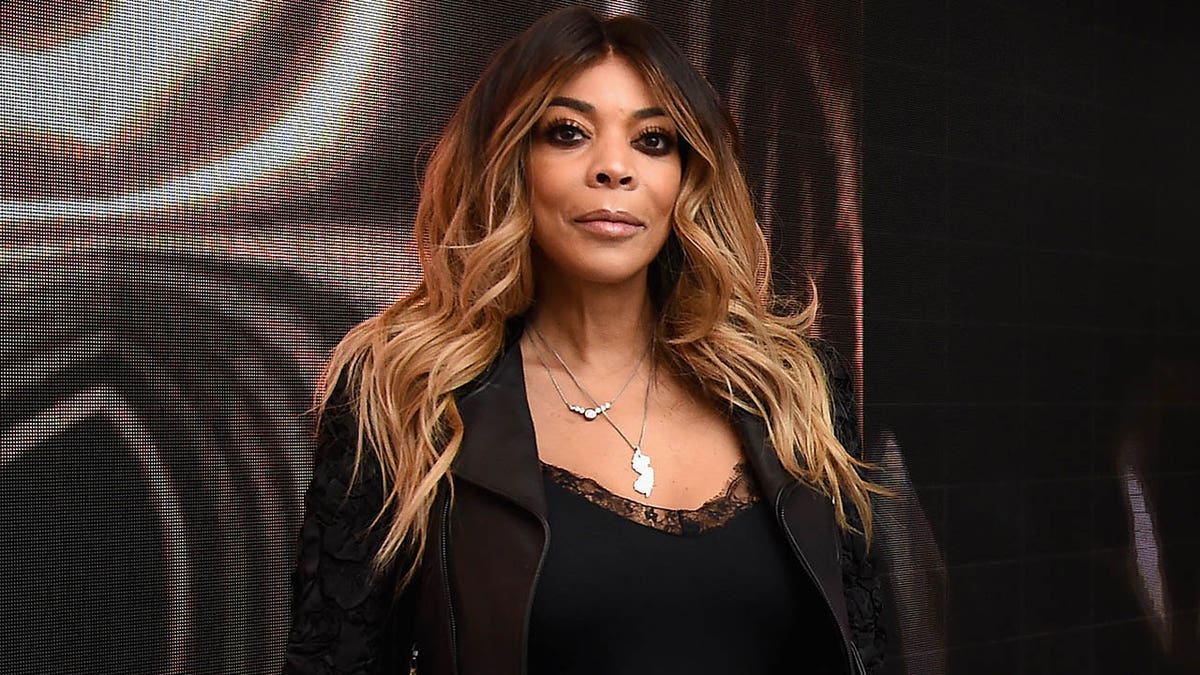
Wendy Williams wears off the shoulder grey blouse.

A Williams representative released a statement last week saying she was diagnosed with frontotemporal dementia. (Getty Images / Getty Images)

"Lifetime appeared in court today, and the documentary ‘Where is Wendy Williams?’ will air this weekend as planned," a spokesperson wrote in a statement.

Morrissey did not immediately respond to Fox News Digital's request for comment.

In 2022, a legal guardian was appointed for her finances and health, and court documents were sealed. Williams later filed a temporary restraining order against Wells Fargo, asking the court to "reopen any frozen accounts or assets" and grant Williams "access to any and all accompanying statements."

"After all, aren’t guardians charged with safeguarding (not to mention, maximizing) their ward’s financial well-being?"

- Benny Roshan, partner at Greenberg Glusker

According to Williams' filings to the court, the bank's move reportedly came after Williams' former financial adviser claimed Williams "was of unsound mind." The filing did not "specify who or what is exploiting or unduly influencing Williams," according to People magazine.

The bank reportedly maintained that Williams' financial adviser "witnessed telltale signs of exploitation, including [Williams'] own expressed apprehensions, but also upon other independent third-parties who know [Williams] well and share these concerns."

"One judge and three doctors say my money is still stuck at Wells Fargo, and I’m going to tell you something. If it happens to me, it could happen to you," Williams said in the documentary.

Talk show host Wendy Williams wears blue blazer with white blouse at Seth Meyers.

Williams' self-titled show was canceled in June 2022. (Lloyd Bishop/NBC/NBCU Photo Bank / Getty Images)

"Wendy appears to be under a financial guardianship, which means all of her financial decisions are made by a third-party, court-appointed person who makes all the financial decisions on behalf of Ms. Williams and owes her a panoply of fiduciary obligations," Roshan told Fox News Digital.

She noted that guardianships are "fairly common in cases where the impacted individual suffers from obvious cognitive impairments, as in Ms. Williams' case, and do not have a designated person such as a power of attorney or successor trustee to step up to the plate when needed to assist."

Williams' son, Kevin Jr., was scrutinized for spending her money but, in the documentary, denied he ever exploited her. 

"I've never taken [money] without her consent," he said.

"My mom made me power of attorney because, at that time, the banks started accusing the family of doing things that weren’t true and saying that my mom wasn’t fit to make choices." 

Her nephew, Travis Finnie, who was also helping with her care in Florida, said the bank questioned a $100,000 purchase amount. He recalled Kevin's birthday party that Williams booked totaling more than $100,000, Kevin's rent was $80,000 and his UberEats bill "probably exceeded $100,000."

"For them to have a court case and rip him away from taking care of his mother, it’s very questionable," Travis said.

Wendy Williams chats via Zoom wearing red blazer and strappy black top.

In 2022, a legal guardian was appointed for her finances and health, and court documents were sealed.  (Bravo/NBCU Photo Bank  / Getty Images)

When a producer asked if Williams still supported Kevin Jr., Wendy became emotional and said, "I’ve got so much money. I want it for my son."

"This matter was conducted under seal. Any claims against Wells Fargo have been dismissed," representatives for Wells Fargo told Fox News Digital.

There's still hope for Williams to regain her independence from the guardianship, according to Roshan.

"Cognitive impairment comes in many forms, and from litigated precedent (in California), cognition may be restored with treatment and care in some cases. For instance, in Britney Spears’ case, it appeared from court files that she had arguably regained her cognitive capacity long before her conservatorship was terminated," Roshan said.

The 59-year-old television personality was diagnosed with the conditions in 2023, her representatives confirmed in a statement Thursday. Last week, Williams' representatives shared a personal statement from the talk show host that was facilitated by her care team. 

"I want to say I have immense gratitude for the love and kind words I have received after sharing my diagnosis of Aphasia and Frontotemporal Dementia (FTD)," Williams wrote. "Let me say, wow!  Your response has been overwhelming.
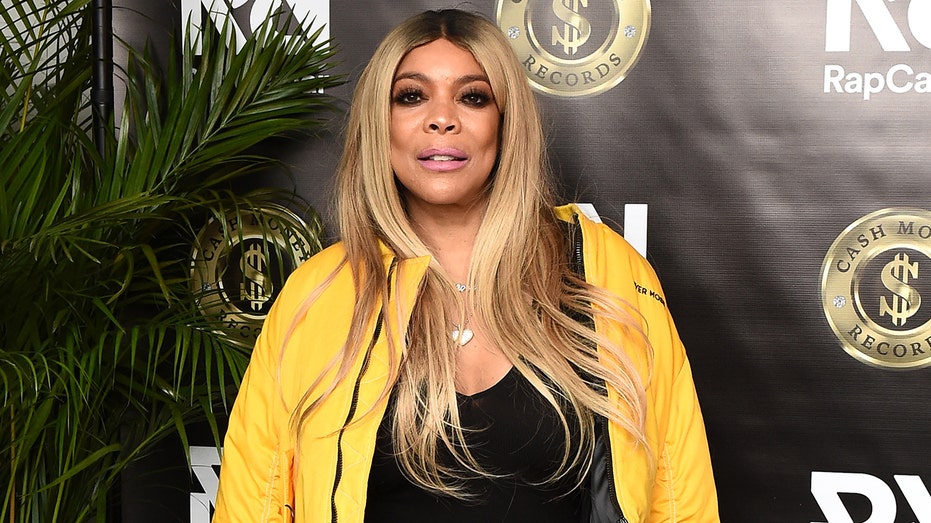
Wendy Williams sports yellow coat with black tank top

Williams strayed from the public eye and is reportedly under the care of a court-appointed guardian. (Ilya S. Savenok / Getty Images)

"I continue to need personal space and peace to thrive. Please just know that your positivity and encouragement are deeply appreciated." 

Williams' brother, Tommy Williams Jr., told Us Weekly his sister is on the mend now that she's living in an undisclosed treatment center. 

"When I speak to Wendy, she sounds fine. Wendy has improved," he said. "I know my sister from where she was to where she is now, and she has a substantial amount of improvement. It’s dialogue and conversation, topics, content, speech pattern, everything.

"The past was obvious. We saw it. She was in a worse state, and the [documentary] depicted it. Now [she is in] a different state."

Full Article & Source:
Wendy Williams' financial guardianship raises 'red flags' after adviser attempted to block documentary: expert

See Also:
Wendy Williams top 5 documentary bombshells

Inside Wendy Williams' Family's Fight to Free Her from Her Guardianship: 'This System Is Broken' (Exclusive)

Wendy Williams diagnosed with aphasia, frontotemporal dementia: What to know ahead of documentary release

Wendy Williams Seen for First Time in a Year in Devastating Lifetime Documentary Trailer

What's happening with Wendy Williams? From talk show no-show to 'incapacitated person'


SHOCK CLAIMS Wendy Williams’ bank calls her an ‘incapacitated person’ who is possible ‘victim of financial exploitation’ in lawsuit

Wendy Williams had to be told several times her show had been canceled, execs say

Wendy Williams’ Ex Sells House Amid Big Money Troubles

Monday, February 26, 2024

Wendy Williams top 5 documentary bombshells

Former talk show host Wendy Williams was diagnosed with frontotemporal dementia (FTD)

By Tracy Wright

Wendy Williams has largely remained out of the spotlight since her self-titled show was canceled in June 2022, but a new Lifetime documentary attempted to capture Wendy's comeback as she launched a podcast career, only to witness her struggles with alcohol addiction and additional health concerns.

The first two episodes of "Where is Wendy Williams" debuted on Saturday, just days after it was revealed that Wendy was diagnosed with "primary progressive aphasia and frontotemporal dementia (FTD)" in 2023, according to a representative.

Here are five of the biggest revelations from Wendy's documentary:

Wendy Williams documentary explores the rise and fall of the iconic talk show host. (Getty Images)

Wendy's struggle with alcohol addiction: ‘I love vodka’

Throughout the documentary, Wendy's history with alcoholism is apparent. When production asked if she still had a "substance abuse issue," she was candid in her response.

"Well, I love Tito Puente. I love vodka," Wendy said. "And the problem with Wanda is she's my sister. I love Wanda, but she hates that I love alcohol."

Williams noted that her son, Kevin Jr., also disliked that she drank alcohol.

Her longtime friend, Regina Shell, claimed that Wendy's alcohol dependency peaked during the end of her marriage to ex-husband, Kevin Hunter, who fathered a child with another woman while he was still married to Wendy.

wendy williams against a dark background

Williams entered a treatment facility in 2019, but returned to New York for her show and lived in a sober home while filming.  (lya S. Savenok)

Williams entered a treatment facility in 2019, but returned to New York for her show and lived in a sober home while filming. She entered a wellness center for two months during filming for the documentary, but wasn't sure why she was admitted.

Her manager, Will Selby, would search her home and attempt to throw out bottles of alcohol hidden around her apartment. 

Wendy returned to the public eye for one night in February 2023, and had dinner at Fresco by Scotto in Manhattan with Selby. She ordered alcohol, but Selby privately told the server to change her order to a non-alcoholic version.

When producers asked Williams why she liked to drink, Wendy said, "Because I can. Just because I care for it."

Williams' almost died in 2020

DJ Boof, who starred on "The Wendy Williams Show," remembered being worried about her health when Wendy began filming the talk show from her New York City apartment in 2020 due to the pandemic.

Wendy Williams flashes pink glasses

She once lived in a sober home while working on "The Wendy Williams Show" to treat addiction issues. (Getty Images)

Wendy Williams poses next to star on Hollywood Walk of Fame

Williams received a star on the Hollywood Walk of Fame in 2019. (Getty Images)

Boof recalled Wendy taking strict quarantine measures and isolating herself from the outside world. He would hold up her cue cards behind her ring lights, but said at times she "showed no emotion" while filming. 

"This is not COVID doing this," he remembered of her delayed reactions.

Williams' nephew, Travis Finnie, said that it was DJ Boof who found Wendy unresponsive in her home in May 2020. She was rushed to the hospital where she received three blood transfusions. 

"DJ Boof was there, and he called us crying saying that she was going to die, and she needs help," Wendy's nephew, Travis Finnie said in the documentary. "We called Kevin, who at the time was her medical proxy. He called the ambulance. The ambulance came. My auntie had three blood transfusions and that's the only reason she's alive today."

"From what DJ Boof said, it's the combination of them just letting her sit in bed and drink liquor, and then thinking she's gonna be ready to go."

Boof added, "I just felt like she wasn't the same person anymore."

Wendy's battle with lymphedema 

The former talk show host disclosed her lymphedema diagnosis in 2019. 

The chronic condition refers to tissue swelling caused by an accumulation of protein-rich fluid that's usually drained through the body's lymphatic system, according to the Mayo Clinic. Lymphedema most commonly "affects the arms or legs, but can also occur in the chest wall, abdomen, neck and genitals."

Wendy Williams steps out in New York wearing fur coat

The former talk show host disclosed her lymphedema diagnosis in 2019.  (Getty Images)

Wendy's feet are swollen and she admits she "should be in a wheelchair."

She tried to work out with a personal trainer friend of Selby's, but adamantly disengaged throughout the session and continued to say "no thank you" as he attempted to help her in the gym.

Wendy then reiterated that she can only feel approximately "6 percent" of each foot due to her condition.

Health problems have plagued Wendy for years. In October 2017, Williams fainted during her show after she "overheated" in a Halloween costume. Then, in February 2018, she took three weeks off to deal with issues related to her Graves’ disease and hyperthyroidism.

Wendy can't access any of her money

In 2022, a legal guardian was appointed over her finances and health, and court documents were sealed. Wendy later filed a temporary restraining order against Wells Fargo asking the court to "reopen any frozen accounts or assets" and grant Williams "access to any and all accompanying statements."

wendy williams on andy cohen's show

In 2022, a legal guardian was appointed over her finances and health, and court documents were sealed. (Bravo/NBCU Photo Bank via Getty Images)

According to Williams' filings to the court, the bank's move reportedly came after Williams' former financial adviser alleged that Williams "was of unsound mind."

"One judge and three doctors say my money is still stuck at Wells Fargo and I’m going to tell you something, if it happens to me, it could happen to you," Williams said in the documentary.

Williams' son, Kevin Jr. was scrutinized for spending her money but, in the documentary, denied that he ever exploited her. "I've never taken [money] without her consent," he said.

"My mom made me power of attorney because at that time the banks started accusing the family of doing things that weren’t true and saying that my mom wasn’t fit to make choices," he said. 

Wendy Williams and ex husband Kevin Hunter pose together

Williams was married to Kevin Hunter for 21 years before they divorced in 2019 after she found out he fathered another child while they were married. (Getty Images)

Wendy Williams and son Kevin Jr at Hollywood walk of fame

Wendy has one son, Kevin Jr., with her ex-husband. (Getty Images)

Her nephew, Travis Finnie, who was also helping with her care in Florida, said the bank questioned a $100,000 purchase amount. He recalled Kevin's birthday party that Wendy booked totaling more than $100,000, Kevin's rent was $80,000, and his UberEats bill "probably exceeded $100,000."

"For them to have a court case and rip him away from taking care of his mother, it’s very questionable," Travis said.

When a producer asked if Wendy still supported Kevin Jr., Wendy became emotional and said, "I’ve got so much money. I want it for my son."

Wendy's becoming ‘more aggressive,’ her manager says

Williams' erratic personality is displayed throughout the documentary via simple interactions with her team.

"There are some times when Wendy is just a little bit more aggressive, she's just a little bit more demanding," Selby said. "I don't know what it is. I don't know if there's something special in the water. At the end of the day, she's probably one of the biggest personalities we've seen in quite some time."

He later said, "Wendy being pissed off is normal. She changes her mind all the time.

During one scene, Wendy berated a nail technician while receiving an at-home manicure. After the tech acknowledged that Williams only wanted one coat of polish, Wendy yelled at her to "take that off" of her nails. "Are you stupid," Wendy asked the nail technician. 

Wendy Williams blue denim blazer with Seth Meyers

Wendy's self-titled show was canceled in June 2022 (Lloyd Bishop)

The talk show host faced the production crew and said, "She's disgusted with me. It's OK. Young, you learn."

In another scene, she barked at her publicist Shawn Zanotti and called her a "dumba--" before telling Zanotti that she needed liposuction.

Moments later, Williams argued with Zanotti about which smoke shop she should purchase her specific vape pen. Zanotti was ordered to return the vape pen multiple times, only for the documentary crew producers to step in and stop filming due to Wendy's erratic behavior.

The 59-year-old television personality was diagnosed with the conditions in 2023, her representatives confirmed in a statement Thursday. On Friday, Williams' representatives shared a personal statement from the talk show host that was facilitated by her care team. 

"I want to say I have immense gratitude for the love and kind words I have received after sharing my diagnosis of Aphasia and Frontotemporal Dementia (FTD)," Williams wrote. "Let me say, wow!  Your response has been overwhelming."

She added, "I continue to need personal space and peace to thrive. Please just know that your positivity and encouragement are deeply appreciated." 

Full Article & Source:
Wendy Williams top 5 documentary bombshells

Sunday, February 25, 2024

Wendy Williams Breaks Silence on Aphasia and Dementia Diagnosis: “Immense Gratitude”

"I continue to need personal space and peace to thrive. Please just know that your positivity and encouragement are deeply appreciated," said Williams in a rare statement, shared by her rep on Friday.

by Carly Thomas

Wendy Williams in 2019 Lars Niki/Getty Images for New York Women in Film & Television

Wendy Williams is speaking out for the first time following her recent primary progressive aphasia and frontotemporal dementia diagnosis (FTD).

A representative for the former talk show host shared a statement from Williams with The Hollywood Reporter Friday: “I want to say I have immense gratitude for the love and kind words I have received after sharing my diagnosis of Aphasia and Frontotemporal Dementia (FTD). Let me say, wow! Your response has been overwhelming. The messages shared with me have touched me, reminding me of the power of unity and the need for compassion.”

The statement continued, “I hope that others with FTD may benefit from my story. I want to also thank the Association for Frontotemporal Degeneration for their kind words of support and their extraordinary efforts to raise awareness of FTD. I continue to need personal space and peace to thrive. Please just know that your positivity and encouragement are deeply appreciated.”

The statement from Jennifer Hanley of Ridge Hill Group comes on the heels of Williams’ care team sharing the news on Thursday that she was officially diagnosed after undergoing medical tests last year.

Her team said in a statement that aphasia, a condition that impacts a person’s speech, and frontotemporal dementia, a disorder impacting behavior and cognitive functions, “have already presented significant hurdles in Wendy’s life.”

The Lifetime docuseries airing this weekend, Where Is Wendy Williams?, is set to chronicle the ex-TV host’s physical and mental decline. The two-night docuseries began filming Williams following the June 2022 cancellation of her hit daytime talk show, and stopped filming Williams when she checked into an unknown facility in April 2023 and went under the care of a court-appointed financial guardian, who had been unknown publicly and to Williams’ family featured in the documentary. Williams remains a credited executive producer on the project, as she has a three-picture deal with Lifetime.

Two days before the documentary’s release, Williams’ court-appointed caregiver was publicly identified to be Sabrina Morrissey, as she filed a lawsuit on Thursday for injunctive relief against Lifetime parent company A+E Networks.

On Friday, the complaint was vacated and a rep for Lifetime confirmed to THR that Where is Wendy Williams? “will air this weekend as planned.” 

Morrissey was appointed caregiver for Williams when, following the cancellation of The Wendy Williams Show, the TV personality’s then-financial adviser alleged in late 2022 in a New York court that she was of “unsound mind,” leading the bank Wells Fargo to petition to have Williams placed under temporary financial guardianship. Williams remains in a facility under Morrissey’s care today and is still unreachable by anyone other than Morissey.

Jackie Strause contributed to this report.

Full Article & Source:
Wendy Williams Breaks Silence on Aphasia and Dementia Diagnosis: “Immense Gratitude”

Wendy Williams’ Guardian Sues Lifetime Parent Company A+E Networks Ahead of Documentary

Days before the four-and-a-half-hour special chronicling the ex-TV host's physical and mental decline is set to air, Sabrina Morrissey filed a lawsuit seeking injunctive relief. 

by Kevin Dolak

Wendy Williams Ilya S. Savenok/Getty Images

Two days before a major documentary chronicling Wendy Williams’ deteriorating mental state is scheduled to premiere on Lifetime, the beleaguered former talk show host’s court-appointed caregiver filed a lawsuit against Lifetime parent company A+E Networks.

Sabrina Morrissey filed the sealed lawsuit for injunctive relief on Thursday in New York County Supreme Court. The suit says that Morrissey — whose identity as the individual appointed by the court in 2022 to look after Williams had been unknown publicly and to Williams’ family — is “acting in her capacity as Temporary Guardian.”  

The complaint, which sought a temporary restraining order, names A+E Networks, the parent company of Lifetime, and Entertainment One Reality Productions, which produced the four-and-a-half-hour documentary set to air over two nights, this coming Saturday and Sunday. 

On Friday, Appellate Justice Peter H. Moulton vacated a temporary restraining order signed ex parte, ruling that such an order would be “impermissible prior restraint on speech that violates the First Amendment of the Constitution.”

Moulton continued to keep the case documents sealed, but a court date on the matter has been set for Tuesday, Feb. 27.

Lifetime’s executive vp, publicity, public affairs and social media Kannie Yu LaPack confirmed to The Hollywood Reporter that Lifetime appeared in court on Friday, but she did not share any details on the proceedings. Yu LaPack also said that the Where is Wendy Williams? “will air this weekend as planned.” 

Filmed between August 2022 and April 2023, the two-part Where Is Wendy Williams? chronicles the former shock jock turned daytime sensation as her health and mental state spiral downward. Williams’ representatives disclosed on Thursday that she has been diagnosed with primary progressive aphasia and frontotemporal dementia; Williams also has the autoimmune disorder Graves’ disease and lymphedema, which is the buildup of fluid in soft body tissues; along with her alcohol addiction, these ailments are documented in the Lifetime film.

Williams is an executive producer on the raw documentary, originally conceived as a behind-the-scenes look at the relaunch of her career via a new podcast. The production crew began to follow the former host of The Wendy Williams Show in late August 2022, but given her physical and mental state, the focus pivoted to her struggles with addiction and autoimmune disorders.

In a moment from the documentary shared exclusively with People, Williams sits down with her friend Angela “Blac Chyna” White — the former reality TV player known for her romantic relationship with Rob Kardashian. White, 35, had stopped in to Williams’ New York apartment, where the two had a heart-to-heart in which Williams removed her wig, revealing her real hair. Later in the clip, she takes off her shoes to expose her feet, showing White just how her lymphedema has damaged them.

Morrissey was appointed caregiver for Williams amid her public downfall; the TV personality’s then-financial adviser alleged in late 2022 in a New York court that she was of “unsound mind,” leading the bank Wells Fargo to petition to have Williams placed under temporary financial guardianship.

Williams remains in a facility under Morrissey’s care today and is still unreachable by anyone other than the heretofore publicly unknown woman. A call placed by The Hollywood Reporter to Morrissey was not immediately returned. 

Feb. 23, 12:13 p.m. This story has been updated with a comment from Lifetime.
Feb. 23, 1:45 p.m. This story has been updated with the appellate court ruling in the case.

Hilary Lewis contributed to this report.

Full Article & Source:
Wendy Williams’ Guardian Sues Lifetime Parent Company A+E Networks Ahead of Documentary

Friday, February 23, 2024

Wendy Williams diagnosed with aphasia, frontotemporal dementia: What to know ahead of documentary release

by Suzy Byrne

Where is Wendy Williams? In treatment, her family says, but they don't know much more than that. (Calvin Gayle)

Wendy Williams has been diagnosed with primary progressive aphasia and frontotemporal dementia (FTD). The television personality was diagnosed with both conditions last year “after undergoing a battery of medical tests,” according to a press release.

Aphasia is a medical condition that can affect someone's ability to speak as well as to write and understand language, both verbal and written, according to Mayo Clinic. FTD, a form of dementia that impacts more than 500,000 Americans each year, can affect behavior, personality, language and movement. (Actor Bruce Willis was also diagnosed with FTD in 2023 after his aphasia worsened.) Both conditions “have already presented significant hurdles in Wendy's life,” according to the statement.

The news comes ahead of the release of Where Is Wendy Williams?, the new Lifetime documentary that looks at the famed TV host’s disappearance from the spotlight amid personal, health and money woes. It’s also a question that some of her closest relatives can’t answer.

What is the new Wendy Williams doc about?

Williams, 59, didn’t host the final season of her eponymous talk show from August 2021 to June 2022. She kept postponing her return to the purple throne she commanded for 12 years and worried fans as she was snapped needing assistance coming and going from wellness centers. Williams’s finances were frozen by her former wealth manager at Wells Fargo, who claimed she was “incapacitated” and “of unsound mind,” resulting in the TV star being put under guardianship.

That’s where things were when a documentary film crew began filming Williams in August 2022. The purported goal was to capture her comeback as she attempted to start a podcast. However, Williams — who has an executive producer credit on the doc — was plagued by alcoholism in addition to preexisting health issues (Graves’ disease, an autoimmune disorder and lymphedema, which causes tissue swelling).

Filming halted in April 2023 when Williams was found in her apartment with her eyes rolled back into her head, producers told People magazine. Williams was put into a facility to treat cognitive issues, which her son, Kevin Hunter Jr., said in the film are connected to alcohol use.

In the trailer for the doc, Williams seems confused and becomes angry when asked if she drank a bottle of alcohol in a day. Her family members express concern over her cognitive abilities, as well as her inner circle and guardian.

Where is Williams?

While the doc reveals Williams went into inpatient treatment nearly a year ago, some of the participants — including her sister — have no idea where she is living today.

Wanda Finnie, Williams’s sister, and Alex Finnie, her niece, told People magazine that Williams is in a better place physically and mentally. Wanda had just spoken to her one day prior and reported: She’s doing “really great” and is “not the person that you see in this film.” Alex said Williams had done “a 180” to where she had been physically, mentally and emotionally.

Yet further into the article, Williams’s relatives reveal that they don’t know where she’s being treated. They don’t know what kind of treatments are taking place. They can’t contact her directly. They only hear from Williams if she calls.

Wendy Williams on the Walk of Fame in 2019. (Michael Tran/FilmMagic)

They blame the lack of communication on Williams’s guardian, whose identity is private. According to the family, that person is the only one with full access to Williams.

In the doc, Williams claims that the guardian stole money from her, but filmmakers said she didn’t provide evidence.

Nearly one year after she was put into treatment, “The people who love her cannot see her,” Wanda told the outlet. “I think the big [question] is: How the hell did we get here?”

How is Williams now?

According to Thursday's statement, receiving aphasia and FTD diagnoses has enabled Williams “to receive the medical care she requires.”

The decision to share this news was difficult and made after careful consideration, not only to advocate for understanding and compassion for Wendy, but to raise awareness about aphasia and frontotemporal dementia and support the thousands of others facing similar circumstances. Unfortunately, many individuals diagnosed with aphasia and frontotemporal dementia face stigma and misunderstanding, particularly when they begin to exhibit behavioral changes but have not yet received a diagnosis.

There is hope that with early detection and far more empathy, the stigma associated with dementia will be eliminated, and those affected will receive the understanding, support, and care they deserve and need.

Wendy is still able to do many things for herself. Most importantly she maintains her trademark sense of humor and is receiving the care she requires to make sure she is protected and that her needs are addressed. She is appreciative of the many kind thoughts and good wishes being sent her way.

Questions remain

Lifetime did not make an advance screener of the documentary available to Yahoo Entertainment by press time, but People had access to it. According to the outlet, the doc looks at Williams’s spiral in the final years of her onetime hit show.

In those final years, Williams passed out on the show, exhibited slurred speech, appeared disoriented and took (multiple) extended breaks. She said she was being treated for Graves’ disease, only to have tabloids out her for secretly moving into a sober house.

Things came to a head in April 2019 when she filed for divorce from her husband of nearly 21 years, Kevin Hunter Sr., as he welcomed a child with another woman. He was axed as executive producer on her show. Their son was arrested for allegedly getting into an altercation with “Big Kev.”

Williams’s brother Tommy told People that the end of her marriage put her into a “dark space.”

Multiple staffers told the outlet that Williams, who had previously battled cocaine addiction, “would be drunk on air” in the show’s final years. Co-executive producer Suzanne Bass said they saw her “struggling,” but “she pushed us away” when they tried to help.

As part of the broadcast, Lifetime will direct viewers to resources including SAMHSA (the Substance Abuse and Mental Health Services Administration) and NAMI (the National Alliance on Mental Illness).

– Taryn Ryder contributed to this report

Correction: The most common form of dementia is Alzheimer's disease, per the CDC. An earlier version of this story misstated that it was FTD.

Where Is Wendy Williams? airs Feb. 24 and Feb. 25 at 8 p.m. ET on Lifetime.

Full Article & Source:
Wendy Williams diagnosed with aphasia, frontotemporal dementia: What to know ahead of documentary release

See Also:
Wendy Williams Seen for First Time in a Year in Devastating Lifetime Documentary Trailer

What's happening with Wendy Williams? From talk show no-show to 'incapacitated person'


SHOCK CLAIMS Wendy Williams’ bank calls her an ‘incapacitated person’ who is possible ‘victim of financial exploitation’ in lawsuit

Wendy Williams had to be told several times her show had been canceled, execs say

Wendy Williams’ Ex Sells House Amid Big Money Troubles

Tuesday, May 7, 2019

Frontotemporal dementia: Devastating, prevalent and little understood

Click to Watch Video
This is a story about the cruelest disease you have never heard of. It's called frontotemporal dementia — or FTD. And given the devastating toll it takes on its victims and their families, it ought to be much better known than it is.

FTD is the number one form of dementia in Americans under the age of 60. What causes it is unclear, but it attacks the frontal and temporal lobes of the brain, which control personality and speech, and it's always fatal. It is not Alzheimer's disease, which degrades the part of the brain responsible for memory.

With FTD, people either display such bizarre behavior that their loved ones can hardly recognize them, or they lose the ability to recognize themselves. That's what happened to Tracey Lind one day a few years ago as she was standing in a public restroom.
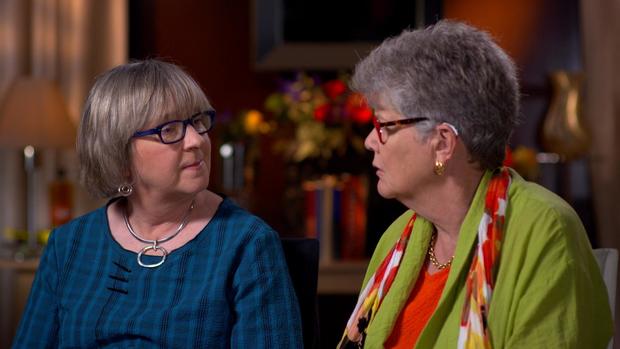
tracey-and-emily.jpg
Emily Ingalls and Tracey Lind
Tracey Lind: I was washing my hands and I looked in the mirror and I did not recognize my own face.

Bill Whitaker: Didn't recognize yourself.

Tracey Lind: No. I looked in the mirror, and I kept looking, and I remember I kept looking at this woman wondering "who was she?"

This is who she was: the Very Reverend Tracey Lind, dean of the Episcopal Cathedral in Cleveland, Ohio, one of the city's most prominent preachers and civic leaders. She was 61 years old when both she and her spouse Emily Ingalls began to notice trouble with things Tracey had always done very well; like finding the right word, recognizing congregants and friends' faces, and of course, her own.

Tracey Lind: That's when I said, "Oh, man. I gotta go see a doctor."

Bill Whitaker: When that happened, were you— were you scared?

Tracey Lind: Oh, I was scared to death.

Bill Whitaker: Emily, what did you think was happening?

Emily Ingalls: I thought there's something not right with her brain.

On election day 2016, Tracey Lind got the diagnosis: frontotemporal dementia. She has what's called the "speech variant" of the disease, which, among other things, attacks the part of the brain where language lives.

Tracey Lind: Sometimes you just— you're fine and you're on. And then there are other times that the words just don't come out. I mean, it— even if I know what the word is, somet— sometimes I feel like I'm playing bingo. And when I find the word, it's— I— I shout it. I— like I feel like an imbecile. You know. Apple. Oh, yeah! Apple. That's it. And I get all excited.

This is acutely painful for Tracey, because being a powerful, effective speaker has always been at the core of her identity.

Bill Whitaker: One of the first things you did once you got this diagnosis was to resign from your job as dean at Trinity—

Tracey Lind: Right.

Bill Whitaker: —Cathedral. Why— why— why'd you take that action so quickly?

Tracey Lind: Mainly it was I knew I was starting to fail even though I was faking it pretty well.
Since stepping down, Tracey and Emily have traveled around the country and the world, speaking and preaching about her FTD. Or as Tracey puts it, "telling the story of dementia from the inside out."

Tracey Lind in pulpit: I was determined to live what I had been preaching for over 30 years; that out of pain comes joy.

Tracey Lind: I'm gonna face this disease called FTD that I'd never heard of before, and I'm gonna see what I can do with it.

Bill Whitaker: I don't know if you are aware of how unique this situation is that you are in the middle of this decline from dementia and yet, you're so able to articulate what that's like.

Tracey Lind: I am aware of that. I think my curiosity is what's getting me through it. 'Cause otherwise, Bill, I— I— I'm— I'm just gonna lay down and— and— and— and roll up in a ball.

Tracey says she has good days and bad days. Just in our interview, there were moments when she was completely in control and moments when she wasn't.

Tracey Lind: ... and I'm doing some— you know, I'm— I'm— I'm— I'm— I know there's no—

Emily Ingalls: Do you want help?

Tracey Lind: Can you help, please?

Emily Ingalls: Okay.

Dr. Bruce Miller: This is the way this very sad illness presents.
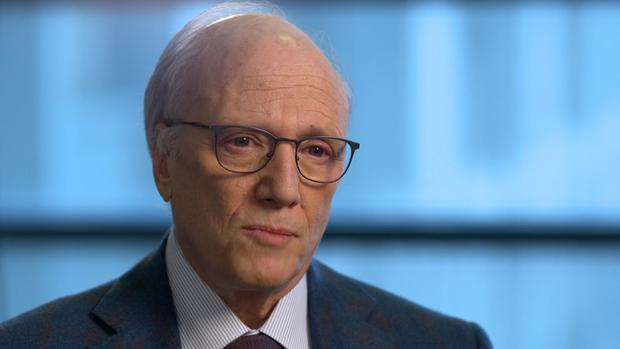
dr-miller.jpg
Dr. Bruce Miller
Dr. Bruce Miller may be the world's leading expert on frontotemporal dementia. He runs a lab at the University of California San Francisco that's doing cutting-edge research on the two main forms of FTD — the speech variant that Tracey Lind has, and a behavioral variant that attacks personality, judgement and empathy.

On the day we visited Dr. Miller's clinic, he and his team met with FTD patient Thomas Cox and his wife Lori. At first glance, Thomas seems fine, but he's not.

Thomas Cox: I've got FTD.

Dr. Bruce Miller: Okay. And has that affected you so far?

Thomas Cox: No.

In fact, Lori Cox says that starting a few years ago, Thomas lost interest in her, in their son, and in his work so much that he was fired from his job. By now, he's pretty much reduced to looking at photos on his phone.

Thomas Cox: That's Bugatti (PH).

Lori Cox: That's our dog. (LAUGH)

Dr. Bruce Miller: Ah. Your dog.

Lori Cox: I can blame the disease. I can say that the disease stole my— my husband.

Dr. Bruce Miller: Yes.
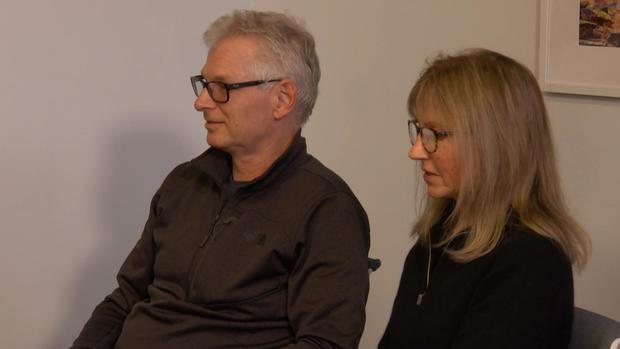
tom-and-lori-cox.jpg
Thomas and Lori Cox
Dr. Bruce Miller: When a family sees someone with this illness, they don't recognize them. This is not— the person I married that I love. This is not my father or my mother.

Bill Whitaker: You have said that FTD attacks people at the very soul of their humanity.

Dr. Bruce Miller: This is profound as anything that can happen to a human being. It robs us of our very essence of our humanity, of who we are.

Bruce Miller says because so many cases are first misdiagnosed as mental illness, it takes an average of three years and several expensive brain scans to get a correct diagnosis of FTD.

Dr. Bruce Miller: So whether it's 20,000 new cases every year, 100,000, 200,000, we still don't know. But in— young people with neuro degeneration, frontotemporal dementia is a big one.

Bill Whitaker: So if you see someone who is suffering dementia at a younger age—

Dr. Bruce Miller: Very— strong— likelihood that it's FTD.

Dr. Miller showed us this composite image of two of the major degenerative brain diseases.

Dr. Bruce Miller: Frontal Temporal Dementia, shown in blue, Alzheimer's Disease— shown in red. So, very different geography, very different clinical manifestations.

Bill Whitaker: What does the blue indicate?

Dr. Bruce Miller: The blue indicates is that there's loss of tissue. When we see loss of tissue in that brain region, we know people have lost their interest in life, their drive. They do less, they care less about other people.

That loss of empathy, Miller says, can produce dangerous, impulsive, even criminal behavior. And those with behavioral FTD are rarely aware that anything has changed.
amy-johnson-w-her-children.jpg
Amy Johnson with her children
Amy Johnson: He went from being a caring, doting father and husband and it just seemed like he flipped a switch off. And he had no idea that he had changed. He had no idea.

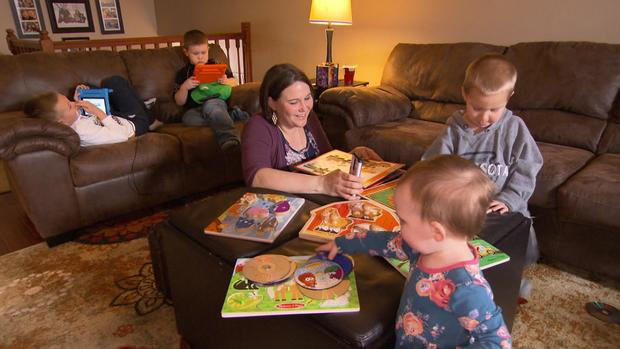
Amy Johnson and her husband Mark married in 2006, settled in the small Minnesota town of Windom, and now have four young children - three boys and a girl. Three years ago, Amy says Mark suddenly seemed to stop caring about her and the kids.

Amy Johnson: That's the first time that I really remember thinking to myself, "What happened? Where did you go?"

Amy recalls a day when she left Mark in charge of their sons, then three and two, only to come home and find the boys playing outside, alone by a busy street, while Mark sat inside watching TV, oblivious. On other days, he began to display compulsive behavior she had never seen before.

Amy Johnson: He couldn't stop eating. I started locking the food up. He would walk down to the grocery store and buy more. I took his credit card. He'd walk down to the grocery store and steal food.

Bill Whitaker: And these changes that you saw, did you ask him, "What's going on?"

Amy Johnson: Yeah. And he just said, "Oh, I don't think anything's different, is it?"

It was. Mark began making inappropriate remarks to a female co-worker at the company where he worked as a manufacturing engineer.

Bill Whitaker: He was fired?

Amy Johnson: Uh-huh (AFFIRM). And his reaction was, "Oh— oh, I guess okay. So what's for supper tonight?"

Bill Whitaker: What was your reaction?

Amy Johnson: I was just devastated. I was seven months pregnant at the time with our daughter.

Bill Whitaker: With your fourth child.

Amy Johnson: With my fourth child.

Bill Whitaker: So as this progresses, what's the eventual outcome?

Dr. Bruce Miller: Outcome of this is always death. They—

Bill Whitaker: Always death.

Dr. Bruce Miller: Always death. We have no way of intervening yet to slow the progression.

As FTD corrodes the brain, it also eventually causes bodily functions to shut down, that's what leads to death. But Bruce Miller is optimistic, pointing to promising research both in his lab and funded by NIH grants to scientists around the country.

Dr. Bruce Miller: Suddenly we have interventions and research that are going on that give me great hope.

Bill Whitaker: When might you expect a breakthrough?

Dr. Bruce Miller: I'm hoping in the next five years that— we will have— very powerful therapies in— certain variants of frontotemporal dementia that— may stop it cold.

Tracey Lind and Emily Ingalls have no idea whether any breakthrough will come in time to help them. If not, Tracey will eventually lose the ability to speak at all, and then, the ability to swallow.

Tracey Lind: The not being able to swallow part; that's what's really frightening. So I try to live in the present moment.

Emily Ingalls: I'm not very good at living in the moment, so I worry a lot about the future.

Tracey Lind: Do you worry about- taking care of me?

Emily Ingalls: Yeah. I worry about taking care of you. Sure.

Tracey Lind: What's going to be the hardest part?

Emily Ingalls: I think the hardest part is going to be the loss of the relationship.

Bill Whitaker: Has Emily told you this before?

Tracey Lind: No. I don't think so. (EMILY NODS HER HEAD INDICATING SHE HAS)

As you can see, caregivers suffer as much as patients. For months, Amy Johnson kept Mark at home, even as she mothered four small children and held a full-time job. But his symptoms got worse and worse.

Bill Whitaker: When did it become clear to you that you— you had to put him in a facility?

Amy Johnson: I went to an appointment with a psychiatric nurse practitioner. And she said, "I think it's time for you to look for a different place. Because now when he thinks of something, the part of his brain that tells him 'that's a bad idea' doesn't work anymore."
amy-and-mark-johnson.jpg
Mark and Amy Johnson
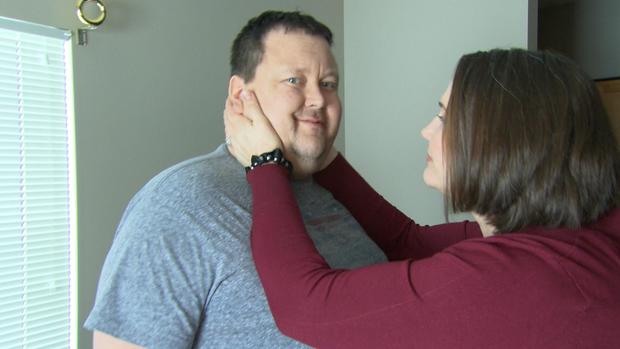
Mark Johnson now lives in a facility about an hour away from home. He's gained nearly a hundred pounds due to compulsive eating; even walking into elderly residents' rooms and taking their food. Amy says his care now costs her nearly $7,000 a month.

Bill Whitaker: Out of pocket?

Amy Johnson: Out of pocket. He would be devastated to know that that's where his retirement savings are going and that they're not going to his family.

Crippling costs are common for FTD families, and it's often tough to find a facility to care for patients like Mark Johnson. The assisted living industry is not set up for six-foot-three 40-year-olds.

Bill Whitaker: Hello, Mark.

Amy Johnson: How's it goin'? This—

Mark Johnson: Hi.

Amy Johnson: —is Bill.

Bill Whitaker: How are you? Very nice to meet you.

Amy visits Mark as often as she can, and invited us to come along one afternoon. He told us he'd just like to go home.

Bill Whitaker: Do you think you need help?

Mark Johnson: No.

Bill Whitaker: So you unders— you understand why you're here?

Mark Johnson: No.

Bill Whitaker: Think you'd be okay at home?

Mark Johnson: Yeah. (LAUGH)

Bill Whitaker: I think Amy thinks— I don't wanna put (THROAT CLEARING) words in her mouth, but I think she thinks this is the best place for you right now.

Mark Johnson: Okay. (LAUGH)

After another minute, Mark said, "all right, see ya," and we left him.

It's clearly painful for amy to see what FTD has done to her husband, and to know what it will do.

Amy Johnson: And they gave him two to five years to live. And—

Bill Whitaker: Two to five years?

Amy Johnson: Two to five years.

Bill Whitaker: So how are you doing now?

Amy Johnson: It depends on the day. I miss him a lot.

You can find more information and resources on FTD at the Association for Frontaltemporal Degeneration

Produced by Rome Hartman and Sara Kuzmarov. Associate producer, LaCrai Mitchell.

Full Article & Source:
Frontotemporal dementia: Devastating, prevalent and little understood