Showing posts with label medically kidnapped. Show all posts

Tuesday, February 2, 2021

Community Bands Together to Rescue Elderly Woman Medically Kidnapped – The Life of a Senior is Still Precious to Some

A sheriff deputy in Vancouver, Clark County in Washington, grabs a woman by the throat and pushes her out of the hospital. She was attempting to go help her 74-year-old mother who was being detained against her will inside the hospital.

by Brian Shilhavy

In a week where it was reported that the New York State Attorney General admitted that nursing home deaths in New York State for 2020, already recorded as numbering tens of thousands, were undercounted by as much as 50% with Governor Andrew Cuomo reportedly stating “Who cares?”, and where numerous reports all over the world have recorded hundreds of seniors dying in assisted care facilities this week after the roll out of the experimental COVID mRNA injections, something truly amazing happened in Vancouver, Washington last night.

The people of the community, many members of “People’s Rights Washington,” turned out in mass to rescue a 74-year-old woman at Legacy Salmon Creek Hospital where she had been medically kidnapped, and was being held against her will, and against the will of her daughter who has medical power of attorney for her mother.

This group of 40-50 citizens, 90% of whom were women (mothers) and their children, stared down an army dispatched from the Clark County Sheriff’s department in full riot gear, endured being grabbed by the throat and pepper sprayed, and refused to leave the hospital until 74-year-old Gayle Meyer was released back into the custody of her daughter, Satin.

Satin took her mother to the hospital the night before to get treatment for a urinary tract infection (UTI), and had been with her until 4 a.m. before returning home to get a few hours of sleep before heading back to the hospital the next day.

Their primary care physician had already written a prescription for an antibiotic, and Gayle was supposed to be released and sent home with her daughter, who is also her medical power of attorney.

But when Satin arrived at the hospital, she was told that not only could she not take her mother home, but that she could not even see her mother, because she refused to take a COVID test.

That’s when Satin called her friends, who responded by heading to the hospital to find out what was going on. The nursing staff allegedly changed their story a few times, first saying that Gayle had refused to take a COVID test and was therefore being quarantined, but then later allegedly changing their story and stating that Gayle did in fact take a COVID test, and had to remain in the hospital for at least 24 hours until the results of the test came back.

Her daughter Satin, who had been in the hospital with her mother the day before until 4 a.m., had made it clear that her mother did not need nor want a COVID test, since she only had a UTI and was only in the hospital to be put on fluids.

The nurses allegedly also stated to Satin that they had also put her mother on oxygen, which greatly surprised Satin and her friends who were now showing up at the hospital to support her and her mother. Her mother, Gayle, allegedly has never before had to be put on oxygen, and certainly a UTI does not warrant oxygen.

As we have documented many times since COVID started last year, many deaths blamed on COVID in fact are caused by improper treatment, especially when a patient is intubated and put on a ventilator, where the death rate is over 90%.

Obviously becoming very concerned at this point that her mother who had a simple UTI was now being medically kidnapped and forced to stay in the hospital against her will and receive treatments she did not want, Satin and her friends called the County Sheriff office to come and assist them get Gayle out of the hospital.

The woman who filmed the entire ordeal, Kelli Stewart, explained that she had spoken to the Sheriff dispatcher, and she was told that the Sheriff was not going to respond and get involved.

However, as they were talking, the dispatcher allegedly stated that now the hospital had also called, so they were sending officers to the scene.

As you will see in the video below, the Sheriff deputies and officers were there to protect the hospital and Big Pharma, and NOT to represent their constituents and fulfill their oath of office to protect their constituents, and in this case, to prevent a medical kidnapping.

In fact, at one point Satin attempts to enter the hospital behind another patient who was entering, and an officer grabs her by the throat, and pushes her back.

The officer then used pepper spray on the people who were standing outside, who were all unarmed and primarily women and children.

Everything was captured on video, and I have watched the entire 2 hours of film footage, and condensed it down to under 53 minutes. This is from our Rumble account, and it is also available on our Bitchute Channel, and our Minds.com account.

If you want to watch the raw footage of everything as it unfolded, you can watch it on the Ammon Bundy YouTube channel, here and here. (We have copies if they disappear.)

Interestingly, as I watched the entire two hours of footage, the word “vaccine” never came up once. It was also shocking to see the Sheriff deputy use pepper spray on innocent people. A man was sprayed in the mouth with it, and he spit it out, but it also spread to the others around him, including some children.

And yet one local CBS Corporate Media outlet described the events of last night quite differently:

‘Anti-vax’ protest sparks lockdown at ClarkCo hospital

A hospital in the Salmon Creek neighborhood of Clark County went into lockdown on Friday night after a group of “exceptionally unreasonable” people demanded the release of a patient, authorities said.

Deputies with the Clark County Sheriff’s Office were called to Legacy Salmon Creek at about 6:30 p.m. after a group of 30 to 40 people gathered outside the hospital. Deputies said the group was there to support a person who had a family member being treated at the hospital and they wanted that person released.

The sheriff’s office said the group consisted of “exceptionally unreasonable” people who were “anti-vaxxer, anti-science types” who live-streamed the incident on social media.

A spokesperson at Legacy Salmon Creek told KOIN 6 News around 8:30 p.m. that the hospital was in a so-called “silver lockdown” and no one was being allowed in but people inside were permitted to leave.

Deputies said they protected the hospital and worked to have the patient — a woman — released. No arrests were made and deputies did not resort to any crowd control measures; however, they said a small scuffle broke out when the hospital went into lockdown.

The group of people tried to enter the hospital through the emergency room entrance and someone in the crowd used pepper spray.

The patient was eventually released and the crowd dispersed at around 9:15 p.m., deputies said. (Source.)

This event clearly illustrates several important truths (besides the obvious fact that you cannot trust the Pharma-controlled corporate media).

First, the people who turned out to stand up for the rights of 74-year-old Gayle Meyer clearly shows that there are still some people left in this country who value human life, including the precious lives of our senior population.

These friends and advocates probably saved her life, because hospitals today are incentivized to treat COVID patients, and if they get them onto ventilators they receive even more COVID medical funding.

Secondly, this event also illustrates that law enforcement will almost always side with the medical tyrants and the medical industrial complex over the individual rights of the patients.

Having covered the issue of Medical Kidnapping for over 6 years now, I can personally vouch for the fact that this is almost always the case.

But perhaps the most important lesson this event teaches us, is the fact that when a community decides to act together to oppose the medical tyrants, those tyrants fear them, and their medical tyranny can be resisted.

When the People Fear the Government There is Tyranny, but When Government Fears the People There is Liberty

As Kelli Stewart mentioned several times while filming all of this, this was a real wake-up call for those who thought the “men in blue” were on our side. She mentioned how those on the other side of the political spectrum have decried the abuses of law enforcement for decades now, and it just took a little longer for those on the “Right” side politically to see the same thing.

This gives me great hope, because as I have been writing ever since COVID and medical tyranny took over this country, this is NOT a “Right” versus “Left,” Republicans versus Democrats problem.

This is an issue of We the People against the Wall Street Billionaires and Central Bankers who control BOTH sides of the political spectrum, and if we can unite together as We the People to fight this medical tyranny, then we can begin to win our country back.

And that is what they fear the most.

Full Article & Source:

Wednesday, October 10, 2018

Alabama Senior Citizen Medically Kidnapped and Forced onto Drugs Against Family Wishes

Nancy Scott is very concerned about her mother’s well-being, and now she cannot even talk to her.
Just as Child Protective Services and a judge have almost omnipotent, unchecked power to decide unilaterally that the relationship between a parent and a young child is not worthy of being preserved, Adult Protective Services and a probate judge have the same power to sever the relationship between an adult child and their elderly parent.

Sometimes the relationship has endured for longer than the judge and social worker combined have been alive, yet with the stroke of a pen, a senior citizen can be completely torn away from their own children.

The wishes of the elder can be completely ignored, and documents assigning power of attorney to a trusted adult child can become meaningless. Medical and financial decisions are placed into the hands of a court-appointed guardian who is often a stranger to everyone in the family.

Nancy Scott, a retired English teacher from south Alabama, wrote to Health Impact News describing the medical kidnapping of her 102-year-old mother, who is also a beloved retired schoolteacher known to her former students as “Ms. Gregory.”

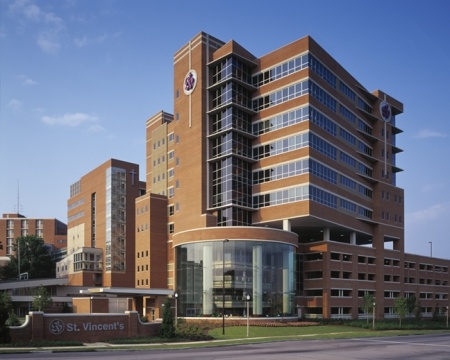
St. Vincent’s Hospital and the Alabama Department of Human Resources (DHR) seized custody of Marian (Gregory) Leonard in February 2018. She is being held against her will, forced by a Jefferson County, Alabama, court into Hospice care, even though she has no terminal illness or disease. She is elderly, but her mind is sound.

Nancy has always enjoyed a close relationship with her mother, but she has not seen her since midsummer. At that time, Ms. Gregory begged to go home. She told Nancy:
If you don’t get me out of here, they’re going to kill me, and they’re going to kill you.
She is being drugged against her will and has told her daughter that she doesn’t want the drugs. There have been times that medical staff have said that Ms. Gregory had dementia, but Nancy says that this is because of the unnecessary psychotropic drugs that doctors put her on. When she was under care of doctors who removed the medications, her mental state drastically improved.

Ms. Gregory’s Story as Told by her Daughter

Here is their story in Nancy Scott’s words, written just before her visits were stopped:

My mother, a 102 year- old retired English teacher from south Alabama, wakes up every morning and asks, “When can we go home?”

And I tell her every day, “I’m working on getting us home.”

Home is south Alabama, known as the “Wiregrass.” My mother has been in the custody of the Alabama Department of Human Resources since February 1, 2018. I now have a very good attorney, but the first attorneys I had, did absolutely nothing except take my money and never filed an appearance. I just hope it’s not too late.

Medical kidnapping usually involves a child or children, but in my situation, my elder mother—was kidnapped by the Alabama DHR. She was in St. Vincent’s Hospital for what would have been a 3-4 day stay because of a UTI and a mild case of the flu.

DHR issued a court order for “protective custody” on February 1, 2018, and stated in the order that she could not leave the hospital without a court order. I was not allowed to know what I was accused of because DHR sealed the records. One attorney I hired was also not allowed access to the records. The first GAL leaked some of the information to me along with other “grapevine” news.

I finally learned that I was accused by DHR of taking my mother from a facility against medical advice. However, I provided a report from a physician at a local hospital who had given me full permission—and his blessings—to take her out of the facility on the day she and I left.

[Note: documentation of this has been provided to Health Impact News.]

No allegations of abuse or neglect can be found in the (almost) five years I’ve been taking care of my mother. A couple of phone calls by DHR could have proven that I did not take my mother anywhere against medical advice (and never have). However, DHR jumped into the case. Now after spending several thousand dollars of the tax payers’ money, this organization is still trying to find something to justify the hasty, costly decision to take charge of my mother.

Since she has been in “protective custody,” my mother has gone from getting up every day, eating a regular diet, and sitting in a recliner, to being bedridden. She has asked to get up, but Hospice has said, “No.” She left St. Vincent’s with bedsores.

St. Vincent's Birmingham
St. Vincent’s Hospital, Birmingham, Alabama. Photo source.

After the medication overdoses at this hospital, it’s a miracle she is alive. The doctors at St. Vincent’s assured me they were not giving her any medication—-she refused to eat or drink for one month and slept most of the time. After a family friend (another physician) came to the hospital to check on her, I learned what she had been given.

The hospitalists in charge of my mother’s care at St. Vincent’s had been giving her Scopolamine, the “date rape” drug, and then proceeded to label her as “demented.” They also gave her Haldol and Ativan (against my written request not to do so).

These doctors also gave her a cough medicine that she could not metabolize. The guidelines for avoiding such medications were in her hospital records, and I reminded them to check this medication against her medical allergies.

She almost died from the medicine mistake, and one hospitalist, Dr. Wheeler, refused to consult with an anesthesiologist regarding the best treatment for her to help her get over the mistake with the medicine. Dr. Wheeler told me, “No, because of her age.”

Probate Judge Alan King (Jefferson County, AL) appointed a conservator and a guardian (GAL) for my mother even though I provided documentation that I had not done anything against medical advice.

When Judge King issued an order after a March 20, 2018, hearing, neither my attorney nor I were allowed to receive a copy of the order for several weeks. The clerk at the probate judicial office told me that until the court costs were paid, we were not allowed a copy of the judge’s order. DHR was responsible for the bill, so getting a copy of the order was delayed almost a month while everyone waited for DHR to pay the bill.

Judge King also insisted that my mother leave the hospital under hospice care although she has no diagnosis of any terminal illness.

Prior to the hospitalization, she ate a regular diet, got out of bed every day (with the help of regular caregivers), and enjoyed having her hair done.

The Director of Nursing at the current facility told me that she had tried to get Hospice to agree to add a low dose of Zoloft for my mother at bedtime. Hospice told me that they were under strict court orders not to discuss any medication issues with me and refused to add the Zoloft even though she had been taking this medication for over 30 years.

Early on, my brother called the former GAL and told her that no one was able to look after the best interests of my mother any better than I because I knew all of her medical allergies and was extremely careful with her care.

In addition, the court-appointed Jefferson County conservator and St. Vincent’s social workers selected a facility in Jefferson County, a three-star facility, that always seems to be short on staff. The court refused to allow my mother to leave Jefferson County (Birmingham area).

The facility in Troy, Alabama, which I presented to hospital social workers as an option, much closer to her home and friends, has a five-star (Medicare rating) and is almost $2000/month less expensive.

Why all this taxpayer money to hold an old woman in “protective custody” and deny her God given rights to choose where she will spend her last days?
Bottom line—we have been through all this before……could some of the problem possibly be the 300 wooded acres in Henry County, Alabama, that my mother inherited from her grandfather during the depression?
Full Article & Source:
Alabama Senior Citizen Medically Kidnapped and Forced onto Drugs Against Family Wishes

Friday, August 17, 2018

CNN, Mayo Clinic at war over report on teen who 'broke out of' esteemed hospital

Mayo Clinic accused CNN of knowingly publishing a story that lacked “clarification and context.”

CNN and the esteemed Mayo Clinic are at war after the hospital disputed a story and accused the news organization of knowingly withholding context and clarification – but CNN is standing by its reporting.

CNN published a series this week headlined, “Escape from the Mayo Clinic,” about parents who allegedly helped their teen daughter break out of the famed hospital because they were unhappy with the care being provided. The teenager, Alyssa Gilderhus, suffered a ruptured brain aneurysm on Christmas morning in 2016, and needed emergency surgery but eventually grew tired of the Mayo Clinic’s rehab facilities.

CNN reported that Gilderhus’ mother was kicked out of the Mayo Clinic by a physician after she repeatedly complained about the hospital. The report claims Gilderhus’ family was eventually barred from staying at overnight, that the hospital wanted to gain guardianship of the Minnesota teen and that requests to switch infirmaries were ignored – so the family broke her out of the Mayo Clinic after duping hospital officials. The prison-style escape was captured on video by Gilderhus’ family.

The Mayo Clinic issued a scathing statement in response to CNN’s story, declaring that safety is a top priority and “is at the forefront of the care we deliver to each patient.”

“We are unwavering in our dedication to do what is best for every patient, every time. This patient’s case was no exception,” the clinic’s statement said. “Following a thorough and careful review of the care in question, we have determined that the version of events provided by certain patient family members to CNN are not supported by the facts nor do they track with the direct observations of numerous other providers on the patient’s care team.”

The Mayo Clinic said it conducted an internal review that “determined that the care team’s actions were true to Mayo Clinic’s primary value that the patient’s needs come first.” The clinic said it will not discuss specific patients but “provided life-saving care” for the subject of CNN’s report.

“This story lacks further clarification and context that CNN knew but chose not to use,” the statement said.

CNN published a detailed account of how it claims the story was reported.

CNN said the story is “based on interviews with Alyssa and members of her family, a family friend, law enforcement officials and a former member of a Mayo Clinic board, as well as documents including law enforcement records and Alyssa's medical records.”

“While reporting this story, the authors had multiple conversations over many months with Ginger Plumbo, a spokeswoman for the Mayo Clinic. The authors also met with Plumbo and four senior Mayo officials on the condition that the information provided would be off the record,” CNN wrote.

According to CNN, Plumbo told the reporters that Mayo staffers consented to the off-the-record meeting with hopes that the news organization would reconsider its decision to run the story about Gilderhus’ escape.

CNN said that Plumbo initially said Mayo officials would answer the news outlet's questions on the record if Gilderhus signed a consent form – which she signed. However, CNN said the Mayo Clinic then declined to answer questions and provided a statement instead.

"Following careful review of the situation in question, we have determined that the version of events provided by certain patient family members to CNN are not supported by the facts nor do they track with the direct observations of numerous others who were involved. We feel we have provided CNN with more than ample information to support our findings and are deeply disappointed that the producers have chosen to pursue a false story based on a pre-determined narrative,” the Mayo Clinic told CNN. “We will not address these questionable allegations or publicly share the facts of this complex situation, because we do not believe it's in the best interest of the patient and the family.”

CNN said that prior to the Mayo Clinic issuing the statement above, Plumbo provided a separate comment about Gilderhus’s mother being banned from the hospital.

"Our care teams act in the best interests of our patients. As a general practice, this includes sharing information with family members and facilitating family visits and interactions with patients and their care providers when the patient is in our care. However, in situations where care may be compromised or the safety and security of our staff are potentially at risk, the family members' ability to be present in the hospital may be restricted," Plumbo reportedly told CNN.

Gilderhus, who is now 20, graduated from Martin County West High School and will be a freshman at Southwest Minnesota State University in September, according to CNN. She was initially given only a two percent chance of surviving.

The Mayo Clinic did not immediately respond to a request for additional comment, pointing Fox News to the statement on its website. CNN did not respond to a request for comment.

Full Article & Source:
CNN, Mayo Clinic at war over report on teen who 'broke out of' esteemed hospital

See Also:
Escape from the Mayo Clinic: Teen accuses world-famous hospital of 'medical kidnapping'

Part 2 - Escape from the Mayo Clinic: Parents break teen out of world-famous hospital

Wednesday, August 15, 2018

Escape from the Mayo Clinic: Teen accuses world-famous hospital of 'medical kidnapping'

In a jaw-dropping moment caught on video, an 18-year-old high school senior rushes to escape from the hospital that saved her life and then, she says, held her captive.

At the entrance to the world-renowned Mayo Clinic, the young woman's stepfather helps her out of a wheelchair and into the family car.

Staff. members come running toward him, yelling "No! No!" One of them grabs the young woman's arm.

"Get your hands off my daughter!" her stepfather yells.

The car speeds away, the stepfather and the patient inside, her mother at the wheel.

Mayo security calls 911.

"We have had a patient abduction," the security officer tells police, according to a transcript of the call.

'A cautionary tale'


The patient's name is Alyssa Gilderhus.

She and her family say she wasn't abducted from the Mayo Clinic in February 2017; rather, she escaped. They say the hospital was keeping her there against her will -- that Mayo "medically kidnapped" her.

Unhappy with the care she was receiving at Mayo, they say, they repeatedly asked for her to be transferred to another hospital. They say Mayo refused.

According to police, Mayo officials had a different plan for Alyssa: They had asked the county for assistance in "gaining guardianship of Alyssa," who was an adult.

A spokeswoman for the Mayo Clinic said hospital officials would be willing to answer CNN's questions if Alyssa signed a privacy release form giving them permission to discuss her case publicly with CNN. The spokeswoman, Ginger Plumbo, supplied that form to CNN.

Alyssa signed the form, but Plumbo declined to answer CNN's questions on the record. Instead, she provided a statement, which said in part, "We will not address these questionable allegations or publicly share the facts of this complex situation, because we do not believe it's in the best interest of the patient and the family. ... Our internal review determined that the care team's actions were true to Mayo Clinic's primary value that the patient's needs come first. We acted in a manner that honored that value for this patient and that also took into account the safety and well-being of the team caring for the patient."

This story is based on interviews with Alyssa and members of her family, a family friend, law enforcement officials and a former member of a Mayo Clinic board, as well as documents including law enforcement records and Alyssa's medical records.

By everyone's account, this is an unfortunate and devastating story about a bitter clash that went out of control -- a clash between a Minnesota farm family and one of the world's most revered hospitals.

"It's confusing to me why this went off the rails so horribly," said Richard Saver, a professor at the University of North Carolina School of Law, who at CNN's request reviewed medical and legal documents that the family and law enforcement officials provided to CNN.

Art Caplan, head of the Division of Medical Ethics at the New York University School of Medicine, also reviewed the documents, and he agrees.

"This should never have happened," he said. "This is a cautionary tale."

A Christmas Day aneurysm


The relationship between Alyssa's family and the Mayo Clinic started off well.

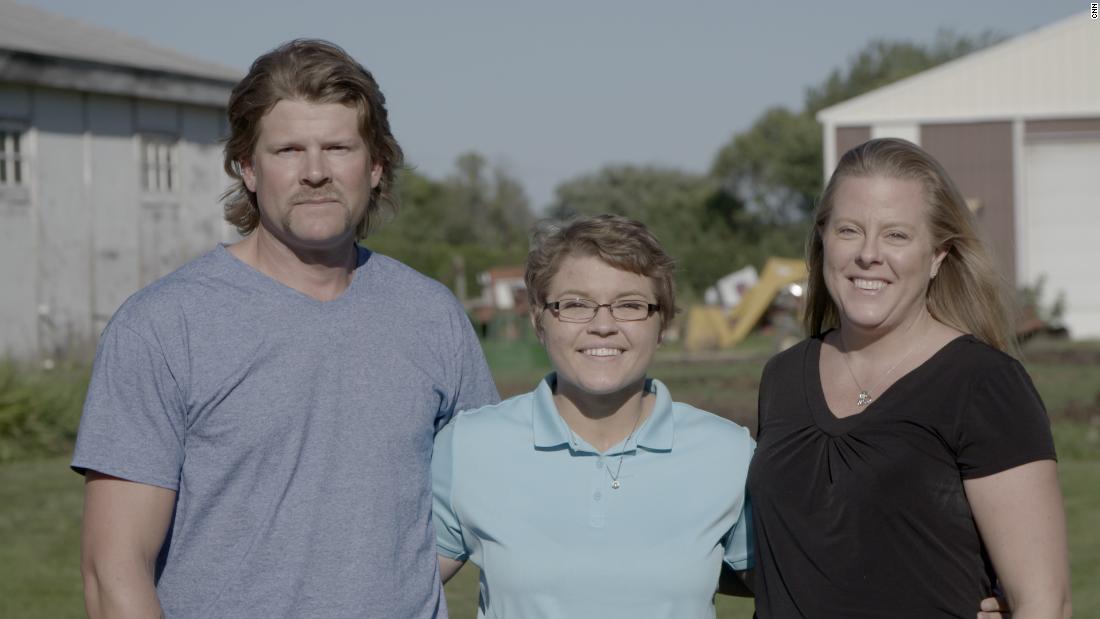
On Christmas morning 2016, Alyssa settled in with a mug of hot chocolate to open her gifts. She was surrounded by her large family: her mother, Amber Engebretson, a stay-at-home mom; Duane Engebretson, her stepfather since she was 4 years old, who manages a construction company and the family's farms; and her five younger siblings, then 18 months to 11 years old.

They live in Sherburn, Minnesota, population just over 1,000 people, about 150 miles southwest of Minneapolis, on a farm with sheep, cows, horses and pigs.

Alyssa was thrilled with her first Christmas present: a pair of cowboy boots emblazoned with the emblem of the Future Farmers of America, her favorite club.

Then she went to the bathroom. Her parents heard screaming.

"Mom, I need you!" Alyssa yelled as she lay curled up on the floor, vomiting.

It was immediately obvious this was much more than just a stomach bug. Her left side was very weak, and she couldn't hear out of her left ear.

"You could see looking at her that she was petrified," her stepfather said.

He called an ambulance. A local hospital determined that Alyssa, who'd always been healthy, had a ruptured brain aneurysm: A blood vessel inside her brain had suddenly and unexpectedly burst.

Surgeons explained that her life was on the line. They drilled a hole in her skull to relieve the pressure on her brain.

A nurse gave her parents a bag of Alyssa's hair, which had been shaved off for the operation. Some people liked to have it, she said.

Amber and Duane cried as they considered that this bag of hair -- their daughter's long, beautiful hair -- might be all they had left if she died.

They begged to have her sent to the Mayo Clinic. The main campus for the world-renowned medical center was 85 miles away in Rochester, Minnesota.

"They're the best. People come from all over the world to go to Mayo," said Alyssa's mother, Amber Engebretson, who worked as a vehicle inspector for the Minnesota State Patrol before staying home to care for her family.

But Alyssa couldn't get to Mayo immediately. There was an ice storm. Ambulances couldn't drive, and helicopters couldn't fly.

The weather eventually broke, and about 7 p.m. -- about nine hours after the aneurysm -- Alyssa finally arrived by ambulance at Mayo headquarters in Rochester.

On Christmas night, surgeons gave her a 2% chance of living, her parents said. Doctors wrote in her medical record that her prognosis was "grim."

Her parents reached out on Facebook for prayers. They called their daughter the #Christmasmiraclegirl.

Alyssa lived up to that name. She survived, thanks to four brain surgeries over the next month. Her doctors were ecstatic.

"They were like, she's not supposed to be here. She beat the odds," her stepfather said.

"Mayo neurosurgeons saved her life," added her mother. "We'll be grateful to them forever."

On January 30, Alyssa was transferred from the neurology unit to the rehabilitation unit.

It should have been a happy turning point. But that's when the troubles began.

Tensions flare


Although all had gone smoothly on the neurology floor, the family got into conflicts with the rehab staff almost immediately.

First, doctors there wanted to take Alyssa off oxycodone, a powerful opioid painkiller that the neurology doctors had prescribed for pain after surgery. Her most recent surgery -- the fourth in one month -- had been just a few days before.

"She'd lay in bed with tears coming out of her eyes because she was in so much pain," her stepfather said.

Many medical authorities, including the Mayo Clinic's website, say opioids are critical for post-surgical pain management.

A week after Alyssa arrived on the rehabilitation floor, her mother shared her feelings on Facebook.

"[Alyssa's] and my frustration level was high and it seems that they just don't listen sometimes," Amber wrote on February 7.

More disputes arose. Her parents say their daughter's breathing tube was the wrong size, and they had to pester doctors to get it corrected. They also say the family -- not doctors -- discovered that she had a bladder infection. They say a social worker discussed private financial information within earshot of visiting friends and relatives.

Her parents asked for the social worker and a doctor to be replaced.

"We just need someone who will at least listen to us and hear us," Amber wrote on her Facebook page on February 20.

Alyssa's parents say that at their request, they had a meeting with her care team on February 21.

"I had two whiteboards filled up with questions left unanswered, tests left undone, and every other question we could think of," Amber wrote on her Facebook page that day.

Amber says that at one point during that meeting, she told the staff she felt like they "don't give a f***," later apologizing for her language. She also asked for a second doctor to stop taking care of their daughter.

"We took no crap and laid it all on the line. ... Because seriously what do we have to lose at this point," Amber wrote on Facebook that night.

Mayo kicks Mom out


On February 22, the day after that meeting, Amber got into a disagreement with a nursing aide and asked to have her removed from her daughter's care team. She was the fourth staffer the family had asked to be replaced in just three weeks.

That afternoon, Amber says, she was scheduled to have a meeting with the social worker -- the same one she'd asked to leave her daughter's care.

Amber had requested the meeting, and she says that as she approached the office at the appointed time, a man she'd never seen was standing in the office doorway. She said he saw her coming and went into the office and shut the door.

Amber listened through the door. She says that as she suspected, the man and the social worker were talking about her family.

"I proceeded to open the door and say, 'Since you're talking about my family, I think it's only appropriate that I would be here also, to be included in the conversation,' " she remembers.

She says the man puffed out his chest and stepped toward her, and she took a backward step into the hall. The man, who Amber later learned was a physician, demanded that she leave.

She says the man told her, "I run this whole rehab unit. Do you understand me?"

Amber describes the doctor as "intensely aggressive."

She replied to him, she says, with similar aggression and frustration: "I need to talk to you. Do you understand me?"

The doctor walked away.

CNN reached out to this doctor and other staff members involved in Alyssa's care but did not receive responses.

About an hour later, Alyssa's parents say, the same doctor, the social worker and a nurse approached the family. They were accompanied by three security guards.

"[The doctor] said to me, 'You are not allowed to participate in Alyssa's care. You are not allowed on Mayo property. You will be escorted off the premises right now,' " Amber remembers.

Amber and Duane say they asked why Amber was being kicked out but did not receive an answer.

Later, a social worker would tell police that "Amber interrupted a meeting because Amber was upset over the care Alyssa was receiving. Due to that incident, Amber was escorted off of [Mayo] property."

According to Alyssa's parents, the doctor told Duane that he could stay but that he would not be allowed to have any involvement in his stepdaughter's care.

The couple say they asked the doctor whether they could speak with a patient advocate.

"He said, 'There is no patient advocate,' and walked away," Amber said.

When asked about Amber's dismissal from the hospital, Mayo spokeswoman Plumbo sent CNN a statement.

"Our care teams act in the best interests of our patients. As a general practice, this includes sharing information with family members and facilitating family visits and interactions with patients and their care providers when the patient is in our care. However, in situations where care may be compromised or the safety and security of our staff are potentially at risk, the family members' ability to be present in the hospital may be restricted."

Plumbo did not elaborate on whether or how Amber compromised her daughter's care or placed staff at risk.

"We would never compromise her care," Amber said. "She's our daughter. We love her."

She also says she never put staff members at risk. "We would never do that -- ever," she said.

On February 23, the day after Amber was kicked out, she went on Facebook.

"PRAYER WARRIORS UNITE!!!! We need your help. ... Please READ THIS AND SHARE THIS POST in hopes it reaches the people or person who can help us," she wrote.

"I HAVE BEEN TOLD I AM NOT ALLOWED IN ALYSSA'S ROOM AND NO ONE IS ALLOWED TO HAVE ANY SAY OR PARTICIPATE IN HER [CARE]. ... I AM NOT ALLOWED TO SEE HER!! We have been given no reason why, no paperwork, and no explanations," she continued. "I never imagined something like this could happen in our world and a very hard situation already has been made even harder!!"

The response from one Facebook user led the family to conclude that they needed to get Alyssa out of Mayo, and fast.

'Basically a prisoner at Mayo'


Alyssa, who was legally an adult during her entire hospitalization, says that around this time, she started asking doctors and nurses to transfer her to another facility.

She says she never received a response.

"They were cruel to me," Alyssa said, adding that she wanted to get out of Mayo "as bad as possible."
On February 23, three weeks into her daughter's stay in rehab, Amber complained on Facebook, tagging Mayo.

"They refuse to let her go. ... We cannot transfer [Alyssa] out or get her discharged," she wrote. "No one has any say in [Alyssa's care] and she is basically a prisoner of Mayo."

Alyssa's stepfather and grandmother say they also asked to have her transferred out of Mayo.

"I asked two to three times a day, and it would go nowhere," Duane said.

"Duane said, 'This is ridiculous. We don't want her here; Alyssa doesn't want to be here; she doesn't feel safe here,' " her grandmother Aimee Olson remembers. "But there was no response."

Duane says he tried to talk to a senior doctor on the rehab staff about a transfer. It was the same doctor who had asked his wife to leave the hospital.

"He said 'I have nothing to say to you. This is a legal problem,' " Duane remembers. "I even asked him, 'can I speak to your supervisor, your boss,' and his exact words were 'I run this whole floor,' and [he] turned around and walked out of the room, and that was it.'

Duane says he called the Mayo Patient Experience office and in a 45-minute phone call described the family's grievances. He said the patient experience specialist told him he would be back in touch after getting Mayo's side of the story.

Olson, Alyssa's grandmother and Amber's mother, said she also tried to speak with the senior doctor but was told he wasn't available.

"She was truly being held captive," Olson said. "I would never believe a hospital could do that -- never in my wildest dreams."

The family and a friend say they were instructed by Mayo staff not to talk to Alyssa about her mother.

Two nurses were assigned to be with Alyssa, and they kept careful watch, according to visitors.

"It was like they were watching every move you made," said Joy Schmitt, Alyssa's boyfriend's mother, who visited frequently after Amber was asked to leave the hospital.

'They were taking over our daughter'


On February 21, the day before her mother was kicked out of the hospital, a Mayo psychiatrist examined Alyssa and found that she lacked the capacity to make her own medical decisions, according to a summary of her care that her doctors wrote after she left Mayo.

Around this time, a hospital social worker went to adult protection services in two counties to try to get those authorities to get guardianship over Alyssa, according to the police. If they had succeeded, she would have become a ward of the state.

Alyssa and her family say that they weren't told any of this as it was happening but that around this time, they started to feel that Mayo was isolating Alyssa.

On February 26, staffers confiscated Alyssa's cell phone, laptop and tablet after finding that she'd made a video for her mother, according to Alyssa and her family. They say Alyssa's visitors were also banned from bringing their devices into the hospital.

The same day, Mayo staffers said no one would be allowed to stay overnight with Alyssa, according to Duane and Amber's sister, April Chance, who attended a meeting with Alyssa's care team.

Duane says he asked the staff to reconsider. He said his stepdaughter had never spent the night alone in the hospital. But he says they refused.

"The doctors said they were doing this for Alyssa's own benefit," Duane said.

The family says the doctors also told them that visitors would no longer be allowed to attend Alyssa's treatment sessions, such as physical and occupational therapy.

"I said, 'We're her cheerleaders. We cheer her on,' " her aunt remembers. "And they said 'No, you're impeding her care.' "

She said the staff didn't elaborate on how they were impeding her care.

"They were restricting us little by little from even being with Alyssa. They were taking over our daughter," Duane said.

Mayo also pushed back Alyssa's discharge date, which was supposed to be February 27.

Meanwhile, her mother's following was growing on Facebook, with many users posting angry messages that tagged Mayo.

One woman sent Amber links to stories about a teenager named Justina Pelletier.

Articles in The Boston Globe and elsewhere described how in 2013, Pelletier, then 14 years old, was placed in state custody for nearly 16 months after Boston Children's Hospital accused her parents of interfering in her care. She spent much of that time in a psychiatric ward.

Amber says she spoke on the phone with Justina's parents, Linda and Lou Pelletier. She says they warned her there would be signs that the hospital was seeking guardianship for their daughter. They would keep a tight watch over her and limit her communications with her family.

Through their lawyer, John T. Martin, the Pelletiers confirmed that they had conversations with Amber.

A spokeswoman for Boston Children's Hospital told CNN that the hospital is "committed to the best interest of our patients' health and well-being" and declined to discuss the specifics of the case.

Amber sent a text to the woman who'd sent her the news articles.

"OMG I am SICK. This is what is happening," Amber wrote. "It rings lots and lots of bells. ... Omg ... I am so scared."

A Mayo board member steps in


Alyssa's parents reached out to a friend of a friend for help: Mark Gaalswyk, who at the time was a member of the board of directors for the Mayo Clinic Health System in Fairmont, Minnesota.

Gaalswyk emailed a Mayo Clinic vice president. He informed her of the situation and explained that CNN had contacted the family.

"Could you please please do what you can to get your arms around the [situation] immediately?!" he wrote. "Please get to the bottom of this quickly before it blows up even more."

But Gaalswyk's pull wasn't enough.

He says Mayo treated Alyssa "terribly."

"I'm probably the most pro-Mayo person who has walked the face of this earth," said Gaalswyk, who left the board January 1. "But this was a mess."

He said he thinks Amber probably "used words she shouldn't have" with hospital staff.

"I'm not saying that Amber is 100 percent in the right," he added, "but I know what Mayo did is not OK at all."

In its statement to CNN, the Mayo spokeswoman said that "Mayo Clinic is committed to the safety and wellbeing of all the patients we treat."

Feeling like they were running out of options, Alyssa's parents then enlisted the help of Karie Rego, an attorney and patient advocate they'd met on Facebook.

On February 27, Rego spoke on the phone with Joshua Murphy, Mayo's chief legal officer, and faxed him a letter urging Mayo to transfer Alyssa to another facility.

"Given what has happened here, an expedited transfer this coming week would be best for everyone," she wrote.

Rego says an attorney in Murphy's office called her later. She says that he told her he couldn't speak with her and that she never heard anything more from Mayo's legal department.

That night, Alyssa's parents thought about Justina Pelletier and the 16 months she spent in state custody.

They went online and printed a form for Alyssa to sign, saying she was leaving the hospital against medical advice.

But her parents didn't know how they would get her out. Two nurses were assigned to keep watch over her at all times.

They started to hatch a plan to get her out of Mayo the very next day.


Full Article & Source:
Escape from the Mayo Clinic: Teen accuses world-famous hospital of 'medical kidnapping'

Part 2 - Escape from the Mayo Clinic: Parents break teen out of world-famous hospital

Sherburn, Minnesota (CNN)One winter afternoon last year, Duane Engebretson sat in his stepdaughter's hospital room at the Mayo Clinic in Rochester, Minnesota, trying to figure out how she could escape.

Alyssa Gilderhus, 18 and a senior in high school, had been a patient at Mayo for about two months, ever since having a ruptured brain aneurysm on Christmas Day.
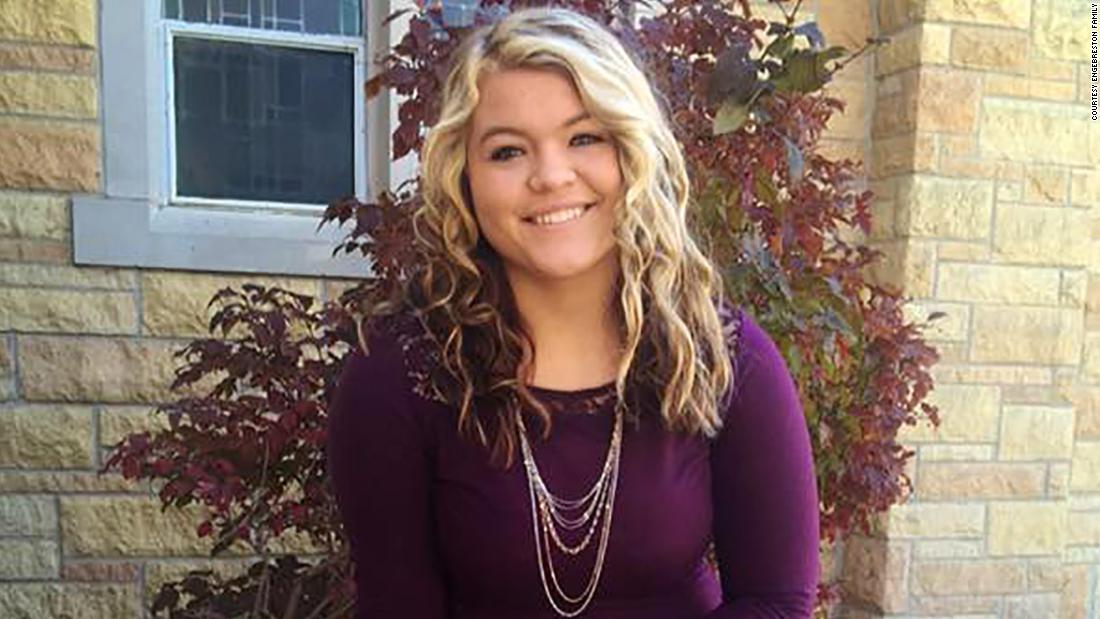
Alyssa Gilderhus before her ruptured brain aneursym and hospitilization at the Mayo Clinic.
Mayo neurosurgeons saved her life, but she and her parents were unhappy with the care she was receiving in the rehabilitation unit, and they say they repeatedly asked for her to be transferred.

But they say Mayo refused to let her transfer to another hospital, even after a lawyer wrote a letter asking Mayo to make the arrangements.

Alyssa and her family began to suspect that Mayo was trying to get a guardian appointed to make medical decisions for her. They were right: Hospital staffers would later tell police that they had gone to two county adult protection agencies to make guardianship arrangements.

Alyssa Gilderhus with her siblings at the Mayo Clinic.
Duane and his wife, Amber Engebretson, weren't sure how to get their daughter out of Mayo. Two nurses had been assigned to watch over her at all times.

But on February 28, 2017, an idea struck Duane as he sat in Alyssa's hospital room.

He looked at one of the nurses. She had been with them a few weeks before, when Alyssa's great-grandmother had come for a visit.

Betty Stalheim was 80. She'd just had knee surgery. She was fragile.

If he told the nurses that Grandma Betty wanted to visit but couldn't make it all the way upstairs to Alyssa's room, it might just sound believable, he figured.

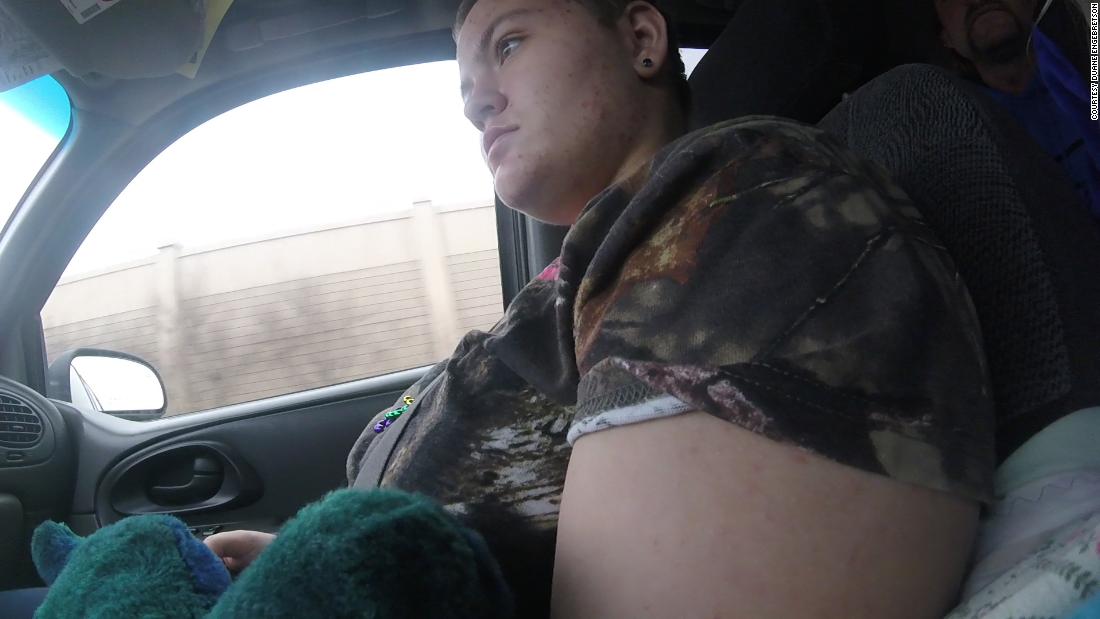
He put his plan into action about 4 p.m., with his 9-year-old daughter, Allie, secretly videotaping with a small GoPro camera hidden in her hand. He told CNN he wanted the videotape to show that Alyssa had left the hospital willingly and that he hadn't been violent with staff, and to record actions taken by Mayo employees.

Duane told the nurses he wanted to take Alyssa downstairs to say hello to Grandma Betty in the lobby.

The video shows Duane pushing Alyssa in her wheelchair down the hospital hallway. She has a bandage on her neck where her breathing tube had been removed a few days before.

Two women in scrubs follow them.

When the group arrives in the lobby, there is no Grandma Betty.

Duane says he sees Grandma Betty's car at the entrance and walks out the hospital doors with the two staff members trailing behind him.

As he approaches the car, the front passenger door opens.

There is no Grandma Betty. She was never there. Instead, Alyssa's mother is in the driver's seat.

"Alyssa, we're going to go home, honey. Come on," Amber says to her daughter.

As Duane helps his stepdaughter out of the wheelchair and into the passenger seat, the two women in scrubs run toward her, and someone yells, "No!"

"Yes, she is! Yes, she is!" Duane and Amber yell back.

The video shows a hand grabbing Alyssa's arm as Duane helps her into the car. A nursing aide would later tell police she had tried to grab her.

"Get your hands off my daughter," Duane yells at the aide.

Duane closes the car door and gets in the back seat.

"Get out of here, Amber," he tells his wife. "Go, go, go, go, go, go!"

The car drives away from Mayo.

Recalling her escape some months later, Alyssa says it felt "phenomenal."

"It was like the biggest weight off my shoulders," she said.

'We have a patient abduction'


At 4:28 p.m., a Rochester Police dispatcher received a call from Mayo Clinic security.

"We have a patient abduction," the caller said.

An officer arrived on the scene 20 minutes later.

A Mayo social worker told him that Alyssa "cannot make decisions for herself" and that her mother couldn't care for her "because Amber has mental health issues."

The social worker also told police she "understood there was no formal diagnosis" for Amber.

Amber told CNN she has no history of mental illness and took offense to the social worker making such an unqualified pronouncement.

Alyssa Gilderhus as a child with her grandmother Betty Stalheim, mother, Amber Engebretson, and younger siblings.
"It's absolutely absurd," Amber said. "She said it to the police department. She has no reasoning. She has no justification."

The social worker told the police she'd been working with adult protection services in two Minnesota counties "trying to get emergency guardianship" but had been unable to get court orders to do so.

An Olmsted County Adult Protective Services official told police that "Mayo was requesting [assistance] in gaining guardianship of Alyssa because they were concerned for the mother's mental health and the medical decisions that were being made for Alyssa."

But something didn't quite make sense to John Sherwin, captain of investigations for the Rochester Police Department.

If Alyssa couldn't make decisions for herself, as the social worker had said, and if she needed a legal guardian appointed for her, then who had been making decisions for her while she was in the hospital?

When police asked that question of Mayo staffers, Sherwin said, they replied that Alyssa had been making her own medical decisions.

"When doctors were consulting with her in regards to her medical care, they weren't doing so through a guardian or someone that had been appointed by the courts. It was in direct contact with the patient," Sherwin said.

He said it became clear to investigators that Alyssa "in fact could make decisions on her own" -- including the decision to leave the hospital against medical advice.

"There was no abduction. This was done under her own will," he said. "You had a patient that left the hospital under their own planning."

Though satisfied that Alyssa was capable of making her own decisions, Sherwin still was concerned about her health.

"What was relayed to us [by Mayo staff] was that the patient was in danger of dying if they were not in the hospital," Sherwin said.

Mayo sent the police an order for a 72-hour hold, which allows police to admit someone to a hospital emergency room against their will if they're a danger to themselves.

But first, the police had to find Alyssa.

Police search for Alyssa


Alyssa and her parents were on the run. They weren't answering their cell phones, and they weren't at home, either.

They later told CNN they figured the police would bring Alyssa to a hospital, and given the large number of Mayo facilities in Minnesota, there was a good chance that hospital would be a Mayo hospital.

"We felt that if [Mayo] got their hands on her, they would latch on and we wouldn't get her back again," Duane said.

Alyssa moments after she escaped from the Mayo Clinic with the help of her parents.
Unable to find the family, the police pinged their cell phones. This pointed them to an Applebee's restaurant in Mankato, Minnesota, about 85 miles west of Rochester. Officers searched the restaurant and a nearby Five Guys but couldn't find Alyssa, according to a Mankato police report.

It turned out the ping was a bit off: The family was down the street at Walmart, purchasing a wheelchair, a walker and a syringe for Alyssa's feeding tube, which Duane says he'd been trained to use. They then checked into a nearby hotel.

While at the hotel, the family received a phone call from a Martin County sheriff's deputy. They say they told the deputy that their daughter was doing well, and they planned to bring her to a doctor the next day to get her checked.

The deputy said that wasn't good enough. He told them they were on their way to them, according to the family.

Alyssa and her parents scrambled and left the hotel.

It was now almost 9 p.m., and nearly five hours had passed since they'd left Mayo. The family was on the road with three police agencies -- Rochester, Mankato and Martin County -- on their heels.

As Alyssa's stepfather drove down the highway, a sheriff's deputy called, urging them to bring their daughter to a hospital right away. They told him they'd bring her to a hospital in Jackson, about 75 miles away.

But then, the family reconsidered. They'd chosen Jackson because it had a hospital that wasn't owned by Mayo. But they feared that the doctors there might transfer her to a Mayo facility.

After the calls from police, Alyssa's parents figured out that their phones were being pinged and took the batteries out.

They got off the highway and drove on gravel roads without a map.

"I just kept heading west. I knew I would run into South Dakota sooner or later," he said.

'This kid is in danger'


The next afternoon, March 1, one of Alyssa's doctors, a pediatric rehabilitation specialist at Mayo, spoke on the phone with Sherry Bush-Seim, a Rochester police investigator.

The doctor warned that Alyssa was in grave danger.

"The longer she's away, the higher likelihood that she's gonna get very, very sick," the physician said, according to a transcript of the conversation that police provided to CNN.

The day Alyssa left Mayo, that doctor and a colleague had written a discharge note.

"Alyssa's medical condition, medical status, cognition, and physical impairments require an ongoing inpatient level of medical care," the doctors wrote. "She was not medically or functionally safe to leave the hospital at the time of her removal from the hospital by her stepfather."

Alyssa was at risk for pneumonia, malnourishment, dehydration, aspiration, infection and falling, according to the note. She didn't have her medications with her, and her parents weren't trained on how to use her feeding tube, according to the discharge summary.

The doctor said Alyssa was probably "a ways from here by now" and requested a wider-scale search.

"[It's] incredibly frustrating that something isn't out nationally given that [this] family may be hopping from doctor to doctor," the doctor said.

"We wouldn't do that nationally," Bush-Seim responded. "That wouldn't be done."

Without a national search, the doctor said, "we're not gonna find her."

Bush-Seim assured the physician that the Rochester police had "done everything they possibly could to find her."

"There's got to be something more. This kid is in danger," Alyssa's doctor responded.

The police back off


But other doctors disagreed with the Mayo physician.

Less than 12 hours after leaving Mayo, she and her parents arrived at the emergency room for Sanford Medical Center in Sioux Falls, a teaching hospital for the University of South Dakota.

They explained to Sanford doctors that she'd had an aneurysm and left Mayo against medical advice, according to medical records from that emergency room visit.

The Sanford doctors disagreed with the Mayo doctors on two crucial points.

Although Mayo doctors had insisted that Alyssa needed to be in the hospital, the Sanford doctors came to the opposite conclusion: They prescribed Alyssa medications, gave instructions for her to follow up with a doctor and told her she could go home.

Mayo had determined that Alyssa lacked the mental capacity to make her own decisions. The Sanford doctors again came to the opposite conclusion: They allowed her to make her own decisions and sign her own forms consenting to treatment.

When police learned that a hospital had cleared Alyssa to go home, they stepped aside.

"If a doctor at another facility says she's fine and comes up with a second opinion, that kind of takes the law out of it," said Chris Vasvick, a Martin County sheriff's deputy. "That's one doctor's opinion against another, and that doesn't have anything to do with law enforcement at all."

Sherwin, the Rochester detective, agreed.

"We didn't have any reason for the police to intervene," Sherwin said.

He added that Alyssa and her parents had done nothing illegal. No charges were filed against them.

"As parents, they were probably thinking that they were acting on her best interest. I think the same could be said for the doctors and staff at Mayo Clinic. I think that they also felt they were acting on her best interest," Sherwin said.

A few days after her visit to the Sanford emergency room, Alyssa and her parents went home.

A letter from Mayo was waiting for them, thanking Duane for getting in touch with the patient experience office.

The family found it ironic, given that it was dated March 1, the day after Alyssa left the hospital.

A few days later, another letter arrived from an administrator at Mayo, saying that it would not treat Alyssa or her parents.

"We have made this decision because of your actions which demonstrate a lack of trust and confidence in Mayo," the administrator wrote.

On Facebook, Amber shared that Alyssa's health was improving.

"This kid amazes me every day!! And we all could not be more proud!!" she wrote.

Alyssa Gilderhus with her parents months after they helped her escape from the Mayo Clinic.

'Hospitals aren't prisons'


To understand the legal and ethical issues in Alyssa's case, CNN showed experts key documents, including law enforcement reports; a transcript of portions of CNN's interview with Sherwin, the detective at the Rochester Police Department; and summaries of her care written by doctors at Mayo and Sanford.

The experts emphasized that those documents don't tell the whole story; only a thorough reading of her full medical records and interviews with Mayo staff would provide a complete picture.

"You're only hearing one side," cautioned Dr. Chris Feudtner, a professor of pediatrics, medical ethics and health policy at the University of Pennsylvania Perelman School of Medicine.

After reviewing the documents, the experts wondered why Mayo did not allow Alyssa, who was 18 and legally an adult, to leave the hospital when she made clear that she wanted to be transferred, according to the family.

They said that typically, adult patients have the right to leave the hospital against medical advice, and they can leave without signing any paperwork.

"Hospitals aren't prisons. They can't hold you there against your will," said George Annas, an attorney and director of the Center for Health Law, Ethics & Human Rights at the Boston University School of Public Health.

But Alyssa's doctors say she wasn't a typical patient.

"Due to the severity of her brain injury, she does not have the capacity to make medical decisions," her doctors wrote in her records after she'd left the hospital.

In that report, the doctors specified that assessments in the last week of her hospital stay showed that she lacked "the capacity to decide to sign releases of information, make pain medication dose changes, and make disposition decisions. This includes signing paperwork agreeing to leave the hospital against medical advice."

That hadn't jibed with the captain of investigations for the Rochester police. Sherwin said it didn't make sense that Mayo staffers told police Alyssa had been making her own decisions, yet in the discharge note, they stated she wasn't capable of making her own decisions.

It didn't jibe with the experts, either.

"They can't eat their cake and have it, too," said Feudtner, the medical ethicist at the University of Pennsylvania.

Even if Alyssa truly did lack the capacity to make her own medical decisions, the experts had questions about Mayo's efforts to obtain emergency guardianship for Alyssa.

Brian Smith, the Rochester police officer who responded to Mayo's 911 call the day Alyssa left Mayo, said a Mayo social worker told him she'd been working for a week or two to get a Minnesota county to take guardianship over Alyssa.

"The county would have guardianship over her and would make decisions for her," he told CNN.

If that happened, Alyssa most likely would have stayed at Mayo, as she was already receiving treatment there, Smith said.

Bush-Seim, the Rochester police investigator, spoke with an official at one of the county adult protection agencies. She said it was also her understanding that Mayo wanted the county to take guardianship of Alyssa, or that perhaps Mayo itself wanted to directly take guardianship of her.

The legal experts said they were not surprised that Mayo was unable to get court orders for such guardianship arrangements. It's a drastic and highly unusual step for a county or a hospital to take guardianship over a patient, they said, rather than have a family member become the patient's surrogate decision-maker.

Robert McLeod, a Minneapolis attorney who helped the state legislature draft its guardianship laws, did not review the documents pertaining to Alyssa, as he did not want to comment on any specific case.

He said that before appointing a county or a hospital as a legal guardian, a judge would ask why a family member or close friend hadn't been selected as a surrogate.

"From my 25 years of experience, a judge is going to say, 'why isn't the family the first and best choice here?' and it had better be a good reason," said McLeod, an adjunct professor at the Mitchell Hamline School of Law in Saint Paul, Minnesota.

Other experts agreed.

Saver, the professor at the University of North Carolina School of Law, said that in his four years working in the general counsel's office at the University of Chicago Hospitals and Health System, he doesn't once remember the hospital seeking guardianship for a patient who had a responsible relative or friend who could act as surrogates.

"It's thought of as kind of the atom bomb remedy," Saver said. "I'm a little flummoxed what to make of this. They had family members on the scene to look to."

Alyssa said her biological father, Jason Gilderhus, told her that Mayo asked him to become her guardian. He did not become her guardian and did not respond to CNN's attempts to reach him.

Even if Mayo had concerns about Alyssa's mother and her biological father didn't work out, there were other friends and relatives to turn to, such as her stepfather, grandmother, great-grandmother, aunt or boyfriend's mother.

"It's so baffling why they didn't try to designate a surrogate before trying to get a guardian," added Dr. R. Gregory Cochran, a physician and lawyer and associate director of the Health Policy and Law program at the University of California, Hastings College of the Law in San Francisco.

Another feature of Alyssa's case also surprised the experts.

Caplan, the NYU bioethicist, said that in complicated and contentious cases like this one, doctors typically reach out to their hospital's ethics committee for help.

An ethics committee would listen to the doctors, other staff members, the patient and the family to try to resolve the conflict.

The family says no one ever mentioned an ethics committee to them, and there's no mention of an ethics committee consult in the discharge summary in Alyssa's medical records.

Annas, the lawyer at Boston University, agreed that an ethics committee consultation would have been an obvious and important way to help resolve the dispute before it spun out of control.

"Disputes between families and hospital staff happen all the time, and they can either escalate or de-escalate," Annas said. "An ethics consult can help sort out the issues so they de-escalate."

The experts said they were disappointed that in Alyssa's case, the conflict escalated.

"I was shocked to see that parents had to pull a fast one to get their daughter out of the hospital," said Cochran, of the University of California.

"I felt sad," said Feudtner, the ethicist at the University of Pennsylvania. "Viewed in its entirety, this did not go well for anybody who was involved."

Gaalswyk, the former Mayo board member, said he hopes the hospital learns something.

"I hope that someone somewhere will look at what happened in this unfortunate case and improve both our Mayo employee's actions and patient systems so that it not need happen again to any other patient at Mayo," he wrote a Mayo vice president after Alyssa left the hospital. "The situation need not get out of hand like it did."

Being 'held hostage in an American hospital'


While the details of Alyssa's case are extraordinary -- the Grandma Betty trick, the escape from the hospital with police on their heels -- the core of her story is not uncommon in many ways, according to patient advocates.

Dr. Julia Hallisy, founder of the Empowered Patient Coalition, says families often tell her that a hospital won't allow their loved one to transfer to another facility. Often, they're afraid to say anything publicly or on social media.

"You sound like a crazy person -- that your family member was held hostage in an American hospital," she said. "People can't believe that would happen. It's like the stuff of a science fiction story."

Kristen Spyker said it happened to her family.

When Spyker's son was born with a rare heart defect, she says she told doctors at the Ohio hospital where he was born that she wanted him to have a surgical repair at a hospital with a larger pediatric heart program.

She said the heart surgeon at the first hospital refused to send her son's medical records to other hospitals. She also says a surgeon resisted her efforts to transfer her newborn son to another hospital to get a second opinion on what surgery he should have for a rare heart defect.

"The surgeon said, 'This is my patient. This is my show. I'm the boss, and I say what happens,' " she said.

She said a social worker, accompanied by hospital security guards, then came into her son's hospital room and said she was worried that Spyker had postpartum depression that was affecting her ability to make decisions for her son's care.

Spyker said the hospital discharged her son only after she threatened legal action.

Her son then had a successful procedure at another hospital -- a different procedure than the one recommended by the first doctor.

When she told her story on Facebook, Spyker said, other parents shared similar stories.

"It was parent after parent after parent saying 'this happened to us,'" she said. "They had been so embarrassed to talk about it, but they felt freer when I said it happened to us."

Spyker was one of several people who spoke with Alyssa's parents last year while their daughter was at Mayo.

In a statement to CNN, the American Hospital Association addressed conflicts between families and hospitals.

"Communication between physicians and patients is extremely important in working to identify the best treatment," said Dr. Jay Bhatt, senior vice president and chief medical officer of the organization.

"Each patient is unique. It is for this reason that the majority of hospitals have patient advocates on staff to help patients and families navigate the care process. Hospitals recognize that patients are critical members of any care team and many are employing new strategies to ensure their voice and perspective is heard and accounted for."

When hospitals and families get into intense conflict, Hallisy, a dentist who practices in San Francisco, says human emotions can run amok. She says she saw it happen when her daughter, Katherine, was being treated for cancer.

"People think that doctors are immune to petty disagreements, but they're human beings, and sometimes ego and primitive emotions take over," she said.

She said that in Alyssa's case, she wonders whether a sensitive hospital staffer, perhaps a social worker, could have prevented the situation from becoming as contentious as it did.

She thinks back to her daughter, who died at age 10. She remembers the sadness and fear of having a very sick child, as well as the stress of taking care of her two other children and keeping her dental practice afloat while her daughter was in and out of the hospital.

She thinks about how Alyssa was near death and how her parents had five younger children 130 miles away, as well as farms and a family business to run.

"They were under incredible stress," Hallisy said. "They'd almost lost a child, and they had other responsibilities, too. You would think that someone at Mayo would be trained to see that."

The prom queen graduates


More than a year after leaving the Mayo Clinic, Alyssa, now 20, has belied her "grim prognosis."

The students of Martin County West High School crowned Alyssa Gilderhus prom queen.
Last year, she graduated from Martin County West High School, receiving a standing ovation from her class. She stayed out all night at her senior prom, where her classmates voted her prom queen. The local chapter of Future Farmers of America gave her the Star Farmer award.

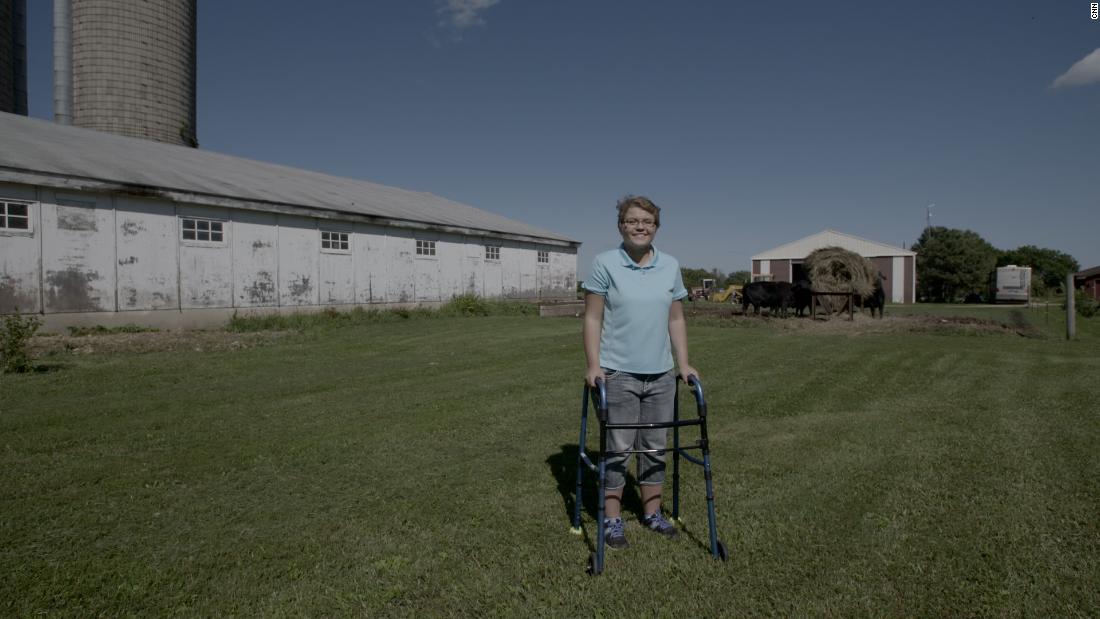
Her feeding tube came out a few months after she left Mayo, and she can eat and speak normally now. She can walk on her own without any assistance. Last summer, she presented her fantail pigeons at the Minnesota State Fair and competed in the poultry princess competition.

She finished up her physical and speech therapy in March, about a year after leaving Mayo. She'll be a freshman at Southwest Minnesota State University in September.

Alyssa Gilderhus on her family's farm in Sherburn, Minnesota.

Alyssa has not filed a lawsuit, but has engaged Martin, the lawyer who is also representing the Pelletier family.

Alyssa and her parents say they haven't recovered emotionally from what happened at Mayo. They say they still sometimes wake up in the middle of the night, panicked about what would have happened if they hadn't snuck her out of the hospital.

"I think she would be [at the hospital] and nobody would be able to see her," her stepfather said.

They say Mayo still hasn't given them an explanation for why it was trying to arrange guardianship for Alyssa.

They think Mayo was trying to get guardianship in retaliation for questioning the staff, especially a senior physician.

"I think that the doctor I made mad wanted to make sure that I paid for it no matter what," her mother said.

She's told that's a pretty hefty accusation.

"We stand by it 100 percent," her stepfather said.

Full Article & Source: