Showing posts with label scammers. Show all posts

Friday, July 31, 2026

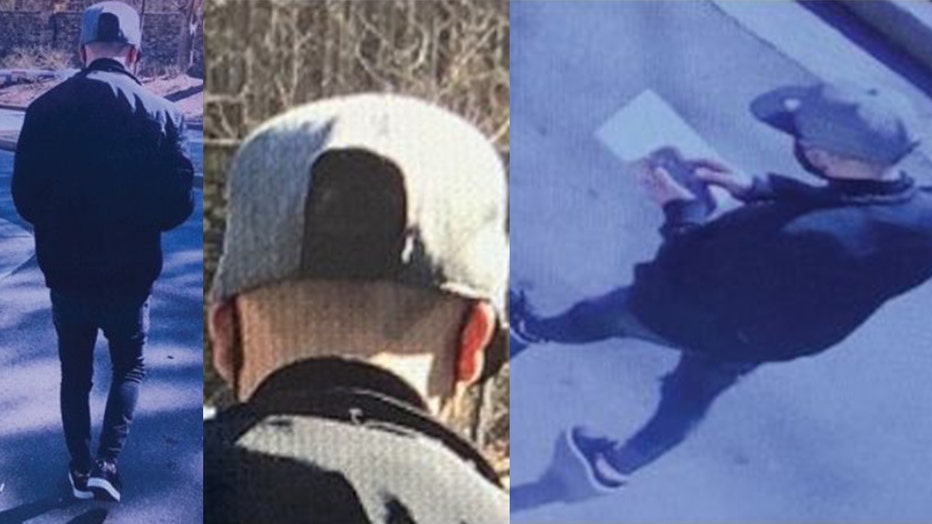
Gibson County elder abuse victim receives full restitution

Thomas Coley entered a plea deal after carrying out a fraud scam against an elder.(Gray News)

By WBBJ Staff

GIBSON COUNTY, Tenn. (WBBJ) - Thomas Coley pled guilty to theft over $10,000 and received a seven month sentence, with the balance of a five-year sentences suspended only upon payment of restitution in full, on July 27 in the Gibson County Circuit Court.

Coley paid the full restitution of $39,600 on the day of his plea and due to the lack of criminal history, he was placed on supervision with State Probation with the additional conditions of completing Cognitive Behavioral Therapy classes and maintaining full-time employment.

In December of 2025, Coley was involved in a fraudulent scam that preyed on a 77-year-old victim from Milan. The suspect pretended to be employed by “Apple Security” and claimed that “Apple Pay” mistakenly deposited $40,000 into her bank account when the amount should have been $400. Coley requested the victim withdraw $39,600 in cash from her account to repay them. Coley gave the victim a false name and retrieved the cash.

Once the victim realized the deposit was fraudulent, she contacted law enforcement. Her residential security video and Milan Police Department’s FLOCK cameras, help locate the suspects vehicle and detain him in Dunwoody, Georgia. The suspect was positively identified by the victim.

“Unfortunately, there has been a proliferation of scammers who prey on elderly victims in our community vulnerable to intimidation by perpetrators who pressure them with false legal action if they don’t comply with their demands. Fortunately, in this case, thanks to the diligent work of the Milan Police Department in retrieving video evidence and tracking that information to another state, this defendant was successfully prosecuted and the victim made whole again financially. Our Office and our Courts ensured that the defendant was not released from incarceration until that happened,” said District Attorney General Frederick H. Agee. 

Full Article & Source:
Gibson County elder abuse victim receives full restitution

Friday, July 11, 2025

Governor Signs New Digital Forgery Law, Protecting Pennsylvanians from AI Scams and Financial Exploitation


Governor Josh Shapiro signed SB 649 into law, creating new criminal penalties for anyone who uses artificial intelligence (AI) to produce non-consensual “forged digital likenesses” — like deepfakes or voice clones — to defraud or harm Pennsylvanians, protecting Pennsylvanians from AI scams and financial exploitation. Under the new law, prosecutors can now charge bad actors with a third-degree felony if they use AI-generated fake content to commit fraud or cause injury — including schemes like faking a grandchild’s voice to trick older adults into sending money.

“In Pennsylvania, we are leading on AI — and taking advantage of the economic and technological benefits that come with it — but we’re also taking a thoughtful, proactive approach to protecting Pennsylvanians,” said Governor Shapiro. “By signing this bill into law, we’re sending a clear message that if you use AI to defraud or exploit Pennsylvanians, you will be held accountable. My Administration is committed to cracking down on scammers, reducing fraud, protecting consumers, and making sure Pennsylvanians of all ages can feel safe and confident in the digital age.”

“I’m proud to see the Governor signing my bipartisan legislation to better protect Pennsylvanians from deepfake impersonations and scams that have already cost victims millions,” said Senator Tracy Pennycuick. “ Now law enforcement will have the tools they need to hold bad actors responsible, creating a powerful deterrent that will make criminals think twice before attempting these digital deceptions.”

“Today is an important day in our Commonwealth. With the Governor’s signature, we’re highlighting the need for responsible regulation on a technology that is poised to be more accessible in our daily lives in the near future,” said Senator John Kane. “Progress is good, but protecting Pennsylvanians from the unintended consequences of this tech is one of my top priorities.”

Older adults continue to remain especially vulnerable: the Department of Aging received nearly 18,500 reports of financial exploitation in FY 2023-24 — nearly one-third of all abuse reports — and the number of financial exploitation cases has nearly doubled since 2017. With Pennsylvania home to the fifth-largest older adult population in the nation, these scams put thousands at risk every year.

“Older adults being the target of scams has continued to rise each year. Last year financial exploitation became the most reported form of abuse for older Pennsylvanians. Increasingly sophisticated technology gives the victim a false sense of familiarity, with devastating results,” said Secretary of Aging Jason Kavulich. “The signing of SB 649 into law creates consequences for those who would use AI to rob older adults of their retirements. We applaud this action and look forward to continuing our work with the House and Senate for a comprehensive update to the Older Adult Protective Services Act to strengthen protections for older adults even more.”

Protecting Consumers Through Education and Enforcement

The Department of Banking and Securities (DoBS) is leading education efforts to help Pennsylvanians recognize and avoid AI-driven scams and identity theft. In 2024, DoBS reached nearly 35,000 Pennsylvanians through free events and programs, answered over 10,000 consumer inquiries, and helped return millions to harmed consumers.

“Financial crimes involving artificial intelligence are on the rise, and it’s getting harder to tell what’s real and what’s fake,” said DoBS Secretary Wendy Spicher. “It’s critical that consumers stay alert and informed, and know that help is just a call or click away if they have questions or concerns.”

The Pennsylvania Insurance Department (PID) is ensuring AI is used responsibly in the insurance industry. Last year, PID issued guidance reminding insurers that decisions supported by AI must comply with existing laws and protect consumers against unfair discrimination or inaccuracies.

“Advancing technology offers real benefits, but scammers can exploit it to target Pennsylvanians,” said PID Commissioner Michael Humphreys. “This law helps hold those bad actors accountable — and we remind everyone to verify calls or offers that sound too good to be true.” 

Full Article & Source:
Governor Signs New Digital Forgery Law, Protecting Pennsylvanians from AI Scams and Financial Exploitation 

Sunday, July 6, 2025

Two men indicted for $86,000 fraud scheme in Prince George’s Co.

Prince George’s County State’s Attorney Tara Jackson announced indictments Thursday of two men charged with defrauding a 59-year-old county resident out of $86,000.

Jackson and county police said Zheng Hui Xie, 30, of Flushing, New York, and Jianwei Wang, 27, of Monterey Park, California, impersonated Federal Trade Commission officials in order to convince the resident, who was not named, that there had been fraudulent activity on her Apple ID and that several accounts were compromised.

The resident received a text message on April 28 about a large purchase made on her account, and called a number provided. The person who answered claimed to be with a fraud department, and transferred the woman to an individual who claimed to be an FTC agent.

On two separate occasions, the resident was asked to withdraw money from her bank in order to secure her money. She handed the money over to the fake agents who came to her home.

When the resident received another phone call May 15 from an unknown number, and was told to withdraw $24,000, she contacted police. On May 23, investigators with the Prince George’s County Police Department’s Financial Crimes Unit arrested Xie and Wang.

Both men are charged with two counts of theft, one count of theft scheme and one count of conspiracy to commit theft. Police said the men could face additional charges, along with others who may have helped them defraud other residents in financial schemes that may have netted a combined $700,000.

Although senior citizens are mostly preyed upon in similar schemes, Jackson said scammers also target those who are “very responsible.”

“If somebody texts you and says, ‘If you don’t pay this money immediately, then your license is going to be suspended,’ most of us that are responsible don’t want our license suspended,” she said. “Our message to our residents and others is to make sure that you just don’t respond.”

If others believe they may be been defrauded, they are asked to call police at 301-352-1200.

Last month, AARP Maryland kicked off a campaign to stop financial exploitation on older Americans.

Federal Trade Commission data showed that there were 44,195 fraud reports from Maryland residents in 2024, for a total loss of nearly $202 million, up from the 44,168 fraud reports and $168 million in the state in 2023.

Full Article & Source:
Two men indicted for $86,000 fraud scheme in Prince George’s Co. 

Sunday, January 19, 2025

Woman who lost $850,000 to scammers posing as Brad Pitt faces wave of online harassment and mockery


A French woman who revealed on television how she had lost her life savings to scammers posing as Brad Pitt, has faced a wave of online harassment and mockery, leading the interview to be withdrawn on Tuesday.

The woman, named as Anne, told the "Seven to Eight" program on the TF1 channel that she had believed she was in a romantic relationship with the Hollywood star, leading her to divorce her husband and transfer $850,000.

The scammers used fake social media and WhatsApp accounts, as well as AI image-creating technology to send Anne what appeared to be selfies and messages from Pitt.

To extract money, they pretended that the 61-year-old actor needed money to pay for kidney treatment, with his bank accounts supposedly frozen because of divorce proceedings with his ex-wife Angelina Jolie.

Anne, a 53-year-old interior decorator with mental health problems, spent a year and half believing she was communicating with Pitt and only realized she had been scammed when news emerged of Pitt's real-life relationship with girlfriend Ines de Ramon.

"The story broadcast this Sunday has resulted in a wave of harassment against the witness," TF1 presenter Harry Roselmack wrote on his X account on Tuesday. "For the protection of victims, we have decided to withdraw it from our platforms."

Anne was said by the channel at the time of its broadcast to have been suffering from severe depression and received hospital treatment.

The interview, in which she was filmed openly and even shared family photos with reporters, went viral on Monday.

It sparked a deluge of mocking comments and jokes, but some online critics accused TF1 of failing to protect a vulnerable individual who might not have been unaware of the consequences of going public.

Toulouse Football Club tweeted that "Brad told us that he would be at the stadium on Wednesday" for the team's next match, before withdrawing the message and apologizing.

Netflix France also posted on social media promoting "four films to see with Brad Pitt (really) for free."

Romance scams have been a feature of the internet since the advent of email, but experts say artificial intelligence has increased the risk of identity theft, hoaxes and fraud online.

"These people deserve hell"

Anne told TF1 that she was first contacted by someone posing as Pitt's mother shortly after she began using Instagram for the first time while on a ski trip with her family in France.

"She told me that her son needed someone like me," Anne explained.

The scammers messaged her again several days afterwards, this time posing as Pitt.

"At first I said to myself that it was fake, that it's ridiculous," Anne explained to TF1. "But I'm not used to social media and I didn't really understand what was happening to me."  

"I ask myself why they chose me to do such harm like this?" she continued. "I've never harmed anyone. These people deserve hell."

More than 64,000 Americans were taken for over $1 billion in romance scams in 2023— double the $500 million just four years earlier, according to the Federal Trade Commission.  

In 2023, senior citizens were conned out of roughly $3.4 billion in a range of financial crimes, according to the FBI data. The agency recently warned that AI has increased the "believability" or criminal scams given that they "assist with content creation and can correct for human errors that might otherwise serve as warning signs of fraud."

Full Article & Source:
Woman who lost $850,000 to scammers posing as Brad Pitt faces wave of online harassment and mockery

Tuesday, July 30, 2024

NH seniors continue to fall prey to scammers as schemes proliferate

Victim of a phone scam? The New Hampshire Department of Justice’s Consumer Protection Hotline is open weekdays from 9 a.m. to 3 p.m. and can be reached by calling 1-888-468-4454 or (603)-271-3641.

By Shawne K. Wickham

They pose as bankers, government agents, IT experts, lottery officials, romantic partners — even relatives — with one goal: Stealing your money.

Despite ongoing news stories and warnings from law enforcement agencies, more than 100,000 Americans fell for scams last year — and two-thirds of them were seniors.

New FBI statistics show more than 400 New Hampshire residents 60 and older fell victim to scams in 2023 at a loss of more than $11 million.

Why is this happening?

Kristen Setera, spokesperson for the FBI’s Boston division, which includes New Hampshire, said seniors are targeted for several reasons. “They’re often more polite and trusting,” she said. “They may be lonely and spend a great deal of time alone.”

But she went on, “We also think they’re a ripe group for targeting because they’re financially stable and own their own homes.”

Bryan Townsend, senior assistant attorney general, said that while not only seniors fall victim to a variety of scams, “They’re targeted first and foremost because they have the most assets.”

“They’re a generation that saved well, that planned well, they have a variety of investment accounts that they can tap into, and scammers know that,” he said.

Townsend, who is the lead prosecutor for the Department of Justice’s elder abuse and financial exploitation unit, said the number of people engaging in this kind of criminal conduct is on the rise, both within the United States and internationally. In some ways, we’re making it easier for them.

“The more that our lives become automated, and we purchase things online, and our lives become online, our personal identifying information gets shared, and ultimately gets stolen and gets compromised,” he said.

As the population ages, scammers are changing how they approach potential victims, the FBI’s Setera said.

“The younger seniors, the Baby Boomers, have more computer skills than the older seniors, which means criminals are modifying their targeting techniques,” she said. “While the traditional scam artists and bad actors will use telephone calls and mass mailings, now there are burgeoning online scams like phishing and email scamming.”

Scammers often insist on confidentiality in their dealings with their targets, and do research online to find out details about their targets to be more convincing, Setera said.

One-fourth are tech scams

According to the FBI’s annual report on elder fraud, tech support fraud was the No. 1 scam perpetrated on seniors last year, while investment scams were the most costly for that group. Nationally, total losses topped $3.4 billion, an 11% increase from those reported in 2022.

In New Hampshire, 97 out of the 408 cases reported last year involved tech support scams. Romance or confidence scams led to the highest loss amounts here, a total of $2.45 million, followed by nearly $1.8 million from tech support scams.

As staggering as those numbers are, experts say these crimes go vastly underreported to state and federal authorities.

“I think a lot of seniors are less likely to report the crime out of shame and fear and embarrassment,” the FBI’s Setera said.

The DOJ’s Townsend has seen that reluctance by victims to report in cases he has prosecuted. But he said, “It’s not about being stupid at all. It’s about individuals preying on some sort of vulnerability that the victim has.”

“Whether that vulnerability is a sense of fear in the case of a grandparent scam, a sense of loneliness in the case of a romance scam, or a sense of desperation in the case of a lottery scam, it’s always feeding off some sense of vulnerability. And once they find it, they target that,” Townsend said.

One ongoing scam involves what the FBI calls “government impersonation,” in which someone poses as a police officer, IRS agent or another official, and insists the individual must pay a fine or risk arrest. “No one’s ever going to call and threaten you with arrest if you don’t send money,” Setera said. “That’s not the way any law enforcement agency operates.”’

In New Hampshire last year, 100 cases of reported fraud involved the use of cryptocurrency or cryptocurrency wallets to steal the victims’ money.

Townsend explained how that works: “What typically happens is the scammers will instruct a victim to go to a nearby convenience store that has a cryptocurrency ATM, to insert cash in the cryptocurrency ATM which then converts it to cryptocurrency, and then send it to a crypto wallet which the scammer controls.”

In some cases, scammers take cash directly from their victims and then use a crypto ATM to send it internationally, Townsend said.

Sting operation

The AG’s office recently announced the arrest of a Massachusetts woman who allegedly acted as a courier in a tech support scam that involved at least three victims.

Rachel Chen, 25, of North Andover, Mass., was indicted by a Merrimack County Grand Jury in June for conspiracy to commit theft by deception and attempted theft by deception, both Class A felonies. Authorities allege that Chen went to an Allenstown home on instructions from an “unknown co-conspirator” and obtained a package that she believed contained $22,000 in cash.

Instead it was a sting operation, and Chen was arrested.

The case arose after an Allenstown man became suspicious when a stranger contacted him to proffer technical support.

”This individual had been told that this computer was infected and his bank accounts were compromised, and that he needed to pay money to keep his money safe,” Townsend said. “The instructions were that …a bank employee would be coming to the house to collect the money and ultimately keep it safe.”

The man called Allenstown police who, in coordination with the AG’s office, conducted the sting operation that led to Chen’s arrest, Townsend said. Investigators have since identified two other victims, one in Nashua and another in Vermont, he said.

It’s sometimes difficult to understand how someone could fall for such a scheme. But Townsend said, “Unless you’re involved, unless you’re panicking about this significant loss of assets, you can’t really understand the panic and fear that happens. So I think that tends to cloud the judgment a little bit.”

Setera said families should be having ongoing conversations about the kinds of scams out there, and reminding older relatives not to divulge personal information online or over the phone.

Townsend advises having “a trusted person that you can rely on, whether it’s a family member or a good friend, or even someone at your local police department, who you can connect with and give a quick call to if something just doesn’t seem right.”

If you have been targeted, authorities say, it’s important to contact law enforcement quickly.

Consumers can call the Attorney General’s Consumer Protection Hotline: 603-271-3641. In addition, report scams to the FBI’s Internet Crime Complaint Center (IC3), online at: ic3.gov.

Full Article & Source:
NH seniors continue to fall prey to scammers as schemes proliferate

Thursday, June 20, 2024

A California senior lost $700K to scammers. Now she’s asking the state to slow bank transfers

by Ryan Sabalow

A bill by Napa Democratic Sen. Bill Dodd aims to keep seniors from being scammed.

In summary

A California bill would temporarily halt large transactions if a financial institution suspects elder fraud. Will the bill prevent seniors from accessing their bank accounts for legitimate expenses?

Lea esta historia en Español

Alice Lin’s husband died, and she found herself alone and caring for a disabled son. Then two years ago, the 81-year-old Alhambra woman said she started getting texts from a stranger on a messaging app.

Over the course of a series of friendly chats, he convinced her to wire $720,000 — her entire life savings — to a cryptocurrency app.

So she did – in seven separate in-person transactions at her local bank over three weeks. Her life savings disappeared, along with the man who scammed her. For a time, she said she contemplated suicide. But then she got angry – at her bank.

“Despite many red, red flags, my bank failed to consider that I might be a victim of elder fraud,” Lin told the California Assembly’s Banking and Finance Committee this week. “And they did not even contact my daughter, who is the joint account holder on the account.”

In the months since, Lin started working with Consumer Attorneys of California to sponsor Senate Bill 278, a measure aimed at preventing elder fraud scams like the one that drained Lin’s investment accounts.  

The bill, by Napa Democratic Sen. Bill Dodd, would require that financial institutions delay transactions of more than $5,000 by at least three days if they “reasonably” suspect an elderly person is a victim of fraud. Banks would be required to train their employees to spot red flags, such as an unusually large and sudden transaction. Banks would also have to take steps to inform an elderly customer’s designated “emergency financial contact” or joint account holder – someone like Lin’s daughter – of a suspected fraudulent transaction.

“Elder financial abuse is everywhere,” Dodd told the banking committee. “Losses exceed $23 billion annually. Once a senior falls prey to financial fraud, they may never recover.”

Dodd’s bill passed the Senate this spring with support from every prominent senior advocacy group in California, including the AARP. The measure originally faced intense opposition from the state’s banking and business lobbies, though they’ve since softened their stance after the bill was recently amended. 

The financial institutions cite worries that they’d be forced into defacto conservatorships that would give them too much control over an elderly customer’s finances. The restrictions would also limit how quickly customers get their cash for legitimate expenses.

It was a concern shared by Roseville Republican Sen. Roger Niello who cast the lone “no” vote when the bill was before the Senate’s judiciary committee last month.

“As the bill exists now, it seems to me we run the risk of more conflict between seniors and their financial institutions than we do limiting elder abuse,” said Niello, who used the opportunity to give Dodd, 68, a good-natured ribbing about his age.

“I want you to know you don’t look a day over 90,” said Niello, who is 76 and the third-oldest member of the Legislature.

Dodd told the Assembly committee that the bill has been amended to limit the liability banks could face “when they do the right thing to protect elderly people, their customers.”

State Sen. Bill Dodd speaks during the first day of session at the state Capitol in Sacramento on Jan. 3, 2024. Photo by Fred Greaves for CalMatters

That eased some of the concerns from the 13 financial and business groups, including the California Chamber of Commerce, that are listed as opponents to Dodd’s bill.

“We think what’s in front of us right now, while it’s going to be a heavy lift for credit unions, the good outweighs the work that’s going to go in there,” Robert Wilson, a lobbyist with the California Credit Union League, told the banking committee this week. “This is going to protect seniors.”

Wilson and other bankers remain leery of how Dodd’s measure would be enforced – a matter that Dodd says will get cleared up by the time the bill reaches the Assembly Judiciary Committee next week.

Full Article & Source:
A California senior lost $700K to scammers. Now she’s asking the state to slow bank transfers

Tuesday, May 28, 2024

Elderly fraud increasing in Oregon

by Jeremy C. Ruark

This infographic shows how many complaints the FBI’s Internet Crime Complaint Center received about different types of elder fraud in 2023. (Image courtesy of the FBI)

Internet scams targeting elderly Oregonians are increasing. The latest Federal Bureau of investigation report shows that segment of the population lost $44 million to the scammers in 2023.

FBI Report

Elder fraud complaints to the FBI’s Internet Crime Complaint Center (or IC3) increased by 14 percent in 2023, and associated losses increased by about 11 percent, according to IC3’s 2023 Elder Fraud Report, released April 30.  

The annual publication provides statistics about incidents of elder fraud — or fraud that explicitly targets older Americans’ money or cryptocurrency — that are reported to IC3. The report aims to raise the public’s awareness of this issue and to prevent future and repeat incidents.

“Combatting the financial exploitation of those over 60 years of age continues to be a priority of the FBI,” FBI Assistant Director Michael D. Nordwall wrote in the report. “Along with our partners, we continually work to aid victims and to identify and investigate the individuals and criminal organizations that perpetrate these schemes and target the elderly.” 

And elder fraud is probably a more insidious threat than the report shows. Many of these crimes likely go unreported, and, as the report states, only about half of the fraud scam complaints submitted to IC3 in 2023 included victims’ ages.

Here are five key takeaways from the 2023 report:

1) Elder fraud is an expensive crime. Scams targeting individuals aged 60 and older caused over $3.4 billion in losses in 2023 — an increase of approximately 11 percent from the year prior. The average victim of elder fraud lost $33,915 due to these crimes in 2023. 

2) Older Americans seem to be disproportionately impacted by scams and fraud. More than 101,000 victims aged 60 and over reported this kind of crime to IC3 in 2023. On the flip side, victims under the age of 20 years old seemed to be the least-impacted demographic, with about 18,000 victims in this demographic reporting suspected scams or frauds to IC3 last year. 

3) Tech support scams were the most widely reported kind of elder fraud in 2023. Nearly 18,000 victims aged 60 and over reported such scams to IC3. Personal data breaches, confidence and romance scams, non-payment or non-delivery scams, and investment scams rounded out the top five most common types of elder fraud reported to IC3 last year.  

4) Investment scams were the costliest kind of elder fraud in 2023. These schemes cost victims more than $1.2 billion in losses last year. And tech support scams, business email compromise scams, confidence and romance scams, government impersonation scams, and personal data breaches all respectively cost victims hundreds of millions of dollars in 2023. 

5) Scammers are coming for people’s cryptocurrency. More than 12,000 victims aged 60 and over indicated that cryptocurrency was a medium or tool used to facilitate the scam or fraud that targeted them when reporting it to IC3. 

Local impact

The Lincoln County Leader reached out to Lincoln City Police Sgt. Erik Anderson to find out the local impact of elderly fraud.

The Leader: What have been the most significant elderly fraud cases seen by your agency over the past few years?

Erik Anderson: So we have seen quite a few over the last couple years unfortunately. Many of these come to our attention through our strong partnership with Adult Protective Services, and many others are brought to us by the victims themselves. One of the more heinous cases we have seen with elder fraud locally includes a case in which a couple defrauded a senior citizen out of their entire home. That case is still being adjudicated. Many of our other cases involve the thefts of large sums of retirement savings through online scams and identity theft.

The Leader: Why are the elderly targeted?

Anderson: The elderly are often targeted for several reasons. Out of all of us, elderly folks tend to have more savings, although in our area we have plenty of seniors living on very fixed incomes. Unfortunately, professional scammers around the world don’t really care about the livelihood of their victims. 

Senior citizens are also more likely to have had personal identity information leaked online through decades of breaches in government organizations, health care agencies, financial records holders and so on. Senior citizens tend to have lower levels of digital literacy than younger generations and in many cases don’t realize they have been victimized until long after the fact.

Romance scams, in which people pretend to fall for an unsuspecting victim met online and request money be sent for prolonged periods, are very common. Elders are often targeted by these scams as many live alone, and the chance at a strong emotional connection is enticing.

Elderly folks are also significantly more likely than others to suffer from conditions affecting their memory, and in some of the most heartbreaking cases, don’t even recognize that they have been victimized. In Oregon, crimes against seniors carry additional penalties under ORS 164.061, which mandates 16 to 45 months of incarceration if certain conditions are met.   

The Leader: Is it difficult to find and arrest the suspects involved, and if so, why?

Anderson: Bringing suspects to justice is often difficult in many of these cases. Memory issues hinder the ability to recall key details of crimes. In some of our fraud cases, suspects have had victims sign over power of attorney in less than scrupulous methods. In these cases, Oregon laws related to criminal mistreatment come into play but are often hard to prove. As far as online fraud goes, these criminals are often never brought to justice as most reside in other countries, which turn a blind eye or even promote the nefarious activity.

The Leader: What recommendations can the LCDP provide to help keep local senior citizens aware of the fraud dangers?

Anderson: I think all people are well served by the early life lesson of stranger danger. Be cautious when contacted by unsolicited marketers or friendly text messages from strangers bearing the gift of wonderful investment opportunities.

I recently looked through a great resource from AARP. They have a whole portal outlining different kinds of scams: www.aarp.org/money/scams-fraud This is a great read for seniors and their families who worry about them. Another resource for elderly citizens who have been victimized is to contact the Internet Crime Complaint Center (www.ic3.gov). This is the FBI’s portal for taking complaints about cyber crime and scams. They aggregate complaints to target the worst actors. If they recover or seize funds that they can attribute to specific individuals, they work with local law enforcement to return the funds.

Lastly, the protection of our most vulnerable populations, like senior citizens and children, are an important part of our mission at the Lincoln City Police Department. We strive to achieve justice when possible on these cases. We aim to do our best and hope when we are in their position, future Oregonians will look out for us.

If you or someone you know may have been a victim of elder fraud, contact your local FBI field office or submit a tip online at tips.fbi.gov. If the suspected fraud was internet-facilitated, you can also file a complaint with the FBI’s Internet Crime Complaint Center at ic3.gov.

Full Article & Source:
Elderly fraud increasing in Oregon

Thursday, June 1, 2023

Growing older is growing dangerous

PENNSYLVANIA — Pennsylvania’s elderly population is rapidly growing; so are the dangers seniors face on a daily basis. Robin Soares, protective services supervisor with the Pike County Area Agency on Aging (AAA), recently called elder exploitation a “rampant” problem “all over the state.”

According to the PA Department of Aging (PDA), between 2016 and 2021, reports of elder abuse increased by 63 percent. Such a dramatic uptick can be attributed to the state’s ongoing educational efforts to help residents recognize and report instances of elder abuse. However, modern technology allows con artists and scammers to employ tactics that get more and more sophisticated and convincing every year, PDA found in a recent study.

Throughout the 2022-23 fiscal year, Wayne County’s AAA has received more than 200 reports of abuse. Financial exploitation accounted for nearly one-fourth of those calls.

Social isolation and loneliness have put older residents at an increased risk as well.

“Even before COVID, but of course with the pandemic, social isolation became even more of an issue,” said Mary Ursich, director of Wayne County AAA. “We’ve seen a lot of romance scams that have been occurring, and people have lost quite a bit of money on those.”

Years ago, PA governor Tom Corbett declared June Elder Abuse Awareness Month. Worldwide, June 15 is recognized as Elder Abuse Awareness Day.

Even with efforts in place to raise awareness, many cases of elder abuse, particularly financial exploitation, likely never get reported at all.

“Compared to other forms of abuse, such as child abuse, there is a dire lack of research, not only on financial exploitation of older adults, but on elder abuse in general,” PDA found in a 2020 study on elder abuse. “There is minimal research on national costs, the causes of elder abuse or how to prevent elder abuse.”

The most common forms of exploitation come in the form of unauthorized bank withdrawals, and the perpetrators are most commonly family members. Ursich said that—since it can be emotionally devastating to file a report against one’s own family member—this also contributes to the underreporting of abuse.

“There’s a lot of reluctance to report that type of abuse, and there’s a lot of reluctance to press charges when that type of abuse has occurred,” she said. “It can be very difficult to report a family member to an agency like ours or to the police.”

Just going on conservative estimates from the substantiated cases, financial abuse is still a multi-million dollar drain on the population. Older Pennsylvanians suffered a collective loss of $58 million over the course of the 2017-18 fiscal year.

The elderly population throughout the state is also getting larger. The Census Bureau estimates that 27.5 percent of Pennsylvania’s population will be 60 and older by 2030, an increase of almost 28 percent from 2012. That’s also notably higher than the national percentage of older Americans, around 17 percent.

The local population is quickly getting older too. More than 32 percent of Wayne County residents are age 60 and older. In Pike County, the 65-and-older age group was the fastest growing demographic between 2010 and 2021, increasing by nearly 50 percent.

As the result of the increasing risks that more and more residents are facing each year, PDA recently assembled a financial exploitation task force made up of state agencies; aging, legal, financial, law enforcement and healthcare stakeholders; and other experts, “to discuss the issue of financial exploitation and focus on a multi-disciplinary approach to its prevention.”

Ursich said that a local task force that handles all forms of elder abuse has been in place since 2016 in Wayne.

“[The task force comprises] people from the banking industry, representatives from the hospital, people who provide home health care, people who are part of law enforcement or the district attorney’s office,” she said. “I think that having a local task force has been really helpful.”

While bringing the perpetrators of abuse to justice is important, Ursich said, it’s not always possible. The primary goal is prevention.

“It is difficult to bring some of these crimes to justice, because at times the older adults themselves might have difficulty testifying,” she said. “Of course bringing someone to justice is very important, but that’s not always feasible, so we’re more focused on preventing, reducing the risk and maybe recouping the losses, if we can.”

Ursich in Wayne and Soares in Pike both encourage older residents to utilize the local resources available, especially the various senior centers throughout the region for meals, social activities and educational opportunities to stay updated on avoiding the latest scams.

For information on the local resources available for older adults, Wayne residents can call 570/253-4262 or visit www.waynecountypa.gov. Pike residents can call 570/775-5550 or visit www.pikepa.org.

Wayne residents who think they or someone they know might be the victim of elder abuse can call 800/648-9620. Pike residents can call 800/233-8911. Both counties are available 24/7 to take reports of potential abuse.

Full Article & Source:
Growing older is growing dangerous

Wednesday, January 4, 2023

PA Department of Banking recommends making money moves safely

By DANIELLA LANGIANESE

HARRISBURG — The Pennsylvania Department of Banking and Securities recently released their December quarterly newsletter full of financial advice moving into the new year — including tips on making money and protecting the money already earned.

When the New Year rolls around it often comes with a redoubling of efforts to make better choices concerning finances, health and/or habits.

For individuals who have made the choice, or are simply thinking about focusing on their financial efforts this new year, the Department of Banking and Securities encourages them to consider the following four resolutions this new year:

  1. Don’t invest in what you do not understand — all investments come with risk of loss but having a solid understanding of the investment made can go a long way to avoid falling victim to investment fraud. ALWAYS make sure to research and investigate first.
  2. Take care of your elders — prevent elder financial exploitation — Learn the red flags of elder financial abuse and how to make a report if activities seem suspicious. Report suspected elder financial abuse to Adult Protective Services by calling (800) 490-8505.
  3. For more education and information, consider attending an in-person or virtual event offered by the PA Department of Banking and Securities’ outreach staff in order to help sharpen understanding or financial concepts.

Financial scams have become a lucrative way for criminals to make money: In 2021 alone, the Federal Trade Commission reported $5.9 billion in losses as a result of fraud — which is a $2.4 billion increase over 2020. In the United States alone, one in ten adults will fall victim to a scam or fraud each year — not to mention the 1.3 million children who will have their identities stolen yearly. Although these facts and statistics can be intimidating there are ways to protect against becoming a victim in 2023.

The PA Department of Banking and Securities released seven recommendations within their December newsletter of popular tricks that schemers and scammers are likely to try to use to pull off a financial scam.

The department warns that individuals stay vigilant against:

  • Job Scams — If concerned about a potential job offer online make sure to research the name of the company plus the words “review,” “complaint” and “scam,” to see what results generate. Never pay in advance to get a job and do not give out personal information like credit card or bank account numbers — unless on official government forms. Like the I-9 form.
  • Be cautious and very vigilant against copycat websites — malicious emails can appear to be from legitimate retail stores. Do not click on these links. Instead, bookmark the URL for your favorite stories to ensure you are accessing the appropriate site before entering payment information.
  • Gift card scams have become very popular. If you receive a call telling you to pay a debt or some other cost via gift card, that should be an immediate red flag indicating a scam. Hangup immediately, and block the phone number. Always remember gift cards are for presents not payments.
  • Hacked account scams. A skilled scammer may use technology to make it seem like your financial institution is calling you to inform you that your card or account have been compromised. They may have details like the last four digits of your card or listing or recent purchases. Hangup immediately and call your financial institution directly to verify.
  • Bank deposit hustle. Having your checking or savings account information used for depositing mystery shopper checks or other deposits whose funds you don’t know the source of can lead to financial loss and difficulty reestablishing banking services. Protect yourself by never depositing a check from someone you do not know, and always verify the legitimacy of any check with your bank before you deposit.
  • Fake charities. Always research before giving, to verify a charity is legitimate.
  • Unbelievable prices. Think twice about an unbelievable price on hard-to-find items and items priced significantly less when compared to every major retailer. Fraudsters will tell you there are multiple people interested, but they’ll let you buy it if you send payment immediately.

According to the PA Department of Banking and Securities, by following the above tips an individual can help protect themselves and their money from scammers all year long. Always be cautious and most importantly, trust your instincts — if something seems too good to be true, it probably is.

For more information, visit dobs.pa.gov or call (800) 722-2657.

Full Article & Source:
PA Department of Banking recommends making money moves safely

Thursday, March 17, 2022

Scammers bilk elderly couple out of $5K; police search for car, suspects

Police in Floyd County are hoping someone will recognize a red compact car used by alleged scammers.

The Floyd County Police Department released video of that car on Monday. Investigators said an elderly couple was scammed out of $5,000 after the thieves told them their grandson was in jail.

The scammers then came to the house in the red compact vehicle seen in the video.

This type of scam has been plaguing north Georgia recently. Last month, the Forsyth County Sheriff's Office sounded the alarm there after three victims were bilked out of a combined $40,000 in cash.

"All these scams are similar in nature. The victims are in their early to mid-80s. They received telephone calls from their landline telephones advising that a family member was in an accident, or in jail, and needed to be bonded out of jail," said Forsyth County Sheriff's Detective Christopher Murphy.

"The first call was the attorney stating that they were acting on behalf of the victim's family member that was in jail, then they were handed off to a bail bondsman to try to obtain the money, so there are different layers to the scam, "said Det. Murphy.

Investigators in Forsyth County are searching for this man wanted in connection to reported scams against the elderly.

Investigators in Forsyth County are searching for this man wanted in connection to reported scams against the elderly. (Forsyth County Sheriff's Office)

In one case, a suspect impersonated a victim's distressed family member, convincing the elderly woman to pay the money to get her out of jail.

"After they contacted the family member that they thought was in jail, that's when they realized the family member was not in danger was not in jail, that's when they realized they had been scammed and contacted law enforcement," he said.

Law enforcement officials have not said if the cases in the two counties are linked, but remind anyone who receives one of those calls to hang up and call the jail or law enforcement’s main number directly to verify.

Full Article & Source:

Tuesday, September 7, 2021

Lincoln man defrauded of more than $25,000, police say

by Andrew Wegley

According to the Department of Agriculture, Trade and Consumer Protection (DATCP) here is a list of 10 important reminders consumers should do to protect their information.

Scammers purporting to be from the Boston Police Department — using a phone number tied to the police force — defrauded a 72-year-old Lincoln man of more than $25,000 on Tuesday, according to police.

Lincoln Police Officer Erin Spilker said the scammers told the man that his identity, along with his wife's, had been stolen and used to help fraudulently fund terrorist organizations.

The callers told the man he needed to send gift cards to clear the matter up, Spilker said. When the man questioned the scammers, he fielded a call from a number appearing to belong to Lincoln Police. Callers posing as LPD officers told the man the scam was legitimate, Spilker said.

After sending $11,360 in gift cards, the scammers told the man an arrest was made in the identity theft case, but that he needed to pay $16,000 in court fees, Spilker said.

The man went to Cornhusker Bank and wired $16,095 to an account in Turkey, according to police. Suspicious bank employees then tried to stop the transfer, Spilker said, but it's unclear if that effort was successful.

Spilker said there was a language barrier that may have added to the 72-year-old's vulnerability to the scam. An investigation is ongoing.

Full Article & Source:

Wednesday, March 10, 2021

New training for grocery workers will try to protect Pennsylvania's elderly from being victims of scams

Scammers often use gift cards to get money and personal information, targeting seniors, and now the Commonwealth of Pennsylvania wants grocery workers and convenience store clerks know how to recognize those scams.

The State Department of Banking & Securities will soon be training workers how to protect seniors from becoming victims.

The department is partnering with the Pennsylvania Food Merchants Association for the training.

“Elder financial exploitation is a scourge on our commonwealth that has not yielded with the challenges posed by COVID-19,” said Tina Kotsalos, Director of the Investor Education and Consumer Outreach Office. “We are thrilled to work with our partners to reduce exploitation through gift card scams and help inform consumers about how to protect their assets.”

Scammers target the elderly to try to get them to pay a fictitious debt or fee by using a gift card. Using this method makes it difficult to trace once the scammers have the gift card numbers.

It will help employees give seniors the tools to stop those types of transactions.

Full Article & Source:

Wednesday, July 15, 2020

Scammers are exploiting coronavirus anxieties. Here’s what to look out for

In 2019, an estimated 1 in 10 Americans were victims of identity theft. Since the pandemic, numbers are unknown but reports indicate a massive increase in scams and fraud (Photo: Pixabay)
Scams and fraud taking advantage of pandemic anxieties are on the rise. Criminals utilize calls, text, email or malware to target unemployment benefits, the PFD, and personal information via Social Security, the lottery, or U.S. Census. Corinne Smith investigates a range of common scams and the red flags to look out for.

Sara Hadad-Dembs got the call that her 19-year-old daughter was in a car accident driving with some friends in Colorado Springs and the injuries sounded serious. She was being taken by ambulance to a local hospital, and Hadad-Dembs was left to pace her home in Petersburg waiting for the next update. No one was thinking much about her car, or what was left in the car.

“So she was taken to the hospital, and left behind her purse in all of the confusion,” she explains. “And the tow-truck driver apparently had gone through her purse and removed her debit card, her ID, everything that was in there. They took pictures, is what the police determined, they took pictures of everything and then sold the information online.”

They put everything back afterward to make it look normal. Then, scammers immediately called her daughter, who was able to answer her phone in the hospital, and posed as her bank’s fraud detection agency. At the same time, they were hacking her accounts. So when she received identification codes from her real bank, she mistakenly told them, and they hacked it.

“When she did that they gained access and changed all the information on her account, they stole her identity, they wiped out her savings account, it was very very quickly.” Hadad-Dembs says she and her husband realized in about 15 minutes that something sounded suspicious. “But by then it was already too late.”

The scammers acted quickly to capitalize on three things to defraud her – access, urgency, and a highly emotional situation.

Sara Hadad-Dembs herself is a financial advisor with Edwards Jones investments based in Petersburg, Alaska. She shares her daughters’ story to help people safeguard against scams, look for red flags and prevent hardship. Her daughter’s bank did insure her savings, but it took months to correct the fraud and verify her identity, on top of her recovering from the accident. It also shows that anyone can be a victim, regardless of age.

“A lot of the time we focus on the elderly being victims but anybody who isn’t paying close attention,” she says. Anyone can get caught up in a scheme, in an untruthful relationship or fraudulent lottery winnings. “And you genuinely want to believe that this is true. Anybody can be a victim.”

Right now, scammers are rushing to exploit the anxieties of the pandemic, tax season and the coronavirus recession, with millions of Americans collecting unemployment benefits.

According to a 2019 report by the cybersecurity firm Symantec, an estimated 1 in 10 Americans are victims of identity fraud annually and 21% of those have been victimized multiple times.

Whether by calls, texts, emails, malware or hacking, scammers are assaulting unwitting Americans at record numbers. Authorities are warning to stay vigilant for scams involving unemployment, taxes, social security, immigration status and the US Census.
Scams target your social security number for identity theft and financial exploitation (Photo: US Dept of Defense graphic)
We know some scams from Hollywood and TV like the romance scam, or the grandparent scam, where someone will pose as a grandchild on the phone, in some kind of crisis, asking for money. There are many scenarios where fraudsters pose as a government agency, immigration authorities, Medicare, or the US Census to get your social security number.

Hadad-Dembs gives a workshop walking through the most common scam scenarios like the social security scam. “The red flag here is the social security administration would never call you. If there’s a problem, they’re going to send a letter. And they would know that number, they’d never ask you for your number.”

The lottery scam involves sending a winning letter or phone call, to get a victims attention. “It could be hundreds of dollars to tens of millions of dollars,” Hadad-Dembs says. Then ask for money in order to collect.

“What they’re gonna try to do is try to solicit funds by asking you to send some money to cover the taxes before you can receive the winnings, or supply your bank account information to have the funds deposited.”

Hadad-Dembs says never provide bank account information to someone you don’t know, and if in doubt, check the company. If scammers are on the phone, hang up and investigate the claims on your own. The sense of urgency is fabricated.

Same goes for the collections scam. “Basically they pressure you to pay your debt immediately,” she explains. “The claim they’re going to send somebody to arrest you or to your workplace. And then they’re going to have you send that money, but one of the red flags is you’re sending the money to someone else.” Like wiring money to an overseas account. Or demanding payment by gift card.
Hadad-Dembs emphasizes gift cards are only for gifts, and should never be involved in legitimate payments.

Emails or texts from unknown sources that contain hyperlinks should be deleted. Or it could be malware being installed on your device, putting you at risk for identity theft or financial exploitation.
It’s important to report scams and fraud so criminals do not continue and victimize someone else (Photo: Mohamed Hassan via Pixabay)
When confronted with a suspicious situation, she says it’s important to have a trusted friend or family member to talk to. If you are a victim of a scam, don’t be afraid to report it, so that those criminals can’t victimize anyone else.

“It’s very important to stay diligent,” she says. “Just be diligent and look out for your older folks, or your younger folks, who might not be aware of these things.”

If you or someone you know is scammed or suspect fraud, Hadad-Dembs recommends reporting to the Alaska Attorney General’s Office at 1-888-576-2529, and the US Bureau of Consumer Protection at  ftc.gov/complaint 

Full Article & Source:
Scammers are exploiting coronavirus anxieties. Here’s what to look out for

Friday, April 26, 2019

Scammers steal hearts and cash from NH victims searching for love


A man befriends a woman in her 60s or 70s through Facebook or a dating site, flattering her with lines like “Hey, beautiful” and asking about her sick relative.

An online relationship develops.

The woman’s newfound online boyfriend — who says he is working overseas but lives in the United States — says he’s coming home; he sends her his airline itinerary and promises they will live happily ever after.

Then a last-minute “emergency” hits, and he asks her to send money.

New Hampshire authorities have received about 100 reports this year alone from victims of romance scams collectively bilked out of millions of dollars.

“They really think they met the love of their life,” said Assistant Attorney General Brandon Garod.
Even after sending tens of thousands of dollars to someone they never will meet, “the women refuse to believe initially that this is a scam,” said Garod, who works in the Attorney General’s elder abuse and exploitation unit.

“In recent months, we’ve seen a huge uptick in the number of reports we’re getting,” Garod said.
One woman reported sending more than $200,000. “It would be atypical to be less than $50,000,” Garod said.

“Stealing not only the money in their pocketbooks, but their hearts as well,” said Jamie Bulen, associate state director of communications for AARP New Hampshire.

Bulen said the state’s population is aging; New Hampshire boasts the nation’s second highest median age.

Garod called such scams a “long con,” with some victims wiring money from their banks multiple times.

“We have seen scammers teaching elderly people to purchase and send bitcoin,” he said.

“I think the takeaway is if you are online and you are corresponding with someone who claims to be far away and is not able to meet with you, that should be a red flag,” Garod said.

“It’s much more acceptable to date online and there’s just a lot of fraud out there,” Bulen said. “People get taken emotionally.”

With few exceptions, Garod said, the targets are widowed, divorced or lonely women. “They’re online and looking for companionship,” he said.

The scammer strikes up an online conversation and suggests they exchange email addresses, phone messages and texts.

On Facebook, the scammer makes a friend request and looks for something they both can relate to, such as being from the same town. In actuality, the scammers have come from countries like Nigeria, Ghana, Jamaica and India.

“Whether it starts on Facebook or starts on a dating site, it has the same trajectory in terms of the scam,” Garod said.

The scammers have daily conversations for days or weeks with their victims.

“The scammer really tries to build a foundation of trust with the elderly person,” Garod said. “It inappropriately quickly escalates from friendly talk to romantic talk.”

Plans are made for the scammer to fly to Manchester or Boston, but then a day or two before his scheduled arrival, the scammer asks her to send money.

“There’s some sort of catastrophic accident that prevents them from coming, and (they) always need money,” Garod said.

Often, the excuse can be to pay medical bills or replace damaged equipment.

Banks or family members sometimes detect the scams.

“Anytime anybody is asking you for money and you haven’t met that person, assume it’s a scam,” Garod said.

“A simple deny” to a Facebook friend request would have prevented the whole thing, he said.
The truth is tough for victims to face.

“They refuse to believe that they’ve been scammed; (that) is the initial reaction from everyone we’ve seen,” Garod said.

Full Article & Source:
Scammers steal hearts and cash from NH victims searching for love

Tuesday, April 23, 2019

From The Silver Standard’s Elder Abuse Reform Now Project: You Gotta Have Spunk

By Mary West

Could you fall victim to a financial scam that targets the elderly? Sadly, ruthless phone scammers across the country have an arsenal of schemes to steal from older adults, and the amount taken can involve large sums of money. According to the Federal Trade Commission, in 2017, Americans reported 2.7 million cases of financial scams that resulted in fraud losses of $905 million. The evil plots, which can affect low-income as well as high-income seniors, are so prevalent that they have been called “the crime of the 21st century.”

Unfortunately, many cases end tragically with the elderly losing their life savings. Informing oneself concerning scammers and how they work can help protect you from a similar fate. As the adage goes, “forewarned is forearmed.”

In January, a spunky 75-year-old Tennessee woman who was the target of a senior phone scam plot turned the tables on a man who phoned her and said she was the winner of a sweepstakes prize.

Court records show the joke was on him and our feisty 75-year-old ended up exposing a nationwide scam.

This sort of ruse begins when scammers acquire telephone numbers of seniors—something easily facilitated by use of the internet. The scammer then stalks their prey by phoning the targets and endeavoring to con them into revealing their bank information or turn over cash for some nonexistent cause. In this particular scam, the perpetrator used the twist of sending the victim a safe, supposedly filled with money, which could be accessed with a key provided at a later date.

In this case, the Tennessee woman received a call from a man bearing the glad tidings that she was the winner of a sweepstakes. Several phone calls followed, where the scammer pretended to have a personal interest in the woman to gain her trust, then co-conspirator Betty Lou Repka Myers, of Canyon Lake, Texas, shipped the woman a locked safe. At that point, the scammer called his victim and asked her to write two checks that totaled $21,000 and send them to Ms. Myers. He said this would cover the taxes due on her winnings—she complied.

On March 5, Ms. Myers deposited one of the checks into her bank account. One day later, she appeared in Tennessee knocking on the victim’s door and claiming an additional $22,500 was needed. According to a warrant written by Knox County Sheriff’s Office Deputy Jeff Monroe, Meyers gave instructions to the victim to go to two different SunTrust branch locations to remove money from her account which she was to then give to Myers. With Myers driving, the woman did as she was asked and withdrew the money.

At this point, Myers made a request that aroused the woman’s suspicion. She asked the woman for her cell phone, saying her boss wanted it. Instead of acquiescing to Myers’ demand, the woman called authorities. Knox County deputies retrieved the woman’s money in Myers’s purse, along with one of the checks she had sent to the Texas address. Myers was arrested.

THE ELDERLY ARE COMMON TARGETS OF SCAMMERS  BECAUSE THEY TEND TO BE TRUSTING…..

They grew up in a different era, when people often didn’t lock their doors, and a verbal promise was considered a binding commitment. While their trusting ways are a lovely part of their character, these traits can put them at risk.

Moreover, seniors hail from a time when strangers helped each other, so they are likely to be sympathetic to a hard-luck story and want to help—even at great personal expense. Compounding the problem is the fact that many elderly people are isolated, have amassed considerable savings, and aren’t tech savvy. All of this makes them irresistible to merciless scammers.

How to Protect Yourself

Scammers hook their victims by offering fake prizes, services, or products. The bait they use comes in an array of forms such as sham investment opportunities, charitable causes, and foreign lotteries, in addition to extended car warranties and “free” vacation packages. Another scam involves “free” trial offers that fail to mention that subscribers will be billed every month until they cancel.

The main thing to remember is to never give out any personal information over the phone, including your social security number, credit card number, or baNk account number. If a caller asks you to “confirm” any information, refuse to do so because it is a trick.

One of the most recent scams involves the caller asking the question, “Can you hear me?” Most unsuspecting people will say “yes” and the scammer will record this reply and use it to authorize fraudulent charges. If you hear this question when you answer a call, hang up immediately. And remember—the IRS never calls people.

Be alert for other phrases that are red flags. If you hear one of the following, say “No thank you” and hang up:
  • You’ve won a valuable prize or large sum of money.
  • You need to pay something to get a free gift.
  • We’ll shut off your utilities.
  • The investment is low-risk but has a high return.
  • You need to decide quickly.
  • We just want to verify your information.
  • You’ve been specially selected for our offer.
  • The IRS is going to arrest you.
  • Your grandchild is in a foreign prison or hospital.
Get caller ID, and if you don’t recognize the number of an incoming call, don’t answer it. Scammers are now able to use technology to change the area code and first three digits of the telephone number that appears on caller ID. This will make it look like a local call and increases the probability that the person called will answer. Some of the scammers have even discovered how to use the full name and number of a legitimate business, household, or financial institution with whom the target does business. When these calls are answered, the victim’s number is put on a list called a “sucker list,” which results in more scam calls.

Rather than using your telephone providers answering service, invest $30 or $40 in an answering machine where you can hear the message being left in real time. Pick up only when you hear it is someone you wish to speak to. You will find that most scammers and telephone solicitation callers hang up when an answering machine is on the other end of their call.

Scammers are often convincing and manipulative. They can sound empathetic and are willing to say anything to get what they want—YOUR MONEY. Alternatively, they can play upon your sympathies in an attempt to get your “help.” Therefore, as a general rule, don’t talk to a stranger on the phone. Though not as efficient as one would hope, you can lower the number of unwanted calls by putting your phone number on The National Do Not Call Registry, at 1-888-382-1222. It can help to get an unlisted phone number, but they are not always as unlisted as we are told.


Full Article & Source:
From The Silver Standard’s Elder Abuse Reform Now Project: You Gotta Have Spunk

See Also:
From The Silver Standard’s Elder Abuse Reform Now Project: "YOU HAVE NO MORE AUTHORITY THAN A HORSE'S ASS" - said the guardian with a chuckle

Evelyn Schwartz, Gone Too Soon

The Elder Abuse Reform Now Project (EARN) Presents: The Unforgivable Truth: How We Have Turned America's Greatest Generation into America's Abused Generation

JOIN The EARN Project