Tuesday, January 29, 2019

‘No one knew she was dead’: Family demands answers after finding relative dead at nursing home

CHICAGO (WBBM/CNN) - The family of a 41-year-old woman has hired an attorney to investigate the possibility of neglect after they found her dead at her nursing home.

Quinita Bullock, 41, had been living at the Mayfield Health Center in Chicago since having a stroke about a year ago that left her unable to walk and with slurred speech.

Late Monday morning, after multiple unanswered calls, Bullock’s aunt and son went to check on her. They found her dead in her bed. Her body was cold.

“Hate that it had to happen to her like that,” said Blondina Hill, Bullock’s cousin. “I just think that’s unbelievable that no one knew she was dead. So, I wonder if my mom and her son didn’t go, how long would it have been before they noticed?”
Quinita Bullock, 41, had been living at the Mayfield Health Center in Chicago since having a stroke about a year ago. Her relatives found her dead at the nursing home. (Source: WBBM/CNN)
Hill and other family members went to the medical center and began asking questions about what happened. They wanted to know if Bullock woke up that morning and/or took her medication, but Hill says the staff told them nothing.

The staff was supposed to check on Bullock every hour, according to Hill.

“We had filed complaints before about her being on the floor,” she said.

Police filed a report in which they classified Bullock’s death as non-criminal. Afterward, Hill says the nursing home sent Bullock’s body to a funeral home without their consent and without notifying the medical examiner.

Hill says the family wants to know their loved one’s cause of death.

“I really would like to know because she was fine,” Hill said.

Hill filed a complaint with the state Tuesday, and she believes there should be an investigation.

“It’s going to happen to somebody else,” she said.

Bullock’s family says they’ve hired an attorney to get some answers about how she died and to look into the possibility of any neglect. Plans for her funeral have not been made.

Past inspections at the nursing home noted certain requirements not met regarding patient falls and safety, and ProPublica shows 36 deficiencies since December 2015 but no fines.

Full Article & Source:
‘No one knew she was dead’: Family demands answers after finding relative dead at nursing home

Investigators say man with dementia was severely beaten by caregivers at assisted living facility before he died

HILL CITY, Minn. — A man with dementia died after being severely beaten by caregivers at an assisted living facility in Minnesota, according to state investigators.

The Star Tribune reported that Chappy’s Golden Shores in Hill City recently closed after state regulators suspended its license for “multiple and repeated serious incidents affecting vulnerable persons.”

Steven G. Nelson, 58, was beaten shortly after being admitted to the facility, according to a state investigation. Nelson had cognitive disabilities and depended on a wheelchair.

One employee punched him in the face, another held him down and a third watched, according to the investigation.

Nelson died weeks later at St. Mary’s Medical Center after suffering internal brain bleeding.

Tricia Olson, who owns Chappy’s, said the assault never happened and that the investigation is based on false statements from disgruntled former employees.

Chappy’s has appealed the 90-day suspension of its license and the people living there has been moved to other locations.

The state substantiated 10 incidents of maltreatment at Chappy’s including cases involving abuse, neglect and in one case, financial exploitation, according to the paper.

One employee who had worked at the facility for more than a year was also found to have been registered as a predatory offender, according to state investigators.

Full Article & Source:
Investigators say man with dementia was severely beaten by caregivers at assisted living facility before he died

Former Judge Casey Moreland sentenced to 44 months in prison

Casey Moreland mug photo

Former Nashville Judge Casey Moreland received a 44-month prison sentence Friday.

Moreland pleaded guilty to five counts of relating to obstruction of justice, witness tampering, and stealing money from an organization receiving federal funds in late May.

According to Acting Assistant Attorney General John Cochran, the FBI began investigating back in Jan. 2017 whether or not Moreland offered sexual favors for favorable treatment as a General Sessions Judge.

Moreland later admitted that he actively took steps to obstruct the investigation in Feb. 2017 by paying a witness to sign a false affidavit to recant her previous statements. The Department of Justice also said Moreland planted drugs in the witness's car so she would be arrested and her credibility would be destroyed.

He used a burned phone registered to Raul Rodriguez to carry out these plans, working with someone who would become in an information for the FBI.

Back in March, Moreland faced more charges of tampering with a witness, victim, or informant and destruction, alteration, or falsification of records in a Federal investigation.

Moreland resigned in March 2017 amid an FBI investigation charging him with public corruption.

Full Article & Source:
Former Judge Casey Moreland sentenced to 44 months in prison

See Also:
Casey Moreland to stay in jail after second round of obstruction charges

Undercover Recordings At Center Of Moreland Case

Nashville judge faces federal criminal charges

Casey Moreland to take leave from bench

Judge dismissed tickets, fines for female friend

Metro General Sessions Judge Casey Moreland resigns as presiding judge

Ethics Complaint Levels Charges Against Two Judges, Lewis

Investigation underway into inmate/deputy relationship in judge’s court  

Monday, January 28, 2019

Retirement home raided by the FBI for running elderly fight club, 7 arrests

****UPDATE**** We were alerted by a concerned reader that this article was fake news --- so we checked it out and it turned out to be fake news, just as we were told.  We don't know the purpose of publishing this kind of fake news, but there must be a purpose.  Beware! 

 Seven employees of a nursing home for elderly people were arrested by the FBI this morning in Charlottesville, Virginia, for forcing the elders under their care to fight each other.


According to investigators, the 124 residents of the Retirement Village were forced to fight each other in order to obtain basic things such as food and medical treatments.

The fights were filmed and relayed online on a specialized website, where they often attracted several thousand viewers and astounding amounts of money in bets.

FBI spokesman, Bill Donovan, says the most popular fights were the ones in which contenders were “armed” with canes or walkers.

“The older and more handicapped the fighters were, the larger was the crowd the fight attracted. Some were so weak they used mobility scooters to try and roll on each other.”

Officer Donovan says the staff used several different methods to force the residents to fight, either by through rewards or punishment.

“The nursing home’s staff forced the elders to beat each other up very badly, offering ridiculous rewards such as Jell-O or extra mashed potatoes. Some residents who refused to fight had their dentures or glasses confiscated until they complied.”

According to the FBI, the organizers of this illegal combat ring may have pocketed over $125 million over the 3 years it was in operation, mostly from online bets.

The FBI confirmed it has seized a lot of computer hardware in the Retirement Village as well as several other pieces of evidence like video cameras blood-covered walkers.

The two owners of the retirement home and five other employees were arrested for the role they played in the organization.

The five employees each face numerous criminal charges and could face sentences going from 45 to 85 years in jail if found guilty on all charges.

The owners of the retirement home, Terence and Michelle Aniston, respectively face 37 and 31 accusations and could face over 300 years in prison.

Their trial is expected to begin at the end of June and should draw a lot of media attention.

Full Article & Source:
Retirement home raided by the FBI for running elderly fight club, 7 arrests

Council Hires Lawyers To Tell Court: Social Workers Do Not Know It Is Wrong To Lie.

In what must be one of the most bizarre child protection cases to date, government officials in America are defending a law suit against them which accuses Orange County’s social workers of lying, falsifying records and concealing evidence, all of which led to the unjust removal of two children from their mother.

The line of defense, put together by a law firm specialising in defending police officers in big money cases, goes like this: the social workers involved in the proceedings couldn’t have “clearly” known that dishonesty wasn’t acceptable in court and, even if they did know, they should remain immune from prosecution because they are government employees.

Even more remarkable still, is that this case has been going on for 16 years.

As it’s Friday, we thought we’d share part of the transcript from the case with you:

Exchanges between panel and Pancy Lin, a partner at Lynberg & Watkins, Oct. 7, 2016 

Trott: How in the world could a person in the shoes of your clients possibly believe that it was appropriate to use perjury and false evidence in order to impair somebody’s liberty interest in the care, custody and control of that person’s children? How could they possibly not be on notice that you can’t do this?

Lin: I understand.

Trott: How could that possibly be?

Lin: I understand the argument that it seems to be common sense in our ethical, moral . . .

Trott: It’s more than common sense. It’s statutes that prohibit perjury and submission of false evidence in court cases.

Lin: State statutes.

Trott: Are you telling me that a person in your client’s shoes couldn’t understand you can’t commit perjury in a court proceeding in order to take somebody’s children away?

Lin: Of course not, your honor.

Trott: Of course not!

Owens: Isn’t the case over then?

Trott: The case is over.

Lin: Thus far we have not been presented with a clearly established right that tells us what our clients did which was remove the children pursuant to a court order . . .

Friedland: The issue here is committing perjury in a court to take away somebody’s children and you just said that’s obviously not okay to do.

Lin: According to our moral compass and our ethical guidelines, but we’re here to decide the constitutionality of it and we look to the courts to tell us.

Trott: You mean to tell us due process is consistent with a government official submitting perjured testimony and false evidence? How is that consistent? I mean I hate to get pumped up about this but I’m just staggered by the claim that people in the shoes of your clients wouldn’t be on notice that you can’t use perjury and false evidence to take away somebody’s children. That to me is mind boggling.

Lin: In criminal proceedings we know this to be true because . . .

Trott: No, no! It’s a court proceeding with a liberty interest, a fundamental liberty interest at stake.

Lin: And on the reverse side . . .

Trott: And you’re telling us that these officials [weren’t] on notice that you can’t commit perjury and put in false evidence?

Lin: I understand broadly the principle that common sense tells us that lying is wrong and lying to . . .

Trott: Yeah, but it’s more than common sense. We’re using statutes against this kind of behavior.

Lin: I, uh, I don’t. I was not presented [sic]. I have not been seen [sic] any federal law or case law or law that tells me that in this situation that we were faced in that, which is what we have to look at . . .

Trott: Well, say your clients hired six people to be actors and to go into court and to say, ‘We’re neighbors and we saw all this terrible stuff.’ And then your client presented those witnesses in court. You’re telling me that they would have no reason to believe that you can’t do that because there was no federal case that says you can’t bring actors into court to swear falsely against somebody?

Lin: But again here we’re appealing to a sort of broader definition of what is a clearly established right. I mean we have to find the clearly established right in the context our, um, social workers were presented with, which was they were faced with a court order.

Trott: Again, I cannot even believe for a micro-second that a social worker wouldn’t understand that you can’t lie and put in false evidence!

Owens: Let me ask the question a different way. Is there anything you know of that told social workers that they should lie and that they should create false evidence in a court proceeding?

Lin: No, and, of course, that is, uh, we contend that is not what happened here.

hardwickninthc
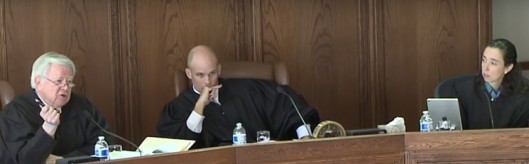
U.S. District Court of Appeals for the Ninth Circuit panel discussing dishonest Orange County government conduct: judges Stephen S. Trott, John B. Owens and Michelle T. Friedland in October 2016

Another thank you to Charles Pragnell at the National Child Protection Alliance for sharing this item with us.

Full Article & Source:
Council Hires Lawyers To Tell Court: Social Workers Do Not Know It Is Wrong To Lie.

Why Power of Attorney Can Be Key for Senior Health Care

To make sure all the documents are properly filed, it's usually best to work with an attorney you trust.

In the vast constellation of legal documents you could encounter over your lifetime, some are more critical than others. For older adults, a few legal instruments take on outsized importance, particularly in the context of ensuring adequate health care as we age. While some documents that older adults may need are focused on the financial side of your affairs, others concern how decisions will be made about your health care. The information that follows will focus on the documents related to health care that may come into play as you age.

As you navigate these legal waters for yourself or a loved one, some legal terms and documents you may encounter include:
  • Living will
  • Advance directive
  • Do not resuscitate order
  • Physician orders for life-sustaining treatment
  • Health care proxy
  • Power of attorney
  • Guardianship or conservatorship

Living Will, Advance Directive, or Do Not Resuscitate Order

Living wills can go by a number of different names including advance directive, do not resuscitate order or POLST, which is short for physician orders for life-sustaining treatment. This document, which is often printed on brightly colored card stock and is signed by a physician, outlines which specific procedures and actions you do and don't want to receive from first responders in the event of an emergency or from end-of-life health care providers. It may include questions such as: Do you want a feeding tube placed? Do you want to be transported to the emergency room? Answers can help specify how you want to be treated if you can't communicate your wishes directly.

Stuart Furman, an elder law attorney and president of the Southern California Legal Center, Inc., in Valley Center, California, and author of "The ElderCare Ready Book," says the living will or advance directive is sometimes colloquially referred to as the "pull-the-plug" document, meaning that if someone is beyond the hope of resuscitation, then let the person go and don't take heroic efforts to revive them.

Health Care Proxy

Health care proxy is a term used in some states to designate the agent who can make health care decisions on your behalf, and may be a casual term or may reference the agent named in a formal health care power of attorney document.

Power of Attorney

There are many different types of power of attorney documents that can cover financial or health care matters. Furman says that while there are many permutations of these documents that should be tailored by an attorney for your specific situation, generally speaking all of these legal instruments are "giving authority to someone else to make medical decisions for you in the event that you're not able to make them on your own."

Pamela D. Wilson, a caregiving expert, advocate and speaker based in Golden, Colorado, says that a durable power of attorney is an important document that older adults should seek to organize sooner rather than later. "In very simple terms, power of attorney is either somebody to help you manage money or your health at a point when you either can't take care of yourself or at the point that you become incapacitated," Wilson says. Incapacitation, also sometimes called incompetency, is a legal term that generally refers to someone who "can't review information or logically think through things," such as may occur after a stroke or with later-stage dementia or Alzheimer's disease. When this occurs, the durable power of attorney would come into full force, meaning that a designated overseer or agent steps in to make decisions on behalf of the individual.

It's important to "get your ducks in a row" early, with regard to organizing your legal documents for health care, says Megan Carnarius, a registered nurse, founder of Memory Care Consulting and author of "A Deeper Perspective on Alzheimer's and Other Dementias: Practical Tools with Spiritual Insights." Particularly if there's a family history of Alzheimer's or dementia, you need to make arrangements before the diagnosis is made, because "you can't typically write a power of attorney if someone has this diagnosis." A dementia diagnosis often means the person is considered legally incapable of making those decisions. Therefore, "if families have a suspicion that the person is getting more confused and they feel like they need to go to the doctor to get a diagnosis, they should have already taken care of the financial and decision-making stuff. You don't want to wait until you've gotten a diagnosis, because then (attorneys) worry about competency."

In a perfect world, we'd all set up a durable power of attorney as soon as we turned 18, as that's when things can get dicey legally if you're incapacitated. Wilson shares the story of a young man who fell off a retaining wall and sustained injuries that rendered him incapacitated. A lengthy legal battle ensued over who would make medical decisions on his behalf because he didn't have any power of attorney documents drafted prior to the accident. For seniors, it becomes even more important to get these documents sorted out, as conditions can deteriorate quickly and catch everyone off guard. If the power of attorney assignation is left too late, the person will be forced into guardianship, Wilson says.

Guardianship or Conservatorship

Guardianship, which Furman says is called conservatorship in California, comes into play when someone is unable to make decisions for themselves and there is no power of attorney in place. Many power of attorney documents also include provisions for that same person to become guardian. But there is a distinction in the level of power each role has, Wilson says. "An example would be an older adult living at home who's burning food because they have poor memory. They're not showering, they're not taking medications and they refuse to move to assisted living." The power of attorney designee "can't put that person into a care community because that person could say, 'Hey I'm leaving,' and power of attorney can't stop them. But a guardian can. A guardian has absolute power of appointment through the court. It's a very serious appointment, because when you have a guardian, you give up all your rights to decide about health care and money." Therefore, "it has to be a very trusted person."

Who Should Be My Power of Attorney?

Typically, power of attorney and guardianship responsibilities are vested in a family member, such as the adult child of a senior. But there are lots of other relationships that can work, from close friends to hired professionals. Wilson is one such professional advocate who takes power of attorney assignments for people who don't have an appropriate agent in the family.

Choosing the right person to act on your behalf as your power of attorney is critical, Wilson says. "If a parent chooses a child who has been terrible at financial management to be their financial power of attorney, it's going to be a disaster. Same for health care. If they choose someone who can't advocate with doctors and the care community, it's not going to work out," and this is where professionals like Wilson can help. Appointing a professional can also be a savvy way of avoiding conflict if you anticipate such could occur in choosing one sibling over the other, for example. "You really have to plan for conflict if it exists in family members because all of this gets so very, very nasty," when wishes aren't clearly communicated.

It's also important to designate one or more successors, or backups, to your first-choice power of attorney. A successor would step into the role of power of attorney if your first choice can't or won't serve. "If you don't appoint a successor and the appointed person resigns, and you can't do another power of attorney, you're forced into guardianship. So, you always want to have backup successors in your documents," Wilson says.

Who Can Help Me with Power of Attorney?

To make sure all the documents are properly filed, it's usually best to work with an attorney you trust. "There's all sorts of forms you can pull off the internet," Wilson says, "but it's better to use an attorney in the state where you live because laws differ by states. Have an attorney draft them and look at them every 10 years to see what needs to be changed."

These variations from state to state can become problematic if your loved one moves, says Lindsay Perrin, co-founder of Ro & Steve, an independent online review site for senior living facilities and other businesses related to senior care that sprang out of her and her husband's challenges in finding the right care scenarios for their aging parents. "We drafted these documents for my dad years ago," when he was living in Massachusetts prior to his diagnosis with Lewy body dementia. But since then, he's moved in with Perrin's family in New Hampshire, and sometimes the personnel the family encounters at health care centers aren't familiar with the out-of-state documents. This can cause significant hassle, leading to "stressful situations in the hospital where I'm trying to sign for Medicare and the desk staffers aren't familiar with my Massachusetts documents." Sometimes they need to make calls to an attorney to clear up confusion.

Perrin says it's not possible now to have new documents drawn up in New Hampshire because her father's condition has progressed to the point where he's unable to sign new documents, so they soldier on with the out-of-state but still completely legal documents they have. Still, Perrin recommends thinking ahead about where you're likely to be living when the power of attorney will come into force and have the documents drawn up in that state. "Technically my Massachusetts documents should be well understood. They work here. It's just that not everybody has that education, so think about the next phase," and where you might be living when you'll need the assistance of a power of attorney.

Power of Attorney and Assisted Living

Matt Perrin, Lindsay's husband and co-founder of Ro & Steve, has also had to navigate these legal waters in caring for his mother who's currently in an assisted living facility. He says it's very important to have all of your legal documents in order before making the move to an assisted living community.

Some facilities may require that such documents be in place before they will admit your loved one, particularly if that person is incompetent. "There's no authority for that person to sign the contract," Furman says. "That's a cardinal rule across the country – incompetent people have no authority to sign contracts. It's like a child." Even if you're entering a facility while you're still considered competent, it's wise to have a power of attorney in place so that if your situation changes rapidly, as can happen with a stroke, for example, the community will know whom to contact when decisions need to be made. Having the appropriate type of power of attorney in place "gives us the tools in our toolbox," to be able to act in the best interest of the individual, Furman says.

Matt says drafting a power of attorney was easy and straightforward – the hardest part was having the conversation with his mom about initiating the process. On the advice of a friend, he approached that difficult conversation delicately, seeking consensus with his mother rather than being prescriptive. "It did make it easier to cut through what's not the easiest of discussions," he says of taking a collaborative approach. His mother's 40-year career as a nurse also meant she was open to talking about end-of-life and what arrangements needed to be made for her care. "She sees the value in these sorts of things, but even then, when it comes time to have the discussion about you, it's hard. It's just a tricky discussion, but you're doing it hopefully at the right time and not when you're in dire straits." As with most anything related to aging and health care, getting ahead of any coming crisis is best.

To draft the documents, the family worked with an attorney they'd known for years, though Matt says if he were to do it again, he'd probably opt for an attorney with specialized expertise in estate planning. "We're not wealthy. My mom has very few assets, but thinking we didn't need an estate plan was sort of a naive mistake. And from what I can tell it's a common misconception." Rather, estate planning is an important aspect of the whole picture no matter how much money you have. "I would tackle (estate planning and power of attorney) in tandem. It's one less thing for you to do later," when perhaps your loved one's condition has deteriorated, making even a small task like seeking a notary's signature seem like a much bigger chore. "It adds up, and you need to save your mental space for the real stuff," he says.

Full Article & Source:
Why Power of Attorney Can Be Key for Senior Health Care

Sunday, January 27, 2019

Orange County Judge Faulted for Handling of Guardianship Case


By Jordan Cuddemi
Valley News Staff Writer


Newbury, Vt. — An investigator for the Judicial Conduct Board has found that an Orange County probate judge failed to act “impartially and diligently” in a long-running guardianship dispute involving the adult children of a 94-year-old Newbury, Vt., woman.

Judge Bernard Lewis violated Vermont’s Code of Judicial Conduct in the guardianship case that has pitted siblings Elizabeth Guest and Bruce and Bryce Thomas against their brother Paul Thomas, according to the Jan. 7 formal complaint filed by John Kennelly, a Rutland, Vt., attorney acting as investigative counsel in the case for the Judicial Conduct Board. The three petitioners say their brother overpaid himself and mishandled assets belonging to their mother, Miriam Thomas, while serving as her legal guardian from 2010-18.

“The court (Lewis) repeatedly noted its frustration with the pace of proceedings and the guardian’s failure to comply with the orders of the court, but did nothing to require that its orders be followed and that the guardian follow the law,” Kennelly wrote in his complaint.

“The judge did not do everything a judge should and could have done to dispose of the matters before the court promptly, efficiently, and fairly. The guardian paid himself enormous amounts of money during the seven and a half years he was in control of the estate. Those payments were obviously of little benefit to the ward.”

Kennelly’s complaint asserts that Lewis violated two provisions of a judicial canon that states “a judge shall perform the duties of judicial office impartially and diligently.”

Lewis, who has served as a probate court judge since 2002 and is retiring, has 21 days to respond to the allegations. He is being represented by Burlington-based attorney Christopher Davis, the former chairman of the Judicial Conduct Board.

Davis declined to comment on the matter.

Lewis also practices law in Randolph and previously worked for Vermont’s Department of Banking, Insurance and Securities as a market conduct chief examiner, according to his law firm’s website.

The current chairman of the Judicial Conduct Board, Rutland-based attorney Andrew Maass, said that after Lewis responds to the complaint, a public hearing would be held to determine whether a finding of judicial misconduct is merited. If the board finds misconduct, the penalty could lead to a reprimand or other sanction, said Maass, who noted that such hearings are rare in the state.

Asked whether Lewis’ pending retirement — he did not run again in November for the part-time probate judgeship, which in Orange County pays about $51,000, and his term expires at the end of this month — would have an impact on the case, Maass said, “the jurisdiction of the board remains the same whether a judge remains in office.”

The investigation into Lewis’ actions took place after three of Paul Thomas’ siblings filed a complaint to the conduct board in January 2018, alleging Lewis engaged in a “pattern of inaction” that undermined Vermont laws, prevented a disposition in the case and wasted tens of thousands of dollars in legal fees, among several other things, according to Bruce Thomas.

Miriam Thomas, who has dementia, has lived in the memory care area of Valley Terrace since 2009. The three siblings filed a guardianship petition late that year, but Paul Thomas and another sister, Mary Thomas, filed a counterpetition seeking to appoint Paul as the guardian. Lewis subsequently appointed him as financial and medical guardian in 2010.

The sibling trio objected every year to accounting reports Paul Thomas filed late, saying he had paid himself prior to filing the report without seeking court approval for the payments, a violation of state law, Kennelly wrote.

Over the years, the siblings brought forward other alleged flaws in how the guardian handled aspects of his mother’s $2.4 million estate, including an incident where Paul Thomas followed an improper process to sell property, Kennelly wrote.

Miriam Thomas and her late husband, Fredrick Bryce Thomas, owned several pieces of real estate, including a tree farm. Together they ran their 21-room Pulaski Street home as the Newbury Inn.

Lewis advised Paul Thomas of problems with his actions as guardian and expressed concerns and “displeasure” with his ability to comply with court orders, Kennelly wrote. However, Lewis didn’t issue an order to remove Paul Thomas as financial guardian until last March; the probate court judge has since recused himself from the case.

By the time Paul Thomas, 61, was removed, he had paid himself more than $250,000 from his mother’s assets for serving as guardian, according to Kennelly’s filing.

Bruce Thomas has long campaigned to strengthen Vermont’s guardianship laws, saying the state doesn’t do enough to hold guardians accountable.

“Sadly, it is hard to feel very good about any of this,” he said this week. “We commend John Kennelly’s professionalism and integrity, but this case is far from over and it is unlikely that Judge Lewis will suffer any serious sanction, especially in light of the serious harm that his judicial inaction has caused our mother and our family in general.”

Some of his proposed changes to state law would give interested parties the right to view an estate’s financial records in a timely fashion; mandate that the records be kept for a certain length of time and, if they aren’t, order the guardian be replaced; and instruct judges to approve a guardian’s annual accounting within one year of the filing date, or remove the guardian.

Making the changes would provide increased oversight and help prevent abuse of the system and the estate, he said.

“The state has good guardianship laws, but without having any ability for oversight or challenges, they are all sort of nullified,” Bruce Thomas said. “And it’s sad. Our mother can’t speak for herself.”

Attempts to reach Paul Thomas were unsuccessful. His former attorney, Norwich-based Frank Olmstead, has since retired, his law firm said this week. It wasn’t immediately clear if Paul Thomas had new representation in the matter.

The three siblings opposed to Paul Thomas’ guardianship actions have spent about $100,000 in attorneys’ fees in the case, while he has spent about $60,000, according to Kennelly’s complaint.

There is no timeline for when Lewis’ hearing before the Judicial Conduct Board will take place.

Jordan Cuddemi can be reached at jcuddemi@vnews.com or 603-727-3248.

Full Article & Source:
Orange County Judge Faulted for Handling of Guardianship Case

Star Trek Actress’ Son Named His Mother’s Permanent Conservator

A judge Thursday named Nichelle Nichols’ son as the permanent conservator of the 86-year-old”Star Trek” actress, who suffers from dementia.

Los Angeles Superior Court Judge Barbara Johnson appointed 67-year-old Kyle Johnson — who is not related to the judge — as the permanent conservator of his mother’s person and her estate.

In her ruling, Johnson said a conservatorship is appropriate because of Nichols’ dementia.

“At a certain age stuff happens,” the judge said.

A smiling Johnson, who had a major role in the 1969 film “The Learning Tree,” praised the ruling.

“I’m tremendously relieved,” he said after the hearing.

On Sept. 10, the judge named Johnson as the temporary conservator of his mother’s person and Marina del Rey psychologist B.J. Hawkins as the temporary conservator of the actress’ estate to manage her financial matters. Johnson now will serve in both roles.

Most of Nichols’ assets are in her Woodland Hills home, which her son’s court papers state is worth nearly $2 million.

Longtime Nichols friend Angelique Fawcette had earlier opposed Johnson’s petition, but her attorney, Troy Martin, told the court that despite some “bumps in the road,” his client had received the visits she sought with the actress.

Fawcette said Nichols has been a victim of elder abuse by people who do not have her best interests at heart. Fawcette said during a previous hearing that she called authorities when she suspected Nichols was the victim of financial abuse and bought her a new set of clothes when some of the actress’ wardrobe turned up missing.

“All I can say is that I hope everything turns out for the best for Ms. Nichols,” Fawcette told the judge.

The judge declined to hear objections to Johnson’s petition brought on behalf of another person who said he also was a longtime friend of the actress.

Nichols played Lt. Uhura, a translator and communications officer, aboard the USS Enterprise in the “Star Trek” series that ran on NBC from 1966-69, and also appeared in some of the later “Star Trek” movies.

Full Article & Source:
Star Trek Actress’ Son Named His Mother’s Permanent Conservator

See Also:
Friend Opposes Bid by Actress’ Son For Permanent Conservatorship

‘Star Trek’ Actress Court Battle: Judge Won’t Go

Star Trek ‘Lt. Uhura’ on 1960s TV Now Target of Court Battle Over Conservatorship

Star Trek‘s Nichelle Nichols Goes to Court Over Guardianship Issues

Local man indicted for alleged theft, exploitation of an elder

Anthony Lane Keeton
A Forsyth County man has been indicted on multiple counts of felony theft by taking for allegedly stealing $240,000 from an elderly neighbor’s bank account.

Anthony Lane Keeton, 36, of Forsyth County was formally charged by a grand jury in the Superior Court of Forsyth County on Dec. 10 with 18 felony counts of theft by taking and one felony count of exploitation and intimidation of an elder person, according to court documents.

According to Cpl. Doug Rainwater, spokesman for the Forsyth County Sheriff’s Office, Keeton was arrested on April 11, 2017, after deputies were called to a bank in Cumming, in reference to a local man that discovered unauthorized online transactions on his account totaling about $240,000 dating back to August 2015.

The man told authorities that he could not have made the online charges because he only writes checks for his account, does not own a phone or a computer and does not know how to get online, Rainwater said.

An incident report states that Keeton was identified by the victim’s daughter as the “only person to have contact” with her father, working odd jobs for him and transporting him to and from the bank.

“(Keeton) was investigated right off the bat and was the only person who would have had access to this type of information,” Rainwater said.

Rainwater said that they believe that Keeton obtained the banking information while working for the victim and used it online.

A representative for Keeton could not be reached for comment as of press time.

This case will be presided over by Forsyth County Judge Philip C. Smith and will be prosecuted by assistant district attorney Ramsey R. Magaro.

Full Article & Source:
Local man indicted for alleged theft, exploitation of an elder