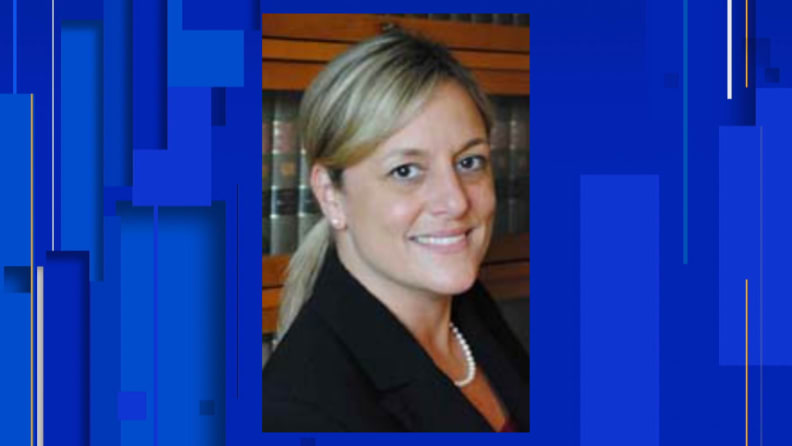
Federal prosecutors are asking that a
former lawyer with the now-defunct law firm of LeClairRyan, who
misappropriated $4 million, be sentenced to nearly four years in prison
and fined $250,000 for obstructing an official proceeding.
In
papers filed Monday, lawyers for Bruce H. Matson, a once high-profile
bankruptcy lawyer, are asking for a term of slightly more than three
years, citing Matson’s lack of a prior record, his repayment of the
money, his work as a law school professor and Sunday school teacher,
community service and other mitigating factors.
Matson,
64, pleaded guilty to the charge in July and is set to be sentenced
Nov. 22 by U.S. District Judge John A. Gibney Jr. He faces a maximum of
five years in prison. However, federal sentencing guidelines — not
binding on Gibney — call for a term of 37 to 46 months.
While
recognizing that Matson has repaid the money, a sentencing memorandum
filed by the U.S. attorney’s office asks Gibney to impose a term at the
top end of the guidelines.
Prosecutors
wrote that the crime “stemmed from the defendant’s furious but
ultimately unsuccessful attempts to conceal a course of criminal conduct
that spanned from 2015 to 2019, during which time the defendant used
his position as a court-appointed fiduciary to embezzle, misappropriate,
and dissipate more than $4,000,000 from the bankruptcy trust he had
been entrusted with.”
Matson’s lawyers conceded that his
conduct “was and is inexcusable. Nothing he has done or will do going
forward can ever change that fact, and we do not endeavor to suggest
otherwise.”
But,
they added, “Mr. Matson took immediate steps to atone for his
misconduct. He voluntarily resigned from the bar ... he directed [his
lawyers] to disclose critical information about his conduct that was not
then known to the government, to cooperate fully, and eventually to
negotiate a resolution with the Office of the U.S. Attorney. During that
process, and beginning prior to pleading guilty, Mr. Matson worked with
the government to make certain that all restitution was made.”
“While
his extraordinary efforts to pay restitution do not excuse his conduct
or lessen the seriousness of the offense, they present a substantial
mitigating factor that the Court should consider,” his lawyers wrote.
Court
records show that in 2019, Matson made false statements concerning
allegations that he misappropriated funds as a court-appointed trustee
in the bankruptcy of LandAmerica Financial Group. A federal
investigation found instances of Matson’s embezzlement from the
LandAmerica Trust between 2015 and 2018, totaling approximately $800,000
in misappropriated funds, prosecutors said.
LandAmerica,
a Henrico County-based title insurance company that was one of the
largest in the U.S., filed for Chapter 11 bankruptcy protection in 2008.
In 2009, Matson was appointed the liquidation trustee by the U.S.
Bankruptcy Court for the LandAmerica Financial Group Liquidation Trust.
Then in 2015, Matson was appointed to serve as the fiduciary of the
wind-down funds.
His
law license was revoked by the Virginia State Bar last year after he
admitted disbursing more than $2.8 million in wind-down money in 2019 to
himself and another lawyer that was not to be disbursed until this
year.
Aware
that scrutiny would expose his criminal conduct, prosecutors said,
Matson engaged in obstructive conduct to conceal his misdeeds that
included: “filing letters with the Bankruptcy Court that contained
deliberate misrepresentations; attempting to mislead and/or pressure
other individuals; making misrepresentations to the U.S. Trustee’s
Office; and appearing before the Bankruptcy Court to personally deliver
additional misrepresentations to the Court.”
They
complained to Gibney that, “Over the course of a four-year period, the
defendant designed and executed a multi-step and multifaceted scheme to
defraud the LFG Liquidation Trust of as much money as possible ...
diverting the bulk of those siphoned-off or embezzled funds into bank
accounts that he controlled; transferring some to his associates; and
directing the remainder to his law firm to settle a personal debt.
“The
defendant used different methods to complete his draining of the Trust
account — embezzling some funds by re-directing checks intended for the
Trust, drawing duplicative payments from the Trust, and depleting the
Trust’s wind down budget with payments to himself and others,” the U.S.
attorney’s office wrote.
Investigation also uncovered an
unrelated case of Matson embezzling $23,000 in 2016 from the estate of
Forefront Capital, a defunct futures broker for which he served as
receiver and debtor-designee, the government said.
Matson’s
lawyers said that from 2015 to 2019, when LeClairRyan failed, Matson’s
life was under a great deal of personal and professional turmoil and
that he acknowledges and accepts responsibility for all he has done.
“Despite
significant wrongdoing, Mr. Matson did not use the money to fund a
lavish lifestyle. He promptly repaid the bulk of the funds and has since
worked with the government and the successor trustee to ensure full
payment of all remaining restitution,” they wrote.
In
asking for a 37-month sentence, his lawyers told Gibney that Matson
“has had a tremendous fall from grace. He was once a successful, widely
respected bankruptcy attorney of more than 30 years. He was an elder and
leader of his church and was deeply involved in the community.
“At
the age of 64, this matter represents his first and only contact with
the criminal justice system and he has led an otherwise law-abiding
life. He has been disbarred and has tarnished his once-stellar
reputation in the community,” they said. “He stands before the Court not
only humiliated and ashamed but with steadfast contrition.”
We
represent professional guardians in the Florida State Guardianship
Association, and the case of Britney Spears has raised a fitting
opportunity to explain what a voluntary guardianship means in the state
of Florida. Voluntary guardianships in Florida are guardianships of
property only. No rights of the person are delegated to the guardian, so
that medical treatment, choosing a residence, choosing to work or
socialize are all left to the discretion and decision-making of the
individual.
What
the person under guardianship relinquishes is the financial aspect. The
professional guardian pays bills, manages debts and handles physical
property like arranging for pest control or contracting renovations.
Under voluntary guardianship, the person under guardianship must have
capacity documented by his or her physician and fully understand that
the guardian will serve as fiduciary. Both parties can back out at any
time. If Ms. Spears’ guardianship was indeed voluntary, had it been a
Florida matter, she could have left her guardianship freely.
Carlos McDonald, president, and Pam Wiener, board member, of the Florida State Guardianship Association
Photo snippets from John Maurer’s life — from childhood to adulthood.
(Los Angeles Times photo illustration. Photos by MaryRose Courtney, Annelle Maurer, Elaine Conrad, Sarah Dusseault.)
By Doug Smith
The reunion was a replay of so many painful encounters that she could no longer keep them straight in her thoughts.
She
had rushed from a lunch engagement still wearing a silky flowered
dress. She sat on a curb beside her 45-year-old brother in the trash
area of a Pasadena strip mall. She made small talk, easing into the big
question: Would he let her take him back to his home?
If he didn’t go, he would soon be picked up on a warrant. He was AWOL from his court-supervised diversion program.
Sympathetic
social workers had helped Sarah Dusseault find her brother after he
left his residential care facility in South Los Angeles and walked back
to old haunts in Pasadena. Dusseault, who is a prominent figure in local
government efforts to help the homeless, had pleaded with them to
commit him on a 72-hour psychiatric hold under the standard of grave
disability.
They said they were hamstrung because he appeared well clothed and fed.
“The whole thing drips with irony,” Dusseault said. “I just went out
there and gave him clean clothes and gave him lunch. Are you saying I
should make sure I don’t give him anything? Is that the better plan?”
She
lined up a shelter and came back a couple of days later to pick him up.
But he wasn’t cooperating. He ignored the question and talked about his
fantasy of working with Antonio Banderas. Then his voice stopped while
his lips continued to shape words.
“Are you talking to Ben?” she asked.
A minute later he was on his feet, marching in a circle while ranting out loud to, or about, his younger brother Ben.
She had failed.
Between jail stints, John Maurer camped in this alcove behind a Pasadena strip mall.
(Sarah Dusseault)
By keeping tabs on the sheriff’s inmate locator website, she
learned two days later that her brother was back in the mental ward at
L.A. County’s Twin Towers jail. His next home would likely be state
prison where, as a registered sex offender, his safety would be in
jeopardy.
“If he goes to prison, he’ll die,” Dusseault said. She knew she had to do everything possible to prevent that.
::
John Samuel Maurer, 10th of 11 brothers and sisters, was an
intelligent, charming and handsome college student when the first cracks
in his winning personality began to show. While his sister Sarah was
rising to prominence in Los Angeles political circles and brother Steve
was advancing in the medical ranks at Patton State Hospital, John was
descending into a vortex of mental illness, caroming from one placement
to another, slipping through virtually every institution in a safety net
so tattered that not even his accomplished siblings could make it work.
And if they couldn’t help, what chance is there for people whose relatives lack such connections?
There are thousands of others like John Maurer, whose mental illness, compounded by drug use, keeps them in a cycle of homelessness, hospitalization and jail.
A recent academic study found
that at least 1 in 5 people engaged by outreach workers in L.A. County —
about 7,000 — had a diagnosis of serious mental illness.
The
nexus between mental illness and low-level crime means that L.A. County
Jail is the treatment option of last resort. On a typical day, almost
40% of the jail population —about 5,000 inmates — are in need of mental health treatment, many waiting for months to regain competence to stand trial.
In
L.A. County’s mental health system there are only about 1,700 beds in
what are called sub-acute facilities, where patients can stay for a few
days or months with psychiatric care. That’s about a third of the
estimated number needed, which means there are roughly three mentally
ill people in jail and four on the streets for every one receiving
extended clinical care.
Because those beds are always full,
hospitals that receive patients committed on psychiatric holds have few
options for follow-up care, distorting the entire system. Clinicians are
reluctant to take people off the street, knowing they will likely only
be released after the 72-hour limit. Patients released without treatment
are often picked up again and again on new psychiatric holds.
“The
state is using lots of involuntary holds that seem to add up to nothing
more than more involuntary holds,” wrote researcher Alex Barnard of the
New York University Department of Sociology in an upcoming report on California’s conservatorship practices.
Top: Camping in Arkansas with elder
brother Steve Maurer, a psychiatrist who is now medical director at
Patton State Hospital. Bottom: In his early 20s, John Maurer aimed for a
career in modeling.
(Annelle Maurer; Elaine Conrad)
Any treatment Maurer has received is hidden behind a shield of
privacy laws. While his criminal cases are recorded in electronic files
for anyone to see, not even Maurer’s family members know definitively
how many times he’s been checked into hospitals on psychiatric holds.
By
piecing together what they know, however, they’ve drawn a sad parallel.
John’s hospital stays most likely outnumber his trips to jail but were
far shorter in duration and just as likely to end badly.
When John
was convicted of his first criminal offense in Los Angeles County — an
August 2000 charge of disorderly conduct — he was 24 and had emerging
indications of his schizophrenia. But it would take another 14 years,
probably more than a dozen psychiatric holds and at least 10 more
criminal convictions in L.A., San Bernardino and Riverside counties
before the court system would commit him to a conservatorship, its most
powerful tool to help repeat offenders whose crimes result from mental
illness. And then things only got worse.
John had spent those
years in the homes of his parents in Arizona, a sister in Sierra Madre
or a brother in Yucaipa, eventually wearing all of them out by stealing
money, disappearing on cross-city walks or acting so bizarrely that they
would have to check him into a hospital.
“We’ve taken him to so many hospitals, they’re all jumbled together,” his brother Steve said in an interview.
For a time he lived in Steve’s guest house and was taking medication.
“He was doing better,” Steve said. “Helped us build a deck. I paid him.”
Then
he found a source for drugs. He started poking holes in the wall with a
pool cue and urinating on the furniture. Steve took him to a treatment
center in Cabazon, but he would not go in. He crouched outside all
night, then disappeared. Steve spotted him months later at a gas
station.
“He looked outlandish,” Steve recalled. “Heavy coat on a
hot day, shorts, red burnt skin. He had been wandering in the desert
near Cabazon and Beaumont.”
It was a bright red flag that the
system missed. Steve isn’t clear what happened after that. The episode
blended into all the others. Maybe that was the time he took John to a
Moreno Valley hospital. The hospital admitted him but called Steve a few
days later to pick him up.
“How is he?” Steve asked. The nurse on the phone said HIPAA, the federal patient privacy law, prohibited her from saying.
“That’s fine, you keep him,” Steve said in frustration.
A
charge nurse came on the phone and explained that John had already been
released with a bottle of medication but would not leave the patio
area.
“We went and picked him up,” Steve said.
Court records show that John was arrested in 2007 for being drunk in
public. After he broke into an abandoned house in 2008, he was
determined to be mentally incompetent to stand trial and was sent to
Patton State Hospital for the mentally ill near San Bernardino. Steve,
then chief of staff there, had him transferred to Metropolitan State
Hospital in Norwalk to avoid a conflict. John was declared to have
regained his competency, returned to the trial court for conviction and
released.
Then he ended up at Community Hospital of San
Bernardino, where a doctor who knew Steve proposed filing a petition to
place John under a conservatorship, a procedure under state law that
would give a public guardian almost total control over John’s life, with
the power to place him in a locked facility and force him to take
medication.
As a protection for those whose rights it abridges,
the conservatorship law, known as Lanterman-Petris-Short after its
authors, requires the court to find evidence of grave disability meeting
the criminal standard of proof — beyond a reasonable doubt. The court
rejected the petition.
“I gathered it was financial,” Steve said. “The county has to pay. That’s why they do not want to do it.”
Through
much of that turmoil, John pined for a normal life — marriage, home and
family. But by 2014, his sister Sarah Dusseault saw that John’s hopes
for a regular life had died and along with it any value in keeping it
within the family.
Sisters Sarah Dusseault and MaryRose Courtney in court with John in 2014, when he agreed to go into a conservatorship.
(Sarah Dusseault)
Dusseault, who had been L.A. Mayor James Hahn’s homelessness
and housing deputy and was soon to be appointed by Supervisor Hilda
Solis to the governing commission of the Los Angeles Homeless Services
Authority, bared her personal anguish in an op-ed published by The Times early in 2014.
“In
my professional life, I have worked to build housing and create
programs to end homelessness,” she wrote. “But the system is broken,
especially for homeless people with severe mental illness, like my
brother. My family and I just keep hitting dead ends trying to get him
help.”
Two days after publication, John was arrested in West Covina for vandalism and trespass.
Dusseault
hired an attorney and filed a petition to have John placed under a
conservatorship. In February of 2014, a judge in L.A. County’s mental
health court found John gravely disabled and placed him in the care of
the public guardian.
The conservatorship — one of many interventions that John’s family
hoped would be his salvation — either came too late, ended too early or
was predetermined to fail because of the inadequacy of the treatment
options for someone like him.
“It’s a godsend because it’s a
placement,” Dusseault thought when John’s public guardian had him
transferred from jail to a locked residential program in Pico Rivera.
“Initially John was enthusiastic,” Dusseault said. “‘I’m going to stay clean. This is so fun.’”
His brothers and sisters could visit and even take him on weekend furloughs.
But
problems became apparent. The severe shortage of beds in locked,
long-term institutions for the mentally disabled meant that John’s home
would be out of the way for both his siblings whose high-pressure
careers made visits difficult to schedule.
“The placements are
not about where this person grew up or family is,” Dusseault said. “If
he isn’t in regular contact with me or one of the other siblings he
starts to deteriorate. He needs that family support.”
It also turned out that a drug dealer was working right outside its doors.
“He eventually started taking meth there,” Dusseault said.
He got into a fight and was sent to jail. After that she heard through
the grapevine that he was hospitalized again, probably more than once.
But she did not know where or for how long.
Two years later, John’s conservatorship was summarily ended without
any of John’s siblings being notified or even knowing at the time where
he was.
The conservatorship law has an automatic sunset after one
year unless evidence is presented that the person is still gravely
disabled. In practice, that evidence comes from a private psychiatrist
who must spend a day in court waiting for a hearing that is often
scheduled hours before it actually occurs. As often happens, John’s
psychiatrist did not show up, leaving the court no choice but to end his
conservatorship.
It was a turning point of sorts. John’s deterioration quickened.
“He
was released too soon after that from conservatorship,” Steve Maurer
said, faulting an adversarial court process that too narrowly frames
conservatorship as a form of incarceration.
“God bless them, those
public defenders, they do good things,” he said. “But their goal in
life is to win their cases, get everybody off conservatorship because
that’s a terrible thing to be on. It’s completely broken. I think they
should say if you’ve been hospitalized X number of times or have medical
problems as a result of grave disability, the bar is going to be much
higher to have you released from conservatorship.”
Three months after his release, in May of 2016, John was arrested for public drinking in Downey.
About
a year later, another sister, MaryRose, found John outside a Starbucks
in Hastings Ranch and flagged down a police officer who helped talk John
into going with him to Las Encinas Hospital, a sprawling psychiatric
care campus in Pasadena.
John had been there before and checked
out without any family members being notified. This time Dusseault
waited 72 hours — the maximum involuntary hold unless the hospital
accepts him as a long-term patient — and stood out front with a peer
counselor from a nonprofit agency who accompanied her as a friend.
“We had a whole plan of housing,” Dusseault said. “I was going to pay for it. We were all set to go.”
She had found a vacancy in a board and care home. Generally in
rambling houses or converted apartment buildings where residents share
bedrooms, these homes are the backbone of long-term care for those whose
mental illness is stabilized.
They provide 24-hour supervision and care that includes meals, housekeeping and managing residents’ medication. But an antiquated, and inadequate,
reimbursement scheme based on disability income is forcing many to
close. The Los Angeles County Department of Mental Health reported in
July of 2020 that 51 board and care homes had closed over the previous
four years, eliminating 1,338 beds.
With openings hard to come by,
Dusseault found a bed in one of the unknown number of unlicensed homes
that provide whatever services they believe their residents need and
charge what the market will bear. John had once thrived in an unlicensed
board and care, until the owners walked away, leaving their residents
to be evicted.
Dusseault was willing to give it another try. John wasn’t. As she waited in front, he ran out the back.
He had been released without a plan. She had seen it so many times before.
“Sometimes
he’s released with a discharge paper saying he should take medication,”
she said. “Sometimes with a bottle of medication, sometimes nothing.”
There’s
no accounting for the cost in dollars of John’s untreated mental
illness. Based on Medicare’s reimbursement rate for acute psychiatric
hospitalization, a stay at Las Encinas would come at a cost of more than $1,000 a day in today’s dollars. A county study earlier this year
reported that the county spends about $654 a day on high-need inmates
like John in the mental ward of L.A. County Jail. The more than 400 days
he has spent there over the last 26 months have thus come to more than
$250,000, enough for almost four years in community-based treatment
that, unlike jail, can be reimbursed by Medicare.
Including emergency room charges, paramedics and court costs, the
total over the decades would amount to well more than a million dollars.
Because of his multiple disabilities, John would have priority
for permanent supportive housing, a subsidized apartment of his own with
a case manager checking in on him occasionally.
That might have worked in John’s youth, when it was still reasonable
for him to imagine a normal life. But at this point, he was far too ill
to live on his own.
Looking back over the years, Dusseault finds
that John has done best in board and care homes. After another 72-hour
hold, Dusseault persuaded a doctor to release John to Sunshine Assisted
Living, a 68-bed licensed board and care home in Lynwood. It worked out
well for nine months, one of his longest stable periods. But with
reimbursement fixed at about $35 a day, even licensed homes have no
means to provide the support required by John’s complex psychiatric
disorder. Eventually he began walking around the neighborhood and got
into conflicts with neighbors. One day he didn’t come back.
Sometime in 2018, a text came from Dusseault’s nephew, a paramedic.
He
had been called to a restaurant where John was in distress. She rushed
there to find him disoriented, emaciated, limping and covered in feces.
“I beg him to get him into my car,” she said.
After his release from jail in 2019, John Maurer visits with his nephew Luke Dusseault.
(Sarah Dusseault)
He refused, and the firefighters did not think he met the standard of gravely disabled required to take him on a 72-hour hold.
“They have to let him go,” she said. “I follow him. He dives into this back alley. I lose track of him.”
From the inmate locator, she learned that he was arrested the next day.
A
flurry of arrests followed, in March for discharge of a noxious
substance — most likely feces, his sister said — and April for trespass.
His May arrest for indecent exposure put him on the sex offender
register and led to a hearing on his competency. In November, after
spending 11 months on and off in jail, he was found competent to stand
trial and released for time served.
The following January he was arrested for disorderly conduct and
public drinking and in February for battery. Another competency hearing
followed. A judge again found him competent to stand trial in May.
In November of 2019, he was arrested in Torrance, again for indecent exposure.
With
his sister pushing in the background, John was sent back to the mental
health court for a competency hearing. On Dec. 14, the judge found him
mentally incompetent to stand trial and ordered him to a state hospital
for treatment.
Since John’s earlier treatment at Metropolitan
State Hospital, a shortage of mental beds had overwhelmed the state
hospital system. In November 2019, more than 800 defendants judged
incompetent to stand trial were waiting to get into a state hospital.
John never made it to the top of the waitlist.
At Metropolitan State Hospital in 2017, John Maurer with sister Katie Fletcher and mother Suellen Maurer.
(Katie Fletcher)
Often strapped into a bulky quilted vest and chained to a metal
table during visits with his sister, John languished for 200 days in
L.A. County Jail, a common fate of hundreds of defendants judged
incompetent to stand trial, who often wait in jail far longer than the
statutory terms for their crimes.
Using the online purchasing system, Dusseault made sure he had basic toiletries.
In
February of 2020, John was ruled to have regained his competence to
stand trial. By then John’s public defender and the deputy district
attorney were willing to try something new — diversion.
Under a court order suspending his trial, John was placed in a group home in South Los Angeles operated by the county Office of Diversion and Reentry, where he would be under psychiatric supervision.
There,
a good start again turned bad. This time the catalyst may have been a
$25,000 check John received for back disability pay, the third time he
had received such a lump-sum payment. During jail stays, those benefits
are suspended, then paid in arrears when the recipient requalifies.
The community-based model followed by the diversion program seeks to
support as normal a life as possible, allowing residents to come and go
as if living independently. The money soon found its way to the street.
John resumed using meth.
Eventually he had an altercation, was arrested and transferred to a locked facility.
Dusseault
does not know how long he remained there before he went AWOL. He was
next spotted in mid-June at the Pasadena strip mall.
After he deflected her offer of shelter, it was only a few days before she saw John’s arrest pop up on the inmate locator.
An October letter from jail, in which John Maurer blames himself for the COVID-19 pandemic.
(Sarah Dusseault)
At his next court appearance in August, Dusseault waited in a
courtroom in the Airport Courthouse for a ruling. Would John be sent to
prison or given one more chance? She had spoken to his new public
defender and was hopeful that she would push for a conservatorship.
Led
into the courtroom with his hands tied to his waist in shackles, John
saw his sister and broke into a childlike smile, twisting his wrist to
wave his hand.
Her face broke into a smile when Judge William L.
Sadler ordered a psychiatric evaluation. That meant John was on the
conservator track. And it would be different this time. She would apply
to be named his conservator. She would try to find him a placement near
her home in Pasadena, where she could monitor his care and know
immediately if he goes off course.
Sarah Dusseault poses in front of the
Twin Towers jail in downtown Los Angeles, where her brother John Maurer
is being held as she tries to find a facility in which to place him.
(Mel Melcon / Los Angeles Times)
In October, Dusseault returned to court and, at last, became her brother’s conservator.
Imperfect as conservatorship proved in the past, she believes it’s
the best that could have happened at this stage, especially since, this
time, she will be engaged in his care.
But five weeks later, John
remains in jail. His release awaits Dusseault’s finding a residential
psychiatric facility. So far, she has found them to be either full or
unwilling to accept a new patient with John’s problematic background.
After striking out in Los Angeles County, she’s looking into one in San
Bernardino County that would be near their brother Steve.
For
Steve, John’s best hope faded long ago, when California discarded
institutions like the one in Washington state where his schizophrenic
great-uncle Leonard lived for most of his adult life — before the
invention of psychotropic drugs.
“You could argue he had somewhat
of a life,” Steve said. “He lived into his 80s. He was protected.
Nowadays, no one is committed like that unless they commit a crime. They
end up with their lifetime greatly reduced.”
The Ohio Supreme Court today suspended a Richmond Heights attorney
for one year with six months stayed for accusing Ohio judges and
Supreme Court justices of basing property tax valuation decisions on
“politics, not law,” and for speculating about political motivations
behind their decisions.
In a per curiamopinion,
a divided Supreme Court found John Morton violated the professional
conduct rules by voicing undignified and discourteous statements about
the judicial officers and recklessly making false statements about their integrity.
Chief Justice Maureen O’Connor, Justices Patrick F. Fischer, Michael P. Donnelly, and Jennifer Brunner joined the opinion.
Justices Sharon L. Kennedy and R. Patrick DeWine dissented with separate opinions, each noting that Morton’s statements, originally made in a memorandum seeking the Court’s acceptance of an appeal he filed, were free speech protected by the First Amendment to the U.S. Constitution.
Chief Justice O’Connor also wrote a concurring opinion
to respond to what she views as the dissenting opinions’ attempts to
distract from the focus of the disciplinary action against Morton with
“First Amendment arguments” and to paint members of the Court as
“fragile and vindictive.” Justices Fischer, Donnelly, and Brunner also
joined the concurring opinion.
Justice Melody J. Stewart joined the chief justice’s opinion,
except that she supported the Board of Professional Conduct’s
recommendation that Morton’s suspension be fully stayed.
Judicial Behavior Questioned in Filing
Morton represented a Cuyahoga County landowner in a tax valuation
matter. In an appeal of a county valuation, Morton argued that after
his client presented a value based on a land sale, the burden shifted
to the county board of revision to present evidence
in support of the county’s higher valuation. In rejecting Morton’s
argument, the Eighth District Court of Appeals cited the Ohio Supreme
Court’s 2017 Moskowitz v. Cuyahoga Cty. Bd. of Revision decision.
Morton sought the Supreme Court’s review of the Eighth
District’s decision upholding the board of revision’s valuation. In his
January 2019 memo advocating that the Court accept the case, he argued
that Moskowitz was wrongly decided. He also criticized the
Eighth District panel and opined, “Only politicians committed to
maximizing the revenue of their political cronies could reach such a
conclusion ….”
He went on to criticize the Supreme Court’s handling of the Moskowitz case. He wrote the “political goal of the Moskowitz Court
was to maximize government revenue, at the expense of the taxpayer and
his or her Constitutional right to limited taxation.”
He accused specific justices of showing a willingness to favor
the government by accepting valuations “no matter how unreasonable the
government’s view” of a property’s value. He stated the “most obvious
evidence of the political nature of the Moskowitz decision”
was delaying the decision until after two former members of the Court
retired and were replaced by Justices Fischer and DeWine. He assigned
the responsibility for that delay to Chief Justice O’Connor.
The Court declined to accept the case.
Lawyer Challenged Misconduct Claims
In April 2020, the Cleveland Metropolitan Bar Association filed a
complaint against Morton with the professional conduct board. Morton
sought to dismiss the matter, but the board rejected his request. A
three-member board panel conducted a hearing, which found that Morton had no reasonable factual basis for making the allegations about the judges and justices.
The board found he violated three ethical rules, including one
that prohibits a lawyer from engaging in undignified and discourteous
conduct that is degrading to a court. The board recommended that Morton
be suspended for one year, fully stayed, on the condition that he does
not commit any further misconduct. The bar association objected to the recommendation and urged the Court to suspend Morton for six months with no stay.
Morton asked the Court to dismiss the charges, in part by challenging the board’s reliance on the Court’s 2003 Disciplinary Counsel v. Gardner decision. He maintained Gardner allows for punishment of speech by attorneys that is protected by the First Amendment.
Supreme Court Rejects Attorney’s Objections
The Court majority noted that Morton argued his First Amendment
rights are supported by U.S. Supreme Court rulings that allow
individuals to make comments about public officials unless the
statements are knowingly false or made with a reckless disregard for
the truth. He maintained that under Gardner, the Ohio Supreme
Court uses a lower standard that allows an attorney to be sanctioned
for making accusations of judicial impropriety that a reasonable
attorney would believe are false.
The opinion noted that Morton cited cases that would prevent him from being found
guilty of defaming a public official. However, the opinion stated, the
U.S. Supreme Court has recognized that attorneys may be subject to
ethical restrictions on speech that could not be applied to an ordinary
citizen.
The opinion stated that contrary to Morton’s arguments, “it was not only possible—but true—that our decision in Moskowitz
was based on well-settled law.” The opinion noted there was a record
number of tax appeals filed with the Court in 2014 and 2015, and Morton
ignored the possibility that the delay in decisions could be
attributed to the high number of cases submitted.
“He admitted he made no investigation and relied solely upon his own interpretation of the facts in making his statements,” the opinion stated.
The Court modified the board’s recommendation and stayed six
months of Morton’s one-year suspension with the condition that he does
not commit further misconduct. Morton must also pay the costs of the
disciplinary proceedings.
Dissent Challenged Court Standard
In her dissent, Justice Kennedy stated that the Court’s reliance on Gardner’s
reasonable-attorney standardwas contrary to the free speech rights of
attorneys guaranteed by the First Amendment and the plain language of
the current Rules of Professional Conduct adopted by the Court. She
noted that the Gardner decision was delivered at a time when attorneys followed the Code of Professional Responsibility, which has been replaced.
She wrote that the new professional conduct rules adopted the
actual-malice standard to determine whether an attorney’s statements
made about a judge were subject to discipline. She advocated that the
language of the rule “requires the court to consider the attorney’s
state of mind at the time of making the statement and is inconsistent
with a reasonable-attorney standard.” She maintained that Gardner should
be overruled and the Court subject attorneys to discipline only for a
statement that disparages the judiciary when it is “(1) proven to be a
false statement of fact, and (2) the statement was made with actual
malice—with knowledge that it was false or with reckless disregard for
its truth.”
Justice Kennedy also challenged Gardener’s justification that a negligence
standard was necessary to preserve public confident in the judiciary.
Noting recent U.S. Supreme Court decisions, she wrote that “the need to
protect the appearance of judicial integrity may not be a compelling
interest sufficient to abridge an attorney’s right to criticize a
judicial officer.”
She further reasoned that if the Court permitted discipline
under the negligence standard, its constitutionality cannot withstand
strict scrutiny analysis. The rule is “overinclusive in that it
prohibits true statements that attorneys should think are false, and it
is underinclusive in that it does not prohibit statements that are
false but that a reasonable attorney would assume to be true,” she
wrote.
Because the bar association did not prove that Morton’s statements were false, she would dismiss the charges.
Lawyer Expressed Opinion, Dissent Maintained
Justice DeWine wrote that the Court suspended Morton for “saying
some not-so-nice things” in a document he filed and nothing Morton said
has been shown to be untrue.
“My skin is not so thin as to think that such punishment is warranted,” he wrote.
Justice DeWine noted that Morton correctly pointed out that the Moskowitz
decision took the Court an extraordinarily long time to decide, and he
analyzed the prior decision of the justices he criticized to support
his contention that they favored the government at the expense of the
taxpayer.
He wrote that while much of what Morton said was not very
respectful, Morton “laid out the facts supporting his premises for all
to see.” Morton’s assertions are best understood as “statements of
opinion based on fully disclosed facts,” a category of speech that is
protected by the First Amendment, the dissent stated. Justice DeWine
added that the majority opinion will only serve to chill attorney
criticism of the judiciary.
“By placing concerns for its own reputation ahead of the
constitutional principles we have sworn to uphold, the majority damages
this institution in ways far more profound than any harm done by
Morton,” Justice DeWine concluded.
Chief Justice Rejects Dissent Arguments
Chief Justice O’Connor concurred with the per curiam opinion,
stating Morton blatantly breached his professional duties, including
preserving the integrity of the judiciary, that he had agreed to abide
by so that he could practice as an attorney in Ohio. She emphasized
that Morton cannot seek refuge in the First Amendment when he chose to
disregard these accepted duties.
The opinion noted Ohio attorneys take an oath when entering the
practice and, by this oath, accept the duty to conduct themselves with
“dignity and civility” and the duty to comply with ethical rules.
Attorneys accepting these duties also accept “that there are
professional consequences for failing to fulfill these duties.”
By agreeing to abide by the rules, Morton agreed to the rule
that an attorney must have a reasonable factual basis before making a
statement about a judicial officer. This rule seeks to preserve the
public’s confidence in the justice system’s fairness and impartiality.
The disciplinary case against Morton was not brought “because our skin
is too ‘thin’,” the chief justice wrote, and has “nothing to do with this court or any of its justices.” “Rather it is about preserving the integrity of the
court — i.e., the judicial system as a whole — by maintaining public
confidence in the court’s impartiality and the rule of law,” Chief
Justice O’Connor wrote.
The concurrence noted the dissenting opinions’ First Amendment
arguments are “a red herring” and emphasized “the constitutional
concerns designed to further robust public discussion in the press are
not implicated” in this case.
Please note:Opinion
summaries are prepared by the Office of Public Information for the
general public and news media. Opinion summaries are not prepared for
every opinion, but only for noteworthy cases. Opinion summaries are not
to be considered as official headnotes or syllabi of court opinions.
The full text of this and other court opinions are available online.
As
often happens when I am researching one thing, I stumble across
something totally unrelated, but valuable. This happened recently when I
stumbled across Biderman’s Chart of Coercion. The chart lists eight
progressive steps of torture to break an individual down. What caught my
attention was that I was reading the exact method of operation used by
professional predatory guardians once they target a victim and take them
prisoner. And this is a hostage situation.
Because
this is a tribunal setting, set up specifically to avoid the law and any
Constitutional protections, the rules of evidence and the code of civil
procedure are not required. Basically a probate predators ball!
Vulnerable
adults along with those with handicaps and children are seized by the
state and declared a “ward” of the state. Essentially this designation
redefines the individual as property of the state, no longer
recognizable as a living, breathing human being, as legal capacity and
legal agency are immediately removed along with the right to use their
own name.
As probate
is only suppose to come into play upon presentation of the death
certificate, the “ward of the state” designation signifies a civil death
that the tribunal relies on to proceed, even though it is this same
tribunal who declared the living individual a ward.
As a ward, these civil deaths prevent them
from accessing state courts which are based in the law, as they no
longer are recognized as having any rights whatsoever. After all a
probate examiner essentially declared them dead in the law. This
designation (ward of the state) is used by the Supreme Court in its
refusal to hear any of these cases. Their refusal is based upon the idea
that these cases are the propertyand control of the state.
How to destroy a “ward of the state” with judicial approval
I had noted a long time back that the actions of the predators seemed to follow a distinct pattern in their application. After reviewing the chart below,
I now realize that they are using a tried and true method of
psychological torture, brainwashing and terror to overtake the victim.
The chart lists eight chronological general methods of torture that will
psychologically break an individual. It has also been applied to the
psychological abuse used by perpetrators of domestic violence. The
psychological and physical methods used by abusive guardians are
virtually identical to those of the chart. These methods are actually
used by our government and military on prisoners of war. This system
deprives the victim of all social support and makes the victim dependent
upon the abuser.
The chart includes the following coercion methods:
Isolation
Monopolization of perception
Induced debilitation and exhaustion
Threats
Occasional indulgences
Demonstrating “omnipotence” and “omniscience”
Degradation
Enforcing trivial demands
Even armed with this little bit of
information, do not expect any politician to intervene and actually try
to end this. Too much money gets dumped into their campaign funds from
BAR Associations, guardianship associations and others who have a vested
interest in allowing the system to run unimpeded. Money talks even if
it’s money stolen stolen from an estate at the expense of a captive
elderly individual.
Human bondage
A so called “guardian” is given title to
the person as if they were an object or thing, and to the estate of the
individual with little to no oversight. The abuse, neglect and trauma
are standard procedure in these cases. And the very first thing the
predator does, is to isolate the individual. Virtually every state has
statutes prohibiting isolation yet it is the first action taken. The
predators make spurious claims as to why isolation should happen, but
provide little to no evidence to support their claims.
The effect, especially on the elderly is
terror that results from the sudden and terrifying separation from
everyone and everything known to them. And politicians and so-called
“judges” turn a blind eye and yawn. They pen fluff and buff bills that
have no teeth in them and do not address any of the serious human rights
violations, violations of due process, or the obvious intent to access
assets for personal gain.
While our elected officials concoct one
useless bill after another supposedly to address the abuses in the
probate system, not one will even say the word isolation much less
address it head on. Not one of them will sight as criminal the abuses of
probate tribunals and their guardians whose lives are predicated upon a
parasitic existence at the expense of the vulnerable. Instead we get
one bill after another that creates more agencies, delivers more funding
to the very system we fight, and which will produce nothing other than
another obstacle to those trying to escape this system of government
sanctioned human trafficking.
And where were all your elected officials while this system of human trafficking operates in full view of the public?
Well! They were pretending it was an isolated incident. Not that? Oh!
Well they never heard of such a thing. That didn’t work? Ok…how about
this one: Let me look into this and I’ll get back to you. (Please don’t
sit by the phone and wait for that return call…it isn’t coming.) the
excuses elected people come up with are staggering in not only the
dishonesty, but also in it’s blatant disregard for human life.
Guardianship never had a noble purpose. It has always been about
capturing the vulnerable and taking whatever property or assets they
had. It was and is a system populated by otherwise socially unacceptable
people from the hearing examiners and guardians and on to the
politicians who protect and facilitate this system. This system of human
trafficking has always been corrupt and cannot be repaired. There is no
“fixing” the probate system. It must be abolished in total. In its
place, supported decision making is a viable and worthwhile effort and I
am sure we can devise a system that functions far better and equitably
than so-called “probate”.
These are just a few of the suggestions I received concerning what needs to occur:
Isolation must never be tolerated, allowed, or otherwise used to torture and torment a vulnerable individual.
The guardians and attorneys must be prohibited from using the intended victims own funds to attack them.
A cap in place on fees and other charges.
Petitions for guardianship must be heard in civil courts outside of probate tribunals and a trial by jury allowed
Verifiable evidence must be presented for any charges levied.
The hearing examiner must not dismiss personal attorneys or medical providers.
Guardians should be prosecuted and jailed for human rights abuses and numerous other violations of law and rights.
Probate examiners (mistakenly called “judge”in most cases) MUST NOT
discard standing POA’s, Trusts, Wills or other legal instruments in
order to allow the predator guardian full access to the estate.
No one associated with probate has immunity from prosecution for
rights violations, estate theft, elder abuse, elder isolation, absence
of due process, or other violations of law and rights. They must be
prosecuted as any other person.
There is much more that needs to be added. Please send along any
items you believe should be added to this list of demands to reign in
the corrupt probate system.
In the meantime, review Biderman’s list of techniques and compare it to your case. Let us know what you find.
a person’s authority under law to engage in a particular undertaking
or maintain a particular status such as the right to be recognized as a
specifically named living, breathing man or woman.
Robert Corry's license was suspended after a string of arrests in 2019.
Credit: KUSA
Author: Nate Lynn
DENVER — A prominent Denver attorney whose law license was suspended after a series of run-ins with the law has been disbarred.
Robert Corry was an advocate for marijuana law reform who co-wrote
the 2012 amendment that legalized recreational cannabis in Colorado. He
was also the first attorney to represent Rogel Aguilera-Mederos, the
semi-truck driver convicted of vehicular homicide and 23 other charges
after a fiery crash on Interstate 70 in Lakewood that left four people
dead in 2019.
But after Corry was arrested four times that year, including once for DUI, he and Aguilera-Mederos announced they had mutually parted ways.
Corry's law license was suspended for 366 days in November 2020 after a
disciplinary judge said he had violated 13 Rules of Professional
Conduct. Six of those violations were later dismissed.
According to the order approving Corry's disbarment, he was given 14
days to settle his affairs and give notice to any parties in pending
matters and litigation.
Cynthia Evans, a 26-year-old Hopkins
woman, has been charged via summons with two felony charges of theft-by
swindle and two felony charges for financial exploitation of a
vulnerable adult, according to a press release from Hopkins Police
Department.
Evans has been accused of swindling at least $130,000 from two victim’s who she promised to lift curses for.
She
allegedly directed one victim to open multiple credit card accounts and
purchase a Rolex watch. The same victim used money from his mother’s
retirement accounts to pay Evans for her services, according to the
statement of probable cause.
The
two victims were allegedly told various false statements about why
Evans needed their money to help her fix problems in their lives. Evans
told one of the victims because “death had been stalking her for her
whole life,” and encouraged the victim to cash out a life insurance
policy, which they subsequently did.
Evans is not currently in custody and has a court date scheduled in December.
The charges came after a lengthy investigation by Hopkins Police.
“We
would like to recognize both our officer’s and investigator’s work on
this complex case. Our goal was to stop Evans from victimizing any more
citizens of their money, using false hope and promises,” the press
release said.
Evans is facing a maximum penalty of 80 years in prison and a $400,000 fine.
County’s chief probate judge accused of assaulting boyfriend
by Cassidy Johncox
Oakland
County's chief probate judge, Kathleen Ryan, has been charged with one
count of domestic assault and battery on Nov. 25, 2021. Photo courtesy
of Oakland County's website. (WDIV)
Oakland County’s chief probate judge is facing a domestic violence charge, according to officials.
The Oakland County Prosecutor’s Office said Thursday that Hon. Kathleen Ann Ryan was arrested and charged for allegedly assaulting her boyfriend Wednesday night.
Judge
Ryan was charged Thursday with one count of domestic assault and
battery, officials said. She has reportedly been released on a personal
bond.
“The
fact that Ms. Ryan is an elected official did not play any part in the
charge that was authorized, and will not play any part in the handling
or disposition of this case,” said Oakland County Prosecutor Karen
McDonald. “The case will be handled like any other case.”
SUMNER COUNTY, Tenn. (WZTV) — Even though he had at least 127 victims, it took years to bring Hendersonville’s Andy Allman to justice.
Why
did it take so long? Partly because Allman is a lawyer and he is
convicted of robbing people with a pen, paper and smile. But for many of
his victims, it would have been better to have been robbed at gunpoint.
Back
in early 2017, FOX 17 News packed the station with Allman’s alleged
victim. Horror story after horror story. At the time, Allman’s law
license was merely suspended but had been under investigation since
2014. A secret investigation. His clients had no idea who they were
hiring.
Allman is accused of stealing Cathy Brown's entire inheritance:
$230,000. Much of that money was supposed to go to her nephew Baylor
Bramble, the Murfreesboro teen horrifically injured in a high school
football game.
Andy Allman (Sumner County Jail)
Cathy
Brown created a whole group of Allman victims, that’s how we all met.
FOX 17 News started putting the pressure on the board of professional
responsibility to do something significant and finally, in 2018, he was
disbarred.
“That took longer than it should have for sure. I
really think your story prompted that to happen. I yelled, fussed, sent
letters complaining, didn’t get anywhere but when your story broke it
put pressure on them to disbar him. They had a stack this big of
complaints and they hadn’t done anything about it until then,” said
Brown.
The board of professional responsibility that oversees
lawyers says it just took time, there were so many complaints from so
many people and everything had to be thoroughly investigated.
Meanwhile, the criminal charges percolated. After being arrested for
the Bramble theft, Allman was charged with 18 counts of felony theft in
Sumner County.
Kevin Dycus hired Allman to put his late wife’s insurance policy in his son’s name, the $106,000 disappeared the next day.
“I
guess I was just naïve and expected he’s going to go to jail that day.
Andy’s knowledge of the legal system he was able to game it for some
time,” said Dycus.
He would hire and fire lawyers, and get delay
after delay. Finally, Sumner County Judge Dee Gay said enough, we are
going to trial. Allman represented himself in Sumner County.
The jury found him guilty of 18 counts of felony theft—a possible but improbable 81 years in jail.
The
victims are thrilled, but they will not get back any of the $1.1
million owed them, and it’s actually more. Noreen Gibbons didn’t just
lose her legal fees, she lost her case, she missed all the deadlines,
she says she lost more than a million dollars by hiring Allman, who at
the time was in big trouble with the board of professional
responsibility. But again, it was a secret investigation.
“He
shouldn’t even have had his license to practice law when I hired him. It
had already been established that there were multiple complaints and
there was no way of knowing that,” said Gibbons.
During the trial, it came out how quickly Allman converted the client's money into his money.
It
was just enlightening to see how fast the money would go in and how
quickly it would go into Andy’s trust and then dispersed into personal
finances, business expenses, european vacations, almost 20 thousand
dollar engagement rings, an Alaska trip, boats, clubs,” said Kevin
Dycus.
Brown still waits for her justice in Davidson County and her opportunity to address Andy Allman.
“I
don’t know if I even have words that I want to say to him. He caused
delays in my nephew’s treatment. Caused duress on our whole family. He
tore my whole life apart. I lived with such guilt for so long that I
chose him for my attorney and he betrayed me,” said Brown.
I spoke with the prosecutor in the case Thomas Dean. He wrote:
This
victory belongs to the victims. They testified and had to endure cross
examination by Mr. Allman himself. Each of them honestly demonstrated
the painful circumstances of their cases. All withstood the travail of
testifying and being cross examined by someone who they once trusted as
their attorney. Their testimony was the lynchpin to our success. The
thanks, handclaps, and hugs from the victims after a hard-fought verdict
like this one are the things a prosecutor remembers and cherishes long
after the details of a trial fade from memory.