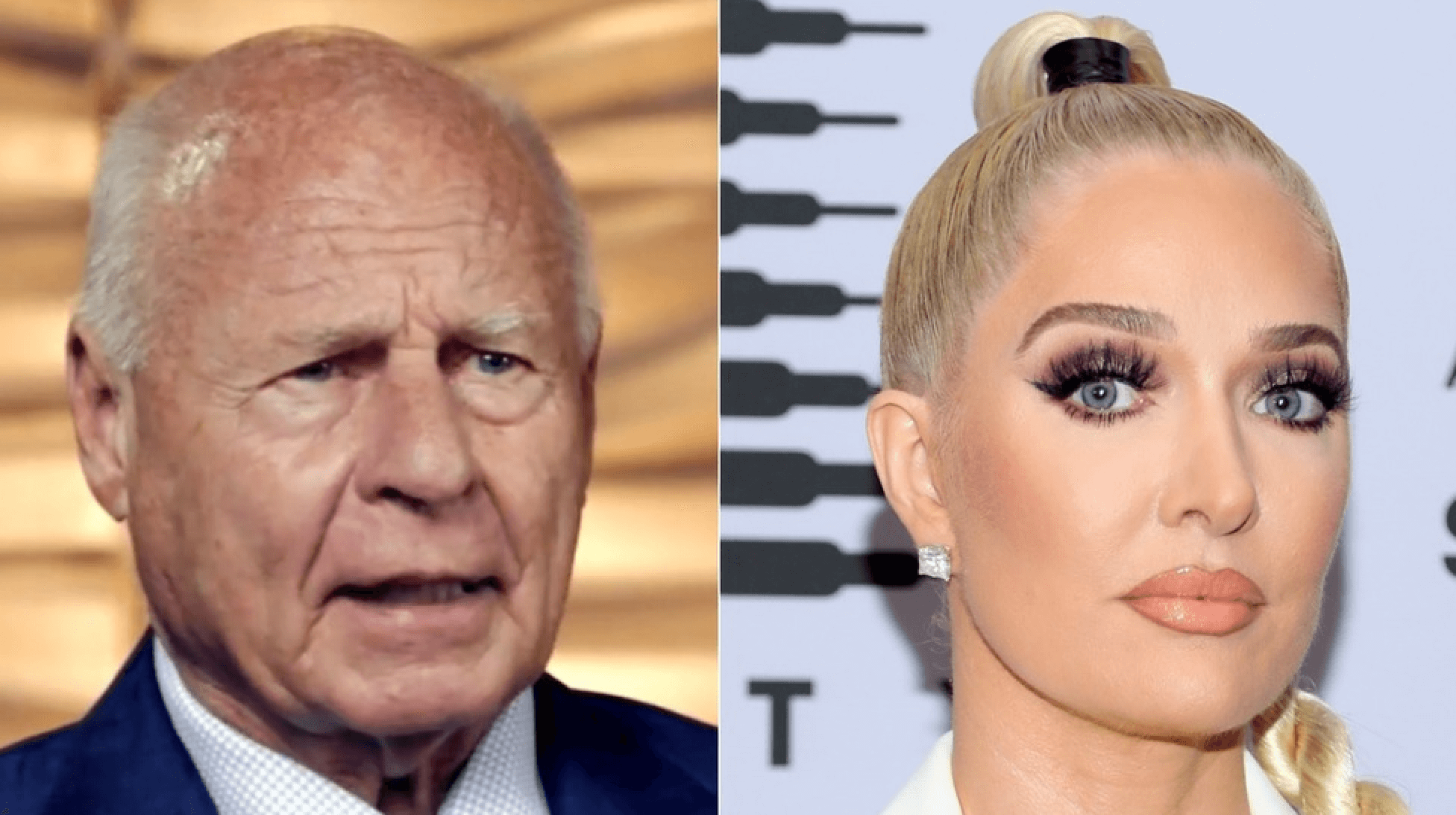
Steven H. Salami Ordered to Repay $1.18M After Defrauding Over 60 Clients in Real Estate Scheme
By Jim Lonergan
FREEHOLD, NJ – A former Hazlet real-estate attorney
who embezzled nearly $1.18 million from over 60 clients has been
sentenced to 10 years in state prison. Monmouth County Prosecutor
Raymond S. Santiago announced the sentencing of 49-year-old Steven H.
Salami on Tuesday, marking the conclusion of a case involving years of
deceit and financial exploitation.
Salami, now disbarred, was
sentenced by Monmouth County Superior Court Judge Christie Bevacqua
during a hearing on Friday, January 17. As part of the sentence, Salami
has been ordered to repay the full amount of the stolen funds to the New
Jersey Lawyers’ Fund for Client Protection, which had previously
reimbursed his defrauded clients.
A Pattern of Deceit
The
investigation into Salami’s misconduct began with complaints from four
victims, who collectively lost nearly $300,000 between April and August
2019. Acting as their attorney, Salami accepted funds for real-estate
transactions and deposited the money into escrow accounts but failed to
perform the required services. This led to missed closing dates, voided
transactions, and significant financial losses for the victims.
Salami’s arrest in October 2019 was only the beginning. The Monmouth
County Prosecutor’s Office (MCPO) Financial Crimes and Special
Prosecutions Unit continued its investigation, uncovering dozens of
additional victims. Their efforts culminated in a 63-count indictment
handed down by a Monmouth County Grand Jury in July 2021.
Legal Proceedings and Guilty Plea
The
case faced delays as the Superior Court Appellate Division reviewed and
ultimately restored two counts of the indictment previously dismissed
by a lower court. In October 2024, Salami pleaded guilty to
second-degree Financial Facilitation of Criminal Activity, acknowledging
his role in defrauding his clients.
The case was prosecuted by
Assistant Prosecutor Lawrence Nelsen, Director of the MCPO Financial
Crimes and Special Prosecutions Unit, while Salami was represented by
Steven E. Nelson, Esq., of Neptune.
Justice Served
Prosecutor Santiago
emphasized the gravity of Salami’s actions. “Mr. Salami’s betrayal of
his clients’ trust not only caused them significant financial harm but
also undermined the integrity of the legal profession. This sentencing
reflects our commitment to holding those who abuse their professional
positions accountable.”
Salami’s disbarment and prison sentence
serve as a stark reminder of the consequences of professional
misconduct. For his victims, the repayment order offers some measure of
restitution, though the emotional and financial impact of his crimes
will likely linger.
Tom Girardi’s battle with Alzheimer’s disease has worsened, a new legal filing reveals.
A lawyer for the disgraced attorney filed court documents, obtained
by Page Six, this week, requesting his conservatorship case be
transferred to Orange County, where Girardi now resides in an
assisted-living facility.
“In Conservatee’s case, the Executive Director stated that Mr.
Girardi was recently moved to the restricted memory care due to a
further decline in his memory functions,” the documents state.
Girardi, 83, told his attorney – who visited him at the facility – that he was “being well treated,” the documents state.
Tom Girardi’s health has taken a turn for the worse as he continues to battle Alzheimer’s disease, court records reveal.Los Angeles Times via Getty Imag
Girardi moved out of that facility and into the OC-based one over the
summer, the court documents note. He’s been there since at least July
28, 2022.
“In summary, based on the foregoing, it would appear that the
conservatee [Girardi] will be permanently housed in Orange County,” the
documents state.
The disgraced lawyer moved from an LA assisted-living facility to one in Orange County.
Girardi’s estranged wife, Erika Jayne, filed for divorce after 21 years of marriage prior to his diagnosis but recently said that she doesn’t want to finalize their split because she doesn’t want to pay alimony.
“It’s ironic, but if I was divorced from Tom, I’d have to pay him
alimony,” Jayne said in a “Real Housewives of Beverly Hills”
confessional, before adding with a laugh, “I’ll stay married, thanks.”
The lawyer told his clients he filed complaints and motions on their behalf while doing nothing of the kind.
by Edvard Pettersson
The United States courthouse in downtown Los Angeles. (Edvard Pettersson/Courthouse News)
LOS ANGELES (CN) — A disbarred attorney was sentenced to 37 months in
federal prison after he pleaded guilty to defrauding his clients
through faked judgements with forged signatures.
Matthew Elstein
formerly with national law firm Tressler LLP, was also ordered to pay
$254,000 in restitution at his sentencing Monday in Los Angeles.
U.S.
District Judge Mark Scarsi wasn’t persuaded that a degenerative brain
condition Elstein, 52, claims to suffer from was either at the root of
his criminal conduct or a reason not to sent him to prison. Instead, the
judge sentenced him to the prison term prosecutors had asked for.
Elstein
admitted last year that over a four-year period he had told his clients
that he filed complaints, motions and other pleadings in court when, in
fact, he hadn’t done anything. He billed them from legal services that
he never rendered and for expenses he never incurred. He would also send
his clients fraudulent court orders, settlement agreements, and other
documents to convince them he had resolved the cases in their favor.
In
June 2016, Elstein lied to a corporate client that they had won a $52
million default judgment and sent them a fake court order with a forged
signature from the judge even though he never even filed a lawsuit for
them. He then doubled up on his bluff by telling the client that the
case was under seal because of a federal investigation and presented
them with a fake settlement agreement between with the U.S. attorney’s
office in Sacramento. The company only discovered the fraud when they
reached out to the U.S. attorney’s office to authenticate the
settlement.
“Defendant caused irreparable financial, reputational
and emotional damage to his victims that exceeds the mere monetary
damage caused by a typical fraud,” prosecutors with the U.S. attorney's
office in LA said in their sentencing memorandum. “Defendant’s motive appears fueled not only by greed but also malice.”
One of Elstein’s victims spoke in court and said he will never salvage his reputation, which Elstein destroyed.
“The damage he did is just incapable of ever being repaired,” the man said.
In
a tearful bid for clemency, Elstein told the the judge that he
understood the pain he had caused and said a degenerative condition of
his frontal lobe may soon diminish his mental capacities. His lawyer
told the judge that Elstein’s medical condition contributed to his
behavior spinning out of control.
After he had already agreed to
plead guilty, and his state bar license was inactive, Elstein accepted
$3,500 from a new client to help him secure an inheritance. According to
a Redondo Beach Police Department officer, who listened in on a call
between Elstein and this person, Elstein appeared to be delaying and
“scamming” the man.
Elstein’s lawyer, Candace Fields, argued that
her client had already been punished enough for his malpractice by
losing his law license and asked for a sentence of home confinement or,
at most, just months in prison. She also pointed out that Elstein
refunded the $3,500 he accepted even though his license was no longer
active.
According to court documents obtained by Radar Online on September 30, the business affairs of Thomas, the estranged husband of Erika Jayne,
were in “dire straits” when the trustee took over the estate. But now,
as the trustee explained in his update on the case, he’s reached deals
with Girardi’s secured creditors and has gathered $4.2 million in cash.
While the trustee is certainly off to a good start, he has struggled
at times to work through the system at Thomas’ defunct firm and has had
to pay former employees to help him. Following a previous request of the
court, the trustee was granted the ability to spend between $166,000
and $276,000. Months later, he needs more.
“The trustee continues to diligently work to identify assets of the
debtor, and this process is ongoing. Without continuing access to funds,
the Trustee is unable to fund a proper investigation of the Debtor’s
affairs and to preserve and maximize the value of the Estate,” the
trustee’s court documents explained.
In the months since Thomas was forced into bankruptcy, most cases he
was handling were either dropped by the client or transferred to another
firm. And, when it comes to the cases transferred, a number are still
pending and expected to bring the estate more cash in the near future.
One particular lawsuit, filed against SoCalGas over a gal leak,
recently reached a $1.8 billion settlement, which is expected to bring
in tens of millions as Thomas represented 23% of the plaintiffs.
The settlement will “eventually result in a significant recovery for the Estate,” the trustee shared.
Attorney Ronald Richards
also shared this positive update on the case, confirming that the
trustee has secured over $40 million for Tom’s victims and creditors,
outside of the $25 million they are currently trying to recover from Erika Jayne.
The Trustee has been able to disburse funds to the Debtor's clients. As of April 2021, the Trustee had already disbursed or caused to be disbursed more than $26 million to clients. This means that clients (victims) got this $. This has nothing to do with the case against EG.🙏 https://t.co/s3qDK1zmSo
In other Thomas Girardi news, the former attorney‘s brother, Robert Girardi, who is acting as his permanent conservator,
recently filed documents with the court in which he confirmed Thomas
has been living in a “skilled nursing facility” for two months and
receiving 24-hour care.
“[Thomas] cannot stay in his home due to his finances, and care needs,” the documents explained, via PEOPLE. “Tom is the subject of an involuntary bankruptcy proceeding and a marriage dissolution proceeding. As a result, his home was put up for sale. Furthermore, Tom’s care needs are such that he needs to be at a skilled nursing facility.”
Erika Jayne's estranged husband Tom Girardi moved into a senior living facility in California on Aug. 9, a report says
Jayne was notified of the move via mail, according to court documents
Girardi was diagnosed with Alzheimer’s disease and dementia earlier this year
Erika
Jayne's estranged husband Tom Girardi has moved out of his mansion in
Los Angeles and into a senior living facility amid his legal woes.
According to the court documents obtained by Us Weekly
Friday, the former attorney, 82, moved into a facility specializing in
memory care in Burbank, California, on Aug. 9. His brother and
conservator, Robert Girardi, informed the "Real Housewives of Beverly
Hills" star of the move via mail, the documents said.
Tom's other brother, Jack, and his two daughters and son were also notified of his new residence, Page Six reported.
Robert
was granted a temporary conservatorship over his brother in February. A
mental evaluation given at the time assessed that Tom, who lost his law
license, was suffering from late-onset Alzheimer’s disease and
dementia.
While the former lawyer told the court in June that he
"disagree[d] with the conservatorship altogether," Robert was named the
permanent conservator of Tom's person and estate the following month.
Jayne
filed for divorce from Tom in November 2020 after 21 years of marriage.
A month later, a class-action lawsuit was filed against the pair
accusing them of embezzling funds intended for the families of plane
crash victims "in order to continue funding his and Erika's lavish
Beverly Hills lifestyles," documents obtained by People read.
Jayne
has insisted that she had no knowledge of her estranged husband's legal
troubles. In an episode of the "Real Housewives of Beverly Hills"
Season 11, she insisted that their divorce was not a "sham."
"Being
the possible target of a federal criminal investigation is like, not
cool," Jayne was quoted by Us Weekly as saying. "To have all those
things said about you which are not true, and then to have everyone,
basically, question everything. It’s lonely and it’s quiet and you would
be shocked by how quickly people turn on you. How quickly people
distance themselves from you. Automatically, they turn because they
don’t want to be involved."
During a more recent episode, Jayne claimed that she hasn't spoken to Tom since she moved out of their home.
In August, the trustee handling the bankruptcy case of her ex's law firm Girardi Keese sued Jayne for $25 million, which was the amount she allegedly spent on an American Express bill and glam squad, among other charges.
REAL Housewives of Beverly Hill star Erika Jayne's ex-husband Tom
Girardi, 82, resurfaced at a nursing home amid the claims that he had
stolen millions from his clients
Tom was spotted outside of the facility somewhere in Los Angeles.
At the senior living home, the former high-powered attorney wore an oversized purple sweater and white pants.
He had his face mask under his chin before putting it back on.
After taking in the air and views, Tom re-entered the rest home.
Emily wrote on Twitter:
"It's official. A Federal Judge disbarred Tom Girardi yesterday.
Girardi was already suspended from the practice to practice and the
State Bar was pushing to Disbar him, he did not contest the disbarment."
She followed up with another tweet:
"The State Bar Disbarment is still pending. This is the Federal Court
Disbarment. Girardi has not responded to either action yet."
After their split was confirmed, the former couple was hit with a number of lawsuits.
Despite claiming she was not aware of Tom’s wrongdoings, the Bravo star has found herself at the center of the legal drama.
Erika, 50, was accused of “hiding her bank statements," as a trustee's special litigation counsel confirmed that Tom’s law firm transferred about $20 million to the Bravo star's many businesses.
'DID YOU KNOW?'
Erika and Tom’s legal drama became a hot topic issue during the latest season of the Bravo show.
The former lawyer, 82, told a Chicago federal judge on Monday, August
9, that if he is called to the stand, he will invoke his right to
remain silent, Law360 reported. The September hearing is related to contempt charges stemming from the December lawsuit that accused Girardi and his firm of misappropriating funds intended for families of the victims of the Lion Air plane crash.
After the defense team conceded that $2 million in settlement funds
were missing, the judge found both Girardi and his firm, Girardi Keese,
in contempt and froze their assets.
In December 2020, class action firm Edelson PC alleged in court
documents that Girardi and Erika, 50, embezzled the settlement funds
intended for the Lion Air families. The firm also accused the former
couple of announcing their divorce to protect their assets.
“While Erika publicly filed for divorce [in November 2020], on
information and belief, that ‘divorce’ is simply a sham attempt to
fraudulently protect Tom’s and Erika’s money from those that seek to
collect on debts owed by Tom and his law firm GK,” the documents
claimed.
The lawsuit also alleged that Tom’s “need to fund outrageous
lifestyles for himself and his soon-to-be ex-wife” was the reason for
the divorce filing, claiming that the disgraced lawyer used settlement
funds to “release personal guarantees, pay down loans, route the money
to friends and family and satisfy other outstanding debts.”
For her part, the Pretty Mess author has denied knowing
anything about Tom’s finances or the whereabouts of the allegedly
missing settlement funds. In a midseason trailer for The Real Housewives of Beverly Hills released last month, when the women are discussing Tom’s legal trouble, Erika says, “If he stole the money, I’d like to know where it is.”
Earlier in season 11, the former Broadway star said that she’d asked Tom
to explain the Lion Air situation to her, but claimed he refused. “I
kept asking. And I was continuously shut out,” she said during the July 14 episode. “I [pleaded], I begged, I tried. I pushed as hard as I could until I couldn’t push anymore.”
Erika has not been charged with any crimes, but in June, a judge ordered her to turn over all of her financial records. The following month, Tom’s conservatorship was made official after he was diagnosed with dementia earlier this year. His brother, Robert Girardi, was initially appointed his temporary conservator in February.
NEW YORK, NY – DECEMBER 17: Attorney Evan Greebel, center, is led by
law enforcement officials after being arrested as a co-defendent with
Turing Pharmaceutical CEO Martin Shkreli for securities fraud on
December 17, 2015 in New York City. Shkreli gained notoriety for raising
the price of Daraprim, a medicine used to treat the parasitic condition
of toxoplasmosis, from $13.50 to $750, though the Greebel arrest did
not involve that price hike.
“Pharma Bro” Martin Shkreli‘s former lawyer has been allowed to resign from practicing law in New York State.
Evan Louis Greebel, a former attorney with the law
firm of Katten Muchin Rosenman LLP, received permission to voluntarily
“resign as an attorney and counselor-at-law” from the Supreme Court of the State of New York, Appellate Division, Second Judicial Department in a Wednesday order “in lieu of further proceedings in connection with his conviction” on securities fraud charges in December 2017.
Greebel was previously sentenced to 18 months in federal prison
after an 11-week-long trial in which prosecutors referred to him as a
“corrupt lawyer” in connection with his role in Shkreli’s efforts to
defraud pharmaceutical company Retrophin, Inc. to pay off family debts.
The duo was accused of working together in order to use Retrophin’s cash
and shares in order to stave off investors in Shkreli’s failed hedge
funds.
The now-former attorney made note of the extent and seriousness of his criminal activity in the Wednesday court order.
[Greebel] acknowledges in his affidavit that he is
currently the subject of an investigation by the Grievance Committee for
the Ninth Judicial District, and that the allegations include at least
the following acts of professional misconduct: Upon a jury trial in the
United States District Court for the Eastern District of New York, on
December 27, 2017, he was found guilty of conspiracy to commit wire
fraud and conspiracy to commit securities fraud, and on August 17, 2018,
he was sentenced, inter alia, to 18 months’ imprisonment on each
offense, to be served concurrently, followed by 3 years of supervised
release. The respondent further acknowledges that his convictions
constitute “serious crimes” under JudiciaryLaw § 90(4) and constitute a
finding of misconduct under the Rules of Professional Conduct, requiring
the imposition of discipline. He attests that he cannot successfully
defend against these facts and circumstances.
In other words, Greebel agreed that he was convicted of federal
crimes and has no defense against the allegations made against him by
law enforcement. Those allegations led to a conviction which in turn led
to an inquiry into Greebel’s professional conduct. But the court’s
order said the professional conduct inquiry into Greebel did “not
include any allegations that he willfully misappropriated or misapplied
money or property.” In other words, the professional conduct matter
appeared to be more concerned with the fact that a conviction occurred
than it did with the underlying substance of the conviction.
By allowing Greebel to resign, the committee’s professional conduct investigation is now canceled.
“The Grievance Committee contends that the resignation fully complies
with the requirements of 22 NYCRR 1240.10 and, therefore, recommends
its acceptance,” the decision notes. “In view of the respondent’s
disbarment, on the Court’s own motion, the hearing before the Special
Referee, as directed by decision and order on motion of this Court dated
May 26, 2020, is discontinued.”
The intermediate appellate court’s decision to grant Greebel’s
resignation means he is immediately disbarred and his name is being
“stricken from the roll of attorneys and counselors-at-law.”
A separate request from Greebel to have his name stricken
retroactively from “the date he ceased practicing law, March, 1, 2016,
or alternatively, the date of his conviction, or alternatively, the date
of his interim suspension [in 2019]” was denied.
The order is silent as to whether or not Greebel may some day be able to reapply for readmission to the bar. New York law appears to allow reapplications for admission in some cases of resignation after seven years.
State Bar lawyers say they are poised to
file disciplinary charges against Tom Girardi, shown here with his
estranged wife, “The Real Housewives of Beverly Hills” star Erika Jayne.
The State Bar of California cast doubt Friday on troubled lawyer Tom Girardi’s
diagnosis of Alzheimer’s disease, suggesting it was a possible case of
malingering and likely igniting a battle over his mental competency.
Lawyers
for the bar raised the questions in a Superior Court filing that also
revealed the agency is preparing to move against Girardi’s license. The
bar regulates attorneys in California.
Bar investigations and
disciplinary proceedings are normally confidential, but the agency
disclosed “imminent” charges against Girardi in an attempt to stave off
conservatorship proceedings that would impede its ability to prosecute
him.
Girardi’s younger brother is seeking appointment
as his permanent legal guardian, with a hearing set for Monday, and has
offered as evidence the opinion of a Long Beach psychiatrist who
examined the lawyer last month and diagnosed him
with “Alzheimer’s disease with late onset.” The psychiatrist said
Girardi has short-term memory loss, delusions and “severely disorganized
thinking.”
An attorney for Girardi’s temporary conservator, Nicholas Van Brunt,
said, “No comment to make, except that we will be responding to the
filing.” The Long Beach psychiatrist, Nathan Lavid, did not return
messages seeking comment.
James J. Chang, a bar attorney,
questioned the legitimacy of the conservatorship proceedings as coming
“under highly unusual circumstances” and “only after [Girardi] became
enmeshed in mounting legal troubles and as he is facing imminent State
Bar discipline.”
He wrote that facts “belie allegations that
Girardi is now incapable of caring for himself,” noting that the lawyer
had speaking engagements until late November. The bar’s top prosecutor,
interim chief trial counsel Melanie Lawrence, listed two appearances
Girardi made last fall, including a Nov. 21 event for the Consumer
Attorneys of California.
“Mr. Girardi moderated a 1.5-hour long
continuing legal education panel discussion ... regarding how to conduct
a jury trial and engaged conversantly with the four other attorney
panelists,” Lawrence wrote.
The bar lawyers urged the judge overseeing the conservatorship case,
Daniel Juarez, to order an independent examination of Girardi by a
neuropsychologist.
Girardi’s firm, Girardi Keese, imploded in December after
evidence emerged that he had misappropriated millions of dollars in
client settlement money. A federal judge referred him for criminal
investigation, and creditors subsequently forced him into bankruptcy.
The turn of events stunned the legal community, where Girardi was among the nation’s most renowned and well-connected civil lawyers.
Many outside the law knew him as the real-life attorney from the film
“Erin Brockovich” and from his appearances on “The Real Housewives of
Beverly Hills” alongside his wife, pop singer Erika Jayne.
A Times investigation
found that Girardi maintained a spotless record with the bar for
decades despite more than 100 suits against him and his firm, including
numerous claims of legal malpractice and misappropriation of funds.
Girardi cultivated close relationships with bar officials, the newspaper
found.
The bar on March 5 notified Girardi that it planned disciplinary
action against him. In its filing Friday, the bar said the charges
against Girardi alleged that “he has willfully misappropriated client
funds and refused to obey a court order.”
Thomas Girardi, the estrangedhusband of Real Housewives of Beverly Hills star, Erika Jayne,
has been stripped of his law license according to a new report by Page
Six. The outlet reported on Wednesday that according to state records,
the lawyer’s license was revoked by the California State Bar, making him
ineligible to practice law.
Thomas Girardi long-standing law firm, Girardi and Keese, has been battered by several legal battles in recent months. Erika
filed for divorce in November, only weeks before the couple was hit
with a lawsuit alleging that the duo had embezzled money designated to
the victims of Lion Air Flight 610. They were subsequently accused of
staging the divorce to dodge accountability.
Thomas claimed poverty in court, in a case that is ongoing. Thomas’ former law partner, Robert Keese, sued to dissolve their business venture, 1126 Wilshire Partnership. Thomas
was accused of not paying out the estimated $315k in earnings, instead
keeping the money for “his own personal gain.” Wells Fargo also slapped
the once famed lawyer with a lawsuit, claiming that he had breached
agreements.
As reported last month, Robert Girardi, the brother of Tom Girardi, is serving as his brother’s temporary conservator.
Robert claimed that his brother wasn’t able to participate in an earlyFebruary hearing because he suffered a medical emergency in late January.
Robert requested to take control of his brother’s estate amid the 81-year-old’s legal battles, but the judge only consented to Robert handling the former famed lawyer’s affairs until March 30.
Robert also asked the judge to allow him the authority to place Thomas in a facility that treats neurological disorders, such as dementia.
“There was an urgent need for Bob Girardi to have the power to engage counsel in the bankruptcy proceeding on his brother’s behalf, and Tom’s court-appointed counsel clearly agreed, as did the court today,” RobertGirardi’s attorney said in a statement to Page Six in early February.
Robert filed documents addressing Thomas’ involuntary
bankruptcy case, alleging that his brother was experiencing short-term
memory loss, and needed a conservator. He alleged that Thomas is “incapable of realizing” the consequences of the legal filings.
Robert initially alleged that Thomas is “incompetent and unable to act for himself” because he’s suffering from short-term memory loss.
“My
brother is incapable of realizing and understanding the repercussions
of the bankruptcy filings pending against him and his law firm Girardi
Keese notwithstanding having [it] explained to him over and over and by
various people,” Robert said. “Furthermore, my brother is not
capable of making rational decisions with respect to his financial
responsibilities and offers solutions and opinions that are factually
impossible.”
As reported, Tom Girardiwas evicted from his California mansion in February amid his ongoing legal battle.
Six South Florida lawyers have been disciplined for misconduct in February, according to the Florida Bar.
The Bar releases an official list of sanctions once a month, targeting
attorneys accused of violating the standards of the legal profession.
All of the descriptions below are provided by the Bar.
William Robert Amlong, of Fort Lauderdale,had
his law license suspended for 91 days effective March 6. A Bar
investigation concluded he failed to properly supervise his associate
and “acted in bad faith in pursuing frivolous claims and concealing
evidence” in a 2012 civil case. Details of the case were not posted
online. As a consequence of the same case, Jennifer E. Daley is
suspended for 91 days starting March 6 for allegedly making false
statements to opposing counsel, failing to disclose material facts and
obstructed opposing counsel’s access to evidence.
Brandon Joshua Barker,
of West Palm Beach, had his license suspended for 30 days starting
March 13 for failing to show up for a civil trial and not notifying the
court.
Andrew David Hodes,
of Boca Raton, had his license suspended for 60 days and ordered to
attend The Florida Bar’s Ethics School for filing a faulty quit claim
deed for his client. The error was uncovered when civil litigation
regarding the property found that “Hodes committed acts of fraud,
misrepresentation, forgeries and/or material alterations regarding the
subject property and title,” according to the Bar. “Hodes’ intent was
not to deceive or make a material misrepresentation, but rather, to
correct ... errors that Hodes had made on the deed,” the Bar wrote in a
news release announcing disciplinary action.
Enrique Miranda,
of Miami, was suspended by a Feb. 11 court order ”inappropriate
disbursement of escrow funds, misrepresentations about the funds held in
trust, and violation of the fiduciary duty” in two business
transactions totaling more than $100,000.
Francisca Johanna Wider,
of Boca Raton, received a public reprimand and must attend the Florida
Bar’s Ethics School for preparing a last will and testament in 2014
naming herself as the personal representative. “Wider telephoned the
sole beneficiary [in 2016] and informed her that she was ‘mentioned’ in
the will but did not tell the woman that she was the sole beneficiary of
the estate,” the Bar stated. “Misrepresentations were made by Wider
regarding the beneficiary’s status as sole beneficiary.”
Elsewhere in the state:
Curtis Lee Allen,
of Temple Terrace, received a public reprimand for unprofessional
conduct and was ordered to attend Professionalism Workshop effective
immediately after a Feb. 4 court order. In one matter, Allen became
unprofessional in his questioning of a witness who he believed was
repeatedly lying. In another case, the trial court entered an order
stating it had to intervene and set case management directives for both
Allen and opposing counsel due to their unprofessional behavior toward
each other. In a third matter, the trial court entered an order finding
that Allen engaged in unprofessional and aggressive behavior.
Carl Robert Anderson,
of Phoenix, AZ, was suspended for 91 days starting March 18. In
Arizona, Anderson represented a homeowners association that was managed
by a property management company. He allowed the employees of that
company to perform secretarial and paralegal work for him. In some
instances, the work was for cases unrelated to the HOA matters. In
cases, Anderson failed to timely respond to discovery requests and
failed to notify the clients of the requests. Judgments were
subsequently entered against his clients and he failed to notify them of
the judgments. This is a reciprocal discipline action based on the
order filed by the State Bar of Arizona.
David A. Fernandez, of Bradenton,had
his license revoked with leave to apply for readmission in five years
effective 30 days after a Feb. 18 court order. Fernandez was hired to
serve as the closing agent and title agent for the sale of a home and
was found guilty of multiple rules. In additional matters pending at the
grievance committee and staff level, Fernandez was accused of missing
deadlines, failure to communicate with clients, engaging in a conflict
of interest, being disqualified and removed as counsel in a matter due
to a conflict, misusing client funds being held in his trust account,
and conduct involving dishonesty or misrepresentation.
Andrew C. Hill, of Trinity,was
suspended effective 30 days after a Feb. 3 court order. Hill was held
in contempt of the court’s order dated June 27, 2019, due to a finding
of probable cause for misconduct that occurred during his probation
period.
Stephen Hillebrand, of Sarasota,was
disbarred effective March 6. Hillebrand failed to diligently represent
three clients; failed to reasonably communicate with the clients; and
failed to complete the client’s representation to the detriment of the
clients. Hillebrand failed to appear at his scheduled sworn statement
and failed to participate in the disciplinary proceedings.
Diane Marie McGuire, of Key Largo,is
publicly reprimanded effective immediately after a Feb. 11 court order.
McGuire was found in contempt of court for failing to respond to
official Bar inquiries.
William E. McManus Jr., of Johnson City, Tennessee,was
disbarred in Florida effective March 22 after a Feb. 18 court order.
McManus was charged with bribery of a public servant, a felony offense
in Tennessee. McManus consented to disbarment in Tennessee and Florida.
This is a reciprocal discipline action based on the Tennessee Supreme
Court’s order dated June 26, 2020.
Charles Paul-Thomas Phoenix, of Sanibel,is
suspended for two years after a Jan. 28 court order. Phoenix was
counsel for a vacation rental management company that was operating as a
Ponzi scheme. Phoenix signed a non-prosecution agreement with the U.S.
Attorney’s Office agreeing to cooperate in the prosecution of the
company’s executives in exchange for not being prosecuted himself. In
the agreement, Phoenix admitted to certain conduct constituting rule
violations, including making false statements and failing to timely
withdraw from his representation of the company despite his knowledge of
its illegal activity.
Michael Anthony Saracco, of Cocoa,is
suspended for 45 days effective April 12 after a Feb. 11 court order.
Saracco failed to provide diligent and competent representation to a
client in connection with filing an action against the client’s mortgage
lender and failed to keep the client reasonably informed regarding the
legal matter. Saracco failed to respond to a motion to dismiss in the
matter as well as an order to show cause, resulting in dismissal of the
case without prejudice. At his client’s request, Saracco filed a new
lawsuit in federal court to preserve the claim. The court ultimately
permitted Saracco to withdraw from the case. Saracco provided a full
refund to the client.
A. Siddiqui,
of St. Augustine, is suspended for three years effective March 3. In
one matter, Siddiqui failed to competently and timely pursue the
client’s family law matter and misrepresented to the client the status
of the case. In a second matter, Siddiqui failed to competently
represent the client in his criminal case and failed to appear for jury
selection. In a third matter, Siddiqui failed to appear for court and
misrepresented to the court that he did not receive notice of the court
hearing.
Erik Donald Ulano, of Spring Hill,was
disbarred effective immediately after a Feb. 18 court order. Beginning
on Oct. 1, 2018, Ulano became ineligible to practice law in Florida for
not paying his Bar membership fees for fiscal year 2018-2019. While he
was ineligible to practice, Ulano repeatedly appeared in court in
Hernando County on behalf of his client. Ulano also failed to respond to
the Bar’s inquiries and failed to participate in the disciplinary
proceeding.
Ryan Kamada disbarred this week by the Office of Attorney Regulation Counsel for the Colorado Supreme Court
GREELEY, CO – JULY 21:The Weld County Courthouse stands near downtown at
the Weld County Centennial Center in Greeley July 21, 2020. (Alex
McIntyre/Staff Photographer)
Documents from the office’s proceedings show Kamada’s misconduct was
not limited to his leaking details about the 2019 investigation to a
friend who was involved. Kamada was appointed as a Weld County
magistrate in May 2015. During that time, he maintained long-running
text message chains with his friends, according to court documents.
Ryan Kamada, after taking the bench
in 2015 as a Weld County magistrate.
(Greeley Tribune file photo)
Kamada in late 2016 and early 2017 bought marijuana from a longtime friend, the documents state. The friend referenced in the documents appears to be Geoffrey Chacon, to whom Kamada leaked information about the 2019 investigation. Chacon shared information with others involved in the trafficking, helping investigators trace the source of the leak back to Kamada.
In September 2016, Chacon asked Kamada to look up information about someone. Kamada responded to the man in question “wasn’t convicted of the sex assault but he was on other charges and ended up in (expletive) prison man.” The text went on to say the man in question was having sexual relations with a minor and giving her cocaine.
“Don’t say anything man,” Kamada wrote.
In December 2016, Kamada referred to a former client by name in a group chat with his friends, saying he did her custody proceedings.
“If that kid lives I’ll be shocked,” he wrote.
In March 2018, Kamada discussed a pending dependency and neglect case in the group chat. A friend asked whether the parent involved had a warrant, and Kamada said he didn’t find one but he hadn’t checked hard, according to court documents.
The next day, that same friend sent a group chat a photo of two children who were reported missing. Kamada went on to talk about details of the family, including that the mother was found overdosed.
“When we get those kids back I’m gonna let that (expletive) have it,” he wrote. “That (expletive) is gonna get forced sobriety. AKA jail.”
Kamada also thrice sent a group of friends photos depicting his desk and case management screen, which showed case numbers, litigants’ names, events and document titles. In November 2018, he repeatedly used profanities in the group text to refer to a lawyer who had a dependency and neglect case before him, a case for which that lawyer apparently wasn’t prepared.
On Jan. 8, 2019, then-Gov. John Hickenlooper appointed Kamada to succeed Elizabeth Strobel as Weld District Court judge. That same month, Chacon asked about someone taken into custody by the Federal Bureau of Investigation. Kamada tried looking up the case, but could not find it. He surmised it was a federal case, according to court documents.
Also that month, Kamada presided over a divorce proceeding and sent a photo of the first page of the decree of dissolution to his friends. Kamada said he was “going to grant this today so she is free game tomorrow night,” court documents state.
Kamada also told a friend he had the friend’s brother-in-law in court, including a photo of a party involved in a custody battle. The photo was not the friend’s brother-in-law. Still that same month, Kamada sent the group a photo of a father and a child, saying, “check out the dad in my trial today.”
Finally, court documents noted Kamada’s leak about the 2019 drug trafficking investigation involving Alberto “Beto” Loya. Loya was sentenced in June to serve 10 years in prison after pleading guilty to conspiracy to possess with the intent to distribute a controlled substance, a Class 1 drug felony, and conspiracy to money launder, a Class 4 felony. He originally faced 21 charges but made a plea agreement with prosecutors.
Kamada resigned from the district court judge position a day before Greeley police announced Loya’s indictment and the arrest of some of his associates. A few days later, he formed Kamada Law, LLC, in Windsor. He took a job the following month with Burnham Law. In March, according to Kamada’s LinkedIn profile, he left Burnham Law for Kamada Law.
Kamada signed an agreement consenting to disbarment and accepting the facts laid out in the court documents. The agreement requires that he pay $224 to the Colorado Supreme Court Attorney Regulation Offices for costs incurred in the case.
Kamada is free on bond until his sentencing 2 p.m. Dec. 4. Court records indicate he likely faces 12-18 months of imprisonment and no fines. He faces at least one year of supervised release and no more than three years.
Amanda Harmon poses for a portrait in Red Feather Lakes on Sept. 16, 2020.
By Sam Tabachnik
For most of her life, Amanda Harmon believed the courts were fair and just.
Save for a few traffic-related instances, Harmon had rarely dealt
with legal issues. A courtroom didn’t give her anxiety. It didn’t give
her fear.
But her whole perception of justice changed after her time in Judge Ryan Kamada’s Greeley courtroom.
“I knew right away he was crooked,” Harmon said. “There was something corrupt and vile about him.”
Her suspicions were confirmed, she said, when the former Weld County
District Court judge pleaded guilty last year to obstructing a federal
investigation into a large-scale cocaine trafficking organization.
A disciplinary investigation showed Kamada had also maintained
long-running text chains with his friends, during which he disparaged
those appearing in his court, mocked attorneys and joked about the
safety of children as he decided on custody arrangements.
Kamada resigned from the bench last year, was disbarred this summer and soon could face prison time.
But while Kamada is no longer a judge, his rulings continue to be
felt by Harmon and a host of other families, who are now expressing
dismay, alleging their cases were tainted by the disgraced judge as they
wonder how they can make their voices heard.
“All of these decisions are fruit of a poisoned tree,” Harmon said.
Investigation into Kamada
Kamada’s downfall began in October 2018, when a federal task force
began investigating a drug trafficking organization that was
distributing large amounts of cocaine throughout northern Colorado,
according to the U.S. Attorney’s Office in Colorado. Investigators
realized that Kamada had known one of the drug traffickers since high
school.
Ryan Kamada
Just one month earlier, former Gov. John Hickenlooper had appointed Kamada to replace Elizabeth Strobel as a district court judge in Weld County.
In April 2019, Kamada received a call from a task force officer
seeking a search warrant as part of an investigation into a suspected
drug trafficker named Alberta Loya, according to the former judge’s
admission of misconduct during his review before the Colorado Supreme
Court. The officer noted that Kamada was friends with Loya on Facebook,
prompting the judge to recuse himself from the case.
But the next morning, Kamada called his best friend, an assistant
middle school principal named Geoffrey Chacon, who also grew up with
Loya, investigators said. Kamada warned Chacon that authorities were
following Loya and that his friend should stay away from him.
Chacon then notified Loya about the warrant, and changed his own behavior “in order to avoid law enforcement attention,” federal prosecutors said.
In August 2019, Kamada resigned
from the bench. Two months later, Chacon pleaded guilty in federal
court to one count of destruction of records with the intent to obstruct
a federal investigation.
Loya was indicted on 21 counts related to drug trafficking activity, and pleaded guilty
to felony counts of conspiracy to possess with the intent to distribute
a controlled substance and conspiracy to launder money. He was sentenced to 10 years in prison in June.
Also in June, Kamada pleaded guilty to obstructing the federal investigation, and in August he was disbarred
for violating eight different rules of professional and judicial
conduct. He’s scheduled to be sentenced in federal court on Dec. 4, and
could face between 12 and 41 months in prison, according to his plea
agreement.
John Gleason, who represented Kamada during his disciplinary review
process, told The Denver Post that “everything I’ve heard about him is
that he was a great lawyer and great judge who simply made a mistake,
and he’s paid dearly for it.”
Kamada, through his criminal defense attorney, declined to comment.
But during the Office of Attorney Regulation Counsel’s investigation
into his misconduct, new details emerged about Kamada’s behavior during
his time on the bench.
As a magistrate judge, Kamada would routinely text his friends
information about people and cases in his courtroom, according to the
stipulation filed with the Colorado Supreme Court, which deals with
attorney discipline.
In one September 2016 exchange, a friend asked the judge to look up information on an individual.
That person, Kamada said, “wasn’t convicted of the sex assault but he
was on other charges and ended up in (expletive) prison man … Oh yeah.
He was (expletive) a 14-year-old and giving her cocaine. Don’t say
anything man,” according transcripts of the text in the stipulation.
In a December 2016 group text, Kamada talked about a former client,
saying, “I did her custody (expletive) and she is one strange cat. If
that kid lives I’ll be shocked.”
Soon after beginning his role as a district court judge in January
2019, Kamada was presiding over a divorce proceeding, which included an
allocation of parental rights.
Kamada texted a photo of the divorce papers, telling his friends that
he was “going to grant this today so she is free game tomorrow night.”
Helen H. Richardson, The Denver Post
Amy Barton poses for a portrait in front of the Weld County Courthouse in Greeley on Sept. 30, 2020.
Fighting for new judgements
When Amy Barton heard these allegations, it confirmed her gut feeling that something just wasn’t right in Kamada’s courtroom.
She and her ex-husband appeared before Kamada four years ago for a
child custody case and “the whole time in court, (Kamada) was picking
his fingernails and you could tell he wasn’t paying attention,” Barton
said. “He was completely checked out.”
For Barton and others who appeared before the judge, word of his
indictment and disbarment served as a modicum of good news — “karma
finally bit him in the (expletive),” she said.
But when several people appealed to get Kamada’s judgements vacated or their cases reheard, they were denied.
“It seems like the courts are trying to sweep it under the rug,” Harmon said.
While Kamada’s actions may be well-deserving of removal from the
bench or disbarment, that does not mean that everything he touched gets
to be relitigated, said Eli Wald, a professor and legal ethics scholar
at the University of Denver’ Sturm College of Law.
“The thing we worry about most is the integrity of the proceedings
and compliance with the law and perception of law and justice,” Wald
said. “Unless there’s anything in the removal proceedings that causes us
to doubt the integrity of the proceedings, the mere removal (of a
judge) should not cause us to worry about revisiting every case.”
This feels like a miscarriage of justice, Barton and Harmon said. And
it has both of them, along with others who dealt with Kamada,
questioning their belief in the entire judicial system.
“It’s disheartening knowing this man was appointed to a position that
is supposed to uphold ethics and be honorable, and he’s doing such
skeezy stuff,” Barton said.
That hasn’t stopped a group from organizing to raise awareness. A
group of about 15 parents who had Kamada preside over their cases
started a Facebook group, with people talking about a filing a lawsuit
or protesting in front of the courthouse. The court may not rehear their
cases. But that doesn’t mean they’re going to be silent.
“It’s always strength in numbers,” Barton said. “If five of us say we
want change, they can ignore us. But if we get hundreds, then they have
to listen.”