Showing posts with label New Mexico. Show all posts

Wednesday, June 24, 2026

Woman accused of stealing thousands from elderly man she was taking care of

by Alika Medina 


ALBUQUERQUE, N.M. – Albuquerque police say a 27-year-old woman stole $5,883 from a bedridden older man she was hired to care for.

Police say Gloria Flores faces fraud charges after investigators said she used the man’s credit card for charges at GEICO, Discount Tire and Albertsons.

Sally Linhart, the victim’s daughter, said she learned about the charges after her father’s landlord checked his mail when Flores stopped working in his apartment.

“She’d been using the credit card and the statements had been coming in the mail, so she was intercepting those.” said Linhart.

Linhart said she lives eight hours away in Oklahoma and said Flores admitted through text messages that she took the money.

“I’m going to give you this opportunity. Just admit what you’ve done, pay us back, and it’ll be a lesson learned for you,” said Linhart. However, Linhart said Flores wouldn’t do it.

Linhart said the case felt familiar because someone else stole from her father about three or four years ago and later paid the money back over about 12 months.

“I want to say, three or four years ago, and same thing happened. I contacted the girl, and I said, I know what you’ve done, and she said, please do not call the police. Please do not press charges. I will pay you back. And she did, and so she paid my father back over the course of about 12 months.” said Linhart.

New Mexico Aging Services says elder abuse can take different forms and says the number of cases is not going away.

The Federal Bureau of Investigation says $55 million were lost to elder fraud scams in New Mexico in 2025. 

Full Article & Source:
Woman accused of stealing thousands from elderly man she was taking care of

Friday, June 19, 2026

New Mexico reports 18K allegations of elder abuse this year

by: Dave Burge

EL PASO, Texas (KTSM) — New Mexico Adult Protective Services has received approximately 18,000 allegations of elder abuse, neglect and exploitation so far in 2026, state officials said.

This comes as the state marks Elder Abuse Awareness Month and state officials are pushing to help New Mexicans recognize the warning signs and to report suspected abuse.

Elder abuse can take many forms, including physical and emotional abuse, neglect, abandonment, financial exploitation and scams, according to the New Mexico Aging Department.

This includes scams that often target older adults, including fraudulent phone calls, impersonation schemes, and romance scams, New Mexico state officials said. 

These situations are often underreported, leaving many older adults isolated or without the support they need.  

“As New Mexico’s older population continues to grow, it is more important than ever that we look out for one another and recognize when someone may need help,” said Emily Kaltenbach, Aging Department secretary. “By learning the signs and speaking up when something feels wrong, we can help protect those who may be vulnerable.”

According to the National Council on Aging, approximately one in 10 Americans age 60 and older may have experienced some form of elder abuse. Social isolation, cognitive decline, physical disabilities, and limited access to services can all make someone more susceptible to experiencing abuse.  

Warning signs of abuse, neglect or exploitation may include:

  • Unexplained injuries, such as cuts, scratches, bruises, broken bones or bedsores
  • Sudden changes in behavior
  • Withdrawal from social activities or communication
  • Poor hygiene, malnutrition, or unsafe living conditions
  • Sudden financial changes or unusual banking activity
  • Fearfulness around caregivers or family members
  • Lack of access to medication, medical care or basic needs

“Preventing elder abuse starts with awareness and connection,” said Corey Roybal, Adult Protective Services director. “Checking on a neighbor, noticing unusual behavior, or asking questions when something doesn’t seem right can make a meaningful difference in someone’s well-being.”

New Mexicans who suspect abuse, neglect or exploitation of a vulnerable adult are encouraged to report concerns to Adult Protective Services. Reports can be made 24 hours a day through the statewide intake line at (866) 654-3219.

To learn more about elder abuse prevention and available resources, visit the New Mexico Aging and Long-Term Services Department website at aging.nm.gov

Full Article & Source:
New Mexico reports 18K allegations of elder abuse this year 

Wednesday, May 20, 2026

New Mexico ‘imposter nurse’ could face up to 100 years in prison if convicted

by Jonathan Fjeld


LAS CRUCES, N.M. — An ‘imposter nurse’ in Las Cruces is facing 34 charges after nearly causing the death of a patient and illegally giving medications to patients under 18 years old.

A Doña Ana County grand jury indicted Margarita Gonzalez. She is accused of assuming the identities of nurses in Texas to get hired at four nursing facilities in Las Cruces:

  • Village at Northrise
  • Las Cruces Wellness and Rehabilitation
  • Peak Behavioral Health
  • Matrix Home Care

The New Mexico Department of Justice’s Medicaid Fraud and Elder Abuse Bureau investigated and discovered instances where Gonzalez illegally gave injections and dispensed prescriptions, including narcotics to eight inpatient residents under 18 years old.

An investigation also found Gonzalez was also about to allegedly give “an incorrect insulin dose” to a patient that they claim could’ve killed the patient if another nurse hadn’t caught the error.

Several facilities fired Gonzalez over patient safety concerns and an observed lack of knowledge.

“Impersonating a healthcare provider is a reckless and selfish crime that subjects those most vulnerable to risk of serious injury or death,” Attorney General Raúl Torrez said. “I will not tolerate those who risk the safety of patients or cause danger and unnecessary confusion within the healthcare system. These charges should keep anyone attempting to pose as a healthcare provider on notice: we will find you, and we will prosecute you to the fullest extent of the law to protect New Mexicans.” 

Gonzalez’s charges include identity theft, nursing without a license, abuse of a resident, distribution of controlled substances to a minor and fraud totaling over $25,000.

If convicted on all counts, Gonzalez could face up to 100 years in prison.  

Full Article & Source:
New Mexico ‘imposter nurse’ could face up to 100 years in prison if convicted 

Saturday, July 19, 2025

$4.9 Million Secured for Victims of Ayudando Guardians Fraud Scheme Through Settlement and Asset Forfeiture


For Immediate Release
U.S. Attorney's Office, District of New Mexico

ALBUQUERQUE – The U.S. Attorney’s Office for the District of New Mexico announced today the recovery of $4.9 million for victims of the Ayudando Guardians fraud scheme. The U.S. Department of Justice has retained a third-party administrator to assist with disbursing the funds to victims of the decade-long embezzlement scheme that exploited vulnerable individuals under guardianship.

The U.S. Marshals Servicedemanded coverage from Travelers Casualty and Surety Company of America (Travelers) under a "Wrap + Crime" policy for the losses sustained due to the criminal acts of Ayudando employees. Travelers Insurance denied coverage under the policy, so on March 31, 2022, the United States filed a civil action against Travelers in the United States District Court for the District of New Mexico (“Civil Action”). The United States pursued claims against Travelers for coverage under the policy, bad faith, and violation of the New Mexico Unfair Insurance Practices Act and the New Mexico Unfair Practices Act, alleging that Travelers' denial of the United States' claim was unfounded and frivolous, and that Travelers misrepresented the coverage afforded.

On September 20, 2024, the parties participated in a settlement conference before the Honorable Gregory J. Fouratt, resulting in a settlement of the Civil Action. Travelers has agreed to pay the United States the amount of $4.9 million.

On July 17, 2025, the U.S. District Court entered a final order of forfeiture in the related criminal case, awarding $4.9 million in funds obtained through the settlement with Travelers. The recovered funds satisfy a portion of the $6.8 million money judgment against Harris.

In relation to the original criminal case, Harris, the former president and 95% owner of Ayudando, was sentenced to 47 years in prison, followed by three years of supervised release. Her husband, William S. Harris, who worked as a guardian, received a 15-year prison sentence, also followed by three years of supervised release. Sharon A. Moore, former chief financial officer and 5% owner, was sentenced to 20 years in prison. Craig M. Young, Susan Harris' son, was sentenced to 71 months in federal prison.

U.S. Attorney Ryan Ellison, Acting Special Agent in Charge Philip Russell, Federal Bureau of Investigation’s Albuquerque Field Office, and Special Agent in Charge Carissa Messick, IRS Criminal Investigation’s Phoenix Field Office, made the announcement today.

The Albuquerque Field Office of the FBI and the Phoenix Field Office of IRS Criminal Investigation conducted the criminal investigation with the assistance of the Complex Assets Unit and the U.S. Marshals Service, the Criminal Investigations Division of the Department of Veterans Affairs Office of Inspector General, and the Dallas Field Division of the Social Security Administration Office of Inspector General. The original criminal case was prosecuted by Assistant U.S. Attorney Jeremy Peña. The Civil Action and settlement were led by Assistant United States Attorneys Ruth Keegan and Jesse Hale, with assistance from Clifford Krieger, forfeiture counsel for the U.S. Marshals Service and several attorneys from the Social Security Administration. The asset forfeiture proceedings were overseen by Assistant U.S. Attorney Stephen R. Kotz. 

Updated July 17, 2025 

Source:
$4.9 Million Secured for Victims of Ayudando Guardians Fraud Scheme Through Settlement and Asset Forfeiture 

Saturday, April 26, 2025

Court adopts 'bill of rights' for adults with guardians

Guidelines for state Supreme Court hearings were developed by stakeholders' group

by Hamilton Kahn

The legal rights of adults with guardians in New Mexico are now in writing.

This "bill of rights," developed by the Working Interdisciplinary Network of Guardian Stakeholders (WINGS), will guide the state Supreme Court in all hearings involving guardianship, a news release from the Administrative Office of the Courts said.

Among 21 rights, the document gives adults with guardians the right to be treated with dignity and to take part in all decisions by the court affecting them, the release said.

WINGS was created by the court to evaluate New Mexico laws governing guardianship and conservatorship. Its members include judges, professional guardians and conservators, health care providers, attorneys, legislators and family members.

"WINGS believes the Supreme Court's adoption of this bill of rights will improve the fairness of guardianship proceedings and help both guardians and people under guardianship understand their rights and obligations," said WINGS chair and District Court Judge Lee A. Kirksey.

The next WINGS meeting is scheduled for 2 p.m. on June 13 at the Administrative Office of the Courts in Albuquerque. More information is available online at adultguardianship.nmcourts.gov.

Full Article & Source:
Court adopts 'bill of rights' for adults with guardians

Tuesday, April 15, 2025

New Mexico Supreme Court adopts bill of rights for adults under guardianship


by: Jordan Honeycutt

NEW MEXICO (KRQE) – New Mexicans under guardianship now have a formal document that breaks down their rights. The New Mexico Supreme Court has adopted the Bill of Rights for Adults Who Have a Guardian, which is a list of 21 rights covering three areas: access to justice, core human rights, and decision-making. They include the right to safe living conditions, to have a competent guardian, and to access services.  

When problems arise, an adult under guardianship can send a letter to the judge, and a hearing can be set to discuss the issue. The Working Interdisciplinary Network of Guardianship Stakeholders, the group behind the bill of rights, said they wanted to draft a document that was easy to read and understand. “So the person who is under guardianship will know what their rights are. It’s not in legal terminology. It’s not big difficult words. It’s on an easy-to-read level,” said Judge Lee Kirksey, Fifth Judicial District Court.

The bill of rights will now be distributed to district court judges throughout the state, and the courts are working to notify guardians and those under guardianship.

Full Article & Source:
New Mexico Supreme Court adopts bill of rights for adults under guardianship

Saturday, April 12, 2025

Governor Signs Supported Decision-Making Act

Full Article & Source:
Governor Signs Supported Decision-Making Act

Monday, December 9, 2024

Abuse charges against four eldercare workers underscore gaps in state oversight

by Bryant Furlow


Four New Mexico caregivers have been criminally charged for abusing elderly residents at assisted living, group home and home care facilities in Rio Rancho, Las Vegas and Santa Fe, following investigations by the state’s Department of Justice (NMDOJ). 

In three of the cases, the alleged assaults were caught on video. Such dramatic evidence of alleged eldercare abuse is rare, one national expert told New Mexico In Depth on Wednesday, adding that abuse often goes unreported and unaddressed, in part because there are gaps in oversight of such facilities. 

The four defendants are Salomon Sanchez, 20, a worker at Community Options, Inc.’s facility in Santa Fe; Lee Carrizales, 64, an employee at Pacifica Senior Living in Santa Fe; Edwards D. Bonilla-Aguinada, 34, of MorningStar of Rio Rancho Assisted Living; and Linda Romero, 52, a paid home caregiver who allegedly repeatedly struck a developmentally disabled patient in front of witnesses, according to court filings.

Each of the four is charged with abuse of a resident, a petty misdemeanor punishable with up to six months in jail. Two of the facilities told New Mexico In Depth on Wednesday the charged employees had been fired. 

“These charges send a clear message that abuse of vulnerable New Mexicans will not be tolerated,” Attorney General Raúl Torrez said Tuesday in a press release. 

The NMDOJ disclosed videos of two of the incidents, involving Sanchez and Carrizales, but did not publicly release video of Bonilla-Aguinada’s alleged assault of an 89-year-old woman with Alzheimer’s, out of sensitivity for the victim, who had soiled herself, according to spokeswoman Lauren Rodriguez. The incident with Romero was not recorded. 

On May 11, 2024, two videos — one taken shortly after the other at Community Options, Inc.’s Camino Esquina group home for people with developmental disabilities, in Santa Fe — show a person identified as Sanchez slapping, grabbing and shoving a wheelchair-bound resident. At one point he grabbed the resident from behind, forcing their head down.

“No one’s taking you to the bathroom, fool – no one,” he can be heard saying in the video. “Play with your toys. No bathroom!”

In a May 5, 2024 video taken at MorningStar of Rio Rancho Assisted Living, which was not released by NMDOJ, a person identified as Bonilla-Aguinada is seen aggressively forcing an 89-year-old resident with Alzheimer’s to disrobe after soiling herself, according to a NMDOJ court filing: The defendant pushed the victim onto the bed, snapping her head backwards, then aggressively removed her clothes, forcing the victim off the bed and onto the floor.

Pacifica’s caregiver, Lee Carrizales, is charged with verbally assaulting two different residents on January 4, 2024. A video of the first incident shows a person identified as Lee yelling in the face of one resident who was sitting in a wheelchair at Pacifica’s Memory Care Unit. “Stop your (expletive) crying already, stop it!,” Lee can be heard yelling. “You’re on your own now, I’m not dealing with you anymore!” A second video shows Lee yelling and cursing at another resident in the Memory Care Unit, later that day. The first victim could not recall the incident and “seemed confused,” according to NMDOJ court filings; the second victim told an investigator she was scared of Lee.

“[S]omeone who is not going to be able to remember or is not going to be able to communicate well, is a prime target,” Richard Mollot, executive director of the Long Term Care Community Coalition (LTCCC), a New York-based patient advocacy group, said in a telephone interview Wednesday. 

Community Options and Pacifica have been sued by residents and their families, court records indicate. In an April 9, 2024 news story in the Santa Fe New Mexican, family members of another Pacifica resident described living conditions at the facility as substandard, alleging, the paper wrote, “constant staff turnover and a lack of medical care.” 

The publicly released videos are “horrific,” Mollot said. 

Mollot has testified before Congress on elder care, including testimony given before the Senate Special Committee on Aging in January. The committee’s hearings focused on quality of care, patient safety, and the assisted living industry’s lack of accountability or federal regulatory oversight. 

“It’s a nightmare to be in a situation like that,” Mollot said. “Living at these facilities, you are vulnerable and count on people that are paid and that are trained.”

The situation is worse at assisted living facilities than more regulated skilled nursing homes, Mollot noted. The federal government requires regular inspections of nursing homes. But no such requirements for assisted living centers exist, meaning oversight falls to states.

New Mexico has struggled to fill that gap. A New Mexico In Depth review of complaint investigations, inspection reports, and court filings for 215 facilities with nearly 6,000 beds found that many assisted living centers across the state have fallen short of the mark on resident safety, and instances of neglect and delayed medical attention are prevalent.

An agency spokesman told New Mexico In Depth in March the Division of Health Improvement is tasked with inspections when a new facility applies for a license or when ownership changes hands, or to investigate complaints. The division also requires facilities to report critical incidents, which then spur investigations. 

But unlike their approach with skilled nursing homes, state inspectors do not conduct regularly scheduled onsite compliance inspections of assisted living centers. 

Administrators at Pacifica Senior Living in Santa Fe and defendant Romero, the paid caregiver accused of striking a developmentally disabled patient repeatedly in front of witnesses, could not be reached for comment. 

A spokesperson for MorningStar said in an email that immediately after learning of the assault, the facility investigated, and fired Bonilla-Aguinada the following day.

“When in July the [state] Department of Justice called our executive director as part of its continuing investigation, we cooperated fully,” the spokesperson said. “There is no higher priority at MorningStar than that of resident safety and quality of compassionate care.”

Noemi Rivera, New Mexico state director for Community Options, responded to an email from New Mexico In Depth, writing that the company is “committed to providing safe and supportive housing for people with disabilities and has a zero-tolerance policy for abuse or mistreatment of any kind.” 

“Upon learning of the incident, the employee was immediately suspended and subsequently terminated,” Rivera’s email stated. “We are fully cooperating with authorities to ensure that justice is served.”

But changing systemic problems at eldercare facilities can require more than firing an abusive caregiver, Mollot emphasized. “You have to go up the chain of command because that’s what is going to make a difference,” he explained. “Too often, we see something horrific and they get rid of an employee, but that doesn’t solve the problem by itself. What helps address the problem is when you are actually going after the operator [administrator]. They have ultimate responsibility.”

For now, the NMDOJ is focusing on prosecuting the defendants for their behavior, not pursuing additional investigations into their employers, according to Medicaid Fraud and Elder Abuse Division Director Joseph Martinez, in a phone call Wednesday. 

It’s also crucial that the state conduct unscheduled on-site inspections at eldercare facilities, Mollot said.

“There’s nothing more important,” he told New Mexico In Depth. “It’s critical that you have inspectors coming in, in a way that it’s not predictable for the provider, because you want to see what is going on there. You don’t want it to be sugar coated or problems including abuse or neglect being covered up — and we know those happen.”

The NMDOJ separately charged a fifth caregiver of abuse earlier this year, Rodriguez said. She did not have the details before New Mexico In Depth published this story. 

Full Article & Source:
Abuse charges against four eldercare workers underscore gaps in state oversight

Sunday, March 31, 2024

Dog adopted from Westside Shelter in Albuquerque saves owner's life one day after adoption


Heel, Lassie. There’s a new courageous canine in town.

Meet Peanut, a black and white pup recently adopted from Albuquerque’s Westside shelter. The day after he was adopted, Peanut’s new owner, Andrew Budek-Schmeisser, said the dog saved his life.

Budek-Schmeisser, who suffers from frequent falls, wanted to adopt a bigger dog to help him balance and keep him mobile. But little did he know how perfectly Peanut would fit the role — until Budek-Schmeisser fell outside his house in Belen while his wife was at church.

“I was in trouble,” Budek-Schmeisser said. “I hit my head and my windpipe was occluded.”

Because of his head position, Budek-Schmeisser started choking and began to slip out of consciousness. The world was starting to fade from gray to black, he said.

But then he felt Peanut. The pup worked his way behind Budek-Schmeisser until he could lean on his furry friend. Peanut wiggled under his arm so Budek-Schmeisser could sit up. That’s when another of the couple’s dogs made its way over and helped “lever” him to his feet.

Peanut’s heroism hasn’t gone to his head, though. Although Budek-Schmeisser said he fits in “beautifully” with the family’s other dogs, Peanut is still terrorized by their 8-pound senior dog with a broken back.

The white-socked dog can be chatty — with a voice like Scooby Doo, Budek-Schmeisser said. But it’s his personality, intelligence and “strength of character” that make Peanut so lovable.

“We live in a world where there is a lot of bad news, there’s a lot of anger and there’s a lot of hate,” Budek-Schmeisser said. “It’s through the hearts of these creatures that we can see love writ large.”

Full Article & Source:
Dog adopted from Westside Shelter in Albuquerque saves owner's life one day after adoption

Tuesday, February 13, 2024

OPINION: Continued crisis in NM's guardianship system not helped by disinterested officials

By Lorraine Mendiola

As a New Mexican born and raised in this state, it is my right to contact New Mexico legislators with concerns that affect many vulnerable New Mexicans and their families.

As an advocate for all vulnerable New Mexicans — children, the elderly, and the disabled — it is my duty to educate legislators on my experiences and knowledge of the continued crisis in the guardianship system as well as the deficiencies in how the protected person’s health and welfare is being protected.

However, my attempts to contact my legislators have been unsuccessful. On June 29, 2023, I emailed Sen. Nancy Rodriguez, D-Santa Fe, and Rep. Linda Serrato, D-Santa Fe, regarding my concerns with the licensure of boarding homes by the Department of Health. I have testified before the House Health & Human Services Committee and the Senate Judiciary Committee since 2017 on this topic.

Because I received no response from either legislator, I sent a follow-up email on July 10, 2023. I also sent a letter to their home addresses in August and left a voicemail message on their home phones in September. All contact information was obtained from the New Mexico legislative website and other public domain websites. I have not heard from either Sen. Rodriguez or Rep. Serrato.

This issue has been an ongoing one since 2010 despite the fact that individuals have died in boarding homes across the state. Disability Rights New Mexico filed a Writ of Mandamus to force the DOH to create a Rules and Regulations Policy to include boarding homes for licensure.

The DOH finally created their policy in 2020. It took this agency 10 years to create this Rules and Regulations Policy. This policy is so rigid that it would take tens of thousands of dollars for boarding home owners to become compliant with it. As a result of the monetary strain placed on these boarding home owners, only three boarding homes in the state have been licensed by the DOH. This is unacceptable.

At the Oct. 18, 2023, LHHS Interim Committee meeting DOH Cabinet Secretary Patrick Allen and Chris Burmeister, director of Division of Health Improvement, gave a very quick presentation regarding the difficulties with the licensure of boarding homes. However, after announcing that only three boarding homes have been licensed, they provided no concrete solution to solving the problem. These are the individuals who are in charge of the DOH.

There is no accountability and oversight of these very vulnerable New Mexicans — the mentally ill. Many of these individuals are in a court-appointed guardianship/conservatorship. Why has this population been overlooked for the last 10 years or more? This is a human and civil rights issue.

When will the governor, Legislature, the DOH and the courts take responsibility for these individuals?

Full Article & Source:
OPINION: Continued crisis in NM's guardianship system not helped by disinterested officials

Tuesday, August 1, 2023

Former APD officer charged for role in unlawful arrest

The New Mexico Attorney General's Office has filed charges against a former Albuquerque police officer who took part in an unlawful arrest of a person with disabilities.

According to the Attorney General's Office, former officer Kenneth Skeens played a role in the unlawful arrest of a person with disabilities who was struggling to complete a purchase at a retail store. The incident took place in August 2022.

In part, Attorney General Raul Torrez said, " Rather than acting as a professional public servant and a guardian of vulnerable members of this community, Mr. Skeens engaged in abusive and unlawful behavior that undermined public safety and violated his oath as a peace officer in the State of New Mexico.”

Skeens has been charged with false imprisonment, perjury, making a false report and battery.

Source:
Former APD officer charged for role in unlawful arrest

Former Albuquerque police officer charged for role in unlawful arrest of disabled man

Tuesday, July 25, 2023

State doesn't track how many developmentally disabled people act as own guardian

By Daniel J. Chacón

Angelita Chacon
The state of New Mexico doesn’t know how many of the estimated 6,800 individuals enrolled in the Developmental Disability Waiver program act as their own guardian.

Tracking guardianship status for individuals receiving service under the so-called DD Waiver program “is not a requirement” for the Developmental Disabilities Supports Division of the state Department of Health, department spokeswoman Jodi McGinnis Porter wrote in an email.

“Determining whether someone should have a guardian depends on individual circumstances rather than a person’s general classification as intellectually and/or developmentally disabled,” she wrote.

The lack of guardianship information emerged as the state reviewed the failings of the DD Waiver program, which was designed to provide care to people with intellectual and developmental disabilities. The review and wellness checks on every enrollee across the state were triggered by the death of an autistic woman who was enrolled in the program.

Mary Melero, 38, was her own guardian before her death in February.

“A person who is intellectually and/or developmentally disabled has the same basic legal, civil, and human rights and responsibilities as everyone else,” McGinnis Porter wrote. “Additionally, they have the right to self-determination and self-direction, unless deemed incompetent or incapacitated by court order, [and] individuals have the right to make decisions in their best interest.”

U.S. Customs and Border Protection agents discovered Melero wrapped in a blanket and lying on the floorboard in the back of a passenger van Feb. 27 after an inspection at the Bridge of the Americas Port of Entry in El Paso.

Authorities have said Melero had numerous open wounds, including chronic bedsores with exposed bone and lacerations throughout her body.

“She was found to have labored breathing and stitches on both lips,” according to an arrest warrant affidavit for her caregiver, Angelita Chacon of Rio Rancho, and her two alleged accomplices.

Melero “was described as if she wanted to speak; however, only ‘tears fell from her eyes,’” the affidavit states.

While Melero was her own guardian while living with Chacon, McGinnis Porter said she had a court-appointed guardian at the time of her death.

Shane Maier, an attorney for Melero’s family, said Melero was autistic but able to make decisions on her own. The family plans to file a wrongful death lawsuit against the state and the provider responsible for Melero’s care, among others.

“She knew what was right and wrong,” he said in an interview. “She would say ‘no’ to stuff she did not like. … She had autism — she was on the spectrum — but it wasn’t overly severe.”

Tim Gardner, director of legal services for Disability Rights New Mexico, a nonprofit whose mission is to protect, promote and expand the legal and civil rights of people with disabilities, said the only way to qualify for guardianship is for someone to petition a court to have a guardian appointed.

“In our office, we would say it’s too easy to get people into guardianship while some people would say it’s too hard,” he said. “But what is clear is that … a guardianship is a very significant deprivation of someone’s civil rights, and so it shouldn’t be easy.”

Melero’s family held a memorial service Saturday at Westside Community Center Park in Albuquerque to honor Melero “and rally against the mistreatment of unprotected people like Mary who have been abused and mistreated by an unjust system of caretakers and medical professionals under the DD Waiver Program,” they said in a statement issued by the Gauthier & Maier Law Firm.

“The family and community seek a change for future generations so that developmentally disabled persons do not have to go through Mary’s pain,” they said.

Full Article & Source:
State doesn't track how many developmentally disabled people act as own guardian

Tuesday, April 25, 2023

All vulnerable New Mexicans must be protected

By Iolene Brown, Jorja Armijo-brasher, Karen Duprey, David Heeter, Lorraine Mendiola, Marji Messer, Emily Darnell Nunez And Reina Romero / Members, N.M. Family Guardianship Conservatorship Coalition 

The New Mexico Family Guardianship Conservatorship Coalition is extremely pleased Gov. Michelle Lujan Grisham has taken swift and decisive action regarding the recent incidents of abuse of developmentally disabled adults under the state’s DD Waiver.

The governor stated in her March 20 press release “if you are in a position of caring for a developmentally disabled adult and you abuse that responsibility, take note, because we are coming for you. We are using every tool at our disposal to protect these vulnerable individuals and to make sure that incidents of abuse, neglect and exploitation do not happen ever again in our state.”

We implore Lujan Grisham to take action to investigate and address predatory guardians, conservators, guardian ad litems, attorneys and judges who violate an individual’s human, civil and financial rights. Incidents of neglect and exploitation are occurring in court-appointed guardianships with elderly and disabled individuals. These populations are already susceptible to exploitation because of their vulnerability and the subsequent isolation after a court-ordered guardianship is put in place. All New Mexicans deserve to be protected from abusive perpetrators.

The Department of Health rewrote its Rules and Regulations Policy to include boarding homes to be licensed and monitored by this agency; however, we found out through an IPRA request only three boarding homes in the entire state have been licensed by DOH. What happens to those individuals who are living in unlicensed boarding homes? Who is protecting these individuals who may live in horrific conditions such as bed-bug infestations, lack of nourishing food or being physically or sexually assaulted?

In some cases the guardian uses their power to keep families and friends away from the protected person. The nursing home rules state they welcome and encourage visits, but a bad guardian can make the situation very difficult.

How are elderly individuals being treated in nursing homes? Do they have any type of activity to stimulate their body and brain? Do they have the opportunity to socialize with other residents, family and friends? Or are they being drugged so they are easier to manage and compliant with staff?

These are horrible incidents to discuss, however, they are happening daily to too many vulnerable New Mexicans. Everyone will experience getting older; it’s a fact of life. Mental illness is not a character flaw; it’s a disease. Developmentally disabled people exist. All people deserve to be treated with respect, empathy and a sense of protection. Families are critical partners in the lives of the most vulnerable, however, the guardianship system rarely allows families to be involved.

It’s time for all three branches of government – the executive in Gov. Lujan Grisham, the legislative in the N.M. Legislature and the judiciary in our courts – to work together to ensure all vulnerable New Mexicans retain their human and civil rights along with their financial status. Accountability and oversight could provide preventative measures by all state agencies involved with guardianships. The state of New Mexico could also begin by exposing current guardianship practices that disregard the individual’s documented wishes; promote isolation from families, friends and their established communities; and squander resources when the individual and family members are at their most vulnerable.

The N.M. Family Guardianship Conservatorship Coalition is willing to work with Gov. Lujan Grisham and any state agency on this important issue to ensure all vulnerable New Mexicans receive the needed services and protection from corrupt and exploitative predators. In the words of Ghandi “a nation’s greatness is measured by how it treats its weakest members.”

Full Article & Source:
All vulnerable New Mexicans must be protected

Monday, March 13, 2023

In the Name of Protection, Part 1: The Profiteers: Guardians' Dark Side: Lax Rules Open the Vulnerable to Abuse

Britney Spears’ conservatorship dispute brought the guardianship system to the public eye. It’s a system that entraps thousands more Americans without a platform to fight back. Illustration: Jonathan Hurtarte/Bloomberg Law. Photographer: Minesh Bacrania/Bloomberg

The US adult guardianship industry is regulated loosely and ripe for exploitation of elderly and disabled people, Bloomberg Law found in a six-month investigation. Here is Part 1: The Profiteers.

By Ronnie Greene and Holly Barker

SANTA FE, N.M. – Lorraine Mendiola was desperate to help her adult son, an aspiring electrical engineer battling mental health demons that sent him spiraling through psychiatric hospitals. So in 2011, heeding advice from a psychiatrist, she sought to become his guardian.

When Mendiola got to court, her lawyer told her a private company, Ayudando Guardians, could oversee Matthew Mendiola’s well-being and finances. Mendiola was shocked. She had never heard of the group. But her attorney persuaded her it could handle the guardianship’s complexities, and “you can just be the mom.”

Mendiola’s shock spun to outrage after a judge assigned the company as Matthew’s guardian. Ayudando Guardians put her son in a boarding home where he was beaten in the face and swarmed by bedbugs. Later it placed him in Albuquerque, N.M., where Mendiola found her son living in an incomplete garage with exposed wiring, no shower, and no fire escape. In five years he went through four case managers and seven boarding homes.

For years, Mendiola protested Ayudando Guardians’ treatment of her son and its handling of his finances. Everywhere she went, from the company to a state guardianship office that paid Ayudando $7 million over a decade, doors slammed. In 2016, Santa Fe District Court Judge Sarah Singleton even ordered her to stop “the constant communications to the Guardian and Office of Guardianship.”

Mendiola compared fighting Ayudando, the state, and courts to battling organized crime. “I likened our situation to a guardianship cartel,” she said. “It feels like a Mafioso situation.”

A year later a Department of Justice investigation unmasked Ayudando as a fraudulent house of cards. The case secured lengthy prison sentences for the company’s directors, who stole nearly $12 million from 1,000 vulnerable clients to fuel lavish lifestyles filled with international cruises, Mercedes-Benzes, gate-protected homes, and $300,000 worth of skyboxes at college basketball games. As Ayudando’s executives globe-trotted, some of their disabled and needy clients were left homeless.

Ayudando’s collapse reveals the dark world of adult guardianships in the US. Judges, lawyers, and state officials ignored warning signs about a company the system long held in high esteem.

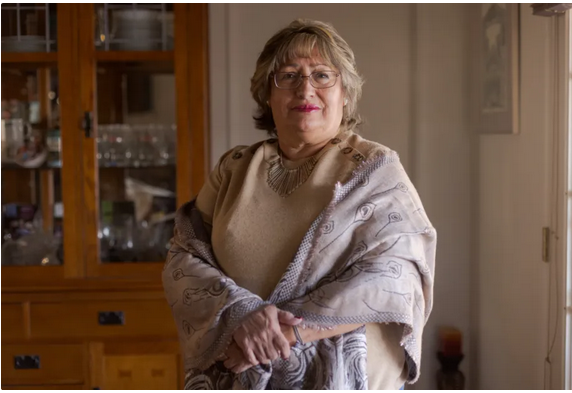
Lorraine Mendiola’s son Matthew spent 
years under guardianship of 
Ayudando Guardians. 
Photographer: Minesh Bacrania/Bloomberg
Nationwide, guardianships are often dogged by ripe greed, scant scrutiny, scattershot rules, and flimsy protections for the vulnerable people put under court-ordered control.

A Bloomberg Law investigation found a national network in peril:

  • Judges and other officials in some states don’t have to have law degrees before issuing adult guardianship orders. In Georgia, a former Realtor turned probate judge improperly revoked a young adult’s right to vote without first holding a hearing and restricted her rights on everything from driving to spending money. When the woman’s mother challenged the system, the judge threatened to throw her in jail.
  • Just 14 states certify guardians, and no national standards limit the caseloads they can juggle. In Indiana, one professional guardian has taken at least 420 clients since 2016, most referred by nursing homes. Experts say that signals a system lacking meaningful controls.
  • Regardless of the size of the person’s bank account, guardianships can generate substantial fees amid long-running court battles. In New York, lawyers serving as guardians and counsel for famed artist Peter Max each bill hundreds of thousands of dollars a year, with one charging $550 an hour. The more they tangle with Max’s family for control of his priceless art, the more they seek in fees.
  • The system needs more oversight. More than 1.3 million abuse claims are filed each year with local Adult Protective Services offices, but no one is counting how many involve guardians. Few states require independent attorneys to represent people facing guardianship.

Nationwide, experts estimate there are 1.5 million active adult guardianship and conservatorship cases. It’s big business, with guardians managing an estimated $50 billion-plus in assets for those under their control. The system came to public attention amid pop star Britney Spears’ fight to escape her arrangement, but more frequently entraps thousands of Americans without the means or platform to fight back.

Few Rights, Controls

In the best sense, guardianships are intended to help adults in need, from young adults battling disabilities or mental health crises to older adults whose minds and bodies are faltering. Family members often step in and serve as legally appointed guardians, watching over the finances and health care for their loved ones.

Yet when a family member is unwilling or unable to step in, or when there is no surviving kin, a professional or lawyer often takes the role.

People are rendered to a state of non-personhood, in the name of protection.
Morgan Whitlatch, Center for Public Representation

Adults can find themselves with fewer rights than convicted felons, industry experts say, echoing a piercing quote from the late Florida Congressman Claude Pepper as he pushed for tighter standards in the late 1980s. Bloomberg Law’s examination reveals that assessment to be on point. Adults under guardianship often need permission to marry, to go to the store, to visit friends, to have their own debit cards or use their money for anything from fixing the roof to buying video games.

“People are rendered to a state of non-personhood, in the name of protection,” said lawyer Morgan Whitlatch, a director with the Center for Public Representation public interest law firm.

Whitlatch and others immersed in the system say guardianships should be a last resort and that many are simply too restrictive. Suddenly, with a judge’s order, the so-called “protected person” has lost many rights.

“That can be a person’s right to make medical decisions, financial decisions, where they want to live, who they want to marry, driving a car,” said Kayla Puga, senior team attorney with Disability Rights Texas.

One of her clients, Ruby Campos, was placed under guardianship after growing up in the foster care system. “I felt I wasn’t living my own life,” said Campos, recalling how she was denied requests to visit relatives or have her own debit card. “What about my opinion? Does it matter?”

Campos successfully petitioned in 2022 for the courts to terminate her guardianship, after she’d spent more than a decade in the system. “I actually felt like a new person,” she said. “Like I finally could live my life like I have always wanted to.”

In Indiana, Nicholas Clouse was placed under guardianship with his mother and stepfather after a 2012 car accident left him with a traumatic brain injury one month shy of his 19th birthday.

Though he’d recovered by 2016, and went on to marry, have a child, and maintain full-time work as a welder and then HVAC technician, Clouse still needed approval for purchases.

“I thought I would have a lot more freedom than I did. I had to ask for permission to really go anywhere or do anything,” Clouse said. “My stepdad would limit how much money I could even spend on my daughter for formula and diapers.”

Nicholas Clouse spent nine years under guardianship after a traumatic brain injury.Photographer: Jim Vondruska/Bloomberg

A final straw, he said, was when he couldn’t choose his own new or used car after his SUV’s engine failed. Suddenly, he was driving a 2020 Ford Fusion.

Working with Justin Schrock, a lawyer with Indiana Disability Rights, Clouse won court approval to end the guardianship in 2021, nine years after it began. One of his first acts: Selling the Ford. “It made me very angry even just to look at the car.”

Kristin Steckbeck, the former lawyer for Clouse’s guardians, said she couldn’t comment on his case. Ultimately, the parents supported ending the guardianship.

Schrock said Clouse’s case shows how guardianships can far outlive their usefulness. “If someone like Nick can remain under guardianship, a full guardianship at that, for several years beyond the time it was necessary, who isn’t at risk of potentially being placed under guardianship?”

Probate courts, he said, provide little legal protection for people facing guardianships and even less oversight once the process begins. In Indiana, guardians must file biennial reports summarizing their case but, Schrock said, those typically provide little meaningful information.

“The level of scrutiny that is applied to these filings is extremely low,” he said.

Lawyer Justin Schrock won court approval to end Nicholas Clouse’s guardianship.Photographer: Jim Vondruska/Bloomberg

Oversight is essential to ensure the industry’s focus doesn’t stray from those it is supposed to protect, said Anthony Palmieri, former president of the National Guardianship Association.

“A guardianship is supposed to be a benevolent act to protect someone when all else has failed,” Palmieri said. “It’s not supposed to be a business.”

High Living

With Ayudando, the truth didn’t fully emerge for more than a decade.

In 2004, Susan Harris, a onetime nurse and daughter of a World War II veteran, formed Ayudando Guardians, and would serve as its president, CEO, and 95% owner. Based in Albuquerque, it became a nonprofit corporation providing guardianship, conservatorship, and financial management to adults needing help managing their affairs. Ayudando received payments on behalf of its clients, oftentimes from the Department of Veterans Affairs and Social Security Administration, and was supposed to put that money toward their living expenses.

Ayudando landed its first state contract with the Office of Guardianship at New Mexico’s Developmental Disabilities Planning Council for fiscal year 2006. Those contracts continued, typically for around $650,000 or $750,000 a year. Under its state pact, Ayudando was paid about $325 per month for each client it supervised, including veterans and adults with disabilities and mental illness. Its state contracts totaled $7 million by the time the feds shuttered the business in 2017. Ayudando also had private clients, typically with greater financial means, which it charged $950 a month.

Winning the state contract was “everything” for a company new to the world of guardianships, said former Ayudando Chief Financial Officer Sharon Moore, who is serving a 20-year sentence in a federal prison camp in Texas.

“That’s where our biggest clientele was going to come from,” she said in a phone interview from prison.

She admitted to Bloomberg Law that she fabricated records.

“I have to pay for the part I did, I know,” Moore said.

Ayudando’s fraud began in November 2006 and lasted until the feds swooped in 11 years later, according to the Justice Department. In that time, Harris, CFO Moore, and Harris’ husband and son, both company guardians and directors, diverted nearly $12 million of client money.

They easily fooled the VA and state Office of Guardianship, federal authorities found. Moore submitted fraudulent statements to the VA showing thousands of dollars in their clients’ accounts when many, in fact, were nearly empty or overdrawn. When the VA required bank statements, Moore created phony ones–and photocopied a banker’s signature to give the documents an air of authenticity.

To keep expanding its client list, Harris submitted fraudulent proposals to the New Mexico Office of Guardianship, court records show. The state contract spigot continued. Ayudando had 166 clients under its New Mexico contract when its fraud was exposed, making it one of the state’s largest guardianship vendors.

Publicly, the company maintained an image as a community pillar, becoming a funding partner in 2011 for a project run by the University of New Mexico’s Health Sciences Center and later giving at least $80,000 to the university's foundation.

In 2013, Ayudando Guardians was part of a legislative working group in New Mexico examining elder and disability rights issues.

The Harrises did little to hide their lavish living.

In 2013, Susan Harris bankrolled a luxury box at the University of New Mexico basketball arena, an extravagance that lasted until the company’s fall. Federal probation officials say the defendants spent more than $300,000 on the “party suite,” running up catering tabs as high as $5,000 a night. Harris became the arena's second-largest customer by dollar amount and its largest food buyer–paid from stolen funds, court records show.

In response to a Freedom of Information Act request seeking guest lists for the suite, the university said it had no relevant records. UNM spokeswoman Cinnamon Blair did not return three calls seeking comment about Ayudando.

Then there were the cruises and far-flung journeys. Clients, including veterans battling post-traumatic stress, bankrolled those, too.

Four of their luxury cruises and a couple of family vacations between 2013 and 2017 totaled more than $108,000. There was a $50,950 check to Mercedes-Benz of Albuquerque and homes in gated communities.

Moore said founder Susan Harris lost sight of the company’s mission.

“I think she just got greedy.”

Victims Bereft

Some victims said the contrast was clear between their struggles and the company’s high-flying ways. At least 60 clients filed statements with the court describing the financial harm and personal trauma suffered at the company’s hands.

One, Emily Montaño, said she turned to Ayudando on her lawyer’s suggestion after winning a $93,000 settlement from a car accident that left her severely injured.

When she called Sharon Moore, “she said she was too busy to provide me a balance that was accurate,” Montaño told the federal judge. So, Montaño showed up at the company’s office.

“I remember you as flamboyant,” she said during Susan Harris’ sentencing. “Boy, you would walk in there like you owned the whole world with your hair done up … while you were having banquet food being brought in.” Meanwhile, clients outside their office would be begging for money. “And you guys are all dressed up like you have no problems in the world.”

In December 2017, Montaño’s daughter died at 25. After Ayudando drained her account, she said in court, she couldn’t afford a proper burial.

Another victim told the court Ayudando stole $17,400 from her account, leaving her just $40. She was forced to live on Albuquerque’s streets for months. One man said after Ayudando stole his money, he couldn’t pay rent and electricity and was homeless for a year. Another, a mother with a 2-month-old at the time, fell into addiction and homelessness.

Seeking Answers

And then there’s Lorraine Mendiola’s quest for answers. She said her son can be “oppositional” and over the years has fluctuated between wanting his parents to be his guardian and then not. “It’s been a rollercoaster,” she said.

Lorraine Mendiola was told by her attorney that Ayudando Guardians could handle her son’s guardianship, and “you can just be the mom.
Photographer: Minesh Bacrania/Bloomberg

On Nov. 12, 2014, Mendiola wrote John Block III, then executive director of the state guardianship office, concerned about her son being returned to the boarding home where he had been punched in the face and offered heroin. She said no drug counseling was provided and asked, not for the first time, for her son’s financial records. She never got them.

A state office attorney sent Susan Harris a letter sharing the mother’s unaddressed concerns. The state rebuked Harris, saying the assault and bedbug incidents showed Ayudando failed to ensure Mendiola’s son was “treated humanely.” It directed Ayudando to develop a correction plan. Mendiola continued to press but got nowhere.

Behind the scenes, Ayudando attorney Corbin Hildebrandt was portraying Mendiola as an alarmist.

“I think we are headed for a hearing someday with Judge Singleton and we have to stay civil with [the] mother so that she can hang herself with overreacting,” he wrote in a Dec. 1, 2014, email that landed in Mendiola’s inbox, likely by mistake.

Hildebrandt had earlier helped facilitate a settlement agreement with the company’s accountant, who wrote that executives treated Ayudando’s accounts “like a personal ATM.” Harris paid the accountant a fee settlement in return for his silence.

Lorraine Mendiola shows papers in her home. 
Photographer: Minesh Bacrania/Bloomberg
Hildebrandt did not return three calls or an email seeking comment. The lawyer who initially suggested Mendiola use Ayudando, Jeanine Steffy, did not answer two calls or an email. Singleton died in 2019 after a battle with cancer.

Ultimately Singleton sided with Hildebrandt and said the nonprofit no longer needed to file monthly conservator reports about the case, only annual reports.

I guess I was an idealist. I thought the judge was going to listen to me and weigh the evidence and be fair.
Lorraine Mendiola

Separately, the state guardianship office had relaxed its oversight of Ayudando Guardians, removing a contract provision that required monitoring of client financial information, according to a whistleblower lawsuit filed by former office legal counsel Marina Tapia Cansino.

In January 2017, Cansino sent Mendiola a cease-and-desist letter, citing Singleton’s order that she stop her “constant communications.” From now on Mendiola should only contact her. “If you persist,” she wrote, “I will request an injunction and award of sanctions.”

Now in private practice, Cansino said her letter was a just response to what she called “a barrage of harassment.”

Two days after her letter, a state guardian official asked Ayudando to share “success stories” the state could cite as evidence of its good work, according to an email Bloomberg Law obtained through a public records request. In May 2017, with the DOJ investigation two months from coming to light, Ayudando’s CFO was testifying before a state Supreme Court commission on guardianship reform.

That June, the state approved a fresh contract with Ayudando for $651,700. A month later the FBI and other agents made arrests, and the scandal became big local news.

Block said in a recent interview that he was “shocked” by the fraud and said the state could have done more audits of those under guardianship. But he said the courts also share blame. “A lot of the monitoring of the guardianship is supposed to be done with the judges,” Block said. “And I don’t know if the courts really kept ahead of that.”

Mendiola felt the scales of justice weighted against her. “I guess I was an idealist,” she said from her Santa Fe home. “I thought the judge was going to listen to me and weigh the evidence and be fair.”

Her travails are “the norm” in guardianship cases, with families outgunned by lawyers and their big-pocket clients, said guardian reformer Black, executive director of the Center for Estate Administration Reform. “Those systems are so incestuous and have so many attorneys that benefit by making sure they get what they want.”

Judgment Days

There were two judgment days for Susan Harris and her husband, William Harris, Sharon Moore, and Craig Young, Susan’s son.

Two, because the Harrises had fled to Oklahoma before the first sentencing in 2020, using the aliases Marvin and Cheryl Valdez, with William landing work at a grocery store. The Western Oklahoma Metro Fugitive Task Force found them a month later thanks in part to their Chihuahua, and they were sentenced in 2021.

The defendants pleaded guilty to crimes covering 2010-2017: Susan Harris to conspiracy, mail fraud, aggravated identity theft, and money laundering charges, and William Harris to conspiracy and money laundering. He admitted he knew Moore was siphoning VA and Social Security money and using it to enrich others, including himself.

Young pleaded guilty to conspiracy and money laundering charges. Moore, the company’s 5% owner and day-to-day manager, pleaded guilty to conspiracy, mail fraud, aggravated identity theft, and money laundering.

Young received the shortest sentence at just under six years, Susan Harris the longest at 47 years.

Photos: US Attorney’s Office for the District of New Mexico

“Mrs. Harris, I'm almost without words. What you have done is just astounding to me,” US District Court Judge Martha A. Vázquez said at sentencing. “And what you should have said to all of these good people that trusted you, was you should have said to them, ‘I am so sorry that I stole your money. I am so sorry that I took your children's money, because I knew I could get away with it because they were so sick and they would never know.’”

In court, prosecutor Jeremy Peña described Harris as “the architect of this hideous scheme,” and her husband “the picture of moral cowardice.”

Peña told Bloomberg Law the crime was particularly egregious because the company seized on vulnerable veterans.

“It just was unthinkable that an entire organization that performed such a significant role in the community could be at the same time extracting so much money from its clients,” Peña said.

New Day in New Mexico?

The state developmental disabilities council is now headed by a former disability rights lawyer, Alice Liu McCoy, who had been representing people put under guardianship. She said she’s on a mission to revamp the agency’s culture.

Alice Liu McCoy wants to revamp the culture of the New Mexico Developmental Disabilities Council.
Photographer: Adria Malcolm/Bloomberg

“There wasn’t a whole lot of oversight being done by the agency,” McCoy, who became executive director in 2019, said in an interview in Albuquerque. “Leaders of the agency believed their role was to put the guardianship in place and then step away.”

She is committed to thorough vetting of companies seeking to become guardians under state contract, and to adding more layers of punishment should they stray. She wants more screening, more audits, and a mandate to view guardianship as a last resort, not the first.

“We are now a trusted resource,” McCoy said. “Before there was a real question of whether the Office of Guardianship was run in the way to help a protected person.”

Mendiola supports some of McCoy’s ideas. She said Ayudando Guardians’ abuse of power and disregard for its clients’ well-being had affected her son Matthew, now 41. She said he wouldn’t want to discuss his experience, fearing it would resurrect the trauma.

“He changed,” she said. “He was hopeful. Before he had a goal or a vision of doing something with his life. They took away his dignity, his hopes, his dreams.”

Full Article & Source:
Guardians' Dark Side: Lax Rules Open the Vulnerable to Abuse