Showing posts with label In the Name of Protection. Show all posts

Thursday, March 30, 2023

Not Just Britney: Guardianship System Rife With Abuse (Podcast)

by David Schultz

Court supervised guardianships are meant to protect people who can no longer manage themselves and their assets. But a Bloomberg Law investigation found that people in guardianships can easily be taken advantage of, and that getting out of one is extraordinarily difficult.

Listen here and subscribe to On The Merits on Apple Podcasts, Spotify, Google Podcasts, Megaphone, or Audible.

Reporters Ronnie Greene and Holly Barker just released a five-part series that looks at how guardianships can go wrong—from wealthy celebrities like Britney Spears to indigent senior citizens.

They join our weekly podcast, On The Merits, to talk about how a lack of oversight creates conditions ripe for fraud and abuse. Holly discusses the particularly galling case of a New Mexico guardianship company that stole millions from its clients and whose CFO she spoke to from jail.

Do you have feedback on this episode of On The Merits? Give us a call and leave a voicemail at 703-341-3690.


Full Article & Source:
Not Just Britney: Guardianship System Rife With Abuse (Podcast)

Thursday, March 16, 2023

In the Name of Protection, Part 4: The Lawyers: Peter Max’s Bare Ledgers Show Guardianships Drain Even the Rich

Illustration: Jonathan Hurtarte/Bloomberg Law. Photographer: Jim Vondruska/Bloomberg

by Ronnie Greene

Peter Max, who now has dementia, made millions creating psychedelic art that for a time put him on par with Andy Warhol as a ‘60s cultural icon.

Sara Abbott, who has a form of autism, gets by on $1,200 a month from Social Security disability and lives with her mother in a small house in southern Indiana.

Both are entangled in guardianships that were supposed to serve as salves but are instead mired in turmoil.

The similarities in their cases, despite deeply disparate lives, reveal the emotional and financial risks enshrouding guardianships. As Max’s memory faltered and his finances fell into disarray, he purportedly consented to having neutral guardians oversee his multimillion-dollar estate to achieve peace among his feuding family members. Abbott’s mother initiated a guardianship after a counselor suggested it.

Together their guardianships, which both began in 2016, highlight a simple truth found in a six-month Bloomberg Law investigation: It doesn’t matter how much money people have or how carefully loved ones watch over them; guardianships can evolve into costly quagmires where tussles over fees and control deter from the case’s core mission.

In New York, Max’s guardians and their lawyers have billed millions amid the family’s legal squabbles, suits, and countersuits. As a federal judge recently put it, it’s a “toxic situation.”

In Indiana, Abbott is pushing to terminate her guardianship after a tense journey. Her former guardian billed 91% of her total income during one eight-month period while questioning the family’s spending on everything from fixing the roof to buying a used car.

Across the US, guardianships are regulated in hodgepodge fashion, with different rules from state to state and no national requirements on who can become a guardian or how much they can earn. Adults in the system are protected by a flimsy regulatory safety net.

In any courtroom case, judicial oversight is vital to ensure legal costs don’t spiral out of control, said Jerome “Joe” Studer, a Chicago attorney who specializes in legal fee issues.

Studer said he was taken aback by Bloomberg Law’s findings on the fees in the two cases, particularly by the Indiana case in which the guardian billed nearly Abbott’s entire income. “The ratio strikes me as outrageous,” said Studer, founder of Legal Fee Analytics.

Max: Ceaseless Conflict

“Yeah, I understand,” was all it took for Max, 85, to enter into a guardianship that has done nothing to resolve the family’s feuds.

“You understand?” Judge Laura Visitacion-Lewis asked at the January 2016 hearing. She noted he was shaking his head to indicate he didn’t have any questions. With that, Max became a “Person In Need of a Guardian,” or PING, in court parlance.

Max, now in the advanced stages of Alzheimer’s, wasn’t formally adjudged to be incapacitated at the hearing, a ruling that could have negatively impacted the value of his art.

At the time, he was still painting and making public appearances.

Peter Max attends a 2014 event in New York City.
Photographer: Ben Gabbe/Getty Images for Gotham Magazine

His court-appointed counsel, Elizabeth Adinolfi, said he understood he needed assistance, “particularly in managing his finances,” and thought “it would be beneficial for him to have a neutral third party fulfilling that role,” court transcripts show.

The references to neutrality were a nod to the acrimony among Max’s family members over money, his art, and the family company ALP, Inc. “He loves his children very much. He loves his wife very much. And he does not want there to be any reason for the three of them to be in conflict,” Adinolfi said.

They hoped a neutral guardian could help “achieve some level of peace.”

More than six years later, conflict and litigation envelop the guardianship.

And it is costing Max a fortune.

Abbott: In the Dark

For Sara Abbott, 27, and her mother Diana Abbott, the legal morass began after a well-intentioned suggestion.

In 2016, a counselor recommended Diana put her daughter in a guardianship. She called the lawyer who handled her husband’s estate, and he agreed it made sense.

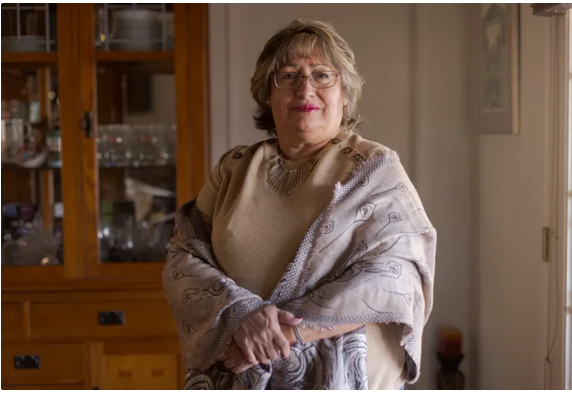
Sara Abbott wants to end her guardianship. “If I don’t, I’m going to lose my mom, my house, my life.”
Photographer: Jim Vondruska/Bloomberg

Diana was skeptical at first. “I said, Why do I need guardianship? I’m her mother.” But with two professionals suggesting that path, she became her daughter’s guardian that August.

A former stocker at a Dollar General store, Diana said she received no formal training. “I signed a paper, they pushed it through, and that was it.”

She failed to file biennial reports for 2018 and 2020 documenting her daughter’s financial affairs and well-being. Diana didn’t know, she said, she was supposed to file them. Washington Circuit Court Judge Larry W. Medlock removed her in 2021, questioning her oversight as guardian. He appointed a local lawyer, Lisa Fleming, as interim guardian, tasking her with documenting Sara’s spending and assessing her needs.

Thus began a contentious legal saga in which the temporary guardian’s fees would outpace Sara’s income.

Max: Fees on Fees

Max had paid about $1.8 million to his court-appointed lawyer, guardians, and their attorneys by the end of 2020, according to documents obtained by Bloomberg Law.

And that isn’t the half of it. Outstanding requests, either pending or approved, add more than $2 million, plus, conservatively, hundreds of thousands of dollars in accruing unpaid legal fees.

The guardianship order, filed in December 2016, revoked Max’s powers of attorney and health-care proxies, giving control of his finances and care to three court-appointed fiduciaries: a property guardian, Lawrence Flynn; a personal needs guardian, now Barbara Lissner; and his court-appointed lawyer, Adinolfi.

Flynn, who declined an interview request, is Max’s third property guardian, and he had two personal needs guardians before Lissner entered the picture in 2019.

The professionals have generated millions in expenses, either for their own services or for those of lawyers hired to litigate on Max’s behalf – often against his children over ownership of his art.

One pending fee request from Lissner, the personal needs guardian, is for her usual legal rate of $550 an hour. If approved by the court, it would total $598,664 for 13 months.

Libra Max, Peter’s daughter, has challenged that as “grossly excessive.” Lissner’s lawyer said she was unable to comment; the guardian has defended her billing in court filings.

Lissner doesn’t provide legal services to Max. Instead, her responsibilities are to attend to his personal needs and safety. Her time records describe over 1,000 hours of activities sometimes more akin to the services of a social worker or house manager.

One three minute entry reads “Guardian emails PING’s son that she hopes he is feeling better.” At Lissner’s proposed rate, that’s $27.50. Another entry for six-minutes reads “Guardian emails PING’s son to ask him if he visited his father the previous day and if he was able to fix the Netflix issue.” That’s $55.

The records also show that much of her time was spent managing inquiries from Libra and the daughter’s lawyers. Another attorney, hired by Max’s property guardian in the legal fight over his art, bills $650 an hour.

Lissner said in court filings she has yet to be paid. She isn’t alone.

As of May 2021, Max’s guardianship account had a balance below $5, according to an affidavit Flynn filed. Flynn said he had been forced to use some of his own money to pay for some of Max’s expenses.

Peter Max poses for a 1967 photo in New York. In 2022, a judge presiding over Max’s case visited Max and described his apartment as past its prime and said it’s “really unfortunate that such a formerly wealthy person is living like this.”
Photographer: Santi Visalli/Getty Images

Despite Max’s substantial estate – comprising more than $15 million in principal when Flynn took over in 2017 and more than $16 million in income from ALP over the same period – Flynn said Max was unable to meet his financial obligations.

Of the more than $16 million in income, more than $7 million went to cover back taxes, and roughly $893,000 went to a mortgage and apartment renovations.

The remainder of Max’s income has been spent trying to maintain the life the renowned artist had grown accustomed to with his late wife. Flynn said he needs at least $2.5 million a year for Max’s expenses but is receiving only a fraction of that.

The presiding judge has made clear the professionals will be paid.

“My first priority is to make sure that Peter is cared for in the best way possible,” Judge Lisa A. Sokoloff said during an April 22, 2022, hearing. “My second priority is to make sure all the attorneys who worked on this case get paid. It is astonishing to me that there are over $2 million in attorneys’ fees owed.”

Abbott: Questions and Fees

After the guardian was appointed to examine her case, Sara Abbott’s legal fees skyrocketed.

The temporary guardian, Fleming, quickly raised red flags with the judge about Diana’s use of Sara’s $1,168 monthly income, which was derived from Social Security Disability Insurance and Supplemental Social Security.

Eight days after Sara received one check with back pay in 2018, Fleming wrote, Diana bought a 2015 Ford Escape for $19,455, writing a check from her daughter’s account. “It is important to note that Sara does not drive, and the car is in Diana’s name only,” she wrote.

Fleming also noted in court filings that Diana put a new roof on their house, spending $4,500 from Sara’s account.

Diana Abbott said she received no training to become her daughter’s guardian.
Photographer: Jim Vondruska/Bloomberg

The accusation, mother and daughter say, is a fundamental misunderstanding of their situation: The money Diana spent was for her daughter’s benefit. Since Sara doesn’t drive, her mother provides all of her transportation. They have lived alone in the tidy family home in Salem since Sara’s father, Stephen, died in 2011.

“Sara says she was told the roof had to be replaced or she would lose her Homeowner’s Insurance,” wrote lawyer Amy Semones, representing Sara.

Said Sara: “How is that not for me? I need a roof over my head so I don’t get rained on.”

Fleming questioned other spending for electric, water and sewer, property taxes, and insurance.

“I believe there is a continued need for a guardian,” Fleming wrote the court on March 22, 2021. She said Sara needed help with medical, mental health, and social interaction needs and suggested Diana have “no access” to her daughter’s bank account.

Semones said their spending wasn’t frivolous. Sara “was consulted about and consented to all of the transactions” while her mom was guardian, the lawyer wrote.

And while Fleming was scrutinizing the roof and other spending, she was charging fees that resulted in half a day’s work totaling more than half of Sara’s monthly income.

On June 6, 2021, Fleming submitted an invoice for her guardian services for her first 3½ months. Her rate was $175 an hour. One bill was for $700 for 4 hours of work reviewing documents Diana provided her, which Fleming used to help form her March report.

In all, the total equated to more than $1,500 a month, more than Sara’s entire monthly income. A day after Fleming submitted her invoice, Judge Medlock approved it. Sara was on the hook for the bill.

The judge also questioned other spending and told Diana not to “spend money frivolously.” That September, the judge told Diana to reimburse Sara’s account $900 spent for Sara’s video games and another $600 on streaming services.

In all, Medlock ordered Diana to reimburse Sara’s account $11,720, including $3,000 for the roof and $6,485 for the car. He suggested she “consider the sale” of the family home.

Semones quickly pressed the judge about the close scrutiny of Sara’s spending that simultaneously threatened to deplete her account.

Semones called some of Fleming’s charges “unnecessary, duplicative and excessive,” particularly in light of Sara’s modest income. Fleming billed $175 for one hour spent copying records; Sara said she could make copies for 10 cents per page. “The invoice contains billable time for unnecessary travel in situations where a fax, phone call, email or internet search would suffice.”

In court papers, Fleming said her actions were “made in good faith on behalf of the protected person” and that she is “entitled to reasonable compensation.” After Semones questioned her fees, Fleming reanalyzed her bills – and increased the total by $52.50. The in-person meetings, she said, “were necessary.”

Fleming declined to discuss the case with Bloomberg Law. “I will not be talking with you about Sara Abbott,” she said.

All the while, the court denied Sara’s request for money for personal expenses. After Fleming took over, Diana, who had previously injured her back, said she was forced to return to work to “make ends meet.” Sara had to make written requests to the guardian for her bank statements and required permission to host a yard sale to raise money, wrote Semones, who was billing Abbott a reduced rate of $50 an hour while also seeking a nonprofit to represent her at no cost.

Max: Art and Lawsuits

Max was placed into a guardianship in part to prevent family infighting, but that original intention has been thwarted.

Generally speaking, “the more dysfunction in the family, the higher the costs of the guardianship,” said Katherine Pearson, a professor at Penn State Dickinson Law who specializes in policies related to aging. As disputes escalate, the legal costs spike.

Adinolfi, Max’s lawyer, said she couldn’t comment on the case. Speaking generally, she said guardianships can “be the best thing for a family” when they’re not contested. But when family dynamics are volatile, “it can drive a guardian’s time through the roof.”

Max founded ALP Inc., named for his children, Adam and Libra, and himself, in 2000. His children hold equal 40% shares. Max owns the remaining 20%, now controlled by Flynn, the property guardian.

In December 2019, Flynn’s lawyer sought to recover “all artworks produced by Peter,” along with the remainder of his “valuable intellectual property.”

Peter Max poses in New York City in 2012 with portraits he created of Paul McCartney. His family and guardians continue to spar over his estate.
Photographer: Timothy A. Clary/AFP via Getty Images

Flynn asserts that Max never intended for ALP – and in effect his children – to control all of his work while he was alive.

He claims Max had been suffering from dementia for two years, according to one of his doctors, when he supposedly transferred his intellectual property rights to ALP. In effect, Flynn is arguing that Max didn’t have the capacity in 2014 to transfer his intellectual property, even though he possessed the capacity in 2016 to enter into a guardianship.

Flynn has also said he has no choice but to aggressively pursue Max’s claim over the art, alleging that Libra began intentionally starving the guardianship in 2019 amid her legal wars with her father’s guardians.

Libra has authority to determine her father’s ALP income, and in court filings, has said she reduced his salary to $800,000 because the company has less cash on hand than normal.

Initially siding with Libra, Flynn voted to oust her brother Adam as president of ALP in late 2018 but by March 2020, Flynn had changed his mind. He accused Libra of misconduct and agreed to reinstate Adam as president, provided Adam agree not to contest the claim to his father’s art – or to oppose the guardians’ fee requests.

Adam’s attorney blamed Libra for much of the case’s chaos. “The plain reason that this matter appears to have spiraled out of control and incurred large requests for compensation by fiduciaries is directly correlated to the litigation that was instigated by Libra Max,” wrote Matthew S. Seidner.

Libra’s lawyer counters that the fees are the consequence of Max being “ripped from his family and loved ones at the end of his life.”

“Simply stated, if Peter was being cared for by his family, as is his wish, there would be no legal fees,” Clifford Meirowitz said. It “strains credulity,” he added, that he wanted “his life run by strangers.”

Libra has been seeking unsuccessfully since 2019 to have Lissner removed as her father’s personal needs guardian.

Their discord escalated in December 2021, when Lissner sued Libra for defamation in state court following an interview Libra gave on Fox 5 New York two months earlier criticizing the guardian.

So now, the court-appointed official watching over Max is formally at legal odds with his daughter.

Libra can see her father, but only when Lissner agrees, and is generally prohibited from accessing his medical information or speaking with his physicians.

And it has all been approved by the court. Adam has said he has no problems seeing his father and, in court filings, has supported Lissner’s care.

In April 2022, Sokoloff – the fifth judge to preside over Max’s case – told Lissner and Libra to be civil, or communicate through lawyers. “I don’t want to be called to find out that Libra isn’t leaving, because I will come over with the police, and you don’t want that.”

About a week later the judge visited Max. She described his apartment as past its prime and said it’s “really unfortunate that such a formerly wealthy person is living like this.”

“He talked to me a little bit,” the judge said. “He was drawing and painting with markers.”

Abbott: Seeking a Way Out

As she found herself deeper in the system, Abbott said she felt invisible.

“I was being treated like I was insignificant,” she said from her hometown 100 miles south of Indianapolis. “I have a big motivation to get out of this guardianship. If I don’t, I’m going to lose my mom, my house, my life.”

Her friction with the guardian was clear to Medlock, who “observed in Court the behavior of the ward and her mother towards Ms. Fleming to be disrespectful.” But on this, too, there are two sides to the story.

Abbott is a detail-oriented woman who keeps careful track of her schedule. After the judge appointed Fleming as her guardian, she took to taking notes during their meetings.

“She has not once listened to a word I have said,” she wrote of their first session in 2021.

“Fleming claims that her goal is to ‘help me save money and be frugal’ despite the fact that she is/will be charging me for not only these weekly meetings but also any interactions with her,” she wrote. “The fees for these meetings will more than likely deplete my account.”

As they continued to meet, Abbott said Fleming objected to her taking notes. “Fleming asked me to put binder down. I told her I am more comfortable with it out,” she wrote of their second meeting. “It is hypocritical of her to complain of me taking notes for my own records if she does the same.”

Abbott is now also working with Justin Schrock, an attorney with Indiana Disability Rights representing her at no cost in her bid to end the guardianship.

Schrock formally challenged Fleming’s bills. By October 2021, Fleming had billed $8,915.85 for eight months – or $1,114 a month, 91% of Abbott’s total income, then at $1,225.

Indiana Attorney Justin Schrock is representing Sara Abbott as she fights to be released from her guardianship.
Photographer: Jim Vondruska/Bloomberg

As Abbott awaits her day in court, her case has undergone major change. Last March, Fleming was replaced as guardian by Loren Pilcher, chief operations officer of a behavioral therapy company called Sweet Behavior, who supports Sara ending the guardianship.

In June, Judge Medlock recused himself from the case, citing its “conflict and animosity” in an interview. Medlock said he had concerns about some of the “suspect transfers,” prompting him to appoint Fleming. “I was asking for a different set of eyes,” he said.

Asked about the family’s view that the spending benefited Sara, Medlock acknowledged some second thoughts. “Yes, honestly, when I do look back at it I think they do have something of a point.” But he said the costs should have been split between mother and daughter. Medlock agrees Indiana guardians “absolutely” don’t get enough training.

He said Fleming “did a lot of work and gave me significant insights into how the funds were spent,” but admitted her bills “were extensive” and “some of the meetings with Sara weren’t necessary.”

In the end, Fleming waived about half of her $12,000 final bill and Abbott paid $2,600, Schrock said. The judge got the county to pay the balance.

“I thought it best to recuse,” Medlock said. “I wanted to be fair to everybody. I wasn’t sure I could be.”

He said he’s not convinced Abbott is ready to terminate the guardianship and felt it better for another judge to resolve that question. “I had strong opinions about it.”

If the new judge frees her from the guardianship, Abbott said, “I might faint on the spot.”

Along the way, Diana has witnessed a more confident daughter emerge. “Sara has gotten her voice through all this,” she said.

Sara said she is ready to use that voice.

“Fight back,” she said. “Prove you’re functional. Don’t let people treat you like you’re lesser because you’re different.”

Full Article & Source:
Peter Max’s Bare Ledgers Show Guardianships Drain Even the Rich

See Also:
Guardians' Dark Side: Lax Rules Open the Vulnerable to Abuse

Judge’s Errors, Jail Threats Haunt Georgia Family’s Guardianship

420 Cases, One Guardian: System Runs Amok on Just $35 a Month

Wednesday, March 15, 2023

In the Name of Protection, Part 3: The Profiteers: 420 Cases, One Guardian: System Runs Amok on Just $35 a Month

llustration: Jonathan Hurtarte/Bloomberg Law. Photographer: Jim Vondruska/Bloomberg

by Ronnie Greene

GREENWOOD, Ind. – Can a sole professional guardian handle hundreds of cases at a time? That’s happening in Indiana, where Debra Woods typically earns $35 a month for each of the 200-plus clients under her watch.

Woods used to work for a guardianship company and set off on her own in 2010. Her caseload has ballooned since, in a state that doesn’t limit a guardian’s number of cases.

Since 2016, Woods has taken on at least 420 clients, Indiana court records show. She often represents nursing home residents, many of whom die in the ensuing months or years. In an interview in January, she confirmed her current client list exceeded 200.

Woods’ experience speaks to the absence of meaningful oversight in the guardianship industry, Bloomberg Law found in a six-month examination. The limitless caseloads and lack of rigorous vetting of guardians are cornerstones of a system in which adults lose nearly all their rights to another person, sometimes a family member, other times a professional guardian or lawyer. It’s the same system pop star Britney Spears escaped.

To be clear, Woods, 58, is breaking no rules by taking on so many clients. Indiana allows her to do so, nursing homes continue turning to her, and judges routinely approve her petitions. She is nationally certified, which she said in court filings shows her commitment to the work, though Indiana doesn’t require certification.

Woods said she must maintain that caseload to earn a good living. The reason: In Indiana, she earns $35 a month per client, a cap in place for nursing home residents on Medicaid. If her client has financial means, she charges $35 an hour.

“If there was a bigger guardian fee, I would be able to hire individuals who would assist with that much-needed service,” Woods said. “I have to have a caseload like this to make it work.”

A caseload that high is rare but not unprecedented. Legal experts say they’ve seen caseloads of 200 in California, Florida, and Michigan. In Indiana, one company lists a roster of 230-plus cases since 2016, though all aren’t active and they are divided among two guardians.

“How can a guardian effectively carry out its obligations for 200 people?” asked Julie Kegley, senior staff attorney for the Georgia Advocacy Office. “It’s a disservice to the ward.”

Bloomberg Law asked a half-dozen industry veterans, including disability rights lawyers, a guardianship reformer, and American Bar Association specialist, what they consider the maximum number of cases a guardian could ably handle.

One said 20, another 25, and a third 30. A fourth said anything over 10 cases at a time “would raise some flags.” None had a cap anywhere near 200.

“We probably don’t have a real great system for professional guardians in Indiana,” said Kevin Barton, a Johnson County Superior Court judge who questioned Woods’ handling of one case. “Professional guardians don’t have to be licensed. There really is no training qualification for them.”

He adds, “How much time can you really spend effectively for pay of $35 a month?”

Even at that miniscule monthly rate, a guardian with huge caseloads could make a decent living. A guardian with, say, 215 active cases at $35 a month would earn $90,300 a year; more if the guardian also billed some clients at a higher hourly rate.

In Indiana, a guardian’s duties include being responsible for an incapacitated person’s care, custody, and property. The guardians are to become “sufficiently acquainted” with their capabilities, limitations, and needs, state law says, and are to report to the court on their physical or mental well-being. “The guardian shall encourage self-reliance and independence of the protected person.”

In recent years, Woods has served as a guardian for residents in at least 50 nursing homes in Indiana, court filings show. Many times, she’ll be the guardian for several residents in one home at once. “Let’s say I have five people in that building,” she said in an earlier interview. “I’ll go and visit everybody in that building. Or if I have a care plan over the phone, I’ll go ahead and get an update on everybody.”

One Indianapolis nursing home that often turns to Woods is American Village. Another, North Woods Village, is in Kokomo, an hour north. A third, Southwood Healthcare Center, is in Terre Haute, some 75 miles west of Indianapolis. Bloomberg Law sought comment from all three on the guardianships in their nursing homes. None responded.

Nationwide, some lawyers who serve as guardians charge hundreds of dollars an hour for their services, but guardianships typically make up just a portion of their legal dockets. For Woods, it’s her livelihood.

She believes the monthly pay should be $100, but, even without that boost, said she strives to give her clients a voice and not restrict their rights.

“I treat my individuals as if they were paying $100 a month,” Woods said. “I try to do the best regardless of what the fee is and that’s because I love what I do.”

Her wish for higher pay is surely a long shot.

“I mean basically there’s no money,” Barton said. Probate courts in general are “fairly low in terms of priority because really nothing is out there where it catches the public’s attention.”

Problem Case

In Barton’s courtroom, the case of Woods’ client Patricia Persinger drew his judicial rebuke.

Woods didn’t take Persinger to her cancer doctor appointments during the Covid-19 pandemic, court records show. Adult Protective Services filed a complaint, and a local prosecutor got involved.

“I was pretty disturbed with that,” Barton said. “I basically blew a fuse.”

Persinger is a nursing home resident at Greenwood Healthcare Center, some 30 minutes south of the Indianapolis airport. In 2020, Woods had petitioned to put Persinger under guardianship. As in other cases involving nursing home residents, she cited a doctor’s report, often just one page, saying Persinger was incapacitated and needed a guardian.

Patricia Persinger eventually freed herself from the guardianship. “I didn’t need it,” she said.
Photographer: Jim Vondruska/Bloomberg

Persinger received a pharmacy degree from Butler University in 1962, the school confirmed, and she said she was a pharmacist by trade.

In an interview at Greenwood last fall, Persinger said she never wanted a guardian, whether it was Woods or anyone else.

“I didn’t like it,” Persinger said. “I didn’t need it.” She felt she had “no voice” in the process.

Persinger scoffed at professionals saying she couldn’t handle her affairs. “I can’t take care of myself. I can’t take care of my bills,” she said, dismissing those views. “I can be a little bold when I’m upset.”

Woods said she didn’t take Persinger for her cancer treatments because she refused to see the doctor. “She was adamant that she didn’t need treatment,” Woods said. “Just because somebody has a guardian, that doesn’t mean you can make them do anything.”

That explanation didn’t sit well with Barton, who wrote in court papers: “It is unclear how an incapacitated person can block medical services from being provided.”

Woods stepped aside in 2021 and a county senior volunteer group became Persinger’s guardian. Within a week group members took her to her oncologist, where she received radiation and oral chemotherapy, court records show.

Persinger ultimately petitioned the court to end the guardianship. She remembers the day nursing home personnel came to whisk her to the court and an in-person meeting with the judge. “We’re taking you to the courthouse,” she recalled. “Get ready.”

Once there, she told the judge she was in the dark about the decisions affecting her. “I told him, ‘I don’t know about this. I don’t know about that. I don’t know about anything.’”

Barton granted her request and terminated the guardianship in February 2022. “She wanted to make her own decisions,” he said. “Essentially we got out of the picture.”

In a follow-up call this February, Persinger said she now hopes to move out on her own. “I’m out of the guardianship,” she said, “and I’m still in the nursing home.”

Guardian Debra Woods often represents people in nursing homes, including Greenwood Healthcare Center.
Photographer: Jim Vondruska/Bloomberg

Legal Support

Oftentimes, Woods works with the law firm Havrilla & Nolin, which specializes in elder law and nursing home issues. When they collaborate, its legal fees, which run into a few thousand dollars in complex cases, are paid through clients’ accounts.

“She does have a high caseload, but I’ve never had a situation where something has not been done or fallen through the cracks,” partner Felicity Havrilla said. “I wish I could clone Debra Woods.”

Woods is a “phenomenal” guardian, Havrilla said, “who always answers her phone, who always responds to email.”

As Woods’ caseload grew, court records show, items sometimes did slip through the cracks. Woods failed to file a required status report in one case and faced a possible contempt citation. The judge in another case said a client’s final accounting was unacceptable. In a third, Woods hadn’t notified all kin their relative was under guardianship.

Woods said she addressed those issues but acknowledged she must improve her report filing. And, she knows her high caseload has been a topic of courthouse conversation.

“If I start to feel overwhelmed or if I can’t keep up,” she said, “I will probably stop taking cases.”

Full Article & Source:
420 Cases, One Guardian: System Runs Amok on Just $35 a Month

Tuesday, March 14, 2023

In the Name of Protection, Part 2: The Judges: Judge’s Errors, Jail Threats Haunt Georgia Family’s Guardianship

Illustration: Jonathan Hurtarte/Bloomberg Law. Photographer: Stephen Morton/Bloomberg

by Ronnie Greene

GUYTON, Ga. – In the three years Kalei Bulwinkle was under guardianship, the local judge improperly revoked her right to vote, erected hurdles on her ability to drive, barred her from having a debit card or writing checks, and banned her from spending over $500 without judicial consent.

As Kalei’s mom Victoria Vermillion challenged the rulings and hired a lawyer to extract her daughter from the system, the judge put the mother in contempt of court and threatened her with jail time.

The probate case of Kalei Hope Bulwinkle bears all the hallmarks of a guardianship calamity, with a family initiating the process with the best intentions only to confront a world of restricted rights and deep trauma. But the saga that unfolded in this small city 30 miles from Savannah includes another wrinkle: The probate judge deciding Bulwinkle’s fate had taken the bench without a law degree, and then proceeded to issue a series of rulings that would be invalidated only after the family fought them.

At least six states permit probate judges and other public officials who aren’t lawyers to issue adult guardianship orders. Georgia is among them, allowing such judges in any county of 90,000 or fewer people to take the bench without a law degree. Effingham County, home to Guyton and population 66,741, qualifies.

The county’s probate judge, Beth Rahn Mosley, is a former real estate agent and department store buyer who sought the post after serving as guardian for her brother-in-law. She campaigned door to door in 2008 to first win election. In an interview from her office at the county courthouse, Mosley said she thoroughly researches cases and uses common sense to reach just outcomes.

Though she discussed her path to the bench with Bloomberg Law, Mosley said she would not address Bulwinkle’s case or answer questions about it. “I refuse to talk anything about that,” she said.

The family, by contrast, said it was important to discuss its journey through the system.

“We want to educate people,” said Vermillion, a special education high school teacher. “We don’t want anyone else to go through what Kalei went through. … It’s a complete nightmare.”

Bulwinkle said she felt invisible in the process.

“I felt like the judge wasn’t treating me like a human being. She wouldn’t ever talk to me or acknowledge me,” Bulwinkle said. “I didn’t like that she was trying to take everything away from me.”

Kalei Bulwinkle’s rights to vote and spend money were improperly restricted when she was under guardianship.
Photographer: Stephen Morton/Bloomberg

Judges play central roles in guardianship cases. And a Bloomberg Law six-month examination found that judicial oversight can exacerbate an already fraught system, with judges providing scant oversight – or, as in the Georgia case, issuing orders that improperly restrict the already limited rights of adults under their watch. The case also shows how difficult it is to escape from a guardianship.

In the US justice system, guardianships get short shrift, Bloomberg Law found. No government agency tallies how many guardians abuse those they are supposed to protect. No firm data exist on the precise number of guardianships, and experts can only estimate the billions at stake in such cases. It’s the same system that pop star Britney Spears fought to escape.

“The everyday person, when they think of a guardian, they think oh, there’s a court overseeing that person; isn’t that a check or balance? Oversight of guardianships by courts are very uneven,” said Morgan Whitlatch, a director with the Center for Public Representation public interest law firm. “We collect data about things we care about. And when someone has their rights removed, we should care about that.”

Helping Kalei

Bulwinkle, now 22, is an amiable woman with Asperger’s syndrome, a high-functioning condition on the autism spectrum that can affect a person’s ability to communicate, particularly in social settings.

“When Kalei was in high school, Kalei was very generous to friends and they manipulated her,” Vermillion said. Once, she recalled, Bulwinkle gave another girl $5 to be her friend. “Kalei would just be generous, and as an adult I thought she’d be taken advantage of.”

Vermillion’s mother, a former probate court clerk, one day suggested she look into a limited guardianship for Bulwinkle. Vermillion thought it over and, after Bulwinkle turned 18 in 2018, petitioned to become her daughter’s guardian.

“I wanted my daughter to be able to contribute to society,” Vermillion said from the family’s home. “I wanted her to be a self-sustaining adult. I was trying to teach her how to balance my checkbook.”

Victoria Vermillion said she petitioned for her daughter’s guardianship with the best of intentions. “As an adult I thought she’d be taken advantage of.”
Photographer: Stephen Morton/Bloomberg

On Oct. 25, 2018, Judge Mosley formally approved the petition. Under her probate order, portions of which were typical for cases in Georgia, she ruled that Bulwinkle could no longer make her own decisions to marry, enter into contracts, consent to medical treatment, or buy or sell property.

Vermillion soon realized she had made a mistake. Her daughter passed her driving test, graduated from high school, began classes at a local technical college, and showed confidence in making banking and medical decisions. In November 2019, Vermillion petitioned to restore her daughter’s rights, writing a letter to Mosley describing Bulwinkle’s growth as a young adult. Vermillion included an affidavit from her daughter’s doctor, who endorsed her petition.

“Kalei is my heart and soul, and I truly am so proud of her. Never in my life would I allow anyone or anything to hurt her, but I will always want what is best for her,” Vermillion wrote the judge. “I do feel that we acted prematurely by putting so many restraints on her.”

The legal restraints were just beginning.

Errors in Court

On Feb. 24, 2020, Mosley held a hearing on the petition that resolved nothing. The session had to be postponed because the judge hadn’t appointed Bulwinkle a lawyer or guardian ad litem. Nor had she provided the family with an evaluation report before the hearing, as required.

And the evaluator’s report she read in court contained errors, claiming Bulwinkle graduated with a “special education” diploma when she had actually received a standard diploma.

By March, Vermillion had hired a lawyer to help her navigate the case: Julie Kegley, senior staff attorney with the Georgia Advocacy Office. The independent agency represented Bulwinkle at no cost.

Vermillion sent an email to the probate court saying so, adding that she intended to withdraw her initial petition to end the guardianship so her daughter could file her own, with Kegley’s assistance. “After speaking with Kalei’s attorney this afternoon, it was suggested for us to start fresh,” Vermillion wrote March 9, 2020.

A month later, Mosley shot down their plan. Bulwinkle couldn’t repetition to end the guardianship until Nov. 15, 2021 – two years after her mother’s initial petition.

In her April 2020 ruling, Mosley cited a state law that requires a two-year wait between petitions for termination of guardianship if a judge denied the previous petition.

The family was stunned. Vermillion’s petition hadn’t been denied “on the merits,” as the judge wrote; it had been postponed after errors in the process. Yet here was the judge saying no action could come for another 19 months.

And Mosley added another twist: She found Vermillion in contempt of court and ordered her to pay a $50 fine within 10 days. The reason: Mosley said her office told Vermillion she had to meet with a guardian ad litem the judge picked to assist in the case before the petition could be dismissed.

Once more, the family was taken aback. Vermillion said she never received an official notice saying a guardian ad litem had been appointed. Kegley urged Mosley to revoke the contempt order. “Because Mrs. Vermillion withdrew her Petition for Restoration, there was no longer a need for a Guardian Ad Litem,” Kegley wrote.

Mosley was unswayed.

On May 13, she affirmed her April order saying a new petition couldn’t come until November 2021. “Kalei Bulwinkle remains an incapacitated adult,” she wrote.

And, she affirmed her contempt order. “$50.00 is to be paid to this court by Friday May 22, 2020,” her order said. “$2.00/day will be charged until paid or she will face jail time.”

When Vermillion read those words, she was “petrified.”

“Can she really do this to me?” she asked herself. “I was thinking of going to jail. The consequences of being strip-searched and all that.”

The mother had long been her daughter’s rock. Now, the roles were reversed.

“I would come home sometime, and my mom would be in her room crying,” Bulwinkle said.

Bloomberg Law asked legal professionals to analyze topics including the role guardianship plays in states and what reforms would serve vulnerable populations.

More Surprises

In Oct. 2020, Vermillion sent an annual report to the court showing that Bulwinkle was writing her own checks, including some over $500 for her car insurance and college tuition.

A week later, on October 26, Mosley told Vermillion she would hold another hearing to see whether she should once again be held in contempt or even be removed as conservator. The reason, this time: Mosley was saying Bulwinkle couldn’t spend more than $500 at a time without court approval, nor could she write checks.

But those assertions, the family proved, were wrong. The judge’s initial order approving the guardianship never included wording about a $500 spending limit or the inability to write checks. When Vermillion had first become her daughter’s guardian, the judge gave her a handbook and video about the process. Neither, Vermillion said, cited such limits.

And then at a hearing that December 2020, the family learned that Bulwinkle’s right to vote had been revoked in October 2018, at the dawn of the guardianship. Mosley hadn’t held a hearing on the issue or listed the rejected voting rights in her initial guardianship order. In this 2020 hearing, for the first time, Mosley handed them a paper showing Bulwinkle could not legally vote.

Mosley declined to discuss Bulwinkle’s case but in an interview said the lack of a law degree doesn’t inhibit her ability to rule. Supporters of systems like Georgia’s say judges in small communities can provide sound legal rulings benefiting the public, whether they have law degrees or not.

“We have probate counsel and we have a Listserv. We still look up the law,” Mosley said, pointing to law books on her shelf. “If I don’t know the answer, I’m going to call an attorney not involved in the case. I’m not going to wing it.”

On Dec. 30, 2020, Mosley issued another contempt order against Vermillion and fined her $250. “No reason for the contempt finding was listed,” Vermillion said in a court affidavit, citing the judge’s order.

The judge also ruled that Bulwinkle would need a neurologist’s permission slip to continue driving – even though she’d passed her driving test and had no accidents or tickets, the family said.

And then on Jan. 8, 2021, Mosley emailed Vermillion that she was to close her joint checking account with her daughter and open a new account “that reads exactly Victoria Vermillion Guardian/Conservator for Kalei Bulwinkle. Kalei cannot write checks or pay her bills or have a debit card.

“If this is not done by Wednesday, January 13, 2021 by 5:00 p.m., then she will be forever removed from any part of this Guardianship/Conservatorship,” she wrote, referring to Vermillion.

The restrictions and directives were taking a toll.

“I did not know that every little dime, every little penny, every little decision would be nitpicked,” Vermillion said. “I took the brunt of the stress. There were days I had to get medicated by my doctor.”

Her husband, Rick Vermillion, Kalei’s stepfather since she was 10, said that with each new order, the family dug in even more to extricate itself from the guardianship. “I was ready to spend my life savings to get this overturned,” he said.

On the first day of March 2021, Kegley appealed to the Effingham County Superior Court to overturn Mosley’s orders.

Then the family waited.

Judicial Slam Dunk

On April 28, 2021, Superior Court Judge Lovett Bennett Jr. issued a 10-page ruling that struck down each of Mosley’s crucial orders.

“The Effingham County Probate Court’s improper additions of greater restrictions to Kalei Bulwinkle’s rights are reversed,” wrote the judge, who did not reply to interview requests.

Bulwinkle no longer had to wait until November 2021 to refile a petition to end the guardianship. Bennett reversed Mosley’s restrictions on her ability to drive and ordered that Bulwinkle could regain her right to vote and handle her own money.

The judge also cleared Vermillion of any wrongdoing. “There is no evidence or finding that there has been a breach of the fiduciary relationship between the guardian and Kalei and as such, these restrictions have no legal basis,” he wrote.

It was a slam dunk victory. When the family read the order, they couldn’t believe that, two-and-a-half years after the guardianship began, a judicial ruling had gone their way. “I just kept thinking of all the craziness we went through,” Vermillion said.

Three months later, Mosley vacated her $50 contempt fine against Vermillion and wrote her a refund from the Probate Court account. She also vacated the second contempt fine and admitted her ruling limiting Bulwinkle’s spending ability hadn’t been included in her initial guardianship order.

Mosley terminated the guardianship on July 22, 2021. Bulwinkle’s rights were restored.

Kalei Bulwinkle is now free from the guardianship. Her voting rights have been restored, as well as her independence.
Photographer: Stephen Morton/Bloomberg

Nonlawyer Judges

Whitlatch said there should be concern when a nonlawyer takes away someone’s rights. She called it “evidence of lack of due process.”

Georgia isn’t alone. In North Carolina, elected clerks decide guardianship cases. In Texas, county court judges handling probate matters don’t have to be lawyers. Nebraska, Alabama, and South Carolina allow nonlawyers to oversee probate cases.

Mosley said her path to the bench began with her own experience as guardian for a brother-in-law with Huntington’s disease, which afflicts nerve cells in the brain. “Nobody wanted to be guardian,” she said, so she took the role. One day her husband turned to her and, referring to the probate judgeship, said, “You could do this job.”

Mosley decided to run after the judge announced her retirement, then reached out to political contacts. “I walked every subdivision in this county,” she said. As judge, she has pushed to make probate records more accessible to the public.

Critics say guardianship cases are too restrictive. Asked about that criticism, Mosley said: “It depends on the case, it depends on the person, it depends on the guardian.”

After she declined to discuss Bulwinkle’s case when Bloomberg Law knocked on her office door in early November, a reporter phoned two weeks later to again seek her perspective. Mosley’s office transferred the call to another court official. “She’s not going to be able to talk to you,” he said.

Kegley, Bulwinkle’s lawyer, said this was the first case she’d handled in which a higher court overturned a probate judge’s ruling. More common, she said, is for a probate judge who earlier approved of a guardianship to later terminate that order after being convinced, with new evidence, that the protected person was ready to strike out on their own.

Charting Her Course

In Guyton, Vermillion still carries regret for petitioning the court for the guardianship. She did it to help her daughter, never knowing the process would be so suffocating.

In October, during an initial interview with Bloomberg Law, Vermillion turned to her daughter.

“Kalei, I’m so sorry I did this to you,” she said. “I felt like I ruined my child’s life.”

She said the process to begin a guardianship was so easy, almost anyone could be put under one. “I feel I could almost go there and put you under guardianship,” she told the journalist.

Since Bulwinkle has been freed, Vermillion has seen her flourish.

“I’m doing a lot more stuff by myself,” Bulwinkle said from the family’s home. “Work interviews by myself without any help. Setting up doctor’s appointments. Calling in medicines.”

Last summer, she graduated from Ogeechee Technical College with an associate’s degree in early childhood care and education. She got hired as a day care teacher for 2-year-olds, driving herself to and from work each day.

And in November, for the first time, Kalei Bulwinkle voted.

Full Article & Source:
Judge’s Errors, Jail Threats Haunt Georgia Family’s Guardianship

See Also:
Guardians' Dark Side: Lax Rules Open the Vulnerable to Abuse

Monday, March 13, 2023

In the Name of Protection, Part 1: The Profiteers: Guardians' Dark Side: Lax Rules Open the Vulnerable to Abuse

Britney Spears’ conservatorship dispute brought the guardianship system to the public eye. It’s a system that entraps thousands more Americans without a platform to fight back. Illustration: Jonathan Hurtarte/Bloomberg Law. Photographer: Minesh Bacrania/Bloomberg

The US adult guardianship industry is regulated loosely and ripe for exploitation of elderly and disabled people, Bloomberg Law found in a six-month investigation. Here is Part 1: The Profiteers.

By Ronnie Greene and Holly Barker

SANTA FE, N.M. – Lorraine Mendiola was desperate to help her adult son, an aspiring electrical engineer battling mental health demons that sent him spiraling through psychiatric hospitals. So in 2011, heeding advice from a psychiatrist, she sought to become his guardian.

When Mendiola got to court, her lawyer told her a private company, Ayudando Guardians, could oversee Matthew Mendiola’s well-being and finances. Mendiola was shocked. She had never heard of the group. But her attorney persuaded her it could handle the guardianship’s complexities, and “you can just be the mom.”

Mendiola’s shock spun to outrage after a judge assigned the company as Matthew’s guardian. Ayudando Guardians put her son in a boarding home where he was beaten in the face and swarmed by bedbugs. Later it placed him in Albuquerque, N.M., where Mendiola found her son living in an incomplete garage with exposed wiring, no shower, and no fire escape. In five years he went through four case managers and seven boarding homes.

For years, Mendiola protested Ayudando Guardians’ treatment of her son and its handling of his finances. Everywhere she went, from the company to a state guardianship office that paid Ayudando $7 million over a decade, doors slammed. In 2016, Santa Fe District Court Judge Sarah Singleton even ordered her to stop “the constant communications to the Guardian and Office of Guardianship.”

Mendiola compared fighting Ayudando, the state, and courts to battling organized crime. “I likened our situation to a guardianship cartel,” she said. “It feels like a Mafioso situation.”

A year later a Department of Justice investigation unmasked Ayudando as a fraudulent house of cards. The case secured lengthy prison sentences for the company’s directors, who stole nearly $12 million from 1,000 vulnerable clients to fuel lavish lifestyles filled with international cruises, Mercedes-Benzes, gate-protected homes, and $300,000 worth of skyboxes at college basketball games. As Ayudando’s executives globe-trotted, some of their disabled and needy clients were left homeless.

Ayudando’s collapse reveals the dark world of adult guardianships in the US. Judges, lawyers, and state officials ignored warning signs about a company the system long held in high esteem.

Lorraine Mendiola’s son Matthew spent 
years under guardianship of 
Ayudando Guardians. 
Photographer: Minesh Bacrania/Bloomberg
Nationwide, guardianships are often dogged by ripe greed, scant scrutiny, scattershot rules, and flimsy protections for the vulnerable people put under court-ordered control.

A Bloomberg Law investigation found a national network in peril:

  • Judges and other officials in some states don’t have to have law degrees before issuing adult guardianship orders. In Georgia, a former Realtor turned probate judge improperly revoked a young adult’s right to vote without first holding a hearing and restricted her rights on everything from driving to spending money. When the woman’s mother challenged the system, the judge threatened to throw her in jail.
  • Just 14 states certify guardians, and no national standards limit the caseloads they can juggle. In Indiana, one professional guardian has taken at least 420 clients since 2016, most referred by nursing homes. Experts say that signals a system lacking meaningful controls.
  • Regardless of the size of the person’s bank account, guardianships can generate substantial fees amid long-running court battles. In New York, lawyers serving as guardians and counsel for famed artist Peter Max each bill hundreds of thousands of dollars a year, with one charging $550 an hour. The more they tangle with Max’s family for control of his priceless art, the more they seek in fees.
  • The system needs more oversight. More than 1.3 million abuse claims are filed each year with local Adult Protective Services offices, but no one is counting how many involve guardians. Few states require independent attorneys to represent people facing guardianship.

Nationwide, experts estimate there are 1.5 million active adult guardianship and conservatorship cases. It’s big business, with guardians managing an estimated $50 billion-plus in assets for those under their control. The system came to public attention amid pop star Britney Spears’ fight to escape her arrangement, but more frequently entraps thousands of Americans without the means or platform to fight back.

Few Rights, Controls

In the best sense, guardianships are intended to help adults in need, from young adults battling disabilities or mental health crises to older adults whose minds and bodies are faltering. Family members often step in and serve as legally appointed guardians, watching over the finances and health care for their loved ones.

Yet when a family member is unwilling or unable to step in, or when there is no surviving kin, a professional or lawyer often takes the role.

People are rendered to a state of non-personhood, in the name of protection.
Morgan Whitlatch, Center for Public Representation

Adults can find themselves with fewer rights than convicted felons, industry experts say, echoing a piercing quote from the late Florida Congressman Claude Pepper as he pushed for tighter standards in the late 1980s. Bloomberg Law’s examination reveals that assessment to be on point. Adults under guardianship often need permission to marry, to go to the store, to visit friends, to have their own debit cards or use their money for anything from fixing the roof to buying video games.

“People are rendered to a state of non-personhood, in the name of protection,” said lawyer Morgan Whitlatch, a director with the Center for Public Representation public interest law firm.

Whitlatch and others immersed in the system say guardianships should be a last resort and that many are simply too restrictive. Suddenly, with a judge’s order, the so-called “protected person” has lost many rights.

“That can be a person’s right to make medical decisions, financial decisions, where they want to live, who they want to marry, driving a car,” said Kayla Puga, senior team attorney with Disability Rights Texas.

One of her clients, Ruby Campos, was placed under guardianship after growing up in the foster care system. “I felt I wasn’t living my own life,” said Campos, recalling how she was denied requests to visit relatives or have her own debit card. “What about my opinion? Does it matter?”

Campos successfully petitioned in 2022 for the courts to terminate her guardianship, after she’d spent more than a decade in the system. “I actually felt like a new person,” she said. “Like I finally could live my life like I have always wanted to.”

In Indiana, Nicholas Clouse was placed under guardianship with his mother and stepfather after a 2012 car accident left him with a traumatic brain injury one month shy of his 19th birthday.

Though he’d recovered by 2016, and went on to marry, have a child, and maintain full-time work as a welder and then HVAC technician, Clouse still needed approval for purchases.

“I thought I would have a lot more freedom than I did. I had to ask for permission to really go anywhere or do anything,” Clouse said. “My stepdad would limit how much money I could even spend on my daughter for formula and diapers.”

Nicholas Clouse spent nine years under guardianship after a traumatic brain injury.Photographer: Jim Vondruska/Bloomberg

A final straw, he said, was when he couldn’t choose his own new or used car after his SUV’s engine failed. Suddenly, he was driving a 2020 Ford Fusion.

Working with Justin Schrock, a lawyer with Indiana Disability Rights, Clouse won court approval to end the guardianship in 2021, nine years after it began. One of his first acts: Selling the Ford. “It made me very angry even just to look at the car.”

Kristin Steckbeck, the former lawyer for Clouse’s guardians, said she couldn’t comment on his case. Ultimately, the parents supported ending the guardianship.

Schrock said Clouse’s case shows how guardianships can far outlive their usefulness. “If someone like Nick can remain under guardianship, a full guardianship at that, for several years beyond the time it was necessary, who isn’t at risk of potentially being placed under guardianship?”

Probate courts, he said, provide little legal protection for people facing guardianships and even less oversight once the process begins. In Indiana, guardians must file biennial reports summarizing their case but, Schrock said, those typically provide little meaningful information.

“The level of scrutiny that is applied to these filings is extremely low,” he said.

Lawyer Justin Schrock won court approval to end Nicholas Clouse’s guardianship.Photographer: Jim Vondruska/Bloomberg

Oversight is essential to ensure the industry’s focus doesn’t stray from those it is supposed to protect, said Anthony Palmieri, former president of the National Guardianship Association.

“A guardianship is supposed to be a benevolent act to protect someone when all else has failed,” Palmieri said. “It’s not supposed to be a business.”

High Living

With Ayudando, the truth didn’t fully emerge for more than a decade.

In 2004, Susan Harris, a onetime nurse and daughter of a World War II veteran, formed Ayudando Guardians, and would serve as its president, CEO, and 95% owner. Based in Albuquerque, it became a nonprofit corporation providing guardianship, conservatorship, and financial management to adults needing help managing their affairs. Ayudando received payments on behalf of its clients, oftentimes from the Department of Veterans Affairs and Social Security Administration, and was supposed to put that money toward their living expenses.

Ayudando landed its first state contract with the Office of Guardianship at New Mexico’s Developmental Disabilities Planning Council for fiscal year 2006. Those contracts continued, typically for around $650,000 or $750,000 a year. Under its state pact, Ayudando was paid about $325 per month for each client it supervised, including veterans and adults with disabilities and mental illness. Its state contracts totaled $7 million by the time the feds shuttered the business in 2017. Ayudando also had private clients, typically with greater financial means, which it charged $950 a month.

Winning the state contract was “everything” for a company new to the world of guardianships, said former Ayudando Chief Financial Officer Sharon Moore, who is serving a 20-year sentence in a federal prison camp in Texas.

“That’s where our biggest clientele was going to come from,” she said in a phone interview from prison.

She admitted to Bloomberg Law that she fabricated records.

“I have to pay for the part I did, I know,” Moore said.

Ayudando’s fraud began in November 2006 and lasted until the feds swooped in 11 years later, according to the Justice Department. In that time, Harris, CFO Moore, and Harris’ husband and son, both company guardians and directors, diverted nearly $12 million of client money.

They easily fooled the VA and state Office of Guardianship, federal authorities found. Moore submitted fraudulent statements to the VA showing thousands of dollars in their clients’ accounts when many, in fact, were nearly empty or overdrawn. When the VA required bank statements, Moore created phony ones–and photocopied a banker’s signature to give the documents an air of authenticity.

To keep expanding its client list, Harris submitted fraudulent proposals to the New Mexico Office of Guardianship, court records show. The state contract spigot continued. Ayudando had 166 clients under its New Mexico contract when its fraud was exposed, making it one of the state’s largest guardianship vendors.

Publicly, the company maintained an image as a community pillar, becoming a funding partner in 2011 for a project run by the University of New Mexico’s Health Sciences Center and later giving at least $80,000 to the university's foundation.

In 2013, Ayudando Guardians was part of a legislative working group in New Mexico examining elder and disability rights issues.

The Harrises did little to hide their lavish living.

In 2013, Susan Harris bankrolled a luxury box at the University of New Mexico basketball arena, an extravagance that lasted until the company’s fall. Federal probation officials say the defendants spent more than $300,000 on the “party suite,” running up catering tabs as high as $5,000 a night. Harris became the arena's second-largest customer by dollar amount and its largest food buyer–paid from stolen funds, court records show.

In response to a Freedom of Information Act request seeking guest lists for the suite, the university said it had no relevant records. UNM spokeswoman Cinnamon Blair did not return three calls seeking comment about Ayudando.

Then there were the cruises and far-flung journeys. Clients, including veterans battling post-traumatic stress, bankrolled those, too.

Four of their luxury cruises and a couple of family vacations between 2013 and 2017 totaled more than $108,000. There was a $50,950 check to Mercedes-Benz of Albuquerque and homes in gated communities.

Moore said founder Susan Harris lost sight of the company’s mission.

“I think she just got greedy.”

Victims Bereft

Some victims said the contrast was clear between their struggles and the company’s high-flying ways. At least 60 clients filed statements with the court describing the financial harm and personal trauma suffered at the company’s hands.

One, Emily Montaño, said she turned to Ayudando on her lawyer’s suggestion after winning a $93,000 settlement from a car accident that left her severely injured.

When she called Sharon Moore, “she said she was too busy to provide me a balance that was accurate,” Montaño told the federal judge. So, Montaño showed up at the company’s office.

“I remember you as flamboyant,” she said during Susan Harris’ sentencing. “Boy, you would walk in there like you owned the whole world with your hair done up … while you were having banquet food being brought in.” Meanwhile, clients outside their office would be begging for money. “And you guys are all dressed up like you have no problems in the world.”

In December 2017, Montaño’s daughter died at 25. After Ayudando drained her account, she said in court, she couldn’t afford a proper burial.

Another victim told the court Ayudando stole $17,400 from her account, leaving her just $40. She was forced to live on Albuquerque’s streets for months. One man said after Ayudando stole his money, he couldn’t pay rent and electricity and was homeless for a year. Another, a mother with a 2-month-old at the time, fell into addiction and homelessness.

Seeking Answers

And then there’s Lorraine Mendiola’s quest for answers. She said her son can be “oppositional” and over the years has fluctuated between wanting his parents to be his guardian and then not. “It’s been a rollercoaster,” she said.

Lorraine Mendiola was told by her attorney that Ayudando Guardians could handle her son’s guardianship, and “you can just be the mom.
”Photographer: Minesh Bacrania/Bloomberg

On Nov. 12, 2014, Mendiola wrote John Block III, then executive director of the state guardianship office, concerned about her son being returned to the boarding home where he had been punched in the face and offered heroin. She said no drug counseling was provided and asked, not for the first time, for her son’s financial records. She never got them.

A state office attorney sent Susan Harris a letter sharing the mother’s unaddressed concerns. The state rebuked Harris, saying the assault and bedbug incidents showed Ayudando failed to ensure Mendiola’s son was “treated humanely.” It directed Ayudando to develop a correction plan. Mendiola continued to press but got nowhere.

Behind the scenes, Ayudando attorney Corbin Hildebrandt was portraying Mendiola as an alarmist.

“I think we are headed for a hearing someday with Judge Singleton and we have to stay civil with [the] mother so that she can hang herself with overreacting,” he wrote in a Dec. 1, 2014, email that landed in Mendiola’s inbox, likely by mistake.

Hildebrandt had earlier helped facilitate a settlement agreement with the company’s accountant, who wrote that executives treated Ayudando’s accounts “like a personal ATM.” Harris paid the accountant a fee settlement in return for his silence.

Lorraine Mendiola shows papers in her home. 
Photographer: Minesh Bacrania/Bloomberg
Hildebrandt did not return three calls or an email seeking comment. The lawyer who initially suggested Mendiola use Ayudando, Jeanine Steffy, did not answer two calls or an email. Singleton died in 2019 after a battle with cancer.

Ultimately Singleton sided with Hildebrandt and said the nonprofit no longer needed to file monthly conservator reports about the case, only annual reports.

I guess I was an idealist. I thought the judge was going to listen to me and weigh the evidence and be fair.
Lorraine Mendiola

Separately, the state guardianship office had relaxed its oversight of Ayudando Guardians, removing a contract provision that required monitoring of client financial information, according to a whistleblower lawsuit filed by former office legal counsel Marina Tapia Cansino.

In January 2017, Cansino sent Mendiola a cease-and-desist letter, citing Singleton’s order that she stop her “constant communications.” From now on Mendiola should only contact her. “If you persist,” she wrote, “I will request an injunction and award of sanctions.”

Now in private practice, Cansino said her letter was a just response to what she called “a barrage of harassment.”

Two days after her letter, a state guardian official asked Ayudando to share “success stories” the state could cite as evidence of its good work, according to an email Bloomberg Law obtained through a public records request. In May 2017, with the DOJ investigation two months from coming to light, Ayudando’s CFO was testifying before a state Supreme Court commission on guardianship reform.

That June, the state approved a fresh contract with Ayudando for $651,700. A month later the FBI and other agents made arrests, and the scandal became big local news.

Block said in a recent interview that he was “shocked” by the fraud and said the state could have done more audits of those under guardianship. But he said the courts also share blame. “A lot of the monitoring of the guardianship is supposed to be done with the judges,” Block said. “And I don’t know if the courts really kept ahead of that.”

Mendiola felt the scales of justice weighted against her. “I guess I was an idealist,” she said from her Santa Fe home. “I thought the judge was going to listen to me and weigh the evidence and be fair.”

Her travails are “the norm” in guardianship cases, with families outgunned by lawyers and their big-pocket clients, said guardian reformer Black, executive director of the Center for Estate Administration Reform. “Those systems are so incestuous and have so many attorneys that benefit by making sure they get what they want.”

Judgment Days

There were two judgment days for Susan Harris and her husband, William Harris, Sharon Moore, and Craig Young, Susan’s son.

Two, because the Harrises had fled to Oklahoma before the first sentencing in 2020, using the aliases Marvin and Cheryl Valdez, with William landing work at a grocery store. The Western Oklahoma Metro Fugitive Task Force found them a month later thanks in part to their Chihuahua, and they were sentenced in 2021.

The defendants pleaded guilty to crimes covering 2010-2017: Susan Harris to conspiracy, mail fraud, aggravated identity theft, and money laundering charges, and William Harris to conspiracy and money laundering. He admitted he knew Moore was siphoning VA and Social Security money and using it to enrich others, including himself.

Young pleaded guilty to conspiracy and money laundering charges. Moore, the company’s 5% owner and day-to-day manager, pleaded guilty to conspiracy, mail fraud, aggravated identity theft, and money laundering.

Young received the shortest sentence at just under six years, Susan Harris the longest at 47 years.

Photos: US Attorney’s Office for the District of New Mexico

“Mrs. Harris, I'm almost without words. What you have done is just astounding to me,” US District Court Judge Martha A. Vázquez said at sentencing. “And what you should have said to all of these good people that trusted you, was you should have said to them, ‘I am so sorry that I stole your money. I am so sorry that I took your children's money, because I knew I could get away with it because they were so sick and they would never know.’”

In court, prosecutor Jeremy Peña described Harris as “the architect of this hideous scheme,” and her husband “the picture of moral cowardice.”

Peña told Bloomberg Law the crime was particularly egregious because the company seized on vulnerable veterans.

“It just was unthinkable that an entire organization that performed such a significant role in the community could be at the same time extracting so much money from its clients,” Peña said.

New Day in New Mexico?

The state developmental disabilities council is now headed by a former disability rights lawyer, Alice Liu McCoy, who had been representing people put under guardianship. She said she’s on a mission to revamp the agency’s culture.

Alice Liu McCoy wants to revamp the culture of the New Mexico Developmental Disabilities Council.
Photographer: Adria Malcolm/Bloomberg

“There wasn’t a whole lot of oversight being done by the agency,” McCoy, who became executive director in 2019, said in an interview in Albuquerque. “Leaders of the agency believed their role was to put the guardianship in place and then step away.”

She is committed to thorough vetting of companies seeking to become guardians under state contract, and to adding more layers of punishment should they stray. She wants more screening, more audits, and a mandate to view guardianship as a last resort, not the first.

“We are now a trusted resource,” McCoy said. “Before there was a real question of whether the Office of Guardianship was run in the way to help a protected person.”

Mendiola supports some of McCoy’s ideas. She said Ayudando Guardians’ abuse of power and disregard for its clients’ well-being had affected her son Matthew, now 41. She said he wouldn’t want to discuss his experience, fearing it would resurrect the trauma.

“He changed,” she said. “He was hopeful. Before he had a goal or a vision of doing something with his life. They took away his dignity, his hopes, his dreams.”

Full Article & Source:
Guardians' Dark Side: Lax Rules Open the Vulnerable to Abuse