Showing posts with label Utah. Show all posts

Wednesday, July 15, 2026

Woman found guilty of abuse, manslaughter of elderly, nonverbal mother with dementia

by Megan Brugger


COTTONWOOD HEIGHTS, Utah (KUTV) — A jury found a woman guilty of abuse and manslaughter of her elderly mother, who had dementia.

Lori Meers, 53, of Cottonwood Heights, was charged in September 2025 with aggravated abuse of a vulnerable adult, a second-degree felony, and manslaughter, a second-degree felony.

She was found guilty on Monday.

In March 2025, officers responded to Intermountain Medical Center to investigate a report of elder abuse.

The victim — a 77-year-old nonverbal woman with dementia — had allegedly been left on the floor, covered in feces.

Doctors determined the feces were a few days old. They said she was in "poor medical physical shape and had obvious bodily damage."

"[She] was so cold; she was hypothermic, and it took doctors hours to warm her up," the affidavit states. She also had bed sores and severe sepsis with septic shock.

The victim's twin sister told officers that the woman had been in the care of her niece, Lori Meers, for a "long time."

The sister said she wanted to find a permanent care facility for her, but claimed Meers "was dragging her feet and not following through with it."

A few weeks before the incident, Meers allegedly called the elder abuse hotline on herself, "because she was tired and not able to take care of [her mother] like she wanted to."

The twin sister went to visit three weeks later — on March 10 — and found the woman on the floor, ice-cold to the touch.

She told detectives that when she saw her sister three and a half weeks before this, she could talk and was "moving around and in good spirits."

The woman died on March 19, 2025. Her autopsy revealed significant trauma, and Meers was arrested.

According to the probable cause statement, Meers allegedly said, "Me allowing my mom to play in her own crap, is neglect. I don't care. Yeah, there might be reasoning behind it. There might be, you know, to me, justify not, maybe not justifiable, but, but there was reasoning behind it."

Utah is a mandatory reporter state, meaning any person who has reason to believe that a vulnerable adult is being abused, neglected, or exploited must immediately notify Adult Protective Services or the nearest law enforcement office.

You can also report suspected abuse directly to Utah's hotline at 800-371-7897, or online at https://daas.utah.gov/adult-protective-services/. 

Full Article & Source:
Woman found guilty of abuse, manslaughter of elderly, nonverbal mother with dementia

See Also:
Cottonwood Heights woman charged with neglecting elderly mother, contributing to her death

Saturday, July 11, 2026

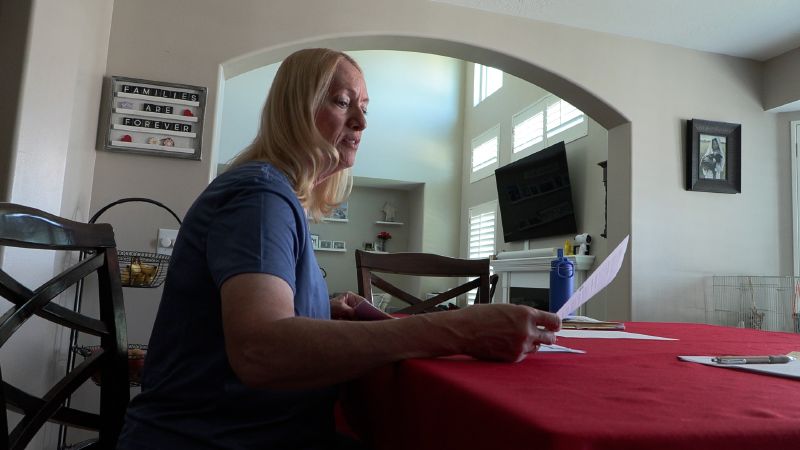
Get Gephardt helps Utah woman fight to get her power of attorney recognized

By Matt Gephardt and Sloan Schrage


KEY TAKEAWAYS
  • Pam Davis struggled to get Capital One to recognize her power of attorney.
  • Her brother was a victim of a scam, losing nearly all his assets.
  • After media intervention, Capital One finally acknowledged her authority resolving the issue.

SANDY — At some point, many of us may have to step in and help a loved one with their money — paying bills, watching accounts or cleaning up after fraud. But what do you do when a major credit card company refuses to recognize your authority over a loved one's finances?

Pam Davis has been looking out for her older brother, Stan.

"My brother has short-term memory and dementia," she said. "So, it became necessary for me to take over."

Davis recently discovered her brother was the target of a brutal pig-butchering scam. A criminal posing as a woman coaxed personal and financial information out of him. Money was taken from his bank accounts, stocks and credit cards.

"It pretty much cost him almost everything he had," Davis said.

She is trying to unwind some of that damage, including the fraudulent purchase of a MacBook Pro on her brother's Capital One credit card. But she says she can't get Capital One to recognize her power of attorney, no matter how many times she sent them the papers.

"I ended up sending them my power of attorney, my conservatorship and my guardianship," Davis said. "Then they requested all of my personal information, including my name, address, phone number, Social Security – the works from me. And still that was not enough for them to talk to me."

She even got a letter from Capital One denying the request to appoint Pam Davis as power of attorney because her brother already has a power of attorney: Pam Davis.

"They can't talk to me because they can only talk to me, which makes no sense at all," she said with exasperation.

Davis' brother has since died. But she hasn't given up because she's worried Capital One will come after his estate. So, she reached out to someone who will talk to her – me.

As the KSL Investigators began digging, we found that Utah law requires financial institutions to either accept a power of attorney or to request certification of one or an opinion of counsel – within seven days. They can't drag it on for weeks on end.

So, we contacted Capital One's public relations team to ask why they were not recognizing Davis's power of attorney. We did not get an answer, but by phone, they told us they would look into what happened.

"I want to finish what I started for him," Pam Davis had told me.

And just like that, she says they finally started talking to her and, after some back-and-forth, her brother's account was written off.

You should know that by law, there are only a handful of reasons why a power of attorney can be rejected, including if the person has already died, or if it is suspected of being fraudulent.

Photos

The Key Takeaways for this article were generated with the assistance of large language models and reviewed by our editorial team. The article, itself, is solely human-written. 

Full Article & Source:
Get Gephardt helps Utah woman fight to get her power of attorney recognized

Monday, May 25, 2026

Son charged with financial exploitation of elderly mother in Layton

by Sorina Trauntvein


LAYTON, Utah (ABC4) — A Layton man is accused of using his power of attorney to take money from his mother’s benefits for his own financial gain instead of paying her care facility bills. She has since passed away.

Chad Rylie Clark, 55, has been charged with one count of intentional or knowing financial exploitation of a vulnerable adult exceeding $5,000, a second-degree felony.

According to court documents, in September or October 2025, Clark was granted power of attorney (POA) for his mother. She had been living in a care facility with her husband for roughly two years, though her husband did not require care.

In September or October 2025, Clark’s mother was moved to a different room, and her husband moved out. Soon after, Clark allegedly began exercising his POA to receive benefits from her pension and take $9,500 out of an account she shared with her husband and moved it to a joint account between himself and his mother.

By the end of 2025, documents say Clark was “the recipient of all the reported finances of” his mother. Around that same time, her bills were only being paid partially to the care facility where she was living.

Clark allegedly led the facility to believe that he didn’t have access to all of her funds, and her husband should be covering the unpaid amount that was due. However, according to court documents, he had received a total of $58,991.93 from his mother’s benefits.

Of that amount, only around $26,783 had been paid out, leaving roughly $32,206 for Clark. His mother’s care facility showed that it was behind on payments for a total amount of $22,500

At some point during 2025, Clark reportedly took $10,000 of that and split it with his brother, directly violating his POA, which stated, “an agent that is not the spouse is not allowed to benefit from the finances or property unless specifically given authority to paraphrase.”

 Clark’s mother passed away in January 2026, documents say.

“Due to Chad [Clark] being in charge of the funds and using them for personal gain rather than paying for the care of [his mother] as the money was supposed to be used, charges are being filed,” court documents read.

Clark is not being arrested, but a summons is being issued for him to appear at any upcoming court hearings. The case was investigated by the Davis County Sheriff’s and Attorney’s Offices. 

Full Article & Source:
Son charged with financial exploitation of elderly mother in Layton 

Tuesday, February 17, 2026

FOX 13 Investigates: Utah's Adult Protective Services is substantiating few cases of elder abuse


By: Taylor Stevens

SALT LAKE CITY — Utah’s Adult Protective Services agency is substantiating an average of just 5% of all allegations of abuse, neglect and exploitation it investigates each year — a far smaller percentage than the national average, data shows.

Advocates say that number is likely not an accurate representation of the true scope of elder abuse. Instead, they worry it reflects the impacts of understaffing and high caseloads on the quality of the agency’s investigations.

“I think we’re clearly missing something,” said Nate Crippes, an attorney with the Disability Law Center. “If we’re not investigating, we’re not looking at serious allegations, some really bad things can happen. And some people can really be put in some really difficult and horrific situations.”

Nationally, Adult Protective Services (APS) agencies uphold an average of about 29% of the cases they investigate, according to a 2021 report prepared for the U.S. Department of Health and Human Services that covered 36 states. That’s nearly six times the average percentage of cases substantiated here.

Utah's numbers “raise red flags to me, extremely,” said Sam Brooks, the director of public policy at the National Consumer Voice for Quality Long-Term Care, which advocates for better conditions in nursing homes across the country.

“That substantiation rate is not going to be reflective of actual abuse,” he argued in an interview. “It's going to be reflective of challenges, often that APS programs face due to lack of funding.”

In Utah, the vast majority of cases APS investigates — nearly 80% on average — were deemed “inconclusive” or “undetermined” from 2019 to 2025, according to disposition data the Utah Department of Health and Human Services provided to FOX 13 News through a public records request. About 15% of cases were deemed to have no merit each year during that same timeframe.


Crippes said the Disability Law Center is aware of APS investigations that he believes exemplify why so many of its cases are neither confirmed nor denied.

“They go into a place, they hear from, say, a resident of a facility that says, ‘This is what happened.’ And then they talk to the staff and say, ‘No, this is what happened,’” he said. “And then it’s like, ‘Well, we can’t substantiate.’”

“And I don’t think that is a thorough investigation,” he added.

The Disability Law Center, which has been designated by Utah’s governor as a watchdog for those with disabilities, often conducts investigations that coincide with APS inquiries.

But in a 2023 letter to the U.S. Department of Health and Human Services, the nonprofit noted that it is “often” able to substantiate claims the state’s APS investigators “have found inconclusive or without merit.”

Referencing a particular incident at an intermediate care facility for people with disabilities, the center said it was able “to support numerous claims of abuse and/or neglect” that APS and the Office of Licensing were not able to substantiate.

Nels Holmgren, the director of the Utah Division of Aging and Adult Services, pushed back on criticisms of the agency's investigations. He noted that investigators work hard to get to the truth of an allegation, including partnering with law enforcement and the state Office of Licensing, when necessary.

“It certainly should never be a case of somebody saying, ‘This happened’ and another person saying, ‘It didn’t happen,’ and then we say, ‘Oh well,’” he said in an interview. “There’s more to it than that.”

Holmgren added that he isn’t concerned about low substantiation rates in Utah compared to nationally, pointing to differences in laws around elder abuse investigations that can make it difficult to draw comparisons between states.

In Utah, he acknowledged that the bar for investigating and substantiating cases “is high,” and that investigators are subject to a “fairly narrow set of statutes” — so “there are probably things that other states may consider a substantiated case that we don’t.”

“I think policymakers in the state are very cautious about getting too involved in the lives of adults,” he added. “They’re very conscious of that and want to make sure that people have protections and at the same time that we’re respecting people’s independence and autonomy.”

Cases where the Disability Law Center has been able to confirm a complaint APS deemed inconclusive could also be due to differences in investigative standards between the government agency and the nonprofit, he added.

Challenges substantiating

Utah’s Adult Protective Services agency investigates about 5,500 complaints each year of abuse, neglect and exploitation involving adults 65 and older or those 18 and older with a physical or mental impairment that puts them at risk.

Data shows allegations of financial exploitation were the most common in fiscal year 2025, making up about 26% of all complaints to the agency. Caretaker neglect, emotional abuse and self-neglect (“where people just may not be taking care of themselves,” Holmgren said) were also common complaints.

Then there are the allegations Holmgren describes as “rare but horrifying,” like physical and sexual abuse. About 13% of all complaints made in fiscal year 2025 alleged physical injury or harm, while 3% alleged sexual abuse.

Holmgren said these “awful cases that are relatively rare tend to get pretty good action,” noting that police are often involved.

“We have a good partnership with law enforcement across the state,” he added, “and they certainly similarly have a role and a desire to resolve these cases and make sure that our older people are safe.”

But he acknowledged that APS investigators do face some barriers when attempting to substantiate cases.

Some victims are hesitant to move forward because the other party is a family member. Others may lack cognitive capacity to work with investigators. And unlike in child abuse investigations, alleged perpetrators in Adult Protective Services cases aren’t legally required to participate.

“It can be really difficult if that person is not cooperative,” Holmgren said.

High turnover and heavy caseloads can also pose challenges for investigators.

Records from the Utah Department of Health and Human Services show that in the first half of last year, APS investigators in some positions handled more than 40 cases a month on average — almost triple the “ideal caseload” of 12 to 15 per month, according to a 2023 budget presentation.

“We’re certainly aware of that issue and are working with executive and legislative branch partners to make inroads on that,” Holmgren said.


To try to stem turnover and improve caseloads, the 2023 budget presentation said the office had developed a retention bonus program for employees who stay longer than a year and been evaluating candidates based on experience, even if they don’t have the required social work degree.

The Disability Law Center has also advocated for a capped caseload for Utah’s APS investigators, arguing that the state is “unlikely to fund additional staff to meet the need without a requirement to have a fixed ratio.”

Utah Gov. Spencer Cox recommended in 2024 that additional dollars be set aside to hire new caseworkers, in an effort to “help reduce caseloads.” But online budget information shows the Legislature didn’t approve the extra funds.

“There were many requests that were not funded,” Holmgren noted, adding that it’s “certainly something that we continue to work at and advocate for.”

In the meantime, he said the agency is “squeezing as much benefit out of the existing budget as we can.”

Crippes said he hopes lawmakers will take a closer look at APS staffing, training and investigative standards during this year’s ongoing legislative session. Without stronger processes in place, he argues, the state may never uncover serious abuse.

“Ultimately, if something horrific is happening, this may be the only way we’re ever going to find out,” he said.

Editor’s note: Utah law requires anyone who believes a vulnerable adult is being abused, neglected or exploited to immediately notify APS or law enforcement by filing a complaint on APS’s website or by calling 1-800-371-7897. 

Full Article & Source:
FOX 13 Investigates: Utah's Adult Protective Services is substantiating few cases of elder abuse

Friday, December 26, 2025

Disability advocates decry Utah guardianship law as 'civil death'

Disability rights groups argue that a new guardianship law creates a two-tier system that strips people with intellectual disabilities of basic legal protections.

Full Article & Source:
Disability advocates decry Utah guardianship law as 'civil death' 

Wednesday, December 3, 2025

FOX 13 Investigates: He was placed in a guardianship for his care. The guardian evicted his family.

By: Nate Carlisle


PRICE, Utah — In February, Rhett Rhodes returned here to his grandfather’s home and found an eviction notice on the door.

Rhodes, his wife and their two children had been living at the house in Price since 2022, when his grandfather entered a rehabilitation center to treat his COPD.

“I take care of the land and the house, and I get to live here,” Rhodes said of the arrangement he had with his grandfather, James Myers.

Rhodes’ aunt and her family had been living in a house in Helper that was also owned by Rhodes' grandfather. Eviction notices were served there, too.

The notices were served by Kristin Katie Woods. She owns Owl Guardianship and Elder Care Services, LLC. A few months before the eviction notices, Owl petitioned a judge to become the grandfather’s guardian.

Guardianships are designed to provide care for someone who needs it. Rhodes’ mother, Sherry Jackman — daughter of the man in the guardianship — says she did not object to the guardianship petition because she thought Owl would just help manage her father’s finances.

She didn’t know Owl would be making medical decisions and selling real estate.

“It wasn't until not too long ago that I found out that they took complete… control, custody of my father,” Jackman said.

Making decisions

“Guardianship, I think, stems from the idea that when people become incapacitated they need somebody to, essentially, make decisions for them,” said Nate Crippes, of the Disability Law Center. He has lobbied the Utah Legislature on guardianship issues.

“A full guardianship means you have control over everything in a person’s life,” Crippes said.

Woods called FOX 13 News in April after she heard the station was making inquiries about her company. She described how Owl finds clients.

Sometimes families reach out, she said. Other times, government agencies or police will send Owl referrals seeking help for people who may not be able to care for themselves and don’t have family that seem to be doing it.

It’s not clear how Owl became involved in the case of Rhodes and Myers’ patriarch. Jackman says either someone at the rehab center or someone with the state of Utah recommended Owl.

At a court hearing in September, Woods testified about why she evicted Rhodes and his aunt’s family from the homes. The rehabilitation center had filed a $343,320 lien to recoup the debt it says it was owed.

To pay that debt, Woods testified, Owl required an “attorney to evict his own family members out of those two pieces of real estate.”

She added the homes “are only being sold to give the arrears of the home.”

Rhodes and Jackman say Owl never reached out to them to discuss alternatives to the evictions and paying the debt.

“I would have worked with Owl someway, yes, yes, I would have,” Jackman said, “if they would have gave us that opportunity.”

The day FOX 13 was in Price, new owners had workers remodeling the house. The house in Helper has been sold, too.

Rights and authority

What did James Myers – the man who owned the houses and had his family living in them – want?

We asked him. We spoke over a video call when his daughter went to visit him at his care center. Myers is 79 years old. His family says he has never been diagnosed with any dementia or cognitive impairment.

When asked if Myers wanted the evictions, he replied, “No, no.”

He tried telling that to Owl, he said. He was told his bill was so large, his homes had to be sold.

Myers’ wishes are important. Utah has a guardianship bill of rights that says those, like Myers, have the right to “participate in developing an individualized plan,” including “managing… assets and property.”

“Now, ultimately the guardian gets to make that decision,” said Crippes, of the Disability Law Center, “but you should work with the individual.” Crippes is not involved in Myers’ case.

Myers says the guardianship has worked out “pretty well” for him, but not his family. Eight people lost homes in the evictions, he said.

“I mean, if I ever were to get good, (I) don't even have a place to go live,” Myers said.

Rhodes says he is living in a camper on property owned by his father.

“I'm furious. I’m really upset,” Jackman said.

Woods, after that court hearing in September, indicated she would sit with FOX 13 for an interview. She later declined.

But she forwarded an audio recording from a separate court hearing in St. George earlier this year. The judge in that hearing complimented her.

“There’s some companies up north that are not… ethical as you are,” said 5th District Judge Jay Winward, “and (I) appreciate your work.”

Woods also sent a statement. It reads:

“Owl Guardianship and Elder Care Services, LLC is a family-owned business that has provided guardianship services across the state of Utah since 2013. Owl receives referrals from various state and private sources to intervene on behalf of disabled adults in distress. Owl prides itself on its compliance with court rules, state statutes, and the ethical guidelines set out in guardianship licensure processes. The highest priority of Owl is first and foremost the care and safety of the vulnerable adult, and sometimes that priority conflicts with desires of friends and family members who may wish to access to property, funds, or other resources of the vulnerable adult. Any legal processes that arise from this conflict are handled through the proper venue, which is the court.” 

Full Article & Source:
FOX 13 Investigates: He was placed in a guardianship for his care. The guardian evicted his family. 

Friday, November 21, 2025

Utah care center owner spent nearly $200K of elderly woman's money, charges say

By Pat Reavy 


KEY TAKEAWAYS

  • Gage Wallace Hedberg, 32, is charged with exploiting an elderly woman financially.
  • Hedberg allegedly spent nearly $200,000 on personal items using the woman's funds, charges say.
  • The woman's finances were depleted, leaving her with insufficient income for housing expenses.

HURRICANE, Washington County — The owner of an assisted living center in southern Utah is facing criminal charges accusing him of spending nearly $200,000 of an 81-year-old woman's money on himself for items such as food, Halloween costumes, large screen televisions, video games and sex toys.

Gage Wallace Hedberg, 32, of Hurricane, was charged Wednesday in 5th District Court with four counts of financial exploitation of a vulnerable adult and unlawful dealing of property by a fiduciary, both second-degree felonies.

Between Nov. 3, 2022, and Feb. 28 of this year, Hedberg owned and operated Life Family Personal Care, 158 N. 240 East in Hurricane, according to charging documents. During that time, he provided services to an 81-year-old woman and had power of attorney.

"The power of attorney included provisions that required the defendant to: act in (the woman's) best interest; act in good faith; and act loyally for (the woman's) benefit," the charges state.

Instead, Hedberg allegedly "withdrew significant amounts of cash" from the woman's checking account for his own use.

"In total, (he) diverted approximately $159,068 to $197,294 for his own benefit," according to the charges.

Prosecutors say the woman "had sufficient income and funds to meet her needs and maintain her modest standard of living." But after Hedberg used her money, "she was left with less than $5,000 and insufficient income to cover her expenses."

Among his purchases, Hedberg "had 241 items from Amazon shipped to his address totaling $11,539. These purchases included, but were not limited to office supplies, electronics, a mini split air conditioner, men's clothing, Halloween costumes, sex toys and lubricants, kitchen supplies, video gaming equipment and musical supplies," according to charging documents.

In addition, he made "47 purchases at Costco, including two membership renewals. These purchases totaled $12,904. Costco provided receipts for approximately 27 of these purchases. All 27 were made under the defendant's membership account. These purchases include, but are not limited to, food, household supplies, dental products, kitchen supplies, bedding, vitamins/probiotics, toiletries, clothing, batteries, electrical products, a computer monitor, (a 75-inch screen TV and a 77-inch screen TV), a printer, car products, Pokémon cards and a vacuum," the charges allege.

Investigators also noted tens of thousands of dollars of purchases for items that "appear inconsistent with (the woman's) historical spending and interests," including video games, liquor store purchases, smoke shop purchases, "mobile IV services related to hangovers," and home improvement projects. Prosecutors say Hedberg also made nearly $34,000 in cash withdraws from the woman's account.

After gaining power of attorney for the woman in 2022, investigators say Hedberg "sold (the woman's) home and used the proceeds, along with (her) finances," according to a search warrant affidavit served in connection with the case.

The Utah Attorney General's Office became involved with the investigation when Hedberg went to another assisted living center in Hurricane — where the woman now resides — in an attempt to help secure Medicaid for the woman.

"Hedberg told the staff that (the woman) was almost out of money to pay for her care at the facility," according to the affidavit.

But after reviewing her bank statements, the staff told Hedberg that the woman would not qualify for Medicaid because of her high level of spending, the affidavit says.

At that point, Hedberg admitted he "had made a mistake" and had spent the woman's money, according to the warrant.

The Key Takeaways for this article were generated with the assistance of large language models and reviewed by our editorial team. The article, itself, is solely human-written.

Full Article & Source:
Utah care center owner spent nearly $200K of elderly woman's money, charges say 

Thursday, November 20, 2025

Elder scams are horrible, says Utah filmmaker. His heartbreak became ‘Sweepstakes’

By Pamela McCall


Every year, seniors in Utah lose $92 million to financial exploitation, according to figures from the state’s Department of Health and Human Services.

Across the U.S., FBI internet crime data show elders were bilked out of $16.6 billion by fraudsters in 2024 — a 33% increase from the previous year. The reported losses are likely higher, says the FBI, because “older Americans are less likely to report fraud because they either don’t know how to report it, are embarrassed, or don’t know they’ve been scammed.”

Fraudsters know seniors may have savings, can be trusting, a little naive, and, in some cases, even be in the throes of dementia. That's the case in the new Utah film called “Sweepstakes.” The plot was inspired by real-life events.

“My stepmother was scammed for a period of about 10 years, and she was suffering from dementia, but was undiagnosed,” said writer, director and producer Stephen Williams, a Salt Lake Community College film instructor. “We had no idea what was going on. She was sending gobs and gobs of money away every week to sweepstakes scams.”


When his family found out and confronted his stepmother, she was irate and refused to stop sending money to the scammers, not knowing fact from fiction.

“We didn’t know what to do,” Williams said. “My father was beside himself.”

His stepmother passed away at age 96 in 2022, but not before being defrauded of thousands of dollars.

The film that emerged started as a two-part series, but Williams has now produced a feature film, garnering interest from the AARP Utah and the FBI. Williams said representatives attended screenings and held panel discussions — shedding light on scammers who prey on the elderly, become friends with them and pretend to have their best interests at heart.

This interview has been edited for length and clarity.

Pamela McCall: How does your film bring the sad reality of elder scams to life?

Stephen Williams: The main character, 88-year-old Joanne, played by Anne Culimore Decker, is sliding into dementia. She’s enraged because she thinks her adult children are trying to control her when they start to realize her money’s disappearing. In turn, the scammer convinces her that he’s the only one that can be trusted.

PM: Joanne’s daughter discovers $9,000 missing from her mother’s account. Her brother tries to give his mom the benefit of the doubt. Is it hard for people to believe this can happen in their own family?

SW: Who wants to find out that a parent is being scammed, or that they have dementia? People might initially fight against it and write their loved one’s behavior off as normal memory decline that comes with aging. Meanwhile, the unscrupulous scammer is getting her to send him money. In the film, it totals $80,000.

PM: What can be done to protect against this kind of fraud?

SW: No matter who they think is calling, personal information shouldn’t ever be given out over the phone. Scammers can use caller ID to make it look like it’s someone the elderly person knows. Artificial Intelligence is particularly terrifying. A snippet of a family member’s voice and image can be gleaned from the internet and manipulated through AI to ask for money. It could be a Zoom call saying, “Grandma, I’m in prison in Ireland and need $15,000 right now,” when in fact, it’s a scammer.

PM: What will people take away from your film when it comes to elder scams?

SW: The film really is about reconciliation of the family, and ultimately, that's what matters. The money might be gone, but eyes are opened. The brother and sister judged their mother pretty harshly initially, but once they fully understood what happened, their hearts open, and there’s compassion. 

Full Article & Source:
Elder scams are horrible, says Utah filmmaker. His heartbreak became ‘Sweepstakes’ 

Sunday, October 26, 2025

Nursing homes receiving millions in extra taxpayer funds face allegations of poor patient care

By: Taylor Stevens


BEAVER, Utah — Through a little-known federal funding stream, Utah nursing homes owned by cities or counties are eligible for additional taxpayer dollars meant to improve the quality of care for the elderly and disabled residents who live or stay there.

It all adds up to big money. Over the last decade, state records show nursing homes participating in the Upper Payment Limit program have received $1 billion in federal funds they wouldn’t have otherwise had access to.

But despite all that extra money, a new analysis of publicly available federal data — commissioned by a local law firm — found that, since 2017, the quality of care at these facilities has been worse than at nursing homes that aren’t getting all that extra money – with lower overall ratings and staffing scores and worse deficiency scores in inspections.

“When you look at really every available metric to determine, ‘are these facilities doing better with the money that they’ve been given?’ They’re not. They’re just not,” said Barry Toone, an attorney working with the Elder Care Injury Group, of the data. “The program does not appear to be working the way that it was supposed to work.”

The Elder Care Injury Group — which is pursuing multiple medical malpractice complaints against facilities that are part of the program — provided FOX 13 News with its underlying analysis, which the station reviewed and spot checked against public data.

Both the nursing home industry and the Utah Department of Health and Human Services (DHHS) have pushed back on the analysis, which they say is not based on an “apples-to-apples comparison.”

The law firm’s findings come as some patients have complained about poor quality care at facilities that are part of the program, and as federal inspection reports continue to highlight problems within them.

“There are real people in here who are suffering,” said Doni Hunt Webb, a resident at a southern Utah nursing home that receives Upper Payment Limit funds.

One nursing home that’s received $26 million through the program since 2016 has been named as the state’s Special Focus Facility, meaning it has been identified as having a pattern of persistent and pervasive care issues.

Twelve other government-owned facilities that receive extra money currently have a special alert on the Centers for Medicare and Medicaid’s Care Compare website, warning consumers that each one has been “cited for potential issues related to abuse.” Four of those nursing homes are on the list of candidates to receive additional oversight from federal regulators.

A FOX 13 News review of court records also found nearly 20 Utah families are currently suing facilities in the program, alleging in many cases that poor quality care led to the death of their loved ones.

“When we look at these facilities, a lot of these Upper Payment ones are not the ones getting the highest reviews,” noted Nate Crippes, an attorney with the nonprofit Disability Law Center, which is concerned about conditions in these facilities (but is not party to any of the lawsuits against them). “And we’re seeing a lot of problems in them.”

The nursing homes in the program, he added, stand out because they are receiving “much larger reimbursement rates than non-UPL facilities yet continue to demonstrate serious quality concerns,” including high turnover and insufficient staffing in some.

While still behind non-Upper Payment Limit facilities, data does show quality ratings and inspection scores have improved slightly among nursing homes in the program since 2017, while staffing metrics have declined overall since that time.

A ‘long game’

If you ask Utah’s nursing home industry about these analyses, they’ll tell you critics have the program all wrong.

Before the Upper Payment Limit, they say, Utah’s long-term care system for seniors “was in crisis.” Nursing homes with Medicaid patients were receiving almost $100 less per patient per day than it cost to provide services to them. Some were losing “millions of dollars each year.” A few were on the verge of closure.

After the program was created in 2013 and began allowing nursing homes to receive the substantially higher Medicare reimbursement for Medicaid patients, they say facilities have been able to offset those losses and increase staff wages, upgrade aging facilities and make other improvements.

"The changes have been just amazing in these 10 years,” said Beaver Valley Hospital CEO Scott Langford in a video about the Upper Payment Limit. “Not only has it improved the facilities for the elderly in the state of Utah, virtually every part of the state has been touched by this program.”

The city-owned hospital Langford represents is itself owned by the city of Beaver in central Utah. It currently owns the licenses for more than 40 of the state’s nursing homes, from Logan to St. George.

Both Beaver Valley and Gunnison Valley — another city-owned hospital that is a major participant in the Upper Payment Limit — declined on-camera interviews for this story. So did the Utah Department of Health and Human Services and the Utah Health Care Association, which represents the state’s long-term care industry.

But in written statements, all pushed back on the Elder Care Injury Group’s analysis, arguing that it isn’t fair to compare Utah’s Upper Payment Limit facilities to nursing homes that don’t accept Medicaid, in part due to the more complex health needs of those patients.

Facilities that aren’t part of the program, Beaver Valley said, “serve different populations and are often supported by private-pay and insurance resources using more diversified operating models. They provide a different service to a different type of patient.”

DHHS pointed to the most recently released quarter of federal data, which it said shows facilities part of the program have similar overall scores as national facilities, including non-Medicaid ones and “substantially higher” quality scores.

The Utah Health Care Association also noted in an email to FOX 13 News that almost every nursing home that qualifies for the program is part of it, and that equating "roughly 80 facilities to 20 facilities that aren’t on the program isn’t a level comparison.”

Toone, on the other hand, argues that it is a level comparison. He notes that the Upper Payment Limit ensures Medicaid facilities receive the same reimbursements as Medicare ones, meaning quality “should be at least equal to the non-UPL facilities.”

He also added that the firm’s analysis of federal data shows Utah facilities that aren’t in the program have higher patient acuity than Upper Payment Limit facilities but still “significantly outperformed” them.

In a fact sheet provided to FOX 13 News, Beaver Valley said federal data reflects “snapshots of challenges” and national pressures that affect both its nursing homes and others across the country.

“When issues are identified with facilities licensed by Beaver Valley Hospital,” it added, "these are addressed, and steps are taken to improve care.” Ultimately, the hospital argues, the Upper Payment Limit "is a long game, with the goal of sustained improvements that continue to strengthen the quality of eldercare in Utah over time.”

Langford, Beaver Valley’s CEO, also pushed back on accusations that federal funds haven't been properly spent for the benefit of nursing home patients, noting that the hospital has followed “all state and federal regulatory requirements of the UPL program since its inception in 2013.”

“All funds from this program, which is one of the most rigorously regulated of its kind in the country and provides more than $100 million annually at no additional cost to Utah taxpayers, have been used strictly for their intended purpose of providing care to Utah’s most vulnerable seniors,” he continued in an email.

“Unfortunately,” Langford added, “malpractice attorneys who focus on suing nursing homes continue to misrepresent and exploit the complexities of this program for their own self-interest.”

DHHS, which exercises oversight of the administration of the Upper Payment Limit program, told FOX 13 News that it does “not track specific spending related to how UPL monies are being used.” Beaver Valley and Gunnison Valley also did not provide specific breakdowns of how money has been spent overall at the facilities they own.

“The funds are used to run the facility including staffing, training, wages, facility improvements, capital etc.,” Gunnison Valley said in response to the request from FOX 13 News. “We trust our managers to use the funds as needed for each individual facility as each facility is unique.”

Oversight and operations

This isn't the first time the Upper Payment Limit has come under scrutiny.

In 2017, a legislative audit raised concerns about Beaver Valley’s administration of the program and called for additional oversight and transparency of spending.

Among their findings, auditors noted that nursing homes were using a little less than half of the federal dollars flowing through the program, while Beaver Valley collected the remaining 51% for seed funding and administration fees.

Of the funds that went to the nursing facilities, auditors found the majority were used for “renovations and other expenses.” They also said they saw “little oversight” of the $6 million Beaver Valley had received at that time in “administrative overhead.”

Those were among the most concerning parts of the audit for Hunt Webb, a resident at St. George Rehabilitation.

“There's not that many people in Beaver,” she said in an interview with FOX 13 News. “I don't understand why they're allowed to take the money from nursing homes.”

Hunt Webb is a 55-year-old former social worker who sought long-term care at the southern Utah nursing home about seven years ago, after the severe nausea and vomiting she developed during her first pregnancy led to chronic and debilitating health issues that required full-time care.

As she grew more frustrated by the quality of that care, a series of internet searches she made last year led Hunt Webb to discover that the facility she lives in is owned by Beaver Valley Hospital.

At first, she was surprised. But after she found and read the legislative audit, she started to get angry.

Hunt Webb eventually took those frustrations to Beaver Valley Hospital’s Facebook page, where she posted that the facility and her care were “beyond disgusting” but that there were “no other options,” since the hospital also owns other nursing homes in her area.

She and the other disabled and elderly patients in Beaver Valley facilities, she alleged, were “enduring abuse and neglect” while the hospital benefited from the funds in the program.

Beaver Valley said in a fact sheet that the "vast majority of UPL funds are used by nursing facilities to provide patient care,” while the “remaining, much smaller portion is used by the hospital to improve access to care and health services provided by the hospital.”

A she looks around her nursing home, Hunt Webb said she doesn’t understand how St. George Rehabilitation has spent the $20.9 million state records show it's received through the Upper Payment Limit since 2017. But she doesn’t feel the funds have done much to improve her care.

"It was supposed to provide for more staffing,” she said of Upper Payment Limit dollars. "It's CNAs; it's extra staff that we don't get."

While federal data shows St. George Rehabilitation’s health inspection rating and overall staffing have improved slightly over the years, the facility currently has a “below average” staffing rating from the Centers for Medicare and Medicaid Services.

St. George Rehabilitation declined an on-camera interview for this story. An administrator told FOX 13 News in an email that the facility prefers to “personally connect with our residents” rather than involve the media.

Like other nursing homes that are part of the program, St. George Rehabilitation isn’t actually operated by Beaver Valley. Though the hospital and other government entities that participate in the program hold the licenses for the facilities, day-to-day operations are largely overseen by private management companies.

Hunt Webb’s nursing home, for example, is operated by the Ensign Group, a private equity chain with about 300 facilities across the country.

"They’re really only owners in name,” Crippes said of Beaver Valley and the other government entities involved in the program. “They’re not operating the facilities. They’re not there.”

For Toone, it all raises questions about whether the funds in the program are being siphoned away from patient care and "into private-equity coffers and large for-profit chains.”

“As much as the industry likes to talk about how they can barely meet their budgets,” he argues, “the reality is those kinds of corporations aren’t drawn to industries like this if they’re not going to make good money.”

Beaver Valley told FOX 13 News that its role in the program is to “oversee compliance,” while “seasoned elder care facility managers” provide day-to-day patient care.Under the Upper Payment Limit, it added, “Beaver Valley oversees and empowers these experts to do what they do best,” ensuring residents receive care “from professionals with the right skills, training and compassion.”

'A program that was designed to do good’

After the legislative audit, the Department of Health and Human Services implemented a Quality Improvement Program in 2018, in an effort to address concerns about the need for greater state oversight.

To qualify for continued funding, facilities are now required to either improve from the previous year or score better than the national average on at least six of nine metrics.

In a recent training for nursing facilities, DHHS Quality Improvement Director Trent Brown said the program helps demonstrate “that the additional resources that come in from those UPL payments are being used to improve quality of care as well as quality of life for nursing facility residents.”

He added that it can also be a “very strong defense mechanism for the facilities who participate when being questioned about the supplemental payments.”

Eleven facilities in the program were put on probation for not meeting quality requirements in 2024, according to documents obtained through an open records request. DHHS told FOX 13 that the program seems “to be effective” when comparing the metrics it tracks for Upper Payment Limit facilities against national ones.

But Toone — noting other metrics comparing these facilities to the ones here in Utah that aren’t receiving extra money — argues the Quality Improvement Program doesn't “appear to be working” and wants to see additional requirements for facilities.

“I would like to see UPL dollars tied directly to staffing ratios that are considered acceptable and wages that are considered acceptable so we could see the stabilization of staffs within these facilities,” he said. “If we could tie those dollars to those kinds of things, that’s when you’re going to see the results that you were supposed to see.”

The number of nursing staff hours per resident per day is one of several metrics that facilities are currently judged on.

Crippes, with the Disability Law Center, agrees that staffing should be a more significant metric and urged the state to consider additional payment methods for the program that would enhance quality, “such as incentivizing spending on direct care staff.”

“We would also encourage the state to redirect its investments away from a costly UPL model and instead focus on home and community-based services which would allow people who are aging and people with disabilities to remain at home — services that cost much less and have better outcomes,” he added.

For his part, Toone said he believes the Upper Payment Limit could be a positive for Utah’s nursing homes. But he said it's important that policymakers ensure the money actually improves patient care for “the most vulnerable members of our population.”

“Utahns should care that good taxpayer dollars — and we’re talking about a lot of money here — are used the way they are supposed to be used,” he said. “Especially when you have a program that was designed to do good.”

You can view the full Beaver Valley Hospital audit HERE

Full Article & Source:
Nursing homes receiving millions in extra taxpayer funds face allegations of poor patient care 

Monday, September 15, 2025

Cottonwood Heights woman charged with neglecting elderly mother, contributing to her death

By Pat Reavy 


COTTONWOOD HEIGHTS — A Cottonwood Heights woman was charged Tuesday with not properly caring for her elderly mother, which investigators say may have contributed to her death.

Lori Meers, 53, is charged in 3rd District Court with manslaughter and aggravated abuse of a vulnerable adult, second-degree felonies.

In March, a woman went to visit her 77-year-old twin sister, who prosecutors say "was nonverbal and had dementia" and "found W.P. on the floor covered in feces," according to charging documents. Some of the feces was determined to be a few days old, police said. The woman is only identified in court documents as W.P.

W.P. was found lying on a basement floor and was "ice cold" when her sister found her, according to the charges.

"(The sister) asked Meers what was going on, and Meers said that W.P. had not eaten in four days. (The sister) asked Meers if she had called anyone, and Meers said 'no,'" the charges say.

The sister then called 911, and paramedics responded.

"(The sister) stated that every time the paramedics moved W.P. she cried out in pain. (She) stated that when she saw W.P. three-and-a-half weeks before this, she could talk, and (three months earlier) W.P. was still moving around and in good spirits," charging documents state.

Doctors determined W.P. was in "poor medical physical shape," the charges allege. She was diagnosed with "severe sepsis with septic shock, skin sores, pancreatitis (and) transaminitis" in addition to other injuries to her hips and legs.

She died nine days later.

An autopsy "revealed W.P. had significant trauma. The pancreas was acutely inflamed and infected, which was the most likely cause of the infection causing septic shock. W.P. had multiple decubitus ulcers (pressure sores) on her chest, back, and lower extremities. (The medical examiner) noted that malnutrition and decubitus ulcers can increase the risk of developing infections and septic shock," the charges state.

The manner of death was determined to be natural, "and the immediate cause of death to be septic shock due to acute pancreatitis."

Meers was W.P.'s primary caretaker, according to investigators.

The sister "wanted to find W.P. a permanent care facility but Meers was dragging her feet and not following through with it. (The sister) stated that a few weeks prior, Meers had told (her) that she had called the elder abuse hotline on herself because she was tired and not able to take care of W.P.," according to the charges.

Another family member told police "that while Meers was his grandmother's primary caretaker, Meers would often stay at a neighbor's house, leaving his grandmother alone."

The family member also said Meers was "struggling with her own health conditions, which affected her ability to care for his grandmother," according to the charges. (The grandson) expressed his belief that his grandmother was neglected, particularly in terms of physical care, and Meers would often leave food on the ground for his grandmother when she couldn't lift her back onto the bed."

When questioned by police, Meers allegedly told them, "This is nerve wracking because I'm not stupid. I know exactly what you guys think or were told. And I don't blame the hospital for wanting an investigation to be done either because they saw the condition of my mom and it's sickening, and it's very sad and embarrassing."

Meers said she never called the elder abuse agency.

"I'm not saying that there was never abuse, there was, not abuse. Wrong word, neglect, me allowing my mom to play in her own crap, is neglect. I don't care. Yeah, there might be reasoning behind it. There might be, you know, to me, justify not, maybe not justifiable, but, but there was reasoning behind it," she said, according to the charges.

Cottonwood Heights police say when they arrived at the residence they "noted a foul odor of old urine and feces mixed with food and filth," the charges state. "Each step leading upstairs was carpeted and covered in a thick film of dirt, grime, and what appeared to be feces. The upstairs bathroom had dirty toilet water, and the shower had grime on the walls, tub and curtain."

"We have a legal, ethical, and moral responsibility to take care of and support our vulnerable adult elders. When someone is criminally negligent, abuses or causes harm to them, we will hold them accountable for such abuse," Salt Lake County District Attorney Sim Gill said Tuesday. "If you are struggling to care for an elderly person in your life, we ask that you reach out for help, and if others offer it to you, please accept it."

Gill reminded residents that Utah is a "mandatory reporter state."

"This means that any person who has reason to believe that a vulnerable adult is being abused, neglected, or exploited must immediately notify Adult Protective Services or the nearest law enforcement office."

Suspected abuse or neglect of senior citizens or adults with disabilities can be reported 24-7 at daas.utah.gov/adult-protective-services/

Full Article & Source:
Cottonwood Heights woman charged with neglecting elderly mother, contributing to her death 

Tuesday, July 8, 2025

Salt Lake County officials want your help to combat rising elder abuse

By: Katie McKellar


Faced with rising numbers of elder abuse and exploitation cases while also expecting that many more are going unreported, Salt Lake County officials want to raise awareness of the issue and encourage Utahns to look out for their aging neighbors and loved ones. 

“The way we treat the elderly in our community says something about the values that we espouse. The world we live in today was built by those who are now some of the most vulnerable in our society, we owe it to them to offer respect, care, and justice when they have been made victims of abuse, exploitation, or neglect,” Salt Lake County District Attorney Sim Gill said in a recent news release. 

This week, on Wednesday, Salt Lake County senior centers will host Elder Abuse Awareness events for Elder Abuse Awareness Month in June. The county’s Aging and Adult Services website offers information on where to find its senior centers. 

“Prosecution is only part of the solution,” Gill added. “We need families, neighbors, and care providers to help prevent abuse before it starts. Our seniors deserve to live with dignity and safety, not fear and isolation.”

Elder abuse affects 1 in 10 older adults, but often goes unreported, according to Gill’s office. The National Council on Aging points to one study, which estimated that only 1 in 24 cases of abuse are reported to authorities. 

Salt Lake County records also indicate cases of elder abuse or neglect have ticked up in recent years. In 2023, county prosecutors filed 23 charges alleging intentional abuse or neglect of a vulnerable adult in 2023. That’s compared to 37 in 2024, according to the Salt Lake District Attorney’s Office. 

From 2023 to 2025, Gill’s office has filed 25 charges for second-degree felony aggravated abuse of a vulnerable adult, plus 12 second-degree felony financial exploitation of a vulnerable adult charges. There were also 60 charges of class A misdemeanor intentional abuse or neglect of a vulnerable adult filed in the same time period. 

County officials also urged Utahns to recognize signs of possible abuse, neglect or exploitation. Red flags include:

  • Unexplained bruises or welts
  • Multiple bruises in various states of healing
  • Unexplained fractures and abrasions
  • If a person becomes withdrawn, passive or fearful
  • Reports or suspicions of sexual abuse
  • Dehydration
  • Missing glasses, dentures or other aides if usually worn
  • Malnourishment
  • Inappropriate or soiled clothing
  • Over or under medicated
  • Deserted, abandoned, left unattended or socially isolated 
  • Missing possessions
  • Forced to sell their house, change their will, or sign over control of finances
  • Overcharged for home repairs
  • Inadequate living environment
  • Unable to afford food, clothing, or social activities

“Ending elder abuse starts with awareness — and with connection. By reaching out, listening, and standing together, we can protect our older adults and ensure no one faces aging alone or in silence,” said Afton January, Salt Lake County Aging and Adult Services Communications manager.

Visiting a local senior center is also a “powerful way to stay connected and engaged,” county officials said. “These centers provide social support, nutrition, activities, and wellness resources that help protect against isolation and neglect. You can also be sure you are checking on them regularly, not just over an audio phone call, but through physical visits or video phone calls so you can see them and perhaps notice any signs of abuse or neglect.”

Gill’s office also reminded that Utah is a “mandatory reporter state.” That means if any person who has reason to believe a vulnerable adult is being abused, neglected or exploited, they must immediately notify Adult Protective Services or the nearest law enforcement office. 

For emergencies, call 911. You can also report suspected abuse directly to Utah’s vulnerable adult abuse hotline, which is 800-371-7897, or on the Utah Department of Health and Human Services’ website. 

Full Article & Source:
Salt Lake County officials want your help to combat rising elder abuse 

Wednesday, June 11, 2025

Former caregiver accused of exploiting vulnerable man for DoorDash, rent payments

by Megan Brugger


VERNAL, Utah (KUTV) — A former caregiver to a man needing 24/7 assistance was arrested after she allegedly used his credit card for thousands of dollars worth of unauthorized purchases.

Kimberlee Marie Kelly, 25, was arrested on suspicion of intentional financial exploitation of a vulnerable adult, a third-degree felony; unlawful acquisition/possession/transfer of a financial card, a third-degree felony; and unlawful use of a financial card, a third-degree felony.

A detective with the Vernal Police Department began investigating the case on Oct. 30, 2024. The initial report indicated that nearly $4,000 had been spent in unauthorized DoorDash transactions.

The victim, who has limited capacity to manage his finances, "is only allowed one supervised DoorDash order per week," the affidavit states. "[The victim] does not have a DoorDash account and relies on staff members to facilitate these transactions."

Additionally, two rent payments for Kelly and her sister had been made using the victim's card. The charges were later disputed and refunded.

The detective interviewed the sister, who said the rent was paid by what she believed was Kelly's credit card.

"[The sister] remained adamant she never had access to [the victim's] card or used DoorDash," the affidavit states.

Kelly reportedly initially avoided police contact and denied helping her sister pay rent, despite statements and records indicating otherwise.

According to the affidavit, Kelly then claimed the victim authorized her to use his card via a handwritten note he signed. The detective, however, said the note was dated before her employment.

Kelly later denied seeing or using the card herself, and denied remembering the note.

"Kimberlee also claimed other staff had used [the victim's] card for DoorDash, and she stopped doing so once told not to," the affidavit states.

The property manager from where the rent was paid confirmed that both transactions originated from the victim's account and were processed through the sisters' rental portals.

Kelly was placed into custody on Tuesday and booked into the Uintah County Jail. 

Full Article & Source:
Former caregiver accused of exploiting vulnerable man for DoorDash, rent payments 

Monday, May 5, 2025

Utah governor, state courts hit with lawsuit over new disability law

By: Kyle Dunphey


Utah state leaders are being sued over a bill passed by the Legislature and signed by Gov. Spencer Cox in March created a new guardianship system for adults with “severe” intellectual disability. 

In a complaint filed in federal court in Utah earlier this month, the American Civil Liberties Union (ACLU) and Disability Law Center argued the law — SB199 — violates the American With Disabilities and the Rehabilitation acts, as well as the 14th Amendment of the U.S. Constitution, which grants equal protection under the law to all citizens. 

Sponsored by Sen. Kevin Stratton, R-Orem, and signed by Cox on March 17, SB199 creates a separate guardianship proceeding for people with a “severe” intellectual disability. To qualify, a physician or psychologist must sign a letter “that indicates that the adult is an individual with a severe intellectual disability,” the bill reads. 

Guardianship is a legal process where someone, typically a family member, can ask a court to determine whether a person with a disability 18 years old or older is unable to make decisions and manage their affairs.

With permission from a court, the guardian could then determine personal care and make financial and legal decisions for the disabled person. According to the Utah Parent Center, it can shield disabled people from manipulation and crime, allowing them to live a safer life. But it also limits the civil rights of the person under guardianship, taking away their authority to make adult decisions.  

The bill had the backing from several families of people with intellectual disabilities, who say the current system is too broad and not tailored to the most severely handicapped. More than 200 people signed on to a petition in support of the bill. 

“It makes sense to create a new and separate guardianship statutory section specifically for those with a severe intellectual disability and a lifelong functional limitation that began as a minor,” said Lisa Thornton, an attorney, when speaking in favor of the bill during this year’s legislative session. “Separating our population from the elderly, or ones who once had capacity, allows for greater protection for those with severe intellectual disabilities without impacting or creating restrictions on the elderly, or those who may regain capacity.” 

But during the session, both the ACLU and Disability Law Center spoke out against the bill. On April 18, the groups filed a lawsuit. 

In the 42-page complaint, the groups argue the law creates a “separate, harsher” guardianship system based on a classification of “severe intellectual disability” — a term they say is “circular and vague.”

“‘Severe intellectual disability’ is not a term with a clear, well-established meaning among clinicians,” the complaint reads, adding that it requires physicians to make a diagnosis that is typically made by the court. 

The law also allows a guardian to “restrict the disabled person’s association with friends and family, the right to control their food and beverage consumption, and the right to restrict any activity that the guardian believes would be harmful,” according to court documents. Typically, guardians can place restrictions on an individual basis — for instance, preventing an abusive former partner from visiting. But SB199 allows for blanket restrictions, which the complaint says is a violation of the person’s rights.

Additionally, the law creates a carveout where the disabled person wouldn’t be granted an attorney in cases where a parent, grandparent or sibling is the prospective guardian, the groups argue.

For those reasons, the groups allege the state is in violation of the American With Disabilities and the Rehabilitation acts, as well as the 14th Amendment. 

“SB199 creates a separate, more restrictive guardianship for a class of people with disabilities and denies them the same rights as others, like the right to talk with friends or relatives, solely based on a doctor describing the severity of a diagnosis,” said Nate Crippes, the public affairs supervising attorney for the Disability Law Center. 

“It also doesn’t allow for individualized determinations for this population, as is required by the ADA,” he added.“And by limiting the right to associate, if a guardian is abusive or neglectful, we fear no one will know. On the other hand, studies show a person with greater self-determination is more likely to identify an abusive situation and less likely to experience it.”

In addition to Cox and the state of Utah, the lawsuit names Utah Supreme Court Chief Justice Matthew Durrant, the Utah Judicial Council, State Court Administrator Ronald Gordon Jr., the Utah Administrative Office of the Courts and the Utah State Court system.

The governor’s office did not respond to a request for comment Thursday.  

Full Article & Source:
Utah governor, state courts hit with lawsuit over new disability law