Showing posts with label cameras. Show all posts

Tuesday, April 22, 2025

Why Cameras Are Popping Up in Eldercare Facilities

By Paula Span


The assisted living facility in Edina, Minnesota, where Jean Peters and her siblings moved their mother in 2011, looked lovely. “But then you start uncovering things,” Peters said.

Her mother, Jackie Hourigan, widowed and developing memory problems at 82, too often was still in bed when her children came to see her midmorning.

“She wasn’t being toileted, so her pants would be soaked,” said Peters, 69, a retired nurse-practitioner in Bloomington, Minnesota. “They didn’t give her water. They didn’t get her up for meals.” Her mother dwindled to 94 pounds.

Most ominously, Peters said, “we noticed bruises on her arm that we couldn’t account for.” Complaints to administrators — in person, by phone, and by email — brought “tons of excuses.”

So Peters bought an inexpensive camera at Best Buy. She and her sisters installed it atop the refrigerator in her mother’s apartment, worrying that the facility might evict her if the staff noticed it.

Monitoring from an app on their phones, the family saw Hourigan going hours without being changed. They saw and heard an aide loudly berating her and handling her roughly as she helped her dress.

They watched as another aide awakened her for breakfast and left the room even though Hourigan was unable to open the heavy apartment door and go to the dining room. “It was traumatic to learn that we were right,” Peters said.

After filing a police report and a lawsuit, and after her mother’s 2014 death, Peters in 2016 helped found Elder Voice Advocates, which lobbied for a state law permitting cameras in residents’ rooms in nursing homes and assisted living facilities. Minnesota passed it in 2019.

Though they remain a contentious subject, cameras in care facilities are gaining ground. By 2020, eight states had joined Minnesota in enacting laws allowing them, according to the National Consumer Voice for Quality Long-Term Care: Illinois, Kansas, Louisiana, Missouri, New Mexico, Oklahoma, Texas, and Washington.

The legislative pace has picked up since, with nine more states enacting laws: Connecticut, North Dakota, South Dakota, Nevada, Ohio, Rhode Island, Utah, Virginia, and Wyoming. Legislation is pending in several others.

California and Maryland have adopted guidelines, not laws. The state governments in New Jersey and Wisconsin will lend cameras to families concerned about loved ones’ safety.

But bills have also gone down to defeat, most recently in Arizona. For the second year, a camera bill passed the House of Representatives overwhelmingly but, in March, failed to get a floor vote in the state Senate.

“My temperature is a little high right now,” said state Rep. Quang Nguyen, a Republican who is the bill’s primary sponsor and plans to reintroduce it. He blamed opposition from industry groups, which in Arizona included LeadingAge, which represents nonprofit aging services providers, for the bill’s failure to pass.

The American Health Care Association, whose members are mostly for-profit long-term care providers, doesn’t take a national position on cameras. But its local affiliate also opposed the bill.

“These people voting no should be called out in public and told, ‘You don’t care about the elderly population,’” Nguyen said.

A few camera laws cover only nursing homes, but the majority include assisted living facilities. Most mandate that the resident (and roommates, if any) provide written consent. Some call for signs alerting staffers and visitors that their interactions may be recorded.

The laws often prohibit tampering with cameras or retaliating against residents who use them, and include “some talk about who has access to the footage and whether it can be used in litigation,” added Lori Smetanka, executive director of the National Consumer Voice.

It’s unclear how seriously facilities take these laws. Several relatives interviewed for this article reported that administrators told them cameras weren’t permitted, then never mentioned the issue again. Cameras placed in the room remained.

Why the legislative surge? During the covid-19 pandemic, families were locked out of facilities for months, Smetanka pointed out. “People want eyes on their loved ones.”

Changes in technology probably also contributed, as Americans became more familiar and comfortable with video chatting and virtual assistants. Cameras have become nearly ubiquitous — in public spaces, in workplaces, in police cars and on officers’ uniforms, in people’s pockets.

Initially, the push for cameras reflected fears about loved ones’ safety. Kari Shaw’s family, for instance, had already been victimized by a trusted home care nurse who stole her mother’s prescribed pain medications.

So when Shaw, who lives in San Diego, and her sisters moved their mother into assisted living in Maple Grove, Minnesota, they immediately installed a motion-activated camera in her apartment.

Their mother, 91, has severe physical disabilities and uses a wheelchair. “Why wait for something to happen?” Shaw said.

In particular, “people with dementia are at high risk,” added Eilon Caspi, a gerontologist and researcher of elder mistreatment. “And they may not be capable of reporting incidents or recalling details.”

More recently, however, families are using cameras simply to stay in touch.

Anne Swardson, who lives in Virginia and in France, uses an Echo Show, an Alexa-enabled device by Amazon, for video visits with her mother, 96, in memory care in Fort Collins, Colorado. “She’s incapable of touching any buttons, but this screen just comes on,” Swardson said.

Art Siegel and his brothers were struggling to talk to their mother, who, at 101, is in assisted living in Florida; her portable phone frequently died because she forgot to charge it. “It was worrying,” said Siegel, who lives in San Francisco and had to call the facility and ask the staff to check on her.

Now, with an old-fashioned phone installed next to her favorite chair and a camera trained on the chair, they know when she’s available to talk.

As the debate over cameras continues, a central question remains unanswered: Do they bolster the quality of care? “There’s zero research cited to back up these bills,” said Clara Berridge, a gerontologist at the University of Washington who studies technology in elder care.

“Do cameras actually deter abuse and neglect? Does it cause a facility to change its policies or improve?”

Both camera opponents and supporters cite concerns about residents’ privacy and dignity in a setting where they are being helped to wash, dress, and use the bathroom.

“Consider, too, the importance of ensuring privacy during visits related to spiritual, legal, financial, or other personal issues,” Lisa Sanders, a spokesperson for LeadingAge, said in a statement.

Though cameras can be turned off, it’s probably impractical to expect residents or a stretched-thin staff to do so.

Moreover, surveillance can treat those staff members as “suspects who have to be deterred from bad behavior,” Berridge said. She has seen facilities installing cameras in all residents’ rooms: “Everyone is living under surveillance. Is that what we want for our elders and our future selves?”

Ultimately, experts said, even when cameras detect problems, they can’t substitute for improved care that would prevent them — an effort that will require engagement from families, better staffing, training and monitoring by facilities, and more active federal and state oversight.

“I think of cameras as a symptom, not a solution,” Berridge said. “It’s a band-aid that can distract from the harder problem of how we provide quality long-term care.”

Full Article & Source:
Why Cameras Are Popping Up in Eldercare Facilities

Saturday, March 18, 2023

'Henry's law' seeks to allow cameras in nursing home patient rooms


By:
Darcy Spears

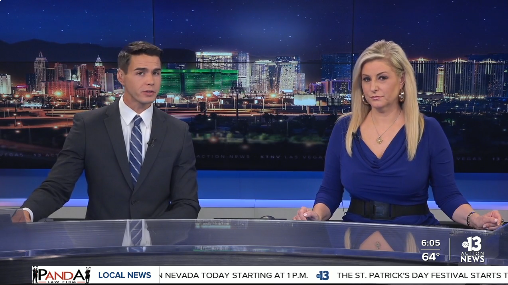
LAS VEGAS (KTNV) — Care and comfort are the basic expectations families have when taking a loved one to a nursing home. But sometimes, that's not what you get.

We first shared the story of Henry Owens in August, 2020. Henry passed away six months after our story aired.

His sister, Theresa, has never stopped fighting to ensure he did not die in vain.

Our story about Henry's plight, and Theresa's relentless pursuit of justice, got the attention of Nevada Assemblywoman Shondra Summers-Armstrong, who proposed a new law to keep an eye on one of our state's most vulnerable populations.

"Everybody that sees the pictures... They're mortified," Theresa Owens-Bigay told 13 Investigates in 2020.

What can happen in nursing homes can be horrific as elderly people entirely dependent on the care of others are sometimes neglected, abused and suffering.

"It was horrible," Theresa said about her brother's care. "Nobody should have to live in those conditions, whatsoever. Nobody!"

Theresa's lawsuit, which is still ongoing, accuses Life Care on Harmon and Eastern avenues of multiple failures in care, like placing Henry's water out of reach, not helping him eat or drink, leaving his food and juice out for several days to spoil, and not changing his soiled diapers.

Medical records referenced in the lawsuit show Henry suffered numerous urinary tract infections due to being left for hours in soaking diapers and sheets.

He was sent to the hospital for treatment of those infections multiple times, as well as for severe dehydration, MRSA and sepsis.

When Theresa went to visit him on March 28, 2019, she recalls:

"It was lunchtime and I came into the dining room, and low and behold he's laying on the ground. And I got the camera out and I started filming. 'You don't need to film this,' the administrator said. And I said, 'Yes I do, honey.'

When COVID hit and Las Vegas went on lockdown, Theresa and her camera were kept out. No family or friends were allowed to visit loved ones in any Nevada nursing homes at the time.

That gave Theresa the idea to propose "Henry's Law," which will ensure there are eyes and ears in a patient's room so family can always keep tabs on their care.

DARCY SPEARS: "You saw the care that he was getting when you could visit him."

THERESA OWENS-BIGAY: "And that was bad."

SPEARS: "And then when you couldn't?"

OWENS-BIGAY: "I was scared. I was distraught."

Assembly Bill 202 would authorize nursing home patients or their representatives to have cameras equipped with video and sound installed in their rooms. Facilities will be required to approve the request and are prohibited from denying admission or discharging a patient over a recording device.

In addition, nursing home employees would not be allowed to refuse to enter the rooms or refuse to care for those patients with cameras.

The patient or their representative would be responsible for choosing and paying for the device, installing, maintaining and removing it.

A.B. 202 will be heard on Monday, March 13 by the Health and Human Services Committee, and lawmakers want your opinion or testimony.

Assembly Agenda for March 13th, 2023 by alyssa roberts on Scribd


You may attend the hearing at the Grant Sawyer building at 1:30 p.m. in room 4401.

The address for the Grant Sawyer building is 555 East Washington Avenue, Las Vegas, NV 89101.

You may call in and testify if you cannot make it in person. The number is 888-475-4499, and the meeting ID number is 84050949170.

You may also submit a public opinion on the Nevada Legislature website by following these step-by-step instructions:

  1. Once on the website, go to the top right of the page on the blue bar and click "Scheduled Meetings"
  2. Scroll to the bottom of the page and click "Upcoming Events"
  3. Then scroll down to Monday, March 13, 2023
  4. Scroll down to time 1:30 pm. There are two 1:30 pm time slots. Click the one that reads "Assembly Committee on Health and Human Services"
  5. Then click on "A.B. 202"
  6. Scroll down to the bottom of the page and see "Public Opinions." That is where you can submit your opinion.

Full Article & Source:
'Henry's law' seeks to allow cameras in nursing home patient rooms

Friday, May 13, 2022

Lawyer: 1 in 4 nursing home residents suffer or witness abuse. Camera law will help.

by Michael Brevda


In March, a new law went into effect in Ohio allowing families to install cameras in nursing home rooms to monitor their loved one’s well-being.

This legal change allowing cameras in nursing homes is an added layer of protection for Ohio’s most vulnerable patient population.

Lawmakers passed the legislation after a decade of advocacy by one Ohio man, Steve Piskor, on behalf of his mother, Esther. Legislators named the law in honor of her: “Esther’s Law.”

The law’s namesake, Esther Piskor, resided in a Cleveland-area nursing home. Her son, Steve, suspected that something was wrong with his mother, so he installed a hidden camera in her room. Unfortunately, the camera revealed numerous incidents of elder abuse, including aides pushing and yelling at Esther, shoving her face in a pillow, spraying liquids in her face, roughly repositioning her, and neglecting her basic needs for hours at a time.

Esther suffered from dementia, so she was unable to verbalize what was happening to her in the nursing home. Initially, the nursing home denied any abuse violations and the chart revealed perfect care provided to Mrs. Piskor.

However, the hidden camera allowed Steve to witness the abuse firsthand.

In the wake of the incident, the violent aide was sentenced to 10 years in prison and the nursing home was sued for negligence.

Esther’s saga is not unique. As nursing home abuse attorneys, we see this frequently. It is estimated that 1 in 4 nursing home residents suffer from, or have witnessed, abuse. The statistics are likely higher than the reported numbers, too.

The National Council on Aging estimates that only 1 in 24 cases of elder abuse are reported to the proper authorities. Elder abuse is said to affect one in 10 Americans over the age of 60, but the real numbers are likely higher still.

Tragically, sometimes it takes actual footage of the abuse to expose what is happening to a non-verbal patient.

Some nursing home corporations do not appropriately screen employees. Instead, they look for cheap labor. This means that violent predators can make their way onto the company’s payroll, gaining access to vulnerable victims that reside in the facility.

The issue of whether a family has a legal right to install a camera in their parent's nursing home room has been a sticky one.

Many states do not allow cameras in nursing home rooms because it might violate the privacy rights of nursing home staff and other residents.


Nursing homes argue that allowing cameras inside rooms raises privacy concerns due to HIPAA. However, nationally, there has been a growing trend to allow cameras in facility rooms.

Luckily, the Ohio legislature fell on the right side of this issue by passing Esther’s Law. The Ohio House and Senate unanimously passed the bill, after which Gov. Mike DeWine signed it into law.

 Families can now purchase ordinary nanny cams and place them in their loved one’s nursing home room. Families should discuss their intentions with nursing home management, so the proper notice is given to facility staff.

Even if you do not intend on watching it regularly, an unmonitored camera can have a deterrent effect on staff. When staff suspect they are being watched, inevitably, they will provide better care for the resident.

Every Ohioan with a loved one residing in a long-term care facility should take advantage of this new law allowing cameras inside resident rooms.

Through increased supervision and accountability, we can end the systemic cycle of abuse and neglect inside our nursing homes.

Full Article & Source:

Saturday, April 3, 2021

Advocates urge public support for proposed law permitting cameras in Ohio nursing homes

Proposed law sought to protect abuse
 
Public support urged for nursing home camera law
 
By: Ron Regan

COLUMBUS, Ohio — Advocates of a proposed state law that would allow placement of cameras inside rooms of nursing home residents say public support is needed to ensure passage.

Senate Bill 58, known as Esther's Law, would allow cameras to be installed in resident's rooms provided they have both the permission of the resident, or guardian as well as any roommate or assigned guardian.

The camera would be clearly displayed and the nursing home would be notified of the installation.

Esther's Law is named after a 78-year-old Cleveland woman who was physically abused by nursing home aides in 2011 and has already successfully moved through a fourth Senate Committee hearing.

The abuse was caught on a hidden camera installed by her son, Steve Piskor, who has been fighting ever since to allow cameras to be installed legally so families can monitor the safety of loved ones and gained support following recent COVID-19 visiting restrictions.

"I wish I would have had this camera," said Piskor. "The chance of my mother being abused would have been very minimal."

SB 58 is sponsored by State Senator Nicki Antonio who says a companion measure, HB 78 is also sponsored by State Representative Juanita Brent.

Meanwhile, the Ohio Health Care Association that represents nursing homes across Ohio says it's working with legislators on changes in the proposed legislation to protect privacy, including turning cameras off during bathing and hygiene and blocking video of others in rooms.

"If those amendments can be included, I don't know that we would support — but we would not opposed — and at least remain neutral," said OHCA Executive Director Peter Van Runkle.

The measure required passage by the Senate before being sent to the House where it would undergo further debate.

Similar legislation was introduced last year but failed, but this time there is more optimism the measure can become law, with public support.

Nine other states have passed similar legislation allowing cameras in nursing homes, including Washington State, where state health officials report "it's really a crucial tool to catch perpetrators."

The public is urged to contact Ohio Senator Nicki Antonio's office, as well as Representative Juanita Brent, to support the legislation.

Full Article & Source:

Saturday, December 19, 2020

State May Require Cameras In Group Homes

by Susan K. Livio

EDISON, N.J. — William Cray was found dead on the floor of his bedroom closet in a group home in Somers Point three years ago.

His mother said she’ll never know what happened to her son, a 33-year-old man with developmental disabilities. The autopsy said he died of natural causes. The operators of the state-licensed group home, Devereux Advanced Behavioral Health, didn’t say much, although she had been at odds with them in recent months over Billy’s unexplained bruises and other injuries.

Martha Cray asked a New Jersey Assembly panel last week to spare other families this fear and uncertainty by supporting legislation that would require the installation of security cameras if residents or their guardians give consent. She noted her son had suffered abuse in other licensed facilities, and when she complained and demanded an investigation, the claims were always “unsubstantiated.”

“What exactly is the purpose of having a Department of Health and (a Department of) Human Services if they don’t oversee these facilities and hold them accountable?” she said.

Following an emotional three-hour hearing, the Assembly Human Services Committee agreed and voted 6-0 to pass the bill (A4013).

The bill requires the group home to retain the video recordings for 90 days, and the state Department of Human Services to list the names of group homes that have cameras on the state website. The bill, which was amended before the vote, makes clear the cameras would be installed in common areas — including backyards and doorways — and only if all of the residents agree they want them.

“The loss of a child, is best described as a state of purgatory and hell wrapped up in one,” Cray said as she wept. “The families who are testifying before this committee today that are feeling the stress of sleepless nights, is a fraction of the pain and stress they will have, should they lose their loved.”

Priscilla Quesada of East Windsor, the mother of a 21-year-old nonverbal son with autism who lives in a group home, said she believes cameras would help keep her son safe. She showed photographs of bruises around her son’s neck and rug burn on his face, among other injuries.

“No one knew or could give me an explanation on how these incidents occurred,” said Quesada, who described the guilt she feels as a “bad mother” for leaving her son in group care.

Representatives from the group home industry asked the committee to vote no and consider how cameras in common areas like living rooms would violate the residents’ privacy.

Cathy Chin, executive director for the Alliance for the Betterment of Citizens with Disabilities, shared with the committee a research paper that found cameras in homes of people with intellectual disabilities raises the level of distrust from employees and give families a false sense of security.

Brent A. Hayward from the Office of Health and Human Services of Victoria, Australia, after reviewing 43 research papers on the subject, concluded: “it was disliked by people with disabilities and was regarded with suspicion by staff. Functionality was limited and the ethical challenges associated with its deployment are considerable.”

At a time when budgets are stretched to acquire personal protective equipment to prevent the spread of the coronavirus, “cameras are a waste of resources,” Chin said.

Evelyn Ramundo, president of the Statewide Self-Advocacy Network, an organization comprised of people with disabilities, said she surveyed her members and the “vast majority” opposed the idea of living under surveillance.

The bill “does not say who will be able to review the recordings,” Ramundo said. “Can you imagine being watched in your own bedroom or living room? The thought frightened me.”

“Cameras do not stop abuse or neglect,” she added. “Cameras cannot stop it when someone is choking.”

Assembly Human Services Chairwoman Joann Downey, D-Monmouth, who is also the prime sponsor of the bill, stressed that everyone living in the group home must consent to the use of cameras in the common areas. If anyone says no, they would not be installed. Residents could request them for their bedroom — paid for by the resident’s family — but if it is a shared space, there needs to be consent by everyone sharing the room.

Downey said she was “really kind of upset” because it appeared the self-advocates “were fed information” that wasn’t true.

“We’ve gone through every particular thing to make sure this balances privacy and protecting people,” Downey said. “If they don’t want it, they don’t have to have it.”

Downey added that some group homes use cameras with great success because they protect both residents and staff, who otherwise may be falsely accused of wrongdoing.

Jessica Gustafson, a former Devereux employee who said she was warned by management that Billy Cray had a habit of falsely accusing staff of abuse, said she came to know him well and witnessed his mistreatment.

There is no reason employees should object to cameras unless they have something to hide, Gustafson told the committee.

“Cameras should be installed in every hospital, nursing and group home in America,” Gustafson said. “While abuse may never go away completely, cameras would definitely decrease the amount of abuse. The men and women that have to live in a group home have the right to feel safe.”

Full Article & Source:

Sunday, November 3, 2019

Cameras capture shocking abuse of disabled adults at Florida group home


By Doha Madani
 
Surveillance video shows four caretakers in a Florida group home involved in the alleged abuse of a mentally disabled woman who was pushed, shoved and had her head stepped on.

Breneisha Blunt, Shaneka Hester, Jaleyah Wiggins and Carolyn Joe were all charged with aggravated abuse of a disabled adult after police were called to check on an injured patient Aug. 13, according to the Mount Dora Police Department.

Hester, 42, called police to say the unidentified patient, who lived at the Attain Incorporated group home because of a diminished mental capacity, had injured herself while acting out, according to an arrest affidavit. The woman had a cut on her lip and a scrape on her knee.

Police documented the injuries before contacting the Department of Children and Families, who then received permission to review surveillance camera footage.

Video from two different angles in the group home showed the mentally disabled woman being beaten by the four caretakers, police said.
Jaleyah Wiggins, Sheneka Hester, Carolyn Joe and Breneisha Blunt
Jaleyah Wiggins, Sheneka Hester, Carolyn Joe and Breneisha BluntMount Dora Police Department
Hester is seen on video shoving the woman to the ground, which authorities believe caused the woman to skin her knee, police said. Then Wiggins, 24, and Joe, 25, each shove the unidentified woman in separate instances. Blunt, 29, was also seen on video hitting the woman with a closed fist multiple times, the affidavit said.

Joe is then seen in a section of the video putting her right foot on the woman's head and shifting her weight entirely on her right foot, according to police.

"Carolyn Joe is very heavy set and could have easily caused great bodily harm or even death to (the patient)," the affidavit said.

Source:
Cameras capture shocking abuse of disabled adults at Florida group home

Saturday, September 10, 2016

With New Mandate, Special Ed Classrooms Get Cameras

KELLER, Texas — Ten years after she first asked the Keller school district and state lawmakers to install cameras in classrooms for children with special needs as a safety measure, Breggett Rideau is finally seeing her request fulfilled.

Beginning this school year, Senate Bill 507 requires Texas school districts to install, operate and maintain video cameras and video-audio recording equipment in some special education classrooms if a parent, trustee or staff member requests it. The system is intended to ensure the safety of students with disabilities in classrooms where they spend more than half their school day.

Officials say Rideau’s son’s classroom at Keller High School is one of the first in Texas to be equipped with cameras and audio equipment at the request of a parent. Terrance Rideau II, 21, known as “Lil’ T” by family and friends, is nonverbal student who uses a wheelchair and who has attended Keller schools since the age of 3.

Other Texas school districts are installing cameras or processing requests.

Rideau had been asking the Keller school district for a camera in Terrance’s classroom since 2006 — but was told it would be illegal.

In 2013, the Rideaus won a $1 million judgment against the Keller school district because of injuries — including a fractured thumb, dislocated knee and head contusion — that Terrance received between 2008 and 2010 while a student at Keller Middle School. The federal lawsuit asked the Keller district to take responsibility for the injuries, which the Rideaus say were caused by a special education teacher who is no longer with the district.

Rideau made at least 20 trips to Austin in 2013 and 2015 trying to get the law passed, even hiring lobbyists in the last session to help her win the battle.

“I didn’t have a clue how to do this when I started,” Rideau said. “I got a degree in food science, not law and public policy, but I prayed and God helped me.”

Public hearings conducted by the Texas Education Agency drew a wide range of comments, both in support and opposition to the plan.

One special education teacher commented that “a couple of bad apples should not bring on such a huge undertaking.”

Some administrators voiced concerns about how much the cameras would cost.

One person said the financial obligation would be offset by the “deterrence of abuse and neglect by educators” and the “deterrence of false accusations against educators.”

School districts updating policies

Texas Education Commissioner Mike Morath issued updated rules regarding the cameras Aug. 15, and school districts were instructed not to use federal or state special education money to pay for the cameras and related equipment.

The estimated costs vary from one district to another. The updated state rules say that “on a per classroom basis, school districts have estimated costs ranging between $3,500 and $5,500. School districts have estimated that conducting video surveillance districtwide could cost anywhere from $350,000 to $6.8 million.”

Keller district officials earmarked $100,000 in their 2016-17 budget for special education classroom cameras and recording equipment. Cost estimates range from $2,500 to $10,000 per classroom, based on recording equipment needs and the technology infrastructure in place at the campus, Keller officials said.

Many districts recently adopted or are in the process of updating policies because of the rules update. Keller is scheduled to vote on its Special Education: Video/Audio Monitoring policy at a meeting this week.

Clint Bond, spokesman for the Fort Worth school district, said that officials were still finalizing their procedures, which will go before trustees in the coming weeks. Administrators are requesting $300,000 be set aside to deal with requests. Fort Worth has received three requests for cameras, Bond said.

Northwest school district officials have received five requests so far and are finalizing the procedures to fulfill them.

In an emailed statement, Emily Conklin, Northwest communications director, said, “… we believe this is a good law to protect children and staff members; however, we continue to disagree with the Legislature’s decision not to fund this mandate. NISD will be working with our local legislators during the next session to gain funding for this new law.”

‘Every child deserves to be safe’

In Keller, in addition to the camera system at Keller High School, another one was installed in a special education classroom at Fossil Ridge High School.

Amanda Bigbee, in-house attorney for the Keller school district, said another five requests are being processed at Bluebonnet, Park Glen and Whitley Road elementary schools, the new Early Learning Center South and Trinity Springs Middle School.

Each video recording system retains six months of recordings. Before cameras are activated, all parents of students in the class and all staff members on campus must be notified. Bigbee said Keller administrators also posted signs at the door of the classroom. No one on the campus has access to the video feed.

If an injury incident is suspected, a district-level committee, which would include a special education director and a behavior specialist trained in appropriate restraint measures, would view the recording, she said. A parent would not be allowed to see the video unless an incident was confirmed by the committee.

“The statute is pretty specific to ensure the process is not abused and cannot be used inappropriately,” Bigbee said.

Rideau, whose lobbied for the legislation, said she hopes to extend the law to the federal level to make classrooms safer for the most vulnerable students like her son, and has talked to other interested parents across the United States and in Canada. A Facebook group, “Cameras in special needs classrooms,” has more than 26,000 likes.

“Every child deserves to be safe in school,” she said.

Full Article & Source:
With New Mandate, Special Ed Classrooms Get Cameras