Showing posts with label Group Home. Show all posts

Friday, July 24, 2026

Woman who is mentally ill assaulted at group home, complaint says

Man who identifies as female charged with sex crime at facility for women where he also lived

 
By BILL SCHANEN IV

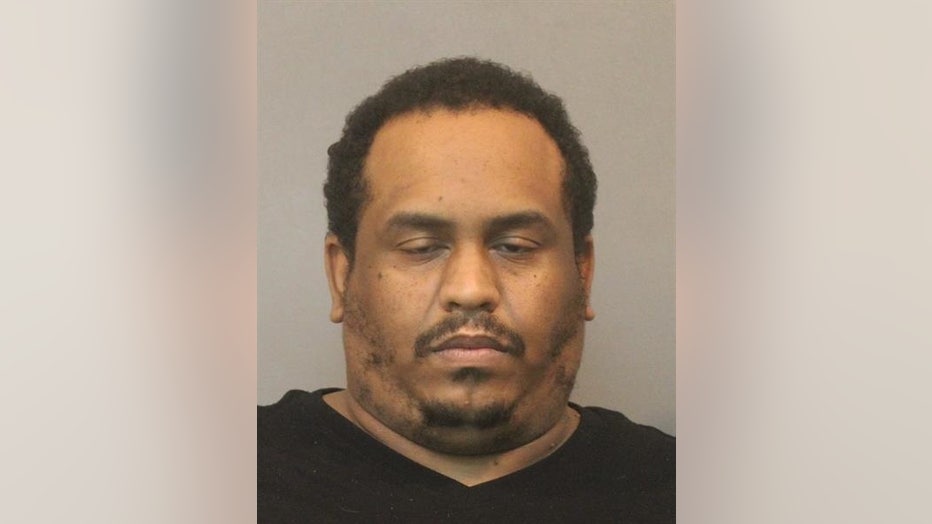
A 33-year-old resident of a Town of Port Washington group home for women under protective guardianships is accused in Ozaukee County Circuit Court of sexually assaulting another resident of the facility earlier this year.

Madison E. Robison was charged on July 10 with second-degree sexual assault of a person with a mental illness and is being held in the county jail in lieu of $50,000 bail.

According to a criminal complaint, Robison identifies as a female but is a biological male who is listed as such on government records. The complaint refers to Robison as a man.

On July 4, Ozaukee County sheriff’s deputy Kendra Carter was called to 33 Fields, a group home for women on Highway 33 where Robison lived with women with mental disabilities, to investigate a report from a citizen that Robison posted a video online that referenced sexual activity and had taken advantage of a resident of the facility, the complaint states.

Carter interviewed a resident of the home who is under protective guardianship and diagnosed with cognitive developmental delay, autism spectrum disorder, attention deficit hyperactivity disorder and generalized anxiety disorder. Staff members said she has the mental capacity of a person who is 6 or 7 years old and produced documentation that shows the woman is classified as a vulnerable adult who “may not understand a potential threat from others,” according to the complaint.

When questioned by Carter, the woman repeatedly denied having sex with Robison, who she referred to as a woman, but said, “I don’t like Madison bullying me,” the complaint states.

When Carter asked the woman if she knows what sex is, she replied, “It’s like when you have sex with someone and they want to, like, hurt, kind of want to hurt you.” She also said, “Sex is they say I love you. They want to be like a friend,” according to the complaint.

The woman said that although Robison has long hair like a woman she knows he has male anatomy. When asked by Carter if Robison had intercourse with her, the woman began to cry and said, “I mean, like, it was only one time. I mean that’s it,” the complaint states.

Carter than asked the woman if she wanted to have sex with Robison and she said, “No, I mean I told Madison to stop doing that because ... she was doing it hard on me. I told Madison to stop, but Madison wouldn’t stop,” adding that the incident occurred in Robison’s room in the basement of the group home, according to the complaint.

The woman said she is scared of Robison and had been staying in her room to avoid him. A group home staff member confirmed this and said Robison arrived at the group home on March 11. The complaint alleges the sexual assault occurred between March and July.

Carter talked to another woman at the group home who is under a protective guardianship and diagnosed with schizoaffective disorder, has intellectual disabilities and suffers from selective mutism due to anxiety. She is at risk for self-harm and is not allowed to be in the group home without a staff member present.

This woman told the deputy that she and Robison had sexual intercourse in the basement of the group home but it was consensual, the complaint states.

She said, “We had sex. Then he said that it was both consensual. We both agreed to this. There’s nothing wrong,” according to the complaint.

The woman said Robison asked her if she fantasizes about him and told her he loved her. She said Robison also talked about wanting to have sex with the woman he is accused of assaulting, the complaint states.

Robison admitted to having sex with the woman who said it was consensual and told Carter, “Me and a housemate, we consented on it. I don’t know who would say it was assault, but it was basically consent,” according to the complaint. 

Full Article & Source:
Woman who is mentally ill assaulted at group home, complaint says 

Sunday, May 17, 2026

Former Indiana caretaker found guilty in beating of disabled resident caught on video

by Nic Flosi

A former caretaker at a Hammond group home has been found guilty of battering a disabled resident during a 2022 incident, according to prosecutors.

Caretaker guilty in Hammond assault case

The backstory:  A jury convicted Juan Quintiones Joyce on several counts, including battery resulting in bodily injury to a disabled person, a Level 5 felony.

Juan Quintiones Joyce

The charges stem from an incident at an In-Pact group home in the 1700 block of 171st Street. Prosecutors said the victim, a 45-year-old resident, suffered visible facial injuries.

Dig deeper:  According to police reports, surveillance video captured the moments leading up to and during the attack. Investigators said the footage showed Joyce placing his hand on the resident’s back and guiding him from the kitchen to the living room while telling him to sit down.

Police said the resident returned to the kitchen moments later, sat down and grabbed a piece of paper from the table. Joyce then took the paper from him and told him to "get out of here before we wrestle."

The video shows Joyce asking the resident if he was ready to wrestle while moving a chair and the table away, police said.

Joyce is then heard saying, "get your a** up and let’s go." He walks toward the resident, swats at him with his hand and grabs him in an attempt to remove him from the kitchen.

A struggle ensues, and the resident falls to the floor. He then runs to the living room, where the confrontation continues. The video shows Joyce punching the resident multiple times in the face and torso after the resident grabbed Joyce’s shirt while pinned down with a padded kick-shield.

The altercation then ends. The video shows Joyce giving the resident a frozen item from the freezer to place on his face and later offering water.

Several minutes after the scuffle, investigators said Joyce was heard on the phone describing the victim’s swelling, saying, "He swelled up. He kinda swelled up, he f***ed himself up." He added, "I kinda had to elbow him to get him off of me and I kind of left a bruise on his face."

He then said, "Nah, he tried to bite my shirt and sh*t, you’ll see it."

Officers who responded days later reported seeing bruising under the victim’s eye and cheek. Photos were taken to document the injuries.

The victim, who has autism, bipolar disorder, schizophrenia and a history of self-injurious behavior, had lived in the group home for years, according to his legal guardian.

Joyce was fired from his job shortly after the incident was discovered.

What they're saying:  "This verdict reflects the commitment of our office and our law enforcement partners to protecting vulnerable members of our community and holding offenders accountable," Lake County Prosecutor Bernard Carter said in a statement.

What's next:  Joyce now faces sentencing, but it remains unclear when he is due back in court.

Full Article & Source:
Former Indiana caretaker found guilty in beating of disabled resident caught on video 

Tuesday, September 16, 2025

Tuscaloosa Woman Charged With Stealing $24,000 from Veteran at Group Home


A Tuscaloosa woman was arrested this week after an investigation found that she allegedly exploited an elderly veteran living at the group home she operates for more than $24,000.

In a deposition filed on Friday, police said Shawanda Taylor operates a residential care home for veterans in West Tuscaloosa.

Police said an advocate from an outside organization contacted the Tuscaloosa Police Department and said they suspect Taylor had stolen a large amount of money from an elderly man living there.

TPD found that Taylor allegedly accessed the patient's financial accounts and spent $24,112 of the man's Social Security money.

The victim reportedly has a conservator, whom Taylor reportedly bypassed before fraudulently obtaining power of attorney and accessing his financial accounts. The 53-year-old Tuscaloosa spent the money on personal expenses and other things unrelated to the patient she allegedly exploited, police said.

Taylor was arrested and charged with first-degree financial exploitation of the elderly, a Class B felony, and first-degree exploitation of assets, a Class C felony.

Her combined bond was set at $7,500, and Taylor has been released from custody since her Friday arrest. 

Full Article & Source:
Tuscaloosa Woman Charged With Stealing $24,000 from Veteran at Group Home 

Saturday, July 19, 2025

Man charged with elder abuse at Lake County group home

The director of a group home in Umatilla, Lake County, has been arrested and charged with felony battery on a person 65 years old or older.

He has been released on $10,000 bond, pending trial. An arraignment for Pedro Custodio has been set for the first week in August.

Custodio, who has for years been known around Lake County as "Pastor Pete,” was arrested July 12. A Judge has ordered him to have no contact with two group home residents who contacted the Lake County Sheriff’s Office, alleging abuse.

A 77-year-old woman, who did not want to be identified or interviewed on camera, spoke with WESH 2 News outside the home Friday.

She did not want to discuss Custodio’s arrest. But she and her roommate provided details to the sheriff's office that ultimately led to Custodio’s arrest.

Lake County Sheriff’s Office spokesperson Stephanie Earley told WESH 2 News, “She (the alleged victim) said that while she was having a conversation with Mr. Custodio, he became upset with her for speaking excessively to which then he grabbed her and pushed her down, causing her to fall.”

According to the arrest affidavit, the alleged victim's "left thigh" had a large "bruise." The women then recalled another "recent incident" in which "Custodio pushed the alleged victim, striking her and choking her with his hands."

What allegedly happened at the home is not the first time Custodio has been in trouble with law enforcement in Lake County.

In 2022, he was arrested for throwing a deadly object, a boxcutter, at a man through a car window. He was found guilty and given probation. In 2020, he was charged with battery on a disabled adult, but the state declined to prosecute. And in 2014, Custodio was charged with two counts of sexual battery.

In that case, Eustis police said Custodio allegedly attacked women inside a homeless shelter called "Our Father's House of Refuge Ministries." That case went to trial, but a jury acquitted him.

The sheriff's office wants anyone with information about Custodio's actions to come forward.

And they urge loved ones of seniors in group care to monitor their health and welfare.

“Make sure to visit them often. Make sure to communicate with them and communicate with the staff, and monitor the care they're providing," Earley said.

Full Article & Source:
Man charged with elder abuse at Lake County group home 

Thursday, May 26, 2022

Miami-Dade leaders announce task force to investigate abuse of those in elder and vulnerable care

By Raphael Pires, Tavares Jones


MIAMI (WSVN) - Group home horror has landed three employees in hot water, and this, as well as other cases, has led to the formation of a new task force.

Miami-Dade State Attorney Katherine Fernandez Rundle released surveillance video of the employees back in December struggling to restrain a patient at the group home known as the Family Tree Concept, Wednesday.

The video showed them aggressively taking him down, putting the patient in a choke-hold, which ultimately ended his life.

“He was lifeless, and they basically choked hold him to death,” said Rundle. “The group home staff appeared to have little training on how to actually deal with problems related to mental illnesses or training on how to restrain a person without injuring them or killing them.”

Katherine Hair, Terrence Nelson Jr. and Derrick Coley have all been charged with manslaughter and aggravated abuse in connection with the man’s death.

Rundle, along with the county’s mayor and several other officials, gathered Wednesday afternoon to announce the formation of the Elder and Vulnerable Abuse Work Group with the goal to stop incidents like this from happening again.

“We need to do more to fight elder and vulnerable adult exploitation abuse,” said Rundle.

7News stopped by the facility at 1370 NE 138th St. in North Miami to try get some answers, but no one wanted to talk.

The group also spoke about several other cases involving elderly abuse and exploitation, including one where a woman allegedly pretended to be someone else online to gain the trust of an elderly victim and was able to swindle her out of large sums of money.

Another example is a case where a woman in Doral, pretended to be the daughter of an elderly cancer patient to sneak into a hospital and scam her out of hundreds of thousands of dollars. That suspect has not been arrested, although her son has a connection to the crime.

“We are going to get to work protecting our older adults, our vulnerable population from abuse, fraud and exploitation,” said Miami-Dade County Mayor Daniella Levine Cava.

Florida ranks second in the nation for the number of victims of crime against those age 60 and older. Miami-Dade County ranks number one in the state.

“Sadly, of course, the problem hasn’t gotten better, it has only gotten worse,” said Levine Cava.

The multiple agencies working together said they are in need of the public’s help because they rely on reports filed. Then, they are able to pursue the people responsible.

The three employees are due back in court on June 23.

Full Article & Source:

Sunday, May 1, 2022

Employee at group home owned by Diyonne McGraw arrested for abuse of a disabled person

Wanda Denise Thomas

BY JENNIFER CABRERA

Wanda Denise Thomas, 59, an employee of both the Florida Department of Children and Families (DCF) and Easy Living Group Home, which is owned by Alachua County School Board candidate Diyonne McGraw, was arrested last night and charged with two felony counts of abuse of an elderly or disabled adult.

The arrest report states that a deputy from Alachua County Sheriff’s Office responded to the Easy Living Group Home at 2673 SE 18th Avenue in reference to a DCF investigation. According to the report, the business provides housing for mentally disabled adults, and the victims in this case are vulnerable adults due to intellectual impairments.

The case began with an anonymous report to DCF, alleging abuse to two or more residents in the home, specifically that the victims had been struck with a belt and had bruises on multiple areas of the body. Because Thomas, the suspect, is an administrative assistant at DCF in Alachua County, the investigation of the case was handled by a DCF investigator from Marion County.

The deputy reported that he spoke with a caretaker on site at the group home, and the employee said that the home is owned by Diyonne McGraw and that his direct supervisor is Rodney Johnson. The employee told the deputy that he had noticed bruises on two residents starting around March 11 and that he had documented the injuries with photos.

Interviews with the injured residents were difficult because the residents have difficulty communicating, but both were able to point to the locations of the injuries, even in cases where those injuries had healed. One resident reportedly mentioned “Wanda” and “belt” while lifting his shirt to show where he had been injured. Another resident still had visible injuries, including long, narrow bruises that are “consistent with being hit by a belt.”

Other residents who are high-functioning and better able to communicate stated that they had observed Thomas striking the two residents, one “due to his behavior” and the other “for not listening to instructions given by Wanda and for his random screaming throughout the day.”

Thomas’ supervisor at DCF told the deputy that Thomas had spoken with her about how difficult it could be at times to work at the group home. The report continues, “Wanda stated that she uses a belt to control the unruly residents to which [the supervisor] informed her that she cannot do that. Wanda seemed confused and asked why not before again saying that she does it and that her supervisor is aware that she uses a belt to hit the residents.”

The DCF supervisor also said that Thomas told her she has seen bruises on the residents, and the supervisor reminded her that she is a “mandatory reporter” who is required to report injuries to DCF when they are brought to her attention. The report states, “Wanda advised that she has not reported the injuries in fear of losing her job.”

Thomas’ supervisor at the group home, Rodney Johnson, reportedly told the deputy that he was not aware that Thomas used a belt or physically disciplined the home’s residents.

Thomas has been charged with two counts of abuse of a disabled adult; she has been released from the jail on her own recognizance with the condition that she not return to the group home.

Diyonne McGraw and DCF have not responded to our requests for comments.

Articles about arrests are based on reports from law enforcement agencies. The charges listed are taken from the arrest report and/or court records and are only accusations. All suspects are innocent until proven guilty in a court of law. 

Full Article & Source:

Sunday, July 18, 2021

What happened to Britney Spears also happened to me — in Florida | Opinion

by Viviana Bonilla Lopez and Michael Lincoln

Since Britney Spears testified recently about the harm she experienced in her conservatorship, many people have expressed shock and horror. But we were not surprised. It happened to one of the authors of this piece, too.

Before my (Michael Lincoln-McCreight's) guardianship here in Florida, I was active in the community. I worked with the Guardian Angels program, went to the movies, volunteered at the hospital and attended church. After my guardianship, I was placed in a group home I could not leave. I could not go to church or participate in activities. I could not get rides from friends. I felt like a hostage. I had no rights. 

These stories are not unique. In Florida, we have seen multiple news reports exposing guardians abusing, neglecting and exploiting the people under their care by selling their belongings, misspending their money and making medical decisions that harm rather than help them.


As the #FreeBritney movement sheds light on guardianship (known as conservatorship in some states, including California), we must take this moment to address Florida’s own crisis. Supported Decision-Making is a big part of the solution.

Supported Decision-Making is an alternative to guardianship that allows people with disabilities to make their own decisions with the support of people they trust. Instead of losing all their rights and having someone decide for them — as would happen under a guardianship — a person with a disability can use SDM to lean on loved ones for assistance with exercising their rights.

Guardianship is a severe tool that should only be used when there are no alternatives, but many judges and parents do not know about SDM. 

While guardianship gives all the control to one person, SDM allows people with disabilities to create a team of supporters and develop stronger ties to the community. This makes it harder for one person to abuse them. Studies also show that people who have greater self-determination are more likely to identify abusive situations and less likely to experience abuse.


For these reasons, there is wide support for SDM in Florida. The SDM4FL coalition we co-chair includes 12 disability advocacy organizations, individuals with disabilities and their family members. The Florida Public Guardian Coalition and the Public Interest Law Section of the Florida Bar support SDM. Nationwide, SDM has support from the Social Security Administration, the American Bar Association, the National Guardianship Association, the U.S. Department of Education and the Administration for Community Living.

Last session, Sen. Joe Gruters and Rep. Allison Tant introduced SB 1010 and HB 681, which aimed to create a Supported Decision-Making Law. The law would detail who can use SDM and how, provide a sample SDM agreement, and require judges to consider SDM before appointing a guardian. It would also require schools to provide caregivers with information on SDM.

Building on the conversation we started last session, we are once again asking the Florida Legislature to pass a Supported Decision-Making Law. SDM saved Michael’s life. In 2016, he became the first person in Florida to terminate his guardianship in favor of an SDM agreement. Now he works as a security guard, lives alone, drives his own van, goes to church and hangs out with friends. He has also become a leader in the disability rights community.

We invite all Floridians to visit idecideflorida.org to learn more about SDM and how you can support our efforts. We do not want anyone to have to go through what Michael and Britney Spears have. When Supported Decision becomes law, we hope no one will. 

Full Article & Source:

Monday, March 8, 2021

I-Team: Bedridden man in group home told police he had not eaten in days; agency investigates elder abuse claims

Nevada state office investigates allegations about vulnerable, elderly adults

 
by: David Charns

LAS VEGAS (KLAS) — A recent allegation of elder abuse and neglect involved a man telling police he had not eaten in three days, documents obtained by the I-Team said. The case began with a report made to Adult Protective Services (APS), a state program investigating claims of suspected abandonment, abuse, exploitation, isolation or neglect.

A team of investigators and social workers is tasked with keeping our parents and grandparents safe, including any vulnerable adult who is entrusted into another person’s care.

The office, formerly known as the Elder Protective Services program, classifies a vulnerable adult as someone who is in the care of another person between between the ages of 18 and 59. A person older than 60 is considered an older person when it comes to the state definition.

In one case, a supervisor informed APS about an allegation at an independent group home in Las Vegas. According to an arrest report for the homeowner, one man in the home was “bedridden and unable to care for himself” and begged “for food and stated that he [had] not eaten for three days.”

The home’s owner, Salome Rosales, is charged with four counts of abuse and neglect of an older or vulnerable person, court documents said. The report said one resident told police the home is full of tenants with “memory loss” who “need additional medical care.”

One resident told police she had fallen off her bed and broke a finger and “did not get any medical attention at the time of the fall,” according to the report.

“Even just one case of elder abuse needs to be considered a problem,” Tammy Seaver, social services chief with APS, said. “I think one of the most important things you could do is to make sure our vulnerable population is protected and receiving the care that they so deserve.”

Last year, APS responded to more than 9,000 allegations involving adults over the age of 60. 

Reports to APS can come in several forms. Oftentimes, a family member will report an allegation. Mandated reporters, including doctors, hospital employees, social workers and musical therapists, are required to report any suspicions.

But, not all cases move forward.

“If a client does not want us to pursue, we cannot go further into the investigation,” Seaver said.

Data obtained by the I-Team shows out of more than 6,600 closed cases statewide last year, APS found 565 cases of substantiated abuse, 442 cases of exploitation and 258 cases of neglect. The total number of cases was slightly higher year-over-year from fiscal year 2020 to 2019, Seaver said.

“It’s starting to be talked about more, and people understand that there are problems out there that need to be reported,” she said.

If criminal charges are warranted in Southern Nevada, APS will forward the case to Metro Police.

Rosales remains out on bail with the stipulation she not house any elderly adults.

APS has two phone numbers to make a report:

  • Clark County: (702) 486-6930
  • Statewide: (888) 729-0571
Full Article & Source:

Saturday, May 30, 2020

Mobile DA: Group home elder abuse victim tests positive for COVID-19

The Mobile County Sheriff's Office says the scribbled out portions of this photo marks out where a person is in the bed and another is in the chair.
by Toi Thornton

MOBILE, Ala. (WALA) -- The Mobile County district attorney tells FOX10 News one of the victims in a group home elder abuse case has tested positive for COVID-19 and others suffer from pneumonia.

“These individuals are all being treated in the hopsital now for various illnesses including pneumonia and COVID. They needed treatment at the facility and were not given that treatment,” said District Attorney Ashley Rich.

While DA Rich maintained the home is not a boarding house, one of the suspects' attorney Dennis Knizley said it is.

“This is a boarding house. This is not a group home. This is not a nursing home,” Knizley said. “Like any other boarding house they provide 3 meals a day and some minimal cleaning. That’s what they do. They’re not the caretakers of these people.”

Deputies with Mobile County Sheriff's Department said Wednesday the elderly veterans had no access to food and water, the a/c was broken, the fire alarm wasn't functioning and the refrigerator and cabinets were padlocked.

“I was there at the scene when it unfolded and it was deplorable. It was horrific conditions. It’s the worst possible thing that I could imagine that we could do to a veteran as a society. These individuals are going to be held accountable for what they did,” DA Rich added.

Knizley argues these allegations are overblown.

“You’ve seen these pictures of locked up refrigerators and things like that, that’s only after 5 o’clock. All during the day they have ample access to food and meals. After 5 o’clock they have snacks in their room, they have water and that’s like any other place,” he explained. “Air conditioning units in ever room, working. The smoke detectors were taken off the wall they’re fine. Where these allegations come from, you heard one that there wasn’t no one there for a week. This is totally untrue.

Deputies also found a large amount of prescription medication at the Owens' home. Knizley said they were 2 or 3 years old.

"Some of the people  that are living there, they take their medication, they don’t take it all or they get and change their prescription. They have left over medication. Those left over medications, you don’t want to leave them around the place for someone to pick up and use. They take them from the boarding home to their own home and don’t just leave them out for someone else to use. Yes they could’ve discarded them,” Knizley explained.

After authorities discovered the conditions at the group home in Grand Bay earlier this week, they made two arrests.

Donny Owens, 49, owner of One Life Management, was arrested and charged with one count of first-degree elderly abuse and neglect and five counts of elderly abuse and second-degree neglect.

Tilena Kim Owens, 49, also was charged with several counts of elder abuse and neglect.

Both have been released on bond, according to Mobile County Metro Jail records.

“This is a very, very large investigation and we have multiple disciplinarian chains from all over the state and country that are looking at this because it is veterans,” Rich stated.

The Mobile County Sheriff's Office describes the facility involved as an unlicensed group home for elderly veterans.

It was Tuesday evening, deputies said, when one of the six elderly veterans living in the home left to get help for two others who had fallen.

Full Article & Source: 
Mobile DA: Group home elder abuse victim tests positive for COVID-19

See Also:
Second person charged with elder abuse, neglect over Grand Bay group home

Man charged with multiple counts of elder abuse and neglect in Grand Bay
 

Friday, May 29, 2020

Second person charged with elder abuse, neglect over Grand Bay group home

Tilena Owens, left, has been charged with elder abuse and neglect, as has her husband Donny Owens.
By Lawrence Specker

A second person has been arrested in the case of a Mobile County group home where authorities say six veterans were found in “deplorable” conditions this week.

Meanwhile a Mobile County Sheriff’s Office spokeswoman said the MCSO was working with federal investigators on the case. Another sheriff’s department official said that the six residents remained hospitalized and that authorities were working to establish whether other properties owned by the home’s operators might also be used as group homes.

Jail records indicated that Tilena Kim Owens, 49, was booked into Mobile County Metro Jail shortly before noon on Thursday and remained there early Thursday afternoon. She was charged with one first-degree count of elder abuse and neglect and three second-degree counts.

She is the wife of Donny Boyd Owens, also 49, who was booked into the jail Wednesday morning. Jail records indicated that he also remained in jail Thursday afternoon. He faces one first-degree count of elder abuse and neglect and five second-degree counts.

An MCSO spokeswoman said investigators had determined that the Owens had received federal funding, though the exact amount had not been established.

Captain Paul Burch of the Mobile County Sheriff’s office said Thursday that he believed Donny Owens had been through a bond hearing at which bond was set at $20,000 for the first-degree charge and $10,000 for each of the second-degree charges. Jail records did not reflect that hearing as of early Thursday afternoon.

Burch said the sheriff’s office was aware of “several” other properties owned by the couple but had not yet established whether any of them were being operated as group homes.

As for the six men discovered in Grand Bay, Burch said they continued to receive treatment. “They are all still in the hospital and as far as we know their conditions are not life threatening,” he said.

Burch had said on Wednesday that the six residents of the home at 11050 Lakeview Lane Ext. in Grand Bay “had not seen any caretaker at the house for several days, up to a week.” Cabinets, pantries and the refrigerator were padlocked and the six residents required medical attention.

Details of their ages and medical needs have not been released.

Full Article & Source:
Second person charged with elder abuse, neglect over Grand Bay group home

See Also:
Man charged with multiple counts of elder abuse and neglect in Grand Bay

Thursday, May 28, 2020

Man charged with multiple counts of elder abuse and neglect in Grand Bay

by Laura Barczewski | Andrea Ramey

Click to Watch Video


UPDATE:

49-year old Donny Owens was arrested overnight on multiple charges of elderly abuse and neglect.

DONNY OWENS (MOBILE JAIL) Mobile County Sheriff's Office investigating possible elder abuse in Grand Bay
ORIGINAL STORY:

The Mobile County Sheriff’s Office says a resident of an apparent group home in Grand Bay flagged down a driver Tuesday night saying he needed help.

The driver called 911 around 7 p.m. Responding deputies found two seniors who had been left on the floor of the Lakeview Lane Extension home.

Of the six elderly residents that live there, three were immediately taken to the hospital and were in dire need of medical care. The other three were taken to the hospital just before 10 p.m.

Investigators say all of the residents are elderly veterans and they believe this is some type of unlicensed group home.

Officials say the residents claim they haven’t seen any staff or had any assistance in about a week. The residents were unable to take care of themselves because they had no access to a telephone, and food and liquids were locked inside cabinets.

MCSO says the conditions these residents were living in were disgusting.

"It’s sickening that anyone would treat an elderly person in this manner, especially a veteran who served our country. And this is the way they’re treated simply for money," Captain Paul Burch with MCSO said.

Officials say one of the owners of the home, 49-year-old Donny Owens, who was on the scene being interviewed, is now being charged with one count of First Degree Elderly Abuse and five counts of Second Degree Elderly Abuse. Owens was taken into police custody.

Investigators say they are currently in the process of obtaining a search warrant for the home and believe there are several other homes like it. The conditions of the other homes are unknown.

The investigation is ongoing.

(WPMI) Mobile County Sheriff's Office investigating possible elder abuse in Grand Bay

Full Article & Source:
Man charged with multiple counts of elder abuse and neglect in Grand Bay

Sunday, November 3, 2019

Cameras capture shocking abuse of disabled adults at Florida group home


By Doha Madani
 
Surveillance video shows four caretakers in a Florida group home involved in the alleged abuse of a mentally disabled woman who was pushed, shoved and had her head stepped on.

Breneisha Blunt, Shaneka Hester, Jaleyah Wiggins and Carolyn Joe were all charged with aggravated abuse of a disabled adult after police were called to check on an injured patient Aug. 13, according to the Mount Dora Police Department.

Hester, 42, called police to say the unidentified patient, who lived at the Attain Incorporated group home because of a diminished mental capacity, had injured herself while acting out, according to an arrest affidavit. The woman had a cut on her lip and a scrape on her knee.

Police documented the injuries before contacting the Department of Children and Families, who then received permission to review surveillance camera footage.

Video from two different angles in the group home showed the mentally disabled woman being beaten by the four caretakers, police said.
Jaleyah Wiggins, Sheneka Hester, Carolyn Joe and Breneisha Blunt
Jaleyah Wiggins, Sheneka Hester, Carolyn Joe and Breneisha BluntMount Dora Police Department
Hester is seen on video shoving the woman to the ground, which authorities believe caused the woman to skin her knee, police said. Then Wiggins, 24, and Joe, 25, each shove the unidentified woman in separate instances. Blunt, 29, was also seen on video hitting the woman with a closed fist multiple times, the affidavit said.

Joe is then seen in a section of the video putting her right foot on the woman's head and shifting her weight entirely on her right foot, according to police.

"Carolyn Joe is very heavy set and could have easily caused great bodily harm or even death to (the patient)," the affidavit said.

Source:
Cameras capture shocking abuse of disabled adults at Florida group home

Tuesday, July 2, 2019

Mother questions retaliation after advocating for son with developmental disabilities

Pam Dahl is the mother of Derrick Dahl, a 36-year-old man with developmental disabilities who lives in a group home in Medford. Beth Nakamura/Staff

The mother of a man with developmental disabilities, whose story of advocacy was recently published in The Oregonian/OregonLive, is now questioning if she’s facing retribution for challenging the care her son receives.

A visit with her son Thursday was cut short, Pam Dahl said, when a worker complained she badmouthed the company that runs the southern Oregon group home where he lives.

Then, on Monday, a Jackson County employee pushed to find a public guardian for Derrick Dahl, according to an email reviewed by The Oregonian/OregonLive.

Someone other than Pam Dahl should serve as a guardian, the government employee wrote in the email, because of the mother’s inconsistent contact with her son and the “disruptive nature” of her visits.

The story of Pam Dahl and her son was published a month ago as an example of the difficulties facing parents with developmentally disabled adult children and flaws in Oregon’s system that cares for them. Derrick Dahl’s caregiving team and his doctors came under scrutiny after Pam Dahl fought for specialized medical advice after learning about her son’s health issues.

Pam Dahl said she wasn’t disruptive in her visit last week but instead questioned if her son would be better-served at a different group home operated by the same company. Derrick Dahl, 36, has required medical attention for two recent falls, she said, leaving him with a concussion and a split lip.

Just days later, Pam Dahl discovered a county worker pushing to officially hand decision-making power to someone else, a move that could limit her input.

The government employee didn’t contact Pam Dahl before making the recommendation to identify a guardian, the mother said.

“I don’t think that I should be cut out of his life, and that’s what it makes me feel like,” said Pam Dahl, 55. She chose not to become her son’s guardian when he became an adult but remained involved in his life, visiting from her home several hours away.

Alternative Services-Oregon, the group home operator, denies any retribution toward Pam Dahl. Jackson County officials didn’t respond to requests for comment Tuesday.

Oregon’s Office of Developmental Disabilities Services did not immediately respond to questions about Pam Dahl’s allegations or whether the state would review the matter.

“Anyone with a concern about services can file a complaint,” an agency spokeswoman said, adding that the mother could still seek guardianship to determine where her son lives.

The state of Oregon operates a public guardianship program only as last resort. Instead of tapping a family member or professional guardian to serve in that role, a guardian from the Oregon Public Guardian and Conservator Program would make decisions for an individual.

“Guardianship is one of the most severe restrictions on a person’s right to self-determination and should never be considered lightly,” according to the agency’s website.

Chris Rosin, appointed the Oregon public guardian and conservator, in February said his office served as guardian for just 55 adults statewide, 11 of whom have intellectual or developmental disabilities.

Pam and Derrick Dahl were featured in a front-page investigation by The Oregonian/OregonLive in May examining Oregon’s flawed system for people with developmental disabilities who cannot make medical decisions and who lack legal guardians.

In such cases, medical decisions are made by an appointed health care representative with approval by a team of caregivers, service coordinators or family members.

In 2017, doctors at Providence Medical Group evaluated Derrick Dahl and identified a mass that was “concerning” for a sarcoma, a cancerous tumor, records show. But he wasn’t immediately seen by a cancer specialist.

Pam Dahl pushed for Derrick’s care team to obtain an opinion from a specialist in 2018, leading to surgery at OHSU’s Knight Cancer Institute and the revelation that the tumor apparently was not cancerous.

Pam Dahl’s decision to publicly share her son’s cancer scare exposed simmering tension with Alternative Services, the group home operator, which began years ago, according to a former employee.

The company’s executive director, Pat Allen-Sleeman, initially responded to newsroom inquiries about Derrick Dahl’s medical care from 2017 and 2018 by saying “there is really no story here to tell, except misinformation, a dramatic self-serving version and an inaccurate and harmful story.”

Pam Dahl said interactions with Alternative Services have gone downhill since the story’s publication. A visit Thursday with her son ended when a company employee asked her to leave, she said.

Pam Dahl said she questioned caregivers at the group home about her son’s injuries and said she would like him to move to a different group home, also operated by Alternative Services, where he lived until early 2018.

One of the caregivers called a supervisor and then handed over the phone.

“She said, ‘You’re going to have to leave,’” Pam Dahl said of her conversation with the supervisor. “‘We can’t have you badmouthing the company to other employees.’”

Pam Dahl said she questioned how she could be badmouthing the company when she was advocating for him to move to a different home operated by Alternative Services.

“There was no reason to ask me to leave,” Pam Dahl said. “I was stunned.”

Allen-Sleeman, the company’s executive director, said Pam Dahl was told “she should not be speaking badly about ASI to our staff, and that if she couldn’t calm down, she would be asked to leave.”

Pam Dahl asked the employees if she was being disruptive, and, when told she was, flipped the phone back to them and left, Allen-Sleeman said.

On Monday, Derrick Dahl’s services coordinator at Jackson County proposed the need to find Derrick Dahl a public guardian, according to an email Pam Dahl shared with The Oregonian/OregonLive.

Melissa Walker wrote that she received a few calls and emails about Thursday’s incident. It was her “understanding” that Pam Dahl wanted her son to move to a different group home, Walker wrote, but Pam Dahl “cannot dictate” where her son lives because she is not his guardian.

“Because of the disruptive nature of Pam’s visits and the inconsistency of her contact with Derrick, I don’t feel she would be the best guardian for him, hence my proposal of a public guardian,” Walker wrote.

Pam Dahl acknowledges that she hasn’t been consistent in her visits but disputes that she was disruptive. Pam Dahl said she didn’t speak with Walker before Walker proposed a guardian.
Neither Walker nor her boss, Rick Hammel, responded to requests for comment Tuesday.

Last week’s incident was only the latest hint of friction between Pam Dahl and Alternative Services, according to a former employee at the company.

Jamie Gregory said she was the manager at the group home where Derrick Dahl lived until April 2018. Gregory told The Oregonian/OregonLive that she remembered hearing disparaging comments about Pam Dahl and being instructed to withhold information from the mother after she learned about her son’s tumor that spring.

Around the same time Alternative Services moved Derrick Dahl to a different group home operated by the company, a move Gregory said she vocally opposed. Gregory said she was fired shortly after, which she attributes in part to speaking up for Derrick Dahl.

“If Derrick could voice his own opinion, he would not agree with the move either,” Gregory told the newsroom.

Allen-Sleeman said the program manager who allegedly made disparaging comments is on vacation and unable to respond. Allen-Sleeman said she could not comment on a former employee’s “performance issues” but said Gregory’s statements are “very questionable.”

“A disgruntled ex-employee is not a credible reporter in my estimation,” she said. “But of course that makes a better story than the actuality of what really occurred.”

It’s not clear who may make decisions for Derrick Dahl going forward.

Walker’s recommendation Monday was emailed to a Jackson County employee, Allen-Sleeman, three other Alternative Services staff members and one former company employee, who serves as Derrick Dahl’s unpaid health care representative.

Allen-Sleeman said every member of Derrick Dahl’s care team agreed he should have a public guardian.

Pam Dahl hasn’t responded to the email.

Pam Dahl said she would be interested in becoming her son’s guardian if he moved to Eugene, Corvallis or Salem. Those cities are closer to her home on the Oregon coast and would allow her to be more involved, she said.

Pam Dahl said she thinks she needs a lawyer but isn’t sure who to contact for help.

“I feel like I’m on one side against all of them,” she said, “and I need someone to represent me.”

-- Brad Schmidt

Full Article & Source:
Mother questions retaliation after advocating for son with developmental disabilities

Friday, November 2, 2018

Mother talks about son days after he was killed at a group home

Click to Watch Video
A grieving mother talking about her son, just days after the man who was supposed to be taking care of him, is accused by Mobile Police of killing him.

“We're going to remember his laugh,” said Heather Cox, Matthew Cox’s mother.

Tonight she is holding onto the small moments.

“I spoke to him Friday night and when I talked with him he was like, ‘it's my mom,’” Cox said. “My mom's on the phone.”

Homicide victim Matthew Cox
Her son Matthew died just hours after that phone call.

The police report said investigators believe Trent Yates stomped the victim's abdominal area, causing injury that caused his death. The news tragic for Matthew’s mom.

“We as their families put them there for help, to help them get independence to help them grow and the whole thing all failed,” Cox said.

FOX10 News reached out to the Alabama Department of Mental Health, they said group home operators like, New Way Out, which operated the home where the alleged crime happened, are required to do criminal background checks of employees.

When FOX10’s Tyler Fingert went to get answers on Tuesday why Yates, who has a previous assault conviction was working for them, the doors were locked and they would not come out to talk.

Trent Yates
"I mean it’s really the most heinous kind of crime that you can imagine,” said Dean Waite, the family’s attorney. “Matthew is just like a child, a four year old child and you know you entrust people to take care of children, the elderly, the disabled, not to kill them."

Heather said Matthew had autism and had the mental capacity of a four year old, but as his mom that did not matter.

“Just how happy he was, just how happy and how full of life he was, he enjoyed everything, he enjoyed his music, he enjoyed food, he enjoyed people,” Cox said.

Heather said Matthew had been at that group home since March.

Full Article & Source: 
Mother talks about son days after he was killed at a group home

Sunday, August 19, 2018

Man's death at group home illustrates challenges of meting out justice when suspect has intellectual disability

Click for Video
Herbert “Herbie” Rohloff wasn’t expected to live to 53 years old.

He was born with Down syndrome, and doctors said they did not think Rohloff would survive past his second birthday, according to relatives. As a teen, he wasn’t expected to make it to adulthood. As he reached middle age, his brother worried that the biggest threat to his life was the busy intersection outside his group home in the West Rogers Park neighborhood.

But his family never thought his life would end violently. Last October, a fight with another resident over Halloween candy turned physical, and two weeks later Herbert Rohloff was dead. Chicago police closed the homicide case by exception, meaning detectives know who committed the killing but aren’t pursuing charges because of the person’s mental capacity, said Anthony Guglielmi, spokesman for the department, in an email. The Cook County state’s attorney’s office declined to comment.

The homicide case, among hundreds in Chicago last year, was complicated from the start because of the suspect’s intellectual disabilities. The legal community has discussed for years how to mete out justice in such cases. Now an approach known as an individualized justice plan is gaining some traction as a way to hold people with intellectual disabilities accountable while providing alternatives to traditional forms of punishment. Last year, Illinois lawmakers agreed to create a task force to look at the issue.

Charging people with intellectual disabilities can be complex because it’s unclear whether they could formulate the intent to kill, said Hugh Mundy, an associate professor at the John Marshall Law School.

“Every criminal (offense), or virtually every criminal offense, required a mental state in order to prove the element,” Mundy said. “It’s not just the act itself.”

Rohloff’s brother, Michael, and his sister-in-law, Maria, have been grappling with who should be held accountable. They described him as someone who liked to eat fried chicken, listen to Prince and watch “Rocky” movies. They’ve filed a wrongful death lawsuit against Lutheran Social Services of Illinois, the organization that runs the group home where Herbert Rohloff spent his entire adult life.

“You know, I don’t think it serves a purpose for (the person of interest) to be put in jail because he will not understand,” Maria Rohloff said. “But he needs to be put where he can’t hurt anyone else.”

‘Killed over a candy bar’


Last November, Michael Rohloff got a call from his mother telling him Herbert Rohloff had been hospitalized in Evanston. He found his brother struggling to breathe, with a black eye and bruises to the head, Michael Rohloff recalled in an interview with the Tribune.

 
Michael Rohloff holds a childhood photo of his brother, Herbert, at his home in Indian Head Park. Michael said his brother "looked just like this except with a snowy white beard" when he was killed in 2017 by a fellow housemate at a group home. (Stacey Wescott/Chicago Tribune)

“He looked at me, his face lit up, like it always does, and he was like, ‘Michael,’” he said.

The last thing Herbert Rohloff told his brother was that his ribs hurt. He would spend the next few weeks at Presence St. Francis Hospital in Evanston, heavily sedated, before he died. He suffered his injuries Oct. 31 when another resident beat him up over Halloween candy, but he wasn’t taken to the hospital until the next day, according to the family and reports from Chicago police and the Cook County medical examiner’s office.

An autopsy determined Herbert Rohloff died Nov. 16 from complications of multiple injuries and from congestive heart failure, according to the Cook County medical examiner’s office. He had rib fractures and multiple injuries to his spine.

“You know, it’s ridiculous,” Michael Rohloff said. “Of all the things, I was sitting there worried about him living too close to Devon and Western because the traffic is hectic, and (there are) so many strangers in the area. And you essentially get killed over a candy bar.”

‘It’s not about pointing fingers’


There aren’t data on how many people with intellectual developmental disabilities have been charged with serious felonies, but The Arc, a national advocacy organization for people with disabilities, is trying to get funding to fill that void in research, said Leigh Ann Davis, director of its criminal justice initiatives.

There have been cases of those with intellectual disabilities being prosecuted for, and being victims of, serious crimes, Davis said. That’s why it’s important for police agencies and the courts to understand the needs of those with disabilities, she said.

“What we’ve seen happen is that law enforcement (officers) don’t decipher that there is a difference, necessarily, between people with mental illnesses and intellectual developmental disabilities, and how that’s important because they may need to provide different services for someone or they may need a different referral depending on what type of disability the person has,” Davis said. “And the more that they (officers) know about the person’s disability, the more likely they can de-escalate a situation.”

In Illinois, advocates for those with intellectual disabilities are working with local prosecutors to find a middle road that provides alternatives to traditional criminal punishment. Amy Newell, executive director for The Arc’s branch in Rockford, said the group is pushing for courts to use personal justice plans that lay out the person’s diagnosis, limitations and recommendations.

“It’s not about pointing fingers, shaming people or any of that,” Newell said. “It’s about having an open conversation and really doing what’s best and safest for everyone.”

Last year, lawmakers created a task force to examine how those with disabilities are confined in jails, how they are represented in criminal cases and how police interact with them.

 
Michael Rohloff said he was worried about his brother, Herbert, living near a busy Chicago intersection. His brother's fatal beating over Halloween candy was shocking. (Stacey Wescott/Chicago Tribune)

In Herbert Rohloff’s case, police believe a resident of the group home caused the injuries and the person was taken to a local psychiatric facility for treatment, said Guglielmi, the police spokesman. Police aren’t moving forward with any criminal charges because of the person of interest’s mental capacity, he said in an email.

Cook County State’s Attorney Kim Foxx’s office did not return multiple requests for comment.

Mark Heyrman, a clinical law professor at the University of Chicago Law School, said not pursuing charges in the case was probably a wise choice, because it would be difficult for prosecutors to secure a conviction if they couldn’t prove the person of interest comprehended what he did.

“He may have a limited understanding of what actually happened,” Heyrman said.

 
Herbert Rohloff, who had Down syndrome, was beaten during a dispute over candy by a fellow resident of their group home in Chicago's West Rogers Park neighborhood. (Stacey Wescott/Chicago Tribune)

A family seeks justice


The Rohloff family suspects a worker supervising the residents was preoccupied giving another resident a bath when the fight unfolded, said Craig Hoffman, an attorney representing the family. Even so, the family isn’t sure why Herbert wasn’t taken to the hospital the same day he was injured. In the lawsuit against the home, the family notes that Herbert Rohloff was taken to the hospital the next day and in a private vehicle by a worker rather than in an ambulance.

The home where Herbert Rohloff lived, in the 6200 block of North Artesian Avenue in West Rogers Park, remains open, according to a statement from Lutheran Social Services of Illinois. It opened in 1983, and many of the residents have lived there since then, according to the statement.

“At Lutheran Social Services of Illinois, we consider the people who live in our CILA (Community Integrated Living Arrangement) homes family, so of course we mourn the loss of any of these individuals as that of a family member,” the statement read. “Legally, the Illinois Mental Health and Developmental Disabilities Confidentiality Act precludes us from divulging any information on our residents.”

The civil case remains pending, and the family expects it could take years before it’s concluded.

Holidays and birthdays without Herbert Rohloff keep coming and going. This summer, Michael Rohloff had the words “my favorite” tattooed on his arm in the same font used in the “Rocky” movies.

Herbert Rohloff stopped intellectually developing when he was 5, and he couldn’t express himself beyond simple sentences. “My favorite” was something Michael Rohloff often heard his brother say, and “Rocky” was one of Herbert’s favorite movies.

Michael Rohloff also has found himself regularly wearing the T-shirt that he wore to the hospital the day his brother died.

“It’s odd what you connect and stay with,” he said as he teared up. “I was wearing this shirt when he passed, and I was just saying today, ‘I’m never going to get rid of this shirt.’”

Full Article & Source:
Man's death at group home illustrates challenges of meting out justice when suspect has intellectual disability

Thursday, August 16, 2018

Denton woman to receive health services after guardianship hearing

Margaret Danko, right, and her daughter Janis Danko giggle in their Denton home as they talk about Janis’ singing abilities.
A local resident with Down syndrome and a degenerative nerve disease may finally get the added care she needs, but it comes at a cost to her mother.

A Denton County probate court granted temporary guardianship of 44-year-old Janis Danko to Courtney Carey, the manager of Denton County MHMR’s Guardianship Program. Janis has several health problems including tardive dyskinesia, a nerve condition that diminishes control of the limbs.

She had lived with her 80-year-old mother, Margaret Danko, in their east Denton home, but now will reside in a local group home for people with disabilities. Carey said during her testimony that Danko will still be involved in Janis’ life, just not as the woman’s primary caregiver.

“We’ll take care of her, but we have to do it together,” Carey told Danko after the hearing.

In a July Denton Record-Chronicle story, Danko outlined her fight to get Janis into the Denton State Supported Living Center. The woman said Denton County MHMR hadn’t responded to multiple inquiries for help since February.

“MHMR has done nothing but argue and threaten,” Danko said in court on Thursday.

The agency, citing privacy laws, declined to comment for the July story. However, an employee refuted Danko’s claims in court.

MHMR employee Morgan Quinnelly said she and other employees met with Danko and Janis four times and had been involved with the family for the past seven months. On certain occasions, Danko got frustrated with the employees and told them to leave her house, Quinnelly said.

Virginia Hammerle, an attorney who was appointed by the court to represent Janis, noted that Danko has moved several times when she couldn’t get the services she wanted for Janis. Hammerle said Janis told her that she wanted to live in a group home with people her own age.

“Although I don’t believe Ms. Danko is intentionally acting against Janis’ best interests, I do believe the effect of her actions are not in Janis’ best interest,” Hammerle said.

Danko defended her decision to move and said her frustration stemmed from the convoluted process to get Janis into the State Supported Living Center.

“Yes, I’ve been a lot of places and you know what it was for? Janis,” she said.

MHMR officials said admission to the state living center requires approval from a probate judge and often is used as a last resort for people who can’t function in other settings. Byron Brown, the court investigator for the Danko’s guardianship case, said he believed Janis would do well in a less restrictive residential home.

Danko said she resisted giving any decision-making power over to MHMR, but Judge Bonnie Robison assured her that the agency would be under the court’s supervision.

“Everyone in this [court] room wants to help you and help Janis,” Robison said.

The court decision granted guardianship to the MHMR program for 60 days. A hearing has been set for September to appoint a permanent guardian. Danko’s neighbors said the woman has done well caring for her daughter, but realizes she has physical limitations because of her age.

“Whatever needs to take place should be a permanent solution, not a Band-Aid,” neighbor Caleb Lopez said. “I would start today, yesterday, six months ago when MHMR was first contacted.”

Full Article & Source:
Denton woman to receive health services after guardianship hearing