Friday, December 28, 2018

West Michigan man found guilty for stealing $300,000 from elderly client

A West Michigan man was formally found guilty by a jury for stealing more than $300,000 from an elderly client through his company, Senior Planning Resource and Future By Design.

57-year-old Gary "Duke" Haynes of Comstock Park was found guilty of 14 felonies Thursday, Dec. 20 in front of judge Annette Smedley in the 14th Circuit Court in Muskegon. The charges were brought forward by Michigan attorney general Bill Schuette's Elder Financial Crimes Unit in May 2018.

According to Schuette's office, Haynes met the widowed 85-year-old in 2006 and quickly became her financial adviser. The woman gave Haynes her account passwords and other financial information, which he used to "benefit himself and his companies," influencing her financial decisions and taking her money for personal gain. Schuette's office explained in a release that the victim gave Haynes permission to invest some of her money, which he then took for personal gain.

“This man preyed on a vulnerable senior citizen for nothing more than personal gain and cases like these are the exact reason I created the Elder Financial Crimes Unit,” Schuette said in a statement. “I want to thank the Muskegon County’s Prosecutors Office for their commitment to stopping those who would prey on our seniors when they are the most vulnerable to theft and financial exploitation. I also want to thank the Department of Treasury for their assistance on this case.”

Haynes will now face a sentencing on Feb. 8, 2018 for the following charges:
  • One felony count on conducting a criminal enterprise, which is punishable by up to 20 years in prison and/or $100,000
  • One felony count of embezzlement from a vulnerable adult of $100,00 or more, which is punishable by up to 20 years in prison and/or $50,000
  • Eight felony counts of embezzlement from a vulnerable adult of $1,000 to $20,000, which is punishable up to five years in prison and/or $10,000
  • Four felony counts of falsely returned taxes, which is punishable up to five years in prison and/or $5,000

Full Article & Source:
West Michigan man found guilty for stealing $300,000 from elderly client

Pennock woman to be sentenced for financial exploitation of vulnerable relative

WILLMAR — A Pennock woman accused of financially exploiting a relative with dementia has entered an Alford plea to the crime and will be sentenced next month.

Melissa Gay Bengtson, 52, faced three felony counts of financial exploitation of a vulnerable adult. Under the terms of an agreement filed Wednesday in Kandiyohi County District Court, she will enter an Alford plea to one of the charges, while the remaining two counts will be dismissed.

Under an Alford plea, a defendant does not admit to committing a criminal act but acknowledges that he or she would in all likelihood be convicted if the evidence is presented at trial.

Bengtson, also known as Melissa Gay Zwart, is scheduled to be sentenced Jan. 31. The plea agreement calls for a stay of imposition, under which she may be eligible to have the felony conviction reduced to a misdemeanor if she complies with all terms of the sentence. The agreement also calls for her to pay $19,000 in restitution.

Charges were filed earlier this year after it came to light that Bengtson had failed to pay the bills on behalf of a relative who was in a nursing home in Willmar with dementia. According to the criminal complaint, the nursing home bill was $33,000 in arrears.

A review of financial records showed that the individual's bank balance had dwindled to just a few hundred dollars. Numerous cash withdrawals also were discovered.

An emergency guardian appointed in February 2017 reported to investigators that Bengtson, who until then had held power of attorney and was the designated health care agent for the relative who is the alleged victim, was "intimidating and difficult to work with."

Bengtson allegedly had to be evicted from a farm home owned by the relative, where Bengtson had been living. A house in Pennock owned by the relative was allegedly emptied of its contents. Bengtson also reportedly had been using the individual's vehicle for her personal use.

Full Article & Source:
Pennock woman to be sentenced for financial exploitation of vulnerable relative

Thursday, December 27, 2018

NH judge in Nathan Carman case rebukes attorneys, accuses them of trying to take advantage of him

Nathan Carman has been accused by family members of killing his millionaire grandfather and possibly his mother.
In a stinging 37-page ruling Friday, a New Hampshire probate judge refused to sanction Nathan Carman for revealing confidential records and instead accused lawyers for his three aunts of trying to take advantage of the fact he is representing himself in a legal fight over Carman’s access to a $7 million inheritance.

Judge David K. King’s ruling followed a hearing last month where the lawyers — Dan Small and William Satterly — sought to have Carman sanctioned for revealing Windsor police department documents in a separate case in a Rhode Island federal court. King made it clear that he believes there is a pattern of the attorneys “attempting to take advantage” of the fact that Carmen is representing himself in court.

Carman’s three aunts — Valerie Santilli, Elaine Chakalos and Charlene Gallagher — have filed a so-called “slayer” petition in New Hampshire to keep Carman from inheriting $7 million in light of his grandfather’s death in 2013 and his mother’s presumed death while on a fishing trip with Nathan Carman. The case is scheduled to go to trial in January.

Both Carman and his mother, Linda Carman, were on a fishing trip in 2016 when their boat sank. Carman was rescued from a raft eight days later and Linda Carman is presumed dead.

Carman was identified in a search warrant as a suspect in the 2013 shooting death of his father, John Chakalos. Carman has not been charged in his grandfather’s death and has denied killing him.

In Friday’s ruling, King wrote that “there have been a number of pleadings filed by petitioner’s counsels that are without merit such that one may question whether counsels are attempting to take advantage of Mr. Carman’s pro se status and lack of legal training.”

King held a three-hour hearing last month about concerns that Carman’s attorney in a Rhode Island boat insurance case had revealed parts of the nearly 22,000-page investigative report by Windsor police into the slaying of Chakalos, who was shot in his Windsor home in 2013. Police sought an arrest warrant for Nathan Carman. It was not approved.

In court documents filed in Rhode Island, federal court attorney David Anderson seeks to interview a woman referred to as “Mistress Y” about the weekend of Dec. 13-14, 2013 that she spent with John Chakalos at the Mohegan Sun. In an interview after the murder, the woman told Windsor police he gave her $3,500 for breast enhancement. She denied having sex with him. She told police that she did have a conversation with Chakalos on Dec. 19, 2013, that lasted about 20 minutes and was “sexual in nature.” She said they made plans during that phone call to go to New York City together over Christmas.

The timing of that phone call is a key issue for Carman’s defense. He has said that he left his grandfather’s house just as he started talking to the mistress and that Chakalos paused the conversation with her to say goodbye to Carman.

Also at last month’s hearing Carman sought sanctions against Small and Satterly for filing some of his medical and education records publicly instead of under seal and for using some of those medical records against him in yet another case pending in the West Hartford, Conn., probate court where Nathan Carman is trying to get a judge to remove Valerie Santilli as trustee of a trust in Nathan’s name so that he can get $150,000 to hire an attorney in the New Hampshire case.

King said the attempt to file Carman’s medical records without a seal is just the latest in a series of “uncivilized, bordering on unethical conduct.”

Full Article & Source: 
NH judge in Nathan Carman case rebukes attorneys, accuses them of trying to take advantage of him

Neglected: Could review teams prevent deaths of elderly patients by Florida nursing homes?

Teams of professionals reviewing the deaths of the elderly when abuse or neglect is suspected would help protect Florida's seniors in nursing homes, advocates argue.

“I think in every major urban area, it’s absolutely essential that they have an elder death review team in place,” said Paul Greenwood, a former prosecutor in San Diego who headed one of the nation’s largest elder crimes units. He now educates police officers and prosecutors nationwide on pursuing such cases.

Greenwood and others argue such review teams would help reduce the practices identified by a USA TODAY NETWORK - FLORIDA investigation into the state's nursing homes. In 54 deaths where neglect and mistreatment were identified by another state agency from 2013 through 2017, Florida's Agency for Health Care Administration rarely took action and in some cases didn't investigate the deaths, the Network investigation found.

The Network’s series on nursing homes also showed how AHCA rarely takes serious actions against poor-performing nursing homes, and how it has allowed dozens of nursing homes to limp along for years, providing substandard care, and abusing, neglecting and even killing patients with little consequence.

When a child dies in Florida and there’s even a hint of possible abuse or neglect, a team of professionals tries to find out if and how the death could have been prevented.

It’s been that way for nearly 20 years, after the Florida Legislature established the Child Abuse Death Review Committee in 1999, with the goal of reducing child deaths in the state. Ten years later the state established domestic violence death review teams in response to an increase in domestic violence-related homicides in Florida.

Paul Greenwood
(Photo: San Diego County District Attorney's Office)
But there is no comparable review when an elderly or vulnerable adult dies in Florida, even under suspicious circumstances.

Proposed legislation to establish elder death review teams has failed to pass the Legislature the last two years.
Review teams, Greenwood said, could help determine if nursing home patients’ deaths were preventable or if there are lessons to learn that could prevent another patient’s death.

San Diego County established a death review team more than 15 years ago. The team included, among others, prosecutors, police, a medical examiner, health care administrators and adult protective services investigators.

Lessons learned


Greenwood reviewed several of the cases included in the Network’s investigation and said each would have benefited from a follow-up review. He called the 2017 death of York Spratling at Consulate Health Care of Jacksonville “the classic case that needs to be submitted to an elder death review team.”

York Spratling(Photo: Family photo)
Spratling, 84, died after surgery to remove dead tissue from his rotting genitals, which became infected when he wasn’t regularly bathed at the nursing home. The nursing home’s staff didn’t alert a doctor about the wounds or severe infection for five days, a review by Florida's Department of Children and Families found.

Spratling’s death was due to inadequate supervision and medical neglect, according to the review by DCF,which investigates elder abuse and neglect. However, AHCA took no action against the nursing home, and no criminal charges were filed in the death.

“This is where we would say, 'No. 1, was this death preventable?' And I think the answer is, 'Yes,' ” Greenwood said. “ ‘No. 2, what lessons can we learn from it?’ And one of the lessons we can learn just from looking at this case is the lack of exchange of information between relevant authorities.”

Preventing death


The same year Florida created its committee to review child deaths, the U.S. Department of Justice recommended the development of death review teams for the elderly. But unlike child death review teams, which are in every state, only 13 states have established elder death review teams, according to The National Center for Fatality Review and Prevention in Washington, D.C.

Florida is not among them.

Bill Benson, senior policy adviser at the National Adult Protective Services Association in Washington, said one reason the nation hasn’t embraced elder death review teams is because children’s deaths are typically considered unusual. An elderly person's death, however, is usually not considered peculiar.

“What’s unusual about that?” Benson said. “And that becomes a way to cover up an awful lot of deaths that probably shouldn’t have happened.”
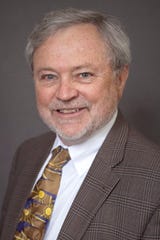
Bill Benson, national policy adviser
 for the National Adult Protective
 Services Association. 
(Photo: Contributed)
The goal of a death review team is not to place blame or force court action, although that can happen if it turns out the death was due to neglect or abuse, Benson said.

The primary reason for review teams is to learn from deaths and discern ways they could have been prevented. That could lead to policy changes, new regulations or updated procedures, Benson said.

“It’s a dual purpose, prevention and then correcting the behavior that took place,” he said.

The Women's Center of Jacksonville is in the planning stages of an elder fatality review team pilot project examining the closed criminal cases involving elder abuse, neglect or exploitation.

The goal would be to see if "a change in policy or procedures may be needed," said Community Education Director Eleen Rodden. "To see if there is something in the system that needs tweaking."

The team would not look at a nursing home case, however, where there was no criminal prosecution, even if there was a finding of neglect by Florida's Department of Children and Families, Rodden said. And the program is limited to Duval, Nassau and Baker counties. Rodden said she knew of nothing similar in other counties in Florida.

Working together


Death review teams improve investigations by bringing together people from a number of disciplines, said Teri Covington, director of the Washington, D.C.-based nonprofit Alliance for Strong Families and Communities.

The teams identify systems that are failing or can be improved, and they can identify risk factors in unnatural deaths that can lead to prevention efforts. It’s also possible a team could review a death and discover a perpetrator who intentionally caused it, Covington said.

The death review teams also provide data that can make the public aware of the problem. Because elder deaths are rarely reviewed and often assumed to be due to old age or a chronic condition, “you let people get away with murder,” she said.
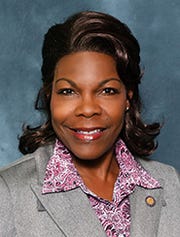
Sen. Audrey Gibson, D-Jacksonville
(Photo: Carroll Gambrell)
State Sen. Audrey Gibson, D-Jacksonville, has pushed legislation to established elder death review teams in Florida’s 20 judicial circuits. Her efforts have failed over the last two legislative sessions, but she plans to file the proposal again.

Gibson said her goal for the statewide effort is to impact public policy, and to determine if state resources exist to prevent unnecessary elder deaths.

“As a policymaker, we’re not looking for fault,” Gibson said. “We’re looking for improvement in the quality of life in an elder, period.

“If something happened that negatively impacted the life of that elder, and there are things policywise we can do to prevent that moving forward, we have an obligation to do that.”

Rep. Barbara Watson, D-Miami Gardens, who has pushed unsuccessfully a companion bill in the state House, said her interest in the legislation stems from a personal experience.

Years ago, a friend’s father suddenly began to deteriorate at a Florida nursing home. He stopped eating and stopped speaking, and the nursing staff didn’t really seem to notice, she said.

“It wasn’t until his autopsy that they found that he had actually swallowed his dentures,” Watson said. “Why did the nursing staff miss his dentures? Why did they not even try to discover what was the issue?”
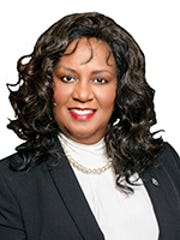
Rep. Barbara Watson, D-Miami Gardens
(Photo: State of Florida)

Under Gibson’s proposal, the review team's records on cases would not be public and would not be turned over for civil or criminal cases, although those same documents could be available from other sources. And although the team's work would be confidential and focused on recommendations for policy changes, nothing would prevent state agencies from acting on information gleaned from individual cases.

The cases must be closed either by the DCF or law enforcement before coming to the team for review, she said.

The idea of death review teams at times is opposed because of concerns over cost, even though most teams are volunteer efforts and require funding only for organizational and administrative costs, Benson, the Washington-based policy adviser,said.

Opposition to death review teams also comes from health care providers, nursing home owners, assisted living facilities and others in the health care industry, he said.

“I think there’s a lot of entrenched interests for whom it’s in their interest that we don’t dig too deep,” Benson said. “And that’s what elder death review teams do. They dig deep.”

Full Article & Source:
Neglected: Could review teams prevent deaths of elderly patients by Florida nursing homes?

Guardianship in Pennsylvania

When an adult of any age is deemed incapacitated by a court, a professional or family guardian may be appointed who is responsible for making certain decisions on their behalf. The nature of these decisions can include financial, medical and personal matters the incapacitated person has been determined unable to make for themself.

Pennsylvania’s Guardianship Tracking System (GTS) is a new web-based system for guardians, court staff, Orphans’ Court clerks and judges to file, manage, track and submit reports. The system integrates statewide guardian information, thereby helping to protect Pennsylvania’s most vulnerable citizens while streamlining and improving the guardianship filing process.


(Click to Continue)

Full Article & Source:
Guardianship in Pennsylvania

Wednesday, December 26, 2018

Start Seeing Seniors


Many seniors today are isolated, lonely, and forgotten by their communities. Help us change that by sharing their inspiring life stories.

Source:
YouTube: Start Seeing Seniors

Elderly and Loneliness


This is a short documentary that explores the lives of two very different elderly ladies.

Although they lead different lives, both women have one thing in common, they have both lost their husbands.

 84 year old Margaret moved to a residential home in Swansea after her husband's passing almost two years ago. Whereas 80 year old Molly has lived alone in her house for the last 19 years after her husband unexpectedly died. In this documentary, both women talk about what their lives have been like since the day that changed everything.

Source:
YouTube: Elderly and Loneliness

The Loneliness Project: Man Spends a Week Alone to Draw Attention to Lonleiness of the Elderly


Could you go a week without seeing anyone? T his is a reality many elders live every day.

Source: 
YouTube: The Loneliness Project