Showing posts with label deaths. Show all posts

Tuesday, February 25, 2025

Deaths during elder abuse investigations rose in Pa.’s largest city as state regulators took no punitive action


By Angela Couloumbis

HARRISBURG — The Pennsylvania Department of Aging oversees 52 county agencies across the commonwealth, assessing them every year to ensure they comply with state regulations for keeping older adults safe from abuse or neglect.

But in 2021, it directed its small cadre of protective services specialists to drop everything and focus on just one agency: the Philadelphia Corporation for Aging.

The extraordinary step was triggered by deep concerns among the department’s top officials over PCA’s staffing shortages and delays in investigating cases.

For the next nine months, state specialists worked around the clock to help PCA handle investigations, including speeding up the timeline for making contact with potential victims and providing them services to minimize their risk of injury — or worse.

“It was an absolute mess,” said Peter Hans, a former protective services specialist at the Department of Aging who was assigned to assist Philadelphia. “It was so distressing.”

Hans said he encountered cases that had remained unresolved for over a year and ones in which an older adult had died during an active investigation — yet PCA was unaware of the death.

Though aging officials say the agency has made improvements since then, PCA continues to have the worst track record in the state for complying with strict regulations meant to keep older adults safe from harm, according to data obtained through public records requests.

Many of its cases, the data show, aren’t investigated within the 20-day state deadline. It has also failed annual compliance assessments by state officials in five of seven recent years examined by Spotlight PA. In the remaining two years, it wasn’t monitored at all.

Records obtained by Spotlight PA through sources show problems ranging from poor paperwork to failures to contact medical professionals to delays in investigating cases.

In the meantime, deaths during open investigations have steeply risen in recent years, and Philadelphia has been particularly affected. In 2019, ’20 and ’21, nearly a third of older adults who died statewide during open investigations lived in the city and were being served by PCA.

Despite the help from state protective services workers, PCA again failed its annual assessment in 2022. That year, the agency handled the case of Luen Ng, an ailing 75-year-old woman who died after her daughter spent months pleading for assistance.

Officials, including those in Gov. Josh Shapiro’s office, have not publicly acknowledged failures in the state’s tattered system for keeping older adults safe. The state Department of Aging can take punitive action against agencies when they fail to meet safety standards, but has never done so.

“That is too bad because this is solvable,” said Mark Zecca, a Philadelphia lawyer who worked for years on federal social services programs, and later for Philadelphia. “It needs leadership.”

Asked if Shapiro was aware of the problems, a spokesperson said in an email: “Will keep you posted on anything to add from our end.”

A PCA spokesperson declined requests for comment for this story, referring all questions to state aging officials. The chair of PCA’s board of directors, Glenn Bryan, also declined to be interviewed.

Karen Gray, spokesperson for the Pennsylvania Department of Aging, said in an email that the agency is overseeing a corrective action plan for PCA. She did not describe the plan — which generally requires a county aging agency to list specific actions it will take to fix problems — but said that protective services staffers at the agency are receiving extended training.

The state, said Gray, has also provided technical assistance that “has allowed PCA to hire more investigators, doubling the number of investigators from as few as 26 to nearly 60, resulting in reduced caseloads.”

PCA, a nonprofit that receives tens of millions of taxpayer dollars every year, has also hired a private contractor to help with its caseload, according to sources with direct knowledge who requested anonymity because they are not authorized to discuss the matter publicly.

The contractor, Service Access & Management Inc., declined to comment about its contract with PCA, saying it does not discuss its work with “stakeholders.”

Because PCA is not a government-run agency, it is not subject to the state’s public records law, and Spotlight PA could not obtain a copy of the contract.

Though the Department of Aging funds PCA, it said it could not provide information about the contract with Service Access & Management Inc. For instance, state officials could not say whether they require PCA to pay for the contract out of its annual state funding; or whether they provide PCA with additional dollars to pay the private company — without reducing PCA’s overall funding by that amount. If the latter, the state would effectively be paying PCA twice for the same service.

Pressed to explain why the department could not comment, Gray would only say: “We do not have information pertaining to AAA subcontractors, nor can we comment on actions taken regarding the reasons for their hiring, or contract termination.”

The state allocated $343 million for the 52 county aging agencies this fiscal year; PCA received $65 million of that total.

In its last federal tax filing, which covers 2022, PCA reported $76.8 million in revenue from grants and contributions, the majority of it from federal, state and local sources. State-specific funding largely comes from Pennsylvania lottery earnings.

During its last annual audit, from June 2023, auditors found “significant deficiencies” in certain internal controls and financial reporting requirements.

Zecca said there is little incentive for PCA or any county aging agency to change if the Department of Aging just hands over money on “a silver platter,” with no accountability. State officials could provide that incentive by allocating a portion of PCA’s funding to another social services entity that could do a better job.

“They have to say, ‘If you are not in compliance, you will lose a part of your funding, and we will give it to another entity who can provide that service,’ ” Zecca said. “You don’t want to lose another part of your funding? Be compliant.”

Hans, the former state protective services specialist, said he made that exact recommendation to his superiors after working with PCA in 2021 and ’22. The agency’s caseload, he said, was alarmingly high, as was the number of open cases of abuse and neglect — PCA was simply unable to deal with it, leaving older adults at risk.

In 2021, when the Department of Aging swooped in to help PCA, nearly 40% of older Philadelphians who died that year had cases open for six months or longer — more than three times the limit imposed by state rules — without a determination by PCA about whether they were being neglected or abused.

“I told them I would divide Philly up by ZIP code, and then I would number those zones, and I would reduce PCA’s block grant by giving those zones to a surrounding county or a private entity,” Hans said.

His plea, he said, was ignored.

Hans retired from his state position last summer. Since then, he has contacted legislators, the Pennsylvania offices of inspector general, attorney general and auditor general, and Shapiro’s office, among others, to sound the alarm.

He said he has been exasperated by the inaction.

“People are dying,” he said. “What else is it going to take?”

Full Article & Source:
Deaths during elder abuse investigations rose in Pa.’s largest city as state regulators took no punitive action
Sunday, November 1, 2020

Virginia retirement community reports 16 deaths, 105 infections

Click to Watch Video

Health officials in Virginia say that 16 residents at a retirement community have died amidst a coronavirus outbreak. CBS affiliate WTVR reports that Chesterfield County health officials confirmed the deaths on Tuesday.

Chesterfield Health Director Alexander Samuel also said that the outbreak has infected 69 residents and 36 staff at Tyler's Retreat at Iron Bridge.

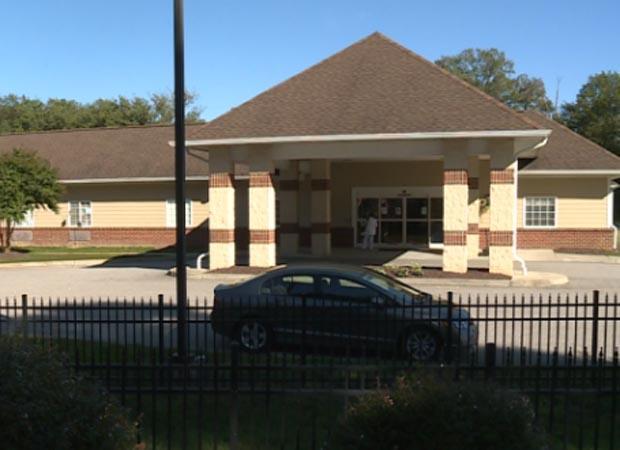
nursing-home.jpg
Tyler's Retreat at Iron Bridge. WTVR
"The facility acts in the best interest of its residents to promote their health, safety, and welfare," Tyler's Retreat at Iron Bridge said in a statement to WTVR. We continue to work closely with the Department of Health and follow all local, state and federal reporting guidelines and regulations."

 The facility is owned by Ohio-based Saber Health Care Group.

The Virginia Department of Health reports that long-term care facilities have had 478 COVID-19 outbreaks, 13,000 cases and 1,754 deaths.

Nursing homes and assisted living facilities account for about 49% of the 3,600 confirmed COVID-19 deaths in the state.

Long-term care facilities have been calling for additional emergency relief from the federal government. But the U.S. Senate recessed this week after confirming a new justice on the U.S. Supreme Court, ending the possibility for a new relief package before the election.

Full Article & Source:

Saturday, July 4, 2020

Grassley, Walden Request Investigation into COVID-19 Nursing Home Deaths

Washington – Senate Finance Committee Chairman Chuck Grassley (R-Iowa) and Energy and Commerce Committee Republican Leader Greg Walden (R-Ore.) today sent a letter to the Office of the Inspector General (OIG) at the Department of Health and Human Services (HHS) requesting the OIG initiate an investigation into whether or not five states – California, Michigan, New Jersey, New York and Pennsylvania – violated federal guidance in pressuring nursing home facilities to accept patients who tested positive for COVID-19. In the letter, the leaders cite guidance issued by the Centers for Disease Control and Prevention as well as the Centers for Medicare and Medicaid Services, suggesting state officials that pressured COVID-positive patients back into nursing homes may have risked the health and safety of some of our nation’s most vulnerable citizens.

“As reported by the media, the governors of a handful of states in which nursing homes struggled to provide safe and adequate care recently ordered nursing homes ‘to accept patients with active COVID-19 infections who were being discharged from hospitals.’ Governors issuing such directives include those in New York, New Jersey, California, Pennsylvania, and Michigan,” Grassley and Walden wrote.

“These state directives were issued as the COVID-19 fatality rate in nursing homes soared. In Pennsylvania, which reportedly has the seventh highest death rate for residents of these facilities, 69 percent of the state’s COVID-19 fatalities are now attributable to nursing and personal care homes. Similarly, in New Jersey, the rate was roughly 52 percent as of last month; in New York, at least 6,000 deaths are attributable to nursing homes; and in Michigan, where the governor’s directive has yet to be rescinded, 34 percent of COVID-19 deaths reportedly are linked to nursing homes.”


Grassley and Walden requested the OIG deliver its findings to Congress no later than September 30, 2020. Read the full letter HERE.

Full Article & Source:
Grassley, Walden Request Investigation into COVID-19 Nursing Home Deaths

Friday, July 3, 2020

Scathing report details "baffling" errors at veterans home where 76 have died during virus outbreak

Click to Watch Video
The leadership of a home for aging veterans in Massachusetts where nearly 80 residents sickened with the coronavirus have died packed dementia patients into a crowded unit as the virus spread, investigators said in a report released Wednesday. The move was one of several "utterly baffling" decisions that helped the disease run rampant, the report said.

The superintendent of the Holyoke Soldiers' Home was not qualified to run a long-term care facility and "substantial errors and failures" he and his team made likely contributed to the high death toll there, investigators found. Among them was a decision prompted by staffing shortages to combine two locked dementia units, both of which already housed some residents with the virus.
Virus Outbreak Soldiers Home
Flags and wreaths honor veterans, April 28, 2020, on the grounds of the Soldiers' Home in Holyoke, Mass. Rodrique Ngowi / AP
"Rather than isolating those with the disease from those who were asymptomatic - a basic tenet of infection control - the consolidation of these two units resulted in more than 40 veterans crowded into a space designed to hold 25. This overcrowding was the opposite of infection control; instead, it put those who were asymptomatic at even greater risk of contracting COVID-19," the report said.

CBS Boston reports that staff called the move "total pandemonium" and "a nightmare."

A recreational therapist said she felt like she was "walking (the veterans) to their death," while a social worker "felt it was like moving the concentration camp – we were moving these unknowing veterans off to die."

When a social worker raised concerns about the move, the chief nursing officer said "it didn't matter because (the veterans) were all exposed anyway and there was not enough staff to cover both units," the report said.  A nurse said the packed dementia unit looked "like a battlefield tent where the cots are all next to each other."

A healthcare administrator sent in three days later said it looked like "a war zone" and some veterans were unclothed and "some obviously in the process of dying from COVID-19."

As the virus took hold, leadership shifted from trying to prevent its spread, "to preparing for the deaths of scores of residents," the report said. On the day the veterans were moved, more than a dozen additional body bags were sent to the combined dementia unit, investigators said. The next day, a refrigerated truck to hold bodies that wouldn't fit in the home's morgue arrived, the report said.

Since March 1, 76 veterans who contracted COVID-19 at the home have died, officials said. Another 84 veterans and more than 80 staff have also tested positive.

The first veteran tested positive March 17. Even though he had been showing symptoms for weeks, staff "did nothing to isolate" him until his test came back positive, allowing him to remain with three roommates, wander the unit and spend time in a common room, investigators said.

An attorney for the superintendent, Bennett Walsh, said they dispute many of the investigation's findings and are "disappointed that the report contains many baseless accusations that are immaterial to the issues under consideration." The lawyer said in an emailed statement that "Walsh reached out for help when the crisis erupted" and sought National Guard assistance.

"The failure of the Commonwealth to affirmatively respond to that request contributed to many of the problems outlined in the report," the attorney, William Bennett, said.

Walsh was placed on administrative leave March 30 and the CEO of Western Massachusetts Hospital, Val Liptak, took over operations.

Susan Kenney, whose 78-year-old father Charles Lowell died in April after contracting the virus at the home, said she was horrified as she read details about veterans being denied basic care.
Virus Outbreak Veterans Home
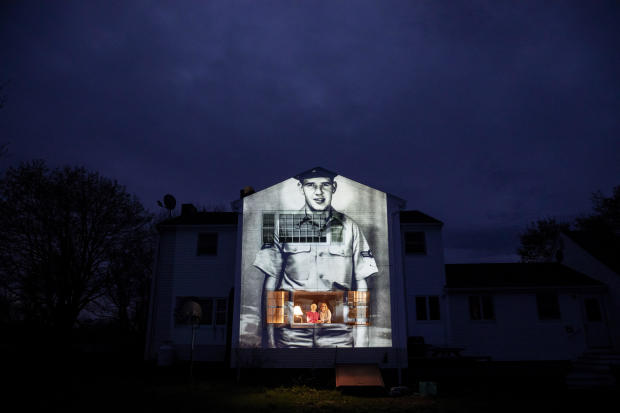
An image of veteran Charles Lowell is projected onto the home he shared with his wife, Alice, for 30 years as she stands at left with her daughter, Susan Kenney, in Hardwick, Mass. Saturday, May 2, 2020. Lowell, a U.S. Air Force veteran and resident of the Soldier's Home in Holyoke, Mass., died from the COVID-19 virus at the age of 78. David Goldman / AP
"Veterans that fought for our country just put together like cattle, it's unacceptable, it's horrible," Kenney told CBS Boston. "This can never happen again."

The Air Force veteran would have been 79 Monday. Susan Kenney told the station that her his death "was preventable for sure."

The report said officials with the Department of Veterans Services were aware of Walsh's "shortcomings," but failed to do enough about it. The chief of staff for Secretary of Veterans' Services Francisco Urena told investigators they thought Walsh was "in over his head" and did not spend enough time at the home. But Urena allowed Walsh to remain in his job.

Urena told reporters late Tuesday he was asked to resign ahead of the release of the report.

"I'm very sorry," Urena told WCVB-TV. "I tried my best."

Republican Gov. Charlie Baker, who hired former federal prosecutor Mark Pearlstein to conduct the investigation, called the details in the report "nothing short of gut-wrenching." Baker acknowledged that his administration did not properly oversee Holyoke or the home's superintendent.

"The loss of life is difficult to even think or speak about. The events that took place at the Holyoke Soldiers' Home in March are truly horrific and tragic," Baker told reporters at a news conference.

Massachusetts Attorney General Maura Healey is also investigating to determine if legal action is warranted, she said. And the U.S. attorney's office in Massachusetts and Department of Justice's Civil Rights Division are looking into whether the home violated residents' rights by failing to provide them proper medical care.

Full Article & Source:
Scathing report details "baffling" errors at veterans home where 76 have died during virus outbreak

Friday, June 26, 2020

Families of Ohio nursing home residents plead to visit as Covid-19 cases rise by more than 500 in a week

Families of nursing home residents plead to visit as Covid-19 cases rise by more than 500 in a week
By Sara Goldenberg

CLEVELAND, Ohio (WOIO) - Deaths from Covid-19 in Ohio nursing homes have reached nearly 2,000.

Families worried about their loved ones say visitors need to be allowed in again.

“Their quality of life matters, and whatever they’re doing now clearly isn’t working,” said Cathy Williams.

Her parents, Liz and Roger, are both in nursing homes.

They’re at separate facilities in Strongsville and Brunswick.

At least 1,949 nursing homes residents have died of Covid-19, according to the latest numbers from the Ohio Department of Health.

At least 6,735 residents and 3,193 staff tested positive for the virus since April 15, bringing the total cases of Covid-19 in nursing homes to 9,928.

That’s up nearly 550 cases in one week.

19 Investigates found Cuyahoga County is now ranked third in the state for deaths in nursing homes.

But we also learned there aren’t a lot of large clusters of the virus in Northeast Ohio nursing homes like there were before.

“Anytime there is a flu outbreak, whether you call it the flu or not, a virus outbreak, there’s going to be a portion of the population that’s more susceptible or vulnerable,” Williams said.

She said her mom has not been allowed out of her room since mid-March.

“So she’s not even able to sit in the hallway in her wheelchair and visit or communicate with another resident,” she said.

Williams worries about her mother’s mental health.

“I’m more worried about that then my 85-year-old mother getting Covid-19, to be perfectly honest with you,” she said.

An announcement about visitation in nursing homes could come any day from Governor Mike DeWine.

Families have not been able to see their loved ones in person now for three months.

Williams hopes that changes soon.

“It’s awful, it’s completely awful,” she said.

Nursing home residents still make up about 70 percent of all Covid-19 deaths in the state.

Nationwide, more than 43,000 residents and staff have died from the virus, according to data from the Kaiser Family Foundation.

Experts warn that’s likely an undercount.

Full Article & Source:
Families of Ohio nursing home residents plead to visit as Covid-19 cases rise by more than 500 in a week

Sunday, June 14, 2020

Four MN nursing homes have more than 100 coronavirus cases as state looks to control outbreak

Saint Therese Senior Services in New Hope, Minn., on Thursday, April 30, 2020. A suburban Minneapolis nursing home said 47 residents have died from complications of COVID-19, the most at any long-term care facility in Minnesota. (Evan Frost/Minnesota Public Radio via AP)
By Katrina Pross

Four Minnesota nursing homes have more than 100 confirmed cases of the coronavirus. Three of those centers have at least 38 deaths.

The grim details of the state’s battle against the spread of the coronavirus in its assisted living centers were released this past Friday by the Minnesota Department of Health. In fact, the majority of deaths from the coronavirus in the state continues to be from long-term care or assisted living centers, making up 955 of the state’s 1,197 total deaths reported as of Monday.

The data’s release was in response to a request by Republican State Sen. Karin Housley of St. Mary’s Point, who has been critical of the state’s efforts to stem such cases.

“We are facing an unprecedented crisis at long-term care facilities in Minnesota,” Housley, who chairs the Senate’s Family Care and Aging Committee, said, pointing out that about 80 percent of the state’s coronavirus deaths have been in congregate-care facilities.

Housley had asked the Health Department for more details on how the virus was impacting nursing homes and at one point threatened to subpoena the agency. After receiving the data, Housley said in a statement that she would sponsor a bill requiring widespread testing at long-term care facilities.

WHICH CENTERS HIT HARDEST?

  • North Ridge Health and Rehab in New Hope: 221 resident cases, 74 staff members infected, 57 resident deaths
  • St. Therese of New Hope: 155 resident cases, 43 staff members infected, 67 resident deaths
  • Southview Acres Healthcare Center in West St. Paul: 120 resident cases, 33 staff members infected, 38 resident deaths
  • Lyngblomsten Care Center in St. Paul: 81 resident cases, 50 staff members infected, 16 resident deaths
  • Augustana Chapel View Care Center in Hopkins: 68 resident cases, 22 staff members infected, 29 resident deaths.

MDH Commissioner Jan Malcolm said at a media briefing Monday afternoon that the numbers and data can be misleading without proper context, such as how the state compares with others. The MDH is also trying to take a balanced approach between trying to protect patient privacy and disclosing the names of facilities that have had more than 10 cases, Malcolm added.

“I certainly understand the public interest in knowing more detail about what’s going on in these long-term care facilities,” Malcolm said.

Of the 289 care centers listed with a confirmed case of coronavirus, more than half (146) had four cases or fewer; and 30 percent (86) had just one case.

Efforts to reach officials with the top few centers for comment were unsuccessful.

HOW DOES MINNESOTA COMPARE?


The outbreak in the United States is believed to have first taken a hold in a Seattle-area nursing home, prompting facilities across the country and Minnesota to limit visitors and interaction between staff and residents.

When looking at the numbers of cases in skilled nursing homes, Minnesota has 49.7 cases per 1,000 residents, Forum News Service reported. That ranks as the 26th highest state in the country and puts Minnesota below the national average of 62 cases per 1,000 residents.

The national average for deaths per 1,000 nursing home residents is 27.5 deaths. Minnesota is at 12.1 deaths per 1,000 nursing home residents, which is the 29th highest state.

Minnesota has stepped up its “battle plan” to address infections in long-term care centers with efforts such as expanding testing, helping staff get personal protective equipment when needed and looking to boost staffing.

Housley said in an email to the Pioneer Press that while the commissioner’s response did provide some useful information, she has several takeaways, including that she thinks some centers need more personal protection equipment and testing. She also said patients in these facilities should be allowed visitors again, and that Minnesota should a consider a similar approach to Colorado, which is looking at allowing outside visits.

Full Article & Source:
Four MN nursing homes have more than 100 coronavirus cases as state looks to control outbreak

Sunday, May 31, 2020

What’s Behind the Nursing Home Horror

After decades of mistreatment, older Americans are bearing the worst of the pandemic.

By Charles C. Camosy
Dr. Camosy teaches bioethics and moral theology at Fordham University.

Credit...John Minchillo/Associated Press
We knew it from the beginning. A nursing home in Washington State was the center of the first known coronavirus outbreak in the United States. We knew that institutions caring for the elderly and disabled in close quarters would be particularly vulnerable during the pandemic.

But we did not act. Personal protective equipment, special training and extra staff went almost exclusively to our critical care facilities. Nursing homes got virtually nothing. Well, that’s not entirely true. In New York and other places we gave them patients, and even nurses, infected with the virus.

The result has been a raging wildfire of infection and death. We don’t have full reporting of anywhere close to all the deaths at this point, but the best estimates right now are that about half of those who have died from Covid-19 have been nursing home residents. In some places, it’s much more: Connecticut reported that nearly 90 percent of its Covid-related deaths between April 22 and April 29 occurred in nursing homes.

We tend to see this as a public health failure, but it is also a moral failure. That fact hit me recently, after I went on Fox News’s “Tucker Carlson Tonight” to talk about the plight of nursing homes.

Even before the pandemic, these were places where what I call “throwaway culture” was thriving. The staff aren’t paid a living wage, often have poor training and are hopelessly overworked. The residents face elder abuse, and large percentages of them are desperately lonely. A good number get no visitors at all, which pushes rates of dementia among residents to unbelievable levels.

I suggested to Mr. Carlson’s audience that it was no surprise that throwaway culture kicked into hyperdrive in nursing homes during our current moment. I was excited to be able to make my case to a national audience; afterward, I was exhausted. All I wanted to do was help my wife get our 2-year-old to bed and go to sleep myself.

But that’s when the messages started coming in. Email. Facebook messenger. LinkedIn. Twitter. One after the other after the other. And they were horrifying.

It is one thing for a professor of bioethics to cite abstract numbers and trends and offer a theoretical explanation for them. It is another thing to get message after message detailing the human toll of what you had just discussed.

One of the most moving — and frightening — was from a nursing home staffer. She said she was given inadequate P.P.E. and training, and had likely been exposed to the virus. Her communications with management were ignored. Staff members at her facility were not being tested. She decided to quit her job rather than risk infecting her residents. “I don’t know if you can help me,” she said. “I feel that what you said is true; the elderly need a voice by someone that cares.”

Another correspondent, who had worked in health care administration, said that she was “not surprised in the least that the hospitals were trying to discharge their Covid-19 infected patients” back to long-term-care facilities because, in her experience, this has “been happening for quite some time.” It got worse: Agreeing with me about the radical understaffing of nursing homes, she said that it is “increasingly common is to discharge high cost and difficult patients to homeless shelters … Yep, you heard me right … HOMELESS SHELTERS.”

Not every story was coronavirus-specific. One man told me the story of the fatal neglect of his father — after which the nursing home falsified his father’s records and hid behind state laws that nursing home lobbyists had written.

A former director of nursing at a long-term-care facility said that given her terrible professional experiences, she had refused to put her 78-year-old husband, who was suffering from dementia, anywhere outside her own home. Another clearly frightened woman explained that she had just had a horrible experience with her mother in a nursing home; she even gave me, a complete stranger, her phone number, in the desperate hope that I could raise the alarm about how bad things were.

We need to listen to people like this and act on what they are saying. The pandemic doesn’t have many silver linings, but as the number of nursing-home deaths piles up, the news media is being forced to cover a world many of us would prefer to ignore.

It is understandable that we would. Part of the price we pay for living in a death-denying, consumerist, throwaway culture is that we must push these kinds of grim realities to unseen places that afford us plausible deniability. The pandemic forces us to look. If we want to understand the current phase of the coronavirus pandemic, we can no longer look away.

After receiving this waterfall of messages, I expected to fall into despair. But while I do have my bad days, I also have hope. Times like this have produced major cultural changes in our past. If we do take a hard look, we may change more than just the way we treat older Americans. We may, along the way, find a way to push against throwaway culture in all its forms.

Instead of denying the reality of cognitive impairment, aging and death, could our culture begin to embrace it forthrightly in ways which lead us to honor the final years we have with the family members and friends who go before us? To honor the moral and social equality of every human being, regardless of their mental or physical status?

Why not? Many of us are staying home and practicing physical distancing, not primarily for ourselves but for the benefit of our elders and others who find themselves at risk. Let us build on that good and decent impulse by challenging a throwaway culture that, right up until this very moment, has marginalized these populations and made the nursing-home crisis a tragic inevitability.

Charles C. Camosy (@ccamosy) is an associate professor of theological and social ethics at Fordham University. His most recent book is “Resisting Throwaway Culture.”

Full Article & Source:
What’s Behind the Nursing Home Horror

Tuesday, July 23, 2019

Deaths related to outbreak at Virginia assisted living facility rise to 3


SPRINGFIELD, Va. -- The number of deaths associated with a respiratory outbreak at a Fairfax County assisted living facility has risen to three, according to the Fairfax County Health Department.

Since the first case was reported on June 30, 63 of 263 residents at Greenspring Retirement Community, a long-term care facility with assisted living, have become ill with respiratory symptoms ranging from upper cough to pneumonia.

Health officials say there have been 20 hospitalizations and three deaths associated with the outbreak.

Health officials explained that they do not know the full medical history and the extent to which the respiratory illness contributed to the deaths.

In addition, the Health Department has been informed that 19 employees have also reported symptoms of upper respiratory illness.

A specific cause has not yet been identified and results of testing by the Centers for Disease Control and Prevention (CDC) are still pending, said the Fairfax County Health Department.

Those officials say respiratory outbreaks at facilities for vulnerable, older adult populations are not uncommon. The department said they typically see about 12 per year. However, this particular outbreak is different because most outbreaks of this kind are in the winter or during flu season.

Greenspring Retirement Community is not taking new residents as the outbreak is investigated, according to WUSA.

In a statement, Greenspring said it's "highest priority is the welfare of those who live and work on campus."

"In keeping with this commitment the community has acted with an abundance of caution, and in partnership with the Fairfax County Department of Health, has taken all necessary measures to fully implement proven infection prevention and control strategies," the statement said.

Full Article & Source:
Deaths related to outbreak at Virginia assisted living facility rise to 3

Thursday, December 27, 2018

Neglected: Could review teams prevent deaths of elderly patients by Florida nursing homes?

Teams of professionals reviewing the deaths of the elderly when abuse or neglect is suspected would help protect Florida's seniors in nursing homes, advocates argue.

“I think in every major urban area, it’s absolutely essential that they have an elder death review team in place,” said Paul Greenwood, a former prosecutor in San Diego who headed one of the nation’s largest elder crimes units. He now educates police officers and prosecutors nationwide on pursuing such cases.

Greenwood and others argue such review teams would help reduce the practices identified by a USA TODAY NETWORK - FLORIDA investigation into the state's nursing homes. In 54 deaths where neglect and mistreatment were identified by another state agency from 2013 through 2017, Florida's Agency for Health Care Administration rarely took action and in some cases didn't investigate the deaths, the Network investigation found.

The Network’s series on nursing homes also showed how AHCA rarely takes serious actions against poor-performing nursing homes, and how it has allowed dozens of nursing homes to limp along for years, providing substandard care, and abusing, neglecting and even killing patients with little consequence.

When a child dies in Florida and there’s even a hint of possible abuse or neglect, a team of professionals tries to find out if and how the death could have been prevented.

It’s been that way for nearly 20 years, after the Florida Legislature established the Child Abuse Death Review Committee in 1999, with the goal of reducing child deaths in the state. Ten years later the state established domestic violence death review teams in response to an increase in domestic violence-related homicides in Florida.

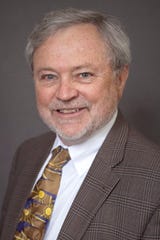
Paul Greenwood
(Photo: San Diego County District Attorney's Office)
But there is no comparable review when an elderly or vulnerable adult dies in Florida, even under suspicious circumstances.

Proposed legislation to establish elder death review teams has failed to pass the Legislature the last two years.
Review teams, Greenwood said, could help determine if nursing home patients’ deaths were preventable or if there are lessons to learn that could prevent another patient’s death.

San Diego County established a death review team more than 15 years ago. The team included, among others, prosecutors, police, a medical examiner, health care administrators and adult protective services investigators.

Lessons learned


Greenwood reviewed several of the cases included in the Network’s investigation and said each would have benefited from a follow-up review. He called the 2017 death of York Spratling at Consulate Health Care of Jacksonville “the classic case that needs to be submitted to an elder death review team.”

York Spratling(Photo: Family photo)
Spratling, 84, died after surgery to remove dead tissue from his rotting genitals, which became infected when he wasn’t regularly bathed at the nursing home. The nursing home’s staff didn’t alert a doctor about the wounds or severe infection for five days, a review by Florida's Department of Children and Families found.

Spratling’s death was due to inadequate supervision and medical neglect, according to the review by DCF,which investigates elder abuse and neglect. However, AHCA took no action against the nursing home, and no criminal charges were filed in the death.

“This is where we would say, 'No. 1, was this death preventable?' And I think the answer is, 'Yes,' ” Greenwood said. “ ‘No. 2, what lessons can we learn from it?’ And one of the lessons we can learn just from looking at this case is the lack of exchange of information between relevant authorities.”

Preventing death


The same year Florida created its committee to review child deaths, the U.S. Department of Justice recommended the development of death review teams for the elderly. But unlike child death review teams, which are in every state, only 13 states have established elder death review teams, according to The National Center for Fatality Review and Prevention in Washington, D.C.

Florida is not among them.

Bill Benson, senior policy adviser at the National Adult Protective Services Association in Washington, said one reason the nation hasn’t embraced elder death review teams is because children’s deaths are typically considered unusual. An elderly person's death, however, is usually not considered peculiar.

“What’s unusual about that?” Benson said. “And that becomes a way to cover up an awful lot of deaths that probably shouldn’t have happened.”

Bill Benson, national policy adviser
 for the National Adult Protective
 Services Association. 
(Photo: Contributed)
The goal of a death review team is not to place blame or force court action, although that can happen if it turns out the death was due to neglect or abuse, Benson said.

The primary reason for review teams is to learn from deaths and discern ways they could have been prevented. That could lead to policy changes, new regulations or updated procedures, Benson said.

“It’s a dual purpose, prevention and then correcting the behavior that took place,” he said.

The Women's Center of Jacksonville is in the planning stages of an elder fatality review team pilot project examining the closed criminal cases involving elder abuse, neglect or exploitation.

The goal would be to see if "a change in policy or procedures may be needed," said Community Education Director Eleen Rodden. "To see if there is something in the system that needs tweaking."

The team would not look at a nursing home case, however, where there was no criminal prosecution, even if there was a finding of neglect by Florida's Department of Children and Families, Rodden said. And the program is limited to Duval, Nassau and Baker counties. Rodden said she knew of nothing similar in other counties in Florida.

Working together


Death review teams improve investigations by bringing together people from a number of disciplines, said Teri Covington, director of the Washington, D.C.-based nonprofit Alliance for Strong Families and Communities.

The teams identify systems that are failing or can be improved, and they can identify risk factors in unnatural deaths that can lead to prevention efforts. It’s also possible a team could review a death and discover a perpetrator who intentionally caused it, Covington said.

The death review teams also provide data that can make the public aware of the problem. Because elder deaths are rarely reviewed and often assumed to be due to old age or a chronic condition, “you let people get away with murder,” she said.

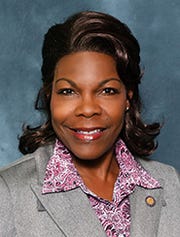
Sen. Audrey Gibson, D-Jacksonville
(Photo: Carroll Gambrell)
State Sen. Audrey Gibson, D-Jacksonville, has pushed legislation to established elder death review teams in Florida’s 20 judicial circuits. Her efforts have failed over the last two legislative sessions, but she plans to file the proposal again.

Gibson said her goal for the statewide effort is to impact public policy, and to determine if state resources exist to prevent unnecessary elder deaths.

“As a policymaker, we’re not looking for fault,” Gibson said. “We’re looking for improvement in the quality of life in an elder, period.

“If something happened that negatively impacted the life of that elder, and there are things policywise we can do to prevent that moving forward, we have an obligation to do that.”

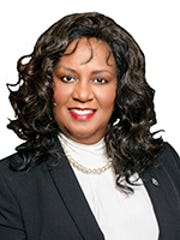
Rep. Barbara Watson, D-Miami Gardens, who has pushed unsuccessfully a companion bill in the state House, said her interest in the legislation stems from a personal experience.

Years ago, a friend’s father suddenly began to deteriorate at a Florida nursing home. He stopped eating and stopped speaking, and the nursing staff didn’t really seem to notice, she said.

“It wasn’t until his autopsy that they found that he had actually swallowed his dentures,” Watson said. “Why did the nursing staff miss his dentures? Why did they not even try to discover what was the issue?”
Rep. Barbara Watson, D-Miami Gardens
(Photo: State of Florida)

Under Gibson’s proposal, the review team's records on cases would not be public and would not be turned over for civil or criminal cases, although those same documents could be available from other sources. And although the team's work would be confidential and focused on recommendations for policy changes, nothing would prevent state agencies from acting on information gleaned from individual cases.

The cases must be closed either by the DCF or law enforcement before coming to the team for review, she said.

The idea of death review teams at times is opposed because of concerns over cost, even though most teams are volunteer efforts and require funding only for organizational and administrative costs, Benson, the Washington-based policy adviser,said.

Opposition to death review teams also comes from health care providers, nursing home owners, assisted living facilities and others in the health care industry, he said.

“I think there’s a lot of entrenched interests for whom it’s in their interest that we don’t dig too deep,” Benson said. “And that’s what elder death review teams do. They dig deep.”

Full Article & Source:
Neglected: Could review teams prevent deaths of elderly patients by Florida nursing homes?

Tuesday, September 19, 2017

94-year-old sues Florida nursing home where 8 residents died in wake of Hurricane Irma

A 94-year-old woman living at the Florida nursing home where eight residents died after an air conditioning system failed in the wake of Hurricane Irma is now suing the rehabilitation center, claiming it showed "negligence and reckless indifference" toward its elderly residents.

Rosa Cabrera's legal guardian filed the lawsuit in a Broward County state court on Friday on her behalf against the Rehabilitation Center at Hollywood Hills in Hollywood, Florida. 

Eight of the nursing home's residents died last week after the facility's electrical system for its air conditioning stopped working in the aftermath of the hurricane that hit Florida on September 10.
Cabrera is a double amputee "without the ability to walk or live independently," the complaint says. She sustained heat-related injuries and had to be hospitalized as a result of the days-long failure of the nursing home's air conditioning system, the complaint alleges. 

"As the hurricane approached, Ms. Cabrera was told by the Rehab Center that she would not be evacuated, but would be safe and cared for" at the nursing home, the complaint says. She did not know that the nursing home lacked a generator to power its air conditioning system in the event of a power failure, the lawsuit alleges. 


The complaint further contends that the Rehabilitation Center at Hollywood Hills should have known that the storm would cause a power outage, and that if that happened "the temperature inside the facility would be unsafe and dangerous" for its more than 150 residents. 

"Notwithstanding these foreseeable, dangerous, and life-threatening conditions, the defendant made no effort to relocate the elderly and vulnerable residents or to secure an adequate cooling system for the center," the complaint says. 

The lawsuit alleges that the Rehabilitation Center failed to adequately prepare for Irma after hurricane and storm-surge warnings were first issued for Broward County on Sept. 7. 

Hill and Knowlton Strategies, a public relations firm representing the nursing home told ABC News, "It would be inappropriate to discuss a pending suit. However, counsel will be reviewing the filing." 

Most of the eight residents of the Rehabilitation Center at Hollywood Hills who died had been treated for respiratory distress, dehydration, and heat-related issues, officials said. Some of the patients admitted to nearby Memorial Regional Hospital felt temperatures of up to 106 degrees, hospital officials said Thursday. 

A timeline released by the public relations firm for the nursing home says that the center's staff reached out repeatedly to emergency hotlines and the local power utility in the days after the air conditioning system failed on Sept. 10. 

Nursing home officials also called the personal cell phone of Florida Gov. Rick Scott seeking help, the governor's office confirmed to ABC News on Saturday. 

Scott's office said the messages left on his cell phone were referred to two other agencies.

“Every call made to the governor from facility management was referred to the Agency for Health Care Administration and the Florida Department of Health, and quickly returned,” John Tupps, Scott's communications director, said Friday, 

In a statement, the Florida Department of Health said, “It is 100 percent the responsibility of health care professionals to preserve life by acting in the best interest of the health and well-being of their patients. Let’s be clear -- this facility is located across the street from one of Florida’s largest hospitals, which never lost power and had fully operating facilities. The tragic and senseless loss at Hollywood Hills Rehabilitation Center is the subject of a criminal homicide investigation by law enforcement.”

Full Article & Source;
94-year-old sues Florida nursing home where 8 residents died in wake of Hurricane Irma

Friday, September 15, 2017

Several Tampa Bay nursing homes without power after Hurricane Irma


PALM HARBOR, Fla. - A breaking situation in South Florida tonight is raising new concerns for people living in nursing homes.

Eight people are dead and dozens of others are still evacuating a Hollywood, Florida nursing home that lost power in the storm and struggled to have air conditioning for the last few days.

A tragic scene is what everyone wants to avoid. Patients had to be pulled out of a hot nursing home after others there died.

Unfortunately, there are still some nursing homes that don't have power in Tampa Bay and while all are required to have generators, they don't have to be able to provide air conditioning when the power is out.

It was a chaotic scene at a Hollywood nursing home this morning, as rescue workers weary from the hurricane scrambled to save 115 seniors from the heat.

Eight patients died of heat-related illnesses because their air conditioning never came back on after Hurricane Irma. They perished in the heat, even though there's a hospital just yards away.

“We're conducting a criminal investigation into the deaths that occurred,” said Hollywood Police Chief Tomas Sanchez.

In Tampa Bay, other nursing home residents baked in the heat.

Baytree Center in Palm Harbor lost power Sunday. The facility’s generator failed multiple times Monday, after the home plugged in small air conditioning units to try to cool it down.

The Palm Harbor Fire Department brought in portable air conditioners to cool patients until Duke Energy crews can restore power. The department said paramedics made four runs to the nursing home and transported multiple patients to local hospitals.

“Phone call after phone call of people wanting to come and help,” said volunteer Chris Thompson, who lives near the Bayshore Pointe Nursing Home and Rehabilitation Center in Tampa.

Full Article & Source:
Several Tampa Bay nursing homes without power after Hurricane Irma