Showing posts with label Assisted Suicide. Show all posts

Tuesday, September 22, 2026

Family sounds alarm after 83-year-old grandma dies under Canada's assisted-death program

Brigitte Stegemann's granddaughter says the 83-year-old cried and said she had 'made a mistake' two days before her death

By Rachel del Guidice

This story discusses suicide. If you or someone you know is having thoughts of suicide, please contact the Suicide and Crisis Lifeline at 988 or 800-273-TALK (8255).

The family of an 83-year-old Canadian woman is demanding answers after she died through the country's medical assistance in dying program despite allegedly becoming distraught when told the procedure would end her life and showing signs of cognitive decline, according to a report.

The Daily Mail reported Sunday that an 83-year-old Christian grandmother, Brigitte Stegemann, was killed under Canada’s physician-assisted suicide program, called Medical Assistance in Dying (MAiD), on July 10.

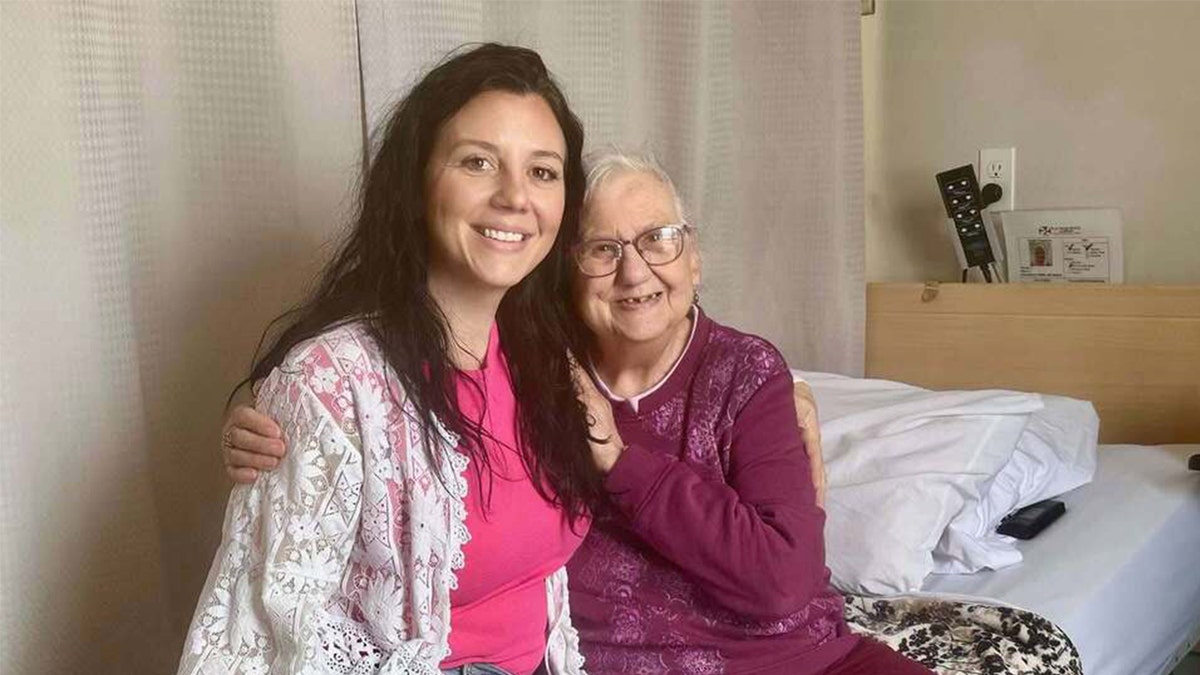
Her granddaughter, Brigitte Kranendonk, said that she was her grandmother’s primary caregiver and that her family had decided to place Stegemann at The Pearl care home in Cannifton due to physical and mental decline.

Brigitte Kranendonk gestures with her grandmother Brigitte Stegemann. (Family Handout)

But according to Kranendonk, her grandmother still had a good appetite even following a stomach cancer diagnosis, and rejected the idea of using MAiD when it was presented as an option.

Everything changed, however, in June when Kranendonk left to go on a 10-day road trip with her husband.

Kranendonk said she remained in regular contact with the care home and was told her grandmother had fallen and would need a wheelchair, but said she was not initially alerted to any dramatic decline.

Doctor provides consultation and explanation

Canada's medical assistance in dying program is under scrutiny after an 83-year-old care home resident allegedly showed cognitive decline and distress before her euthanasia death. (iStock)

Then, on July 3, near the end of her trip, Kranendonk said she received a call informing her that the home planned to arrange a MAiD assessment for Stegemann, despite her grandmother previously telling her that she did not want an assisted death.

Kranendonk said, according to The Daily Mail, that when she returned, she asked a nurse at The Pearl about who had initiated the MAiD conversation.

"The nurse became very abrasive, very defensive," Kranendonk told The Daily Mail. "She was like, ‘Well, I’m just trying to advocate for her. I’m just trying to do what’s right for her.’"

After returning from her trip, Kranendonk said she found out her grandmother had already had her first MAID consultation.

The granddaughter also alleged that Stegemann struggled during an assessment of her mental capacity, incorrectly answering questions about members of her own family.

Healthcare professional listening to elderly woman's heart with stethoscope at home

The Daily Mail reported Sunday that an 83-year-old Christian grandmother, Brigitte Stegemann, was killed under Canada’s physician-assisted suicide program, called Medical Assistance in Dying (MAiD), on July 10. (iStock)

Kranendonk said she was present for Stegemann's second MAID assesment, and said that the doctor used "really loose terms, never using the words death or dying."

"She explains MAID to my grandmother by saying: 'We’re going to give you medicine, you’re going to feel at peace. And I just want you to know that you won’t have a bowel movement,'" Kranendonk said.

When Kranendonk interjected and said, "She doesn’t understand what you’re saying," the doctor allegedly looked at Stegemann and said, "We’re going to make sure you won’t have any more pain."

Full Article & Source:
Family sounds alarm after 83-year-old grandma dies under Canada's assisted-death program 

Wednesday, September 15, 2021

Assisted Suicide?! Arrest Made in Alex Murdaugh Shooting

by Pilar Melendez, Blake Montgomery

via Facebook

In a stunning turn of events, a South Carolina man was charged with assisted suicide and insurance fraud in connection with the shooting of troubled attorney Alex Murdaugh three months after the deaths of his wife and son.

Curtis Edward Smith, 61, was also charged with distribution of methamphetamine and possession of marijuana, the South Carolina Law Enforcement Division announced on Tuesday.

Police did not say how Smith and Murdaugh know each other, but Murdaugh has already admitted to having a drug problem.

Smith’s arrest and the charges are the most astounding development yet in a saga with more twists than a Lowcountry backroad that already included a double murder, drug addiction, and allegations of embezzlement.

Murdaugh, 53, is the scion of a powerful legal dynasty and was a partner in the firm Peters, Murdaugh, Parker, Eltzroth, Detrick, which was founded by his great-grandfather.

In 2019, the clan—which controlled the local prosecutor’s office for decades—was thrust into the headlines when Murdaugh’s son Paul was charged with a drunken boating accident that killed a young woman.

Then in June, Alex Murdaugh discovered Paul Murdaugh, 22, and his mother Maggie, 52, shot to death near the dog kennels of the family’s sprawling hunting estate.

As the double homicide remained unsolved, Alex Murdaugh’s life appears to have spiraled out of control.

Two weeks ago, he called 911 from a country road to report that he had been shot in the head, reportedly while changing a tire. The circumstances were shrouded in confusion—and then things got even murkier.

Murdaugh suddenly announced that he was entering rehab for drug addiction and resigning from his law firm, saying that he had made “a lot of decisions that I truly regret.”

That intriguing statement was then followed by the firm’s announcement that Murdaugh was under investigation for allegedly misappropriating funds—a matter that state police are also now probing.

Full Article & Source:
 
See Also: 
 

Wednesday, August 26, 2020

Wife Loses Lawsuit to Prevent Husband’s Euthanasia

By Wesley J. Smith

Euthanasia/assisted suicide subverts family cohesion. For example, what if one spouse wants to be made dead, and that decision is opposed by the other? Or, what if siblings object to a depressed brother’s decisions to be put down and beg doctors not to kill him, to no avail?

Both cases happened in Canada, the most recent involving a wife trying to prevent her husband’s being euthanized. She lost because the benefit of the doubt goes to death once assisted suicide/euthanasia becomes legal. From the Saltwire.com story:
As part of the evidence, one nurse practitioner said the husband met the criteria for assisted suicide, while another argued he did not. The latter “authored a separate written report in which she elaborated that ‘I do not feel he is capable of making decisions regarding MAID due to dementia. . . . He has a grievous progressive and incurable illness (dementia/COPD) but I do not feel that death is foreseeable.’ ”
Imagine being helpless to prevent a doctor or nurse practitioner from killing your beloved spouse!

We saw the same phenomenon here in the States, too. Early on in Oregon’s assisted-suicide regime (as reported by the Oregonian), Kate Cheney — an elderly woman with dementia — was determined by a psychiatrist to be mentally ineligible to consent to assisted suicide, and moreover, believed Cheney’s daughter might be driving the process. If the “protective guidelines” worked as advertised, that would have been the end of it. But, as often happens, the daughter went doctor shopping and a psychologist okayed the assisted suicide despite the potential for family pressure. And so it came to pass.

The moral of these stories: In a culture of death, death always has the upper hand.

Full Article & Source:
Wife Loses Lawsuit to Prevent Husband’s Euthanasia

Tuesday, April 2, 2019

Dutch legislator: Let doctors deny surgeries to patients older than 70

(Life Site News) A Dutch environmentalist legislator has suggested restricting surgeries for patients older than age 70 by allowing hospital geriatricians to decide whether or not to operate and continue to provide treatment.

Corinne Ellemeet of Groenlinks (the Green Left) made the proposal in February and recently presented it in the Lower Chamber of the Netherlands.

In technically advanced countries, 70 is not exactly equivalent to “old age.” In the Netherlands, people born after 1955 will only receive a state pension when they are 67 years and 3 months old. This limit is expected to rise to 70 as the population ages. Life expectancy is slightly above 81.

Ellemeet insisted that she is only interested in giving the elderly the best possible care.

“It’s not about saving money,” she said, but about avoiding “overtreatment,” because operations are not always beneficial and can even put undue strain on the patient.

However, the logic of her proposal is based on cost-effectiveness. She underscored that 70 percent of patients in Dutch hospitals are over 70, suggesting they should not receive the same treatment as younger patients as a matter of course. A screening process should be put into place when advanced and costly treatment is under consideration, she said – including heart operations, cancer treatment, kidney dialysis and the like.

“The central issue is this: What are we doing to the patient? Hospitalization, anesthesia, pain, and a deluge of drugs. Research shows overtreatment of elderly patients is still an everyday occurrence,” she said.

In concrete terms, the patient’s will to go on living and fighting would no longer play the determining role, but a geriatrician’s opinion on what the patient’s quality of life expectations would be. Stopping treatment would amount to “adding to the patient’s quality of life,” explained Hanna Willem, president of the Dutch association of Clinical Geriatrics, who supports Ellemeet’s suggestion.

Last September, a study in the Netherlands found that over 65s account for one half of all health costs in the country. In 2017, care for the elderly amounted to 28 billion euro (about $31.5 billion US), equivalent to 8,650 euro (almost $10,000 US) per person. One in five persons is over 65 in the Netherlands, or a total of nearly 3.3 million souls. By 2030, the proportion is expected to reach one in four. Nearly 2,000 people are 100 or older.

Clearly, the issue is a social and political one.

Ellemeert’s suggestion sparked some criticism in the Netherlands and also in neighboring Belgium, where the French-speaking daily Le Soirpublished a series of articles last Tuesday citing a “recent” study about public acceptance of health care savings. Clearly, her ideas are gaining traction in the general population.

More than 40 percent of Belgians favor abstaining from giving a cardiac device to patients over 85, according to the study by the federal center for healthcare expertise (KCE). Almost as many – 37.1 percent – agree that to save social security money it would be “acceptable” to stop offering vital but costly treatment to prolong the life of over 85s.

On the last point, less than 35.2 percent think such costly treatments should be administered and 27.7 percent neither agree nor disagree.

Le Soir commented the results of the study, which involved a lengthy questionnaire presented to 6.000 Belgian nationals in 2013. The 2014 study was kept “secret,” according to the news source.

The left-wing Parisian daily LibĂ©ration has shown that this was not the case: the KCE study was in fact mentioned in a short report by Belga, the Belgian press agency in 2014, when it was published. The report was picked up in a brief article in a Flemish paper and was available on the site of INAMI, the Belgian social security. But, at any rate, it was “discreet.” And it certainly sheds light on what can happen in the near future in countries where public opinion appears to be nearly ready to accept rationing of health care on a quality of life basis.

In its highly visible report, Le Soir commented: “We can guess where that will lead: we’d soon have two-tiered medical care, with on the one side patients who would have to make do with social security and on the other those who are rich enough to pay themselves for unreimbursed drugs or costly operations.”

The Flemish Dutch-speaking panelists were more inclined to approve the refusal of costly care to the elderly than the French-speaking Walloon. The divide may have something to do with the fact that euthanasia is more frequent in Flanders than in Wallonia.

Le Soir added that in the neighboring Netherlands, patients over 75 no longer get pacemaker implants because of their age. This is in fact not a general rule, but it is true that a number of operations – including hip replacement after a fracture and the placing of cardiac stimulators – are only performed after an assessment of the patient’s general condition, life expectancy, existing dementia, and so forth. In such societies, where euthanasia is widely considered to be acceptable, this can be seen as a way of managing the rising costs of healthcare for a rapidly aging general population.

A representative of the INAMI (the Belgian social security) that ordered the report, called the results “shocking.”

The predominantly left-wing mainstream Belgian and French press also appeared shocked at the results. LibĂ©ration wrote: “The fact that it dates back five years and was not in fact a secret does not take anything away from the information – quite chilling information if the study is correct – that more than one Belgian out of three should be, or was, prepared to reduce care for the elderly to save money.”

Full Article & Source:
Dutch legislator: Let doctors deny surgeries to patients older than 70

Wednesday, January 23, 2019

‘Assisted suicide’ turns vulnerable people into disposable ones

A year ago, I lost my 36-year-old husband to cancer. In the first few months after his death, I often felt lost without the heroic man I fell in love with 14 years earlier. But in our last few weeks together, I promised J.J. that I would keep sharing our story and carrying on his work advocating for better end-of-life care for terminal patients.

J.J. was a volunteer fireman, a Marine Corps war veteran, and a New York public servant under Govs. Eliot Spitzer and David Paterson. Then, after he was diagnosed with terminal brain cancer in 2014, J.J. dedicated his final days to fighting the legalization and social acceptance of assisted suicide.

This wasn’t an issue either of us would have become involved with prior to J.J.’s terminal diagnosis, but his illness gave us firsthand insights into how assisted suicide endangers those who are most vulnerable.

When a seizure sent J.J. to the hospital in May 2014, he was told that he had glioblastoma multiforme, the deadliest form of brain cancer. The neurosurgeon said that it was inoperable and that he likely had only four months left to live. Three doctors told us there was nothing we could do. We were told to go home and enjoy the little time we had left together.

Thankfully, we didn’t listen to those doctors, and J.J. had success with standard and experimental treatments. But he also realized that not everyone has the kind of support that he did, from family, friends and very good doctors. And even though J.J. was loved and supported, he suffered from periods of depression in his first few months of treatment.

He later told us that if he had ­assisted-suicide pills with him in those darkest moments, he would have been very much tempted to take them.

Then, in J.J.’s final weeks, we saw how the disabled are treated differently, how their lives are too easily dismissed as inconvenient, which is especially dangerous when ­assisted suicide becomes a legal medical treatment.

Assisted suicide injects governmental pressure and profit-driven insurance decisions into everyone’s end-of-life care. When that happens, death becomes the cheapest form of “treatment.”

Almost two dozen states considered assisted-suicide bills this past year. It’s already allowed in seven states and the District of Columbia, and various forms of assisted suicide and euthanasia are also legally available in Europe, as well.

If he were still with us, J.J. would continue to tell us that assisted suicide is bad public policy. He would warn legislators and voters not to focus on the individual patient when considering this legislation. Instead, consider the many vulnerable people who will lose all hope and be put at risk when suicide ­becomes a medical treatment.

Ultimately, legalizing assisted suicide results in less choice for patients through external pressures, coercion, mistakes and abuse. In Europe, for example, the expansion of assisted suicide has resulted in ever more groups of ­patients becoming eligible for the “treatment,” including youth and the non-terminally ill.

Proponents insist that assisted suicide is only for last-resort scenarios, when there are only weeks or days left and unbearable pain. But physical pain isn’t among the top five reasons patients in Oregon — the first state to legalize assisted suicide, in 1997 — request death by doctor.

In reality, assisted suicide is less about ending a patient’s suffering than it is about ending society’s care. There is a lot we can do to improve care at the end of life for terminal patients, and assisted suicide shouldn’t be one of them.

That’s why, even as he took to the public square to speak out against death by doctor, J.J. also fought for better access to hospice and palliative care.

I have no doubt that J.J. would have supported bills like the Palliative Care and Hospice Education and Training Act, which was introduced in Congress last year.

This bipartisan measure helps Americans with advanced illness have better access to palliative care. It increases the number of health-care professionals trained in palliative care, expands national funding for research in palliative care and develops a ­national educational campaign to inform Americans, including physicians, many of whom are unaware of the benefits of palliative care.

J.J. was convinced that the most vulnerable Americans need support, not poisonous pills and needles. A year after his death, it is vital that Americans continue to hear his message.

Kristen Hanson is the community-relations advocate for the Patients Rights Action Fund.

Full Article & Source:
‘Assisted suicide’ turns vulnerable people into disposable ones

Saturday, November 10, 2018

ACLU Threatens to Sue Nursing Home for Refusing to Help Patients Kill Themselves

A retirement home connected to the Catholic Church is being threatened with legal action for not allowing its patients to commit suicide under Hawaii’s new assisted suicide law.
Though there are social service programs and 24-hour hotlines dedicated to preventing healthy, young people from committing suicide, there is a growing movement in America to push suicide on those who are old or sick. They euphemistically call it “aid in dying,” though people do not have to be dying to qualify for assisted suicide.

Earlier this year, Hawaii became the sixth state to legalize assisted suicide, joining California, Colorado, Oregon, Vermont and Washington, as well as the District of Columbia. The law is slated to go into effect in January.

Those who oppose suicide in all its forms are being targeted by powerful liberal groups.
Last week, the American Civil Liberties Union sent a letter to the Kahala Nui retirement home in Honolulu demanding that it comply with the new anti-life law, the AP reports.

The elderly care home recently notified patients that they will not be allowed to commit assisted suicide there, according to the report. The Catholic Church, which owns the land where the nonprofit elderly care home is located, opposes assisted suicide, euthanasia, abortion and other life-destroying practices.

The ACLU claims that amounts to discrimination.

Here’s more from the report:
Mateo Caballero, the legal director of the ACLU of Hawaii, said the home was discriminating against those who weren’t Catholic and was telling residents they have to conform to the Catholic Church’s teachings.
“I couldn’t think of a more clear violation of the Fair Housing Act and Hawaii’s own anti-discrimination laws,” he said.
Caballero said he’s not aware of another case in which a retirement home prevented its residents from using a medically assisted suicide law.
Caballero said he wants the home to send another note to residents rescinding its May 11 memo and inform residents it was wrong. Caballero said he hopes the ACLU can work with the home on the issue. If not, he said the ACLU would weigh its options, including a potential lawsuit.
A spokesperson for the home said they do not discriminate against patients based on religion, race, sex, color or anything else. Executive Director Wendy Wong said they have asked their legal counsel to look into the ACLU’s demands.

The Hawaii law allows adults with a terminal diagnosis of six months or fewer to ask a doctor for prescription drugs to kill themselves. But the law — and the six others like it in the U.S. — is riddled with loopholes that fail to protect elderly and disabled people from abuse.

Not Dead Yet, a disability rights group that opposes assisted suicide, has documented on-going abuses of assisted suicide laws in Oregon and Washington, the first two states to legalize the deadly procedure. The group said both states prescribe the lethal drugs to people who are not terminally ill nearly every year.

There also are confirmed stories of patients being denied medical treatment coverage and offered assisted suicide drugs instead.

Stephanie Packer, a mother of four struggling with terminal scleroderma, is one of them. The California woman said her state Medicare plan initially refused to pay for her medical treatment but offered to pay for assisted suicide drugs instead. She has lived five years longer than doctors predicted, the National Catholic Register reported in June.

In separate incidents, Oregon cancer patients Barbara Wagner and Randy Stroup also were denied medical treatment by their state health insurance plans and offered doctor-prescribed suicide instead.

Family members also have witnessed their loved ones being pressured to consider suicide instead of medical treatment. Oregon resident Kathryn Judson said doctors tried to pitch assisted suicide to her sick husband while she was out of the room one day. Judson said they switched doctors, and her husband lived for five more years.

Full Article & Source:
ACLU Threatens to Sue Nursing Home for Refusing to Help Patients Kill Themselves

Saturday, March 24, 2018

Assisted suicide laws are creating a 'duty-to-die' medical culture

Despite not hearing about it often, assisted suicide is a major issue in the U.S. right now. In more than 20 states this year alone lawmakers have introduced bills to legalize assisted suicide, and almost every single one of them has been struck down — with bi-partisan support. A recent bi-partisan Sense of Congress bill introduced in Washington, D.C., has opened up the discussion at a national level, and paved the way for upcoming bills and debates in 2018. If 2017 was a busy year for assisted suicide legislation, 2018 will be even more so.

Though assisted suicide is promoted as freedom of choice, the economic forces that drive insurance companies, and subsequently patients’ coverage options, greatly restrict self-determination for already vulnerable populations, including people with disabilities. There is evidence that economic considerations limit choice when it comes to health insurance coverage. And the deadly combination of assisted suicide and our profit-driven health care system does in fact steer some patients toward lethal drugs, the cheapest form of “treatment.”

Dr. Brian Callister, a physician from Reno, Nev., was told by two separate insurance medical directors that assisted suicide would be covered for his California patients, but the curative therapies Dr. Callister had prescribed to save their lives would not. 

Callister confirms the concerns of health care advocates, saying that “since assisted suicide became legal in California and Oregon, the practice of medicine across the West has been irreparably harmed for patients who still want their diseases treated but are now simply offered the cheaper option of a quick death.” Patients Barbara Wagner and Randy Stroup in Oregon had similar experiences.

Multiple studies show that people with disabilities, senior citizens, poor people, and people of color are more likely to be mistreated by medical professionals, and the likelihood of being mistreated increases if family members view them as an emotional or financial burden. 

When it comes to assisted suicide, we see in states like Oregon, where assisted suicide has been legal for two decades, the percentage of Oregon deaths attributed to a patient’s reluctance to “burden” their families rose from 13 percent in 1998 to 40 percent in 2014. 

This reveals that the right to die “option” for some vulnerable populations has quickly become more like a duty to die.

The legalization of assisted suicide also devalues the lives of people with disabilities because it creates a double standard — insurance companies and state agencies readily offer to pay for life-ending drugs for individuals with disabilities and serious health conditions when they ask for death, but provide suicide prevention services to non-disabled individuals who make the same request.

But there is more cause for alarm. In states where assisted suicide is legal, nothing prevents a relative who stands to benefit from the patient’s death from steering that person towards suicide, witnessing the request, picking up the lethal dose, or even administering the drug. The same goes for abusive caregivers. No witnesses are required when the lethal drugs are administered, and despite assurances by assisted suicide proponents, there are no checks or balances that would prevent abuses. 

On top of that, oversight and data reporting are difficult or impossible to enforce. At present, states that have legalized assisted suicide do not even require doctors to record the lethal medication they prescribed as the direct cause of death on the death certificate. Instead, they list the cause of death as, for example, the patient’s terminal illness thereby leaving behind a trail of misleading documentation.

When it comes to assisted suicide, mistakes by health care professionals, widespread misinformation, coercion, and abuse all limit the ability of people with disabilities to make informed and independent decisions. And in this profit-driven economic climate, is it realistic to expect that insurers are going to do the right thing, or the cheap thing? If insurers deny, or even delay, approval of costlier life-saving alternatives, then money saving but fatal measures become the deadly default. 

The truth is that assisted suicide as public policy is rife with dangerous loopholes and consequences, especially for the vulnerable in our society. We should reject laws that legalize the practice.

Helena Berger is president and CEO of the American Association of People with Disabilities.

Full Article & Source:
Assisted suicide laws are creating a 'duty-to-die' medical culture

Saturday, February 10, 2018

Oregon Bill Would Allow Starving Mentally Ill Patients to Death

When Oregon became the first state in the nation to legalize the practice of assisted suicide, pro-life advocates argued this would be a slippery slope that would lead to euthanasia.
Apparently assisted suicide is not enough for the death peddlers in this Pacific Northwest State. Now they are pushing legislation in the Oregon State Legislature that would allow starving mentally ill patients to death.

A similar bill was defeated last year but the euthanasia promoters are back with a new one, Oregon Right to Life tells LifeNews. House Bill 4135 is scheduled for a hearing and possible work session in the House Health Care Committee at 3:00 pm on February 7th. It is believed this bill will move quickly because there are only 35 days in the 2018 regular session.

Last session a similar bill (SB 494) was introduced in the Senate by Senator Floyd Prozanski . It died in the House. The new bill, HB 4135, is chief sponsored by Speaker of the House, Tina Kotek.

“Supporters of this bill are touting it as a ‘fix,’ but the only fixing that is happening is fixing it so vulnerable Oregonians are left without protections and their right to basic care like food and water,” said ORTL Executive Director Lois Anderson. “One wonders what the true motivations are for this legislation.”

Anderson says HB 4135 is purported to just be a bill that makes technical changes to the current statutory advance directive form found in ORS 127.531. However, over the last 25 years Oregonians at the end-of-life stage have been protected by the current advance directive and removing it from statute has legal consequences.

“The advance directive was put into Oregon statute back in 1993. I was then a state senator when a very well vetted bill was thoroughly discussed and passed. I worked hard to ensure the advance directive was in statute. If it were to be removed from statute, I fear the legal protections we carefully placed there could be jeopardized, potentially harming end of life decisions for vulnerable patients,” stated Representative Bill Kennemer (R- HD 39).

Under current Oregon law, a healthcare representative does not have the authority to make a life ending decision for an incapable person unless the representative has been given authority to do so, or the incapable person is in one of four end of life situations defined in statute.

Anderson said that if HB 4135 is passed a person who appoints a healthcare representative, but makes no decisions regarding end of life care, would be granting his or her healthcare representative the power to make a life ending decision for the principal even when the principal is not in one of the four statutorily defined end of life situations, and even if this is not the will of the principal.

Last year’s bill was touted as a good thing, but in fact it promoted the withholding or withdrawal of nutrition and hydration (food and water) from people who are incompetent and not dying.

Full Article & Source:
Oregon Bill Would Allow Starving Mentally Ill Patients to Death

Monday, January 29, 2018

Parents Starve Teen Son with Cerebral Palsy

(LifeNews.com) – A Oklahoma couple is facing charges after they allegedly starved their teenage son who has cerebral palsy.

Jesus Hibbard, 16, died in September 2017, and authorities said his parents are at least partially to blame, Oklahoma News 4 reports.

Police said Victor Trinidad, 28, and Lindsie Trinidad, of Tulsa, Oklahoma, have been charged with child neglect. They said Jesus could not feed himself, and his parents neglected to feed him. According to police, he was malnourished and underweight when he died.

Police said his mother told them that Jesus could not eat solid foods, and her blender “was broken a bit.” The Trinidads also stopped taking their son to his doctor, nutritionist and therapist, according to police.

Deadly discrimination against people with disabilities occurs both outside the womb and in. While abuse like this still is condemned, discrimination by abortion, assisted suicide and euthanasia tragically are accepted and even encouraged in some cases.

No matter what their abilities, every human life is valuable and deserving of protection.

Full Article & Source:
Parents Starve Teen Son with Cerebral Palsy

Friday, January 12, 2018

'Death with dignity' devalues disability

By Mike Volkman, Commentary

The debate over assisted suicide continues. A bill has not passed in New York yet, but it keeps getting reintroduced every session in the legislature. Its proponents everywhere keep using a catchphrase, "death with dignity," to describe it. They even use it as a title for it.

The main points of their argument for why we need to legalize assisted suicide is that there are incurable diseases that will end up killing people anyway, and those diseases cause intractable pain. They say they have a right to choose when and how they die, so they should have the freedom to make that choice. It is a quick and easy argument.

It's not so simple. Doctors are not perfect and don't know everything. It is impossible to make an accurate prediction with how much time a person has left. The late Ted Kennedy was told he had months, but he hung on for several years. Insurance companies deny treatments based on many factors, but in states that now allow assisted suicide they are more willing to pay for lethal doses when they are prescribed. If people are making choices based on economic factors, that is coercion, not freedom.

Another major factor that it is deeply ingrained in Western cultures is that people are better off dead than being disabled. You can find references to studies on the Not Dead Yet website and blog that show how common it is for people to choose to die not because they are in intractable pain, but because something changed in their circumstances and they acquired a disability. Nobody ever expects this to happen, and when it does they are confronted with fears they have had their whole lives. Those fears are reinforced by the most respected institutions in society: family, government, the schools, religious teachings, medicine, architecture, the arts, and the press, just to name a few. People are seriously scared of the idea that they might need some help in order to stay independent.

What does it mean to die with dignity? Or the opposite, what is death without dignity or with indignity? There is no legal definition. It is a phrase people like to use with the hope that it is sufficient and accepted. Remember the bit George Carlin did in 1992 about euphemisms? They hide the truth.

Legislative bodies should come up with legal definitions for the term. They should specify what constitutes dignified ways of dying. When they come to define what are undignified ways of dying, the challenge is how to do it without describing circumstances that go with disability. Because if they can't get around that, then it makes one thing perfectly clear.

That one thing is that it is in the interests of the state to protect all lives except those of people with disabilities. If the presence of a disability, whether it is from birth or from later acquisition, makes it justifiable to place a value judgment on a person for a life-or-death decision, that makes an entire class of people subject to a double standard. That is state-sponsored bigotry allowing up to one sixth of the population to be discarded and unprotected.

Afraid of needing help? Imagine living in a world in which no one was willing to provide it. Afraid of tubes? Imagine a time when they weren't invented. Today's tubes make life much more bearable and livable for those of us who use them. Like me.

Choice is free when people and states do all that they can to help us live better.

Mike Volkman of Albany is a longtime disability rights advocate. He is a member of the board of Not Dead Yet.
 
Full Article & Source:
'Death with dignity' devalues disability

Saturday, December 30, 2017

Assisted suicide laws are creating a 'duty-to-die' medical culture

Despite not hearing about it often, assisted suicide is a major issue in the U.S. right now. In more than 20 states this year alone lawmakers have introduced bills to legalize assisted suicide, and almost every single one of them has been struck down — with bi-partisan support. A recent bi-partisan Sense of Congress bill introduced in Washington, D.C., has opened up the discussion at a national level, and paved the way for upcoming bills and debates in 2018. If 2017 was a busy year for assisted suicide legislation, 2018 will be even more so.

Though assisted suicide is promoted as freedom of choice, the economic forces that drive insurance companies, and subsequently patients’ coverage options, greatly restrict self-determination for already vulnerable populations, including people with disabilities. There is evidence that economic considerations limit choice when it comes to health insurance coverage. And the deadly combination of assisted suicide and our profit-driven health care system does in fact steer some patients toward lethal drugs, the cheapest form of “treatment.”

Dr. Brian Callister, a physician from Reno, Nev., was told by two separate insurance medical directors that assisted suicide would be covered for his California patients, but the curative therapies Dr. Callister had prescribed to save their lives would not.

Callister confirms the concerns of health care advocates, saying that “since assisted suicide became legal in California and Oregon, the practice of medicine across the West has been irreparably harmed for patients who still want their diseases treated but are now simply offered the cheaper option of a quick death.” Patients Barbara Wagner and Randy Stroup in Oregon had similar experiences.

Multiple studies show that people with disabilities, senior citizens, poor people, and people of color are more likely to be mistreated by medical professionals, and the likelihood of being mistreated increases if family members view them as an emotional or financial burden. 

When it comes to assisted suicide, we see in states like Oregon, where assisted suicide has been legal for two decades, the percentage of Oregon deaths attributed to a patient’s reluctance to “burden” their families rose from 13 percent in 1998 to 40 percent in 2014. 

This reveals that the right to die “option” for some vulnerable populations has quickly become more like a duty to die.

The legalization of assisted suicide also devalues the lives of people with disabilities because it creates a double standard — insurance companies and state agencies readily offer to pay for life-ending drugs for individuals with disabilities and serious health conditions when they ask for death, but provide suicide prevention services to non-disabled individuals who make the same request.

But there is more cause for alarm. In states where assisted suicide is legal, nothing prevents a relative who stands to benefit from the patient’s death from steering that person towards suicide, witnessing the request, picking up the lethal dose, or even administering the drug. The same goes for abusive caregivers. No witnesses are required when the lethal drugs are administered, and despite assurances by assisted suicide proponents, there are no checks or balances that would prevent abuses. 

On top of that, oversight and data reporting are difficult or impossible to enforce. At present, states that have legalized assisted suicide do not even require doctors to record the lethal medication they prescribed as the direct cause of death on the death certificate. Instead, they list the cause of death as, for example, the patient’s terminal illness thereby leaving behind a trail of misleading documentation.

When it comes to assisted suicide, mistakes by health care professionals, widespread misinformation, coercion, and abuse all limit the ability of people with disabilities to make informed and independent decisions. And in this profit-driven economic climate, is it realistic to expect that insurers are going to do the right thing, or the cheap thing? If insurers deny, or even delay, approval of costlier life-saving alternatives, then money saving but fatal measures become the deadly default. 

The truth is that assisted suicide as public policy is rife with dangerous loopholes and consequences, especially for the vulnerable in our society. We should reject laws that legalize the practice.

Helena Berger is president and CEO of the American Association of People with Disabilities.

Full Article & Source:
Assisted suicide laws are creating a 'duty-to-die' medical culture

Saturday, October 7, 2017

Three years later, this terminally ill man is glad he rejected assisted suicide


Washington D.C., Oct 4, 2017 / 03:01 am (CNA/EWTN News).- Three years ago, J.J. Hanson received a diagnosis that no one wants to hear. He had terminal brain cancer, and doctors said his time was short – he likely had about four months to live.

“The surgeon said my cancer was inoperable and three different doctors told me there was nothing they could do,” Hanson said.

He was diagnosed with glioblastoma, the same type of brain cancer that led Brittany Maynard to choose to take her life through assisted suicide in a high-profile case in California in 2014.

“I would have easily met the criteria for accessing assisted suicide if I lived in a state like Oregon or California, where assisted suicide is legal,” Hanson said.

“In a dark moment, I might have opted for it, but I am fortunate to have a supportive family, and was given the opportunity to pursue cutting edge, experimental treatment instead,” he said. “Here I am three years later, enjoying the arrival of our second son and living life to the fullest.”

Today, Hanson is president of the Patients Rights Action Fund, which opposes efforts to legalize assisted suicide. The group is currently backing a Congressional resolution objecting to assisted suicide on the grounds that it puts all people at risk.

“When assisted suicide becomes accepted public policy it threatens the lives of everyone, especially the poor, elderly, mentally ill, disabled, and terminally ill,” he said. “Why? Well, for starters, abuse is unavoidable and doctors are fallible. Assisted suicide policy also injects government insurers and private insurance companies with financial incentives into every single person’s end of life decisions.”

House Congressional Resolution 80, proposed by Rep. Brad Wenstrup (R-Ohio) on Sept. 26, has nine co-sponsors from both parties. Besides Hanson’s group, other supporting groups includes the National Council on Independent Living, the Disability Rights Education & Defense Fund, Not Dead Yet, ADAPT, and Physicians for Compassionate Care Education Fund.

Rep. Wenstrup and the resolution’s sponsors said doctor-assisted suicide “undermines a key safeguard that protects our nation’s most vulnerable citizens, including the elderly, people with disabilities, and people experiencing psychiatric diagnoses. Americans deserve better.”

“When governments support, encourage, or facilitate suicide – whether assisted by physicians or others – we devalue our fellow citizens, our fellow human beings,” the legislators said. “That should not be who we are.”

The proposed resolution says that assisted suicide “puts everyone, including those most vulnerable, at risk of deadly harm and undermines the integrity of the health care system.” It notes that the purported “safeguards” limit the laws to patients with a prognosis of six months or less to live, but such people “outlive their prognoses every day.”

The federal government “should ensure that every person facing the end of their life has access to the best quality and comprehensive medical care,” including palliative or hospice care, says the resolution. It says the federal government “should not adopt or endorse policies or practices that support, encourage, or facilitate suicide or assisted suicide, whether by physicians or others.”

States with legal assisted suicide have come under criticism for lacking adequate safeguards to protect those who are depressed or pressured into requesting assisted suicide. Reporting standards for assisted suicide are substandard, according to the resolution. It also objects that some states require physicians to conceal assisted suicide and to list the cause of death as the underlying condition.

It adds that the low cost of lethal medication will make it more likely to be recommended to disadvantaged and vulnerable people.

Full Article & Source:
Three years later, this terminally ill man is glad he rejected assisted suicide

Sunday, September 24, 2017

UK: Judge Rules Doctors Can Starve Disabled Patients to Death Without a Court Order

A judge has ruled that Court permission will not be needed to remove food and fluids from severely brain damaged patients, a move which has caused concern among opponents of euthanasia.

Legal safeguard
Unlike other forms of medical care, the decision to withdraw food and fluids from patients in a “permanent vegetative state” (the term “unresponsive wakefulness syndrome” is now generally preferred) has until now been referred to the Court of Protection, even if doctors and relatives are in agreement.

Landmark ruling
Now, the decision by Mr Justice Jackson means those cases will no longer have to come to court. He made his ruling in a case concerning a 50-year-old woman who suffered from a degenerative illness for 14 years. The patient, known in court as M, had Huntington’s disease and was bed-ridden in hospital and fed by a tube. The Court heard that she had shown no sign of awareness for 18 months.

Mr Justice Jackson agreed with her family and doctors that withdrawing nutrition from her would be in her best interests. The tube was removed and she died in August. Mr Justice Jackson said in his view the case should not have come to court.

Passive euthanasia
The ruling was welcomed by pro-euthanasia group Dignity in Dying. Chief Executive Sarah Wootton said the ruling was “a helpful step towards a clearer, more person-centred view of end-of-life care”.

“When all parties – family, the hospital and treating doctors – are agreed on what someone would have wanted for their care, it seems absurd to require a costly court process to confirm this.”

Dangerous precedent
However, the news has been greeted with great concern by patients rights groups. Dr Peter Saunders of the Care Not Killing Alliance said: “This court decision sets a dangerous precedent and should be appealed. Taking these decisions away from the court of protection removes an important layer of legislative scrutiny and accountability and effectively weakens the law.

“It will now be more likely that severely brain damaged patients will be starved or dehydrated to death in their supposed best interests and that these decisions will be more influenced by those who have ideological or financial vested interests in this course of action.”

The official solicitor, appointed by the state to act for such patients, is likely to appeal against the ruling.

Recently, a British doctor wrote on his findings that many patients in a “vegetative” state, are in fact aware and can be communicated with.

LifeNews Note: Courtesy of SPUC. The Society for the Protection of Unborn Children is a leading pro-life organization in the United Kingdom.

Full Article & Source:
Judge Rules Doctors Can Starve Disabled Patients to Death Without a Court Order

Tuesday, June 13, 2017

One Year of Legalized Assisted Suicide in California, Countless Unanswered Questions

Jacqueline Abernathy
June 9 will mark one year of legal assisted suicide in California, after euthanasia advocates managed to co-opt a special session of the state Assembly to resurrect a bill that had been profoundly defeated by lawmakers several months earlier.

Although premature and lacking in reliable data, Compassion & Choices (C & C, formerly the Hemlock Society) is already declaring the law is “working very well” in a recent press release - stating also: “Personal Stories, Statistics Show Law is Working as Lawmakers Intended.”

However this report is full of dubious statistics that begs more questions than it feigns to answer.

The report lists the number of facilities, doctors, insurance companies and hospice locations that support assisted suicide - yet supporting a dangerous law does not equate to proving it safe. If you recall, California legislators had soundly rejected assisted suicide in the previous session based upon a host of concerns about the safety of not just assisted suicide, but a bill that makes evaluation of the use of this form of euthanasia virtually impossible---since the law mandates that death certificates falsify the actual cause of death. The law states that death certificates from assisted suicide have their cause of death listed not as the lethal overdose that caused it- but their underlying prognosis.

In lieu of real data, C & C has offered this figure and rationale for how often the law has been employed by Californians: “At least 504 terminally ill adults in California have received prescriptions for medical aid in dying based on inquiries to Compassion & Choices” adding, “However, the total number of prescriptions written statewide will be significantly higher since not every terminally ill Californian who wanted an aid-in-dying prescription contacted Compassion & Choices.”

State statistics are not set to be released for another month (July 1) but this preliminary projection begs the question: no matter what this figure is, how many bottles of unused poison remain in medicine cabinets or otherwise accessible as a danger to those for whom it was not prescribed?

While it is important to know (rather than estimate) the number of people who obtained a prescription for the lethal drug, actual vital statistics provided by valid death certificates are critical to determining not just how many actually followed-through suicide rather than those who had a change of heart- how many died of their underlying natural illness or how many even may have been misdiagnosed and have gone on to live long and healthy lives - a circumstance that has been known to happen for people who have rejected euthanasia. 


These stories provide a sobering counter-argument to those in the C & C press release from the families of assisted suicide victims, since of course those who died of assisted suicide cannot speak for themselves like those who rejected it.

By championing the charge to hide real data on cause of death, C & C assured that this is something we can never know. It also assures that lethal drugs remain perilously accessible to those who did not consume them- a public health threat in California. 


Full Article & Source:
One Year of Legalized Assisted Suicide in California, Countless Unanswered Questions

Wednesday, May 31, 2017

Maine House Votes Down Physician Assisted Suicide

The Maine House of Representatives has rejected a bill that would have legalized physician-assisted suicide in the state.

“There is no life on Earth without pain and suffering,” said Rep. Roger Reed, R-Carmel. “Life is a gift from God regardless of its circumstances.”

LD 347, introduced by Sen. Robert Katz, R-Augusta, allowed those diagnosed with a terminal illness to request that their doctor write a prescription that would “hasten [their] death.”

The bill required physicians to inform the patient of all of their options, including the provision of palliative care, hospice care and pain control. He or she would also be mandated to include in the patient’s record that the information had been provided orally and in writing, as well as a notation that the person could live longer than estimated.

Saturday, April 22, 2017

Assisted Suicide Activist Pushing to Euthanize Mentally Ill Patients

Euthanasia/assisted suicide is NOT about terminal illness. The issue is about normalizing killing as a response to human suffering.
Sure, the initial sales pitch would restrict doctor-administered or prescribed death to the dying. But that’s just to get people comfortable with the concept. Once a society accepts the principle, logic quickly takes it to a broad euthanasia license.

Canada is a prime example. Before the Supreme Court imposed a national euthanasia right on the country, the debate was all about terminal illness. But now that euthanasia is the law throughout the country, the push is on to allow doctors to kill the mentally ill who ask to die.

The Globe and Mail’s pro-euthanasia health columnist, AndrĂ© Picard AndrĂ© Picard uses the suicide of a mentally ill person to push that agenda. From, “The Mentally Ill Must Be Part of the Assisted Suicide Debate:”
We should not discriminate or deny people rights because it makes us queasy or because of our prejudices. This case reminds us just how severe mental illness can be.
“Non-existence is better than this,” Mr. Maier-Clayton said. “Once there’s no quality of life, life is akin to a meaningless existence.”
Opponents of assisted death argue that those who suffer from mental illness cannot make rational decisions, that they need to be protected from themselves.
But we’re not talking about granting assisted death to someone who is delusional, or suffering from psychosis or someone who is depressed and treatable. The suffering has to be persistent and painful, though not necessarily imminently lethal.
I would hasten to add, as defined by the suicidal person and regardless of ameliorating treatments that could be administered. But anyone who is suicidal believes his or her suffering is unbearable. Otherwise, they wouldn’t want to die.

This ever-broadening death license is only logical. If killing is indeed an acceptable answer to suffering, how can it be strictly limited to people diagnosed with a terminal illness? After all, many people suffer far more severely and for a far longer time than the imminently dying.

The Netherlands, Belgium, Switzerland, and now Canada, demonstrate that over time, it won’t be.

Meanwhile, California has a regulation requiring state mental hospitals to cooperate with assisted suicide for their involuntarily committed patients with terminal illnesses–despite supposed protections in the law for those with mental conditions that could affect their decisions.

Meant to be compassionate, assisted suicide is actually abandonment most foul. Compassion means to “suffer with.” Euthanasia is about eliminating suffering by eliminating the sufferer.

Or, to put it another way, euthanasia endorses suicide. It’s not choice, it is the end of all choices.

In any event, this is the debate we should be having. Whether one agrees or disagrees with my take, surely as we in the USA should debate the issue with intellectual integrity and honesty.

But we won’t because pro-euthanasia forces know they would lose. The obfuscating claim that assisted suicide will only be about the terminally ill for whom nothing else but death can eliminate suffering is just the spoonful of honey to help the hemlock go down.

LifeNews.com Note: Wesley J. Smith, J.D., is a special consultant to the Center for Bioethics and Culture and a bioethics attorney who blogs at Secondhand Smoke.

Full Article & Source:
Assisted Suicide Activist Pushing to Euthanize Mentally Ill Patients

Thursday, March 23, 2017

Film Producer Seeking Assisted Suicide Stories


The producers of  The Euthanasia Deception documentary (www.VulnerableFilm.com) are working on a new film dealing with the effects of assisted suicide in America. 

Assisted suicide is currently legal in the States of Oregon, Washington, Vermont, California, and the District of Columbia. 

If you or a loved one have felt coerced, experienced abuse, or come back from the brink of death by assisted death, we would like to hear from you. 

Email us a brief description with contact information at VulnerableStories@gmail.com.

Full Article & Source:
Film Producer Seeking Assisted Suicide Stories

Sunday, February 19, 2017

"Choice is an Illusion" President Margaret Dore States Congress Must Reject DC Assisted Suicide/Euthanasia Act

Margaret Dore
Attorney Margaret Dore, president of Choice is an Illusion, which has fought assisted suicide and euthanasia legalization efforts throughout the United States, and now in the United States Congress, made the following statement in connection with H. J. Resolution 27 in the House Oversight and Government Reform Committee.

"The resolution seeks to prevent DC Act 21-577 from going into effect," said Dore. "The Act is a deceptively written law that legalizes physician-assisted suicide, assisted suicide and euthanasia as those terms are traditionally defined." Dore stated, "The Act is a recipe for elder abuse, it applies to persons who have years or decades to live and purported oversight is a sham." Dore added, "The Act has national and international security implications."

A Recipe for Elder Abuse


Dore said, "The Act is stacked against the patient and a recipe for elder abuse." Dore elaborated, "The patient's heir, who will financially benefit from the patient's death, is allowed to actively participate in requesting the lethal dose. After that, no doctor, not even a witness, is required to be present at the death. Even if the patient struggled, who would know?"

"But, it gets worse," said Dore, "the death certificate is required to list a medical condition as the cause of death, which prevents prosecution." Dore explained, "The official cause of death is a medical condition (not murder) as a matter of law. For perpetrators, the death certificate is a 'stay out of jail free card.'"

Full Article and Source:
"Choice is an Illusion" President Margaret Dore States Congress Must Reject DC Assisted Suicide/Euthanasia Act

Wednesday, November 16, 2016

Woman dies by euthanasia, may only have had a bladder infection.

Alex Schadenberg
Executive Director - Euthanasia Prevention Coalition

I received an email from a person, whose Aunt died by euthanasia, even though she might only have a bladder infection. This email letter proves out that the supposed safeguards in Canada's euthanasia law are ineffective and ignored by euthanasia doctors who are deciding who lives and who dies. 

The letter is edited for privacy:
My Aunt ... was just Euthanized today Nov 9, 2016 by Lethal injection at ... Retirement Home ... in BC. We were called to a meeting at ... Hospice on Nov 7, 2016 to be told for the first time that our ... Aunt had requested to be Euthanized. We were told it would take at least 10 days. My sister and I argued that our Aunt appears to only have a severe Bladder infection. The Hospice Doctor said he would look into having her urine tested for this before they proceed with Euthanasia. 
The same day we were sent over to our Aunts apartment to witness the doctor (that is going to give our Aunt the Lethal injection) having our Aunt sign the document to give her the permission to do the euthansia. After the Doctor read out the document to My Aunt; the doctor went and got a woman that works in the kitchen to initial all the questions for my Aunt. The Doctor brought two people to be witnesses into the room that had been witnesses for other Euthanizations. 
When we mentioned the urine tests we had asked to be done; the euthanizing Doctor said it would make no difference because my Aunt has already signed permission for her euthania. The euthanizing Doctor said she is going to put a rush on the Euthania. To my even more shock the Doctor gave My Aunt the lethal injection today. It all took less than three days from start to finish. The Doctor did the three Doctor visits to my Aunt in three consecutive days. I am so upset. 
This was so wrong ... name withheld.
This letter indicates that the euthanasia doctor was not concerned that the woman may only have a bladder infection and the legally suggested 10 day waiting period was simply ignored so that the lethal injection occurred within 3 days before the woman could change her mind.

Sadly this letter proves that EPC's assessment of euthanasia Bill C-14 was correct. 

Bill C-14 required a 10 day waiting period unless the doctor waived the waiting period, meaning it was a false safeguard. 

Bill C-14 required the person's natural death to be reasonably forseeable, but at the same time the bill stated that the doctor or nurse practitioner who does the lethal injection must only be "of the opinion" that the person fit the criteria of the law. In other words, the law provided legal cover when a physician or nurse practitioner mistakenly kills someone.

The Aunt is dead and now it is too late to suggest that after 10 days her bladder infection may have cleared up and her request for lethal injection may have passed.

For more information read: New assisted dying law will claim unintended victims.

Full Article & Source:
Woman dies by euthanasia, may only have had a bladder infection.