Showing posts with label caregiver. Show all posts

Sunday, July 20, 2025

Woman charged with exploiting elderly Pensacola man in her care out of nearly $50,000

by WEAR staff


PENSACOLA, Fla. -- A 28-year-old Panama City woman is charged in Escambia County with exploiting an elderly Pensacola man in a nursing home.

Akimmia Lewis was booked into Escambia County Jail on Thursday on a charge of:

  • Exploitation of an Elderly Person or Disabled Adult (under $50,000)

It's a second-degree felony punishable by up to 15 years in prison.

Attorney General James Uthmeier’s Medicaid Fraud Control Unit says Lewis financially exploited a senior Pensacola man under her care.

His office says Lewis "abused her role as the victim’s power of attorney by systematically withdrawing funds directly from the victim's bank account."

Between Aug. 9, 2022, and Feb. 28, 2023, Lewis transferred approximately $46,788 to her accounts and made cash withdrawals, according to the attorney general.

"Lewis did not use the money to benefit the victim, who was residing in a nursing facility at the time," the release states. 

Full Article & Source:
Woman charged with exploiting elderly Pensacola man in her care out of nearly $50,000 

Sunday, June 29, 2025

6 Ways to Fight Caregiver Sleep Deprivation

Written by: Jessica Hegg


Sleep is essential for hard-working caregivers, but between regular life and caregiving responsibilities, getting enough quality rest can be a big challenge.
Vive Health shares 6 smart tips to combat caregiver sleep deprivation. Find out how to make it easier to fall asleep and stay asleep as well as improve sleep quality.

Is lack of sleep making your caregiving duties more difficult?

It might seem like falling asleep quickly would be easy after a long day of caring for your older adult, running errands, cooking, wrangling doctor’s offices and insurance companies, and working, but that’s not always the case.

Unfortunately, stress, anxiety, and a never-ending To Do list prevent many caregivers from getting the recommended 7 to 9 hours of quality sleep they really need.

Researchers continue to link sleep deprivation to an increased risk of numerous conditions including depression, heart disease, high blood pressure, diabetes, mood disturbances, and even Alzheimer’s disease or dementia.

If you’re suffering from caregiver sleep deprivation and struggle with falling asleep at night, staying asleep, or getting quality sleep, don’t miss these 6 smart tips.

1. Modify your sleeping environment

There are a handful of simple steps you can take to make your bedroom a better place for quality sleep.

One tip is to limit light exposure. Close the blinds, turn off all lights inside and outside the bedroom, and consider an eye mask.

Experts have also found that cooler temperatures encourage better quality sleep. When possible, adjust your bedroom temperature to between 60 and 67 degrees Fahrenheit.

Limiting noise can also help quiet the brain for slumber. Avoid falling asleep with the TV on and play soft music or white noise on your smartphone to drown out any noise outside.

A weighted blanket can also improve quality of sleep. They reduce anxiety, calm nerves, provide comfort, and promote deep sleep. 

2. Prep for appointments

Every caregiver has been there. Lying in bed awake, unable to fall asleep as item after item gets added to your mental To Do list for an appointment the following day.

Whether you’re taking your older adult to the doctor, to a specialist, or simply to get a quick screening or test, chances are there are a handful of things you need to coordinate ahead of time.

This might include packing snacks, water, medicine, making sure you have their ID and insurance card ready, and making a list of questions and concerns for the doctor.

Avoid this late night anxiety and instead, take the time to prep everything the day before an appointment.

This also gives you more time to remember something you might have forgotten. 

3. Look into remote monitoring

If the stress of worrying about your older adult is causing you to get up and check on them throughout the night, you might benefit from remote monitoring technology.

Remote monitoring devices can be set up in your older adult’s room, allowing you to check on them without having to get out of bed.

For example, many digital baby monitors allow you to listen to someone in another room and even watch them on video.

4. Avoid blue light

Research says that blue light has got to go when it comes to getting a good night’s sleep.

Blue light from digital devices like smartphones, tablets, and even TVs actually trigger the brain to suppress melatonin production (the hormone that cues your body that it is time to sleep).

To minimize blue light exposure, set your smartphone to a night shift mode so it emits warmer light around bedtime.

Or try to avoid digital devices in the hour or two leading up to bedtime.

To regulate your natural circadian rhythm, it is critical to get real sun exposure throughout the day. Open the curtains in the morning and take brief breaks to step outside during the day.

If your area doesn't get much sunlight, consider using an inexpensive light therapy lamp to get needed daytime light exposure. 

5. Eat for sleep

If caffeine and sugar are your go-to agents for getting through each evening as a caregiver, you are not doing your brain or body any good when it comes time for bed.

Instead, eat foods with nutrients that naturally induce sleep with high levels of melatonin.

That includes tart cherry juice, almonds, and walnuts. Other foods that aid quality sleep and fight insomnia include chamomile tea, turkey, banana, kiwi, and fatty fish. 

6. Exercise

One sure-fire way to help you fall asleep and stay asleep throughout the night is to wear your body out with exercise.

Caregiving duties often feel exhausting, but they’re not the same as committing to a set period of physical fitness like taking a brisk walk or exercising with resistance bands in the house.

You can also work more physical activity into your day by taking stairs instead of elevators, doing bodyweight exercises like squats and lunges while you cook, and walking around (instead of sitting) while you’re on the phone. 

Full Article & Source:
6 Ways to Fight Caregiver Sleep Deprivation 

Friday, April 11, 2025

Man charged in elder abuse case involving his mother


By Charlie Boothe

BLUEFIELD, W.Va. (WVVA) - A Bluefield man has been charged with elder abuse in connection with injuries sustained by his mother.

Douglas Ashley Conley, 47, is facing a felony charge of abuse or neglect of an incapacitated adult after West Virginia State Police were called April 5 by WVU Princeton Community Hospital in reference to an 84-year-old woman’s injuries and condition.

According to the criminal complaint, the victim had severe bruises on her face, neck and inside her legs as well as a brain bleed and broken ribs. She also showed signs of long-term physical neglect.

The victim was flown to a Roanoke hospital for further treatment.

The criminal complaint said the State Police investigation by Trooper First Class J.B. Fox led to Conley, who lived with the victim and was her caretaker at a residence on Lorton Lick Road. They were the only residents in the house.

Conley remains incarcerated at Southern Regional Jail on a $10,000 cash only bond.

This is an ongoing investigation.

Full Article & Source:
Man charged in elder abuse case involving his mother

Monday, March 24, 2025

Most aging Americans will need long-term care in their lifetime. Loved ones often take on the labor and costs.

By Mark Strassmann, Samantha Wender


Since 2017, three generations have taken care of Gladys Ortiz, an 83-year-old woman who lives in Miami and struggles with Parkinson's and dementia. Among them is her daughter, Yanira Portuondo, who views being a caregiver for Ortiz as a second, full-time job.

"She's having hallucinations. Sometimes she doesn't recognize me. There are days that, going from the living room to the bathroom, she gets lost," Portuondo said.

Without help, Portuondo says her mom "wouldn't last a week by herself."

The family is luckier than some. Medicaid pays for a home care aide to pitch in 38 hours a week. But that still leaves 130 hours in a week — every week — where the family's spending time and money on her care.

"Everyone has a life of their own, of course, but the priority is making sure she's okay. We try to make sure that everybody's needs have been met," Portuondo said.

Nearly 70% of Americans aged 65 and older will require some form of long-term care during their lifetime, according to the U.S. Department of Health and Human Services — and the cost of this type of care will likely be difficult to pay out of pocket for many Americans.

"If you're not a caregiver, you'll either need caregiving or you'll become a caregiver," said Dr. Myechia Minter-Jordan, the CEO of AARP.

That's why the issue is one of the organization's top priorities.

"I definitely think it's a crisis. How do I make decisions about their care? How do I have the financial means to be able to do this?" Minter-Jordan said.

In the U.S., family caregivers, on average, spend a quarter of their income taking care of loved ones, according to AARP.

Some states are looking to help ease the burden. In 2023, Washington state added a payroll tax, money now used to fund long-term care insurance for its residents. A dozen other states are considering variations of long-term care taxes. AARP is also advocating for a $5,000 federal tax credit to benefit caregiving families.

"It's not going away, and the problem is only going to increase," Minter-Jordan said.

Meanwhile, Portuondo worries about the future — in 20 years, will her daughter have to care for her?

"I could never have imagined I would be in this position ever," Portuondo said. "Most of the time, I'm exhausted. But every time she gives me one of those smiles, you know, it gives me a little strength to keep going."

For millions of American families, caregiving is a labor of love that can demand every bit of both.

Full Article & Source:
Most aging Americans will need long-term care in their lifetime. Loved ones often take on the labor and costs.

Thursday, December 7, 2023

Jury finds caregiver guilty of felony elder abuse, fraud

A Garland County woman was sentenced Monday,  Dec. 4 to 15 years in prison and ordered to pay $125,000 in restitution to her victim after she pleaded guilty in August for Abuse of Adults Exploitation, a Class B felony, and Medicaid Fraud, a Class A misdemeanor.

Charlene Root Davila, 56, a caregiver and tax preparer, will serve five years in prison, with 10 years of the sentence suspended, Arkansas Attorney General Tim Griffin said in a statement. The attorney general's office prosecuted the case in Garland County Circuit Court.

Root Davila lived in a trailer park at 5600 Albert Pike Road, and was also a neighbor of the victim.

“Cases like these don’t often result in prison time for the perpetrators, which underscores just how brazen and cruel this crime was.

“Davila made a calculated effort to secure access to her victim’s funds after the victim’s husband passed away. The victim has no local family and was left with little support network following her husband’s death.

“Davila, a local tax preparer and neighbor of the victim’s, forged documents to get power of attorney on the victim’s bank accounts and took approximately $150,000 within just a few days of gaining access to the accounts.

“She also attempted to obtain guardianship over the victim so that the victim’s home could be sold with the proceeds going to Davila. The court noted in its ruling how ‘disturbing’ this case was and how Davila took advantage of the victim’s vulnerabilities.  

“I am grateful to Senior Assistant Attorney General Sharon Strong, who prosecuted this case in cooperation with Special Prosecuting Attorney Emily White. I also appreciate the great work done by Special Agent Dane Pederson of my office’s Medicaid Fraud Control Unit, who worked in cooperation with the Hot Springs Police Department to investigate this case.”

On Tuesday afternoon, Davila was in Garland County jail, awaiting transfer to the state prison system.

Full Article & Source:
Jury finds caregiver guilty of felony elder abuse, fraud

Friday, December 2, 2022

From One Caregiver To Another: No One Knows What We Do

We're family caregivers, you and I. And we're invisible.

By Connie Baher

My mom is 105, and I've cared for her for 13 years. So if you've been caring for your older parent, spouse, partner, or friend for the long haul, you know what I'm talking about.

It's a lonely job, caregiving. And no one knows what we do — day after day looking after someone, coping with daunting and sometimes incomprehensible medical issues, hoping that we're doing the right thing as we take on the vast, evolving and endless responsibilities of being someone else's caregiver.

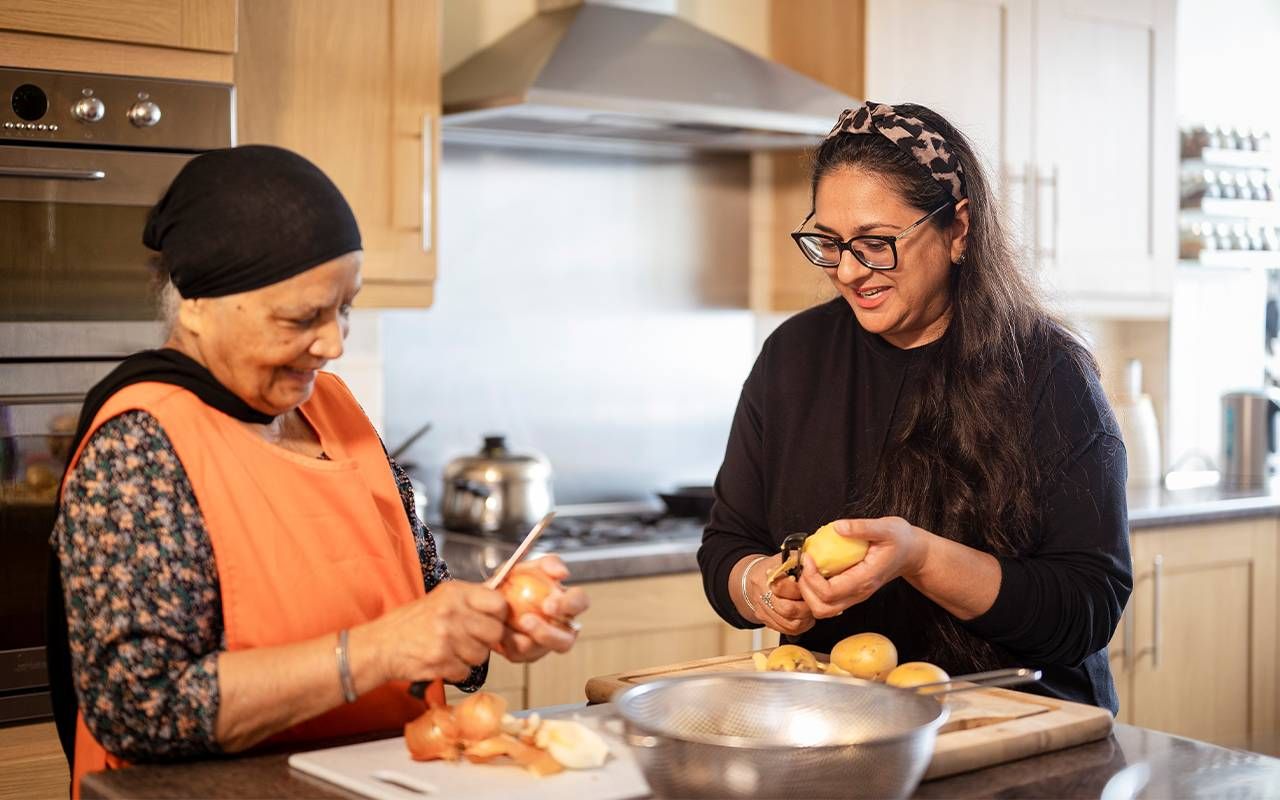
A caregiver with her mom making dinner. Next Avenue, family caregivers, caregiving
It's a lonely job, caregiving. And no one knows what we do — day after day looking after someone, hoping that we're doing the right thing.  |  Credit: Centre for Ageing Better

So let's talk about what we do.

Remember how it started? You offer to help with the groceries and drive them to their doctor's appointments. You bring them to your house on the weekends to watch a movie together and have a nice home-cooked meal. And then the job expands.

Now you're paying the bills and ordering the meds. And at your place, the guest room they used to stay in is currently empty. They can't climb your stairs anymore. So you find help at their home, and it may be time for them to move to a facility.

You spend hours looking for a good place, getting them a medical checkup and TB test, signing endless documents, doing your best to help your person make new friends, acclimate to the loss of their home and the smells and routines and privations of this new place to live.

The Ways We Help

So, we visit and listen to the problem list. We clean under the bed, find the scattered pills, and throw them away, and we quietly put a new package of Depends in their closet.

Next, we bring their clothes home to wash. It's indelicate. We have breached the line between parent and child, between spouses, partners, and friends — one should not be handling their undergarments.

We wake in the middle of the night, wondering if they are also awake, and hoping that they're not having another one of those frustratingly enduring sleepless nights.

We visit again, and as we leave their room (wondering if this may be our last glimpse of them alive), we take a parting look at them and the room itself. What simple thing should I do before I go — is there a box of Kleenex too far away to reach, a flip-top can of soda that should be opened?

What can I do so they are not left imprisoned by their inabilities? How terrible it must be for them, we think. What must it be like to feel life ebbing away, to suffer the indignities as their once strong handwriting has dwindled to uneven scratch marks, as their hands and legs become mottled with bruises because they're taking blood thinners, and everything causes a bruise?

We can never honestly know what the world looks like through their failing eyes, the panic that grips them in the middle of the night, the bewilderment, the fear, the helplessness.

We're just the family, struggling along. We stumble, pick ourselves up, go at it again, and try to do better. It's hard — no question about it — to look beyond the daily challenges, but if we zoom out for a moment, there is something else to see.

Amy Abrams, a San Diego social worker who has counseled scores of long-haul family caregivers, speaks of caregiving as a transformative experience. "Caregivers find inner strength and competence they would never have thought they had," she says.

The Gift of Time Together

There is the son who nursed his mother for four years, sleeping on the floor beside her bed. But then, he told me, "I discovered that weak as I thought I was, I have such a gift of adaptability, endurance, tolerance, patience."

There is the daughter who moved cross country to care for her mother: "I realized how lucky I was to spend time with her. To revisit the home that I was desperate to leave in my teens. I got to appreciate her and all she had been through. It gave me a purpose. So even though it was a mixed blessing, this has been a gift."

And then there is the simple gift of slowing down and spending time together. Occasionally, I have a slow, quiet visit with my mom. The chores have been taken care of, there's enough medicine on hand, we've got the TV working again, and we talk — mostly, though, I listen.

Mom talks about her life, the school where she felt so lonely except for the art teacher who recognized her talent, how she gave up a serious pursuit of art to be a wife and mother, how she rebuilt her life after my father died, finally winning long-sought approval as an accomplished artist.

She is adding it all up and preparing to let go.

I have heard these stories before, but as I listen to Mom on this day, I also hear her determination to rise above each bodily insult; I hear the grit that keeps her going, and I am thankful for what she is teaching me. So, yes, I nod; you've led a good life. It is a gentle, sweet moment that we share.

If no one knows what we give — and give up — as caregivers, perhaps also no one knows what we get. We get the chance to live out a unique kind of love.

Therefore, at this season of giving thanks, and as the country marks National Family Caregivers Month, here is a celebration of what we do as family caregivers. With indebtedness to the famous verses from First Corinthians:

A Caregiver's Love

Love is making that first sweet offer of help.

Love is being there as things get worse.

Love is loss and sadness as he or she slips away from the person you once knew.

Love is pain as you feel your helplessness to stop their suffering.

Love is the soothing music that you put behind your words of care.

Love is brave enough to confront frailty and decline.

Love is the courage to show up daily, asking, "how are you today?"

Love is the strength to hear them out when they are depressed and life to them is dismal. When they have not slept, they have awakened in the middle of the night, fearing they are dying.

Love is the moments of joy when you encourage their memories of good times, their childhood, falling in love, and the times you listen to stories of their lives that will otherwise be lost.

Love is hanging in as they lose the ability to open a jar, walk on their own, or manipulate their hearing aids.

Love is staying engaged despite the toll.

Love is reaching out to their heart.

Love is warm and embracing.

Love is saying, I love you, even when they cannot say the same to you.

Love knows you cannot fix the illness or slow death's approach.

Love is recognizing their fears and anxieties, and the unknowing that they live with every day and night as they wait. 

Love is learning to live on the edge of eternity.

Love is silent tears that well up from nowhere.

Love is walking ahead, while sorrow is your shadow.

Love is holding their hand as you both tread unfamiliar territory.

And love is waiting beside them, imperfect as you are, as they take their final steps.

Full Article & Source:
From One Caregiver To Another: No One Knows What We Do

Woman Finds Biological Father in Nursing Home 56 Years After Adoption — And Now She Cares for Him

"I prepared myself to find a grave, and I now found a person, and it was just absolutely mind-blowing," Deanna Shrodes said of meeting her 92-year-old father

By Abigail Adams

A daughter's search for her biological father ended when she found him in a nursing home more than 56 years after she was adopted.

Deanna Shrodes, of Florida, met her father Gus Nicholas, 92, for the very first time back in May after she matched with him using genetic testing through 23andMe, according to CBS News.

"I prepared myself to find a grave, and I now found a person, and it was just absolutely mind-blowing," Shrodes told the outlet. "Couldn't believe that I had found a person." 

Shrodes, who is an ordained minister, was an infant when she was adopted in 1966, according to a story about her search on a church website. She had spent two months in foster care beforehand.

At age 27, Shrodes found her mother Sally King and had a relationship with her for the next 20 years, per the reports. King died just a few months after she was diagnosed with cancer. 

But King never shared the name of Shrodes' biological father with her daughter. So, Shrodes set out to find him on her own.

Using the two clues her mother gave her — that her father is Greek and from Richmond, Va. — Shrodes spent 10 years searching.

Earlier this year, her prayers were answered — literally. 

"I told my husband, I told my best friend Laura … I said, 'Listen, guys, you might think I'm crazy, but I was in prayer. God spoke this to me: 'Your father's name is Gus,' " she told CBS News.

A short time later, she matched with Nicholas on 23andMe, and connected with one of Nicholas' relatives, who said, "I think you're my Uncle Gus' daughter."

The next day, Shrodes got to call her father, who was also excited to find his daughter.

"He said, 'I woke up this morning and I was alone ... And now this afternoon, I have a daughter. I have a son-in-law. I have three grandchildren. I have great-grandchildren ... I 'm not alone in the world anymore,' " she recalled. "And I said, 'No, you're not. You're not.' " 

Nicholas, a retired ballroom dancer, had entered the nursing home after he was found lying on the floor of his home after a fall, per CBS News' report.

But just 75 days after meeting his daughter, Nicholas moved into Shrodes' home where she cares for him full-time and they are getting to know each other.

"It's the hardest thing. It's the most worthwhile thing. It's the most incredible miracle I've ever had the privilege to live out," she told CBS News. "I'm living the dream."

Full Article & Source:
Woman Finds Biological Father in Nursing Home 56 Years After Adoption — And Now She Cares for Him

Saturday, April 9, 2022

Surviving the Caregiver Swamp and Burnout, Leonie Rosenstiel

 
Léonie Rosenstiel’s passion for helping people navigate the maze of elder care began when she watched several of her relatives become incapacitated. She has spent over 19 years researching the problems within the system in order to help herself and her clients create positive outcomes. 
 
Léonie regularly coaches and consults with individuals and families. She has a master’s degree in public health and is also a certified mediator. She wrote Protecting Mama: Surviving the Legal Guardianship Swamp and also created the Dayspring Empowerment Summit and the Dayspring Empowerment Course to help others. You can reach her at:  rosensti63@gmail.com
 
Source:

Thursday, February 24, 2022

Former Caregiver Admits Financial Exploitation of Vulnerable Adult

by Patti Weaver

A Stillwater man, who admitted financially exploiting a vulnerable adult, was sentenced this week to six months in jail followed by four and one-half years of probation with conditions including having no employment with a vulnerable or elderly adult.

In accordance with a plea bargain with the prosecution, Richard Allen Foster Jr., 39, was also ordered by Associate District Judge Stephen Kistler to have a DNA test and pay $1,460 in various fees along with court costs.

Community Access, which provides live-in care for developmentally disabled individuals, believed that Foster, who was fired as a caregiver from the facility, was responsible for stealing a client’s Nintendo gaming system valued at $250, an affidavit by Stillwater Police Officer David Adney said.

\An investigation revealed that Foster pawned the gaming system on Jan. 14, 2020, after claiming he had owned it for a year, an affidavit said.

In a police interview, “Foster stated he purchased the gaming system from (the client), then pawned the item for $50. Foster admitted he was not supposed to enter into any financial agreement with a client who was developmentally disabled. Foster attempted to rationalize his actions,” the affidavit said.

Full Article and Source:

Friday, January 28, 2022

Wife Confesses To Crime While Asleep, So Husband Turns Her In To Police

By Dave Basner
 
Photo: Getty Images

In what seems like something out of one of Shakespeare's plays, a husband turned his wife in to the police after hearing her speaking in her sleep about a crime she committed.

It happened when Ruth Fort, 47, woke up her husband Antony, 61, by mumbling in her slumber about money. The incident occurred a few weeks after Ruth spent thousands of dollars on a family vacation to Mexico. The trip set off alarm bells for Antony, but she dismissed his suspicions. However, after hearing her sleep-talking, he started investigating and discovered in Ruth's purse the debit card of the wheelchair-bound woman Ruth was hired to look after. He then reported his wife, whom he married in 2010, to the police.

He told The Mirror, "I had my suspicions when Ruth began over-spending. It was more of an instinct really, at first. But when I found the debit card in her purse, I just knew. It was heartbreaking. I loved Ruth deeply, but I could not ignore what she had done. It was abhorrent to me that she could steal from a vulnerable person and I had to report her."


Antony, who lived with Ruth in England, explained he had been wary of her behavior for a few months, starting around the time she began her work as a caregiver. He said, "One night, in August 2018, I picked Ruth up from work and she told me she'd taken one of the care home residents out shopping that day. She said the lady, who was in a wheelchair, had 98k in her bank account. Something in the way she spoke just made my heart sink. I realized Ruth must have access to the card and pin number. There was no more to it, but I began worrying, even though I had no reason to. It was an instinct."

A few months after that was the trip to Mexico, then came her sleepy confession. He stated, "It all clicked into place, and I felt absolutely sickened. I couldn't believe it. When Ruth woke up, I confronted her, and she admitted everything. I told her to pack her bags and leave. It was heartbreaking, I loved her, and yet I knew I had no choice but to report her."


Last year, Ruth was given a suspended jail sentence of 16 months with required drug rehabilitation sessions. In the end, she stole nearly $10,000 from the woman in her care. Meanwhile, the judge praised Antony, calling his actions "commendable" and noting it "must have been a very difficult thing to do."

Ruth was back in court this month for skipping her rehab sessions and missing a meeting with her probation officer. The judge gave her another chance by imposing a curfew on her but warned that if she breaks any other rules she'll be put in prison. As for Antony, he said, "My anger has subsided now, and I want to help her. I feel as though the system has failed us so far."

Full Article & Source:

Sunday, August 8, 2021

GRIM DISCOVERY Woman, 70, found ‘strangled to death with belt’ and buried in concrete in her basement as cops track down caregiver

by Jon Rogers

A 70-year-old woman has been found reportedly strangled to death with a belt and then buried in concrete in her basement.

The body of Lynn Gay Keene was found by authorities at her home in Linville Falls, North Carolina, after her family had not heard from her since June 14, according to Avery County Sheriff Kevin Frye.

Authorities found Lynn's body entombed in concrete in her basementCredit: Facebook / Lynn Keene

Detectives searched her home at the time and found it secured but her vehicle, a 2000 Lincoln Town Car, was missing.

Cherokee police reported Monday Keene’s vehicle has been found abandoned on Blue Wing Road in North Carolina with the keys under the driver’s seat, according to the release.

Elizabeth Freeman had worked as Keene's live-in caregiver 
Credit: Avery County Sheriff's Department

The discovery prompted Avery County Sheriff’s Office detectives to obtain a search warrant for Keene’s home.

Authorities, including the North Carolina State Bureau of Investigation and its crime team, searched the home and discovered human remains entombed in concrete in the basement.

Keene was identified through an autopsy and dental records, Avery Country Sheriff Kevin Frye said in the release.

The autopsy concluded Keene’s cause of death was a homicide.

HEAD TRAUMA AND STRANGLED WITH BELT

Keene had blunt force trauma to her head and was strangled with a belt, according to law enforcement officials.

The Avery County Sheriff’s Department and SBI agents had been searching for Elizabeth Freeman, 53, of South Carolina, who may also be using the name Elizabeth Carserino.

Freeman had been hired as Keene's live-in caretaker.

On Friday night, Freeman was found in a western North Carolina hospital, diagnosed with a drug issue.

She is also wanted on charges of larceny of a motor vehicle, financial card theft, and identity theft, police said.

As investigators searched for Freeman, they found surveillance video at a store in Marion, NC, about 20 miles south of Linville Falls, that showed the caretaker driving Keene’s car and using one of her bank cards.

Law enforcement officials also believe another person or persons may be involved in Keene’s murder.

Freeman has not been arrested for those warrants due to her currently being treated for the drug-related issue, HCPress reported.

Keene’s neighbor and family friend, John Thompson, told NBC News he used to get birthday cards from Keene every July 19 but hadn’t received one last month.

Thompson said she was a generous neighbor who loved listening to Prince and the Grateful Dead.

He said her son died during the September 11, 2001, terrorist attacks and her husband died about two years ago.

Keene had cared for her mother until she passed away last year, Thompson said.

"That's a lot for one person to take on," he added. "It's just ... it's not fair. Nobody should have to go through that."

Full Article & Source:

Wednesday, April 14, 2021

Woman accused of leaving vulnerable adult in hot vehicle near 44th Street and Thomas Road

Photo by: MCSO

By: Cydeni Carter

PHOENIX — A Valley caregiver is facing abuse charges for allegedly leaving a vulnerable adult in a hot vehicle in the parking lot of a shopping center near 44th Street and Thomas Road Saturday.

Officials say Yasmin Abdulle left the victim, who is diagnosed as a non-verbal autistic adult with severe cognitive disorder and a mental capacity of a 4-year-old child, in a van for about 40 minutes. 

According to court documents, Abdulle left the victim in a locked vehicle with all windows rolled up with the engine shut off before going into a Burlington Coat Factory.

At the time of the incident, outside temperatures were about 93 degrees and the inside of the van was calculated to be between 128 and 133 degrees. Officials say the vehicle was facing north in the direct sunlight and did not have tinted windows.

At around 12:28 p.m. officials were able to help the victim out of the van by smashing in the windows after a concerned citizen called the police. Officers say the victim was in the backseat of the vehicle with her seatbelt on and was unable to follow directions on how to open the doors herself.

The victim was "soaking wet with sweat," and also was shaking and warm to the touch. 

She was transported to a nearby hospital with severe dehydration.

After Abdulle did not return to the vehicle for a while, officers went inside the store to find her.

Abdulle told officers she was a caregiver and had been working for group homes for three to five years on and off. She also stated she left the victim in the van because she did not want to get out of the vehicle to go inside to shop and that the weather was "nice outside and it was not 100 degrees," according to court documents.

Abdulle is now facing charges of reckless vulnerable adult abuse for placing the victim in a situation likely to cause death or serious physical injury.

Full Article & Source:

Tuesday, October 20, 2020

Two Sexual Assault Investigations At Different El Cajon Nursing Homes Turned Over To DA’s Office

By Amita Sharma

Photo by Roland Lizarondo

Above: Pictured above is Avocado Post Acute in El Cajon, May 29, 2020.

El Cajon police have referred an investigation into accusations that a caregiver sexually assaulted two seniors at separate nursing homes to the San Diego County District Attorney’s office for possible prosecution.

Police sent their findings to prosecutors following an investigative report by KPBS last week and more than one year after the alleged assaults took place.

“Sometimes, it’s better to hang on to a case to try to investigate it as much as we can,” said Lt. Keith MacArthur. “We only get one shot at this. You don’t want to turn stuff over prematurely.”

Catherine Gotcher-Girolamo, 73, accused certified nursing assistant Matthew Fluckiger of sodomizing her with his fingers while changing her diaper on June 19, 2019.

Gotcher-Girolamo said she told other caregivers at Avocado Post Acute immediately after the alleged incident. 

She also said she reported the alleged sexual assault that same day to Avocado’s administrator Dina Mookini.

Mookini, however, told state investigators that she was only aware of “rough handling” by Fluckiger and that Gotcher-Girolamo’s story seemed to evolve. Another manager told state investigators, however, that Gotcher-Girolamo’s account never changed.

Avocado waited eight days before reporting the allegations to El Cajon police even though the law requires every member of a nursing home’s staff to report abuse within two hours.

“The law says immediately,” MacArthur said. “The faster that we’re notified, it makes it a whole lot easier for us to get cooperation from victims and take them for a sexual assault exam and talk to witnesses.”

El Cajon Police also turned over to the DA’s office its investigation into an allegation that Fluckiger sexually assaulted a resident at San Diego Post Acute nursing home in August of last year, after he was fired from Avocado.

Gotcher-Girolamo expressed satisfaction that prosecutors are actually reviewing her case for possible charges against Fluckiger.

“I’m very pleased that happened,” Gotcher-Girolamo said. “I’m kind of surprised that it took so long.”

Lawyer Tony Chicotel of California Advocates for Nursing Home Reform said the year lag time between the alleged sexual assaults and the police department’s referral of the two cases to the DA’s office would enrage communities had the victims been younger.

“From a nursing home resident advocate perspective, this is par for the course, the victimization of older people is tolerated in a way that we don’t tolerate in society at large,” Chicotel said.

He added there might be another reason for the police department’s delay.

“Their failure to turn it over to the DA sooner indicates that they didn’t think there was any possibility that the DA would take it or they didn’t have a lot of outrage about what was in those cases to compel them to move on it,” Chicotel said.

He added that the DA’s office should also consider prosecuting Avocado staff who failed to notify police immediately after Gotcher-Girolamo told them she had been sexually assaulted.

A California Department of Public Health investigation of Gotcher-Girolamo’s allegations found that Avocado also failed to submit its own probe of her complaint to the state within five working days, as required.

The state’s inquiry also concluded that Avocado’s allowance of Fluckiger to return to work just days after he had been accused of sexual assault jeopardized the safety of Gotcher-Girolamo and other residents at the facility.

 
Full Article & Source:

Friday, October 16, 2020

Elderly exploitation charged former caregiver

by Michael Moser

A woman who worked as a caregiver for an elderly Cumberland County man has been arrested and charged with three felonies, including exploitation of the elderly, according to the Cumberland County Sheriff’s Office.

Samantha Nicole Hardy, 24, 191 Blaine St., Pikeville, is charged with fraudulent use of a credit/debit card, theft of property of up to $1,000 and financial exploitation of the elderly, according to Sgt. James Scott’s arrest report.

The arrest follows a weeks-long investigation that was launched Sept. 14 when Scott responded to a call on Legion Rd. on a report of a theft. The victim told investigators he noticed items missing from his home on that date that included a stolen debit card.

The credit/debit card was canceled, but investigators learned it was presented on three different locations. Fraudulent charges were made Sept. 13 at a Dollar General Store on Hwy. 127 S in the amount of $304.95, a Dollar General Store and the Food Mart, both in Pikeville.

Investigation also showed that a charge of $422.61 was made at the Walgreen’s in Crossville and $414.25 at a Family Dollar Store in Gruetli-Laager, TN.

Investigators were able to obtain surveillance video showing a woman attempting to purchase a Visa pre-paid card and other items totaling $414.25.

A home health care agency was contacted and through the use of the video footage and with help from the agency, developed a suspect in the theft.

On Sept. 30, three warrants were served on Hardy. Bond was set at $10,000 with an appearance to be set in Cumberland County General Sessions Court.

Full Article & Source:

Friday, September 11, 2020

Caregiver, father accused of bilking elderly client in Sierra Vista

By Carol Ann Alaimo

Heather Buhr
An Arizona grand jury has indicted two Cochise County residents on suspicion of stealing tens of thousands of dollars from an elderly man.

Heather Buhr, who worked as a caregiver to the alleged victim, and Buhr's father, Isaac Butts, each faces one count of theft/financial exploitation of a vulnerable adult, a news release from the Arizona Attorney General's office said.

The alleged victim, who was 83 at the time, hired a company that advertised in-home care workers to help with the tasks of daily living.

Buhr worked for the company in late 2017 when she was assigned to care for the man, and later also introduced her father to the elderly client, the attorney general's office said.

Within two months, the pair allegedly started stealing from the client, taking more than $53,000 between February and March of 2018, the news release said.

The suspects were indicted by a state grand jury Aug. 24, it said.

Full Article & Source:
Caregiver, father accused of bilking elderly client in Sierra Vista

Thursday, March 19, 2020

John Scalzi, who cares for his 95-year-old mother, shares emotional impact of nursing home visitation ban

Click to Watch Video
By Noel Rehm

SARASOTA, Fla. (WWSB) - On Saturday, Gov. Ron Desantis announced that there would be a 30-day ban on visits to nursing homes as he acknowledged that the virus is spreading through some communities.

The recent visitation ban can make it lonely while staying at any assisted living facility, and it also impacts family members who are concerned about their loved ones.

I had the chance to sit down with John Scalzi and talk about his recent experience regarding not being able to visit his mother who is currently in a rehabilitation center.

Transcript for the interview below:

Noel - How has it been lately with the Coronavirus and trying to help out with your mom?

John - "It has so many ramifications. The first time that I experienced any kind of personal involuntary involvement with the Cornonavirus situation as supposed to voluntary, which is washing your hands and buying food stuff that you can control. The involuntary relationship began early Sunday morning when I went to visit my mom in a rehab center.

"My mom is 95-years old; she lives with us. We have been the primary caregivers for her for the last five years. Taking care of her wounds, making sure that she has clean clothes, cooking her food when necessary, cutting her food when necessary, taking care of all of her medications, everything really. And because of the new requirements for nursing homes, we were not allowed to visit. I was not allowed to visit my mom.

"So, this is the first time that she has been in a hospital environment which she has not had me there for the bulk of the day as her advocate, medical surrogate, general caretaker when nurses or CNAs where not around. It was a very very difficult thing for me. Initially, I was incredulous that it could be. When I went to the rehab center to get in, I did not know that this new regulation had come down from the Governor, so it caught me by surprise. Then following that there was that moment of anger. Then following that kind of the realization that it’s understandable that it would be case.

"There was also the understanding that the poor healthcare worker who had to stand on the other side of the glass tell loved ones that they couldn’t visit their spouses, their parents or husbands, wives. It must have just been horrific for that individual to have to be able to do that. So, that was a pretty large change in my relationship with the Coronavirus.

"As somebody’s legal medical surrogate you want to make sure that they have the best health care possible that’s number one and number two this was my mother so obviously I had that to deal with as well, not being able to see her. I understand what those regulations were about unfortunately I think that the definition of caregiver is still a rather vague one and I think everyone is coming to grips with that, and what that definition actually means.

"But you know you have to realize that we are all in this for the greater good for that population that is so highly at risk. So, we have to accept that and move on deal with it the best that we can.

"I think about when I was standing there watching a gentleman who was easily in his 80s, silver hair walking up to the door, impeccably dressed with a picture frame. And, that picture frame was a picture that span generations of family members. I’m sure. And they had been married for years; 50 years who knows. And he was told that he was there to see his wife and that and he was told that he could not do that. I can only imagine how that must have affected him and it must have been the first time in his life that he was not allowed to see his wife.

"You don’t know how many lives are affected. So, when you wash your hands, you may well be saving the life of a grandmother somewhere. It is wonderful to be able to connect in any way that you can. There are some facilities I understand which are purchasing tablets so that you can face time with your loved ones in the hospital. It’s a wonderful thing. It also helps to remind you how much you desperately want to be there. But for them, at least it’s an opportunity to connect with you and if you can do that, absolutely.”

You can also watch John’s interview on a special Suncoast View below:

Click to Watch Video

 Full Article & Source:
John Scalzi, who cares for his 95-year-old mother, shares emotional impact of nursing home visitation ban

Saturday, December 7, 2019

How a doctor learned to become a caregiver

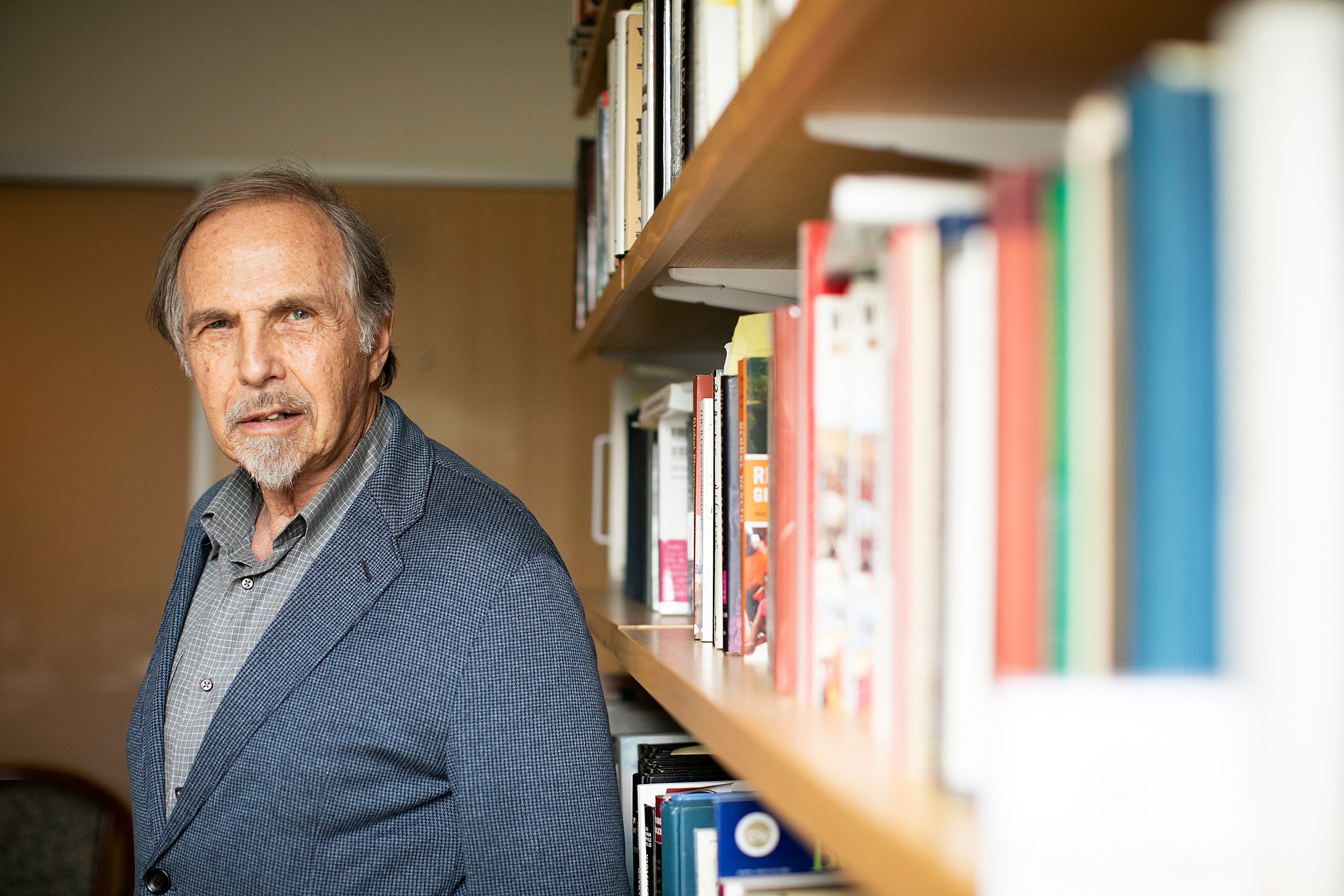
Arthur Kleinman and his wife, Joan, who died at 71.

After his beloved wife was diagnosed with Alzheimer’s, Arthur Kleinman discovered that what he didn’t know was a lot


Arthur Kleinman’s wife, Joan, began to struggle with a rare form of early Alzheimer’s disease at 59. Eight years after losing her, the Esther and Sidney Rabb Professor of Anthropology in the Faculty of Arts and Sciences and professor of psychiatry and of medical anthropology at Harvard Medical School chronicles their journey in “The Soul of Care: The Moral Education of a Husband and a Doctor.” The book is part memoir, part examination of love and marriage, and an intimate look at how 40 years in the medical profession left him entirely unprepared to care for a loved one.

Q&A

Arthur Kleinman


GAZETTE: The book is so personal. Can you talk about the decision to write it and whether you talked to Joan about it?

KLEINMAN: I started writing a long time ago when she was just starting on her 10-year course of Alzheimer’s disease. She had a very particular kind of Alzheimer’s that affects only 5 percent of the people, and it began in her occipital lobes, which meant that she became blind first. To be both blind and have dementia is particularly trying, particularly for the person who has it, but also for the caregiver. Joan was 100 percent behind the idea of writing this. I came out of a background that was very unpromising for a caregiver. I was a very headstrong, heedless, and careless child. I was self-centered and incredibly ambitious and hard-driving. Those 10 years changed me almost entirely and made me realize how crucial the human aspect was. I was always good with patients and students, but I wasn’t like that generally, and taking care of her and seeing how sad and frustrating it was made me a different person, a better person.

GAZETTE: You were unprepared to be a caregiver. Can you elaborate?

KLEINMAN: My whole career was studying illness and caregiving, but it was the actual experience of being a family caregiver to someone I loved that I regard as a tremendous gift. I spent all of my time on things that I used to think were trivial, learning how to be vital about getting through it, rather than being matter-of-fact. The other thing I discovered was that no one had prepared me. If it weren’t for the neurologists, the diagnosis wouldn’t have been made for a year or two, but those doctors were hopeless when it comes to after-care. That whole field needs to change in terms of its understanding of after-care: how central families are, how essential it is to learn to work with then. What I really wanted to illustrate is that there are two health care systems in America. One is organized for trauma and acute disease. That’s a high-technology system that’s very powerful and functioning well. The other system is the chronic illness system. There, technology is doing very little, but it’s primarily the human interactions and that’s where it is failing. Most people don’t have long-term-care insurance. If we look at assisted living and our nursing homes, the system is tragic.
Arthur Kleinman
“If it weren’t for the neurologists, the [Alzheimer’s] 
diagnosis wouldn’t have been made for a year or two, 
but those doctors were hopeless when it comes to after-care. 
That whole field needs to change in terms of its 
understanding of after-care,” said Arthur Kleinman. 
Stephanie Mitchell/Harvard Staff Photographer
GAZETTE: You were fortunate to have the best doctors, connections, and access to care. How did the system fail you?

KLEINMAN: I felt that excellent doctors had missed what was most important, which is at the end of every engagement to ask the family member, “Well, you spend a lot of time with her. What do you think the problem is?” Think about this: No one at the beginning told me about a home health aide. We were three or four years into the disease before I realized I couldn’t keep doing what I was doing, and I needed help. My adult kids helped me. My mother helped me. But the best help I got was from a home health aide. I should have been told at the first meeting that at some point you’re going to need a home health aide. At some stage you realize, you can no longer be the caregiver. The burden is too great. For me, as Joan became weaker and weaker, and I was lifting her into the bath, out of the bath, into the bed, I was having trouble physically. I should have started to look earlier. I could have moved into assisted living with Joan, but no one told me about that. When we went to look for assisted living, it was so late in the course of her disease, they said, “You’ve made a mistake. You’ve taken care of her too long.”

GAZETTE: Joan brought the influence of the East, in particular China, to your life and your work. Can you talk about the part it played in the caregiving?

 KLEINMAN: What we learned the first time we lived in China and for 7½ years in total was the importance of family and the responsibility one has for each other, the interpersonal strengths one has to develop to be sensitive to others and moral commitments. That’s the insight of Chinese society. It provides that great genius of the power of relationships. It’s the defining thing in your life. There are a number of Chinese terms that I associated with Joan that helped us in this regard: renging guanxi, that relationships are moral, and qi, that each of us has a vital energy. And that’s what I meant in the book by presence. And it’s particularly presence that is critical in dementia or end of life because it’s so trying at times. And the idea of enduring, in the sense of how to live a family life of responsibility, guo ri zi. I think the American idea of resilience is overblown and not really relevant. Most of us endure. From the Chinese perspective, that’s your responsibility, to keep going. I found this kind of enduring the most difficult thing. Over 10 years, how to keep going. I believe it’s this human engagement. If you’re present, it’s this vitality that keeps you going. You feel, “I just barely survived.” Resilience doesn’t describe my experience. I barely survived, and it was a struggle all the time. And it was my sense I had learned as a clinical teacher that the suffering of a patient counts more than your suffering. I think if you get that balance right, doing the acts as a caregiver, that somehow also keeps you going.

GAZETTE: Since her death, you have started working on the Global Aging Initiative. What is the project about?

KLEINMAN: I had another topic when starting the book, which was trying to figure out elder care best practices. It was a comparison across China, Hong Kong, Seoul, Kyoto, Hanoi, and Bangkok. I was looking at how good care looks different in different environments. Now I’ve come to a much more specific topic, which is social technology for elder care. It’s an interdisciplinary project that involves engineers from the School of Engineering and Applied Sciences, Conor Walsh and Fawwaz Habbal; and Winnie Yip and David Bloom from the Chan School of Public Health; and Ann Forsyth from the Graduate School of Design; Tarun Khanna from Harvard Business School; and Hongtu Chen and myself from the Medical School. What we’re doing tries to put together social systems with particular technologies to help the frail elderly and the demented elderly in China.

GAZETTE: What does that look like exactly?

 KLEINMAN: To give you a sense of this project, I’ll tell you a story. There is this excellent exoskeleton for the legs. We took this idea to the many elderly women in Shanghai living in high-rise apartments. We showed them illustrations of how this works. They said, “Wow, fantastic, but I’d never use it.” We asked why. They said, “It’s so dangerous to cross the road here. Cars don’t stop. We wouldn’t trust it. But if you really want to help us, we have six friends, all in similar conditions in different apartment buildings here in Shanghai. We would like to twice a week get together and go to a tea house. Right now, we feel isolated. If you could figure out a way with social technology to get us there and back safely, that would change our lives.” We had it all backwards. That becomes an interesting issue for technology and anthropology. Maybe the exoskeleton would be useful in this instance, but if so, probably not the legs, but for the arms of a carer to get them from a 12th floor to a lobby of a building, and doing this for six people. How do you organize this? Is it a van? Who goes with them? How does the actual human experience come together with the technology? That’s the project we now have.

Interview was edited for clarity and trimmed for space. 

Full Article & Source:
How a doctor learned to become a caregiver

Tuesday, October 22, 2019

Financial, Legal Advisors Scamming Elderly Has Become Big Business

By Nick Leiber

Terry Ann McIntosh’s financial nightmare began four years ago, soon after she hired a caregiver through a family services website. McIntosh, then 75 and in a wheelchair, had assumed that the young woman who eventually showed up at her San Mateo, Calif., home wouldn’t steal from her. She was wrong.

In October 2015, Meletofetofe Uhila began logging into McIntosh’s Bank of America account, using the older woman’s credentials. The first time, Uhila attempted to transfer $10,000 into her own account. The bank blocked it, requesting that McIntosh call in to verify her identity. Uhila called instead, pretending to be her.

Though Uhila failed the bank’s security questions, and McIntosh had never made a similar transfer in all the years she held the account, the bank allowed it to go through. Unaware, McIntosh continued to visit her branch every week, as she had done for the past 15 years. No bank employee ever mentioned the transaction.

Over the next nine months, Uhila made 44 additional transfers, ultimately stealing about $245,000 from McIntosh. Though Uhila was eventually caught and convicted, she had only $8,000 left to return to McIntosh. So McIntosh asked Bank of America for her money back. Despite all the seemingly bright red flags raised by Uhila’s conduct, the bank said no.

Uphill Battle

Tales such as McIntosh’s—of being hoodwinked by a criminal only to face an uphill battle to be made whole—are on the rise, consumer and legal experts warn. Already targeted by phone scammers and greedy relatives, elderly Americans have a “bull’s-eye” on their backs, one Iowa assistant attorney general who specializes in elder abuse cases said, adding that the problem is only getting worse.

And while financial institutions are becoming more responsive and incorporating more safeguards to protect against elder fraud and manipulation, America’s most vulnerable face another, more insidious threat. Increasingly, it’s the professionals—the lawyers, insurers and financial advisers that the elderly trust—who are the wolves in sheep’s clothing.

In 2017, financial institutions filed 63,500 suspicious activity reports tied to the exploitation of older adults, quadruple the amount reported four years earlier, according to the Consumer Financial Protection Bureau, for a total of $1.7 billion in attempted thefts and losses. That estimate, however, is a tiny fraction of the real total. The reports “may account for less than 2%” of actual incidents, the CFPB says. Estimates of total losses ranged as high as $36.5 billion, according to one financial services firm.

One in five older Americans is a victim of financial exploitation, said Jilenne Gunther, who heads the BankSafe initiative at the AARP’s Public Policy Institute, costing U.S. financial institutions $1 billion in deposits annually. The vast majority of such attempts to separate the elderly from their money, both legal and illegal, go unreported.

Shawna Reeves, director of elder-abuse prevention at the Institute on Aging in San Francisco, says few understand that such activity can involve professional firms and companies, including banks, financial advisers, insurers and law firms.

“This is big business, perpetrated by actors people think are legitimate,” said Reeves. According to social workers, prosecutors, and other officials across the country, common stratagems involve attempts to sell the elderly ill-advised annuities and reverse mortgages, as well as solar panel installations and access to veterans’ benefits.

‘Nonstop’ Complaints

At the Iowa attorney general’s consumer protection division, complaints about professionals manipulating elderly clients pour in “nonstop,” said Chantelle Smith, an assistant attorney general in Des Moines. They involve “any type of business you can imagine.”

When Investment News surveyed 591 financial advisers about elder fraud in 2017, it found that 62% said they have seen or suspected financial abuse of an older client at least once. Some 39% of them said the perpetrator was another financial professional—but more than half admitted they didn’t bother to report it.

It’s not just financial professionals doing the fleecing. Doug Chalgian, an attorney with the Michigan-based elder law firm Chalgian & Tripp, said some lawyers build a business model helping adult children take control of their parents’ assets. Others encourage older clients to make financial decisions that aren’t in their best interest.

“There’s a sleazy underbelly to elder law,” Chalgian said.

The consequences of such unethical behavior aren’t just financial. Elderly people who fall victim to financial wrongdoing are more likely to die prematurely, research shows. Losing one’s life savings, worrying about maintaining control over assets that remain or simply being embarrassed at having been taken all play a part, Smith said.

“Where do you go after you’ve been exploited by a professional you thought you could trust, and you are now at perhaps your most vulnerable state? Another ‘trusted’ professional?” Smith asked. “They die. It kills them.”

The night before Barbara Williams died in August 2015, she and her husband Tom decided to leave the bulk of their assets to a nonprofit serving the homeless near their Oroville, Calif., home.

Tom Williams had relied on his wife, a former bookkeeper, to handle their finances. Williams, then 78, called American Family Legal Services, the firm he thought had helped them with estate planning in the past, to update their trust.

Not long after, Victor Pantaleoni arrived at his home. An independent insurance agent, Pantaleoni quickly went about selling Williams on purchasing an annuity—one that, unlike the updated trust Williams sought, would earn Pantaleoni a $9,500 commission, according to a lawsuit Williams later filed in the Superior Court of California in Butte County. The agent had Williams sign a blank check and blank documents, ostensibly needed to modify the trust, according to Williams. Instead, Pantaleoni used them to move $100,000 of Williams’ money into a National Western Life Insurance Co. annuity, according to court filings.

Williams, who intended to use those savings for health-care expenses and emergencies, was left with only about $14,000 in his account. When he tried to cancel the annuity and get his money back, National Western didn’t respond. The company instead told Pantaleoni he had five days to “conserve” the annuity or he would lose his commission, according to court filings. Williams alleged that, as a result, Pantaleoni tricked him into signing a second annuity application. National Western subsequently reissued the annuity.

Williams tried a second time to get his money back. He called and wrote National Western, complaining about Pantaleoni. But instead of investigating, National Western slapped Williams with a surrender penalty of almost $15,000 and allowed Pantaleoni to hold onto his original commission, keeping him as an agent, according to the lawsuit. Though the insurer refunded the rest of his money, Williams had spent thousands of dollars on legal fees and other expenses related to his dealings with Pantaleoni. He sued both Pantaleoni and National Western in late 2017 for elder financial abuse, negligence and breach of fiduciary duty.

In April, a jury found National Western and Pantaleoni liable of elder financial abuse and negligence, and found Pantaleoni liable for fraud. It awarded Williams $3.1 million, declaring the insurer primarily responsible. The company appealed in September. Pantaleoni did not.

“Pantaleoni couldn’t have done what he did without the complicity of a company willing to turn a blind eye,” said Frank Fox, the attorney representing Williams.

This wasn’t the first time Pantaleoni was accused of improper behavior when working with seniors. In 2015, the California Department of Insurance filed a formal accusation against him, detailing his violation of insurance statutes in his dealings with a 74-year-old widow. The agency fined Pantaleoni and restricted his insurance license.

“I never did elder financial abuse and I never would,” said Pantaleoni, 62. However, in the case of Williams, he admitted he was negligent, in part because he didn’t have errors and omissions insurance, a type of liability policy, at the time. But he nevertheless disputed most of the other allegations in the lawsuit. “I did what the client wanted,” he said.

As for National Western, in 2010 the insurer settled a class action claiming it had misled seniors about penalties for withdrawing money from their annuities. National Western’s settlement included an accord with the California insurance commissioner requiring the company to make reforms in its sales, marketing and complaint procedures. The insurer denied any wrongdoing.

National Western, which uses thousands of independent agents to sell its insurance, had just two employees in its compliance department responsible for handling complaints at the time Williams tried to return the annuity, according to court documents. “Our independent agents are careful to ensure policyholders thoroughly understand the agreements they enter into when they purchase our annuity or life insurance products,” National Western’s chief legal officer, Rey Perez, said in an emailed statement.

Aggressive Strategies

When it comes to luring the elderly into a trap, some strategies are more aggressive than others. Earlier this year, a federal law enforcement officer outside Washington started to get glossy flyers at his home, inviting him to a free meal and a “retirement strategies workshop” at a local restaurant. “Expect to have a little fun and obtain some meaningful information with none of the usual financial double-talk,” one read.

By chance, the officer, who requested anonymity because he isn’t authorized to speak publicly, noticed that the retirement planner’s address matched that of an attorney he suspected was targeting the elderly. So on a sticky night in July, he dropped by the dinner, also hoping it might yield clues in a case of suspected elder fraud involving his now-deceased father. The dinner didn’t result in a breakthrough, but it did reveal how a business tries to persuade the elderly to invest in financial products they don’t need.

At an Italian restaurant in Virginia, more than a dozen elderly couples picked at their salads as the presenter asked them to fill out forms describing their assets and then complete worksheets while he extolled the virtues of annuities. “We can get you two to three times as much as a bank and keep you just as safe,” he said.

To the officer, the workshop shared the same traits as so-called trust mills, a term he used to describe schemes in which unscrupulous individuals try to sell seniors questionable investments under the guise of estate or retirement planning. He echoed a warning on the Minnesota attorney general’s website about such con artists: “Once he obtains your financial information, he will usually try to get you to buy an annuity or other insurance product. He may have several meetings with you before he reveals his true intentions: to sell you insurance.”

Kathryn Stebner, the lawyer for Terry Ann McIntosh, is a national expert on elder law. Given how her client’s account was methodically emptied, she said she can’t fathom how the bank missed what happened. “I don’t know how much plainer it could be,” she said.

After discovering what happened, McIntosh became deeply distressed, and not just for her own circumstances; she also needed her savings to support her disabled adult daughter. Last year, she sued Bank of America. As the trial approached this fall, the bank settled. Bank of America spokesman Andy Aldridge said the institution is “working with Ms. McIntosh to help her recover from the criminal actions of her caregiver.”

Detection Software

Financial institutions may have gotten the hint when it comes to making it harder to scam the elderly. According to Marti DeLiema, an assistant professor of research at the School of Social Work at the University of Minnesota, Twin Cities, more banks are investing in detection software and training. Executives, she said, “have really strong incentives, because the problem is only going to get worse.”

DeLiema, a consultant for major banks and broker-dealers, said financial institutions “need better communication across lines of business. For example, the brokerage side needs to talk to the banking side if they suspect a customer is at risk.” She added that banks also could benefit from a rule similar to what the Financial Industry Regulatory Authority put in place last year, allowing broker-dealers to pause a disbursement and investigate without worrying about clients suing them.

She said banks also lack the trusted contact form that broker-dealers are supposed to have clients fill out. “Banks need to do that,” said DeLiema. “Banks need another tool in their toolbox to protect us from ourselves.”

Smith, the Iowa assistant attorney general, started pursuing financial advisers, securities brokers and insurance agents for exploiting older people about two decades ago. She said that elder financial abuse is more than a legal issue. It’s societal.

Financial predators aren’t being prosecuted “in any significant number, relative to how many cases there are,” she explained. And when it comes to lawsuits, “most of them don’t go to court.” Meanwhile, perpetrators seek out and spend time with older people who are isolated and lonely. They know many of their targets won’t report what’s happening for fear of embarrassment or of having their children take control of their finances.

“They target, they stalk,” Smith said. “I tell all the older people I talk to: ‘You have a bull’s-eye on your back.'”

Smith said the only way to stem the rising tide of elder financial exploitation is to get family members, friends and community volunteers more involved in their lives. “The underlying issue here is isolation and loneliness, and a devaluing of older people in our communities,” she said. “It’s ageism.”

Full Article & Source:
Financial, Legal Advisors Scamming Elderly Has Become Big Business